
In this article
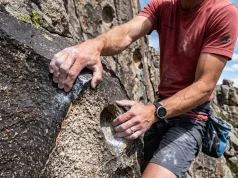
The hold was the size of a dinner roll and it moved when I grabbed it. Not wobbled — moved, rotating a full quarter-turn before I shoved it back into the bedding plane and prayed the argillite layer below it held long enough for me to clip. That was my first real lesson in GNP: the rock here doesn’t grip you back. It tolerates you, barely, and only if you understand its geology well enough to deserve the summit.
I’ve sent granite in Yosemite, placed trad gear in the Tetons. None of that prepared me for the Belt Supergroup. This guide isn’t for beginners. It’s for the self-sufficient technical climber who’s ready to deal with GNP on its own terms — the GMS grading system decoded, the 2026 Logan Pass logistics that will lock you out if you’re a day late, SERENE anchor physics specific to sedimentary rock, and bear management protocols built for exposed alpine ridges, not campground pamphlets.
⚡ Quick Answer: Climbing in Glacier National Park is legal without a special permit for day objectives — no dedicated climbing permit required. But starting July 1, 2026, the 3-hour parking limit at Logan Pass makes the ticketed shuttle your only realistic option for full-day routes. GNP’s argillite and dolomite terrain is structurally unreliable — never use single-point anchors, always prioritize passive protection over cams in horizontal cracks, and carry bear spray on your hip from the trailhead. Self-rescue is not optional here; there’s no high-altitude SAR team in the park.
The Belt Supergroup: Engineering Safety on Sedimentary Rock
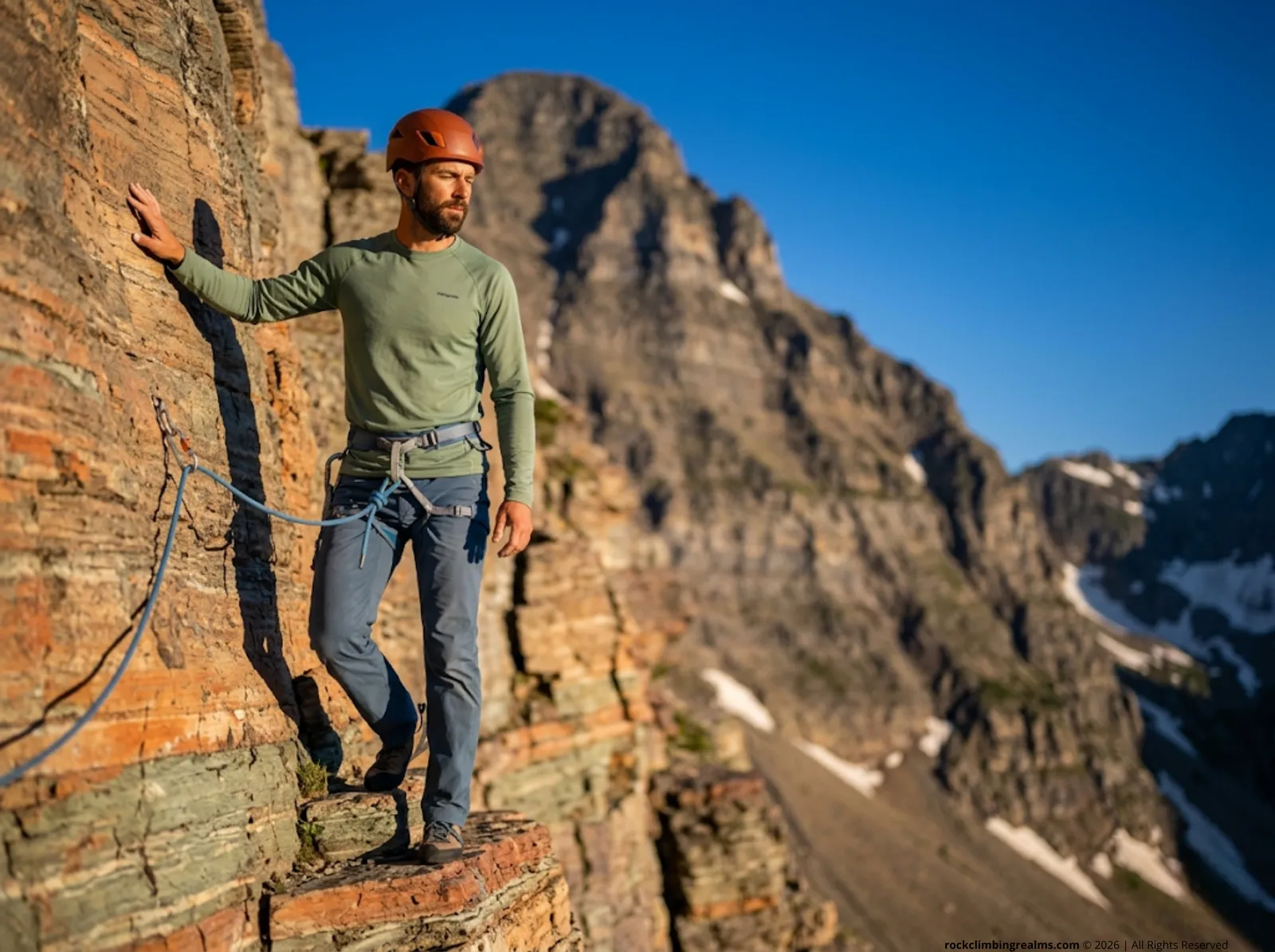
Here’s where most climbers go wrong on their first GNP trip: they read “Class III scramble” and pack accordingly. They bring the gear that worked on Yosemite’s granite or the Tetons’ gneiss. Then the argillite shifts underfoot and the lesson begins.
GNP’s primary lithology is the Belt Supergroup — Precambrian argillite and dolomite deposited in horizontal bedding planes. Granite is monolithic; it fights back. These rocks are a deck of cards stacked by geology over 1.5 billion years. Individual tiers can slide laterally under dynamic loading without the surrounding tiers failing at the same time. Belt Supergroup structural geology in Glacier National documents the displacement mechanics in detail. The climber version: your protection can rip the rock, not the gear.
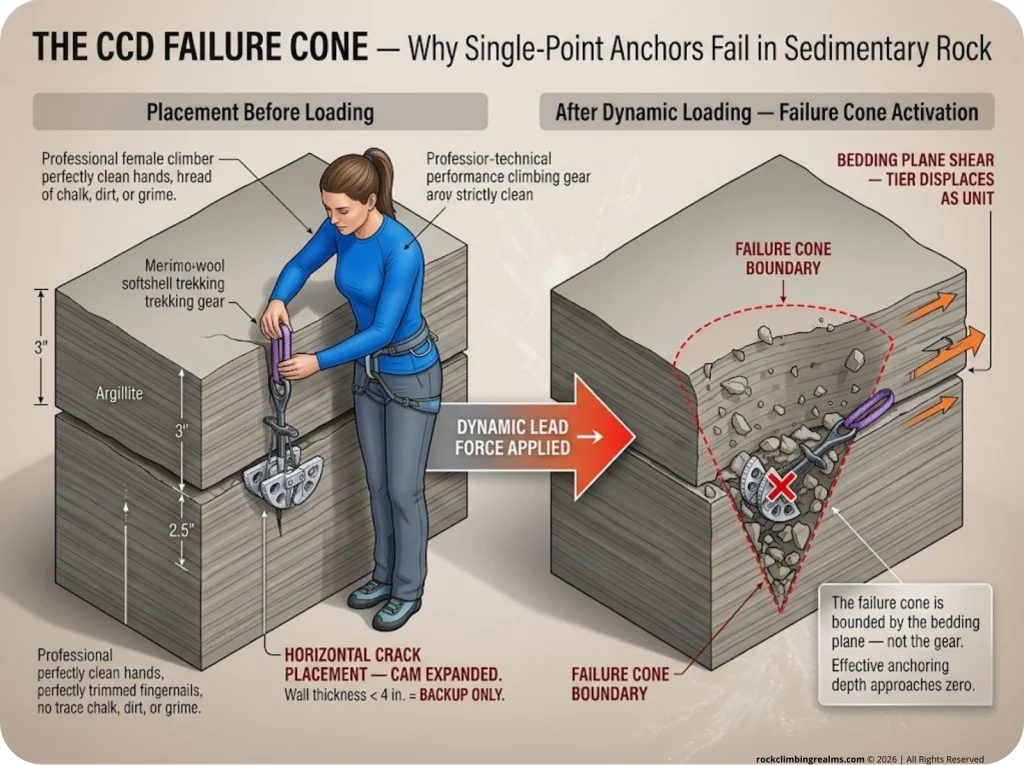
The failure cone mechanism is what ends anchors here. When a placed nut or cam is pulled under lead force, the surrounding rock shears along the nearest bedding plane instead of the gear failing. Your effective anchoring depth — the thickness of rock the gear actually grips — is limited by the specific rock tier you’ve chosen. In a horizontal crack between two 3-inch argillite layers, that depth is nearly zero. The whole tier displaces as a unit. Understanding how rock geology dictates protection choice and climbing style is the prerequisite before you ever rack up for GNP terrain.
Bedding plane shear risk increases by up to 40% under lateral impact forces compared to a straight vertical pull. That’s not a number to file away — it’s the reason the Technical Mentor’s directive here is unambiguous: never use a single feature as an anchor in GNP. Redundancy isn’t optional. It’s the physics of survival.
Pro tip: Before weighting any anchor, tap the surrounding rock with your knuckle. A dull thud means solid contact. A hollow clap means a delaminated plate — treat that piece as backup only.
The CCD Failure Cone — Why Single-Point Anchors Fail in Choss
A cam placed in a horizontal crack between two thin argillite tiers has an effective anchoring depth that approaches zero. The failure cone — the inverted cone of rock that detaches under pull-out force — is bounded by the bedding plane, not the gear. Both tiers displace together. Your “bombproof” cam is now a loose block.
The rule isn’t complicated. If either visible layer above or below your crack is less than 4 inches thick, that piece is backup only. Never primary. This isn’t intuitive coming from granite climbing, where you trust the rock to hold the gear. In choss, you’re trusting the gear to hold the rock.
Identifying Stable Rock Within the Chaos
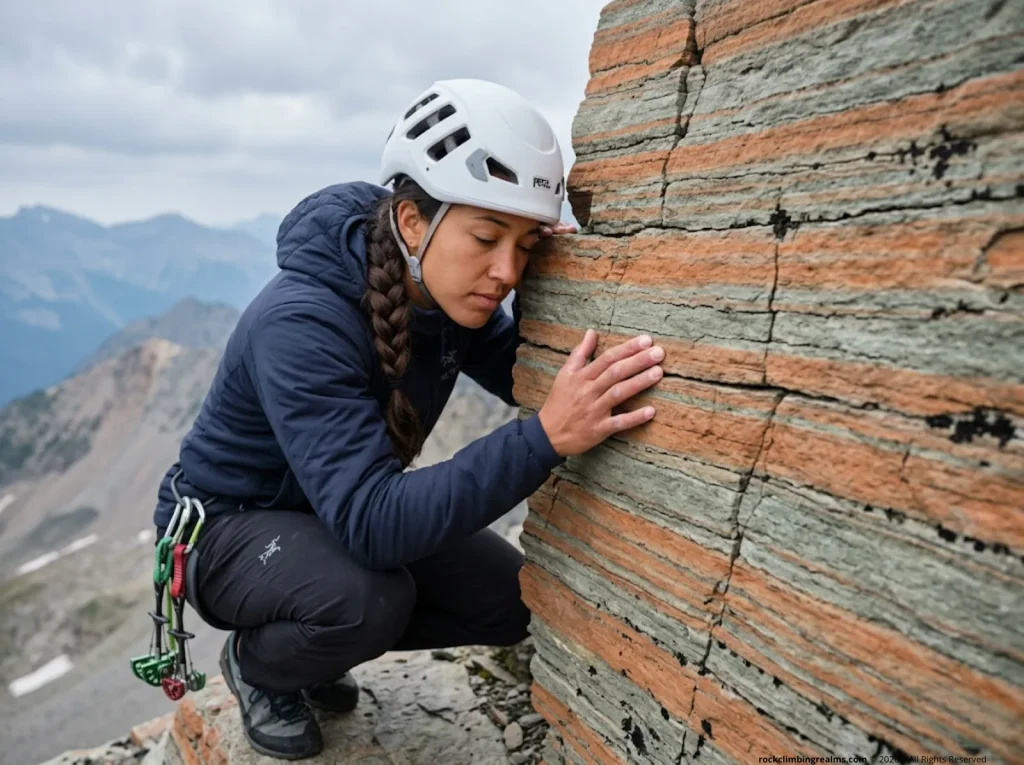
The Lewis Overthrust shear zones cut through the park and created something useful: pockets of quartzite that are structurally superior to the surrounding argillite. Look for light gray/white banding — that’s your more reliable placement zone.
Vertical fractures that cross-cut multiple sedimentary beds are your target. Horizontal cracks running along bedding planes are your worst option. Orange-red argillite is highly weathered and suspect. Gray-green argillite is denser and more stable. White dolomite is moderately reliable if dry. And if you see moss in the crack, walk away — moisture retention accelerates internal delamination faster than anything else in GNP’s freeze-thaw climate.
One thing guidebooks don’t mention: a hold that holds the first climber can shear for the second. Weight-bearing rock in this lithology can fail after the first load-bearing event initiates micro-cracking. When you’re climbing with a partner, assume subsequent team members are on degraded rock.
Rope and Gear Durability — The Anti-Sell for GNP
Skip the ultralight rope. Argillite is abrasive and sharp-edged — a 9.0mm single rope used on granite crags can sustain a core-shot on a single rappel across an exposed sedimentary edge. The minimum responsible spec here is a 9.8mm–10.2mm single rope with a sheath percentage above 36%. That’s not marketing. That’s what the terrain demands.
Cams are also problematic in slick argillite cracks. The expansion force can shatter thin crack walls from the inside out. Passive protection is superior: Tricams and offset nuts wedge mechanically without relying on outward pressure. For horizontal placements in argillite, prioritize passive pro every time.
Pro tip: Carry 30 feet of webbing as a hand-line for Class III pitches where standard holds are absent. Loop it around a tested boulder cluster for an improvised belay that doesn’t require a crack.
Decoding the GMS Scale — When “Class III” Becomes Technical Exposure
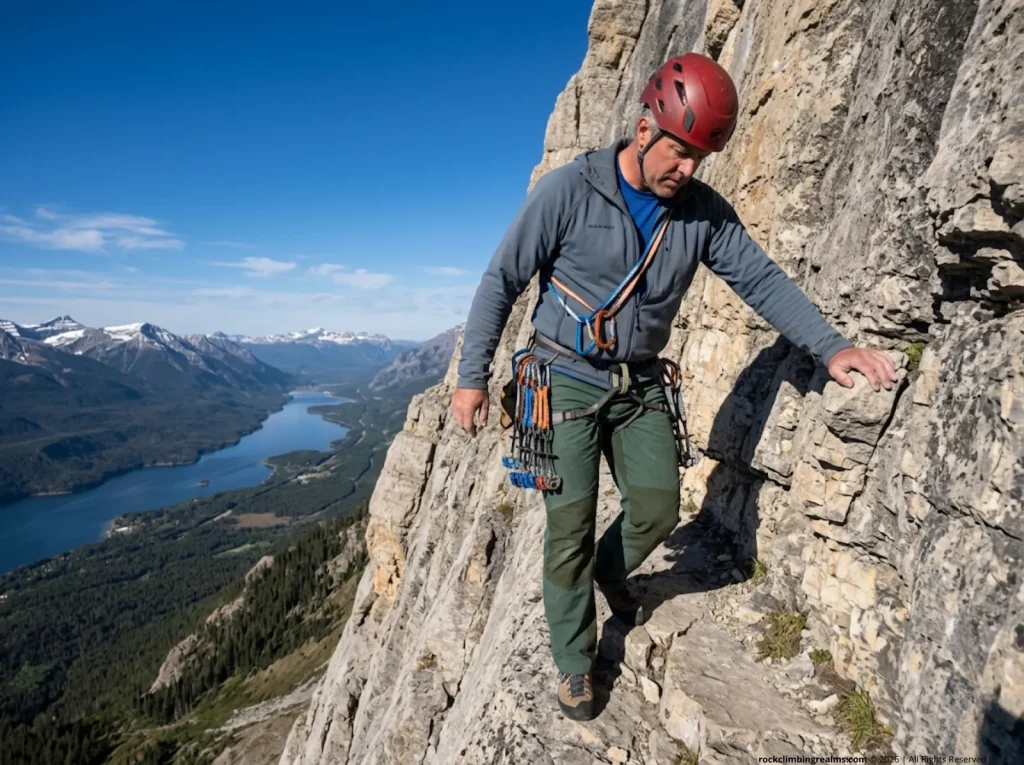
Class III is the zone of complacency in GNP.
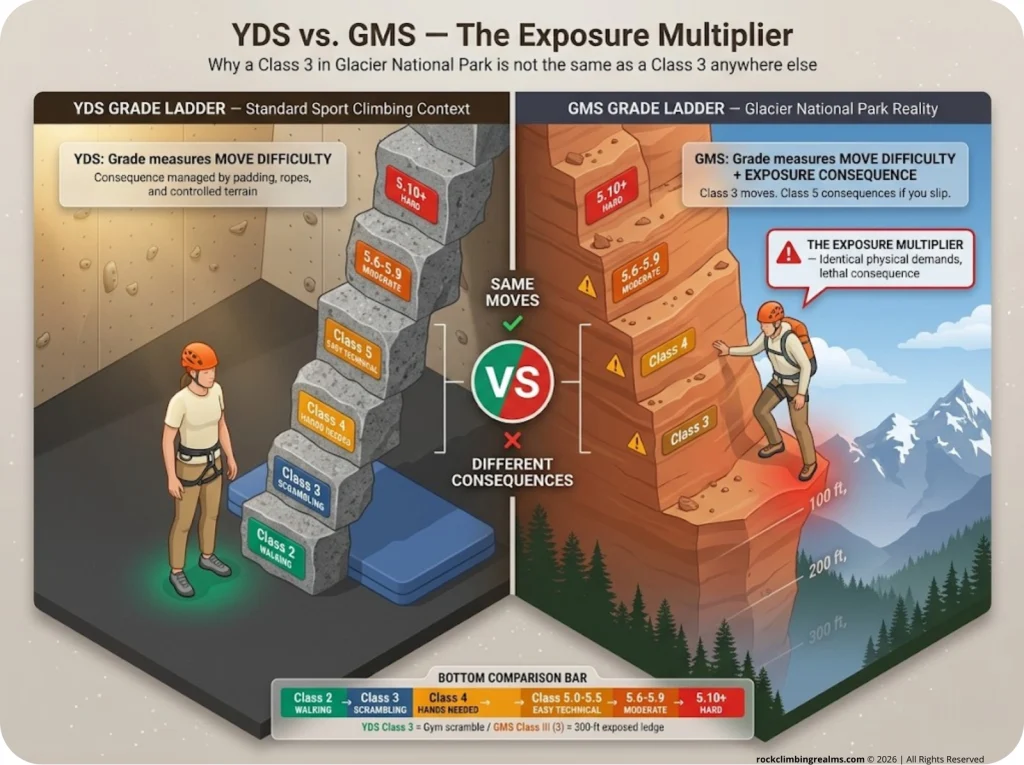
The Glacier Mountaineering Society grading system uses a Roman numeral for overall difficulty and exertion, plus an Arabic numeral for the most technical move or highest exposure level — for example, Class III (3). The problem is that most climbers coming from YDS-rated sport crags read “Class III scramble” and hear “easy.” Blake Passmore, author of Climb Glacier National Park, is direct: “A Class 3 rated climb in GNP may not be the same as a Class 3 in other areas of the world.”
What he means: a GMS Class III route like Reynolds Mountain or Dragon’s Tail puts you on ledges hundreds of feet above terminal drops. The moves might be YDS 3rd or 4th class. The consequences if you slip are identical to a fall on 5.12 sport terrain. The moves are easy. The context is not. That’s the exposure multiplier — identical physical demands, lethal consequence. The full YDS grading system and how it maps to technical exposure is worth revisiting before you translate your granite experience to GNP.
Refer to the GMS system among technically experienced climbers as the “Edwards Scale” — named for J. Gordon Edwards, author of the original Climber’s Guide to GNP. It signals immediate technical affiliation to any fellow climber you encounter on a ridge.
Reading the GMS Table — A Conversion Matrix for Technical Climbers
GMS Distance qualifiers also matter: Short routes are 1–6 miles, Medium are 6–12 miles, and Long exceed 12 miles. Elevation qualifiers run Small (under 3,000 ft. gain), Medium (3,000–4,500 ft.), and Large (over 4,500 ft.). Those two variables determine your physiological load before the technical terrain even starts.
| GMS Climbing Rating Comparison | |||
|---|---|---|---|
| GMS Rating | Physical Reality | Recommended System | YDS Equivalent |
| Class II (2) | Low-angle scrambling; hands for balance | Helmets only | Class 2 |
| Class III (3) | High-angle; three points of contact; moderate cliffs | Rope for beginners; 30′ hand-line for experts | Class 3 / 4 |
| Class IV (4) | Very difficult; four points of contact; extreme exposure | Belayed rope mandatory | Class 4 / 5.0 |
| Class V (5) | Technical climbing; leader protection required | Full trad rack (Tricams, nuts, cams) | 5.5 – 5.10 |
| Class VI (6) | Direct aid technical climbing | Haul bags, portaledges, aid ladders | Class A1+ |
The Popular Peak Spectrum — Tourist Scrambles vs. Real Alpine Objectives
Mt. Oberlin (GMS Class II) is your entry point — low-angle scrambling from the Logan Pass Visitor Center with minimal exposure. Reynolds Mountain (GMS Class III) is the most popular full-day challenge, roughly 7–8 hours round-trip, and a good proving ground for climbers transitioning from stable granite to GNP’s sedimentary terrain.
For intermediate to expert objectives: Dragon’s Tail, Bearhat Mountain, and Going-to-the-Sun Mountain all sit in the Class III–IV zone. The serious alpine objectives — Mt. Siyeh North Face with 1,500 feet of exposed terrain above Preston Park, Mt. Gould, and the Garden Wall traverses — are Class IV–V and require a full trad rack and a committed approach.
“Cliffing out” on descent is the most common near-miss in the park. Climbers follow game trails assuming they’re climber trails and end up in technical terrain without protection. Download GPS tracks beforehand. Confirm your descent drainage against the topographic map at the saddle, not from the bottom.
The J. Gordon Edwards Standard — What the Original Guide Actually Meant
J. Gordon Edwards’ Climber’s Guide to Glacier National Park remains the definitive authority on GNP route finding — the GMS system emerged directly from his work. Edwards documented routes in an era when “scrambling” implied significant technical competency, a standard that modern audiences accustomed to YDS-rated sport crags consistently underestimate.
The primary Edwards-era directive: treat every descent as a technical problem. Summit success is halfway. The route back is where GNP accidents concentrate. The Passmore guidebooks updated the Edwards system with red-lining — photographic route lines overlaid on high-resolution landscape images. These are mandatory study material before any GNP objective above Class II.
The 2026 Logan Pass Logistics — Booking Your Approach 60 Days Out
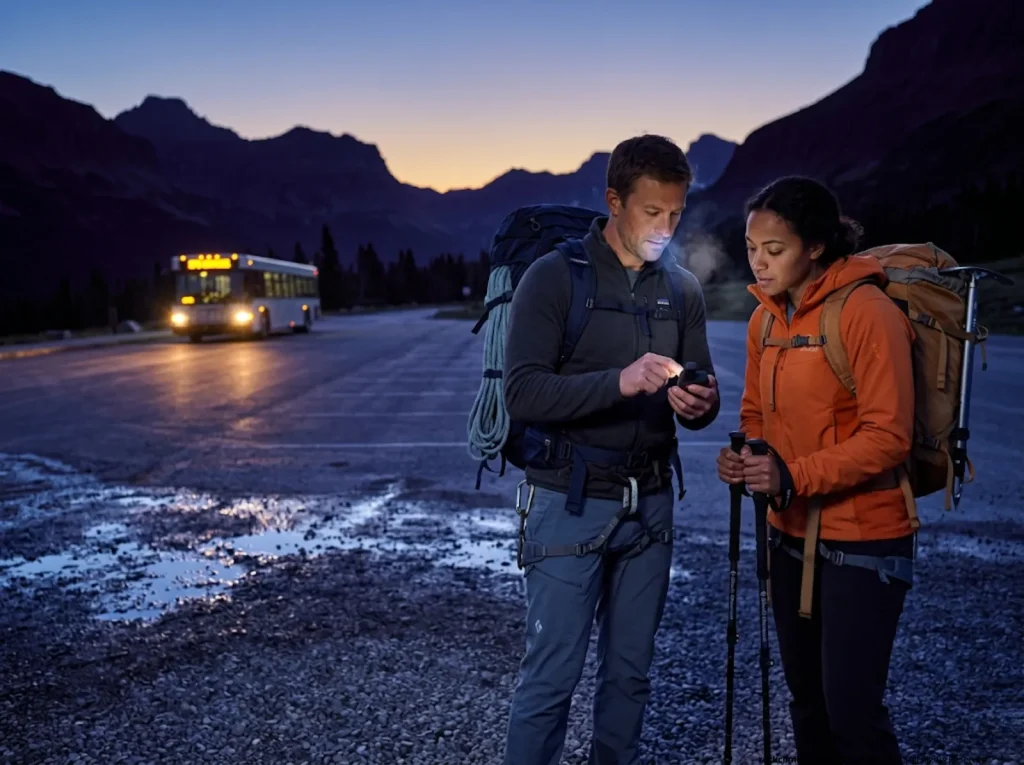
Your alpine start begins on Recreation.gov. Not at your alarm clock.
Starting July 1, 2026, all private vehicles at Logan Pass are subject to a 3-hour parking maximum. A standard GMS Class III ascent of Reynolds Mountain takes 7–8 hours round-trip. The math is straightforward: private vehicle parking and a full-day climbing objective are mutually exclusive. The official 2026 NPS access protocols for Logan Pass lays this out clearly.
The NPS Express Shuttle fixes this — if you plan ahead. Tickets are $1 processing fee via Recreation.gov, available up to 60 days in advance or at 7 PM the night before for the following day. For peak summer dates in July and August, the 60-day window fills in hours. Set your calendar reminder for exactly 60 days before your target date, be logged into Recreation.gov at 7:00 AM Mountain Time, and book immediately. Not the night before. Not that afternoon. 60 days out, 7 AM.
Pro tip: Always register your climbing objective with the GNP Visitor Center, even when it’s voluntary. SAR teams in GNP do not have high-altitude rescue capabilities equivalent to Mt. Rainier NP. Without a route plan on file, they work blind. File one.
Shuttle Strategy — Building Your Alpine Start Around Recreation.gov
Shuttle departure times from Apgar or St. Mary determine your earliest trailhead arrival. Target Logan Pass by 6:30–7:00 AM to allow adequate time for a full alpine ascent before afternoon weather rolls in. The shuttle doesn’t wait for overdue climbers — build conservative turnaround triggers into your plan before you leave the parking lot.
If you’re targeting a multi-day technical objective like the Mt. Siyeh North Face, a Wilderness Permit bypasses the problem entirely. Overnight permits allow for extended parking and unlock the full approach window. Permit reservations open 60 days in advance via Recreation.gov; walk-up permits are available daily at the Apgar Backcountry Permit Center. The climbing apps that handle offline GPS tracking for backcountry approaches are worth loading before you reach the trailhead — cell service disappears well before the technical terrain begins.
Gear Weight vs. Duration — Fast-and-Light vs. Full-Rack Calculus
The shuttle creates weight discipline. You’re operating on a day’s timeline with no resupply and no vehicle to dip back to. Minimum viable rack for Class III–IV: 2–3 offset nuts, 2 Tricams (0.5–2.0), 2 cordelettes (7mm × 20 ft.), 2 locking carabiners, 1 HMS belay device. Helmet mandatory.
For Class IV–V objectives like Siyeh: add a full passive pro set plus 2–4 cams in the 0.3–2″ range and Sliding X rigging material. As the American Alpine Institute puts it: “Speed is safety… making your anchors in a timely manner is quite important on long multi-pitch routes.” Carry what you can move fast with.
The Anchor Logic of Rotten Rock — SERENE Systems in Sedimentary Terrain
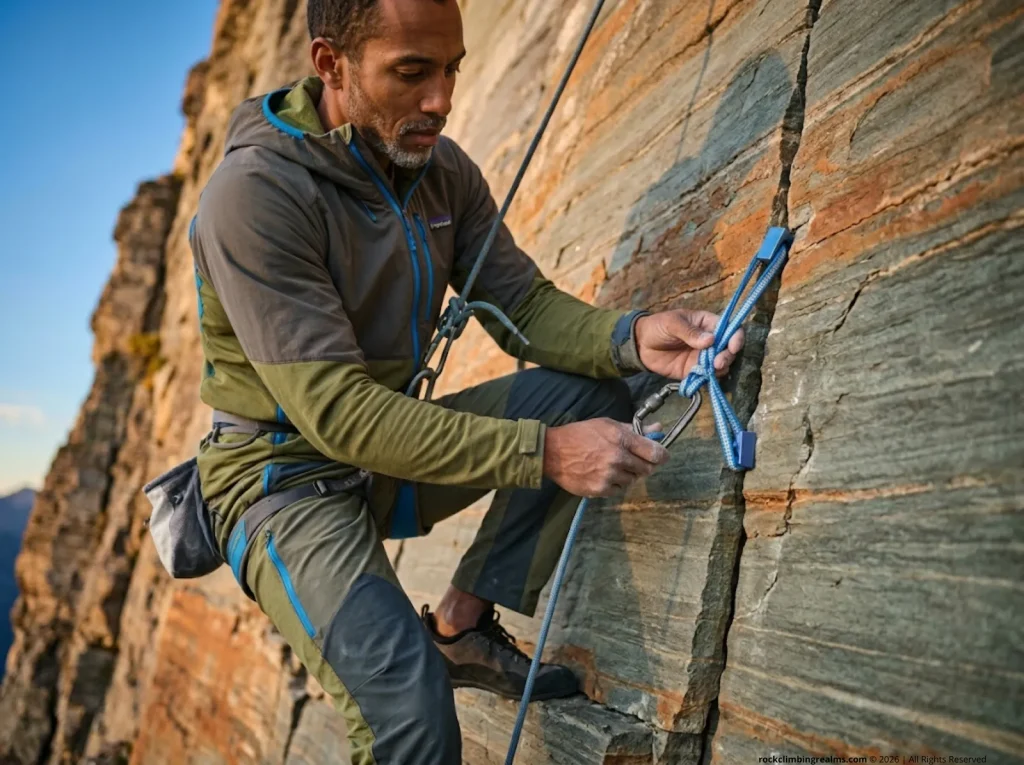
Before applying any GNP-specific technique, you need a solid foundation in multi-pitch safety systems before adapting them to choss. That foundation is what makes the adaptations below make sense.
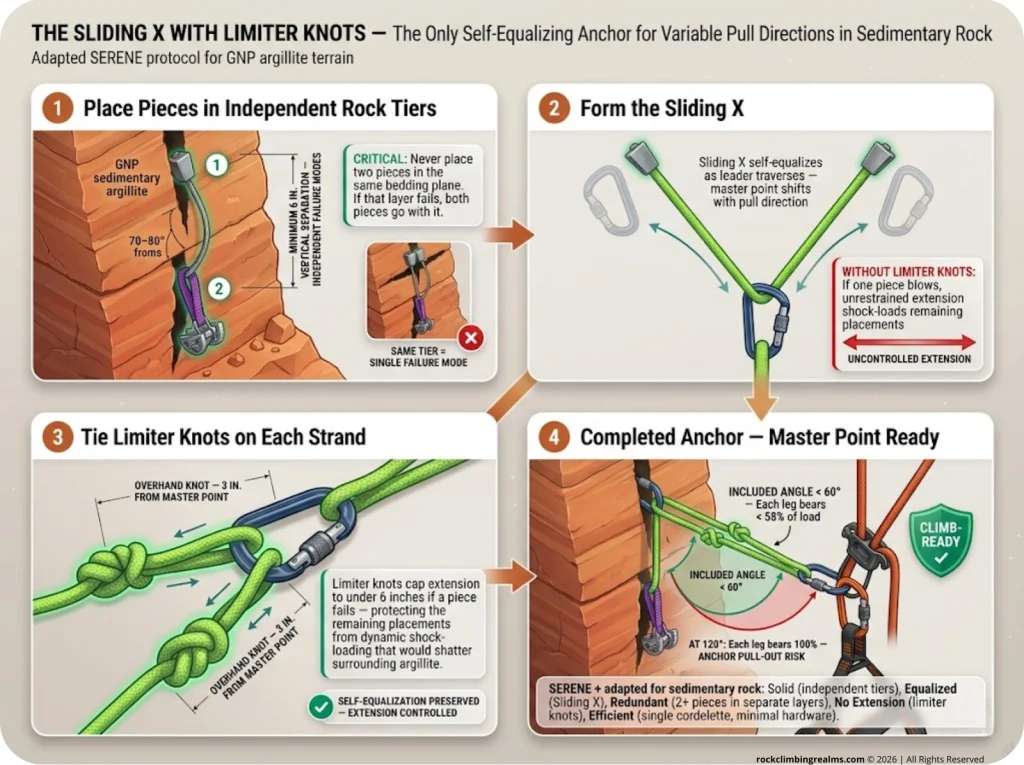
Standard SERENE anchor practice assumes monolithic rock. In GNP, that assumption is always wrong. The fail-safe directive: never place two pieces of protection in the same horizontal crack or bedding plane. If that layer fails, both pieces go with it. You need true independence — pieces anchored in separate rock tiers, not just separate cracks in the same layer.
Seek vertical fractures that cross-cut multiple sedimentary beds. A corner, fin, or dihedral where erosion has exposed cross-cutting fractures perpendicular to the bedding is your target. In the absence of vertical cracks, boulder clusters (thoroughly tested) combined with a single crack piece give you physically independent failure modes. The mechanical failure properties of anchored bedding rock under impact loading explains in peer-reviewed terms what GNP climbers learn the hard way: bedding plane shear under dynamic loading is the dominant failure mode, not gear failure.
Keep anchor legs below 60 degrees of included angle. At 120 degrees, each leg bears 100% of the load. In argillite, that’s not a theoretical concern — it’s the mechanism behind anchor pull-outs.
Managing rope drag on ledges isn’t just a convenience issue here. A moving rope contacting a suspended argillite block is a direct rockfall hazard to the belayer below. Use extended slings to route the rope well clear of loose material.
Redundancy Through Stratigraphy — Spreading Load Across Independent Layers
Identify three or more independent rock tiers for anchor points. Two pieces in the same layer count as one redundant unit — not two. Never place a small cam in an argillite crack where the walls are less than 1.5 cm thick. The expansion loading will shatter those walls and eject the cam. Default to passive nuts or Tricams in any marginal placement.
The Sliding X With Limiter Knots — The Only Self-Equalizing Option for Variable Pull Directions
In GNP’s alpine terrain, fall direction is unpredictable as a leader traverses loose ledges. A static cordelette equalized toward one direction fails when the leader traverses sideways. The Sliding X self-equalizes as pull direction shifts — but it has a flaw without modification: if one piece blows, unrestrained extension shock-loads the remaining placements with enough force to shatter the argillite around them.
The fix is limiter knots. Tie an overhand knot on each strand of the Sliding X approximately 3 inches from the master point carabiner slot. This limits extension to under 6 inches if a piece fails. It protects both the master point and the remaining placements from dynamic loading.
Carry a minimum of 20 feet of 7mm cordage per anchor-building event. GNP’s horizontally-spaced placements across multiple bedding tiers require longer equalization spans than typical vertical crack systems.
Rappel Anchor Engineering — The Highest-Risk Moment in GNP
Rappel anchor failure is the most serious single event in alpine climbing. In GNP, argillite delamination under rappel rope loading compounds that risk. Before committing weight to any rappel anchor, conduct a downward-pull test, progressing to roughly your full bodyweight. Back up all existing fixed slings with at least 2 independent pieces of your own gear.
Fixed pitons in GNP are notoriously unreliable. The soft argillite allows pitons to shift after initial placement. Treat any fixed piton as a supplementary piece only — never primary.
Bear Ethology for Technical Climbers — Alpine Protocols Beyond Trail Pamphlets
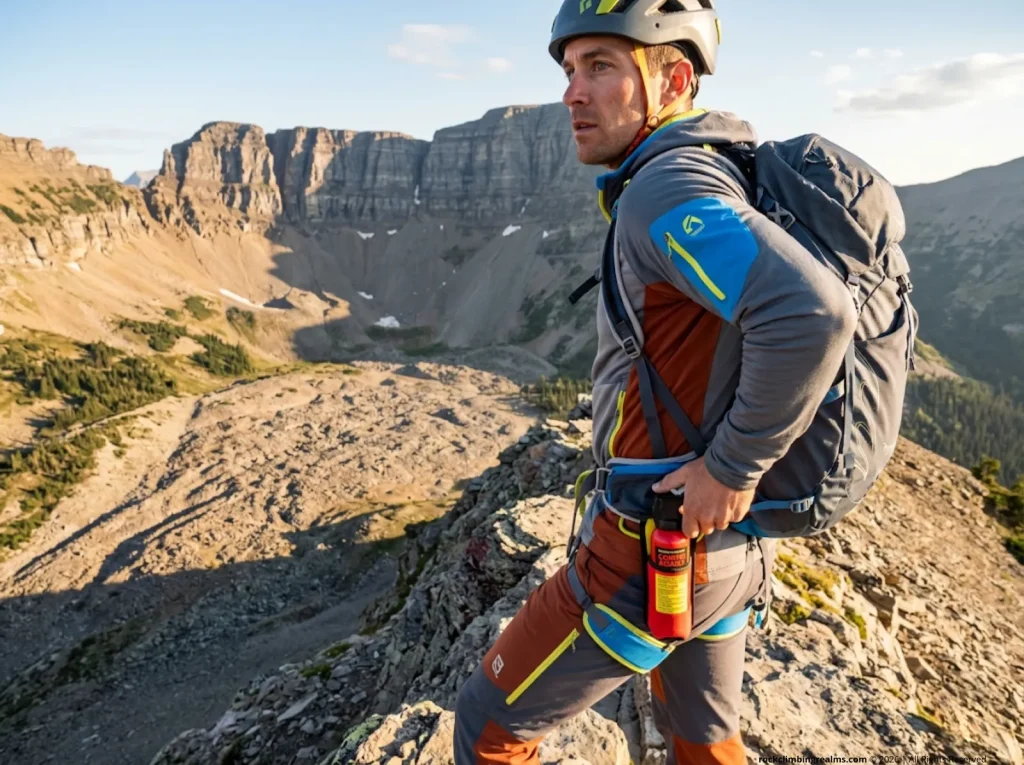
You’ll smell a grizzly before you see one on an exposed GNP ridge. The scent is musky, sweet-rotten, distinct from elk or marmot. When you pick it up, stop. Assess wind direction. Start vocal deterrence immediately. This is not drama — it’s the protocol.
GNP hosts approximately 1,000 grizzly bears, the densest population in the contiguous United States. The high alpine basins below Mt. Siyeh and Mt. Gould are prime habitat. Per official NPS mandatory bear spray protocols for Glacier National Park, bear spray is mandatory carry and the 100-yard distance requirement from bears and wolves applies on all terrain, including technical ridge systems.
Over 90% of aggressive grizzly encounters occur when the bear is surprised at close range — defense, not predation. Vocal signaling at 30-second intervals in dense brush is the professional standard. Bear bells are folklore. “Hey Bear!” in dense vegetation, starting before you think you need to, is what actually works.
The technical climbing context adds a specific hazard: climbers are silent and slow-moving during a lead pitch. The belayer needs to maintain continuous acoustic deterrence while the leader is on pitch. This is a shared responsibility, not optional chatter. Adding wildlife hazards to your pre-climb risk assessment matrix for climbing routes is the correct framework — bear encounters are a quantifiable objective hazard with probability and severity values, not an afterthought.
High-Wind Bear Spray Deployment — The Sun Rift Protocol
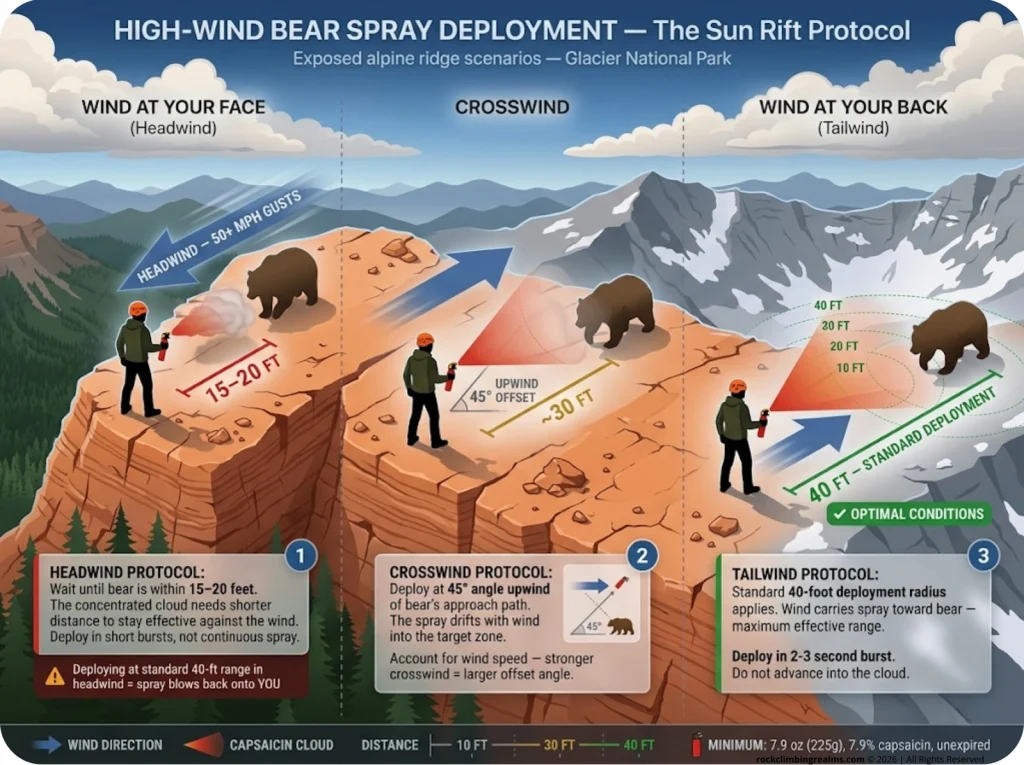
GNP is notorious for the “Sun Rift” winds — gusts regularly exceeding 50 mph on exposed ridges, particularly the Garden Wall. Standard bear spray instructions don’t account for alpine wind conditions. Deploying spray into a 50 mph headwind incapacitates you before it reaches the bear.
The protocol: assess wind direction at face level before you pull the safety clip. If wind is in your face, wait until the bear is within 15–20 feet before deploying — the concentrated cloud needs a shorter distance to stay effective against the wind. If crosswind, deploy at a 45-degree angle upwind of the bear’s approach path. If wind is at your back, standard 40-foot deployment radius applies.
Check your canister before every trip: minimum 7.9 oz (225g), minimum 7.9% capsaicin concentration, and verify the expiration date. Capsaicin degrades over 3–4 years in sealed canisters.
Bear Awareness on Technical Pitches — Managing the Silence Hazard
During a lead pitch, the climber is silent, focused, and slow-moving — effectively invisible and inaudible to bears on the same terrain. The belayer is the acoustic presence for the team while the leader is on pitch. This isn’t optional chitchat; it’s a safety protocol. Call out “Hey Bear!” at regular intervals, especially in drainages and below ridge lines where bears travel the same contour routes that climbers use for approach.
At belay stances, scan below and uphill before the leader begins. All food must stay in sealed, odor-proof bags — never hanging from a quickdraw or piece of protection where the scent can concentrate and attract attention to your position.
SAR Realities and the Self-Rescue Imperative
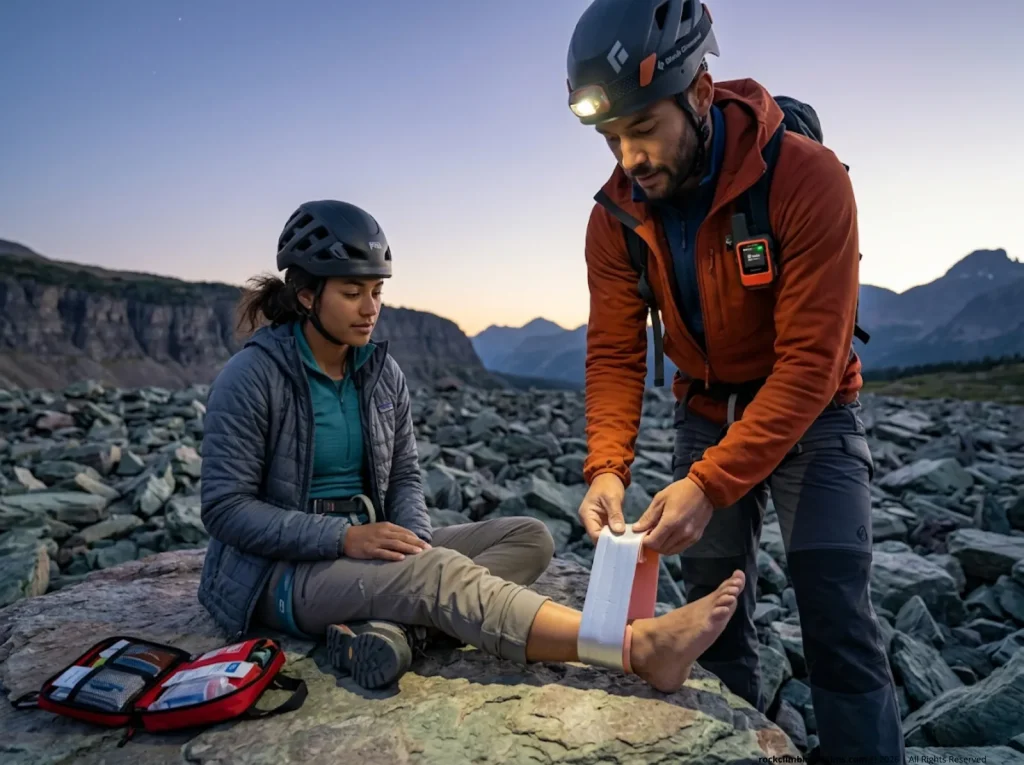
There’s no high-altitude rescue team on standby in GNP.
The park does not operate a dedicated alpine rescue capability equivalent to Mt. Rainier NP. In the park interior, technical extraction is a ground-based operation. Response times in remote basins — Siyeh, Many Glacier, Logan Pass approaches — range from 4 to 24 hours. That’s the gap you’re responsible for filling with your own skills and equipment.
Voluntary climbing registration at the GNP Visitor Center is the single most important preparatory step you can take. The “Dusty Star accident,” documented in AAC accident reports, shows exactly how unplanned separation on high-exposure GNP terrain leads to catastrophic solo descent decisions. Without a route plan on file, SAR teams work blind. File one. Per NPS mountaineering self-rescue requirements in remote national park terrain, self-sufficiency is the baseline expectation.
WFR (Wilderness First Responder) certification is the professional standard for GNP technical climbing. A WFA (Wilderness First Aid) course is the minimum acceptable for partners. If neither describes you or your team, address this before your GNP objective. The wilderness first aid protocols every technical climber should master before a remote objective covers the skill sets directly relevant to alpine terrain.
Pro tip: If hail starts on a GNP ridge, don’t seek shelter in a cliff overhang. In lightning terrain, overhangs concentrate ground current. Get off the ridge immediately. If you can’t descend fast enough, squat on your pack with feet together and minimize contact with the rock face.
Communication and Navigation — PLB, inReach, and Offline Maps
Cell service is unavailable across 90%+ of GNP’s technical terrain. Communication must be satellite-based. Minimum standard: Garmin inReach Mini 2 or SPOT X for two-way satellite messaging. An ACR ResQLink 400 PLB is your emergency backup — one-way only, no two-way contact, but it triggers a federal SAR response via the COSPAS-SARSAT network.
The operational difference matters: if your situation is time-sensitive but not immediately life-threatening, the inReach’s two-way messaging lets you coordinate with rescuers. A PLB sends your coordinates and activates the response — you can’t communicate after that.
Pre-download offline maps via Gaia GPS or CalTopo for your specific drainage before leaving the trailhead. Do not rely on Recreation.gov satellite imagery alone. File a detailed trip plan with a contact person who knows the NPS non-emergency line and your specific route.
The Weather Window — Reading Mountain Meteorology for Alpine Starts
GNP’s pattern is consistent: mornings stable, convective thunderstorms developing after early afternoon solar heating. The trigger window is 12 PM–2 PM. Your alpine start target is summit-bound by 7:00–8:00 AM, summit by noon, descending by 1:00 PM. This is the survival protocol for high-exposure terrain during July–August.
At Logan Pass elevation (6,640 ft.), cloud development is rapid. Lenticular clouds forming over peaks give you 4–6 hours of warning. Anvil cumulonimbus signals immediate descent, no discussion. Monitor NOAA’s forecast for the Flathead Valley and East Glacier area — conditions on the pass can differ significantly from the valley forecast.
Self-Rescue Essentials — Skills You Must Own Before the Climb
Three skills are non-negotiable before any GNP objective above Class III: counterbalance rappel rescue (lower an incapacitated partner from a ledge when direct descent is blocked), Prusik ascending (ascend a fixed rope when descent is cut off by rockfall or injury), and improvised litter carry for terrain where a partner is partially ambulatory.
Beyond the standard 10 Essentials, add to your GNP kit: SAM splint, triangular bandage, QuikClot gauze, aluminum emergency bivy (not just a mylar blanket), and a 3:1 compact pulley system for partner extraction from terrain traps. GNP’s terrain is often mixed — Class II talus immediately below Class IV cliff bands. Practice partner drag techniques on comparable terrain before your GNP objective.
Conclusion
Three things separate the climbers who summit GNP safely from the ones who don’t:
The rock doesn’t forgive assumptions. GNP’s Belt Supergroup argillite is not a standard trad substrate. Apply failure cone awareness to every anchor, prioritize cross-stratigraphy redundancy, and carry passive protection over cams in horizontal cracks.
Your approach starts 60 days early. The 2026 Logan Pass shuttle system means your alpine start is determined by a Recreation.gov reservation, not by your alarm clock. Miss the booking window and you miss the peak.
Self-reliance is the standard, not the exception. File your route plan. Carry a satellite communicator. Own your emergency skills before you need them.
Pull up Recreation.gov and set your 60-day alert for your target GNP date today. Then build one anchor at your local crag using only passive nuts and the Sliding X with limiter knots. That combination is likely what will keep you on an argillite ledge this summer.
Now go send something.
FAQ
Is climbing allowed in Glacier National Park?
Yes, technical climbing is permitted throughout Glacier National Park without a special climbing permit for day-use objectives. Overnight backcountry stays require a Wilderness Permit, available via Recreation.gov or walk-up at the Apgar Backcountry Permit Center. Voluntary climbing registration is strongly encouraged by the NPS to support SAR operations if you’re heading into technical terrain.
Do you need a permit to climb in Glacier National Park?
No dedicated climbing permit is required for technical routes during day-use hours. Wilderness Permits are mandatory for any overnight backcountry stay, including technical base camps. Starting July 1, 2026, Logan Pass private vehicle parking is capped at 3 hours — making the ticketed shuttle effectively mandatory for any full-day climbing objective.
What is the easiest peak to climb in Glacier National Park?
Mt. Oberlin (GMS Class II) is the most accessible technical peak, with low-angle scrambling directly from the Logan Pass Visitor Center and minimal exposure. Reynolds Mountain (GMS Class III) is the most popular full-day challenge and the standard entry point for climbers transitioning from stable granite to GNP’s sedimentary terrain. Both require helmets and solid route-finding skills — neither is a casual hike.
How many peaks are in Glacier National Park?
GNP contains over 175 named peaks within its 1,013,572 acres. Most have no established technical routes and require cross-country navigation on exposed sedimentary terrain. The Glacier Mountaineering Society and Blake Passmore’s guidebook series document approximately 30–40 peaks with reliable route beta for technical climbers.
What type of rope should I bring for Glacier National Park climbing?
Skip anything under 9.5mm. GNP’s argillite is sharp-edged and abrasive — a 9.0mm ultralight rope used on granite can collect a core-shot on a single rappel over an exposed sedimentary edge. Recommended spec: 9.8mm–10.2mm single rope with a sheath percentage above 36%. For multi-pitch Class IV–V objectives, 60m length provides adequate rappel margin. For single-pitch and rappel-heavy routes, 60m is the minimum.
Safety Notice: Rock climbing and mountaineering are inherently high-risk
activities that can involve physical trauma or fatal incidents. The information on Rock Climbing Realms is for
educational and informational purposes only. Techniques and advice presented here are not a substitute
for professional, hands-on instruction. Conditions and risks vary by location. Always seek guidance
from a qualified instructor before attempting new techniques. By using this website, you agree that you
are solely responsible for your own safety. Any reliance you place on this information is strictly
at your own risk, and you assume all liability for your actions. Rock Climbing Realms and its authors
will not be held liable for any harm, damage, or loss sustained in connection with the use of this information.
Affiliate Disclosure: We are a participant in the Amazon Services LLC Associates Program, an
affiliate advertising program designed to provide a means for us to earn advertising fees by advertising and linking
to Amazon.com. As an Amazon Associate, we earn from qualifying purchases. We are also an official affiliate partner
of Black Diamond Equipment via the AvantLink network. If you click on a Black Diamond affiliate link and make a
purchase, we may earn a commission at no additional cost to you. We also participate in other affiliate programs.
Additional terms are found in the terms of service.