
In this article
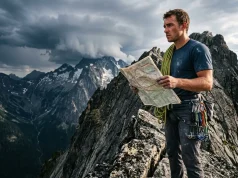
The wind shifted at 11,200 feet and I watched my partner’s expression change. Three seconds earlier we’d scored the weather a “2” on our risk matrix — Unlikely. Now, with cumulonimbus boiling up from the valley, that number had tripled. We had 40 minutes of exposed ridge between us and the rappel station. The matrix said bail. We did. Two hours later, a cornice collapsed on the line we’d been climbing.
After fifteen years of trad and alpine climbing, I can tell you that this tool is the most underused piece of safety equipment in your rack. It weighs nothing, costs nothing, and it has saved more situations than any cam or helmet in my kit.
This guide walks you through how to build, populate, and actively use a climbing risk assessment matrix — the same Likelihood × Severity framework that NOLS, the BMC, and the American Alpine Club rely on for critical safety decisions. You’ll learn the 5×5 matrix structure, how to score hazards accurately, and the Dynamic Risk Assessment loop that turns a static spreadsheet into a mid-pitch survival tool.
⚡ Quick Answer: A climbing risk assessment matrix scores each hazard by multiplying its Likelihood (1-5) by its Severity (1-5) to produce a risk score from 1 to 25. The 5×5 matrix is the gold standard, dividing hazards into green (proceed), yellow (add controls), and red (retreat) zones. Hazards split into objective (rockfall, weather) and subjective (fatigue, ego). Watch for the FACETS heuristic traps — six mental shortcuts that trick you into ignoring your own matrix. And keep it alive with Dynamic Risk Assessment: re-score continuously as conditions change.
The Math Behind the Matrix — Likelihood × Severity
A risk assessment matrix forces you to put a number on danger instead of guessing. Every hazard gets two scores. Likelihood measures probability, from 1 (Rare, under 1%) to 5 (Almost Certain, over 90%). Severity measures consequence along a severity scale from 1 (Insignificant — a scrape) to 5 (Catastrophic — lasting harm or permanent disability). Your risk score is the product of those two numbers. Multiplication, not addition.
Why Multiplication Beats Addition
A frequent minor scrape scores Likelihood 5, Severity 1. A rare anchor failure scores Likelihood 1, Severity 5. In an additive model, both produce 6 — identical. But the scrape is annoying and the anchor failure is a fatality. Multiplication separates them correctly and creates steeper escalation curves: a Likelihood 3 × Severity 4 scores 12. Bump likelihood to 5 and it jumps to 20. That 67% increase from a small probability shift is impossible to ignore.
The 5×5 Grid Structure — Reading the Colors
The standard 5×5 risk matrix gives you 25 discrete cells — enough resolution for a discipline where the variables include gear condition, weather, rock quality, fatigue, and group dynamics. A 3×3 matrix offers only 9 cells, which collapses “Moderate” and “Major” severity into a single bucket. In climbing, the difference between a treatable fracture and permanent disability is everything.
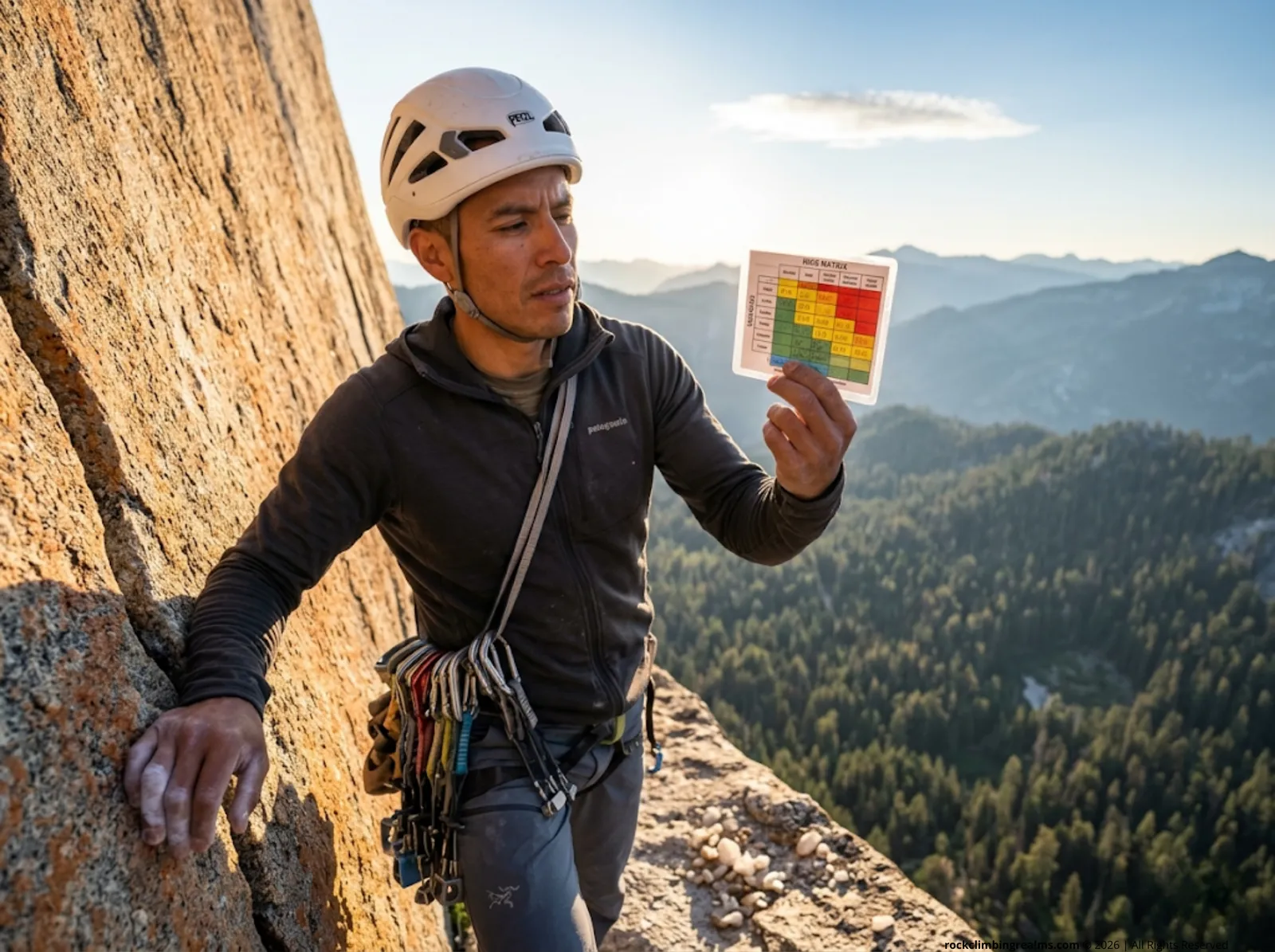
The color coding is straightforward. Green zone (scores 1-4): proceed with standard protocols. Yellow zone (scores 5-12): proceed with additional control measures documented and agreed upon. Red zone (scores 15-25): stop. Retreat, or reduce the score with controls before continuing. Professional systems used by NOLS, Mountaineering Scotland, and the U.S. Naval Safety Command’s climbing risk assessment framework all default to the 5×5 for this reason.
Understanding how UIAA safety standards define the gear limits your matrix depends on gives your severity scores a measurable foundation — without those thresholds, your numbers are just opinions.
Pro tip: I tape a laminated 5×5 card to the inside of my helmet. Sounds nerdy. Saved my bacon three times when fatigue fogged my judgment at the belay station.
3×3 vs. 5×5 — When to Use Which
A 3×3 matrix works fine for quick scoping — a day at a well-maintained sport crag with fixed anchors, or a gym orientation. But for trad climbing safety, alpine routes, or multi-pitch objectives where weather, objective hazards, and fatigue stack up, the 5×5 is mandatory.
Pro tip: Use the 3×3 to decide whether to go. Use the 5×5 to decide how to go.
Scoring Severity — When Physics Decides the Outcome
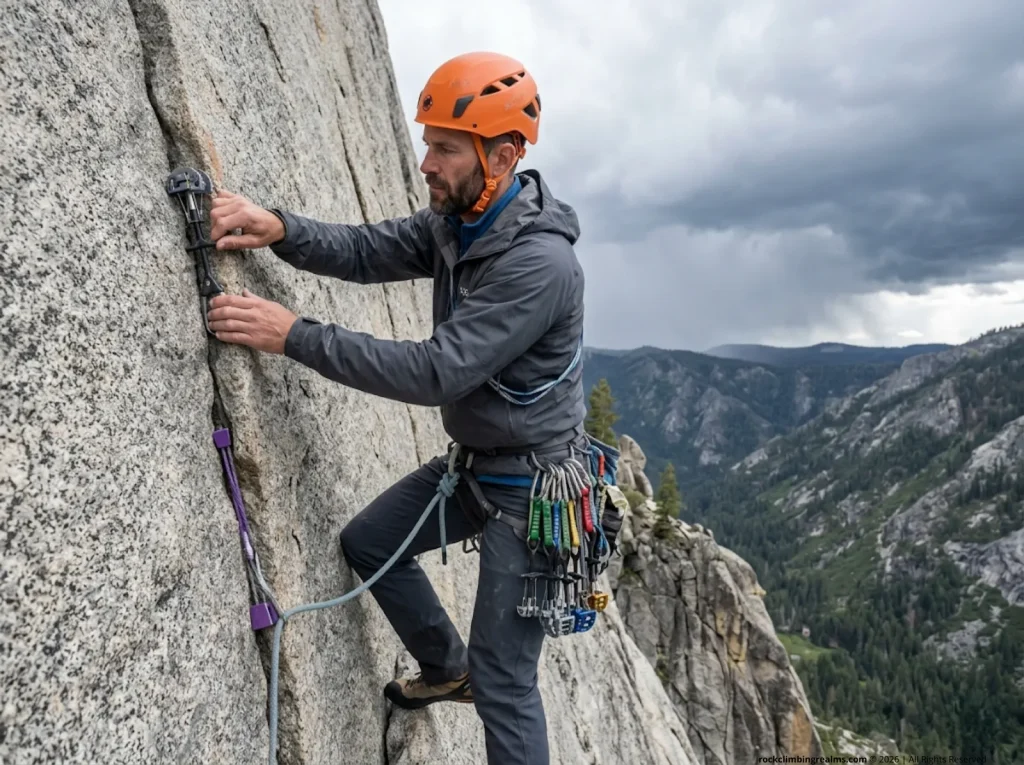
Gravity doesn’t negotiate. A fall from height generates forces that depend on the fall factor — the ratio of how far you fall to how much rope is in the system. According to NOLS research on quantifying adventure sport risk, 43% of adventure sports injuries are sprains and strains, 37% soft tissue, and only 6% fractures — but that 6% is where severity jumps from Minor (2) to Moderate (3) or higher.
Fall Factor and Impact Force
A Factor 2 fall — the worst case — happens when a leader falls from above the belay with no protection placed. Every piece of gear you clip lowers the fall factor and drops severity on the matrix. On multi-pitch routes, more rope absorbs more energy, but absolute fall distance increases — so severity shifts from impact force to terrain trap exposure. Understanding why the 15-foot rule is your first defense against hitting the deck ties directly into severity scoring for the first clips on any lead.
The Location Multiplier
The same broken ankle changes severity depending on where it happens. At a gym, help arrives in minutes — severity 2. At a local crag, you’re looking at hours — severity 3. On a remote alpine face where extraction takes a helicopter, that fracture escalates to severity 5.
A PLB (personal locator beacon) like the GME MT610G or a satellite communicator reduces the window between injury and professional response, which is why these devices exist as direct severity mitigation tools on the matrix.
Pro tip: Rate every injury severity twice — once for the physical damage, once for the evacuation context. Use the higher number.
Objective Hazards and Their Severity Constants
Rockfall, icefall, and serac collapse carry severity scores of 4-5 regardless of anything you do. A fist-sized rock falling 100 meters hits with devastating force — there’s no way to score that below Major. Helmet protection is your most effective severity reduction tool. A Mammut Wall Rider MIPS or Petzl Sirocco shifts rockfall severity from Catastrophic (5) to Minor (2) — arguably the highest-impact gear investment you can make.
Scoring Likelihood — The Variable You Control
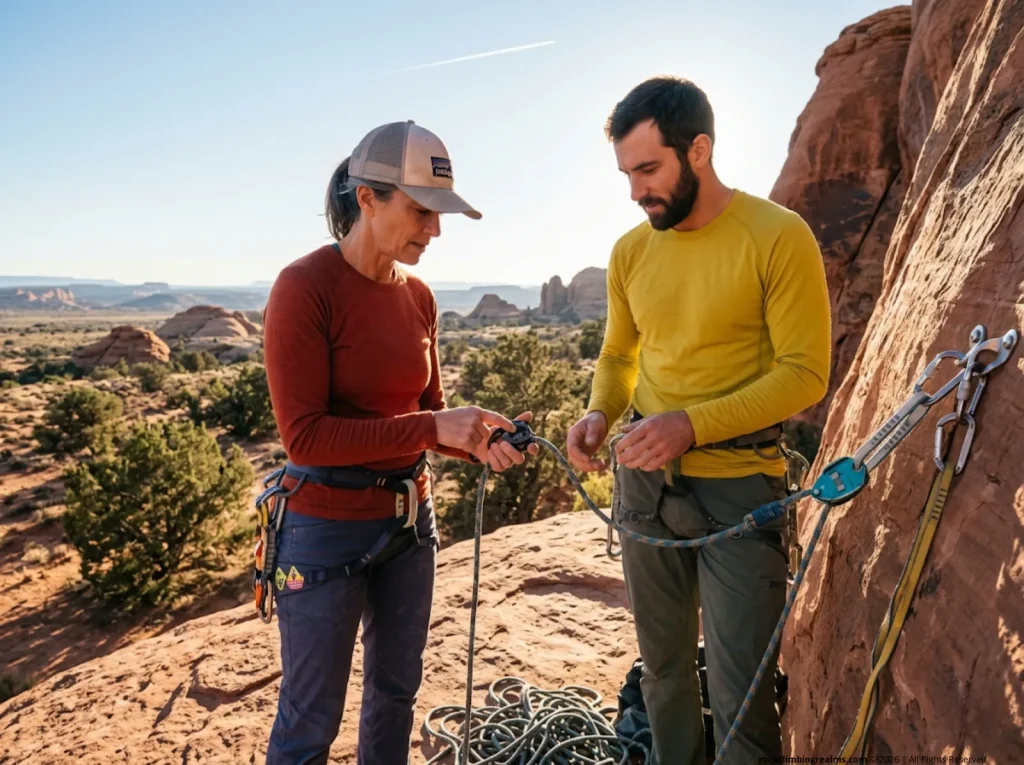
Severity is often locked by physics and geography. Likelihood is the axis you can actually move.
Modern climbing gear is over-engineered. The probability of equipment failure when gear is used within manufacturer specs is statistically Rare (1). Your rope, cams, and harness are not the weak link. You are. Human error sits at Possible (3) to Likely (4), especially during rappelling, lowering, and anchor transitions — the high-error moments the AAC flags year after year in their accident reports.
Human Error vs. Equipment Failure
Every year, the American Alpine Club’s Accidents in North American Climbing analysis tells the same story: human-centered causes drive the majority of accidents. Lowering errors, rappel mistakes, failed communication. These aren’t gear problems — they’re complacency problems.
Human error clusters around transitions: racking for a rappel, cleaning an anchor, switching from lead to lower. The AAC identifies lowering errors as a primary cause of single-pitch accidents — a problem new Mussy Hook anchor designs address. If you’re making the gym-to-crag transition, the one rappelling mistake that kills more climbers than any other isn’t dramatic. It’s the quiet failure to tie stopper knots or rig an autoblock backup. Without these controls, rappel error likelihood sits at 3. With them, it drops to 1.
Environmental Flux and Probability Shift
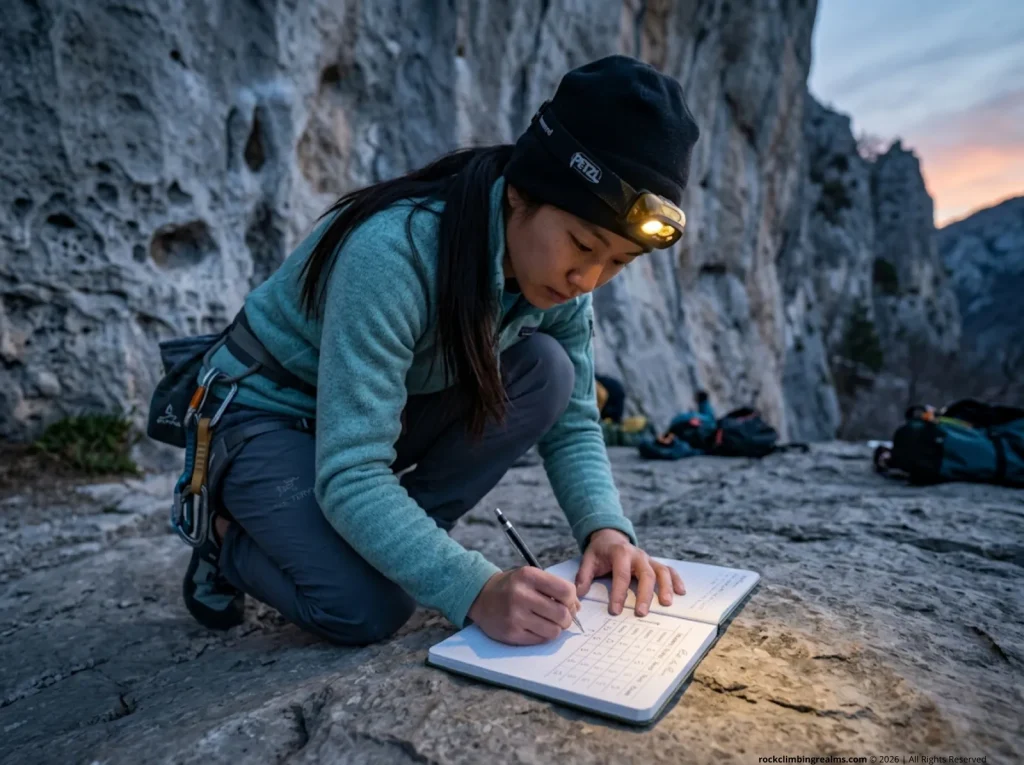
Weather re-writes your likelihood scores throughout the day. Rain shifts friction-dependent rock from Unlikely (2) to Likely (4). Temperature spikes destabilize ice routes. High winds turn rope management into a serious hazard. A professional climbing risk assessment re-evaluates at the trailhead, at the base, and at every belay station. If you’re not updating, you’re hoping.
Hazard Identification — Objective vs. Subjective Threats
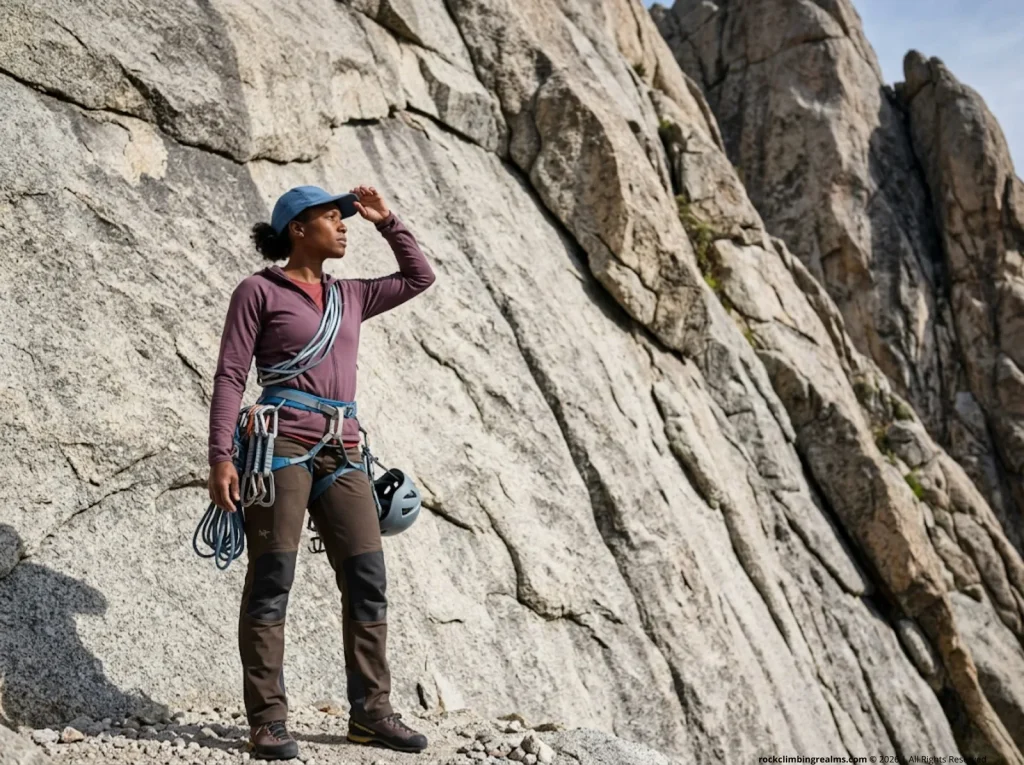
Before you can score anything, you need to know what to score. Hazard identification is the foundation of the entire matrix, and most climbers do it badly — especially those making the gym-to-crag transition.
Objective Hazards — The Mountain’s Terms
Objective hazards exist whether you’re there or not. Loose rock, geological instability, lightning — the number one weather hazard killer in mountaineering — avalanches, crevasses, falling seracs. These carry automatic severity scores of 4-5.
Manage objective hazards through timing (start early, descend before afternoon storms), route selection (avoid gullies during melt), and PPE — helmet, always. You can’t eliminate them. You can only avoid their worst windows.
Subjective Hazards — The Human Variable
Subjective hazards are the ones you bring to the mountain. Fatigue that slows reaction time. Dehydration that clouds decisions. Ego that makes you overestimate your ability relative to the route. The matrix exposes ego cleanly — if your honest self-assessment gives a likelihood of 4 for lead climbing above your grade, the matrix says don’t.
Walk the approach with your partner and call out every hazard you spot before you rack up. Run through the six pre-climb safety checks most climbers skip as a structured way to operationalize your hazard scan. If you can’t identify at least five hazards between you, you’re not looking hard enough.
The Psychology of Risk — FACETS and Heuristic Traps
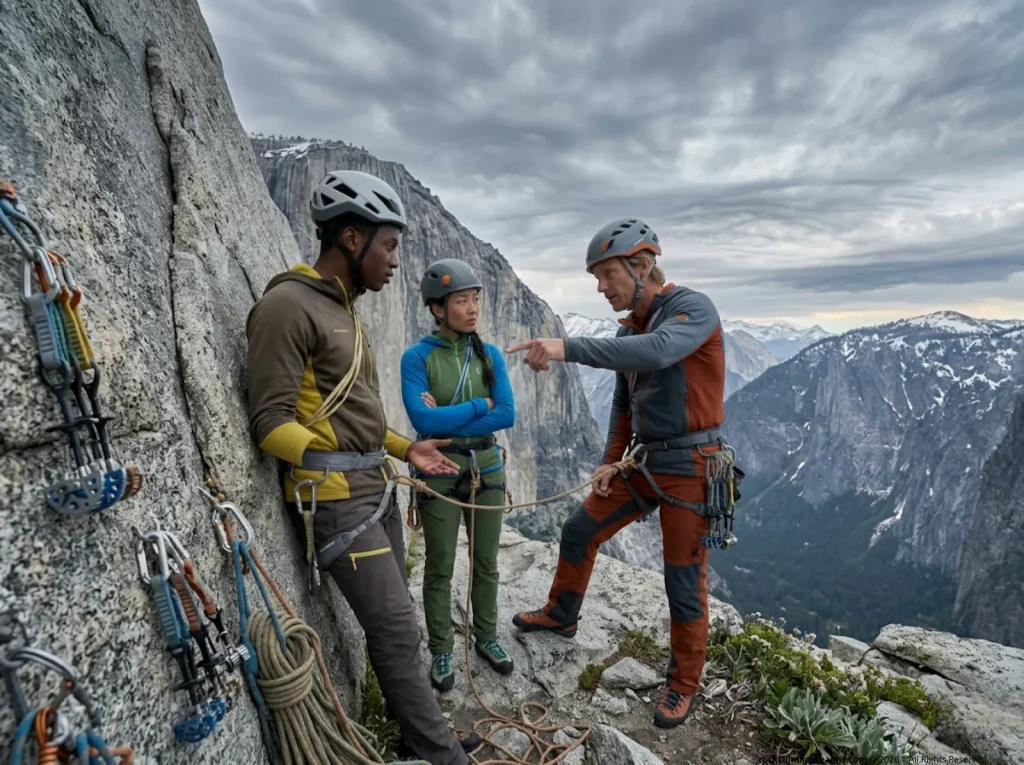
Here’s the uncomfortable truth: most climbers who get hurt had the information to stay safe. They just ignored it. The matrix was right. Their brain overruled it.
Ian McCammon’s FACETS framework identifies six heuristic traps — mental shortcuts that cause climbers to override the evidence of their own risk assessment. These aren’t character flaws. They’re cognitive biases, and every climber is vulnerable.
The Six Traps That Override Your Matrix
- Familiarity. “I’ve done this route a hundred times.” Complacency on known terrain blinds you to new evidence.
- Acceptance. The desire for social validation. You take a riskier line because your partner is watching.
- Commitment. The sunk cost trap. You’ve driven four hours, and conditions are deteriorating. The matrix doesn’t care about sunk costs.
- Expert Halo. Blindly following a leader without conducting your own independent assessment.
- Tracks/Scarcity. Racing to climb a popular route before other parties grab it.
- Social Facilitation. Groups make riskier decisions when other groups are present.
Breaking the Halo — The Group Protocol That Saves Lives
The “Breaking the Halo” framework gives every group member — regardless of experience — a socially sanctioned way to halt the team and demand a re-evaluation. The phrase is simple: “I see a halo.” It means a cognitive bias may be influencing the decision.
Dynamic Risk Assessment — The Mid-Pitch Mental Model
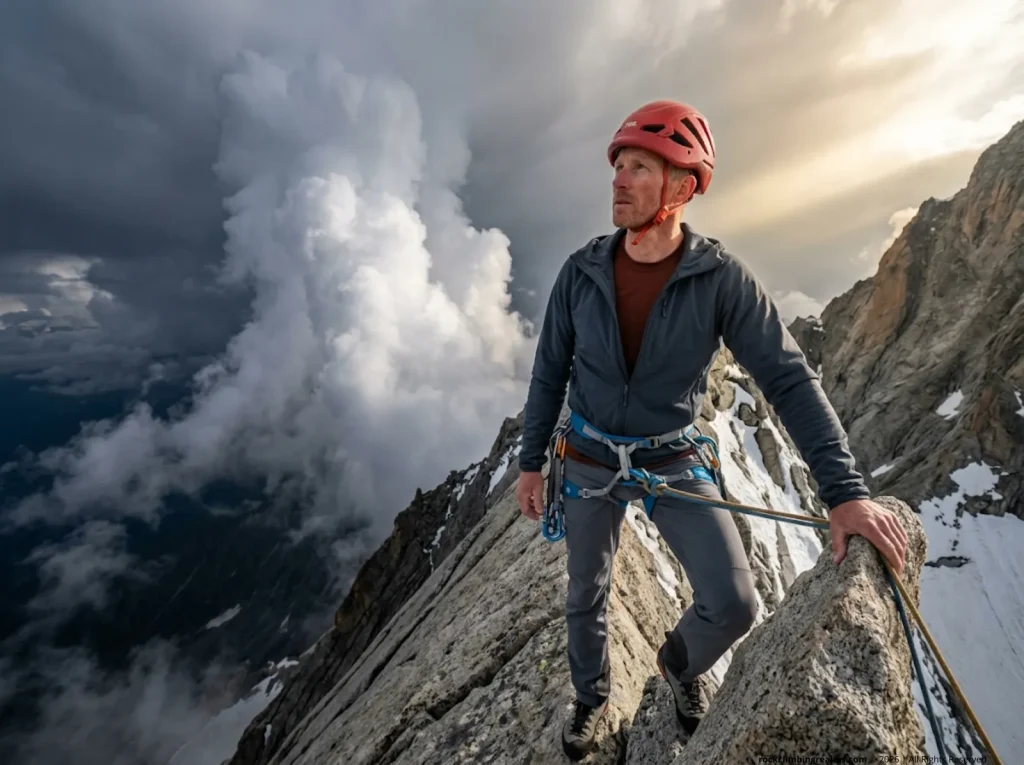
Dynamic Risk Assessment (DRA) is the structured mental process that keeps your matrix alive while you’re actually climbing. It follows a 4-step loop.
The 4-Step DRA Loop
- Evaluate the situation. Sensory scan — rock, wind, snow.
- Identify the change. Temperature spike, wind increase, or fatigue onset.
- Re-score the matrix. Mentally update likelihood or severity for affected hazards.
- Take action. Proceed with controls, pause, or retreat.
Conclusion
Three things to carry out of this article. First, the matrix is multiplication — Severity times Likelihood — and the math matters. Second, the biggest threat isn’t the mountain — it’s the six heuristic traps (FACETS). Third, a matrix on paper is a plan; a matrix in your head (DRA loop) is survival.
FAQ
What are the 5 steps of a climbing risk assessment?
Identify hazards, determine who might be harmed, evaluate likelihood and severity, implement control measures, and review as conditions change.
What is a 5×5 risk matrix and how does it work?
A 5×5 risk matrix is a grid plotting Likelihood (1-5) against Severity (1-5) to produce 25 possible risk scores.
How do I calculate a climbing risk score?
Assign Likelihood (1-5) and Severity (1-5) to a hazard, then multiply them.
What is the difference between objective and subjective hazards?
Objective hazards are environmental (rockfall or weather); subjective hazards are human (fatigue or ego or decisions).
Safety Notice: Rock climbing and mountaineering are inherently high-risk
activities that can involve physical trauma or fatal incidents. The information on Rock Climbing Realms is for
educational and informational purposes only. Techniques and advice presented here are not a substitute
for professional, hands-on instruction. Conditions and risks vary by location. Always seek guidance
from a qualified instructor before attempting new techniques. By using this website, you agree that you
are solely responsible for your own safety. Any reliance you place on this information is strictly
at your own risk, and you assume all liability for your actions. Rock Climbing Realms and its authors
will not be held liable for any harm, damage, or loss sustained in connection with the use of this information.
Affiliate Disclosure: We are a participant in the Amazon Services LLC Associates Program, an
affiliate advertising program designed to provide a means for us to earn advertising fees by advertising and linking
to Amazon.com. As an Amazon Associate, we earn from qualifying purchases. We are also an official affiliate partner
of Black Diamond Equipment via the AvantLink network. If you click on a Black Diamond affiliate link and make a
purchase, we may earn a commission at no additional cost to you. We also participate in other affiliate programs.
Additional terms are found in the terms of service.