
In this article
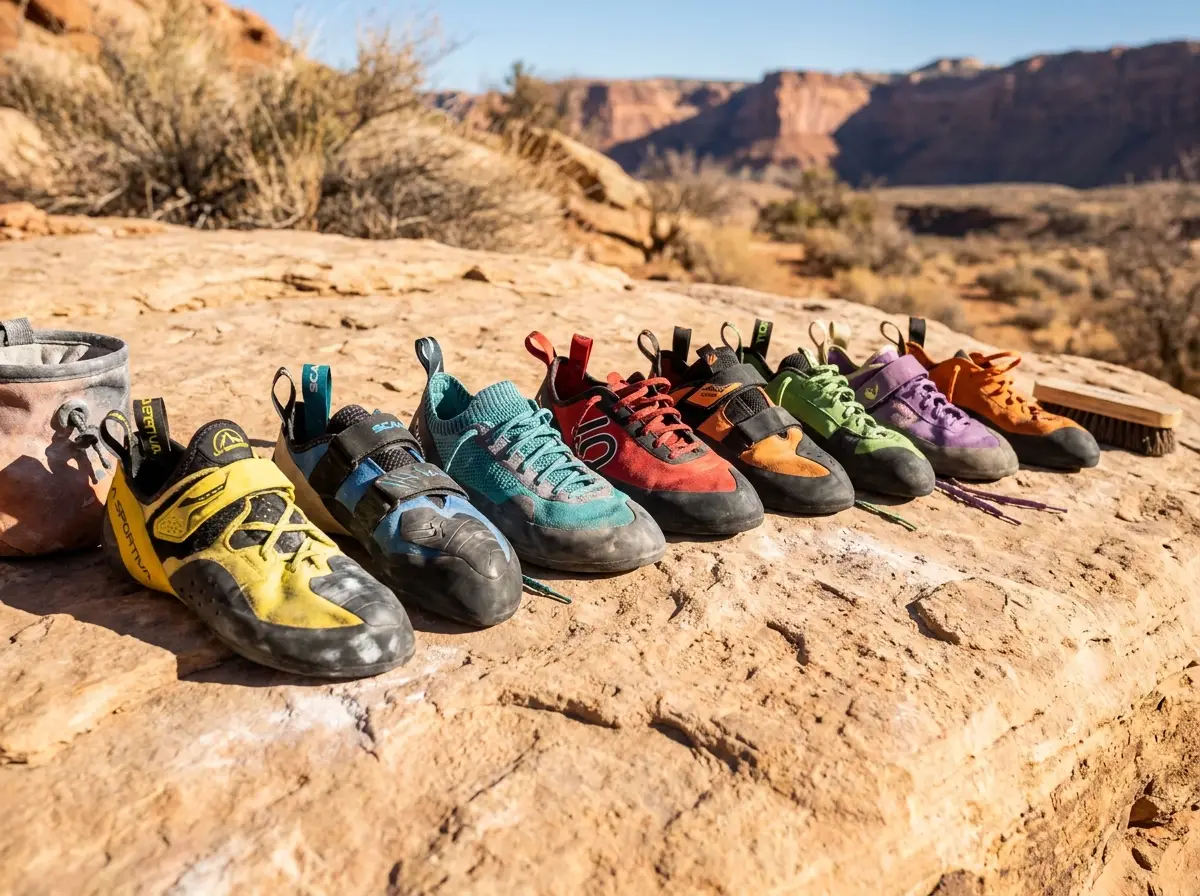
I’ve destroyed more climbing shoes than I care to count. Worn through toes on limestone, blown out rands on granite, and peeled rubber off soles on sandstone across three countries and more gym floors than I can remember. After years of rotating through every major brand, the one thing I know for sure is this: no single brand makes the best climbing shoe. They all make the best shoe for a specific foot, a specific style, and a specific rock type.
Here’s an honest breakdown of 10 climbing shoe brands — who they’re built for, what they actually do well, and where they fall short. No affiliate rankings. No sponsored picks. Just what the shoes did when the rubber met the rock.
Here’s how the brands stack up at a glance:
| Climbing Shoe Brands Overview | |||||
|---|---|---|---|---|---|
| Brand | Made In | Best For | Rubber | Foot Shape | Vegan Options |
| La Sportiva | Italy (60%), China, Vietnam | Sport climbing, bouldering | Vibram XS Grip 2, FriXion | Narrow to medium | Limited (2-3 models) |
| Scarpa | Italy (Europe) | All-around, trad, sport | Vibram XS Grip 2, M50 | Medium to wide | Moderate (2 models) |
| Evolv | South Korea | Bouldering, gym | TRAX (proprietary) | Medium | Most options of any brand |
| Five Ten | Asia (Adidas) | Bouldering, steep terrain | Stealth C4, Mi6 | Medium to wide | Limited |
| Tenaya | Spain | Sensitive climbing, comp | Vibram XS Grip 2 | Narrow, low volume | Strong lineup |
| Boreal | Spain | Trad, all-around | Zenith (proprietary) | Wide, high volume | ~45% of lineup |
| Butora | South Korea | Wide feet, bouldering | Neo Fuse (proprietary) | Wide, high volume | Limited |
| Unparallel | China | Value performance | RH (proprietary) | Medium | Growing lineup |
| OCÚN | Czech Republic | Value, gym | Cat 1.5 (proprietary) | Medium, square toe | Strong lineup |
| So iLL | USA | Gym, lifestyle | Proprietary | Medium | Fully vegan brand |
The Big Three: La Sportiva, Scarpa, and Evolv
La Sportiva: The Performance Standard
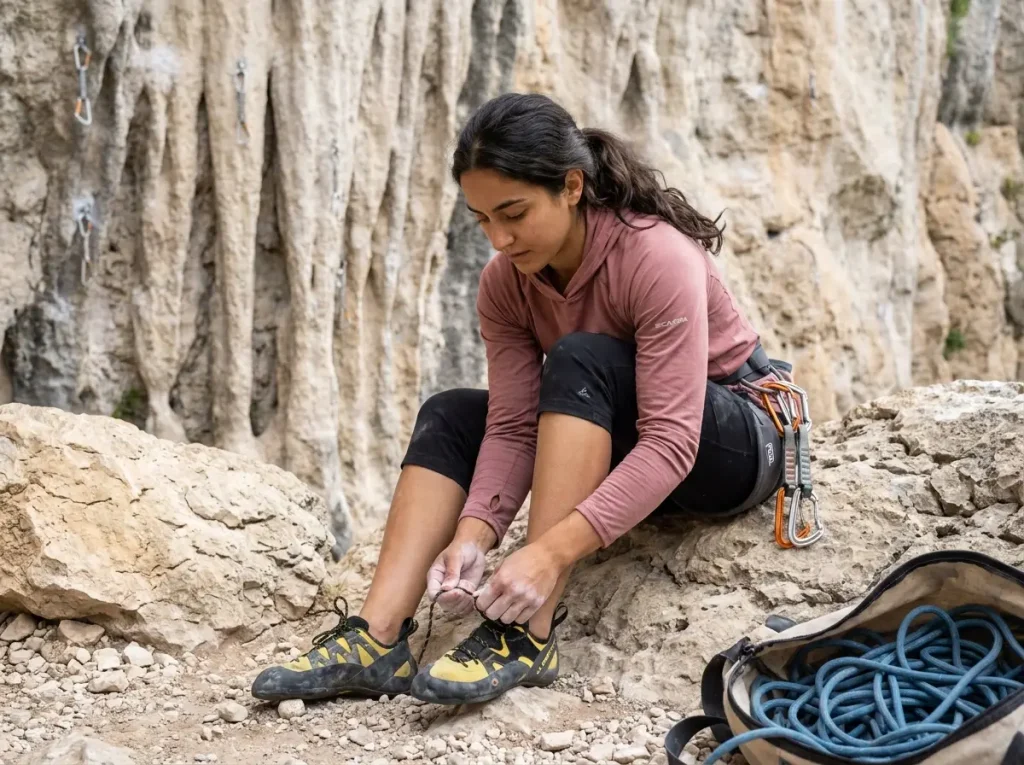
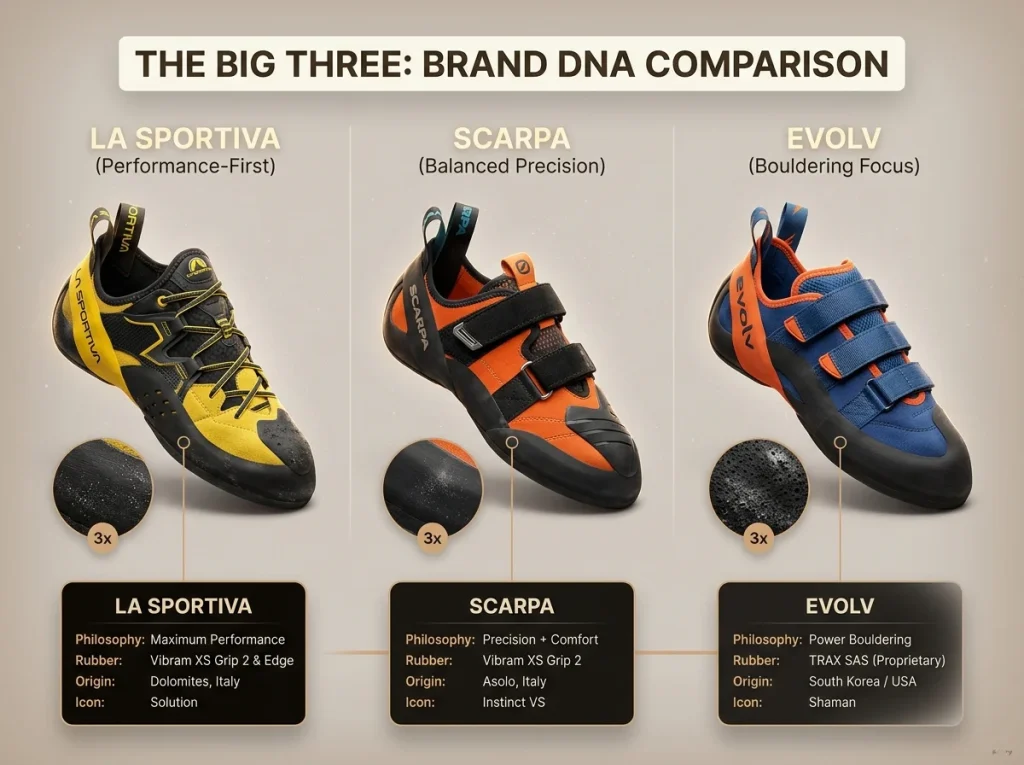
La Sportiva is the brand everyone compares against. Founded in 1928 in Val di Fiemme, Italy, they still handcraft most of their shoes in the Dolomites — one of the last major brands to keep the majority of production in Europe. When Adam Ondra climbed Silence, the world’s first confirmed 9c route, he wore a La Sportiva Solution on one foot and a Miura on the other. That tells you something about the brand’s range.
The performance lineup runs deep. The Solution is the bouldering benchmark — aggressive downturn, Vibram XS Grip 2 rubber, and a tension rand system that holds its shape through dozens of sessions. The Katana Lace blends edging power with enough comfort for multi-pitch days. The TC Pro, designed with Tommy Caldwell, remains the standard for big-wall trad climbing.
Where La Sportiva falls short: fit runs narrow. If you have wide feet or high-volume feet, you’ll fight the last on most models. Their sizing and fit varies significantly across the lineup, so the size you wear in a Solution won’t match your Miura size. And the vegan options are still limited — most performance models use leather uppers.
Pro tip: La Sportiva leather shoes stretch roughly half a size over the first few weeks. Synthetics barely stretch at all. Size accordingly and save yourself the break-in misery.
Scarpa: The Precision-Comfort Balance
Scarpa sits two hours down the road from La Sportiva in Asolo, Italy. Founded in 1938, they’ve carved a reputation for shoes that balance precision with livability. Where La Sportiva leans toward pure performance even if it means pain, Scarpa tends to build shoes you can wear for four pitches without hating your feet.
The Instinct VS is their flagship — aggressive enough for steep bouldering, sensitive enough for technical face climbing. The Drago pushes into soft, sensitive territory with a knit-like upper that wraps the foot. The Chimera adds lace precision for those who want Drago-level sensitivity with a more dialed fit.
Scarpa uses both Vibram rubber and their proprietary M50 compound on select toes. What makes them stand out is the breadth of their lasts — they offer over 20 different shoe shapes across the lineup, which means they accommodate more foot types than most competitors. If La Sportiva doesn’t fit your foot, Scarpa’s families and fit system is the next place to look.
Both brands are the only ones with access to Vibram XS Grip 2 — the stickiest and most sought-after climbing rubber compound. That exclusivity matters when you’re smearing on polished granite or edging on micro-holds.
Evolv: The Bouldering Specialist
Evolv built its reputation in the bouldering gym. Based in the US with production in South Korea, they design shoes for steep, powerful climbing with an emphasis on heel and toe hook performance.
The Shaman is their icon — aggressively downturned, stiff enough to hold body tension on tiny edges, and designed for the kind of overhung climbing that dominates modern bouldering. The Phantom goes even more aggressive. Their softer models like the Rave offer comfort for longer sessions.
Evolv uses proprietary TRAX rubber instead of Vibram. It’s softer and stickier than Vibram’s mid-range compounds but doesn’t match XS Grip 2’s durability on abrasive rock. For gym climbing and sport bouldering, TRAX performs well. For extended outdoor use on rough granite or sandstone, it wears faster.
The vegan story is where Evolv genuinely leads. They were one of the first climbing shoe brands to embrace synthetic materials across most of their lineup, and they still offer more vegan options than any other brand. If animal welfare matters to your purchasing decision, Evolv is the starting point.
The Challengers: Five Ten, Tenaya, Boreal, Butora
Five Ten: Post-Adidas Identity
Five Ten invented Stealth rubber and built some of the most iconic climbing shoes in history — the Anasazi is still a verb in some climbing circles (“just Anasazi it” means edge hard and trust your feet). Then Adidas bought them in 2011, and the conversation shifted.
The current lineup has stabilized after years of post-acquisition turbulence. The Hiangle is their performance bouldering shoe — aggressive, precise, and running on Stealth C4 rubber that’s stickier than Vibram XS Grip 2 but wears faster. The Anasazi VCS remains a solid all-arounder for gym and moderate outdoor climbing. The Aleon targets the comp-climbing crowd with a modern, sensitive design.
Where Five Ten sits now: the Stealth rubber is still world-class for pure friction. C4 is arguably the grippiest compound available, especially on smears and slopers. But durability lags behind Vibram, and the brand has lost some of the boutique credibility it carried before the corporate acquisition. The shoes are still good. The story around them is more complicated.
Tenaya: The Sensitivity Specialist
Tenaya operates out of Spain and flies under the radar for most US climbers, but their shoes are worn by Chris Sharma and Alexander Megos — which should tell you something about the performance ceiling.
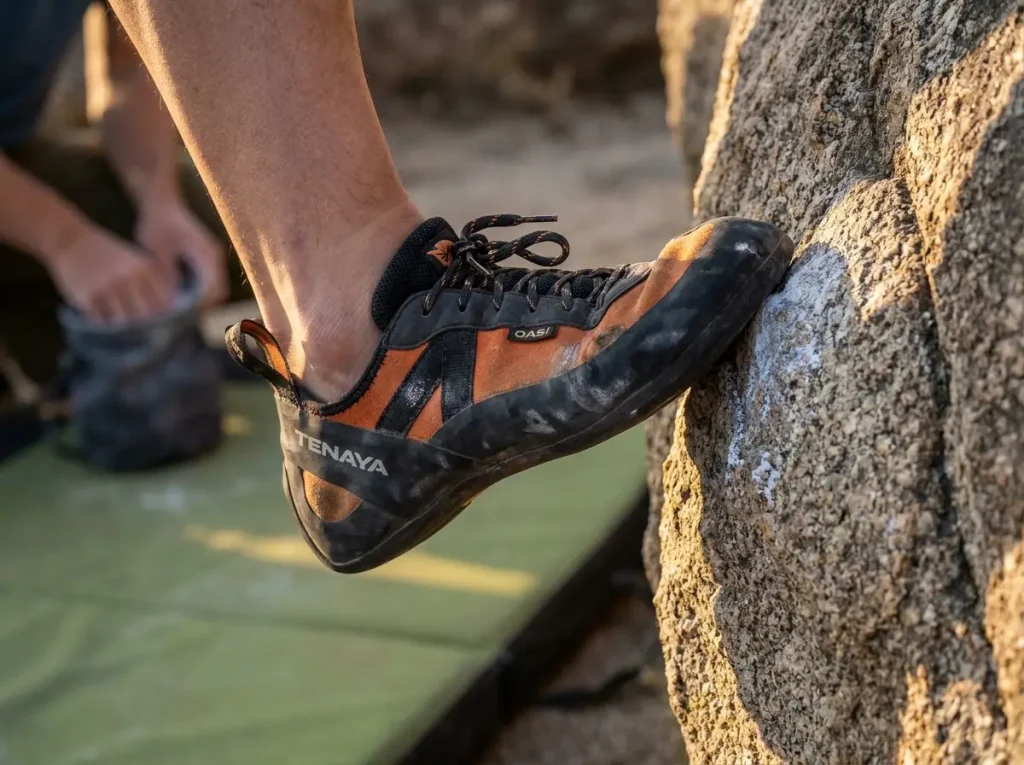
The brand designs for sensitivity and close fit. Their lasts run narrow and low-volume, which makes them a poor match for wide feet but an excellent match for climbers who want to feel every crystal and pocket through the shoe. The Oasi and Iati are their most popular performance models, both using Vibram XS Grip 2 rubber on thin soles that maximize ground feel.
Tenaya also offers a strong vegan lineup — more options than La Sportiva, with synthetic uppers across several performance models. If you have narrow feet and prioritize sensitivity over power, Tenaya deserves a try-on.
Boreal: The Wide-Foot Workhorse
Boreal is one of climbing’s oldest shoe brands — Spanish-made since the beginning, still manufacturing in their factory in Villena. They don’t chase trends or sign the flashiest athletes, but they make dependable shoes that fit foot shapes other brands ignore.
If you have wide feet, high arches, or high-volume foot shapes, Boreal is where you start. Their lasts accommodate broader feet without forcing you into oversized shoes. The Mutant and Silex offer moderate performance with genuine comfort for foot shapes that La Sportiva and Tenaya simply don’t serve.
Roughly 45% of Boreal’s lineup is vegan — the second-highest ratio among major brands after So iLL. Their proprietary Zenith rubber is solid if unremarkable, handling gym and moderate outdoor use without the premium price of Vibram-soled competitors.
Butora: Wide Feet, High Performance
Butora came out of South Korea and immediately targeted the gap that other brands left open: aggressive shoes for wide feet. Designer Nam Hee Do, who previously worked with Chris Sharma on shoe designs, built the Acro as a downturned performance shoe with a wider last than anything La Sportiva or Tenaya offers in the same aggression range.
The Acro Wide is the shoe that put Butora on the map — it’s the answer to the question every wide-footed boulderer eventually asks: “Why do all aggressive shoes assume I have narrow feet?” If that question sounds familiar, the right shoe fit changes everything about your climbing.
The Value Players: Unparallel, OCÚN, So iLL
Unparallel: Performance at a Lower Price
Unparallel formed from the original Five Ten shoe designers who left after the Adidas acquisition. They brought the rubber knowledge and shoe design experience with them. The result: shoes that perform above their price point.
The Flagship and Up Mocc are their strongest models — solid rubber, responsive fit, and prices typically 15-25% below comparable La Sportiva or Scarpa models. Their proprietary RH rubber isn’t Vibram or Stealth, but it holds its own on most rock types.
If you’re an intermediate climber looking for a performance step-up without the premium price tag, Unparallel is the brand most people overlook.
OCÚN: Czech Precision on a Budget
OCÚN manufactures in the Czech Republic and builds shoes that punch above their weight class. The Bullit is genuinely impressive for its price — good sensitivity, decent rubber, and a last that fits square-toed feet better than most competitors.
The brand offers strong vegan options and European manufacturing quality without the Italian price premium. For gym climbers and outdoor beginners who want a quality shoe without spending Scarpa money, OCÚN deserves consideration.
So iLL: The Fully Vegan Play
So iLL is the only major climbing shoe brand that is completely vegan across every model. Based in the US, they design shoes for gym climbing and moderate outdoor use. The performance ceiling is lower than La Sportiva or Scarpa, but if animal welfare is your non-negotiable purchasing criterion, So iLL makes the decision simple.
Their shoes work best for indoor bouldering and gym sport climbing. For aggressive outdoor bouldering or technical trad, the rubber and construction don’t quite match the Italian brands. For lifestyle climbers who climb three times a week at the gym and care about what their money supports, So iLL earns its place.
Rubber Compounds: The Sole of Every Brand
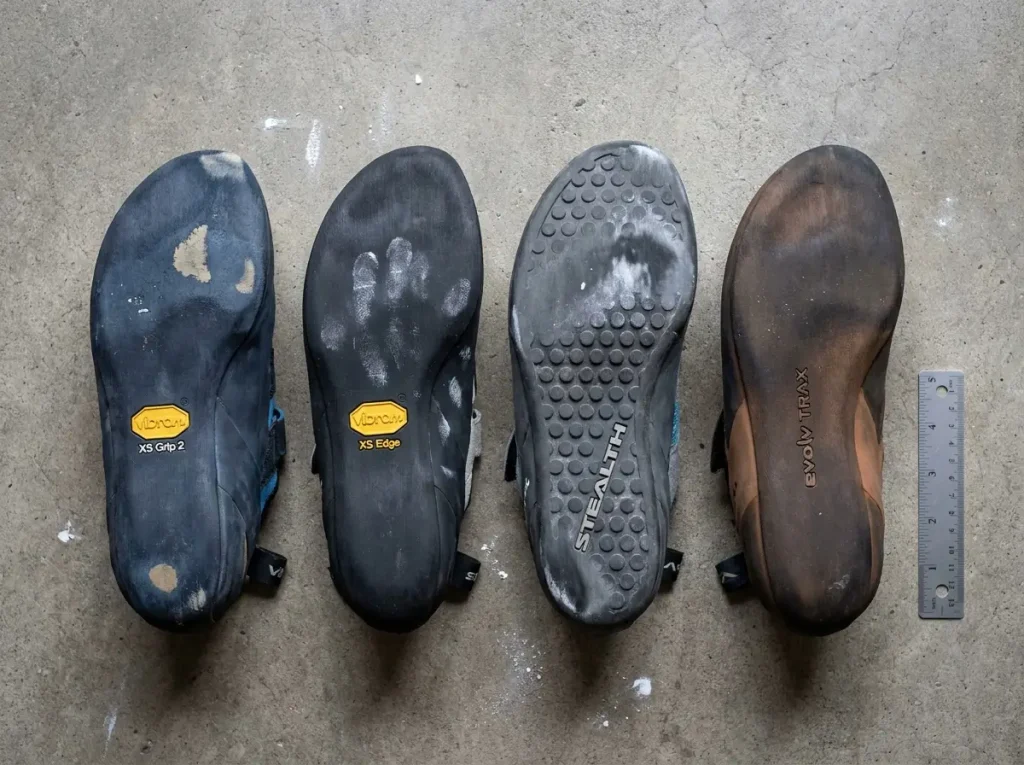
The rubber on the bottom of your shoe matters more than the brand name on the tongue. Two shoes can look identical and climb completely differently based on which compound covers the sole.
Vibram: The Industry Standard
Vibram supplies the rubber for La Sportiva, Scarpa, Tenaya, and a handful of others. Their lineup runs from soft and sticky to firm and durable:
XS Grip 2 is the gold standard — soft, sticky, and tuned for performance bouldering and sport climbing. It’s what you find on the Solution, Instinct VS, and Tenaya Oasi. It smears beautifully and edges well on small holds, but it wears faster than firmer compounds on rough outdoor rock.
XS Edge is the edging specialist — firmer, more durable, designed for tiny footholds on vertical or slightly overhanging terrain. Multi-pitch climbers and trad climbers favor this compound because it supports the foot under sustained load without deforming.
The key detail most comparison articles miss: La Sportiva and Scarpa are the only two brands with access to both XS Grip 2 and XS Edge. This exclusive arrangement with Vibram gives them a material advantage that other brands can’t replicate. Our climbing shoe rubber guide breaks down every compound by hardness, grip, and best application.
Stealth: Five Ten’s Edge
Five Ten’s Stealth C4 is arguably the stickiest climbing rubber available. In pure friction tests, it outgrips XS Grip 2 on smooth surfaces. The tradeoff: it wears roughly 20-30% faster on abrasive rock. For gym climbing and limestone sport routes, that tradeoff is worth it. For sandstone or granite, you’ll resole sooner.
Stealth Mi6 is their soft-friction compound — even stickier than C4 but with the durability of wet tissue paper. It appears on specialized comp shoes and isn’t meant for regular outdoor use.
Proprietary Compounds: The Rest
Evolv’s TRAX, Boreal’s Zenith, Unparallel’s RH, and OCÚN’s Cat 1.5 are all proprietary compounds that range from decent to good. None match Vibram’s top-tier offerings in the combined metric of grip plus durability, but they keep shoe prices lower and perform adequately for gym and moderate outdoor use.
Pro tip: Rubber compound matters most on the rock types you actually climb. If you never leave the gym, TRAX and Cat 1.5 work fine and save you money. If you’re climbing polished granite or technical limestone outside, XS Grip 2 or Stealth C4 make a real difference you’ll feel on every move.
Foot Shape Matters More Than Brand Loyalty
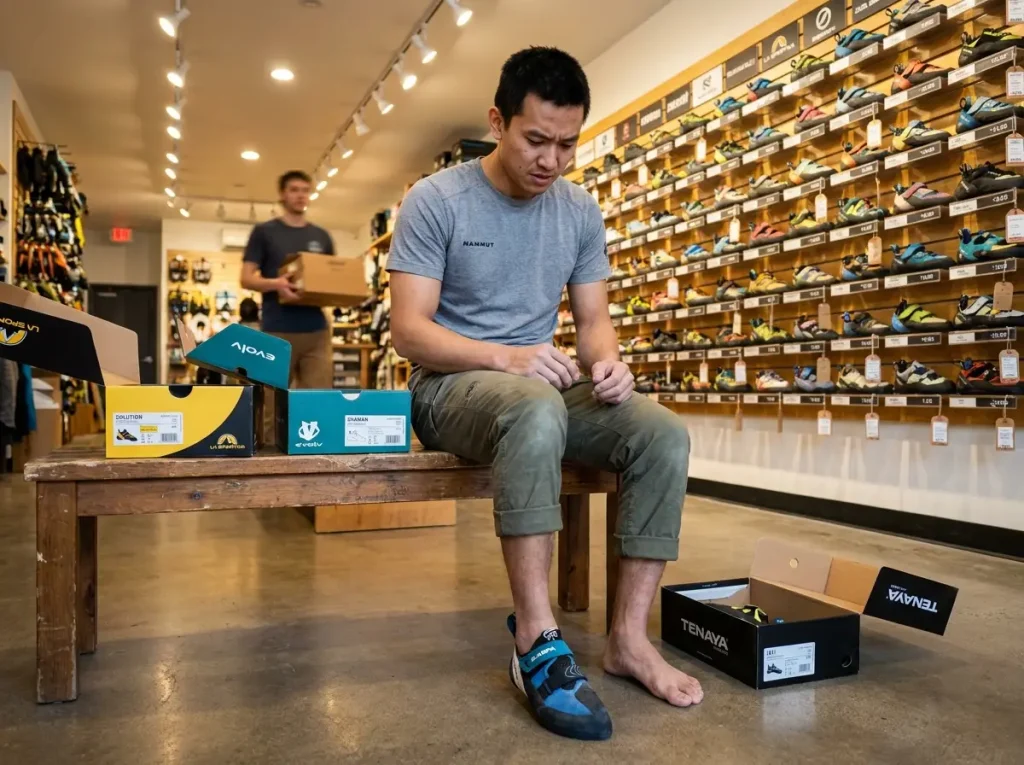
The most expensive shoe from the best brand in the world is useless if it doesn’t match your foot. This is where most “best climbing shoe” articles fail — they rank shoes without acknowledging that foot shape overrides everything else.
Narrow and Low-Volume Feet
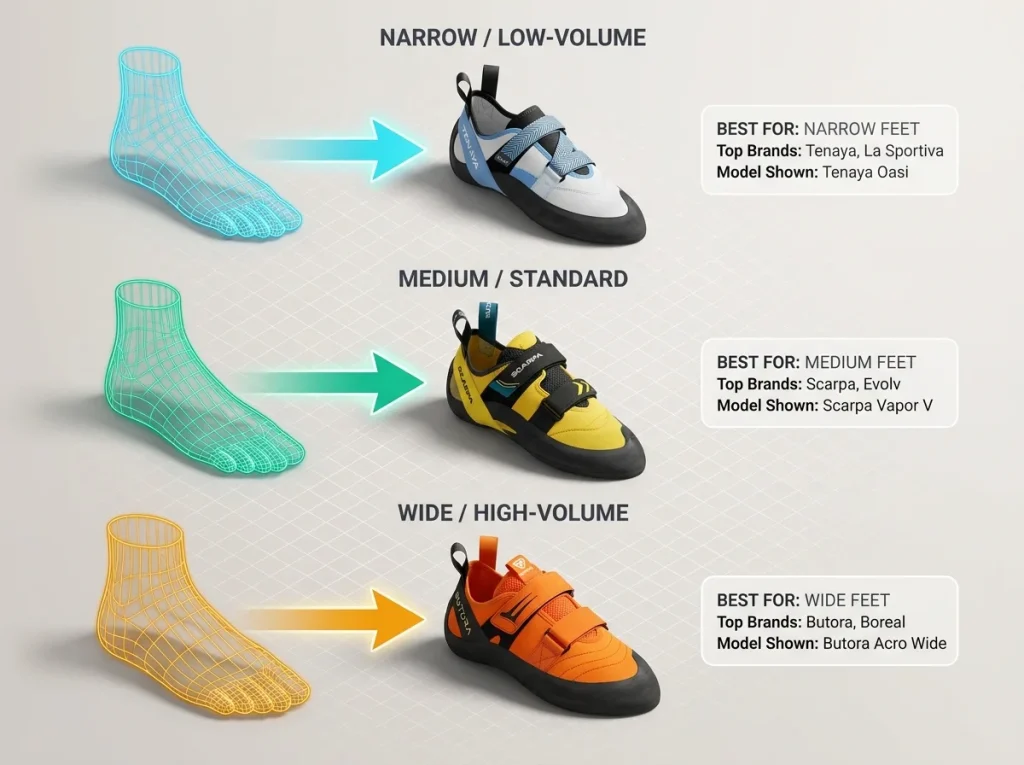
If your feet are narrow with a low instep, you’re in luck — most performance climbing shoes are built for you. La Sportiva and Tenaya lasts run narrow and low-volume across most models. Tenaya in particular designs some of the slimmest lasts in the industry. The La Sportiva Solution, Miura, and Tenaya Oasi are standard recommendations.
Medium and Standard Feet
The majority of climbers fall here, and most brands fit reasonably well. Scarpa offers the widest variety of lasts in the medium range — their 20+ different shoe shapes mean you can likely find a Scarpa that fits your specific foot proportions. Evolv also runs medium and accommodates average foot shapes comfortably.
Wide and High-Volume Feet
This is where options thin out fast. Boreal and Butora are the two brands that design for wide, high-volume feet from the ground up — not as afterthought “wide” versions of narrow shoes, but as shoes built on wide lasts. The Butora Acro Wide and Boreal Mutant are the go-to models for wide-footed climbers who want real performance, not just tolerance.
Five Ten tends to run slightly wider than La Sportiva, making the Hiangle a common alternative for medium-wide feet that don’t quite fit Italian lasts.
Pro tip: Try shoes on in the afternoon when your feet are slightly swollen — that’s closer to how they’ll feel mid-session. And try at least three brands before buying. Your foot picks the shoe, not the review. Getting the fit right is the single most important decision you’ll make about climbing shoes.
The Sustainability and Ethics Question
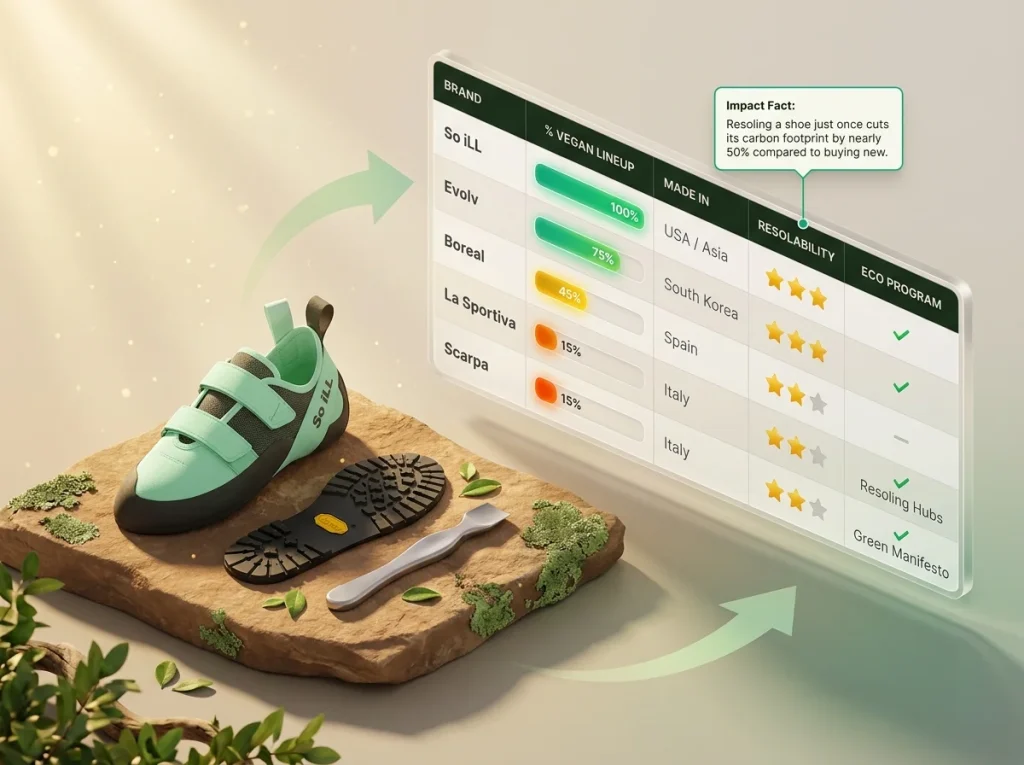
Climbing shoes generate roughly 13.89 kg of CO₂ per pair in manufacturing. Replace them twice a year — which aggressive climbers do — and you’re looking at 28 kg of carbon just from footwear. With approximately 2 million pairs potentially hitting landfills globally each year, the sustainability question isn’t abstract.
Resoling: The Biggest Impact You Can Make
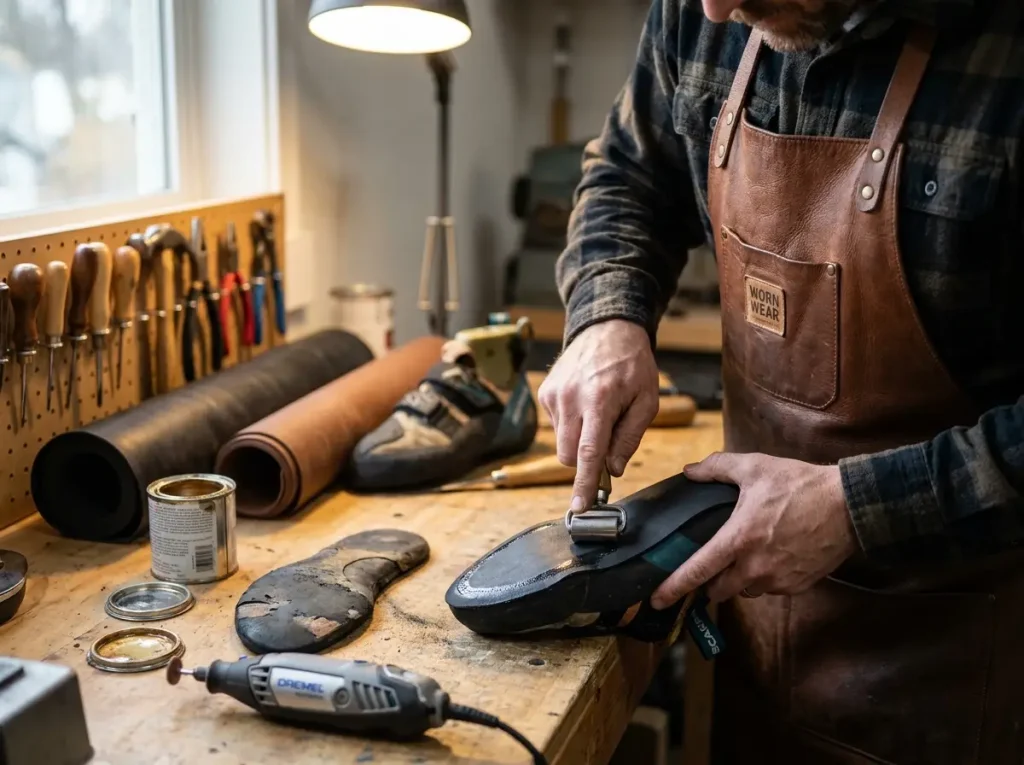
A quality climbing shoe can be resoled one to three times before the upper gives out. That turns one purchase into years of use instead of months. Scarpa runs a dedicated “Long Life Design” resole program. Most brands’ shoes can be resoled by independent cobblers using Vibram or Stealth rubber.
The design matters here: shoes with thicker rand construction and robust uppers — like the La Sportiva TC Pro or Scarpa Maestro — handle multiple resoles better than ultra-thin performance shoes. If longevity matters to you, maintaining your shoe’s downturn and structure extends its useful life significantly.
Vegan and Ethical Options by Brand
So iLL is 100% vegan. Evolv leads the major brands with the most vegan models. Boreal hits roughly 45% vegan. OCÚN and Tenaya offer strong synthetic lineups. La Sportiva and Scarpa lag behind — most of their performance models still use leather uppers, though both have added vegan options in recent years.
Manufacturing location also factors into the ethics calculation. La Sportiva, Scarpa, Tenaya, and Boreal manufacture predominantly in Europe (Italy and Spain). Evolv and Butora manufacture in South Korea. Five Ten and Black Diamond manufacture primarily in Asia. European manufacturing typically carries higher labor and environmental standards, but it also means higher prices.
How to Match Your Climbing Style to a Brand
Gym and Indoor Climbing
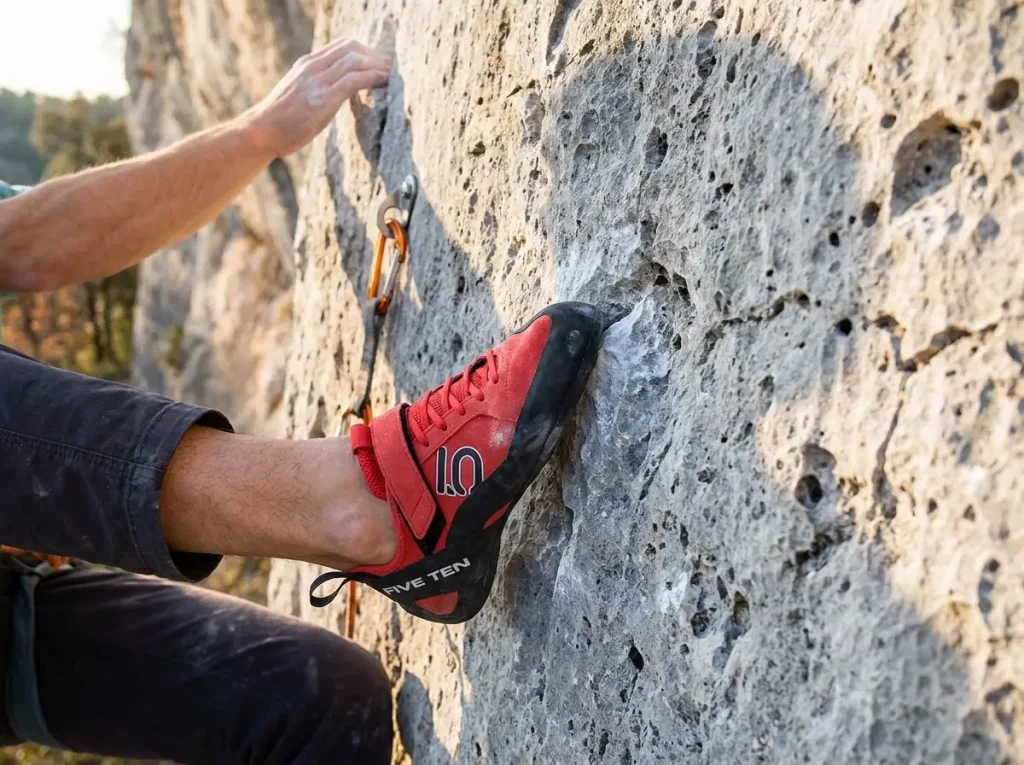
For primarily indoor climbing, prioritize comfort and rubber grip over aggressive downturn. Evolv, OCÚN, and So iLL make strong gym shoes at competitive prices. The rubber doesn’t need to be Vibram XS Grip 2 — softer proprietary compounds grip gym holds well and the surfaces don’t destroy rubber the way outdoor rock does.
A flat or moderately downturned shoe in your comfortable size is the right call. Save the aggressive performance shoes for when your climbing demands them. Bouldering shoes for beginners covers this in detail.
Sport Climbing
Sport climbing rewards precision edging on small holds with enough sensitivity to feel foot placements. La Sportiva and Scarpa dominate this space because XS Grip 2 and XS Edge rubbers handle the demands of outdoor sport rock better than alternatives.
The Katana Lace, Scarpa Vapor V, and Tenaya Mastia are strong sport climbing choices — moderately aggressive, precise, and comfortable enough for 30-meter routes. If your feet run wide, the Scarpa Vapor V fits broader than most La Sportiva sport models. Sport climbing shoes need to balance edge support with all-day comfort.
Bouldering
Bouldering shoes need to be aggressive, sensitive, and excellent at heel and toe hooks. La Sportiva Solution, Scarpa Drago, Evolv Shaman, and Five Ten Hiangle are the top contenders in this space.
Your foot shape narrows the field fast. Wide feet: Butora Acro Wide or Five Ten Hiangle. Narrow feet: Tenaya Oasi or La Sportiva Solution. Medium feet: Scarpa Instinct VS or Evolv Shaman. The difference between aggressive and moderate shoes comes down to whether you’re climbing steep enough to need the downturn.
Trad and Multi-Pitch
Trad climbing shoes need to do everything adequately and nothing terribly. The La Sportiva TC Pro has been the trad standard for a decade — flat enough for cracks, supportive enough for long days, and durable enough to handle the abuse of crack climbing.
The Scarpa Maestro and Evolv Rave are strong alternatives. Lace-up closure is almost mandatory for trad — the micro-adjustability lets you tune the fit as your feet swell across a 15-pitch day. Laces vs. Velcro matters more in trad than any other discipline.
Beginner-Friendly Brands and Where to Start
Your First Shoe: Comfort Over Performance
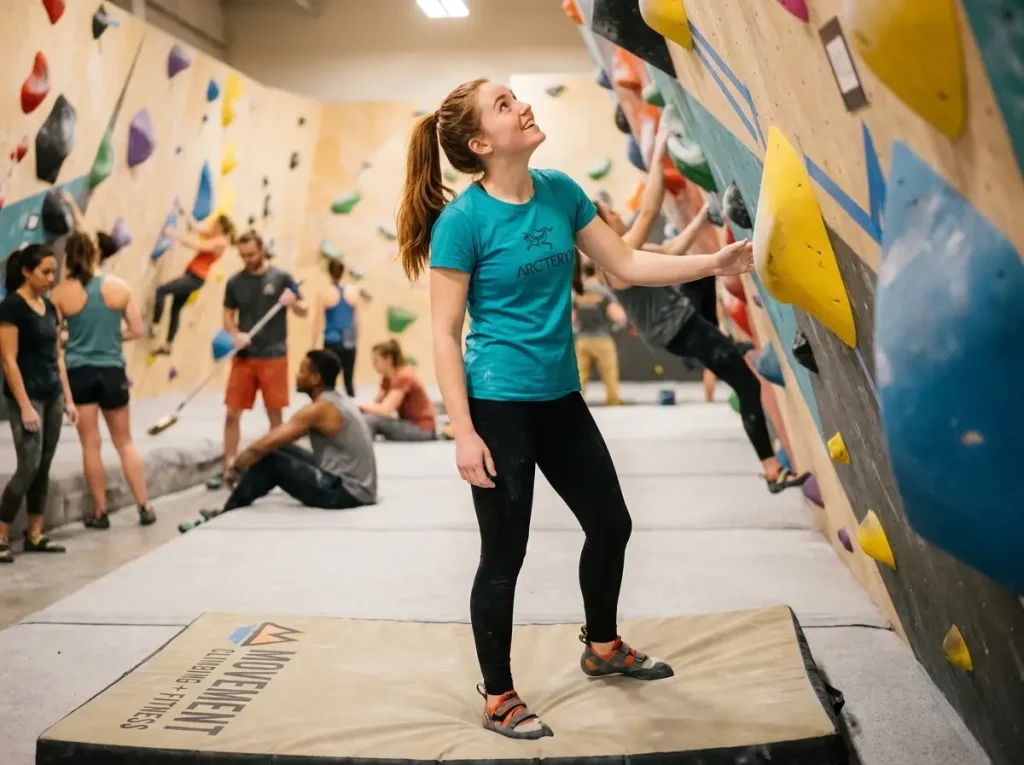
If you’ve been climbing for less than a year, ignore everything above about aggressive shoes and rubber compounds. Your first shoe should fit comfortably — snug, no dead space, but no pain. Period.
The La Sportiva Tarantulace, Scarpa Origin, and Evolv Defy are the three most commonly recommended beginner shoes, and they earn that recommendation by fitting most foot shapes adequately, using durable rubber that survives the learning curve, and costing less than performance models.
Spend your money on climbing, not shoes. A $90 beginner shoe that fits your foot well is better than a $180 performance shoe that hurts after ten minutes.
Your Second Shoe: Start Getting Specific
After a year of consistent climbing — twice a week, variety of styles — your feet have told you what they need. You know if edges hurt your toes. You know if your heel slips. You know if you need more sensitivity or more support.
This is when brand matters. Go to a shop that stocks at least four brands and try on performance models from each one. Your foot picks the brand, not the marketing. Some people are La Sportiva people. Some are Scarpa people. You won’t know until your foot is in the shoe.
Building Your Shoe Quiver Over Time
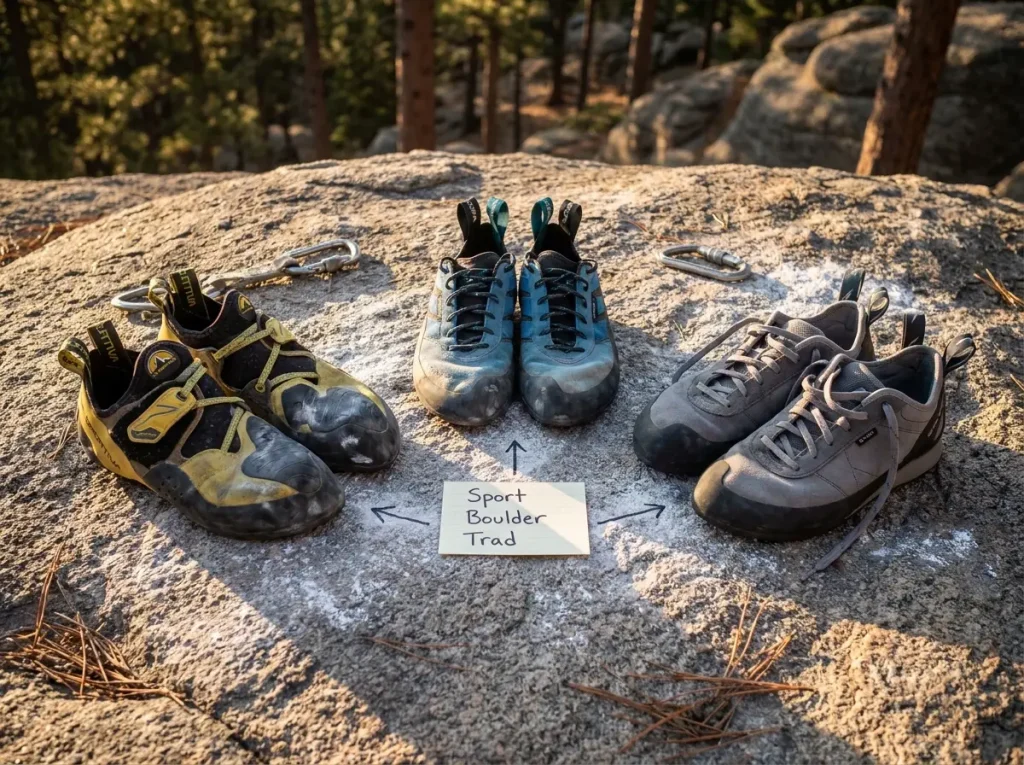
The climbers who perform best across disciplines don’t own one pair of shoes — they own three.
Shoe 1 — The Aggressive: For steep bouldering and hard sport cruxes. Downturned, sensitive, tight. You wear these for an hour and take them off. La Sportiva Solution, Scarpa Drago, Five Ten Hiangle.
Shoe 2 — The All-Rounder: For gym sessions, moderate outdoor routes, and days where you’re climbing a lot. Moderate downturn, comfortable, solid rubber. La Sportiva Katana, Scarpa Vapor V, Evolv Shaman (sized comfortably).
Shoe 3 — The Comfortable: For long trad days, crack climbing, and multi-pitch routes. Flat or minimal downturn, lace-up, all-day comfort. La Sportiva TC Pro, Scarpa Maestro, Evolv Rave.
You build this quiver over two to three years, not all at once. Start with the all-rounder, add the aggressive shoe when you’re sending V4+ or 5.11+ consistently, and add the comfortable shoe when you start doing multi-pitch or trad. Taking care of each pair — proper cleaning, storage, and maintenance — doubles their useful life.
Pro tip: When your aggressive shoes start losing their downturn, demote them to gym shoes and buy a fresh pair for outdoor projects. A shoe that’s too worn for hard sends still has months of gym life left. Catching the resole window at the right time saves the shoe from becoming unrepairable.
Conclusion
No brand makes the best climbing shoe. La Sportiva sets the performance standard, Scarpa balances precision with comfort, Evolv dominates bouldering and vegan options, Five Ten has the stickiest rubber, Tenaya offers unmatched sensitivity, and Boreal and Butora serve the wide-footed climbers that everyone else ignores.
Your foot shape eliminates half the brands before you read a single review. Your climbing style narrows it further. And the rubber compound on the sole determines more about how the shoe performs than anything printed on the tongue. Start there — foot shape, then style, then rubber — and the right brand reveals itself.
Try on shoes from at least three brands before buying. Your foot makes the final call, and it’s smarter than any ranking.
Q1 What is the best climbing shoe brand for beginners?
La Sportiva, Scarpa, and Evolv all make excellent beginner shoes. The Tarantulace, Origin, and Defy are the three most recommended starter models. Prioritize a comfortable fit over brand prestige — the shoe that fits your foot without pain is the right one.
Q2 Is La Sportiva or Scarpa better for climbing?
Neither is objectively better. La Sportiva runs narrower and prioritizes performance, while Scarpa offers more last variety and tends toward a balance of precision and comfort. Try both on — your foot shape decides.
Q3 Are Five Ten climbing shoes still good after Adidas bought them?
The current Five Ten lineup has stabilized and performs well. Stealth rubber remains among the stickiest compounds available. The Hiangle and Aleon are strong performers. The brand lost some boutique credibility but not its engineering.
Q4 What climbing shoe brand has the widest fit?
Boreal and Butora design shoes specifically for wide, high-volume feet. The Butora Acro Wide and Boreal Mutant are the top recommendations for climbers who find La Sportiva and Tenaya lasts too narrow.
Q5 How often should you replace climbing shoes?
Replace when the rubber wears through to the rand or when the shoe loses its structural support. Most climbers get 3 to 12 months per pair depending on frequency and climbing style. Resoling extends the life by one to three additional cycles — always resole before the rand is exposed.
Safety Notice: Rock climbing and mountaineering are inherently high-risk
activities that can involve physical trauma or fatal incidents. The information on Rock Climbing Realms is for
educational and informational purposes only. Techniques and advice presented here are not a substitute
for professional, hands-on instruction. Conditions and risks vary by location. Always seek guidance
from a qualified instructor before attempting new techniques. By using this website, you agree that you
are solely responsible for your own safety. Any reliance you place on this information is strictly
at your own risk, and you assume all liability for your actions. Rock Climbing Realms and its authors
will not be held liable for any harm, damage, or loss sustained in connection with the use of this information.
Affiliate Disclosure: We are a participant in the Amazon Services LLC Associates Program, an
affiliate advertising program designed to provide a means for us to earn advertising fees by advertising and linking
to Amazon.com. As an Amazon Associate, we earn from qualifying purchases. We are also an official affiliate partner
of Black Diamond Equipment via the AvantLink network. If you click on a Black Diamond affiliate link and make a
purchase, we may earn a commission at no additional cost to you. We also participate in other affiliate programs.
Additional terms are found in the terms of service.