In this article
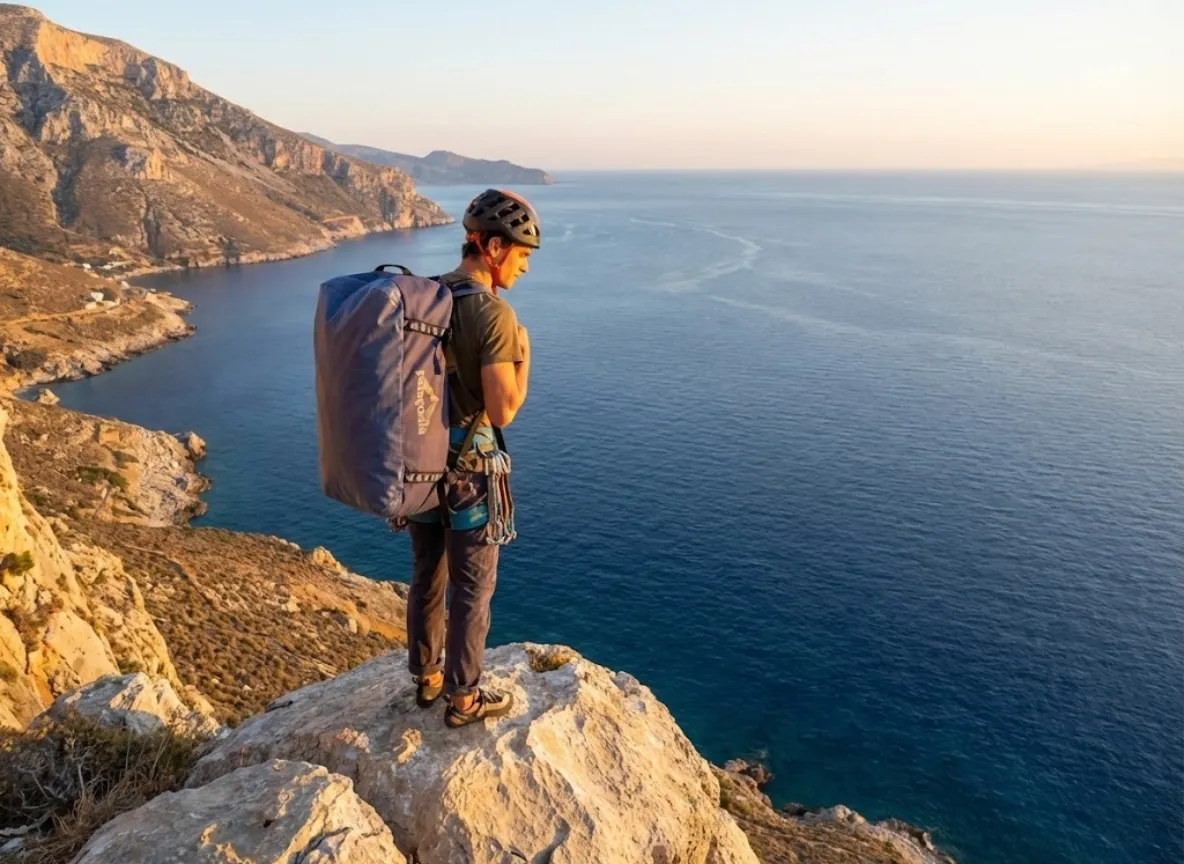
The tarmac at Athens airport heat-shimmers, and you are standing at the baggage claim with a 70-liter haul bag that weighs exactly 22.9 kilograms. This is the friction point where the dream of vertical freedom meets the hard logistics of solo adventure logistics.
Rock climbing is historically a partnership of two—built on trust and shared weight—but modern adventure travel has shifted toward the autonomous climber. As a guide who has spent decades managing logistics from Patagonia to Kalymnos, I can tell you that the success of a solo trip does not depend on your max grade. It depends on how well you engineer your Solo Readiness Matrix: a strategic balance of Gear Weight, Social Liquidity, and Safety Redundancy.
In this guide, we will move beyond theoretical trip planning. We will analyze how heavy gear dictates your mobility, which disciplines allow for true independence, and how to rigorously vet strangers before trusting them with your life.
What Constitutes the Solo Readiness Matrix?

The matrix is a logistical blueprint designed to evaluate how hard a trip will be to execute. It balances three specific axes: Payload (how much your climbing ropes and hardware weigh), Liquidity (your partner-finding probability), and Redundancy (your safety margins when things go wrong).
How does logistical payload dictate travel mobility?
The more technical requirements your equipment has, the harder it is to move around on the ground. Trad climbing, sport climbing, and multi-pitch climbing require a “critical mass” of safety equipment. A standard sport rack—rope, quickdraws, harness, belay device, and rescue kit—typically totals 7 to 9 kilograms.
This often consumes 50% of standard airline baggage allowances before you have packed a single t-shirt. This “heavy gear penalty” forces you into a more cumbersome class of travel. It often rules out public transit, increasing car necessity and forcing you to use private shuttles or taxis.
The friction is not just weight; it is volume. Bouldering appears to be the lighter discipline, but crash pads present a unique logistical nightmare. While light, their bulk incurs “oversize” fees on a flight and complicates ground transport.
If you are selecting a crash pad system for travel, you must weigh the protection of a hinge style against the packability of a taco style. However, the most effective strategy is often the Rental Solution. Destinations like Bishop, Squamish, Canada, or Albarracín, Spain have robust rental infrastructures, allowing you to fly with minimal gear and rent the large pads upon arrival.
Pro-Tip: Adopt a Hybrid Carry-On Strategy. Always carry fit-specific items (climbing shoes, harness) in the cabin. Check your replaceable hardware (quickdraws, ropes). If the airline loses your checked bag, you can still climb using rental gear. If they lose your shoes, your trip is effectively paused until you break in a new pair.
You must also navigate the reality of airport security. Tightly coiled climbing ropes appear extremely dense on X-ray scanners, often looking like organic explosives to a scanner operator. Familiarizing yourself with the Transportation Security Administration guidelines on sporting equipment can save you from confiscations.
Even with knowledge of the rules, you should always budget an extra 20 minutes for secondary screening if you carry a rope in your cabin bag. Finally, consider the hidden costs in destinations like Thailand or Vietnam. Accessing Deep Water Soloing (DWS) sectors often requires chartering private boats, adding a financial and logistical barrier to the “lightest” form of climbing.
Which Climbing Disciplines Maximize Autonomy?
Applying the Readiness Matrix to specific climbing styles reveals that difficulty is not the main problem for the traveler. The real constraint is operational dependence—how much you need other people.
Why is bouldering the engine of operational autonomy?
Bouldering offers maximum autonomy because it removes the “belay constraint,” shifting the primary requirement from a trusted partner to a safe landing zone. In lead climbing, you cannot move upward without a partner. In bouldering, you don’t need a fellow traveler to climb, but you still need safety.
This discipline relies on the “Pack” dynamic. Sectors in high-density areas like Fontainebleau, France foster porous groups where joining a rotation is seamless. “Spotting” acts as a low-barrier entry skill. A solo person can immediately contribute value to a group by offering a spot, making it easy to integrate socially without needing a common language.
However, autonomy has a limit. The primary risk is the uncontrolled ground fall from bouldering routes. Prospective analysis of climbing accident data indicates that while bouldering injuries are often less severe than lead climbing falls, they are frequent and extremity-focused.
The solo traveler must prioritize “Social Redundancy” by choosing high-density sectors. Attempting remote blocks alone removes your safety net. You must also be proficient in mastering crash pad placement to ensure you are not relying solely on the hope of a stranger’s spot.
There is a logistical paradox here. The discipline is technically light (shoes/chalk), but the travel logistics are heavy unless you utilize local rentals. Additionally, solo climbers should generally avoid “Highball” bouldering. The consequence of error on a 20-foot problem exceeds the safety margin provided by a single pad or a stranger, regardless of your confidence level.
How does location dictate success in sport climbing?
In sport climbing, location dictates success through “Social Liquidity“—the speed and ease with which a stranger can be converted into a trusted partner. For the solo traveler, not all crags are created equal. You must seek out “Social Hubs” with a high partner-finding probability.
Locations like Miguel’s Pizza (Red River Gorge), Camp 4 (Yosemite, USA), and The Olive Branch (El Chorro, Spain) operate on the “Campfire Model.” Their communal living infrastructure—shared kitchens, fire pits, tent camping—forces interaction and removes social barriers. In contrast, “Decentralized” models like Kalymnos, Greece, Margalef, or the Dolomites, Italy often feature private studios or spread-out accommodations. This reduces forced interaction, making the solo climber rely on digital tools like 27 Crags, Mountain Project, Reddit, or Facebook groups to find local climbers.
Once a partner is found, you face the “Belay Date.” This is the critical safety gate of the first session. You must audit a potential partner’s competence, weight compatibility, and communication style before tying in. Trusting a stranger requires strict adherence to UIAA standards for rope and hardware safety when inspecting their gear, but even more importantly, inspecting their behavior.
Pro-Tip: Your equipment is Social Capital. A solo traveler with a 70m rope and a full rack of draws is a high-value asset to a group of three. A climber with only shoes and a harness is a liability who needs to borrow gear. Bring the ropes to increase your “market value” at the crag.
Finally, communication protocols are non-negotiable. In international hubs like Geyikbayiri, Turkey, language barriers can be lethal. Before leaving the ground, establish tactile or visual commands. If you are focused on perfecting your belay skills, ensure you can execute them silently if wind or language obscures verbal commands.
| Climbing Destination Logistics & Strategies | |||
|---|---|---|---|
| Destination | Accommodation Type | Partner Strategy | Best Season |
| High Liquidity Hubs | |||
| Red River Gorge, USA | Communal Camp (Miguel’s Pizza) | Stand in the “Pizza Line” or hang out in the central pavilion; no pre-planning is required. | Spring/Fall |
| Geyikbayiri, Turkey | Camp Village (JoSiTo / Flying Goat) | Utilize communal kitchens and “living rooms” in self-contained camp villages to meet others. | Winter/Spring |
| El Chorro, Spain | Hostel (The Olive Branch) | Attend communal dinners where the “Finca” atmosphere encourages interaction and long-term stays. | Winter |
| Tonsai/Railay, Thailand | Backpacker Bungalows | Join organized DWS trips at Basecamp Tonsai or socialize at beach bars; requires filtering for serious climbers. | Winter (Dec-Feb) |
| Low/Medium Liquidity Hubs | |||
| Kalymnos, Greece | Decentralized Private Studios | Requires digital pre-work (forums/Facebook) or visiting specific social nodes like Sofrano bar. | Spring/Fall |
| Fontainebleau, France | Dispersed (Gites/Camping) | Stay at specific climber-centric hostels (e.g., Fontainblhostel) to organize carpools; otherwise isolated. | Spring/Autumn |
| Mallorca, Spain | Independent Hotels/Villas | Difficult to find partners without pre-planning; usually requires joining paid tours or serendipity at cliffs. | Summer/Fall |
What Are the Hidden Costs of Solo Travel?
We often view solo travel as a personal challenge, but it carries broader impacts. The solo traveler leaves a distinct mark on both the environment and the risk profile of a region.
How does the solo footprint impact the environment?
Solo travel significantly increases the per-capita environmental footprint due to unshared transport emissions and the lack of resource pooling common in group dynamics. When you rent a car alone to drive to the crag, your “emissions per ascent” are significantly higher than a carpool of four.
To mitigate this, prioritize destinations accessible by public rail, such as Fontainebleau or El Chorro. This reduces the reliance on single-occupancy vehicles. Beyond transport, we must look at gear. Academic research into the environmental impact of climbing gear production highlights that producing a single rope generates approximately 46kg of CO2. As a solo traveler, extending the life of your gear is a primary sustainability action.
Beyond carbon, there is the physical impact. We must be rigorous in adhering to Leave No Trace ethics and local eco-etiquette. In infrastructure-poor hubs like Tonsai and Railay, travelers must be hyper-vigilant about waste management. Without a group to split bulk water jugs, soloists often rely on single-use plastic bottles, overwhelming local disposal systems. Your role is not just a visitor; you are an ambassador. Engaging with organizations like the American Alpine Club or local coalitions creates a positive legacy that outlasts your trip.
Is Deep Water Soloing a viable low-impact option?
While low in gear weight, Deep Water Soloing (DWS) introduces high aquatic risks and logistical costs that often require group coordination for boat access. DWS offers a minimal gear payload—usually under 2kg for climbing shoes and chalk—facilitating easy carry-on travel.
However, the primary risk shifts from trauma to drowning. Travelers must understand “Water Exits” (rope ladders, scramble outs) and the danger of tides, variables that sport climbers rarely consider. Climbing DWS completely alone is ill-advised due to the risk of a bad water entry resulting in a concussion or becoming winded.
Health risks in tropical DWS destinations are also distinct. Travelers should consult Centers for Disease Control and Prevention travel health advice regarding marine hazards like jellyfish and sanitation issues often dubbed “Tonsai Tummy.”
Financially, the “Boat Economy” acts as a barrier. Accessing the best cliffs often requires chartering a longtail boat. Doing this solo is prohibitively expensive. Therefore, DWS is actually a “Medium Liquidity” activity; you must pool resources with others at the pier to make the day viable. If you are intent on mastering Thailand’s climbing logistics, joining organized tours (like those at Basecamp Tonsai) provides the necessary rescue redundancy and splits the cost of access.
Conclusion
The solo traveler does not just pack a bag; they engineer a logistical blueprint.
- Bouldering offers the highest independence but requires managing the volume of crash pads via rentals.
- Sport Climbing is viable for soloists only in “Social Hubs” where accommodation bridges the social gap.
- Deep Water Soloing is the gear-lightest option but introduces complex aquatic risks and boat logistics.
- Sustainability requires conscious choices in transport and gear longevity to offset the heavier solo footprint.
Your “Solo Readiness Matrix” is personal. Assess your tolerance for logistical friction against your willingness to exert social effort. The rock is waiting, but how you get there—and who catches you—is up to you.
FAQ – Frequently Asked Questions
Can you go rock climbing solo?
While free soloing (climbing without ropes) is an extremely high-risk activity reserved for experts like those on The Dawn Wall, disciplines like bouldering and auto-belay climbing gyms are standard for travelers. Rope soloing is an option for the confident climber with advanced self-belay skills, but for most, joining a guided group or finding a partner is the recommended safety protocol.
Finding a climbing partner while traveling?
Prioritize staying at Social Hubs like Miguel’s Pizza (USA) or The Olive Branch (Spain), where communal spaces foster interaction. For decentralized areas, digital tools are essential: use Mountain Project forums, specific Facebook groups (e.g., Climb Kalymnos), and apps like 27 Crags to connect with other climbers.
Can you bring climbing ropes on a plane?
Yes, the TSA allows climbing ropes in both carry-on and checked bags. However, tightly coiled ropes are dense and often trigger secondary security screenings. To avoid delays or having to uncoil your rope at the checkpoint, it is often smoother to check your rope in your main luggage.
What is the best climbing destination for solo travelers?
For sport climbing, the Red River Gorge (USA), El Chorro (Spain), and Joshua Tree are top-tier due to their partner-friendly social scenes. For bouldering, Albarracín (Spain), Bishop, and Fontainebleau (France) offer high grade density, making it easy to join groups, along with established rental infrastructure for crash pads.
Risk Disclaimer: Rock climbing, mountaineering, and all related activities are inherently dangerous sports that can result in serious injury or death. The information provided on Rock Climbing Realms is for educational and informational purposes only. While we strive for accuracy, the information, techniques, and advice presented on this website are not a substitute for professional, hands-on instruction or your own best judgment. Conditions and risks can vary. Never attempt a new technique based solely on information read here. Always seek guidance from a qualified instructor. By using this website, you agree that you are solely responsible for your own safety. Any reliance you place on this information is therefore strictly at your own risk, and you assume all liability for your actions. Rock Climbing Realms and its authors will not be held liable for any injury, damage, or loss sustained in connection with the use of the information contained herein.
Affiliate Disclosure: We are a participant in the Amazon Services LLC Associates Program, an affiliate advertising program designed to provide a means for us to earn advertising fees by advertising and linking to Amazon.com. As an Amazon Associate, we earn from qualifying purchases. We also participate in other affiliate programs. Additional terms are found in the terms of service.