
In this article
Picture a one-inch line strung almost three thousand feet above the floor of Yosemite Valley with no leash, or a thin granite crack with no rope and the ground a very long way down. For Dean Potter, that was an ordinary Tuesday. He was one of the most influential and most argued-over figures in American climbing, and HBO’s 2026 documentary The Dark Wizard has pulled him back into the conversation. This is the honest retrospective: what he actually did, what free soloing really meant to him, and why climbers still cannot agree on his legacy.
Who Dean Potter Really Was
Before the records and the controversy, Dean Potter was a 6-foot-5 kid from New England who decided a normal life was not for him. He belongs on the short list of legendary American climbers who reshaped the sport, but he got there without a coach, a gym team, or anyone’s permission.
From a New Hampshire Hillside to Camp 4
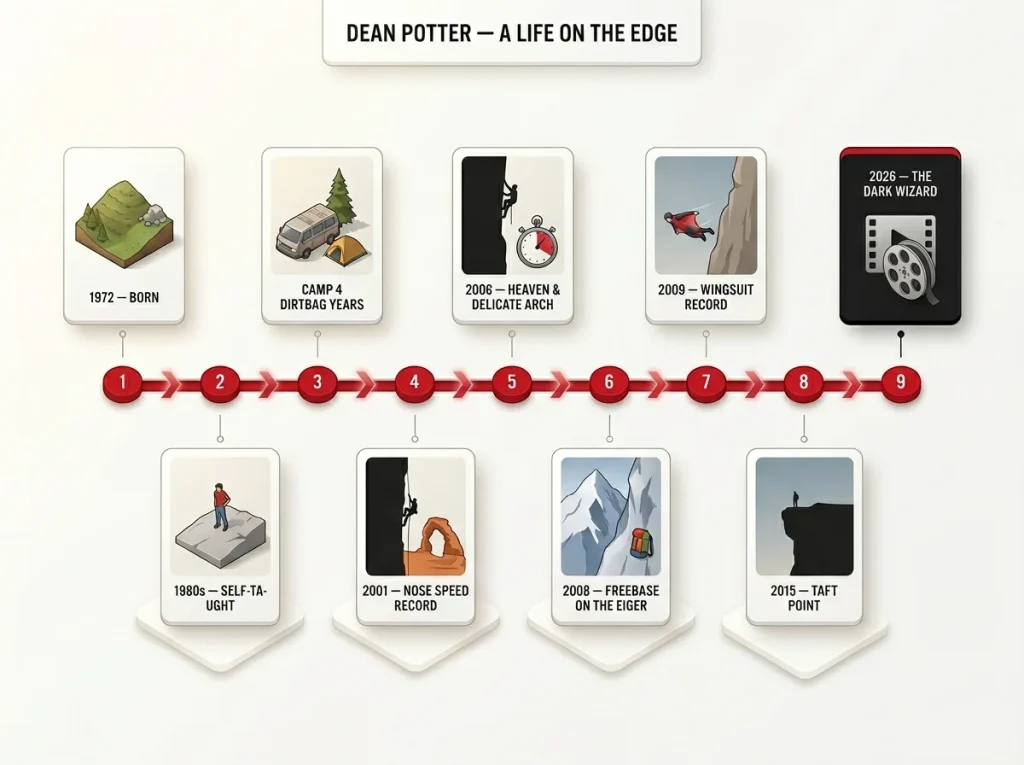
Potter was born April 14, 1972, in Fort Leavenworth, Kansas, and raised in New Boston, New Hampshire. He taught himself to climb in 10th grade on the rock near home, then pointed himself at Yosemite and never really looked back. By his twenties he was living for months at a time in Camp 4, the scruffy walk-in campground that has launched half of American climbing.
For a time he was married to climber Steph Davis, which made them one of the sport’s most recognizable couples. In 2003 he took home the Laureus World Action Sportsperson of the Year, an award that briefly made him the most decorated extreme athlete on the planet. National Geographic later named him an Adventurer of the Year, too.
What Dirtbag Actually Meant for Potter
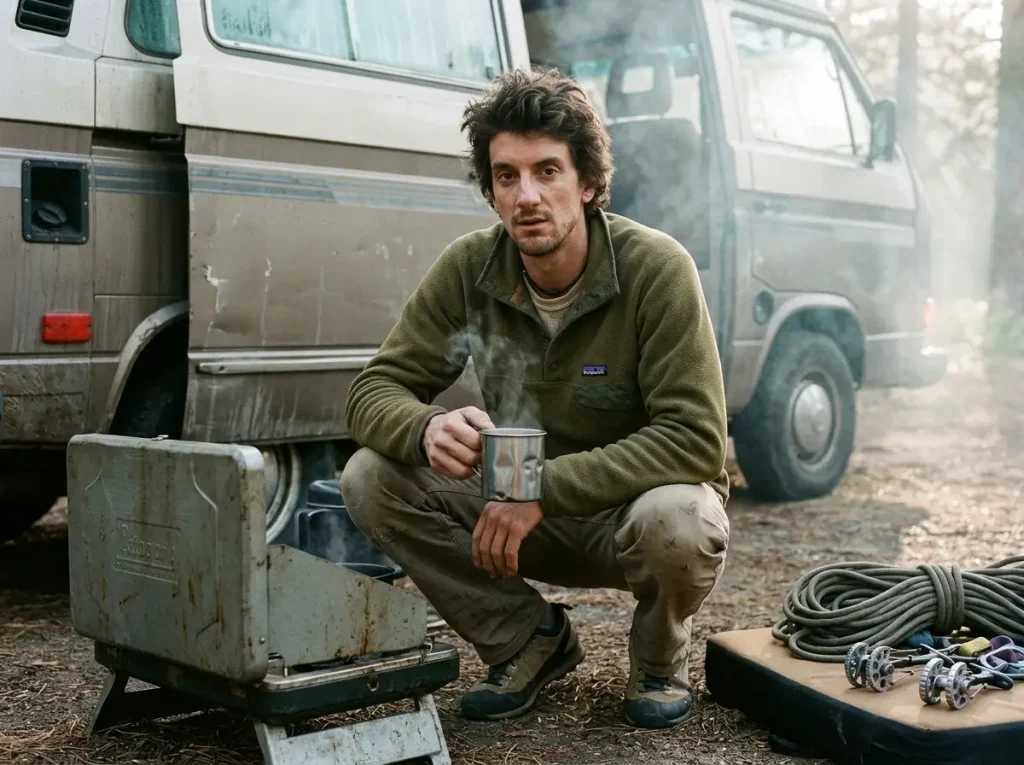
People romanticize the dirtbag life, but it is not poverty for its own sake. It is a trade: comfort, money, and a permanent address swapped for time on the wall. Potter lived out of vehicles and the Camp 4 dirt for years because climbing full-time was the only thing he wanted to be doing.
That choice is the root of everything that came later. When climbing is your whole budget and your whole calendar, you start looking for what else the rock can give you.
The Dark Wizard and the Myth
The nickname followed him for years. Potter called his blend of disciplines “the dark arts,” his own shorthand for stitching together free solo, speed climbing, highlining, BASE jumping, and wingsuit flying into one practice. Tall, intense, and a little remote, he fit the Dark Wizard name a little too well, and the myth sometimes ran ahead of the man.
What Free Soloing Actually Meant to Him
Most people meet the phrase free solo through a movie and assume it means anything done without a rope. That is where the misreading starts, and it is the single most important thing to fix before you can understand Potter at all.
Free Solo, Defined Without the Jargon
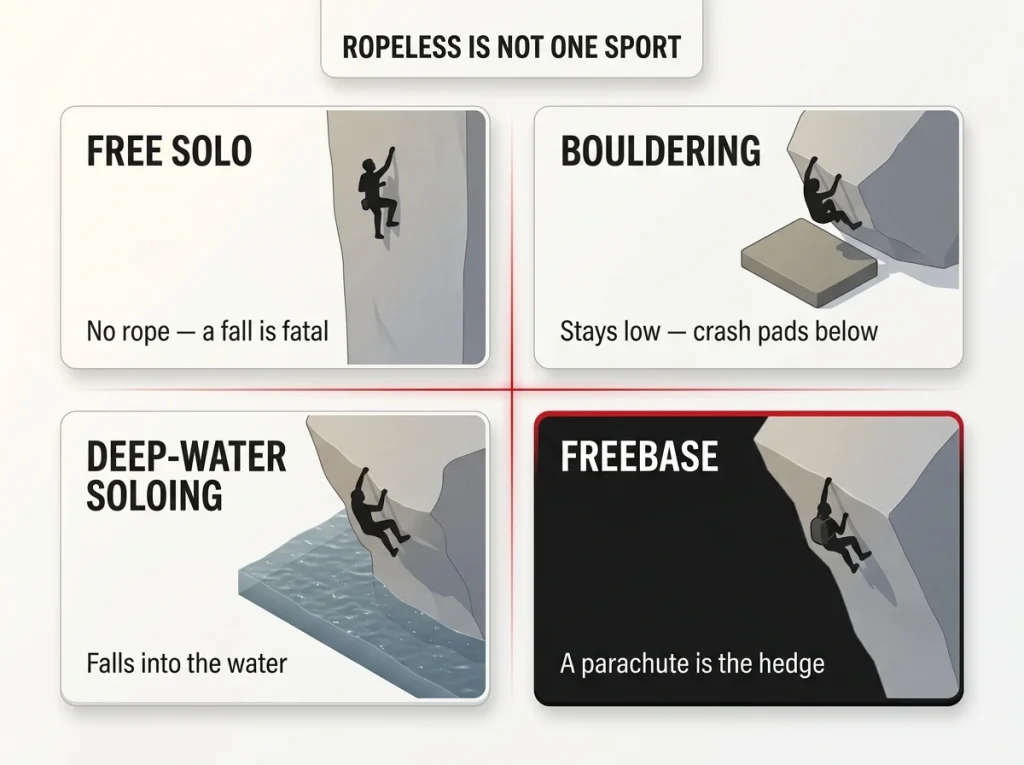
Free soloing means climbing a route with no rope and no protection, where a fall is potentially fatal. That is the whole definition. It is not bouldering, which stays low to the ground over crash pads.
It is not deep-water soloing, the ropeless discipline Chris Sharma made famous, where the fall just dumps you into the sea. And it is not FreeBASE, which we will get to, because that one comes with a parachute. If the differences feel blurry, it is worth understanding how free soloing and free climbing are not the same thing before going further.
Here is the line that trips up most newcomers: ropeless does not mean one single sport. Free soloing, bouldering, deep-water soloing, and FreeBASE all drop the rope for completely different reasons. Mix them up and you will misread almost everything Potter did.
Why 5.12d Without a Rope Is Almost Unthinkable
Climbers measure difficulty on the Yosemite Decimal System, where rock routes run from 5.10 to 5.13 and beyond, each split into a, b, c, and d. Potter’s hardest rope-free climbs sat at 5.12d, with his ascent of Heaven often cited at 5.12d to 5.13a. To put that in plain terms, very few humans in history have ever moved at that grade without a rope. The margin for a slipped foot or a tired finger is simply zero.
Two other numbers help you orient. Bouldering uses a separate V-scale that runs from V0 up past V10, and on a roped route climbers chase the redpoint, a clean send after working the moves. Potter’s hardest climbing was the opposite of that rehearsed safety.
Potter’s Head Game vs the Honnold Image
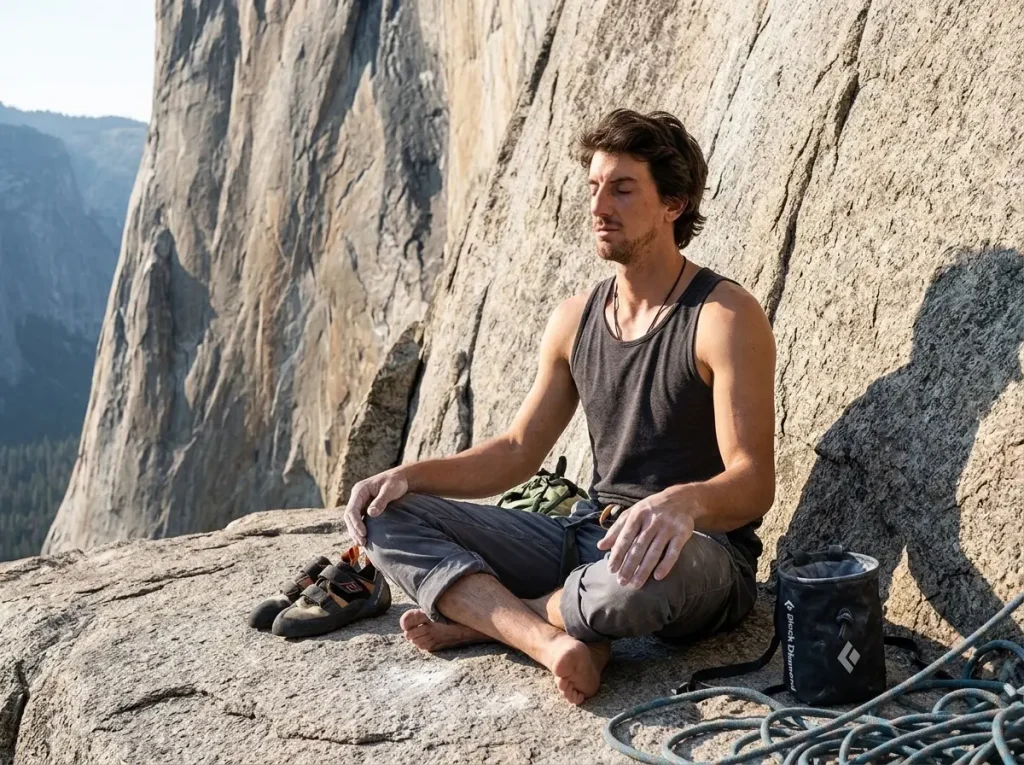
This is where Potter splits from the popular picture of free soloing. He described his solos as meditative, a way of being completely in the moment, and The Dark Wizard reframes that pursuit as a release from psychological pain he carried but never had treated. The accomplishment was rarely the whole point; the quiet that followed was.
That makes him a different climber from Alex Honnold, whose ropeless climbing came from preparation rather than escape. Potter often hedged, pairing solos with highlining or backing them with a parachute. Honnold’s El Capitan solo was pure, no backup of any kind. Calling one better than the other misses that they were chasing two different things.
The Yosemite Free Solos and Speed Records
Potter’s name lives on two different lists: the bold free solos, and the speed climbing records that helped invent the modern big-wall stopwatch game. Both happened on the granite of Yosemite, and both still set the bar.
Heaven and Separate Reality, Solos With Zero Margin
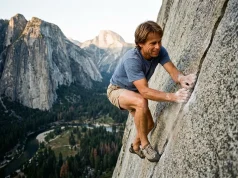
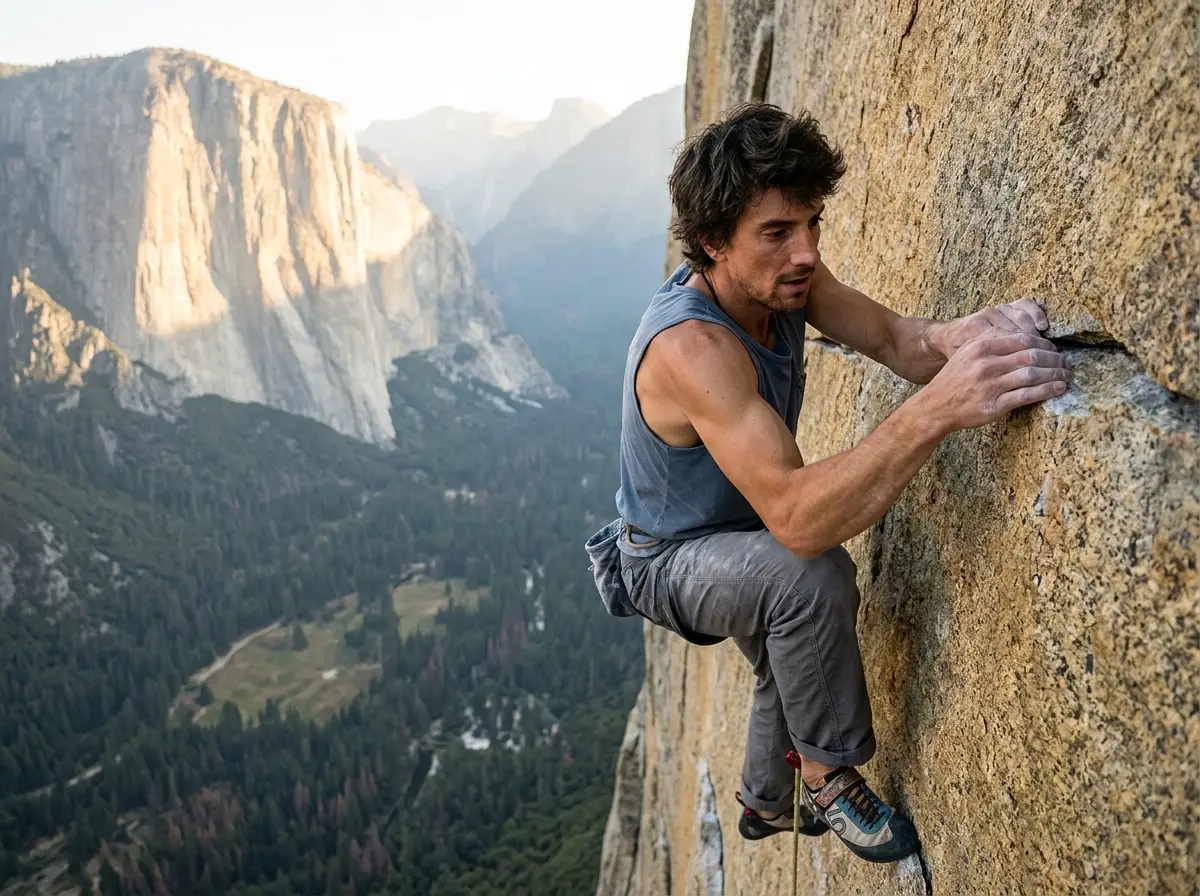
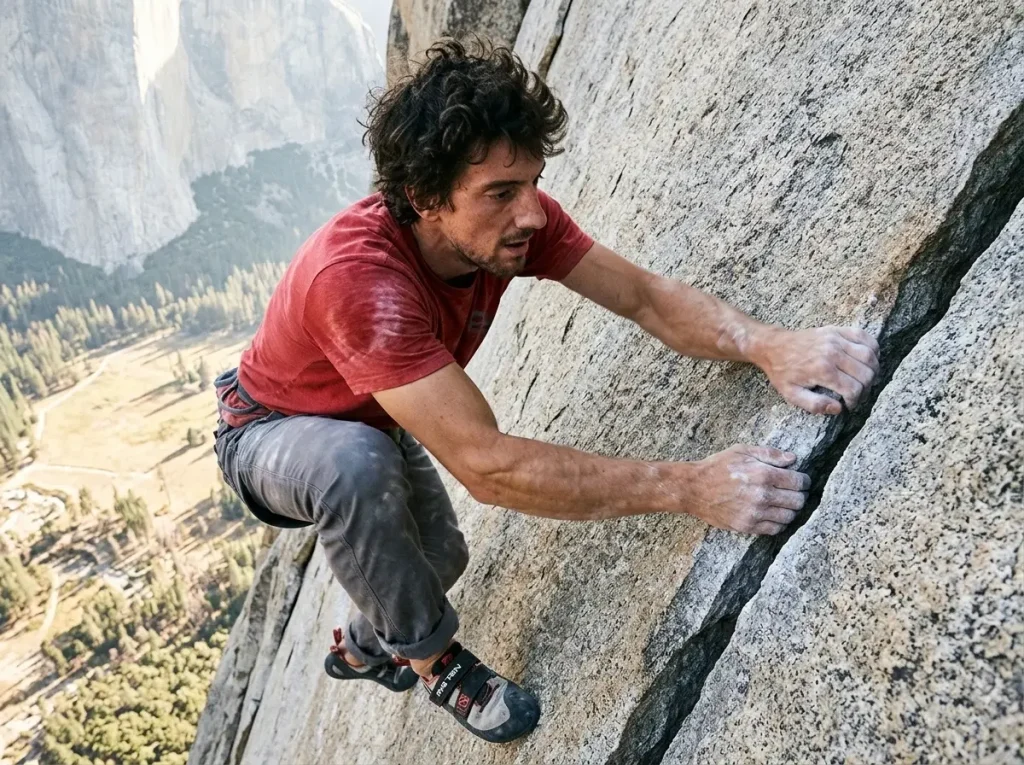
In 2006 Potter free soloed Heaven, a thin, overhanging line on the Glacier Point Apron, one of the hardest rope-free ascents of its era. The same year he soloed Separate Reality, the horizontal roof crack that hangs out over open air, only the third person to do it without a rope. He had already free soloed Yosemite testpieces like Astroman and the Rostrum, the kind of free solo climbing that put him in the company of soloists like Peter Croft. Watch a few seconds of footage and the grade number on the page stops meaning anything.
Inventing the Nose Speed Game
The Nose of El Capitan is the most famous big wall on Earth, and racing up it is the benchmark of the speed climbing craft. With Timmy O’Neill, Potter ran it in 3:59 and then 3:24 in the fall of 2001, back when sub-four-hours sounded impossible. The American Alpine Club’s record of the Nose speed game traces how those early marks reset what climbers thought a 3,000-foot wall could be done in. Lynn Hill had already changed how people saw the route when she made her historic free climb of The Nose; Potter changed how fast they thought it could go.
If you want the mechanics behind those numbers, the simul-climbing and short-fixing methods the speed game runs on explain how two people move that fast without stopping to belay.
Speed was only part of it. Potter also chased link-ups, speed-soloing Half Dome and stringing big walls together in a single push, the kind of enchainment that produced his Yosemite Triple Crown.
The speed game on a big wall is a trust exercise, not a solo act. Two climbers move at a flat sprint on the same rope, one slip away from taking the other off the route. The clock only rewards partners who have drilled the transitions until they stop thinking about them.
The 2010 Record and the Relay That Followed
In November 2010 Potter and Sean Leary climbed The Nose in 2 hours, 36 minutes, and 45 seconds, twenty seconds faster than the mark held by Hirayama and Hans Florine. That record did not stand forever, and that is the point. Honnold and Florine took it back, and then others drove it under two hours. Potter’s partnerships sit at the start of that relay, the same way the big-wall craft behind it connects to the training methods Tommy Caldwell built his El Capitan climbs on.
He also took speed soloing into alpine climbing, with a first solo of Supercanaleta on Cerro Fitz Roy in 2002 and a first ascent of Concepcion the next year, in one of the worst-weather ranges on the planet near Cerro Torre.
Highlining and the Walk Above the Void
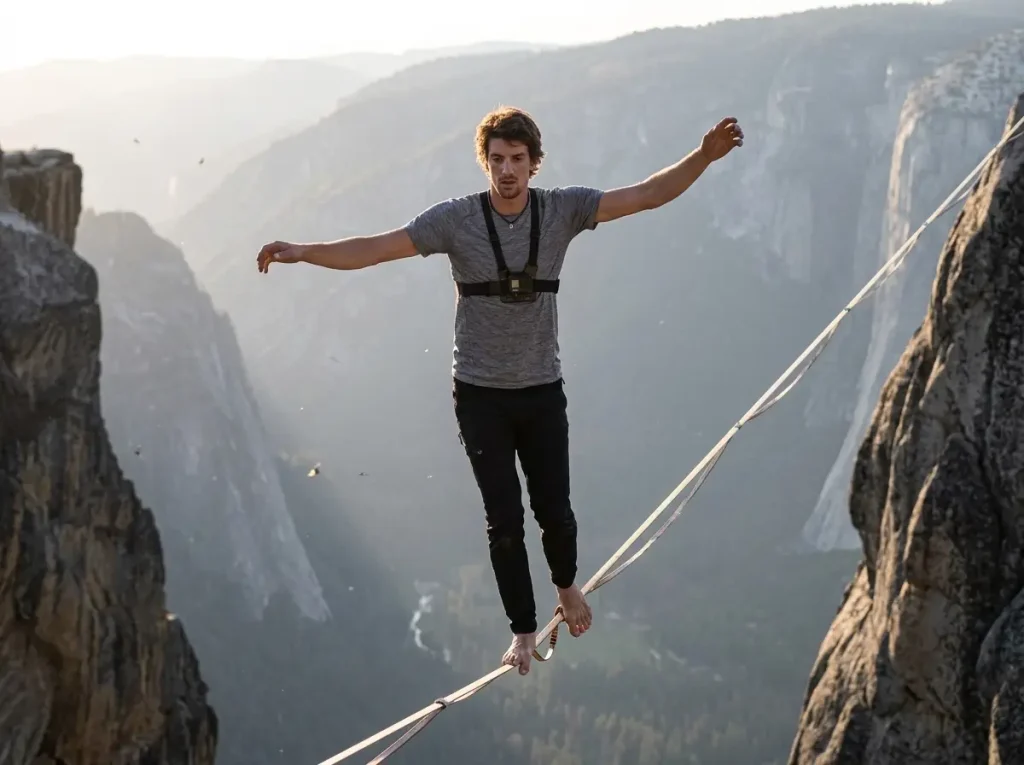
If you want the purest picture of how Potter thought about backup, do not look at the climbs. Look at the line he walked with nothing underneath him at all.
Untethered on Lost Arrow Spire
Around 2003 Potter became the second person to highline the Lost Arrow Spire untethered, a roughly 55-foot line of slacklining webbing stretched nearly 3,000 feet above Yosemite Valley. He was the first to walk it in both directions. Untethered is the word that matters here. It means no leash, so a fall is caught by nothing whatsoever.
Why Highlining Was His Purest Discipline
Far fewer people have ever walked an untethered highline than have free soloed hard rock. There is no movement, no chalk, no gear to fuss with, just balance and breath over a very long drop. For a climber who spent his life shaving away the things between himself and the consequence, it may have been the most honest expression of the whole project.
Balance on a highline is a breathing skill before it is a leg skill. Walkers will tell you the line only settles once your breath does. You ride the troughs of your own panic, not the webbing.
The Moonwalk Frame
The slackline scene in Yosemite traces back to characters like Charles Victor Tucker III, the Camp 4 fixture known as Chongo, who helped introduce Potter to walking lines. The image that stuck, though, was Potter on a highline at Cathedral Peak with a full moon rising behind him, the so-called Moonwalk. It is one of adventure photography’s defining frames, and it sells the discipline better than any statistic.
FreeBASE, BASE, and the Eiger Wingsuit Record
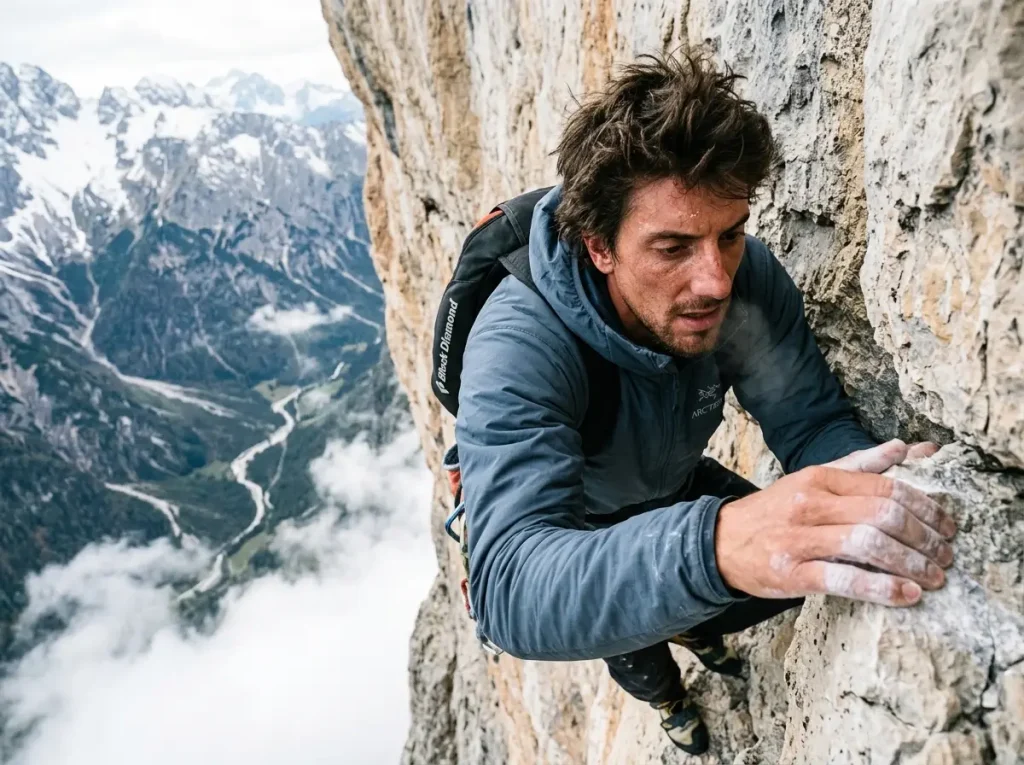
Potter’s most genuine invention sounds like a contradiction until you see the rig. Free solo with a parachute on your back is exactly what it claims to be, and he made it a real practice rather than a stunt.
What FreeBASE Really Is
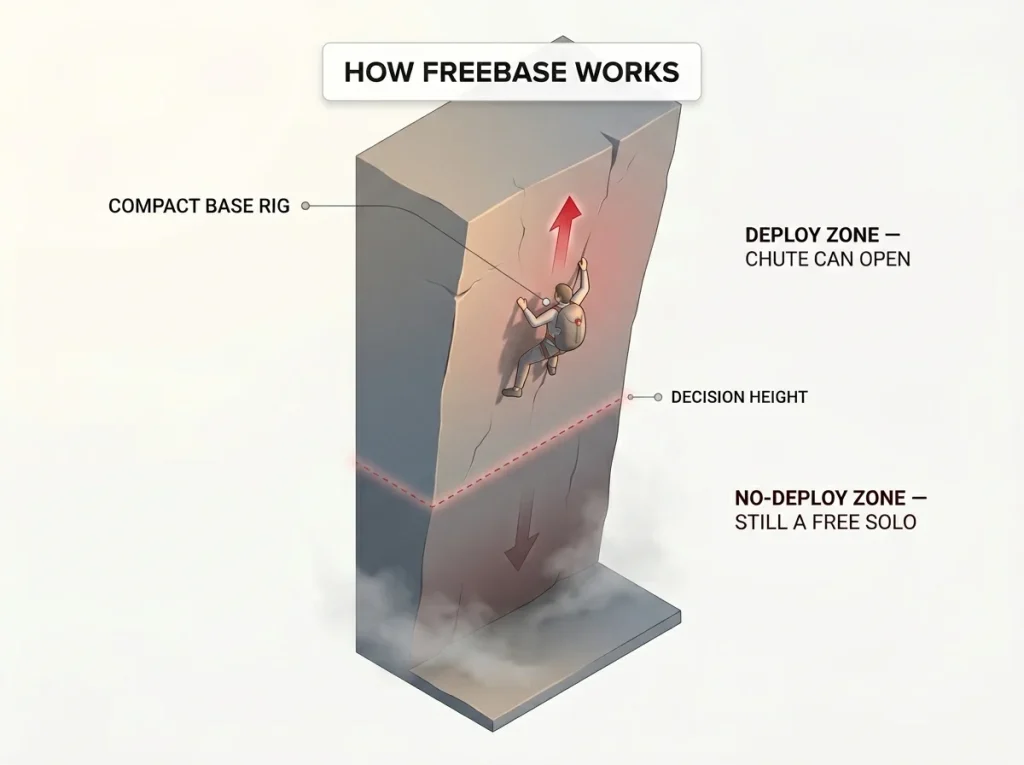
FreeBASE is free soloing on a wall tall enough that, if you fall from high on it, you pull a parachute instead of going all the way to the ground. The chute is a hedge, not a rope. It does nothing to catch a short fall, and it lets a climber operate on overhanging faces that are too tall to survive a fall but too committing to rope up.
FreeBASE was a hedge, not a safety net. Below a certain height the parachute cannot open in time, so the lowest stretch of the wall is still a true free solo. The rig bought margin up high and nothing at all down low.
Deep Blue Sea on the Eiger
On August 6, 2008, Potter made the first FreeBASE ascent of Deep Blue Sea, a 5.12-plus line about 300 meters up the north face of the Eiger in the Alps, with a five-pound BASE parachute as his only protection. The north face of the Eiger is one of the most storied and serious walls in mountaineering, which made it the perfect place to prove the idea was real.
The Wingsuit Record and Flying With Whisper
In 2009 Potter set a wingsuit BASE flight duration record off the Eiger at 2 minutes and 50 seconds, among the longest flights of its time. This is proximity flying, where the suit itself, not an engine, keeps you aloft as you track close to the terrain. He later made the 2014 film When Dogs Fly, in which he flew with his hearing dog, Whisper, strapped to his chest, an image that captures how far outside convention he lived. It is worth being clear about one fact running underneath all of it: BASE jumping has been prohibited in U.S. national parks for decades, and the Park Service still prosecutes it.
Delicate Arch and the Ethics Nobody Settles
This is the part of Potter’s story that still drives climbing ethics arguments at the crag, and the honest version refuses to land cleanly on either side.
What He Actually Did at Delicate Arch
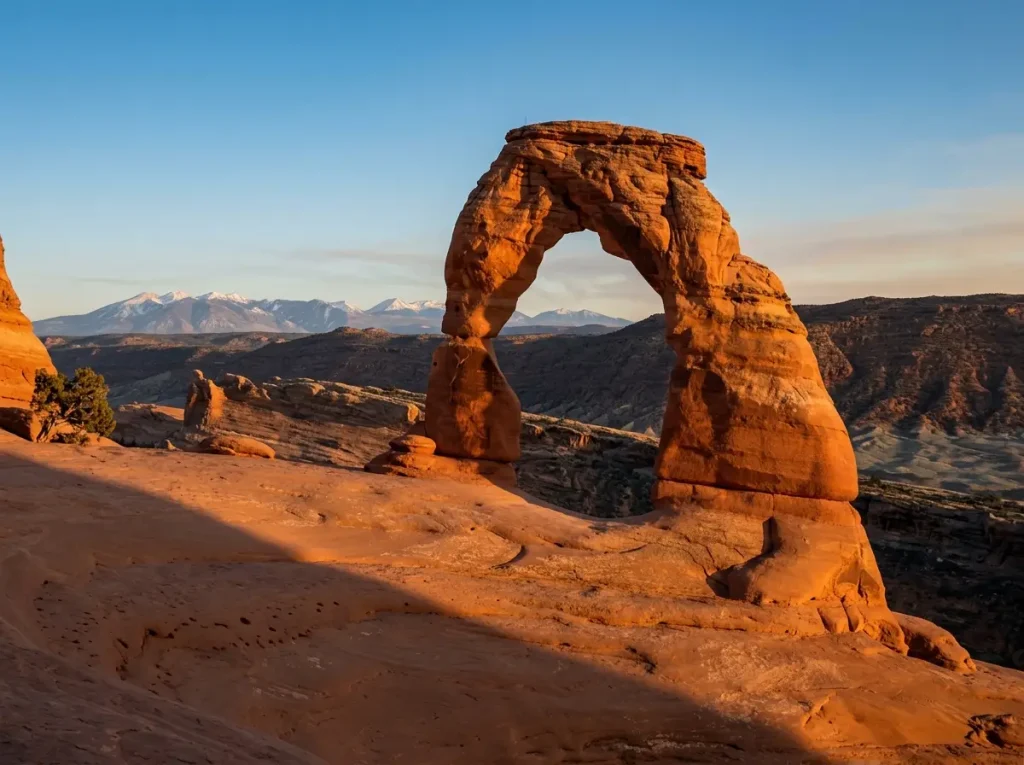
In 2006 Potter free soloed Delicate Arch, the freestanding sandstone landmark in Arches National Park that appears on Utah license plates. His defense was narrow and legalistic: “There wasn’t any legal reason for me not to climb it.” Long tradition held that you do not climb named features like that one, but the written rule at the time was vague, and he climbed through the gap in the language.
The Sponsorship Fallout
The response was immediate. Patagonia and Black Diamond, his two main backers, both dropped him, and reporting at the time put the lost Patagonia deal in the range of a top-ten athlete contract worth around fifty thousand dollars. Friends and mentors criticized him publicly. For a working dirtbag, that was most of an income gone over a single climb.
The Rule Change That Outlived the Climb
Here is the consequence that lasted. Arches rewrote its regulations afterward, banning climbing on any arch or natural bridge named on USGS topographic maps, a blanket rule that still governs climbing in Arches National Park today.
The honest crag argument cuts both ways. The climb cost no one else anything directly, yet the access fallout landed on every climber who came after, which is exactly the tension the climber-access advocacy of the Access Fund works to prevent. Was the loophole fair? Most climbers who have argued it never reach a verdict, and that unsettled feeling is the truest part of the story.
The Final Flight and the Legacy He Left
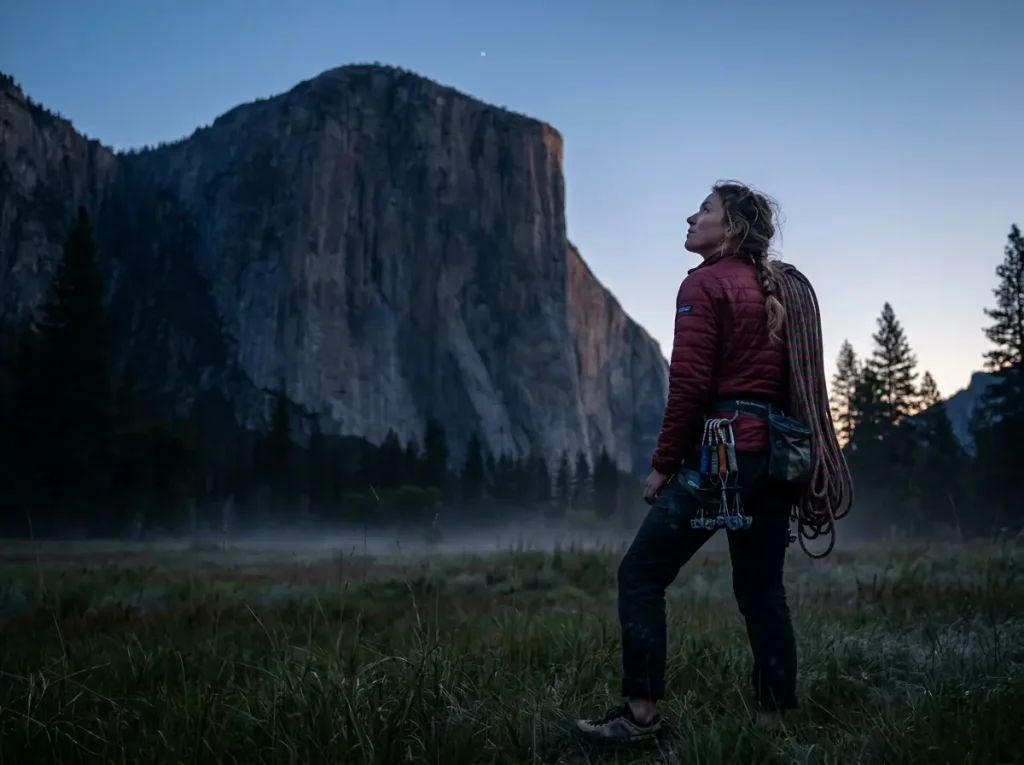
The same margins that produced the records produced the final flight. There is no way to tell this part honestly without saying that plainly.
What Happened at Taft Point
On May 16, 2015, Potter and Graham Hunt attempted a proximity flying wingsuit line from Taft Point in Yosemite, aiming for a notch in the cliffs. Both struck rock, neither parachute opened, and neither man survived. The flight lasted only seconds. Proximity flying leaves almost no room to correct a line once it goes wrong, which is the sober heart of why these margins are so unforgiving.
The Mental Game He Treated as a Discipline
What gets lost in the spectacle is how methodically Potter worked at the mental game. Barefoot conditioning, yoga, visualization, the FreeBASE rig as a literal backup: these were a practice of fear management and risk control, not a careless shrug at consequence. That is the craft underneath the headlines, and it is the part worth studying.
None of it makes this a how-to. The point of telling it straight is the opposite, a reminder that the same discipline that built the records did not make the outcome safe.
Why Climbers Still Argue About Him
Two decades on, Potter is still a debated climbing legend. His fingerprints are on modern free soloing, on the wingsuit flight scene, and on the whole idea that one person might be world-class at several rope-free disciplines at once. The 2014 film Valley Uprising had already written him into Yosemite’s story, and HBO’s 2026 The Dark Wizard has reframed him for a new audience as gifted and troubled rather than simply fearless. That fuller picture, awe and hard questions in the same breath, is the only version of his legacy that holds up.
What His Legacy Actually Comes Down To
Strip away the myth and three things remain. Potter was far more than a free soloist; he was a multi-discipline original who invented FreeBASE and walked highlines almost no one else would touch. His Nose speed records and his rope-free ascents still anchor conversations about what is possible on Yosemite granite. And his story only stays honest if it holds both the awe and the hard questions about ethics and consequence at the same time.
If his life makes you want to understand the disciplines rather than imitate them, start with what free soloing actually is versus the version in the movies, then read about the climbers he shared the valley with. That is the better tribute, and the safer one.
Frequently Asked Questions
01What happened to Dean Potter in 2015?
On May 16, 2015, Dean Potter lost his life during a proximity wingsuit flight from Taft Point in Yosemite, alongside Graham Hunt. Both aimed for a notch in the cliffs, struck rock, and neither parachute opened. The flight lasted only seconds.
02What is FreeBASE, and did Dean Potter invent it?
FreeBASE is free soloing with a BASE parachute as your only backup, and yes, Dean Potter invented it. He made the first FreeBASE ascent on the Eiger’s Deep Blue Sea in 2008. Fall high enough and you pull the chute instead of a rope.
03What was Dean Potter’s hardest free solo?
Potter’s hardest free solo was Heaven, a 5.12d route (graded as hard as 5.13a) on the Glacier Point Apron in Yosemite, climbed without a rope in 2006. A 5.12d free solo sits near the absolute ceiling of what anyone has soloed.
04Why did Dean Potter lose his Patagonia sponsorship?
Potter lost his Patagonia and Black Diamond sponsorships after free soloing Delicate Arch in Arches National Park in 2006. Climbing the protected landmark through a rules loophole drew heavy criticism and reportedly cost him a top-ten Patagonia athlete deal.
05Was Dean Potter better than Alex Honnold?
It is the wrong question, because they chased different things. Potter often hedged his ropeless climbs with a parachute or paired them with highlining, while Alex Honnold’s El Capitan solo was pure, with no backup. Different philosophies, not a ranking.
Safety Notice: Rock climbing and mountaineering are inherently high-risk
activities that can involve physical trauma or fatal incidents. The information on Rock Climbing Realms is for
educational and informational purposes only. Techniques and advice presented here are not a substitute
for professional, hands-on instruction. Conditions and risks vary by location. Always seek guidance
from a qualified instructor before attempting new techniques. By using this website, you agree that you
are solely responsible for your own safety. Any reliance you place on this information is strictly
at your own risk, and you assume all liability for your actions. Rock Climbing Realms and its authors
will not be held liable for any harm, damage, or loss sustained in connection with the use of this information.
Affiliate Disclosure: We are a participant in the Amazon Services LLC Associates Program, an
affiliate advertising program designed to provide a means for us to earn advertising fees by advertising and linking
to Amazon.com. As an Amazon Associate, we earn from qualifying purchases. We are also an official affiliate partner
of Black Diamond Equipment via the AvantLink network. If you click on a Black Diamond affiliate link and make a
purchase, we may earn a commission at no additional cost to you. We also participate in other affiliate programs.
Additional terms are found in the terms of service.