
In this article
Most climbers researching Huascaran train hard for the summit slopes. The mountain rarely stops them there. It stops them lower down, in the icefall between Camp 1 and Camp 2, on a clock most people don’t know is running. Cordillera Blanca guides will tell you the same thing: the real crux of Peru’s highest peak isn’t the top, it’s a stretch of moving glacier you have to be off before the sun hits it. This guide walks through the route and camps, the honest grade, why La Garganta turns people back, the experience and acclimatization you actually need, the season, permits, cost tiers explained plainly, and the gear that earns its place at 6,000m.
The Mountain and the Route Up It
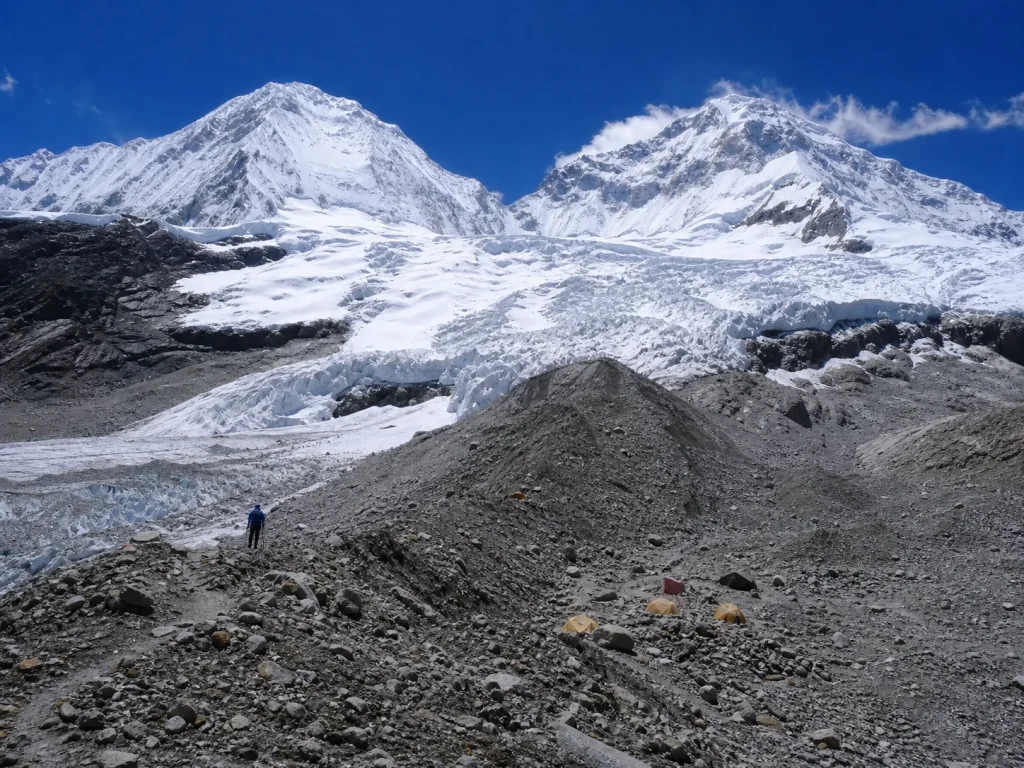
Before anyone argues about grades, you need the map in your head. Huascaran Sur tops out at 6,768m (22,205 ft), the highest point in Peru and the fourth highest in the Western Hemisphere, sitting inside Huascaran National Park in the Cordillera Blanca of the Ancash region. That elevation alone puts it among the world’s serious high-altitude objectives, and if you’re weighing it against other big peaks, it helps to know how it ranks against the other giants of the Americas before you commit.
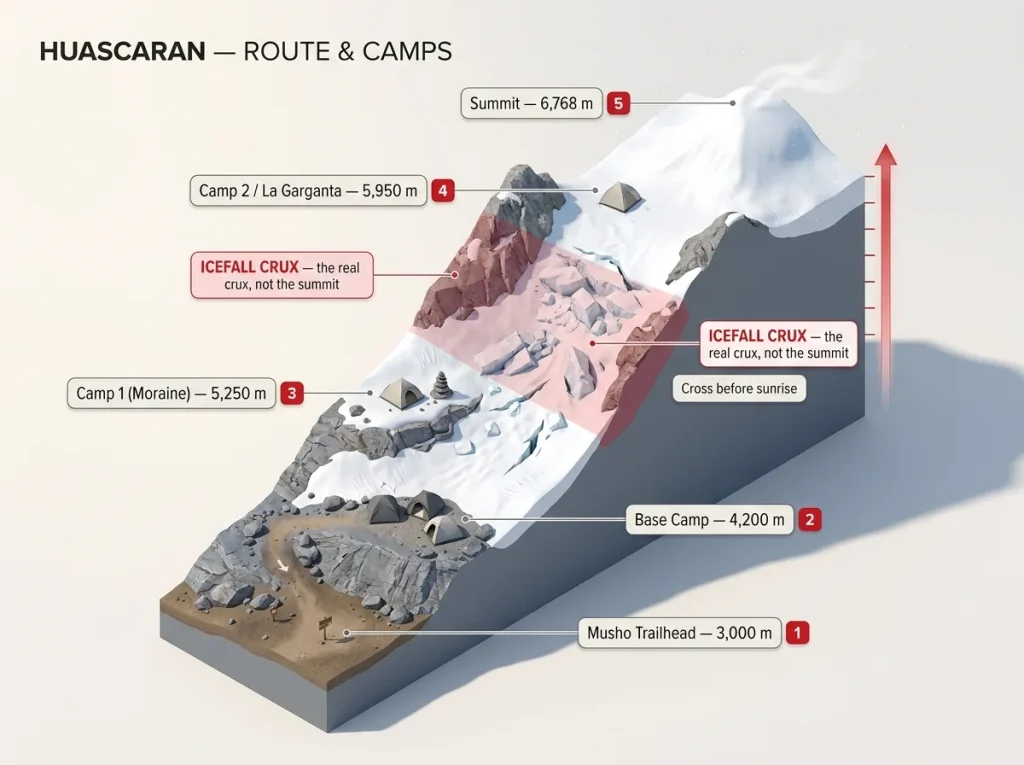
The Normal Route runs through four distinct camps. From the Musho trailhead you reach Base Camp around 4,200m, then Camp 1 (the Moraine Camp) near 5,250 to 5,300m, then Camp 2 just below La Garganta at roughly 5,900 to 6,000m, then the summit push. Four camps means this is a multi-day rotation, not a trailhead-to-summit sprint. You build the whole schedule around moving up, sleeping, and moving up again.
That name, La Garganta, means “the throat.” It’s the col between Huascaran’s north and south summits, and it doubles as high camp. Every climber and guide uses it. Worth saying early: high camp does not mean safe camp here. The classic Garganta site has a fatality history going back decades, which tells you something about where this mountain actually bites.
How Hard Huascaran Really Is
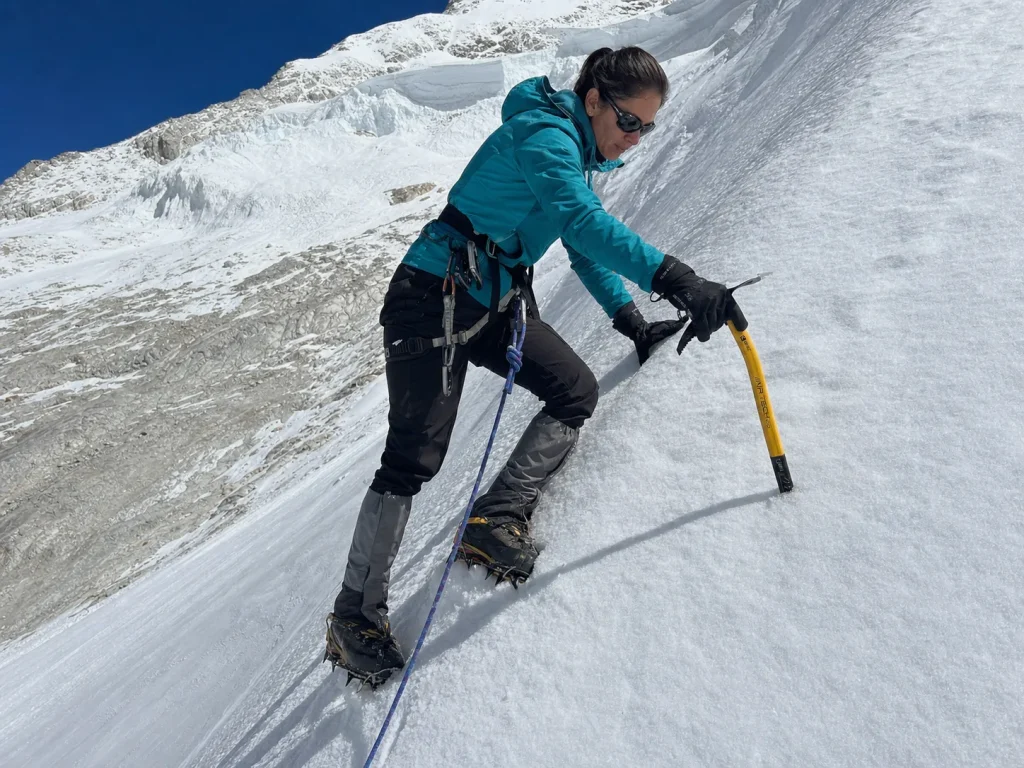
People fixate on the grade letters without knowing what they buy. The honest version: the Normal Route grades PD+/AD- on the French Adjectival System, which means sustained snow and glacier travel at 40 to 60 degrees, with a steeper section in some years around 60 degrees below 6,300m. That’s a long way past a walk-up, and a long way short of vertical ice climbing.
The distinction that matters is this: Huascaran is a glacier-travel peak, not a technical climbing peak. What gets you up it is rope-team travel, solid crampon work, comfortable front-pointing on firm snow, and a reliable self-arrest, not hard moves. If your idea of the crux is a steep pitch, you’re looking at the wrong thing. An AD-graded route like the Matterhorn’s Hörnli Ridge asks for constant movement skill over sustained terrain, and Huascaran sits in that same honest-effort zone.
Here’s where the grade lies to you. PD+ describes the moves, not the altitude, not the exposure, and definitely not the icefall timing that actually turns people around. At 6,768m, altitude physiology is the real gatekeeper. A single mountaineering ice axe handles most of the route for most parties; a second tool is grade-dependent and season-dependent, and it’s a question for a local guide reading current conditions, not a fixed rule you settle from home.
Why La Garganta Stops So Many Climbers
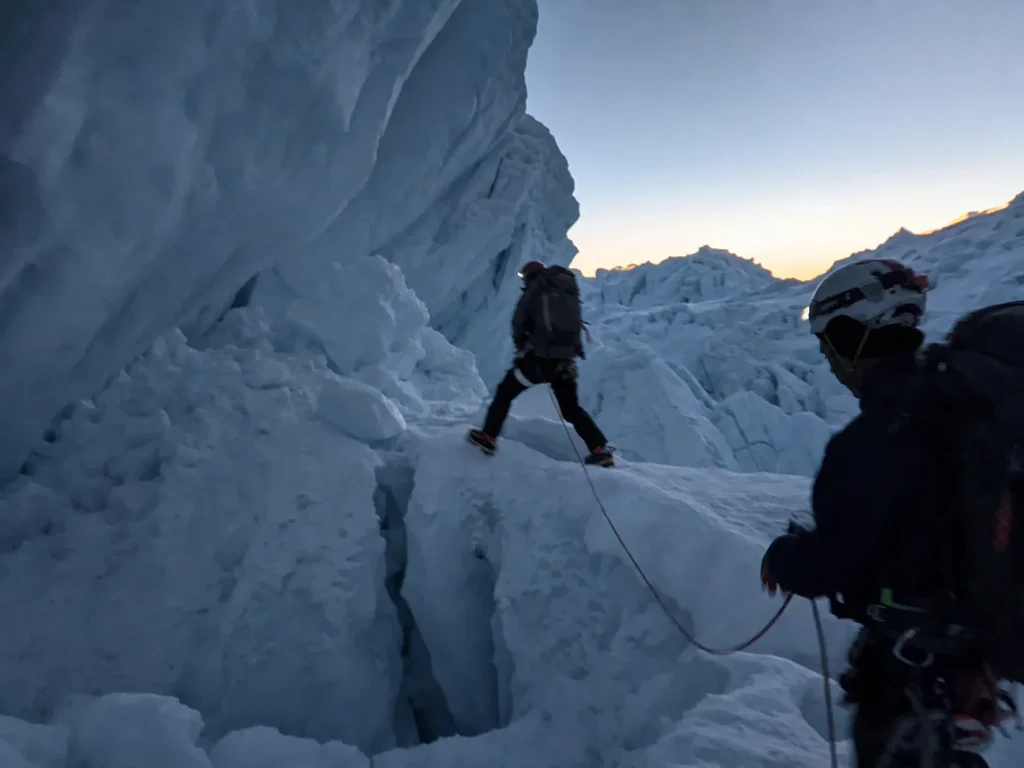
This is the section every operator page skips. The icefall between Camp 1 and Camp 2, roughly 5,400 to 5,800m, isn’t stopping people because it’s steep. It’s stopping them because they’re standing under it at the wrong hour. Name the mistake before the fix: parties that leave Camp 2 late are the ones who get caught.
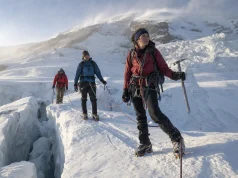
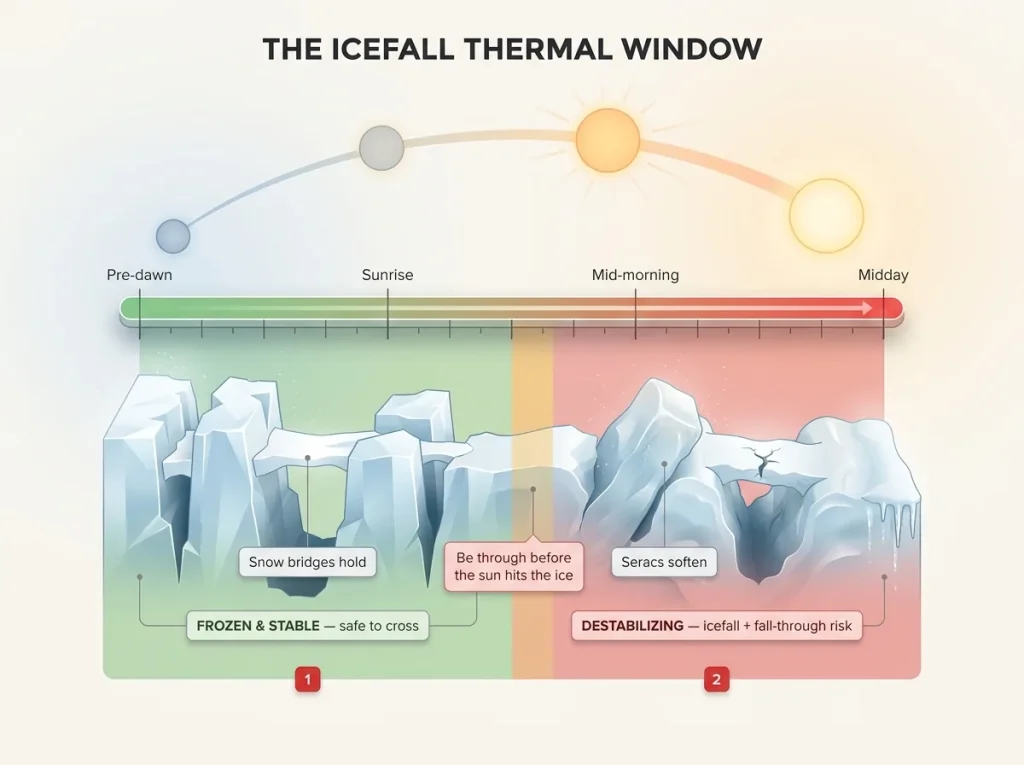
The stretch crosses an active icefall full of big, shifting crevasses and overhanging seracs, a section local guides call the “caneleta.” The mechanism behind the hazard is thermal, and once you understand it the whole timing logic clicks. Overnight cold keeps the seracs and the snow bridges over the crevasses frozen and stable. Once the tropical sun hits that ice in the mid-to-late morning, meltwater goes to work, destabilizing the seracs above you (icefall) and softening the snow bridges under you (fall-through).
That’s the entire reason for the pre-dawn start. It isn’t tradition and it isn’t machismo. You leave Camp 2 well before first light specifically to be through the caneleta while it’s still frozen hard. And because the glacier reshapes itself, the route through the icefall shifts year to year, so a fixed route description goes stale fast. A good local guide re-reads the crevasse pattern each season, which is a real part of what you’re paying for when you cross this terrain as a rope team.
Treat your Camp 2 departure time as the single most important decision of the climb. If the plan is to leave “around dawn,” push back. On the Garganta, an hour of extra sleep is an hour of softening ice over your head. Guides who work this peak leave in the dark on purpose.
The record backs this up in a way that’s hard to ignore. The American Alpine Club’s expedition archives have documented incidents in this zone for decades. Fatal icefall events hit the Garganta/Camp 2 site in both 1997 and 1999, and on 20 July 2016 an avalanche near 5,800m caught nine climbers, four of whom did not survive. Same mid-route zone, not the summit slopes. That’s why moving as a rope team through crevassed terrain and having the discipline to turn around when the window closes matter more here than raw fitness.
The Experience You Need Before You Show Up
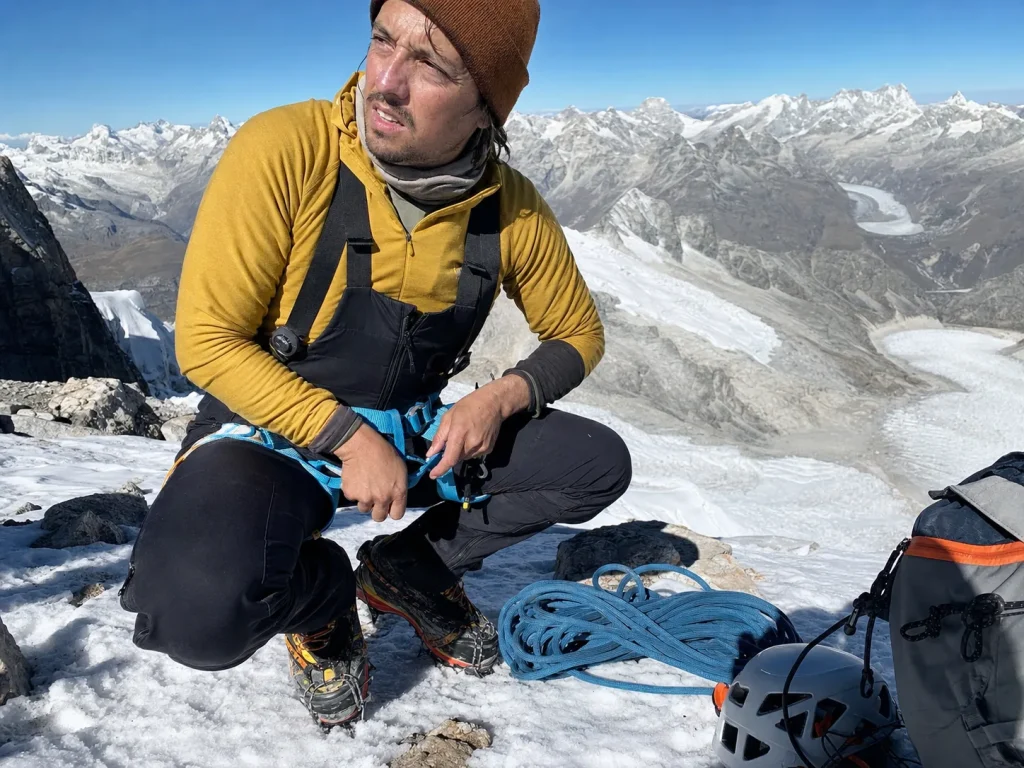
The trip-sales pages leave this deliberately fuzzy, because a fuzzy line means more people book. The honest version separates two things: what you must already have when you land, and what the guide adds after you arrive.
Bring this or you shouldn’t be here: prior experience above roughly 5,000 to 5,500m, ideally on a glaciated technical peak and not just a high-altitude trek. The skills carry the same weight as the altitude résumé. You want rope-team travel, comfortable cramponing on 40 to 60 degree snow, a self-arrest you don’t have to think about, and basic crevasse rescue awareness. If those aren’t in your hands yet, the alpine skills that actually keep you safe are the place to start long before Peru.
What the trip builds is the acclimatization rotation once you’re in-country. That rotation supplements your fitness. It does not substitute for zero prior altitude exposure. The most common mistake is treating “I’ve hiked at altitude before” as equivalent to having climbed above 5,000m on a lead-in peak, and it’s exactly the assumption behind the mistakes that end Cordillera Blanca trips before summit day. Cardio matters, but the mountain rewards altitude experience and glacier competence over a strong set of lungs at sea level.
Acclimatization and the Lead-In Peaks
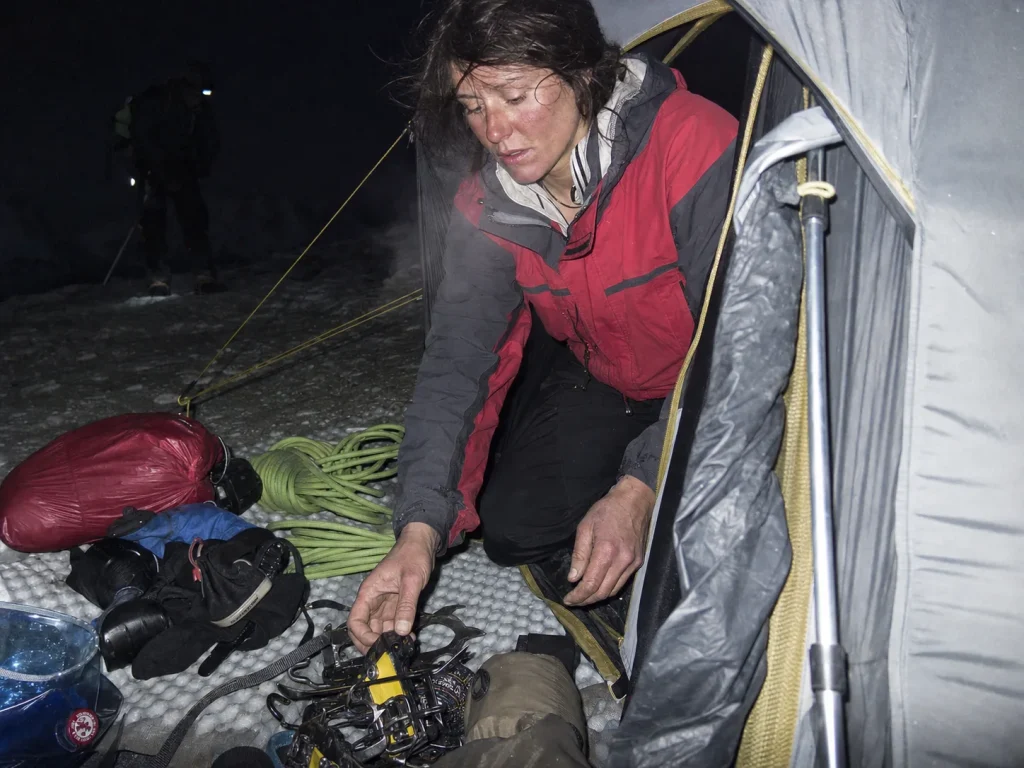
Acclimatization failures don’t show up on the approach. They show up as exhaustion on summit day, when it’s too late to fix. The remedy is boring and it works: go high on smaller peaks first, then rest before you push.
Guides recommend a minimum of about four days of acclimatization on lead-in peaks before Huascaran, typically Pisco, Ishinca, Tocllaraju, or Alpamayo. Prior exposure above 5,000m is treated as a prerequisite, not something to sort out on the mountain itself. This is where a climber’s acclimatization protocol earns its keep, because managing altitude sickness (AMS, and its more serious cousins HAPE and HACE) is the whole point of the schedule.
Build in at least one rest day at Base Camp before pushing to Camp 1, even on a tight itinerary. Pacing failures don’t announce themselves early. They cash out on summit day as legs that won’t move. Climb high, sleep low, and don’t let the schedule rush the rotation.
If you’re preparing before you fly, the pre-trip high-altitude training that pays off starts weeks out, not on the plane. The lead-in peaks aren’t a formality tacked onto the trip; they’re the mechanism that gets you ready to work at 6,000m, and skipping or shortchanging them is a false economy that shows up at the worst possible moment.
Best Season and Weather Windows
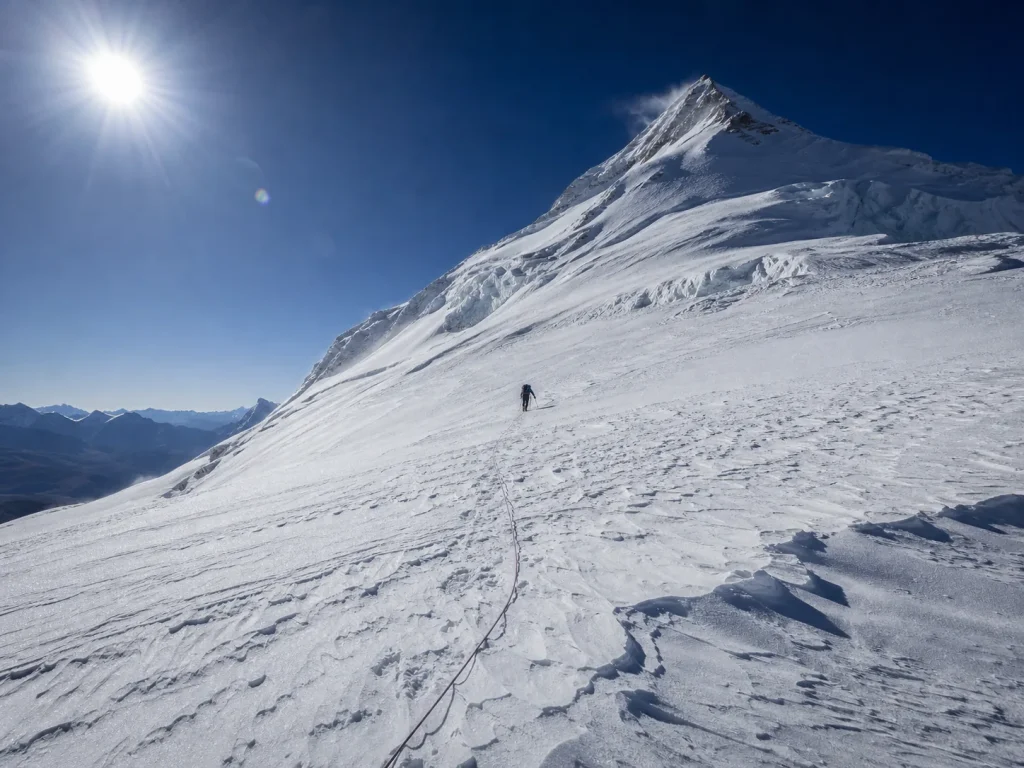
Tropical-glacier weather isn’t like the Alps or the Cascades. The dry season is the whole game. Best season runs May through September, with June through August the peak stable window. Step into the wet season on either shoulder, and tropical-glacier snow instability and storm frequency climb sharply. The other tropical-latitude factor is intense solar radiation at altitude, which is exactly why the ice softens so fast once the sun is up.
The daily pattern echoes the seasonal one. That early-morning cold window on the icefall is a daily version of the same logic that makes the dry months work: cold, stable conditions early, softening as the sun and warmth arrive. A “good season” still doesn’t hand you a fixed route, though. The way a glacier’s climbing window shifts season to season means the crossing gets re-read every year, and a snow year versus a dry year changes conditions on the crux stretch enough to matter.
Booking the calendar’s “best” week doesn’t lock in a summit. Even in peak season, plan for weather days and a flexible turnaround. The climbers who summit are the ones with a spare day in the schedule, not the ones on a rigid nine-to-five itinerary.
Permits, Guides, and Getting There
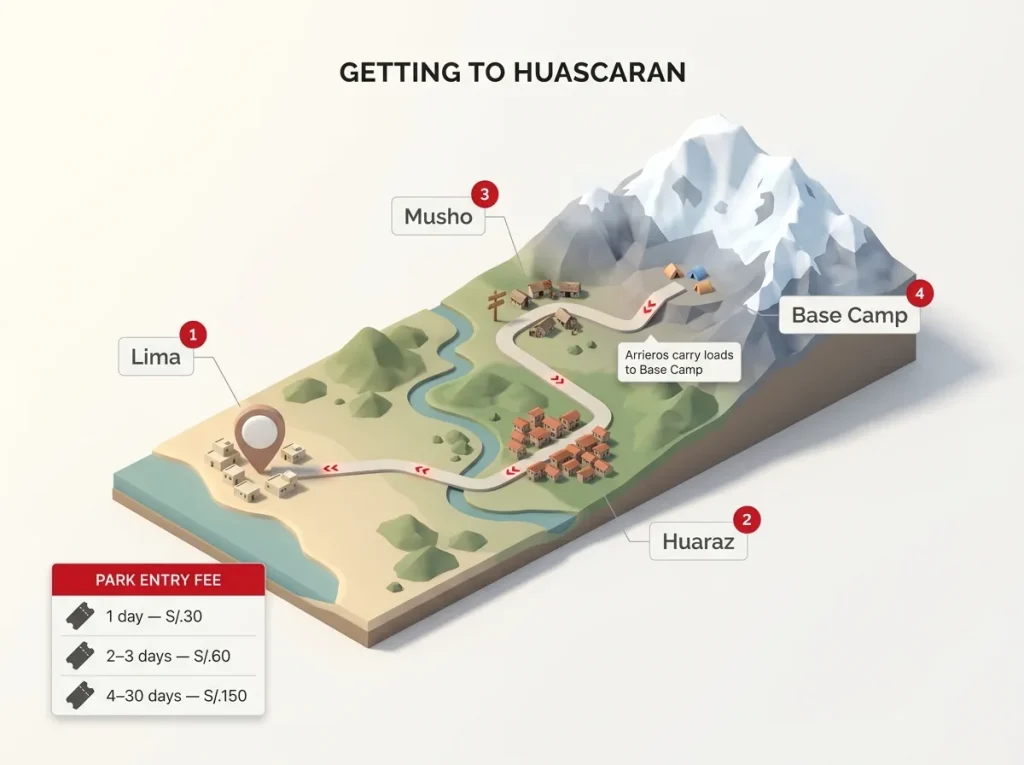
None of the logistics are complicated, but the details trip people up. The Huascaran National Park entry ticket is tiered by how long you stay: about S/.30 for one day, S/.60 for two to three days, and S/.150 for four to thirty days (as of the current park schedule). Budget that park fee separately from the guide fee, because it scales with days inside the park, not as a flat one-time charge.
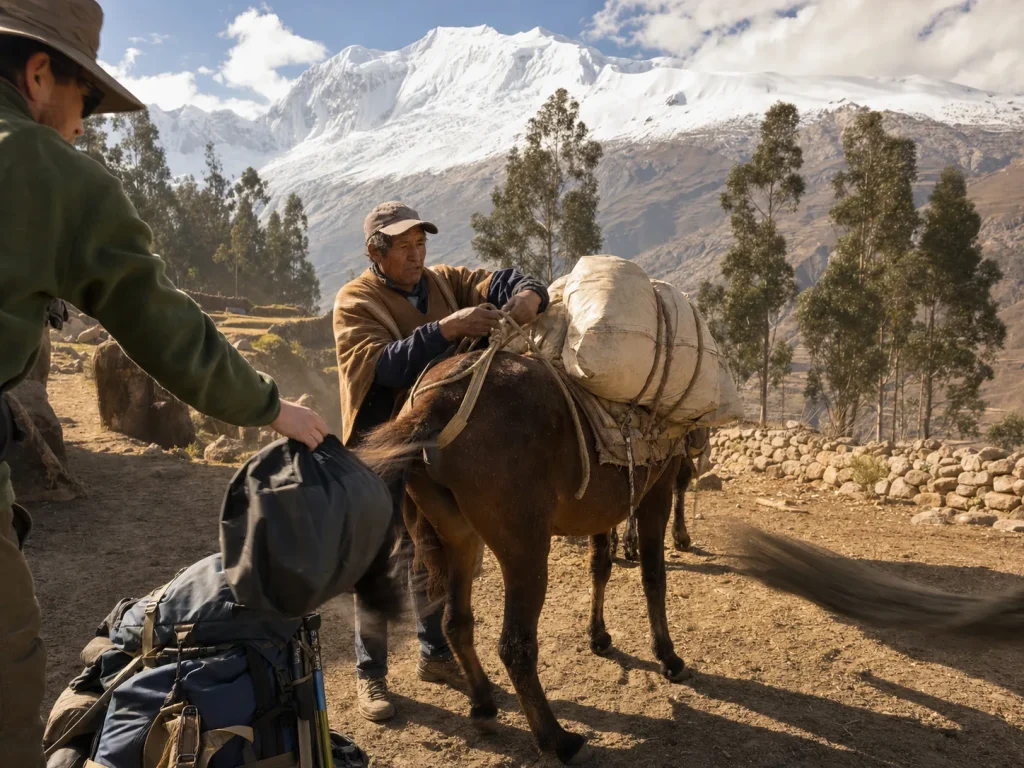
The guide question has an honest, slightly messy answer. According to SERNANP, Peru’s national protected-areas authority, a licensed local guide is technically required for climbing activity inside the park, though enforcement is inconsistent. Even strong independent climbers should budget for at least a local guide or arriero relationship to stay compliant, and if you want the full picture, what a Peru climbing permit really involves is worth reading before you go. For getting there, the chain is Lima to Huaraz, the staging town, then out to the Musho trailhead, with arrieros and porters carrying loads up to Base Camp.
One honest note on guides. The value isn’t mostly in the permit box. A good local guide certified through the AGMP or the international IFMGA/UIAGM system earns their fee by re-reading the icefall each season and making the turnaround call under pressure, which is worth far more than a signature on a form.
What a Guided Climb Costs and What the Price Buys
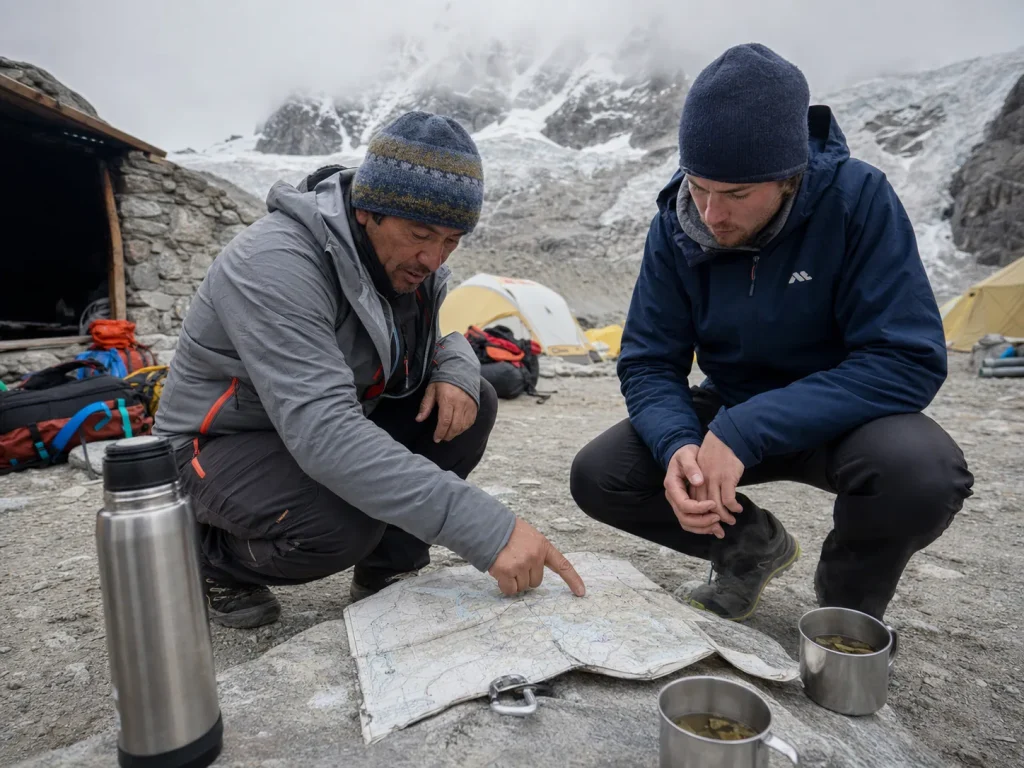
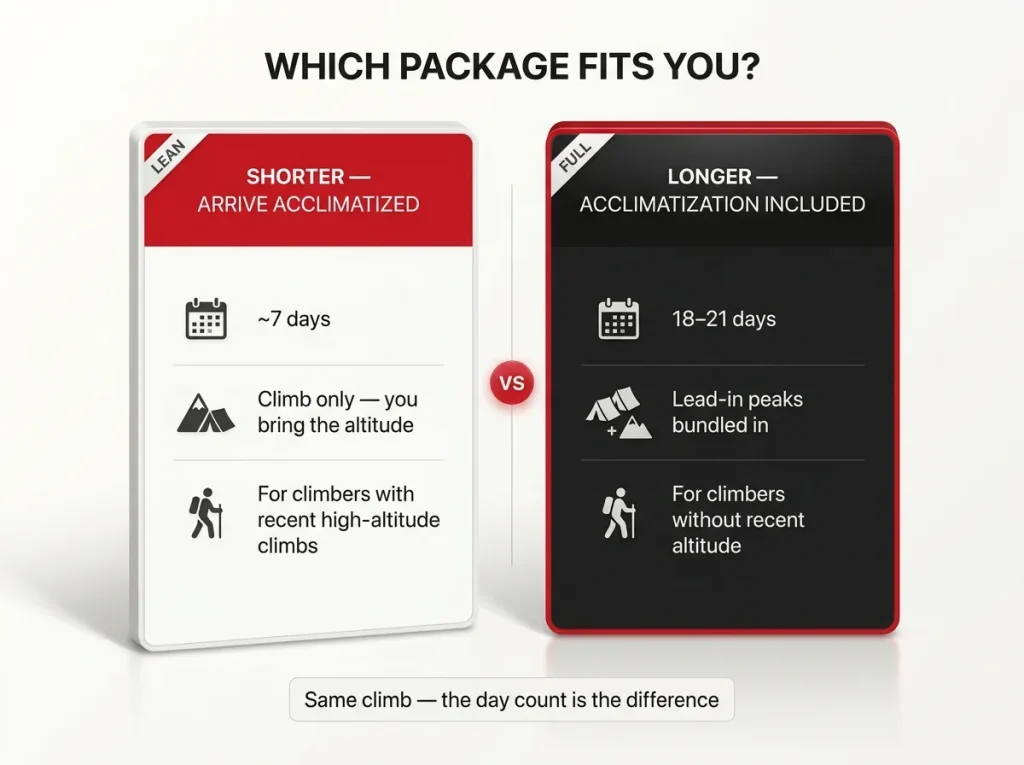
The cheap listing and the expensive listing look like the same climb until you read the day count. One quietly assumes you show up already acclimatized. The other builds the acclimatization in. That single difference explains almost the entire price spread, and reading past it is where a lot of climbers get confused.
A shorter, arrive-acclimatized package covers a roughly seven-day South route ascent and assumes you’ve done your own lead-in climbs already. A longer, acclimatization-included expedition runs eighteen to twenty-one days and folds the Pisco or Ishinca-style rotation into the same trip. Neither is objectively better guiding. The actual climbing, once you’re at Base Camp, is usually five to seven days; the rest of the length is the acclimatization and weather buffer. If you want a repeatable way to think about it, a step-by-step way to budget a major alpine climb helps you compare apples to apples instead of day-counts to dollar-signs.
The practical filter is simple. If you already carry current altitude fitness from your own recent climbs, the shorter package fits and you’re not paying for days you don’t need. If you don’t, the longer expedition isn’t an upsell, it’s the acclimatization you’d otherwise have to arrange yourself. It’s the same logic you see when expedition costs tier on a bigger peak like Cho Oyu, where the price mostly tracks time on the mountain and support, not prestige.
The Gear That Actually Matters at 6,000m
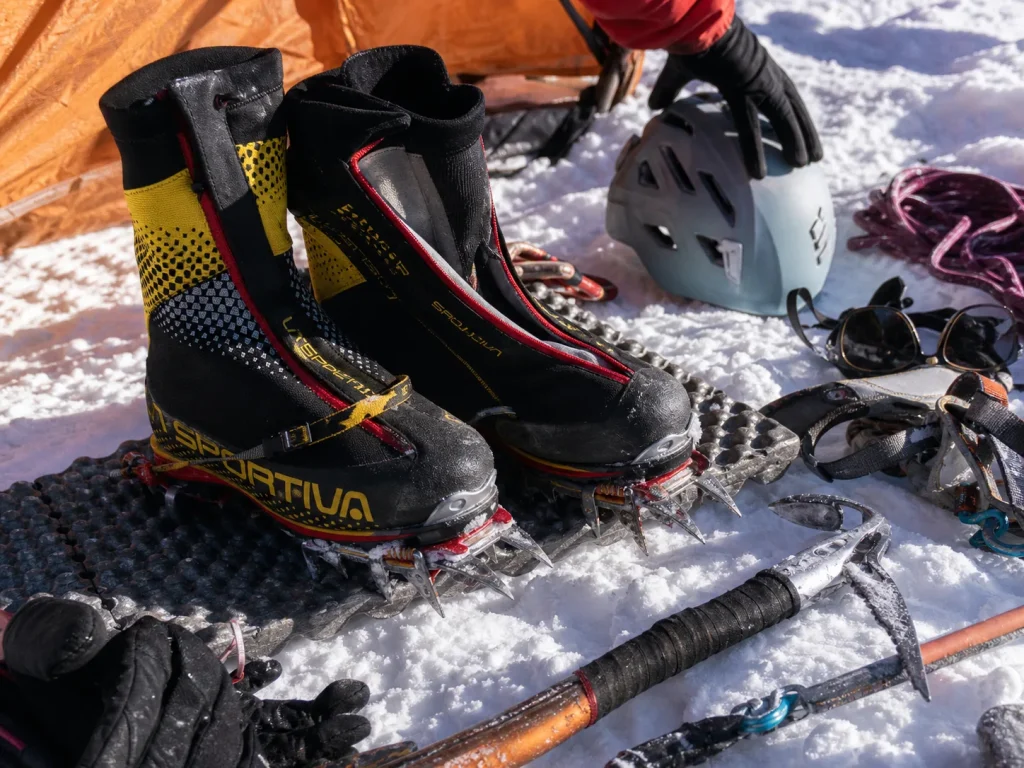
Operator pages say “warm layers, good boots.” Useless. At 6,000m, the difference between a single and a double boot is whether your toes still work on summit morning, so here’s what actually earns its place in the pack, tied to what this mountain does.
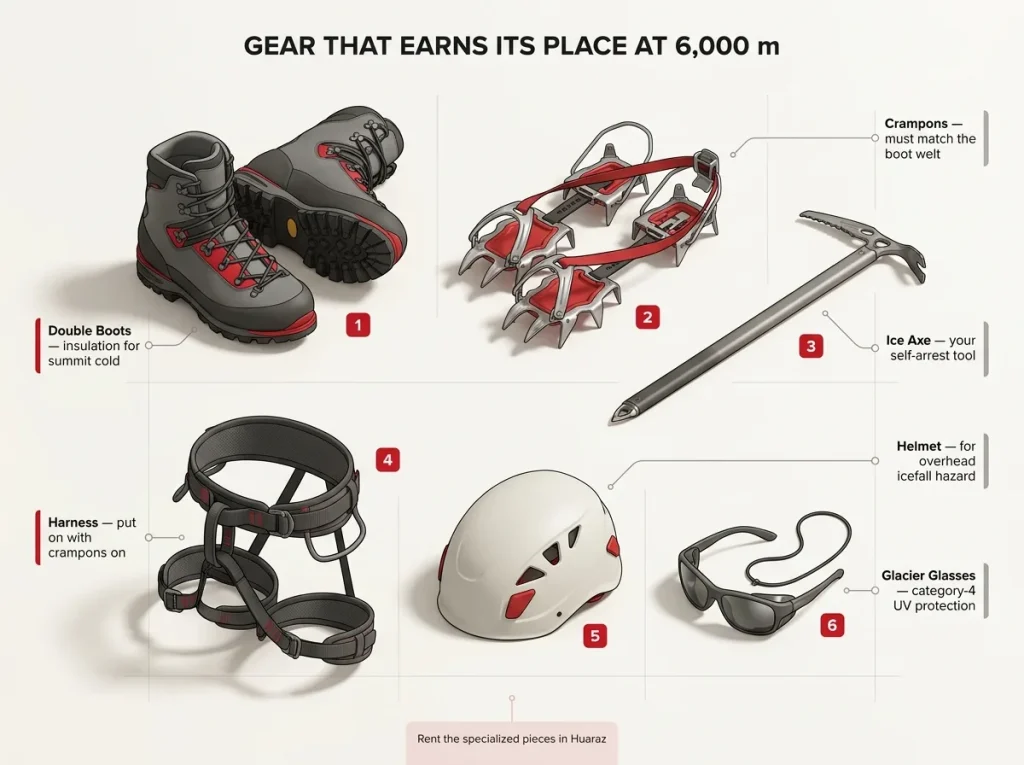
Double boots are non-negotiable above roughly 5,500m, because a single boot doesn’t hold enough insulation for the multi-hour cold at Camp 2 and on summit day. The La Sportiva G2 SM is the double-boot standard across this kind of high-altitude route. Your crampons have to match the boot’s welt and rigidity, which is why a 12-point semi-automatic pair like the Grivel G12 New Matic is the safe pairing for a stiff double boot. For the PD+/AD- snow grade, one versatile mountaineering axe covers most parties and doubles as your self-arrest tool; the Grivel Air Tech Evo sits right in that range.
Then there’s the glacier-travel kit you wear all day. You want a lightweight harness you can put on and take off with crampons already on, which is exactly what the Petzl Altitude is built for. A helmet isn’t optional in the icefall’s overhead hazard, and something light and ventilated like the Petzl Meteor is easy to wear for hours. And at tropical latitude on a bright glacier, category-4 glacier glasses like the Julbo Camino protect against the UV and glare that cause snow-blindness, which is a genuine risk this close to the equator at altitude.
Beyond those six, the rest of the kit is the standard high-altitude list, and it matters just as much on summit night. Plan on a real layering system: a moisture-wicking base layer, insulating mid-layers, a Gore-Tex shell for wind and snow, and a down fill summit parka for the pre-dawn cold. Round it out with gaiters to keep snow out of your boots, a reliable headlamp (with spare batteries) for the dark start, trekking poles for the glacier approach, and a sleeping bag rated well below the coldest night you expect at Camp 2. None of this is exotic, but showing up with a bag rated ten degrees too warm is exactly the kind of quiet mistake that turns a summit push into a shivering retreat.
You don’t have to own all of this to climb Huascaran. Renting double boots, crampons, an axe, and a harness from a Huaraz outfitter is the common budget-friendly path, and it’s how a lot of first-timers get on the mountain without buying a full alpine kit up front.
If you’re weighing what to buy versus what to rent, the same buy-vs-rent gear math on a comparable glaciated peak applies here almost line for line. Own the things that fit you well and you’ll use for years; rent the specialized, expensive pieces you might only need for this one trip.
Conclusion
Three things to carry away. First, the summit isn’t the crux; the Camp 1 to Camp 2 icefall is, and it’s a timing problem before it’s a climbing one, so guard your departure hour like it’s the whole climb. Second, show up already altitude-experienced and let the trip build the acclimatization on top of that, never the other way around. Third, match the cost tier to whether you arrive acclimatized, and match the gear to 6,000m cold, not to a sales page’s vague “warm layers.”
Before you book anything, get honest about two things: your altitude résumé and your glacier-travel skills. That’s the readiness check the operator pages won’t give you, and it’s the one that decides whether you’re standing on top or turning around below La Garganta.
Frequently Asked Questions
01How hard is Huascaran to climb?
The Normal Route grades PD+/AD- on the French Adjectival System, meaning sustained 40 to 60 degree glacier travel with a steeper pitch or two, not vertical ice. The real difficulty is the altitude at 6,768m and the timing of the icefall crossing, not the technical moves.
02Do you need prior mountaineering experience to climb Huascaran?
Yes. Guides treat prior experience above roughly 5,000m on a glaciated peak as a prerequisite, along with rope-team travel, cramponing, and self-arrest. The trip’s acclimatization rotation supplements your fitness, it doesn’t replace zero prior altitude exposure.
03How many days does it take to climb Huascaran?
The actual climbing from Base Camp is usually five to seven days. Full trip length runs seven to twenty-one days depending on whether the acclimatization rotation on lead-in peaks like Pisco or Ishinca is built into the itinerary.
04Is Huascaran harder than Aconcagua?
They’re hard in different ways. Aconcagua is higher and a non-technical walk-up where altitude is the whole challenge, while Huascaran is lower but genuinely glaciated, with crevasses, seracs, and 40 to 60 degree snow. Huascaran demands glacier-travel skill that Aconcagua doesn’t.
05What is the best time of year to climb Huascaran?
The May to September dry season, with June through August the most stable window. Outside that, tropical-glacier snow instability and storms rise sharply, and the icefall crossing gets less predictable year to year.
Safety Notice: Rock climbing and mountaineering are inherently high-risk
activities that can involve physical trauma or fatal incidents. The information on Rock Climbing Realms is for
educational and informational purposes only. Techniques and advice presented here are not a substitute
for professional, hands-on instruction. Conditions and risks vary by location. Always seek guidance
from a qualified instructor before attempting new techniques. By using this website, you agree that you
are solely responsible for your own safety. Any reliance you place on this information is strictly
at your own risk, and you assume all liability for your actions. Rock Climbing Realms and its authors
will not be held liable for any harm, damage, or loss sustained in connection with the use of this information.
Affiliate Disclosure: We are a participant in the Amazon Services LLC Associates Program, an
affiliate advertising program designed to provide a means for us to earn advertising fees by advertising and linking
to Amazon.com. As an Amazon Associate, we earn from qualifying purchases. We are also an official affiliate partner
of Black Diamond Equipment via the AvantLink network. If you click on a Black Diamond affiliate link and make a
purchase, we may earn a commission at no additional cost to you. We also participate in other affiliate programs.
Additional terms are found in the terms of service.