
In this article
I spent an hour flailing on what was supposed to be a warm-up 5.8 during my first trip to Rumney, totally baffled when my hands greased off what looked like perfect jugs. After years of taking falls on this unique New Hampshire stone, I figured out why standard indoor tactics fail so catastrophically here. This guide gives you the real buddy beta—the gear you actually need to pack, how to dodge the notorious Saturday crowds, and the sideways footwork mandatory to survive Rattlesnake Mountain sport climbing.
⚡ Quick Answer: You conquer Rumney by ditching your indoor habits, bringing a stick clip for the high first bolts, and pulling sideways into the schist rather than straight down. Most beginners show up with standard tactics and get humbled on the warm-ups, but tweaking two techniques changes everything.
| Climbing Area Specifications | ||||
|---|---|---|---|---|
| Best Season | Parking Fee | Route Count | Best Grade Range | Primary Rock |
| Fall (Foliage Peak) | $5 Daily or WMNF Pass | 1,159+ Sport Routes | 5.8 – 5.11 (Sweet Spot) | Foliated Metamorphic Schist |
Demystifying Rumney Schist: Why This Rock Drives Gym Climbers Crazy
Indoor climbers see hundreds of shiny bolts glittering in the sun and assume it’s just another steep playground. Then they tie in, pull on the first hold, and get spit directly into the dirt. The problem boils down to a fundamental misunderstanding of what sits under your fingertips. This isn’t the predictable steep granite of Cannon Cliff or color-coded indoor plastic. It operates on a completely different set of physical rules. If you try to muscle your way up using pure arm strength, you pump out halfway to the anchors. The specific schist rock properties dictate your entire movement pattern, and fighting the rock rarely ends in a successful redpoint. By the time you read enough beta on rockclimbingrealms, you realize that understanding the stone is the majority of the battle.
The “Wood Grain” Reality of Foliated Rock
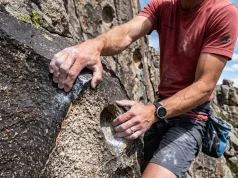
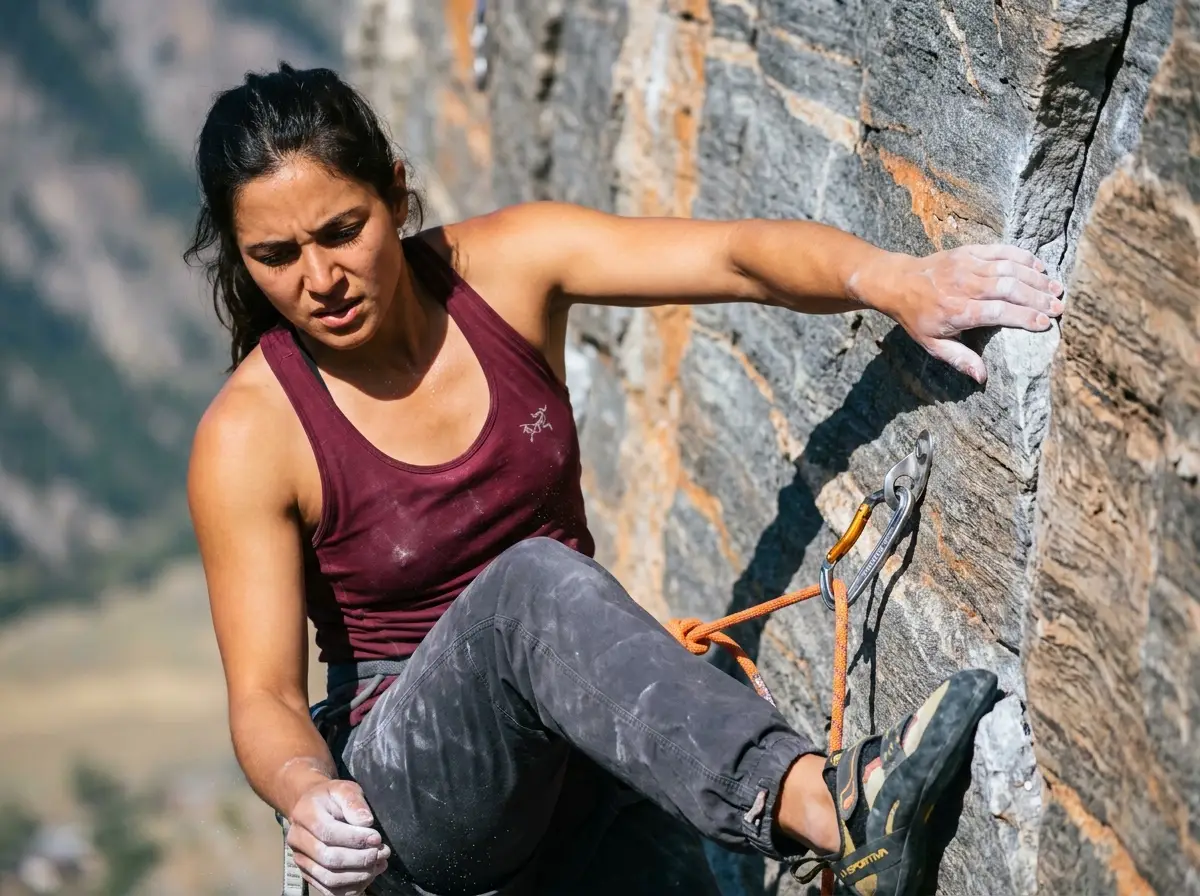
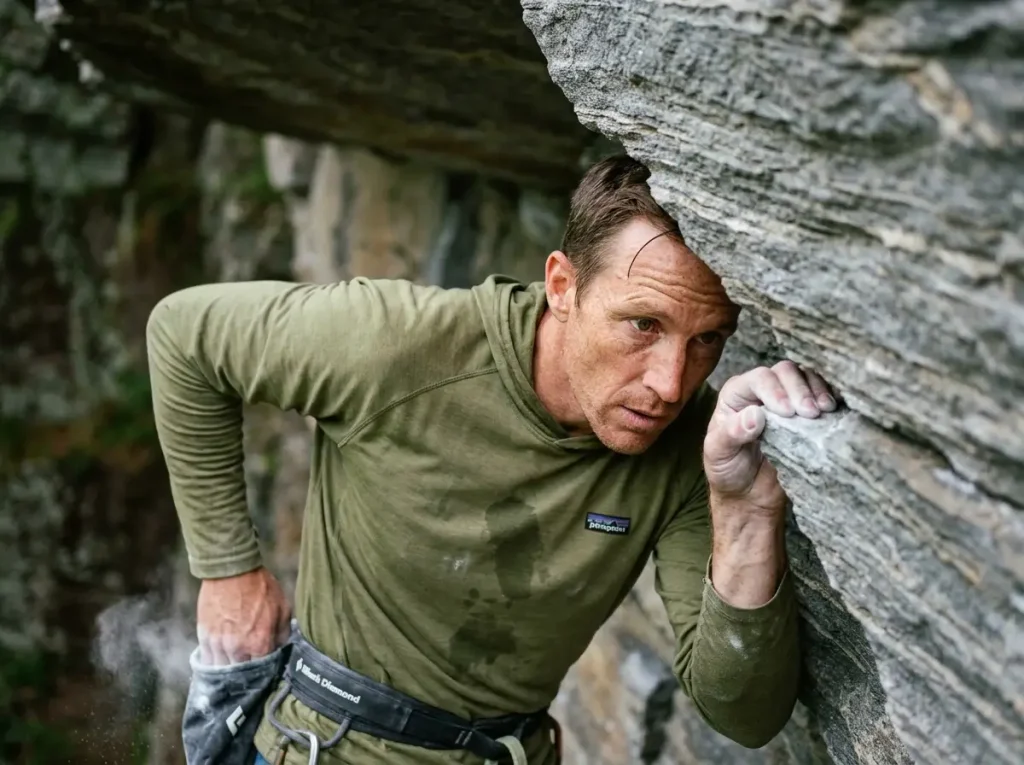
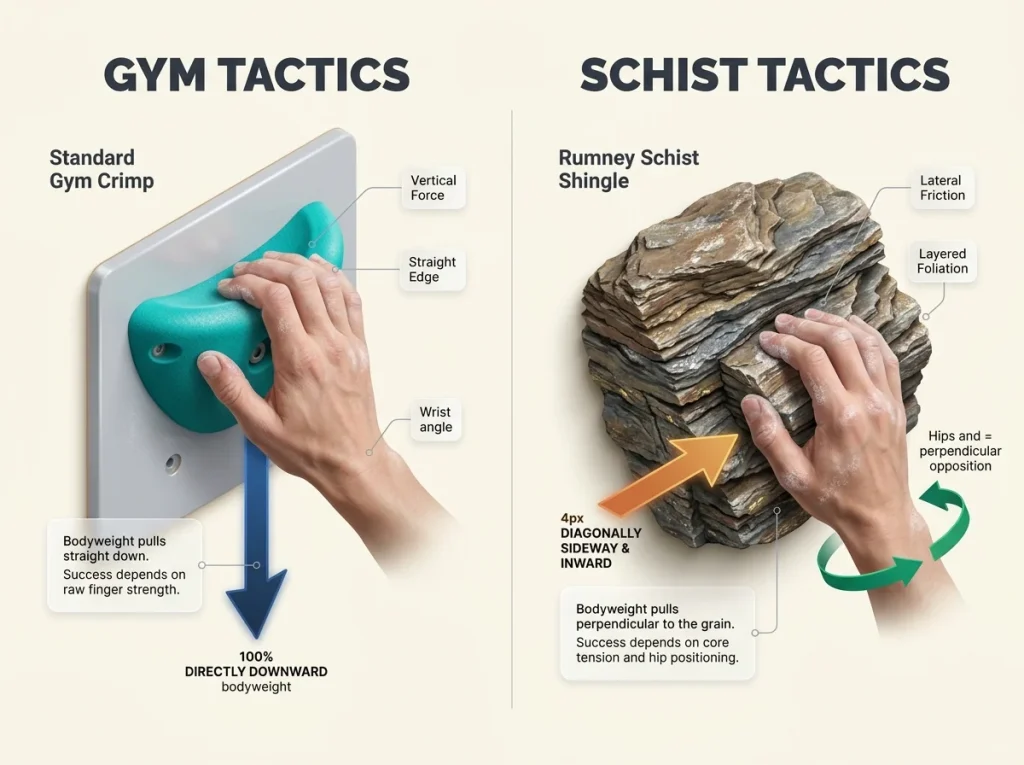
The main reason you feel like you are wrestling an invisible opponent is the rock’s structure. Schist is a metamorphic stone with strong foliation. Instead of predictable blocky edges, it forms in sharp layers that look and feel remarkably like wood grain or overlapping roof shingles. You can dig into the Rumney Rocks botanical and geological overview for the hardcore science, but for a leader tying in on the sharp end, this means the holds face the wrong direction.
You can rarely pull straight down on these edges. Instead, you constantly employ sideways friction. Your standard tactics for different climbing rock types need an immediate overhaul on this wall. You end up climbing laterally—shifting your hips left or right to keep your weight opposed against the heavy grain of the rock.
A lot of visitors burn all their grip strength trying to squeeze the shingles flat like a typical gym crimp. That gives you a massive forearm pump and leads straight to a lead fall. To survive the steep route count over a long weekend, you rely heavily on your core to drive sideways pressure into the holds. You lay back and trust that the friction will support you as long as your pull remains perpendicular to the layers.
Pro-Tip: Stop looking for flat ledges to stand on. Trust your shoe rubber, drop your heels below your toes, and smear your soles directly onto the blank faces of the schist shingles.
Humidity and the “Greasy” Rock Phenomenon
You show up on a sunny Saturday afternoon and still find the rock feels like someone rubbed axle grease all over the crux holds. New Hampshire gets intensely humid, and the specific mica crystals embedded in the schist pull heavy moisture straight out of the summer air. Even when the cliff looks visually dry from the ground, those crystals turn shockingly slick under your skin. This makes the drying time after rain a massive headache depending on which area of the mountain you target.
There is a long-standing local saying: if the pavement down in Plymouth NH is dry, the rock is likely dry. That holds true for walls sitting in direct sunlight, but it fails entirely in the deep shade. Specific crags, like the steep face of Orange Crush, are notorious for seeping water out of the cracks for days after a heavy storm rolls through. Checking the sun/shade status along with the sun/rain exposure on an app like Mountain Project or Gunks Apps saves you from hiking all the way out to a soaking wet project.
When the air gets thick and the stone turns overly slippery when humid, you have two choices. You can either dump a ton of extra chalk onto your hands and still whip off the wall, or you can retreat to the Baker River across the street to swim.
The Sandbagged Trap: Why a Rumney 5.8 Feels Like 5.10
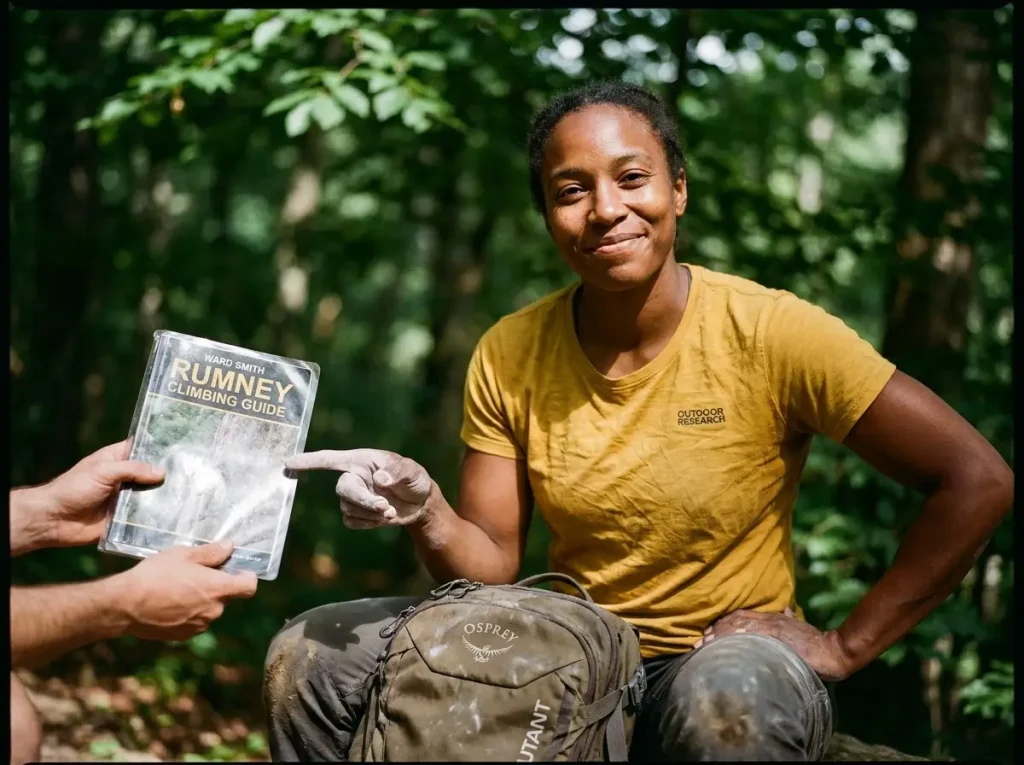
Many visitors crack open the printed guidebook written by Ward Smith and pick out an easy-sounding warm-up. They step off the dirt expecting a casual cruise up a 5.8, only to slam into a desperate, confusing crux sequence directly off the ground. The climbing here is inherently bouldery. The hardest movement often sits right between the first and second bolts, waiting to hand you a fast lesson in humility.
This creates a serious trap for newer climbers pushing their limits outdoors. Routes quickly earn a reputation as sandbagged routes because they demand tricky movement and high core engagement immediately, rather than offering a slow build-up of difficulty. You might cruise some classic 5.10s later in the afternoon, but that morning 5.8 will break your ego fast if your technique is sloppy. Your overall gym-to-crag friendliness rating tanks when you realize outdoor problems cram all the difficulty into one specific, vicious sequence.
Don’t let a bad warm-up ruin your trip. Recognize that the grading requires a refined schist technique that you build over multiple weekends, not within your first two hours tying into the sharp end of the rope. You have to adapt.
Decoding the Crags: Where to Climb Without the Crowds
Once you understand how the actual rock works, you have to deal with the crowds. The secret is out, and the White Mountains draw visitors from across the Northeast and Quebec. Navigating the sheer volume of people dictates whether you spend your day pulling hard on projects or just staring at the backs of other people’s belayers. Selecting the proper wall based on the current season, your ideal difficulty range, and the social atmosphere you tolerate is a mandatory skill for solid crowd management.
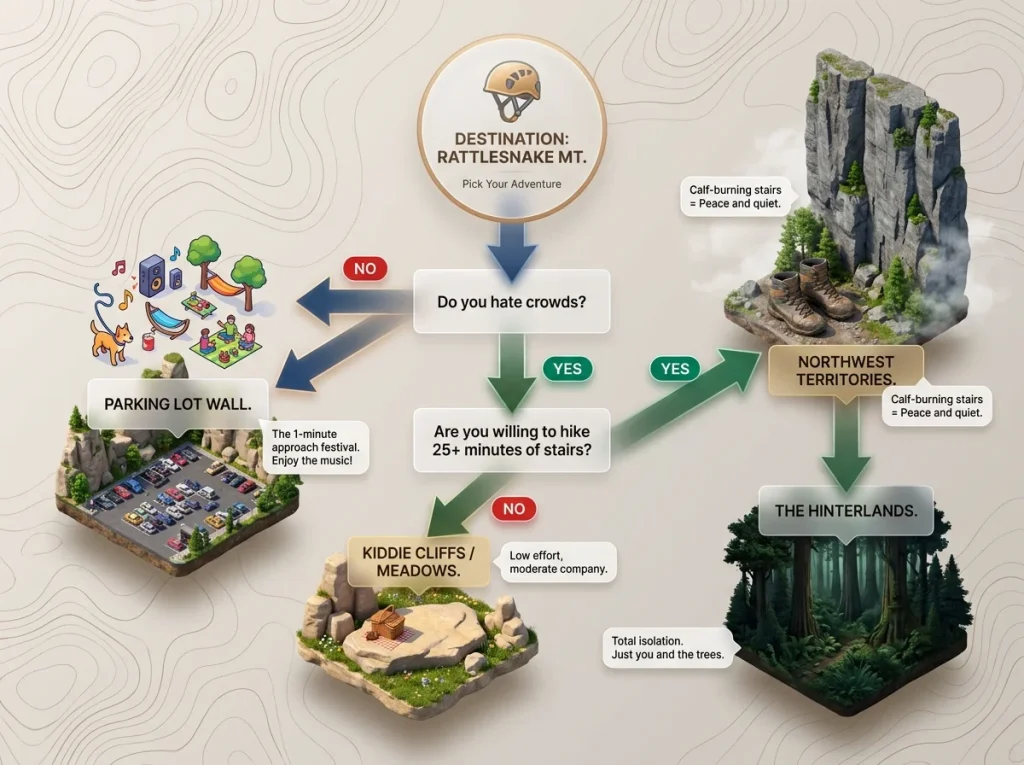
Every section of the mountain provides a distinct, separate experience. You find everything from a loud, chaotic circus packed with college climbing teams sitting on coolers, to isolated cliff bands where the only sounds are wind and falling leaves.
Surviving the Parking Lot Wall Circus
The Parking Lot Wall owns the dubious title of the most accessible crag on the East Coast. It sits an exact one-minute walk from where you drop your tailgate. That convenience turns it into ground zero for chaos. By nine in the morning on a nice Saturday, the base looks like a summer music festival. You navigate around unleashed dogs, hammock clusters, portable speakers, and massive top-rope parties dominating every single line on the wall.
This area proves excellent for raw beginners making their very first transition to outdoor stone, but it lacks any semblance of peace. The crag-by-grade breakdown here leans heavily toward the beginner spec, drawing large instructional groups that camp out on the easiest climbs for hours. You can easily burn half your day waiting for a classic 5.6 to open up. Unless you plan to arrive at dawn, treat this sector merely as a landmark rather than your primary destination. If you want a full day of actual movement, you must pack your bags and hike away from the noise.
Finding Peace at the Northwest Territories
If you despise waiting in line for a route, shoulder your pack and head up the hill. Escaping the crowds requires a willingness to sweat out your approach. The Northwest Territories demands a steep twenty-five minute hike up a long series of stone stairs built by the Rumney Climbers Association (the RCA). You feel the burn deep in your calves within the first ten minutes, but that physical toll effectively filters out ninety percent of the weekend warriors who refuse to walk.
Once you reach the upper cliff bands, you find high-quality lines sitting right in the 5.8 to 5.11 range. It forms the perfect anti-sandbag list environment, where the routes feel longer, more sustained, and traditional compared to the short bouldery punches down by the road. You can also push a bit further up to The Hinterlands to grab an even deeper sense of isolation. The deep shade up here provides massive relief during the sweltering heat of summer. Pack extra water in your bag so you avoid breaking your rhythm to hike all the way back down to the car for a refill.
The Balcony: High Exposure and Rites of Passage
Some climbing areas mess with your comfort zone before you even tie your figure-eight knot. The Balcony sits high on the mountain and requires you to wrap around the Kennel Wall down a faint, narrow trail. Your approach culminates in stepping out onto a narrow ledge suspended over a massive, hundred-foot vertical drop. You seek out finding safe beginner outdoor climbing routes that challenge you without overwhelming you, but The Balcony tests that mental boundary hard.
The sheer exposure surrounding the start of routes like After All This Time plays vicious tricks on your brain. Even though the physical movements clock in at an approachable 5.7 rating, the empty air screaming beneath your heels makes the climbing feel two full grades harder. You grip the holds tighter. Your breathing gets shallow, and your forearms start burning fast. Managing that mental game and learning to trust your feet while standing over the void stands as a mandatory rite of passage for the aspiring outdoor leader.
Your Essential Rumney Gear List: Leave the Trad Rack at Home
You cannot show up to this mountain carrying the same heavy pack you haul to traditional areas like Yosemite. The rock rarely yields continuous, clean cracks that accept traditional protection smoothly, so pull your heavy rack of cams and nuts out of your bag. Dropping that useless metal weight makes the steep approach time feel significantly better, giving you space and energy for the gear tailored specifically for this environment.
Missing a few key items from your kit turns a stellar trip into a painful, abbreviated nightmare. You optimize your loadout for bouldery starts, tall classic lines, and a resident insect population that treats human ankles like an all-you-can-eat buffet. Here is the unvarnished truth about what actually deserves space in your pack.
Why You Absolutely Need a Stick Clip
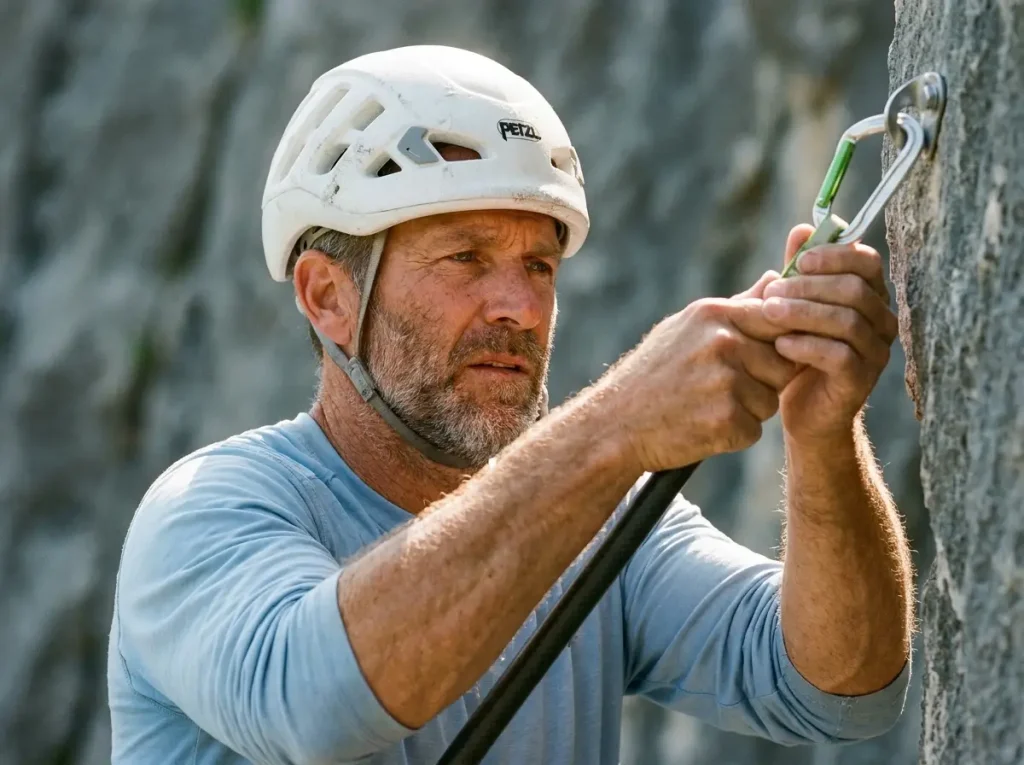
Indoor climbers step outside and expect the first bolt to sit directly at waist height. The rock does not care about expectations. The first piece of protection frequently sits high off the deck, usually hovering right above a complex, difficult boulder problem. If you slip off a hard sequence before clipping that first draw, you hit the dirt hard.
You must carry a telescoping stick clip. You attach a quickdraw and the rope to the end of the pole and pre-clip the first bolt while standing safely on the ground. A stick clip with at least a ten-foot reach is a non-negotiable insurance policy. It requires zero ego to use one. Pre-clipping the first protection stops broken bones and ends trips to the emergency room before they start. The best locals use them constantly, understanding that nobody wins a medal for snapping an ankle on the first move of the morning.
The Rope Length Rule: 60m vs 70m
The vertical distance from the anchors back down to the dirt varies wildly depending on which cliff band you visit. A standard 60-meter cord gets you up and down the vast majority of the routes, but it falls dangerously short on numerous proud classics. Climbers pushing for a best grade range tackle long pitches that eat up the entire spool. Lowering your partner off an extended route with a short rope creates a life-threatening hazard.
You drop your climber if the end of the rope slips swiftly through your belay device without warning. Upgrading to a 70m rope provides a massive safety buffer and grants you access to every pitch on the mountain—from the beginner slabs to elite faces like Waimea and Jaws II—without stressful, rope-stretching lower-offs at the end of the day.
Pro-Tip: No matter how long your rope is or how well you know the route, tie a bulky stopper knot in the belayer’s end of the rope before the climber leaves the ground. It is the cheapest safety insurance you will ever buy.
Tick Defense: Why Bug Spray Isn’t Enough
The deep woods of the Northeast harbor an aggressive and silent tick population. When you hike up the dirt trails and stand in the brush at the base of the cliffs to belay, you expose yourself to disease-carrying insects that brush off generic insect repellent. Relying solely on a quick spray of standard bug dope fails quickly, because the chemical sweeps off onto the brush or sweats away during the steep approach.
If you want actual tick prevention for climbers that works, you alter your clothing. Locals soak their dedicated crag pants and tall approach socks in Permethrin at the beginning of the season. Permethrin bonds to the fabric and actively destroys ticks on contact rather than just repelling them. Treat your gear before the trip, let it dry completely at home, and eliminate the constant anxiety of picking pests off your legs between pitches.
Navigating Rumney Safety Hardware: Lower-offs vs Rappelling
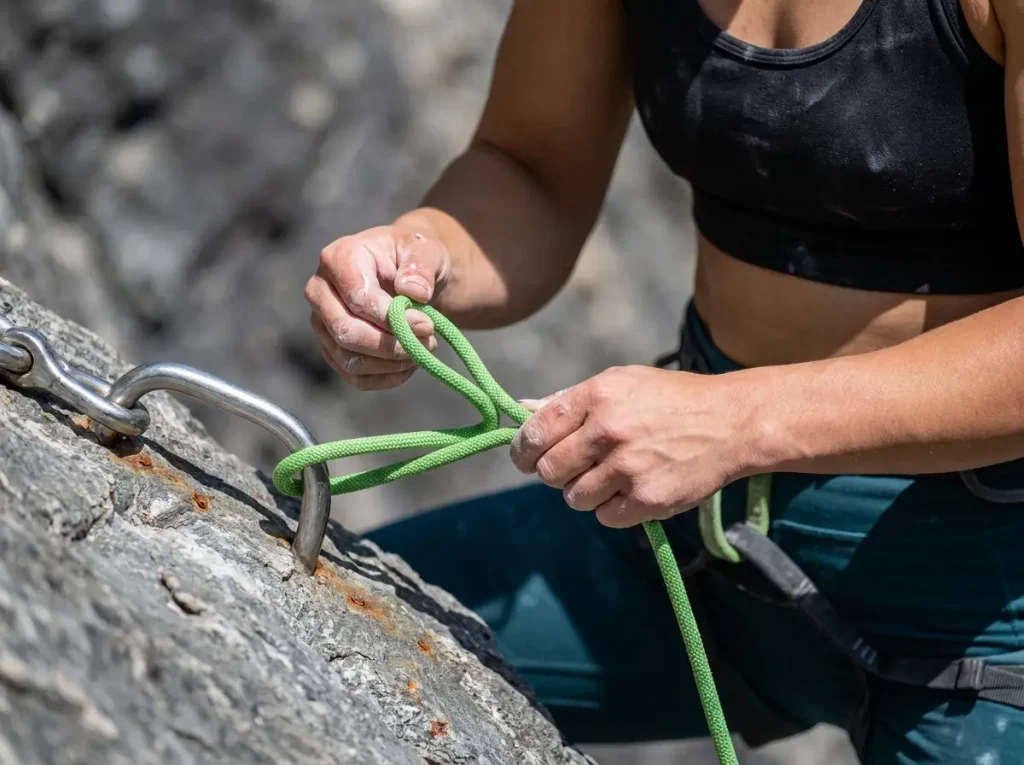
Hitting the top anchors of a route brings a massive rush of adrenaline, followed immediately by confusion for first-time outdoor climbers. Instead of clipping into a friendly pair of indoor carabiners, you arrive at a pair of massive, industrial-looking metal horns or steel hooks bolted into the stone. The fixed anchor hardware varies from wall to wall. Staring at unfamiliar hardware induces panic while you hang fifty feet above the trees with pumped forearms.
The local community has spent decades optimizing these anchors for speed, durability, and safety. They standardized specific systems to minimize accidents and keep the lines moving smoothly. Learning the proper lower-off protocol directly shrinks the statistical risk of catastrophic falls.
Demystifying Ram’s Horns and Mussy Hooks
You encounter two primary styles of specialized anchors here: Mussy Hooks and Ram’s Horns. Both designs exist for one specific reason—they let you thread your rope and descend without ever untying the knot at your harness.
A Mussy Hook looks like a thick steel claw. You push the spring gate open, pop your rope inside, and call for tension. Ram’s Horns look like twin metal spirals jutting off the wall. You drop a slack bight of your rope over the top of the horns and pull the slack firmly down through the twist. The rope seats itself securely inside the loops. Understanding how to safely clean a sport anchor without untying eliminates the terrifying transition phase where you hang solely by a personal tether. You remain tied in on your figure-eight knot from the moment you leave the ground until your feet touch the dirt.
Why Lowering is Preferred Over Rappelling Here
In many older climbing areas, tradition dictates that a climber tie into the anchor, unthread their rope, pull it through rings or chains, tie back in, and rappel down to the ground. This multi-step process introduces multiple points of fatal failure. Dropping the rope or forgetting to double-check your rappel setup results in tragic decking accidents.
At this mountain, the community expects you to lower off. The bulky hardware absorbs the friction of a loaded rope dragging through it without taking excessive damage. Lowering gets you back down to your pack much faster, allowing the next party in line to jump on the route without an hour-long wait. It also leaves the belayer fully in control of the descent speed. You should only switch your tactic to rappelling if you find an anchor that looks visibly damaged or excessively rusted.
Pro-Tip: Establish clear, strong verbal commands with your belayer before you leave the ground. “Take” means pull the rope tight and hold my weight. “Lower” means start bringing me down to the dirt. Never yell the word “Safe,” because it sounds exactly like “Take” when shouted from a windy cliff.
Preventing Ground Falls on Bouldery Starts
The first fifteen feet of any route present the highest risk of a ground fall. The moves are often technical, your muscles feel cold, and the rope lacks enough length to stretch and absorb energy dynamically. A fall between the first and second bolt creates a sharp, short catch that easily pulls the climber straight down into the rocky floor.
Your positioning as a belayer dictates the safety margin. If you stand too far back from the cliff face, the geometry works against you. A falling climber pulls you forcefully forward toward the wall, creating massive slack in the system that dumps your partner dangerously close to the rocks. You must stand close to the wall, slightly offset from the exact fall line of the leader. Pay close attention to the climber’s hips, keep a minimal amount of slack in the system, and prepare to move dynamically to soften the catch.
Logistics, Parking, and the “Unwritten” Rules
A crag does not endure in a vacuum. The cliffs share borders with an active local community, a complex forest ecosystem, and a maze of federal land regulations. Our crag access stands as a privilege, not a guarantee. We hold on to it through constant effort and daily negotiation. Getting shut down before you even tie your shoes often comes down to messing up the basic logistics of simply being there.
You cannot treat the mountain like a commercial facility where someone else cleans up the mess and manages the property. Everyone takes ownership. Whether you figure out the parking lot overflow logistics on a busy long weekend or navigate the strict environmental closures, knowing the local etiquette separates the respected regulars from the clueless tourists. Ignoring these unwritten rules threatens our fragile relationship with the town, and local Access Fund local crag stewardship guidelines make it exceptionally clear that climber compliance dictates future outdoor access.
The $5 Kiosk vs the WMNF Pass
You cannot pull off the pavement and park your car on the side of the road for free. The entire climbing area sits inside a designated fee-use zone managed by the Forest Service. If you bypass the fees and park without a visible pass, the rangers will stick a hefty ticket on your windshield.
If you don’t possess an annual White Mountains hanging tag or the America the Beautiful pass, you use the iron self-pay kiosks stationed at the main lots. You need a pass every single visit, and the fee stands at a flat five dollars. Bring an exact five-dollar bill, fold it into the thin provided envelope, tear off the paper stub for your dashboard, and drop the cash into the metal slot. The iron ranger ignores credit cards and doesn’t make change for a twenty.
If you plan to visit the area for an extended week or hit multiple weekends throughout the fall, skip the cash envelopes entirely. Stop at a local ranger station or order an annual pass online before the season starts. It pays for itself quickly and removes the headache of scrounging for crumpled dollar bills in your center console early in the morning so you can just grab your pack and hike.
The “Roadside Trail” Social Compact
The most common source of friction between the climbing community and the residents of the town comes from foot traffic directly on Buffalo Road. It is a narrow, winding country road fraught with blind corners and limited shoulders. Large groups of climbers walking down the asphalt carrying heavy backpacks disrupt the traffic flow and anger the locals trying to drive to work.
To fix this dangerous problem, volunteers spent huge chunks of time hacking through the thick woods to build the “Roadside Trail.” This dirt path runs parallel to the pavement, connecting the scattered parking lots to the various cliff bases. You commit to a practical climber’s pact when you drive into town: keep your boots off the pavement. It might take thirty seconds longer to navigate the winding dirt path, but utilizing the trail demonstrates respect for the neighborhood that hosts our trips. Treat the walk through the trees as a gentle warm-up for the day.
Respecting Raptor Closures and Rare Flora
The massive cliff faces serve as critical habitat for wildlife. Every single year from March to July, the state closes down massive sections of the mountain—including the iconic Main Cliff—to protect nesting peregrine falcons. The closures feature clear signage posted at the trailheads. Do not ignore the ropes or the signs warning you away. Busting a closure to climb your project forces the fragile birds to abandon their nests. If we violate the wildlife bans, the Forest Service holds the absolute authority to permanently end climbing access across the whole mountain.
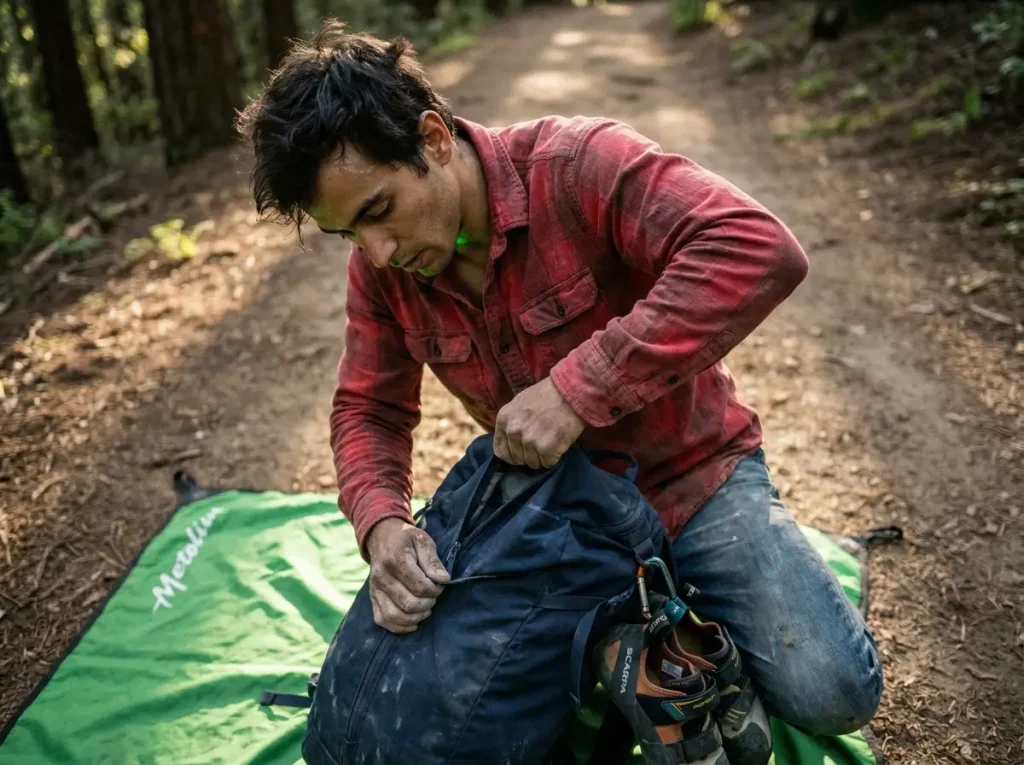
The shady dirt patches at the base of the cliffs also house rare plant species, specifically a type of fragrant fern that thrives near the boulders. When you arrive at your chosen wall, consolidate your bags. Drop your gear onto a single tarp and keep your dogs from digging up the exposed soil. Organizing a tight belay station shrinks your footprint and prevents trampling the fragile flora trying to live right under the ropes.
Conclusion
Mastering this unique slice of the Northeast takes patience, humility, and a willingness to toss your indoor habits into the trash. Pack your stick clip and a 70-meter rope, drop your heels to smear on the sideways schist grain, and hike past the noisy lower walls to find the high-quality climbs sitting in the shade. Respecting the lowering hardware saves time, and keeping your boots off the paved road ensures the local community tolerates our presence.
Your first trip might hand you a beating, but your next trip builds character. Next time you tie in at the base of a route, press sideways into the rock’s grain and watch a sequence that felt impossible suddenly turn into a line you can cruise smoothly all day. Grab some post-climb food in town and start planning your return.
FAQ
Is Rumney good for beginners?
Yes, but expect a sharp learning curve. While you find solid beginner friendly routes, the bouldery starts and stiff grading feel totally sandbagged to someone making their first transition from indoor walls. Stick to the easier slabs at The Meadows for a more relaxed introduction to the area.
What is the best time of year to climb at Rumney?
Fall is the undeniable king of climbing seasons here. When the leaves change, the crisp air becomes sticky and perfect for friction. This temperature drop completely eliminates the greasy rock issues caused by severe New Hampshire summer humidity.
Do you need a pass for Rumney NH?
Yes, you must pay to park your vehicle. You drop five dollars cash into the envelope at the parking kiosk for a daily pass, or you hang an annual White Mountain National Forest or America the Beautiful pass from your rearview mirror.
How many routes are at Rumney?
You find over 1,150 established lines packed onto the mountain sides. With huge volume ranging in difficulty from a casual 5.3 to elite testpieces like Jaws II at 5.15a, you can project lines here every single weekend for ten years without running out of rock.
Safety Notice: Rock climbing and mountaineering are inherently high-risk
activities that can involve physical trauma or fatal incidents. The information on Rock Climbing Realms is for
educational and informational purposes only. Techniques and advice presented here are not a substitute
for professional, hands-on instruction. Conditions and risks vary by location. Always seek guidance
from a qualified instructor before attempting new techniques. By using this website, you agree that you
are solely responsible for your own safety. Any reliance you place on this information is strictly
at your own risk, and you assume all liability for your actions. Rock Climbing Realms and its authors
will not be held liable for any harm, damage, or loss sustained in connection with the use of this information.
Affiliate Disclosure: We are a participant in the Amazon Services LLC Associates Program, an
affiliate advertising program designed to provide a means for us to earn advertising fees by advertising and linking
to Amazon.com. As an Amazon Associate, we earn from qualifying purchases. We are also an official affiliate partner
of Black Diamond Equipment via the AvantLink network. If you click on a Black Diamond affiliate link and make a
purchase, we may earn a commission at no additional cost to you. We also participate in other affiliate programs.
Additional terms are found in the terms of service.