
In this article
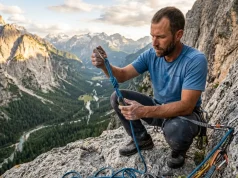
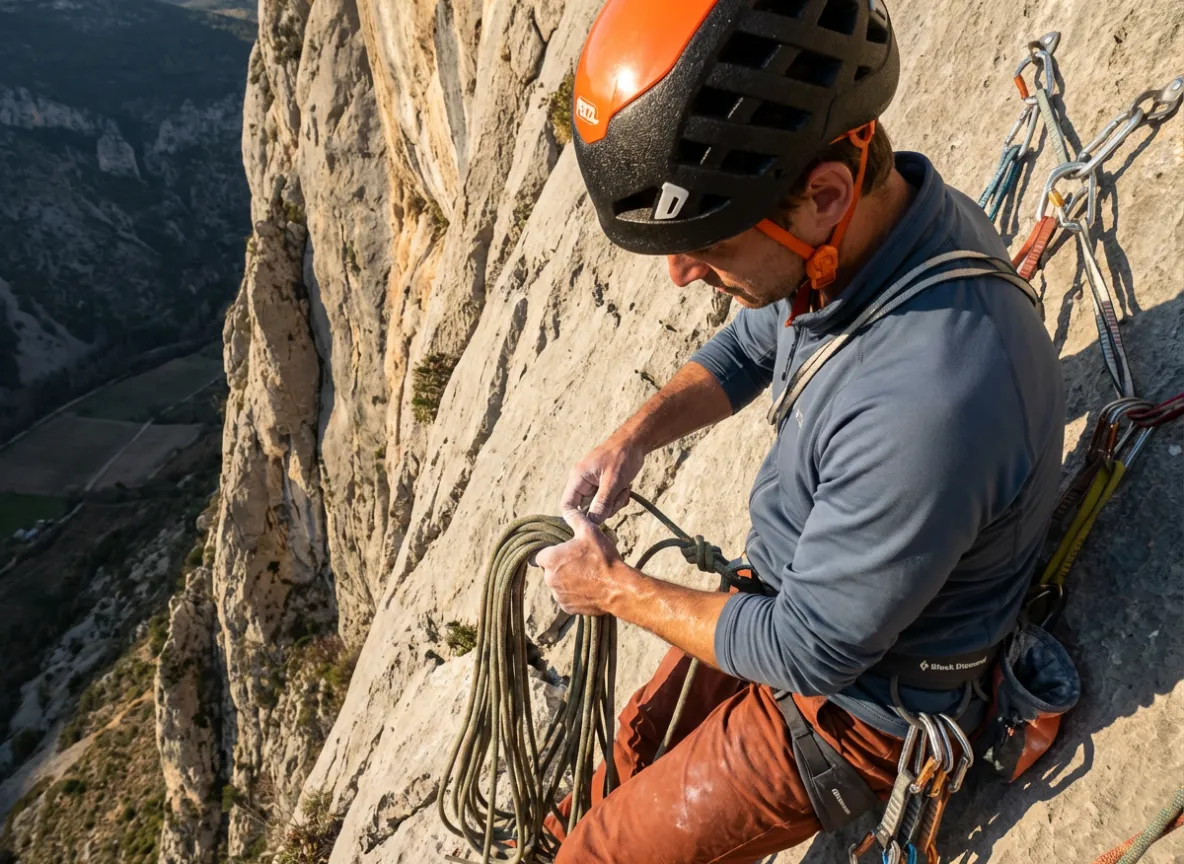
You clip the final draw, chest heaving, forearms pumped, and stare at the chains two feet above your face. This transition—from the dynamic vertical dance of the ascent to the static mechanics of the descent—is the single most critical safety window in single-pitch sport climbing.
In this moment of exhaustion, routine becomes your lifeline; there is no margin for a fumble or a misspoken command. Mastering sport anchor cleaning is not just about retrieving gear. It is about closing the safety loop through technical execution and equipment mastery so you return to the ground every single time.
While old-school mentalities focused on saving hardware, the modern approach prioritizes safety risk management. By understanding the shift toward lowering, learning to read anchor hardware instantly, and mastering the “Bight Method” (or untie-and-thread method), you move from a consumer of information to a confident practitioner in the field.
Why is the “Lowering” Protocol Now the Safety Standard?
For decades, climbers were taught to rappel off anchors to prevent “grooving” the fixed steel rings with sandy ropes. While well-intentioned regarding ethics and sustainability, this hardware-first mentality inadvertently introduced a massive margin for human error.
Accident statistics have forced a change in perspective. An analysis of anchor transition accidents reveals that the transition to rappelling—which requires the climber to go off belay and re-rig their system—is where catastrophic errors frequently occur.
The most common culprit is the “Communication Trap.” This creates a deadly window where the belayer assumes the climber is safe and takes them off belay, while the climber believes they are still protected.
Modern best practice, endorsed by major safety organizations like the American Alpine Club (AAC) and AMGA, prioritizes lowering vs. rappelling to maintain a continuous belay from ground to ground. This “Stay on Belay” principle eliminates the safety vacuum caused by miscommunication during the belay communication script.
Replacing a worn steel quick-link costs a few dollars; the cost of a human error during a rappel transition is incalculable. However, lowering isn’t always an option. You must still be proficient in mastering the definitive climber’s protocol for rappelling for situations where local ethics or anchor material needs demand it.
How Do I Identify Safe Anchor Hardware?
Upon reaching the top-anchor, your first task is visual identification. You must instantly categorize the fixed hardware to determine your procedure using a mental decision matrix for anchor hardware.
What distinguishes a “Closed System” from an “Open System”?
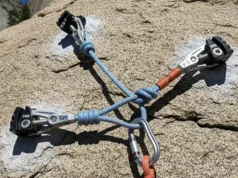
Closed Systems are defined by continuous rappel rings, chains, shuts, or Maillons (quick-links). These solid loops require you to untie your rope and thread the rings to get down. If you see a closed system, you must use the “Bight Method” detailed in the next section.
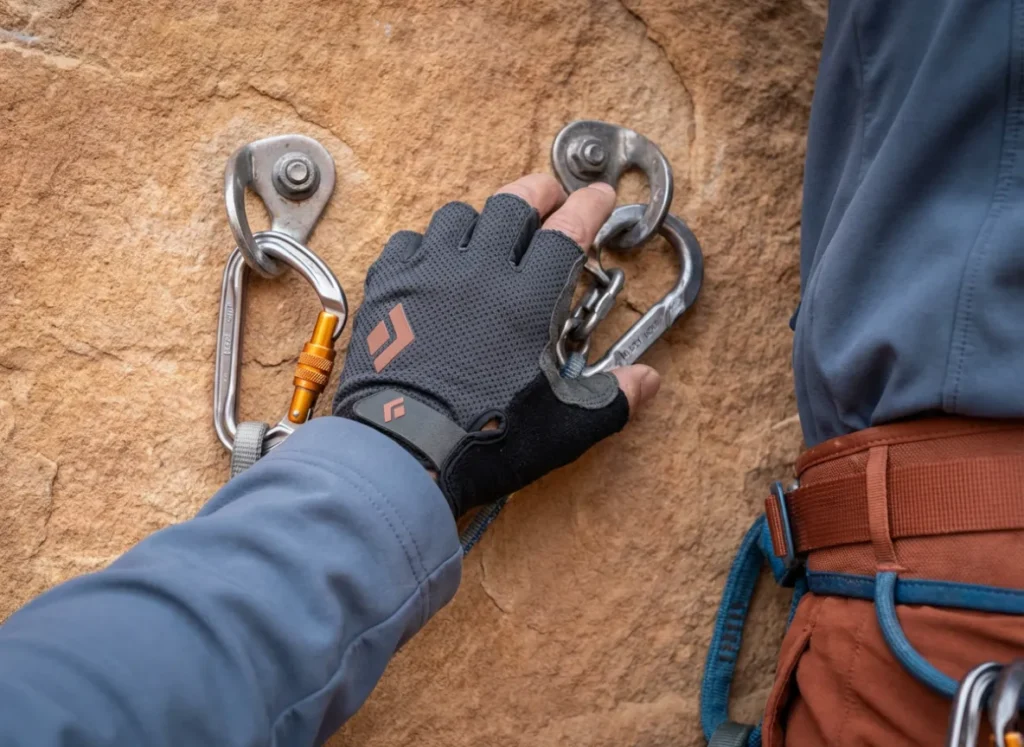
Open Systems feature “drop-in” hardware like Mussy Hooks, Ram’s Horns (pigtails), or fixed captive-eye carabiners. These are modern anchor hardware components designed for immediate use. If the system is open, you simply clip the draw or rope into the hardware and lower.
However, nuance exists even in open systems. Mussy Hooks are gravity-gated hooks designed specifically for lowering. A common mistake is adding a “backup” locking carabiner to these hooks. This can create a dangerous lever that twists the rope out of the hook. Trust the mechanism as designed.
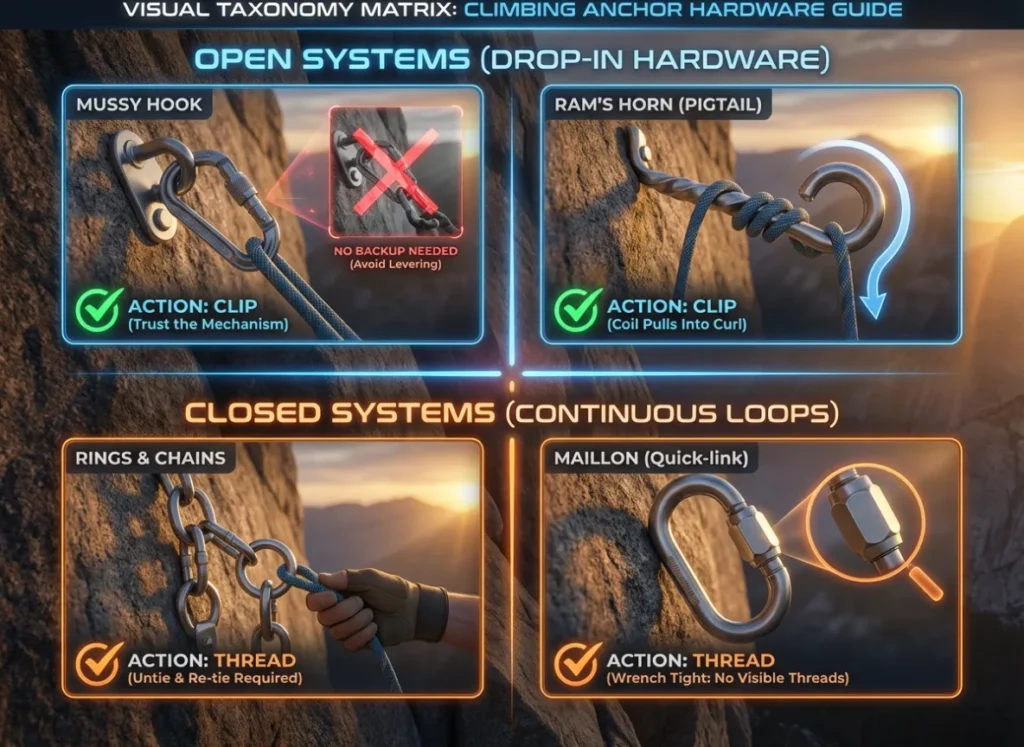
Ram’s Horns require specific geometry. You must coil the rope into the pigtail so that the weighted strand pulls into the curl. This prevents the rope from uncoiling during the descent.
Maillons require a strict integrity check. Testing data on bolt reliability suggests that hardware integrity is critical. A quick-link used for lowering must be torqued tight with a wrench, showing no visible threads. If you find a finger-tight link, it is liable to vibrate open under load.
Pro-Tip: If you are unsure about the reliability of a specific mechanism, apply your knowledge of understanding locking carabiner mechanisms to ensure you aren’t introducing foreign objects that could interfere with the anchor’s intended function.
What is the Safest Step-by-Step Method to Clean a Closed Anchor?
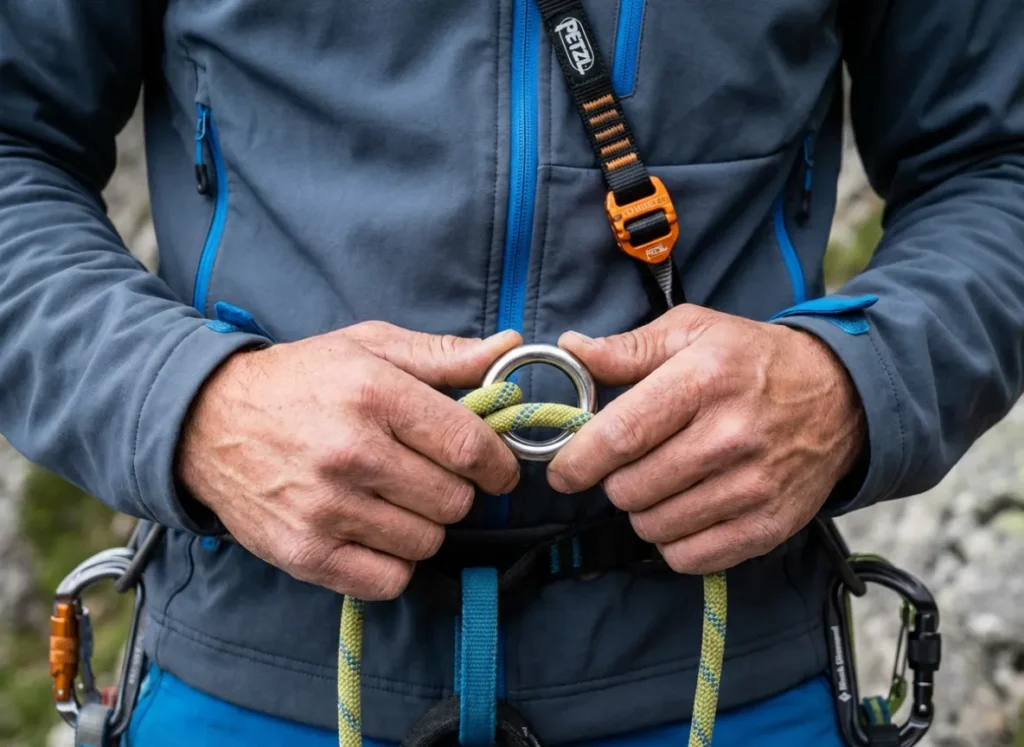
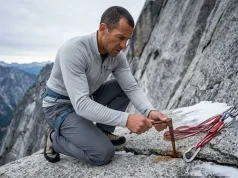
When you encounter anchor rings or chains, you must thread the rope. The “Bight Method” is the industry standard because it keeps you tied in and on belay throughout the entire cleaning sequence.
How does the “Bight Method” maintain system continuity?
Step 1: Secure Yourself.
Clip your Personal Anchor System (PAS), specialized tethers, or a girth-hitched sling to the main anchor point. Do not just clip it; lean back and weight it. You must verify that the rock is holding you, not the rope, before proceeding. This is the moment to verify you are analyzing the safety of your personal anchor system correctly—using a dynamic tether is safer here than a static daisy chain.
Step 2: Slack and Thread.
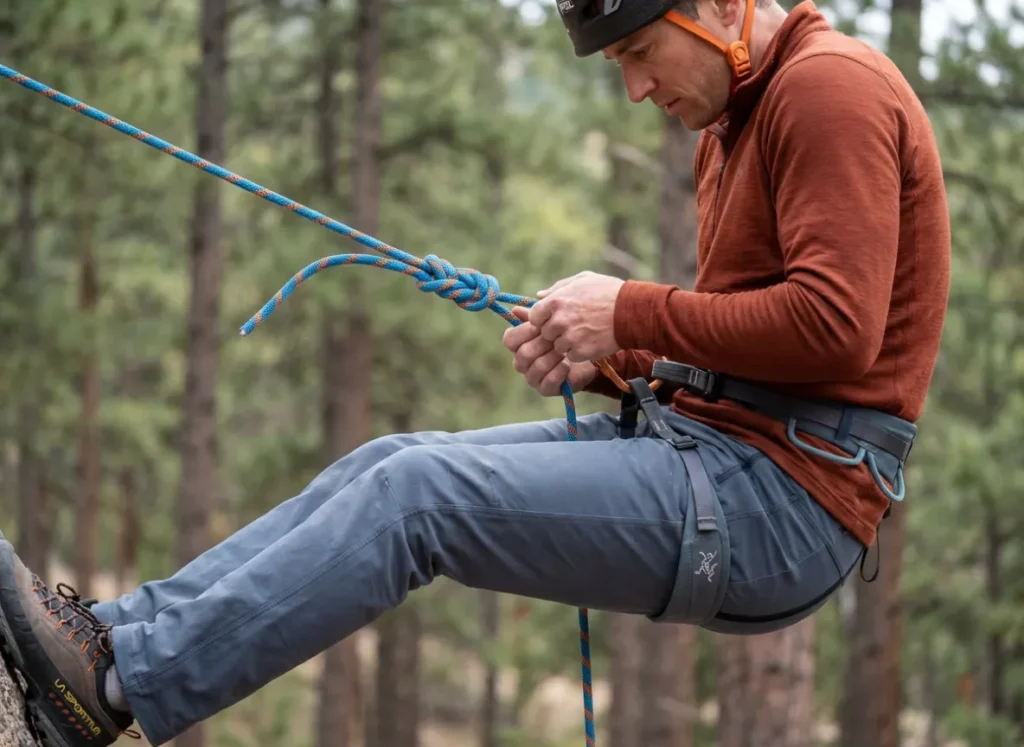
Call for “Slack” from your belayer. Pull up a bight of rope (a loop) and pass it through the rap rings before you untie your original knot. This is the distinct advantage of this method: you never untie from the climber’s side until the new connection is established.
Step 3: The Link.
Tie a Figure-8 on a bight in the threaded loop you just passed through the rings. Clip this new knot to your belay loop with a screwgate or hard-locking locker. Do not clip to your harness tie-in points.
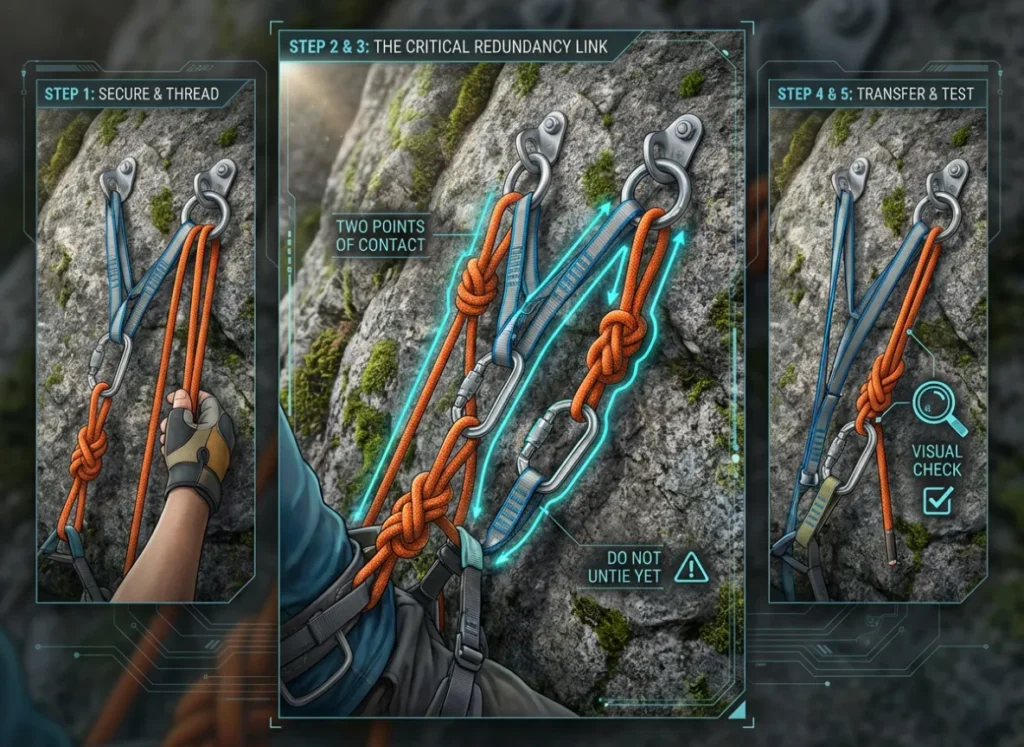
Step 4: The Handshake.
You are now connected to the rope twice, ensuring safety redundancy. Untie your original tie-in knot. The load has transferred from the original knot to the new knot without a gap in protection. Pull the tail of the rope through the rings until your new knot is snug against the anchor.
Step 5: The Weight Test.
Before unclipping your PAS, call “Take.” Have the belayer weight the system. Perform a visual checking of the gate to confirm the carabiner is locked, the knot is dressed, and the rope runs cleanly through the rings. Only after this visual safety protocol do you unclip your PAS and lower. Cleaning procedures for sport climbing emphasize this redundancy as the primary defense against gravity.
How Do I Clean Overhanging Routes Without Swinging?
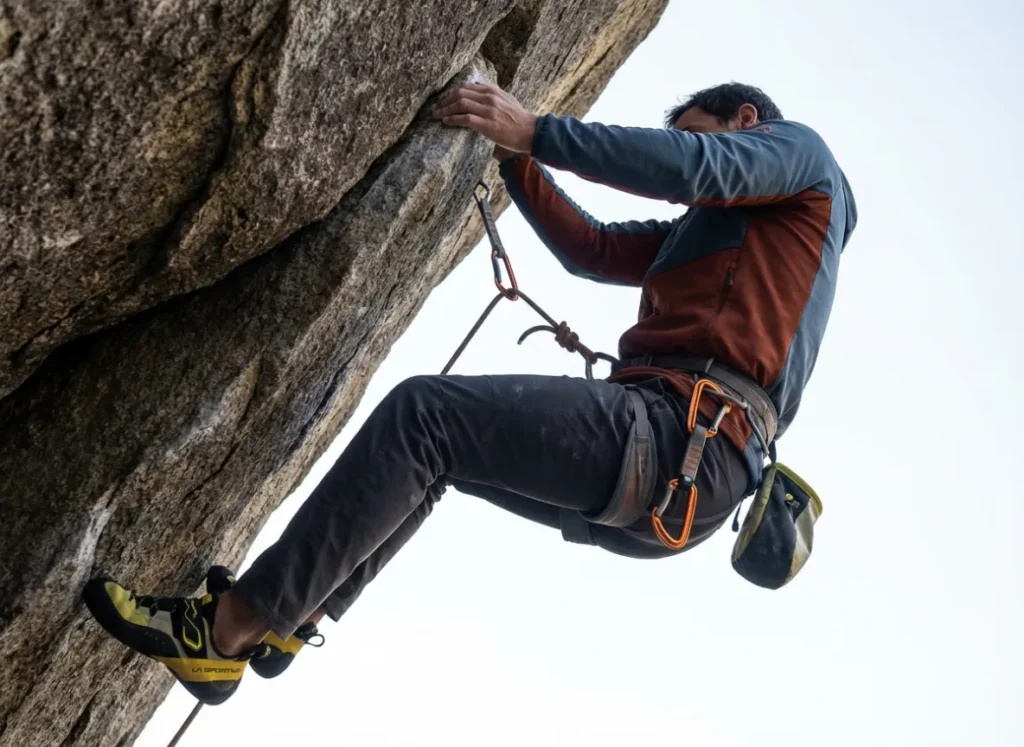
Standard cleaning works for vertical rock. But on overhanging routes or traverses, gravity becomes an adversary. If you unclip while hanging freely, you risk a violent pendulum swing.
What is the “Tramming” technique and when is it necessary?
The Vector Problem.
When you clean a steep route, your last piece of protection keeps you close to the wall. Once you remove it, gravity pulls you to the point directly below the anchor. If there are obstacles or trees in that arc, the swing can be injurious.
The Tram (or Troll).
To prevent this, you use the trolling technique (often called tramming). Before you begin lowering, clip a quickdraw from your belay loop to the belayer’s strand of the rope (the side going down to the ground).

The Slide.
As your belayer lowers you, this quickdraw acts as a sliding tether. The tension on the belayer’s strand keeps you pulled in close to the bolt line. This allows you to reach the anchor bolts and remove the draws as you descend. Because this requires an extra piece of gear, choosing robust quickdraws that can handle the friction and abrasion of trolling for steep sport routes is essential.
The “Boink.”
Sometimes, your weight on the rope makes it impossible to unclip a draw because the carabiner is under too much tension. In this scenario, grab the dogbone (the webbing) and pull yourself up sharply while the belayer holds firm with their GriGri or ATC. This “boink” momentarily unweights the carabiner, allowing you to snap it off the bolt.
Pro-Tip: Never use a tram on a route with loose rock or choss. The rope sliding against the wall under tension can act like a saw, dislodging rocks directly onto your belayer’s head.
Closing the Loop
The transition at the anchor is not a victory lap; it is a technical execution that demands your full attention. Unless local ethics strictly forbid it, lowering is statistically safer than rappelling due to the system continuity of the belay.
Redundancy is king. Use the “Bight Method” to ensure you are never disconnected from the rope. Learn to distinguish between Mussy Hooks and Rings instantly, and respect the physics of the swing on steep terrain. Before your next ascent, practice these motions on the ground until your hands know the movements without your eyes watching. Safety is a muscle—train it.
FAQ – Frequently Asked Questions
Is it bad for the anchors to lower off them?
While lowering causes friction and hardware wear, modern stainless steel hardware is designed to withstand it. Replacing a worn hook is vastly preferable to risking a rappelling accident. In high-traffic areas with soft rock, lowering is often the required local ethic for minimizing wear on the climber’s psyche and reducing accident rates.
What do I do if the anchor chains are rusty?
If the hardware looks compromised—showing deep rust, cracks, or grooving deeper than 10%—do not lower or rappel off it directly. Leave a bail carabiner or a quick-link of your own to descend safely. Your life is worth more than the small cost of the gear you leave behind.
Can I use a daisy chain instead of a PAS?
Daisy chains are designed for aid climbing, not anchor cleaning. They often have low-strength pockets that can fail catastrophically if shock-loaded or clipped incorrectly. A dedicated Personal Anchor System (PAS) with full-strength individual loops is significantly safer.
What if my belayer takes me off belay when I didn’t ask?
This is the classic Communication Trap. Immediately secure yourself to the anchor with your PAS and do not unclip until you have re-established clear verbal or visual contact. You can prevent this by agreeing on a specific plan before you leave the ground: I will clean and lower. Stay on belay.
Safety Notice: Rock climbing and mountaineering are inherently high-risk
activities that can involve physical trauma or fatal incidents. The information on Rock Climbing Realms is for
educational and informational purposes only. Techniques and advice presented here are not a substitute
for professional, hands-on instruction. Conditions and risks vary by location. Always seek guidance
from a qualified instructor before attempting new techniques. By using this website, you agree that you
are solely responsible for your own safety. Any reliance you place on this information is strictly
at your own risk, and you assume all liability for your actions. Rock Climbing Realms and its authors
will not be held liable for any harm, damage, or loss sustained in connection with the use of this information.
Affiliate Disclosure: We are a participant in the Amazon Services LLC Associates Program, an
affiliate advertising program designed to provide a means for us to earn advertising fees by advertising and linking
to Amazon.com. As an Amazon Associate, we earn from qualifying purchases. We are also an official affiliate partner
of Black Diamond Equipment via the AvantLink network. If you click on a Black Diamond affiliate link and make a
purchase, we may earn a commission at no additional cost to you. We also participate in other affiliate programs.
Additional terms are found in the terms of service.