
In this article
The rope they handed me at the shop looked fine in the dim sunlight of the storefront, but forty feet up the limestone, my hand closed over a mushy, completely flat spot in the core. That softness means someone took a severe core-shot fall previously and returned it silently to the rack. When calculating climbing gear rental vs buying for travel, dodging a fifty-dollar baggage fee feels irrelevant once you tie into equipment with an unverified safety history.
Every veteran climber knows the hesitation. You hook a sketchy heel on a runout slab, you pull up the rental rope to clip, and your brain suddenly doubts the nylon holding you. That hesitation cuts your confidence in half. Renting gear looks great on a spreadsheet until you are staring at an eighty-foot drop. We ran the actual total cost formulas, tracked the checked baggage math across major carriers, and established the rigid mechanical audits required to optimize your international trips. Whether you are throwing yourself at steep tufas in Europe, packing the van for a long weekend, or hauling expedition bags to Mount Everest, relying purely on cheap travel hacks gets people hurt. You need to know exactly when to swipe the credit card at a local shop and when to pay the overweight baggage fees.
| Equipment Package Comparison | ||
|---|---|---|
| Equipment Package | Weight Impact | Estimated Cost |
| Standard Sport Rack (Rope, 12 Draws, Personal Safety Baseline) | 7.95 kg (17.5 lbs) | $1,050.00 |
| Baseline Trad Add-on (Standard Cams, Nuts, Alpine Slings) | +3.00 kg (6.6 lbs) | +$1,270.00 |
| Complete Trad Deployment | 10.95 kg (24.1 lbs) | $2,320.00 |
⚡ Quick Answer: The decision to bring your own rack or rent locally comes down to airline bag penalties, crag supply, and whether you tolerate depending on unknown safety systems. Renting ropes and quickdraws works perfectly for short trips to major sport crags where daily rental rates save massive flight surcharges. If your destination lacks local shops or you climb heavy trad lines, ownership is non-negotiable. No matter the flight costs, you absolutely never rent the core safety trio: your harness, helmet, and climbing shoes.
The Financial Reality: Calculating the True Break-Even Point
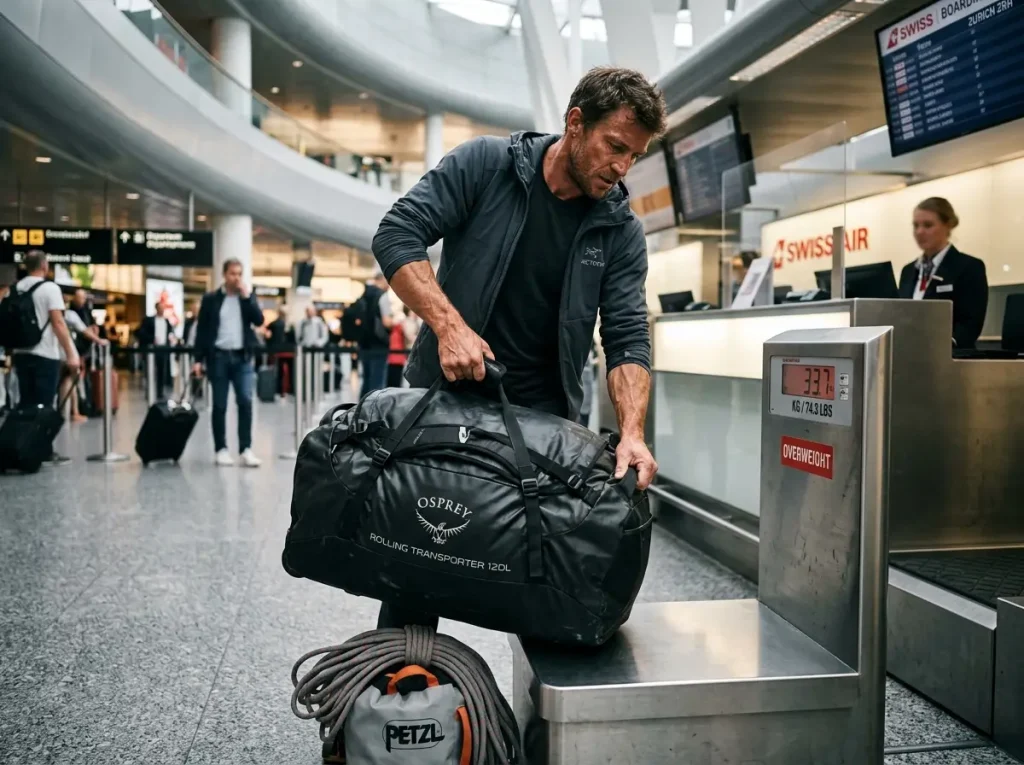
The economic hit of a climbing trip usually happens at the airline check-in counter. If you fail to optimize the exact volume of your baseline kit, you get hit with overweight fees that instantly crush the cash you saved on a budget flight. The trick is weighing the massive upfront gear investment against the punishing math of international aviation.
The Sport Rack vs. Trad Rack Capital Expenditure
A standard sport climbing kit weighs just under 8 kilograms and costs around a grand. When packed efficiently, your quickdraws, harness, shoes, helmet, and a 70-meter cord slide nicely into an average checked bag. You still have breathing room for your approach clothing and chalk bucket.
Traditional climbing shatters that simple math. Plugging your own gear requires a massive arsenal of active protection. The baseline trad add-on piles another 3 kilograms of heavy metal into your duffel bag, driving your total capital investment well past two thousand dollars.
Packing a double rack of Black Diamond Camalots demands careful distribution. The heavy metal lobes and thick wire stems will punch right through the soft nylon sides of a standard travel container if you drop them in loose. You either burn through your entire weight allowance on heavy hardware alone, or you prepare to absorb baggage penalties before you even touch real rock.
Pro-Tip: Pack your dense metal trad rack in a hard-sided, locked Pelican case or surround the cams with thick puffies. Soft duffel bags get shredded on the conveyor belts, and sharp cams easily punch through thin nylon when dropped by baggage handlers.
The Airline Baggage Weight Tax
When you decide to fly with gear, you lock yourself into an ongoing battle with carrier policies. Domestic legacy airlines hit you with a flat, predictable fee of $35 to $50 for your first checked bag. For dirtbags road-tripping and flying domestic, American Airlines operates differently than Southwest Airlines, which remains the great anomaly, extending a two-free-bag allowance that immediately wipes out major transit friction.
Cross an ocean, and the rules change violently. European budget carriers specifically target your heavy gear rack for immediate revenue generation. They enforce strict airline sports equipment policies that trigger massive excess baggage fees the second your bag crosses their arbitrary limit.
A single 70-meter rope weighs almost 5 kilograms by itself. If you misjudge your packing strategy on Ryanair, you get slapped with a ruthless forty-euro charge for a basic 20-kilogram allotment. Going over that marks you for heavy per-kilogram taxes. Run an aggressive baggage fee calculator in your head before paying for any international ticket.
The Total Cost of Ownership (TCO) Equation
Your hardware holds a specific time value that slowly ticks away in your closet. To find the exact economic break-even point, lay your massive upfront purchase against your transit costs and the local destination rental rates. Most destination climbers ignore this simple weight-to-dollar ratio and bleed cash unnecessarily.
If you only grab your harness for a single hit-and-run trip every other year, your nylon soft goods age out naturally on the shelf. You reach the decade mark having only climbed fifty days, meaning your actual cost per route skyrockets. In these scenarios, handing the maintenance burden over to a rental shop makes excellent economic sense.
Pro-Tip: Check if your primary travel credit card completely waives the first checked bag fee. Bypassing standard airline fees radically shifts the math, making ownership financially viable much earlier in the lifespan of your gear.
The “Trust Gap”: Why Safety Equipment Defies Pure Mathematics
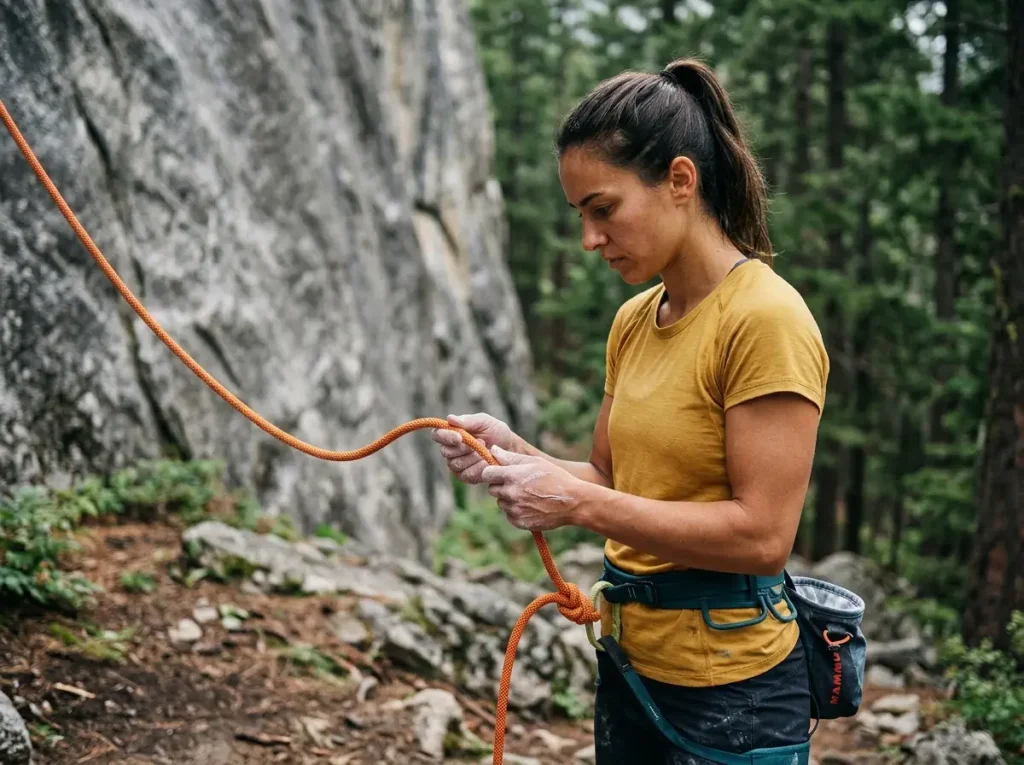
Numbers on a spreadsheet drop from your mind the moment you step off the ground. Getting past the financial hit of your equipment leaves you staring directly at the dreaded trust gap. This is the deep hesitation climbers feel when loading their climbing weight onto hardware stripped of its usage logs.
UIAA Retirement Timelines and Nylon Degradation
The UIAA sets the global baseline for equipment survival. Soft goods break down rapidly from direct UV exposure, ingrained dirt, and raw mechanical stress. Even if your webbing sits completely unused in a temperature-controlled dark room, it hits a hard ten-year expiration date as the materials naturally weaken.
Rental fleets abuse ropes aggressively. Rental gear retirement cycles move much faster than personal gym ropes because outfitters submit their fleets to endless sun exposure and constant top-rope friction. A fuzzy sheath might just indicate heavy surface use, but it fundamentally obscures the structural condition underneath.
You have to respect the physical nylon decay timelines and energy absorption limits before you tie a knot. A piece of shop gear might look visually intact while hiding severe internal fatigue from years of amateur mishandling.
The Unknown Fall History (Factor 1.75 Impact)
The true hazard of communal hardware lurks inside the sheath fibers. A brutal, high-factor fall fundamentally wrecks a dynamic rope’s ability to stretch and catch you safely. When a desperate leader takes a massive winger straight onto an anchor, that violent shock force permanently flattens the internal load-bearing nylon strands.
A careless shop operation might throw that exact cord back on the shelf the next morning if the colorful outer sheath still looks functional. Dropping into a sketchy runout section while relying on unknown fall histories on rental ropes will completely short-circuit your mental game. You cannot accurately judge a fleet rope just by running it quickly through your hands.
Those invisible high-factor falls on communal ropes destroy the system’s dynamic elongation capability, putting massive shock forces onto your protective placements. Checking robust liability and inspection logs is exactly why holding the known history of personal gear feels so liberating when you tie in for a scary redpoint burn. The UIAA certification testing limits assume the rope has never survived massive prior trauma.
Microfractures in Aluminum: Myth vs. Standard Protocol
People constantly argue about invisible microfractures forming after dropping aluminum hardware off a high pitch. Gear lab drop tests show that modern carabiners stand up to blunt impact infinitely better than old gym myths claim. The metal either cracks visibly across the spine, or it survives the violent hit completely intact.
However, dropping hardware creates razor-sharp burrs and violently deforms the gate action. Relying on shop gear means trusting that random strangers didn’t use the equipment as an improvised hammer or abrade it against steel cables. Metal fatigue does not hide well, but sharp burrs slice dynamically loaded fibers with terrifying speed. Missing a sharp edge on a communal carabiner guarantees core damage to whatever rope runs through it.
Pro-Tip: Run your fingernail along the inside basket of any rented carabiner. If your nail catches on sharp micro-burrs, hand it right back to the shop employee. That sharp edge will slice your rope on the first projecting burn.
Global Rental Ecosystems: Crag-Specific Supply Constraints
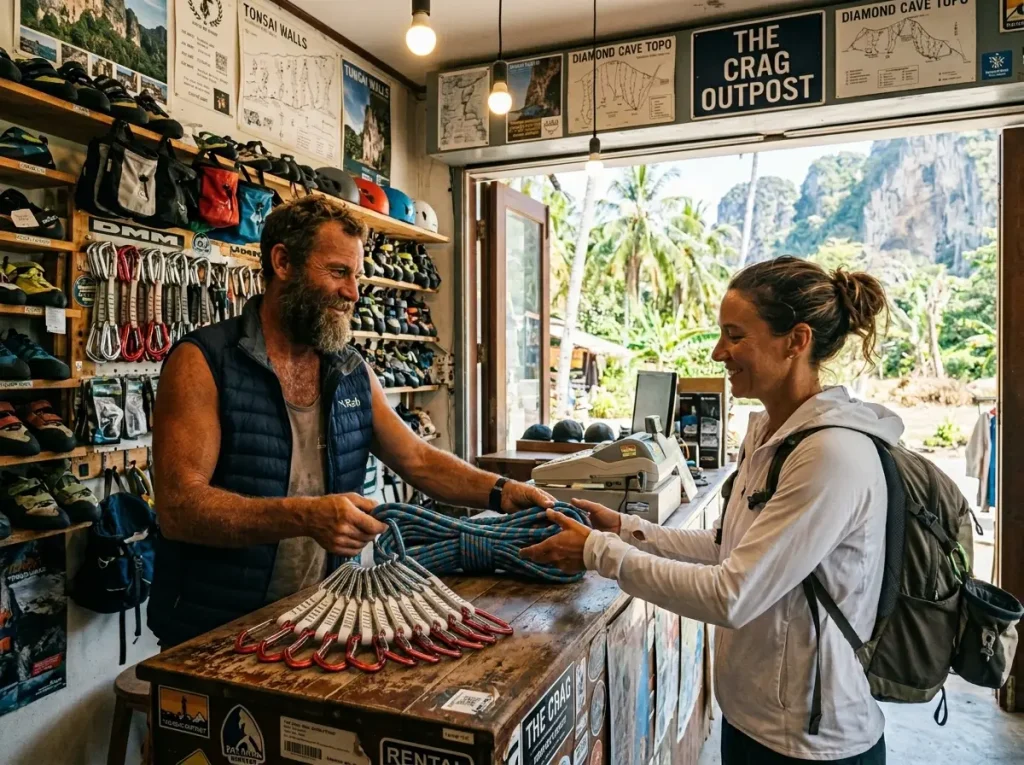
Your entire gearing strategy heavily depends on the actual physical infrastructure waiting at your destination. You have to map the local supply chain logistics long before your flight departs, because showing up empty-handed to a barren crag ruins the whole expedition.
Kalymnos: The Hard Floor of Independent Climbing
Going to Kalymnos assumes you packed your own kit. This iconic Greek limestone paradise possesses a surprisingly fragmented rental ecosystem. Local policies severely restrict renting “hard” life-safety gear like dynamic cords and draws to independent, unguided tourists.
You cannot walk into a corner shop expecting to rent a sharp 70-meter line for the afternoon. This creates a hard logistical floor: you either haul all your own equipment across the ocean, or you fork over three hundred euros for a daily guided service. The sharp tufa features demand you carry extra quickdraws for heavy route extension, piling onto your checked luggage weight.
Railay & Tonsai: The “Land and Play” Ecosystem
Thailand runs the total opposite end of the spectrum. The transient traveler demographic wandering through the Railay peninsula built a comprehensive, massive daily-rate rental market. Outfits like Basecamp Tonsai will practically hand you an entire climbing kit right off the street.
Two motivated climbers can secure ropes, harnesses, and draws for extremely cheap daily rental rates. This hyper-availability makes abandoning your heavy luggage at home a brilliant tactical move. However, you must meticulously inspect heavily trafficked Thai fleet ropes that have absorbed intense salt-air humidity and constant jungle sand before trusting them on the sharp end. Understanding Thailand’s coastal crag logistics changes everything about how you pack.
El Potrero Chico: Multi-Pitch Gear Demands
The towering vertical limestone of El Potrero Chico punishes anyone trying to skimp on rope length. A standard 60-meter gym rope will confidently get you stranded in the dark on Potrero’s massive, sprawling rappel stations.
Mexican big-wall sport climbing explicitly demands heavy 70-meter or 80-meter ropes. The severe availability constraints for renting specialized ultra-long cords in a remote canyon mean that checked luggage becomes practically mandatory. You cannot gamble on finding obscure hardware sizes when fifty pitches of technical descending stand between you and the ground.
Aviation Logistics: TSA Security Protocols for Protection Gear
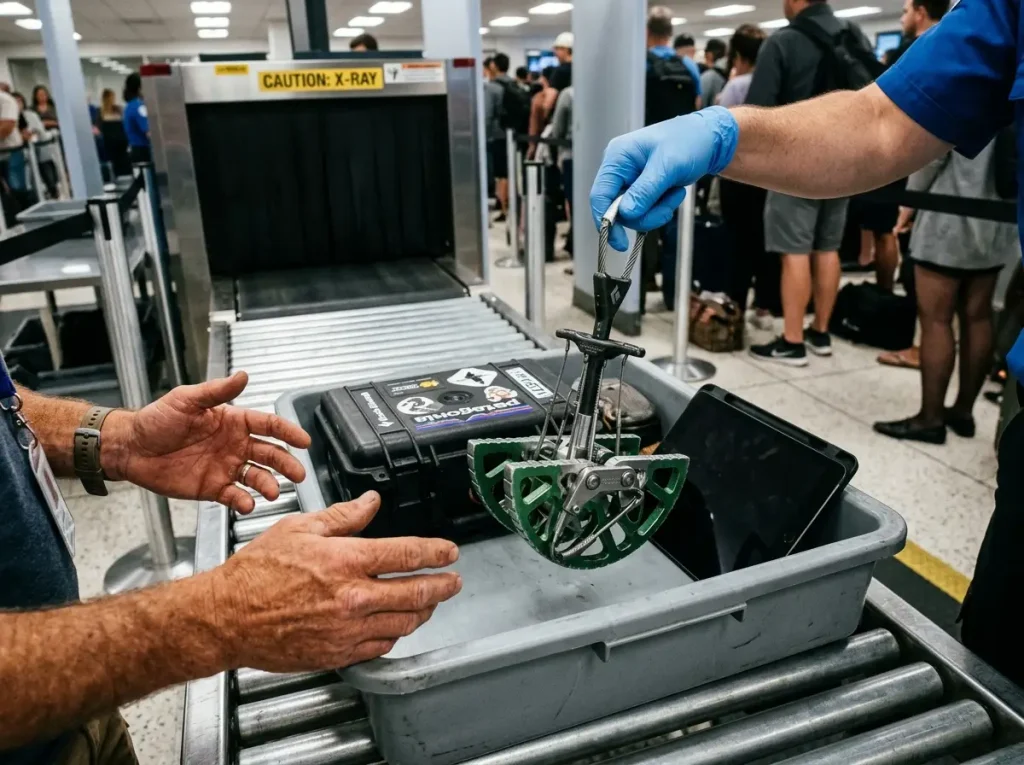
Transporting dense metal hardware through international airports requires navigating a brutal maze of security restrictions. Airline logistics dictate exactly what you can haul in the cabin, and failing to respect these unwritten rules results in devastating equipment confiscation right at the X-ray belt.
The “Sharp Object” Discretion on Cams and Nut Tools
Climbing hardware possesses a frustrating dual-use nature. Ropes slide through X-ray machines fine, but heavy metal spring-loaded cams trigger intense scrutiny. Packing climbing cams in a carry-on puts your trip in the hands of absolute chance.
A dense cluster of heavy Camalots looks exactly like improvised mechanical hardware on the scanner screen. Confiscation relies entirely on individual TSA agent discretion regarding sharp objects. Watching a security rookie pick through a thousand-dollar set of meticulously racked gear under the suspicion that a nut tool is a tactical blade will spike your heart rate instantly. Check your metal.
Measuring and Managing Dynamic Ropes
Dynamic ropes usually face zero specific restrictions for the overhead bin. A heavy 70-meter line is exactly the piece of gear you want inside the cabin to aggressively save weight on your checked baggage allowance.
You must coil your long line tightly utilizing an alpine butterfly coil to ensure it complies completely with stringent overhead bin dimensions. Having your rope with you ensures that even if the airline accidentally loses your checked duffel, you retain the most expensive and critical piece of the safety chain.
Lithium Batteries and Alpine Tech Restrictions
Modern alpine missions rely heavily on satellite communicators, high-beam headlamps, and dense power banks to survive benightment. Federal aviation regulations strictly demand that high-capacity spare lithium batteries stay inside the pressurized cabin with you.
When navigating global travel regulations, you have to separate out your technical electronics. Conversely, your camp stove must ride below in the cargo hold, and it must be radically scrubbed clean of all lingering fuel vapor before inspection. Fired empty fuel canisters are universally banned, meaning you have to violently reorganize your electronics dry bags every time you approach the counter.
The Tactical Matrix: Which Climbing Gear Never to Rent
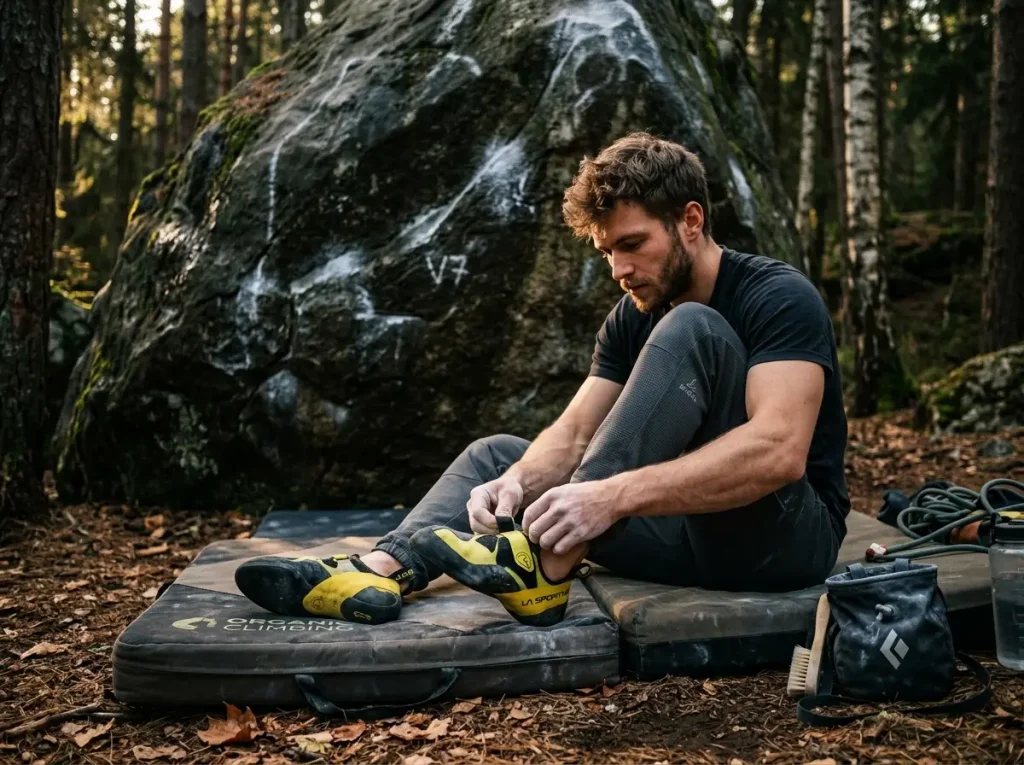
You need a clear definition of what gear physically belongs to you and what hardware can be scavenged on arrival. Establish a strict safety and hygienic hierarchy before you ever swipe a credit card at a foreign gear shop.
The “Unrentables”: Shoes, Harnesses, and Helmets
Your harness acts as the absolute last piece of nylon you should ever trust to an outfitter. Shop fleets endure thousands of sweaty renters, soaking the webbing repeatedly and accelerating stealth gear wear-and-tear. You need a sharp eye for identifying stealth UV and sweat degradation because unseen fraying near the life-critical belay loop bar-tacks goes unnoticed by lazy shop employees. You know your harness fits right when you forget it’s on. That takes about 20 pitches of break-in time.
Helmets absorb invisible micro-dents deep inside the EPS foam core whenever a tourist throws them into the dirt. Just one bad knock severely compromises the shell’s shock absorption capability, completely nullifying your protection against rockfall.
Rental shoes completely ruin the high-grade technical footwork required for steep sending. You cannot edge properly on polished limestone wearing blown-out, sloppy shop rubber. Pushing a tough grade requires casting aside the generic rental fit and sliding into the precise, aggressive downturn of your own customized La Sportiva solutions. Never ask what gear should I never rent again. This hardware trio forms your non-negotiable baseline.
When Renting Heavy Hardware Makes Tactical Sense
Paying outfitter rental pricing actually works brilliantly during short, aggressive hit-and-run trips. If you fly to a major limestone paradise for just a four-day weekend, dropping money on locally managed dynamic ropes eliminates the agonizing stress of tracking heavy oversize baggage.
You skip the luggage carousel entirely, walk straight off the tarmac, and drive to the crag. You trade a slice of the financial break-even calculation for massive logistical speed. However, this only applies to sport climbing disciplines where shop draws and ropes are standardized and highly robust.
Conducting a Technical Inspection on Rental Gear
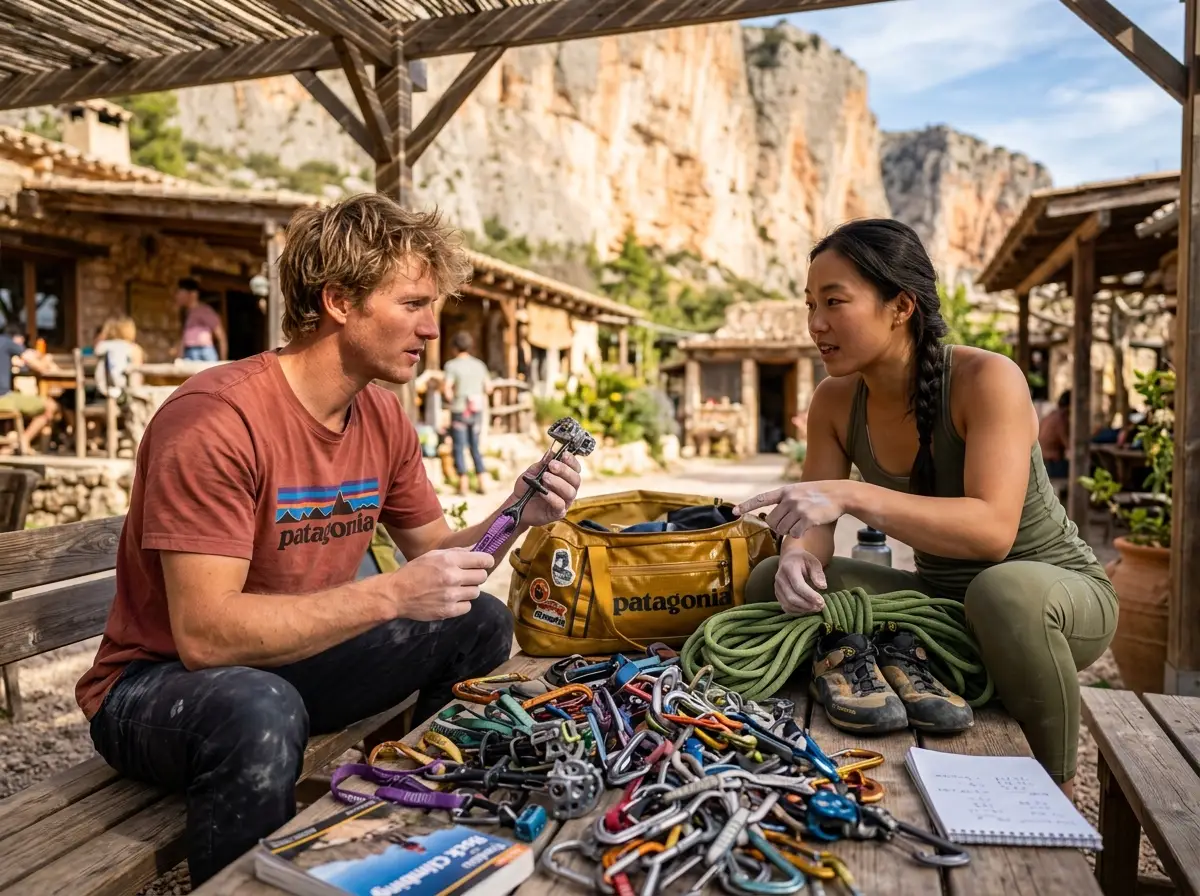
You must run a severe mechanical audit on every piece of equipment they hand you across the counter. Never blindly trust the shop employee. Flake the entire seventy-meter rental rope through your bare hands directly in the store. You are actively searching for mushy spots in ropes or sudden diameter inconsistencies that scream core damage.
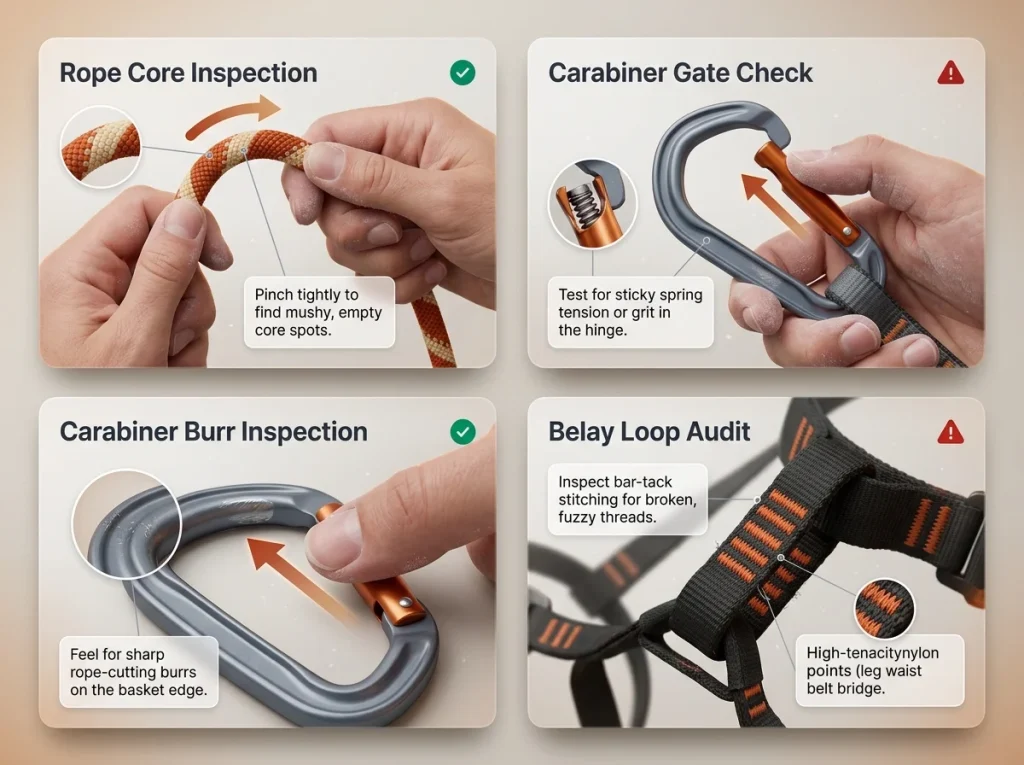
Pro-Tip: Check the snappy gate action and spring tension on every single rental quickdraw before you leave the shop. A cam trigger sticking or a sluggish carabiner gate guarantees a dropped clip when you are completely pumped at the crux.
Running strong technical inspection checklists forces you to respect the CE standards despite holding borrowed hardware. The mechanical precision of personal cams spoils you, so you must recalibrate your standards when working with community metal.
FAQ
Is it safe to rent climbing ropes around the world?
It depends entirely on whether the specific gear shop maintains rigorous, documented life sheet logs for their inventory. Reputable outfitters mathematically track their ropes’ exposure lifespans and retire them early to prevent liability. However, previous renters often fail to report massive, core-wrecking falls, which establishes a baseline anxiety when pulling onto a crux sequence with a shop cord.
How much does it cost to check climbing gear on a flight?
Domestic American carriers typically hit you with thirty-five to fifty bucks for a baseline first bag. Budget European carriers will hit you with devastating per-kilogram penalty fees the second you cross the scale. Checking a doubled trad rack often shatters the standard 23-kilogram weight limits, triggering oversized baggage taxes that easily break a hundred dollars per flight.
Can you bring climbing cams and quickdraws in an airline carry-on?
Technically yes, but bringing heavy metal hardware into the cabin remains highly susceptible to confiscation. Transportation security agents operate with wide federal discretion to categorize massive metal climbing components or a dense nut tool as prohibited items. Checking your hard gear in a locked case remains the only zero-risk transit option.
What climbing gear should I absolutely never rent?
You should never rent your climbing shoes, your personal harness, or your helmet under any circumstances. Blown-out rental rubber destroys your high-grade technical footwork capability. Communal shop harnesses and battered helmets constantly absorb invisible micro-damage, corrosive sweat degradation, and structural stress that remains physically impossible for you to detect visually.
Safety Notice: Rock climbing and mountaineering are inherently high-risk
activities that can involve physical trauma or fatal incidents. The information on Rock Climbing Realms is for
educational and informational purposes only. Techniques and advice presented here are not a substitute
for professional, hands-on instruction. Conditions and risks vary by location. Always seek guidance
from a qualified instructor before attempting new techniques. By using this website, you agree that you
are solely responsible for your own safety. Any reliance you place on this information is strictly
at your own risk, and you assume all liability for your actions. Rock Climbing Realms and its authors
will not be held liable for any harm, damage, or loss sustained in connection with the use of this information.
Affiliate Disclosure: We are a participant in the Amazon Services LLC Associates Program, an
affiliate advertising program designed to provide a means for us to earn advertising fees by advertising and linking
to Amazon.com. As an Amazon Associate, we earn from qualifying purchases. We are also an official affiliate partner
of Black Diamond Equipment via the AvantLink network. If you click on a Black Diamond affiliate link and make a
purchase, we may earn a commission at no additional cost to you. We also participate in other affiliate programs.
Additional terms are found in the terms of service.