
In this article
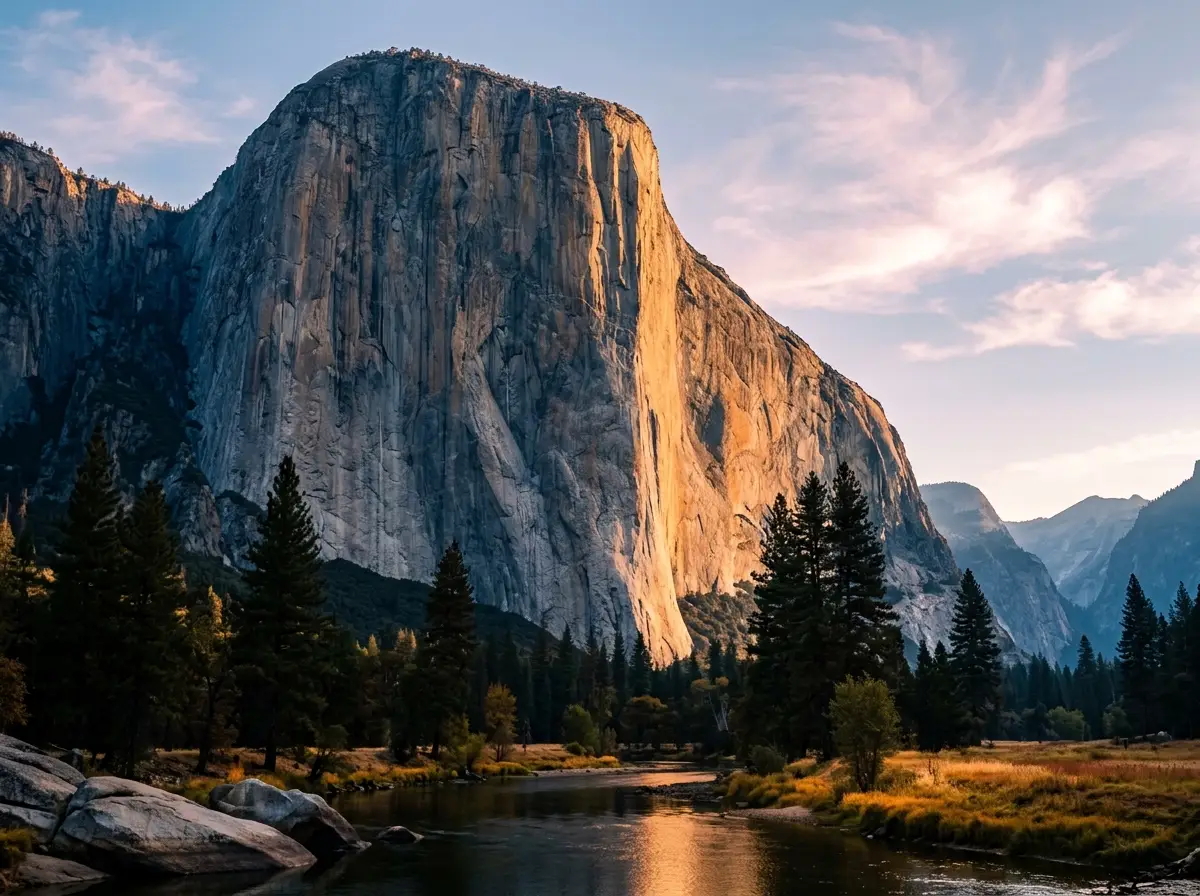
For 35 years, every climber who craned their neck up at The Nose saw an aid climb. From Warren Harding’s first ascent in 1958 onward, the route was something you hauled, jugged, and stood in slings to get up, not something you free climbed. The idea that all 3,000 feet could go free was treated as fantasy. Then in September 1993, a 5-foot-1 climber named Lynn Hill did the exact thing the strongest men in the world had written off, and ask anyone who follows Yosemite history and the same line comes back: it reset what people thought granite could give. Here is who she was, what free climbing The Nose actually means, why the route resisted for three and a half decades, and what she did on the two blank corners that stopped everyone else.
Who Lynn Hill Is and Why She Was the One
From Competition Climbing to the Sharp End
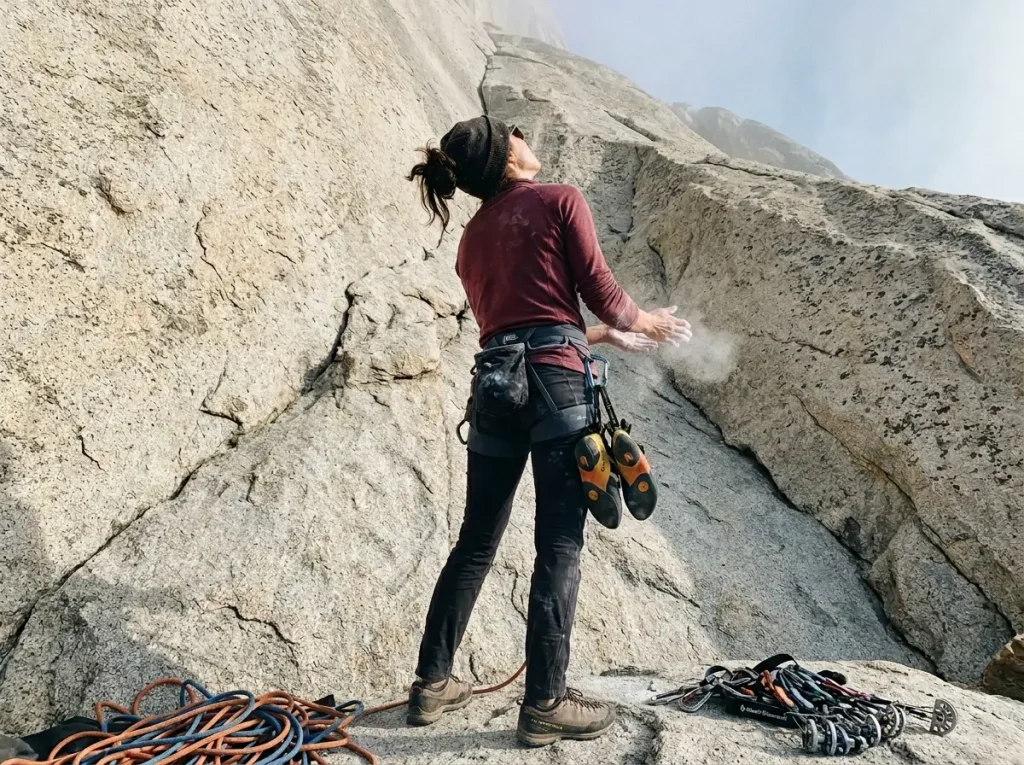
Lynn Hill did not come out of nowhere. By the time she walked up to The Nose, she had already spent more than a decade operating at the front edge of the sport. She became the first woman to climb 5.12d in 1979, and in 1991 she became the first woman to climb 5.14, sending Masse Critique in Buoux, France, the hardest sport climbing grade any woman had reached and a full three years ahead of the field. She was a dominant competition climber in the late 1980s, the kind who won major international titles, then walked away from the plastic to put that precision back on real rock. She tells the whole arc in the first person in her memoir, Climbing Free: My Life in the Vertical World, written with Greg Child, and it reads like exactly what it was: a climber who was simply ahead of everyone.
That matters here because she belongs in the same conversation as the most important names in the story of legendary American climbers, the same lineage that kept dragging the ceiling higher decade after decade. She was not a curiosity. She was the best technical free climber alive, and The Nose was a technical free climbing problem disguised as a big wall.
Why a Smaller Climber Had the Edge
Here is where the story flips the usual script. Big wall climbing has always carried an assumption that raw power and reach win, that you need long arms and brute strength to muscle up El Cap. The free version of The Nose punished that assumption.
Hill is small, with small fingers and a flexible, precise frame, and on the hardest sequences those traits were not a handicap. They were the whole advantage. Shallow features that vanished under a bigger climber’s fingertips were usable for her. Body positions that a taller, stronger man could not fold into were positions she could lock and hold. The field kept looking for someone strong enough. The route was waiting for someone built right.
Free Climbing vs Aid Climbing on El Capitan
What Free Climbing Actually Means
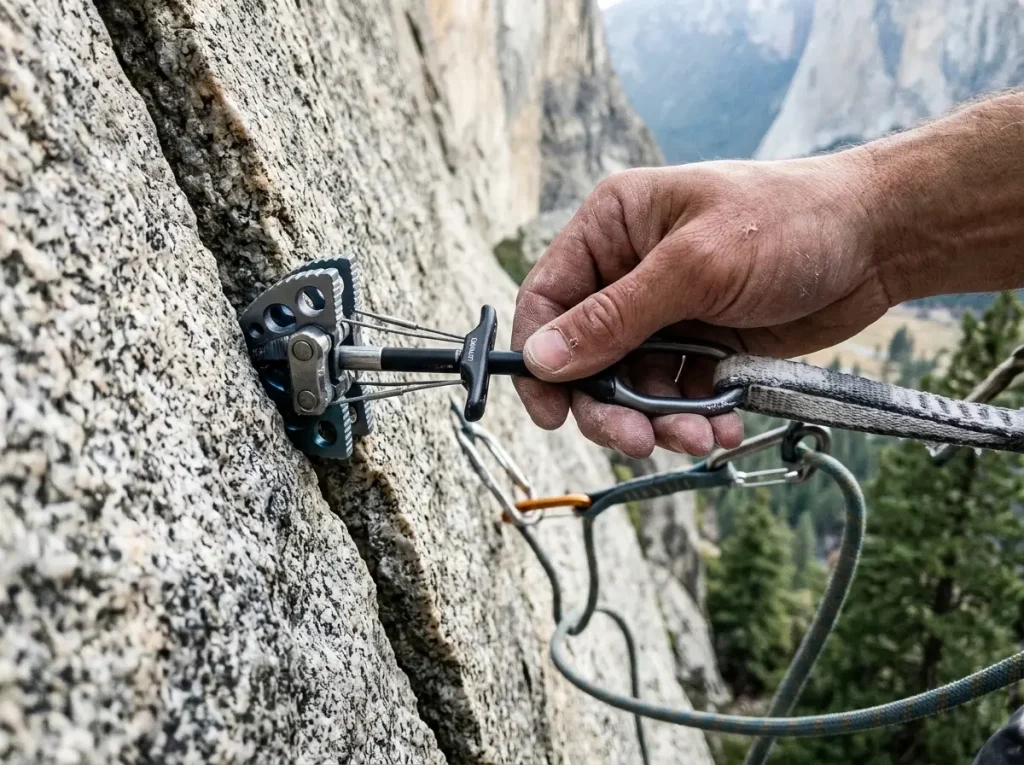
If the whole story is going to land, this distinction has to be clear, because most people blur it. Free climbing means you move upward using only your hands and feet on the rock. The rope and the gear are there to catch you if you fall, and that is all they do. They never pull you higher.
Aid climbing is the opposite arrangement. You pull on the gear, stand in it, and use it to make upward progress. Almost every ascent of El Capitan is an aid climb, and that is how The Nose is normally done. Either way, The Nose is traditional climbing, or trad climbing, which means the leader places protection like cams into the cracks instead of clipping pre-fixed bolts. One more distinction worth nailing down: free climbing is not free soloing. Free soloing means no rope at all. Hill was roped the entire way. The rope just never did the climbing for her.
The rope catches falls, it does not move you up, and it only works if you finish the system. In 1989 at Buoux, Hill fell roughly 72 feet into a tree after getting distracted partway through tying in. The hardest lesson in climbing is the one every veteran repeats: never walk away from a half-finished knot.
Reading the Grades: 5.9 C2 vs 5.14a
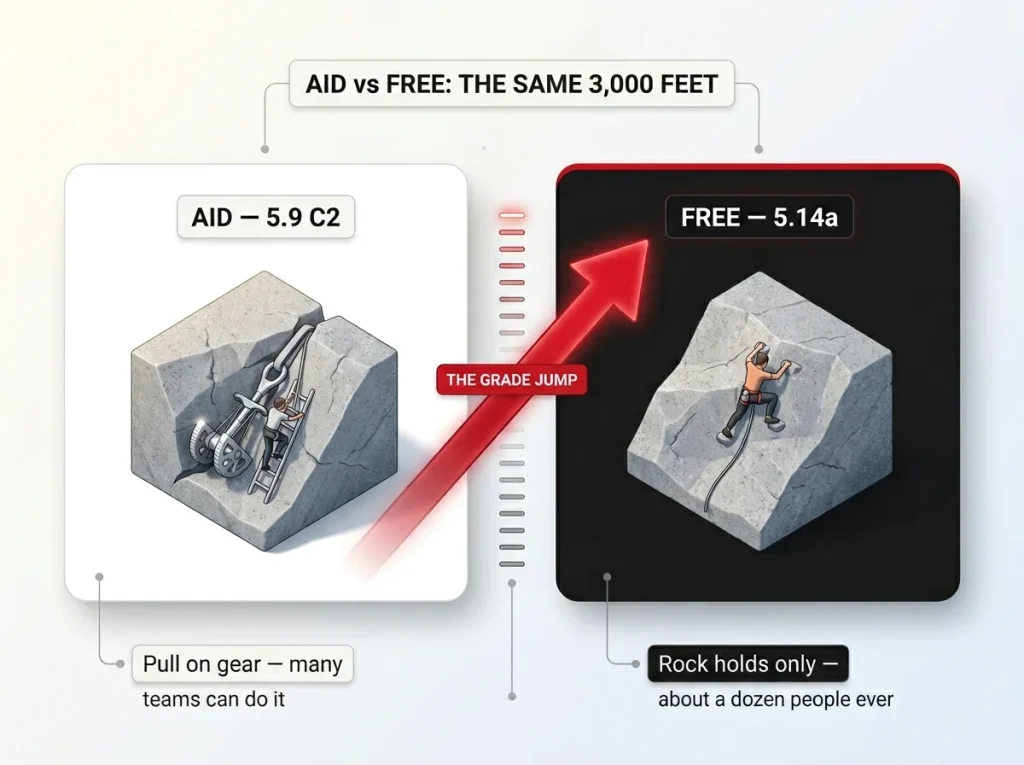
The significance is invisible unless you can read the numbers, so here is the honest translation. As an aid route, The Nose is graded 5.9 C2. That is moderate climbing with gear you pull on, and many fit teams can manage it over a few days. Free, the route is 5.14a, and some argue 5.14b. That is world-class, the top sliver of difficulty in the sport.
Same rock. Same 3,000 feet. But freeing it moves the route from “many teams can do this” to “about a dozen people ever have.” If the jump from aid numbers to free numbers is fuzzy, that gap is the entire reason this ascent matters, and it is worth seeing how The Nose compares to El Cap’s other great free line to feel how rare this level of climbing is on the wall.
Why The Nose Resisted Free Climbing for 35 Years
Built as an Aid Climb in 1958
The most common thing you read about The Nose is that freeing it was “thought impossible.” True, but that phrase hides the actual reason, and the actual reason is more interesting.
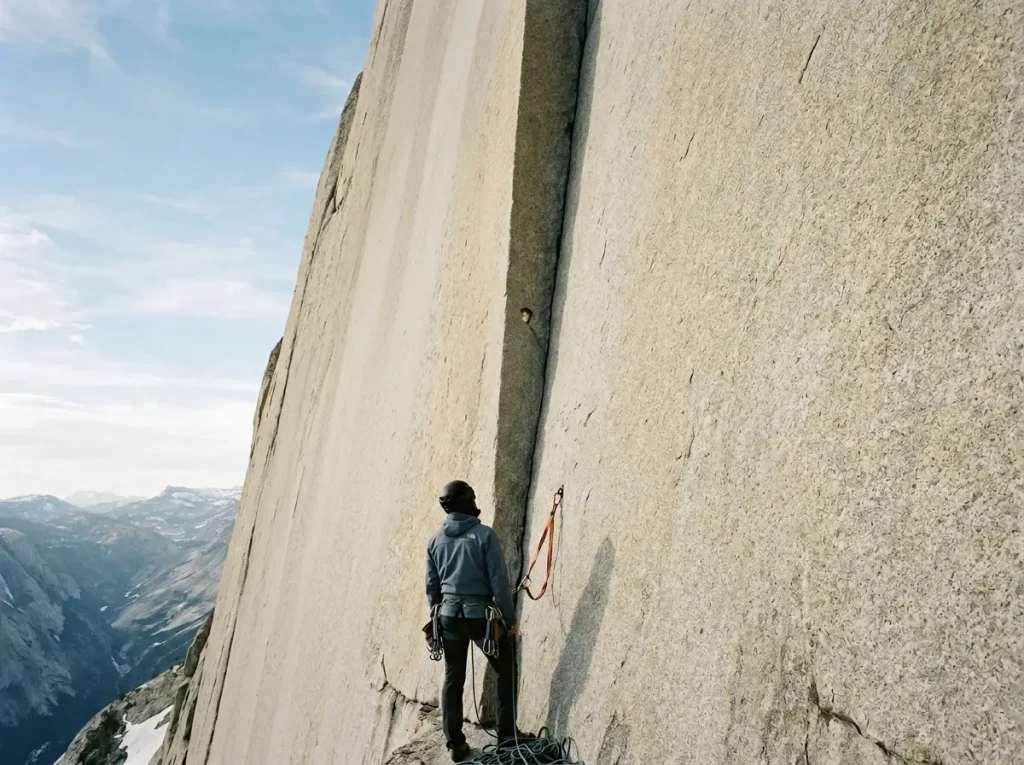
The route, on El Capitan in Yosemite National Park, was conceived and first climbed as an aid line. Warren Harding, with Wayne Merry and George Whitmore, fought up it in 1958 over a months-long siege, hammering pitons and drilling bolts the whole way. For the next 35 years the climbing world treated it as an aid route by default, because that is what it was born as. Nobody framed it as a free climbing project, so nobody trained for it as one.
The Rock Itself Said No
Then there is the granite. The two hardest sections, the Great Roof and especially Changing Corners, are near-blank. The holds barely exist. Decades of aid traffic had left piton scars and polished spots, and the prevailing style of the day was about pulling hard on positive edges. That style had nothing to grab here.
This is the part competitors skip. The barrier was not mystical. It was physical. A blank corner does not care how many pull-ups you can do, and the rock on those pitches simply refused the only method climbers were bringing to it.
A Mindset as Fixed as the Pitons
The second wall was in everyone’s head. The era assumed big wall free climbing was a power game for big, strong men, so the search for a free ascent was a search for the strongest climber. That was the wrong model for holdless corners, and being the wrong model, it kept failing.
When a problem refuses everyone, the answer is rarely “try harder with the same method.” On blank rock, the climbers who crack a sequence are usually the ones who change the body position, not the ones who add more grip strength. That is the lesson The Nose taught a whole generation.
The 1993 Free Ascent of The Nose, Day by Day
The First Attempt That Didn’t Go
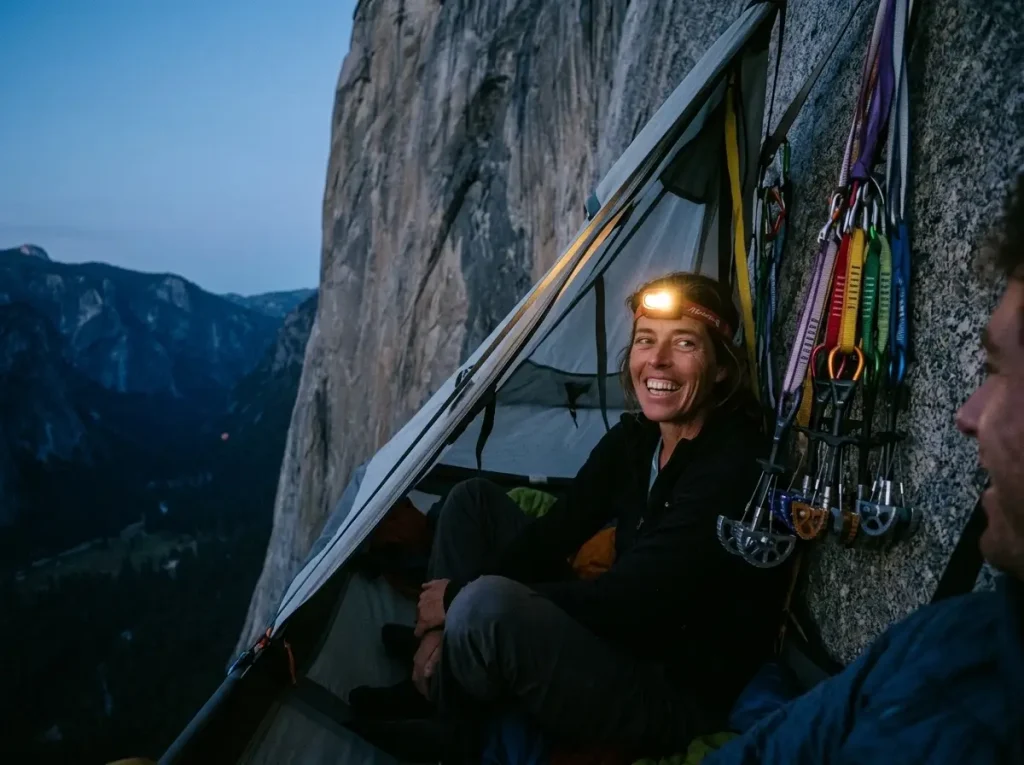
The send everyone remembers was actually her second push of the season. Earlier in 1993, Hill tried the free ascent with Simon Nadin over about three days and backed off. That first attempt did not go.
She came back the next week with a different partner, Brooke Sandahl, and that is the ascent that made history. The detail gets lost in the retelling, but it is worth keeping, because it shows the thing was not a single lucky burst. This was projecting in its purest form: she rehearsed the hardest pitches, then redpointed them clean, earned over more than one try.
Four Days With Brooke Sandahl
From September 13 to 16, 1993, Hill free climbed all 3,000 feet of vertical granite on The Nose, high above Yosemite Valley, with Sandahl belaying the hard pitches. Every move went on rock holds, with the rope and gear protecting falls only. She describes the climb in her own account for the American Alpine Club, which is the primary record worth reading if you want it from the source.
One choice on that climb tells you she was thinking like a craftsman, not just a phenom. She timed her effort for the fall, when cooler temperatures put better friction on the granite.
Heat is the quiet enemy of hard granite climbing. Warm rock turns sticky rubber greasy and sweats the friction right out of a smear. Yosemite locals chase cool, dry days for exactly this reason, and Hill’s timing on The Nose was no accident.
The Great Roof and Changing Corners
The Great Roof: The Crux Everyone Expected
Look up at The Nose and the Great Roof (pitch 22) is the feature that grabs your eye, a huge sweeping overhang that looks like the obvious place a free attempt would die. For years that is exactly what climbers assumed. The roof was supposed to be the crux.
It was hard. It was not the hardest. The roof went, and the route kept climbing, and the real fight was waiting higher up where nobody was looking.
Changing Corners: The Pitch That Actually Stopped People
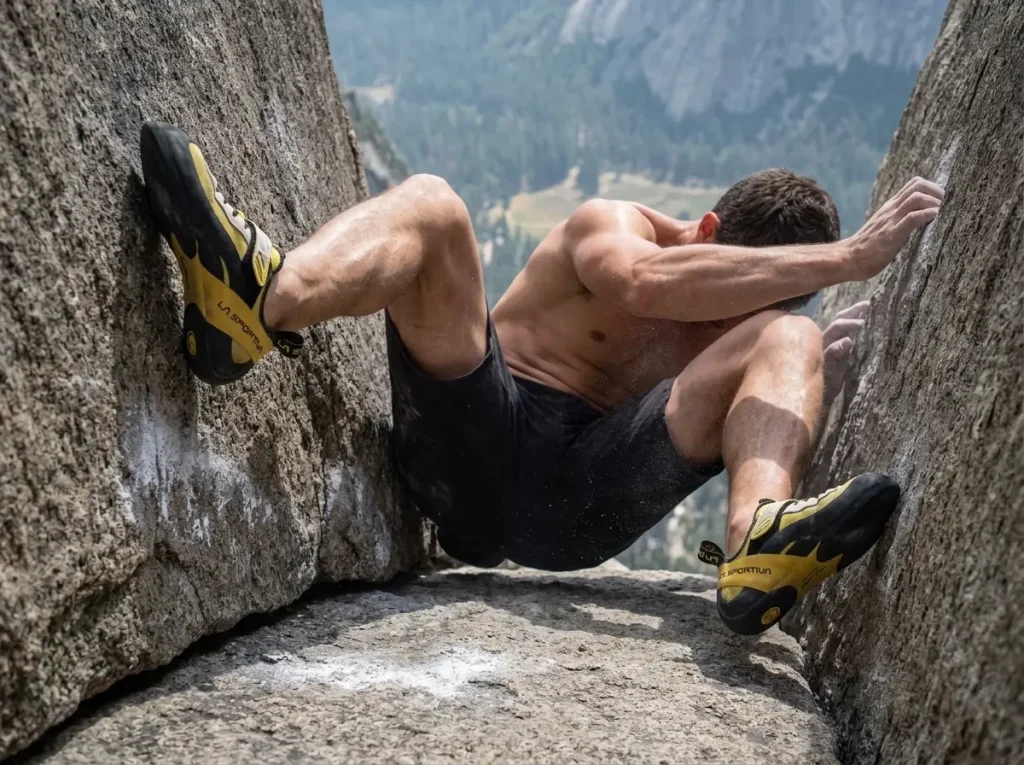
Changing Corners (pitch 27) is the pitch that earned this climb its place in history. It is a near-blank corner with almost nothing to hold, and it is brutally technical. Hill originally rated it 5.13b/c and said that rating the difficulty of such a pitch is almost impossible. As repeaters confirmed how desperate it is, the modern consensus crept up to 5.14a/b, making it the hardest single pitch on the route.
There is real crack climbing and face climbing linking the wall together between the blank sections, jamming fingers and hands into the granite seams, the kind of crack technique that carries you between the hard parts. But Changing Corners is where the route said no for 35 years.
Position, Not Power
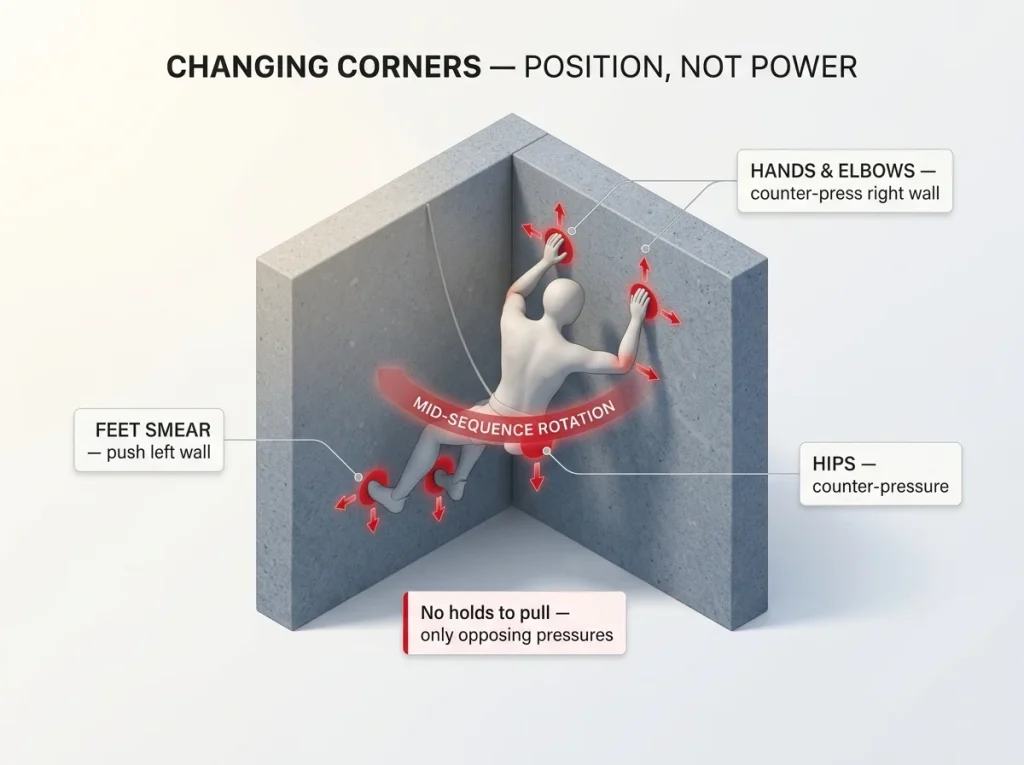
Here is the part most write-ups quote and never explain. On Changing Corners there is almost nothing to pull on, so Hill did not pull. She pressed. She held herself on the rock with a carefully coordinated sequence of opposing pressures, the sticky rubber of her climbing shoes smeared to one wall while her hands, elbows, and hips counter-pressed the other, a technique climbers call stemming and counter-pressure. At one point she had to rotate her whole frame completely around inside the sequence.
That is why strength was never the answer. The pitch is a geometry problem. Her smaller fingers fit features a bigger hand skated off, and her flexibility let her hold contortions that taller, stronger climbers could not. She solved it with body position, the one tool the strongest men in the world could not simply muscle their way into.
There is no single right beta for a blank corner. Community accounts of Changing Corners describe everything from full stemming to Hill’s scissor sequence to laybacking, because different bodies solve it differently. If a sequence shuts you down, stop forcing the obvious move and start hunting the position your body can actually hold.
The It Goes Boys Moment and What It Meant
What “It Goes” Means to a Climber
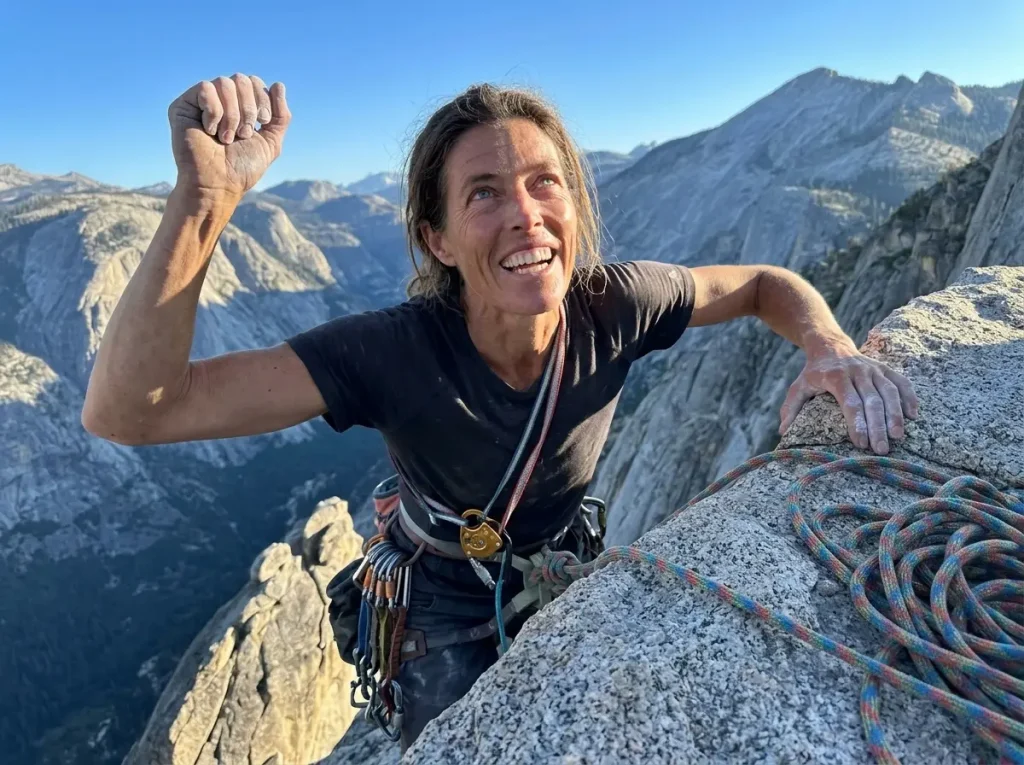
When Hill topped out, she called down to the male climbers below, It Goes, Boys. To a non-climber it sounds like a throwaway line. To a climber it is precise. When you say a route goes, you mean it is humanly possible to free climb, that the sequence connects, that the thing can be done. She was reporting a fact about the rock.
The Assumption She Punctured
The fact just happened to detonate an assumption. Hill has said the line meant “it’s possible, boys,” and the early 1990s badly needed to hear it. The era treated women climbers as too weak or too delicate for big wall free climbing, what she has described as being treated like china dolls. She was one of only a handful of prominent women in climbing at the time, and she had just solved what the strongest men could not.
The line endures because it was earned, not announced. It came off the topout of the hardest pitch on El Capitan, by the only person who had climbed it. That is why it still gets quoted thirty years later as one of the defining lines in climbing history, and why it never reads as a slogan. It reads as a scoreboard.
The 1994 One-Day Ascent and a Lasting Legacy
The Whole Route in Under a Day
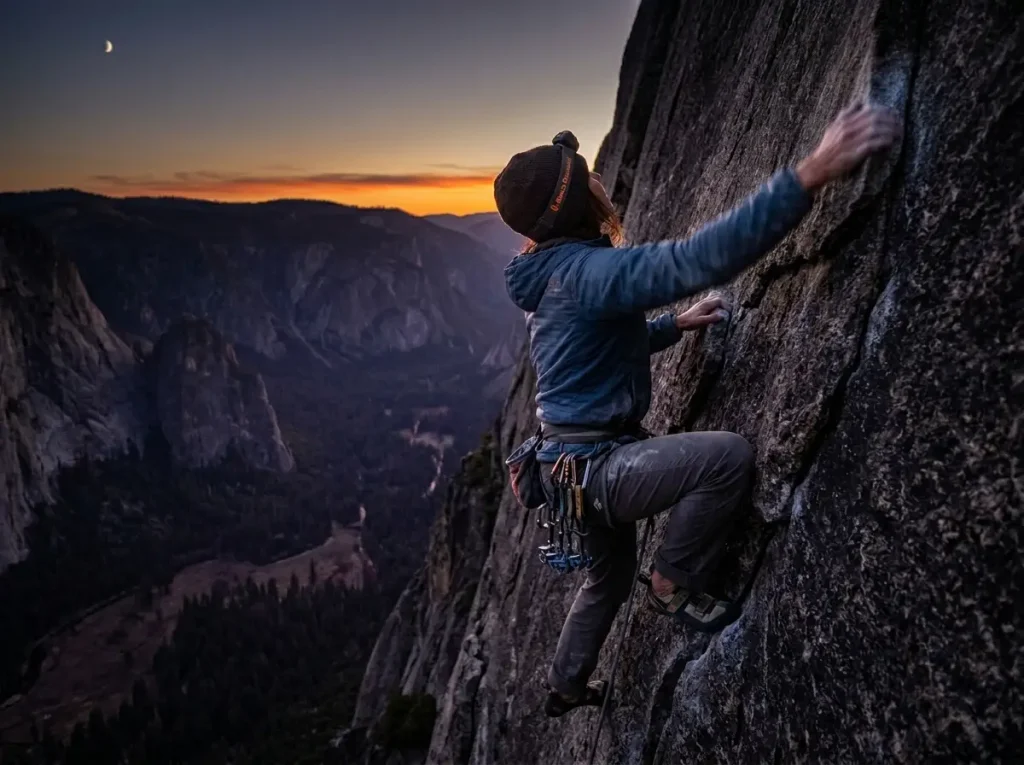
A year later, Hill raised her own bar past where anyone could follow. In 1994 she free climbed the entire Nose in a sub-24-hour push, roughly 23 hours, with Steve Sutton, setting off at 10 p.m. on September 19 and topping out around 9 p.m. the next day. Freeing the route over four days is one kind of achievement. Doing the whole thing in a single day-and-night push is a different order of fitness and commitment entirely.
It almost did not happen. Her first one-day attempt that year fell apart under the Great Roof, out of chalk, nearly out of water, cooked by midday heat. She came back and did the whole route in a day. You can read the American Alpine Club record of her one-day free ascent for the primary account.
Thirty Years, About a Dozen People
The rarity is the legacy. Hill’s one-day free ascent went unrepeated for roughly 19 years, and to this day Tommy Caldwell, the only other climber to free The Nose in a day, is the lone person to match it. In about 30 years since 1993, only roughly a dozen people have free climbed The Nose at all. The short list of repeaters tells the story: Scott Burke in 1998, Caldwell and Beth Rodden in 2005 for the first team free ascent, Caldwell again in 2005 all-free-in-a-day, Jorg Verhoeven in 2014, Keita Kurakami in 2018 for the first free rope-solo, and 15-year-old Connor Herson, also in 2018.
Yvon Chouinard, a founding figure of American climbing, called Hill’s free ascent the biggest thing that’s ever been done on rock. Three decades on, the Alex Honnold-era El Cap milestones that descend from what she proved are still being written. She did not just free a route. She moved the ceiling, and most of the sport still cannot reach it.
Conclusion
Three things are worth carrying away from this climb. First, the barrier on The Nose was a mindset as much as a mountain, an aid-era assumption that took 35 years and the right climber to break. Second, position beat power: a 5-foot-1 climber cracked a blank corner that the strongest men in the world could not. Third, three decades later it remains a rarefied 5.14 testpiece that almost nobody repeats.
Next time you watch El Cap footage, watch the corners, not the overhangs. That shallow, holdless seam is where the climbing was actually won. Then go read Hill’s own account of it, and you will understand why climbers still talk about September 1993 like it happened last week.
Frequently Asked Questions
01Did Lynn Hill free climb The Nose?
Yes. Lynn Hill made the first free ascent of The Nose on El Capitan over four days in September 1993, climbing with Brooke Sandahl. She was the first person ever to free climb the route, using rock holds only with the rope for protection.
02What grade is the free Nose on El Capitan?
The free Nose is graded 5.14a, and some climbers argue 5.14b. As an aid route it is only 5.9 C2, which shows how big the jump is. Changing Corners is the hardest single pitch on the free version.
03What is the hardest pitch on the free Nose?
Changing Corners, pitch 27, is the hardest pitch. Most climbers expected the Great Roof to be the crux, but the near-blank Changing Corners proved harder and is now graded around 5.14a or b. Hill solved it with body position rather than power.
04How long did Lynn Hill take to free climb The Nose?
Four days in 1993. The following year, in 1994, she returned and free climbed the entire route in roughly 23 hours with Steve Sutton, completing it in a single day-and-night push that went unrepeated for nearly two decades.
05Has anyone else free climbed The Nose since Lynn Hill?
Yes, but very few. In about 30 years only roughly a dozen people have free climbed The Nose. Tommy Caldwell is the only other climber to free it in a single day, and notable repeaters include Beth Rodden, Jorg Verhoeven, and Connor Herson.
Safety Notice: Rock climbing and mountaineering are inherently high-risk
activities that can involve physical trauma or fatal incidents. The information on Rock Climbing Realms is for
educational and informational purposes only. Techniques and advice presented here are not a substitute
for professional, hands-on instruction. Conditions and risks vary by location. Always seek guidance
from a qualified instructor before attempting new techniques. By using this website, you agree that you
are solely responsible for your own safety. Any reliance you place on this information is strictly
at your own risk, and you assume all liability for your actions. Rock Climbing Realms and its authors
will not be held liable for any harm, damage, or loss sustained in connection with the use of this information.
Affiliate Disclosure: We are a participant in the Amazon Services LLC Associates Program, an
affiliate advertising program designed to provide a means for us to earn advertising fees by advertising and linking
to Amazon.com. As an Amazon Associate, we earn from qualifying purchases. We are also an official affiliate partner
of Black Diamond Equipment via the AvantLink network. If you click on a Black Diamond affiliate link and make a
purchase, we may earn a commission at no additional cost to you. We also participate in other affiliate programs.
Additional terms are found in the terms of service.