In this article
The first time I brought a friend’s kid to my local gym, I watched his face change the second he saw the pricing board. Sixteen bucks for a day pass, twelve more for shoe rental, another eight for a harness. He had twenty dollars in his pocket. That moment taught me more about climbing access than any think piece ever has — because the gap between “anyone can climb” and “anyone can afford to climb” is wider than most of us realize. This article breaks down the real barriers keeping people out of climbing gyms and walks you through every program, grant, and workaround that actually gets climbers in the door.
Quick Answer: The main ways to access climbing gyms affordably include:
- Sliding scale memberships offered by gyms like Central Rock and First Ascent
- Pay What You Can programs where you set your own monthly rate
- Gear libraries that lend harnesses, shoes, and belay devices for free
- Youth programs through nonprofits like Climbing for Change and 1Climb
- Grants and scholarships from the AAC, Access Fund, and Global Climbing Initiative
- Community-built walls at recreation centers and schools
The Real Cost of Walking Into a Climbing Gym

What the Price Board Actually Says
Walking into a climbing gym for the first time is intimidating enough without the sticker shock. Monthly memberships at most gyms run between $75 and $120 for unlimited access. Day passes sit in the $15 to $32 range nationally, and that number climbs higher in major metros. In Denver alone, Movement charges $102 per month, The Spot runs $115, and even smaller facilities push past $90.
Those numbers assume you already own gear. Most first-timers don’t. Add $5 to $15 per visit for shoe and harness rental, and a casual climbing session suddenly costs more than a concert ticket. A belay certification class — required at most gyms before you can rope climb — runs another $30 to $60. The American Alpine Club officially considers indoor climbing costs an “access issue,” and they’re not wrong.
The Hidden Costs Beyond the Membership
The price board is only the beginning. If someone decides climbing is for them and wants to stop renting, a basic gear setup costs $150 to $400 — shoes, harness, chalk bag, and a belay device. That’s before you buy a single carabiner for outdoor climbing. Transportation adds another layer: most climbing gyms sit in commercial districts or affluent neighborhoods, which means bus routes don’t always reach them. For families in underserved communities, the combined cost of getting there and getting in makes climbing feel like a sport for other people.
Pro tip: If you’re trying to figure out whether gym climbing fits your budget long-term, the break-even point between day passes and a membership usually hits around 8-10 visits per month. Below that, a punch card or class package often saves more money than a full membership.
Why Gym Pricing Stays High
Climbing gyms aren’t gouging anyone on purpose. Route-setting labor, liability insurance, and the sheer square footage required for climbing walls drive overhead through the roof. A typical gym needs 15,000 to 25,000 square feet of space, and commercial real estate in urban areas doesn’t come cheap. Staff costs include trained route setters, certified belayers, and front desk workers — none of those positions pay minimum wage at serious facilities. The industry operates on thin margins, which is exactly why the access problem requires creative solutions rather than just cheaper prices.
Pay What You Can and Sliding Scale Programs
How Sliding Scale Memberships Work
Several gym chains now offer sliding scale memberships where the monthly rate adjusts based on your financial situation. Central Rock Gym allocates a limited number of these memberships each month — you apply, share basic financial information, and the gym sets a rate you can actually afford. First Ascent’s RISE Membership Program works similarly, providing reduced-price access to anyone facing financial barriers.
The key detail most people miss: these programs have limited slots. If you want one, ask early. Most gyms restock their sliding scale spots quarterly or monthly, and they fill fast. Don’t wait for the gym to advertise it — walk up to the front desk and ask directly. Staff at most facilities know about the program even if it’s not on the website.
Pay What You Can Models
The boldest pricing experiment in the industry is the Pay What You Can model. The Pad Climbing lets members set their own monthly rate. If you choose to pay under $50, you commit to either volunteering at the gym, providing evidence of financial need, or caregiving for a family member. The American Alpine Club published a free 26-page Pay What You Can Digital Toolkit for gym owners considering this model, and it breaks down nine different components of running the program sustainably.
Pro tip: If your local gym doesn’t offer sliding scale or PWYC pricing, you can still push for it. Print the AAC’s toolkit, bring it to the gym owner, and frame it as a member retention strategy — not charity. Gyms that pilot these programs report higher retention because members feel invested in the community.
Finding Programs Near You
There’s no single national directory of affordable climbing access, which is part of the problem. Your best starting points are the Climbing for Change DEI Connections Database, the Access Fund’s local affiliate map, and simply calling gyms in your area to ask what community pricing options exist. Many gyms offer discounted rates for students, military, first responders, and seniors that don’t appear on the main pricing page.
Gear Libraries and Loaner Programs That Work
What a Gear Library Looks Like
A climbing gear library is exactly what it sounds like — a shelf of harnesses, shoes, chalk bags, and belay devices that participants can borrow for free during program sessions. Some operate like a lending library with check-out cards. Others just have a bin of equipment sorted by size at the start of every youth session.
The best gear libraries rotate stock regularly and retire equipment on schedule. Harnesses get inspected every session. Shoes get replaced when the rubber wears through. This matters because loaner gear has to be safe gear — nobody benefits from putting a kid in a harness that should have been retired two years ago.
How to Build One From Scratch
Starting a gear library costs less than most people think. Petzl, Black Diamond, and La Sportiva all have nonprofit gear donation programs — you apply as a registered 501(c)(3) and receive discounted or donated equipment. Gyms that upgrade their rental fleets often have last-season stock they’ll give away. The used gear market works too, though you need someone who knows how to inspect hard goods and soft goods properly before putting them into rotation.
A functional starter library for 15 kids runs about $1,500 to $2,500 — fifteen harnesses, fifteen pairs of shoes, chalk, and a handful of belay devices. That’s one successful fundraiser or a single grant from the Global Climbing Initiative.
Pro tip: When building a gear library, buy shoes in the sizes you’ll actually need — not the sizes you think you’ll need. Run a sizing session first. Kids’ feet cluster around specific sizes, and ordering the wrong spread means half your shoes sit unused.
Youth Programs and After-School Climbing
The Recreation Center Model
The most effective approach to youth climbing access isn’t busing kids to existing gyms — it’s building walls where kids already are. When Climbing for Change partnered with Kevin Jorgeson’s 1Climb in Atlanta, they installed a climbing wall at a recreation center in College Park and provided free transportation to nearby climbing gyms for additional sessions. That dual approach — a home wall for regular access plus gym visits for variety — works because it meets kids in their own neighborhoods.
Recreation center walls don’t need to be massive. A 20-foot bouldering wall with 30 holds and proper crash padding gives beginners everything they need to learn footwork, balance, and basic movement. The cost of installation runs between $15,000 and $40,000 depending on height and surface area, which is within reach for most municipal recreation budgets once the community organizes around it.
After-School Programs That Stick
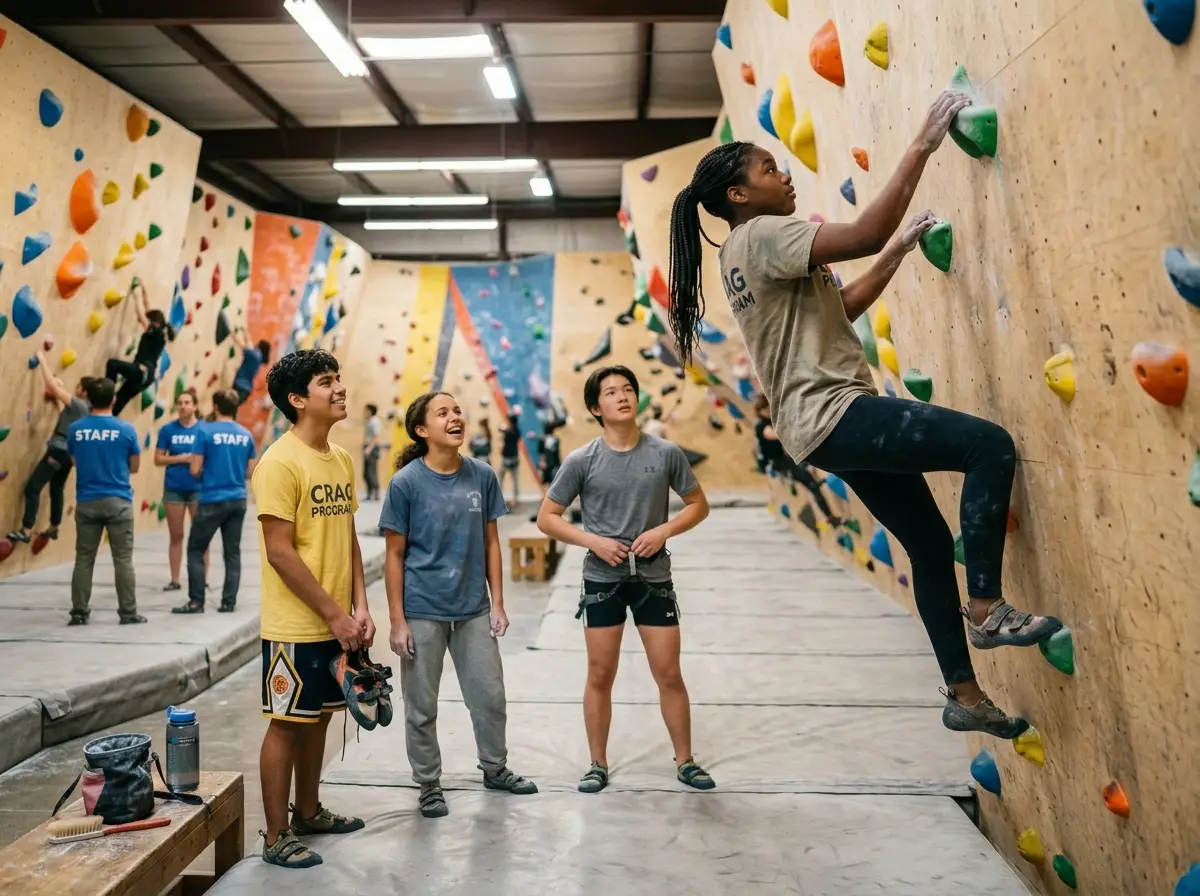
The programs that actually retain kids share three things in common: consistency, volunteer coaches who show up every week, and a progression path that keeps climbers challenged. First Ascent’s REACH Youth Program offers free weekly coached climbing sessions through partnerships with five local nonprofits, serving over 950 youth and adults in a single year.
Consistency matters more than scale. A program that runs every Tuesday and Thursday with the same three volunteers beats a flashy one-time event every time. Kids need to see the same faces, climb with the same peers, and feel like they belong to something — not like they’re guests on someone else’s turf.
Transportation — The Barrier Nobody Talks About
You can make climbing free tomorrow, and half the kids who need access still won’t show up. Transportation is the invisible wall. Most climbing gyms sit in commercial or suburban zones accessible by car. Families without reliable transportation — especially in urban cores — can’t get there. The Atlanta model worked specifically because it addressed transit: free bus rides to the gym, coordinated with the after-school schedule, with adult supervision on the bus.
If you’re running a program and wondering why attendance drops, check whether your participants can actually get to the facility. A van, a partnership with a local transit authority, or simply choosing a venue on a bus line solves problems that no amount of free passes will fix.
The Culture Barrier Beyond Cost
Why Free Passes Alone Don’t Work
Here’s the part most access programs get wrong: they solve the money problem and declare victory. But walking into a climbing gym for the first time — especially if you don’t look like most of the people already there — is its own form of gatekeeping. The jargon is unfamiliar. The social codes are invisible. Everyone seems to know each other, and nobody explains how anything works unless you ask. For someone from outside the climbing world, that first visit can feel like showing up to a party where you don’t know anyone and the music is too loud.
Representation Changes Everything
When Kai Lightner — a Black climber with 12 national championship titles — founded Climbing for Change, he wasn’t just creating another grant program. He was making it possible for young climbers of color to see someone who looks like them at the highest level of the sport. That visibility matters. Organizations like Climbers of Color, Brown Girls Climb, and the AMGA BIPOC Scholarship Fund (which distributes $8,000 annually) exist because representation isn’t a nice-to-have — it’s the mechanism that turns a first visit into a second one.
The gyms getting this right hire diverse staff, feature diverse climbers in their marketing, and train their team to actively welcome newcomers rather than waiting for them to figure things out. Touchstone Climbing’s Access to Climbing programs have reached 9,891 people through this approach — and the number keeps growing because welcome is a skill you can teach.
What Welcome Actually Looks Like
Welcome isn’t a sign on the wall. It’s a staff member walking up to someone standing alone by the bouldering area and saying, “First time here? Let me show you how this works.” It’s a gym that runs dedicated beginner nights where nobody is projecting V8 next to someone learning to smear. It’s route setters who put up plenty of V0-V2 problems instead of only catering to the regulars. The gyms that build real community don’t just open the door — they walk people through it.
Pro tip: If you’re a regular at your gym and you see someone standing alone looking lost, introduce yourself. Offer to show them the basics. You don’t need to be a coach or a certified instructor — you just need to be the person who makes climbing feel like a place they’re allowed to be.
How to Start an Access Program at Your Local Gym
Step 1 — Build the Case
You don’t need to be a nonprofit founder to make this happen. Start by talking to your gym’s management. Come prepared with the AAC’s Pay What You Can Toolkit, examples from gyms that have piloted programs (Central Rock, The Pad, First Ascent), and a simple proposal: a trial period of reduced-price memberships or free community sessions, funded by a small surcharge on existing memberships or a dedicated donation jar.
Frame it as a business opportunity, not a handout. Gyms that run access programs report stronger community engagement, better retention, and positive press coverage. The Access Fund’s data shows that climbing access initiatives generate goodwill that translates directly into member loyalty.
Step 2 — Find Partners
A climbing access program works better when you partner with organizations that already serve the community you’re trying to reach. Boys & Girls Clubs, YMCA branches, church youth groups, school districts, and community recreation departments all have existing infrastructure — transportation, supervision, contact lists — that you don’t have to build from scratch. Climbing for Change’s success in Atlanta came from partnering with the city and 1Climb rather than trying to do everything themselves.
Reach out to your local climbing guide services too — many guides volunteer time for youth programs, and some hold certifications that your insurance will appreciate.
Step 3 — Secure Gear and Funding
For gear, tap the brand donation programs (Petzl, BD, La Sportiva), collect retired rental stock from your gym, and run a used gear drive where members donate equipment they’ve outgrown. For funding, start with the grants listed in the next section — especially the Global Climbing Initiative’s Social Impact Grants and the AAC/North Face PWYC grants, which specifically target upfront program costs.
A realistic budget for a pilot program serving 15-20 youth for three months: $3,000 to $5,000, covering gear, insurance riders, volunteer training, and facility time. That’s fundable with a single grant or a solid crowdfunding campaign.
Step 4 — Launch Small and Stay Consistent
Run a pilot with one group, one night per week, for 12 weeks. Track attendance, collect feedback, and document everything. Programs that try to serve 100 kids in month one burn out their volunteers and fail. Programs that start with 12 kids and show up every single Wednesday build trust, attract more volunteers, and scale naturally. Consistency is the currency of credibility in underserved communities — if you say you’ll be there, be there.
Grants and Funding Sources for Climbing Access
National Grant Programs
Several organizations fund climbing access work with real money attached:
American Alpine Club / The North Face — Offers grants specifically supporting Pay What You Can gym programs. These target the upfront costs of launching affordable access: software, staff training, marketing, and the revenue gap during pilot periods.
Global Climbing Initiative — Social Impact Grants — Fund locally led projects that strengthen access, belonging, and leadership within climbing communities. Past recipients include programs that provide gym access for underrepresented groups, training programs for new coaches, and community events.
Access Fund — JEDI Grants — Justice, Equity, Diversity, and Inclusion grants that fund projects addressing physical, social, and cultural barriers to climbing. They’ve received nearly 40 applications per cycle and fund about five projects each round. Access Fund has distributed over $1.5 million to local organizations since 1991.
Climbing for Change — Since January 2021, C4C has awarded over $136,000 in grants to 87 individuals and organizations through 10 different grant programs targeting various aspects of climbing diversity.
Local and Regional Sources
Don’t overlook what’s closer to home. Municipal recreation departments often have grant programs for youth sports access. Community foundations fund health and wellness initiatives that climbing programs qualify for. Local REI stores have community grant budgets. Your state’s parks and recreation agency may have outdoor equity funding you’ve never heard of.
Corporate Sponsorship and In-Kind Support
Gear companies aren’t the only corporate partners worth approaching. Local businesses — coffee shops, outdoor retailers, even banks with community development arms — often sponsor youth programs in exchange for logo placement and community visibility. In-kind donations (free printing, venue space, transportation) reduce your cash budget significantly. Organizing community events builds the kind of local goodwill that attracts these partnerships naturally.
Pro tip: When applying for grants, lead with outcomes, not intentions. “We will provide climbing access” loses to “In our 12-week pilot, 15 youth completed belay certification and 8 transitioned to regular gym members at reduced rates.” Funders want evidence that their money moves real numbers.
Conclusion
The access gap in climbing won’t close by itself, but it doesn’t require heroic effort either. Three things make the biggest difference: first, know what programs already exist near you — sliding scale memberships, gear libraries, and youth programs are more common than most climbers realize. Second, if nothing exists, start something small at your gym with the AAC toolkit and a conversation with management. Third, remember that money is only half the barrier — the culture of welcome matters just as much as the price on the door. Pick one action from this article and do it this week. That’s how walls get climbed, on rock and off.
Q1 How much does a climbing gym membership cost?
Most climbing gym memberships run $75 to $120 per month for unlimited access. Day passes range from $15 to $32, and gear rental adds $5 to $15 per visit. Total first-visit cost for someone without gear averages $25 to $47.
Q2 Are there free climbing programs for kids?
Yes. Nonprofits like Climbing for Change, 1Climb, and First Ascent’s REACH program offer free weekly sessions for youth in partnership with local organizations. Many gyms also run scholarship spots in their youth teams and summer camps.
Q3 What organizations promote diversity in climbing?
Climbing for Change, Climbers of Color, Brown Girls Climb, the AMGA BIPOC Scholarship Fund, and the Access Fund’s JEDI grant program all work specifically on climbing diversity and inclusion. USA Climbing also has a dedicated diversity initiative.
Q4 How can I help make climbing more accessible at my gym?
Start by asking your gym about community pricing options. Bring the AAC’s Pay What You Can Toolkit to management. Volunteer with existing programs, donate used gear, or organize a community climbing night. Even introducing yourself to newcomers makes a measurable difference.
Q5 Can I get a grant to start a climbing access program?
The Global Climbing Initiative, American Alpine Club, Access Fund, and Climbing for Change all offer grants for climbing access projects. Most fund between $1,000 and $10,000 per project, covering gear, facility costs, and program operations.
Safety Notice: Rock climbing and mountaineering are inherently high-risk
activities that can involve physical trauma or fatal incidents. The information on Rock Climbing Realms is for
educational and informational purposes only. Techniques and advice presented here are not a substitute
for professional, hands-on instruction. Conditions and risks vary by location. Always seek guidance
from a qualified instructor before attempting new techniques. By using this website, you agree that you
are solely responsible for your own safety. Any reliance you place on this information is strictly
at your own risk, and you assume all liability for your actions. Rock Climbing Realms and its authors
will not be held liable for any harm, damage, or loss sustained in connection with the use of this information.
Affiliate Disclosure: We are a participant in the Amazon Services LLC Associates Program, an
affiliate advertising program designed to provide a means for us to earn advertising fees by advertising and linking
to Amazon.com. As an Amazon Associate, we earn from qualifying purchases. We are also an official affiliate partner
of Black Diamond Equipment via the AvantLink network. If you click on a Black Diamond affiliate link and make a
purchase, we may earn a commission at no additional cost to you. We also participate in other affiliate programs.
Additional terms are found in the terms of service.