
In this article
Your kid wants a climbing party. You said yes before you realized you’ve never actually been inside a climbing gym. Now you’re googling from the parking lot of Party City, wondering if this was a terrible idea.
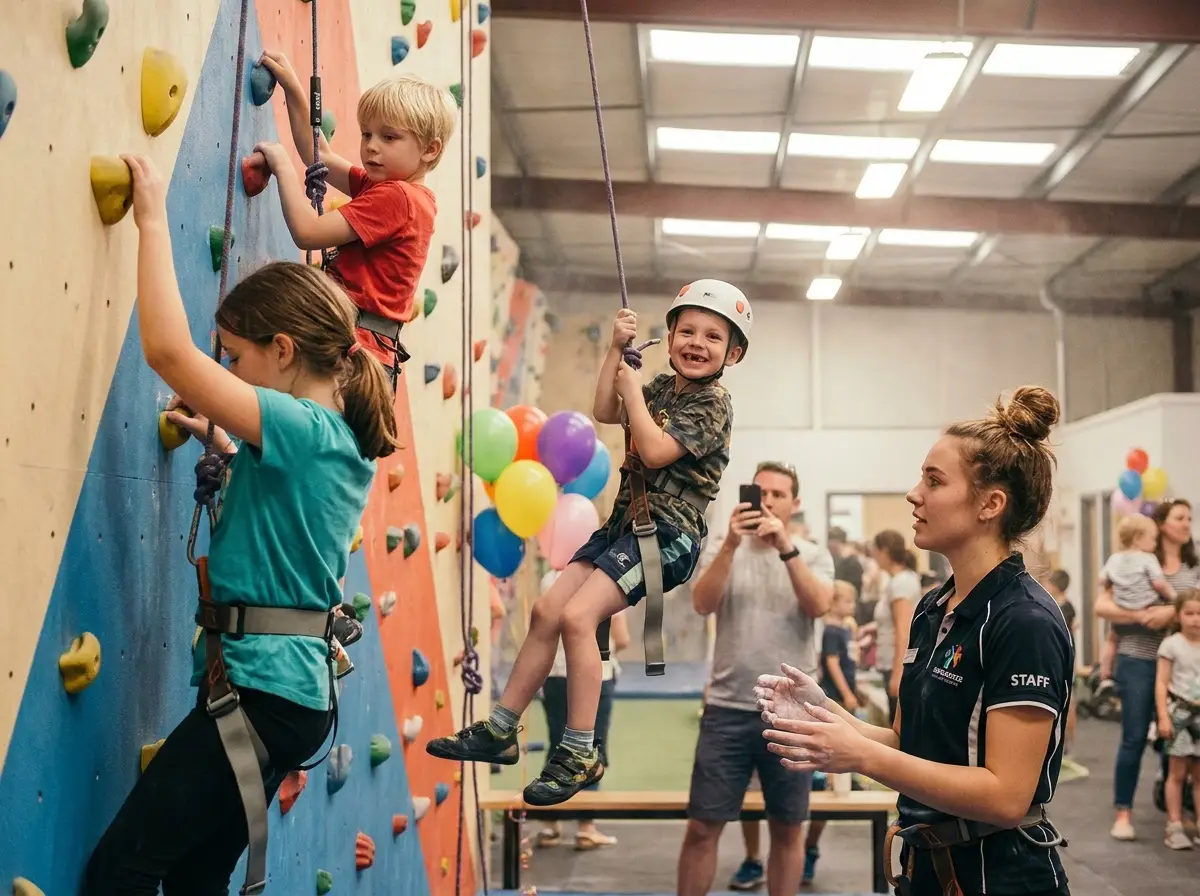
It wasn’t. I’ve hosted three of these and attended six more as a guest parent. A climbing gym birthday party is one of the best party formats out there — active, memorable, and surprisingly easy to pull off once you know the logistics. Here’s everything you need to plan one that runs smooth from booking to the last slice of cake.
Quick Answer: Here’s how to plan a climbing gym birthday party step by step:
- Choose a gym with the right climbing format for your age group
- Book 4–8 weeks ahead and confirm pricing and group size
- Send invitations with waiver links at least two weeks early
- Schedule climbing before food — never the other way around
- Brief non-climbing parents on what to expect at drop-off
How to Pick the Right Climbing Gym for a Birthday Party

Not every gym is the same, and the one closest to your house might not be the best fit for a party. The format of climbing the gym offers matters more than the brand name on the building.
Bouldering-Only vs Rope Gyms (and Why It Matters)
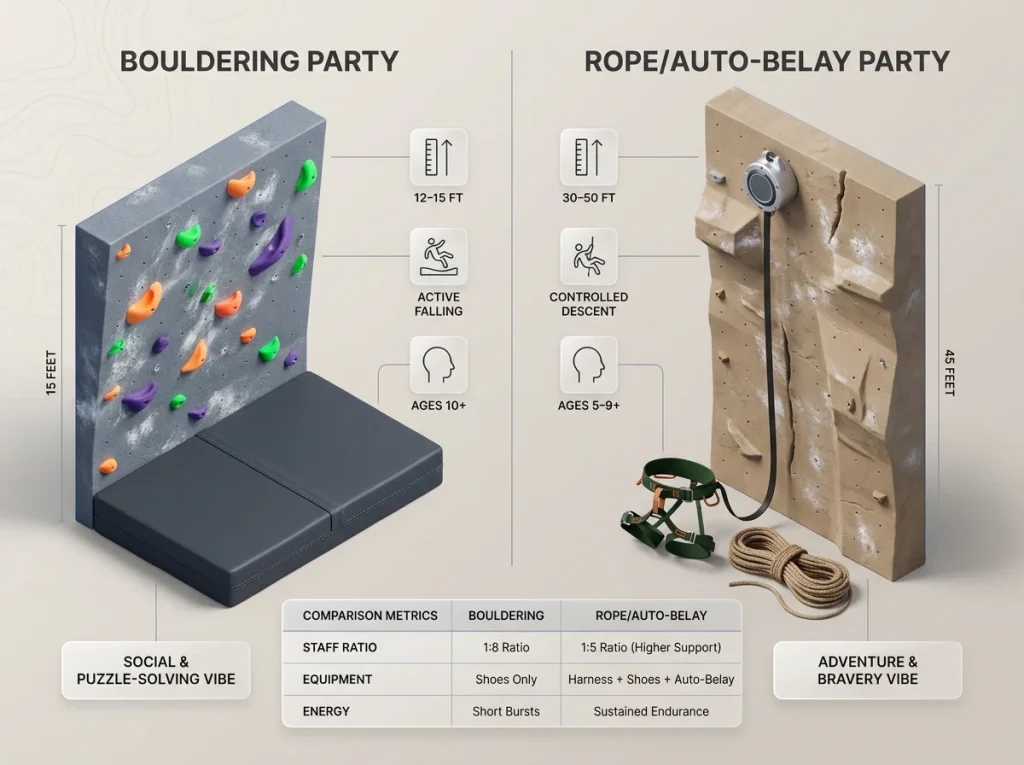
This is the single biggest decision most parents skip, and it shapes the entire party experience. Bouldering gyms have short walls — usually 12 to 15 feet — with thick crash pads underneath and no ropes. Rope gyms have tall walls — 30 to 50 feet — where kids clip into an auto-belay device or get belayed by staff.
For kids ages 5 through 9, rope gyms with auto-belay systems work better. The rope gives them psychological security — they can climb as high as they want, let go, and float down. That built-in safety net makes hesitant kids braver.
Bouldering requires kids to fall onto pads from height, which scares younger children more than most parents expect.
For kids ages 10 and up, bouldering parties can be more fun. Older kids handle the short falls, and bouldering problems feel like puzzles they solve with their bodies. The social energy is different too — everyone clusters around the same problem, trading ideas on how to reach the next hold.
If your guest list spans a wide age range, look for a gym that offers both formats. A mixed session — 30 minutes of bouldering games followed by 30 minutes on the roped walls — keeps every age group engaged.
Pro tip: Call the gym and ask specifically: “Do your birthday parties include auto-belay climbing, bouldering, or both?” Some gyms default to bouldering-only because it requires less staff. If you want ropes, confirm it upfront.
Questions to Ask Before You Book
Every gym runs parties differently. Before you put down a deposit, get clear answers on these:
How many kids does the package include, and what does each extra child cost? Most base packages cover 8 to 10 climbers at $250 to $400, with additional kids running $15 to $35 each. What’s the staff-to-kid ratio during climbing time? One instructor per 8 kids is standard — one per 5 is better.
Does the package include climbing shoes and harnesses for everyone? Nearly all do, but confirm. Is there a dedicated party room, and how long do you have it? Some gyms give you 30 minutes in the room, others give you a full hour. Can you bring outside food and decorations? Most allow it, but some restrict certain items.
When to Book and What to Expect on Pricing
Weekend slots at popular gyms fill 4 to 8 weeks out. If your party falls during the school year, Saturday afternoon is the hardest slot to get. Sunday mornings are often available and cheaper.
Pricing varies by city and gym size. Expect $250 to $700 for a full party package depending on your location, group size, and whether you want a private room. The per-child cost typically breaks down to $25 to $45 when you divide the package price by headcount. Some gyms charge a flat rate regardless of how many kids show up, so ask whether your price stays the same if three kids bail last minute.
For a deeper look at what climbing gyms charge for memberships and day passes, check out our climbing gym membership cost break-even guide — it covers the pricing structures most gyms use.
What a Climbing Party Actually Looks Like (The Timeline)
Most climbing gym birthday parties run two hours total. That sounds like plenty. It goes faster than you think.
The First 15 Minutes Nobody Plans For
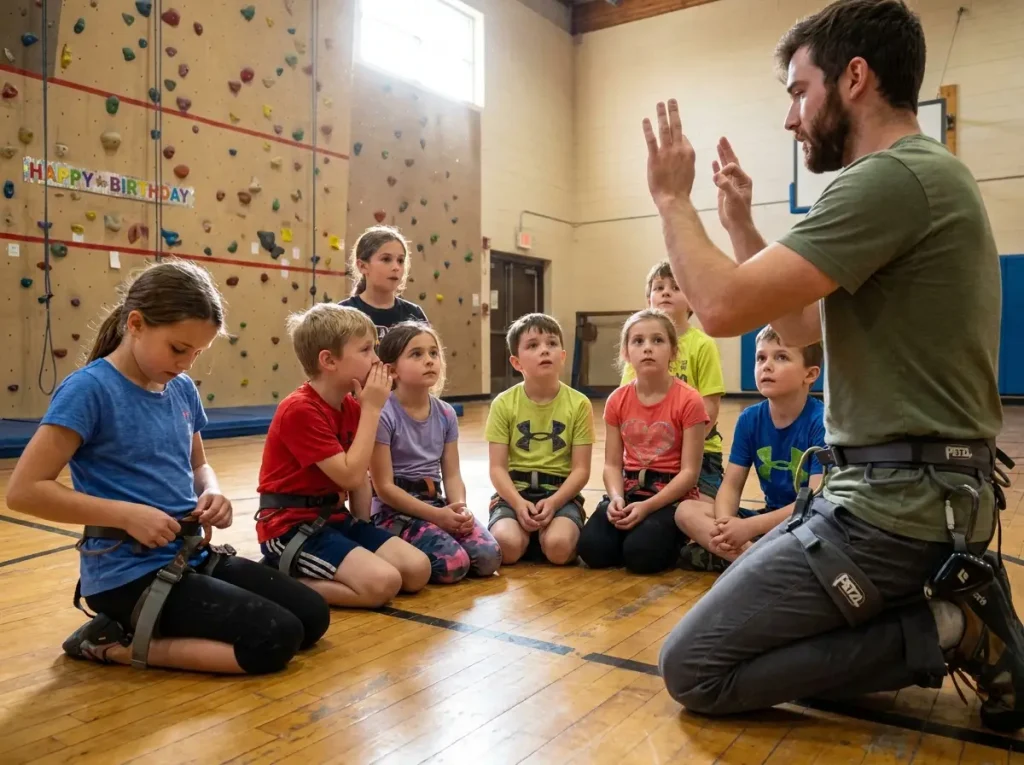
This is the part that catches every host off guard. Kids arrive staggered — some early, some exactly on time, some 10 minutes late with a parent who still needs to sign the waiver. Staff hand out rental shoes and harnesses, adjusting each one to fit. A kid’s harness that’s too loose gets re-cinched.
Someone brought sandals instead of closed-toe shoes and needs rental climbing shoes. Meanwhile, the birthday kid is bouncing off the walls (figuratively, not yet literally).
Budget 15 full minutes for this. It’s not wasted time — it’s the reality of getting 8 to 12 kids geared up simultaneously. The gyms know this. Their timelines already account for it.
Climbing Time — What the Kids Actually Do
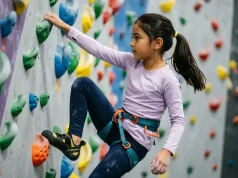
After the safety briefing — where staff explain how auto-belays work, where to step and not step, and what “down climbing” means — kids get roughly 45 to 60 minutes of actual climbing. Staff rotate them through routes, sometimes running informal competitions: who can touch the highest hold, who can traverse the farthest sideways, who finishes a problem first.
This is where the party earns its reputation. Kids who’ve never climbed before suddenly forget they were nervous. The ones who climb regularly show off for their friends. The energy stays high because every climb is a visible challenge with a visible result — you either reach the top or you don’t, and both outcomes come with cheering.
Pro tip: Ask the gym if they run indoor climbing games for kids during parties. Games like “add-on” (each climber adds one move to a sequence) or “elimination” (fall off and you’re out) keep the competitive energy going without anyone waiting too long.
Party Room — Food, Cake, and the Wind-Down
After climbing, everyone moves to the party room for the final 30 to 45 minutes. This is cake, pizza, juice boxes, and presents. Kids will be sweaty. They’ll be thirsty. They’ll talk over each other about who climbed highest.
The transition from wall to party room is the smoothest part of the whole event. Tired, happy kids eat faster and complain less. This is by design.
The Age Question — Who Should You Invite
Age determines more about your party than the venue does. A group of 6-year-olds needs a fundamentally different setup than a group of 11-year-olds.
Ages 5-7 — What Works and What Doesn’t
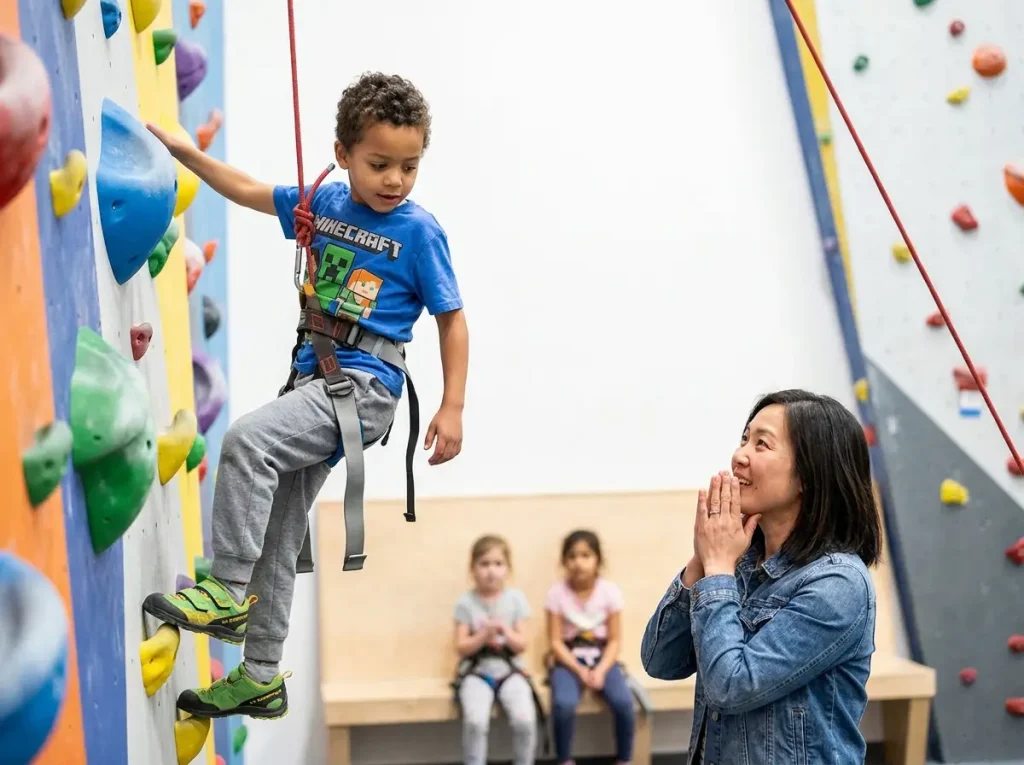
Younger kids can absolutely have a climbing party, but the format needs adjusting. They tire faster — plan for 30 to 40 minutes of climbing, not a full hour. They need more hands-on help from staff, especially with harness fit and tie-in points.
Auto-belay walls work best because the rope does the catching for them.
Some gyms offer full-body harnesses for small children whose hips haven’t developed the iliac crest that keeps a standard sit harness in place. If any of your guests are under 6, ask the gym whether they have kid-specific harness options.
Expect 2 to 3 kids per group who won’t want to leave the ground initially. That’s normal. We’ll cover how to handle it in the nervous kids section below.
Ages 8-12 — The Sweet Spot
This is the golden age for climbing parties. Kids in this range follow safety instructions reliably, have enough grip strength to make real progress on the wall, and turn everything into a competition. They don’t need constant supervision from the host because the gym staff can manage the group.
Eight to ten kids is the ideal group size. Bigger than that and kids spend too much time standing around waiting. If you have 15 RSVPs, talk to the gym about splitting into two rotation groups — half climbing, half in the party room, then swap.
Mixed-Age Groups and Teen Parties
If your guest list includes both a 6-year-old sibling and a 12-year-old friend, a gym with both bouldering and rope walls is the answer. Younger kids stick to the auto-belay. Older kids get to boulder. Everyone stays engaged because they’re doing activities matched to what they can handle.
Teen parties (ages 13 and up) work best at bouldering gyms. Teenagers want to solve problems and compete without an instructor standing over them. The social dynamic of bouldering — everyone sitting around the same problem, offering suggestions — fits the teen energy perfectly.
Waivers, Invitations, and Parent Communication
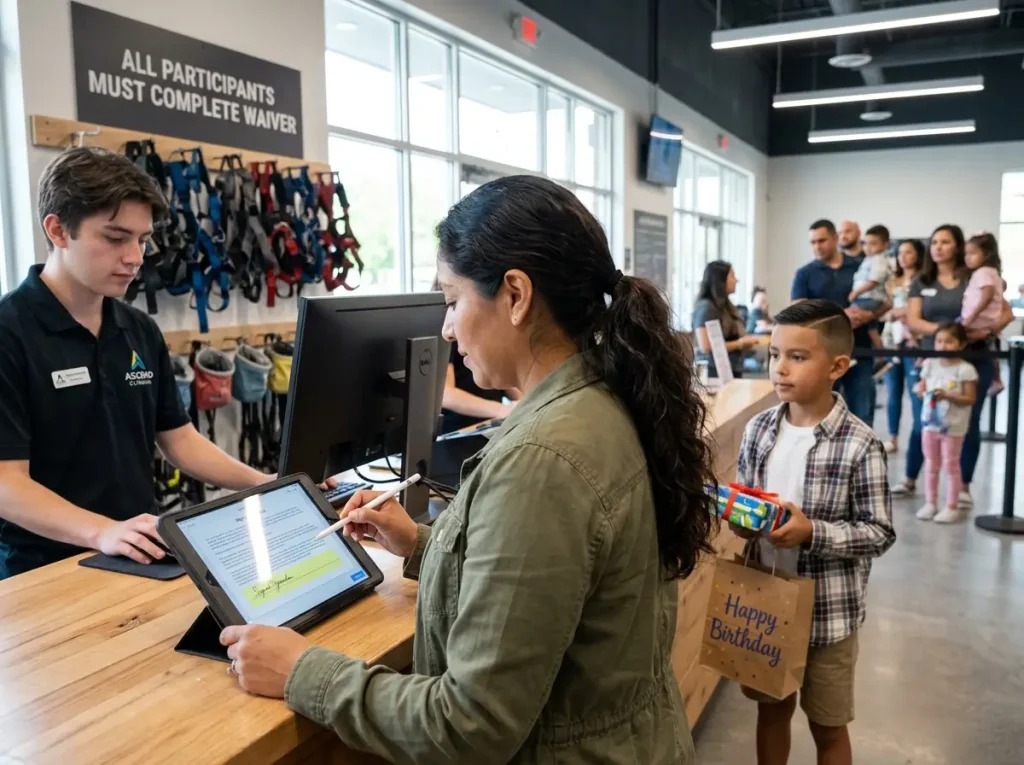
This is the boring part that saves you the most stress on party day.
The Waiver Situation (Send It Early)
Every climbing gym requires a signed waiver for every person entering the facility — climbers, parents, siblings, even grandma who’s just watching. For minors, a parent or legal guardian must sign. This is non-negotiable and it surprises people every single time.
The fix is simple: when you send the party invitation, include the gym’s waiver link with a note saying “Please complete this before the party so we can skip the paperwork and start climbing.” Most gyms have digital waivers that take two minutes. When parents handle it in advance, you save 15 to 20 minutes of front-desk chaos on party day.
What to Tell Parents in the Invite
Include these details in one clear message at least two weeks before the event:
The gym name, address, and where to park. What time to arrive (10 minutes before the party start time). What to wear: athletic clothes, closed-toe shoes, hair secured, no jewelry.
That the gym provides all climbing equipment. The waiver link and a reminder to complete it before arriving. A note about allergies — ask parents to flag any food restrictions so you can plan accordingly.
One message. No follow-ups needed if the first one covers everything. The parents who ghost the waiver will do it at the front desk. Factor that into your timeline.
What Kids Should Wear and Bring
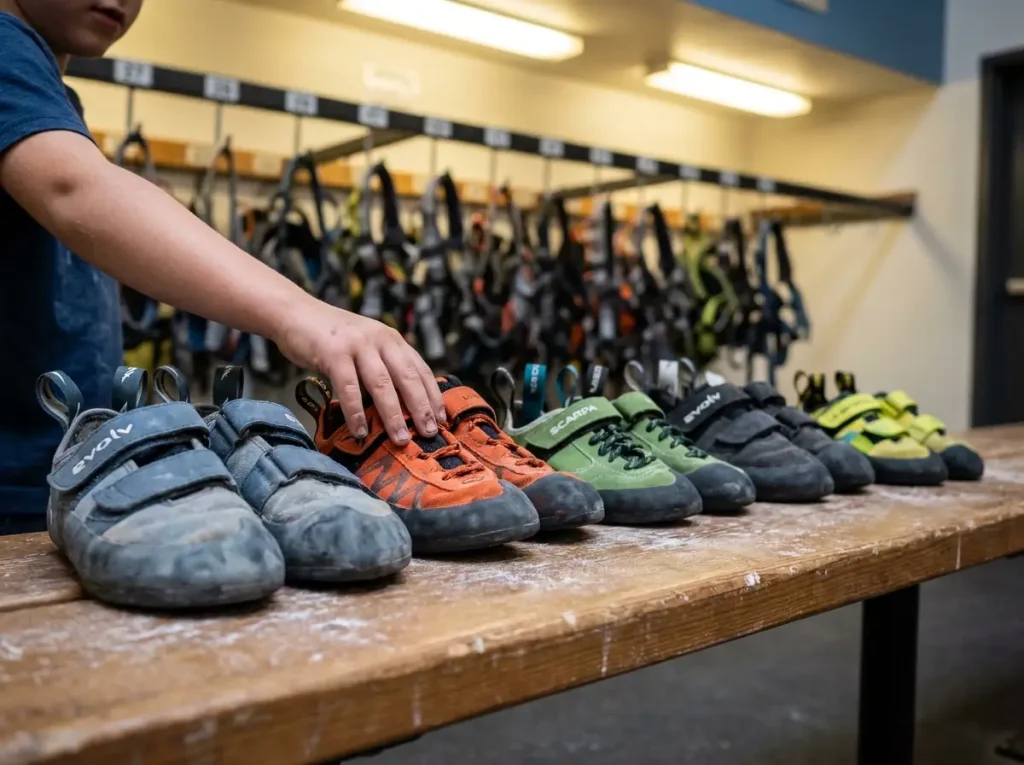
This section is short because the answer is simple. But getting it wrong creates real friction on party day.
Clothes That Work on the Wall
Athletic clothes. That’s it. Shorts or leggings that allow a full range of leg motion. A t-shirt that won’t ride up when they raise their arms overhead.
Nothing with drawstrings that can snag on holds. No dresses, no jeans (too restrictive at the hip), no skirts.
Send a reminder the day before the party. At least one kid will show up in the wrong outfit. It happens every time.
Shoes — Rental vs Bringing Your Own
The gym provides rental climbing shoes in every kid size. These work fine for a birthday party. The rubber grips better than sneakers, and the snug fit helps kids feel the holds under their feet.
Tell parents their kids do not need to bring climbing shoes. Regular closed-toe athletic shoes work as a backup if a child refuses the rental shoes — some kids hate the tight fit on their first try. Sandals, flip-flops, and boots don’t work on a climbing wall.
Pro tip: If the birthday kid has been to the gym before and loved it, a pair of beginner climbing shoes makes a great birthday gift from the parents.
How to Handle the Kid Who Won’t Climb
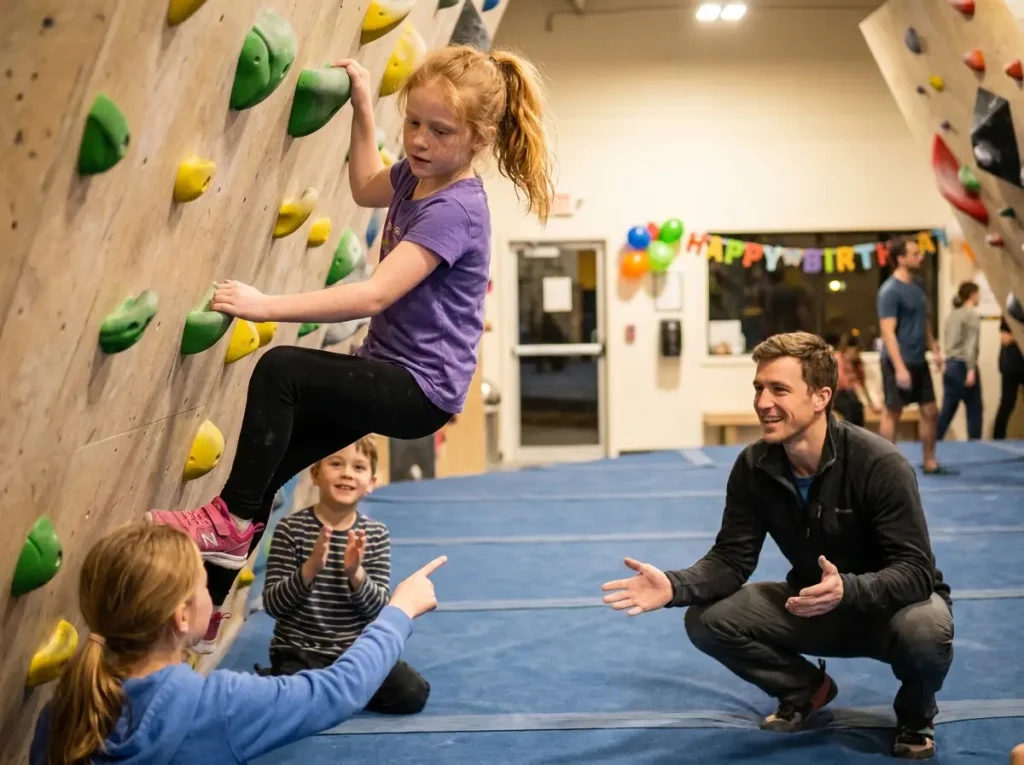
It happens at every single climbing party. One or two kids take one look at the wall and decide they’re not going up there. This is completely normal, and how you handle it determines whether that kid has a good time or spends the party sitting alone on a bench.
Why Kids Freeze and What Staff Actually Do
About 30 to 40 percent of first-time kid climbers show some hesitation. It’s not about fitness or bravery — it’s about the unfamiliar environment. The walls look taller from below than they imagined.
The harness feels weird. Other kids are already climbing and they feel behind.
Good gym staff have seen this hundreds of times. They don’t push. They don’t cajole. They typically pair the hesitant kid with another hesitant kid — not with the most confident climber — because shared nervousness creates solidarity.
Two scared kids encouraging each other up the wall is more effective than one brave kid making the scared one feel worse.
Ground-Level Games That Save the Day
The secret weapon for nervous climbers is traversing — climbing sideways along the wall with their feet never more than two feet off the ground. It feels like a game, not a challenge. Most gyms have traverse sections or bouldering walls low enough that falling means stepping off onto a pad.
Ask the gym beforehand if they include traverse games or low-wall activities in their party programming. If they do, the nervous kids get absorbed into the fun within minutes. If they don’t, you can suggest it — most instructors are happy to set up a quick traverse race or a “how far can you go sideways” challenge on the spot.
Food, Cake, and the Allergy Wildcard

The food part of a climbing party is straightforward, but there’s one rule that experienced hosts never break.
Climb First, Eat Second (Always)
Schedule climbing before food. Every time. Pizza and cake followed by vigorous physical activity on a climbing wall is a recipe for sick kids. The gym’s standard schedule already puts climbing first — don’t try to rearrange it because some kids arrived hungry.
Bring water bottles and a few light snacks (granola bars, fruit) for kids who need something before climbing. Save the real food for the party room afterward.
What Most Gyms Allow in the Party Room
Most climbing gyms let you bring your own food, drinks, cake, and basic decorations into the party room. Pizza delivery is the universal default — it’s easy, feeds a crowd, and nobody complains. Some gyms partner with local pizza shops and can order for you.
Check in advance: Can you bring a cooler with drinks? Are balloons allowed (some facilities restrict helium balloons near climbing walls)? Do they provide plates, cups, and napkins, or do you bring your own?
For allergies, send a text to parents asking about restrictions when you send the invitation. Keep a separate plate of clearly labeled allergy-safe food. A nut allergy at a climbing party where everyone’s eating granola bars is a scenario you want to prevent, not react to.
What Non-Climber Parents Need to Know
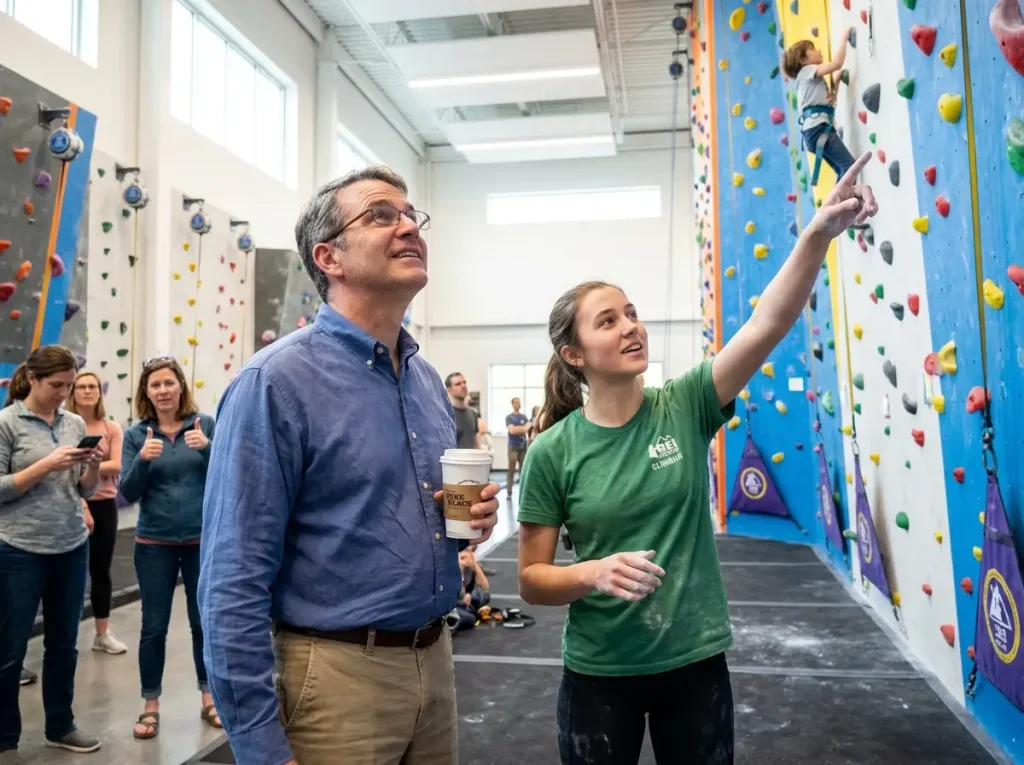
Most content about climbing birthday parties assumes the hosting parent knows what a climbing gym looks like inside. If you’ve never been in one, walking in on party day and figuring it out in real-time is stressful.
The Pre-Visit That Saves Your Sanity
Visit the gym before you book. Go during a quiet weekday, tell the front desk you’re considering a birthday party, and ask for a quick walk-through. Look at the party room and see where the climbing walls are.
Watch how other groups move through the space.
During this visit, pay attention to three things: where the bathrooms are relative to the climbing area (kids will need them mid-party), where the check-in desk is (that’s where you’ll spend the first 15 minutes), and how loud the space is (climbing gyms echo — plan your voice accordingly).
This 20-minute visit transforms you from a confused host into someone who can point parents toward the bathroom and answer questions confidently on party day.
If the party goes well and your kid wants to keep climbing, our guide on how to read gym climbing routes covers what those colored holds and taped lines actually mean.
Safety Basics You Should Understand
You don’t need to learn how to belay. The gym handles all technical safety. But knowing a few basics makes you a more confident host.
Auto-belays are the devices attached to the top of the wall that automatically take in rope as the climber goes up and lower them gently when they let go. Staff clip kids in before each climb. The devices are inspected regularly, and reputable gyms follow industry practices published by the Climbing Wall Association for equipment maintenance and staff training.
Bouldering means climbing without ropes on shorter walls with thick padded floors. The rule for kids 12 and under: an adult must be within arm’s reach in the bouldering area. During a birthday party, the gym staff fills this role.
The 15-foot spacing rule is standard in every gym. No climber should be directly below another climber. During a birthday party with excited kids, the staff enforces this constantly. Don’t take it personally when an instructor repositions your child — it’s routine safety.
Pro tip: If an attending parent asks you about the belay mistakes climbers make or how auto-belays work, point them toward the gym staff. The staff are trained to answer exactly these questions and they appreciate parents who care enough to ask.
Your Climbing Party Checklist
A climbing gym birthday party is one of the few party formats where the venue does most of the heavy lifting. You book it, send invites with waiver links early, show up with pizza and cake, and let the gym staff handle the climbing.
The three things that separate a smooth party from a chaotic one: choosing the right climbing format for your age group, sending waivers in advance so check-in doesn’t eat your climbing time, and feeding kids after they climb instead of before.
Your kid gets to spend their birthday doing something that builds real confidence. Their friends get to try something most of them have never done. And you get to watch it happen without managing a bouncy house or a magician. That’s a win.
Q1 How much does a climbing gym birthday party cost?
Most gyms charge $250 to $700 depending on location, group size, and package level. The per-child cost averages $25 to $45 when you break down the package. Additional climbers beyond the base package run $15 to $35 each.
Q2 What age is best for a climbing gym birthday party?
Ages 8 to 12 are the sweet spot — old enough to follow instructions and strong enough to make real progress on the wall. Kids as young as 5 can attend if the gym has auto-belay systems and kid-sized harnesses.
Q3 Do kids need climbing experience for a birthday party?
No experience needed. Gym staff provide a full safety briefing and supervision. Most party groups are entirely first-time climbers, and the staff are trained to handle exactly that scenario.
Q4 Is a climbing birthday party safe for young kids?
Yes, when hosted at a reputable gym with trained staff. Kids wear properly fitted harnesses, climb on auto-belay systems that catch them automatically, and follow structured safety protocols. Staff-to-kid ratios are typically one instructor per 5 to 8 children.
Q5 What should kids wear to a climbing party?
Comfortable athletic clothes — shorts or leggings, a t-shirt, and closed-toe shoes. The gym provides rental climbing shoes and harnesses. Avoid jeans, jewelry, and any clothing with dangling drawstrings.
Safety Notice: Rock climbing and mountaineering are inherently high-risk
activities that can involve physical trauma or fatal incidents. The information on Rock Climbing Realms is for
educational and informational purposes only. Techniques and advice presented here are not a substitute
for professional, hands-on instruction. Conditions and risks vary by location. Always seek guidance
from a qualified instructor before attempting new techniques. By using this website, you agree that you
are solely responsible for your own safety. Any reliance you place on this information is strictly
at your own risk, and you assume all liability for your actions. Rock Climbing Realms and its authors
will not be held liable for any harm, damage, or loss sustained in connection with the use of this information.
Affiliate Disclosure: We are a participant in the Amazon Services LLC Associates Program, an
affiliate advertising program designed to provide a means for us to earn advertising fees by advertising and linking
to Amazon.com. As an Amazon Associate, we earn from qualifying purchases. We are also an official affiliate partner
of Black Diamond Equipment via the AvantLink network. If you click on a Black Diamond affiliate link and make a
purchase, we may earn a commission at no additional cost to you. We also participate in other affiliate programs.
Additional terms are found in the terms of service.