
In this article
You’ve been on the wall for twenty minutes. Your forearms feel like they’re full of concrete, your belayer is doing neck stretches, and you still haven’t figured out the crux. Sound familiar? After years of projecting sport routes — and watching other climbers burn through entire crag days with nothing to show for it — I’ve noticed the same handful of mistakes popping up over and over. Most of them have nothing to do with finger strength. They’re about how you approach the session itself. Here are five hangdogging mistakes that waste your time, burn out your partner, and keep you from sending.
Quick Answer: Here’s how to hangdog a sport route without wasting your crag day:
- Break the route into 3–5 chunks and work each one separately
- Go in direct to bolts when resting longer than 15 seconds
- Stop grinding the same move after 15 minutes — lower, skip, or try different beta
- Communicate with your belayer before, during, and after every burn
- Rest 30–60 minutes and visualize before your redpoint attempt
What Hangdogging Actually Means (And Why It Matters)
The Shift from Sending Mode to Learning Mode
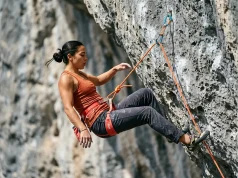
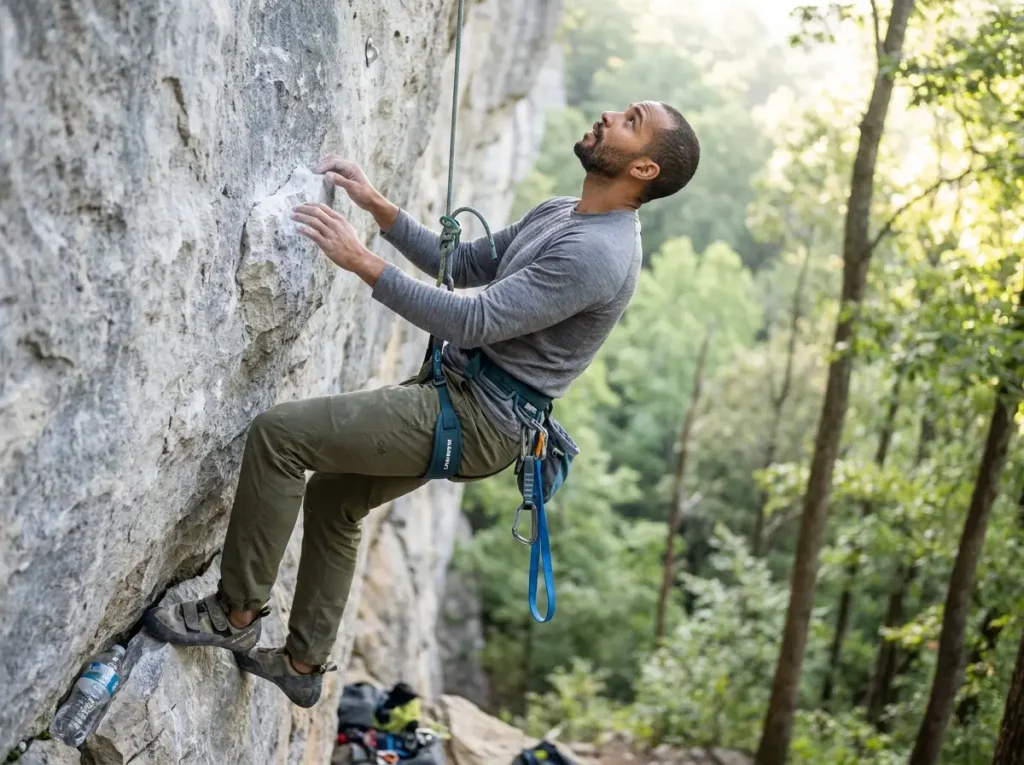
Hangdogging is hanging on the rope while you work out moves on a sport climb. You climb until you fall or need a rest, hang on the rope or go in direct to a bolt, figure out the sequence, and keep going. That’s it.
But here’s what took me a long time to understand: hangdogging isn’t a failed attempt. It’s a different activity entirely. When you’re onsighting, your brain is in performance mode — execute, react, commit. When you’re hangdogging, your brain needs to be in learning mode — experiment, observe, remember. Mixing the two up is where most wasted sessions start.
The term used to carry a stigma. In the 1980s, hangdogging was considered poor style by trad purists who thought you should either send the route clean or walk away. That debate is long settled. Modern sport climbing treats hangdogging as the standard method for working a route, and the American Alpine Club’s guide to lead climbing protection frames it as routine practice.
When Hangdogging Makes Sense vs When It Doesn’t
Hangdogging makes sense when you’re projecting — working a route at or near your limit over multiple sessions. It also works for learning sequences on a route you plan to redpoint later that day.
It doesn’t make sense when the route is three grades below you and you’re just being lazy about reading the moves. If you can flash it, flash it. Save the hangdog sessions for routes that actually demand them. If you’re still figuring out where to project a sport route without wasting burns, start there — the projecting mindset is the foundation that makes hangdogging productive.
Mistake 1 — Skipping the Chunk-Down Step
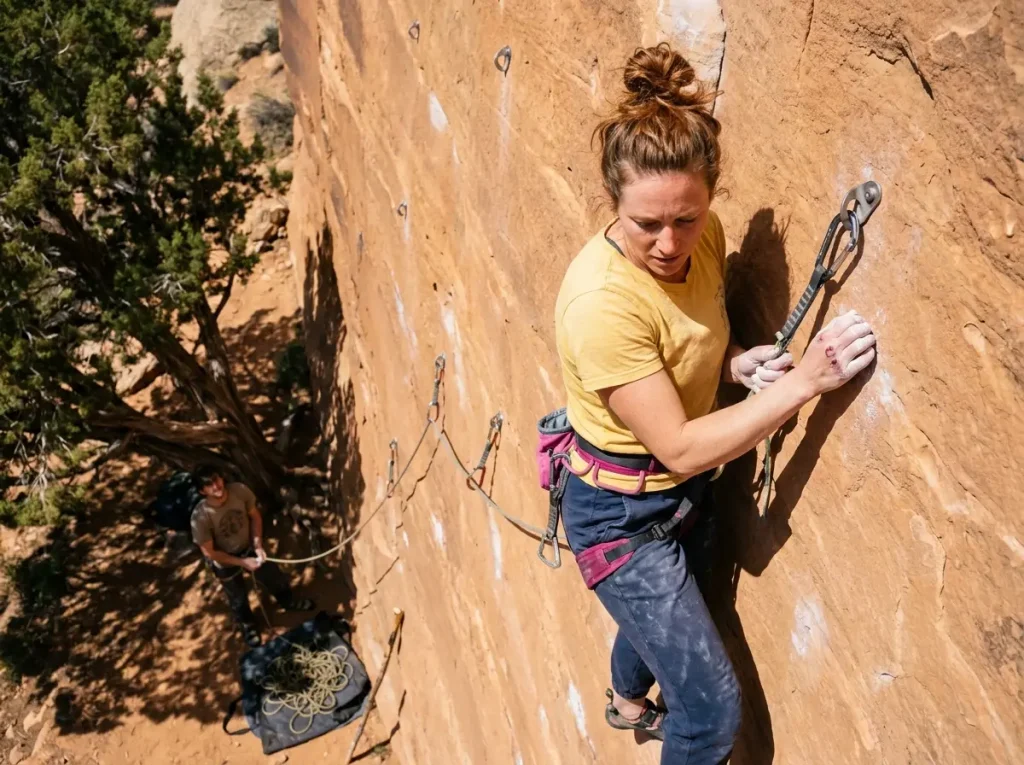
How to Break a Route Into 3–5 Manageable Sections
Most climbers hangdog by starting at the bottom and climbing until they fall. Then they hang, rest, try the move again, maybe fall again, rest again, and eventually pull through. Repeat until they reach the anchors. That approach burns through energy like it’s free.
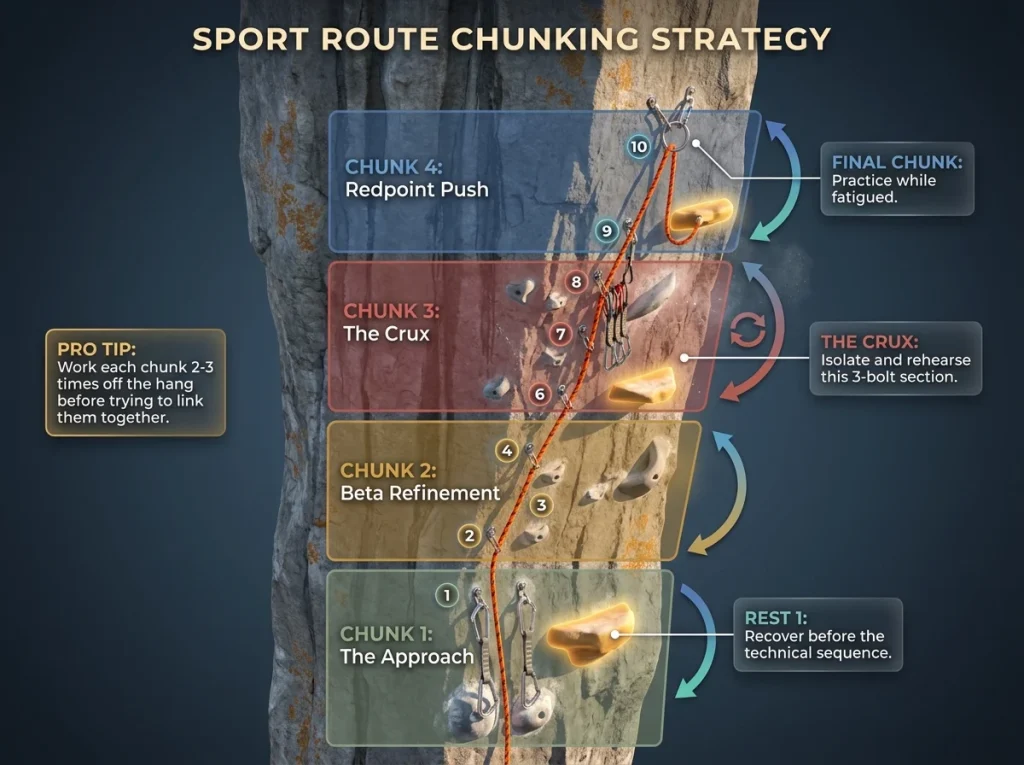
The fix is chunking. Before you leave the ground on your second burn, look at the route and divide it into three to five sections based on the natural rest positions — good stances, jugs, ledges, or any spot where you can shake out. Each chunk becomes its own mini-project.
Work the chunks individually. Start from the rest position at the bottom of a chunk and climb to the rest at the top. Don’t worry about linking chunks yet. Just figure out the most efficient beta for each section in isolation.
This matters more than most people realize. Eric Hörst’s research on projecting efficiency found that climbers who chunk routes and work sections individually send faster than those who always start from the ground. It sounds obvious written down. Almost nobody does it at the crag.
Pro tip: Don’t neglect the final chunk. Everyone overworks the crux and underworks the last few bolts. Falling at the chains because you didn’t bother rehearsing the easy-looking top section is a special kind of pain. Work that section in a fatigued state — that’s how you’ll encounter it on the redpoint burn.
Make sure you’re physically ready to work before you start. A proper crag warm-up routine keeps flash pump from ruining your first burn.
Working Each Chunk as Its Own Mini-Route
Treat each chunk like a boulder problem. Try different sequences. Move your feet before reaching. Check for hidden holds — sidepulls, underclings, unchalked intermediates that the last climber skipped. The goal isn’t to get through the chunk. The goal is to find the easiest way through it.
Once you’ve found your sequence, repeat it. You want to be able to climb each chunk two or three times off the hang without falling before considering it redpoint-ready. If you can’t do that, the sequence isn’t dialed yet.
Mistake 2 — Never Going Direct
The Quickdraw Method vs a PAS
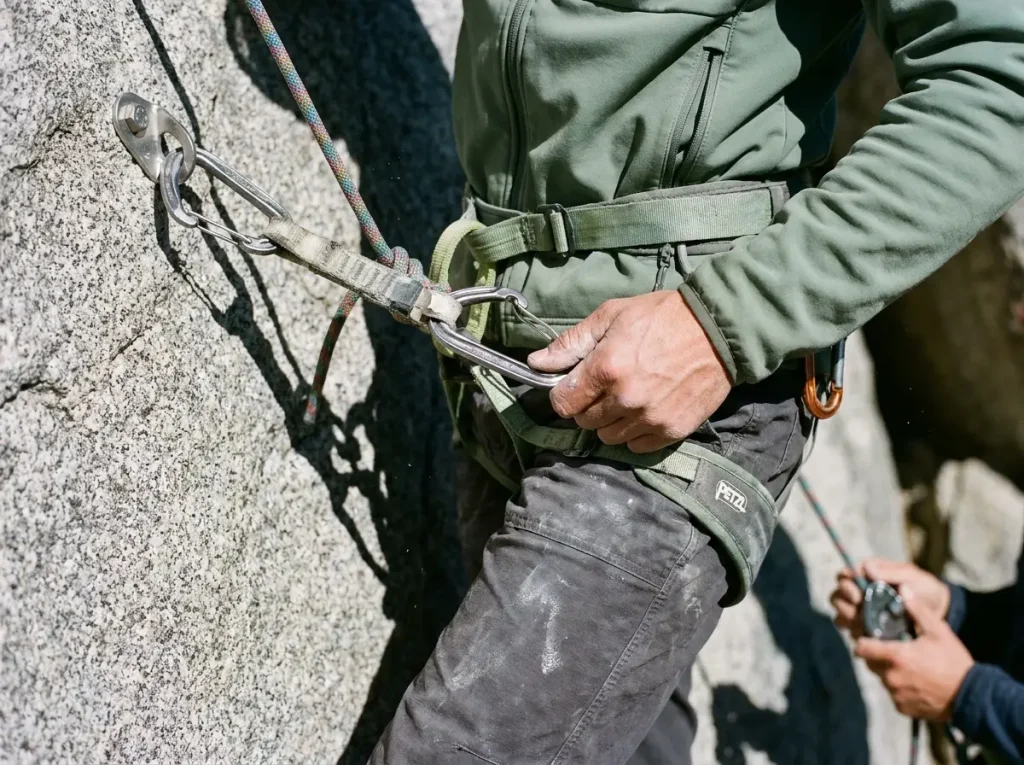
Going direct means physically clipping yourself to a bolt so your weight hangs from the hardware instead of your belayer’s brake hand. If you’re resting on the rope for more than 15 seconds, go direct. Your belayer will thank you.
The simplest method: clip a quickdraw to the bolt hanger above you, then clip the bottom carabiner of that draw to your belay loop. That’s it. Your weight transfers to the bolt. Your belayer can give slack, relax their hands, stretch their neck. You get a more stable rest because you’re not swinging around on a dynamic rope.
Some climbers carry a PAS (personal anchor system) like the Petzl Connect Adjust for this. A PAS gives you adjustable length so you can position yourself precisely at the right height for the holds you’re working. The trade-off: it’s one more piece of gear on your harness, and a PAS is rated for static loads only. You cannot climb above your PAS attachment point — even a short fall onto a static sling can generate forces that exceed its rating.
For most hangdogging situations, the quickdraw method works fine. You already have draws on your harness. Use one. Understanding why your harness has two tie-in points helps make sense of why the belay loop is the correct attachment point here — it’s designed for exactly this kind of direct loading.
When to Go Direct and When to Just Hang
Quick rest between moves — just hang on the rope. Your belayer can hold you for 30 seconds without trouble.
Extended rest while you figure out beta — go direct. Anything over 15 seconds on the rope means your belayer is actively working. Going direct frees them up and gives you a more solid platform to scout holds above.
Between burns when you’re lowering and climbing back up — always go direct at your high point if you’re planning to rest there and re-climb the section.
Pro tip: When you go direct, tell your belayer. Say “I’m in direct” clearly so they know they can take their brake hand off. When you’re ready to climb again, say “climbing” and wait for them to take up slack before you unclip from the bolt. Sloppy communication here is how belay mistakes happen outdoors.
Mistake 3 — Grinding the Same Move for Too Long
The 15-Minute Rule
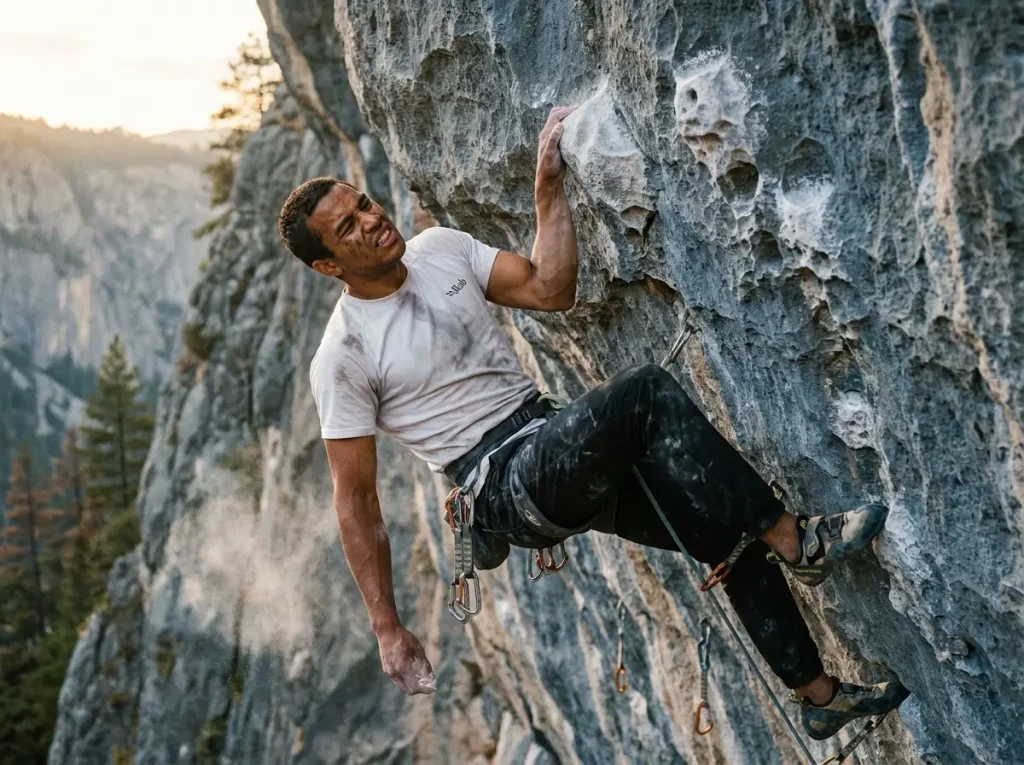
You’ve tried the same crux move twelve times. Your skin is shredded. Your forearms are toast. And you still can’t stick the hold. Here’s the hard truth: if fifteen minutes of focused effort hasn’t produced progress, the problem usually isn’t your fingers. It’s your beta.
The 15-minute rule is simple. If you’ve spent fifteen minutes on the same sequence without meaningful progress — meaning you’re not getting closer to sticking it, just repeating the same fall — it’s time to change your approach. Lower down. Try the move from the bolt below to see if momentum changes the equation. Skip the section entirely with a stick clip and work the moves above. Or just accept that today isn’t the day for this particular sequence.
This is harder than it sounds because projecting creates tunnel vision. You convince yourself that one more try will be the one. That mindset burns through your best energy on a section you’re not ready for, leaving nothing for the rest of the route.
When to Lower, Skip, or Stick-Clip Through
Lower and try from below when you suspect the approach matters — sometimes the sequence only works if you arrive with a specific hand on a specific hold, and you can’t replicate that starting from a hang.
Skip with a stick clip when the section is clearly beyond your current ability but you need to learn the moves above it. No point working the top of the route if you’ve never seen it.
Walk away when you’ve hit the wall and your skin is paying the price. Building lock-off strength for crux moves at home will do more for you than grinding on ruined fingertips at the crag.
Pro tip: Pay attention to proprioceptive cues when you do stick a move. What did your weight feel like over your feet? Where was your hip? The difference between a successful rep and a failed one is often a two-inch shift in your center of gravity that you can only detect through feel — not by staring at the hold.
Mistake 4 — Ignoring Your Belayer
What to Communicate and When
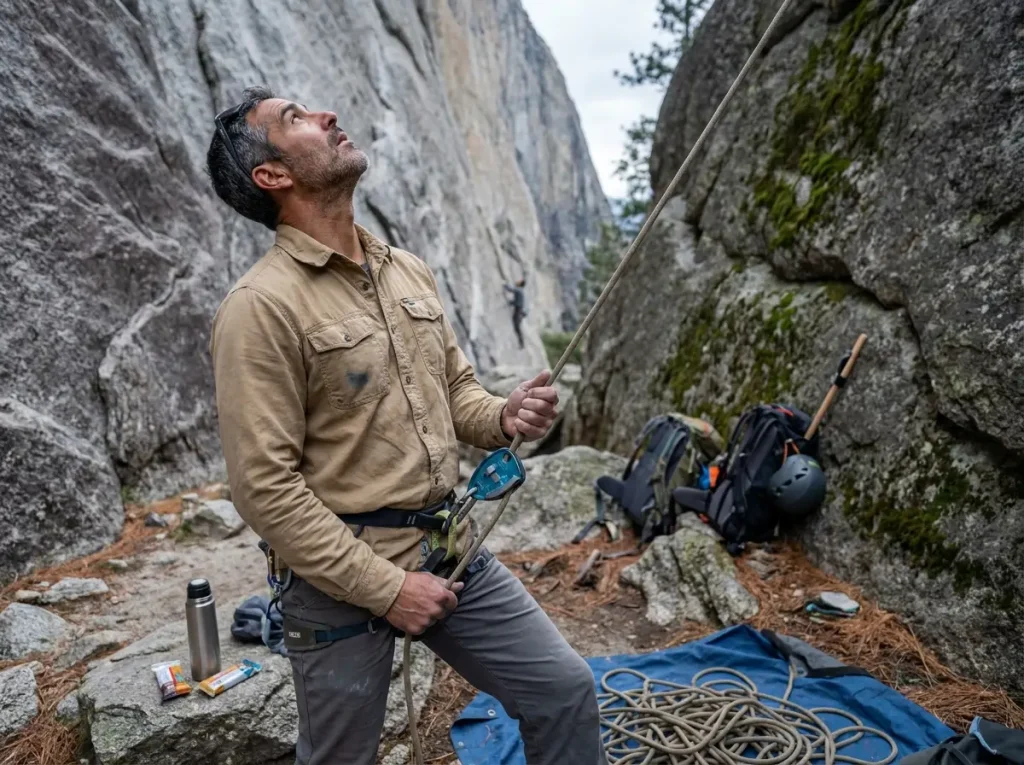
Your belayer is not a machine. They’re a person standing in the sun with their neck cranked back, one hand locked on a brake strand, wondering if you’re about to fall or if you’re just thinking. They deserve information.
Before you start: tell your partner this is going to be a working session, not a quick burn. Give them a heads-up on how long you expect to be on the wall. Ask if they’re good with that.
During the climb: announce when you’re taking (“take!”), when you’re going direct (“I’m direct”), when you’re about to try a move (“watch me”), and when you’re ready to climb again (“climbing”). These four phrases cover ninety percent of what your belayer needs to hear. Research into belay errors backed by AAC data consistently shows that communication failures are a leading factor in climbing accidents — and long, quiet hangdog sessions create exactly the conditions where attention drifts.
After you lower: thank them. It sounds trivial. It isn’t. A belayer who feels appreciated will give you a patient belay next time. One who feels like a piece of equipment will find excuses to be busy.
Trading Burns and Keeping Sessions Fun
The best hangdog sessions alternate. You work your project for a burn, lower, and then belay your partner on their project (or a warm-up route). Trading burns keeps both climbers fresh, maintains the belayer’s engagement, and prevents the resentment that builds when one person stands at the base for two hours.
If your partner doesn’t have a project at the same cliff, give them a reasonable number of burns — three working burns and a send go is a solid session — and then offer to move to their crag or call it a day. The fastest way to lose a climbing partner is to treat them like a human GriGri.
Returning the favor with solid soft catch technique when it’s your turn to belay goes a long way too.
Mistake 5 — No Plan for the Redpoint Burn
The Recovery Window Between Working and Sending
You’ve spent an hour on the wall. You know every move. Your beta is dialed. And then you tie in for the redpoint attempt with pumped forearms, fried skin, and zero mental preparation. This is how good sessions end in frustration.
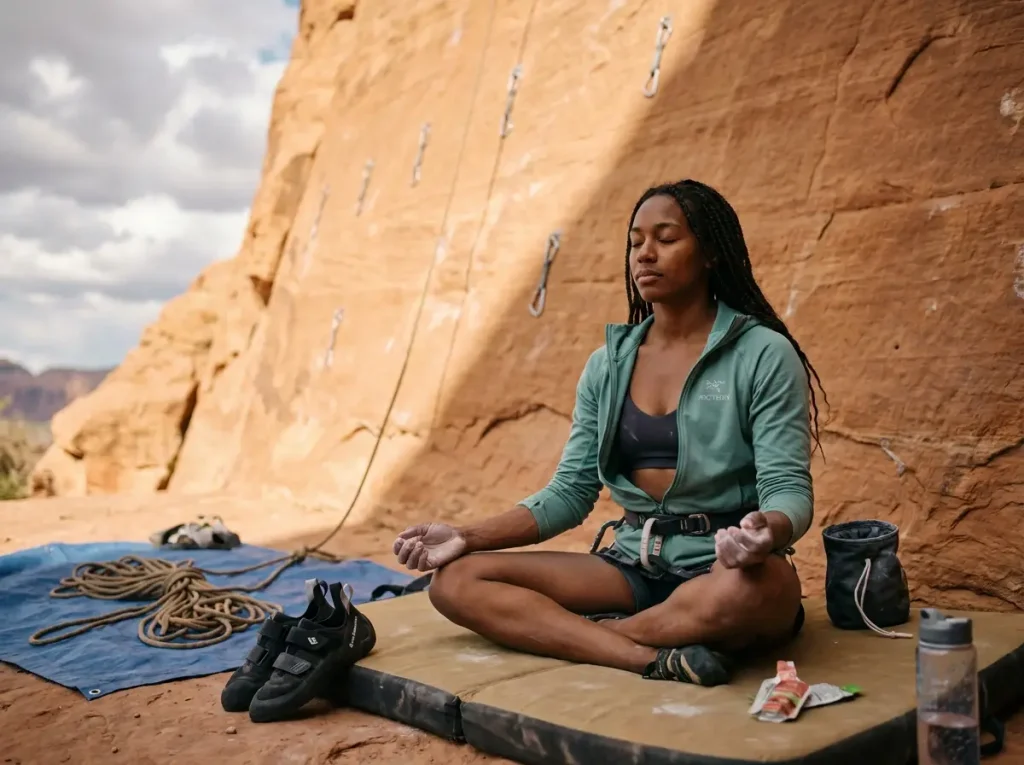
The research is clear: thirty to sixty minutes of recovery between your last working burn and your send attempt produces better results than going straight into it. Light active recovery — walking around, easy stretching, eating a snack — works better than sitting in the shade staring at your phone. Your muscles clear lactate faster when you’re moving.
The mistake isn’t impatience. It’s not having a plan. If you don’t decide in advance when you’re going to rest and when you’re going for it, the default is to just keep climbing until you’re too tired to try anymore.
Visualization and Proprioceptive Cues
During your rest, close your eyes and climb the route in your mind. Every hold, every foot placement, every clip. This isn’t hippy nonsense — visualization is how your nervous system consolidates the motor patterns you practiced during your working burns.
Focus on the proprioceptive cues from your successful reps. Remember what it felt like when you stuck the crux — the pressure in your toes, the angle of your hip, the timing of the reach. These physical sensations are more reliable than visual memory for reproducing complex movements.
If you’re dealing with nerves before the attempt, that’s normal. A shot of adrenaline before a redpoint burn actually helps performance. But if the anxiety is shutting you down, the techniques in managing climbing anxiety can help you channel it instead of fighting it.
Pro tip: Here’s the readiness test that changed my projecting: if you can climb the crux chunk two to three times off the hang without falling, you’re ready to try linking from the ground. If you can’t do that consistently, you’re not ready — no matter how good it felt on that one perfect rep. Save the redpoint for another day.
How to Structure a Full Hangdog Session at the Crag
The Warm-Up Protocol
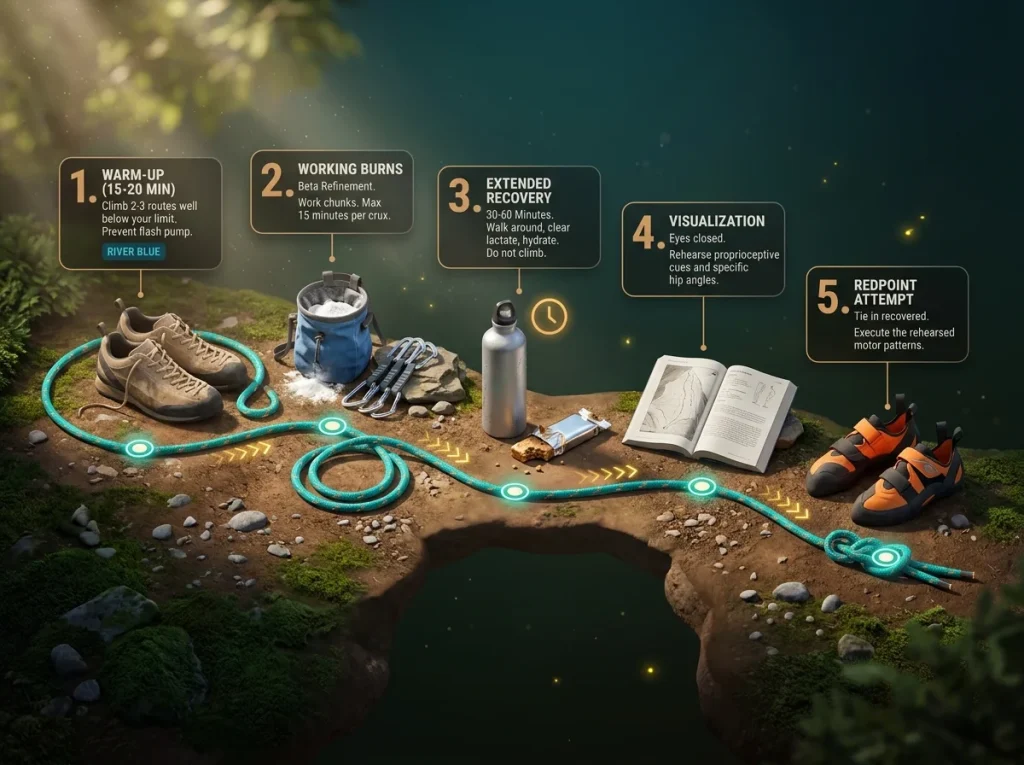
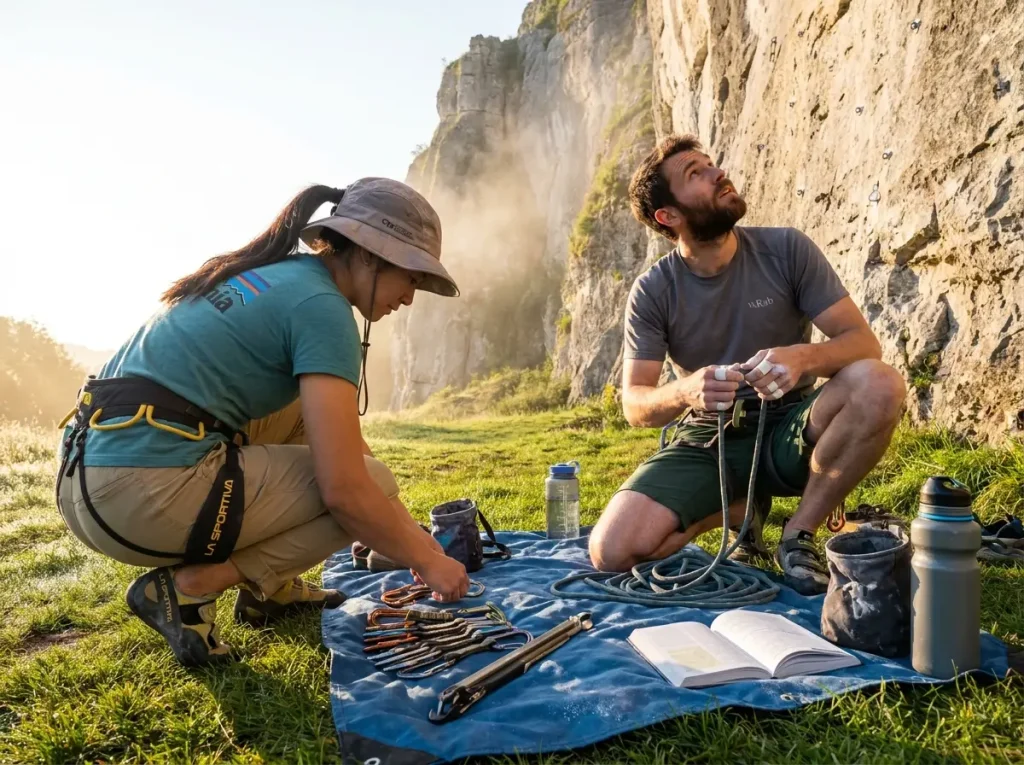
Start with two to three routes well below your project grade. The point is to get warm, rehearse clipping under control, and wake up your tendons without triggering a flash pump. A solid sport climbing warm-up routine at the crag takes fifteen to twenty minutes and makes everything that follows better.
Don’t skip this even if you’re short on time. A cold attempt on your project is worse than no attempt because a tweaked finger or a flash pump will end your day early.
Burn Sequencing and Rest Intervals
Here’s what a productive session looks like:
Burn 1 — Reconnaissance. Climb the route bolt-to-bolt. Go direct at every bolt. Look at every hold. Don’t worry about efficiency yet. Just gather information.
Burn 2 — Beta Refinement. Work the route in chunks. Figure out sequences for each section. Mark your rest positions. Identify the crux and start experimenting with different sequences.
Burn 3 — Crux Polish. Focus on the hardest one or two chunks. Repeat the crux sequence until you can do it two to three times clean off the hang. Rehearse the top section in a fatigued state.
Extended Rest — 30 to 60 minutes. Walk around. Eat. Hydrate. Visualize the route. Don’t just sit there scrolling.
Burn 4 — Redpoint Attempt (if ready). You know the moves. You’re recovered. Go for it.
Not every session ends with a send. Sometimes three working burns is all you get, and the redpoint waits for next time. That’s fine. The work you did today makes next session’s send possible.
Knowing When to Call It
Call it when your skin is too raw to hold on. Call it when you’ve fallen on the same move ten times and started repeating beta you’ve already tried. Call it when your belayer checks their watch for the third time.
The best projectors protect their psyche as much as their skin. Walking away while you still want to climb means you’ll come back motivated. Grinding until you’re frustrated means you’ll dread the drive.
Conclusion
Three things will change your hangdog sessions immediately. First, chunk the route into sections and work each one individually instead of always starting from the ground. Second, go direct to bolts when resting — it saves your belayer’s hands, gives you a stable platform, and makes the whole session more sustainable. Third, plan your redpoint attempt with a real recovery window and visualization instead of just going for it when you’re already fried.
Pick one of these on your next project day. Apply it deliberately. You’ll spend less time hanging and more time sending — and your belayer might even volunteer for the next session.
Q1 Is hangdogging bad etiquette in sport climbing?
No. Hangdogging is standard practice for working sport routes. The stigma from the 1980s trad era is long gone. Just be considerate of your belayer’s time and communicate clearly throughout the session.
Q2 How many times should you hangdog a route before trying to redpoint?
There’s no fixed number. The test is whether you can climb each crux chunk two to three times off the hang without falling. Some routes take two sessions to reach that point. Others take ten. The moves tell you when you’re ready, not the calendar.
Q3 What is the difference between hangdogging and projecting?
Projecting is the overall process of working toward a redpoint over one or more sessions. Hangdogging is one technique within projecting — hanging on the rope to figure out and rehearse individual moves and sequences.
Q4 Should you use a PAS or quickdraw to go direct on bolts?
A quickdraw clipped from the bolt to your belay loop works for most situations and requires no extra gear. A PAS like the Petzl Connect Adjust gives you adjustable length for precise positioning. Just remember that a PAS is rated for static loads only — never climb above your PAS attachment point.
Safety Notice: Rock climbing and mountaineering are inherently high-risk
activities that can involve physical trauma or fatal incidents. The information on Rock Climbing Realms is for
educational and informational purposes only. Techniques and advice presented here are not a substitute
for professional, hands-on instruction. Conditions and risks vary by location. Always seek guidance
from a qualified instructor before attempting new techniques. By using this website, you agree that you
are solely responsible for your own safety. Any reliance you place on this information is strictly
at your own risk, and you assume all liability for your actions. Rock Climbing Realms and its authors
will not be held liable for any harm, damage, or loss sustained in connection with the use of this information.
Affiliate Disclosure: We are a participant in the Amazon Services LLC Associates Program, an
affiliate advertising program designed to provide a means for us to earn advertising fees by advertising and linking
to Amazon.com. As an Amazon Associate, we earn from qualifying purchases. We are also an official affiliate partner
of Black Diamond Equipment via the AvantLink network. If you click on a Black Diamond affiliate link and make a
purchase, we may earn a commission at no additional cost to you. We also participate in other affiliate programs.
Additional terms are found in the terms of service.