
In this article
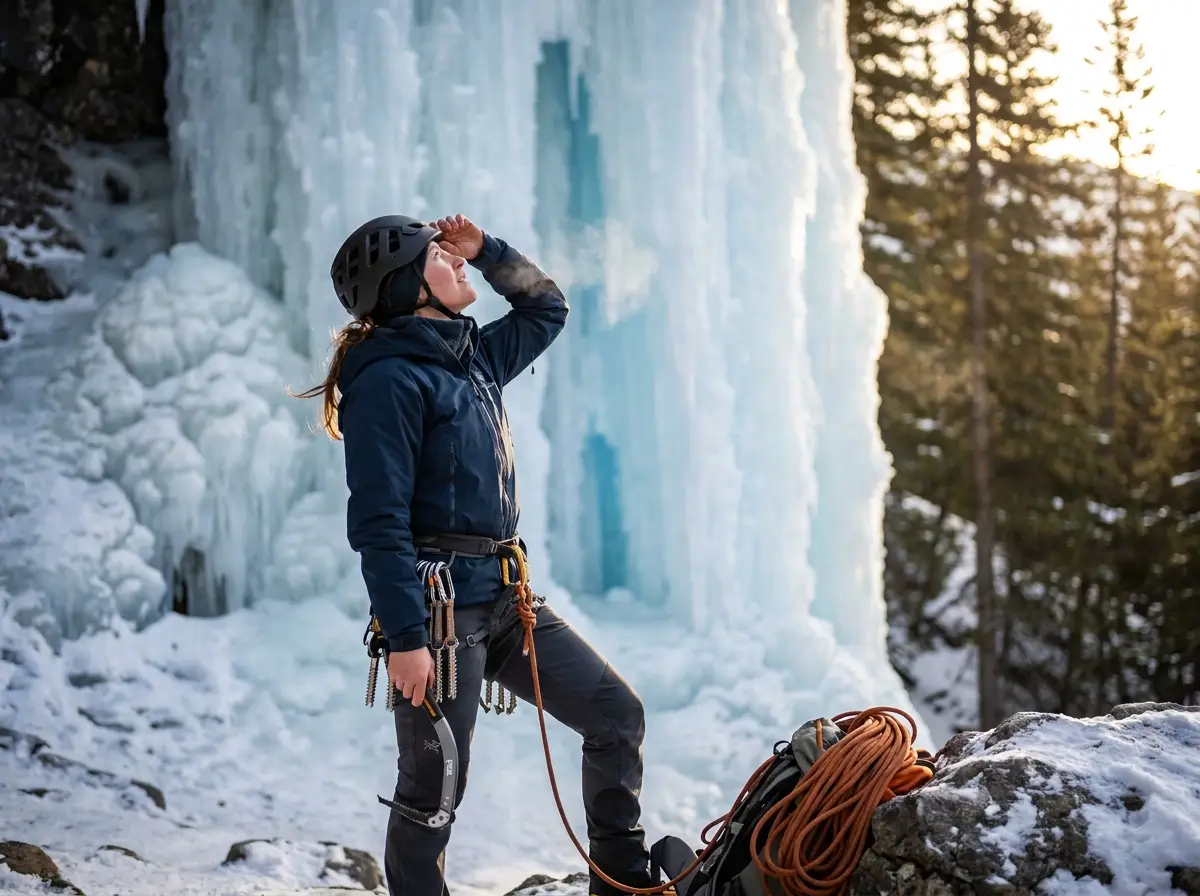
You’re standing at the base of a frozen waterfall, tools racked, screws clipped, partner tied in. Everything looks right. But the five things most likely to wreck your first ice lead aren’t waiting for you on the pitch — they’re sitting in your pack, your head, and the conversation you didn’t have with your belayer.
I’ve watched climbers gear up at the base of WI-3 pillars with the confidence of someone who’s led WI-5, then freeze ten feet above their last screw because they skipped the homework that happens on the ground. After years of leading ice in conditions ranging from bomber blue columns to sketchy late-season chandeliers, this is the pre-lead checklist I wish someone had handed me before my first swing above protection.
Quick Answer: Before leading ice, check these five systems:
- Confirm your movement is automatic — not just “good enough” on top-rope
- Run a full gear audit including the small items everyone forgets
- Read the ice from the ground and map your screw placements
- Understand why ice falls are categorically worse than rock falls
- Establish a bail plan with your partner before you leave the ground
Mistake 1 — Leading Before Your Movement Is Automatic
Here’s the thing nobody wants to hear: being able to climb WI-4 on top-rope doesn’t mean you’re ready to lead WI-2. Not even close.
Will Gadd has said for years that climbers should log at least 100 top-rope pitches before their first lead. That number sounds arbitrary until you understand what it actually measures. It’s not about strength or even technique — it’s about making your efficient ice tool swing mechanics so automatic that you stop thinking about your hands and start reading the ice three moves ahead.
What “Automatic” Actually Looks Like
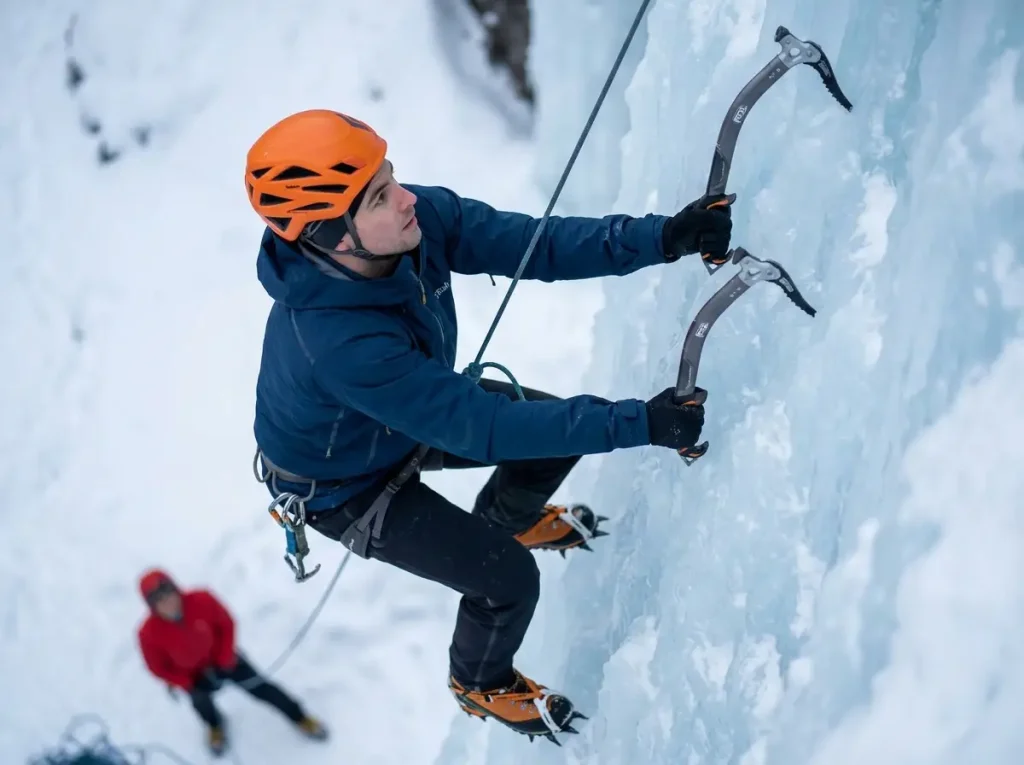
Your staggered tool placements — 30 to 60 centimeters apart vertically, roughly shoulder width horizontally — should feel as natural as walking. If you still need to think about spacing, you’re not there yet. Same goes for your feet. Dual front-point crampons should find good ice on the first kick, not the third.
A study published in the International Journal of Environmental Research and Public Health found that intermediate ice climbers have a significantly higher injury rate than advanced climbers. The reason isn’t that intermediates climb harder routes — it’s that their movement isn’t grooved enough to handle the added stress of placing protection while climbing.
The 30-Minute Test
Gadd puts it bluntly: if it takes you more than 30 minutes to lead a pitch of straightforward ice in good conditions, you shouldn’t be there. That clock isn’t about speed — it’s about efficiency. Thirty minutes of climbing means thirty minutes of cold hands, pumping forearms, and deteriorating decision-making.
The Honest Self-Check
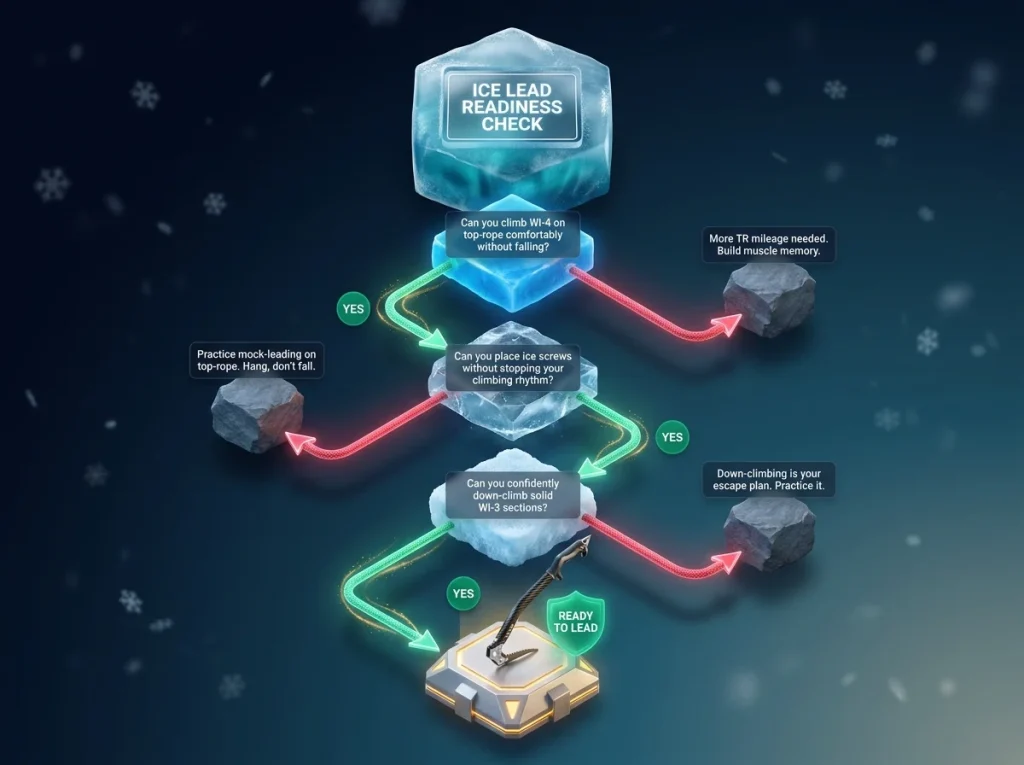
Ask yourself three questions before you commit to your first lead. Can you climb a full pitch of WI-3 on top-rope without stopping? Can you place a screw with one hand while hanging from a solid tool placement without your breathing going ragged? Can you down-climb any section of ice you just climbed up?
If you hesitated on any of those, you need more mileage on the sharp end of a top-rope. That’s not failure. That’s the process.
Pro tip: Do your top-rope laps in mock-lead style. Place screws as you climb even though you’re protected from above. This builds the motor patterns for screw placement without the consequences of actual lead falls.
Mistake 2 — Skipping the Gear Audit Before You Leave Home
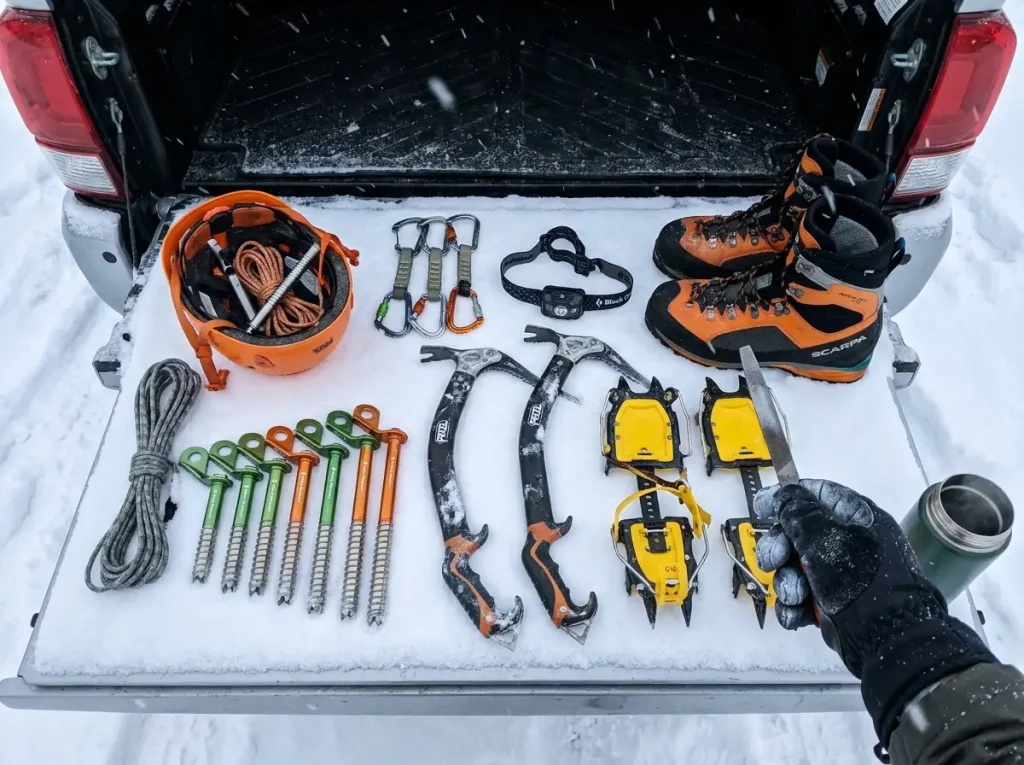
Forgetting ice screws has ended more climbing days than bad ice ever has. That’s not a joke — ask around. The parking lot realization that your V-thread tool is sitting on the kitchen counter hits different when you’re 90 minutes from the nearest town.
The Non-Negotiable Rack
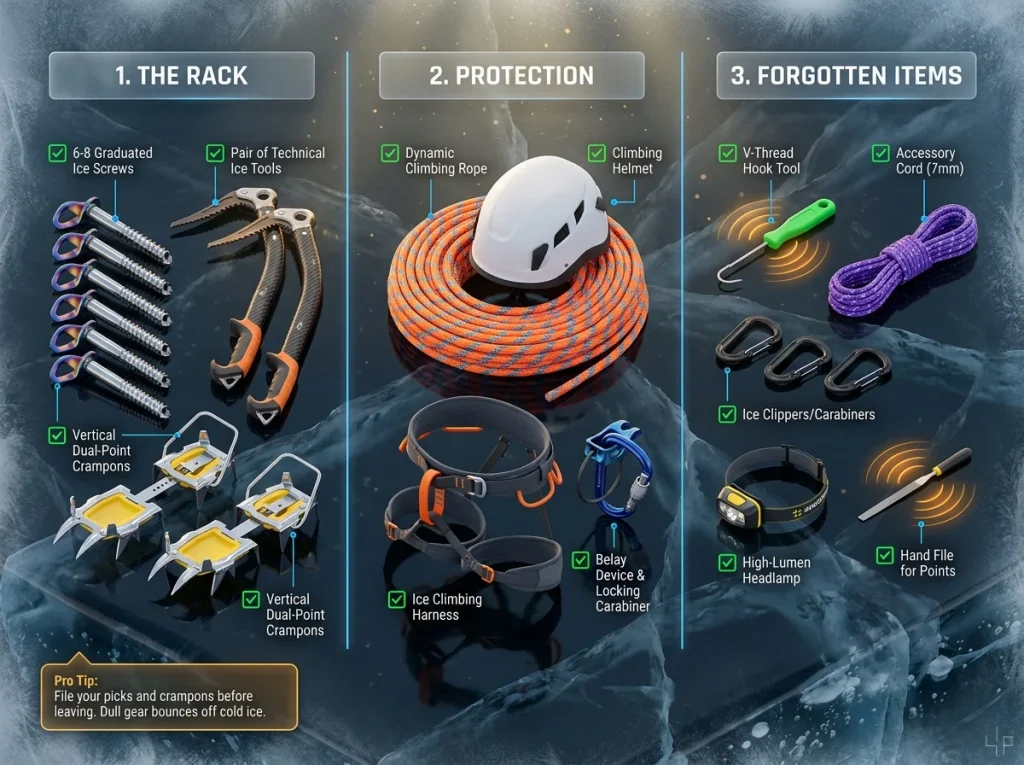
For a full single-pitch lead, you need at minimum six to eight ice screws in graduated lengths from 13 to 22 centimeters. Add a pair of sharp technical ice tools, 14-point crampons fitted properly to your boots (test the binding at home, not at the trailhead), a helmet, harness, belay device, dynamic rope, and enough quickdraws or alpine draws to extend your placements.
If any of that sounds like a lot, take a look at the complete ice climbing gear system breakdown for the full picture.
The Stuff Everyone Forgets
The small gear is what gets you. Screw clips for your harness so you can rack screws within reach. A V-thread tool — the Abalakov anchor is your emergency exit, and you can’t build one without this. A short piece of 7mm accessory cord and a knife for the V-thread. A headlamp, because winter daylight disappears faster than you expect. An extra pair of warm gloves stashed in an accessible pocket.
Confirm with your partner before you leave. Who has the V-thread kit? Who’s carrying the extra cord? Who packed the first aid supplies? The three-minute conversation at the car prevents the epic on the ice.
The Edge Check Nobody Does
Your picks and crampon points are the interface between you and the ice. Dull picks bounce off — and a bouncing pick above your last screw is not a problem you want. Run a thumbnail across every pick edge and crampon point. If the edge doesn’t bite your nail, it won’t bite cold ice.
Check the field-tested sharpening method if your tools need work. While you’re at it, inspect your crampon bindings and make sure the anti-balling plates are intact. Snow packed under your crampons turns steel teeth into ice skates.
Pro tip: Keep a small flat file and a crampon wrench in your pack permanently. Picks chip on rock bands, and crampon screws loosen from vibration. A two-minute fix at the base beats a sketchy lead with dull points.
Mistake 3 — Not Reading the Ice From the Ground
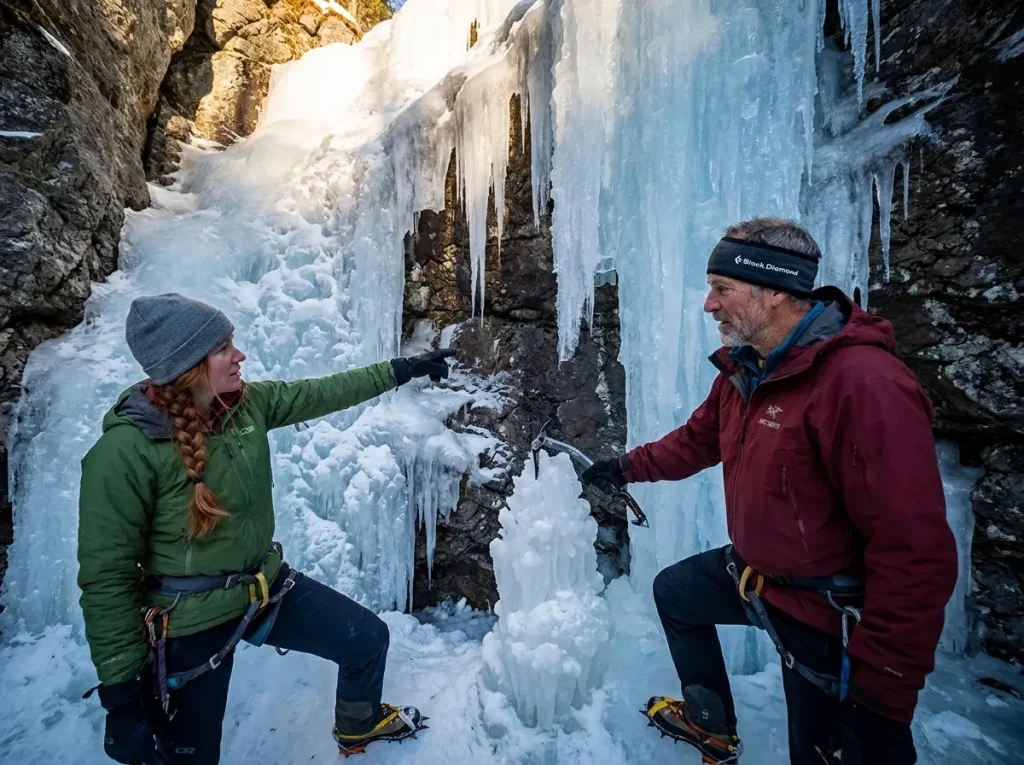
Veterans don’t just glance at the ice and start climbing. They spend five to ten minutes at the base, tracing lines with their eyes, pointing at features, talking through the pitch with their partner. That’s not overthinking — that’s the most important part of the lead.
What Blue Ice Tells You (and What Cauliflower Ice Screams)
Color is your first signal. Dense blue ice has plasticity — your tools stick, your screws bite, and the surface absorbs impact rather than shattering. White or aerated ice — the cauliflower formations you see on the edges of pillars — is full of air pockets. Swing into cauliflower ice and you get dinner-plating: chunks the size of dinner plates sheeting off the surface. Bad for protection. Worse for your confidence.
Look at where the pillar connects to the rock. Thin connections mean less structural integrity. A fat column of blue ice connected to solid rock on both sides is a different animal than a free-standing pillar attached by a dinner-plate-thin curtain at the top.
Mapping Your Screw Placements Before You Climb
From the ground, identify the zones of dense, flat ice where you’ll want to place screws. A good screw placement needs a 20-centimeter diameter circle of planar ice — smooth, dense, and free of fractures. You can spot these zones from below.
Look for rest stances too — ledges, bulges, or lower-angle sections where you can weight your tools and free a hand to place protection. Mapping screw positions and rests from the ground means fewer surprises on lead.
Reading Conditions Changes Through the Day
Ice changes hour by hour. Morning sun hitting a south-facing pillar starts the weakening process — you can hear it in the creaking and the water starting to seep behind the ice. Afternoon shade on the same pillar makes it cold and brittle, and cold temperatures change ice behavior in ways that affect every screw you place.
The best conditions for leading are usually early to mid-morning on a cold, overcast day. The ice is cold enough to be dense but not so cold that it shatters. If you hear a hollow drum sound when you tap the surface, that ice is delaminated from the rock behind it. Walk away.
Data from the AAC’s Accidents in North American Climbing shows increasing ice climbing incidents correlating with the sport’s growing popularity — many linked to climbers misjudging conditions.
Pro tip: Carry a thermometer on your pack. Below minus 15 Celsius, ice becomes significantly more brittle. Above minus 5, it softens and screws lose holding power. The sweet spot is somewhere in between, and knowing the temperature takes the guesswork out of your ice assessment.
Mistake 4 — Ignoring Why Ice Falls Are Different From Rock Falls
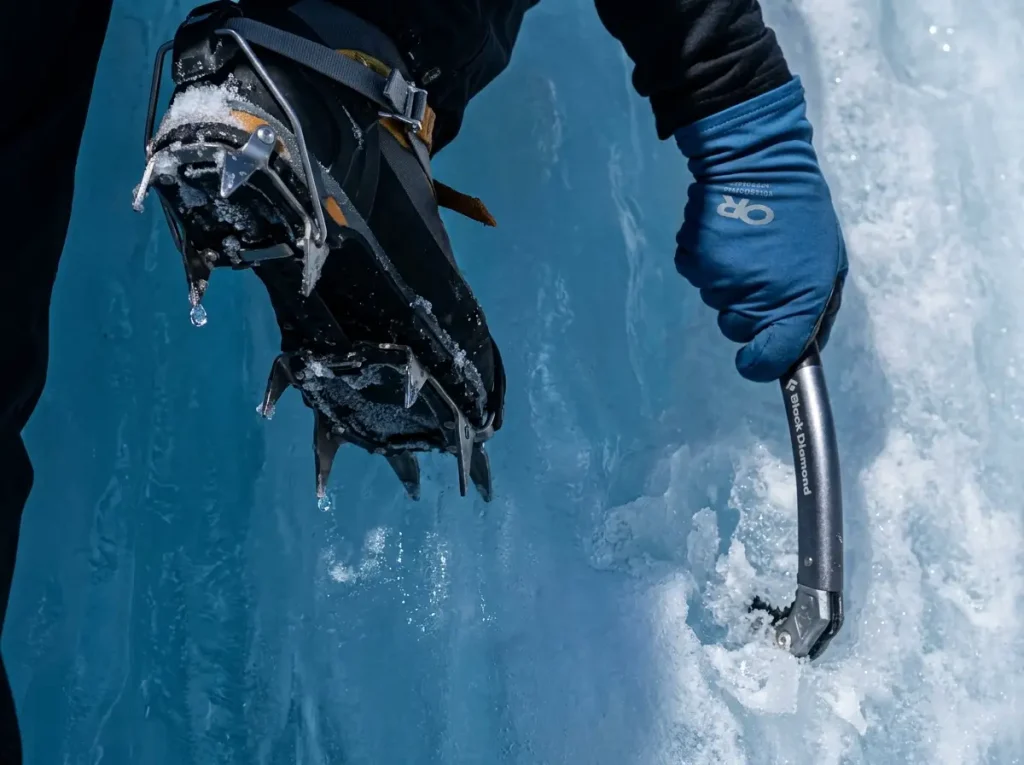
If you come from sport climbing, you’ve probably taken dozens of falls. You clip, you pump out, you fall on the rope, you lower, you try again. On ice, that mindset will put you in a hospital. The consequences of a lead fall on ice are categorically different from rock, and understanding why changes how you approach every aspect of leading.
Sharp Points Everywhere — The Crampon and Tool Problem
When a rock climber falls, they have soft rubber shoes and chalk-dusted hands. When an ice climber falls, they have twelve steel points strapped to each foot and two picks designed to penetrate frozen water. Crampons snag on the ice surface during short falls, and the physics are brutal — your momentum keeps going but your foot doesn’t. The result is broken ankles, shattered tibias, or getting flipped upside down as the crampon catches a ledge.
Your ice tools are just as hazardous. A swinging pick can puncture your leg, your partner’s rope, or your own limbs. The American Alpine Club has documented multiple incidents of ice tool puncture wounds from leader falls where the climber’s own tools caused the worst injuries.
Ice Protection Isn’t Rock Protection
A well-placed bolt in granite holds tons. A well-placed ice screw in bomber blue ice holds a lot — but ice isn’t granite. The quality of your screw placement depends entirely on the ice quality at that exact spot, and ice quality varies wildly within a single pitch.
Research from MIT confirmed that both the rate of force applied and the quality of ice are critical factors in whether a screw holds under load. A screw in dense blue ice at the right angle holds well. The same screw in aerated or sun-weakened ice may pull under body weight. The ice climbing grade system gives you a rough sense of difficulty, but it doesn’t tell you about screw quality on any given day.
The “Hang, Don’t Fall” Rule
This is the single most important mindset shift for new ice leaders: hanging on a screw is not failure. Falling is failure. If your forearms are pumped, your hands are going numb, or the ice above looks questionable — place a screw, clip in, and hang. Catch your breath. Warm your hands. Reassess.
Every experienced ice leader has aided through a section they couldn’t free. Nobody cares. What they remember is the climber who pushed through pump and took a 30-foot whipper onto marginal ice screws. Don’t be that story in next year’s accident report.
Mistake 5 — Climbing Without a Bail Plan
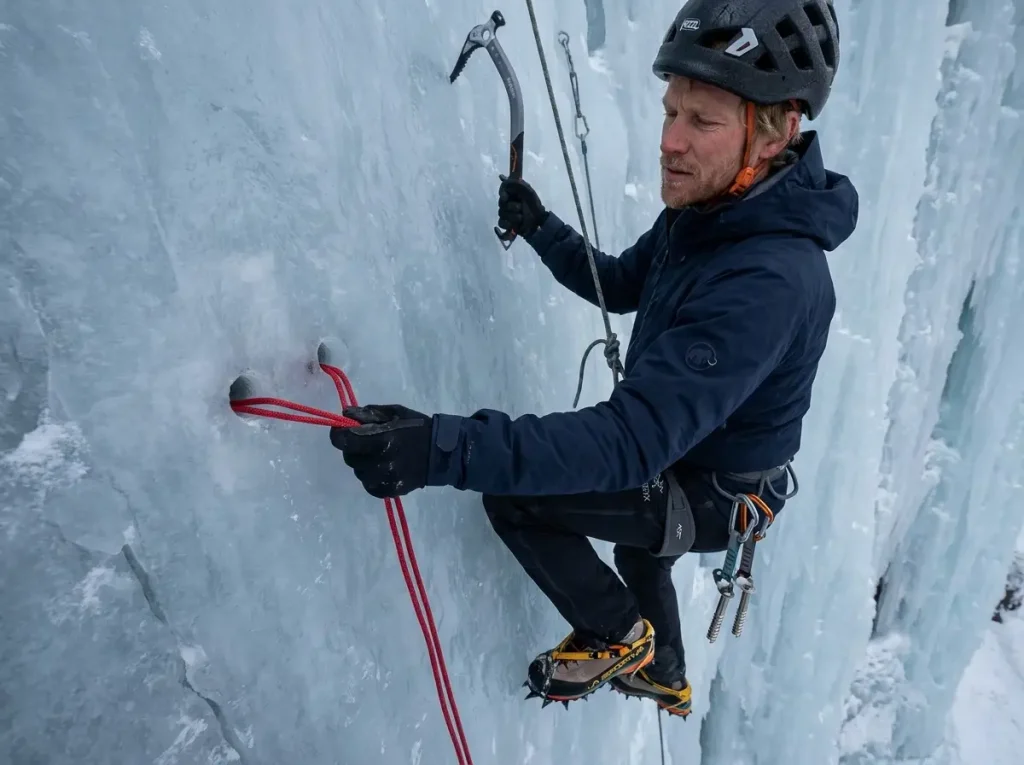
Every lead climb needs an exit strategy. On rock, this is straightforward — lower off or walk off the top. On ice, the surface is changing, the anchors are temporary, and the sun might be weakening your only rappel station while you’re still climbing.
V-Thread Escape — Your Emergency Rappel
The Abalakov V-thread is your lifeline for retreating off an ice route. Two angled holes drilled into the ice, connected beneath the surface, threaded with cord — it creates a rappel anchor from nothing but ice and a piece of string.
But you need to have practiced this on the ground first. Threading cord through a V-thread channel while pumped and scared is not the time to learn the technique. If you haven’t built dozens of V-threads in a low-stress environment, you’re not ready to lead. Read up on common V-thread mistakes that compromise anchors before you rely on one to get home.
Down-Climb Assessment Before You Go Up
Before you start leading, look at the route and ask: which sections could I reverse? If the ice gets sketchy at two-thirds height, can you down-climb to your last screw? Is there a ledge system you could traverse to easier ground?
Communicate this with your belayer. Both of you should know the bail options before the leader leaves the ground.
When to Pull the Trigger and Bail
The decision to bail is the hardest call on ice. Your ego screams to push through, but the conditions are talking to you. Listen for these signals: forearms pumped beyond recovery, ice quality visibly deteriorating from sun exposure, screaming barfies onset making your hands unreliable, weather changing faster than expected.
If two or more of those stack up, you bail. No discussion. Build a V-thread, rappel, and come back another day. The field-tested bail protocol applies to ice just as much as rock — the mountain will be there tomorrow.
Pro tip: Before your lead, agree on a bail signal with your partner. Something simple — three tugs on the rope, or a whistle blast — that means “I’m building an anchor and coming down.” On windy days when voice communication fails, this saves critical minutes.
The Screaming Barfies Problem Nobody Warns You About
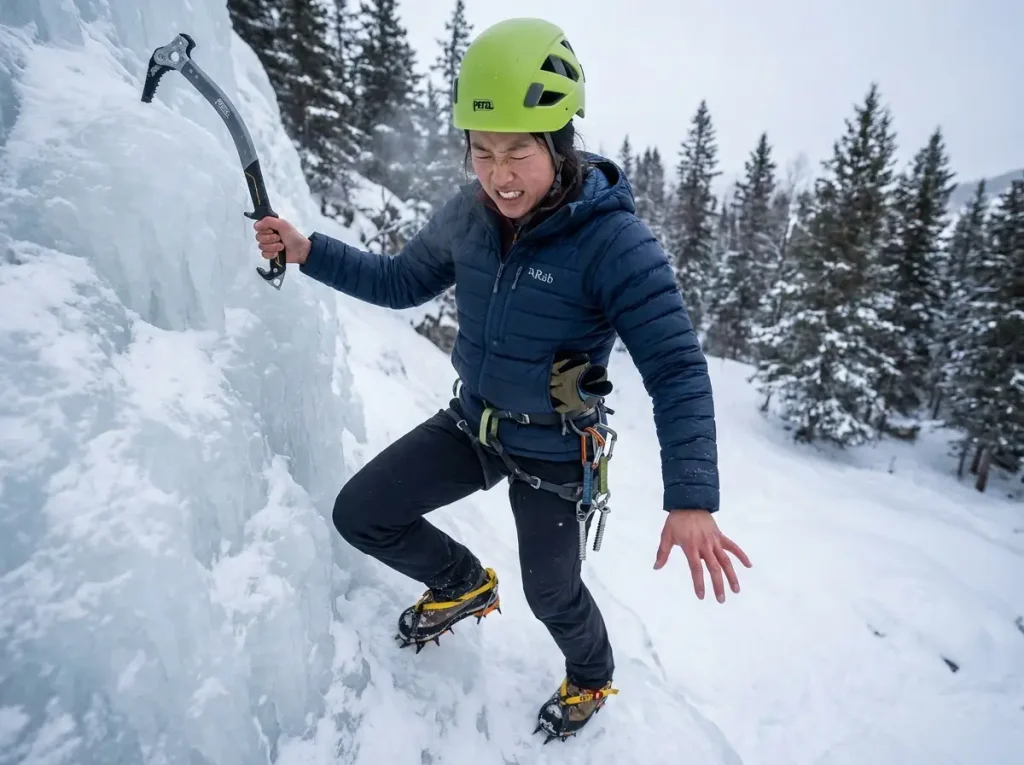
You’re fifteen feet above your last screw, forearms burning, and suddenly your hands explode with pain. Not cold-numb pain — searing, throbbing agony that radiates up your arms. Your vision narrows. Your stomach lurches. Welcome to the screaming barfies, and they hit hardest when you’re leading.
What’s Actually Happening in Your Hands
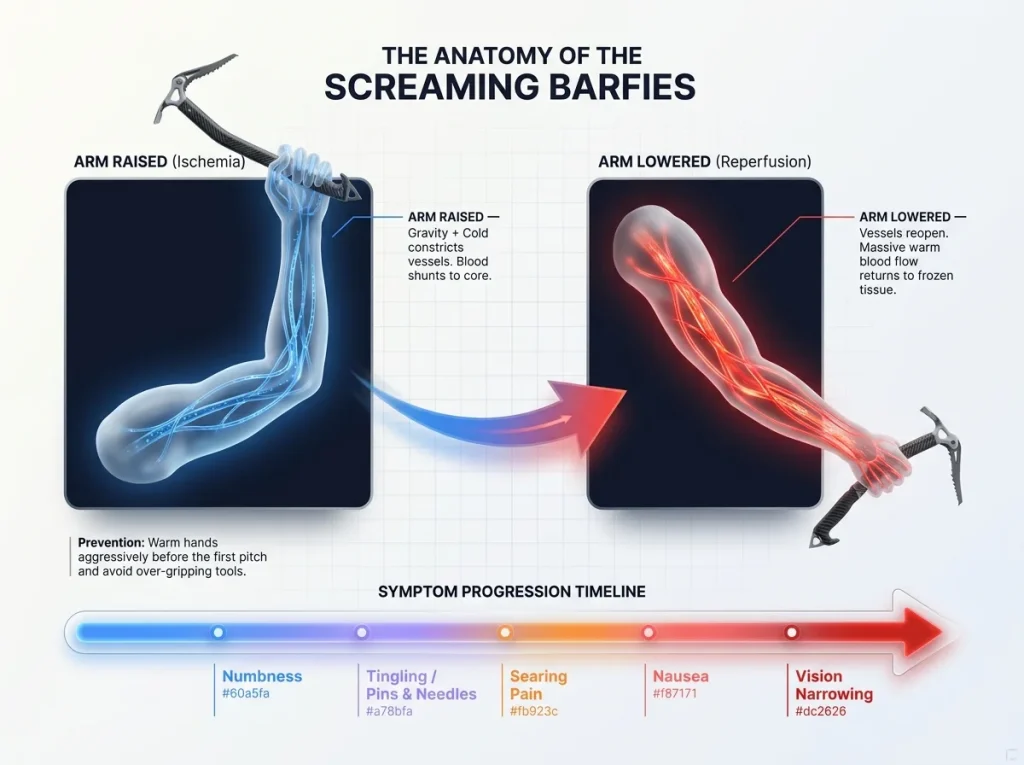
When you climb with your arms overhead in freezing temperatures, your circulatory system shunts warm flow away from your extremities to protect your core. The vessels in your hands constrict — that’s peripheral vasoconstriction, and it’s why your fingers go numb.
The screaming barfies happen when circulation returns. You lower your arms, the vessels reopen, and warm circulation floods back into tissues that have been running on empty. The Wilderness Medicine Society research on screaming barfies describes this as tissue ischemia followed by reperfusion — the same mechanism that causes damage in frostbite recovery. Symptoms include intense hand pain, nausea, dizziness, and in extreme cases, temporary loss of vision and hearing.
A prevalence study found that screaming barfies affect the majority of ice climbers at some point. They’re not a freak occurrence — they’re a predictable consequence of the sport.
Prevention Starts Before You Leave the Car
The ice climbing glove layering system is your first line of defense. Thin, dexterous gloves for climbing. Warm insulated gloves for belaying. Keep the warm pair tucked inside your jacket against your chest so they’re ready the moment you reach a rest.
Before you start climbing, do a hand-warming routine. Swing your arms in circles. Open and close your fists. Get circulation flowing before you need it. On the climb, shake out each arm deliberately at every rest stance — drop your hand below your heart, open your fingers, let gravity help.
Grip pressure matters more than glove thickness. Most climbers squeeze their tools in a vise grip, which accelerates the circulation restriction. Relax your grip once the pick is set. You need less force than you think to hold a well-placed tool.
Pro tip: The screaming barfies hit worst on the first pitch of the day when your hands are coldest. Warm up aggressively at the base — hand warmers in your gloves during the approach, arm swings at the belay, and a few practice tool swings before you start climbing. The investment in warmth pays off for the entire day.
The Partner Briefing Most Teams Skip
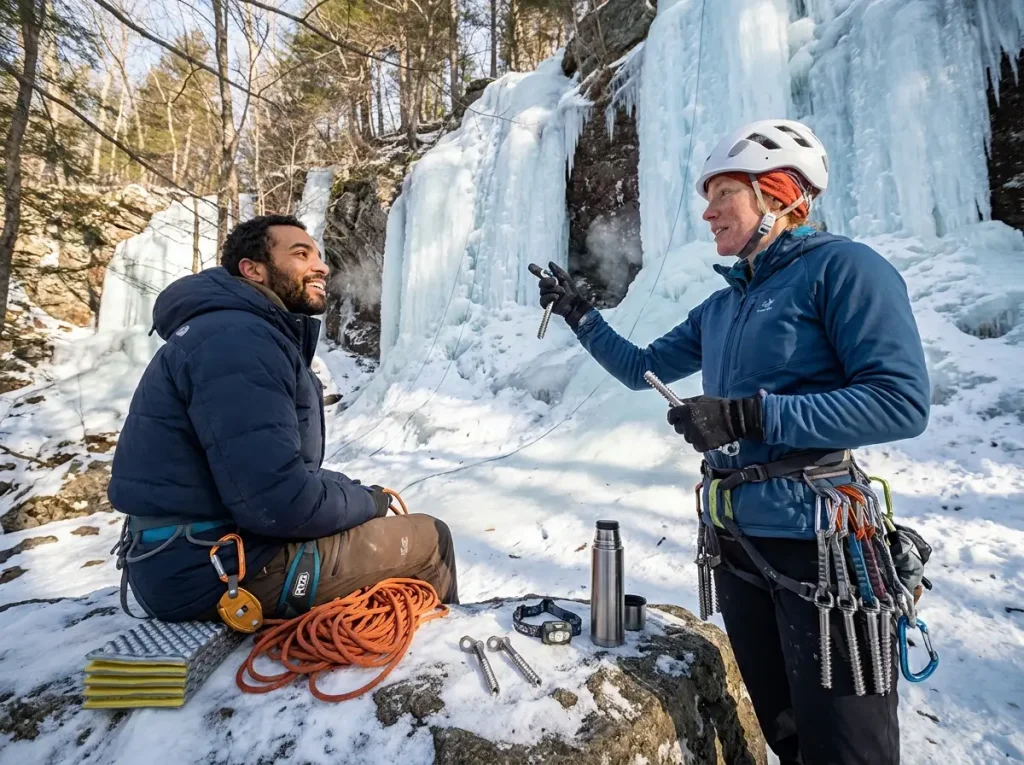
The three-minute conversation you have at the base of the route is safety equipment. It’s cheap, it weighs nothing, and it prevents more epics than any piece of gear on your harness.
Gear Accountability — Who’s Carrying What
Start with the pre-climb partner check protocol. Confirm the screw count — how many total, how many on the leader, how many spares with the belayer. Confirm who has the V-thread kit. Confirm rope length and whether you need to tie in to the ends.
Check each other’s systems. Is the harness doubled back? Is the belay device threaded correctly? Are the crampons fitted and binding secure? This takes 90 seconds and catches the mistakes that tired, cold hands make in a parking lot at 6 AM.
Communication Plan on the Wall
Agree on your commands before you climb. “Slack,” “take,” and “falling” are standard, but ice climbing adds complications. Wind, distance, and the helmet-muffled acoustics of a frozen canyon can make voice commands useless.
Discuss what happens when comms break down. A common system: if the leader stops feeding rope for more than three minutes, the belayer adds a slight amount of tension. If the rope goes completely slack for an extended time, the belayer assumes the leader is building an anchor. These aren’t universal — but having agreed on something is what matters.
Talk about the belay mistakes that cause accidents that apply to ice specifically. Belaying a leader on ice means managing rope drag through screws placed at varying angles, keeping slack minimal without short-roping the leader mid-swing, and staying alert to falling ice from above.
Conclusion
Leading ice is a privilege you earn on top-rope. If your movement isn’t automatic — your feet finding good ice on the first kick, your tools sticking without conscious effort — stay on the sharp end of a TR and build those laps. The lead will come when you stop thinking about mechanics and start reading the pitch.
The gear audit, the ice reading, and the bail plan all happen before you leave the ground. Not mid-pitch when your forearms are screaming and the ice is creaking. Ten minutes of preparation at the base replaces ten hours of regret in an ER.
Your belayer isn’t just holding rope — they’re half your safety system. Brief them like it matters. Confirm the gear, agree on the signals, discuss the bail. The team that talks at the base climbs harder and comes home cleaner than the team that assumes everything is understood.
Next time you’re gearing up at a frozen waterfall, run through these five checks. The discipline you build on the ground is what keeps you moving smoothly 100 feet above your last screw.
Q1 What gear do you need for ice climbing lead?
You need six to eight ice screws in graduated sizes, two sharp technical ice tools, 14-point crampons fitted to stiff mountaineering boots, a helmet, harness, belay device, dynamic rope, quickdraws, screw clips, a V-thread tool with accessory cord, and a headlamp. Confirm your partner’s gear too — shared accountability prevents forgotten items.
Q2 How do you know if ice is safe to climb?
Dense blue ice with plasticity is your safest surface for climbing and screw placement. White or aerated cauliflower ice is weaker and prone to dinner-plating. Tap the surface — a solid thud means dense ice, a hollow drum sound means delamination from the rock behind it. Walk away from hollow ice.
Q3 What grade should you be before leading ice?
Most guides recommend climbing WI-4 comfortably on top-rope before leading WI-2 or WI-3. You should also be able to place screws without disrupting your rhythm and down-climb anything you climb up. Log 100 or more top-rope pitches before your first lead to build the muscle memory that keeps you safe.
Q4 How do you place ice screws while leading?
Find a stable stance with feet wide and planted. Clear the surface ice to expose dense planar ice — you need about a 20-centimeter diameter of clean surface. Start the screw at a slight upward angle, crank it in until the hanger seats flush, and clip. Place screws low, near waist level, to conserve energy and maintain leverage.
Q5 What happens if you fall while leading ice?
Ice lead falls carry serious injury risk. Crampon front-points snag on ice and ledges, causing broken ankles or flipping the climber upside down. Sharp ice tool picks can puncture the climber during the fall. Ice screws in poor-quality ice may pull under load. The standard approach is to never fall — if you’re pumped, place a screw and hang on it rather than risking a lead fall.
Safety Notice: Rock climbing and mountaineering are inherently high-risk
activities that can involve physical trauma or fatal incidents. The information on Rock Climbing Realms is for
educational and informational purposes only. Techniques and advice presented here are not a substitute
for professional, hands-on instruction. Conditions and risks vary by location. Always seek guidance
from a qualified instructor before attempting new techniques. By using this website, you agree that you
are solely responsible for your own safety. Any reliance you place on this information is strictly
at your own risk, and you assume all liability for your actions. Rock Climbing Realms and its authors
will not be held liable for any harm, damage, or loss sustained in connection with the use of this information.
Affiliate Disclosure: We are a participant in the Amazon Services LLC Associates Program, an
affiliate advertising program designed to provide a means for us to earn advertising fees by advertising and linking
to Amazon.com. As an Amazon Associate, we earn from qualifying purchases. We are also an official affiliate partner
of Black Diamond Equipment via the AvantLink network. If you click on a Black Diamond affiliate link and make a
purchase, we may earn a commission at no additional cost to you. We also participate in other affiliate programs.
Additional terms are found in the terms of service.