
In this article
The bolt snapped under body weight. Not a dynamic lead fall, just a climber cleaning a route at Ourania Cave. It sounded less like breaking steel and more like a dry branch giving way. No warning, no rust on the outside, just a rapid failure hiding a bacterial rot you cannot see. After evaluating failing hardware and anchor setups across these islands for years, I’ve seen exactly what separates a clean send from a critical hazard. Here is exactly how to handle the logistics, the hardware decay, and the movement on modern Aegean limestone to make sure you clip the chains safely.
⚡ Quick Answer: Succeeding in the Dodecanese requires upgrading your standard kit and tactical approach. You must carry an 80m rope for Kalymnos to safely lower off modern 40m pitches, actively inspect for compromised stainless hardware, and use clippable lower-offs correctly without top-roping through fixed gear. Earning the chains also demands mastering tufa climbing biomechanics to save energy and planning your sector rotations strictly around sun exposure to keep your skin intact.
| Logistics Overview | |
|---|---|
| Logistic | 2026 Expectation |
| Primary Ferry Port | Mastichari (Kos) |
| Mobility | Scooter Rental (€8-€12/day) |
| Rebolting Standard | Titanium Grade 2 / 316L |
| Mandatory Rope | 80m Dynamic |
Strategic Logistics and the 2026 Travel Pipeline
Most climbers burn half a rest day just figuring out how to cross the water. Nailing the kos-to-kalymnos ferry pipeline makes the difference between projecting an overhang at sunset and sitting on your duffel bag at a concrete pier. This entire process connects directly to sorting out your climbing travel visa matrix before you even touch down at the airport.
Ferry Connections and Crossing Times
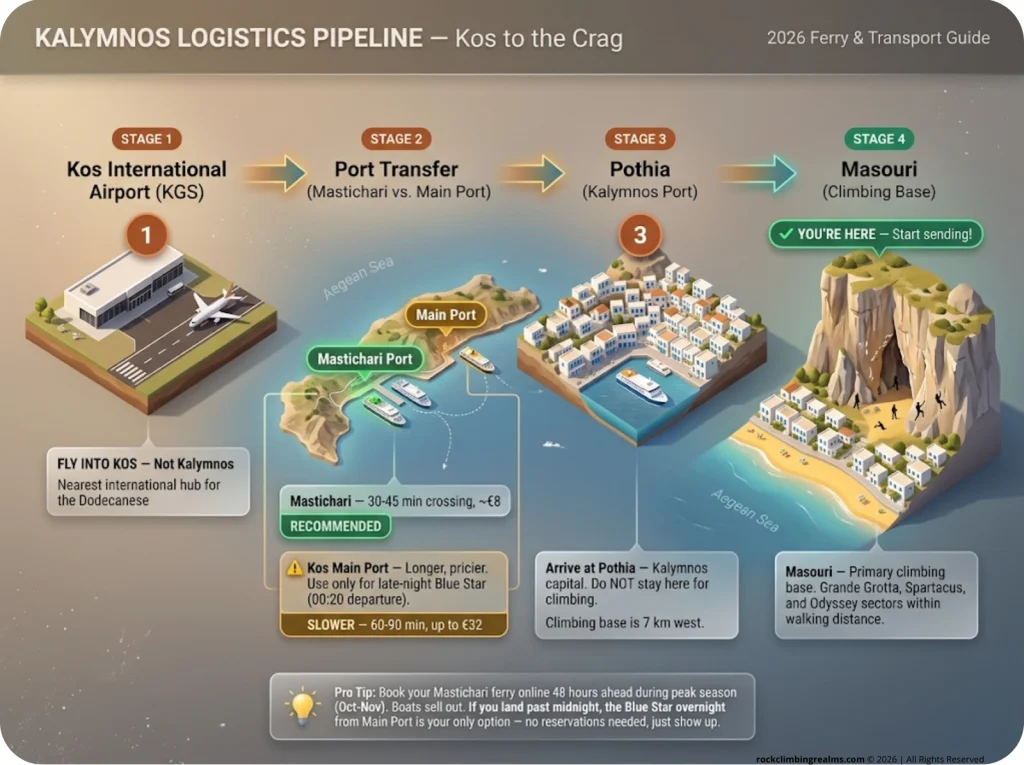
Flying into Kos International Airport drops you on the wrong landmass. You have to cross 15 to 19 nautical miles of the Aegean Sea to reach the limestone crags. You face a direct choice between high-speed catamarans and slow conventional hulls.
Run straight for Mastichari port. It sits significantly closer to the airport than Kos Main Port. Moving through Mastichari cuts your ferry crossing down to 30 to 45 minutes on operators like LAFASI or ANEM Ferries, costing around €8.00. Main Port boats take longer and hit your wallet harder, running up to €32.00 for the fast Dodekanisos Seaways boats. If your flight lands past midnight, target the Blue Star overnight service departing Main Port at 00:20.
Intra-Island Mobility and Equipment Transport
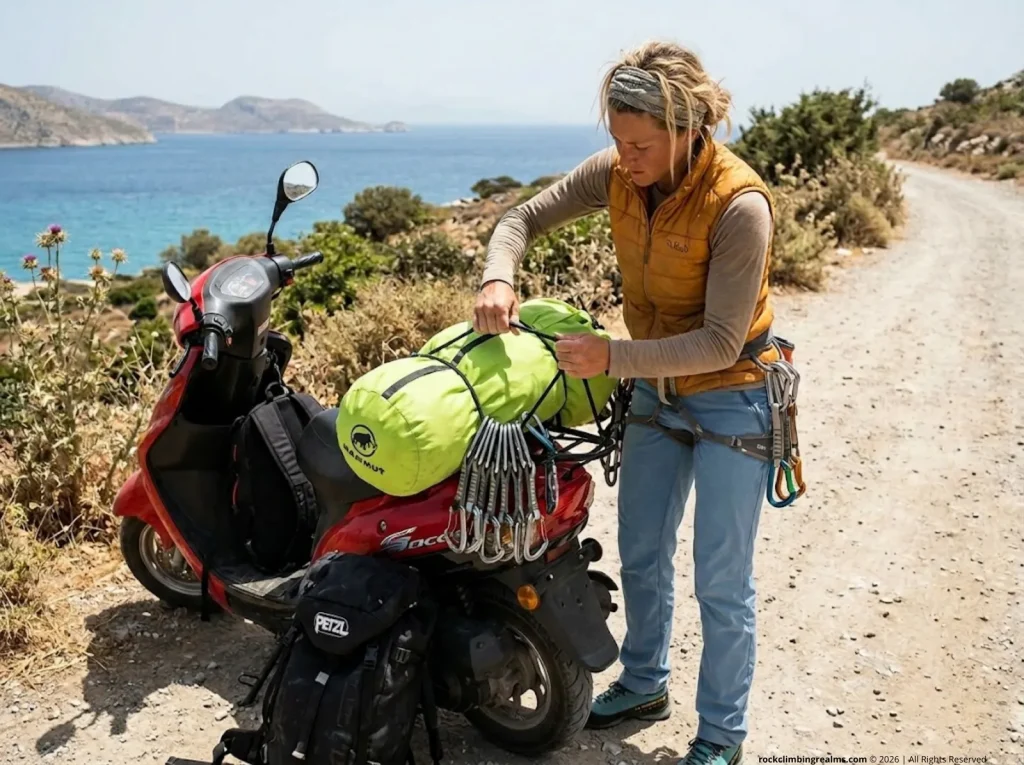
Once you step off the boat in Pothia, you need to reach the climbing base in Masouri. Skip the rental car. Scooter rental runs the local crag logic. Cars get boxed in on narrow streets and ruin the limited parking at major crag trailheads.
Grab a scooter with solid ground clearance to assist with sector mobility. Transporting your life-safety rig on a 50cc bike over the unpaved dirt approaches toward Grande Grotta practically counts as the real crux of the trip. Pack assuming you will drop the bike at least once. Load your 80m rope low on the floorboard and strap your dual racks securely to balance the weight.
The Chemistry of Mediterranean Bolt Failures
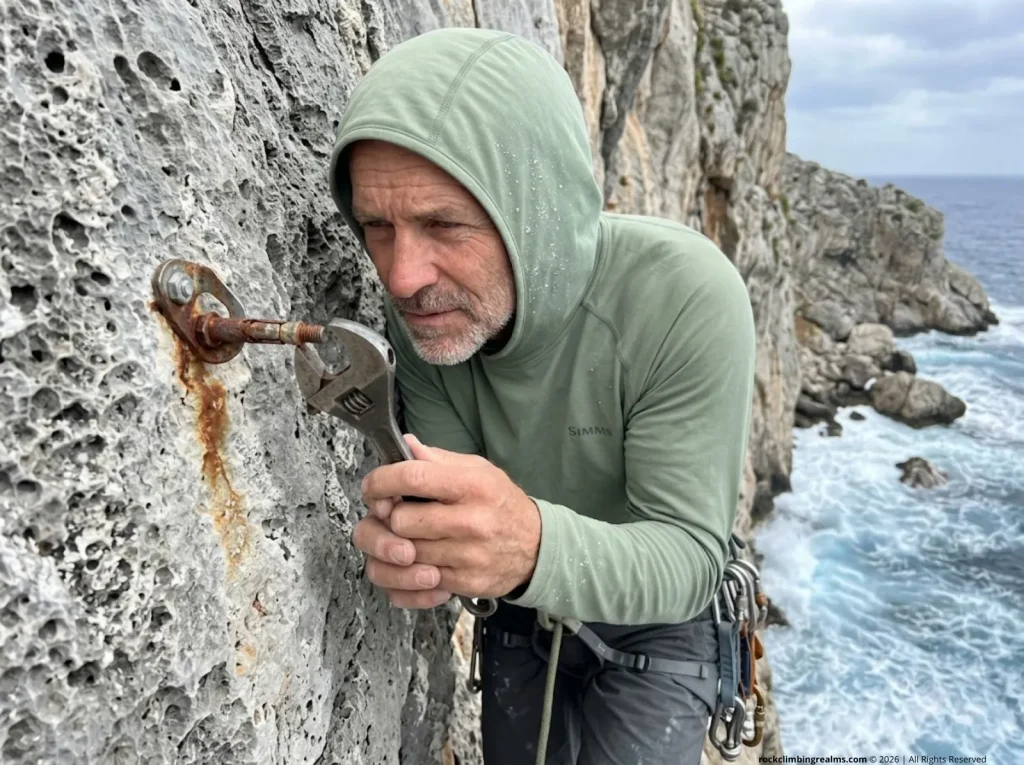
A perfectly shiny bolt that produces a hollow hum when tapped should terrify you. The rust happens inside the rock where you cannot judge it. The 2026 UIAA safety commission meeting and the subsequent 2026 rebolting workshop targeted this exact nightmare.
The SRB Corrosion Phenomenon
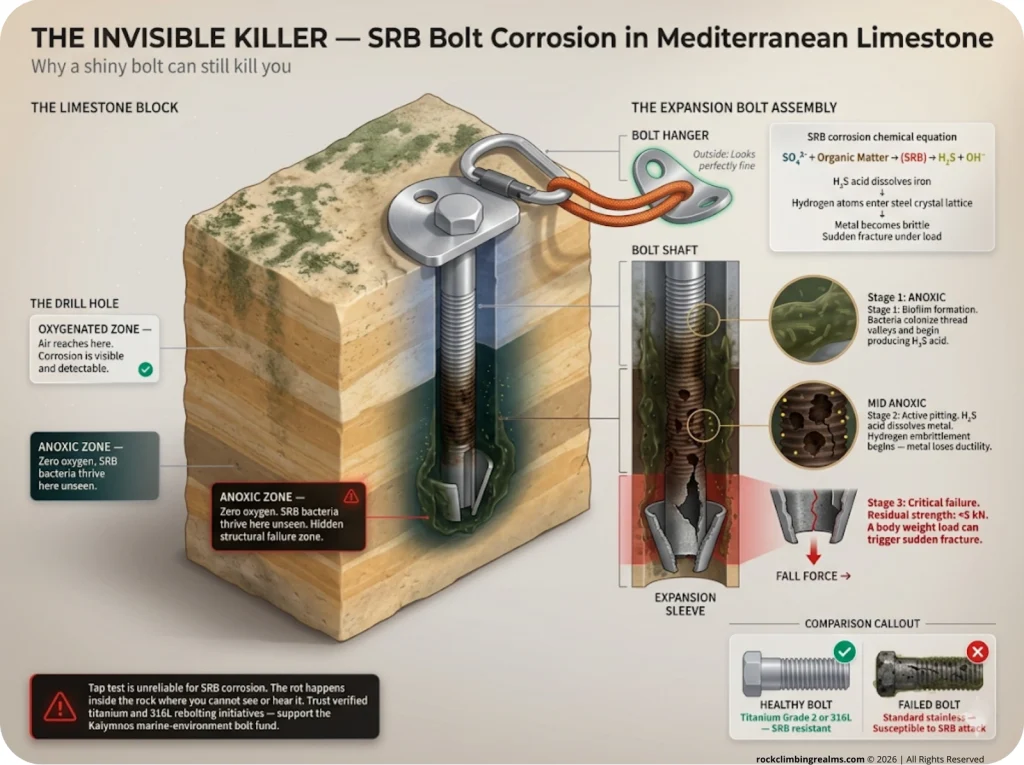
Western Mediterranean crags deal with generic salt spray rust. Kalymnos harbors hydrothermal sulfur sources that interact with the stone itself. This environment breeds Sulphate Reducing Bacteria (SRB).
These organisms execute Sulfate-Reducing Bacteria biofilm formation and corrosive activity directly on your protection, demonstrating textbook srb mediterranean bolt corrosion physics. They bypass open air entirely, setting up shop in the dark, restricted gaps behind bolt hangers and inside expansion sleeves. The bacteria digest environmental sulfate and excrete hydrogen sulfide. That acid breaks down iron and triggers stress cracking deep inside the metal.
Evidence from the Ourania Incident
The catastrophic failure at Ourania Cave broke the illusions about standard hardware. The fractured bolt held a residual strength of barely a few kilonewtons. That rating struggles to handle a static rappel, let alone a dynamic lead fall.
Testing confirmed the steel lacked the elements required for true marine resistance. The bacteria created a byproduct that shoved hydrogen atoms directly into the metal structure. The metal loses all its stretch and shatters abruptly with zero visual rust to warn you.
The 2026 Rebolting Standard: Titanium and 316L
Combating this rot forced aggressive solutions. Aris Theodoropoulos and the Kalymnos Rescue Service established strict protocols to replace failing gear, fundamentally upgrading baseline UIAA safety standards across the island.
The mandate replaces conventional hardware with 2,400 new 316L stainless steel glue-in bolts. For known sulfate hotspots receiving heavy sea spray, developers exclusively install Titanium Grade 2. Titanium bolts completely reject SRB activity. For intermediate zones, developers use specialized 316L bolts treated with acids to boost the protective chromium layer. Support the marine-environment bolt fund maintenance—it literally keeps you off the deck.
Pro-Tip: Learn to visually identify titanium anchors. They lack the glaring silver shine of new steel, showing a slightly dull, matte-grey finish instead. Trust the grey.
Technical Anchor Audit: Open vs. Closed Systems
Do not drag your indoor gym habits out to an open crag. A staggering number of climbers butcher anchor transitions on these cliffs. Understanding the hardware keeps you off the ground.
The Rationale for Clippable Lower-Offs
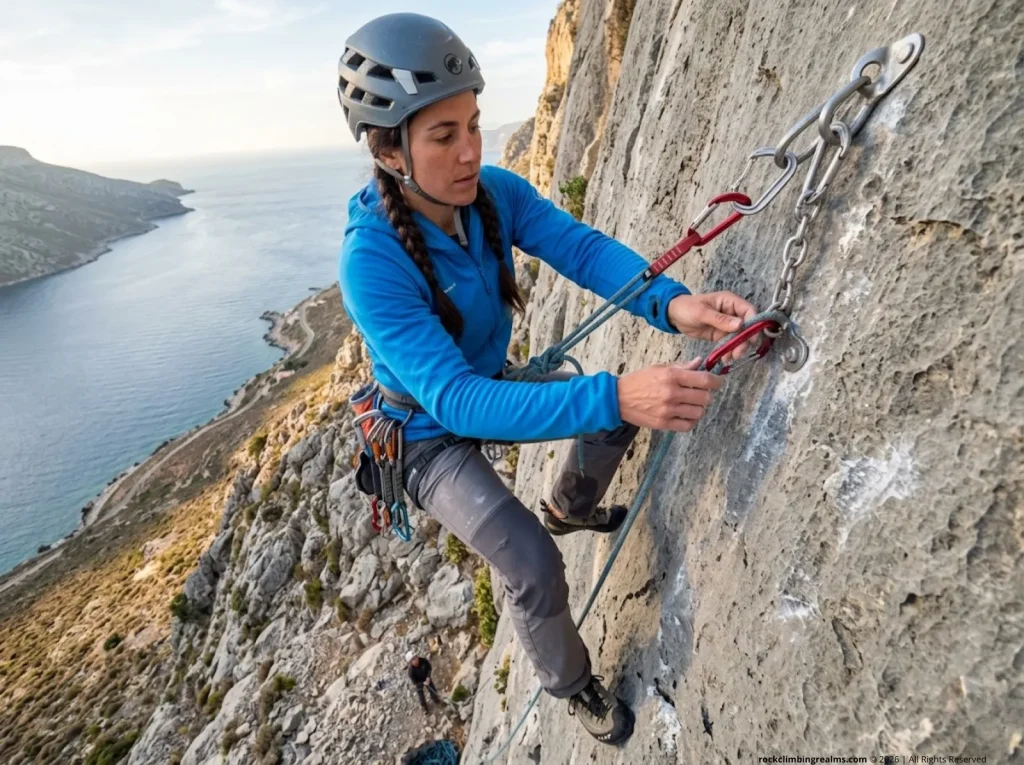
For years, local route setters installed two-ring systems forcing you to untie, thread the rope, and retie your knot. After seeing critical transition errors, authorities pivoted. You will now encounter clippable lower-offs: heavy-duty mussy hooks or captive steel gym carabiners.
These open systems remove the need to break your knot entirely. Staying tied into your harness removes the most hazardous variable from the equation. When you master cleaning a sport anchor equipped with hooks, you clip in, call for tension, and lower. The system stays sealed.
Friction Wear and Top-Roping Ethics
Clippable lower-offs introduce a severe friction problem. A gritty rope dragging under body weight acts like a mechanical file. Heavily trafficked anchor rings and hooks lose half of their metal mass in a single season. The 2026 ethic issues a hard rule: never top-rope directly through fixed hooks.
When your group works a project, the lead climber builds a redundant anchor using personal quickdraws placed opposite and opposed. Every climber takes their laps on your personal gear. The final climber cleans the personal draws and lowers directly off the permanent marine-grade hardware.
Pro-Tip: Carry a steel locker on your harness. If the permanent anchor looks heavily grooved and knife-edged, bail off your own steel carabiner rather than trusting a worn hook.
Dangers of the “Pre-Clean” and Mussy Hook Mechanics
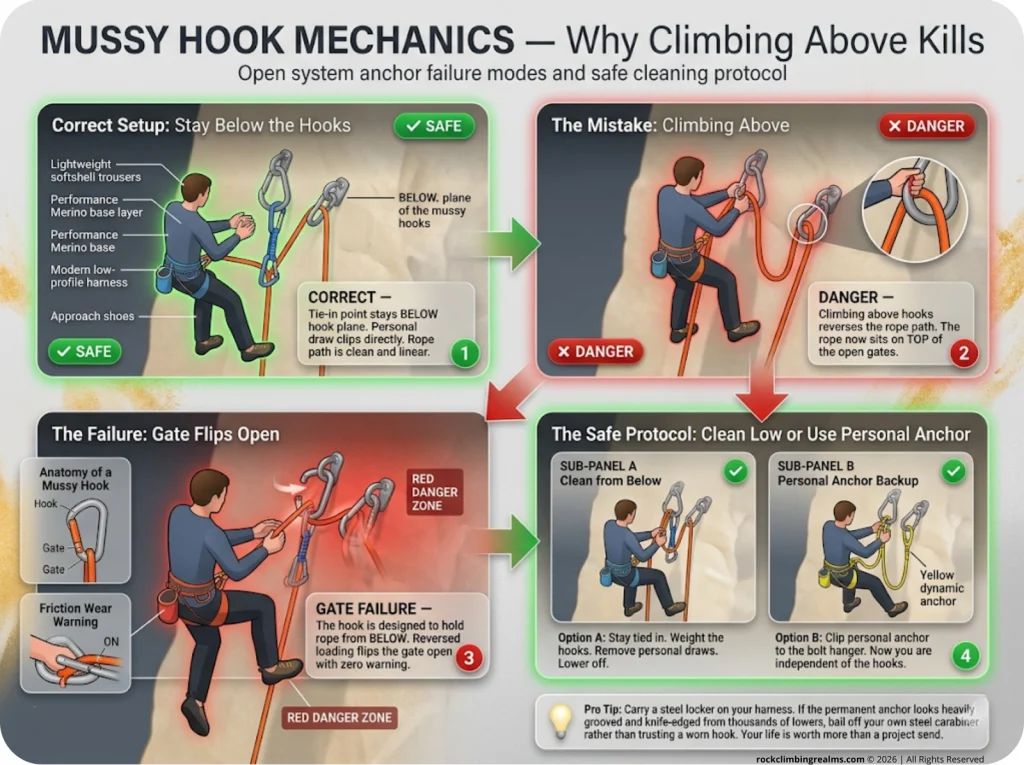
Gym climbers love the “pre-clean.” They clip a personal draw above the anchor, pull the rope through the hooks, and try to lower. Open hooks face the same direction to prevent grinding against the rock.
If you climb above the anchor plane or use a high redirect, you drape the rope backward over the hook gates. During a jerky fall, the reversing rope action easily flips the gates open and unclips itself. Be a pro, keep it low. Your tie-in point and your personal draws must remain below the plane of the mussy hooks until you weight the system for the final lower.
Tufa Climbing Technique and Movement Science
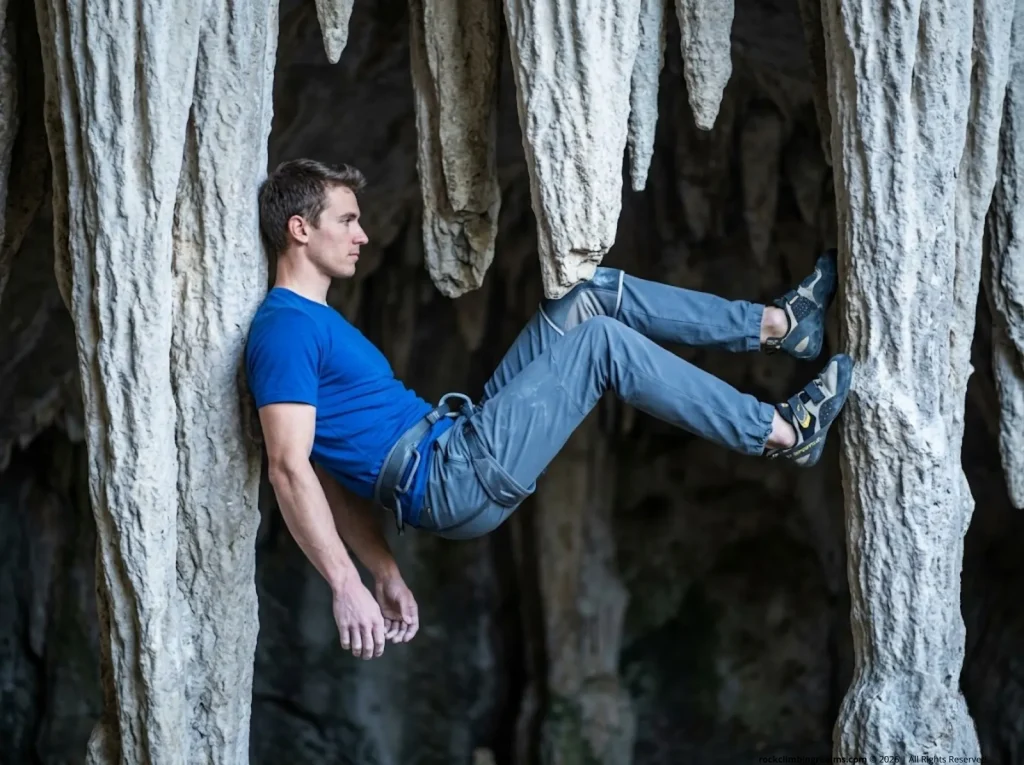
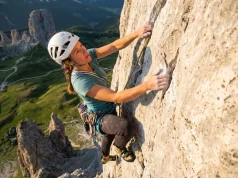
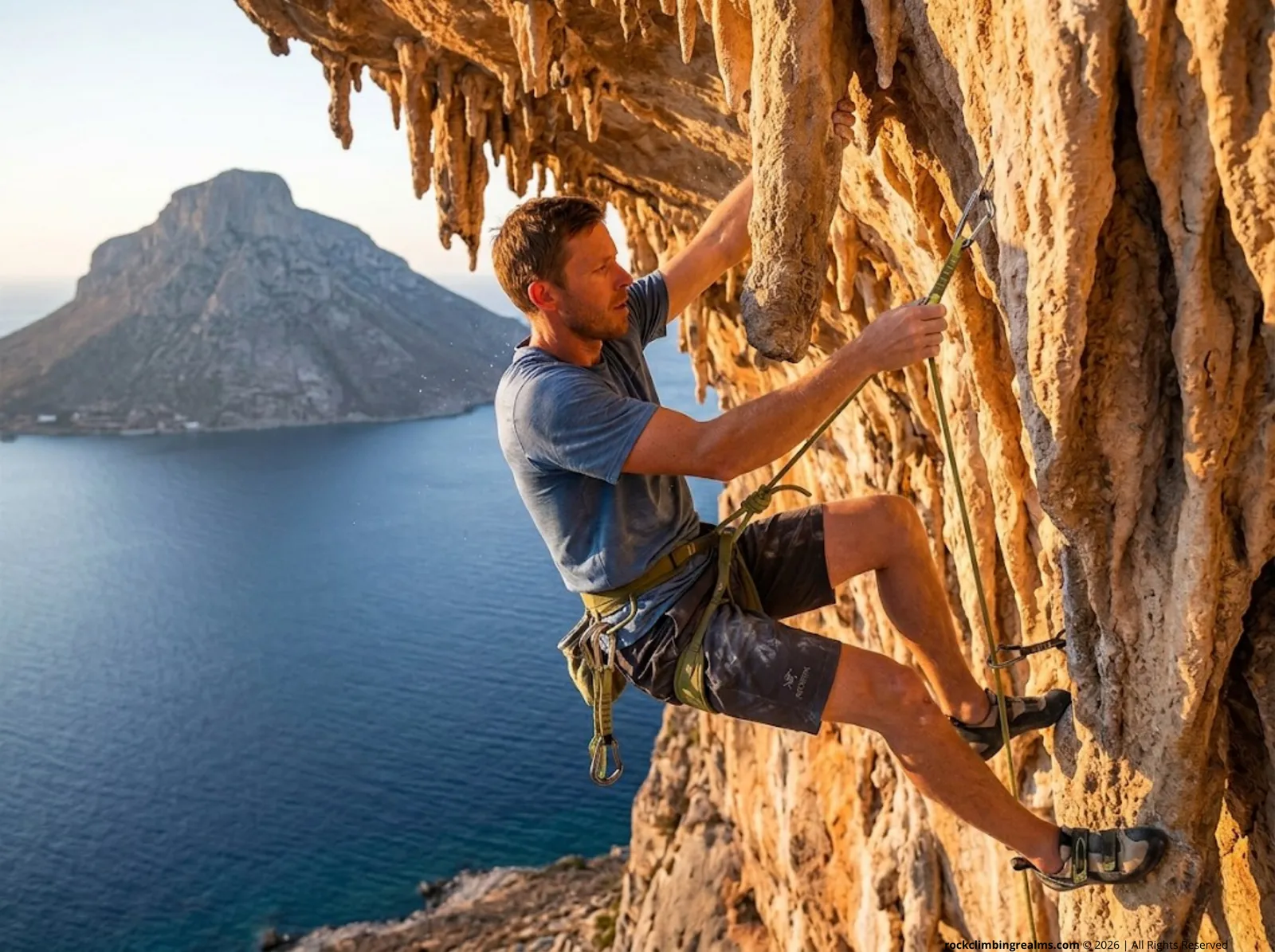
Brute strength burns out rapidly on thirty meters of overhanging 3D rock. Sending the classic lines requires tufa climbing biomechanics to manage the pump.
Pinch Grips and Saving Your Forearms
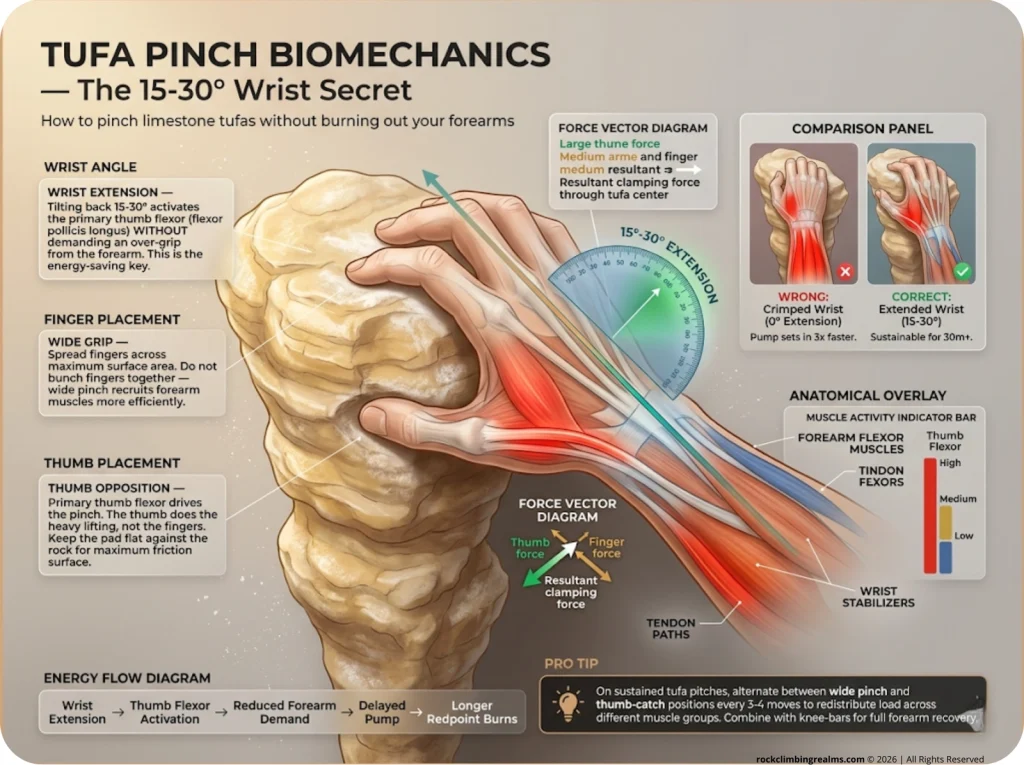
Tufa pinching works completely differently than crimping a flat edge. Wrapping your hand around a rib of rock strips away a chunk of your traction force compared to burying your fingers in a jug. You rely heavily on your wrist stabilizers and thumb muscles.
We know from pulling muscle activity characteristics of the pinch grip that wide pinches recruit your forearms poorly. The trick involves taking the widest grip possible and tilting your wrist back slightly. This angle triggers your primary thumb flexor without demanding an over-grip. Stay wide, keep the wrist tilted back, and lock in.
Knee-Bar Placement and the “Shindex”
You cannot recover on an Odyssey sector marathon without wedging your legs into the rock. Knee-bar physics turn desperate pump-fests into hands-free sitting positions. Stop treating them like an afterthought. It connects straight to advanced drop-knees and flagging mechanics.
Find your “Shindex” by measuring the distance from your big toe to the top of your knee. This tells you exactly which gap will hold you. When you find a pod, throw your hips high first. Drop your weight securely after placing the knee. This sequence demands tight core engagement, forcing your massive glute and quad muscles to hold the weight instead of burning out your tiny calves.
If your midsection sags outward from the wall, you bleed energy trying to hold a sloppy position. Engage the core, press the toe, and relax the hands.
Thermal Management and Aegean Microclimates
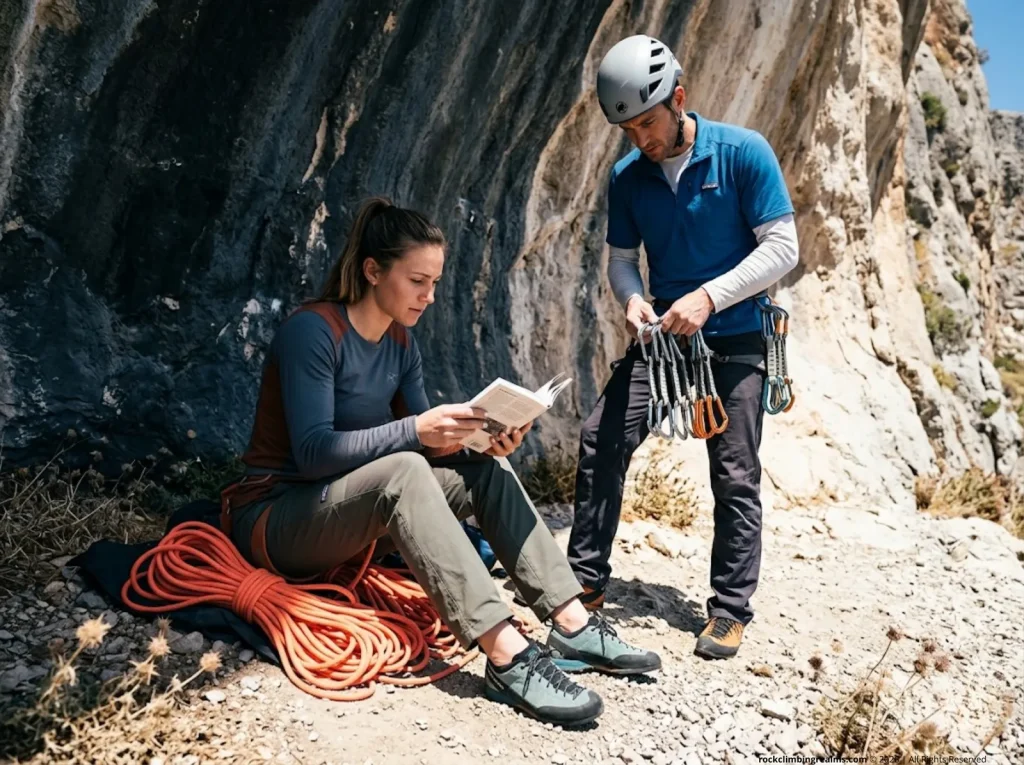
You do not control the temperature, but you control where you stand. The Aegean sun roasts the unwary, melting shoe rubber and turning holds to grease. Smart thermal management separates successful redpoints from heat exhaustion.
Sun and Shade Tactics
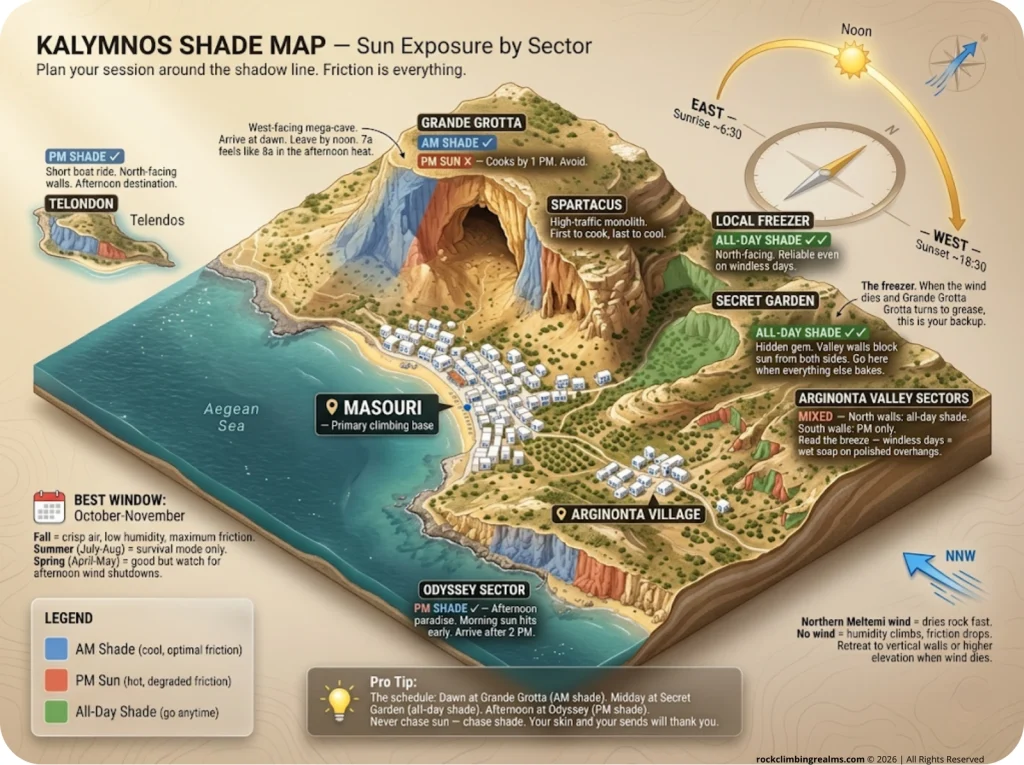
Forget the posted sector grades. If the offshore wind dies at Grande Grotta around 1 PM, a 7a route feels instantly like an 8a from sheer sweat loss. Master your morning and afternoon targets to match the mountain meteorology principles of the island.
Execute a strict shady vs sunny sector rotations plan. Arrive early, leave early. Attack the east and west-facing crags before midday. High-traffic monoliths like Spartacus cook by early afternoon. When the sun swings around, retreat to all-day shade havens like Secret Garden or Local Freezer.
Spongy Limestone and Humidity Strategies
The limestone here acts exactly like a sponge. It pulls moisture straight from the marine air. On windless, high-humidity mornings, iconic tufas feel like wet soap.
You must actively read the breeze. A stiff northern wind dries the rock down to a crisp friction surface. When the wind stops completely, abandon the polished overhangs in the Arginonta valley. Retreat to technical vertical walls or sectors higher up the hillside where the breeze catches. Knowing the best month to climb kalymnos means targeting the crisp fall window, typically October to November, to dodge the worst of the summer grease.
Rope Logistics, 80m Requirements, and the Rack Audit
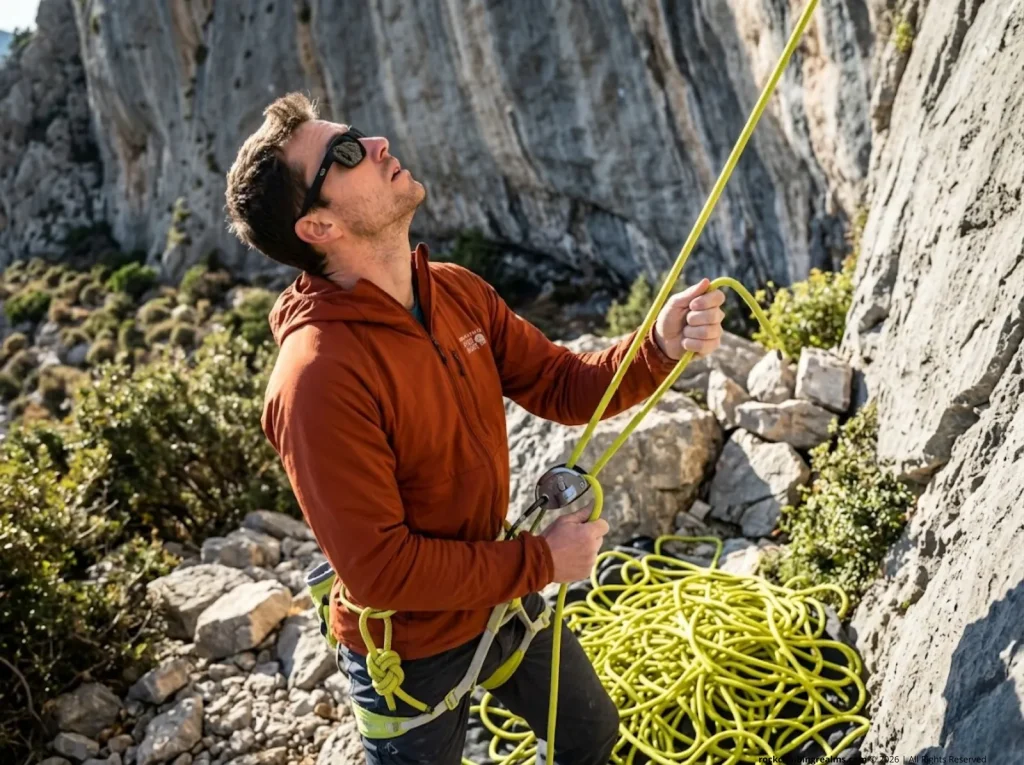
Tying into the sharp end means trusting the numbers. Stretching out on a massive pump-fest on Telendos or Grande Grotta requires specific gear and strict belay protocols. Do not bring a short cord to a cavern.
Rope Stretch on 40m Pitches
Classic lines here swallow rope. Many extensions easily demand a full 40 meters. A standard 70m rope leaves you stranded ten meters above the dirt. That makes an 80m cord a hard requirement for modern sends.
When you climb that high, rope length physics drastically alter the game. A fall near the anchors puts huge amounts of rope in the system, absorbing the force smoothly. The hazard hides at the bottom.
Because dynamic ropes stretch 6 to 10 percent, a lead fall on the first three bolts carries enormous ground fall risk. Combine thirty meters of heavy slack running up the wall with belayer displacement, and you will hit the deck. Read up on ground-fall prevention strategies and apply them relentlessly. Your belayer needs to stand directly under the first bolt, taking in slack aggressively until you clip the third draw.
Pro-Tip: Never yell “take” when you blow a move near the first two bolts. Just fall. A fast, clean snatch from the belayer pulls you tight, while hesitating to reel in slack drops you onto your ankles.
Rope Management and the “Dead End” Protocol
Dropping a partner off the end of a short rope stands as the dumbest, most preventable tragedy in climbing. The absolute non-negotiable rule commands belayers to tie a thick stopper knot in the dead end of the rope. Every single time.
If your partner finishes a marathon line and calls to lower, and you spot your stopper knot jamming into your belay device, freeze. Do not untie the knot. Stop the lower midway, build an intermediate anchor on the nearest bolt, secure your climber, and figure out the rescue.
The 2026 Sport Rack Specification
Leave the thin specialized redpoint ropes at home. Corrosive air and sharp, fluted limestone chew through delicate gear. Bring a thick workhorse rope packing a high sheath proportion, ideally around 9.5 to 9.8mm, to survive brushing against sharp broccoli holds.
An Assisted Braking Device (ABD) like a GriGri is absolutely mandatory. Expecting a partner to hold a tube-style device while you hangdog a forty-minute project borders on negligent. Equip your belayer with glasses to prevent severe neck strain from staring straight up past the Aegean glare.
Wrap-Up: Executing a Professional Send
Modern Kalymnos climbing demands a hell of a lot more than pulling hard. It requires a professional mindset. You must navigate the ferry logistics cleanly, understand the corrosive forces rotting the bolts you trust your life with, and apply strict movement efficiency to survive the steep tufas without torching your forearms.
Audit your rack, upgrade to an 80m rope, and verify your partners tie the dead-end knot every single pitch. Next time you sink a high-hip knee-bar on a massive limestone rib, you will know exactly how to lock it in and let the blood return to your hands. Now go send something.
FAQ
What rope length is required for climbing in Kalymnos?
An 80m rope for Kalymnos works as the definitive standard for the 2026 season. Older routes in the kalymnos guidebook run fine with 70 meters, but modern extensions physically prevent you from lowering safely without 80 meters.
Are the bolts in Kalymnos safe to whip on?
Yes, provided they belong to the verified new hardware waves. Rebolting initiatives stripped out rotten steel and replaced it with titanium bolts and 316L glue-ins to halt the aggressive decay.
Between Kos and Kalymnos, which ferry port is faster?
Kos Mastichari port offers the absolute fastest transfer. High-speed catamarans jump the channel in about 30 to 45 minutes, saving you time and money compared to the longer Main Port run.
Do I need to rent a car for Kalymnos climbing?
No, an aggressive scooter rental plan works best. They bypass the daily parking chaos near the crags, cost a fraction of a car, and haul an 80m rope and dual racks perfectly.
Safety Notice: Rock climbing and mountaineering are inherently high-risk
activities that can involve physical trauma or fatal incidents. The information on Rock Climbing Realms is for
educational and informational purposes only. Techniques and advice presented here are not a substitute
for professional, hands-on instruction. Conditions and risks vary by location. Always seek guidance
from a qualified instructor before attempting new techniques. By using this website, you agree that you
are solely responsible for your own safety. Any reliance you place on this information is strictly
at your own risk, and you assume all liability for your actions. Rock Climbing Realms and its authors
will not be held liable for any harm, damage, or loss sustained in connection with the use of this information.
Affiliate Disclosure: We are a participant in the Amazon Services LLC Associates Program, an
affiliate advertising program designed to provide a means for us to earn advertising fees by advertising and linking
to Amazon.com. As an Amazon Associate, we earn from qualifying purchases. We are also an official affiliate partner
of Black Diamond Equipment via the AvantLink network. If you click on a Black Diamond affiliate link and make a
purchase, we may earn a commission at no additional cost to you. We also participate in other affiliate programs.
Additional terms are found in the terms of service.