
In this article
The index finger is the one a climber crimps with hardest, the digit that bears down on the thinnest edges when nothing else will hold. Tommy Caldwell cut his off in 2001 and kept climbing anyway. Fourteen years later he stood on top of El Capitan having freed the Dawn Wall, a line most of the sport had written off as impossible, and the verdict climbers kept repeating was blunt: he might be the best all-around rock climber alive. This is the story behind that climb, the Estes Park kid raised on granite, the six days held captive in Kyrgyzstan, the finger he chose to lose, and the cold January weeks he and Kevin Jorgeson spent freeing 3,000 feet of stone.
Tommy Caldwell’s Climbing Roots in Estes Park
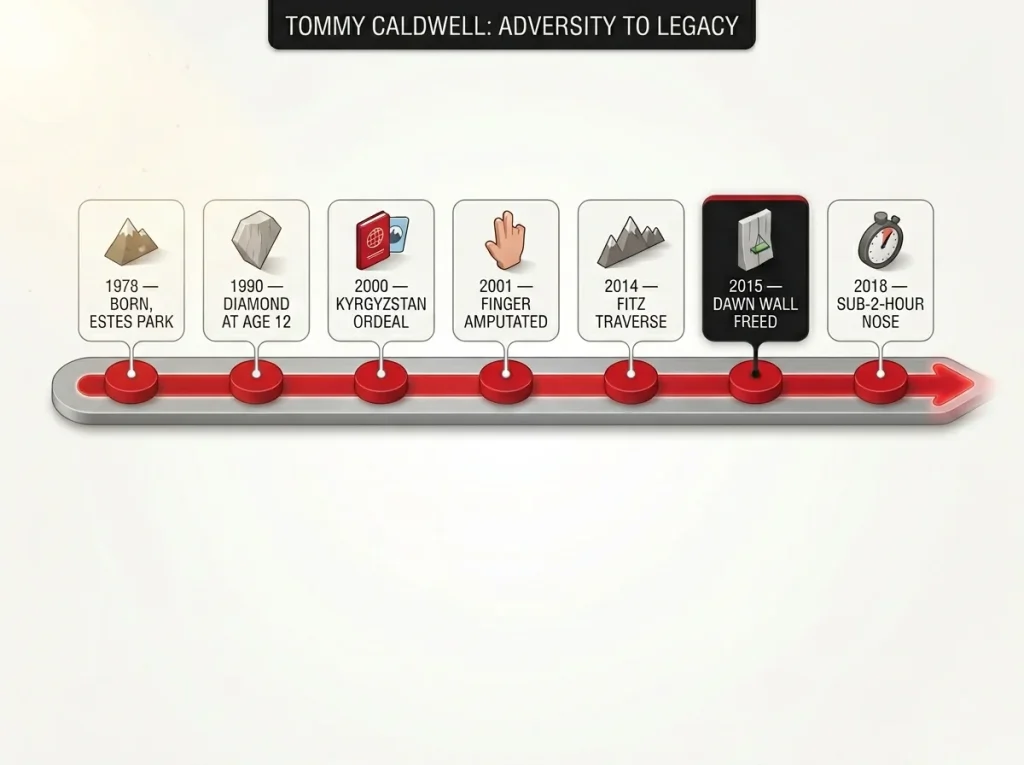
Most elite climbers find the sport as teenagers. Caldwell was on a multi-pitch route before he could read. He was born August 11, 1978, in Estes Park, Colorado, and raised in nearby Loveland by a father who treated the mountains as the family’s native language.
A Father Who Roped Him In at Age Three
His father, Mike Caldwell, was a mountain guide and a former Mr. Colorado bodybuilder, the kind of man who saw no reason a toddler couldn’t tie in. He took Tommy up his first multi-pitch climb at age three. That detail gets repeated so often it sounds like myth, but the people who climbed with the family describe exactly that: a household where weekends meant rock, and where a kid learned to trust a rope before he learned long division.
There is a version of this upbringing that sounds like pressure. By every account it read more like joy. The climbing was never the chore. It was the reward.
The Diamond at Twelve, a National Title at Sixteen
By seven or eight he had climbed Longs Peak, a 14,000-foot summit. At twelve he was likely the youngest person to climb the Diamond, the sheer east face high on that same peak, which is a serious big wall by any adult standard. Then at sixteen he entered a major sport-climbing competition as an unseeded wildcard and won it.
Lay those facts end to end and the résumé borders on absurd. He had done an alpine big wall before most kids finish middle school, and beaten the country’s best clippers before he could drive himself to the crag.
What an Obsessive Climbing Childhood Builds
Skill is the obvious thing a childhood like that builds. The less obvious thing is tolerance. Climbers who came up the same way will tell you the same truth: years on rock teach you to sit inside discomfort, to keep trying a move after the tenth failure, to treat suffering as information rather than a stop sign. That patience is not glamorous. It would turn out to be the exact trait the Dawn Wall demanded, two decades before he ever touched it.
Six Days as a Captive in Kyrgyzstan
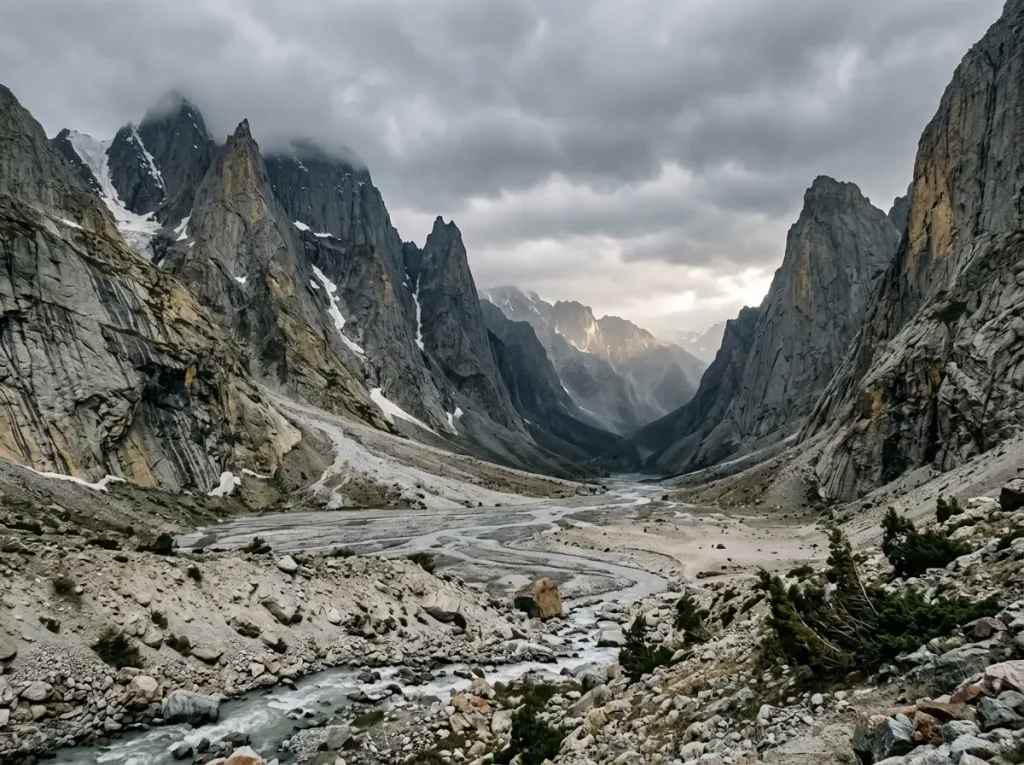
Long before the Dawn Wall, Caldwell survived something that had nothing to do with grades. In August 2000 he was a 21-year-old on a climbing expedition in Kyrgyzstan, and for six days he was a captive.
How a Climbing Trip Turned Into Captivity
He had traveled to the remote Kara-Su region of the Pamir-Alai with three other young Americans, including the climber Beth Rodden, to attempt the area’s enormous granite walls. Armed militants took the group captive instead. For roughly six days the four of them were held and marched through the mountains at night, hidden from view by day, with no clear sense of how it would end.
The Escape on the Ledge
The escape is the part nobody who hears it forgets. On a steep section in the dark, Caldwell pushed one of the armed captors off a ledge so the group could break free and reach friendly soldiers. He was a kid whose hardest moment until then had been a crux move, and he carried the belief that he had ended a man’s life.
He had not. Weeks later they learned the captor had survived the fall. The relief did not erase the weight of it.
Carrying It Home
What makes this chapter matter to the climbing story is not the action. It is the aftermath. Caldwell came home a different person, and for years he processed what had happened on that ledge. Accounts in National Geographic and his own memoir describe a young man reckoning with trauma, not a hero collecting an anecdote.
It reframes everything that follows. The patience and pain tolerance people would later marvel at on El Capitan were forged, in part, by surviving the worst week of his life and choosing to keep going.
The Finger He Chose to Lose
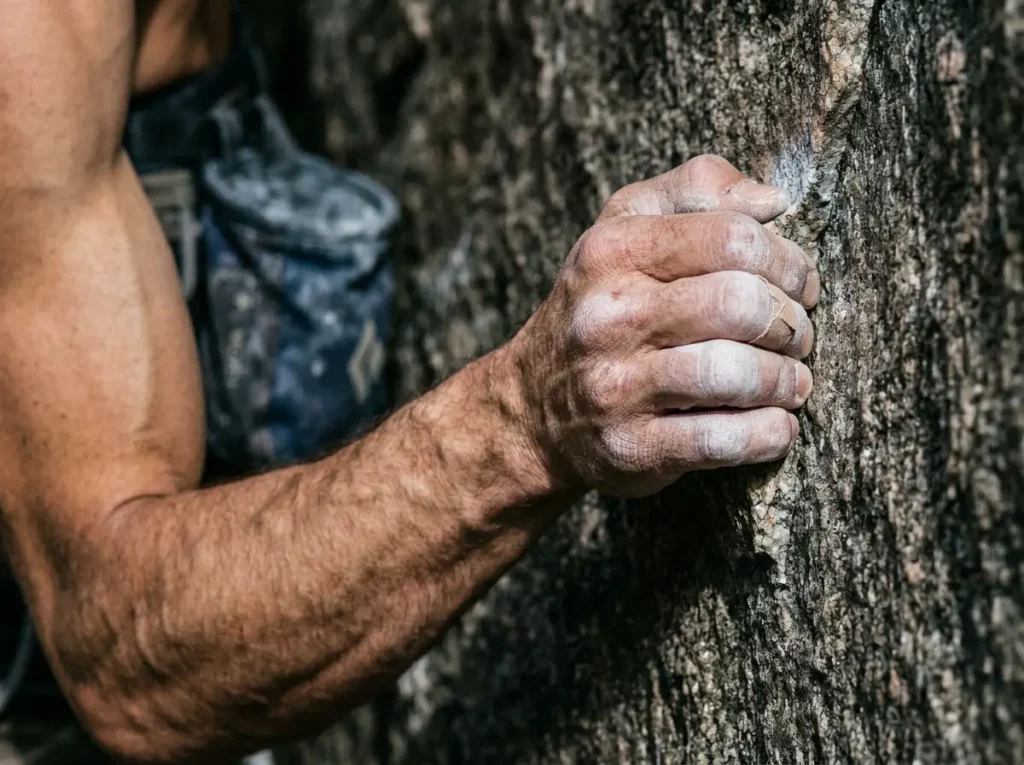
If the kidnapping was a story of mental endurance, what came next was physical, and it should have ended his career outright.
A Table Saw and a Split-Second Mistake
In 2001, at home, Caldwell was using a table saw on a renovation project when it caught his left hand and severed much of his index finger. There was no mountain, no storm, no exposure. It was a garage accident, the kind that happens to carpenters and weekend remodelers, and that ordinariness is exactly what makes it land harder than any cliffside tale.
Why He Amputated Instead of Saving It
Doctors reattached the finger. Then they told him the truth: it would never bend or load the way climbing requires. A stiff, half-working finger on his hand would be a permanent snag, something to climb around forever. So he made a decision most people find hard to fathom. He had it amputated and learned to climb without it, and within a couple of years he was climbing harder than before.
What Losing an Index Finger Means for a Crimper
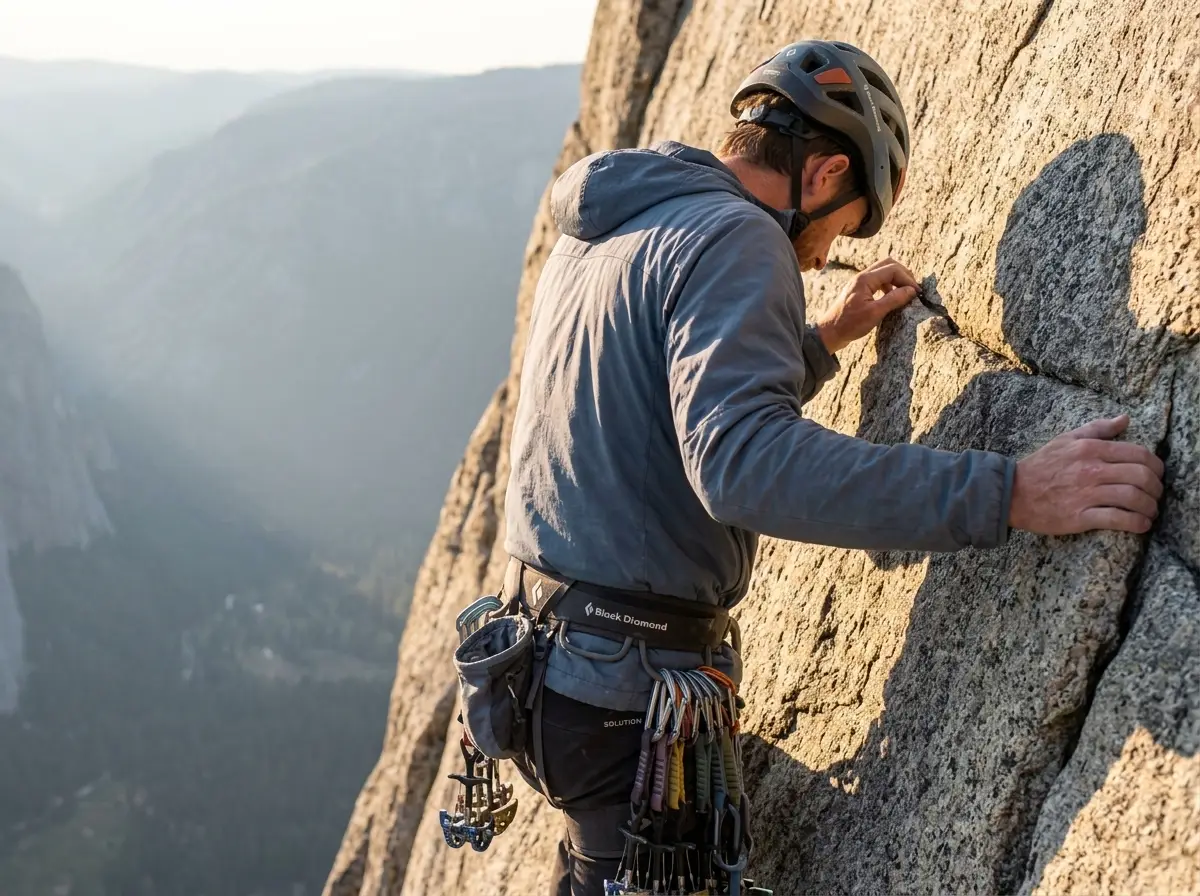
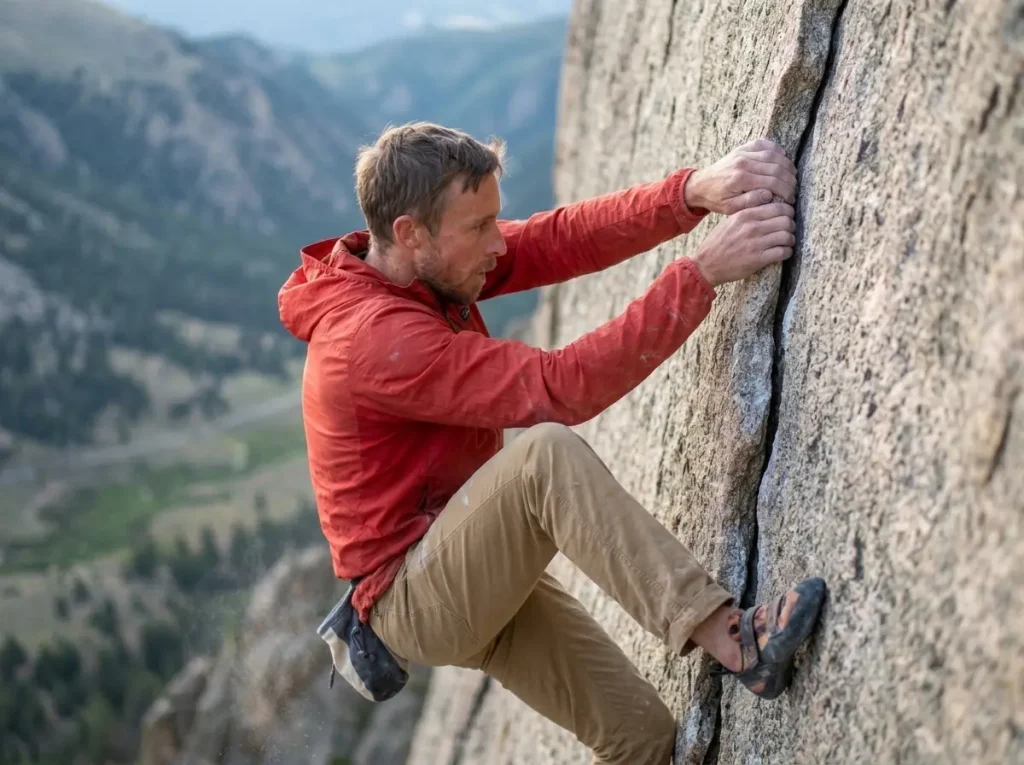
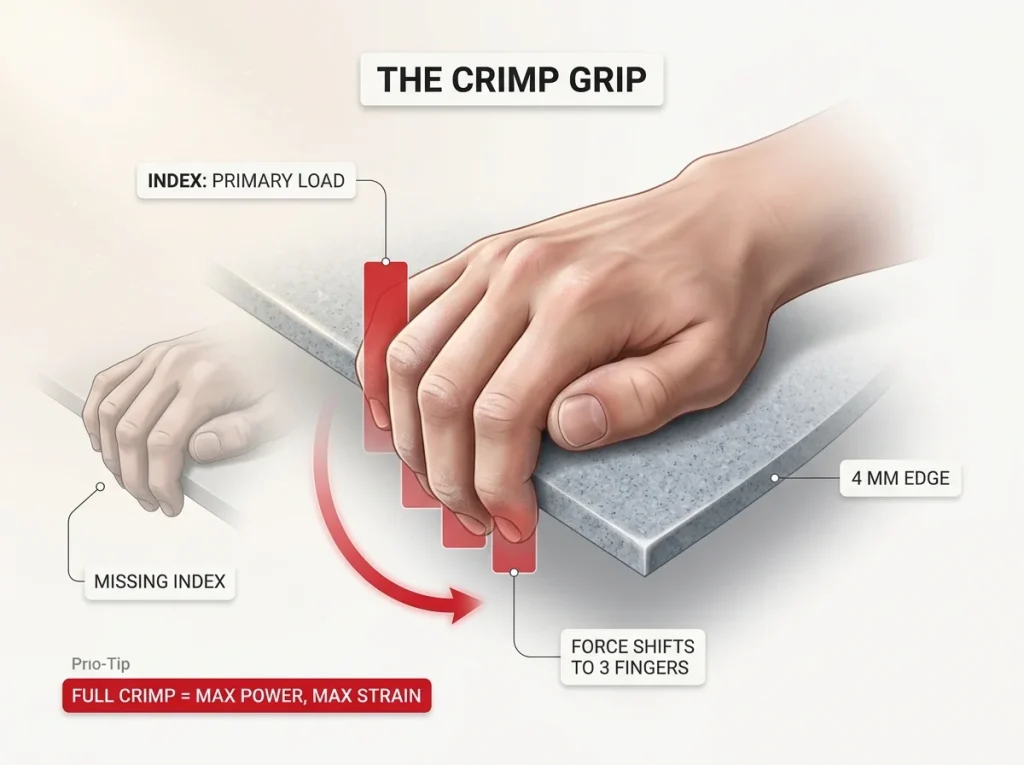
Here is the part most profiles skip, and it is the one that changes how you should read the entire Dawn Wall. The index is a primary crimping finger. A crimp is the grip you use on a razor-thin edge, fingertips stacked on a few millimeters of stone with the knuckles cocked high, and the index does much of that work.
The Dawn Wall is built almost entirely on edges like that, some no deeper than four millimeters. Amputating an index finger removes strength on precisely the holds that route demands.
So this is not an inspirational footnote. A nine-fingered climber sending the hardest crimp wall on the planet is mechanically improbable, not just brave. Understand the finger and the climb stops looking like a triumph of spirit and starts looking like something closer to a magic trick.
There are two ways to hold a thin edge: a full crimp, knuckles cocked high for maximum power and maximum tendon strain, or a more open-handed drag that gives up power but spares the fingers. Losing an index finger forces you toward whichever grip keeps the other three strongest, and rebuilding that on tiny holds takes years, not months.
Becoming the Best All-Around Climber on Rock
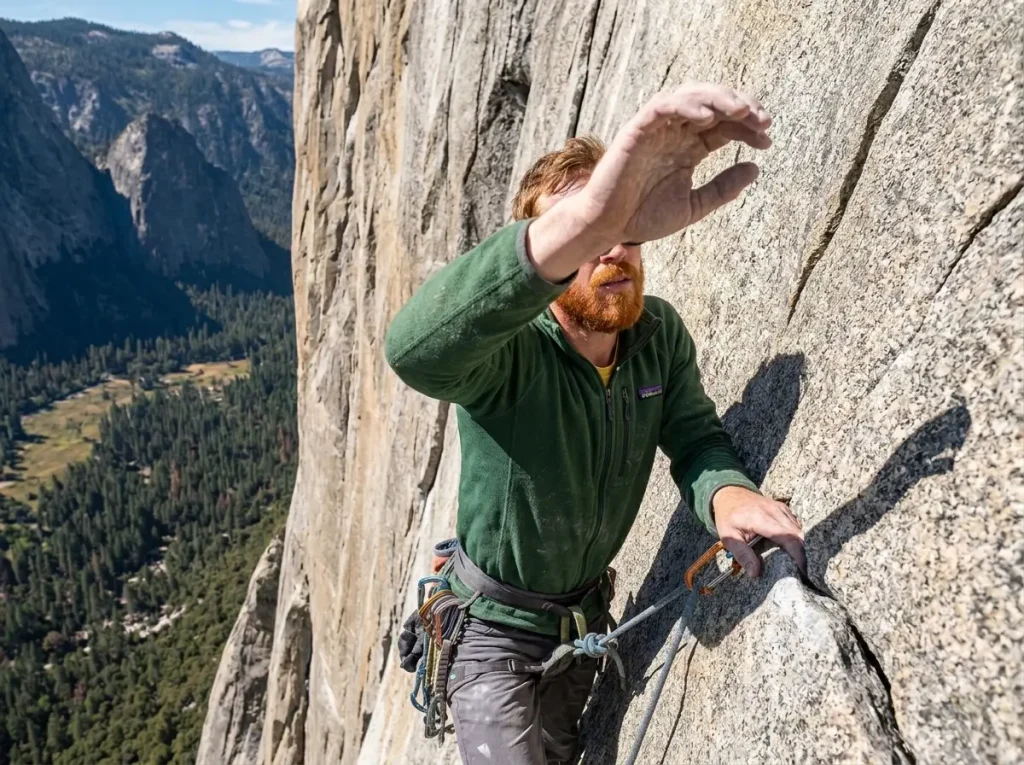
By the time the Dawn Wall entered the public imagination, Caldwell had spent fifteen years quietly becoming one of the most accomplished of the legendary American climbers the sport has produced. The climb was not a bolt from the blue. It was the logical endpoint of a long buildup most people outside climbing never saw.
Free Ascents That Redefined El Capitan
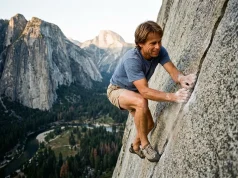
Caldwell made his name first on the big walls of Yosemite, racking up free ascents of El Capitan routes like the Dihedral Wall, Magic Mushroom, and The Nose, the same line Lynn Hill made history by freeing first in 1993. A free ascent means climbing the route using only hands and feet on the rock, with gear there to catch a fall, never to pull on. Doing that on a multi-day El Cap wall is a different sport from getting to the top by any means, and Caldwell did it again and again.
Hard Sport Lines in the Fortress of Solitude
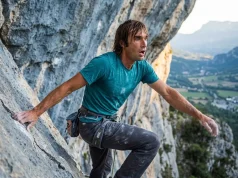
He was not only a wall specialist. On the steep limestone and granite of Colorado’s high country he climbed some of the hardest sport routes of the era, including Kryptonite and Flex Luthor in the Fortress of Solitude. This was the same window when peers like Chris Sharma were pushing sport climbing’s ceiling, and Caldwell was right there in the conversation, which almost no big-wall climber can claim.
When climbers say someone “sent” or “redpointed” a route, they mean a clean ascent with no falls and no resting on the rope, usually after rehearsing the moves. It is the gold standard of free climbing, and it is the bar both Caldwell and Jorgeson had to clear on every single pitch of the Dawn Wall, not just the famous ones.
The Fitz Traverse With Alex Honnold
In February 2014 he showed a different range entirely. Over five days he and his climbing partner Alex Honnold made the first Fitz Traverse in Patagonia, linking all seven summits of the Cerro Fitz Roy skyline across roughly 4,000 meters of vertical gain, much of it moving together in approach shoes. It won the pair a Piolet d’Or, alpinism’s highest honor. A climber who can free El Cap, send elite sport routes, and traverse an entire Patagonian range is not specializing in anything. He is doing all of it at once.
The Dawn Wall, Anatomy of the Hardest Big-Wall Free Climb
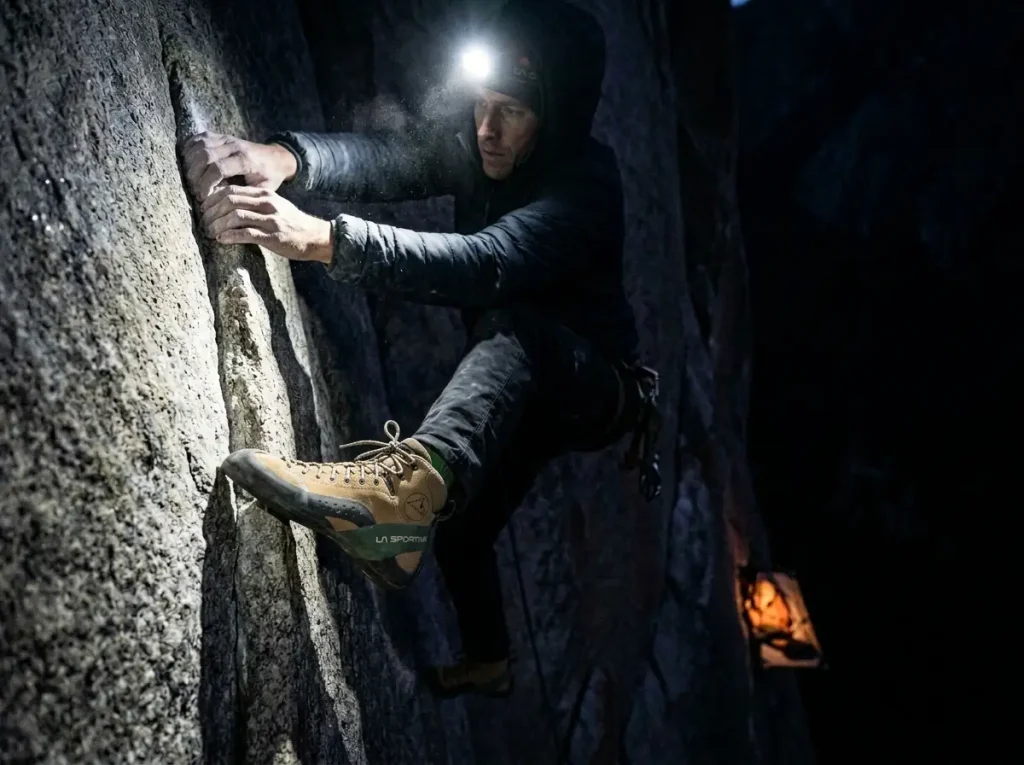
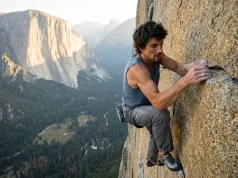
The Dawn Wall is the steepest, blankest face on the southeast side of El Capitan, and for decades it saw only aid climbing, where climbers pull on gear to get up the wall. Caldwell looked at it in 2007 and asked whether it could be free climbed instead. The answer took seven years to earn.
What “Free Climbing” Actually Means
This is the single biggest point of confusion, so it is worth being plain. Free climbing does not mean climbing without a rope. It means climbing without using any gear to make upward progress. You pull only on the rock. The rope, harness, and protection are there for one reason, to catch you when you fall.
That is the opposite of a free solo, which is climbing with no rope at all, the way Alex Honnold later free soloed El Capitan by the Freerider route. On the Dawn Wall, Caldwell and Jorgeson fell hundreds of times and the rope caught every fall.
They were roped the entire way. They simply never cheated upward by grabbing a piece of gear. People often ask whether Caldwell free soloed El Capitan, and the answer is no, and the distinction is the whole point.
Nineteen Days on the Wall
The free ascent ran from December 27, 2014, to January 14, 2015, 19 days living on the wall with Kevin Jorgeson. The route covers 32 pitches up roughly 3,000 feet of granite, the monolith the National Park Service calls the centerpiece of Yosemite big-wall climbing, and it became the first big-wall free climb at the grade of 5.14d, also written 9a. For perspective on the setting, El Capitan sits at the heart of Yosemite’s wider world of granite routes and permits, but nothing else on the formation is remotely like this face.
They lived on a portaledge, a hanging cot bolted to the wall, sleeping thousands of feet up and rappelling back down each session to rest skin and recover. The whole effort was a project, a route worked over many seasons before the final continuous push, and this one had taken Caldwell the better part of a decade to unlock.
Why They Climbed at Night in January
People assume the winter timing was about avoiding crowds. It was about physics. The Dawn Wall faces southeast and bakes greasy in direct sun, even in winter, and warm skin sweats and slides off tiny holds. Cold, dry January air, down around 30 degrees, gives the friction they needed on edges that thin. Dry skin, fresh chalk, and cold rubber grip; warm, damp fingers grease off.
So they climbed the hardest pitches at night, by headlamp, in the coldest, driest air they could find. Hard climbers chase these conditions all the time and call them “send temps.” On the Dawn Wall the weather was not a backdrop. It dictated the entire schedule.
On a route built from razor edges, skin is a piece of equipment. Climbers on long projects tape splits, sand down rough tips, and rest days specifically to let fingertip skin heal, because torn skin slides where fresh skin sticks. Jorgeson’s long battle on the crux pitch was as much a skin-recovery problem as a strength one.
Pitch 15 and the Choice to Wait
Every wall has a crux, the single hardest section, and the Dawn Wall has two of them back to back, pitch 14 and pitch 15, both graded 5.14d. Pitch 15 became the human crux. Caldwell sent it on day 10. Jorgeson got stuck. He fell on it 11 times over roughly seven days, his fingertips shredding faster than they could heal, while the world watched on social media to see whether he would have to give up his half of the climb.
Here is where the story stops being about difficulty and becomes about character. Caldwell climbed ahead to pitch 17, which meant he could have continued to the top alone and claimed the first free ascent for himself. He chose not to.
He waited days on the wall for Jorgeson, later saying it would be a letdown to finish the thing without Kevin. On January 9, Jorgeson finally sent pitch 15, and on January 14 they topped out together. In a sport that worships individual achievement, a climber giving up his own clean shot at the summit to keep a promise to his partner is the rarest move in the whole story.
Legacy, the Film, and the Book
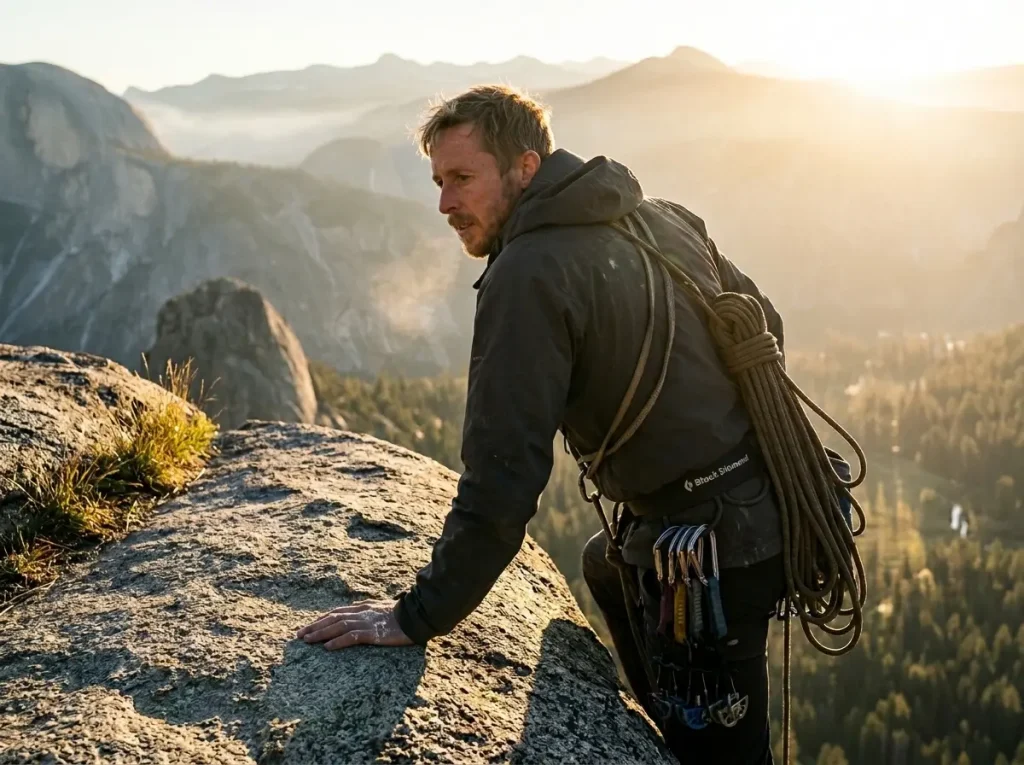
The Dawn Wall did something almost no climb does. It escaped the climbing world entirely and became a mainstream story, complete with a bestselling book, a documentary, and a congratulatory note from President Barack Obama.
The Dawn Wall Documentary and The Push
Caldwell told his own version in a memoir, The Push, published by Viking in 2017, which became a New York Times bestseller. A year later the documentary The Dawn Wall, directed by Josh Lowell and Peter Mortimer, brought the footage to a wide audience and put the scale of the face and the razor edges in front of people who had never tied into a rope. Both did something rare for climbing media. They made the general public understand why a slow, roped ascent could be more gripping than any stunt. His mark shows up in gear, too. La Sportiva makes a signature climbing shoe named for him, the La Sportiva TC Pro, a stiff edging shoe built for the kind of granite he made his name on.
Adam Ondra’s Second Ascent
The truest measure of how far ahead of its time the route was came in November 2016, when Adam Ondra, whose physics-first approach to training set him up for it, made the second ascent. Ondra, widely regarded as the strongest sport climber in the world, needed a hard eight-day effort to do it, leading every pitch, as documented in the American Alpine Club’s account of the Dawn Wall’s rapid second ascent. As of today, no one else has repeated the route at all.
The Sub-Two-Hour Nose With Honnold
Caldwell did not coast on the legacy. On June 6, 2018, he and Honnold became the first to climb The Nose, the El Capitan line climbers travel the world to attempt, in under two hours, posting a time of 1:58:07. After the slow grind of the Dawn Wall, he turned around and took the most coveted speed record in the sport, proof that his range never narrowed.
What the Dawn Wall Really Proved
Pull the story apart and three things hold. The adversity was not trivia. The kidnapping built the mind and the lost finger should have ended the career, and instead both became the forge that made a 5.14d wall possible.
The climb was a free ascent and a seven-year project, not a stunt and not a free solo, and the difference is the entire achievement. And the human core was a man choosing to wait days on a freezing wall so he and his partner could finish together.
If you want to feel the scale rather than read about it, watch the wall in motion and look at how small the holds are. Then start at the top of this cluster of climbing lives, because Caldwell is one chapter in a much longer story of the people who kept moving the ceiling.
Frequently Asked Questions
01How did Tommy Caldwell lose his finger?
He severed his left index finger with a table saw at home in 2001, and after a failed reattachment he chose to amputate it. Doctors said it would never function for climbing, so he adapted around the loss and returned to elite form within a couple of years.
02Did Tommy Caldwell free solo El Capitan?
No. The Dawn Wall was a roped free climb, not a free solo. He and Jorgeson fell repeatedly and the rope caught them; they just never pulled on gear to climb. Alex Honnold is the one who free soloed El Capitan, by a different route.
03How long did it take to climb the Dawn Wall?
The continuous free ascent took 19 days on the wall, from December 27, 2014, to January 14, 2015. That capped a project Caldwell had worked for about seven years. They lived on a portaledge the whole time, climbing the hardest pitches at night for friction.
04Are Tommy Caldwell and Kevin Jorgeson still friends?
Yes. Their partnership is remembered as one of climbing’s closest, sealed when Caldwell waited days on the wall so they could top out together. He chose to hold short of the summit rather than finish the climb without Jorgeson.
05Has anyone climbed the Dawn Wall since?
Yes, but only once. Adam Ondra made the second ascent in November 2016, in under eight days, leading every pitch. As of today no one else has repeated the route, a sign of how far ahead of its time it was.
Safety Notice: Rock climbing and mountaineering are inherently high-risk
activities that can involve physical trauma or fatal incidents. The information on Rock Climbing Realms is for
educational and informational purposes only. Techniques and advice presented here are not a substitute
for professional, hands-on instruction. Conditions and risks vary by location. Always seek guidance
from a qualified instructor before attempting new techniques. By using this website, you agree that you
are solely responsible for your own safety. Any reliance you place on this information is strictly
at your own risk, and you assume all liability for your actions. Rock Climbing Realms and its authors
will not be held liable for any harm, damage, or loss sustained in connection with the use of this information.
Affiliate Disclosure: We are a participant in the Amazon Services LLC Associates Program, an
affiliate advertising program designed to provide a means for us to earn advertising fees by advertising and linking
to Amazon.com. As an Amazon Associate, we earn from qualifying purchases. We are also an official affiliate partner
of Black Diamond Equipment via the AvantLink network. If you click on a Black Diamond affiliate link and make a
purchase, we may earn a commission at no additional cost to you. We also participate in other affiliate programs.
Additional terms are found in the terms of service.