
In this article
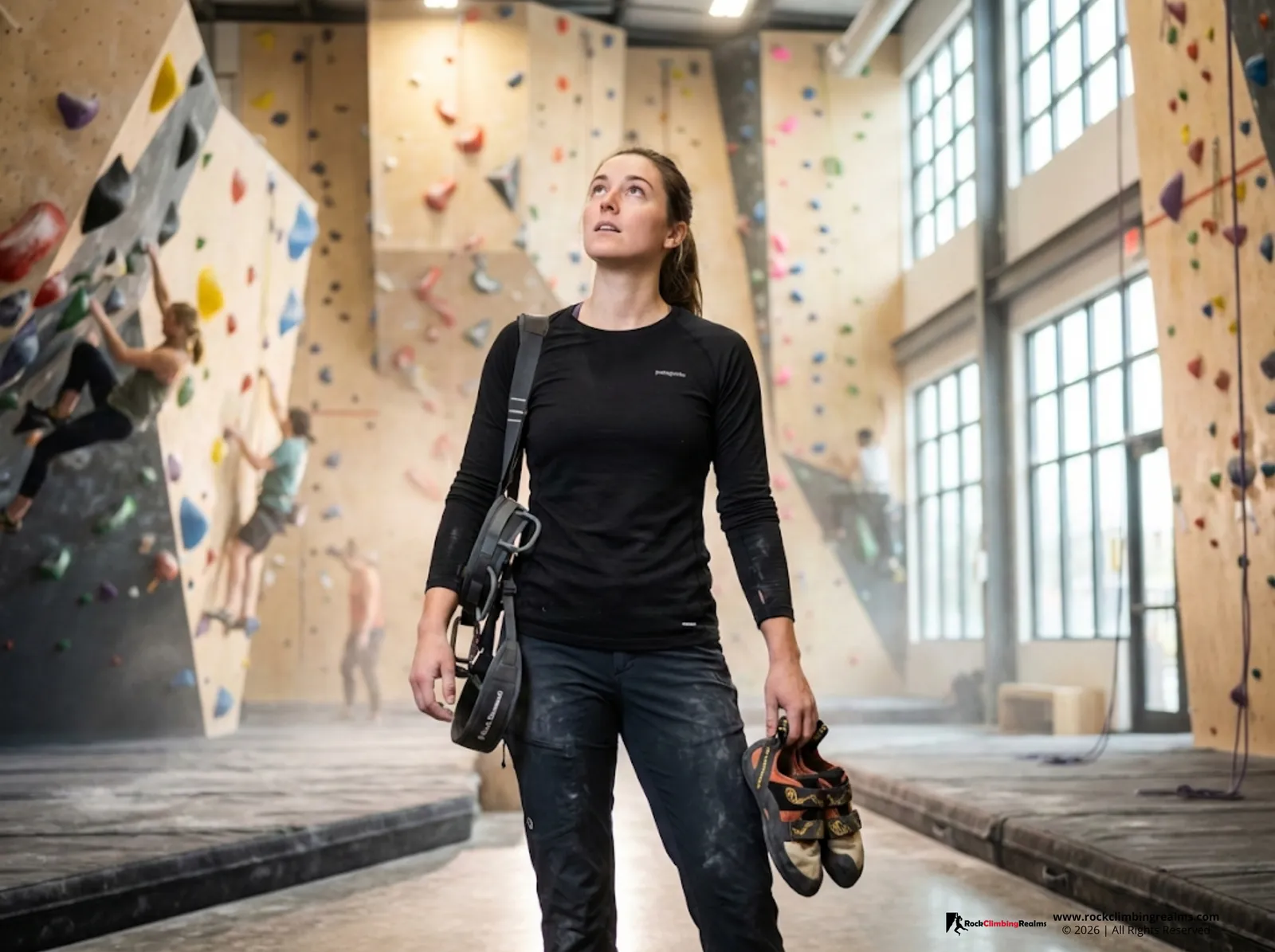
The chalk dust settled on my tongue before I even laced up the rental shoes. Somewhere behind me, a kid no older than twelve floated up a V4 I had been staring at for twenty minutes. And the membership form in my hand listed a cancellation clause that required certified mail. That was the moment I realized choosing a climbing gym involved a lot more than checking Google Maps for the nearest one.
I have spent the better part of a decade bouncing between gyms across five states, watching facilities open, merge, and sometimes close. The patterns are predictable once you know what to look for. The marketing is always polished. The experience is not always what the brochure promised.
This article gives you the insider criteria, hard data, and field-tested evaluation framework you need before you sign a single waiver or swipe a credit card at any indoor climbing facility.
⚡ Quick Answer: The right climbing gym depends on three factors most people overlook: wall type and routesetting frequency (which determine whether you progress or plateau), membership contract flexibility (hidden cancellation friction traps beginners into long commitments), and air quality in bouldering areas (chalk dust can reach 80 times the WHO exposure limit in poorly ventilated caves). Visit at least two gyms during peak hours before committing.
Bouldering, Top-Rope, or Lead — What the Walls Actually Tell You
Why Wall Type Is Your First Filter
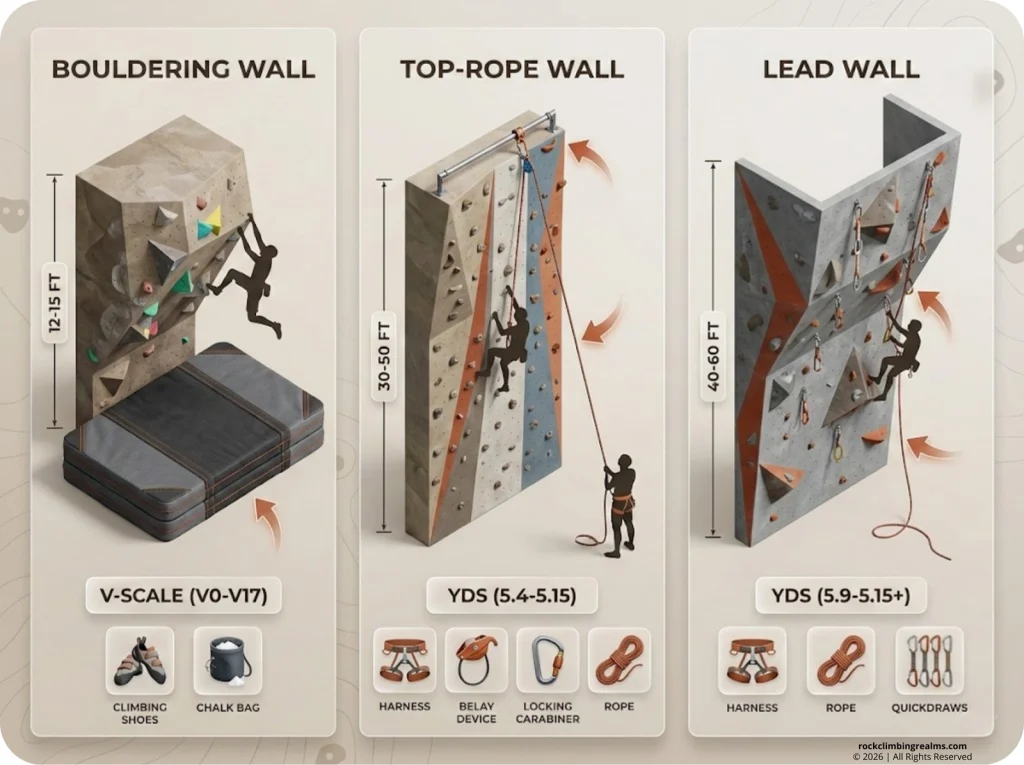
Most indoor climbing facilities fall into two categories: bouldering-only spaces and full-service gyms that include top-rope climbing and lead climbing alongside boulder walls. That distinction matters more than most beginners realize.
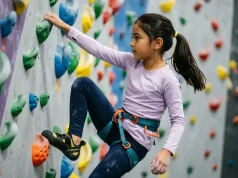
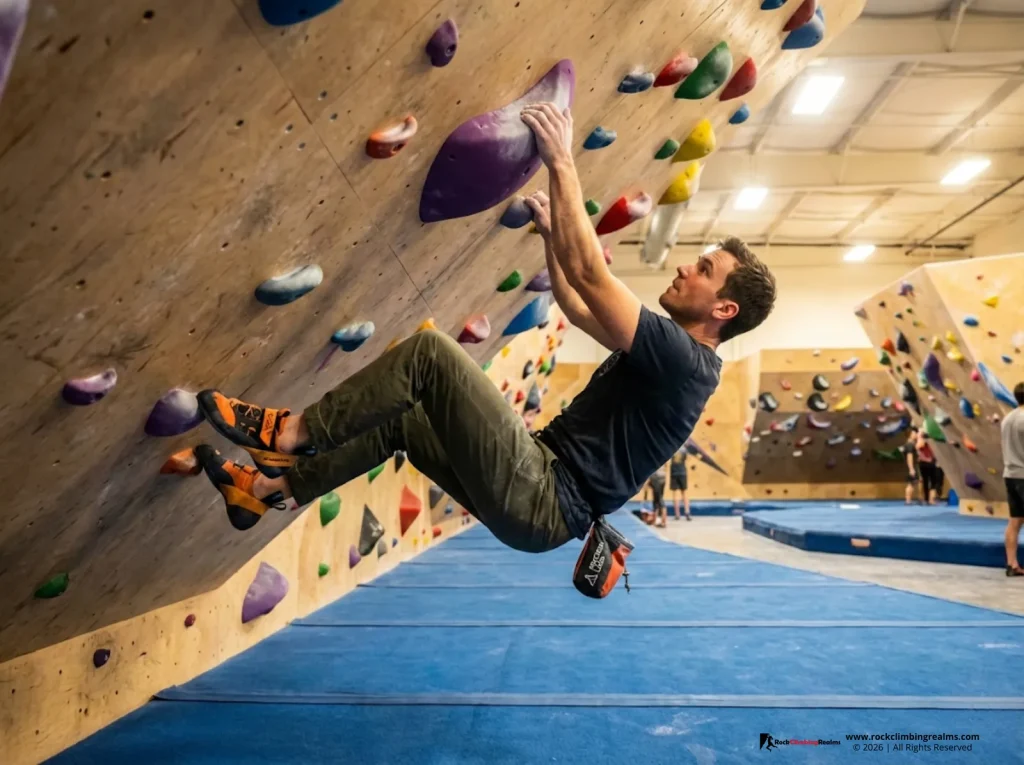
Bouldering walls stand 12 to 15 feet tall with thick crash pad flooring beneath them. No ropes, no harness, no belay partner needed. You walk in, chalk up, and climb. The V Scale grades these problems from V0 through V16, and here is a full breakdown of the V-scale grading system if the numbers look foreign.
Rope walls range from 30 to 60 feet and require a harness, belay device, and a partner who knows how to manage your rope. The Yosemite Decimal System grades these routes from 5.0 through 5.15. Top-rope anchors the rope above you. Lead requires you to clip in as you ascend, which introduces longer fall potential.
The wall angles your gym favors tell you a lot about the skills it develops. Slab walls (less than vertical) build balance and footwork precision. Overhanging roofs demand raw core strength and body tension. A gym heavy on one angle and light on the others limits your difficulty progression faster than you might expect.
Bouldering-Only Gyms vs. Full-Service Facilities
Bouldering-only gyms hold 52.8% of global climbing gym revenue as of 2025, according to CBJ’s annual Gyms and Trends industry report. Lower capital costs and smaller floor plans make them ideal for dense urban neighborhoods. The trade-off is that they ceiling out your progression unless you supplement with outdoor climbing or a second gym.
Full-service (“hybrid”) gyms bundle bouldering, roped climbing, weight rooms, yoga, and sometimes co-working spaces under a single membership. The hybrid model is growing at an 8.4% CAGR, reflecting consumer demand for multi-purpose fitness venues. That versatility comes at a cost. Hybrid gyms tend to spread their route setting budget thinner, meaning fewer fresh problems per discipline compared to a bouldering-only space that resets aggressively.
If you are completely new to the sport, here is what to actually expect during your first indoor session.
Pro tip: Ask any gym how often they reset routes. A facility that resets once a month is a graveyard for motivation. Strong gyms rotate 20 to 30 percent of their problems every one to two weeks.
Training Boards and Smart Walls — Gear That Matters at Intermediate Level
If you are beyond the beginner stage and want a gym that supports real training, look for Kilter, Moon, or Tension boards. These LED-integrated systems let you select specific problems through an app, track your attempts, and compare against a global user base. Here is a side-by-side cost and training comparison of Kilter, MoonBoard, and Tension. These boards are irrelevant for your first month. They are essential by your sixth.
Some “megagyms” are now deploying AI-powered climb-tracking cameras that analyze movement patterns and estimate route lifespan based on attempt-to-completion ratios. These tools signal a facility that invests seriously in climber progression beyond casual recreation.
The Hidden Economics of Membership Contracts
Day Passes, Monthly Plans, and the Initiation Fee Trap
Day pass prices at most climbing gyms run between $15 and $30. Monthly membership options range from $55 to $120 or more in tier-one cities. Those numbers look straightforward until you read the fine print.
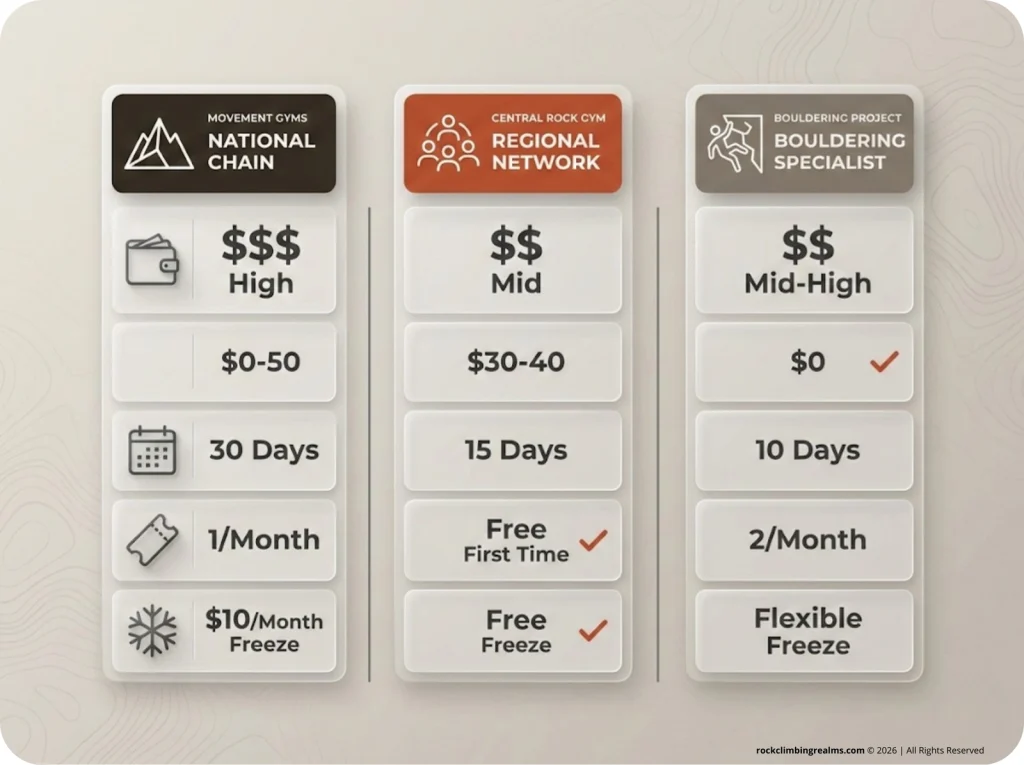
Initial capital expenditure for a modern climbing facility in a major city now ranges between $1.4 million and $2.1 million. Those costs get passed to you through initiation fees and premium pricing. Movement Gyms bills on the first of the month. If you want to cancel, your request must arrive by the 25th of the previous month. Miss that window by a day and you owe 35 more days of dues. Central Rock Gym generally offers no initiation fee and no cancellation fee, but requires at least one full month of payment before changes take effect.
Understanding how gyms generate revenue helps explain why contracts are structured the way they are. Here is the full economic breakdown of how climbing gyms generate revenue.
Red Flags in the Fine Print
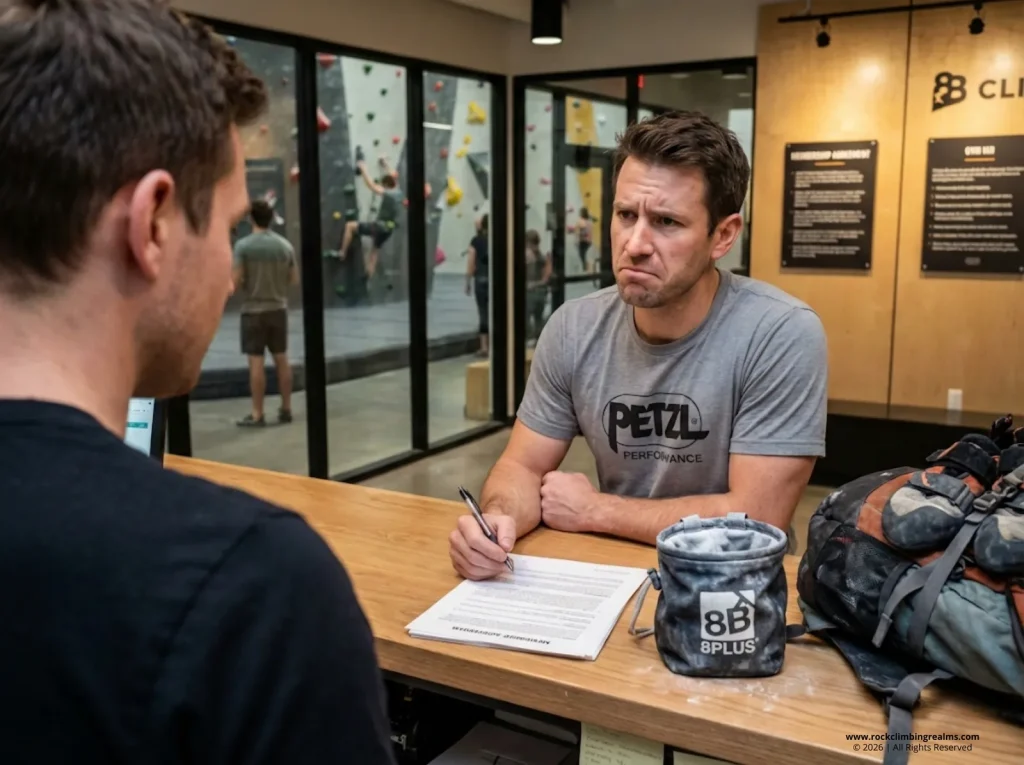
“No contract” does not mean “cancel at any time.” Some older franchise models still require cancellation via certified mail or in-person visits. That is a deliberate friction tactic that banks on your inertia.
Guest pass policies hide another layer of complexity. “First-time guest” restrictions in the fine print often prevent members from repeatedly bringing the same friend for free. Ask three questions before signing anything: How do I cancel? What is the minimum commitment? Is there a fee for freezing my membership during travel or injury?
As Sharon Knorr, Director of Operations at MetroRock, put it: “The cost of everything is up and people have less expendable income.” That pressure flows downhill to the consumer through tighter contract terms.
Trial Memberships and How to Test Without Commitment
Request a day pass for at least two visits at different times. A weekday evening visit and a weekend morning visit will show you two completely different gyms in terms of crowd density, noise level, and route availability. Some gyms offer week-long trial memberships or discounted intro month packages. Always ask, even if they are not listed online.
Pro tip: Talk to members in the lobby or changing area. The regulars will tell you the truth about route turnover, AC quality, and how the gym handles complaints. Staff will sell you the experience. Members will tell you if it matches.
The Air You Breathe and the Floors You Fall On
Chalk Dust Is Worse Than You Think
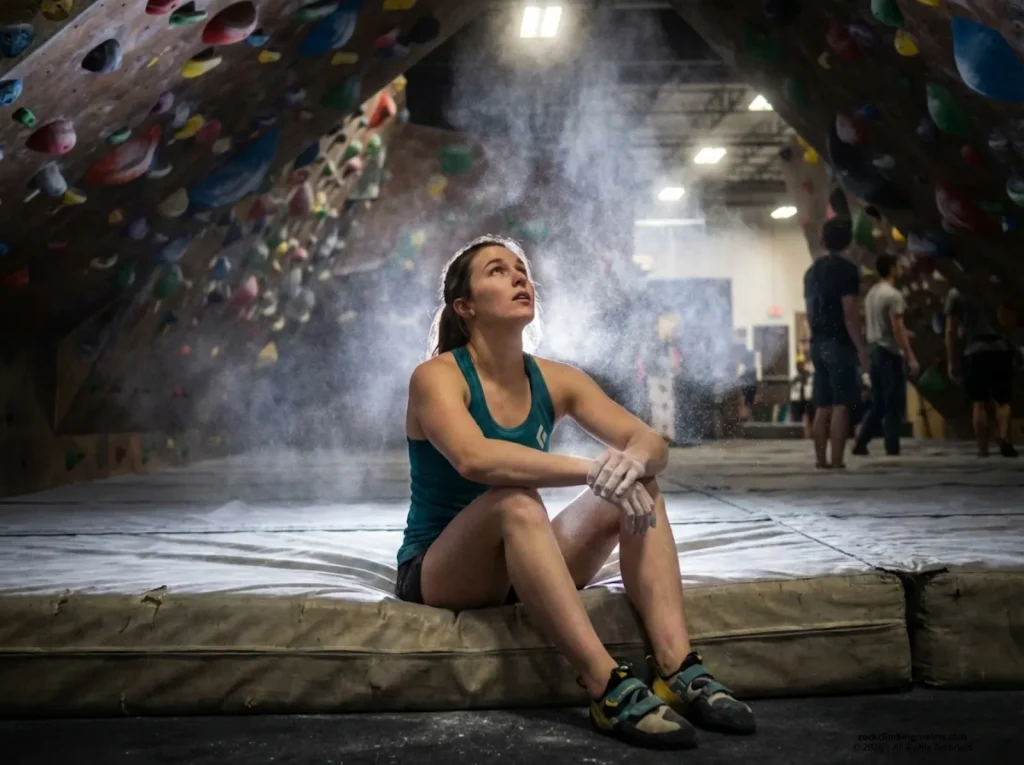
Here is a fact that no competitor guide mentions: PM10 (coarse particulate matter) concentrations in climbing gyms can reach 4,000 micrograms per cubic meter during peak hours. That is nearly 80 times the WHO recommended 24-hour exposure limit. Those particles are almost entirely hydrated magnesium carbonate (chalk) and rubber particles worn off shoe soles.
Because magnesium carbonate does not dissolve in your respiratory tract, it deposits as a solid and leads to measurable drops in lung function after a session. Peer-reviewed pilot studies on lung function decline in climbing halls have documented this in gyms with poor airflow. The bouldering cave is almost always the worst zone. Low ceilings, high traffic, and minimal airflow create a localized particulate trap.
Carpeted flooring can reduce PM10 by up to 70% by trapping particles that foot traffic would otherwise kick back into the air. That creates a genuine trade-off: better air quality versus slightly less impact absorption on landings. Understanding the science behind magnesium carbonate and climbing friction gives you a fuller picture of why this matters.
Floor Padding, Fall Zones, and the Injuries Nobody Mentions
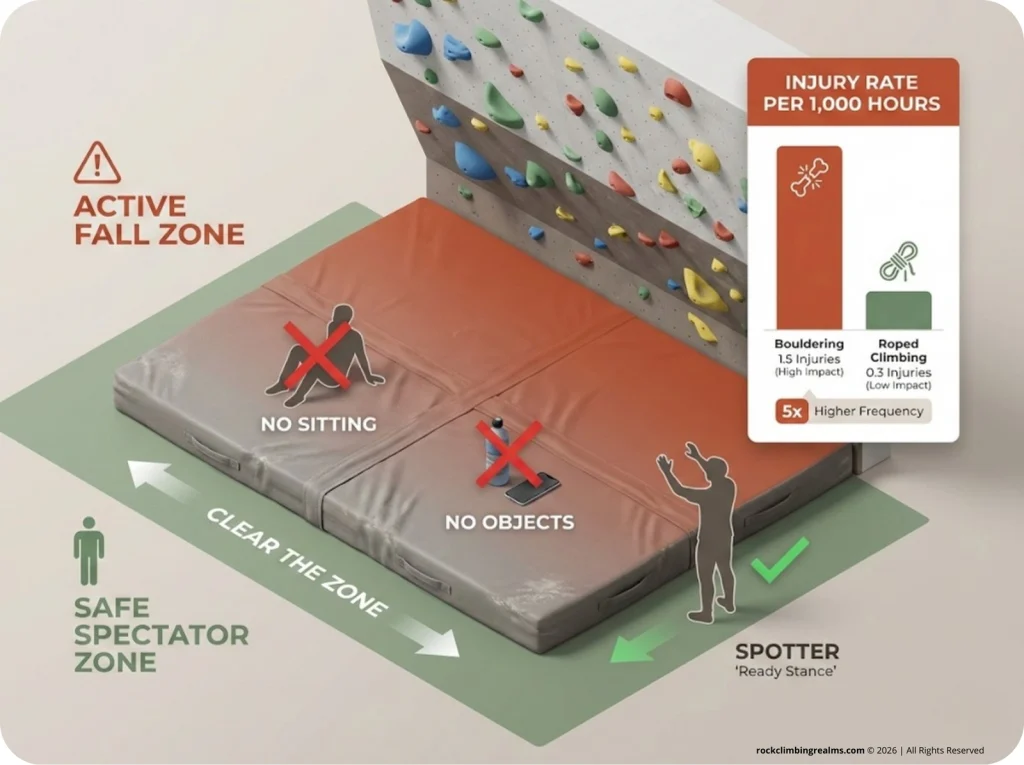
Bouldering carries a minor injury rate of 1.5 per 1,000 climbing hours, five times higher than roped climbing at 0.3 per 1,000 hours. The difference is frequency of ground impacts. Every fall in bouldering ends on the floor.
Floor replacement cycles matter too. High-impact foam degrades over time, reducing shock absorption and adding joint stress. Worn carpet covers trap more dust but cushion less on impact, which creates a real trade-off between air quality and landing safety.
Walk the fall zones during your trial visit. If the gym does not enforce “no sitting under active climbers,” that is a safety culture red flag. One regular summed it up: “I’ve seen three broken ankles this year solely from landing on a Nalgene left on the mats.” Water bottles, phones, and bags on bouldering pads are preventable hazards that tell you everything about how a facility manages risk.
Ventilation Walk-Through — What to Check on Your First Visit
Stand in the bouldering cave during a busy evening session. If you can taste chalk or see visible haze, the ventilation system is inadequate. High-volume HEPA filtration units, sometimes called “chalk eaters,” positioned near boulder areas are the gold standard. Ask staff whether the facility has mechanical filtration beyond standard HVAC. Note the ceiling height in bouldering zones. Taller ceilings dilute particle concentrations more effectively than low-slung caves.

Route Quality, Community Culture, and the Intangibles
Routesetting Frequency and Why It Drives Retention
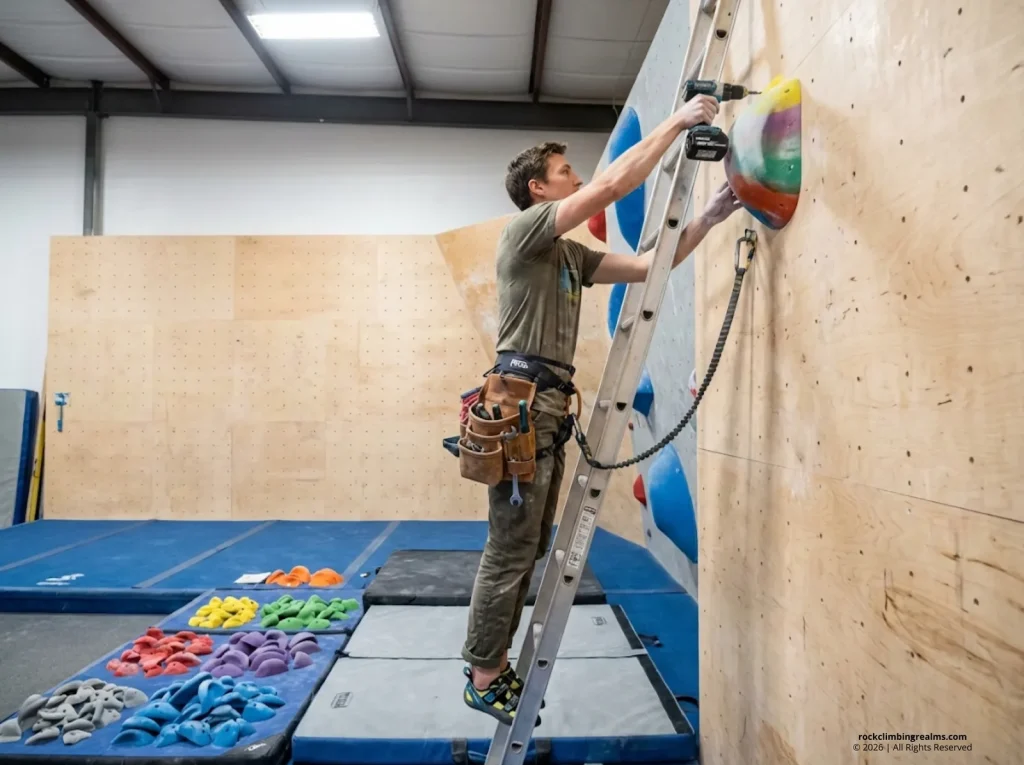
The Climbing Wall Association launched its Professional Routesetting Certification in 2025, professionalizing what was previously a volunteer or informal role. That matters to you because certified setters produce more balanced, creative, and technically sound problems. A gym with full-time setters and a weekly or bi-weekly reset cycle signals serious investment in your experience.
Ask the front desk: “How often do you reset routes?” and “Do you have full-time setters?” These are fair questions that any confident gym will answer directly. Here is more detail on how gym climbing grades actually get decided.
Reading the Room — Community Signals That Matter
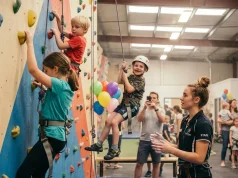
Inclusive programming tells you what a gym values beyond revenue. LGBTQ+ nights, adaptive climbing clinics, women’s circles, and youth-only training zones indicate a community hub, not just a fitness center.
Test for “beta-spraying.” If unsolicited advice-giving is rampant and unchecked, the culture prioritizes ego over learning. The soul of the climbing gym is changing as megagyms scale up. A 40,000-square-foot facility can feel impersonal if staff turnover is high and community events are corporate-driven. Talk to the staff. If they climb the walls during breaks and know regulars by name, that gym has earned its culture organically. For a deeper look at this tension, here is how climbing culture shapes identity from gym rat to dirtbag.
Staff Competence and the Belay Test That Trips Up Veterans
The belay test is the most significant gatekeeping mechanism in the industry, and “confidence” is weighted as heavily as competence. Many experienced outdoor climbers fail gym belay tests because they use techniques acceptable at the crag — slack management, sitting posture — that violate strict indoor safety protocols.
Standardized rubrics penalize removing the brake hand from the rope for even a fraction of a second, regardless of whether an Assisted Braking Device like the Petzl Grigri would arrest the fall. If you already climb outdoors, study the gym’s specific rubric before your test. They want to see the P-BUS method (Pull, Brake, Under, Slide) executed with zero deviation.
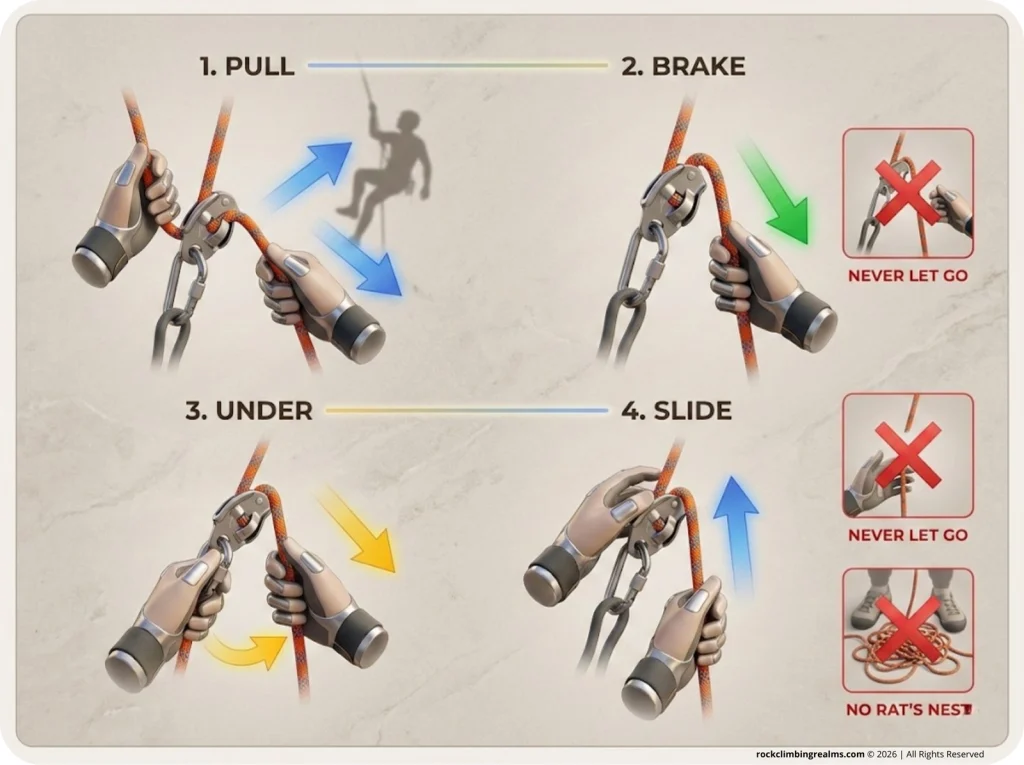
One more thing: most serious gym accidents happen when experienced climbers forget to clip into an auto-belay device. Complacency, not ignorance, is the real hazard. If you want to prepare thoroughly, here is how to pass your lead climbing certification without surprises.
Pro tip: Before your belay test, watch the gym’s specific tutorial video if they have one. Every facility weighs the same skills differently. What passes at one gym gets you failed at the next.
Location, Logistics, and the Factors That Keep You Coming Back
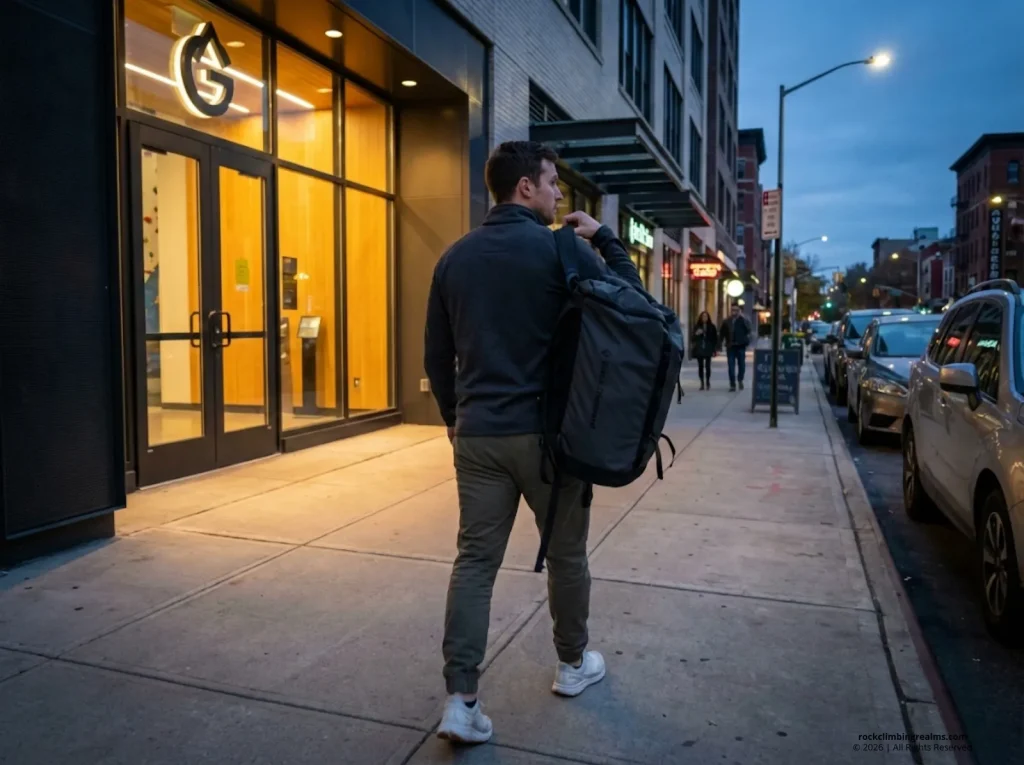
The 20-Minute Rule and Why Proximity Beats Everything
Ninety-five percent of the US population now lives within 30 minutes of a climbing gym, according to Scott Rennak at the Climbing Business Journal. But behavioral patterns show that attendance drops hard when commute time exceeds 20 minutes one way. A B-plus gym 10 minutes from your house will get more use than an A-plus gym 40 minutes away. Map your route during rush hour, not Sunday morning. The real travel time determines whether you go twice a week or twice a month.
Parking, Hours, and the Small Stuff That Adds Up
Parking availability is absent from every competitor guide, but it is a major frustration at urban gyms. Some have no dedicated lot, forcing street parking searches that add 10 to 15 minutes each direction. Compare operating hours against your schedule. Gym traffic peaks between 5 and 8 PM on weekdays and 10 AM to 1 PM on weekends. Climbing during off-peak hours means shorter wait times on popular problems, more floor space for warming up, and better air quality.
If your gym offers a weight room, yoga studio, or childcare, those amenities add real value for anyone looking to consolidate their fitness routine into a single location. Here is a gym workout plan built around core and grip strength for climbing that makes the most of those supplementary spaces.
Gear Rental Quality — The Detail Everyone Skips
Rental gear is the first physical contact a beginner has with climbing. Worn-out, desensitized climbing shoes create a terrible first impression and actively hamper learning. Check the rubber condition and sole thickness. If they are glossy-smooth, grip will suffer on every hold above V1. And please skip the socks — yes, they are rentals, but you lose all sensitivity in your toes.
The transition from Polyester Resin (PE) to Polyurethane (PU) climbing holds has changed how skin wears down. Modern PU holds are more ergonomic but grease up faster, making shoe rental quality even more important for the beginner experience. Rental harnesses should pass a visual check: no frayed webbing, functioning buckles, and a belay loop with no visible wear. When you are ready to stop renting, here is guidance on when to transition from renting to owning your first indoor gear.
Your Decision Framework — From Trial Visit to Membership
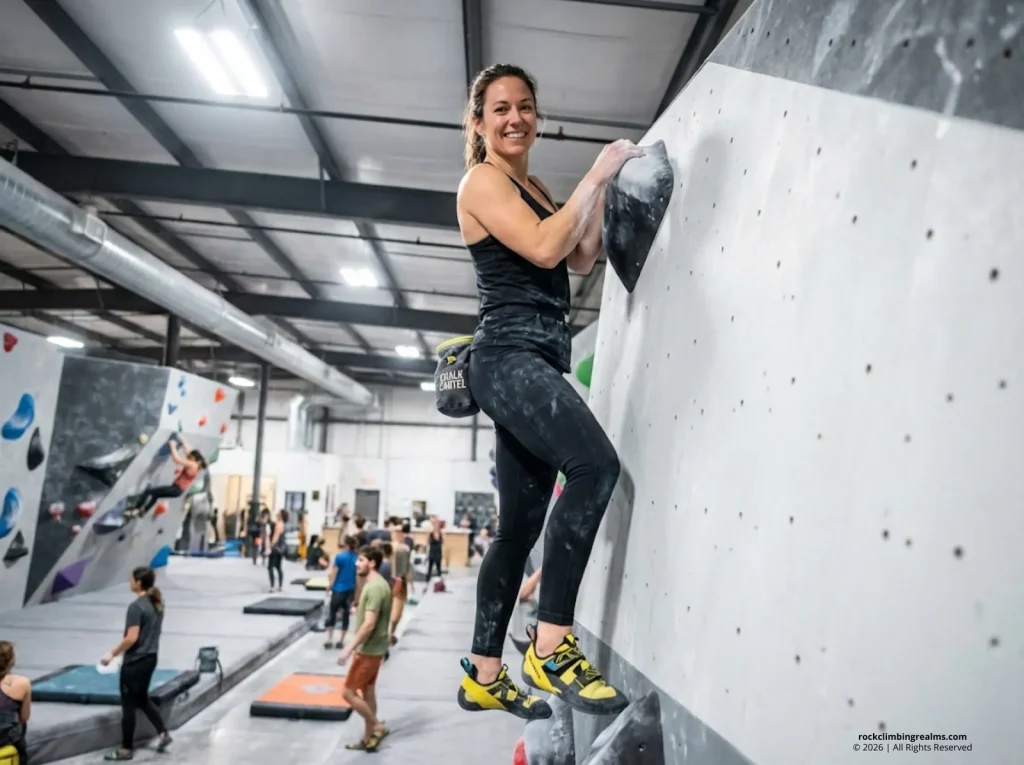
The Pre-Visit Research Checklist
Google the gym name along with “Reddit review” and “cancel membership” to surface real complaints, not curated testimonials. Check climbing-focused directories like IndoorClimbingGym.com alongside Google Reviews. They filter for climbers, not general fitness consumers. Look for calendar pages showing community events, climbing competitions, and specialty clinics. An active calendar correlates with an engaged community. Verify whether the gym is a member of the Climbing Wall Association, which sets professional standards for safety and management through its industry practices documentation.
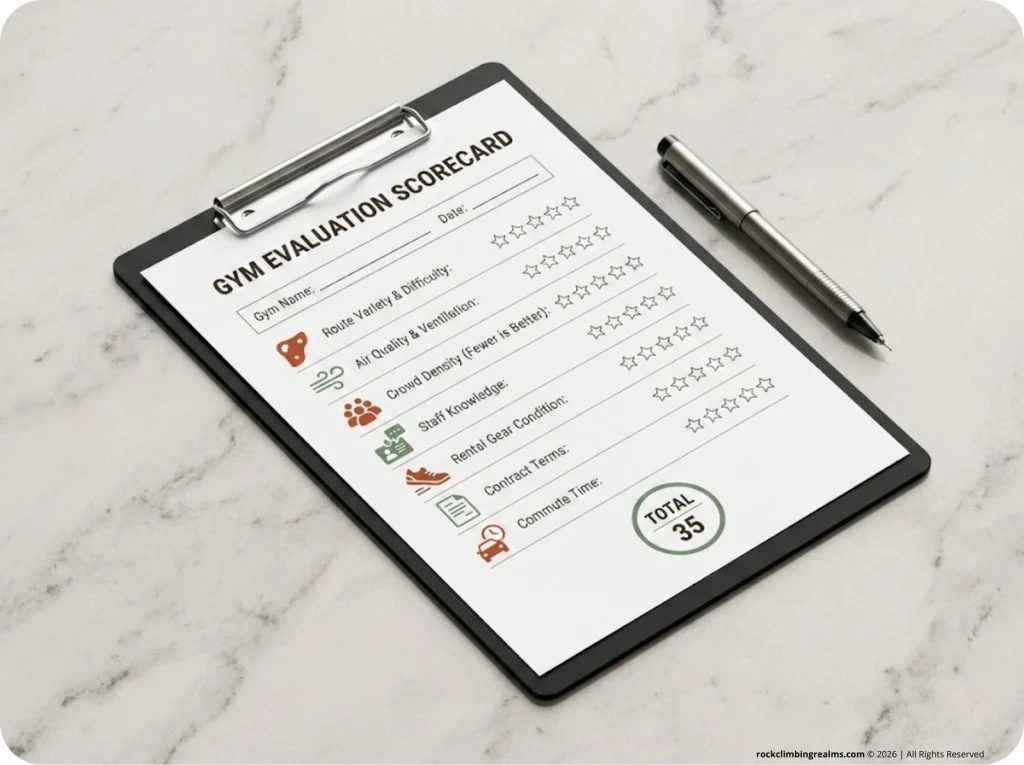
The Trial Visit Scoring System
Score each factor on a 1-to-5 scale during your visit: route variety and difficulty range; air quality and ventilation; crowd density during your intended hours; staff approachability and knowledge; rental gear condition; cancellation and commitment terms; and travel time from home or work.
Spend at least 90 minutes to simulate a real session including warm-up, climbing, and cooldown. Visit the restrooms and changing areas. Maintenance quality in back-of-house spaces reflects overall operational standards. Ask a staff member to explain the grading system and watch how they interact with beginners at the wall.
When to Walk Away
If the gym cannot clearly explain its cancellation policy in under 30 seconds, walk out. If fall zones are crowded with gear, bags, or people sitting on mats, the safety culture is reactive rather than proactive. If the ventilation in the bouldering cave makes you cough within 15 minutes, your lungs are telling you something the membership form will never mention. Trust your gut. The right climbing gym will make you want to return before you reach the parking lot.
Pro tip: Bring a friend on your trial visit and split up. One person climbs while the other walks the facility, tests the showers, reads the cancellation terms, and checks rental gear condition. Compare notes before you leave.
Conclusion
Three things separate a smart gym decision from an expensive mistake. First, the wall type and route setting frequency determine whether a gym challenges you or bores you within three months. Investigate both before anything else. Second, the contract fine print, air quality, and floor condition are the three factors every competitor ignores and every informed climber should evaluate. Third, proximity wins over prestige in the long run. The gym you actually go to three times a week beats the one you planned to visit once a month.
Print the trial visit scoring system from this guide. Take it to two or three climbing gyms in your area this week. Let the data decide instead of the marketing. Your first month on the wall should be about learning movement, not regretting paperwork.
FAQ
What should I wear to a climbing gym for the first time?
Comfortable athletic clothing that allows full range of motion at your shoulders and hips. Avoid jeans, baggy shirts that could snag on holds, and any jewelry including rings. Degloving injuries are rare but real. Most gyms rent shoes, so standard sneakers work for the walk in.
How much does a climbing gym membership cost per month?
Monthly memberships typically range from $55 to $120 or more depending on location and facility type. Day passes run $15 to $30. Always ask about student, military, or corporate discounts and compare the total annual cost, including initiation fees, against a punch card or day pass bundle if you plan to visit fewer than three times per week.
Is bouldering safer than roped climbing for beginners?
No, and the data runs against what most people assume. Bouldering carries a minor injury rate of 1.5 per 1,000 climbing hours compared to 0.3 for roped climbing, because every fall in bouldering ends on the ground. The injuries tend to be less severe but more frequent. Proper falling technique and fall zone awareness are essential from day one.
Do I need my own gear to start climbing at a gym?
Every gym rents shoes, harnesses, chalk, and belay devices. Rental fees typically add $5 to $10 per visit. Once you are climbing consistently two or more times per week, investing in your own shoes makes a real difference in sensitivity and confidence on the wall. That is the first piece of gear worth buying.
How do I pass the belay test at a climbing gym?
Practice the P-BUS method (Pull, Brake, Under, Slide) until it becomes automatic. Never remove your brake hand from the rope, even for a moment. Keep your rope pile tidy and communicate clearly with your climber using standard commands. Most gyms will let you practice and retake the test the same day, so ask before your first attempt what specific criteria they evaluate.
Safety Notice: Rock climbing and mountaineering are inherently high-risk
activities that can involve physical trauma or fatal incidents. The information on Rock Climbing Realms is for
educational and informational purposes only. Techniques and advice presented here are not a substitute
for professional, hands-on instruction. Conditions and risks vary by location. Always seek guidance
from a qualified instructor before attempting new techniques. By using this website, you agree that you
are solely responsible for your own safety. Any reliance you place on this information is strictly
at your own risk, and you assume all liability for your actions. Rock Climbing Realms and its authors
will not be held liable for any harm, damage, or loss sustained in connection with the use of this information.
Affiliate Disclosure: We are a participant in the Amazon Services LLC Associates Program, an
affiliate advertising program designed to provide a means for us to earn advertising fees by advertising and linking
to Amazon.com. As an Amazon Associate, we earn from qualifying purchases. We are also an official affiliate partner
of Black Diamond Equipment via the AvantLink network. If you click on a Black Diamond affiliate link and make a
purchase, we may earn a commission at no additional cost to you. We also participate in other affiliate programs.
Additional terms are found in the terms of service.