
In this article
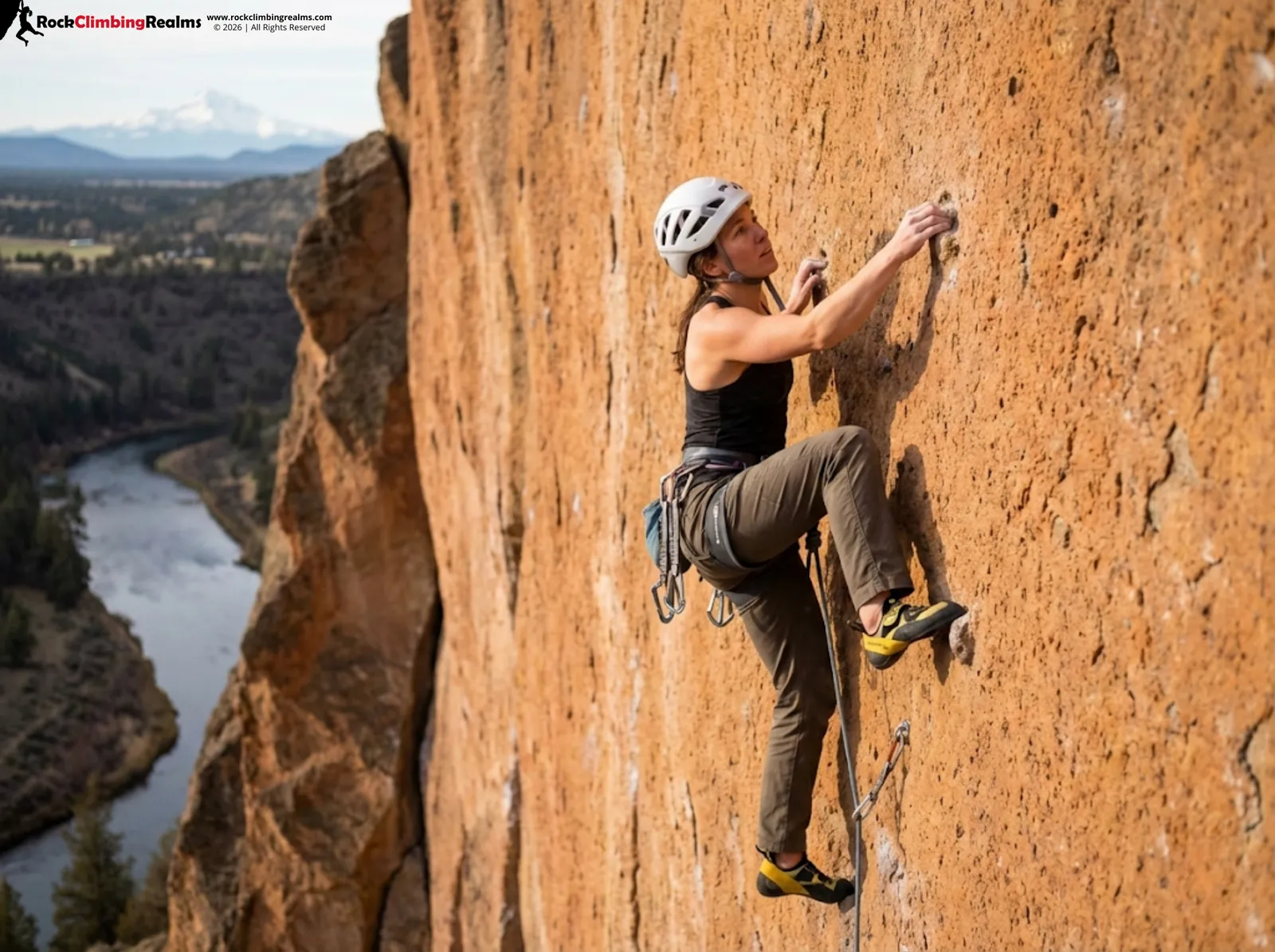
The first bolt on Barbecue the Pope sat 18 feet off the deck, and the foothold I was trusting was a volcanic pebble the size of a pencil eraser. My gym 5.11 meant nothing here. My calves were shaking, my fingers were greased, and the Crooked River was a thin ribbon 400 feet below. Welcome to Smith Rock State Park.
After years of climbing in Central Oregon, I can tell you this much: Smith Rock doesn’t care about your gym grade. It cares about your feet, your patience, and your willingness to get humbled. This guide organizes every major climbing area by skill level, breaks down the route beta that guidebooks skip, and gives you a field-tested plan for your first (or fifteenth) trip to Oregon’s high-desert proving ground.
⚡ Quick Answer: Smith Rock State Park in Central Oregon offers 1,500–2,200 documented rock climbing routes on volcanic welded tuff and columnar basalt. The best seasons are spring (March–May) and fall (September–November). Bring a 70m rope, a stick-clip for the park’s notoriously high first bolts, and expect grades to feel one full letter-grade harder than your gym sends. Day-use costs $10 per vehicle, and bivy camping is $12/person/night (tents only).
What Makes Smith Rock Different From Every Other Crag
The Geology That Shapes Every Move
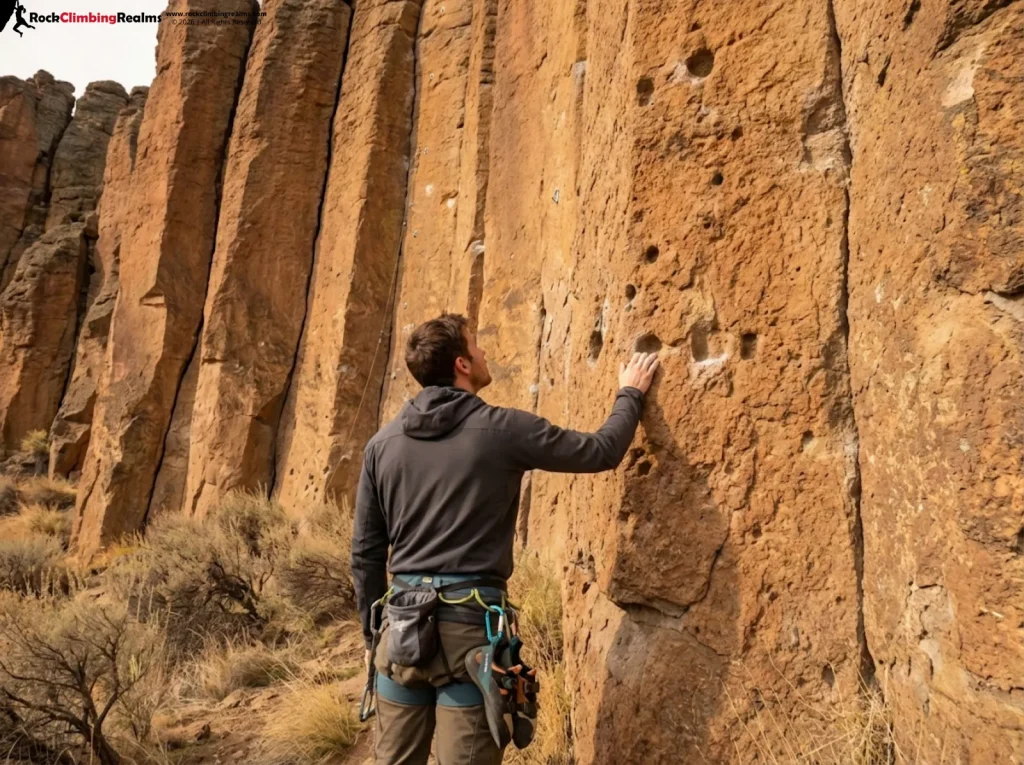
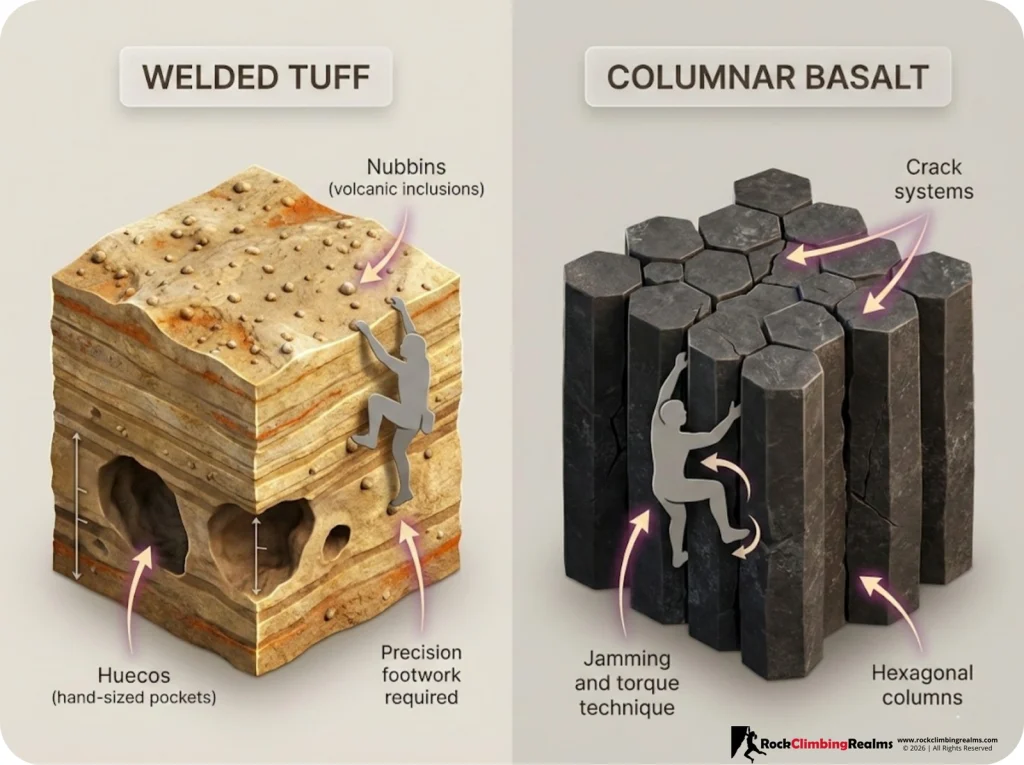
Smith Rock sits inside the Crooked River Caldera, a volcanic event roughly 28 million years old. The primary cliffs — rising up to 600 feet at an elevation of 2,637 feet — are welded tuff, formed when volcanic ash fused under extreme heat and pressure into solid rock. The surface is covered in “nubbins” — tiny, hard volcanic inclusions the size of a pea that serve as your holds. This is what defines the park. Every route on the Front Side demands precision footwork on features most gym climbers have never encountered.
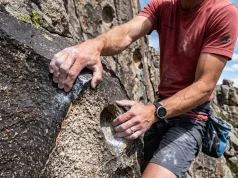
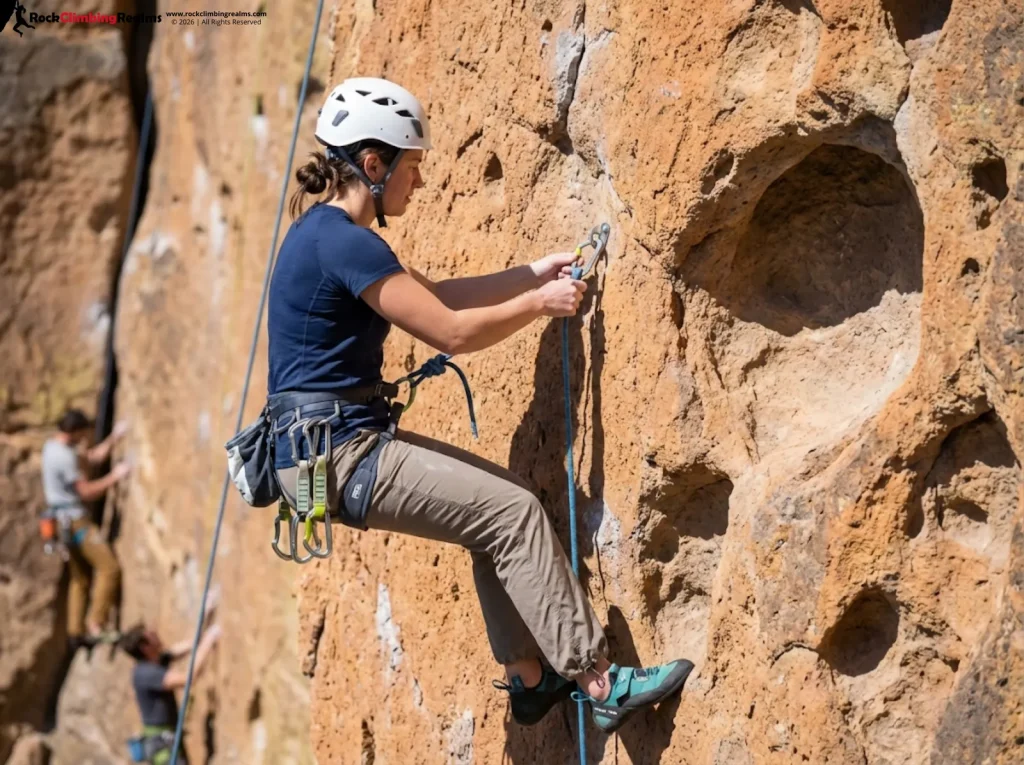
Then there are the “huecos” — volcanic pockets big enough to fit your whole hand inside. Walls like Morning Glory Wall are loaded with them, creating a completely different experience from the nubbin-heavy arêtes. And in The Gorge, the rock changes entirely to dark columnar basalt — hexagonal columns formed from slowly cooling lava, offering crack climbing and vertical jamming that feels like a different planet from the face-heavy tuff. Understanding how rock type dictates your climbing technique and protection is half the battle here.
The high-desert climate cooperates most of the year. Less than 9 inches of annual rainfall makes year-round climbing possible — but summer temps regularly exceed 100°F and winter lows drop below freezing. On clear days, the Cascade Mountains frame the horizon behind the towers.
Pro tip: Shade chasing is a real strategy here. In summer, start on the east-facing walls at sunrise, then migrate west as the sun moves. Morning Glory Wall becomes a heat trap after 10 a.m.
The Birthplace of American Sport Climbing
Before 1983, U.S. climbing ethics demanded routes be established ground-up with gear placed during the ascent. Alan Watts changed everything by introducing European-style bolting on rappel. That year, Chain Reaction (5.12c) — an arête climb on the Dihedrals — proved what sport climbing could achieve on welded tuff.
By 1986, French climber Jean Baptiste Tribout had established To Bolt or Not to Be (5.14a) — the first 5.14 in North America. These first ascents didn’t just set records. They created a practical consequence you’ll feel today: early routes feature first bolts 15–20 feet off the deck, because original developers considered the opening moves “scrambling.” Today, stick-clips are standard safety practice, not optional. Knowing what historic routes teach modern climbers adds context to every bolt you clip here.
The “Sandbagged” Reality — Why Your Gym Grade Doesn’t Transfer
Many climbers report Smith Rock grades feeling “stiff” or “sandbagged.” The mental tax of high first bolts, mandatory precise footwork on nubbins, and the reliance on vertical movement — not overhangs — combine to make a 5.10b at Smith feel like 5.11a in the gym. The difficulty ratings here follow the Yosemite Decimal System, but the community calls them “humble pie.”
Account for a full letter-grade adjustment downward when planning your tick list. Barbecue the Pope (5.10b) has shut down gym 5.12 climbers because it demands face-reading skills that don’t exist on plastic. If you’re making the gym-to-crag transition for the first time, Smith will teach you fast.
Smith Rock Routes by Skill Level — Where to Start, Where to Push
Beginner Routes (5.5–5.8) — Your First Smith Rock Leads
Rope-de-Dope on the east side is the go-to beginner area. Short routes on moderate-angle tuff with bolt lines close enough to feel safe. Several classic beginner routes sit in the 5.6–5.7 range. If crowds bother you, head to The Marsupials northeast across Burma Road — formations like Koala Rock and Brogan Spire offer routes like Round There (5.7) with longer approaches and more solitude.
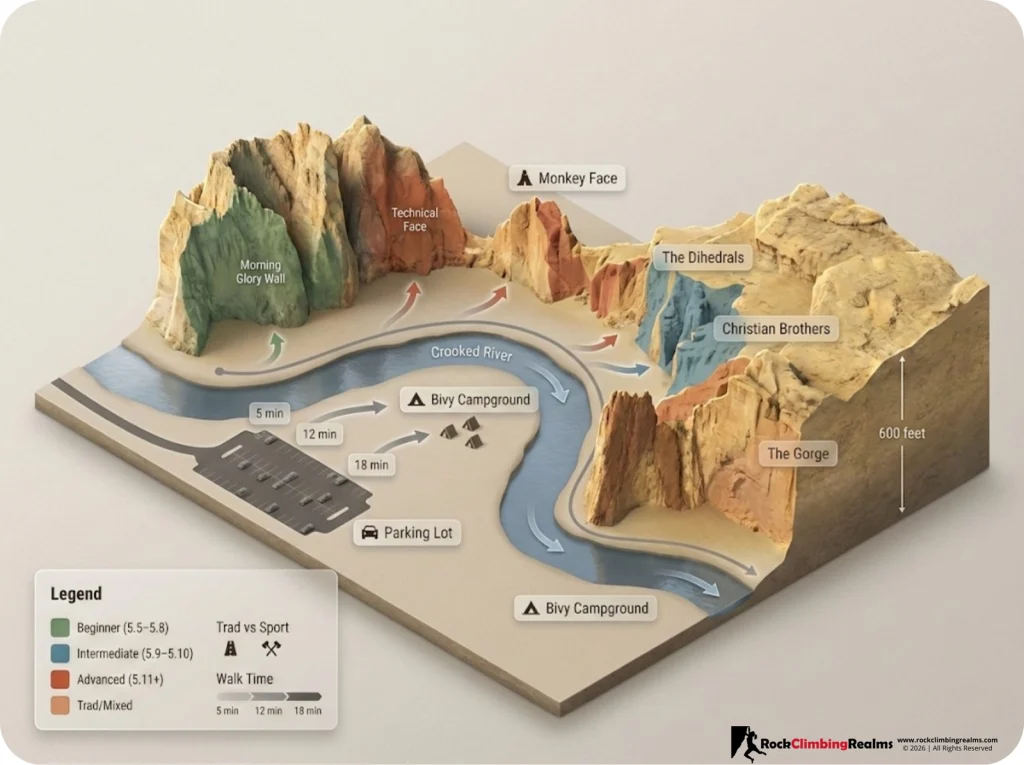
The standout beginner tick is Five Gallon Buckets (5.8) on Morning Glory Wall. Ninety feet of enormous huecos, pure joy, and the main challenge is managing rope drag over the long pitch. Bring a 70m rope and 14+ quickdraws. Approach information is straightforward — a 10-minute walk from the parking lot down to the trail along the river. Beginners should lead here only if comfortable with outdoor lead climbing and stick-clipping — otherwise, top rope setups are available on Rope-de-Dope.
Intermediate Classics (5.9–5.10d) — The Sweet Spot
This range accounts for nearly 43% of all Smith Rock climbing routes. The 5.10 grade alone covers 23.4% of the park — this is the core experience.
Moonshine Dihedral (5.9) on the Dihedrals is a trad climbing line that predates sport climbing. Stemming and jamming on perfect rock. It requires a trad rack. For pure sport, Wherever I May Roam (5.9) gives you sustained face climbing and a solid introduction to the vertical Smith style. Cruel Sister (5.10a) tests technical edging on small features — if you send this clean, you’ve “arrived” at Smith. Nine Gallon Buckets (5.10c) is an exception to the nubbin rule, offering bigger holds than most 5.10s.
Safety note: many 5.10s here have runout sections and high first bolts. Bring a stick-clip and pre-clip that first bolt from the ground. Understanding the 15-foot rule for preventing ground falls could save your season.
Advanced Testpieces (5.11–5.12+) — Earning the Smith Rock Badge
Chain Reaction (5.12c) on the Dihedrals is the park’s most iconic route. An arête climb requiring “thigh master” beta — compression movements using the pillar for body tension. The crux sequences demand heel-hook stabilization that separates sends from falls. Toxic (5.11b) is a sustained vertical face benchmark. Magic Light Start (5.11a) is the accessible entry into 5.11 territory on small features. And Heinous Cling Start (5.12a) tests finger strength and footwork in equal measure.
Pro tip: Projecting at Smith Rock means committing 3–5 sessions to a single route. The style is so specific that even strong climbers need “acclimatization” to the verticality and small-feature reading. Build your redpoint tactics for projecting routes before burning your skin on day one.
The Gorge — Smith Rock’s Trad Side
The Lower Gorge is dark columnar basalt — a world apart from the tuff. Crack climbing on gear, vertical jams, and stemming between columns. Areas like Catwalk Cliff and Wildfire Wall offer world-class trad climbing lines. The Upper Gorge provides solitude and long columns for those willing to hike further, and it holds shade most of the day, making it a primary summer destination.
Trad climbers need a standard rack: cams from 0.3 to #3, nuts, and slings. If you’re assembling gear for the first time, start with building your first trad rack.
Monkey Face and the Multi-Pitch Experience
Pioneer Route (5.7 C0) — The Classic Monkey Face Line
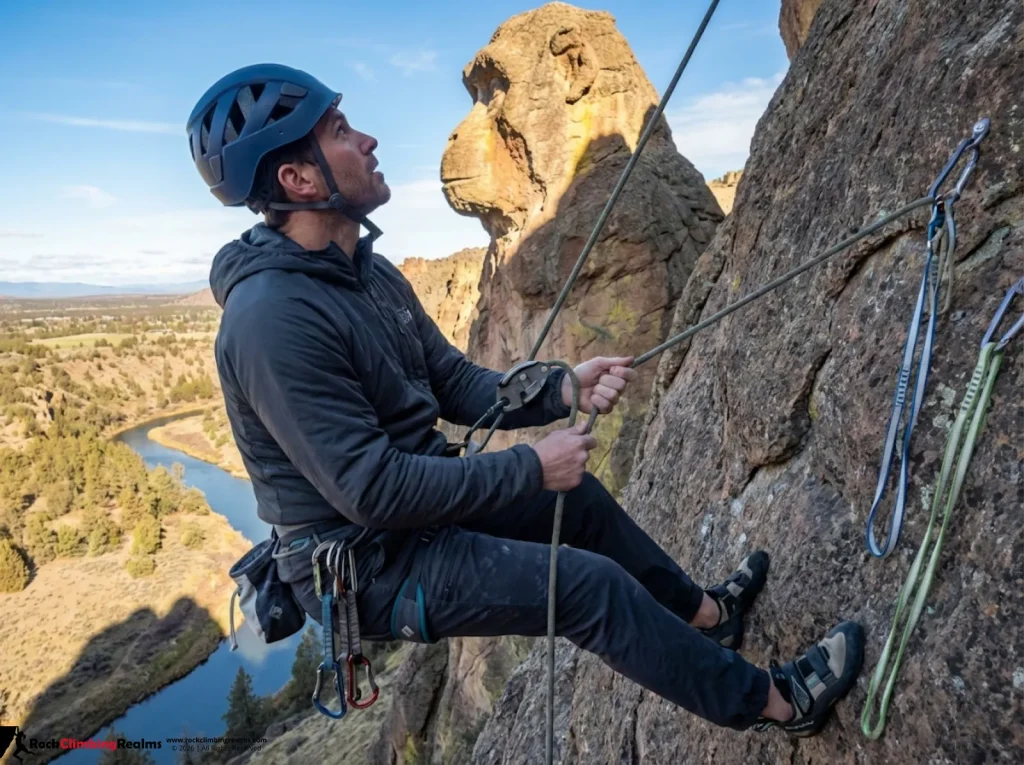
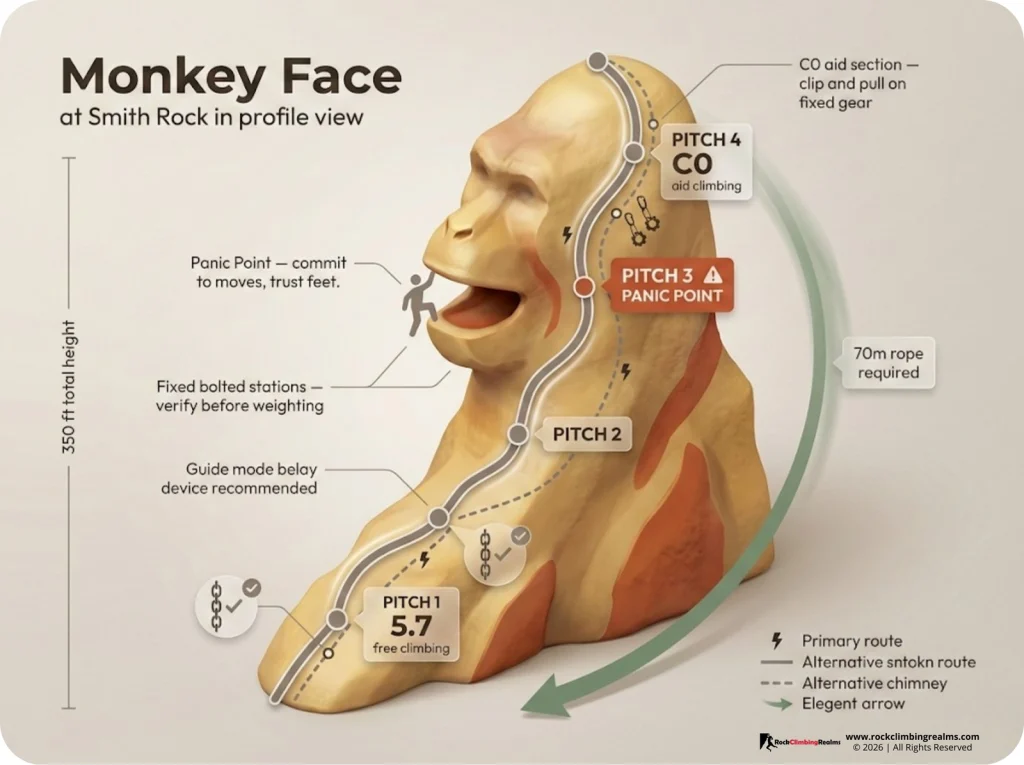
Monkey Face is a 350-foot isolated pillar resembling a primate’s head — the most recognizable formation in the park. The Pioneer Route combines free climbing and a short aid climbing section (C0 — just clip and pull on fixed gear).
The route includes “Panic Point” — where you step out of the Monkey’s mouth into extreme exposure over the void. First-timers freeze here. The beta: commit to the moves, don’t look down, and trust your feet. A 70m rope is mandatory. Bring a belay device with guide mode for belaying from above, and know your rappel system cold before attempting this route. Anchor details are solid — fixed bolted stations at each belay — but verify everything before weighting a chain.
Other Monkey Face and West Side Lines
Monkey Space (5.11b) gives stronger climbers a harder free-climbing alternative. Mesa Verde Wall, located near the base of Monkey Face, is west-facing and provides excellent late-afternoon shade. Moons of Pluto (5.10d) is the standout route on Mesa Verde — sustained face climbing with a rewarding finish. Access from Asterisk Pass or the River Trail takes 20–30 minutes of hiking times on well-marked trails.
East Face and Beyond — The Quiet Side
The East Face of Monkey Face and surrounding walls receive far less traffic than the Front Side. This area is where experienced climbers find solitude on weekends when the Dihedrals are mobbed. Routes here tend to be slightly more adventurous — expect longer runouts and less-polished rock. The tradeoff is worth it if you want the outdoor climbing experiences that Smith Rock was built for, without the crowds.
Planning Your Smith Rock Trip — The Logistics Nobody Spells Out
When to Go — Seasons, Weather, and Shade Strategy
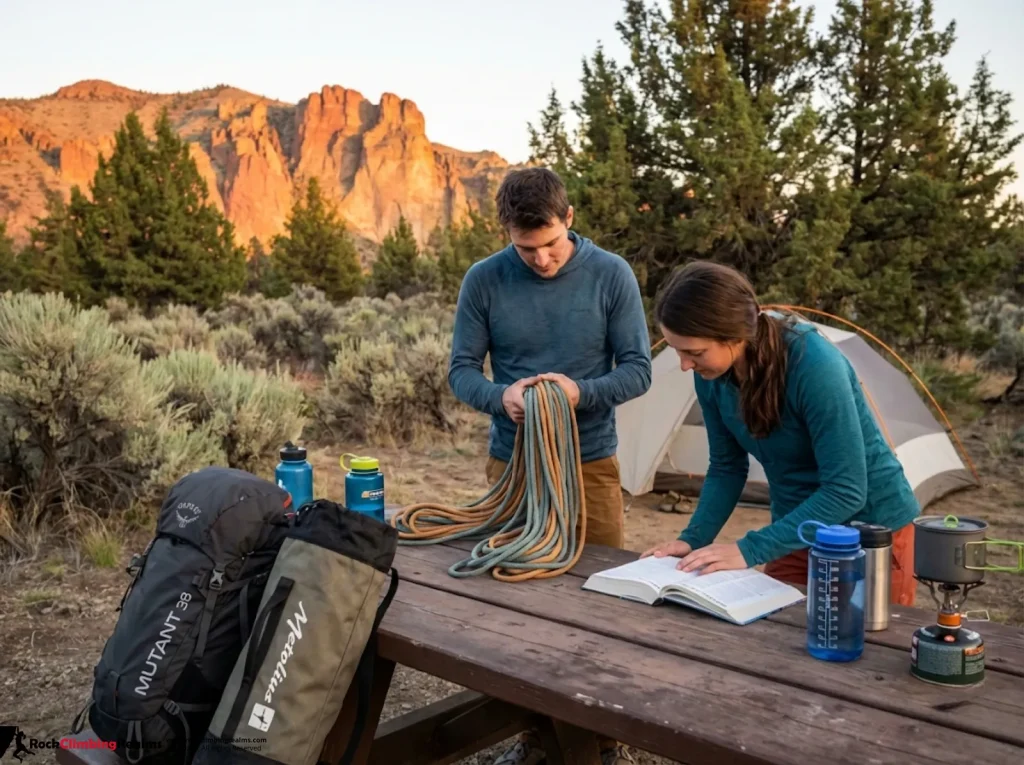
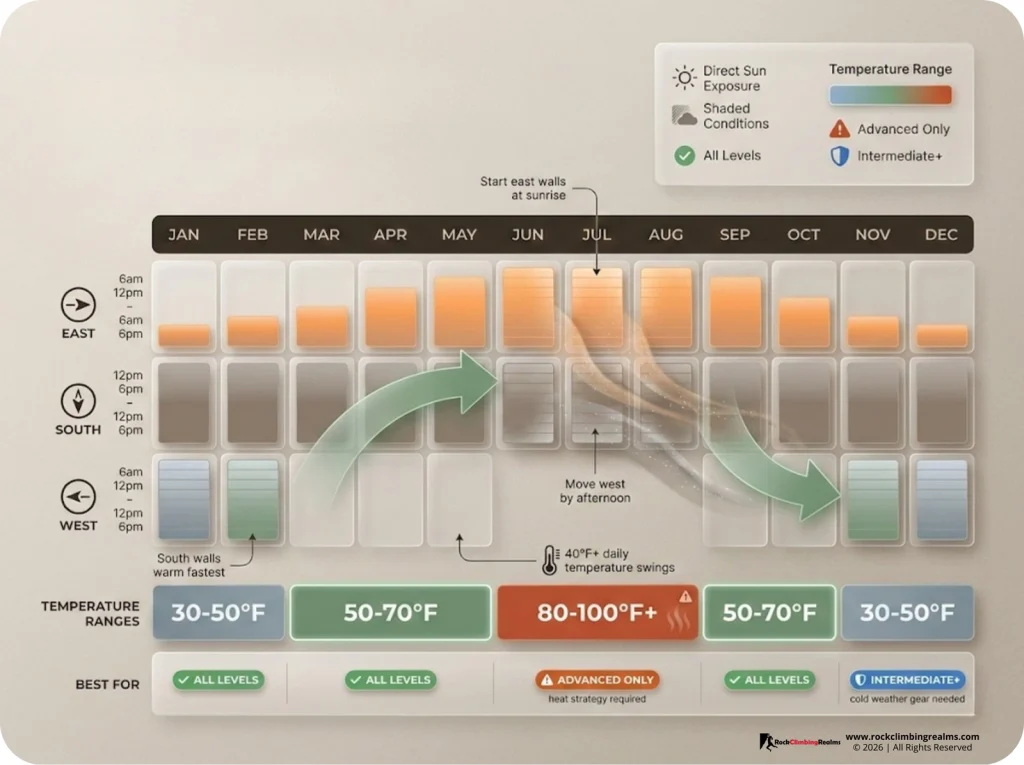
Best seasons are spring (March–May) and fall (September–November). Temps sit between 50–70°F, rock friction peaks, and the high-desert landscape looks its best. Summer climbing is possible but brutal — temps exceed 100°F regularly. Your strategy: start east-facing walls at sunrise, move to west-facing walls (Mesa Verde, West Side Crags) by afternoon. Winter is cold but climbable on sunny days, with south-facing walls like Morning Glory warming up fastest.
The high-desert climate produces extreme weather considerations — a 40°F+ difference between morning and afternoon is normal. Layer accordingly.
Camping, Fees, and the Bivy Rules
Day-use costs $10 per vehicle. Annual pass: $30 (12 months) or $50 (24 months). Bivy camping is $12 per person/night, includes next-day parking, and is strictly tent-only — sleeping in vehicles, RVs, or trailers is prohibited inside the park. No fires allowed.
Your alternative is Skull Hollow (the “Grasslands”), 8 miles northeast on BLM land. Primitive, no water, but allows vehicle camping and fires if you bring your own wood. Van lifers take note: the Bivy prohibits vehicle sleeping, so plan for Skull Hollow or private campgrounds in Terrebonne/Redmond.
Raptor Closures — The Non-Negotiable Rules
From January 15 to August 1, multiple areas close to protect nesting Golden Eagles, Peregrine Falcons, and Bald Eagles. The Monument Area is fully closed during nesting season — no exceptions. The Canyon Trail limits groups under 4 people with quiet passage only. Drones are prohibited January through August.
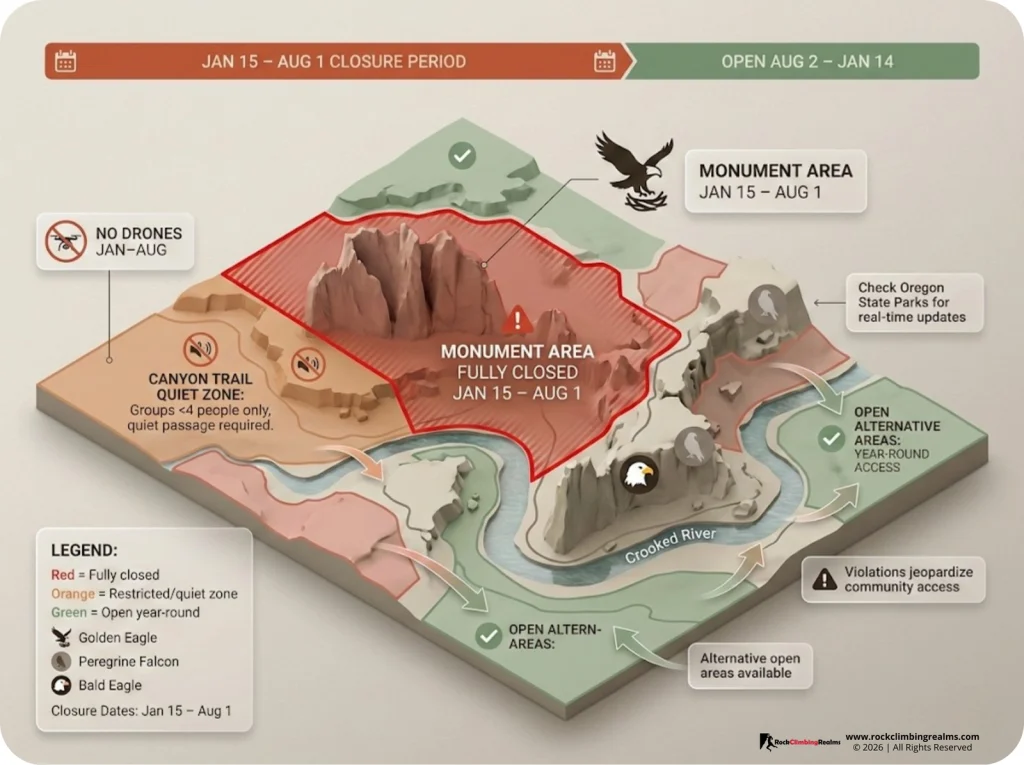
Violation of seasonal climbing closures jeopardizes access for the entire community. Check the Oregon State Parks raptor closure schedule for real-time updates before every trip. Understanding the science behind raptor nesting closures helps you appreciate why these rules exist.
Gear Essentials and the Smith Rock Stick-Clip Protocol
The 70m Rope and Stick-Clip Non-Negotiables
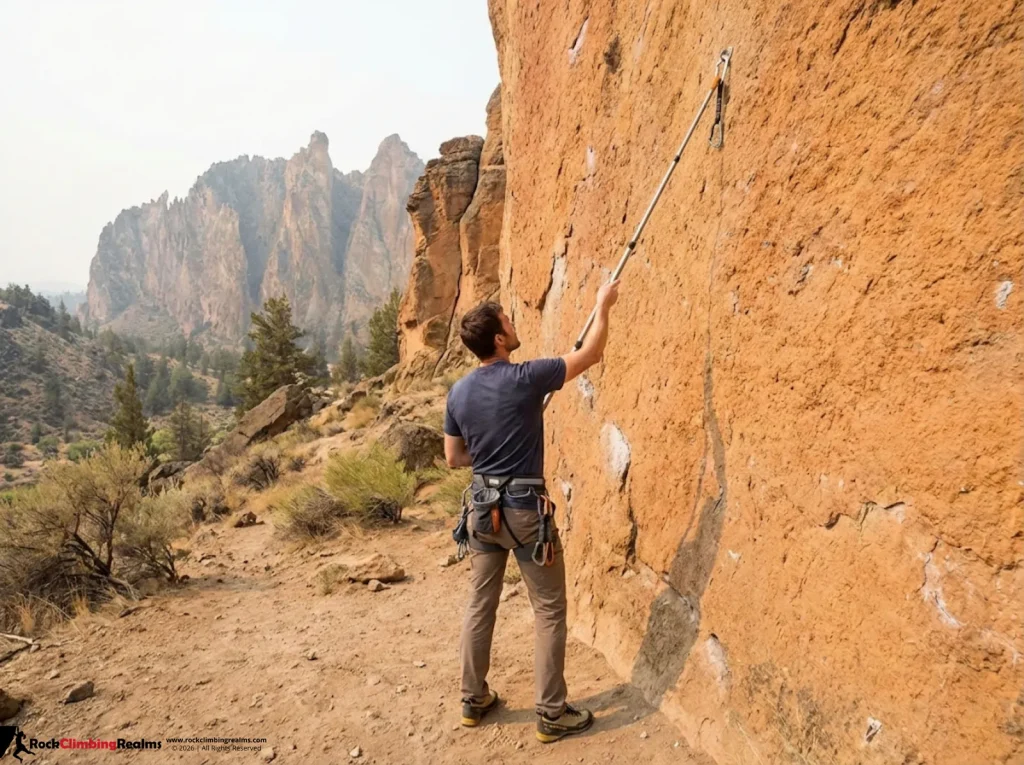
A 70m rope is the standard. Many classic routes — including Five Gallon Buckets at 90 feet — require the full length for lowering. A stick-clip (the Trango Beta Stick Evo is the popular choice) is essential, not optional. Pre-clipping the first bolt — often 15–20 feet off the ground — prevents catastrophic ground falls during opening sequences. Carry 14–16 quickdraws for the longer sport climbing lines.
Sport vs. Trad Gear Needs
Front Side sport climbing needs 14–16 quickdraws, 70m rope, stick-clip, and a helmet. Gorge trad climbing adds a standard rack (cams 0.3–#3), nuts, slings, and alpine draws for wandering basalt cracks. Multi-pitch routes on Monkey Face require a belay device with guide mode, a PAS or tether, and cordelette for anchor building.
Sport climbing shoes with stiff edges outperform soft-soled shoes on the vertical tuff. Save your aggressive downturned shoes for overhangs elsewhere.
The Footwork Recalibration
Smith Rock climbing lives and dies on footwork. Nubbins demand “small pebble pinching” — a precise toe placement where you weight a single point of contact the size of a lentil. Practice edging drills on easy routes before attempting anything at your limit. Spend your first day on 5.7s and 5.8s, even if you climb 5.11 in the gym.
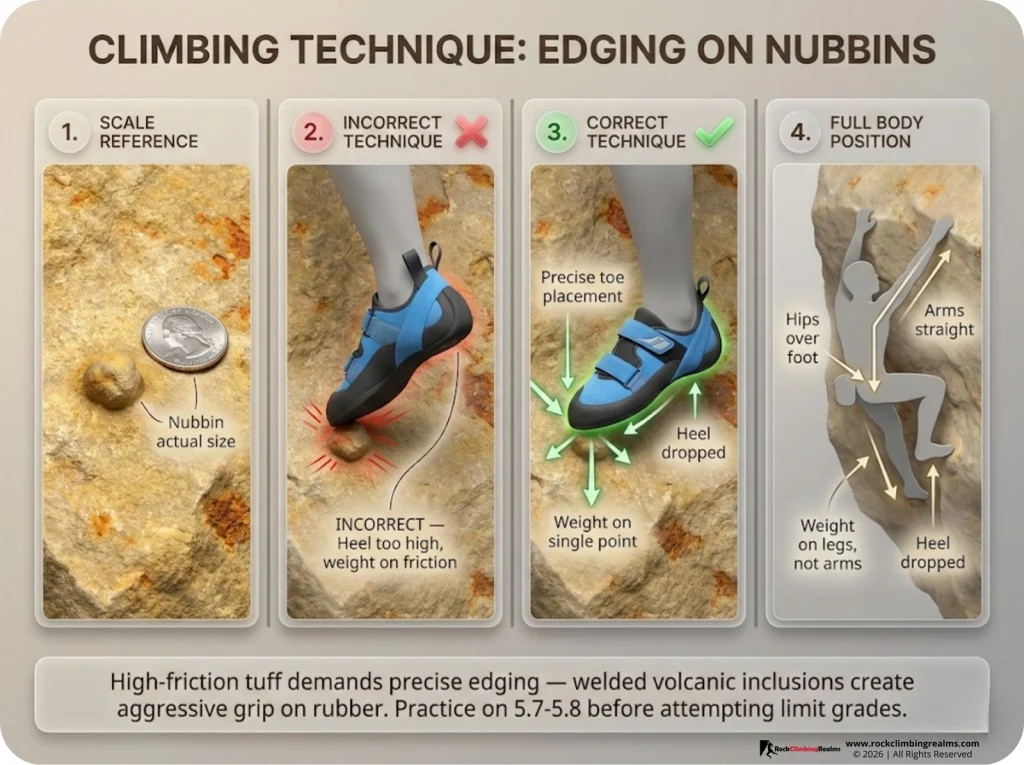
Pro tip: Your chalk disappears fast on the high-friction tuff. Reapply often, and consider a chalk bucket at the base for re-upping between burns. The geological formation of Smith Rock’s volcanic tuff explains why friction is so aggressive on this rock type — it’s the welded inclusions grinding against rubber.
Stewardship — How to Protect Access for Everyone
The Overcrowding Problem
Smith Rock State Park receives 500,000+ annual visitors. The popular Front Side crags — Dihedrals, Morning Glory, Christian Brothers — feel like a gymnasium on spring weekends. Strategic avoidance helps: The Marsupials, West Side Crags, and Upper Gorge see a fraction of the traffic. Plan “B-side” days to decompress. The annual “Spring Thing” trail maintenance event run by the Smith Rock Group is a direct way to give back.
Leave No Trace at the Bivy and Crag
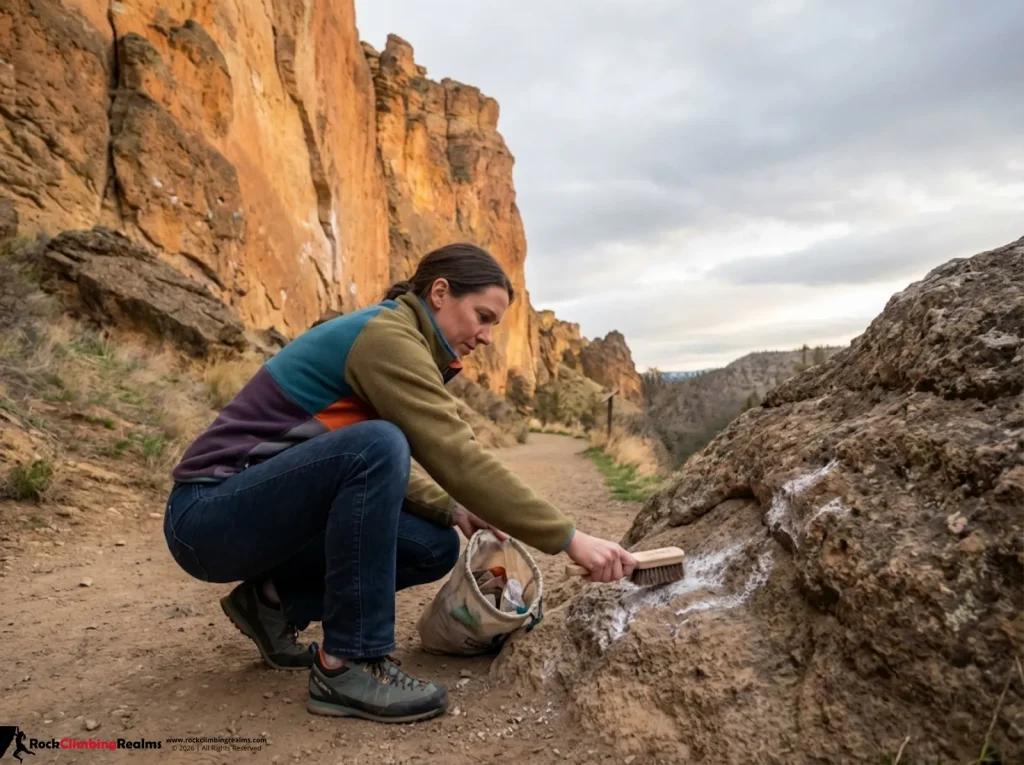
Pack out ALL waste — tape scraps, food wrappers, everything. The Bivy has limited facilities. Brush chalk off holds after your session. Excessive tick marks degrade the rock and annoy other climbers. Stay on established trails. The high-desert soil is fragile and slow to recover from erosion. That responsibility sits with every visitor.
Conclusion
Smith Rock rewards precision over power. Recalibrate your expectations, bring a stick-clip, and respect the small-feature game that built American sport climbing. Organize your trip by skill level, not by area proximity — the best route for you might be a 20-minute hike past the crowds. And stewardship isn’t optional. Raptor closures, waste management, and trail discipline keep this park open for everyone.
Pick three routes from this guide that match your honest ability. Climb them well. Then come back and pick three more.
FAQ
Is Smith Rock good for beginner climbers?
Yes — but only if you’re already comfortable lead belaying and clipping bolts outdoors. Areas like Rope-de-Dope and The Marsupials offer 5.6–5.8 sport climbing routes with reasonable bolt spacing. Pure beginners should consider hiring a local guide service for their first day.
What is the best time of year to visit Smith Rock for climbing?
Spring (March–May) and fall (September–November) provide ideal temperatures between 50–70°F and optimal rock friction. Summer climbing is possible but requires shade-chasing across east or west-facing walls. Winter offers solitude on south-facing walls if you can handle the cold.
Do you need a permit to climb at Smith Rock?
No climbing-specific permit is required. You need a $10 day-use parking pass (or $30 annual Oregon State Parks pass). No registration or reservation system exists for climbing.
Can you top rope at Smith Rock?
Some areas — particularly Rope-de-Dope and select routes on Northern Point — have accessible anchors for top roping. However, most Smith Rock classics are lead-only. Setting a top rope requires leading the route first or finding walk-off access to anchors.
What is the hardest route at Smith Rock?
The Assassin (5.14d) currently stands as the hardest established route. For context, the park’s historical peak was To Bolt or Not to Be (5.14a) — the first 5.14 in North America, established in 1986 by Jean Baptiste Tribout.
Safety Notice: Rock climbing and mountaineering are inherently high-risk
activities that can involve physical trauma or fatal incidents. The information on Rock Climbing Realms is for
educational and informational purposes only. Techniques and advice presented here are not a substitute
for professional, hands-on instruction. Conditions and risks vary by location. Always seek guidance
from a qualified instructor before attempting new techniques. By using this website, you agree that you
are solely responsible for your own safety. Any reliance you place on this information is strictly
at your own risk, and you assume all liability for your actions. Rock Climbing Realms and its authors
will not be held liable for any harm, damage, or loss sustained in connection with the use of this information.
Affiliate Disclosure: We are a participant in the Amazon Services LLC Associates Program, an
affiliate advertising program designed to provide a means for us to earn advertising fees by advertising and linking
to Amazon.com. As an Amazon Associate, we earn from qualifying purchases. We are also an official affiliate partner
of Black Diamond Equipment via the AvantLink network. If you click on a Black Diamond affiliate link and make a
purchase, we may earn a commission at no additional cost to you. We also participate in other affiliate programs.
Additional terms are found in the terms of service.