
In this article
You’ve decided to start climbing in LA. Now you’re staring at a list of gyms wondering why some charge $25 for a day pass and others run $112 a month — and what the actual difference is. After visiting every major gym in the city and training regularly at three of them, I can tell you it’s not just square footage. The “best” gym in Los Angeles depends almost entirely on what kind of climber you are, what kind of climber you want to become, and — because this is LA — where you live.
⚡ Quick Answer: Los Angeles has eight indoor climbing gyms worth knowing, from bouldering-only spots to full rope facilities. The top pick for most beginners is LA Boulders in the Arts District (4.7★, no partner needed), while serious rope climbers should look at Cliffs of Id or Sender One LAX. One membership trick most people miss can cut your cost in half — keep reading.
Before You Pick a Gym in LA, Know This

Bouldering gyms vs rope gyms: the real difference
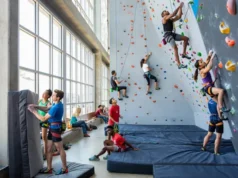
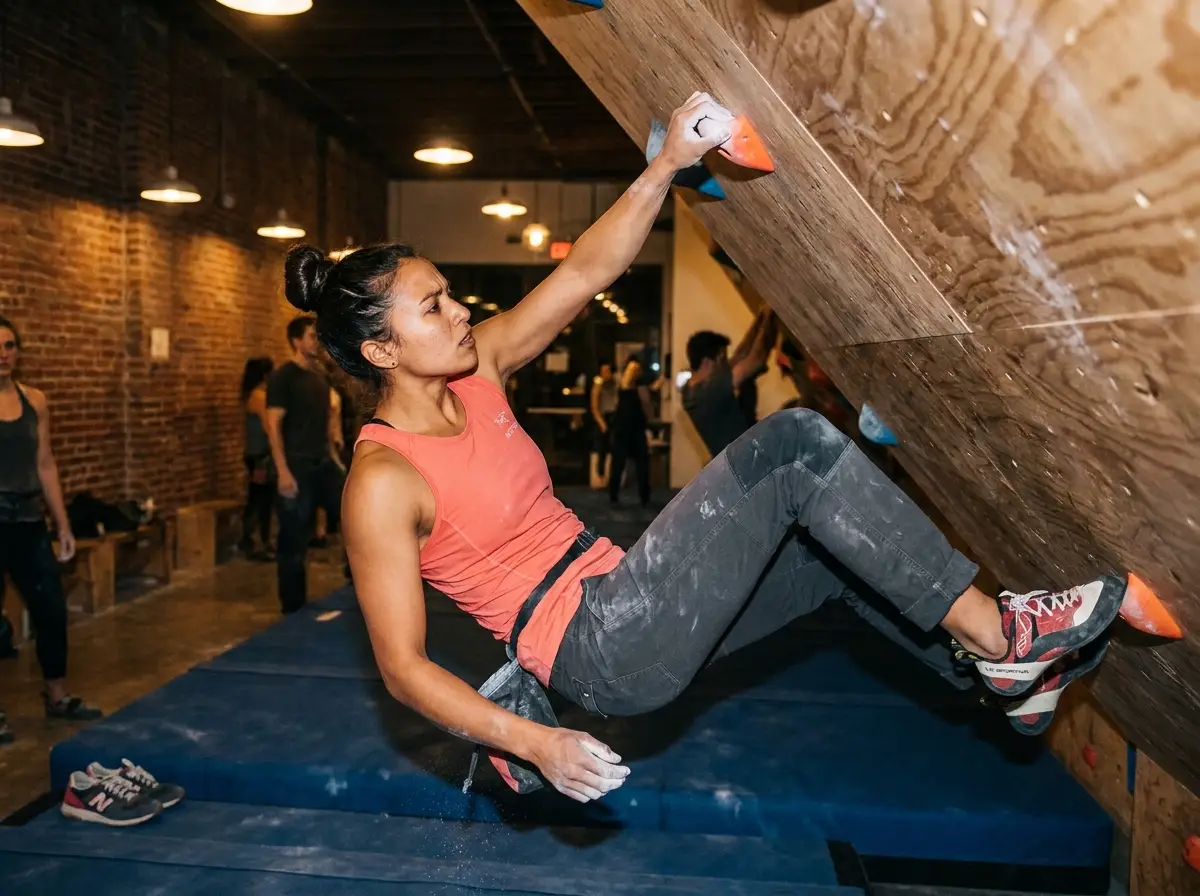
Bouldering is climbing without a rope on shorter walls — typically under 20 feet — with thick foam crash pads on the floor. You don’t need a partner. You don’t need to learn how to belay. You show up with climbing shoes and chalk and start figuring out problems on your own. Most beginners find bouldering easier to get into precisely because there’s no gear to learn and no one you need to coordinate with.
Rope climbing — top rope and lead climbing — means higher walls and a partner holding your rope. If you fall, the rope catches you. The upside is height: you can climb routes that go 40 to 60 feet, which develops endurance in a way that short boulder problems simply don’t. The downside is logistics. You need to pass a belay certification test at the gym before you can climb on the rope walls unsupervised. Plan for 30–60 minutes of practice and a short skills check on your first visit.
Neither style is better. They train different things. Many serious climbers do both. If you want a deeper look at how the two disciplines compare in terms of physical demands, this breakdown of bouldering vs sport climbing differences covers the mechanics well.
The Touchstone network and why it changes the math
Three of the best-known gyms in Los Angeles — LA Boulders, Hollywood Boulders, and Cliffs of Id — are all owned by Touchstone Climbing. One Touchstone membership at $112 per month gets you unlimited access to all three, plus every other Touchstone location in California.
Do the math: a day pass at any of these gyms runs $25. If you climb four times a week, that’s $100 in less than three weeks. The monthly membership pays for itself by session twelve. If you’re a bouldering gym person three or four days a week, the Touchstone network is one of the better deals in the city.
What to expect on your first visit
Every LA gym rents shoes — usually $4–$5. Most rent harnesses for rope areas. Chalk is either sold by the gym or you bring your own bag. Bring your own if you go regularly; gear rental costs add up quickly over a few months of consistent climbing.
Pro tip: Show up during off-peak hours your first time — weekday mornings or early afternoons. Weekend afternoons at the popular gyms can get crowded enough that you’ll spend more time waiting to get on a problem than actually climbing. Your first sessions should be about getting comfortable on the wall, not navigating a crowd.
Your first session will likely feel humbling. That’s normal. V0 and V1 bouldering problems — the easiest grades — are designed for beginners, but they still require figuring out body position and footwork. Most people get their first real sends in their second or third session. Stick with it.
LA Boulders — Best for Pure Bouldering (Arts District)

What the walls and setting are actually like
LA Boulders sits in the Arts District in a converted industrial space, and the setting suits it. The walls are clean and well-maintained, the route-setting is consistently praised as the best in the city, and the gym has a focused, no-nonsense energy. You’re there to climb, not to post content.
The gym is primarily a bouldering gym — roughly 12,000 square feet of climbing terrain, walls up to 17 feet, and LA’s largest slab wall. The slab section alone is worth the visit if you’ve never climbed low-angle friction: it teaches footwork faster than any other wall type because you cannot pull your way up it. The basics covered in this beginner bouldering guide apply directly to what you’ll encounter here.
There’s also a mezzanine-level fitness area with strength training and yoga classes if you want to supplement your sessions.

Who LA Boulders is right for
Beginners who want to get into climbing without coordinating a partner. People who prioritize route quality over facility size. Anyone living or working on the Eastside who doesn’t want to fight cross-city traffic to get to a gym.
It’s a Touchstone gym, so if you build a climbing habit here and want to add Cliffs of Id or Hollywood Boulders later, your membership already covers it. Many climbers who start at LA Boulders end up using the network regularly because the three gyms cover different disciplines and different parts of the city.
Pricing and membership breakdown
Day pass: $20 before 3 PM, $25 after (early-bird pricing on weekdays). Monthly Touchstone membership: $112/month, unlimited access to all Touchstone locations. If you’re going three or more times a week, the membership is better math from week three onward.
Cliffs of Id — Best Full-Service Gym (Culver City)

What 26,000 square feet gets you
Cliffs of Id is the largest gym on this list and the most fully equipped. The 26,000-square-foot facility in Culver City has 40-foot rope walls, 10,000 square feet of bouldering terrain, a full weights and machines area, yoga classes, saunas, and showers with free towel service. It’s the gym you go to when you want the whole thing in one place.
The route rotation runs on a 10-week cycle across all walls — color-coded, thoughtfully sequenced, and more varied than any other LA gym at the moment. The Touchstone route-setting team, reported to be the largest full-time team in the country, does its most visible work here.
Rope climbing and bouldering under one roof
If you’re not sure whether you want to be a boulderer or a rope climber, Cliffs of Id is probably where you should start. You can try both disciplines in the same session without committing to one style. The beginner rope classes here are well-structured, and the staff consistently gets mentioned in reviews as approachable and genuinely helpful.
For climbers working toward outdoor crags, the anchor systems you’ll learn on the rope walls here match what you’d find at Joshua Tree and other SoCal destinations. Understanding how top rope anchors work before your first outdoor trip makes the experience less overwhelming.
Pro tip: If you live on the Westside and find yourself choosing between Cliffs of Id and Sender One, consider which style of climbing you’re planning to focus on. Cliffs of Id gives you more variety and a bigger facility; Sender One gives you more vertical height on the rope walls. For most beginners, variety wins early.
Pricing and the Touchstone membership angle
Day pass: $25. Monthly Touchstone membership: $112/month, includes access to all three LA Touchstone gyms. The sauna and free towel service are included in the membership — a genuine value add if you’re visiting after work and want to head somewhere afterwards without smelling like chalk and sweat.
🏆 INFORMATION GAIN: Competitors review LA Boulders, Hollywood Boulders, and Cliffs of Id as three separate gyms requiring three separate decisions. They’re actually one decision: the Touchstone network. Pick the location most convenient for you and the membership covers all three.
Sender One — Best for Rope Climbers Who Want Real Height

What 60-foot walls change about your training
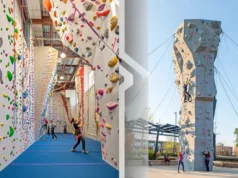
Sender One’s flagship location near LAX has 60-foot rope walls — the tallest in the LA area. That’s not just a bragging point. Climbing on walls this tall trains endurance and pump management in ways that 30-foot walls simply can’t replicate. You have to rest on the wall, manage your breathing, and commit to sequences that feel long before you reach the chains.
If your goal is eventually climbing multi-pitch routes outdoors, training on tall walls here is closer to that experience than anything else in the city. The first time you get to the top of a 60-foot route, the perspective shift is real. You start climbing differently — more patiently, with more attention to resting positions.
There are also locations in Playa Vista and Westwood, so Sender One covers a good chunk of the Westside map with facilities that share membership reciprocity.
Belay certification: what it takes and how long
You need a Sender One Top Rope Belay Card to climb on the rope walls. The process is a skills check — not a class — where a staff member watches you tie in correctly, use your belay device safely, and catch a simulated fall. For most people with any prior belay experience, it takes 15–20 minutes. First-timers should take the Intro to Climbing class first ($39 for non-members, free with a punch pass) to learn the basics before the check.
Lead climbing requires a separate Lead Belay Card, earned through a more detailed check-off. The fall dynamics on lead routes differ meaningfully from top rope, and the certification process reflects that. Don’t skip the lead course just because you already belay confidently on top rope.
Which Sender One location makes sense for you
Sender One LAX (Westchester) is the biggest and has the 60-foot walls — best for serious rope development and anyone in the South Bay or near the airport. Sender One Playa Vista is newer, more bouldering-focused, and well-suited for the Marina del Rey area. Sender One Westwood runs closest to UCLA and gets a younger crowd that keeps the vibe social and accessible. All three share membership reciprocity.
First-timer deal: a 5-visit punch pass including gear rental is $69. If you’re testing the waters before committing to a membership, this is the most cost-effective way in the door.
The Stronghold — Best Character and Community

The Brewery Arts Complex setting
The Stronghold was the first ropes gym to open in Downtown LA, and it’s housed in the former Pabst Blue Ribbon factory at the Brewery Arts Complex in Lincoln Heights. There’s also a second location on West Sunset Boulevard. If you’re expecting the polished feel of a Touchstone gym, manage your expectations going in. The walls are good — not as flashy, but real — and the industrial setting is either going to appeal to you or it isn’t.
The Sunset Boulevard location has a more bouldering-focused setup and feels cleaner overall. The original Lincoln Heights space has the history, the grittier atmosphere, and a loyal local crowd that’s been climbing together for years. People know each other here. That’s either the thing you want most or it’s not what you’re looking for.
Route quality vs the aesthetic
Routes change frequently and lean toward the technical side — expect problems that reward movement quality over raw strength. The wall angles vary enough to keep sessions interesting, and the routesetters here have a reputation for building problems that don’t feel thrown together.
One honest note from regulars: the older Lincoln Heights location gets cold in winter and warm in summer. It’s an industrial building from the early 1900s, not a climate-controlled fitness center. Wear layers in January. Plan morning sessions in August.
Pro tip: The Stronghold’s night climbing events — where the gym shuts the lights and members climb by headlamp — are genuinely worth doing once. It changes how you read routes. You start finding holds by feel rather than by sight, which forces cleaner technique faster than almost any other drill.
Best fit: who thrives here
Climbers who want a real community, not a gym that feels like a fitness subscription. People who want to push technical movement without the noise of a large facility. Eastside and Northeast LA residents who don’t want to drive to Culver City every session. Day pass: $20 matinee rate (weekdays before 3 PM), $25 regular. Monthly membership: $84, the most affordable in this tier among Eastside gyms.
Other Solid Options Worth Knowing

Rockreation — LA’s oldest, cheapest day pass
Rockreation in West LA has been open since 1993, making it the oldest climbing gym in the city. That history shows in the community — there are regulars who’ve been climbing here for twenty years, which gives the place a character you won’t find at newer facilities. The walls are smaller than current-generation gyms, the training area is compact, and rope climbing is the primary focus.
The $18 day pass is the cheapest of any notable LA gym. If you’re on the Westside and price is a factor, Rockreation gets you on a wall for less than any competitor. It’s also where you’ll find some of the most experienced climbing instructors in the city — people who have been teaching here through multiple generations of LA climbers.
Hollywood Boulders — Touchstone’s most reviewed gym
Hollywood Boulders has 4.6 stars and over 520 reviews — more than any other gym on this list. It’s a Touchstone gym, bouldering-focused, with more than 10,000 square feet of problems up to 16 feet. The fitness class selection here is broad: Muay Thai, barbell training, yoga, and acroyoga alongside climbing. A good option if you’re in Hollywood or Los Feliz and want one membership that covers climbing and non-climbing fitness. The community here skews social, and solo climbers often find a regular crew here faster than at larger facilities.
Hangar 18 — South Bay’s answer
Hangar 18 in Hawthorne has been the default answer for South Bay climbers for years. It offers both bouldering and rope climbing, which makes it the most versatile option south of the 105. If you’re in El Segundo, Torrance, or anywhere near LAX on the south side, Hangar 18 saves you the drive into the city. Route setting is solid and the staff tends to be knowledgeable about outdoor destinations in the area — useful if you’re starting to think about taking climbing outside.
Which Gym Makes Sense Based on Where You Live in LA

This is the section nobody writes, but it’s maybe the most practical consideration on this list. Los Angeles traffic is not a minor inconvenience — it’s a real deterrent to building a consistent climbing habit. A gym that’s 40 minutes away on a Tuesday evening is a gym you’ll talk yourself out of visiting. Pick the gym closest to where you are most days, then let quality be your tiebreaker.
Eastside and Arts District
LA Boulders is the clear choice — best-rated gym in the city, bouldering-focused, right in the Arts District. If you work downtown or in Silver Lake, Echo Park, or Koreatown, this is your gym. The Stronghold’s Lincoln Heights location is the backup for rope access, and it’s a shorter drive east from most Eastside neighborhoods.
Westside and Culver City
Cliffs of Id is the flagship option — the largest facility, the most complete, and well-placed for Westside access off the 10. Rockreation in West LA is the more affordable alternative if rope climbing is your focus and you don’t need the full amenity package.
Hollywood and Los Feliz
Hollywood Boulders is right there. If you’re bouldering-focused and in Hollywood, Los Feliz, or Silver Lake, this is a simple decision. It’s a Touchstone gym, so LA Boulders and Cliffs of Id come along with the same membership. For rope climbing in this area, The Stronghold Sunset location is the nearest option.
South Bay and LAX area
Sender One LAX covers the western South Bay and everything near the airport. Hangar 18 in Hawthorne covers the central and eastern South Bay. These two gyms are geographically close enough that the choice usually comes down to whether you want 60-foot rope walls (Sender One) or a more compact gym with both disciplines available (Hangar 18).
Both are a straight shot to the 5 freeway toward Joshua Tree National Park — about two and a half hours in light traffic. When you’re ready to take your climbing outside, the Southern California chapter of the American Alpine Club runs meet-ups and skills clinics that bridge the gap between gym climbing and outdoor routes. That transition is its own learning curve, and having people around who’ve made it helps considerably.
Conclusion
A few things worth keeping from all of this: know whether you want to boulder or rope climb before you walk in the door, because the gym choice follows directly from that. If you’re going Touchstone, LA Boulders, Hollywood Boulders, and Cliffs of Id are functionally one gym with three locations for $112 a month — split that across 15 sessions and you’re spending less than eight dollars a climb. And when you’re ready to take it outside, Joshua Tree is two and a half hours away and has been turning gym climbers into outdoor climbers for decades. Go before you decide you’ve exhausted what indoor climbing has to offer.
FAQ
Which Los Angeles climbing gym is best for beginners?
LA Boulders in the Arts District is the best starting point for most beginners — bouldering-only, no partner required, no belay certification needed, and the highest-rated gym in the city at 4.7 stars. Show up during a weekday morning with climbing shoes and chalk, and you can climb independently from your first session.
How much does a day pass cost at LA climbing gyms?
Day pass prices range from $18 at Rockreation in West LA to $25 at most Touchstone gyms and Sender One locations. The cheapest single-visit option is Rockreation; the best first-timer value is Sender One’s 5-punch pass for $69, which includes five visits and all gear rental.
Is bouldering better for beginners than top rope?
For most beginners, yes. Bouldering requires no partner, no belay certification, and the problems are short enough that getting comfortable with falling happens quickly. Top rope and lead climbing develop different strengths and greater endurance, but the logistics barrier — finding a partner, getting certified — makes bouldering the lower-friction entry point for most new climbers.
Do you need a belay certification to climb at LA gyms?
Only for rope walls. Bouldering areas are open without any certification at every gym on this list. To use top rope or lead climbing walls, you’ll need to pass a belay check at that specific gym. Sender One and Cliffs of Id both run straightforward certification processes that most people complete in under an hour on their first visit.
Which LA climbing gyms share memberships?
The three Touchstone Climbing gyms in Los Angeles — LA Boulders, Hollywood Boulders, and Cliffs of Id — share a single membership at $112 per month, with unlimited access to all three locations plus every other Touchstone gym in California. Sender One’s three LA locations — LAX, Playa Vista, or Westwood — also share a single membership between them.
Safety Notice: Rock climbing and mountaineering are inherently high-risk
activities that can involve physical trauma or fatal incidents. The information on Rock Climbing Realms is for
educational and informational purposes only. Techniques and advice presented here are not a substitute
for professional, hands-on instruction. Conditions and risks vary by location. Always seek guidance
from a qualified instructor before attempting new techniques. By using this website, you agree that you
are solely responsible for your own safety. Any reliance you place on this information is strictly
at your own risk, and you assume all liability for your actions. Rock Climbing Realms and its authors
will not be held liable for any harm, damage, or loss sustained in connection with the use of this information.
Affiliate Disclosure: We are a participant in the Amazon Services LLC Associates Program, an
affiliate advertising program designed to provide a means for us to earn advertising fees by advertising and linking
to Amazon.com. As an Amazon Associate, we earn from qualifying purchases. We are also an official affiliate partner
of Black Diamond Equipment via the AvantLink network. If you click on a Black Diamond affiliate link and make a
purchase, we may earn a commission at no additional cost to you. We also participate in other affiliate programs.
Additional terms are found in the terms of service.