
In this article
The flame looked innocent — barely bigger than a paperback novel, tucked against a granite boulder at the base of the route. By morning, the wall above it had shed three holds. Not from the fire spreading. From the heat. The rock itself had detonated, silently, while the camp slept off a 12-hour day. That crag has been closed to new development ever since.
That story isn’t unusual. It’s Tuesday in land management offices across the West.
After enough seasons climbing in places like Bishop, Yosemite, and Ten Sleep, you stop thinking of a campfire at the crag as a cultural tradition and start thinking of it as a structural engineering failure waiting to happen. The physics are unambiguous. The administrative consequences are predictable. And the access fund documentation shows a clear causal chain between fire incidents and permanent crag closure.
This article explains exactly how campfire heat destroys granite, degrades your rope without showing a mark, and gives resource-strapped land managers their easiest exit: close the gate.
⚡ Quick Answer: Campfires at climbing areas cause thermal spallation — the explosive fragmentation of surface rock — which can physically pop holds off routes and weaken bolt placements. A rope draped 15cm from a campfire can reach strength-compromising temperatures (160°C) in 10 minutes with zero visible damage. Always check InciWeb and your Ranger District website for current burn bans before you leave. If fires are permitted, use an elevated fire pan, follow the wrist-thick wood rule, and extinguish using the “Drown, Stir, and Feel” protocol — if any part of the ash mixture is too hot to touch, it’s too hot to leave.
Why Campfires and Climbing Areas Are Fundamentally Incompatible
Here’s where most climbers get it wrong: they think fire risk at a crag is purely an ecology problem. It isn’t. It’s a physics problem with an administrative shut-off at the end.
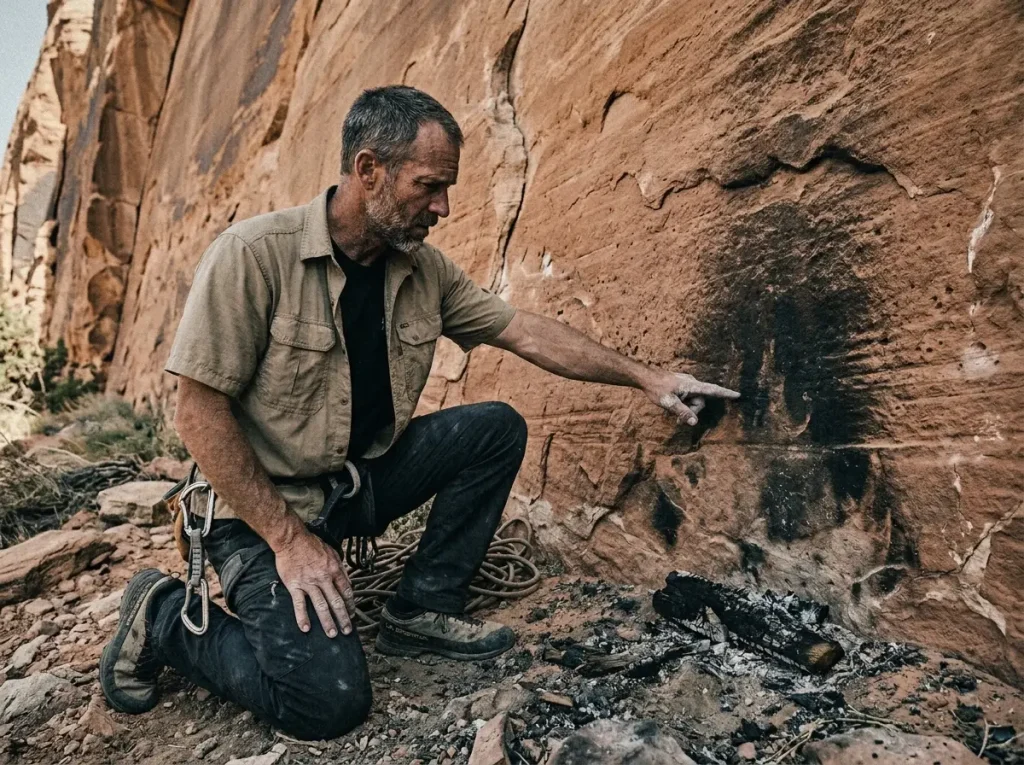
Thermal rock degradation starts the moment you light a fire against the cliff base. That rock face acts as a reflector — heat doesn’t disperse into the open air the way it does in a field. It channels upward and inward, trapped by the geometry of the wall above it. The soot accumulation on holds that follows signals “climber impact” to land managers during access inspections. That visual evidence is often all they need.
The Access Fund’s documentation of fire-driven climbing closures at areas like Lover’s Leap, Table Rock State Park, and Boulder Canyon makes this explicit. In every case, the causal chain runs from fire incident to resource assessment to blanket closure. And as Chris Winter, former Executive Director of the Access Fund, put it: “The easy answer is just to say no — to close the gate.” Land managers under resource strain don’t have time to negotiate with individual climbers. They manage at the policy level. A single campfire that goes sideways doesn’t just close one visit — it can close a crag for seasons.
There’s also a fatigue factor that land managers know they can’t engineer around. Most climbers who cut corners on fire safety do so after a 12-hour day. Judgment degrades. Fires don’t get properly extinguished. That’s when “mostly out” becomes a wildfire.
The “new reality” isn’t just bigger fires — it’s shorter windows between high-risk periods, and land managers who have seen one too many “small campfire” incidents. Burn bans now activate faster, cover wider areas, and last longer than they did a decade ago. That timeline isn’t reversing. If you’re still treating fire compliance as a box to check rather than a protocol to follow, you’re operating on outdated assumptions.
If you wouldn’t leave a burning cigarette at the base of a route, think carefully before leaving a “small campfire” there. For the full spectrum of threats to climbing access — fire being one among many — read the full spectrum of threats to climbing access.
The Physics of Thermal Spalling — How Fire Destroys Rock
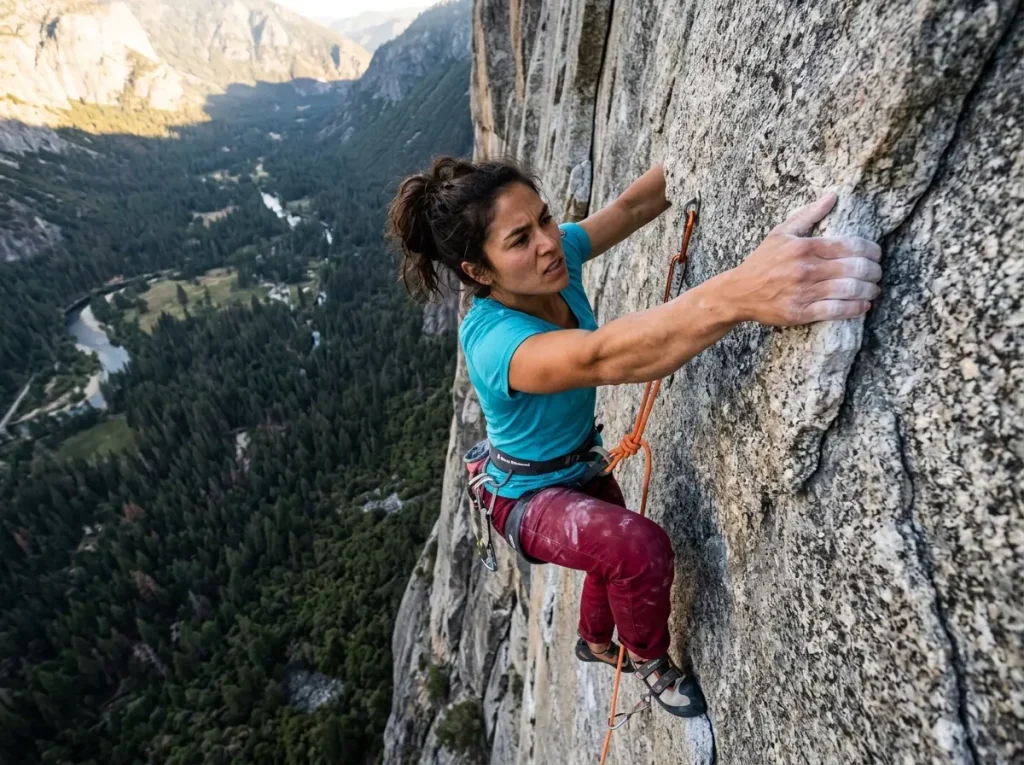
This is the part that competitors don’t cover. It’s also the part that matters most.
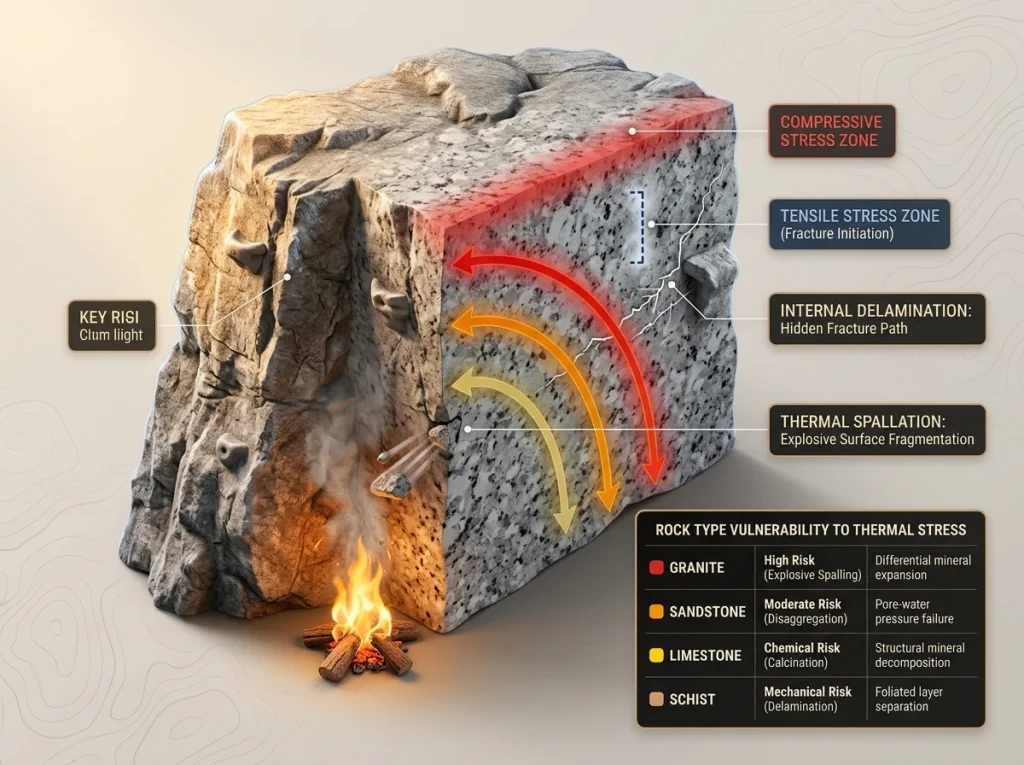
Thermal spalling is the explosive fragmentation of a brittle solid’s surface through rapid, localized heat application. It happens when intense heat creates a steep temperature gradient inside the rock matrix — the surface layer tries to expand while the cooler subsurface resists. That creates compressive stress at the surface and tensile stress perpendicular to the heated plane. When those stresses exceed the rock’s tensile strength, fractures propagate parallel to the surface. Chips fly off. Sometimes violently.
The secondary mechanism — thermohydraulic spalling — is nastier. In granite and sandstone, moisture trapped in pores vaporizes. Steam pressure builds behind what researchers call a “moisture clog” near the surface. If that pressure exceeds the reduced tensile strength of already-hot rock, you get explosive spalling. That’s the audible crack in the night when nobody’s watching.
Different rock types fail in different ways:
- Granite is the most hazardous — its mix of quartz and feldspar minerals have vastly different thermal expansion rates, so internal stress builds fast. Explosive spalling with audible noise.
- Sandstone disaggregates — granular pore-water pressure causes flaking and crumbling of the surface.
- Limestone undergoes calcination at high temperatures — the mineral itself chemically decomposes, and holds don’t just spall, they dissolve structurally.
- Schist delaminates along its foliated layers, losing structural coherence from the inside out.
Peer-reviewed research on wildfire mechanical effects on climbing rock documented that at least 6.5% of climbing areas in fire-affected zones in Spain suffered measurable hold deterioration and anchor damage from these mechanisms. That number should sit with you.
The holds don’t look burned. They look fine. Then on a cool morning six months later, one pops under a heel hook. That’s thermal expansion memory — the rock already fractured, invisibly. The first visible sign isn’t a chunk missing from the wall — it’s a sound difference. A compromised hold produces a hollow “thock” when you tap it instead of the dense “thud” of solid rock. Tap before you trust. If you want to understand how external forces degrade rock over time, the science of how external forces degrade climbing rock goes deeper on the geology.
Pro tip: The first visible sign of thermal spalling isn’t chunks missing from the wall — it’s a subtle sound difference when you tap a questionable hold. A compromised hold produces a hollow “thock” instead of the dense “thud” of solid rock. Tap before you trust.
Fire and Your Gear — Polymer Science for the Sleeping Climber
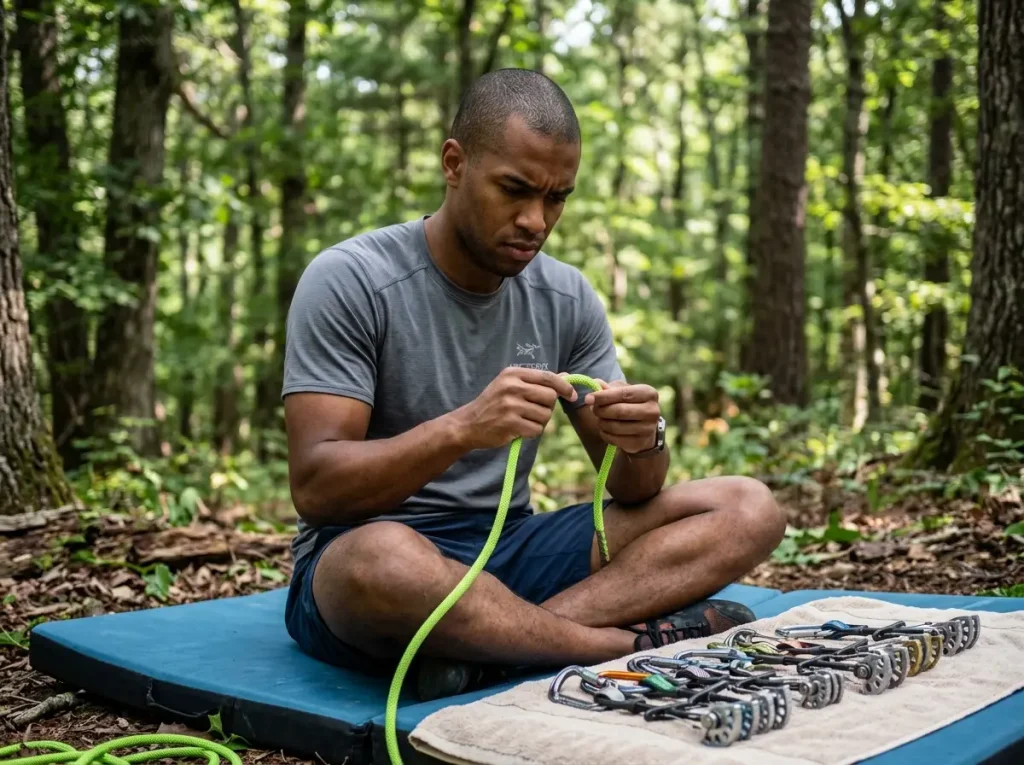
The rock damage is invisible until something catastrophic happens. The rope damage is also invisible. That’s the problem.
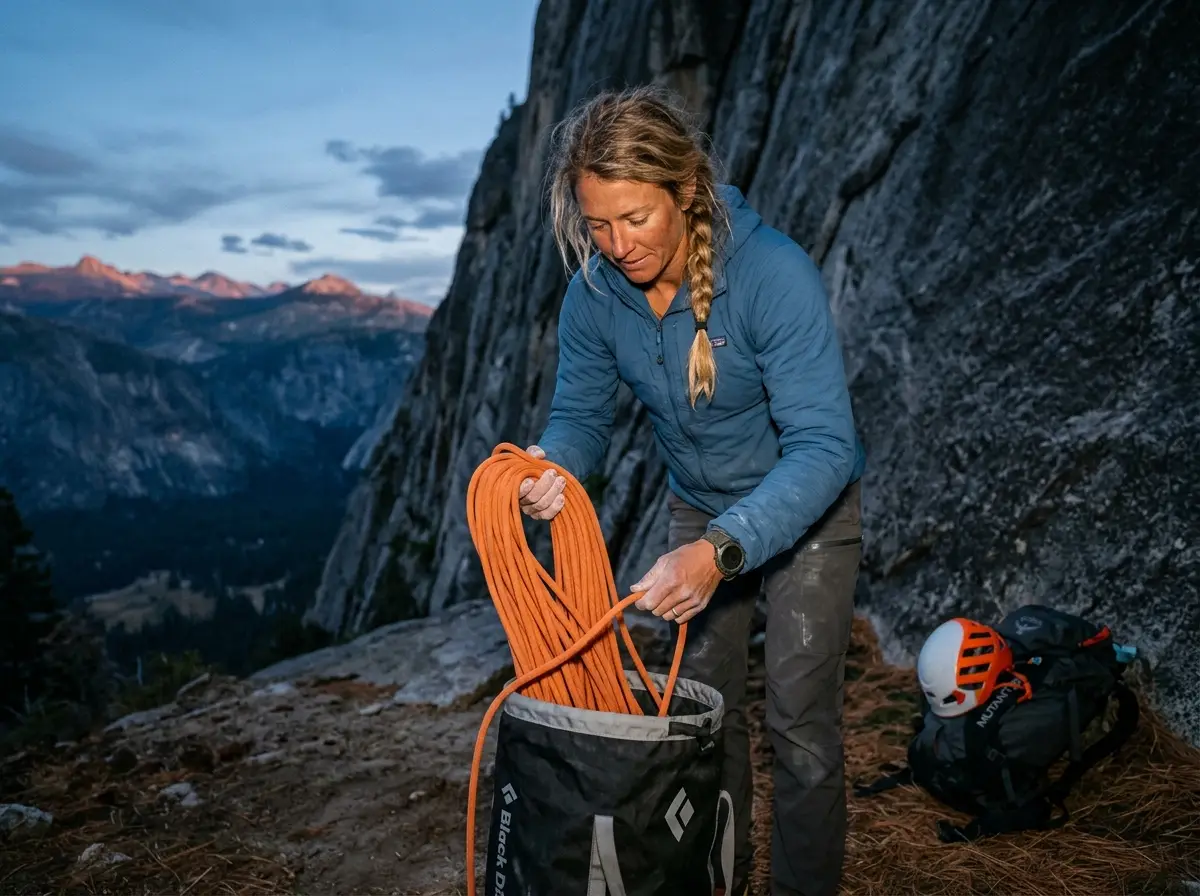
Your climbing rope, slings, and harness are built from nylon polymers — polyamide materials that have excellent strength-to-weight ratios but are genuinely sensitive to heat. What matters isn’t the melting point. It’s the strength-loss threshold, which comes long before anything looks wrong.
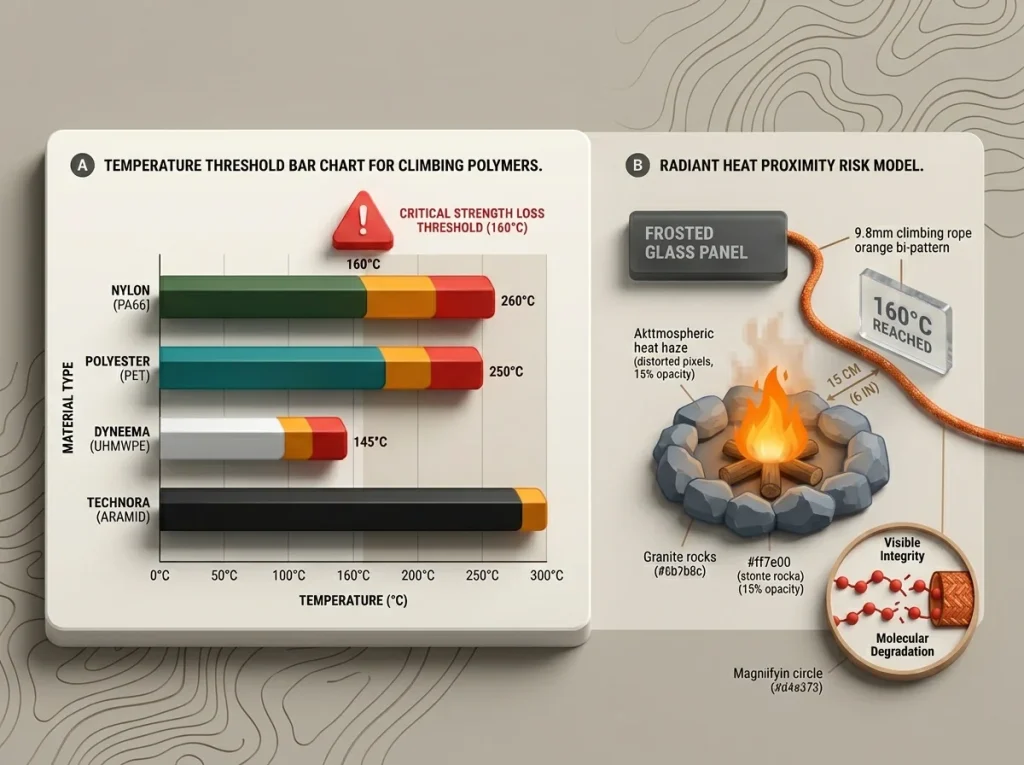
Significant strength loss in nylon begins at approximately 160°C (320°F). A rope draped 15cm from a campfire reaches that temperature in 10 minutes with only light discoloration showing. The sheath looks intact. The core structure has already degraded. This data comes from Teufelberger and Sterling Rope’s heat resistance testing data — not from guesswork.
Dyneema is even more exposed to this risk. Those UHMWPE fibers in your slings and quickdraw draws melt at 140–150°C — barely above boiling water. Any piece of Dyneema gear that spent time near a campfire is a retirement candidate. Full stop.
The “belay device oven” debate — whether leaving gear in a hot car damages it — is mostly noise. Car interiors don’t get hot enough to cause structural failure in nylon. Radiant campfire heat absolutely does. And the difference between the two scenarios is that the car heat is diffuse while fire heat is concentrated and directional.
There’s also the rappel glazing issue. A rope that’s been close enough to fire to take heat can develop a permanently stiffened sheath with internal structural loss. It won’t catastrophically fail on the next rappel. But its dynamic properties — the elongation and energy absorption that protect you in a fall — are compromised. A compromised dynamic system isn’t a rope anymore. It’s a liability.
I’ve seen climbers rest their pack on top of a cooled fire ring and wonder why the cord on their tag line felt stiff a month later. The ring wasn’t cold enough. It never is. That stiffness isn’t from storage — it’s a heat signature. And unlike a worn sheath you can see fraying, heat damage to nylon gives you nothing visual to work with until something fails.
Your complete gear retirement and lifespan tracking system gives you a framework for auditing your rack after any fire exposure. If you’re not sure whether your rope got too close to a campfire, assume it did and inspect accordingly.
Pro tip: After any camping trip where a fire was present, run your rope through your hands slowly and feel for any sections with unusual stiffness or a subtle glassy texture on the sheath. Those spots are heat exposure markers. Don’t climb on that rope until you’ve re-evaluated the exposure and, if in doubt, retired it.
The Operational Protocols — How to Build a Legitimate Low-Impact Fire
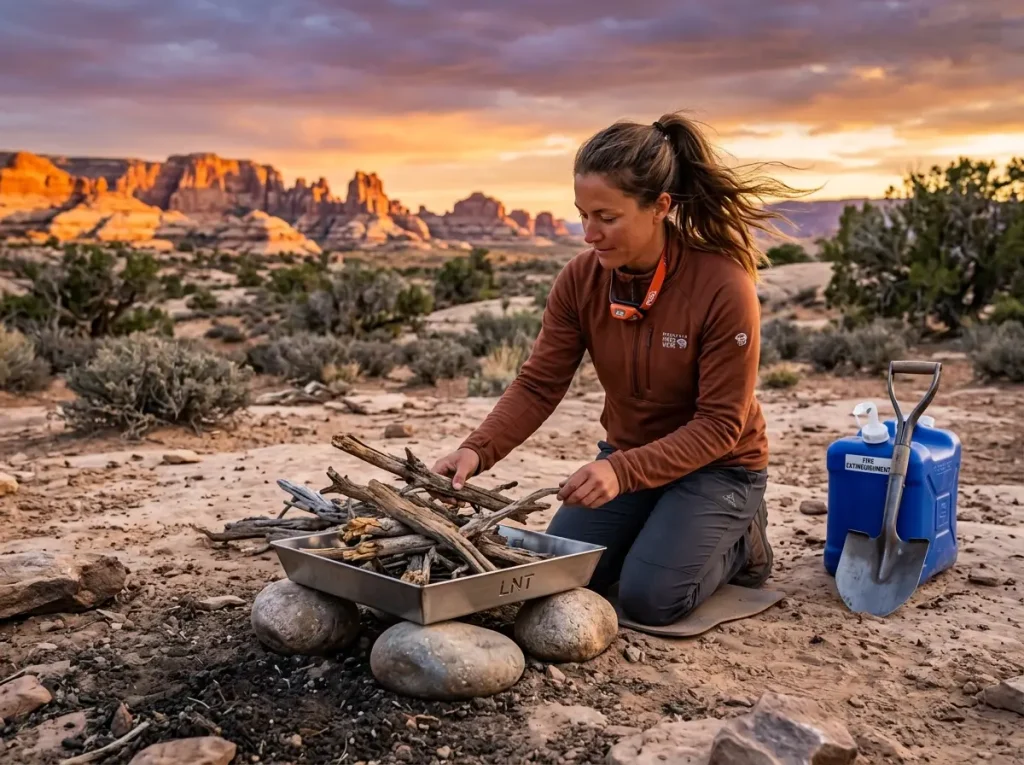
If fires are permitted at your destination and you understand what you’re doing, here’s the standard. Not the folklore — the actual LNT-recognized protocol.
First Gate — Checking Regulations Before You Strike a Match
The USFS “Know Before You Go” fire restriction system runs on two stages. Stage 1 restricts campfires to designated rings only. Stage 2 bans campfires entirely. Both can change on an hourly basis during high-risk periods. The problem is most climbers check regulations at the trailhead sign, which may be days out of date.
InciWeb (inciweb.nwcg.gov) is the primary incident-specific resource. Individual USFS fire restriction levels and how to check them are listed by district. BLM land operates under different regulations from USFS — the same canyon can be managed by both agencies with different rules for each side of the road. Always verify jurisdiction before you assume.
Some restrictions apply only between 9am and midnight. Others are 24-hour. The distinction matters. Read the exact wording, not just the headline.
Pro tip: Follow your destination’s Ranger District Facebook page. Burn ban updates appear there 12–24 hours before they’re reflected on official USFS websites. It’s the fastest early warning system available. Download the Forest Service app before you leave cell range — it caches the current fire orders for offline access.
The Fire Pan Technique — The Professional Standard
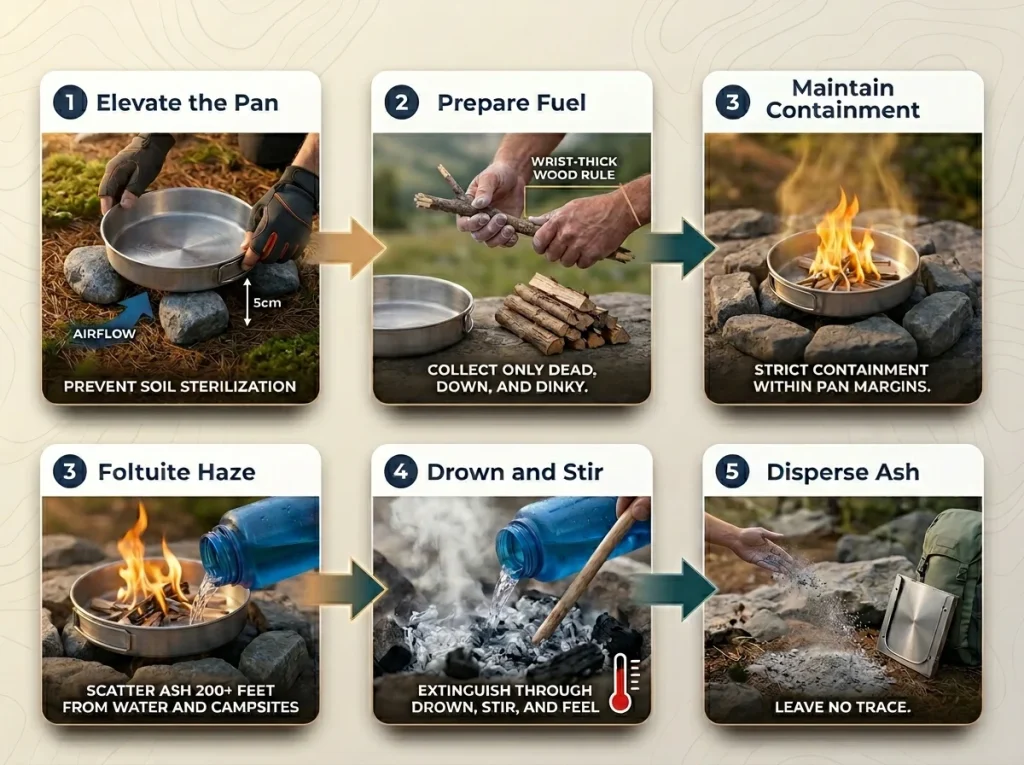
If fires are allowed and no designated ring exists, the fire pan technique is what the BLM and LNT Center recognize as the professional standard. You need a metal tray with at least 3-inch sides — a commercial fire pan or a large oil drain pan works. Collapsible fire pans weigh under a pound and pack flat. There’s no excuse for not carrying one in fire-allowed primitive camping zones.
The pan must be elevated on cobbles to allow airflow underneath. Direct contact between the pan and the soil kills the organic layer beneath — fungi, invertebrates, nitrogen-fixing organisms. That’s a permanent impact visible during land manager access inspections.
All wood burns to white ash — no half-burned logs, no charred stumps. Once cold to the touch, ash gets dispersed at least 200 feet from water sources, trails, and campsites — the 200-foot water source distance is a hard rule, not a suggestion.
Watch the LNT Skills Series on fire pan technique here:
The Mound Fire Technique — When No Pan Is Available
If you’re without a pan and fires are permitted, the mound fire involves collecting mineral soil — sand, gravel, or dirt from a disturbed source like a toppled tree root, never scraped topsoil — using a trowel and large stuff sack. Lay a ground cloth first for cleanup containment. Build the mound to 3–5 inches thick. That insulation barrier between combustion and the soil ecosystem below is the entire functional point of the technique.
Mound fires carry more wind-scatter risk for ash than pans, especially in exposed or alpine environments. At altitude above 10,000 feet, coals also retain heat longer due to lower oxygen combustion efficiency — add extra water and stir time during extinguishment. In any exposed environment, the fire pan wins. The mound technique is a fallback, not a preference.
The “Drown, Stir, and Feel” Extinguishment Protocol
Here’s where most climbing campfire incidents originate. Dirt does not extinguish fire. It insulates coals, which can smolder underground and re-ignite 12 or more hours later. That’s not theory — that’s how wildfires start from “dead” campfires. It’s documented. Not a debate.
The correct protocol: slowly pour water while stirring continuously with a shovel or stick. Every coal, every ash clump. The mixture must be cold to the touch everywhere. If it’s too hot to hold your hand against for 10 seconds, add more water and stir again.
Plan for 1–2 gallons of water for a standard campfire. If your water carry can’t support that, you can’t have a fire that night. Build that into your trip plan before you leave the car, not at 9pm when the jug is half empty.
The “4D” fuel rule keeps fires manageable: Dead, Down, Dinky, Distant. Collect only wood already on the ground, breakable by hand, no thicker than a wrist — the wrist-thick wood rule ensures complete combustion. Stop adding fuel at least one hour before sleep so the fire can burn down to ash naturally.
For the full LNT ethics framework that covers all seven principles — not just fire — the full LNT ethics framework every climber needs before going outdoors is the place to go deeper.
How Campfire Culture Closes Crags — The Sociology of Access Loss
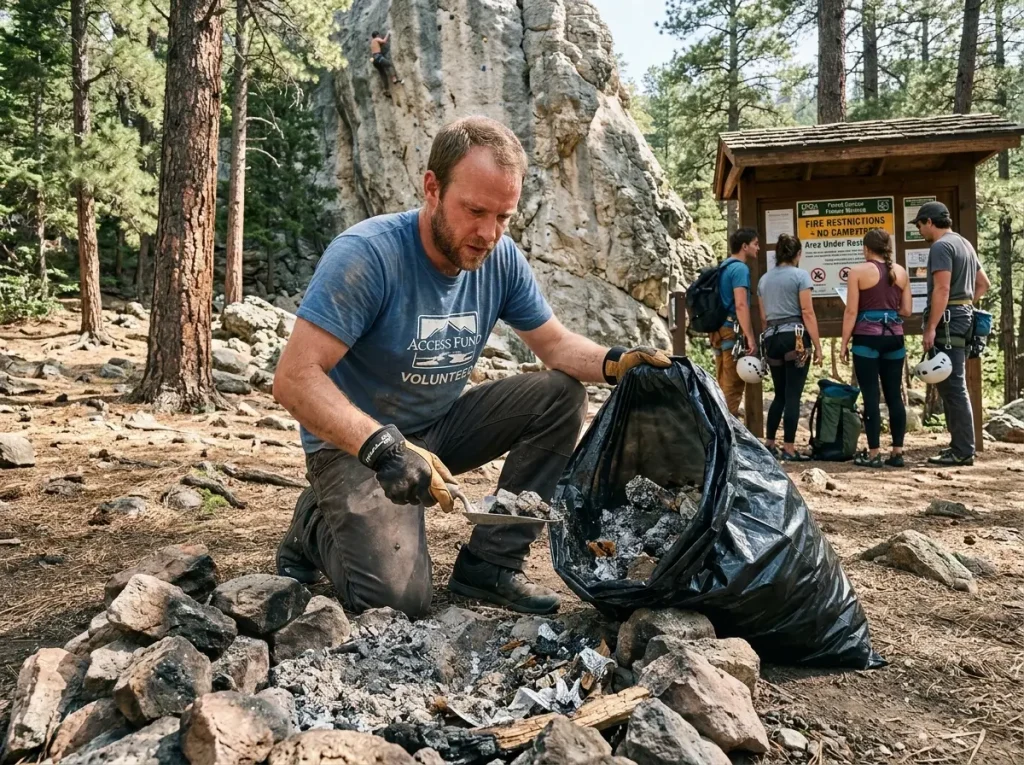
Understanding the physics is the first layer. Understanding the administrative chain that follows is the second.
The “Close the Gate” Administrative Response
Land managers aren’t punishing climbers when they close a crag after a fire incident. They’re protecting themselves from liability, and they’re doing it with the bluntest tool they have. An overextended ranger district with one staff member covering 200,000 acres doesn’t negotiate with individual user groups. They issue a closure order.
Three documented case studies from the Access Fund illustrate this pattern clearly.
The Caldor Fire (2021) at Lover’s Leap, CA triggered USFS closures lasting months for rockfall assessment, dead tree removal, and trail erosion remediation. All climbing halted. The fire wasn’t caused by climbers. The closure didn’t distinguish.
Table Rock State Park, SC took a 13,845-acre fire immediately behind Hurricane Helene in 2024. The combined damage to clifftop anchor integrity and soil stability keeps major areas closed indefinitely. The how wildfires are permanently reshaping climbing access in the Southeast breakdown from the Access Fund walks through every closure mechanism in detail.
Boulder Canyon, CO (2020) saw proactive district-wide closures during extreme fire risk conditions — with no active fire in the canyon at all. Pure administrative risk management. I’ve seen a ranger station Facebook post go up at 7pm saying the area is closed effective immediately. No fire. Just wind and drought. That’s the world we’re climbing in now.
The practical lesson: you don’t have to start the fire that closes the crag. You just have to be there when someone else does, and land managers don’t have time to identify individual responsibility. Learn how the Access Fund fights to keep crags open and what self-regulation actually looks like at scale.
The Ten Sleep Canyon Case Study — When Campfire Culture Meets Overcrowding
Ten Sleep Canyon, Wyoming is the sharpest example of what happens when campfire culture meets skyrocketing visitor numbers. The canyon has a legitimate fire tradition — the “Ten Sleep Canyon Aerospace Society” was built explicitly around gathering at campfires after climbing days. That identity runs deep.
But “skyrocketing popularity” pushed dispersed campfires within 100 feet of Ten Sleep Creek, a direct violation of water-source distance rules. In July 2019, the Forest Service issued a moratorium on all new route development. A dedicated climbing ranger was hired specifically to educate on fire compliance. Parking and WAG BAG regulations followed.
The moratorium didn’t close the crag. That’s the key detail. The Bighorn Climbers’ Coalition’s self-regulation model — enforcing LNT compliance within the community before rangers had to step in with legal authority — prevented a full closure. That’s the model. Every climbing area facing similar pressure needs it. The coalition didn’t wait for a crisis. They organized ahead of it. The complete field guide to climbing Ten Sleep Canyon responsibly covers what that looks like on the ground.
The Micro-Trash Problem — The Invisible Impact That Triggers Inspections
Many climbers believe fire vaporizes trash. It doesn’t. Plastic and foil leave behind toxic residues and micro-trash that function as permanent markers of climber impact — exactly the visual documentation that anti-climbing advocacy groups use during land use negotiations.
In the Buttermilks area near Bishop, volunteers picked up 320 pounds of trash and dismantled 13 illegal fire rings in a single day during a Gym-to-Crag cleanup event. That’s the scale of the problem. White ash from untreated wood is clean. Everything else — foil wrappers, melted plastic, food packaging char — is evidence. It shows up in land manager site assessments. It gets documented. It gets used.
Pack a zip-lock bag. If it goes into the fire and doesn’t become white ash, it goes into the bag and out with you.
Campfire Ecology — What Burns Beyond the Flame
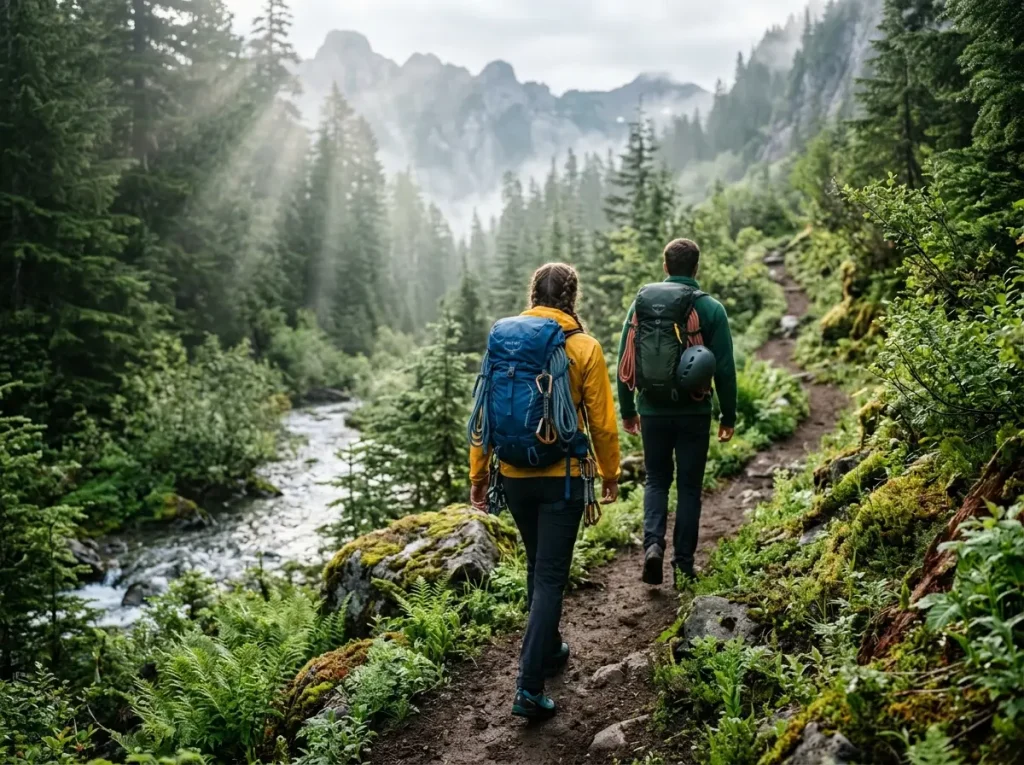
The fire goes out and the damage continues. That’s what makes campfire impact different from other climbing impact categories.
Soil Hydrophobicity and the Erosion Chain
Burned soil becomes hydrophobic — water-repellent. Ash deposits create a sealing effect that reduces water infiltration and forces surface runoff. Normal rain events become erosion vectors. The approach trail that used to take 20 minutes now takes 45 after the slope above it burned twice. Nobody burned the trail — they burned the hillside above it.
The organic soil layer that burns is a living system: mycorrhizal networks, invertebrates, nitrogen-fixing bacteria. Fire removes it, and recovery is measured in decades, not seasons. Cryptobiotic soil crust — the dark, fragile biological crust critical in desert climbing areas — is destroyed in seconds by foot traffic and fire, and takes 50–100+ years to recover. Why cryptobiotic soil is the most fragile thing at any desert crag explains the biology in depth.
The connection to closure mechanics is direct: soil erosion at cliff bases destabilizes the geological matrix around bolt placements. Land managers don’t need to explain that to climbers. They just close the access road.
Water Quality and Invasive Colonization
Fire-induced erosion dramatically increases siltation in nearby water sources. Following the 2024–2025 fire and hurricane season in North Carolina, over 1.1 million tons of sediment had to be removed from Lake Lure alone. That scale of impact doesn’t stay local — it generates political pressure from communities downstream that converts anti-climbing sentiment into enforceable restrictions.
Burned canopy clears the way for invasive plant species that out-compete native flora. Crag approaches change character. Soil stability drops. Wildlife habitat compresses. The ripple effect from a campfire 200 feet from a stream is measured in miles and years, not feet and days.
According to the Leave No Trace Center’s fire impact science and minimum-standard protocols, the ecological mechanisms that connect campfire use to long-term land degradation are well-documented — and they’re exactly what land managers reference during access negotiations with climbing organizations.
For a broader look at what it means to move beyond minimum compliance — treating stewardship as a value rather than a ruleset — what it means to climb beyond the minimum LNT standard is the next level.
Conclusion
Three things to take from this:
Fire at the base of a route is a structural engineering event. Thermal spalling can pop holds off routes and fracture the rock around bolt placements without leaving visible burn marks. The damage is invisible until someone body-weights the wrong hold six months later.
Your rope can reach life-safety-compromising temperatures in 10 minutes from 15cm away from a campfire, with zero visible indication. Audit your soft goods after every trip where fire was present. Retire anything you can’t verify was kept out of the heat zone.
Land managers close crags not out of hostility, but because closure is faster than negotiation. Self-regulation through local climbing organizations, rigorous burn ban compliance, and following the Drown, Stir, and Feel extinguishment protocol is the only durable alternative to watching more access shrink.
Before your next trip, spend five minutes on InciWeb and your destination’s Ranger District page. Pack a fire pan if fires are allowed. Know the protocol cold, not as a last resort. The crag will be there next season because you made it so.
FAQ
Can you have a campfire at a climbing area?
It depends entirely on local regulations and current burn ban status — never assume it is allowed. Check InciWeb and the relevant Ranger District website before your trip, since restrictions change hourly during high fire risk periods. If fires are permitted, use a designated metal fire ring or the fire pan technique; never build directly on bare ground.
How do you know if there is a burn ban in effect?
Visit InciWeb (inciweb.nwcg.gov) and your destination’s specific USFS or BLM Ranger District website or social media pages. The official Forest Service app also updates with current fire orders. Conditions change fast — check the night before departure and again the morning you arrive at the trailhead.
Can campfires actually damage climbing rock?
Yes — through thermal spalling. Intense, localized heat creates differential expansion between a rock’s surface and subsurface layers, propagating fractures parallel to the surface and physically ejecting chips — including holds. Research on fire-affected climbing areas found at least 6.5% suffered measurable hold deterioration and anchor damage from these mechanisms.
How much water does it take to fully extinguish a campfire?
Plan for 1–2 gallons of water for a standard campfire, poured slowly while continuously stirring all coals and ash. The test is contact verification: if any material is too hot to hold your hand against for 10 seconds, add more water and stir again. Do not bury coals — dirt insulates rather than extinguishes.
Is it okay to burn toilet paper in a campfire at a climbing area?
No. Burning toilet paper, food packaging, and other trash leaves behind toxic micro-residues and non-combusted ash contaminants that land managers classify as permanent human impact evidence. Pack all trash out. In areas with waste requirements like many desert crags, use a WAG bag system rather than relying on burning for human waste disposal.
Safety Notice: Rock climbing and mountaineering are inherently high-risk
activities that can involve physical trauma or fatal incidents. The information on Rock Climbing Realms is for
educational and informational purposes only. Techniques and advice presented here are not a substitute
for professional, hands-on instruction. Conditions and risks vary by location. Always seek guidance
from a qualified instructor before attempting new techniques. By using this website, you agree that you
are solely responsible for your own safety. Any reliance you place on this information is strictly
at your own risk, and you assume all liability for your actions. Rock Climbing Realms and its authors
will not be held liable for any harm, damage, or loss sustained in connection with the use of this information.
Affiliate Disclosure: We are a participant in the Amazon Services LLC Associates Program, an
affiliate advertising program designed to provide a means for us to earn advertising fees by advertising and linking
to Amazon.com. As an Amazon Associate, we earn from qualifying purchases. We are also an official affiliate partner
of Black Diamond Equipment via the AvantLink network. If you click on a Black Diamond affiliate link and make a
purchase, we may earn a commission at no additional cost to you. We also participate in other affiliate programs.
Additional terms are found in the terms of service.