
In this article
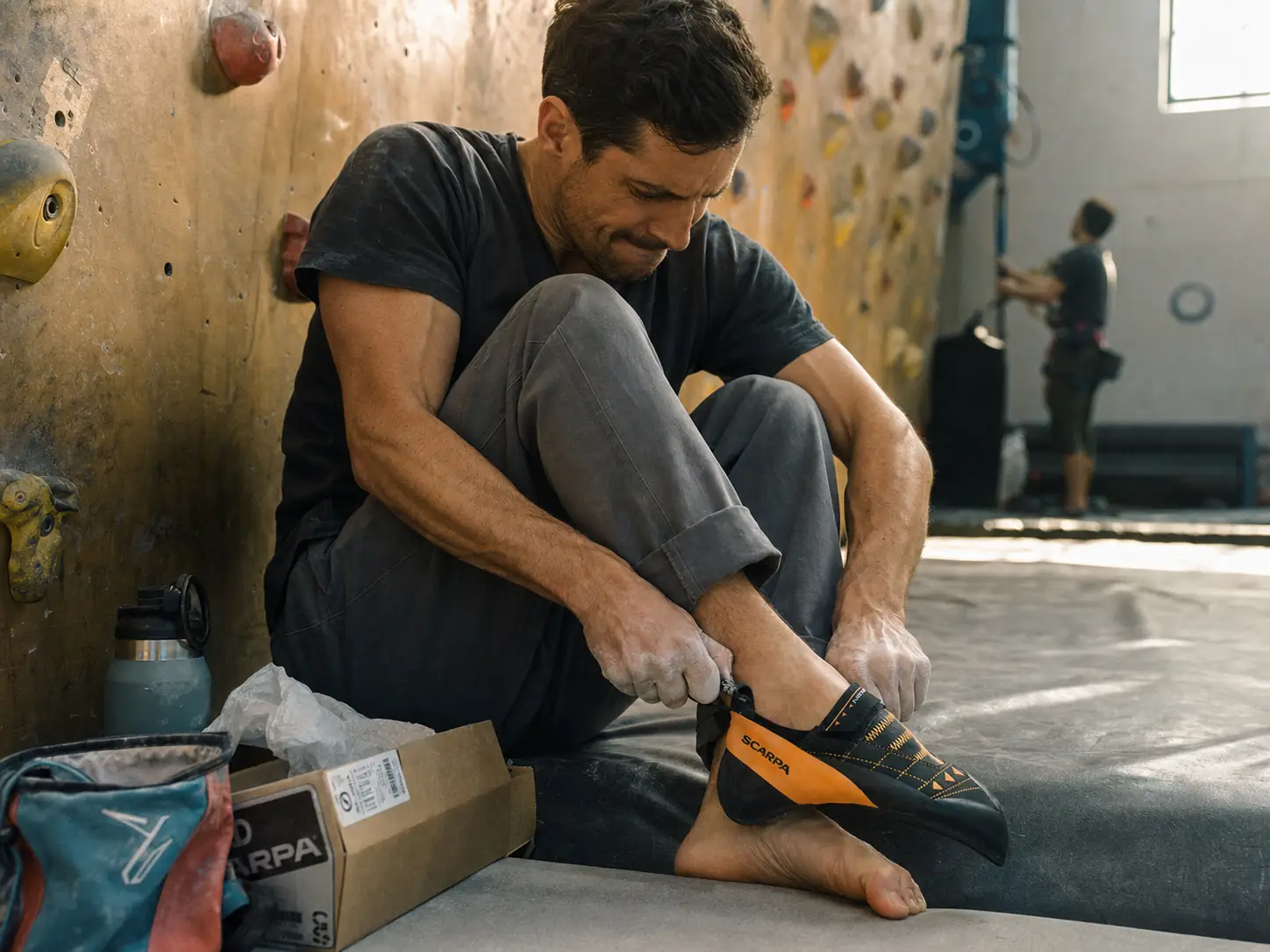
You pull on a new pair, stand up, and your first thought is that the shop sold you the wrong size. Everyone tells you to push through it, nobody tells you why, and the forums are full of climbers asking the same question three different ways because no one ever answered it properly. Here’s the part that gets skipped: the tightness is doing a job, and once you understand what that job is, the whole break-in process stops feeling like punishment and starts making sense. This guide covers why the fit is built that way, the five ways to break in climbing shoes, how many sessions each shoe category actually needs, and the line between normal ache and a sizing mistake you should stop climbing on.
Why Climbing Shoes Are Sized So Tight in the First Place
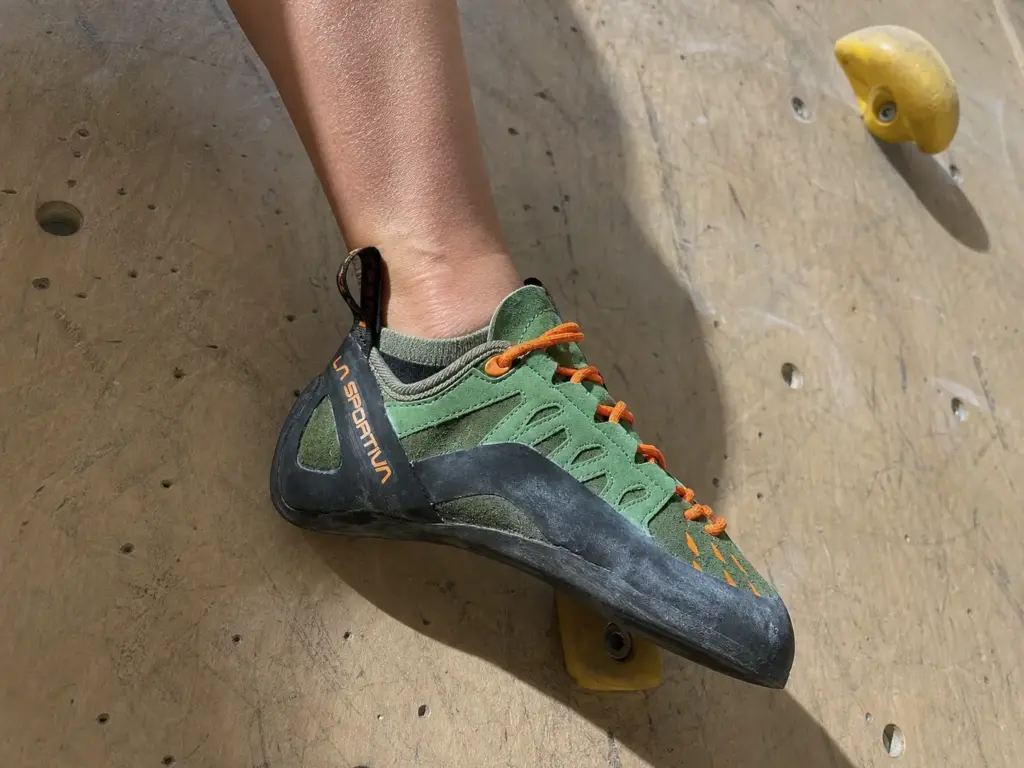
Stand a beginner in an aggressive pair for the first time and watch what happens. They can’t flatten their foot. The heel wants to lift, the toes are curled, and they look at you like you’ve handed them a medieval device. That’s the shoe working exactly as designed, and nobody bothers to explain it before the pain starts.
The mechanic is downturn, sometimes called camber. The shoe is built with a forward curve that concentrates force onto your big toe instead of spreading it across the whole foot. On a small edge, that concentration is the entire point. Your body weight goes through one narrow contact patch of rubber rather than dissipating across a flat sole, and the toe stays pointed where you put it.
A snug fit does the other half of the work. Dead space inside a shoe means your foot slides around when you weight a hold, and that internal movement is what actually costs you precision fit. Stand on jib feet in a loose shoe and your foot rolls a few millimeters inside the upper before the rubber even loads. You feel it as the hold “greasing off.” It wasn’t the hold. It was your foot moving while the shoe stayed still.
The same logic runs through every technique you use. Edging on a sharp quarter-inch ledge needs a stiff, tightly held toe box. Smearing on a slab needs the sole pressed flat against rock with no air gap underneath. A heel hook falls off the moment the heel cup has slack in it. All three fail the same way in a loose shoe, and all three are the reason the fit was built tight before you ever put it on.
That’s the tradeoff nobody spells out. Tight is uncomfortable and tight is precise, and you don’t get one without the other. How far you want to push toward precision depends on what you’re climbing, which is where the difference between an aggressive and a moderate downturned shoe matters more than any break-in trick. A bouldering shoe for steep gym problems doesn’t need the same camber as an all-day shoe for a long multipitch route, and a gym-to-crag all-rounder needs less than either.
If you want the full picture of how fit, materials and downturn work together before you buy, the complete climbing shoe buying guide covers the ground this article assumes you already know.
Get the Sizing and Material Right Before You Try to Stretch Anything
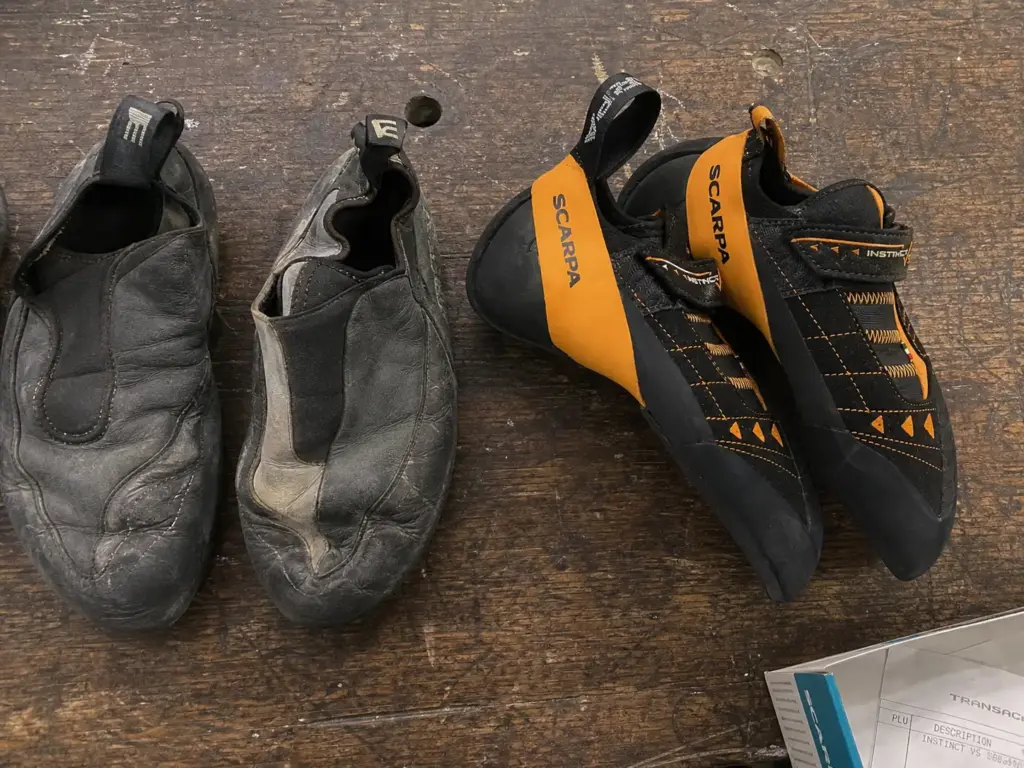
Here’s where a lot of break-in stories go wrong before they start. Someone hears the gym rule of thumb about sizing down, drops a full number, and buys a synthetic shoe. Two weeks later they’re on a forum asking why their shoes “won’t break in.” They will not break in. The shoe was never going to give them that room.
Upper material decides how much stretch you actually get:
- Unlined leather (an unlined upper) can stretch up to a full size. This is the material the aggressive downsizing advice was built around.
- Lined leather gives about half a size or less. The lined upper exists specifically to limit stretch.
- Full synthetic gives you a half size down at most and mostly just softens. It relaxes, it doesn’t grow.
That difference is why a “size down one full number” rule copied from a leather shoe onto a synthetic one leaves people stuck. The synthetic pair softens, feels marginally less brutal, and stays fundamentally the same length. If your toes are folded double on day one in a synthetic shoe, break-in is not going to fix that. Return them while you still can.
This is also where beginner climbing shoes get a bad reputation they don’t deserve. New climbers copy a climbing shoe sizing rule from a video about a leather performance shoe, apply it to a comfortable synthetic trainer, and conclude that all climbing shoes hurt. The shoe wasn’t the problem. The rule was borrowed from the wrong material.
Get this right and everything downstream gets easier. How a climbing shoe should actually fit is worth reading before you commit to a size, not after.
The Wear-and-Climb Method (Start Here)
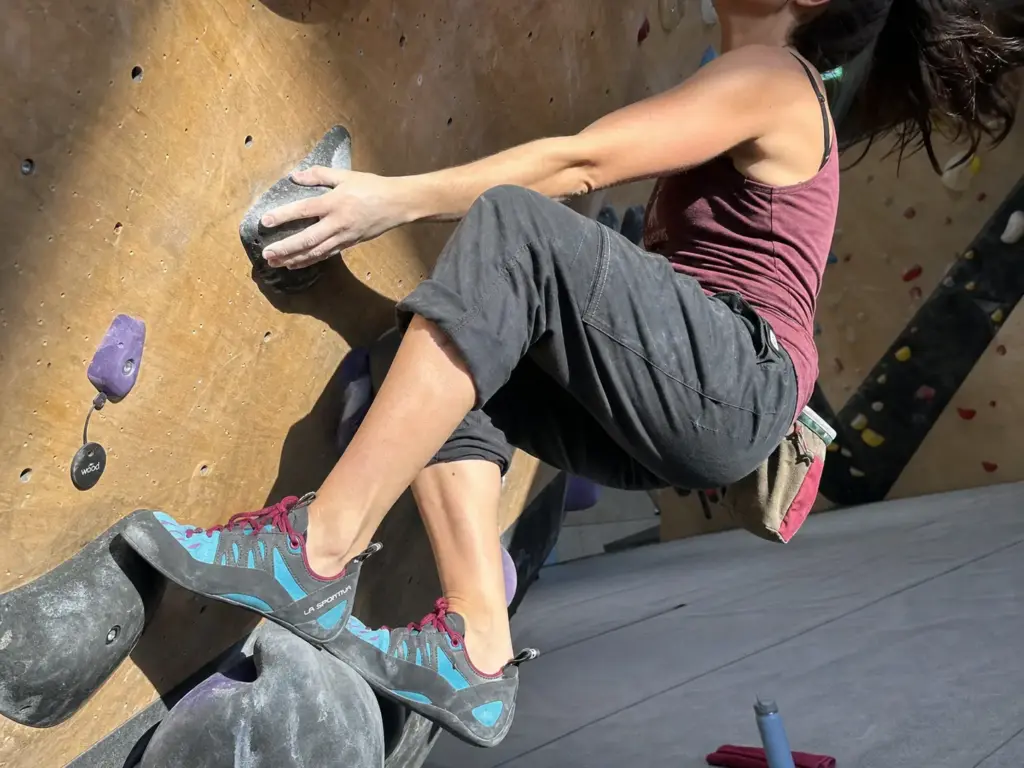
Every other method on this list carries some risk to the shoe. This one carries none, which is why it’s where you start and often where you finish.
Wear them. Climb in them. That’s it. The wear and climb approach is unglamorous and it’s still the one that works for most pairs.
What separates a fast, comfortable break-in from a miserable one is how you climb in them during those first break-in sessions. Progress the terrain on purpose:
- Easy overhanging routes first. Big holds, low precision demand, and your foot isn’t crammed against the wall at odd angles. The shoe molds while your toes stay relatively happy.
- Vertical terrain next. Now you’re standing on smaller feet and the shoe starts learning your actual foot shape under load.
- Outdoor toprope after that. Real rock, longer time on the wall, no bailing after four moves.
That order matters because indoor climbing and outdoor climbing stress a new shoe differently. Plastic holds in the climbing gym are big, predictable, and forgiving of a shoe that hasn’t molded yet. Granite gives you nothing, and it will find every millimeter of dead space in a stiff pair.
The break-in clock runs on wear-hours, not calendar days. Climb three or four times a week and a pair comes around noticeably faster than the same pair on a once-a-week schedule. If your gym climbing partner broke in the identical model in ten days and you’re still hurting after three weeks, you’re not doing it wrong. You’ve just spent a third of the time in them.
The plastic bag method: slide a plastic bag or a wrap of cling film over your foot and heel before pulling on a stiff new pair. The friction drops to almost nothing and the foot slides all the way into its seated position instead of bunching halfway. Pull the bag out once you’re in. It’s the single most useful trick nobody puts in the official how-tos, and it’s the difference between a shoe that fits wrong all session and one that was fine from the first minute.
Thick socks, or two thin pairs, buy you the same head start from the other direction. Short early sessions in socks let the upper mold without forcing a full barefoot pain session on day one. Take them off after twenty minutes if you need to. Nobody’s watching.
One thing worth knowing before you tighten anything down: how closure system affects fit during break-in is real. Laces let you adjust pressure zone by zone as the shoe relaxes. Velcro gives you three positions and a shrug.
The Hair Dryer Method (And Why the Oven Is Off-Limits)
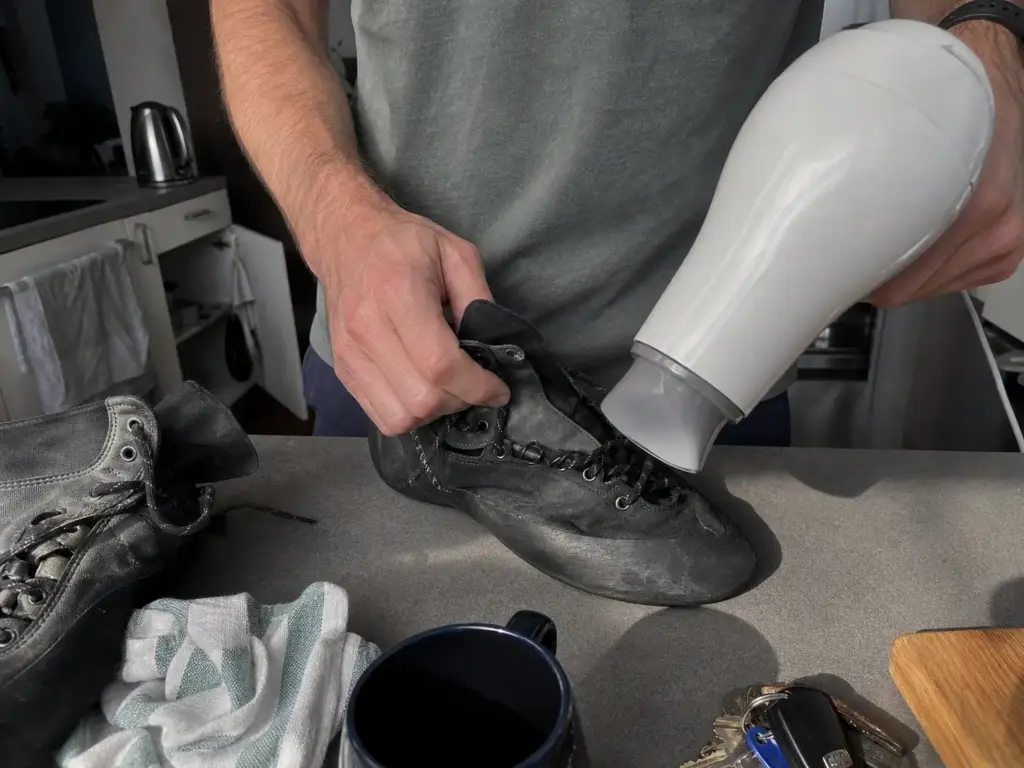
Heat softens the upper and speeds up molding shoes to your foot. That part is true and it works. The problem is that climbers hear “heat” and reach for the fastest heat source in the house, and the fastest heat source in the house is the one that destroys shoes.
Do it this way: warm the shoe with a hair dryer held a hand’s width away, moving constantly across the forefoot, never parked in one spot. Then put the shoe on and let it cool on your foot. Better still, skip the appliance entirely. Body heat while you’re wearing them gets you most of the same softening with zero risk. Wear them around the house for twenty minutes before a session and the first pull-on stops being an event.
Now the part nobody quantifies. Climbing shoes are held together with heat-activated glue. Past roughly 140°F, that adhesive turns tacky and the rand starts peeling away from the upper. That’s not a warning label being cautious, it’s a number.
Which is why the hot-car problem is real and not folklore. Direct sun through a windshield pushes a car interior past 130°F on a summer afternoon, close enough to the threshold that shoes left in a trunk between pitches can come out with the rand already lifting at the seam. No oven required. No hair dryer required. Just a hot parking lot and an afternoon.
And the oven itself: never. A home oven swings wildly around its set temperature, has no useful low range, and will melt synthetic textiles, warp the midsole, and glaze sticky rubber into a hard slick surface that no longer holds a smear. That last one is the cruel part. The shoe can come out looking fine and climb like plastic. It’s the one mistake in this whole topic that turns a slow break-in into a ruined pair in a single afternoon, and if it does happen, fixing a delaminating shoe is a rescue job, not a break-in method.
For the general fit-and-foot-health side of this, the American Podiatric Medical Association’s guidelines on proper shoe fit are a reasonable baseline before you start applying heat to anything you’re going to stand in.
The Hot Water Soak Method
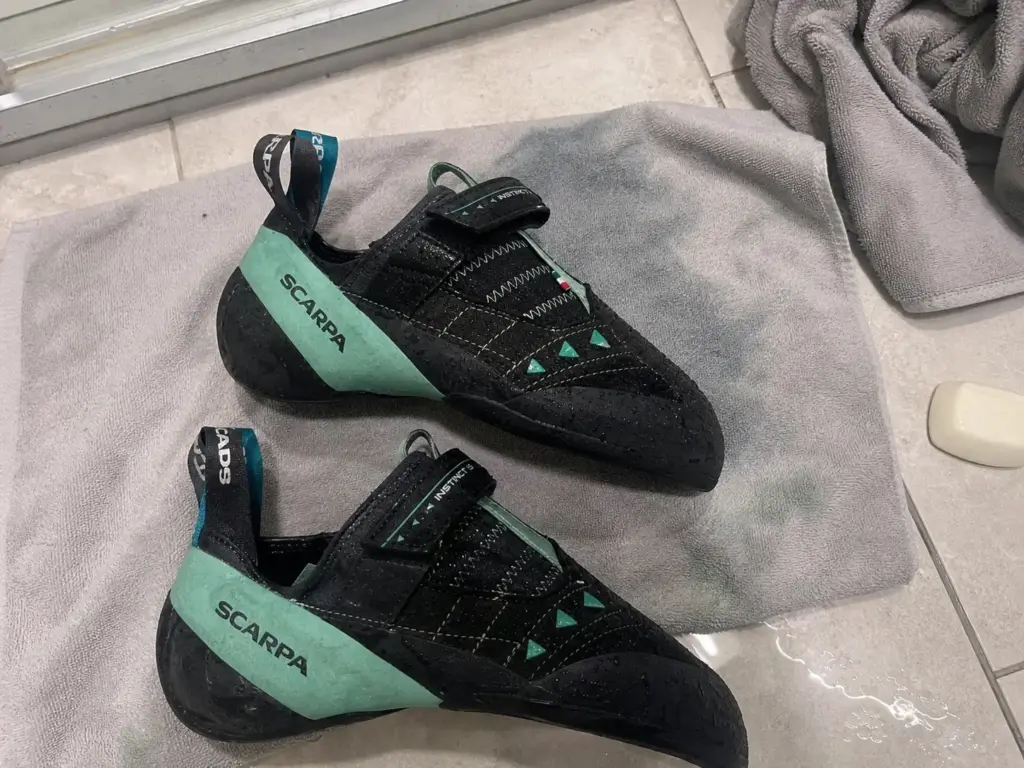
Fill a tub or a sink with hot water, put the shoes on, and get in. Wiggle your toes, flex the forefoot, work the material while it’s saturated. Then get out and wear them until they’re dry. The upper relaxes while it’s wet and sets to the shape of your foot as it dries. The hot shower method is the same idea with less setup: wear them in the shower, then walk around until they’re dry.
It works, and it comes with one specific mess nobody mentions until it’s on their carpet: shoe dye bleeds. Bright-colored uppers especially. Your feet will be stained, the towel will be stained, and if you walk around the living room in wet shoes you’ll find out exactly which rug you cared about. Do this one on a towel in the bathroom.
Worth being clear about what’s actually moving here. You’re relaxing the upper, not stretching rubber. The sole and rand don’t grow, and no amount of soaking makes them. Every bit of extra room you get comes from the leather above the rubber, which is exactly why material decides the ceiling on this method.
Two limits worth respecting. This method works on leather, cemented-construction shoes. On full synthetic uppers it does very little, because the material doesn’t take on water the same way. And on fully vulcanized builds it’s not recommended at all, since that construction doesn’t respond well to being soaked.
Treat it as an accelerator for the wear-and-climb method, not a replacement. One soak plus a normal session progression beats a soak on its own every time.
The Freezer Bag Method (Last Resort)
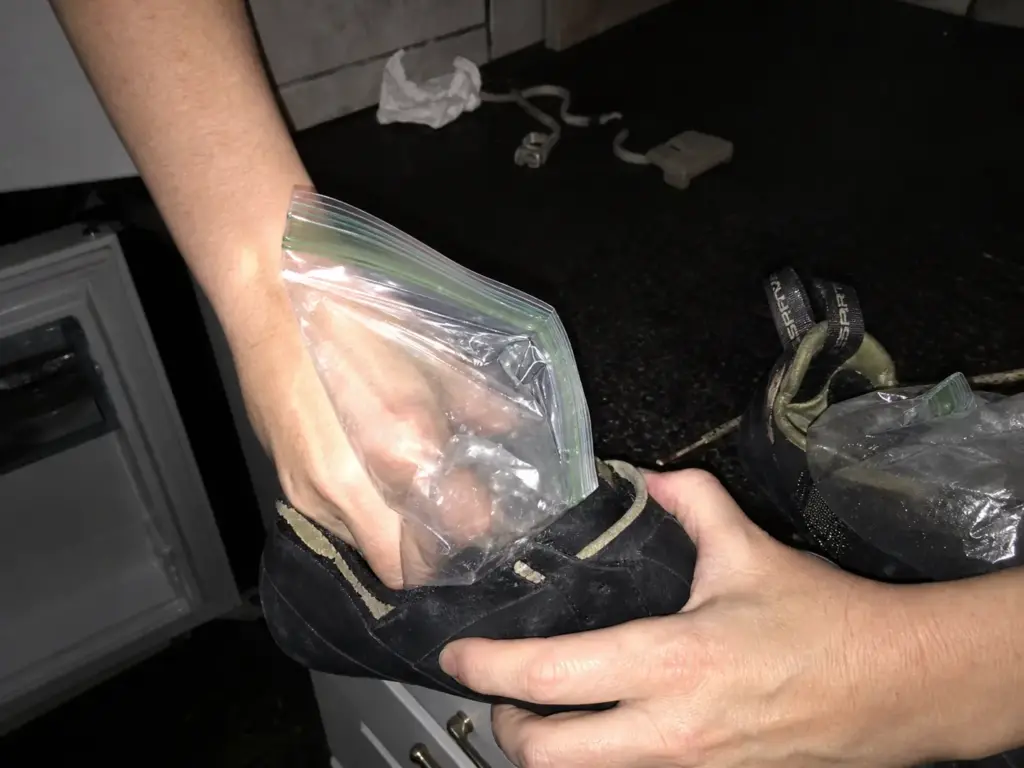
Fill zip-top bags with water, push them into the shoes, and put the whole thing in the freezer overnight. Water expands as it freezes and pushes the upper outward.
That’s the theory. In practice this one sits at the bottom of the list for good reasons.
Results are inconsistent. Some climbers swear it added real room, plenty report no change at all. A bag of water takes the shape of a bag of water, not the shape of a climbing shoe’s asymmetric last, so whatever stretch you get lands wherever the bag happened to bulge rather than where your foot actually needs room. And the freeze-thaw cycle stresses the same glue bonds that the heat methods threaten, which undercuts the whole “gentler than heat” argument it’s usually sold on.
Use it after wear-and-climb, heat and water have all failed to move the fit. Not before. And if you’ve reached that point, there’s a better option that most climbers never find out exists.
When DIY Isn’t Enough — Shoe Stretchers and Cobblers
This is the gap in every break-in guide on the internet. People search for “climbing shoe stretcher” (it’s a live related search, so we know they do) and the top results hand them the same four home hacks. There’s a whole middle tier between kitchen experiments and buying a second pair.
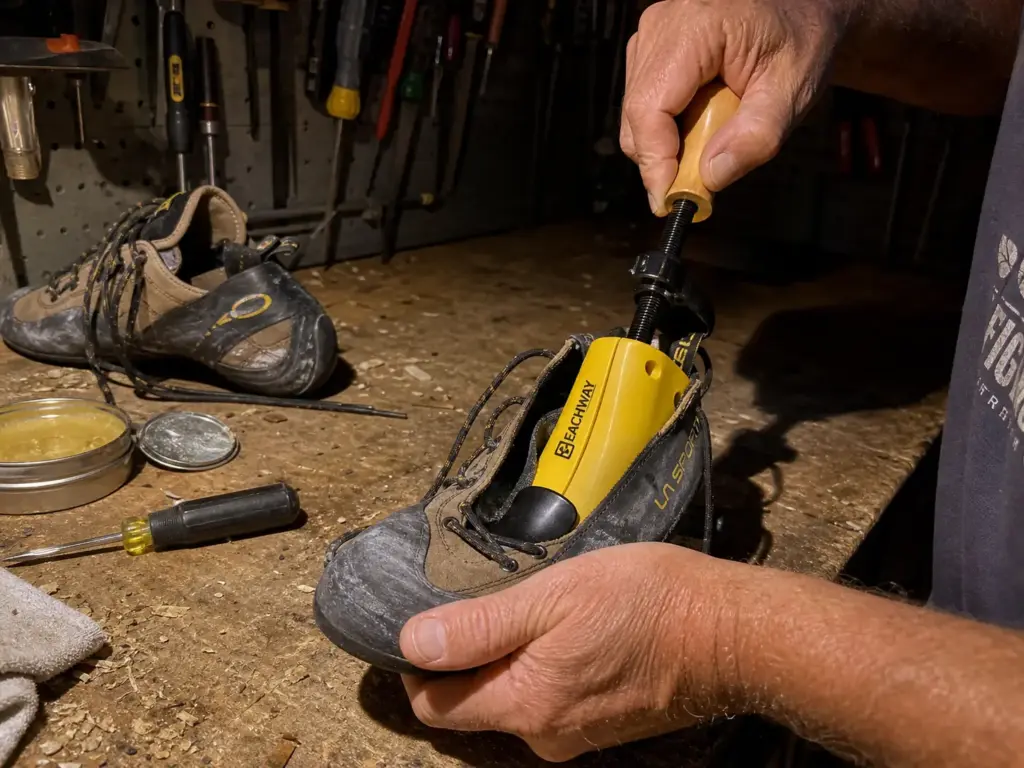
The shoe stretcher. A rigid, anatomically shaped stretcher screws into the shoe and applies steady lateral pressure at the ball of the foot. Leave it in 24 to 48 hours. Unlike a bag of water, it pushes in a specific direction at a specific spot, which is the difference between stretching a shoe and hoping.
Be honest about its limits, though. Commercial stretchers are shaped for street shoes, not for a climbing shoe’s asymmetric last, so it will widen the forefoot without respecting the shape your toe box actually needs. It’s a blunt tool that works. On a leather shoe that’s a half-size too narrow across the ball, it’s often exactly enough.
The Eachway Pair of Professional 2-Way Premium Shoe Stretcher is the budget-friendly version of this: a two-way adjustable stretcher that works both length and width, with the large size covering most adult feet. It costs a fraction of a cobbler visit and it’s the lowest-risk thing on this entire page, because nothing about it involves heat, water, or glue.
The cobbler. A specialist who works on climbing shoes has tools you don’t: calibrated lasts and low-heat steam held at or below 55°C (131°F), comfortably under the 140°F delamination threshold. They can expand a specific zone (the ball, a bunion spot, one problem toe) without wrecking your heel lock or slackening the rand tension that makes the shoe hold its shape. Expect somewhere in the $45–85 range and three to five days without your shoes.
Same construction caveat as the soak method applies to both: stretching works on leather, cemented-construction shoes. Fully synthetic uppers barely respond, and fully vulcanized builds shouldn’t be stretched. Check what you own before you spend money on either option.
Call the cobbler before you drive over. Ask one question: have you worked on climbing shoes specifically? A cobbler who resoles hiking boots all day will happily steam your rand loose without knowing it mattered. The ones who know climbing shoes will tell you immediately whether yours is a candidate or a lost cause, and that free phone call saves more pairs than any home method on this list.
How Long Break-In Actually Takes — and When to Stop and Size Up Instead
This is the question everyone actually types into Google, and the answer is almost never given as a number. Here it is as a number.
Break-in time splits by shoe category, not by brand:
- Flat, beginner-friendly soft-rubber shoes: roughly 1–3 sessions to feel comfortable.
- Moderate shoes with some downturn: roughly 3–6 sessions.
- Aggressive, heavily downturned shoes: 6–12 sessions to fully mold.
Those ranges assume you’re actually climbing in them. Wear-hours, remember, not calendar days.
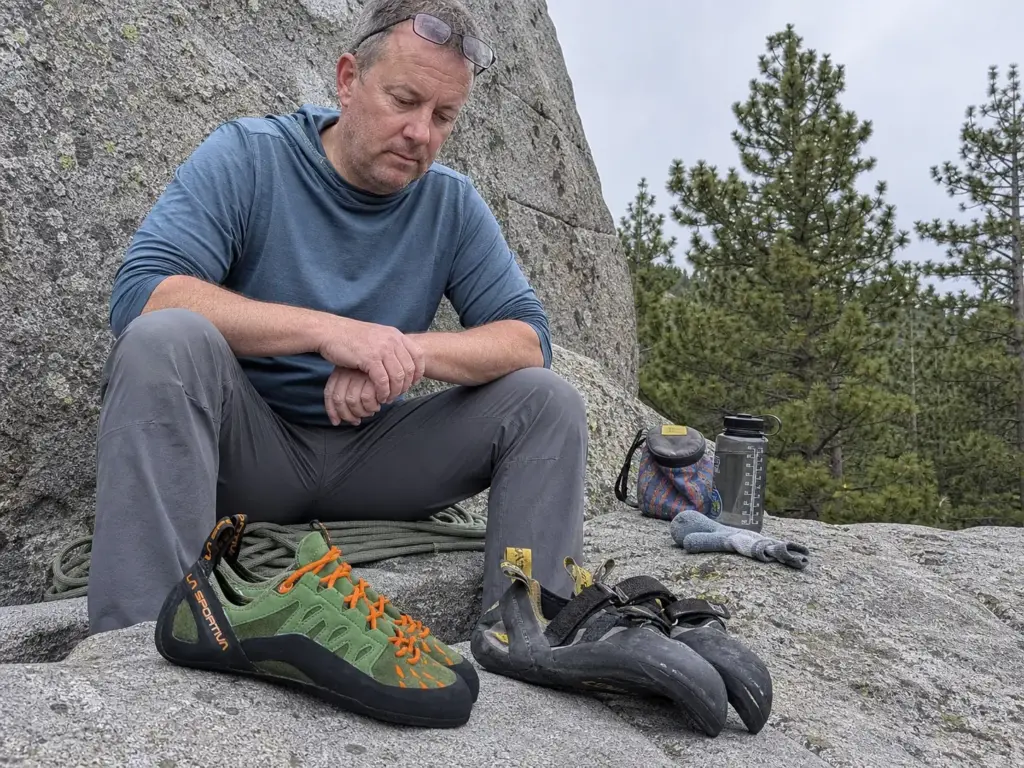
The contrast is easiest to see with two real shoes. The Scarpa Instinct VS (men’s · women’s) sits firmly in that top band: an aggressively downturned, asymmetric-lasted performance shoe that takes real time to come around and rewards you with precision when it does. The La Sportiva Tarantulace (men’s · women’s) sits at the other end, a neutral-to-slightly-downturned lace-up on a beginner-friendly last that’s usually comfortable within a couple of sessions. Same break-in advice, completely different timelines, and the difference is the shoe, not the climber.
Worth thinking about before your next purchase too. Picking a downturn profile for the routes you actually climb saves you from breaking in a shoe you didn’t need in the first place, and a comfortable all-day shoe you’ll actually wear beats a multipitch shoe you dread pulling on at the first belay.
Normal Break-In Pain vs. a Sizing Mistake
Now the part the SERP never draws a line on. Some discomfort is the process. Some discomfort means stop.
Normal, keep going:
- Mild ache and pressure across the top of the foot
- Toes feeling firmly packed but not folded
- Relief the second you take them off, with no lingering soreness
- Gradual improvement session over session within the ranges above
Stop and reconsider the size:
- A blister on first wear. Friction already exceeded what your skin tolerates. That’s a fit problem, not a break-in stage, and more sessions will make it worse rather than better.
- Red pressure marks after only 30 minutes of wear. That’s excessive pressure, not molding.
- Sharp pain or numbness at any point. Numb toes mean something is being compressed that shouldn’t be.
- Bruised toenails that darken after a session. That’s the nail bed taking load it was never meant to carry, and it doesn’t resolve with more wear.
- No improvement at all after you’ve passed the top of your shoe category’s range.
That last one is the honest one. If you’re five sessions into a neutral beginner shoe and it still screams, the shoe isn’t slow. It’s small. Check your return window before you spend another two weeks proving it to yourself.
One easy friction fix while you’re figuring it out: moisture-wicking socks, which the American Academy of Podiatric Sports Medicine recommends over cotton for reducing blister-causing friction. Cotton holds sweat against your skin and sweat-softened skin blisters faster. It’s a small change that removes one variable from the diagnosis.
Take a photo of your bare foot right after you pull the shoes off, every session for the first two weeks. Pressure marks fade in about ten minutes, which is exactly long enough for you to forget how bad they looked and talk yourself into another session. A phone photo turns “I think it’s getting better” into something you can actually compare, and it tells you within a break-in period of two weeks whether the shoe is molding or whether you bought the wrong size.
Caring for Your Shoes After the Break-In Is Done
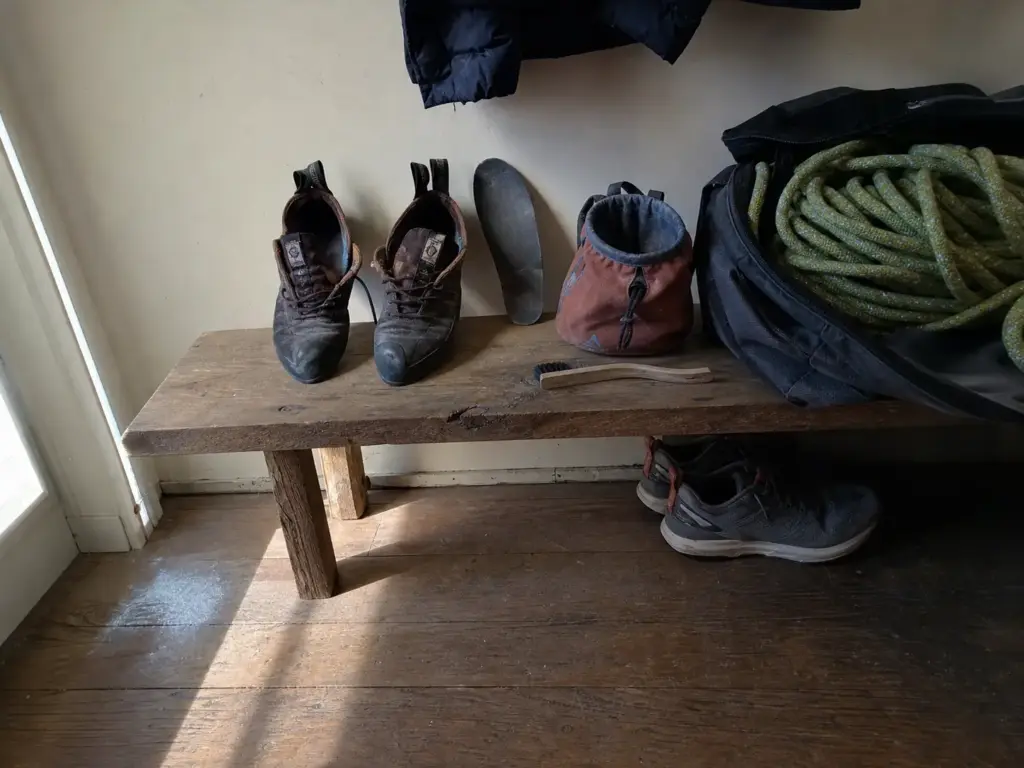
You just spent six sessions earning a fit. Six months in a sealed gym bag will undo it.
Keep them cool and dry. Take them off between climbs instead of leaving them on through the whole session, so your feet get a break and the upper gets to release some moisture. Let them dry fully before they go into shoe storage, because a damp shoe in a closed bag grows mold and breaks down materials from the inside out. Clipping them to the outside of the pack next to your chalk bag on the walk out does more for them than any product you can buy.
The hot-car rule from the heat section applies permanently, not just during break-in. That trunk is still 130°F in August whether the shoes are new or three seasons old, and glue doesn’t care how attached you are to the pair. Storage habits protect the rand as much as the break-in process ever did. Keeping your rubber and fit dialed in long after break-in is mostly about these small unglamorous shoe care habits.
Watch the rubber at the toe and the outside edge, because that’s where it goes first. Catching wear early means a resole. Catching it late means rand wear has already eaten through above the sole, and the repair gets more expensive and less reliable. Learning how to tell when it’s time to resole is worth more than any break-in trick, because a resoled shoe you already broke in beats a new pair you have to start over with.
Conclusion
Three things worth holding onto:
Tight is functional. Downturn concentrates force on your big toe and a snug fit removes the internal foot movement that costs you precision. The discomfort is the price of the performance, not a defect.
Five methods, five risk levels. Wear-and-climb is safest and works for most people. Heat, water and freezer bags escalate from there. A stretcher or a cobbler is the middle ground nobody talks about. The oven is never on the list.
Know your category before you panic. One to three sessions for a flat beginner shoe, six to twelve for an aggressive one. Inside that range, keep going. Blisters, numbness or zero progress past the range means the climbing shoe fit is wrong, and no amount of technique fixes a wrong size.
Next session, figure out which category your shoes actually fall into before you decide something’s gone wrong. That single number tells you whether you’re on schedule or holding onto a pair you should have returned.
Frequently Asked Questions
01How long does it take to break in climbing shoes?
It depends on the category: flat beginner shoes feel comfortable in about 1–3 sessions, moderate-downturn shoes take roughly 3–6, and aggressive downturned shoes need 6–12 to fully mold. Climbing more often speeds this up, since the clock runs on wear-hours, not calendar days.
02Are climbing shoes supposed to hurt at first?
Some pressure and ache across the top of the foot is normal in a properly sized pair. Sharp pain, numbness, or a blister forming on first wear is not break-in. It means the fit is wrong, not that you need to push through more sessions.
03Do climbing shoes need breaking in?
Yes, almost all of them do, especially leather uppers and aggressive downturned models. The tight, precise fit that makes a shoe perform on small holds is intentionally snugger out of the box than any comfort shoe you own.
04How can I break in climbing shoes faster?
Thick or doubled socks for short early sessions, warming the shoes with body heat, and climbing 3–4 times a week instead of once all speed up molding with no added risk. The freezer bag and hair dryer methods can help too, but carry more risk if overdone.
05What if my climbing shoes still won’t stretch enough?
If a shoe still hurts sharply past its category range, the size is usually wrong rather than the break-in being slow, and synthetic uppers in particular stretch very little. A shoe stretcher or a cobbler experienced with climbing shoes is a lower-risk middle ground before giving up on the pair.
Safety Notice: Rock climbing and mountaineering are inherently high-risk
activities that can involve physical trauma or fatal incidents. The information on Rock Climbing Realms is for
educational and informational purposes only. Techniques and advice presented here are not a substitute
for professional, hands-on instruction. Conditions and risks vary by location. Always seek guidance
from a qualified instructor before attempting new techniques. By using this website, you agree that you
are solely responsible for your own safety. Any reliance you place on this information is strictly
at your own risk, and you assume all liability for your actions. Rock Climbing Realms and its authors
will not be held liable for any harm, damage, or loss sustained in connection with the use of this information.
Affiliate Disclosure: We are a participant in the Amazon Services LLC Associates Program, an
affiliate advertising program designed to provide a means for us to earn advertising fees by advertising and linking
to Amazon.com. As an Amazon Associate, we earn from qualifying purchases. We are also an official affiliate partner
of Black Diamond Equipment via the AvantLink network. If you click on a Black Diamond affiliate link and make a
purchase, we may earn a commission at no additional cost to you. We also participate in other affiliate programs.
Additional terms are found in the terms of service.