
In this article
You’ve been staring at the autobelay station for twenty minutes. Across the gym, a trio laughs through lead burns on a roof problem you’ve wanted to try for weeks. Your footwork is sharp, your endurance is solid, and you know you’re ready for routes that push you past 5.9 comfort laps. But every one of those routes needs a second person on the other end of the rope.
You scan the bulletin board by the front desk. One faded index card reads: “Looking for belay partner. Tuesdays and Thursdays. 5.10a-ish.” You pull out your phone and wonder if there’s a faster way.
After years of climbing at gyms and crags across the western U.S., I can tell you that finding a climbing partner who matches your skill level, schedule, and goals doesn’t require luck. It requires a system. Here’s exactly how to build one, whether you’re a lonely climber stuck on autobelay or an intermediate ready for outdoor sends.
⚡ Quick Answer: Start at your gym’s partner board or community night to find climbing partners in person. Supplement with Mountain Project Partner Finder (36,900+ climbers) and the Oak app for digital matching. At the crag, target odd-numbered groups and bring your own rope. Always vet a new belayer by performing a mutual partner check and observing them catch at least one fall before committing to harder routes.
The Gym Floor Is Your Best Starting Point
Most climbers find their first reliable partner within their home gym. With over 870 climbing gyms operating in North America, the infrastructure for connecting solo climbers already exists. You just have to use it.
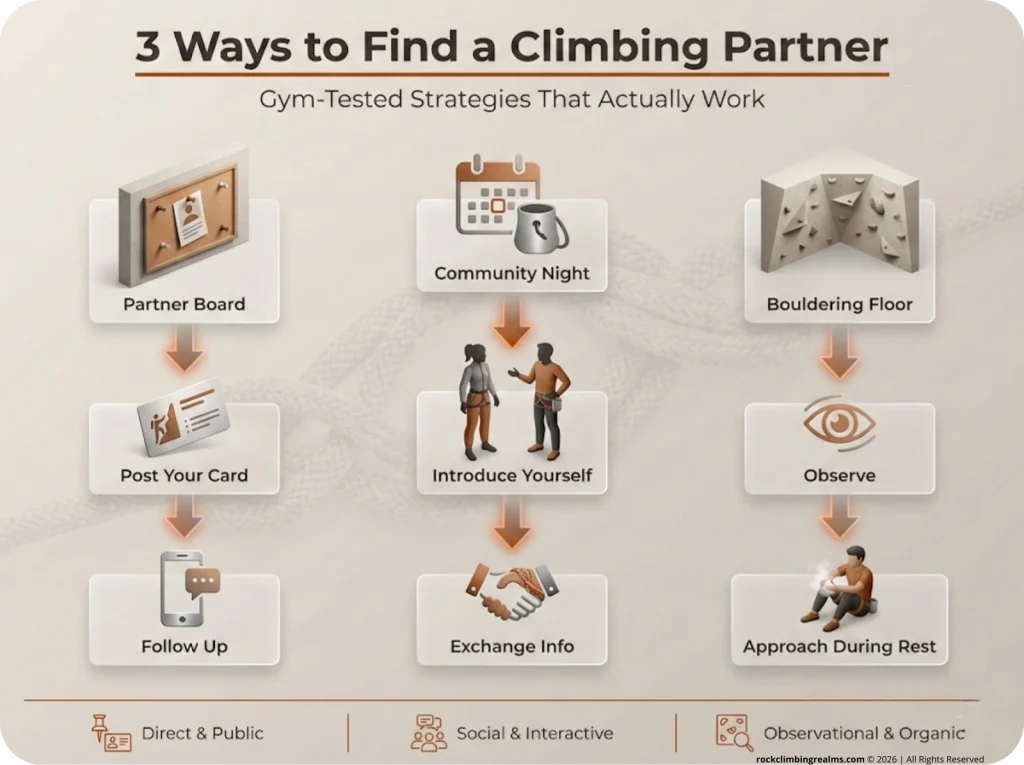
Use the Partner Board Before You Hit the Wall
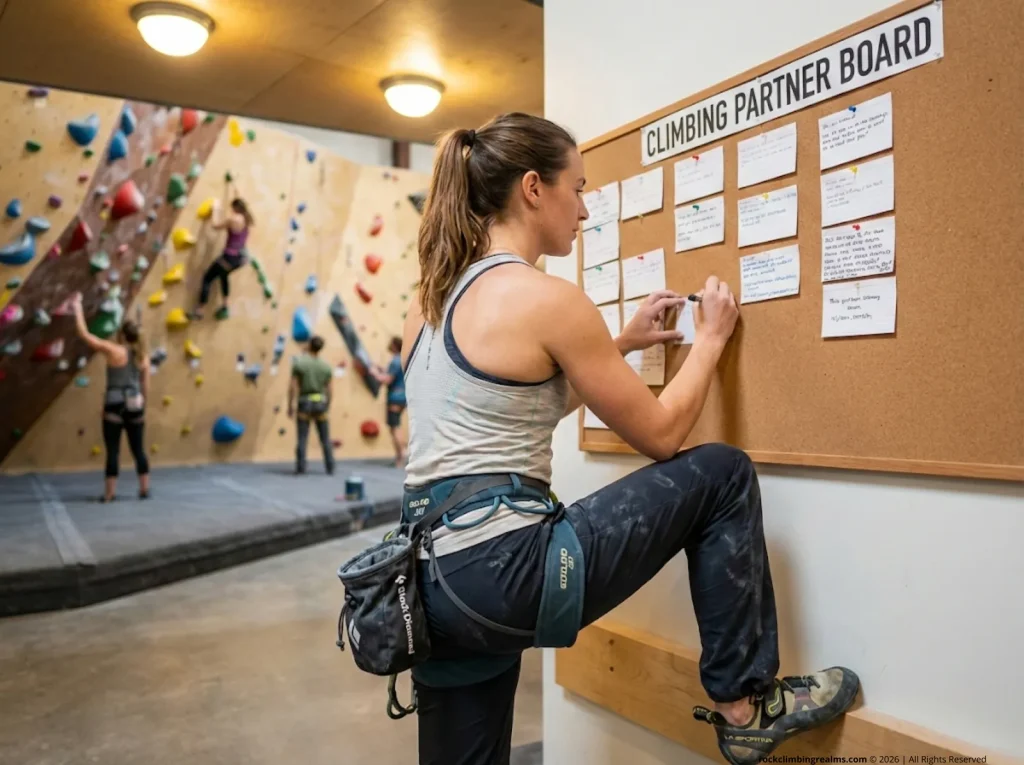
Almost every commercial gym maintains some form of belay board or partner-matching system. Some use physical corkboards near the front desk. Others run digital forms on their website. Either way, a good partner form covers the basics: your name, preferred grade match, availability, climbing style, and how to reach you.
Post your own card even if the board looks dead. Dedicated climbers check these boards weekly. Be specific: “Sport lead, 5.10b-5.11a, Tuesday and Thursday evenings, own rope and draws” gets more responses than “Looking for a partner, flexible.”
Pro tip: Write your climbing goals on the card, not just your grade. “Training for my first outdoor lead at Smith Rock in May” attracts people who share your trajectory.
Show Up to Community Nights and Themed Events
Climbing gyms like Movement Gyms and Edgeworks Climbing run formal partner-finding programs with staff-facilitated introductions. Gym community nights, themed events, and guest passes exist specifically to break the approach barrier for new climbers.
Inclusive nights serve a dual purpose. Women’s nights, queer climbing sessions, and climbers of color meetups create a safer space for underrepresented climbers while providing built-in conversation starters. According to Access Fund’s research on crag safety and inclusion, 47% of climbers reported experiencing some form of harassment during climbing activities. Themed inclusive nights reduce that risk while putting you in front of people who are actively looking to connect.
If you value active allyship and creating inclusive climbing spaces, these events are where you build community, not just partnerships.
Watch, Then Approach — The Bouldering Wall Method
Strategic bouldering observation is one of the best low-pressure ways to screen potential partners. Watch how someone moves. Notice whether they brush holds after climbing, share beta respectfully, and manage the fall zone.
Approach during a natural break. Not mid-attempt. Open with something specific: “That heel hook on the second move looked dialed. Mind if I try your beta?” That lands better than “Hey, want to climb sometime?” It shows you were paying attention.
If you’re unsure about proper behavior on the floor, review these gym etiquette rules you might be breaking without realizing before approaching anyone. First impressions in a climbing gym are built on respect for shared space.
Digital Platforms That Actually Work
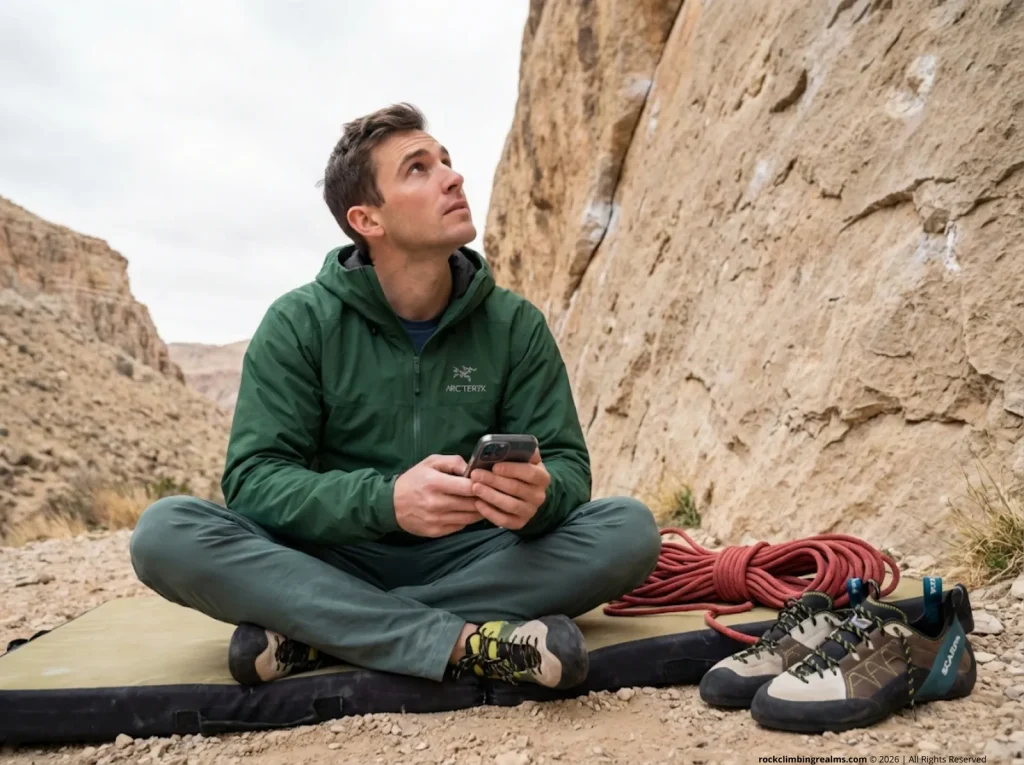
In-person methods aren’t always enough, especially if you climb odd hours or live in a smaller market. Digital tools fill the gap. The trick is knowing which partner finder platforms are worth your time.
Mountain Project Partner Finder
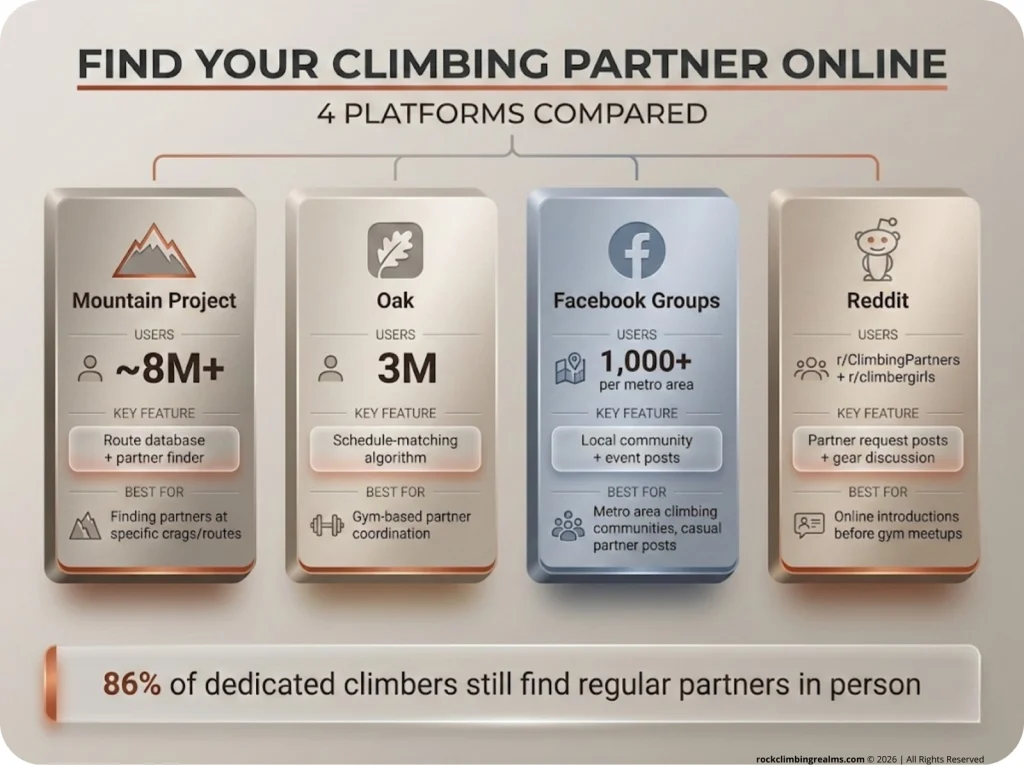
Mountain Project hosts the largest online partner database in climbing, with over 36,929 rock climbers currently registered. You can filter by location, age, experience level, and lead or follow grades. Filter by discipline too: sport climbing, trad climbing, bouldering, or alpine.
Create a profile that reads like a real person. Mention specific climbing areas you frequent, your current project grade, and which days you climb. Stale profiles are the biggest weakness of the platform, so check a user’s last active date before reaching out.
Oak App and Newer Tools
Oak app is a newer entry that uses map-based local group discovery and outing planning. It’s climbing-specific and non-dating. Profiles include gear lists, experience level, and published trip plans you can join directly. Dave Searle, an IFMGA Mountain Guide and Oak co-founder, put it plainly: “Oak is the perfect solution for the outdoor community to connect, plan, and stay safe in the mountains.”
RockBase is another emerging tool worth monitoring for reviews and local community features with its own finder system.
Facebook Groups and Reddit
Search “City + Climbing Community” on Facebook. Most metro areas have active Facebook climbing groups with 1,000+ members. On Reddit, r/ClimbingPartners and r/climbergirls are the most active subs for online partner groups and partner requests.
Post format that gets responses: location, grade match, schedule availability, climbing goals, and gear you own. These are supplements, not replacements. Roughly 86% of dedicated climbers still find their regular partners in person at the gym or crag.
Pro tip: When posting online, include a photo of yourself climbing. It signals that you’re active and serious, not someone who sent a message and disappeared.
Crag Tactics for the Solo Arrival
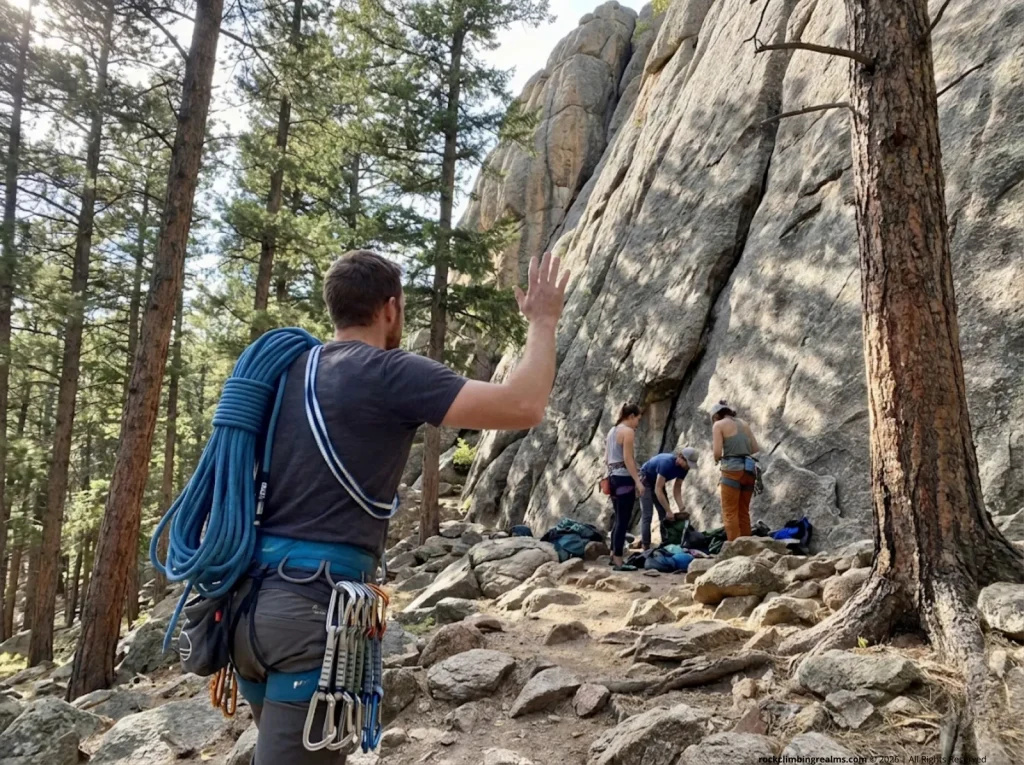
Showing up alone to an outdoor climbing area feels exposing. You’re standing in a parking lot with a rope on your shoulder, scanning for a group that looks approachable. It’s awkward. But it works more often than you’d expect.
Target Odd-Numbered Groups (You’re an Asset, Not a Burden)
Groups of three or five at the crag have a built-in inefficiency: one person always sits out while two climb. You solve that problem by adding a second rope setup. Bring your own rope and quickdraws. That transforms you from “random asking for a catch” to a contributor who adds value.
Kevin Kent, an avid climber from Flagstaff, described the approach simply: “I just walk up, exchange pleasantries, and tactfully launch right into asking them if they’d mind another person.” Gear contribution is the currency of crag social dynamics. Own rope beats own draws beats nothing.
The Thank-You Protocol That Gets You Invited Back
A six-pack, a chocolate bar, or a bag of trail mix at the end of a session converts a polite climb into a standing invitation. It sounds small. It isn’t.
Clean up the base area before you leave. Coil your rope neatly, brush the holds you used, and pack out all trash. Don’t overstay the session. One great day beats three mediocre ones for relationship building.
If you need a checklist to make sure you’re fully prepared for the crag approach, review everything you need for a climbing trip so you never show up missing a critical piece of gear.
Pro tip: Bring a small thank-you gift even on the first session. A cold beer handed to someone after they belayed you for three hours tells them you respect their time and energy.
Read Social Cues and Know When to Walk Away
If a group is projecting a hard route with focused energy, don’t interrupt mid-burn. Wait for the rest period. Pairs who have their system dialed may not want a third. Respect that.
And don’t be the smelly rando. Basic hygiene, clean gear, and presentable clothing make a measurable difference in first impressions. If someone declines, move on. The crag has plenty of climbers, and no one owes you a catch.
Vet Your Belayer Like Your Life Depends on It
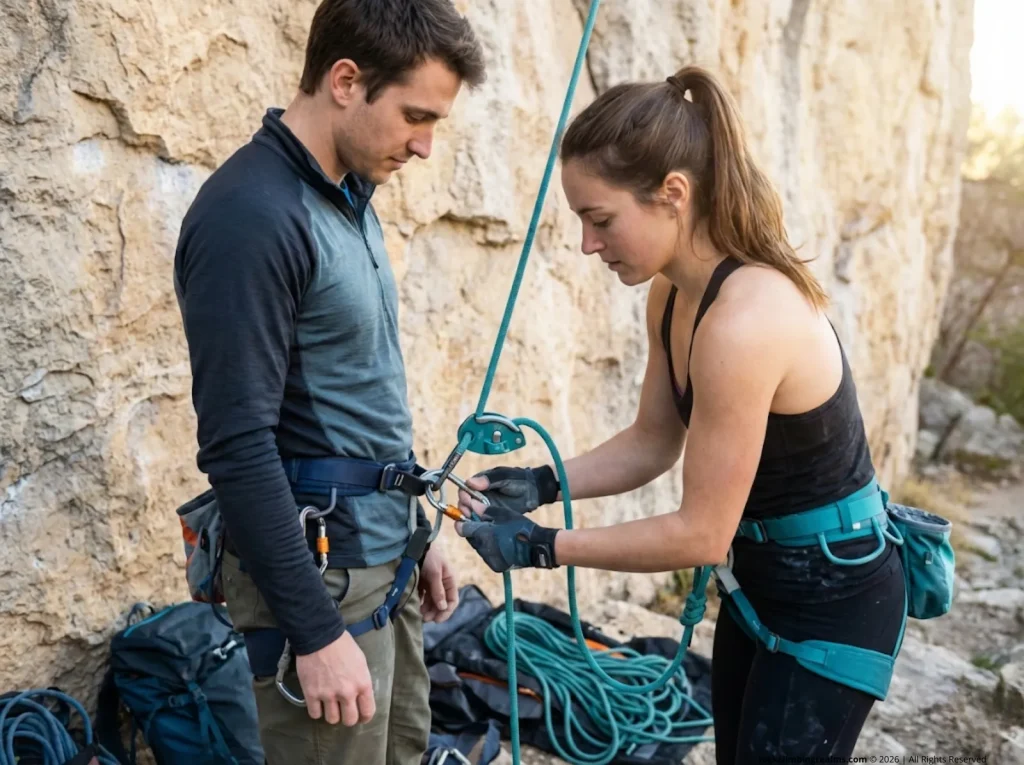
Because it does. The person holding the rope while you’re 40 feet above your last bolt has your life in their hands. Trusting a stranger with that responsibility requires more than a vibes check.
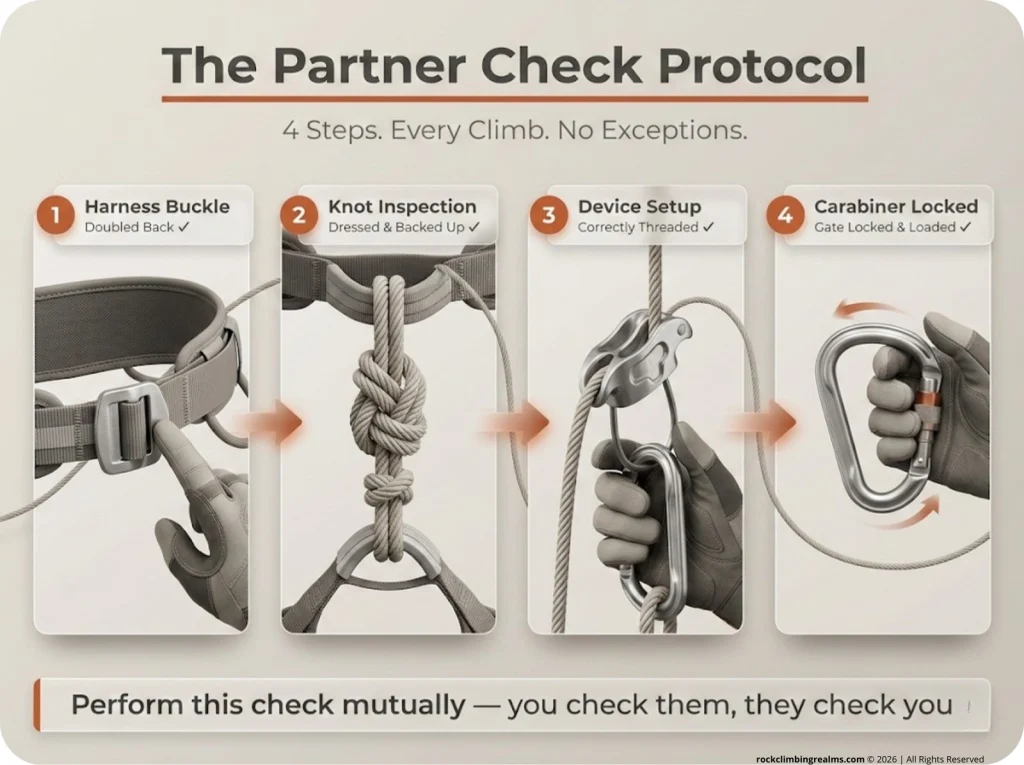
The Partner Check Protocol
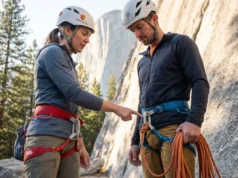
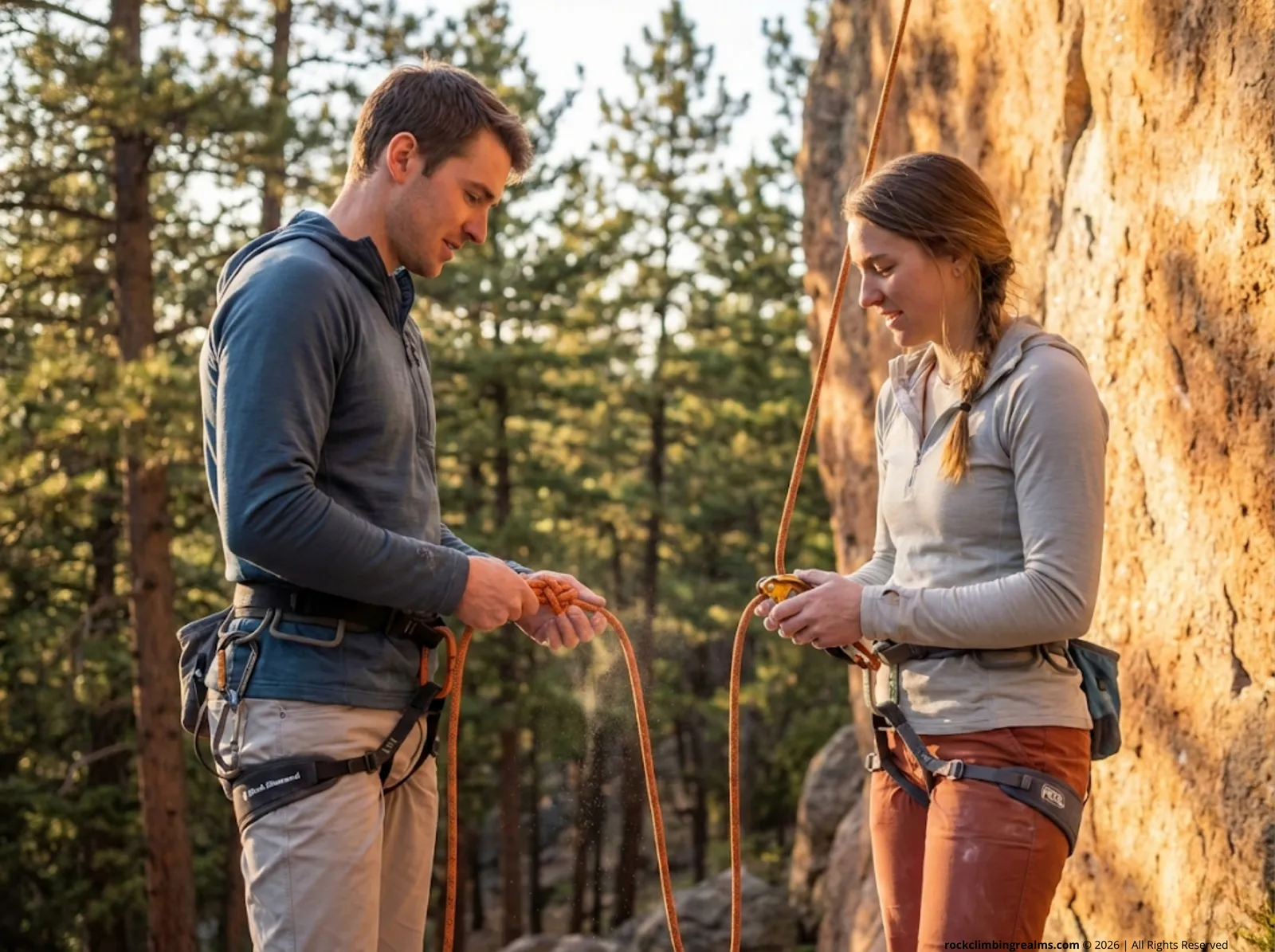
Every certified belay test teaches the same sequence: harness buckle doubled back, knot dressed and backed up, belay device threaded correctly, carabiner locked and loaded. Perform this check mutually. You check them. They check you. If a new partner resists or dismisses it, that’s your first red flag.
According to belay test certification standards, partner checks are universal safety protocol at every level. Skipping them isn’t casual. It’s reckless.
The best way to evaluate a potential belayer is to offer to belay them first on an easy warm-up route. You demonstrate your own competence, and you get to watch their belay technique from the ground before you ever leave it.
For a deeper breakdown, work through the six pre-climb safety steps most climbers skip before every session with a new partner.
Pro tip: Watch your new belayer catch at least one intentional fall on a moderate route before committing to anything at your limit. How they respond to a real catch tells you more than any conversation.
Red Flags That Should End the Session
Distracted belaying is the biggest one. Phone in hand, looking away during a lead climber’s clip, chatting with someone at the base while their climber is above the bolt. That ends the session immediately.
Other red flags: dismissive attitude toward safety checks, frayed gear they haven’t noticed, and a belay device they can’t name or explain. If they want to run it out on sketchy gear and you don’t, politely decline and walk away. Your gut is a legitimate safety system. Trust it.
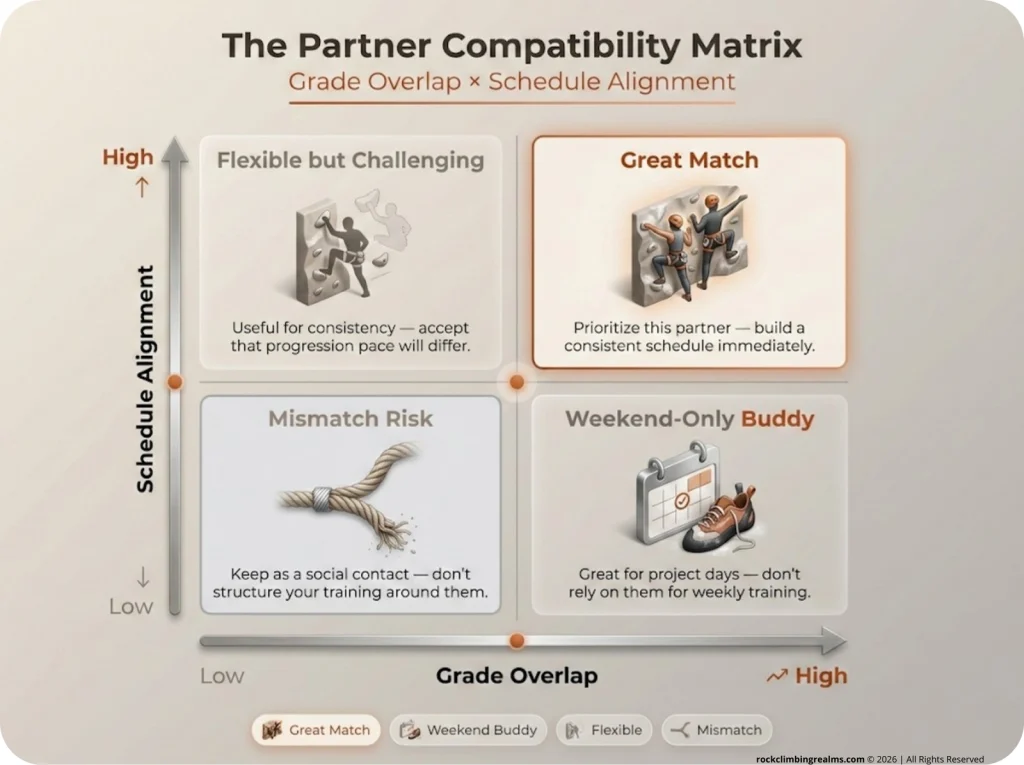
The Compatibility Matrix Beyond Safety
Safety is the floor, not the ceiling. Long-term belaytionships need alignment on four axes.
First, grade match: you want to be within 2-3 grades of each other for productive sessions. Second, schedule availability: consistent days and times matter more than vague “let’s climb sometime” promises. Third, discipline-specific matching: sport training buddies and trad climbing or multi-pitch partners need different commitment levels and gear. Fourth, risk tolerance: discuss your comfort with runouts, loose rock, and weather thresholds before the first outdoor trip together.
No competitor guide provides a usable framework for this. They tell you to “find someone compatible” and leave it there. Compatibility means asking these specific questions within your first three sessions and being honest about the answers.
From One Session to a Lasting Belaytionship
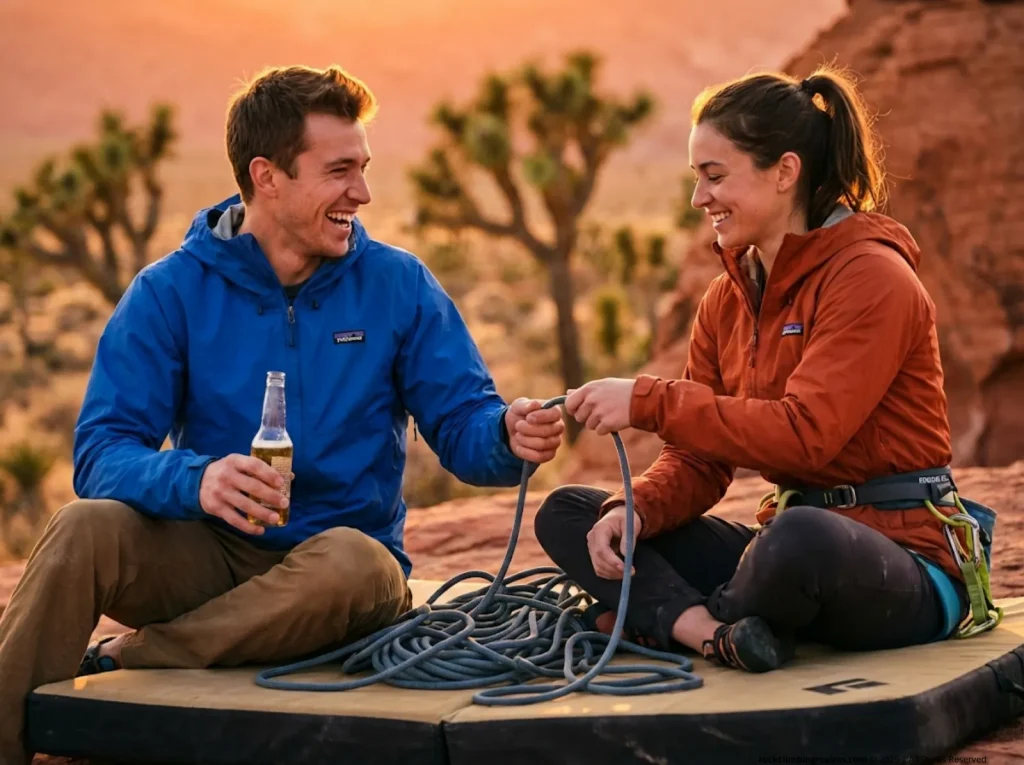
Finding a viable partner is step one. Keeping them is the part nobody writes about. And that’s where most climbing partnerships quietly die, not from a single blowout but from slow drift.
Align on Progression Goals Early
Have the conversation within your first three sessions: “Where do you want to be climbing in six months?” If one partner is training for a redpoint project and the other just wants social gym laps, the partnership will stall.
Tie your climbing partnership to training goals. Hangboard sessions, outdoor trip planning, and grade progression tracking create accountability that casual climbs don’t. The partnerships that last are built on shared ambition, not just shared schedules. Whether you’re experienced climbers pushing into 5.12 territory or new climbers learning to lead, honest alignment keeps both of you growing.
Handle Conflict Before It Poisons the Rope
Common friction points: different warm-up paces, disagreements on when a route is too dangerous, one partner always leading while the other belays every top rope lap. These are normal. Ignoring them is what hurts the partnership.
Address issues directly and specifically. “I noticed you were on your phone during my last lead fall. I need you locked in when I’m above the bolt.” That’s not confrontation. That’s self-preservation. If goals diverge over time, it’s healthy to climb with multiple partners rather than forcing a mismatch.
Build a Network, Not Just a Partnership
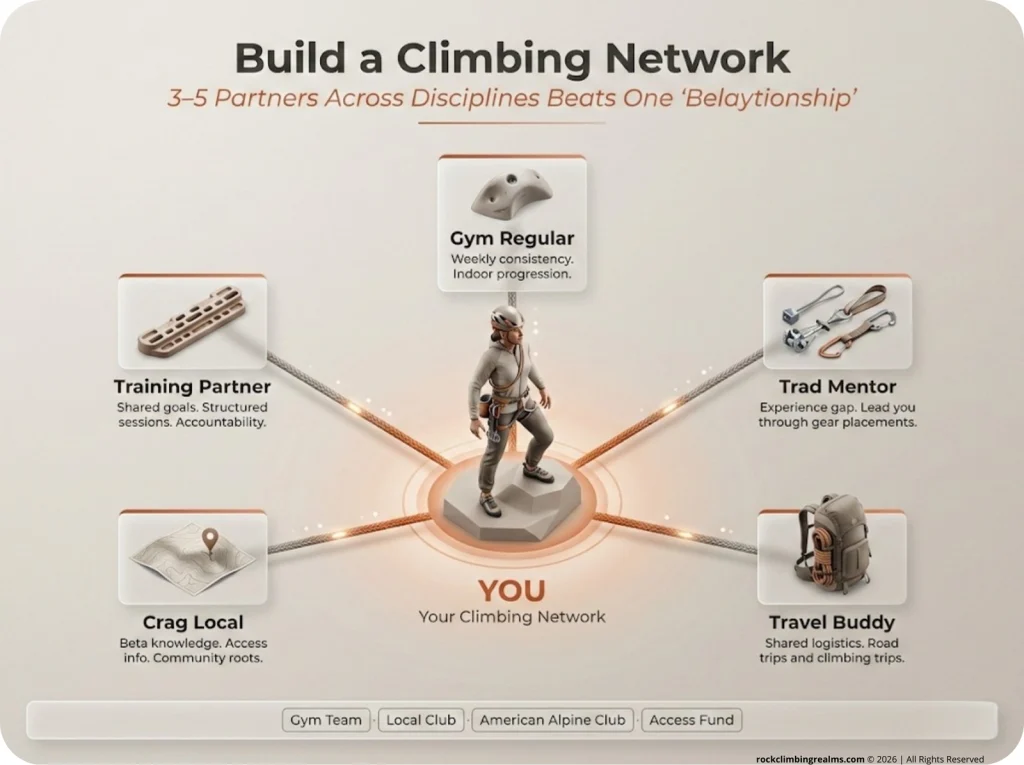
Relying on one person creates fragility. Illness, schedule changes, or a move breaks the whole system. Aim for 3-5 regular partners across different disciplines and schedules.
Join a gym team, a local climbing club, or American Alpine Club’s community and section events for stewardship days and meetups. The Access Fund runs regular crag cleanups where you’ll meet like-minded climbers who value both the sport and the places it happens. The strongest climbers I know have a deep bench of friends to pull from, not just one belaytionship.
Conclusion
Start at the gym. Partner boards, gym community nights, and bouldering floor conversations are the most reliable entry points for new climbers and experienced climbers alike. Go digital as a supplement, not a replacement. Mountain Project and Oak app fill gaps, but most dedicated climbers still connect in person.
Vet every new belayer with a full partner check. Watch them catch at least one fall before committing to anything above your comfort threshold. And trust your gut when something feels off.
Next time you walk into the gym and see that autobelay station, walk past it. Check the gym partner board, introduce yourself to the group warming up on the slab, and bring your own rope to the crag this weekend. Your climbing improves when someone else is invested in your sends. Now go find your people.
FAQ
How do I find climbing partners near me?
Start at your local gym’s partner board or community nights. Online, search Mountain Project’s Partner Finder filtered to your city and join your local Facebook climbing group. Post your grade range, availability, and goals to attract compatible matches.
What are the best apps for finding climbing partners?
Mountain Project Partner Finder has the largest database at 36,900+ profiles. Oak app excels at map-based local group discovery and trip planning. Reddit’s r/ClimbingPartners is the most active discussion-based community. Use two or three platforms in combination for the best results.
What questions should I ask a potential climbing partner?
Cover five areas: experience level and current grade range, preferred discipline (sport, trad, or boulder), schedule availability, belay device type and certification status, and risk tolerance on outdoor routes. If they can’t answer any of these clearly, invest more observation time before committing.
Is it hard to find climbing partners as a beginner?
Easier than most new climbers expect. Gym community nights are designed specifically for people looking to connect. Beginners are welcomed at most crag groups if they bring their own gear, demonstrate safe climbing habits, and ask before joining. Initiative and preparation matter more than grade.
How do you safely approach someone at the gym or crag?
At the gym, approach during natural breaks and lead with a specific observation, not a generic compliment. At the crag, target odd-numbered crag groups, bring your own rope, and offer to belay first. Showing up prepared with gear and knowledge is the strongest first impression you can make.
Safety Notice: Rock climbing and mountaineering are inherently high-risk
activities that can involve physical trauma or fatal incidents. The information on Rock Climbing Realms is for
educational and informational purposes only. Techniques and advice presented here are not a substitute
for professional, hands-on instruction. Conditions and risks vary by location. Always seek guidance
from a qualified instructor before attempting new techniques. By using this website, you agree that you
are solely responsible for your own safety. Any reliance you place on this information is strictly
at your own risk, and you assume all liability for your actions. Rock Climbing Realms and its authors
will not be held liable for any harm, damage, or loss sustained in connection with the use of this information.
Affiliate Disclosure: We are a participant in the Amazon Services LLC Associates Program, an
affiliate advertising program designed to provide a means for us to earn advertising fees by advertising and linking
to Amazon.com. As an Amazon Associate, we earn from qualifying purchases. We are also an official affiliate partner
of Black Diamond Equipment via the AvantLink network. If you click on a Black Diamond affiliate link and make a
purchase, we may earn a commission at no additional cost to you. We also participate in other affiliate programs.
Additional terms are found in the terms of service.