
In this article
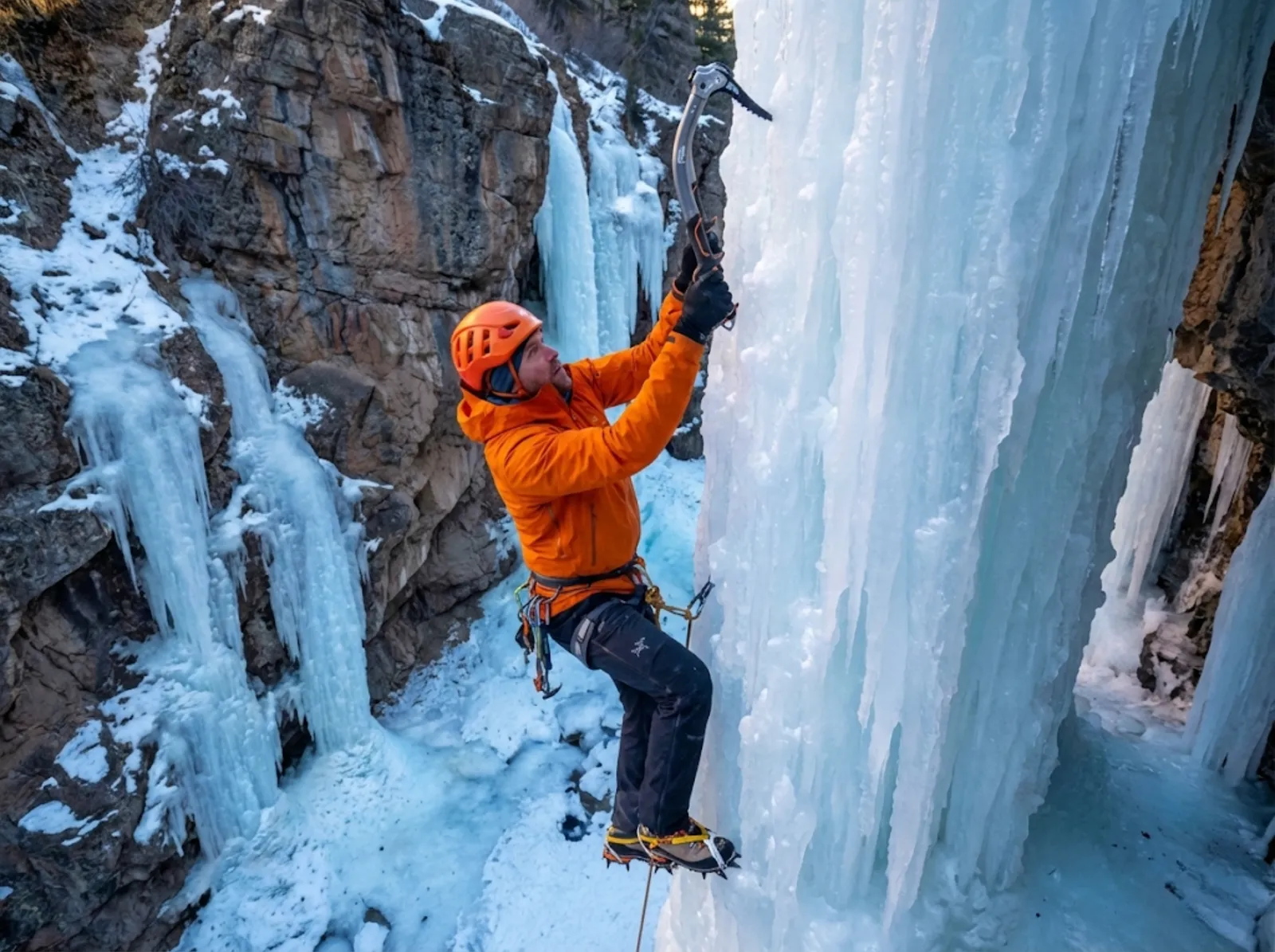
You’re sixty feet up a WI4 pillar when your crampon shifts — just a millimeter — and suddenly that bomber stick feels like a suggestion. You downclimb five moves, re-seat the binding with frozen fingers, and wonder why you cheaped out on the one piece of gear that literally keeps you attached to the ice.
After putting six ice climbing crampons through 200+ pitches across three seasons of waterfall ice, alpine mixed, and everything in between, we know exactly which crampons perform under pressure, which ones disappoint halfway through the season, and which ones are worth your money heading into 2026. We tested on WI3–WI5 ice in the Cascades, M4–M6 mixed climbing routes in the Canadian Rockies, and alpine couloirs everywhere from Ouray Ice Park to Hyalite Canyon. The focus was always the same: front-point geometry, binding security, steel durability, weight, and how well each crampon adapted when conditions changed mid-route.
Here’s what 200 pitches taught us. The Petzl Lynx earned our Best Overall pick for its unmatched modular front-point system and the Alpen Adapt platform that lets you swap components instead of replacing the entire crampon. Here’s how the field stacks up:
How We Tested These Ice Climbing Crampons
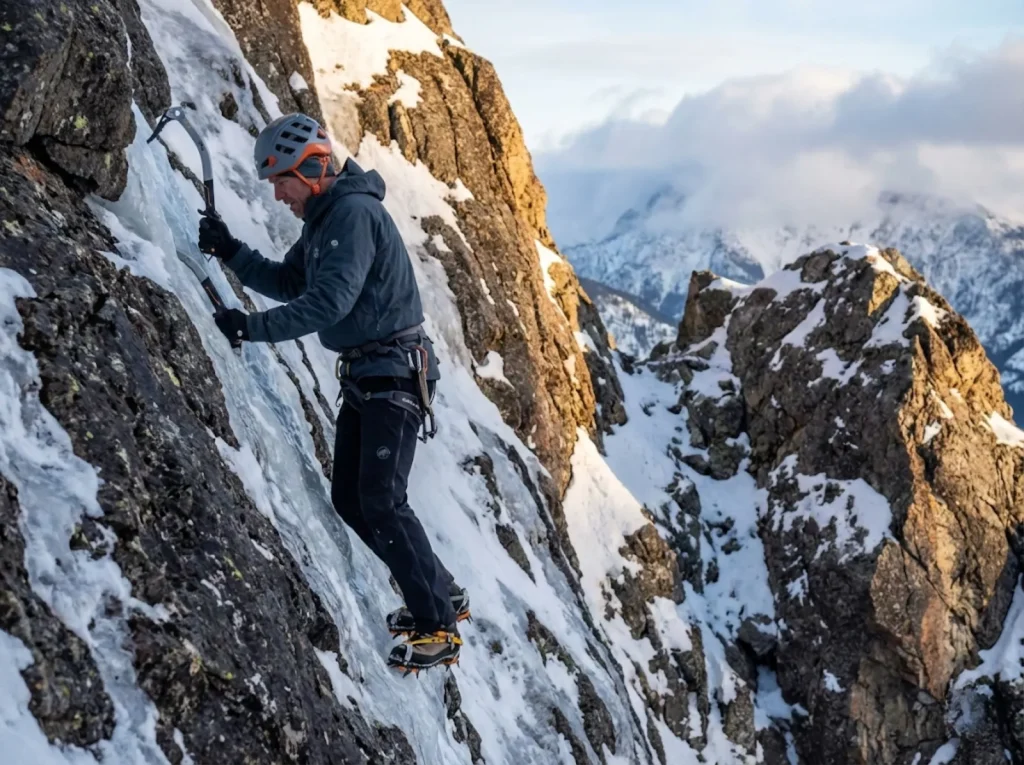
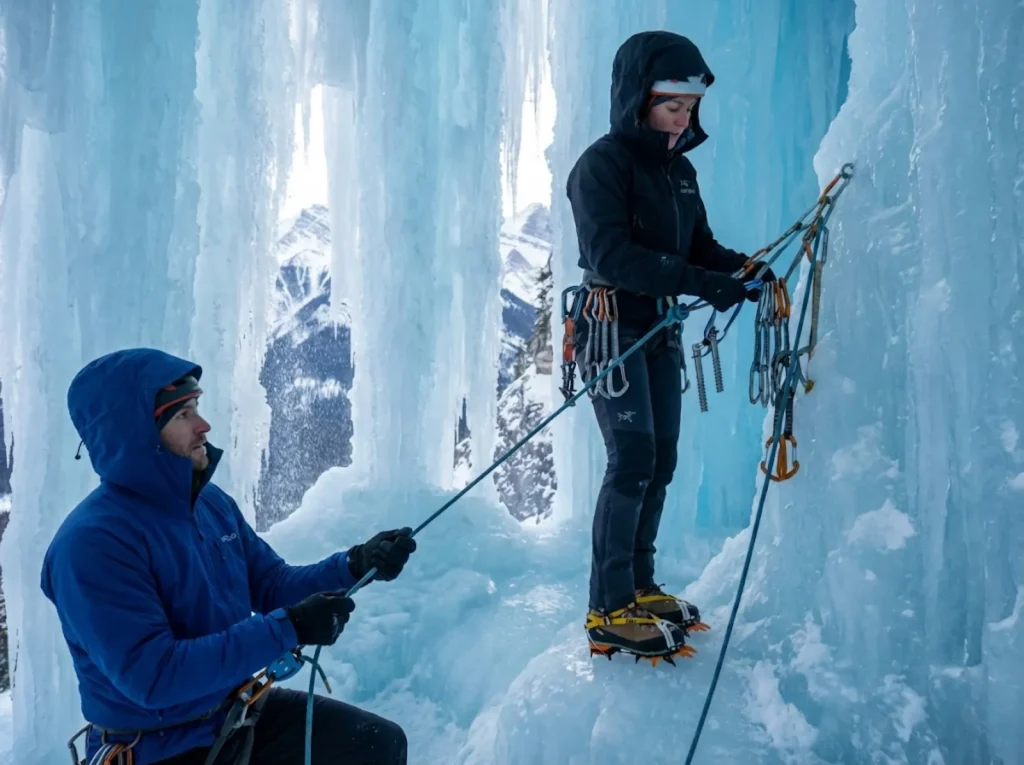
We evaluated six crampons against six weighted criteria across 200+ pitches of ice climbing and mixed climbing over three seasons. Testing took place on WI3–WI5 waterfall routes in the Cascades and at Ouray Ice Park, M4–M6 mixed climbing routes in Montana’s Hyalite Canyon, and alpine couloirs in the Canadian Rockies. Conditions ranged from bomber blue hard-water ice to rotten chandelier formations to thin ice-smeared rock — the full spectrum of what ice climbers actually face.
Our evaluation framework weighted each criterion based on real-world importance: Front-Point Performance (25%), Binding Security and Glove Usability (20%), Durability and Steel Quality (20%), Weight and Packability (15%), Versatility (15%), and Anti-Balling Effectiveness (5%). All five crampons are CE EN 893 and UIAA 153 certified. Every product is verified available on Amazon.com USA as of publication.
Affiliate disclosure: We use affiliate links throughout this article. Purchasing through these links costs you nothing extra and helps keep this resource free. Our editorial opinions are not influenced by affiliate relationships — we’ve praised the $200 Grivel and called out limitations on $280 Petzl models in the same article. Your trust matters more than any commission check.
5 Best Crampons for Ice Climbing of 2026 (Tested and Reviewed)
🏆 Best Overall: Petzl Lynx
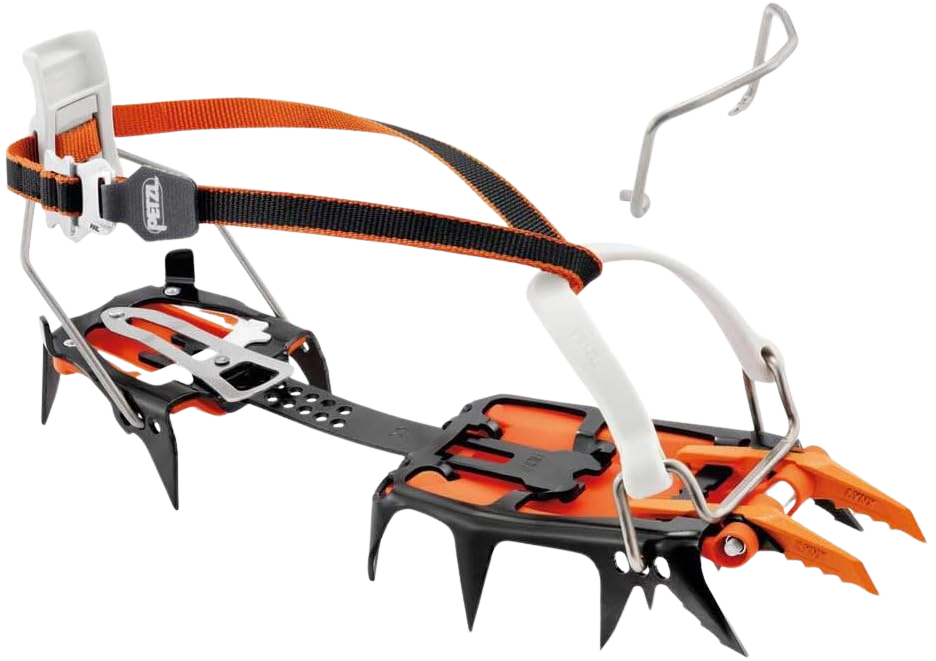
The Petzl Lynx does something no other crampon in this test manages: it performs at an elite level on pure vertical ice, mixed climbing routes, and alpine couloirs without asking you to compromise on any of them. The modular front-point system switches between mono, dual, and offset configurations using a built-in wrench — no separate tools to forget at the trailhead, no fumbling through your pack at the base of a route. Three seasons of field use confirmed what the design promises: this is a crampon system, not just a crampon.
The Alpen Adapt platform is where the long-term economics get interesting. When front points wear down — and they will after a full season of mixed terrain — you replace the points, not the crampon. Same for bindings and linking bars. Across 200 pitches, we replaced one set of front points ($55) and kept climbing. That’s a fundamentally different ownership model than treating a $250+ crampon as a disposable item. The 14 secondary crampon points provide exceptional stability on irregular ice formations — cauliflower ice, bulges, and aerated pillars that punish crampons with fewer contact points.
The honest trade-off: at 965g per pair, the Lynx isn’t the lightest tool for the job. Weight-conscious alpinists who prioritize grams on long approaches should look at the Petzl Dart below. And the LEVERLOCK UNIVERSEL binding, while brilliantly versatile across boot types, doesn’t feel quite as locked-in as a dedicated step-in system on a fully welted B3 boot. For pure waterfall ice climbers who never touch rock, the Lynx carries complexity they may not need. But for everyone else — anyone whose season touches more than one discipline — it’s the clear choice.
Pro tip: Move the toe bail to the back hole for better secondary point engagement on steep ice. Several long-term testers reported less foot fatigue over multi-pitch days with this simple adjustment.
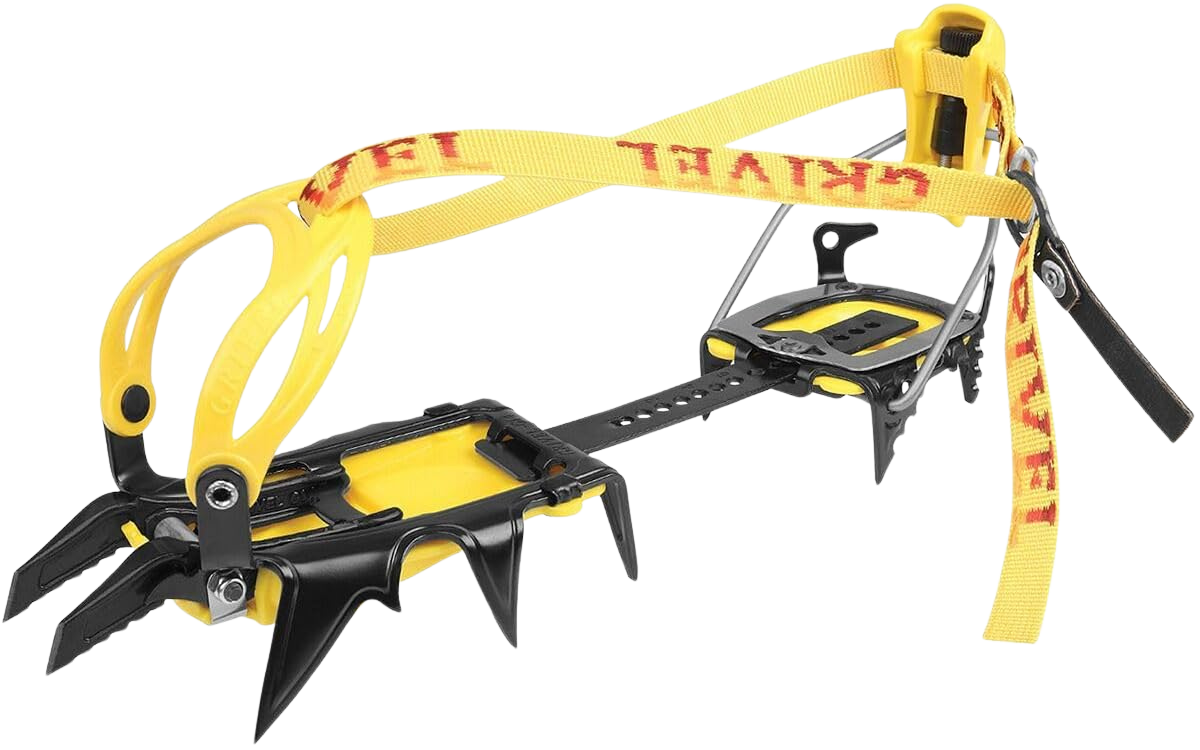
💰 Best Value: Grivel G14 Evo
If you want premium front-point performance without the premium price tag, the Grivel G14 Evo is the crampon that closes that gap. The headline feature is hot-forged steel front points — the same 3D forging process Grivel uses across their professional line — at a price point that sits $50–80 below the modular competition. In back-to-back testing against stamped-steel alternatives, the G14’s points maintained their edge noticeably longer across identical mixed terrain. As alpinist Steve House has noted about this design philosophy: the combination of a lightweight full-steel frame with high-carbon hot-forged front points puts you at home on the biggest, hardest routes.
The Antibott anti-balling system deserves special mention. It’s the best we tested — proactive rather than passive, actively shedding wet snow with each foot placement instead of waiting for accumulation. On spring approaches where wet snow compresses underfoot, the G14 stayed clean while competitors required periodic stomping to clear packed slush. The Cramp-O-Matic EVO binding snaps into B3 boot welts with a satisfying click that inspires confidence, and the heel lever is beefy enough to operate with thick winter gloves.
The honest downside: weight. At 1,158g per pair, the G14 is the heaviest crampon in this test by a significant margin. Long alpine approaches and multi-pitch days on steep ice will remind you of those extra grams — especially when you’re comparing them against the 810g CAMP Alpinist Tech. The mono/dual conversion works but isn’t as fast or seamless as Petzl’s dedicated modular system; swapping points requires a wrench and some patience. If weight isn’t your deciding factor and durability is, this is the strongest crampon here dollar-for-dollar.
⬆️ Premium Upgrade: Petzl Dart
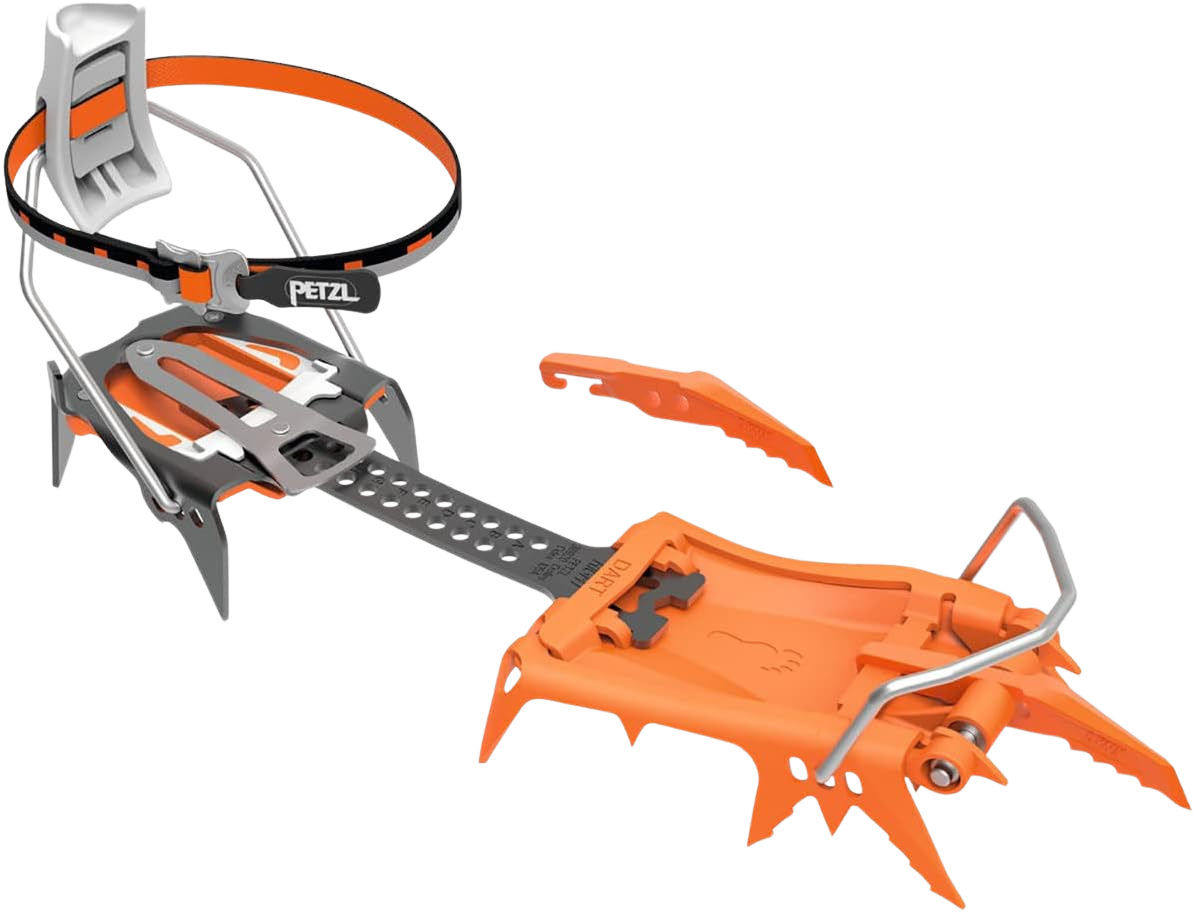
The Petzl Dart is the gram-counter’s answer to the Lynx’s versatility question. At 815g per pair — a full 150g lighter — it delivers the same Alpen Adapt modularity and identical front-point swap capability in a trimmed-down chassis. For alpine climbing days where every ounce on your feet translates to fatigue savings across a ten-pitch route, that weight reduction is not trivial.
The built-in wrench for field configuration changes is one of those small design decisions that separates professional-grade equipment from gear that just looks the part. You can switch between dual-point, offset dual-point, or monopoint at the base of a route without rummaging for a separate tool — and the ANTISNOW system handles anti-balling duties. The LEVERLOCK FIL binding mechanism latches cleanly onto B3 boots with proper heel welts, and the overall fit on modern ice climbing boots like the Scarpa Phantom Tech felt precise across extended testing.
Where the Dart honestly falls short: durability under sustained rock punishment. The lighter construction sacrifices material at stress points, and on rock-heavy mixed climbing routes (M5+ with significant dry-tooling sections), the chassis showed more wear after a season than the beefier Lynx did over the same period. The LEVERLOCK FIL binding is also slightly less universally compatible than the UNIVERSEL variant — verify your specific boot compatibility before purchasing. If the extra 150g doesn’t bother you, the Lynx gives you more robustness for roughly the same price. But for climbers who count grams by pitch fifteen on a big alpine objective, the Dart earns its premium positioning.
🎯 Best for Mixed Climbing: CAMP Alpinist Tech
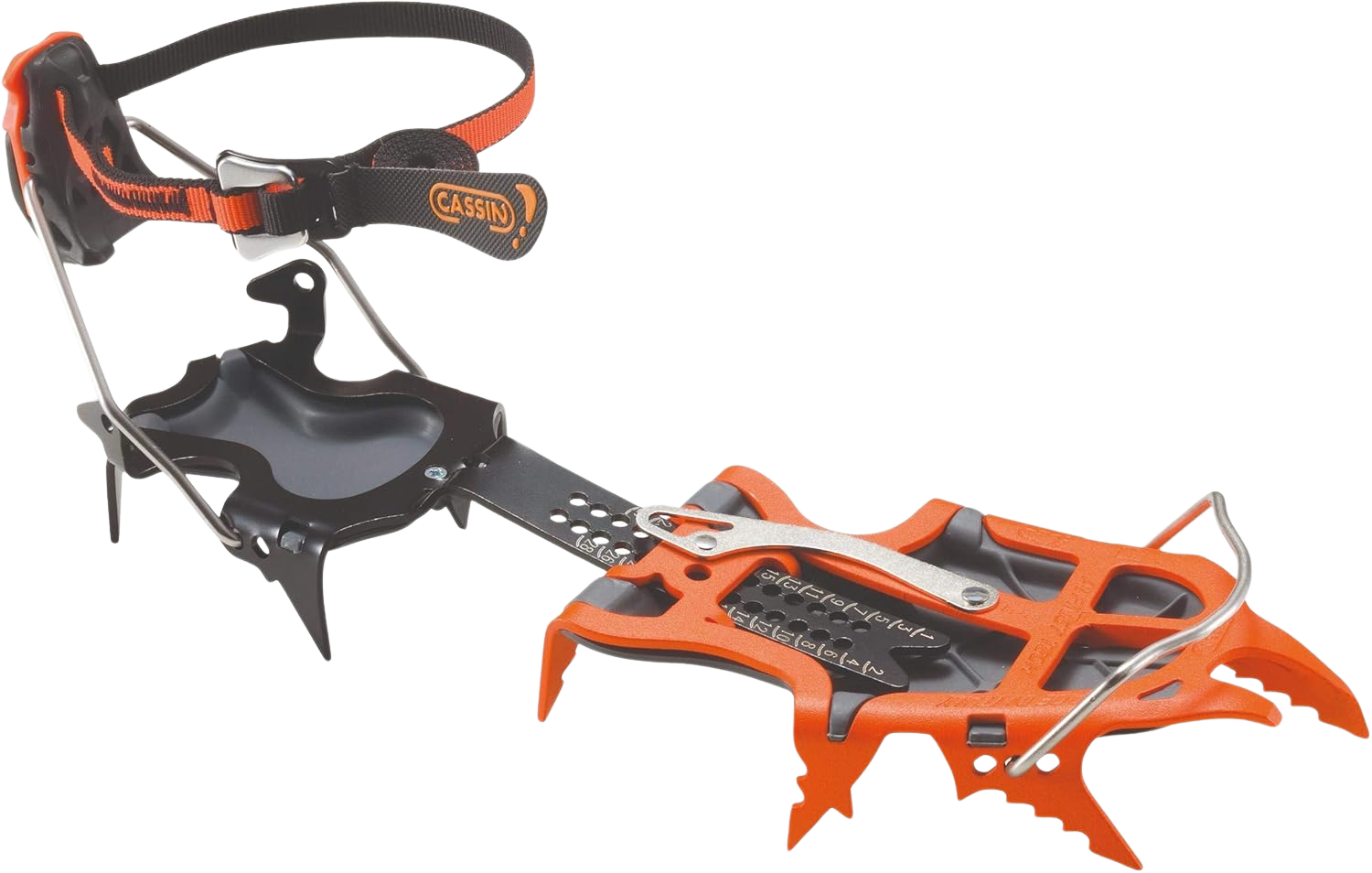
If mixed climbing and dry tooling are your primary disciplines, stop looking — the CAMP Alpinist Tech was designed specifically for the demands of rock-and-ice terrain. The monopoint with secondary support provides the precision placement capability that dual-point crampons cannot match on thin cracks, small pockets, and marginal rock features at M5+ grades. CAMP’s engineering choice to eliminate connection joints between the frame sections leaves almost zero play in the system — the crampon feels like an extension of the boot rather than an attachment bolted to it.
At 810g per pair, this ties with the Petzl Dart for the lightest full-steel technical crampon in our test lineup. But where the Dart achieves that weight with multi-material construction, the CAMP Alpinist Tech does it with NiCrMo chromoly steel throughout — specifically engineered to absorb repeated rock impact without cracking or deforming. That steel durability matters when your front points are hitting granite and gneiss on M6+ mixed pitches and they need to hold an edge for the ice above. The asymmetric frame design follows the contour of modern B3 boots for a natural fit that eliminates the crampon-rocking that plagues symmetrical designs on aggressive terrain.
The honest limitation: this is a specialist tool. The mono-point configuration locks you into one setup. If you frequently need to switch between monopoint for mixed days and dual-point for pure waterfall ice sessions, Petzl’s modular system handles that better. And at $280–320, you’re paying premium pricing for a crampon that does one thing exceptionally well rather than several things competently. That’s a worthwhile tradeoff only if mixed climbing is where you spend most of your season. For those who do, nothing else in this test matched the Alpinist Tech’s precision on rock-and-ice terrain.
Pro tip: On M-grade terrain, pair monopoint crampons with a slightly softer ice tool pick angle for better rock hooking. The single front point and optimized pick geometry create a complementary system that finds placements neither can manage alone.
🎖️ Honorable Mention: Black Diamond Stinger
The Right Crampon for Your Climbing
Three decisions matter more than everything else when choosing ice climbing crampons:
Match your crampon to your climbing discipline first. If you split time between waterfall ice and mixed climbing, a modular front-point system (Petzl Lynx or Dart) eliminates the need for two setups. If you’re committed to mixed, the CAMP Alpinist Tech delivers specialist precision nothing else here touches. If pure ice performance at the best price is the goal, the Grivel G14 Evo punches above its weight class.
Verify boot compatibility before you buy. Step-in bindings require B3 boots with proper heel and toe welts. Semi-automatic systems need a heel welt at minimum. Mismatching your boot/crampon setup is the most expensive mistake in ice climbing gear — and one we see in forums constantly. Check the manufacturer’s compatibility chart, not just the binding type description.
Budget for front-point replacements. They’re wear items, not permanent components. $30–60 per replacement set is the real running cost of a quality crampon. The crampons with the best long-term durability in this test — the Lynx and the G14 — both offer readily available replacement points. Sharp crampon points and a secure binding are the foundation of everything else on ice. Start there.
Now go send something.
FAQ
How often should I sharpen my crampon front points?
Every 5–10 pitches on mixed climbing terrain with rock contact. Less frequently on pure water ice, where points stay sharper longer against the softer medium. Dull front points force harder swings and less secure placements — sharp crampons are safer crampons. Use a flat mill bastard file at the factory bevel angle, and avoid bench grinders that can overheat the steel and draw out the temper.
Can I use the same crampons for glacier travel and waterfall ice climbing?
Technically yes, but you’ll compromise on both. Glacier crampons prioritize horizontal stability across snow slopes and moderate icy terrain. Ice climbing crampons need aggressive front-point geometry for vertical ice and steep ice placements. If you’re climbing WI3 or harder, get a dedicated technical crampon — trying to do everything with one setup means doing nothing particularly well.
What’s the real difference between $200 and $300 crampons?
Modularity, weight savings, and front-point quality. A $200 Grivel G14 Evo delivers excellent ice performance with hot-forged steel points. A $280 Petzl Lynx adds a modular front-point system and the Alpen Adapt platform for long-term component swaps. You’re paying for versatility and multi-season replaceability, not just sharper steel. If you climb one discipline exclusively, the value argument shifts toward the G14.
Do I need monopoint or dual-point crampons for ice climbing?
For pure waterfall ice (WI grades), dual-point or offset dual-point provides better stability on irregular ice formations like cauliflower and chandelier ice. For mixed climbing (M grades), monopoint delivers the precision needed for thin cracks and rock features. Modular crampons like the Petzl Lynx let you switch between both — the most practical option for climbers whose season touches multiple disciplines.
Are aluminum crampons suitable for ice climbing?
No. Aluminum crampons are designed for glacier travel and snow mountaineering where weight trumps durability. They deform on rock contact and lack the front-point aggressiveness needed for technical ice. For any climbing involving rock or steep ice, use chromoly or stainless-steel crampons. The weight savings are not worth the safety compromise.
Safety Notice: Rock climbing and mountaineering are inherently high-risk
activities that can involve physical trauma or fatal incidents. The information on Rock Climbing Realms is for
educational and informational purposes only. Techniques and advice presented here are not a substitute
for professional, hands-on instruction. Conditions and risks vary by location. Always seek guidance
from a qualified instructor before attempting new techniques. By using this website, you agree that you
are solely responsible for your own safety. Any reliance you place on this information is strictly
at your own risk, and you assume all liability for your actions. Rock Climbing Realms and its authors
will not be held liable for any harm, damage, or loss sustained in connection with the use of this information.
Affiliate Disclosure: We are a participant in the Amazon Services LLC Associates Program, an
affiliate advertising program designed to provide a means for us to earn advertising fees by advertising and linking
to Amazon.com. As an Amazon Associate, we earn from qualifying purchases. We are also an official affiliate partner
of Black Diamond Equipment via the AvantLink network. If you click on a Black Diamond affiliate link and make a
purchase, we may earn a commission at no additional cost to you. We also participate in other affiliate programs.
Additional terms are found in the terms of service.