
In this article
The fittest person in the group is often the one who turns back. Ask any guide who has worked the mountain for a few seasons and you will hear the same story: the marathon runner who charged the first two days gets stopped cold at 15,000 feet, while the slower, older trekker on a longer itinerary walks onto the summit at dawn. That gap has almost nothing to do with strength and almost everything to do with how many days you booked and how well you acclimatize. This guide is written by someone who is not trying to sell you a trip, so it can say the parts the tour companies leave out: what the routes really cost you, why the cheapest operator is a warning sign, and what the altitude numbers actually mean. Climbing Kilimanjaro is within reach for a normal, reasonably fit person, but only if you respect what the mountain is.
What Climbing Kilimanjaro Actually Involves
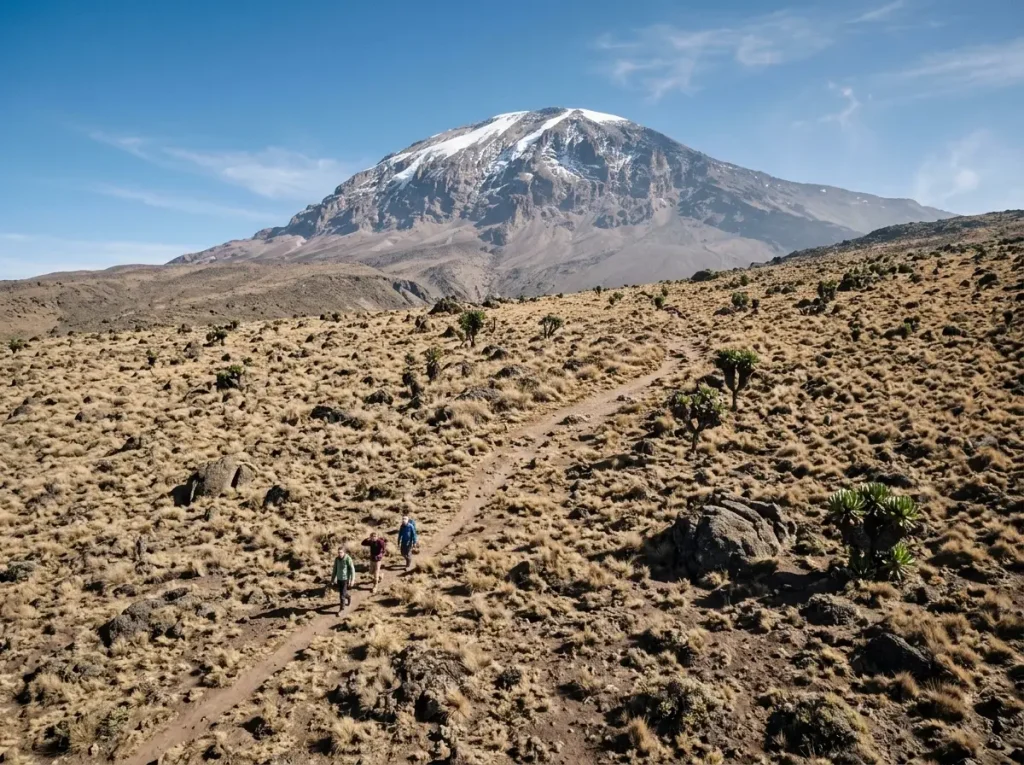
Before you compare routes or price out operators, you need an honest picture of what this mountain is and is not. The word climbing does a lot of misleading work here. Kilimanjaro is a walk, a long and thin-aired one, but a walk.
A Trek, Not a Technical Climb
Kilimanjaro is a non-technical climb, a true trekking peak, which means you will not touch a rope, a harness, or an ice axe on any of the standard routes. There is no rock face to scale and no glacier travel that requires crampons. If you can hike a steep trail for six to eight hours a day for several days in a row, you have the physical skill set the mountain asks for. What makes it hard is not the terrain under your boots but the air above 10,000 feet.
That single fact reshapes how you should prepare. You are not training to be a mountaineer, you are training yourself to keep working while you slowly run short on oxygen. This is why a first-time trekker with no alpine background summits regularly, while experienced climbers who treat it like a fitness test sometimes do not.
The Numbers That Define the Mountain
Mount Kilimanjaro rises to 5,895 meters, or 19,341 feet, at Uhuru Peak, its true summit. It is the highest mountain in Africa and the tallest free-standing mountain on earth, meaning it stands alone rather than as part of a range. It is also one of the fabled Seven Summits, the highest peak on each continent, which is a large part of why it draws roughly 35,000 climbers a year.
The mountain has three volcanic cones: Kibo, the highest and the one you summit, plus Mawenzi and Shira. If you want to see how Kilimanjaro stacks up against the world’s other famous peaks, it sits in an unusual category: enormous elevation, genuine altitude risk, but none of the technical demands of a Denali or a Matterhorn.
Why Altitude Is the Real Opponent
From the trailhead to the summit you pass through five distinct ecosystem zones, from humid rainforest up through moorland, alpine desert, and finally the frozen arctic zone at the summit, all in the span of a few days. You have no time to properly adapt, and that compression is the whole challenge. Altitude, not fitness, is what turns most people around. Hold onto that idea, because every decision that follows, from route to itinerary to pace, is really a decision about how you manage thin air.
The Seven Routes and How to Choose
Every operator has a favorite route, and it is usually the one that fits their schedule and margins. Here is the trade-off laid out plainly so you can match a route to your own priorities: summit odds, cost, crowds, and scenery. There are seven established routes up the mountain, plus the Mweka route, which is used only for descent.
The camping routes make up most of the mountain. Machame route, nicknamed the “Whiskey route” for being tougher than the hut-based option, is the most popular for good reason: strong scenery and solid success rates on a seven-day itinerary. Lemosho route and the Northern Circuit route start farther out and give you more time high on the mountain, which is why their summit rates are the best of the bunch. Rongai route approaches from the drier northern side and stays quieter, while Shira route and Umbwe route are less common, with Umbwe being steep and better suited to experienced trekkers.
Then there is the one hut route. Marangu route, the “Coca-Cola route,” is the only path with dormitory-style huts instead of tents, which makes it popular with people who dislike camping. It is often sold as the easy option, but its typical five to six-day schedule gives you the least acclimatization time, and its success rate reflects that.
Here is how the main routes compare on the factors that actually decide your trip.
| Route | Typical Days | Accommodation | Approx Success | Best For |
|---|---|---|---|---|
| Northern Circuit | 9 days | Camping | 95–98% | Best odds, most acclimatization |
| Lemosho | 7–8 days | Camping | 85–90% | High success, scenic, quieter start |
| Machame | 6–7 days | Camping | up to 85% | Scenery with strong odds |
| Rongai | 6–7 days | Camping | Moderate–good | Drier north side, low crowds |
| Marangu | 5–6 days | Huts | 50–65% | Hut sleepers, tight budgets |
| Umbwe | 6 days | Camping | Lower | Experienced, steep, solitude |
Which Route Actually Fits You
If summit odds are your priority, the math is simple: longer routes win, so Lemosho or the Northern Circuit beat a short Machame or Marangu by a wide margin. If cost or vacation days force a shorter trip, go in knowing you are trading away summit probability, not buying an easier mountain. The worst mistake is picking a route by reputation, the same easiest Seven Summit reality check that trips up Elbrus climbers, where “easy” gets people to underprepare for the one thing that matters.
Best Time of Year to Climb
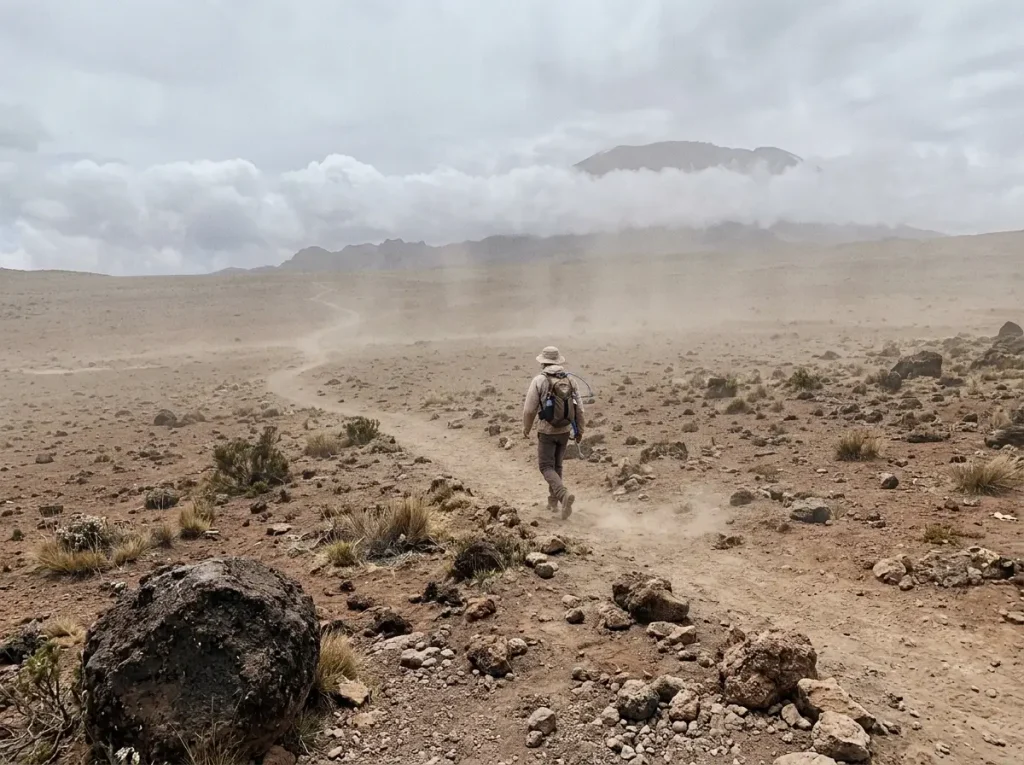
Kilimanjaro sits just south of the equator, so it does not have summer and winter in the way you are used to. It has dry seasons and wet seasons, and those windows matter more for your comfort and your odds than the calendar month alone.
The Two Dry Seasons
There are two primary trekking windows. The first runs January through March: colder, often clearer, and generally quieter on the trails. The second, June through October, is the busiest and most stable stretch, with warmer days and reliable conditions. Both are good, and the choice between them usually comes down to whether you value solitude and crisp views, or warmth and a livelier camp scene.
What the Rainy Seasons Cost You
The long rains fall roughly March through May, and the short rains arrive around November. Climbing during these periods is possible and cheaper, but the rainforest zone turns to deep mud, cloud cover hides the views, and wet conditions drag down success rates. Unless budget is your only concern, the dry windows are worth the premium.
Timing Summit Night (Full Moon)
One nuance the calendar hides: many climbers time their summit night to land near a full moon. The extra light on the exposed upper slopes makes the pre-dawn push feel less disorienting and gives you unobstructed views once you are up top. It is a small scheduling tweak that costs nothing and improves the hardest night of the trip.
How Long You Need and Why Days Decide the Summit
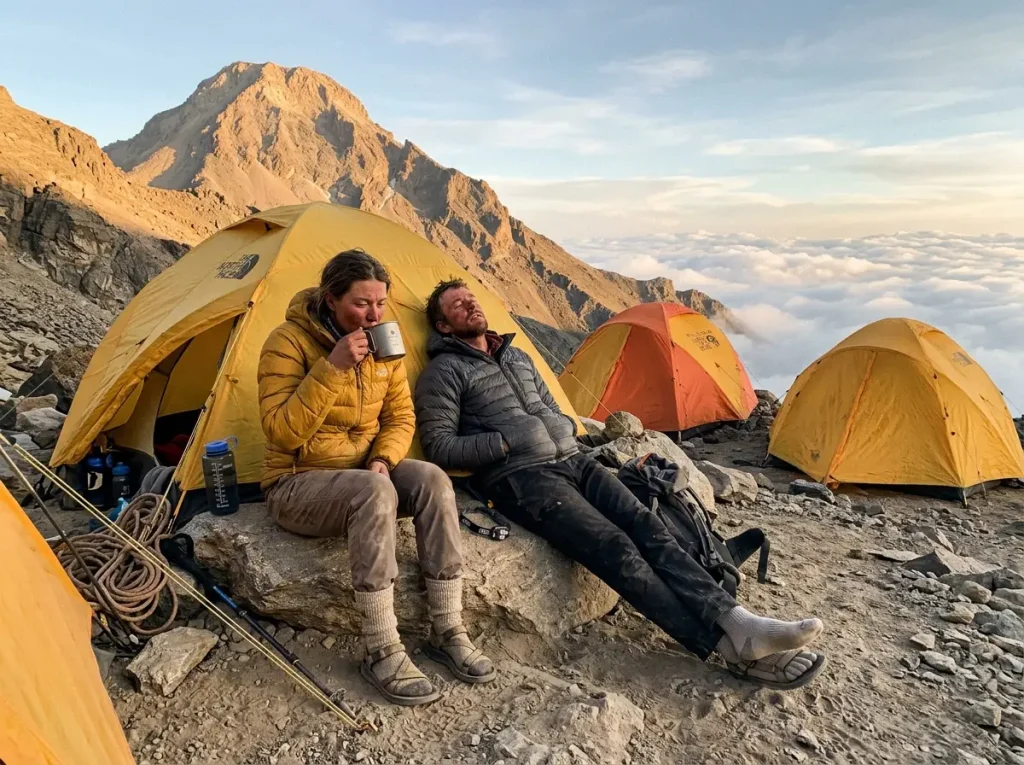
This is the heart of the whole guide, and it is the number one thing operators soft-pedal because it makes their cheaper packages look bad. The single biggest lever on whether you reach Uhuru Peak is not your training plan, it is how many days you spend on the mountain.
The Success-Rate-by-Days Data
The numbers are stark. Five-day itineraries post summit success rates as low as 27 to 65 percent. Six and seven-day routes climb into the 65 to 85 percent range. Eight and nine-day itineraries reach 85 to 98 percent. Each additional acclimatization day above 3,000 meters adds roughly five to seven percentage points to your odds. Paying for two more days on the mountain is, hands down, the highest-return decision in the entire trip.
The Acclimatization Math (Climb High, Sleep Low)
There is real medicine behind the “add days” advice, not folklore. Published guidance from the CDC’s guidelines on high-altitude travel and altitude illness recommends that above 3,000 meters you avoid gaining more than about 500 meters of sleeping altitude per night, and that you add an extra rest night for every 1,000 meters of further gain. Good itineraries build in a climb-high-sleep-low day, where you hike to a higher point and then descend to sleep lower, nudging your system to adapt without spending the night up high. Shorter trips simply cannot honor that math, which is why they fail more people.
If you are choosing between spending money on a lighter pack or on one extra acclimatization day, buy the day every time. Nobody gets turned around at 18,000 feet because their duffel was heavy. They get turned around because their oxygen saturation fell off a cliff on a rushed schedule.
Why Cheaping Out on Days Backfires
The most common self-inflicted wound on Kilimanjaro is booking a too-short itinerary to save money or burn fewer vacation days. It feels efficient and it quietly wrecks your odds. This is the same turn-back pattern that catches climbers who underestimate Aconcagua: a non-technical peak where the mountain is won or lost on patience, not power. Spend the days. It is the cheapest insurance you can buy for an expensive trip.
Altitude Sickness and What the Numbers Really Mean
Most guides tell you to “stay hydrated and go slow,” which is true and almost useless on its own. Here is what is actually happening inside you, and the specific numbers your guide is tracking every evening, because understanding the mechanism is what makes the advice stick.
What Your Oxygen Levels Actually Do Up There
At sea level your oxygen saturation, or SpO2, reads 95 to 99 percent. As you climb Kilimanjaro it falls, dropping below 90 percent at altitude and sliding toward 80 percent near the 5,895-meter summit. That is not a malfunction, it is simply what thinner air does to your oxygen levels. You respond by breathing faster and, over days, producing more of the red cells that carry oxygen, which is the entire point of acclimatization.
AMS, HACE, and HAPE Without the Jargon
When you ascend faster than you can adapt, you risk three escalating problems. Acute Mountain Sickness (AMS) is the mild, common one: headache, nausea, poor sleep, the altitude equivalent of a bad hangover. Left unchecked as you keep climbing, it can progress to High Altitude Cerebral Edema (HACE), swelling of the brain, or High Altitude Pulmonary Edema (HAPE), fluid in the lungs. Both are medical emergencies whose only real fix is immediate descent. Peer-reviewed research on the pathophysiology of high-altitude illness confirms what guides see in practice: the treatment that works is going down, fast, not pushing through.
The Pulse Oximeter Numbers Guides Watch
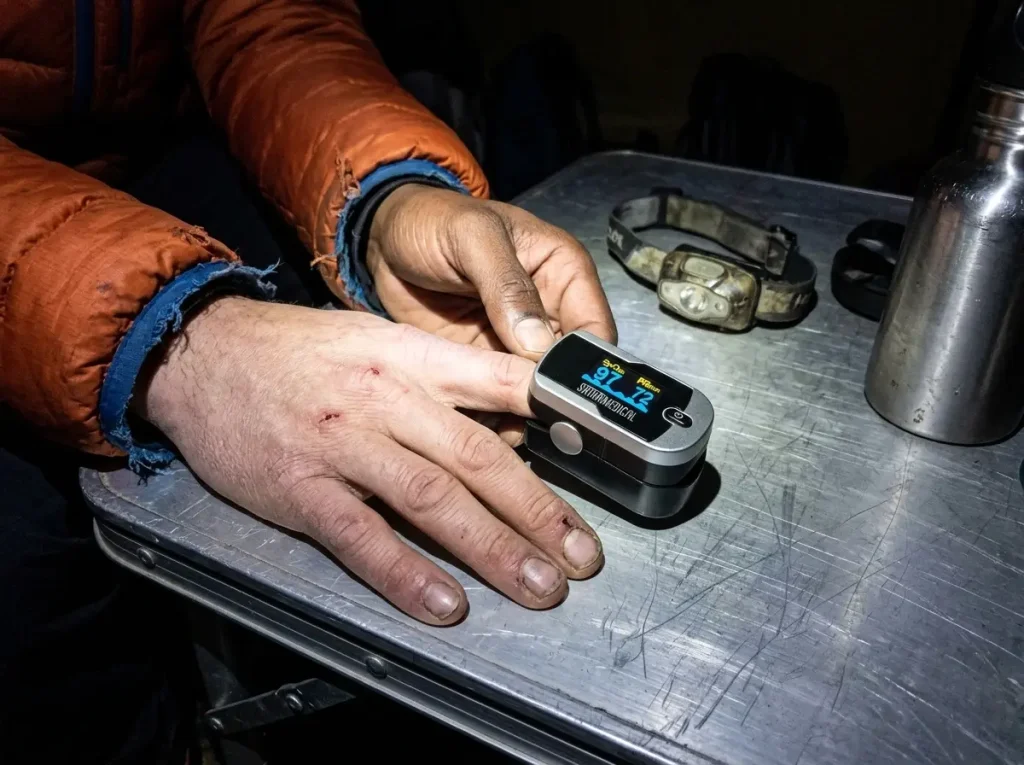
That fingertip clip your guide uses each night is a pulse oximeter, and the reading is real data, not a ritual. As a rough field guide, a reading of 90 to 99 percent signals good acclimatization, 80 to 89 percent means monitor closely, and a reading down in the 65 to 70 percent range is a genuine emergency that calls for descent or evacuation. Carrying your own is worth it, and a simple, reliable unit like the Santamedical Gen 2 OLED Fingertip Pulse Oximeter (check it on Amazon) lets you watch your own trend across the trip instead of relying on a single nightly check.
Watch the trend, not the single number. One low reading after a hard day means little. A reading that keeps sliding lower night after night, even when you feel fine, is the early warning that matters. Show your guide the pattern, not just tonight’s digit.
Remember that “pole pole,” Swahili for “slowly slowly,” is the mantra guides repeat for a physiological reason, not to pad the schedule. A slow pace keeps your oxygen demand low enough for you to keep up. If you want the full playbook, here is a complete acclimatization protocol for preventing altitude sickness. A doctor may also discuss Diamox (acetazolamide) with you, a medication that speeds acclimatization, though it supports good practice rather than replacing the need to go slow.
What It Costs and Why the Cheapest Trip Is a Red Flag
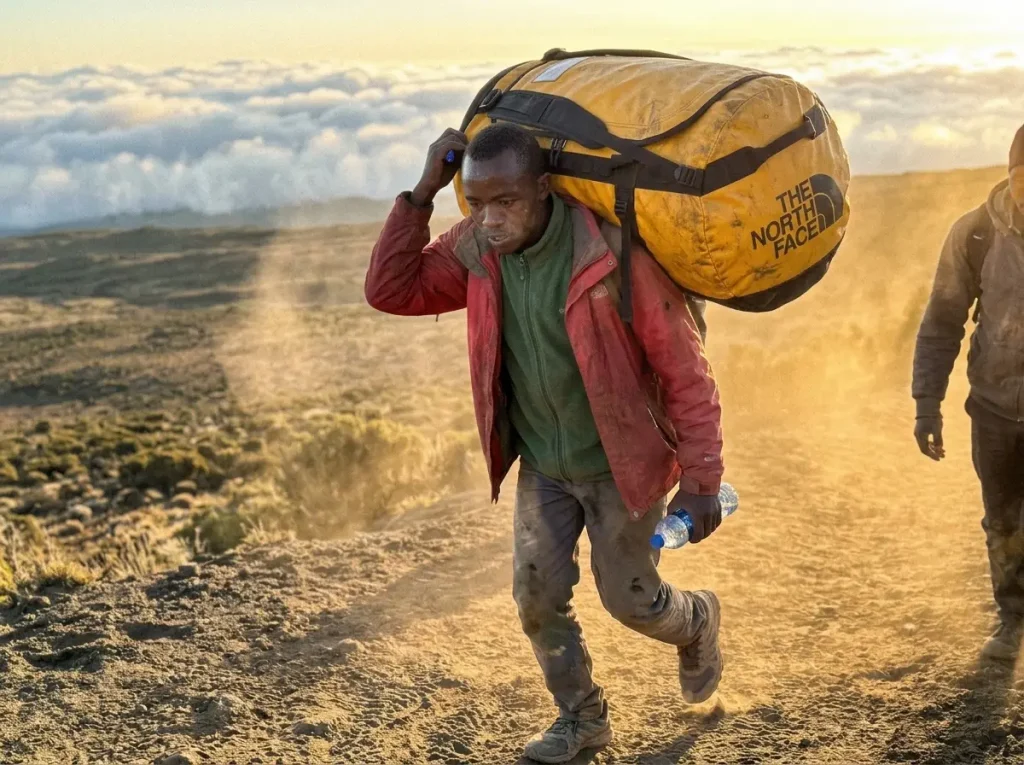
This is the section no tour company can write honestly, because they are the ones being compared. A realistic, safety-adequate Kilimanjaro climb costs somewhere in the range of a mid-tier international trip. Ultra-budget operators advertise for far less, and premium outfits charge well more. The cheapest quote on the first page of results is not a deal, it is a signal.
Where the Money Actually Goes
Your operator fee covers guides, porters, cooks, food, tents, permits, and safety equipment like emergency oxygen. On top of the climb itself, budget for flights into Kilimanjaro International Airport, a night or two in Moshi or Arusha before and after, and travel logistics. It is also worth sorting out how to handle your Tanzania entry visa and travel logistics early, since that is one more line item people forget when they compare only the headline climb price.
The Fixed Costs You Can’t Negotiate
Here is the part that exposes the cheap operators. Park fees paid to the Kilimanjaro National Park authority are standardized and non-negotiable: a per-day entry fee plus a per-night camping fee that together add up to roughly a quarter to 40 percent of a fair trip’s total cost on a seven-day climb. Tips for your guide and porter team are a real, near-mandatory line item in Tanzanian mountain culture, and worth budgeting as a meaningful sum rather than an afterthought. Those figures do not change no matter who you book.
Why the Cheapest Operator Costs More
Now do the arithmetic. If park fees and tips are fixed, and an operator is charging hundreds less than everyone else, that money is coming out of somewhere. Ethical operators pay lead guides a living daily wage; budget cutters pay their guides and porters far less. So a suspiciously cheap package is usually funded by underpaying the people carrying your gear, thinning the food, skimping on guide-to-climber ratios, or cutting the safety margin like emergency oxygen. You are not saving money, you are moving the risk onto yourself and onto the porters. That is the honest trade the brochures will never spell out.
Guides, Permits, and the Rules of the Mountain
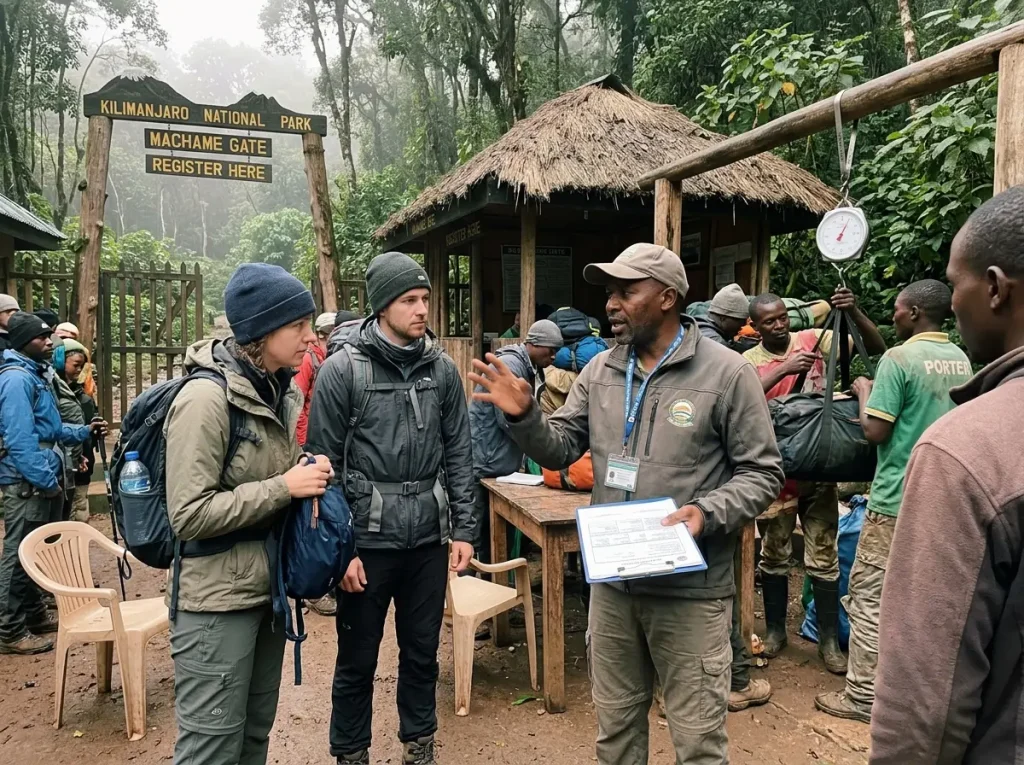
Kilimanjaro is a regulated national park, and the rules exist to protect both you and the people who work the mountain. Knowing them helps you spot a legitimate operator from a sketchy one.
The Mandatory Guide Rule
You cannot legally climb Kilimanjaro solo. A licensed guide has been mandatory since 1991, and every climber must go through a registered operator with a trekking permit. This is not red tape for its own sake: a certified guide team monitors your health daily, carries emergency oxygen, and makes the descent or helicopter evacuation call when it counts. A team with Wilderness First Responder (WFR) training is a meaningful safety upgrade worth asking about.
Permits and Park Fees
The Kilimanjaro National Park permit system is what those non-negotiable park fees pay for, and reputable operators handle the paperwork for you. If an operator is vague about permits or asks you to climb outside the official system, walk away. It breaks park rules and signals they cut corners elsewhere.
Porter Welfare and Environmental Rules
The Kilimanjaro Porters Assistance Project (KPAP) exists because underpaid, overloaded porters have long been the hidden cost of cheap climbs. Booking an operator that respects fair porter treatment is the same decision as booking one that respects your safety, they travel together. The park also enforces Leave No Trace principles and a ban on disposable plastic bottles, so plan to carry a reusable bottle and a water bladder rather than single-use plastics.
Training for the Mountain
Here is the honest framing that follows from everything above: fitness will not summit you, but a lack of it can still stop you. You train so that the long days and the brutal descent do not break you down before the altitude even gets its say. For a deeper plan on altitude training and conditioning, this full Kilimanjaro training and altitude-prep guide goes further than the summary here.
Build the Aerobic Base
The priority is aerobic endurance, not gym strength. Long, sustained hikes and steady cardio build the engine you need for six to eight-hour days on your feet. High-intensity workouts have their place, but nothing substitutes for time spent walking uphill with a pack.
Back-to-Back Hikes and Pack Weight
The specific demand of Kilimanjaro is consecutive hard days, so train for that. Back-to-back training hikes, two or three long days in a row, teach you to recover overnight and get up and do it again. Add pack-weight training by carrying your loaded daypack on those hikes, so summit day is not the first time your shoulders feel the weight. You only carry a daypack on the mountain, since porters move the heavy loads, but that daypack still holds water, layers, and snacks.
Don’t Forget the Descent
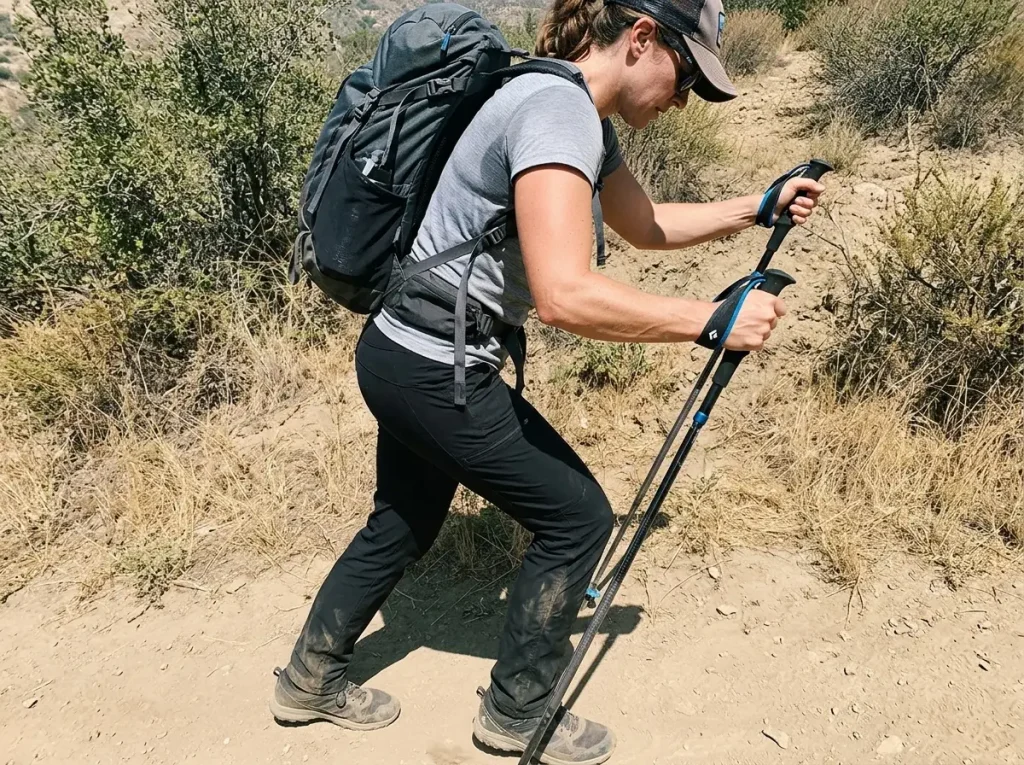
Most people fixate on getting up and forget that the descent is where knees and quads get wrecked, especially on the long drop from the summit. A pair of trekking poles takes a real bite out of that impact. The Black Diamond Distance Z Trekking Poles (check them on Amazon) fold down small and save your knees on the way down, and if you would rather not buy, poles are one of the easiest items to rent locally.
The Gear That Matters and What to Rent vs Buy
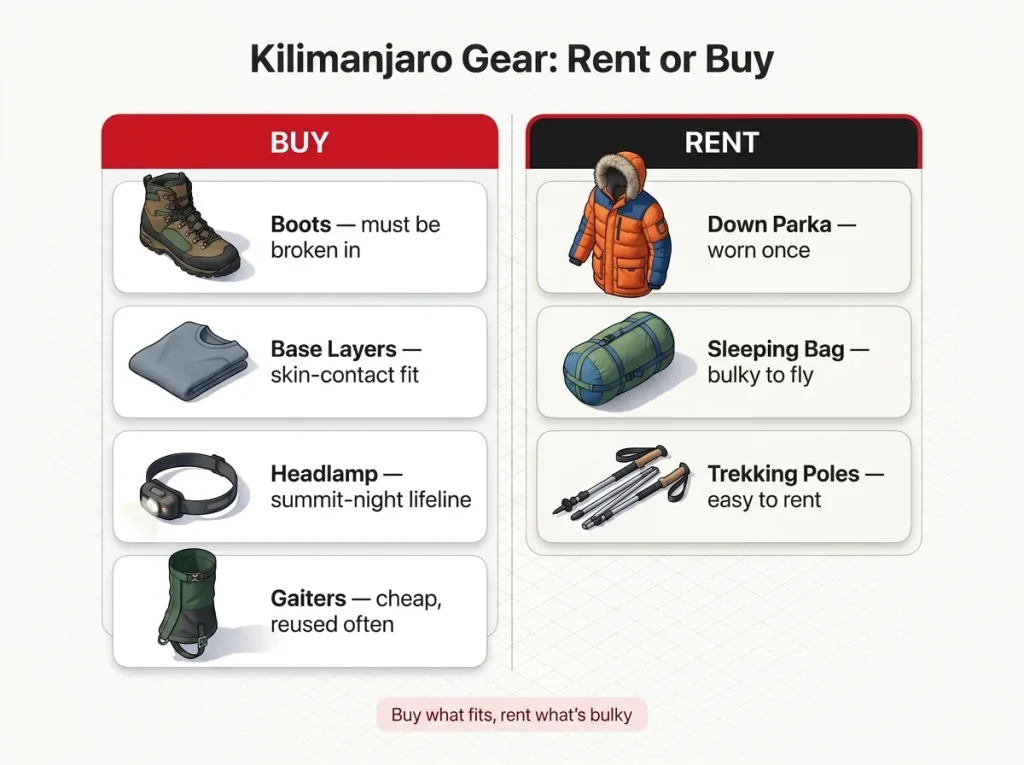
Every competing guide lists gear by vague category, “warm jacket,” “good boots,” and stops there. Here is the named packing list with the honest buy-versus-rent call, which is the whole point of gear talk on a site like rockclimbingrealms.com. The governing rule is simple: buy what touches your skin and has to fit, and rent what is bulky and you will use once.
Boots and the Layering System
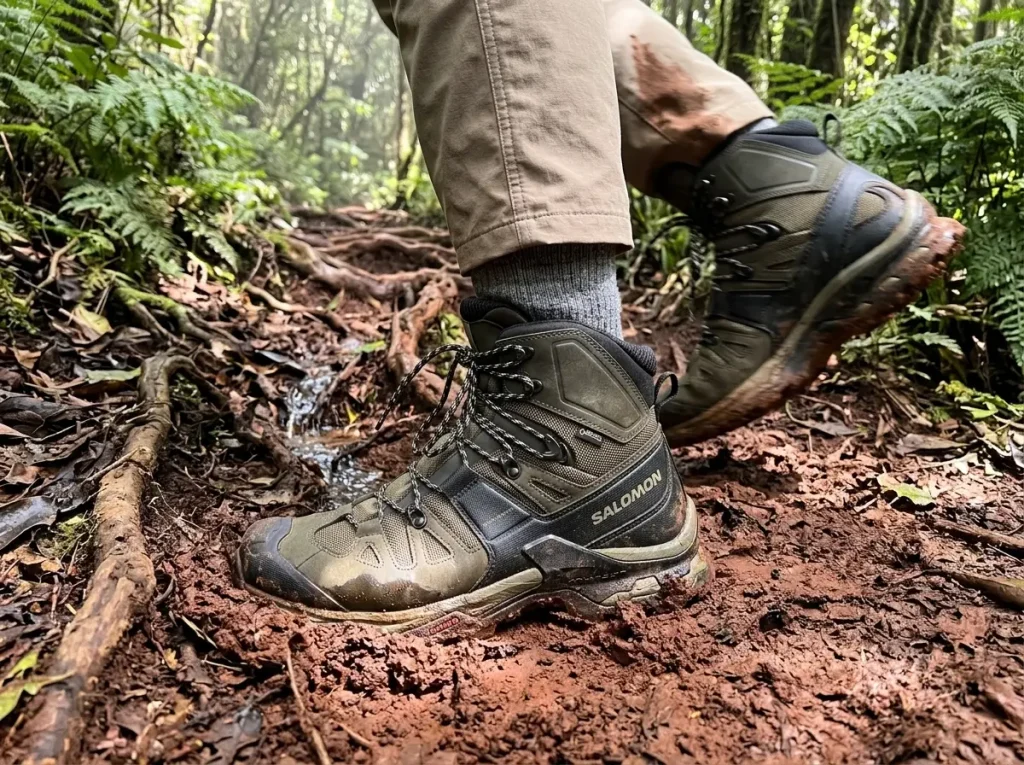
Your hiking boots are the one thing you should never rent or buy at the last minute, because they must be broken in. A supportive, waterproof boot like the Salomon Quest 4 GTX (men’s · women’s) gives you the ankle support and Gore-Tex waterproofing to handle both the muddy rainforest zone and the frozen summit scree. Trail runners are not enough here, the loaded multi-day trekking and the cold make real boots non-negotiable.
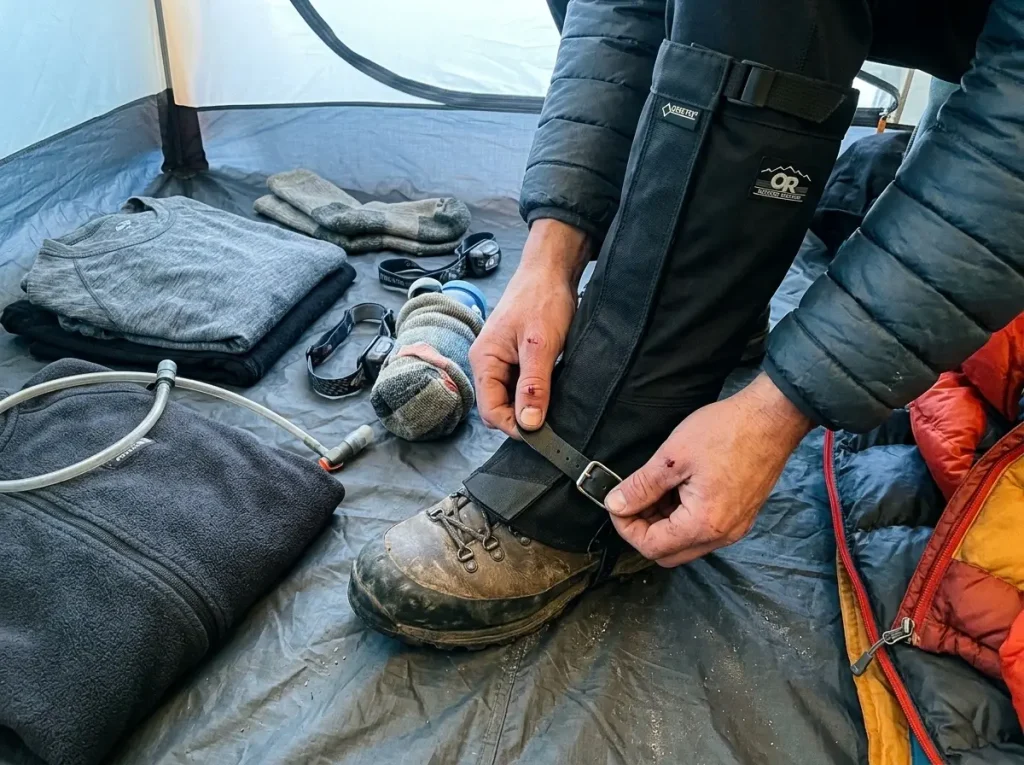
Above the boots, dress in a layering system: a moisture-wicking base layer, an insulating mid-layer, and a waterproof shell on top. A merino base layer such as the MERIWOOL set (men’s · women’s) manages sweat and resists odor across days without a shower, which synthetic fabrics struggle to match. Add a pair of gaiters like the Outdoor Research Crocodile Gaiters (men’s · women’s) to keep scree, mud, and snow out of your boots as the terrain shifts from forest to alpine desert.
Break your boots in for at least a few weeks of real hiking before the trip. New boots blister, and a bad blister on day two can end your climb long before altitude ever gets a vote. This is the cheapest mistake to avoid and one of the most common.
Hydration, Packs, and the Porter Duffel
A deliberate hydration strategy matters more on Kilimanjaro than on most treks, because appetite and thirst both blunt at altitude and you have to drink on schedule rather than on cue. A hands-free reservoir like the CamelBak Crux 3L (check it on Amazon) makes steady sipping easy, though a simple wide-mouth Nalgene bottle works too and is worth carrying as a backup on summit night. You will also need two bags, not one: your daypack, and a larger duffel bag that a porter carries. The North Face Base Camp Duffel in the 95-liter size (check it on Amazon) is the rugged standard for that porter load.
What to Rent Instead of Buy
Now the money-saver. Renting the bulky cold-weather items locally in Moshi or Arusha can cut your gear spend substantially, and it is the smart move for anything you will realistically never use again. This is the broader philosophy of gear you actually need versus gear you can skip applied to one trip. The prime rent candidate is a heavy expedition down jacket: if you do want to own one, a model like the North Face McMurdo for men or the Eddie Bauer Boundary Pass for women (men’s · women’s) is the kind of expedition-grade parka worth the money, but most climbers are better off renting it along with a rated sleeping bag. Buy the boots and base layers, rent the parka and the bag.
Summit Night, Start to Finish
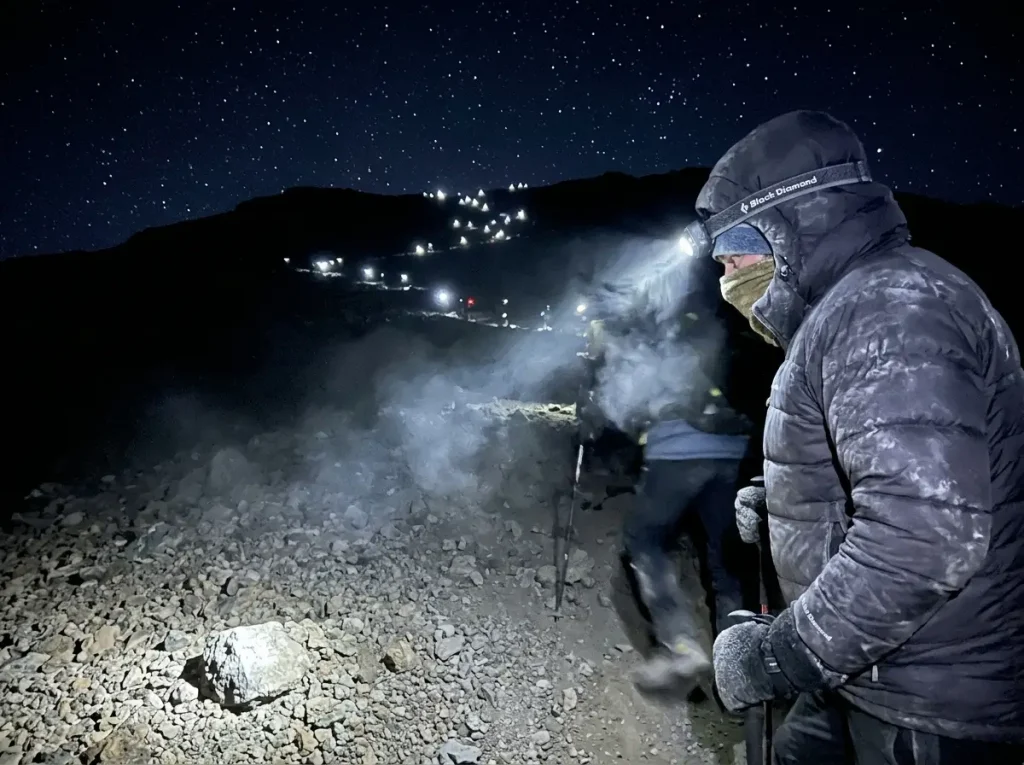
Summit night is the strangest and hardest part of the whole trip, and knowing what is coming makes it survivable. You will start in the dark, walk for hours in bitter cold, and stand on the roof of Africa around sunrise, and then you still have to come all the way back down.
The Midnight Start
Most itineraries wake you around 11 p.m. to midnight for the summit push from high camp. You step out into the cold and see the headlamps of other climbers strung up the switchbacks above you like distant stars, disappearing into blackness. A reliable headlamp is not optional here, and the Black Diamond Spot 400 Headlamp (check it on Amazon) gives you the brightness and battery life to get through the long night without a dead light on an exposed slope.
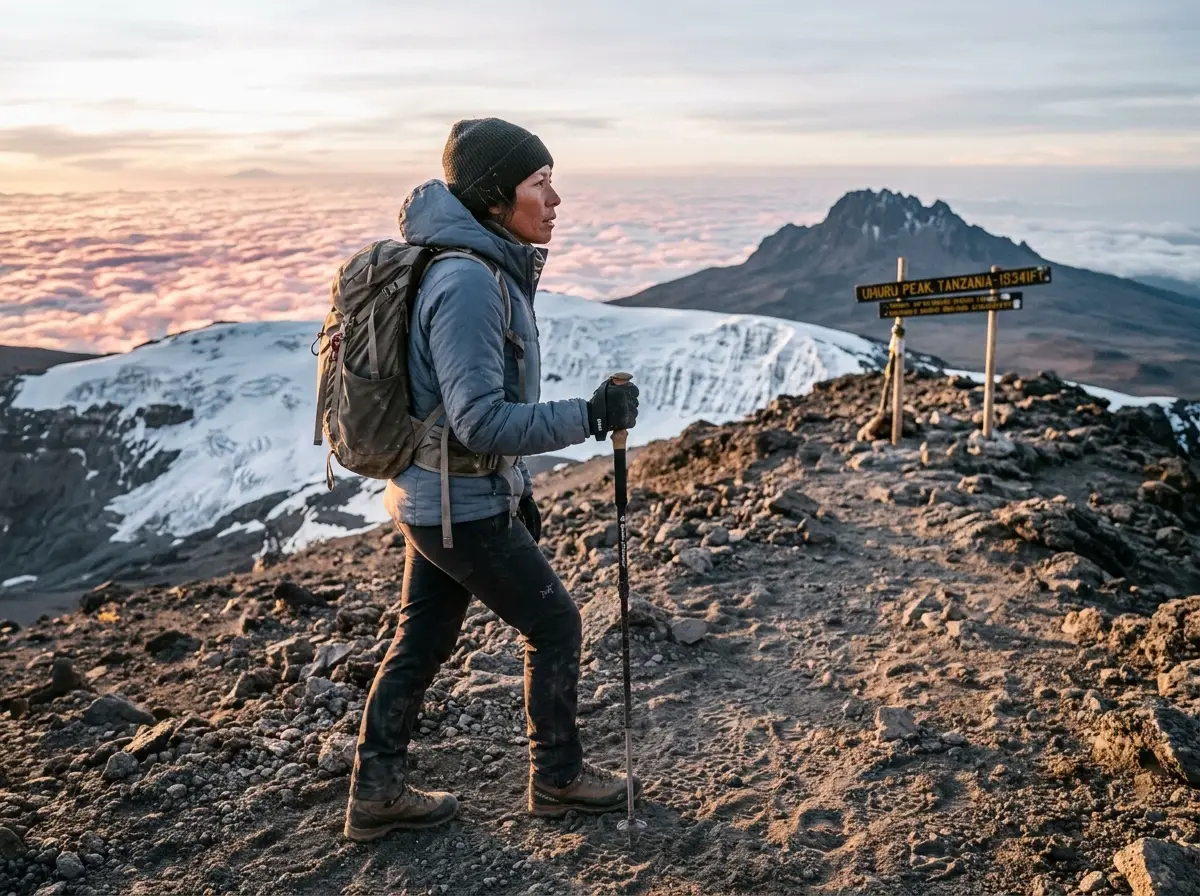
Stella Point to Uhuru Peak
The route grinds up scree to the crater rim at Stella Point, and from there a gentler traverse takes you to Uhuru Peak and the summit sign at sunrise. The photos happen fast, because you cannot linger long at that altitude, and then the real work begins: the long descent back to camp the same day. The day is not over at the summit, and pacing yourself for the down is as important as the climb up.
Staying Warm and Keeping Water Liquid
Temperatures on the upper slopes drop well below freezing, and the wind makes it worse. Layer everything you have, keep moving at a slow “pole pole” rhythm, and manage your water carefully, because a bottle exposed in a side pocket will freeze solid within hours.
Slide your water bottle into a thick wool sock and pack it upside down inside your daypack on summit night. Water freezes from the top, so an inverted bottle keeps the mouth clear, and the sock buys you hours of liquid water when an exposed bottle would already be a block of ice.
Conclusion
Three things decide your climb, and none of them is a gym number. Book the days: a longer itinerary is the highest-return choice you can make for the summit. Respect the altitude, because it, not your fitness, decides most turn-backs, and the SpO2 numbers tell you the truth before your ego does. Choose your operator on safety and ethics rather than price, since the cheapest quote is always funded by cutting something that matters.
Start with the route-and-days decision before you touch anything else. Get that one right, give yourself the time you need, and Climbing Kilimanjaro turns from a gamble into a trip you finish standing on the roof of Africa.
Frequently Asked Questions
01Do you need climbing experience to climb Kilimanjaro?
No. Kilimanjaro is a non-technical trek with no ropes, harnesses, or climbing skills required. What it demands is respect for altitude and the endurance for long, consecutive days on your feet.
02Can a total beginner climb Kilimanjaro?
Yes. First-time high-altitude trekkers summit regularly. The deciding factors are a long enough itinerary and a conservative pace, not prior mountaineering experience.
03What is the summit success rate on Kilimanjaro?
Overall roughly 65 to 80 percent, but it swings hard with itinerary length. Five-day routes can drop to 27 to 65 percent, while eight and nine-day routes reach 85 to 98 percent.
04How fit do you actually need to be?
Fit enough for long back-to-back hiking days with a light daypack, but raw fitness is not the summit-decider. The fittest person in a group is often the one who turns back after climbing too fast to acclimatize.
05Do you need supplemental oxygen to climb Kilimanjaro?
No. Climbers summit Kilimanjaro without bottled oxygen. Reputable operators carry emergency oxygen for treating altitude illness, not for routine use on the ascent.
Safety Notice: Rock climbing and mountaineering are inherently high-risk
activities that can involve physical trauma or fatal incidents. The information on Rock Climbing Realms is for
educational and informational purposes only. Techniques and advice presented here are not a substitute
for professional, hands-on instruction. Conditions and risks vary by location. Always seek guidance
from a qualified instructor before attempting new techniques. By using this website, you agree that you
are solely responsible for your own safety. Any reliance you place on this information is strictly
at your own risk, and you assume all liability for your actions. Rock Climbing Realms and its authors
will not be held liable for any harm, damage, or loss sustained in connection with the use of this information.
Affiliate Disclosure: We are a participant in the Amazon Services LLC Associates Program, an
affiliate advertising program designed to provide a means for us to earn advertising fees by advertising and linking
to Amazon.com. As an Amazon Associate, we earn from qualifying purchases. We are also an official affiliate partner
of Black Diamond Equipment via the AvantLink network. If you click on a Black Diamond affiliate link and make a
purchase, we may earn a commission at no additional cost to you. We also participate in other affiliate programs.
Additional terms are found in the terms of service.