
In this article
I pulled onto a polished 5.11a at Rifle Mountain Park last spring and fell three times before the chains. That same week, I’d sent a 5.12a at Smith Rock without much trouble. Rifle didn’t care about my ticklist. The limestone, the steepness, the holds that look like jugs but slide like soap — it all added up to the most humbling climbing I’d done in years.
After a dozen trips spread across every season, I’ve figured out what makes this canyon tick and how to actually enjoy it instead of just surviving it. This guide covers every wall, the routes worth your skin, and the logistics most other guides skip.
Quick Answer: Rifle Mountain Park in Colorado offers 500+ sport routes on Leadville Formation limestone, with the highest concentration of 5.13-5.14 in the US. Best conditions hit in spring and fall shoulder seasons, day passes cost $10, and the overhanging style makes grades feel 1-2 numbers harder than other crags. Below you’ll find wall-by-wall beta, classic route picks, and trip planning details.
What Makes Rifle Limestone Different From Everything Else
The Leadville Formation and Why It Matters to Your Hands
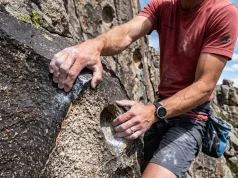
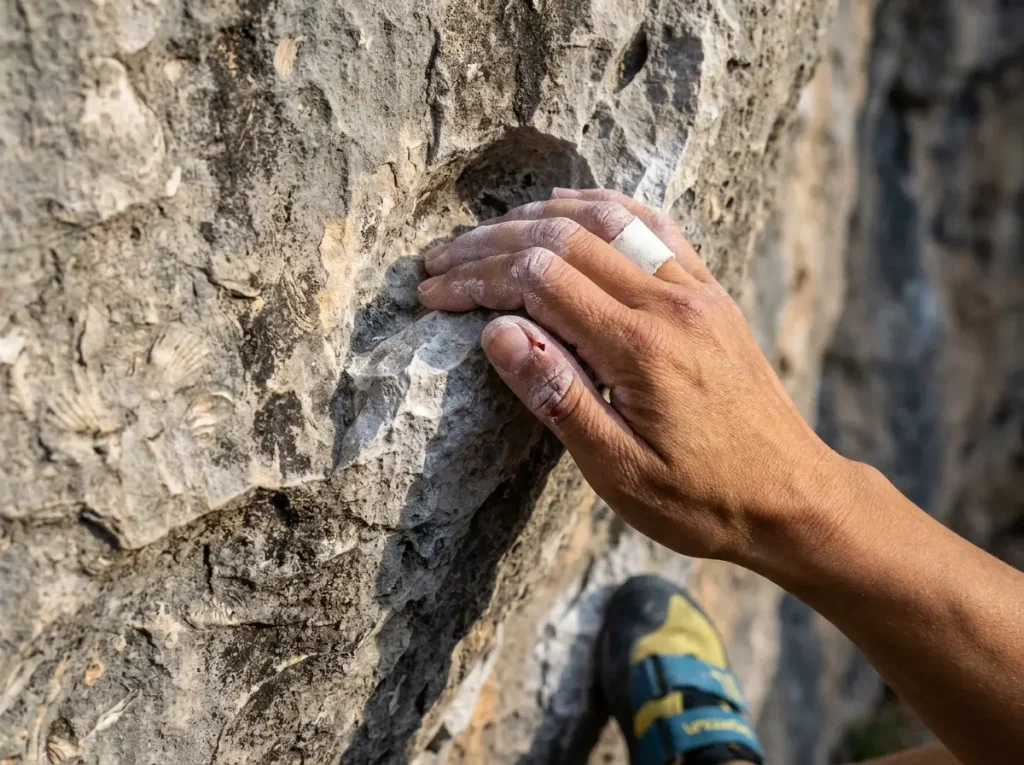
The first time you touch Rifle stone, you’ll notice two things. The pockets have edges that want to eat your skin. And the smooth sections feel like someone waxed them.
That’s Leadville Formation limestone — a 358 to 323 million-year-old rock layer from the Mississippian period that forms the walls of this narrow Western Slope canyon. It’s nothing like the welded tuff at Smith Rock or the granite at Yosemite. The texture varies from abrasively sharp inside deep pockets to glass-smooth on the featured faces between them.
Your hands will figure this out before your brain does. The first session leaves your fingertips raw from pocket edges, while your open-hand grip on slopers feels unreliable because the stone doesn’t have the micro-texture you’re used to from sandstone or granite. Chalk matters more here than at almost any other crag in the country.
Pockets, Crimps, and the Art of Holding On
Pocket pulling is the signature Rifle movement. Two-finger pockets, three-finger pockets, mono pockets on the harder lines — your hands are constantly adjusting to different depths and edge angles. The crimps between pocket sections tend to be smoother and demand precise contact, not the positive edges you’d find at a granite crag.
Tufas show up on certain walls, particularly in The Wasteland area, giving the climbing a European feel that surprises first-timers expecting standard American limestone. If you’ve climbed in Kalymnos or the Gorges du Tarn, some of The Wasteland will look familiar. If you haven’t, expect holds that are shaped more like stalactites than anything in your gym.
Pro tip: Brush your footholds, not just your handholds. Shoe rubber buildup on frequently climbed footholds is where most of the polish problem lives, and a quick scrub with a stiff brush can make a full grade of difference on older routes.
Why the Steep Stuff Stays Clean
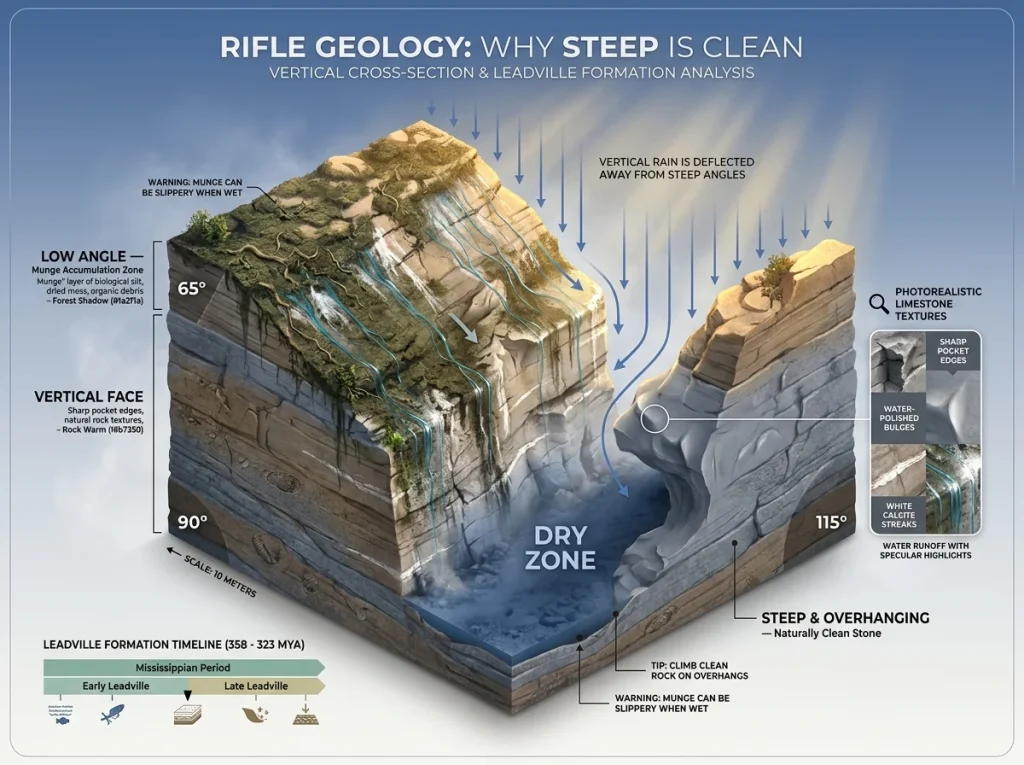
Here’s the thing that explains why Rifle has hundreds of 5.12s and 5.13s but relatively few quality moderates. The canyon gets regular rain, and water running down lower-angle rock deposits a layer of silt, moss, and biological gunk that climbers call munge. Cleaning efforts are temporary — the next rain recoats everything.
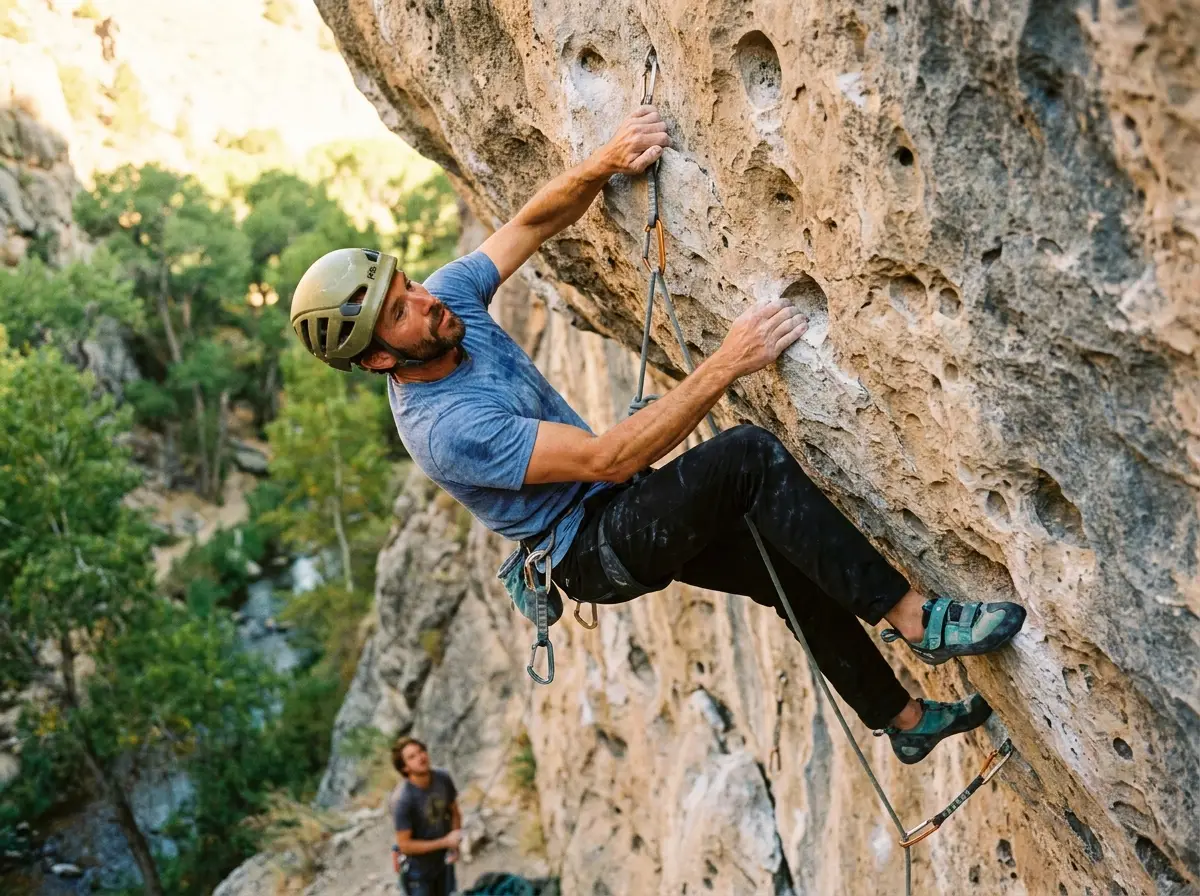
But the steep and overhanging walls? Water can’t deposit on them. The good stone stays clean naturally, which is why the “good” climbing at Rifle starts around 5.11a and gets better as the angle increases. It’s geology, not elitism, that created Rifle’s hard-climbing reputation.
Understanding the physics behind sport climbing movement helps too — the body tension required on steep terrain here is fundamentally different from vertical face climbing.
Rifle’s Best Walls Ranked by Climbing Style
The Wasteland — Pocket Power on Short Walls
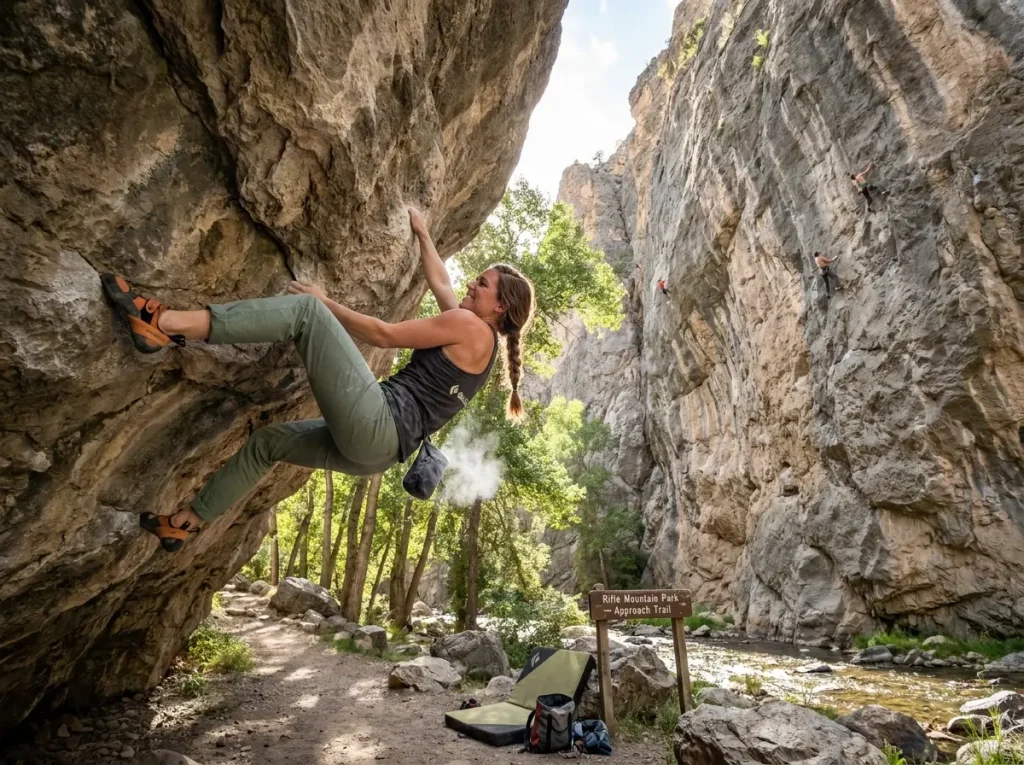
The Wasteland sits near the canyon entrance and offers the closest thing to European sport climbing you’ll find in Colorado. Short routes, maybe 50 feet, on pocket-riddled and tufa-studded stone. The style rewards finger strength and precise footwork over raw endurance.
Fair warning: The Wasteland also holds some of the most polished routes in the canyon. Heavy traffic over decades has turned certain footholds black with shoe rubber. If a route feels sandbagged, it probably is — just not in the way the first ascensionist intended.
Anti-Phil and Bauhaus — The Crimper’s Paradise
The Anti-Phil Wall is the first wall you encounter on the hike in, directly across the stream from the picnic area. Perfect crimpers and smooth pockets that remind seasoned climbers of the best Blasphemy Wall stone at the VRG. The approach is short enough that you can walk back to your car for a forgotten stick clip without losing your entire warm-up window.
Bauhaus Wall hides behind a screen of trees just a three-minute approach from the road. The left sector has three quality 5.11s and two solid 5.12s that serve as some of the best warm-up climbing in the canyon. The right sector is where things get serious — Gomorrah (5.13d) hangs off a prow, and Tomfoolery (5.14b) is one of the hardest routes at Rifle. Must-do routes include Choss Temple Pilots (5.11b), Love and Rockets (5.12b), and Der Stihl (5.13b).
The Arsenal and Project Wall — Cave Climbing and Endurance Tests
The Arsenal is roadside and steep. Really steep. This is cave climbing on blocky, juggy “pile rock” that rewards raw endurance and lockoff strength. The style feels closer to American Fork than to the rest of Rifle.
If your forearms are the size of your calves, The Arsenal is your wall.
Project Wall is Rifle’s most dramatic crag — 200+ feet of limestone towering right off the road at one of the narrowest bends in the canyon. This is where you’ll find some of Rifle’s most celebrated lines: Rehabilitator (5.11c), Defenseless Betty (5.12a), Hang ‘Em High (5.12b), Apocalypse ’91 (5.13b), The Eighth Day (5.13a), and Simply Read (5.13d). If you want to compare Rifle’s overhanging style to another premier sport crag, check out our Smith Rock route guide for a contrasting experience on volcanic tuff.
Classic Routes Worth the Drive
Moderates That Don’t Feel Moderate (5.10-5.11)
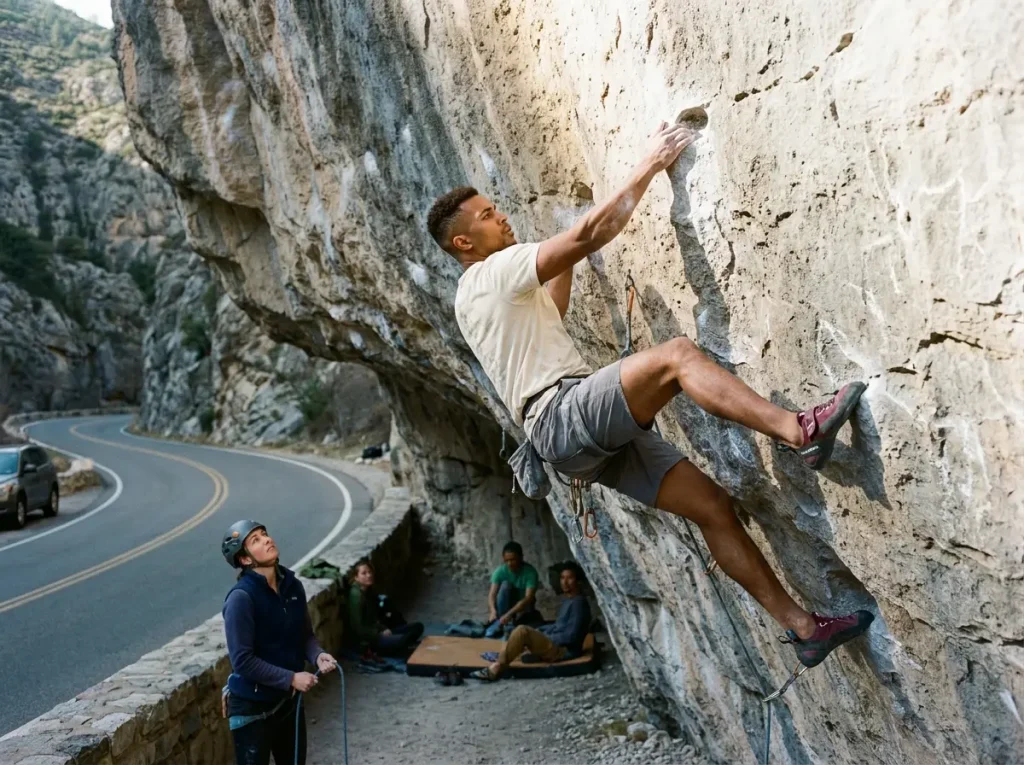
Let’s be honest. Rifle moderates are hard. If you’re climbing 5.10 in your gym and expecting a relaxing outdoor day, recalibrate now.
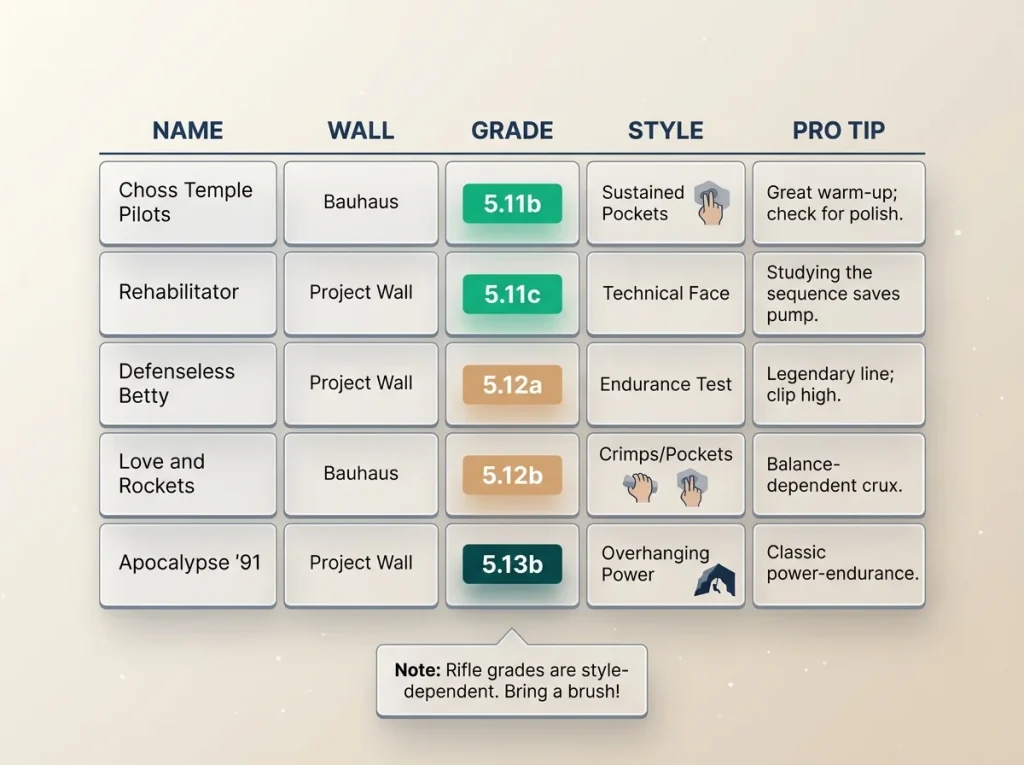
Choss Temple Pilots (5.11b, Bauhaus) is one of the better warm-up lines in the canyon — sustained but fair, with good holds that reward technique over power. Rehabilitator (5.11c, Project Wall) climbs the lower section of a taller wall and gives you a taste of Rifle’s endurance character without the full commitment. Both routes see heavy traffic, so expect some polish. Reading routes before you leave the ground saves energy here — spending a few minutes studying the sequence from below can save you two falls.
Don’t plan a trip exclusively around 5.10 climbing at Rifle. You’ll have a frustrating time. The moderate routes exist, but they’re the worst-quality stone in the canyon because of the munge factor on lower-angle terrain.
The Sweet Spot (5.12a-5.12d)
This is where Rifle comes alive. The 5.12 range here is deep, varied, and mostly excellent stone.
Defenseless Betty (5.12a, Project Wall) is the gateway to understanding Rifle at its best — long, sustained, and technical on good stone. Love and Rockets (5.12b, Bauhaus) combines crimps and pockets in a sequence that rewards reading. Hang ‘Em High (5.12b, Project Wall) puts you high on the wall with exposure and endurance moves that separate Rifle 5.12 from gym 5.12.
Pro tip: Pick one 5.12 as your project for the trip and spend your other climbing days on the warm-up routes you’ve already wired. Rifle punishes the “try everything” approach because the pump accumulates faster than you expect.
Test Pieces and Bucket List Lines (5.13+)
If you’re climbing at this level, you already know the names. Der Stihl (5.13b, Bauhaus) and Apocalypse ’91 (5.13b, Project Wall) are the entry points to Rifle’s upper tier. Simply Read (5.13d, Project Wall) has earned its reputation as one of the best 5.13s in the country.
The bucket list tops out at Gomorrah (5.13d, Bauhaus prow) and Tomfoolery (5.14b), which sits at or near Rifle’s hardest established grade. These are projecting lines — plan multiple trips if they’re on your list.
Why Your Grade Doesn’t Transfer Here
The Polish Factor on Older Routes
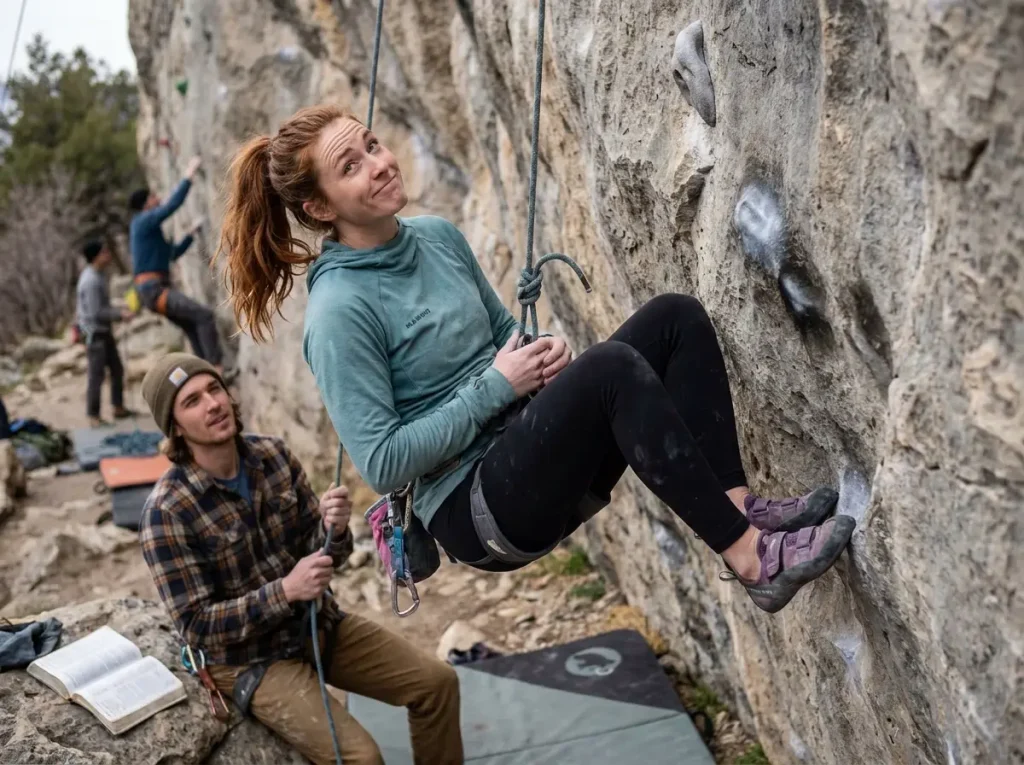
Those black, glossy patches on the footholds at The Wasteland and Ruckman Cave? That’s years of shoe rubber, and it’s real. Constant traffic on the most popular routes has added a slippery layer that effectively raises the grade by one to two letter grades. A route that went at 5.11c when it was first cleaned and bolted might genuinely feel like 5.12a today.
Carry a brush and use it. Not between attempts — during attempts. Clip to a rest, shake out, brush the next two footholds. The five seconds you spend brushing save you the thirty seconds of barn-dooring off greased holds.
How Rifle’s Style Punishes Gym Technique
Gym climbing rewards explosive moves between good holds. Rifle rewards the opposite — sustained, controlled movement on mediocre holds that never quite feel positive enough. The routes are long, the walls are steep, and every hold demands a specific body position that you can’t just muscle through.
The footholds are in positions your feet haven’t learned yet. Unlike gym routesetters who place feet where your body naturally wants them, Rifle’s natural limestone puts holds wherever geology decided. Your first few routes will feel like your feet are constantly in the wrong place. They are.
A solid warm-up routine that includes easy climbing before jumping on your project is non-negotiable here.
Pro tip: Spend your first day climbing two to three full number grades below your redpoint level. Use it as a calibration day — figure out how Rifle moves before you start trying hard. Your second day will feel like a different crag.
Recalibrating Your Expectations
Drop your grade expectations by at least one full number, maybe two. A solid 5.12a climber at their home crag should plan around 5.11a-5.11c routes at Rifle for the first trip. A 5.13 climber should budget time for 5.12 mileage before attempting their project grade.
This isn’t sandbagging in the traditional sense — it’s a style gap. Rifle’s endurance climbing on steep limestone with polished holds is a specific skill set that takes time to develop. The climbers who come back year after year and actually tick hard routes are the ones who accepted this reality on their first trip instead of fighting it.
Best Conditions and When to Visit
Spring and Fall Shoulder Seasons
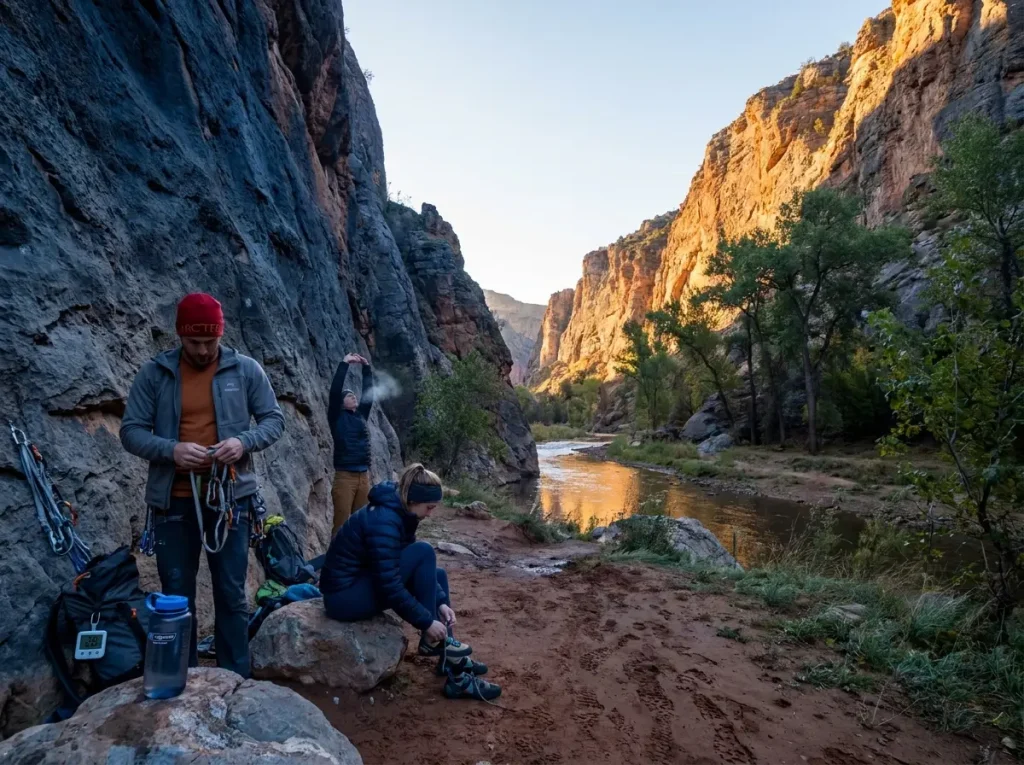
The best friction at Rifle hits during the shoulder seasons — May through June and September through October. Temperatures in the canyon sit in the 50s and 60s during these windows, which is ideal for the sustained climbing style that demands dry, sticky skin contact with the stone.
Spring has one caveat: snowmelt and early-season rain create limestone seeps that can keep individual routes wet for days. Check conditions on Mountain Project or the Rifle Climbers Coalition forums before driving out, especially before Memorial Day.
Fall is the sweet spot for most experienced Rifle climbers. Dry air, cool temps, shorter days that create comfortable shade earlier, and thinner crowds after the summer rush.
Summer Climbing — It Works If You Chase Shade
Rifle’s canyon runs north-south, and the walls face east and west. This creates a built-in shade schedule that makes summer climbing viable if you plan around it. Hit east-facing walls in the morning while they’re in shade, then switch to west-facing walls in the afternoon once the sun moves.
Temperatures climb into the 80s and 90s in midsummer, but the canyon stays cooler than the surrounding plateau. Bring more water than you think you need. Humidity in the canyon can spike after afternoon thunderstorms, and your chalk stops working when the air gets thick.
Reading the Weather in the Canyon
Colorado’s weather patterns along the I-70 corridor are notoriously volatile. Afternoon thunderstorms are common June through September. The canyon offers some rain protection thanks to the overhanging walls, but lightning is a serious concern — if you hear thunder, you’re off the wall.
After rain, limestone seeps activate and can drip for 12 to 48 hours. The steep, overhanging walls drain fastest. Lower-angle routes and anything near natural water channels will stay wet longer.
Getting There and Setting Up Camp
The Drive and What to Know Before You Arrive
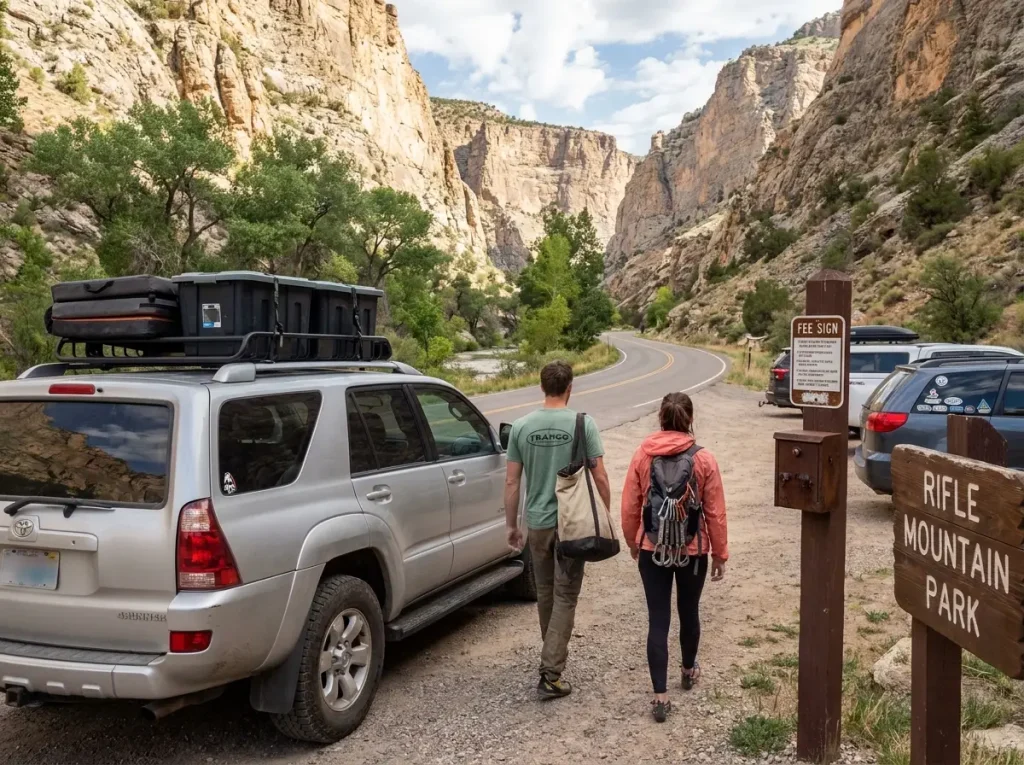
Rifle Mountain Park sits about 200 miles west of Denver via I-70. Take the Rifle exit, head north through town, and follow CO-325 for roughly 12 miles up to the canyon. The road narrows significantly once you enter the park — expect tight turns and climbers walking on the shoulder.
A day pass costs $10 per vehicle, payable at iron lockbox pay stations at the canyon entrance. A season pass runs $100 and is valid for a year from purchase. Garfield County residents pay $50, and Rifle locals pay just $20.
Buy your pass before entering — you can also get one at the City of Rifle municipal building in town. Check the City of Rifle’s official park page for current fees and rules.
Climbing is prohibited in the southern (lower) half of the canyon, which falls under Colorado Parks and Wildlife jurisdiction. All climbing happens in the upper canyon.
In-Park Camping vs Free Alternatives
In-park camping runs $20 per night with a maximum of two vehicles per site. The campground is basic — no hookups, no showers — but you’re sleeping 200 feet from world-class climbing. Quiet hours run from 10 PM to 6 AM, which matters because sound carries in the canyon.
Free camping alternatives include The Corral (BLM land) and The Meadows, both within driving distance of the canyon entrance. These spots fill early on weekends during peak season, so arrive Thursday if you want a spot. No facilities at either — pack in, pack out.
Pro tip: Stock up on supplies in Rifle town before heading up the canyon. There’s nothing to buy once you’re in the park. Fill your water containers, grab food for the full stay, and don’t forget a camp stove — no fires in the canyon.
Glenwood Springs as a Base Camp Option
If camping isn’t your thing, Glenwood Springs sits about 25 minutes east on I-70 and has everything — hotels, restaurants, gear shops, and the famous Glenwood Hot Springs pool. The hot springs make a perfect rest day activity when your forearms need a break from pocket pulling.
Use route tracking apps to plan your walls and routes in advance. The Darek Krol guidebook published by Wolverine Publishing is the definitive Rifle resource — buy it before your trip and study the wall maps.
What to Pack and How to Manage Rest Days
Gear That Matters at Rifle
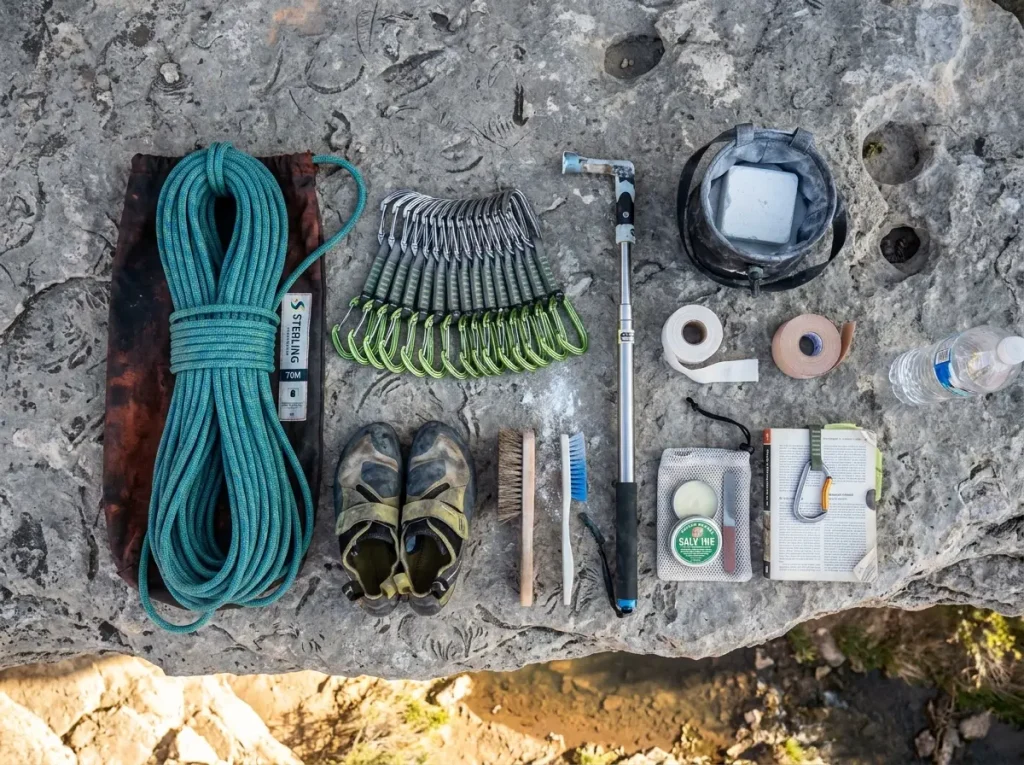
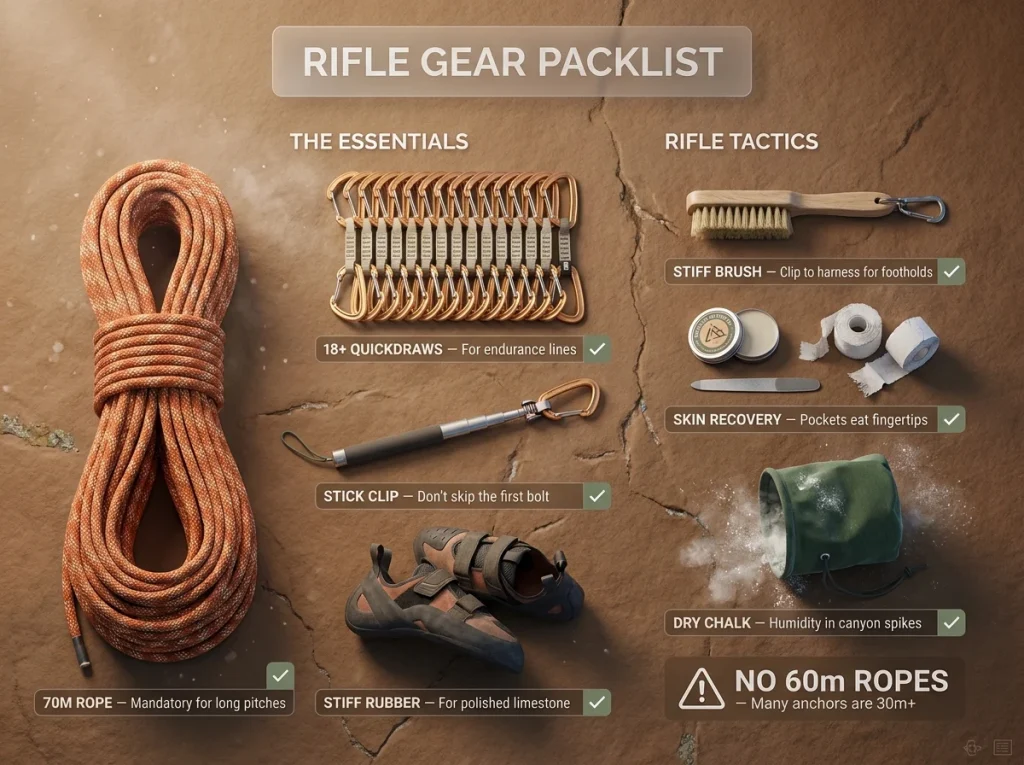
Rifle-specific packing starts with your rope. Bring a 70-meter rope — many routes are long enough that a 60m won’t reach the anchors, and you won’t know until you’re up there. Carry 18 or more quickdraws for the longer lines. A stick clip is standard equipment, not optional — first bolts on steep routes can be uncomfortably high, and taking a ground fall while clipping the second bolt is a bad way to start your trip.
A stiff-bristled brush belongs on your harness, not in your pack. You’ll use it on every route, every attempt. Bring a second softer brush for delicate holds.
The Rest Day Problem Nobody Warns You About
Here’s where most Rifle first-timers get it wrong. They climb hard for three days straight, then wonder why their elbows feel like they’re full of broken glass. Rifle’s power-endurance style loads your tendons and forearm muscles differently than most crags.
The minimum rest schedule is two climbing days on, one full day off. If you’re projecting hard routes, consider one on, one off. Overuse injuries at Rifle are common and preventable — the climbing style is just too powerful to push through fatigue the way you might at a granite slab crag. Practicing falls on steep terrain builds the confidence to commit without overtensing, which also reduces injury risk.
Rest days at Rifle aren’t wasted days. Drive to Glenwood Springs for the hot springs, hike to Rifle Falls State Park, or eat real food in town. Your tendons will thank you on day four.
Skin and Recovery on Limestone
Limestone pockets destroy fingertip skin faster than sandstone or granite. The sharp edges inside pockets slice through calluses that took months to build. Tape your split tips between sessions, and carry a skin care kit — climbing salve, a nail file for managing flappers, and thin tape for preventive wrapping.
Start your trip with your best skin and assume you’ll lose two days of climbing to finger skin by the end of a week-long trip. Planning your hardest sends for days two and three makes sense — your skin is still intact and your body has adapted to the style.
Pro tip: File down callus edges the night before climbing. Raised callus ridges catch on pocket edges and tear off as flappers. Flat, uniform calluses last longer on limestone.
Conclusion
Rifle Mountain Park earns its reputation as the best sport climbing destination in North America for a reason — the stone is world-class, the route density is staggering, and the canyon atmosphere is unlike anything else on the continent. But it earns that reputation honestly, which means your first trip will feel harder than you expected.
Drop your grade expectations, pack a brush, and plan rest days like they matter — because they do. The climbers who love Rifle are the ones who stopped fighting the grades and started learning the style.
Pick a wall that matches how you climb, commit to one project, and give your body time to adapt. That’s the formula. Everything else is just limestone and gravity.
Q1 What grade do you need to enjoy Rifle?
You can find routes starting at 5.7, but the best-quality climbing begins around 5.11a where steeper stone stays clean and unpolished. Climbers comfortable leading 5.11 outdoors will have the most route options. Below that, expect polished holds and limited moderate choices.
Q2 When is the best time to climb at Rifle Mountain Park?
Spring (May-June) and fall (September-October) offer the best friction and temperatures for Rifle’s endurance-style climbing. Summer works if you chase shade by switching between east or west-facing walls. Avoid early spring when snowmelt seeps keep routes wet.
Q3 How much does it cost to climb at Rifle?
A day pass costs $10 per vehicle, and a season pass is $100 valid for one year. In-park camping runs $20 per night. Free BLM camping alternatives exist nearby. Garfield County and Rifle residents get discounted season passes.
Q4 Is Rifle good for beginner sport climbers?
Rifle is not ideal for beginners. The crag lacks quality moderate routes, and existing moderates feel harder due to polished holds and Rifle’s physical style. Climbers leading below 5.10 outdoors will have limited options. Visit after building experience at more moderate-friendly crags.
Q5 What is the best wall at Rifle for 5.11-5.12 climbers?
Bauhaus Wall offers the best variety for the 5.11-5.12 range with quality warm-up routes and challenging midgrade lines. The left sector has three strong 5.11s, and routes like Love and Rockets (5.12b) are among Rifle’s best at that grade. Project Wall is another strong option.
Safety Notice: Rock climbing and mountaineering are inherently high-risk
activities that can involve physical trauma or fatal incidents. The information on Rock Climbing Realms is for
educational and informational purposes only. Techniques and advice presented here are not a substitute
for professional, hands-on instruction. Conditions and risks vary by location. Always seek guidance
from a qualified instructor before attempting new techniques. By using this website, you agree that you
are solely responsible for your own safety. Any reliance you place on this information is strictly
at your own risk, and you assume all liability for your actions. Rock Climbing Realms and its authors
will not be held liable for any harm, damage, or loss sustained in connection with the use of this information.
Affiliate Disclosure: We are a participant in the Amazon Services LLC Associates Program, an
affiliate advertising program designed to provide a means for us to earn advertising fees by advertising and linking
to Amazon.com. As an Amazon Associate, we earn from qualifying purchases. We are also an official affiliate partner
of Black Diamond Equipment via the AvantLink network. If you click on a Black Diamond affiliate link and make a
purchase, we may earn a commission at no additional cost to you. We also participate in other affiliate programs.
Additional terms are found in the terms of service.