
In this article
One second you’re plodding up firm morning snow, balanced and a little bored. The next, your feet shoot out and you’re sliding, and the slope feeds you speed faster than your brain can react. I’ve felt that exact lurch in a snow-school drill, and what saved the run wasn’t panic. It was an ice axe self-arrest I’d already drilled a hundred times on a safe slope where the cost of blowing it was a wet jacket. Here’s what nobody tells you up front: there’s only one arrest position that does the braking, and every technique you’ve heard about is just a different way of clawing back into it from however you fell. This guide covers that position, how to reach it from all four falls, what crampons change, the axe that actually stops you, and the honest limits where self-arrest quits on you.
The Self-Arrest Position (the one thing everything else depends on)
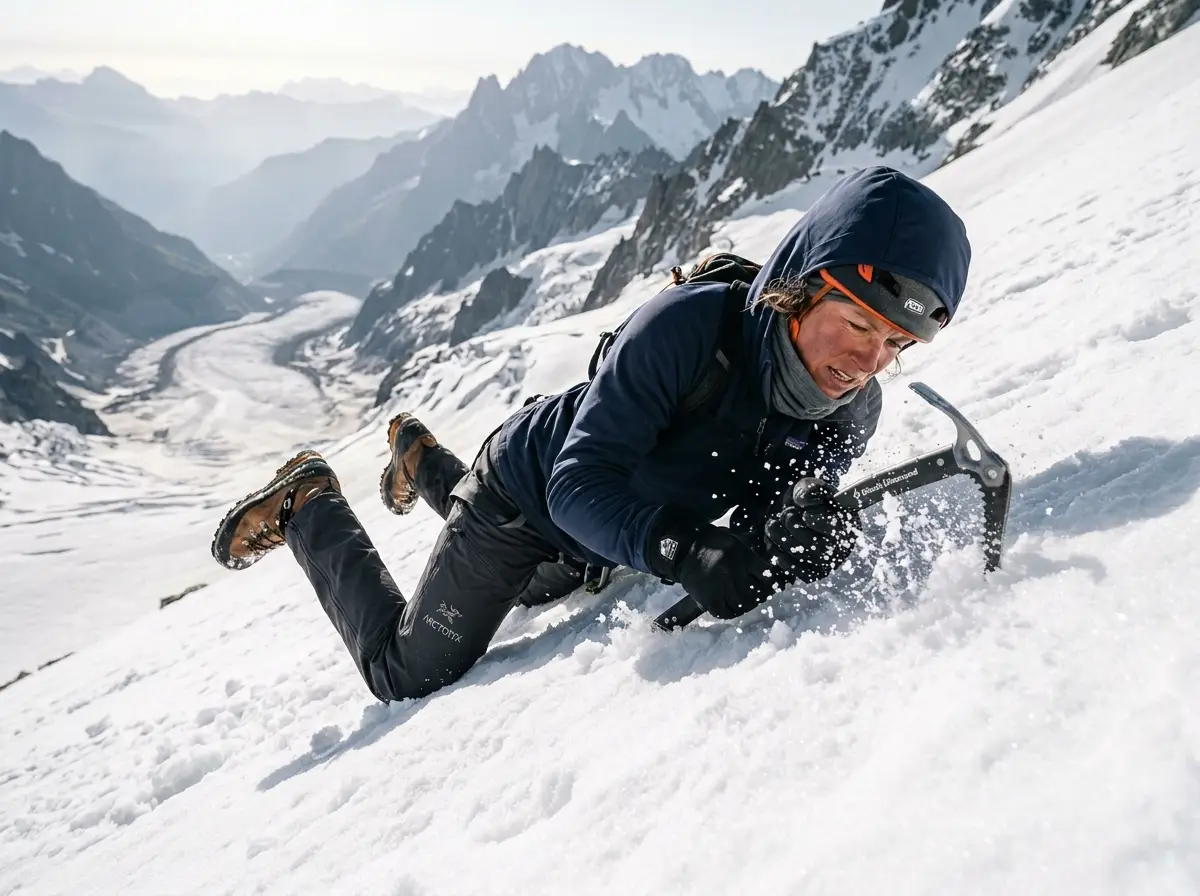
Forget the idea that there are four separate self-arrest moves to memorize. There’s one position, and it sits underneath the broader set of skills alpinism asks of you. Get this single shape dialed and every ugly scenario later turns into the same job: get back to this. The position matches what the American Alpine Institute’s snow-school guidance teaches, because it’s how the skill has been taught for decades. There’s no secret version the guides keep for themselves.
Where the axe head and hands go
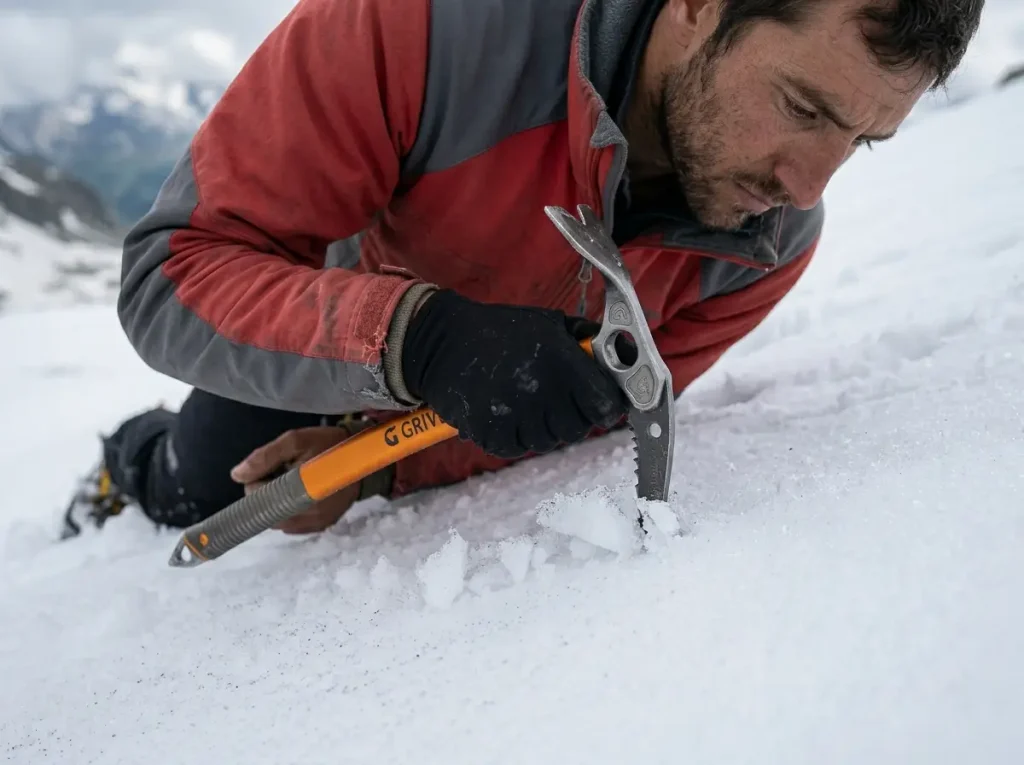
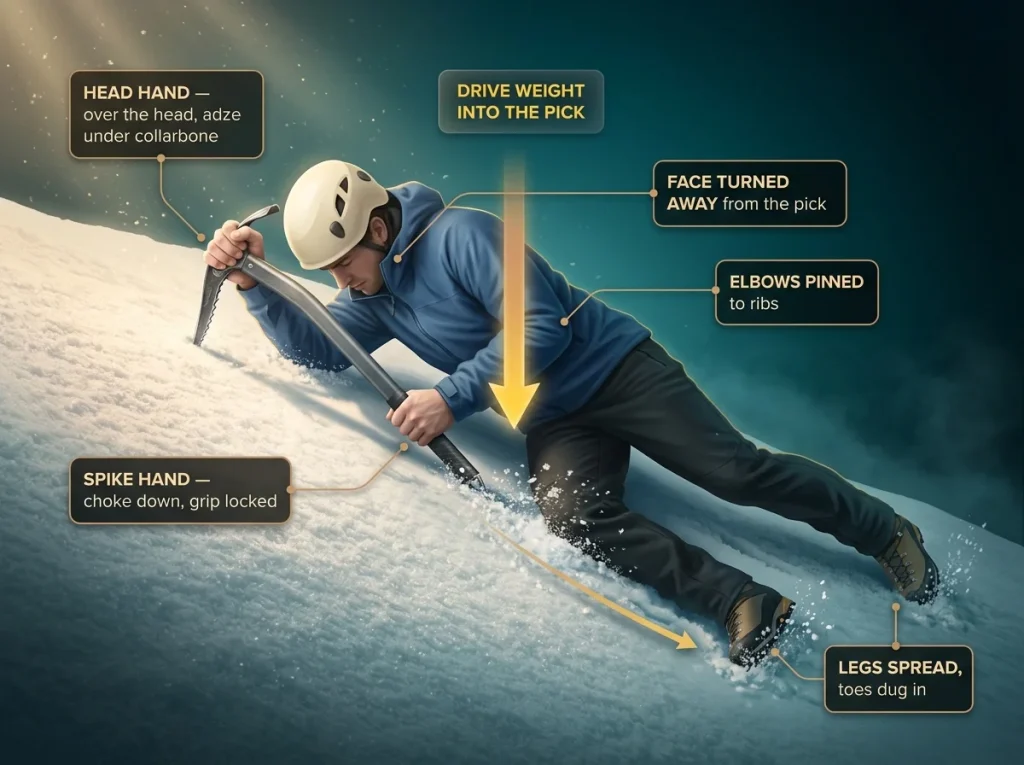
Hold the axe diagonally across your chest. Your uphill hand wraps fully over the head with the adze pressed into the soft hollow just below your collarbone, and your other hand chokes down low on the shaft near the spike. Both hands stay locked the whole time. A one-handed arrest looks heroic in your head and does almost nothing in a real fall, because the axe just twists out of line and skates.
The grip is the one part you can practice on the couch at home, until your hands find it without looking.
Where your weight actually goes (the pick, not your boots)
All the braking comes from your weight driven down through the pick. That one steel point biting the snow is what stops you, not your feet, not friction, not willpower. New climbers fight this because their boots feel like the brakes, but on a slide your boots are just along for the ride until the pick has done its job.
So you commit your chest. Drive your sternum down over the head and let your weight work, and on firm snow you’ll hear it: a low tearing crunch as the pick plows a furrow and throws a fan of crystals. The first time you feel it grab, you stop trusting your feet forever.
Lock your hands and the axe head into position first, then drive your weight onto it. People who fumble for the perfect foot position before setting the pick burn the only second they had, and a second on a steepening slope is a lot of speed.
What your face and elbows are doing
Turn your face away from the axe head, toward your downhill shoulder. If the pick catches hard and the head kicks back, you don’t want it meeting your teeth, and on firm snow it can kick. Keep both elbows pinned tight to your ribs so the axe can’t wander off your chest, because a loose axe at speed becomes a spinning pick near your own face.
Arresting From All Four Fall Positions
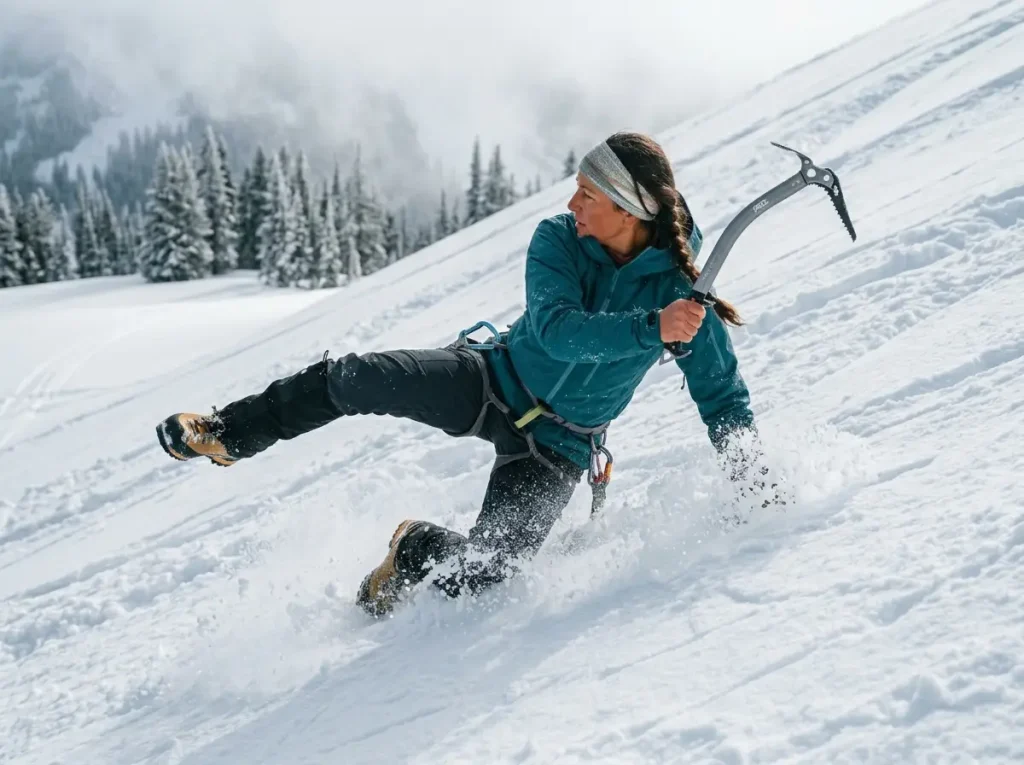
You never get to choose how you fall. The slope decides, and it usually picks the worst option. So you don’t drill the self-arrest, you drill the four ways back into it until your body picks the right one without asking. They all end in the same place: chest down, pick set, weight committed. The work is the rotation that gets you there.
Feet-first (on your stomach, then on your back)
Feet-first on your stomach is the gift case, since you’re already pointed the right way. Set the pick out to your side, roll your chest onto the head, and commit your weight. That’s the one everybody practices because it feels good.
Feet-first on your back is the same fall flipped over. Don’t sit up or muscle straight onto your stomach. Roll toward the pick side, the hand holding the head, and let that rotation drop you face-down into position. Fighting the roll the wrong way just spins you into a worse mess.
Head-first on your stomach
Now it gets honest. You’re sliding head-down on your belly, so you have to turn the whole thing around before you can brake. Reach the pick out to one side, well away from your shoulder, and plant it. The bite becomes a pivot, and your feet swing downhill around the planted axe like a door on a hinge. Once your feet are below you, you’re back to the easy case.
Reach across your body, not straight ahead. Planting the pick directly above your head gives you nothing to pivot around and tends to wrench the axe out of your hands.
Head-first on your back — the one to over-practice
This is the case that saves lives and the one people quietly skip at snow school, because it’s disorienting and a little scary to drill. You’re head-downhill and on your back, staring at the sky, sliding the wrong way in every sense. Plant the pick out to the side, let it swing your feet around to face downhill, and as your feet drop below you, roll your chest over onto the head into the full arrest.
It feels backwards the first time, reaching down-slope and trusting a single point of steel to rotate your whole frame. Drill it on a gentle slope with a clean run-out until it’s automatic, because in a real fall there’s no time to reason it out. The climbers who can do this one cold are the ones who walk away from the fall that should have hurt them. For where it sits among everything else you’re building, see the wider set of fundamental alpine skills that share the same DNA.
Crampons Change Everything
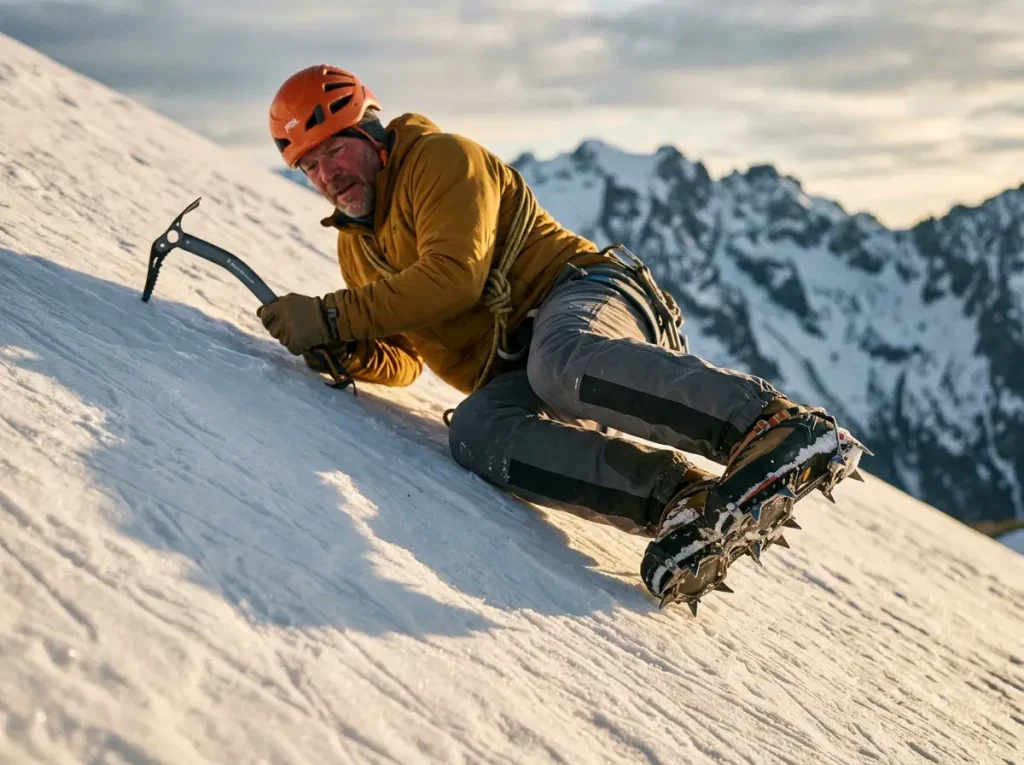
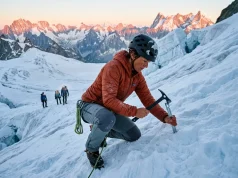
Here’s where the standard advice gets you hurt. Without crampons, you dig your toes in to help slow down. Put crampons on, keep that same instinct, and you’ll catch a point mid-slide and cartwheel. This is the most important rule reversal in the whole skill, and the one beginners blow because nobody drilled it out of them.
The one rule that flips: feet up, not dug in
No crampons: toes in, feet helping. With crampons: knees bent and feet held up off the snow, points never touching. That’s the whole rule, and it has to override the muscle memory screaming at you to dig in.
Spread your knees a little wider for stability with crampons on. It keeps you from tipping and gives your lifted boots somewhere stable to ride. The arrest still happens up top, at the pick. The feet just stay out of the way.
Why a caught point cartwheels you
The mechanics are simple and unforgiving. You’re sliding feet-first, a crampon point touches the snow, and that point stops while the rest of you doesn’t. The sudden stop at your foot becomes a lever, and the lever flips you into a somersault that can snap an ankle or launch you head-first down the slope. A broken ankle high on a mountain is the kind of small injury that turns into a very long, very bad day.
The fix lives entirely in your knees. Bend them, lift your boots, and trust the pick. Conditions firm enough to need crampons deserve the right ones, so it’s worth matching the right crampons for firm alpine snow to the terrain you actually travel.
Crampons on or off — reading the moment
The smarter question comes before you ever need to arrest: are conditions firm enough that you should already be in crampons, and maybe roped, before you’re sliding? The American Alpine Club’s primer on snow climbing is good background on reading that line. If a slip would turn into a real slide, that’s your signal to gear up early, not after you’ve lost your feet.
Practice arresting with crampons on, not just in bare boots. The feet-up reflex feels unnatural, and the only way to make it automatic is to drill it that way, so when the real slide comes your boots fly up instead of digging in.
Choosing and Sizing an Axe for Self-Arrest
A self-arrest is only as good as the tool clamped to your chest. The honest truth the gear ads won’t lead with: a curved technical ice tool or a feather-light race axe is a worse brake than a plain straight-shaft classic that costs less and looks boring. If you’re buying an axe to learn to arrest, you want the unglamorous one.
Shaft and head — what actually brakes
A straight (or barely curved) shaft, a steel head, and a flatter pick: that combination is built for self-arrest and self-belay. The straight shaft plunges clean into the snow, and the steel pick bites firm snow instead of skating across the top of it. Bent-shaft technical tools are made for swinging into vertical ice, the opposite job, so if your only axe is a curved ice tool, you’re poorly set up to arrest.
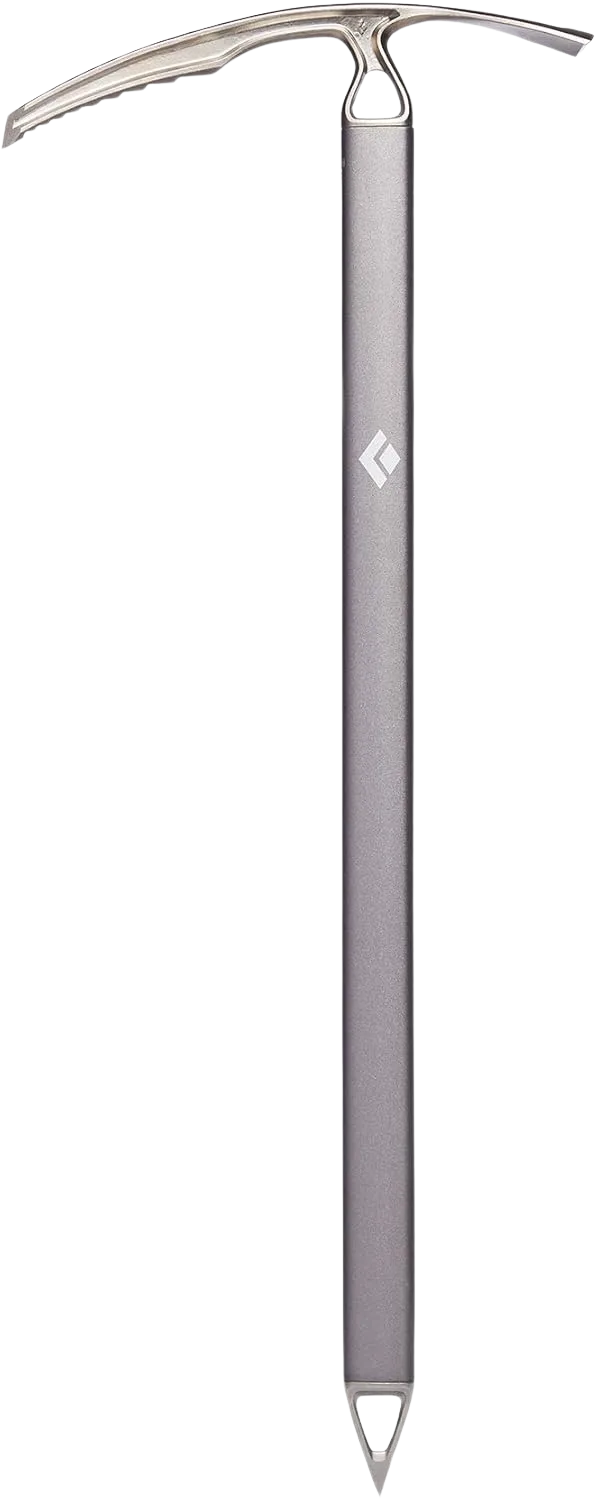
The Black Diamond Raven is the reference point, the axe I’d hand a friend heading to their first snow school. If you want one axe that travels general snow and still handles the occasional firmer, steeper line, the slightly more capable option is below.
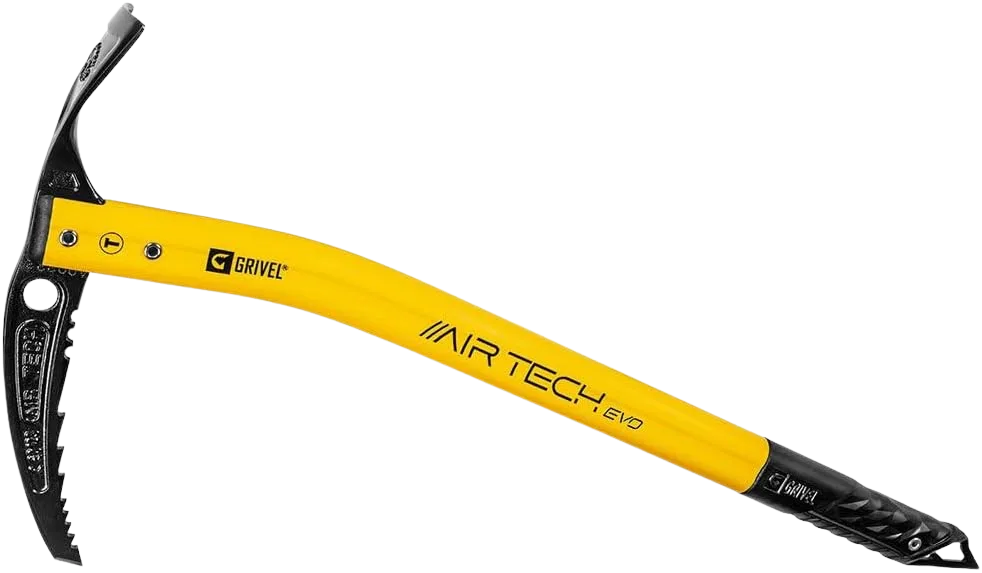
Whatever you carry, a sharp pick bites where a dull one skates, so keep that pick sharp before the season starts, not after you’ve found out the hard way on firm snow. To compare the whole field before you commit, our full ice axe buyer’s guide goes deeper on every option.
Length — why shorter wins for arresting
For self-arrest, shorter wins. Aim for roughly 50 to 65 cm. The old cane-to-ankle sizing rule, where you hold the head and the spike just brushes your ankle, is for walking with the axe as a third leg, not for arresting with it. A long 70 cm walking axe is genuinely harder to muscle into position and slower to control once you’re sliding.
If you’re between sizes and the axe is mostly for snow travel and arrest practice, size down. You give up a little reach in the walking position and gain real control in the one moment that matters.
Steel vs aluminum (the ultralight trap)
Ultralight axes are tempting, and there’s a trap inside them. The gram-counting race and ski-mo axes use aluminum heads, and aluminum bites firm snow noticeably worse than steel; it skates where steel grabs. Go light if you want, but keep a steel head. The CAMP Corsa Alpine 65cm is the honest version of ultralight: an aluminum shaft to save weight, but a steel head that still brakes on firm snow. Its all-aluminum race cousin, the standard Corsa, is lighter still and skates on hard névé at exactly the wrong moment.
And the anti-sell, because it’s true: if you already own a classic straight-shaft axe at a sane length, you don’t need to buy anything. The best arrest axe is the one you’ve already drilled with a hundred times.
When Self-Arrest Fails (and Its Real Limits)
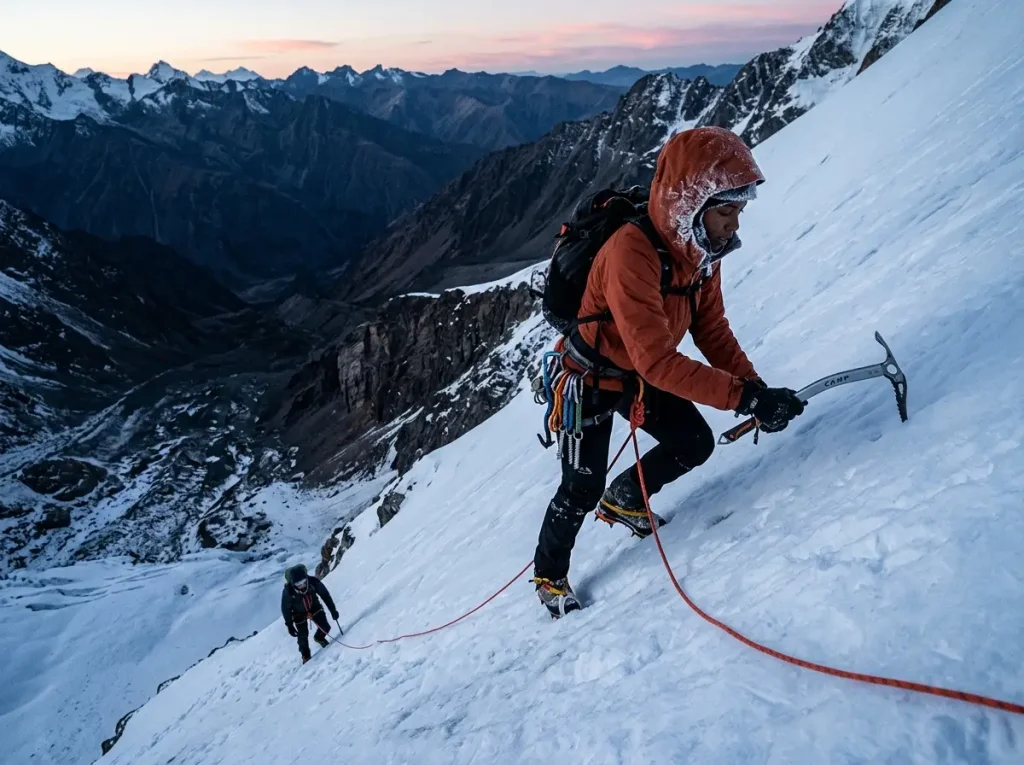
Self-arrest is a backup, not a safety net. Knowing exactly where it stops working is what keeps you off the terrain where it fails, and that’s the part almost no guide writes down honestly. Treat this as the most important section here, because the climbers who get hurt are usually the ones who bet their life on a technique that had already run out of room.
The conditions where it just doesn’t work
The technique has a window, and outside it you’re a passenger. Self-arrest loses efficiency or fails outright on slopes steeper than about 45 degrees, on hard or icy snow where the pick can’t penetrate, and on extremely soft snow where there’s nothing solid to grab. That bulletproof morning névé, fast and fun to walk on, is the exact surface where your pick skates and your arrest does nothing.
Past roughly 50 degrees, self-arrest stops being a plan at all. That’s rope-and-belay terrain. And it’s not just the slope you’re on, it’s what’s below you: a slide above a band of rock, a crevasse, or a bergschrund can be unstoppable before you’ve even rotated into position. Assess the run-out first, because it’s one of the broader alpine hazards you’re managing every time you step onto snow.
What to do when the pick won’t bite
Most failed arrests on firm snow aren’t a gear problem, they’re a commitment problem. People stay timid, half-loading the pick because driving their full chest into it feels violent. On firm snow, timid loses. Commit everything: chest down, full weight onto the head, drive it like you mean it. If the pick still skates, switch to the adze as a last resort, since the flat blade can sometimes grab a bite where the pick is glancing off.
If the pick won’t bite, don’t ease off. Roll harder onto the head and put every pound you have on that one point, then switch to the adze if it’s still skating. Hesitation is what turns a stoppable slide into one that isn’t.
There’s a team angle here too. On a roped party, one person’s fall can overwhelm a single arrest and start dragging the whole rope team. Self-arrest is an individual skill that team forces can defeat, which is why rope management and team arrest matter just as much as your own technique once you’re tied in.
When to stop relying on it and protect the slope
The mature move is recognizing when self-arrest is no longer the answer and switching to real protection. When the slope tips past the point where a slip becomes an unstoppable slide, you stop relying on your reflexes and build a snow anchor and protect the pitch instead. That’s not a failure of nerve. It’s the difference between climbers who keep doing this for decades and those who don’t. Judgment about where the technique ends is itself a skill worth drilling the movement before you ever touch snow, as the Mountaineers lay out.
How to Practice Self-Arrest Safely (and the Self-Belay Habit)
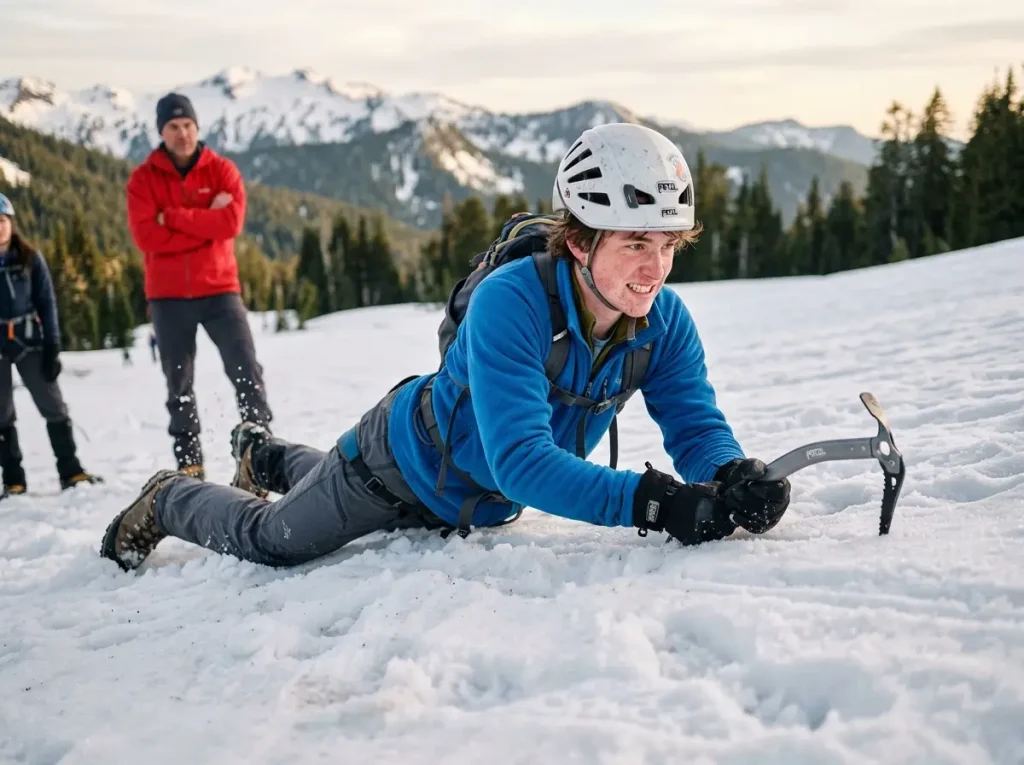
The best arrest is the one you never need, and the second best is the one your body does without a meeting. Both come from practice, but practice itself hurts people who skip the rules, so the way you drill matters as much as how often.
The snow-school safety rules
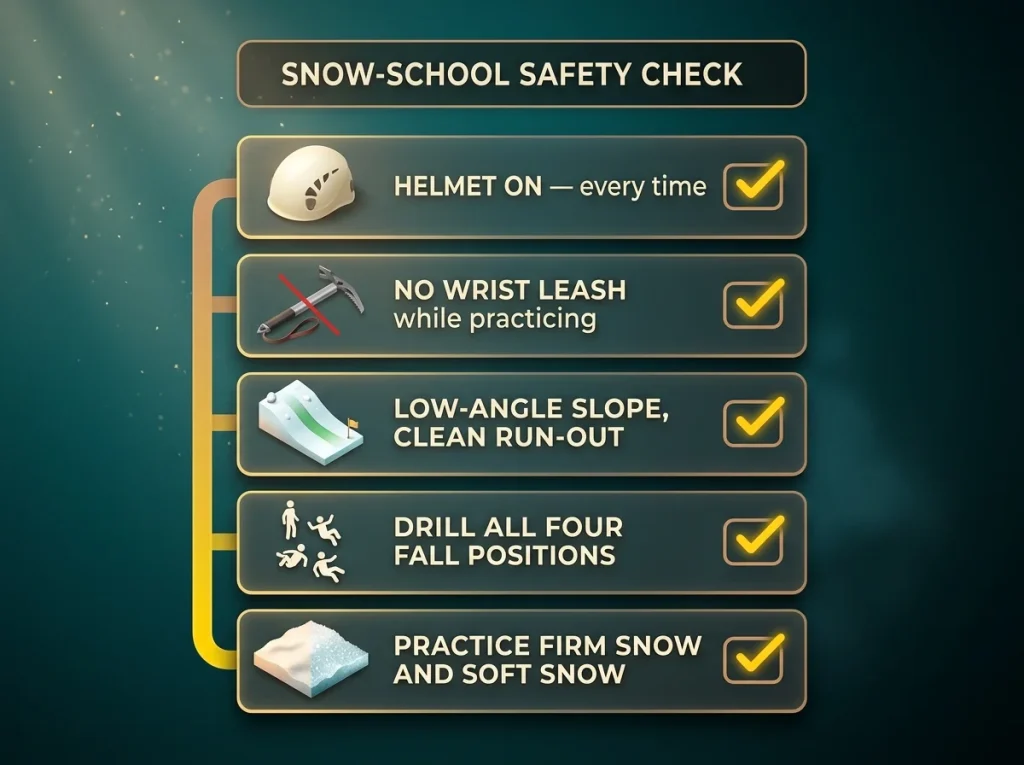
Three rules keep practice from becoming the injury. Helmet on, every time, because you’re going to slide head-down at some point and the slope has rocks you can’t see. Don’t leash the axe to your wrist while practicing, because a loose axe whipping around on a leash is a spinning pick swinging near your own face and neck. And pick a low-angle slope with a long, clean run-out, no rocks, no trees, no cliff at the bottom, so the worst case of a blown drill is a slow stop in soft snow.
Drilling all four until it’s a reflex
Drill all four fall positions until the rotation is automatic, and spend extra reps on head-first-on-your-back, the one your body wants to skip. Then do something most people never do: practice on firm snow too, not just the soft afternoon slush that arrests easily. The slope that’s forgiving at 2 p.m. is a skating rink at 6 a.m., and you want to have felt that difference somewhere safe, not discovered it on a real climb. Twenty good reps build more real safety than reading every guide on the internet, this one included.
Self-belay — stopping the slip before it’s a fall
Here’s the skill the textbooks bury. The modern teaching emphasis isn’t really the dramatic full arrest, it’s the self-belay, or the reset: catching the slip in the first half-second, before a slide ever develops. The instant a boot skates, you drop a hand to the axe head and stab the spike into the snow to stop the stumble where it starts. You regain your feet and your balance first; the full arrest is the fallback for when self-belay already failed.
Train the reset on every snow walk, not just at snow school. Each time your foot slips even a little, stab the spike and catch it, until self-belay is a twitch and not a decision. The best self-arrest is the slide that never started.
The Bottom Line
There’s one position, and the whole skill is drilling the four ways back into it until your body does it cold. Crampons flip the rule: feet up, never dug in, or the points cartwheel you. And know where it ends, because on hard ice, above a cliff, or past 45 degrees, self-arrest is not a plan, so rope up or don’t be there in the first place.
Find a safe, low-angle slope with a clean run-out, put a helmet on, and bank the reps before your season starts. Muscle memory is the only version of this skill that works when you actually need it, and you’ll need it with no warning at all.
Frequently Asked Questions
01What is the correct body position for an ice axe self-arrest?
Chest down, axe diagonal across your chest, one hand over the head tucked under your collarbone and the other on the spike, with your full weight driven onto the pick. Keep your elbows tucked and knees bent, with toes dug in when bare-booted and feet lifted when wearing crampons.
02What do you do if you fall head-first on your back?
Plant the pick out to one side and let it swing your feet around until they point downhill, then roll onto your stomach into the arrest position. It is the most disorienting fall, so it is the one to over-practice on a safe slope until the sequence is automatic.
03Why do you keep your crampons off the snow during a self-arrest?
A crampon point that catches the snow mid-slide stops your foot while the rest of you keeps moving, levering you into a somersault that can snap an ankle. With crampons on, bend your knees and hold your feet up, because the braking comes from the pick, not your boots.
04What length ice axe is best for self-arrest?
Roughly 50 to 65 cm, with shorter giving better arrest control. The old cane-to-ankle sizing is for walking, not arresting. Pair the right length with a straight shaft and a steel head, which bite far better than aluminum on firm snow.
05What should you do if self-arrest is not stopping you?
Commit your full chest and weight onto the head, then switch from the pick to the adze if it keeps skating. If it still will not bite, conditions may be beyond self-arrest, since hard ice or terrain over 45 degrees is why you assess the run-out and rope up before you commit.
Safety Notice: Rock climbing and mountaineering are inherently high-risk
activities that can involve physical trauma or fatal incidents. The information on Rock Climbing Realms is for
educational and informational purposes only. Techniques and advice presented here are not a substitute
for professional, hands-on instruction. Conditions and risks vary by location. Always seek guidance
from a qualified instructor before attempting new techniques. By using this website, you agree that you
are solely responsible for your own safety. Any reliance you place on this information is strictly
at your own risk, and you assume all liability for your actions. Rock Climbing Realms and its authors
will not be held liable for any harm, damage, or loss sustained in connection with the use of this information.
Affiliate Disclosure: We are a participant in the Amazon Services LLC Associates Program, an
affiliate advertising program designed to provide a means for us to earn advertising fees by advertising and linking
to Amazon.com. As an Amazon Associate, we earn from qualifying purchases. We are also an official affiliate partner
of Black Diamond Equipment via the AvantLink network. If you click on a Black Diamond affiliate link and make a
purchase, we may earn a commission at no additional cost to you. We also participate in other affiliate programs.
Additional terms are found in the terms of service.