
In this article
I was standing at the base of a sport crag, chatting about a trail closure — something totally unrelated — while my partner finished threading the rope through the last piece. I looked up just in time to see the rope end dangling loose through the ATC. No stopper knot. Just thirty feet of air between the rope tail and the ground. That rope would have sailed clean through the device on the first lower, and nobody would have seen it coming.
After more than a decade of climbing partnerships, I’ve learned that “fine” and “almost fine” look exactly the same from the ground. In this guide, you’ll find the 7 most common belay mistakes that actually cause accidents, why they keep happening even to experienced climbers, and exactly what to do differently the next time you’re at the base.
⚡ Quick Answer: The most common belay mistake that causes accidents is losing brake hand control — but issues like no stopper knot, poor positioning, and communication failures are equally responsible. These seven mistakes show up at every level, including in climbers with years of experience. Here’s the breakdown, and why knowing them isn’t the same as being immune.
| Quick Reference: The 7 Belay Mistakes by Risk Level | |
|---|---|
| Belay Mistake | Risk Level |
| Releasing the brake hand | Critical |
| No stopper knot in rope tail | Critical |
| Wrong belayer positioning | Critical |
| Grigri cam interference | Critical |
| Communication blackout | Critical |
| Expert halo / complacency | High |
| Back-clips, Z-clips, weight mismatch | High |
The One Rule You Can Never Break — The Brake Hand
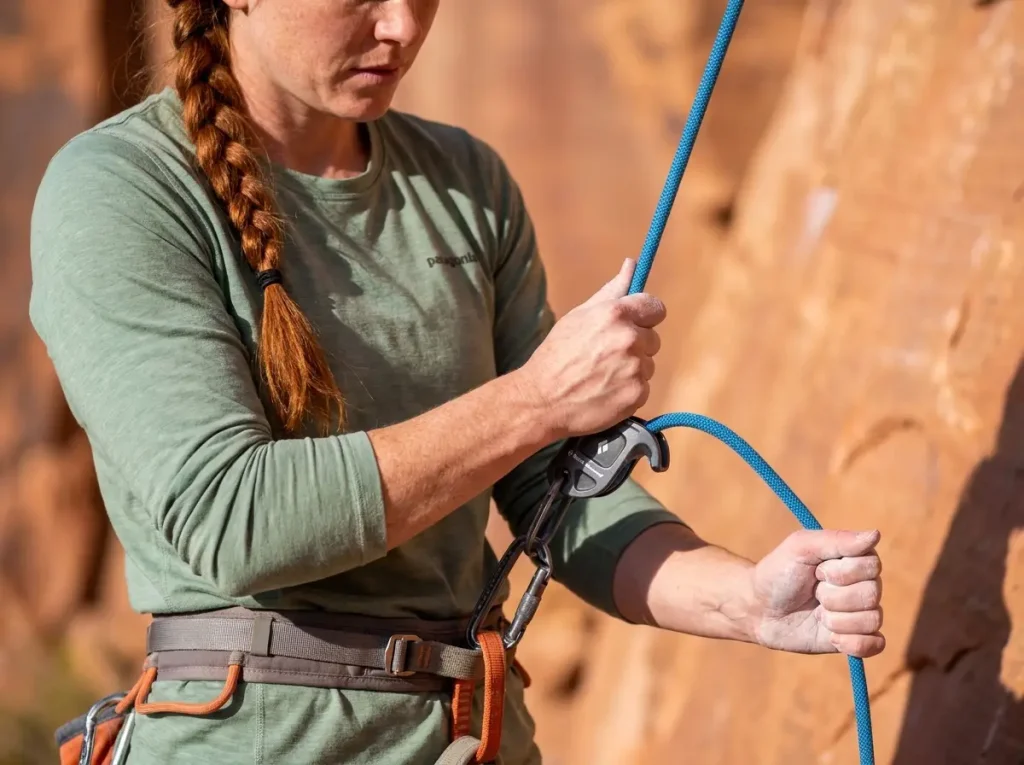
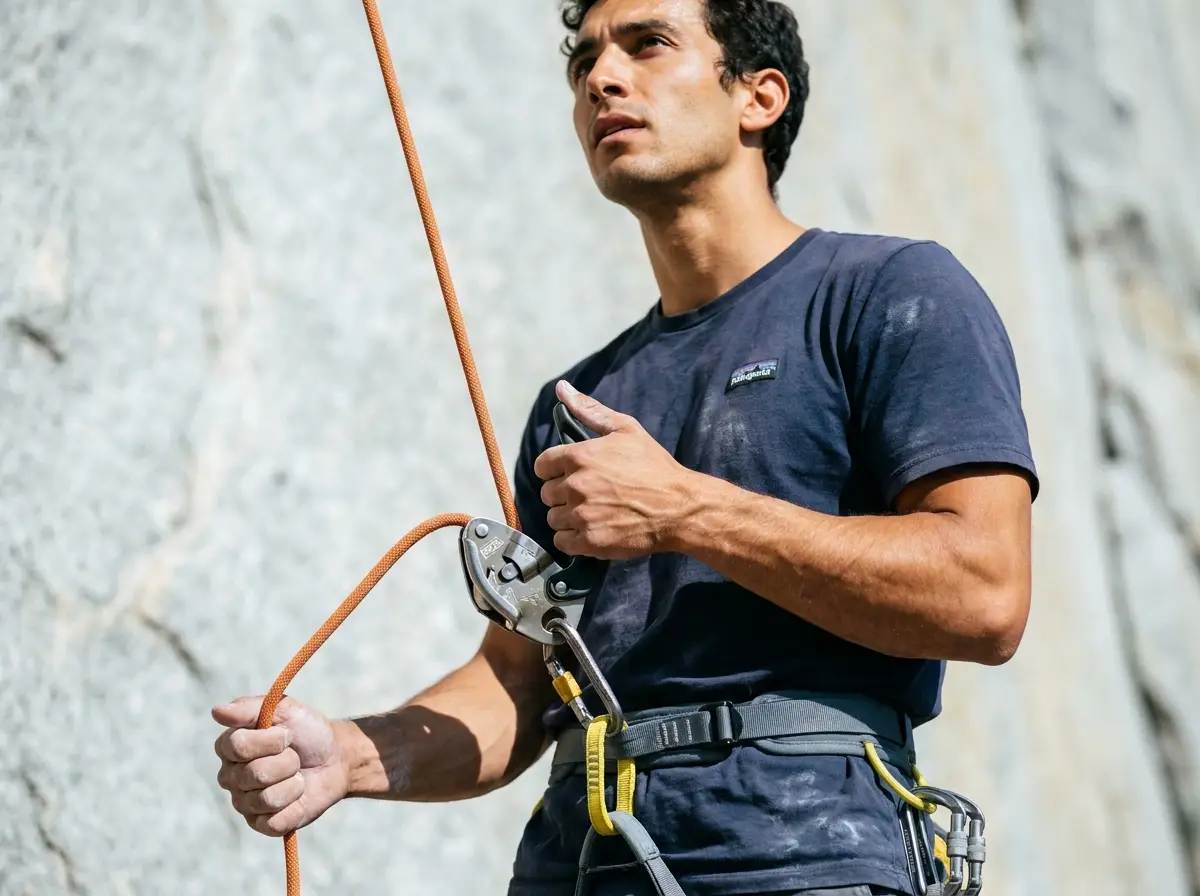
There’s only one actual rule in belaying. One. Everything else is preference, style, habit. But this one is binary: your brake hand stays on the rope. Always. Not “usually.” Not “except when you’re clipping.” Always.
When you’re on a manual device like an ATC, the rope moves freely if nothing is holding it. The device creates friction — but friction alone doesn’t stop a fall. Your hand does. Let go for half a second while your climber is leading thirty feet out, and gravity does the rest. There’s no redundancy. Nothing catches it.
The PBUS method — Pull, Brake, Under, Slide — is the drill every beginner learns for taking in rope. The accidents happen in the gaps between those steps. You pull, then your hand drifts to re-grip. That drift is when people get dropped. Don’t let go between steps.
One thing almost no article covers: device incompatibility. Run a modern 8.5mm rope through an ATC designed for 10–11mm ropes, and your braking friction drops sharply. In older tubular devices, a skinny rope barely contacts the device walls. Your brake hand isn’t a backup — it’s the only braking system. Check rope-device compatibility in the manufacturer specs before any serious day out. According to official Petzl lead belaying safety protocols, “Your hand must never let go of the brake-side rope.” No asterisks. If you want to understand how ATC and Grigri braking mechanics actually compare, that difference matters for every call you make at the base.
Why a Grigri Doesn’t Mean “Hands-Free”
The Grigri’s cam engages when the rope jerks through it fast — like during a fall. It doesn’t engage during a slow, controlled lower. That’s by design. But the brake hand stays on the rope through the entire lower, not just during catches.
The Gas Pedal technique: brake hand stays below the device, and only your thumb briefly feathers the cam to release rope. Never wrap your whole palm around the device body. If you do, the cam can’t pivot. It can’t lock. You’re holding nothing but orange plastic.
The Thin Rope Trap Nobody Talks About
Ropes under 9.2mm feel noticeably different through most tubular devices. An older ATC built for 10mm rope needs more brake-hand force to stop the same fall on a skinny modern rope — and most belayers don’t realize they’ve switched to half-power mode.
Pro tip: Running a single 8.5mm rope through a classic ATC? Slow your rope-management movements. The feel is different and you have less margin than you think. Check the rope-device pairing before your next redpoint day.
That device-incompatibility gap is what connects brake-hand discipline to the next mistake — because a sudden lower on an unfamiliar rope is exactly when the rope can surprise you.
The No-Knot Nightmare — How People Get Dropped During Lowering
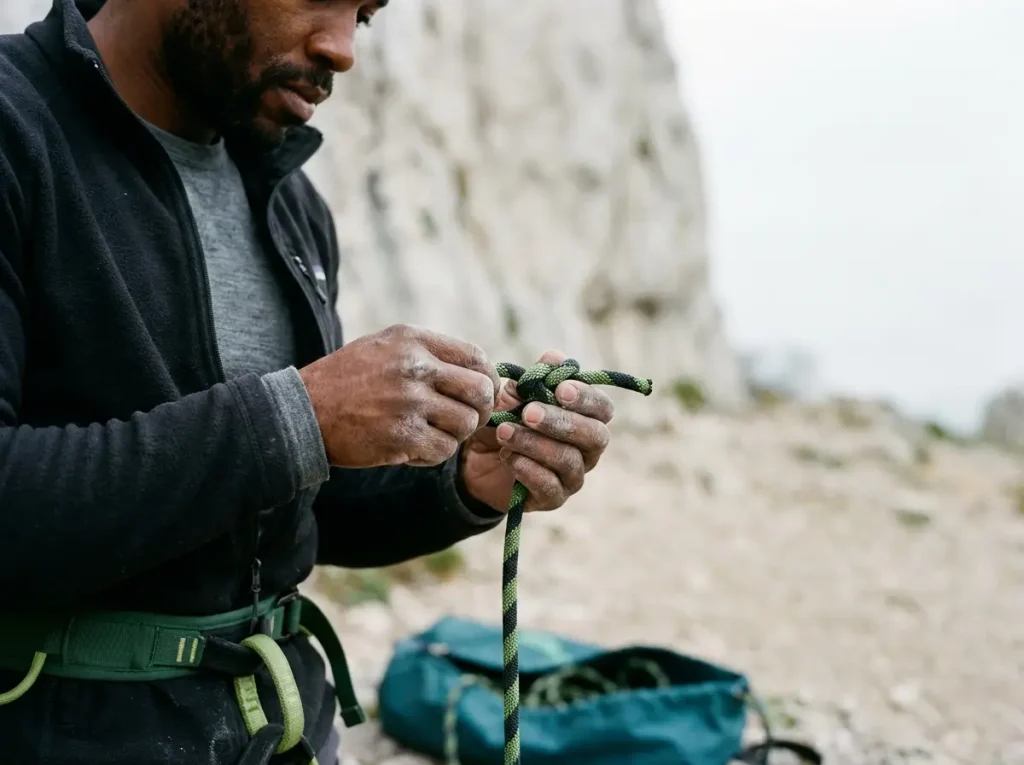
Picture this: you’re 80 feet up, tired, clipped to the anchor and leaning back to lower. The rope goes tight, then strange — lighter than it should be. The belayer is yelling something you can’t make out over the wind. You hope for the best.
That scenario ends badly without a stopper knot. According to AAC’s Know the Ropes: Lowering accident data, over 50% of lowering accidents in the last decade involved ropes too short for the route. The mechanic is simple: during a lower, rope moves through a stationary device. A 100-foot route on a 150-foot rope will run out of rope while the climber is still 25 feet off the ground. Most people have lowered from that route 20 times before. That’s the thought right before the first accident.
A triple overhand stopper knot at the rope tail creates a physical block the device cannot pass. It takes eight seconds to tie. It’s the cheapest upgrade in the sport. Check out this step-by-step guide to lowering a climber safely before your next day at an unfamiliar crag, and the partner check protocol that catches knot mistakes before you leave the ground is the system that catches this when you forget.
Rope Length vs. Route Length — The Hidden Math
Most climbers never verify rope length against route depth before a lower. The field check is simple: find the midpoint before threading the anchor. If you have rope stacked evenly on both sides, you have exactly half the rope on each side. A 60m rope doubles to 30m — some sport routes exceed that. When you’re somewhere new, ask a local. This isn’t a knowledge test. It’s a survival question.
The Stopper Knot — The $0 Life-Safety Upgrade
Triple overhand or figure-8 at the rope tail. Eight seconds. Clip the tail to your rope bag for a second layer. Make the stopper knot the last thing you do before handing over the device, every single time.
Pro tip: Make tying the stopper knot the last thing you do before handing over the device to the belayer — it becomes muscle memory, not a decision you make under pressure.
With the rope-end failure mode covered, the next gap is where your body is standing. Belayer position is invisible to most people until it causes a problem.
The Statue Belayer — Positioning and the “Gym Floor” Habit Outdoors
 Petzl GriGri ” class=”wp-image-15913″/>
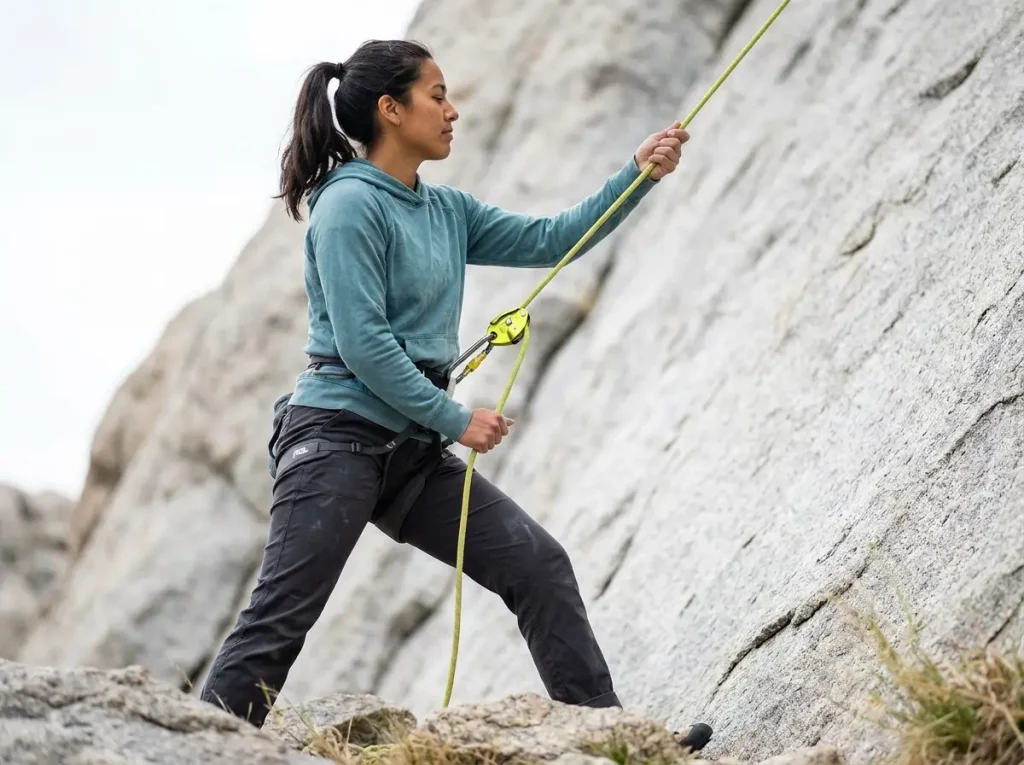
Gyms train you to stand back. That’s the default gym stance — feet flat, arms crossed, ten feet from the wall, watching your climber work the problem. It’s comfortable. The gym floor is flat and unobstructed.
On real rock, standing back is a setup for a ground fall. If you’re 15 feet from the wall and the first bolt is ten feet up, the triangular geometry of that positioning adds 5–8 extra feet of effective slack. That “hidden slack” can turn a clean catch into a decking situation — for free, no action required.
“If you can’t touch the wall with your foot, you’re too far back.” Stand within arm’s reach of the base, directly below the first bolt line. See why the 15ft rule protects you from hitting the deck for a closer look at how fall geometry changes with stance distance.
The Hidden Slack Problem — What Standing Back Actually Does
Think of the rope path like a slack line between two points. The shallower the angle, the more rope in the system below the last bolt. Extra slack adds fall distance and increases impact force on the gear. A fall that should have been clean becomes a decking situation when the belayer is fifteen feet back and the first bolt is low.
That slack geometry is half the problem. The other half is that outdoor terrain doesn’t give you a gym floor to correct your drift.
The Gym-to-Crag Transition Nobody Warns You About
Indoor floors encourage passive stances. Outdoor rock doesn’t. Slopes, roots, and loose rock change everything about where you can stand — and where you tend to drift when you’re not thinking about it. Pick your spot before the climb starts, not after the climber is already moving.
Pro tip: As soon as you arrive at the base of any outdoor route, deliberately choose your belay stance before the climb starts. Stand there, look up, and ask: “If they fall from the first bolt right now, where does rope geometry put the climber?” Also review how to give a soft catch without moving away from the wall — dynamic belaying requires proximity too.
The Grigri Grip — How Assisted Braking Devices Fail
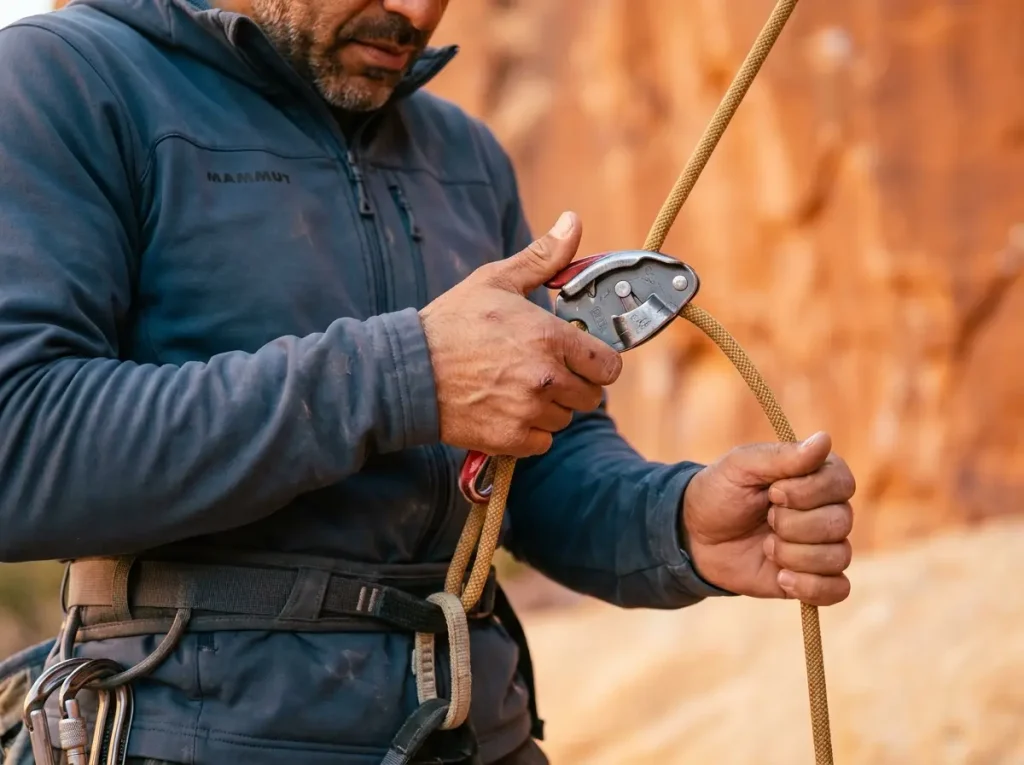
People buy a Petzl Grigri and immediately feel safer. That comfort is earned — the device is genuinely excellent at what it does. But there’s one specific way it stops working, and the first time you panic and grab it wrong, you’ll understand why “assisted” doesn’t mean “automatic.”
The Grigri’s cam engages during a fast load — a fall. During a slow lower, the cam doesn’t engage; that’s intentional. If the lever is yanked all the way open during a controlled lower, all braking friction disappears. This is documented in the AAC accident report: Grigri misuse resulting in ground fall.
Cam interference is the failure mode Petzl flags most often. When a belayer wraps their palm around the device body, the cam can’t pivot into the rope. Nothing catches a fall. Think of it like a car with ABS brakes: the system helps, but it doesn’t drive for you. The complete breakdown of how ATC, Grigri, and passive devices actually work is worth a read if you switch between devices regularly.
One more rare issue: modern 8.5mm ropes paired with older-generation Grigris built for 10–11mm ropes can create a gap in the cam geometry. The cam may not fully engage on a skinny rope under load. Check your rope diameter against your device specs.
The Palm Wrap — The Panic Response That Defeats the Cam
Instinct says grab tighter when scared. That’s the wrong move on a Grigri. The cam needs room to pivot into the rope. Practice the correct grip in the gym until it’s muscle memory: brake hand below the device, thumb’s flat face lightly touching the cam aperture — not a pinch, not a wrap.
That grip discipline is inseparable from lever control. Both fail the same way — from panic.
The Panic Lever Pull — Why “More Open” Means “No Brakes”
The lever is designed for incremental, gentle lowering — not a full yank. If you’re lowering too fast, close the lever partially — the device will slow down. Opening it wider does the opposite. A “test lower” habit — two or three inches of movement before committing to the full descent — lets you calibrate the feel before any serious velocity builds.
Pro tip: If you feel like you’re lowering too fast, do NOT pull more lever — close it partially. The device will slow. Drill this in the gym on slow, controlled lowers before you rely on it outdoors.
Communication Blackouts — The Verbal Failure That Drops Climbers
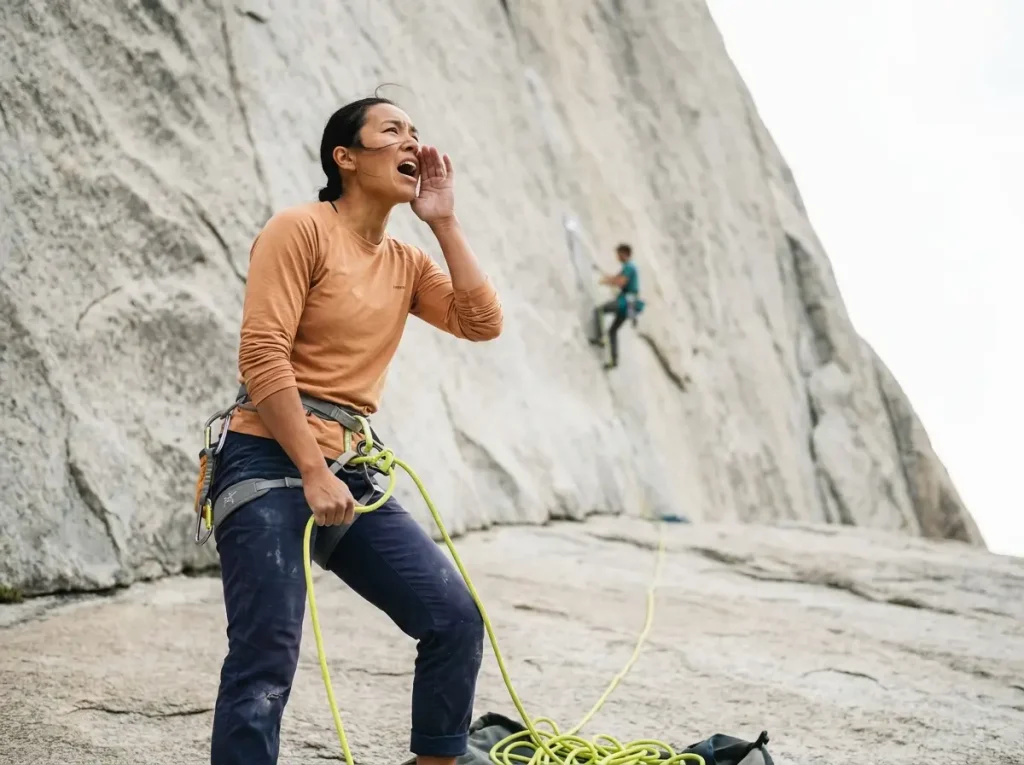
Wind in a canyon. A ledge between you and your partner. The rope goes tight and you think they said “Safe.” They said “Take.” You let go.
That’s the mechanism behind one of the most human failures in climbing. It doesn’t happen to beginners who are doubly careful. It happens to experienced partners who’ve built so much trust they stop confirming. According to AAC human factors research on climbing communication failures, miscommunication at the anchor transition is a documented pattern — the window from when the climber first touches the anchor to when they’re safely lowering is consistently where things go wrong.
Here’s the fix: establish a vocal contract at the base of every route. Define what “Take,” “Slack,” “Safe,” and “Off Belay” mean for this partnership, on this route, today. Use names: “Belay on, [Name]!” Never take someone off belay until you see the rope being pulled up for rappel, or you’ve confirmed with a repeated command. Review standard climbing commands every partner needs to know before leaving the ground to make sure you’re working from the same vocabulary.
| Command vs. What Your Partner Heard | ||
|---|---|---|
| What You Said | What They Heard | What Happened |
| “Safe!” | “Slack!” | Belayer feeds rope, climber leans back unprotected |
| “Take!” | “Off Belay!” | Belayer releases device, climber falls |
| “Watch me!” | “Got me?” | Belayer gives slack instead of staying tight |
The Anchor Transition — The Most Hazardous 30 Seconds on Any Route
The climber is clipped to the anchor but hasn’t weighted it yet. The belay device is still active. The climber shouts something. The belayer thinks “Off Belay” and lets go. Don’t take someone off belay until you either see the rope being pulled up for a rappel, or you’ve repeated the command back and heard clear confirmation.
The “Quiet Belayer” — When Silence Becomes a Hazard Signal
A belayer who gives zero feedback creates a vacuum. The climber doesn’t know if their “Take!” was heard. They eventually trust their weight to a belay they can’t confirm is active. Silence isn’t safety — it’s a broken feedback loop. Build in a simple habit: echo the command back. “Take!” → “Taking!” One second. Closes the loop.
The Expert Halo — Why Experienced Climbers Are Statistically More at Risk
The most hazardous partner isn’t the nervous beginner who checks everything three times. It’s the ten-year veteran who does everything by feel. They don’t “need” a partner check. They’ve belayed 500 routes. They could tie a figure-8 in their sleep.
Except on attempt 501, someone started a conversation mid-knot, and the follow-through never got finished.
The AAC data is clear: 43% of climbing accidents involve experienced climbers. Experience doesn’t confer immunity — it confers complacency risk. After hundreds of successful climbs without incident, your brain literally reduces its hazard response. According to APA research on risk normalization in adventure sports, this cognitive pattern is documented across adventure sports, and experienced practitioners are the primary population affected.
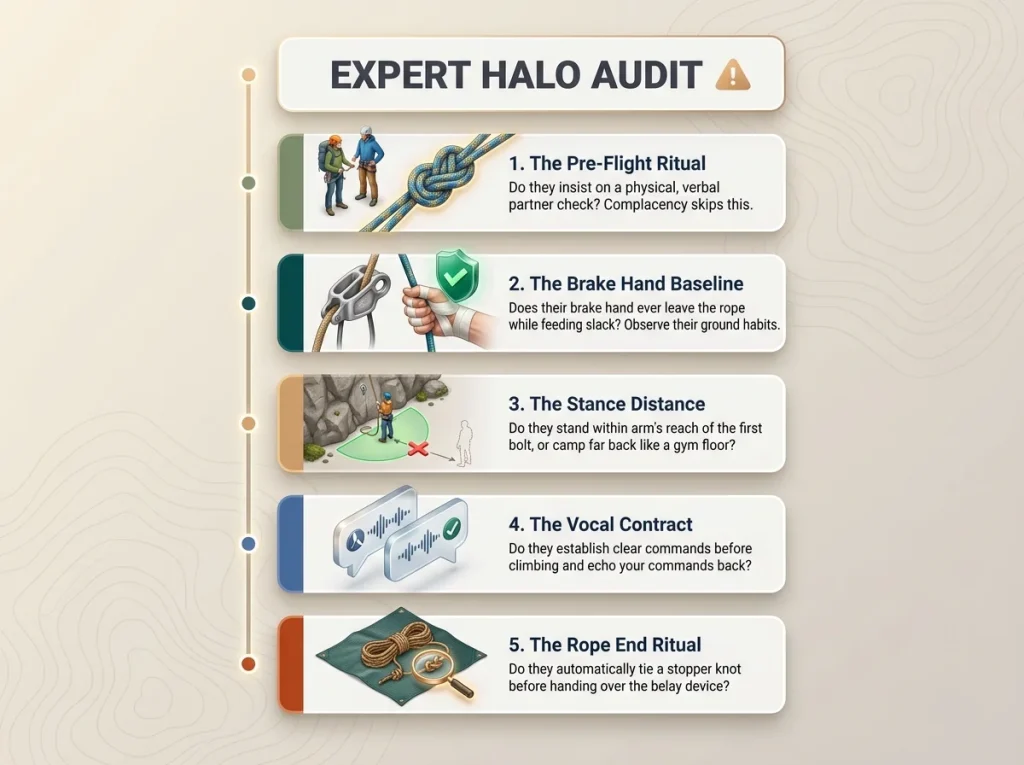
The fix is behavioral. Make the partner check non-negotiable as a ritual, not a decision. If you decide each time whether to do it, eventually you decide not to. If you’d check a stranger’s gear at a gym, check your best friend’s gear too. Trust the person — verify the system. See the 6 pre-climb steps most experienced climbers skip and the data behind belayer error and why experience doesn’t protect you for more on how this failure pattern plays out statistically.
Risk Normalization — What Your Brain Does After 500 Safe Climbs
After repeated exposure without a bad outcome, the brain’s threat response quiets down. That’s useful for learning — you stop flinching at every hold. It’s counterproductive for safety checks — you start skipping them because nothing has gone wrong yet. Proceduralize your safety. A physical-sequence checklist bypasses the “I’ve done this before” signal entirely.
That proceduralization is what separates habit from decision — and in belaying, the difference between those two things is everything.
The Partner Check as Ritual, Not Decision
Build a fixed physical sequence: harness → knot → device → stopper knot. Same order, every time, without thinking. You put your shoes on before a climb — the partner check sits in that same category. Pre-cognitive. Non-negotiable.
Pro tip: Say the check out loud, even when you’re doing it alone. Verbalizing your way through the sequence catches errors that visual scanning misses — and it makes you dramatically harder to interrupt mid-check.
Rope Management Failures — Back-Clips, Z-Clips, and the Weight-Ratio Wildcard
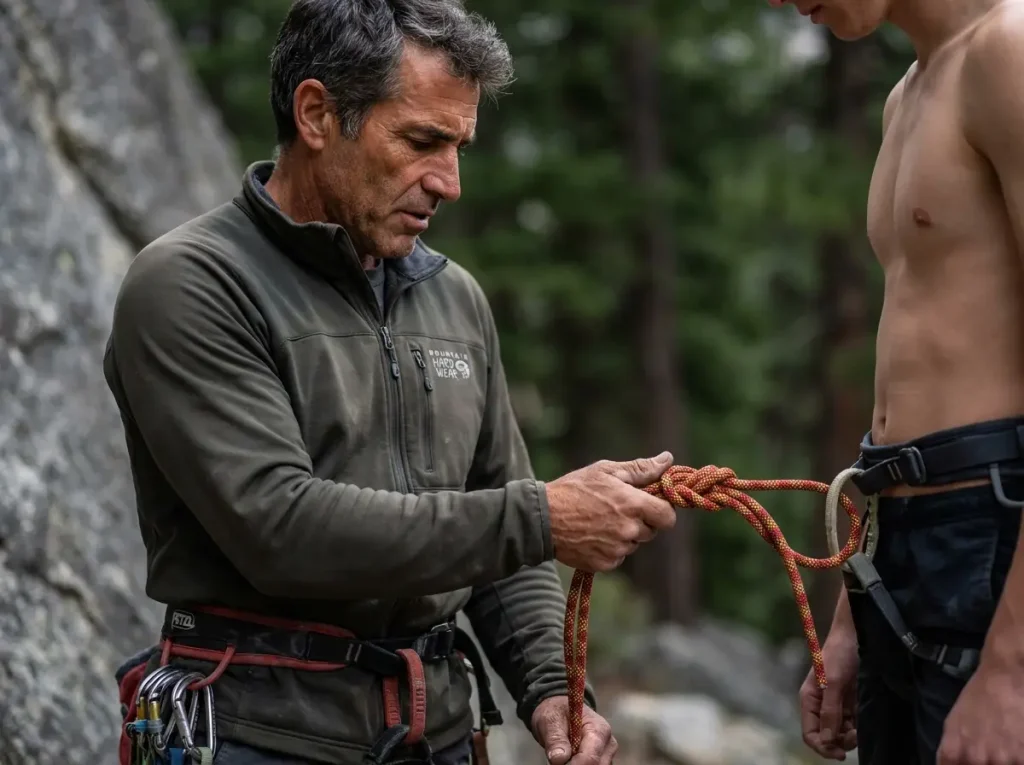
These mistakes look invisible from the ground. Your rope looks clipped. Your quickdraws look clipped. The geometry is completely wrong and nobody can see it.
Back-clipping is when the rope runs from your harness, through the draw, and continues back toward you — the gate faces the fall direction. In a fall, rope movement can rotate the gate open and unclip the draw entirely. The rope should always run from you, into the wall, and down to the belayer. If the rope comes from behind the draw toward you, re-clip it. The lead certification habits that train back-clip awareness are worth revisiting if you’re not certain of the pattern.
Z-clipping happens when you grab rope from below your last clipped draw to clip the next one up. This creates a Z-shape in the rope — extra friction, trapped rope, and a fall that’s much longer than you expect. Always pull rope from above your last clipped piece before reaching for the next clip. If you’re pumped and foggy, stop, find a stance, and trace the rope from your harness to the draw before loading it.
Then there’s the weight-ratio wildcard. When your climber outweighs you by more than 40 lbs, you’re not a belayer anymore — you’re the other side of a pulley. A fall doesn’t hold you in place; it launches you toward the first bolt. The rough threshold is 1.5x: if your climber weighs 1.5x your bodyweight, manage this actively before you ever leave the ground.
How the Edelrid Ohm changes the physics for lighter belayers is the most practical solution. The Ohm clips to the first bolt and adds friction to the system. Alternatively, use a ground anchor. Practice jumping into the fall rather than bracing away from the wall — that bracing instinct is exactly what sends you airborne.
Back-Clips and Z-Clips — The Two Clipping Mistakes That Extend Falls (Not in a Good Way)
Check the rope path: from your harness, into the gate face, down to the wall. If reversed, the gate is now loaded in a direction it can open. For Z-clips: always pull rope from above your last draw. If you find yourself reaching below the last piece, stop and reassess.
Pro tip: If you’re pumped and unsure whether the last clip was clean, pause at the next stance and visually trace the rope from your harness to the draw before putting weight on it. Two seconds spent looking saves the fall that follows the skip.
The Weight-Ratio Wildcard — When Physics Overrides Technique
130 lbs belayer, 195 lb climber: that’s a counterweight system. Use an Edelrid Ohm at the first bolt, use a ground anchor if no Ohm is available, and practice jumping into the fall. Understanding this doesn’t make a lighter belayer unsafe — it makes them informed. The ride is predictable when you’ve prepared for it.
Three Things to Take With You
Every route starts at the base. That’s where these seven mistakes get prevented — not mid-pitch, not mid-lower, not after the rope end runs through the device.
Three things to walk away with: your brake hand is the only thing between your partner and the ground — not the device. The hand. A stopper knot is an eight-second habit that eliminates one of the leading causes of serious injury or lasting harm in the sport. And partner checks — real ones, verbal, physical, every time — aren’t for beginners. They’re for the experienced climbers who account for nearly half of all accidents, precisely because experience taught them to skip the check.
The next time you’re at the base of a route with your climbing partner, go through these seven. Not because you’ll forget them — but because the ritual is what keeps you from the moment when you do. Go clip something.
FAQ
What is the most common cause of climbing accidents?
According to AAC data, the most common causes are human errors in the belay chain — brake hand failure, lowering accidents with no stopper knot, and communication failures at the anchor. Falling is the mechanism in 58.8% of cases, but the underlying cause is almost always a preventable behavioral skip. The gear doesn’t fail. People do.
Can you survive a belay fail?
Yes, but the margin depends on height, terrain, and which failure occurred. A brake-hand release on a short fall might be survivable. A lowering accident from 60 feet is often catastrophic. The best approach is redundancy: a stopper knot backs up the rope-end failure; a partner check backs up the brake-hand failure before it ever happens.
How do you tell if your belayer is bad?
Watch for five signs: brake hand leaving the rope, standing more than an arm’s length from the wall, phone out while someone is climbing, no stopper knot, and no response to verbal commands. Two of these consistently is enough to warrant a direct conversation before the next pitch.
Does a Grigri prevent all belay accidents?
No. A Grigri reduces risk but doesn’t remove it. The cam can be defeated by palm contact, works poorly with thin ropes below its design range, and provides no braking if the lever is pulled fully open during a lower. The brake hand is still required at all times — it’s an assist, not an autopilot.
What should I do if my climber is much heavier than me?
Use a friction device like the Edelrid Ohm clipped to the first bolt — it adds drag that reduces the rocket-belayer effect. Alternatively, use a ground anchor, practice jumping into the fall, and stay close to the wall. If the climber is 1.5x your bodyweight, start managing this before you leave the ground, not after the first fall.
Safety Notice: Rock climbing and mountaineering are inherently high-risk
activities that can involve physical trauma or fatal incidents. The information on Rock Climbing Realms is for
educational and informational purposes only. Techniques and advice presented here are not a substitute
for professional, hands-on instruction. Conditions and risks vary by location. Always seek guidance
from a qualified instructor before attempting new techniques. By using this website, you agree that you
are solely responsible for your own safety. Any reliance you place on this information is strictly
at your own risk, and you assume all liability for your actions. Rock Climbing Realms and its authors
will not be held liable for any harm, damage, or loss sustained in connection with the use of this information.
Affiliate Disclosure: We are a participant in the Amazon Services LLC Associates Program, an
affiliate advertising program designed to provide a means for us to earn advertising fees by advertising and linking
to Amazon.com. As an Amazon Associate, we earn from qualifying purchases. We are also an official affiliate partner
of Black Diamond Equipment via the AvantLink network. If you click on a Black Diamond affiliate link and make a
purchase, we may earn a commission at no additional cost to you. We also participate in other affiliate programs.
Additional terms are found in the terms of service.