
In this article
The hollow thud of my palm smacking an exfoliation flake on The Diamond echoed across the empty cirque. But the real warning was the low, electric hum resonating through the cams racked on my harness. It was barely 11:00 AM, but the Front Range weather engine had already fired up. I’ve spent twenty years picking my way up these walls, watching flatlanders bring gym tactics to big stone. I’ve seen what happens when you misjudge the Alpine environment. This guide covers the technical protocols, safety systems, and brutal logistics required to execute iconic Grade III and IV routes on The Diamond, Hallett Peak, and the Petit Grepon. Here is how to manage the stakes, rig your systems, and get off the mountain intact.
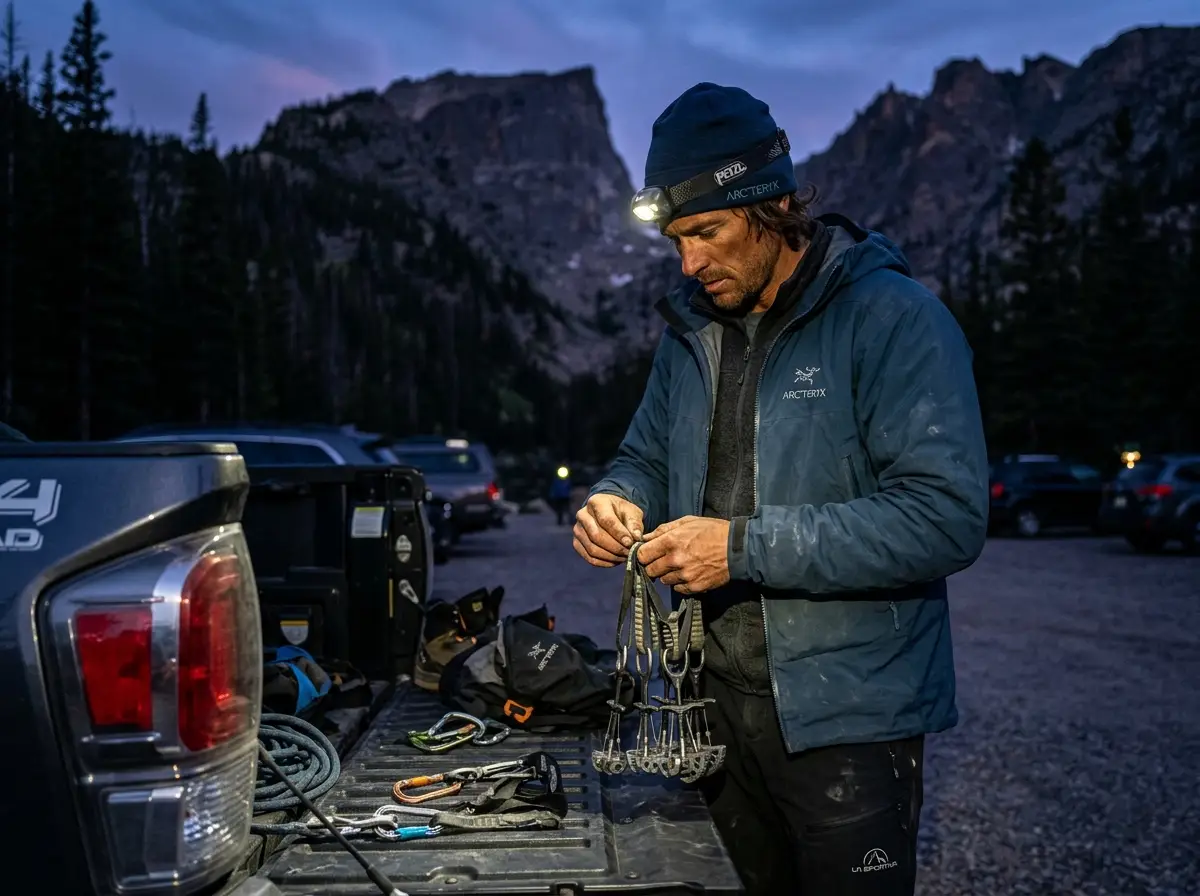
⚡ Quick Answer: Securing a Timed Entry Permit for the Bear Lake Road corridor is your primary logistical hurdle, while managing the 1:00 PM Front Range storm cycle dictates your daily survival. You must adopt an alpine start by 3:00 AM to get off the high ridges before the orographic lifting process turns the peaks into violent lightning rods. Ditch the ultralight static gear in favor of redundant, load-distributing anchor systems and full-sized alpine draws to manage the intense rope drag inherent to wandering, fractured granite routes.
The Rocky Mountain National Park Climbing Guide to Access & Logistics
The Timed Entry vs. Bear Lake Road Reality
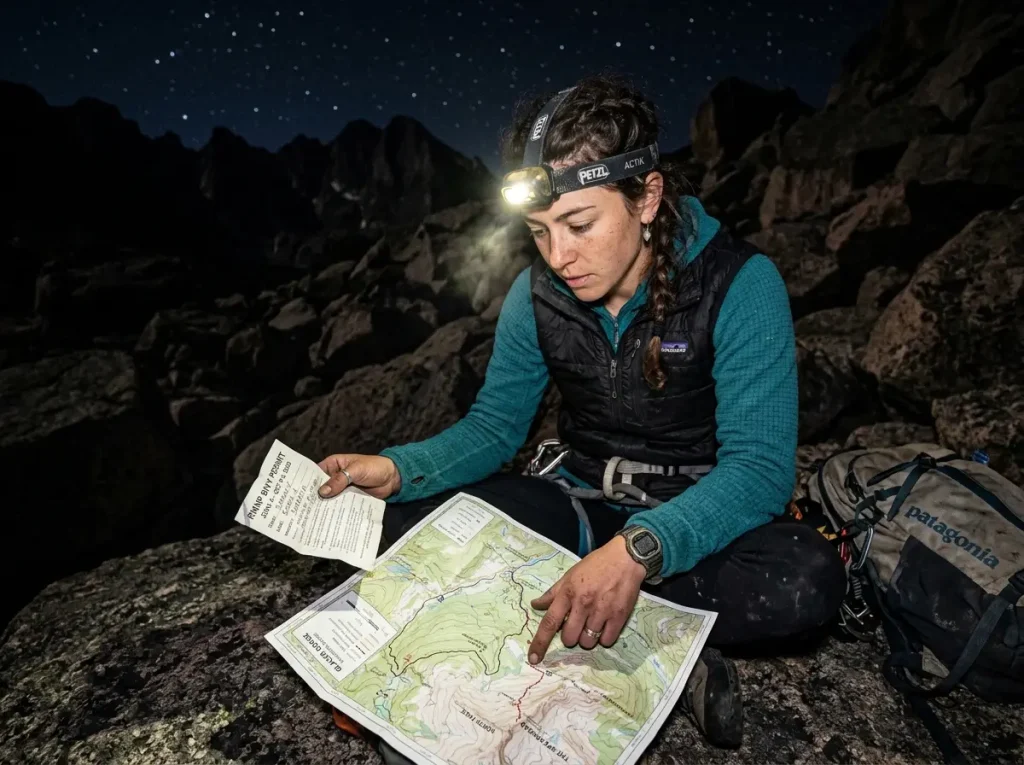
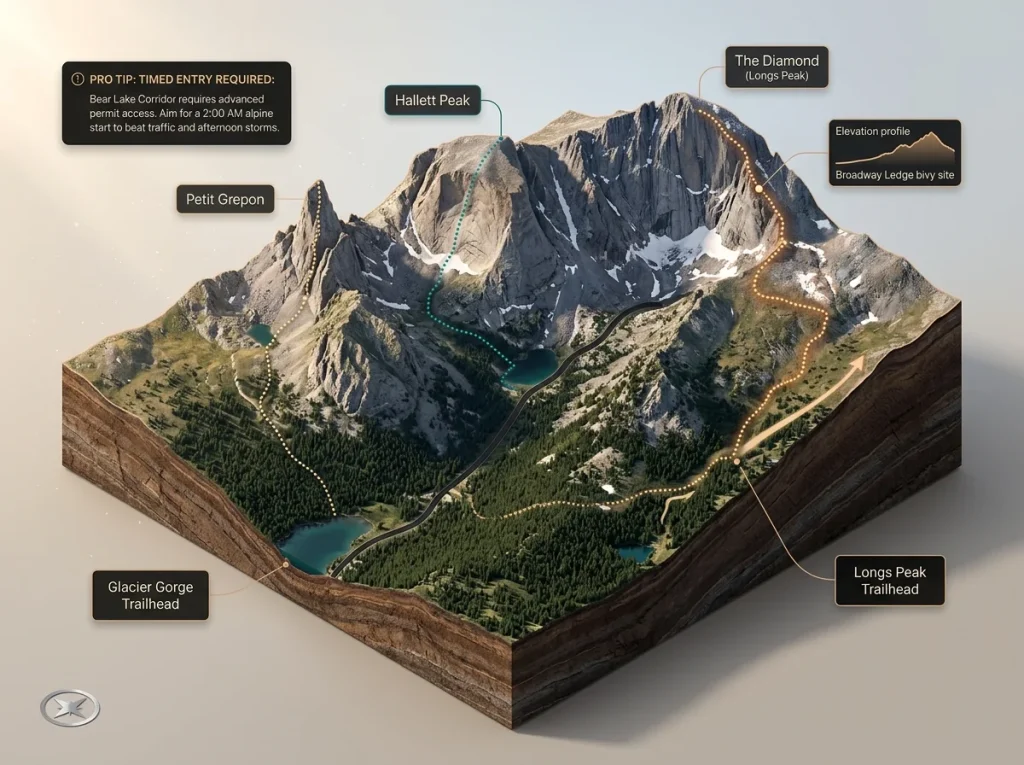
The reality of climbing in this zone revolves around a dual-track permit system that catches out-of-state climbers every summer. You cannot just casually roll your car into the lot at 5:00 AM and hike up to the base of your high-altitude granite traditional climbing objectives anymore. The park requires timed entry permits from late May through mid-October, emphasizing the Bear Lake Road corridor. That specific driving window governs your access to Glacier Gorge, which acts as the mandatory starting line for Spearhead and Hallett Peak. If you miss your entry window, you simply do not climb that day.
Prepare for the metabolic penalty of a 5.5-mile alpine approach starting at 7,500 feet and ending above 12,000 feet. Managing the early signs and symptoms of acute mountain sickness is critical before you even rack up your first cam. High-altitude physiology informs your strategic decision-making. You will breathe harder, pump out faster, and think slower. You are dragging heavy traditional racks through thin air, and your body will rebel if you push the pace too fast in the darkness.
Pro tip: Overhydrate the night before until you are annoyed by how often you have to get out of your sleeping bag. You lose massive amounts of moisture simply by breathing cold, dry alpine air. If you wait until the steep approach hike to start drinking water, you are already dehydrated.
Bivy Permits & Technical Requirements
Technical climbers pushing for multi-day objectives face another stiff layer of bureaucracy. Securing specific backcountry bivy permits is non-negotiable if you plan to sleep exposed on the Broadway ledge on Longs Peak or stage gear near Spearhead. These coveted permits are issued exclusively for active technical ascents. You must establish these bivouac sites after sundown and strike them before sunup. The rangers actively check. Losing access for the rest of the community because you wanted to sleep in is the fastest way to become a pariah at the trailhead.
Always cross-reference your ambitious plans with the RMNP official climbing regulations. You need this validation for complex bivy requirements and the specific seasonal access mandates that shift depending on park crowding and infrastructure projects.
Navigating Raptor Restrictions & Closures
Beyond the birds, you explicitly have to manage your own physical impact in the fragile tundra environment. The use of engineered waste bags in all high alpine zones is a non-negotiable requirement to preserve water sources. Successfully mastering technical waste management is a core skill for any serious alpine trip. Freezing rock does not break down human waste. Nobody wants to pull a hard crux move smelling last week’s climber. Carry your bags, use them properly, and pack them out.
The Meteorology of the 1:00 PM Front Range Storm
Orographic Lifting & Cumulonimbus Genesis
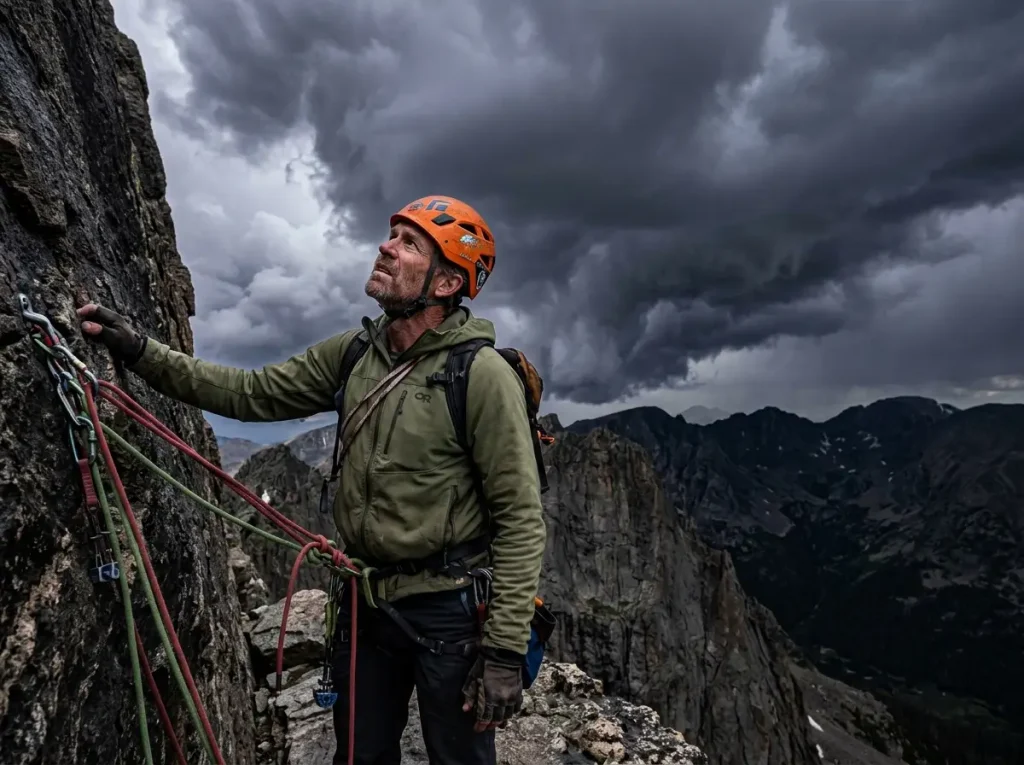
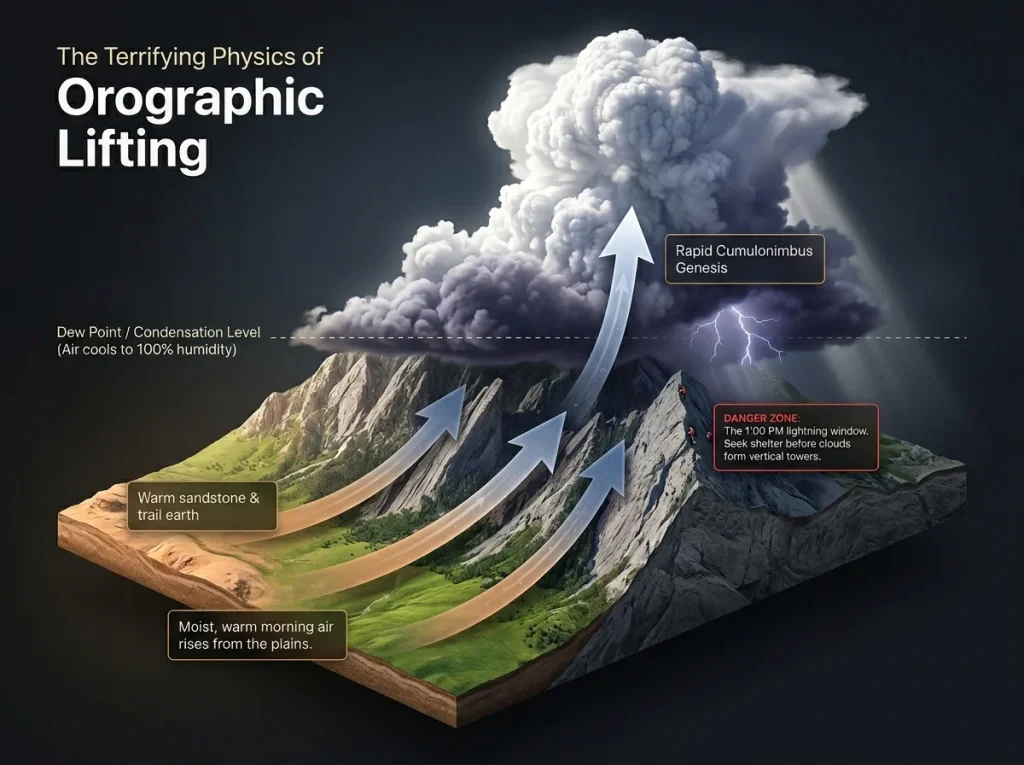
The defining, unavoidable characteristic of rock climbing in the Colorado Rockies is rapid-onset weather. The massive mountain range acts as an efficient thermodynamic engine. Rising warm morning air triggers a process known as orographic lifting, which forces moisture-laden air up the steep slopes of the 14,000-foot peaks. It cools instantly at the dew point and rapidly condenses into hazardous cumulonimbus thunderheads. This predictable meteorology of the front range physics engine is why you must adopt an alpine start timing schedule.
Never fall prey to the classic “Summit Fever” trap, ignoring the 11:00 AM cloud accumulations simply because the crisp alpine dawn felt perfectly stable. This early confidence predictably causes fatalities every season. You critically need to understand the physics of high-altitude lightning. Your disciplined ability to deploy an objective risk matrix at the belay stance dictates whether you descend safely to your car or end up needing a rescue.
The 30-30 Rule & Faraday Mitigation
Metal climbing gear inherently does not attract lightning strikes. You do not need to panic and throw your expensive rack off the side of the mountain. However, acting foolishly as a contact conductor with soaking wet climbing ropes traversing an exposed ridge greatly increases the deadly severity of the strike. The wet nylon rope acts as a perfect electrical wire running straight down to your harness.
If caught high on a technical route during the notoriously hazardous 1:00 pm lightning window, you must immediately adopt the Lightning Position. Keep your feet tight together on an insulating foam pad or a coiled, deeply dry rope. This deliberately minimizes the step voltage from ground currents attempting to wildly travel up one leg and down the other. We do not have the luxury of a vehicle’s protective Faraday cage up here. You physically insulate yourself from the wet rock, crouch incredibly low, cover your ears, and present the smallest possible physical contact point.
Rock Geology: Granite Placements vs. Gneiss Foliation
Silver Plume Granite & Friction Science
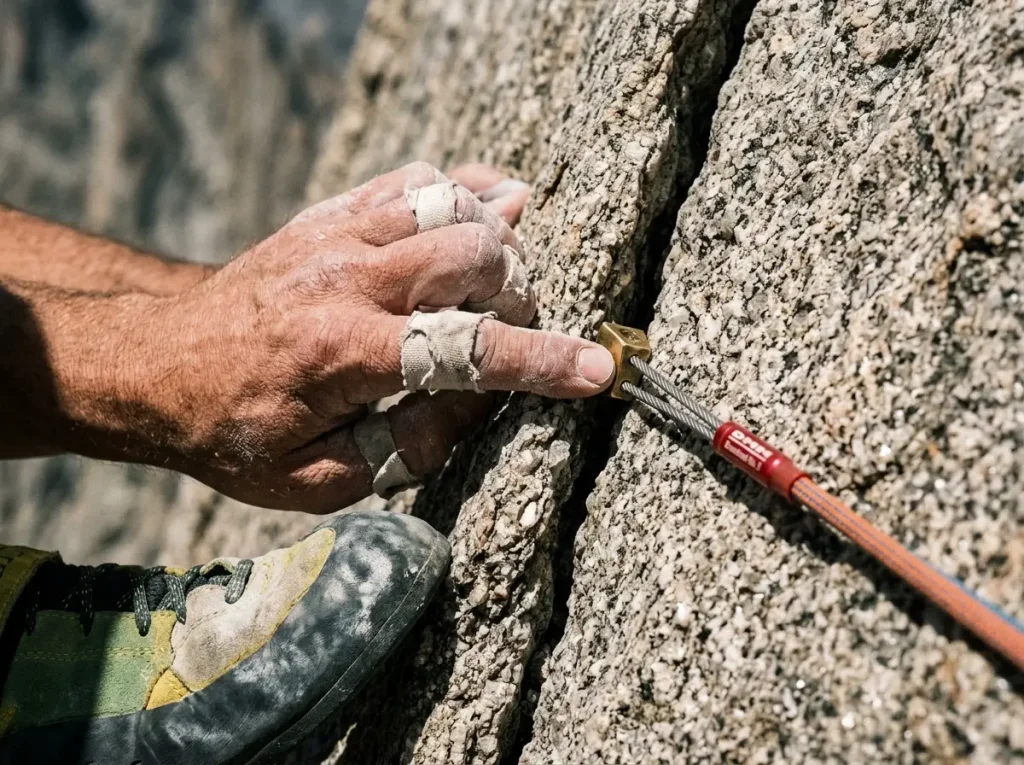
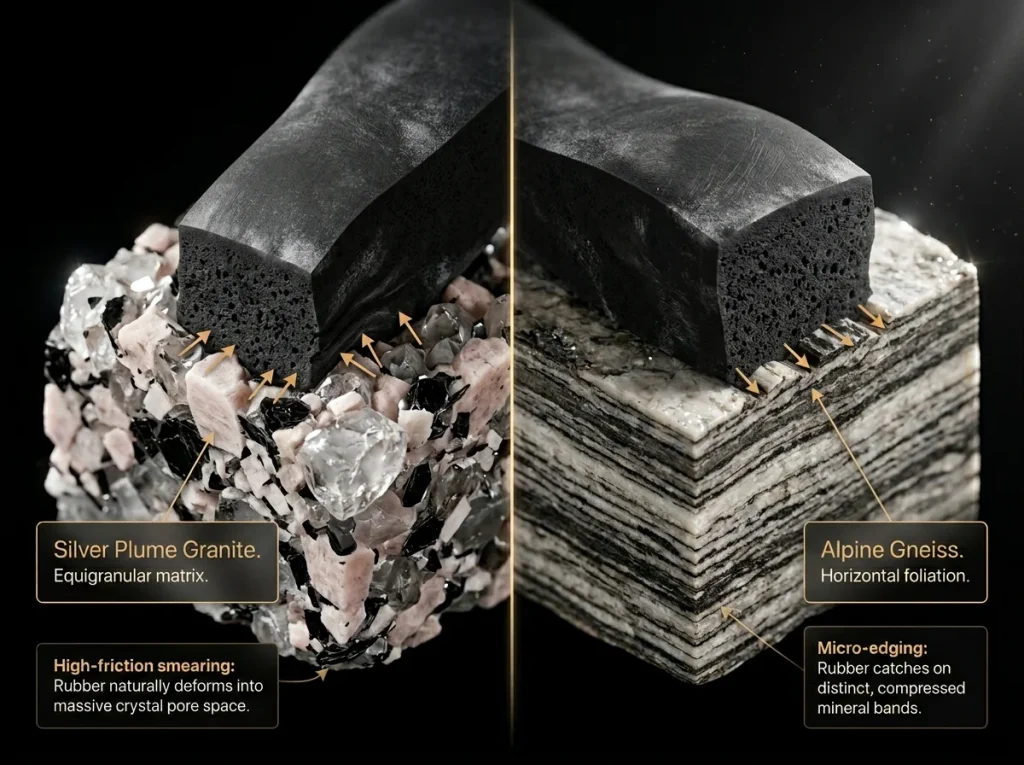
The solid 1.4-billion-year-old Silver Plume Granite that forms The Diamond is legendary, but you have to understand the underlying mechanics of why it holds your body weight. It physically provides an interlocking equigranular matrix that maximizes rubber surface area. The normal force you apply with your leg drives the soft climbing rubber directly into these sharp microscopic crystals, creating wildly secure smearing conditions on blank slabs. You want a softer, flatter shoe here to massively maximize that large contact patch. Let your heel drop to increase the rubber’s functional footprint.
Gneiss Foliation & Interlocking Edges
Consult a deep tactical guide to grip and gear by rock type before mindlessly packing your quiver for the long trip. You do not bring your aggressive, severely downturned limestone cave shoes to edge up vertical alpine gneiss for twelve demanding pitches. You progressively wear stiff, flat-lasted boards that can securely stand on a dime while carrying twenty heavy pounds of jagged hardware.
Navigating Exfoliation Flakes & Rockfall
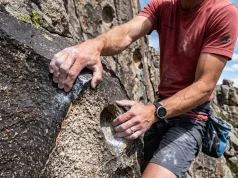
Assessing rock integrity requires constant, active auditing. You visually inspect the piece closely, smack the meaty heel of your hand against it, and deeply feel for hidden micro-vibrations echoing across the face. If it audibly hums or physically vibrates, it is dangerously detached from the main wall. When climbing The Diamond, you frequently encounter massive, terrifyingly hollow-sounding exfoliation flakes. Recognizing the crucial microscopic difference between a highly secure expansion and a thousand-pound lethal flake rigidly dictates whether you are placing bomber protection or merely rigging a massive deadfall trap for your unsuspecting belayer.
Pro tip: When actively testing a highly suspect hold, always pull straight down in the direct direction of gravity. Pulling out horizontally leverages the massive block away from the wall and requires vastly less physical force to dislodge it onto your lap.
The “Anti-Sell” Alpine Rack Blueprint
Specific Cam Sizing for RMNP Granite
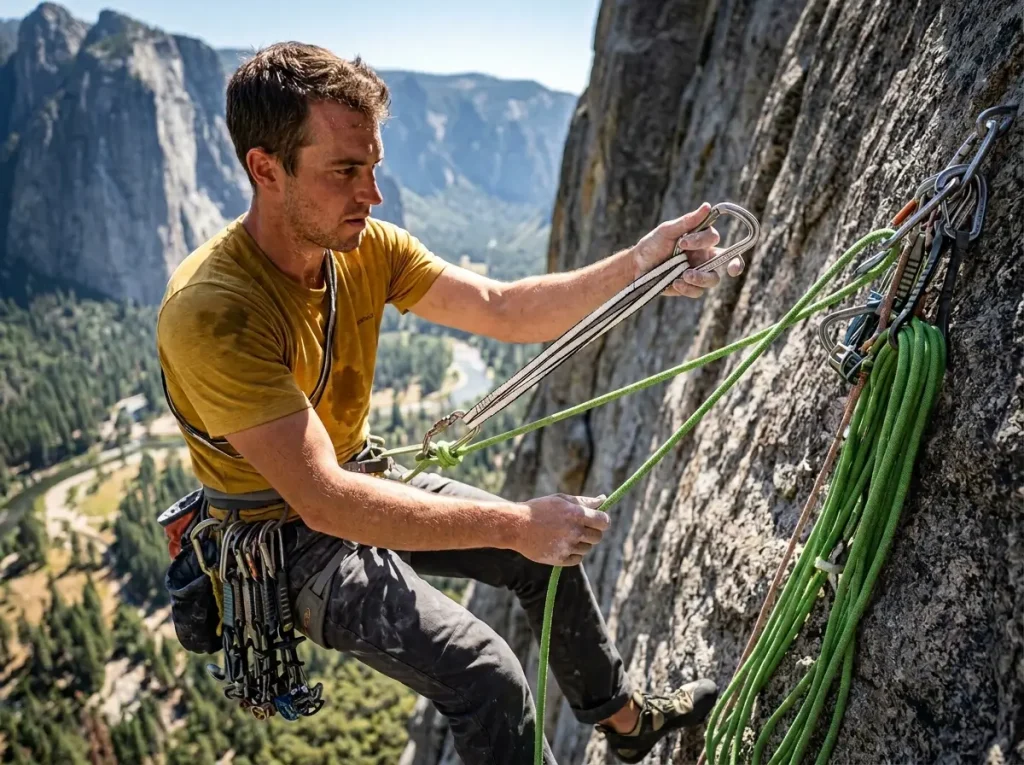
Stop mindlessly reading generic internet gear lists based loosely on perfectly polished Yosemite big walls. When dealing specifically with cam sizing for RMNP granite, standard racks fail miserably on The Diamond’s irregularly shifting seams. Incorporating heavy sets of micro-offsets is mandatory for the horribly blown-out vertical piton scars and flared cracks highly typical of these older classic routes. You cannot reliably protect the intensely thin seam variations with standard parallel-sided nuts. They will rattle out before you make three committing moves.
Your strict rack requirements generally dictate a full double #0.5 to #2 cams setup from the tiny micro sizes all the way up through a massive #3 Camalot, plus a heavy, diverse assortment of offset nuts. We lean into a heavy Anti-Sell philosophy here: not everything sold in the polished gear shop works reliably in the grimy alpine. Don’t be easily fooled by the sexy, ultralight, highly static Dyneema slings just to carelessly save on overall weight.
Dynamic vs. Static System Shock Loading
This is where your calculated weight-to-protection ratios must lean toward absolute safety over shaving ounces. use dynamic nylon materials specifically where kinetic energy absorption is highly critical, distinctly especially in your primary master anchor points and flexible personal tethers.
Mitigating Friction with Alpine Draws
Professionals explicitly and deliberately utilize full-size colored wiregates confidently on the rope-end of dyneema alpine draws to maintain smooth clipping efficiency and eliminate the dreaded slack trap on these massive, notoriously wandering Grade III/IV alpine rock climbs. Placing heavy gear incredibly deep in jagged horizontal breaks routinely causes the active lobes to dangerously walk. This requires highly elongated slings to successfully isolate the jerky carabiner movement fully from the seated cam.
Pro tip: practice the physical “Flick and Pull” technique to extend your tripled draws smoothly one-handed when you are intensely pumped out. nothing drains your forearms faster than frantically fumbling to unclip a highly twisted tripled sling with your teeth while forty feet runout over a highly marginal piece of brass.
Anchor Vector Physics & Technical Descent
The SERENE Standard at Altitude
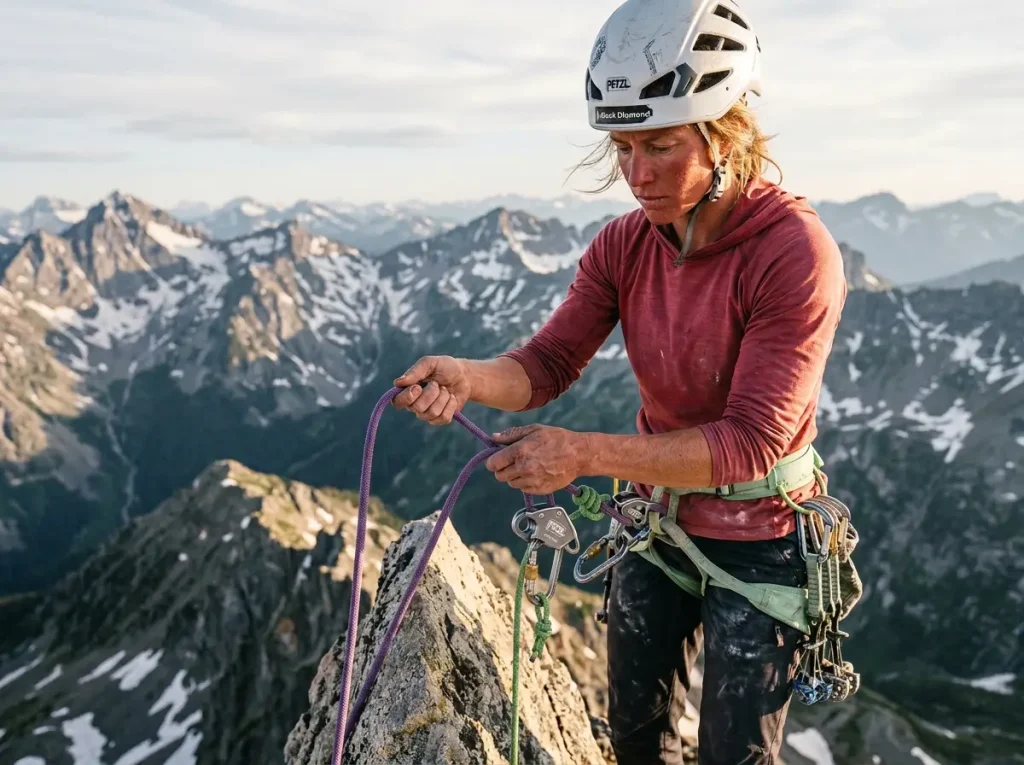
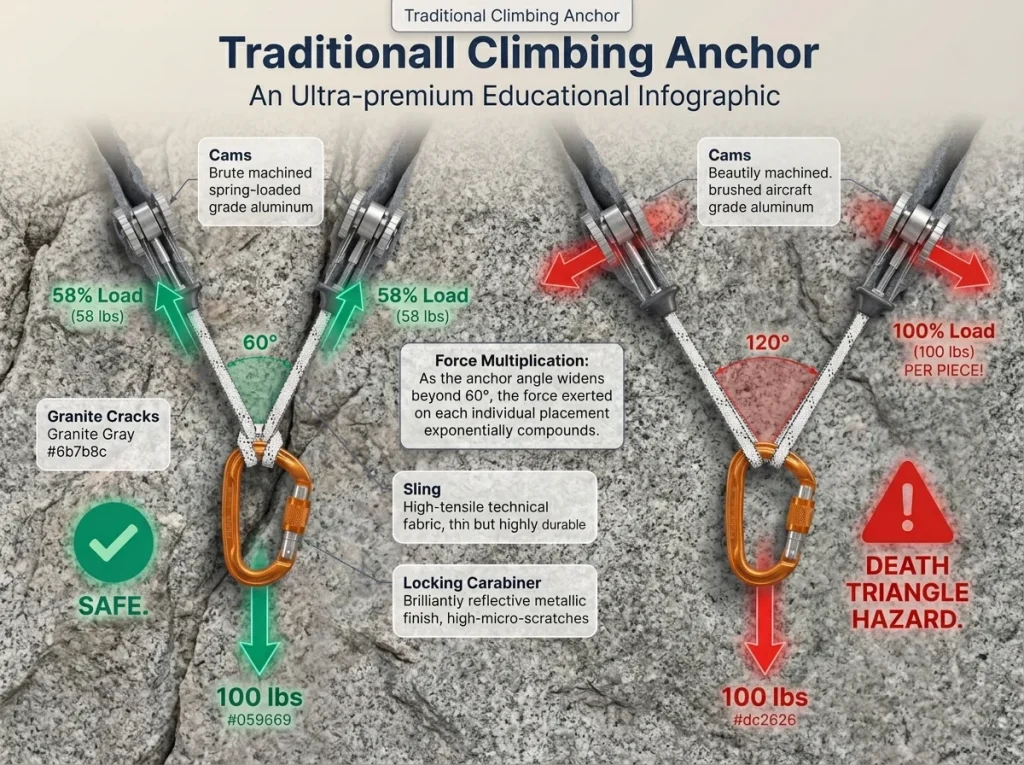
Building massive anchors in the severely fractured granite of the truly high alpine rigidly mandates incredibly strict adherence to the SERENE anchors framework (Solid, Equalized, Redundant, Efficient, No Extension). You cannot just casually throw two highly questionable cams deeply in a cracked seam and lazily call it good on The Diamond.
Mastering the 6-Rappel Descent Sequence
When actively executing the wildly intimidating 6-rappel descent sequence wildly off the Petit Grepon, you must carefully locate the precise exact center mark of the gritty rope perfectly. Actively identify the shiny bolted rappel stations to actively avoid getting hopelessly trapped in the highly loose, objectively hazardous gully system off route. Intimately familiarize yourself closely with the baseline safety frameworks for RMNP descents.
If you confidently screw up the complicated descent sequence, you’re brutally stuck miserably down-climbing loose, terrifying blocks in the freezing dark. You forcefully have to commit to executing a zero-failure closed rappel system. Tie the battered ends securely, beautifully dress the tight knot, back up the metal device. every single time.
Tactical Route Blueprint: Culp-Bossier Masterclass
Navigating the Pitch 1-2 Dihedral Trap
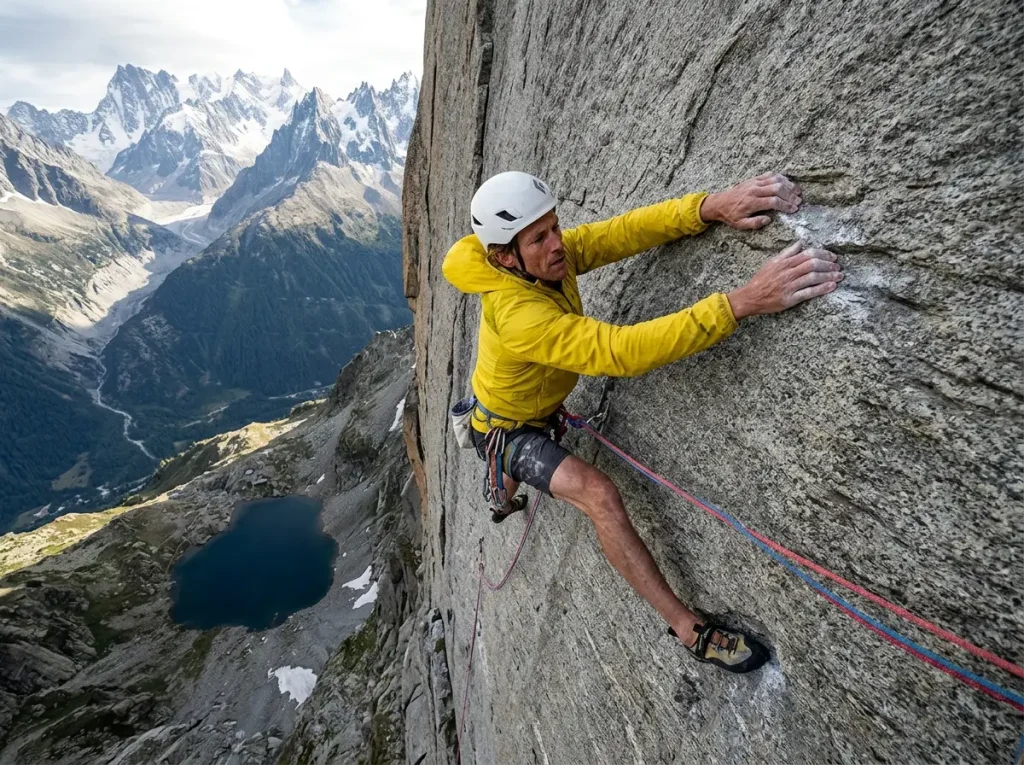
Hallett Peak’s legendary Culp-Bossier (5.8+, Grade III) explicitly demands highly precise, intensely skeptical navigation. If you boldly misread the incredibly early North Face gneiss, you quickly forcefully drift into brutally runout, unprotected blank terrain. The clean guidebook lines reliably always look infinitely cleaner perfectly on paper than they do staring directly up at a thousand feet of horribly stacked blocks.
The Pitch 6 Prow Route-Finding Crux
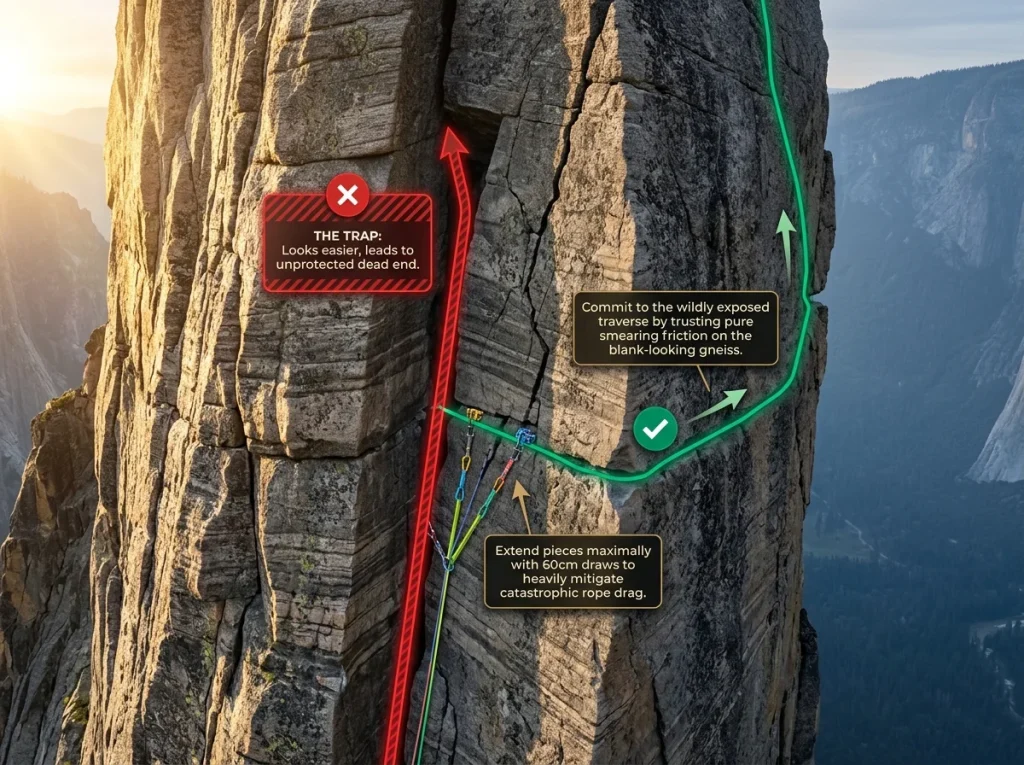
You have to forcefully take a deep breath, systematically and cleanly extend your precious pieces incredibly far to perfectly mitigate horrible rope drag, and deeply, truly trust the high-friction rock texture well before blindly committing fully to the blank traverse out over the dizzying void. The secure handholds vanish rapidly, and you simply forcefully have to bravely stand on your feet and truly trust the sticky rubber.
Racking for the Pitch 8 Roof Pull
Through all of this, your tight belay station management dictates your overall speed. You use the sharp cliff geometry to smartly isolate your belayer perfectly from the constant objective rockfall hazard actively funneling out cleanly of the steep upper gullies. This is where improving your overall alpine efficiency directly impacts basic safety. The significantly faster you flawlessly swap the heavy gear and seamlessly transition, the much less time you dangerously spend totally exposed directly to the incoming lethal weather pattern.
Conclusion
Surviving the high alpine of the Front Range explicitly requires a radical, absolute shift from casual indoor gym tactics. Always actively verify the flash-to-bang interval perfectly before committing your entire team directly to the fully exposed steep upper pitches. scrutinize every single tight anchor vector closely to permanently eliminate hidden force multiplication resting on fractured loose blocks. Actively tightly dial in your entire rack perfectly for the highly unique frictional rock demands and the nasty pin scars of the RMNP granite, explicitly packing tiny offsets and long dynamic extensions rather than just lazily striving exclusively for the absolute lightest harness. Actually mastering these physical systems perfectly is the singular difference between barely surviving a nightmare epic and truly commanding a wholly controlled, deliberate send. Employ this strict analytical mindset framework to your next meticulous gear assessment right before you hit the steep trail. Now go send something.
FAQ
When is the best time of year to climb in RMNP for an alpine ascent?
Late June through mid-September provides exclusively the absolute most reliable clear window for high-alpine steep rock climbing. Deep snow and solid ice forcefully choke the dark descent gullies perfectly until mid-July, necessitating sharp crampons and heavy ice axes exclusively for the early approaches. The harsh transition rapidly back to brutally cold winter conditions incredibly begins by late September, shutting down high access incredibly fast.
Do you need a permit to climb in RMNP?
Yes, you must navigate a terribly confusing dual-track tight permit system perfectly. A highly sought Timed Entry Permit is mandatory for any vehicle access (focusing on the extremely busy Bear Lake Road corridor), and a highly exceedingly specific backcountry bivouac permit is explicitly required if you actually plan to confidently sleep directly on technical vertical objectives like The Diamond.
How hard is the climbing on longs peak?
The incredible technical climbing high on The Diamond (like The Casual Route) starts at a highly serious, sustained solid 5.10a precisely at 13,000 feet. The sheer relentless difficulty is exponentially compounded directly by severe hypoxia, near-freezing bitter dawn temperatures, highly mandatory alpine start timing, and a deeply physically draining 5.5-mile approach carrying heavy massive traditional racks.
Are there easy multi-pitch climbs in rmnp?
while nothing in true high alpine terrain is trivial, classic routes highly like the South face of the towering Petit Grepon (5.8) or beautiful Lumpy Ridge formations incredibly offer accessible grades on paper. However, the absolute true intense test perfectly on these huge routes involves complex tight route-finding, mandatory extremely fast transitions, and managing severe wild weather exposure, rapidly making them inappropriate fully for absolute complete beginners.
Safety Notice: Rock climbing and mountaineering are inherently high-risk
activities that can involve physical trauma or fatal incidents. The information on Rock Climbing Realms is for
educational and informational purposes only. Techniques and advice presented here are not a substitute
for professional, hands-on instruction. Conditions and risks vary by location. Always seek guidance
from a qualified instructor before attempting new techniques. By using this website, you agree that you
are solely responsible for your own safety. Any reliance you place on this information is strictly
at your own risk, and you assume all liability for your actions. Rock Climbing Realms and its authors
will not be held liable for any harm, damage, or loss sustained in connection with the use of this information.
Affiliate Disclosure: We are a participant in the Amazon Services LLC Associates Program, an
affiliate advertising program designed to provide a means for us to earn advertising fees by advertising and linking
to Amazon.com. As an Amazon Associate, we earn from qualifying purchases. We are also an official affiliate partner
of Black Diamond Equipment via the AvantLink network. If you click on a Black Diamond affiliate link and make a
purchase, we may earn a commission at no additional cost to you. We also participate in other affiliate programs.
Additional terms are found in the terms of service.