
In this article
You’re three bolts off the ground, clipping fast, and the rope jams dead in the GriGri. Your belayer tugs. The cam won’t budge. Below the device, eight inches of rope have twisted into a rigid corkscrew, tight enough that the cam cannot seat. You’re short-roped on your redpoint attempt. And the reason is sitting at the base of the wall: a pigtailing rope that nobody flaked correctly at the start of the day.
I’ve watched this play out at sport crags and multi-pitch anchors more times than I can count. The frustration is real, but the cause is always mechanical, never mysterious. A rope that pigtails is recording your handling decisions — every anchor pass, every Munter descent, every time you pulled a new rope straight from a factory hank. Fix the handling, and the rope fixes itself.
This article covers the mechanics of why ropes develop torsional kinking, the scenario-specific protocols to eliminate it before it ruins your belay device’s performance, and the field diagnostics that separate recreational rope handlers from technical practitioners.
⚡ Quick Answer: A climbing rope pigtails because torsional energy builds up in its nylon fibers from three main sources: incorrect initial uncoiling (introducing one twist per loop from a factory hank), anchor geometry that subjects the rope to uneven friction, and belay devices like the Munter hitch that redirect the rope across misaligned angles. The fix is a correct random pile flake — not neat coils — starting with the bottom strand placed 4 feet away. For ropes already severely kinked, a double-flake followed by hardware-assisted neutralization through an ATC at a high-point carabiner removes what a single pass cannot.
The Physics Behind the Pigtail — Why Ropes Twist
Here’s where most people get it wrong: they think pigtailing is random. It isn’t. Every kink has a mechanical cause you can trace back to a specific decision.
Modern climbing ropes are kernmantle systems built from nylon. Nylon stretches and stores energy under a load. When you twist a rope and load it, the core fibers don’t spring back immediately. They relax into a twisted state called mechanical memory. That’s why a rope that’s been through three Munter-hitch rappels keeps showing pigtails even after you’ve laid it flat on the ground: the nylon has learned that shape and is holding it.
Carrier count changes how that memory behaves. A 32-carrier sheath is thicker and more durable, but when it kinks, the kinks are stiff and stubborn. A 48-carrier sheath is supple and feeds beautifully through devices but takes on twists more readily, showing frequent “softer” pigtails that require constant crag flake attention. Neither construction is wrong — they just behave differently, and understanding how sheath percentage and carrier count affect your rope’s handling behavior helps you manage yours instead of fighting it.
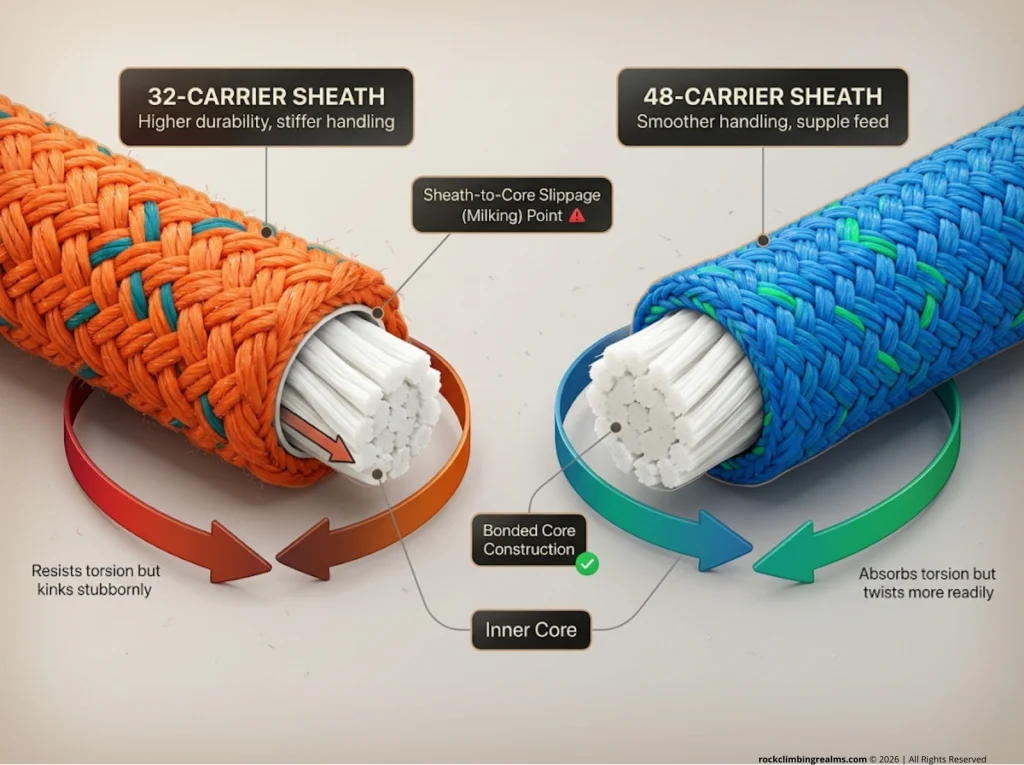
There’s a second failure mode that competitors never explain: sheath-to-core slippage, or milking. When the sheath slides longitudinally over the core, the rope develops permanent dead spots at the ends. The UIAA 110 sheath slippage standard sets the threshold at 1% — ropes that exceed it are significantly more prone to terminal pigtails. Bonded-core technologies from Sterling (CXP), Edelrid (Thermo Shield), and Teufelberger (Platinum) mechanically or thermally fuse core to sheath, preventing this entirely. If your rope develops consistent pigtails at the very ends, milking is the first thing to suspect.
Mechanical Memory — How the Polyamide “Learns” Twists
Nylon fibers undergo structural changes over time under load. Under heat — from a fast, high-friction rappel or prolonged sun exposure — that change accelerates into something permanent. Glazed sheath fibers (melted from friction heat) have stiffened mechanical memory that no amount of flaking will remove. Run the rope through your hands during every flake. A glazed section feels hard and slick simultaneously, with no fiber texture under your fingers. That’s your cue to measure fall exposure and start planning for a new rope.
Carrier Count and Sheath Construction — Reading Your Rope’s Character
When a manufacturer claims “kink resistance,” they almost always mean low sheath slippage — not carrier count. Verify it by checking UIAA 110 compliance on the spec sheet, not the marketing copy. A 48-carrier rope with excellent bonded construction will handle better than a 32-carrier rope with poor sheath-to-core synchronization on every device.
The Factory Problem — How Your New Rope Arrives Pre-Twisted
A traditionally hank-coiled rope introduces one full twist for every loop when pulled straight from the packaging. For a 60m rope, that’s dozens of twists before you’ve even touched the rock. Petzl’s ClimbReady and Mammut’s LapCoil packaging solve this with alternating loop construction so the rope ships without any built-in twists. The catch: if you apply the forearm-roll uncoiling method to a ClimbReady rope, you actively introduce the twists it was designed to prevent. Check the packaging before you pull.
Pro-Tip: Open the packaging and look at the end loop before you uncoil. If it’s figure-8-shaped or shows alternating loops without a consistent spiral, you have a Climb-Ready rope. Treat it differently from day one.
The First Flake — Deploying a New Rope Without Breaking It

The first time you pull a new rope out deserves as much care as your first lead. You’re setting its baseline handling character for the next few years.
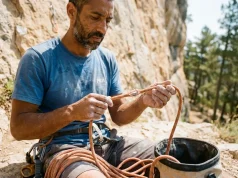
For a traditional hank-coiled rope, the two-person barrel-roll method is mandatory — it’s the only way that unspools rather than uncoils. The holder inserts both forearms into the center of the coil, fists in opposing directions, applying outward pressure to keep the oval shape. Then a controlled forward barrel roll lets rope spill forward while the partner pulls the exterior end — the top strand — slowly onto a clean tarp. If a single loop falls off the holder’s forearm, stop immediately. A spaghetti tangle from a dropped loop can take an hour to clear, and you’ll be dragging the sheath across gravel the whole time. That abrasion happens on day one.
For Climb-Ready packaged ropes, skip the forearm roll entirely. Open the packaging at the marked top end and pull directly into a rope bag. The alternating-loop construction means it’s already twist-free. Fighting it with the barrel roll reverses that.
This is also when you do your first tactile inspection. The UIAA Standard 101 rope inspection and retirement recommendations call for inspection after every use — your first flake is your fault-free baseline. Anything new that shows up after this is field damage. Run the full length through both hands at walking pace on a clean tarp, feeling for core softness (that spongy loss of rebound that signals internal damage), flat spots, and stiff sections. Before understanding the rope system you’ve just purchased — single, half, or twin, you need to know exactly what condition it arrived in.
Pro-Tip: Do the first tactile inspection in good light on a clean tarp. What you find on deployment day is your fault-free baseline. Anything new that appears later is field damage — and now you can prove it.
Two-Person Barrel-Roll Protocol (Traditional Hank)
Holder position: both forearms inside the coil center, fists opposed, pressure outward. Motion: controlled forward barrel roll. Partner’s job: slow steady pull on the exterior end only — never faster than the rope falls naturally. If it tangles, stop and lay the affected section flat. Rushing this to save 10 minutes costs 90 minutes of untangling plus sheath abrasion from dragging across rough ground.
Climb-Ready / Lap-Coil Deployment
Open at the marked top end. Pull directly into a rope bag — no forearm contact needed. Even on first use, hand-over-hand feed into the bag works better than dumping the whole package at once.
The First Tactile Inspection
Three signals to find: core softness (squeeze and feel whether rebound drops noticeably), flat spots or localized stiffness (often from torsional fatigue in high-use sections), and glazing (smooth, nearly slick sheath with no fiber texture). Flag anomalies with a strip of tape at the meter mark. Document it. This is your baseline.
The Crag Flake — Ground-Level Protocol for Lead Belaying
Here’s the thing guides know that most climbers don’t: neatness is your enemy.
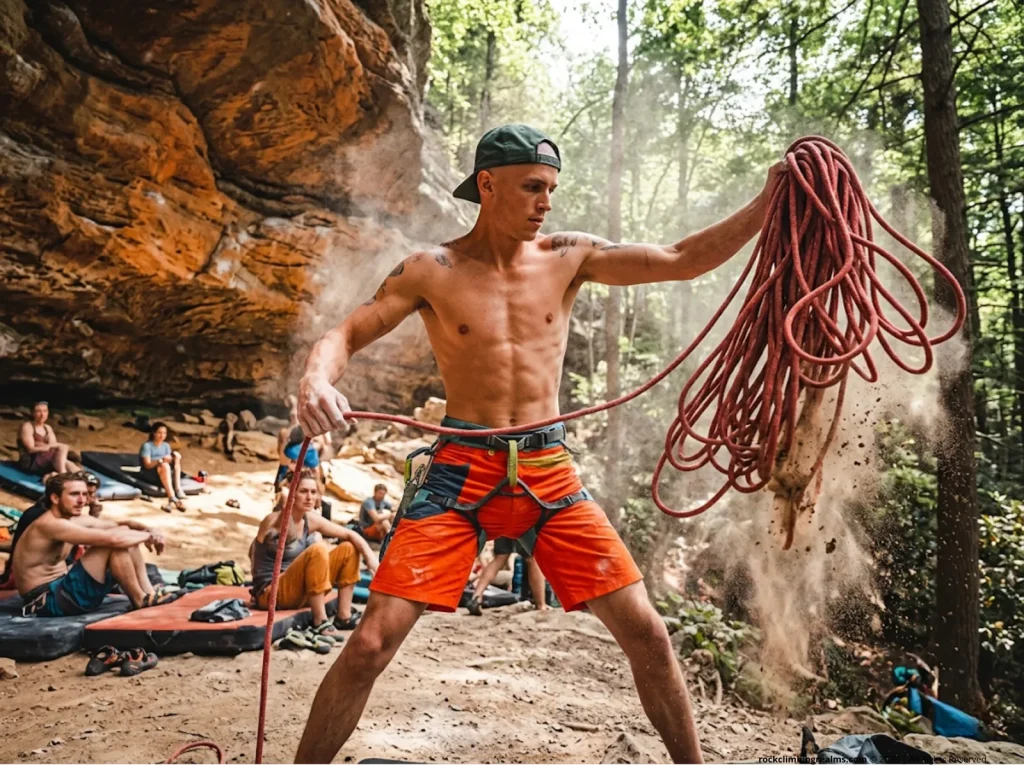
Every instinct you have says to make a tidy stack. Resist it. A neat circular pile re-introduces the circular memory that causes pigtailing in the first place. The random pile method works because stacking it without a repeating shape prevents the cross-loops that grab each other. Order is deadweight here.
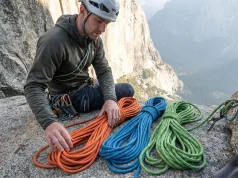
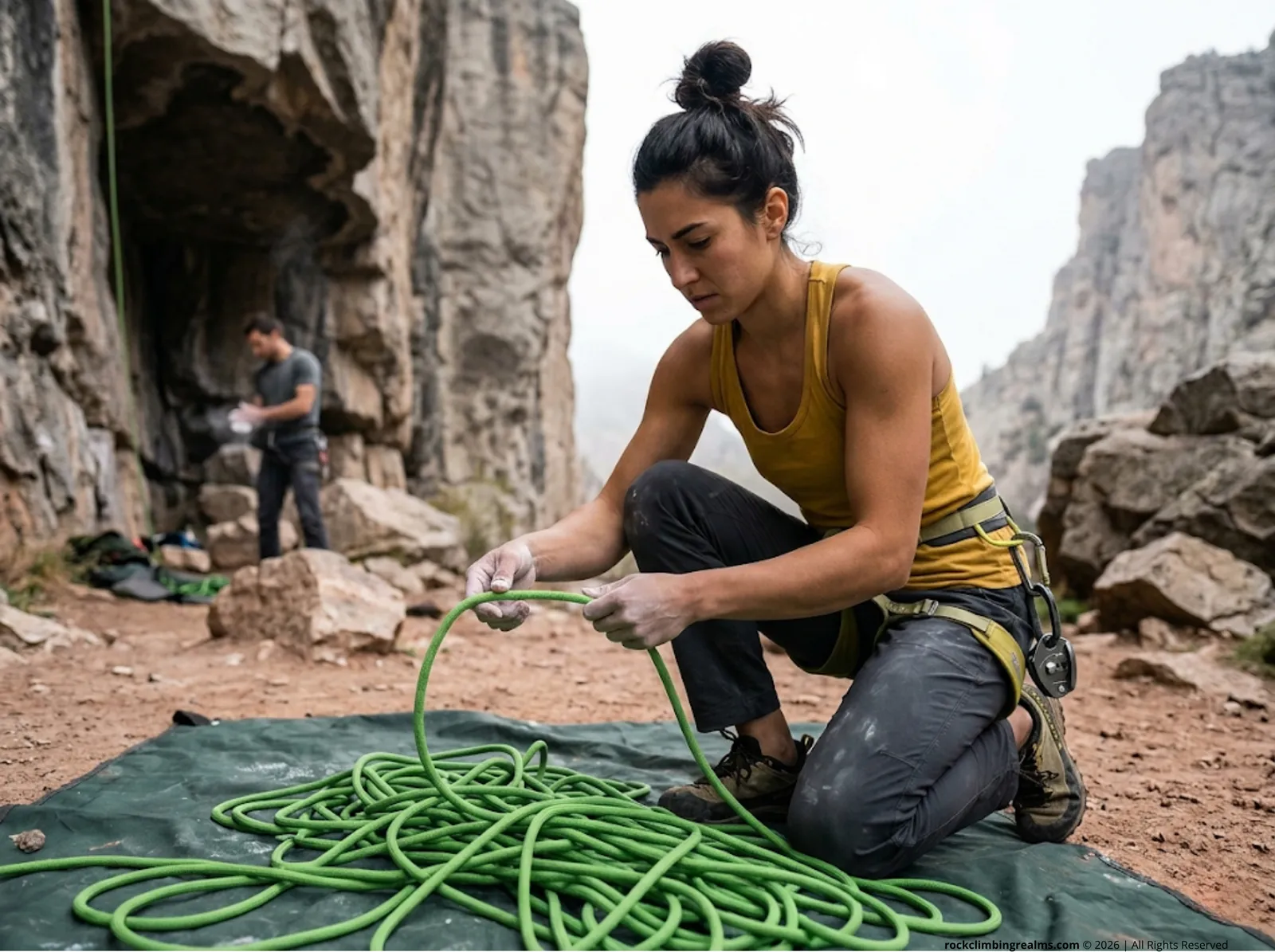
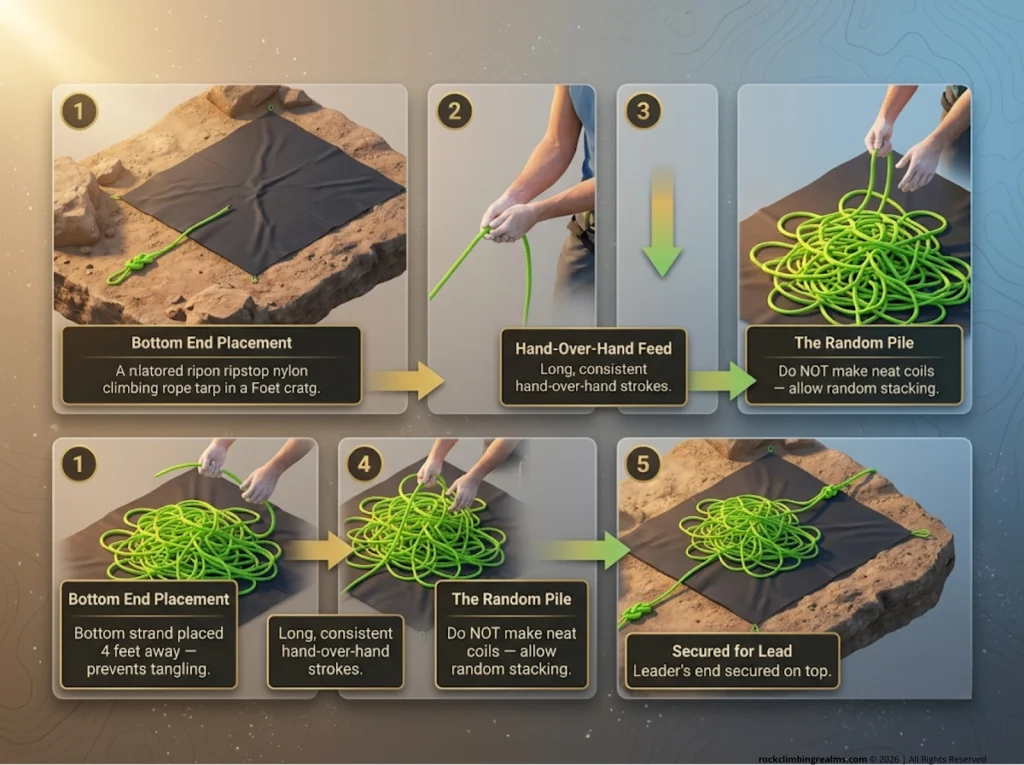
The method for the crag flake takes practice. Place the bottom strand — the end not tied to the leader — at least 4 feet away from where you’re building the pile. That physical separation prevents the bottom end from getting pulled into the pile as you feed. Then feed hand-over-hand in long, consistent strokes, letting the rope fall naturally. Don’t place it in coils. Don’t try to distribute it evenly. Let it fall where it falls. The top strand surfaces naturally and gets tied into the leader’s harness or secured to the rope bag. The pile should look wrong to a tidy person. That’s exactly how you want it.
A rope tarp is mandatory. It protects the sheath, keeps the pile clean, and signals to everyone at the crag that your system is sorted out. A wet parking lot is not an acceptable substitute — abrasive grit embeds in the sheath on contact.
Pro-Tip: This 10-second hanging test is what field pros use instead of spending 20 minutes double-flaking a rope that only needed one pass: hang 3 meters free from a high point and watch. A neutral rope hangs straight. A rope with stored torsion forms a visible pigtail under its own weight. The direction it spirals tells you which way your hardware or anchor is twisting it.
Understanding how different belay devices interact with torsionally compromised ropes should happen next — because a GriGri handles a kinked rope very differently from an ATC.
The Random Pile — Step by Step
Bottom end 4 feet from the pile zone. Hand-over-hand in long strokes. Let the rope fall — don’t place it. Keep the pile loose. Top end surfaces and goes to the leader. Resist every instinct to make it look clean.
The Double-Flake Protocol
When to use it: the rope shows visible corkscrew twists even after a standard single flake. Step 1 — feed the entire rope top-to-bottom into a pile. Step 2 — grab the entire pile and flip it, so the original bottom end is now on top. Step 3 — feed the rope back into a new pile. Reversing the pile allows the twists that pushed into the pile in one direction to unwind through the newly exposed free end during the second pass. For extreme cases, running the rope through an ATC at a high-point carabiner forces twists toward the trailing end — this works best when stretched across a long flat surface like a grassy field.
When a double-flake still shows pigtails after two passes, the problem sits at your anchor gear, not your flaking technique.
Anchor Geometry and Hardware — Why Your Setup Creates Pigtails
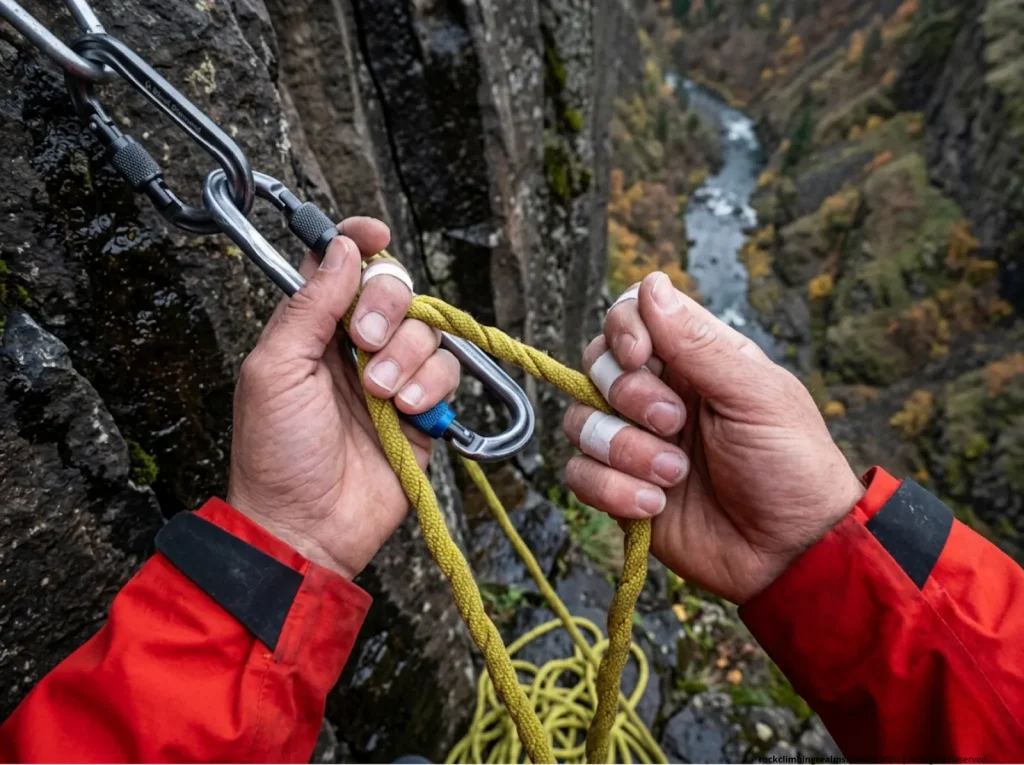
Your wide top-rope anchor isn’t just a gear issue — it actively damages the rope.
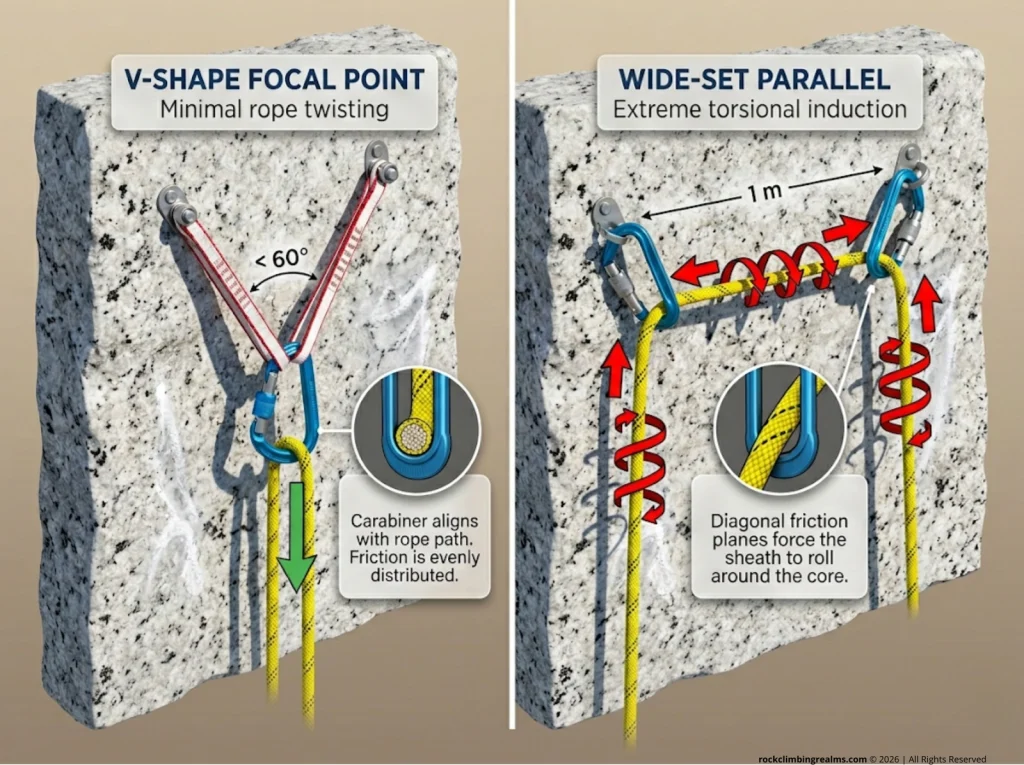
When a rope travels through two anchors equalized to a single focal point (a V-shape), the hardware sits flat to the rope’s path. Minimum twist. When anchors are spread wide apart — forcing the rope to travel up, over, and down — the rope crosses hardware edges under uneven friction, and the sheath rolls around the core. That rolling is your pigtail. Anchor equalization principles that also govern torsional loading cover the safety and the rope-health sides of this problem at the same time.
Rope-grooved carabiners need to go in the trash immediately. The groove doesn’t just cause extreme pigtailing — it’s a structural indicator of metal fatigue. If you can feel a ridge with a fingernail in the contact zone, that carabiner is rubbing the rope unevenly on every pass.
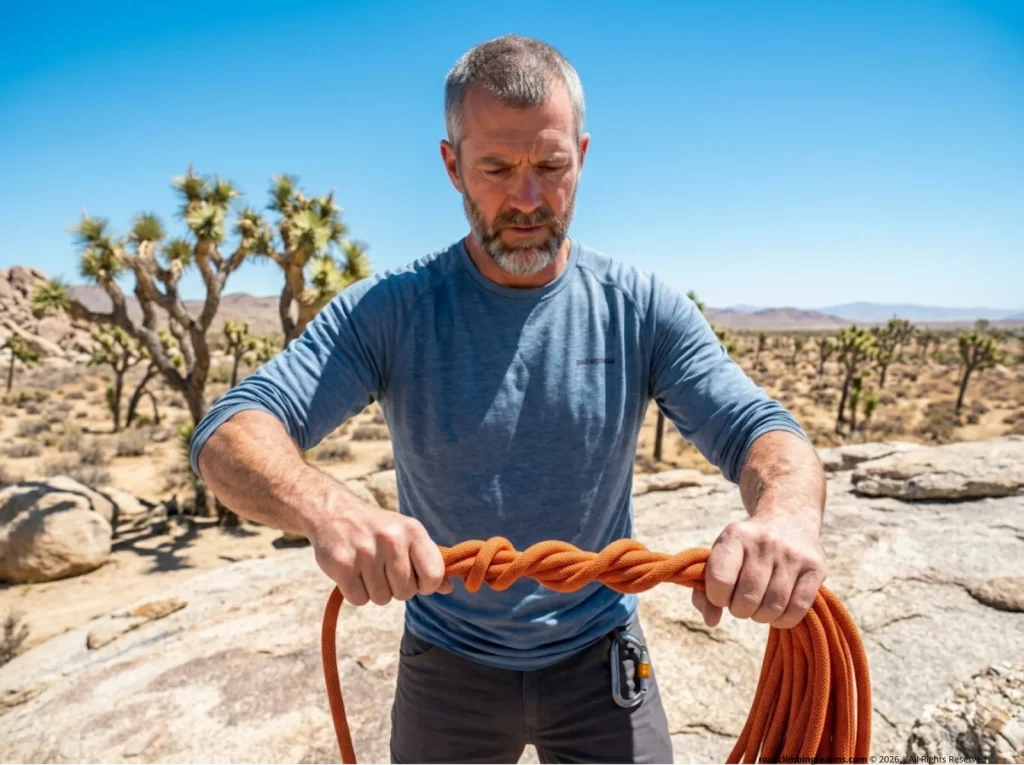
The Munter hitch and Figure-8 descender twist the life out of ropes. Both redirect the rope across angles that aren’t lined up with the rope’s travel path. If you’re using a Munter for emergency descents, alternating left-handed and right-handed Munter setups on subsequent descents can balance out the twists — hard to remember under stress, but worth knowing if you guide regularly.
The V-Shape vs. Wide-Set Anchor Problem
V-shape focal point means hardware stays flat to the rope path, which means minimal twisting. Wide-set parallel strands mean the rope rubs hard across hardware edges, which causes heavy twisting. Switch to a focal-point setup and you’ll spend less time flaking and more time climbing. Keep your anchor spread below 60 degrees — even a correctly equalized V twists the rope at very high angles.
Belay Device Geometry and the GriGri Slip Problem
Testing at Weber State University checked this directly. On new, dry ropes — the most prone to initial pigtailing — the GriGri has a median slip of 108.5 cm without a redirect carabiner. With a redirect, that drops to 65.5 cm, well inside the 100 cm safety threshold. A pigtailed rope prevents the cam from seating correctly in the camming groove, compounding the slip completely. The fix is a redirect carabiner at the master point.
Never hold the GriGri open to bypass a kinked rope. The kink preventing the cam from engaging may also prevent it from grabbing if you fall. That’s the single highest-risk mistake you can make in this system.
Hardware Retirement Criteria for Torsion-Causing Gear
Groove depth doesn’t have to be visible to cause twisting — if you feel a ridge with a fingernail where the rope runs, chuck the carabiner. Check belay carabiner contact surfaces after every 20 rappels or Munter descents.
Lap Coiling — Vertical Rope Management for Multi-Pitch
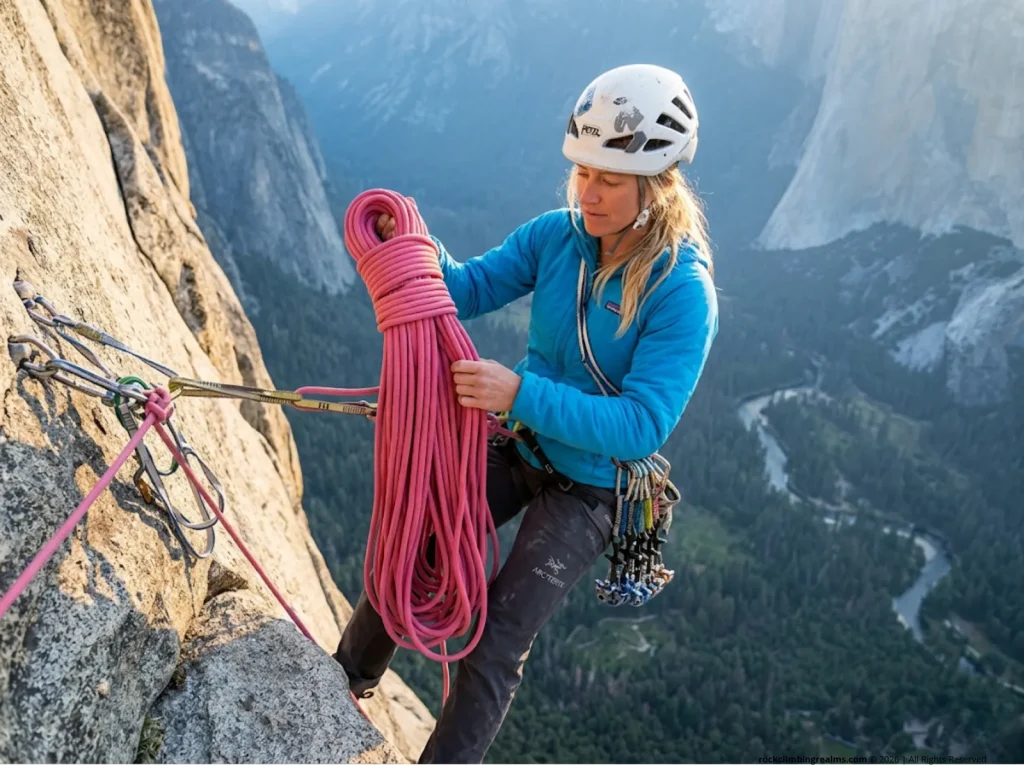
At 600 feet on a Yosemite wall, a messed up lap coil doesn’t just slow the team down. It can jam the rope when you need it most. Getting the coil order right is mandatory off the ground.
The lap coil is the primary rope management system when both feet leave the dirt. Unlike ground flaking, it requires deliberate coil sizing to make sure it feeds off in the right order. The logic feels backwards until you work it out: the coil that the rope will exit first must sit on top.
For swinging leads — where your partner leads the next pitch — start with long coils and make them shorter as you go. Shorter coils on top, longer coils below. They feed off the stack cleanly without pulling the next coil up too early. For block leading — where the current leader takes the next pitch too — start with small coils and work up to large ones. When the leader hits the anchor, the entire bundle gets flipped with the Pancake Flip to bring the leader’s end back to the top.
How lap coiling fits into the broader alpine rope management decision framework covers the full strategy — including the Alpine Torpedo method for high wind and slip-knot clipping for jagged stances that eat ropes.
The AMGA and American Alpine Club recommend hanging lap coils from a dedicated large locking carabiner on the anchor or a sling, not draped over the belayer’s lap. A rope draped over a belayer’s knee shifts the harness belay loop 3-5 degrees when weighted. Over a 200-foot pitch, that angle creates a noticeable friction spike in the belay device.
Long-to-Short vs. Short-to-Long — The Coil Sizing Decision
Swinging leads: long coils first, short on top. Block leading: short coils first, long on top. The rule: the coil that leaves first stays on top. Before the leader starts, pull the top coil and confirm it flows without pulling the stack under it. If the next coil lifts, reorder the stack before anyone climbs.
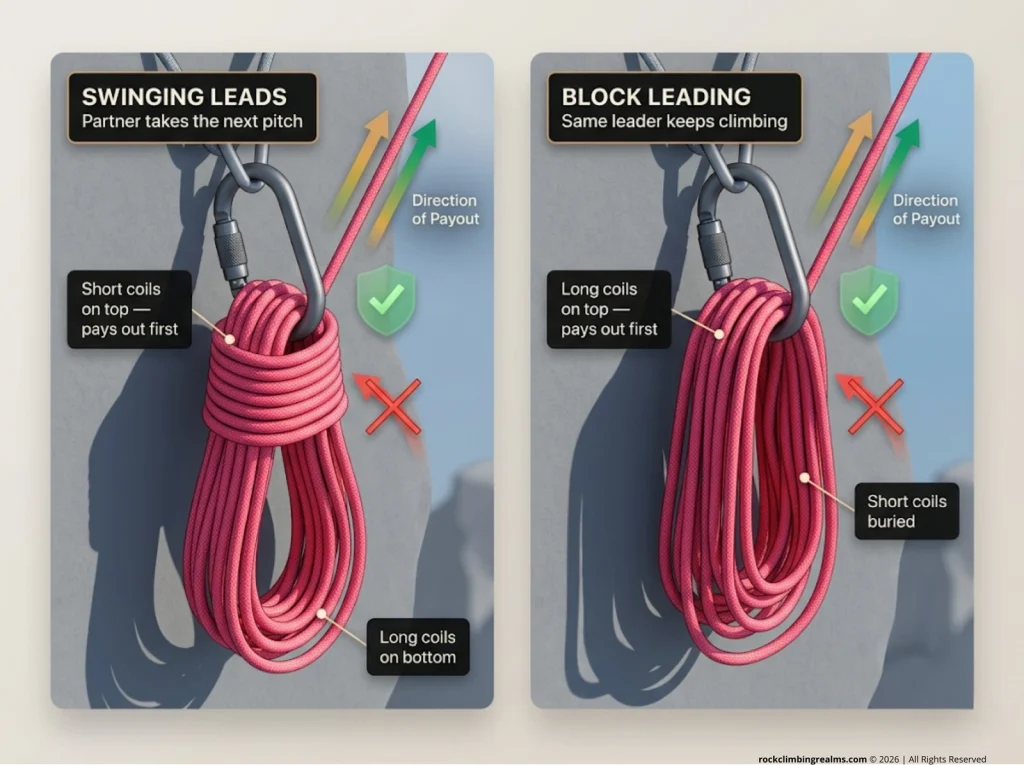
The Pancake Flip — Reorienting for Block Leading
Once the leader clips in at the new anchor, grab the entire bundle, lift, and flip the mass onto the partner’s tether — bringing the leader’s end to the top. Keep the bundle tight. Don’t call off belay until you see the leader’s end sitting on top of the pile. Practice this on the ground before you hang off a ledge. It’s much harder in a harness under load than it looks.
AMGA-Recommended Anchor Decluttering Techniques
Hang coils from a dedicated large locking carabiner or a sling extension put where the rope feeds naturally without making the belayer shift around. On loose or jagged climbs, tie slip-knots every 10 meters and clip each to the anchor to stop the loops from getting caught on rock below you.
Rope Maintenance — Cleaning, Storage, and the Tactile Inspection Protocol
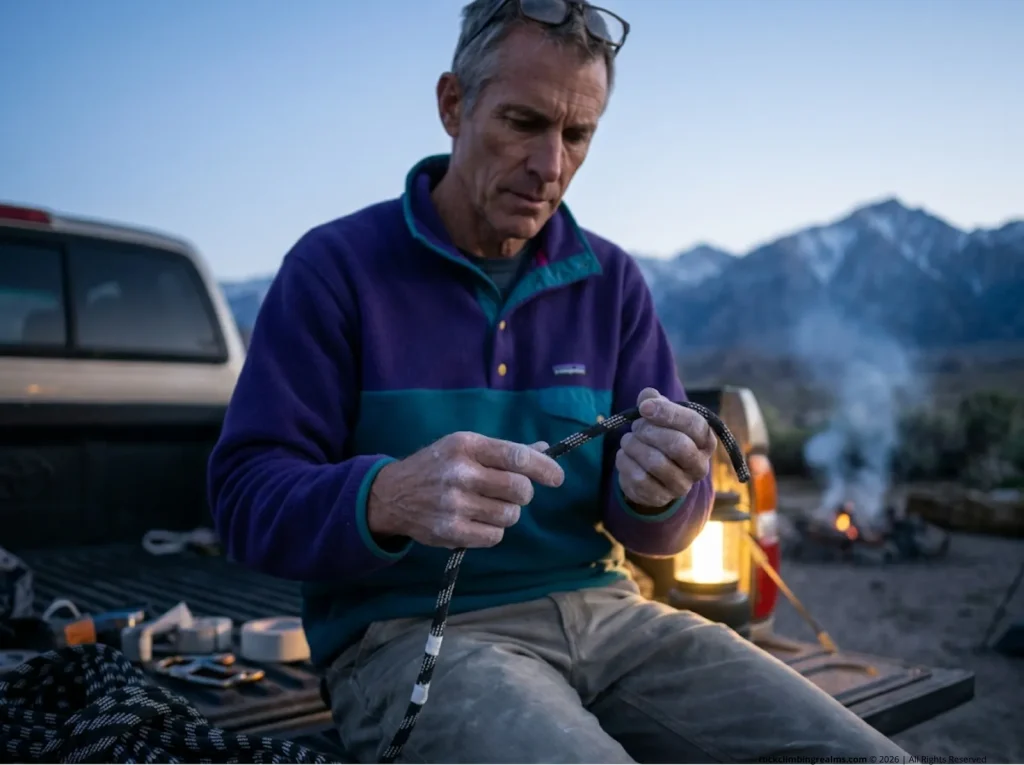
I’ve thrown out ropes that looked brand new. The sheath is just marketing. The core tells the truth.
Dirt and grit don’t just sit on the surface. They push into the sheath and grind against the core filaments, locking the fibers into a twisted shape that flaking can’t fix. A dirty rope twists more. A grit-filled rope develops permanent flat spots that refuse to handle correctly.
Wash with warm water under 40°C and a neutral soap — natural soap flakes do the job well. Never hit a rope with a high-pressure washer. It blasts sand deeper into the core than the rope would ever see on the wall. Follow the science-backed method for washing and drying your rope without damaging the core for the exact protocol. Skip detergents with optical brighteners — they strip protective oils and speed up UV breakdown. Always air dry flat in the shade; never above a heat vent, never in direct sun, never spin-dried.
Sunlight breaks down nylon. A rope sitting in direct sun for months loses its stretch — those falls will hit a lot harder even if the outside looks fine.
For long-term storage, use the butterfly coil method for approach carries and long-term storage or leave it loose in a rope bag. Tight, small coils bake mechanical memory into the nylon and cut the functional lifespan short. Never hang a rope on a single hook — the localized pressure creates a dead spot right there.
The UIAA Standard 101 inspection and retirement protocol says to pull a rope based on core softness — not just visible sheath wear. A sheath that looks flawless can be hiding a core that feels like a tube of sand.
The Tactile Inspection Protocol — Running the Entire Rope
Do this during every flake, not just on designated gear-check days. Run the rope at walking pace with both hands in light contact. You’re looking for three things: core softness (rebound drops when you squeeze), flat spots or stiff sections (usually near the ends where you tie in), and glazing (smooth, slick spots). Write down the meter mark of anything you flag. Glazed patches can’t be washed out — heat has locked the nylon permanently.
Pro-Tip: Use chalk on your hands during the inspection. A glazed section feels noticeably different from a clean sheath section even before you see it — the drag changes under your hand. You’ll feel the problem before you spot it.
Cleaning Without Destroying the Core
Warm water, neutral soap, 20-30 minute soak, light agitation, full rinse. Leftover soap speeds up UV damage. Rinsing completely isn’t optional. Store it dry. Never put it away damp.
Storage Protocols That Preserve Torsional Neutrality
Butterfly coil for long-term storage — it balances the tension and stops circular memory. Rope bag for hauling. Temperature counts: storing above 30°C ages the nylon fast. Keep it below 25°C and low humidity.
Conclusion
Three things to take to the crag:
Twisting is physics, not bad luck. Every pigtail has a mechanical source — the factory coil, the anchor angles, or a worn out carabiner. Find the source, fix the system, and the rope starts working again.
Flaking is part of the climb. A random pile always feeds better than a clean stack. The double-flake setup and ATC twist-purging fix the bad cases that one pass misses.
Maintenance adds up over the rope’s life. A dirty flake, a tight storage coil, and a high-pressure wash drive internal damage that makes pigtails permanent and ruins the stretch when you need it to catch a fall.
Pull your rope out before your next trip and run the hanging test. Hang 3 meters free and watch it. What it does in those 10 seconds tells you exactly what the rope needs before you leave the ground.
Now go send something.
FAQ
What is the difference between flaking and coiling a rope?
Flaking preps a rope for immediate lead climbing — the goal is a random, twist-free pile that runs through the belay device without a snag. Coiling (like a butterfly coil) preps a rope for transport and storage — compact, ready to wear like a backpack, and tangle-free. Flaking is for performance. Coiling is for logistics.
Why does my climbing rope keep kinking?
Rope kinking is stored-up torsional energy coming from three places: incorrect uncoiling (which puts one twist per loop inside a factory hank), anchor geometry dragging the rope unevenly during a lower, and belay devices like the Munter hitch twisting the rope over bad angles. Track down the source in your setup and fix the cause, not just the symptom.
How do you uncoil a new rope for the first time?
For a standard factory hank, get a partner for the barrel roll: holder puts forearms inside the coil facing opposite directions, and rolls it forward while the partner pulls the outside end onto a tarp. For ClimbReady or LapCoil packaging, open the top end and pull it right into the rope bag. Do not forearm-roll these ropes — it just puts twists into a rope that shipped neutral.
Can you flake a rope into a bag?
Yes — and it is better than a tarp in wet or abrasive dirt. The inside of the bag gives you a clean surface for the random pile method, and you can tie the leader’s end to the bag’s loop to keep it on top. Same rule applies: no neat coils, use long hand-over-hand strokes, and let it fall.
How often should I inspect my climbing rope during flaking?
Every single time you flake it. Running the rope hand-over-hand during normal setup gives you immediate feedback on core softness, flat spots, or glazed nylon that you can not spot by just looking. UIAA Standard 101 recommends checking after every use — the flake handles this without wasting time.
Safety Notice: Rock climbing and mountaineering are inherently high-risk
activities that can involve physical trauma or fatal incidents. The information on Rock Climbing Realms is for
educational and informational purposes only. Techniques and advice presented here are not a substitute
for professional, hands-on instruction. Conditions and risks vary by location. Always seek guidance
from a qualified instructor before attempting new techniques. By using this website, you agree that you
are solely responsible for your own safety. Any reliance you place on this information is strictly
at your own risk, and you assume all liability for your actions. Rock Climbing Realms and its authors
will not be held liable for any harm, damage, or loss sustained in connection with the use of this information.
Affiliate Disclosure: We are a participant in the Amazon Services LLC Associates Program, an
affiliate advertising program designed to provide a means for us to earn advertising fees by advertising and linking
to Amazon.com. As an Amazon Associate, we earn from qualifying purchases. We are also an official affiliate partner
of Black Diamond Equipment via the AvantLink network. If you click on a Black Diamond affiliate link and make a
purchase, we may earn a commission at no additional cost to you. We also participate in other affiliate programs.
Additional terms are found in the terms of service.