
In this article
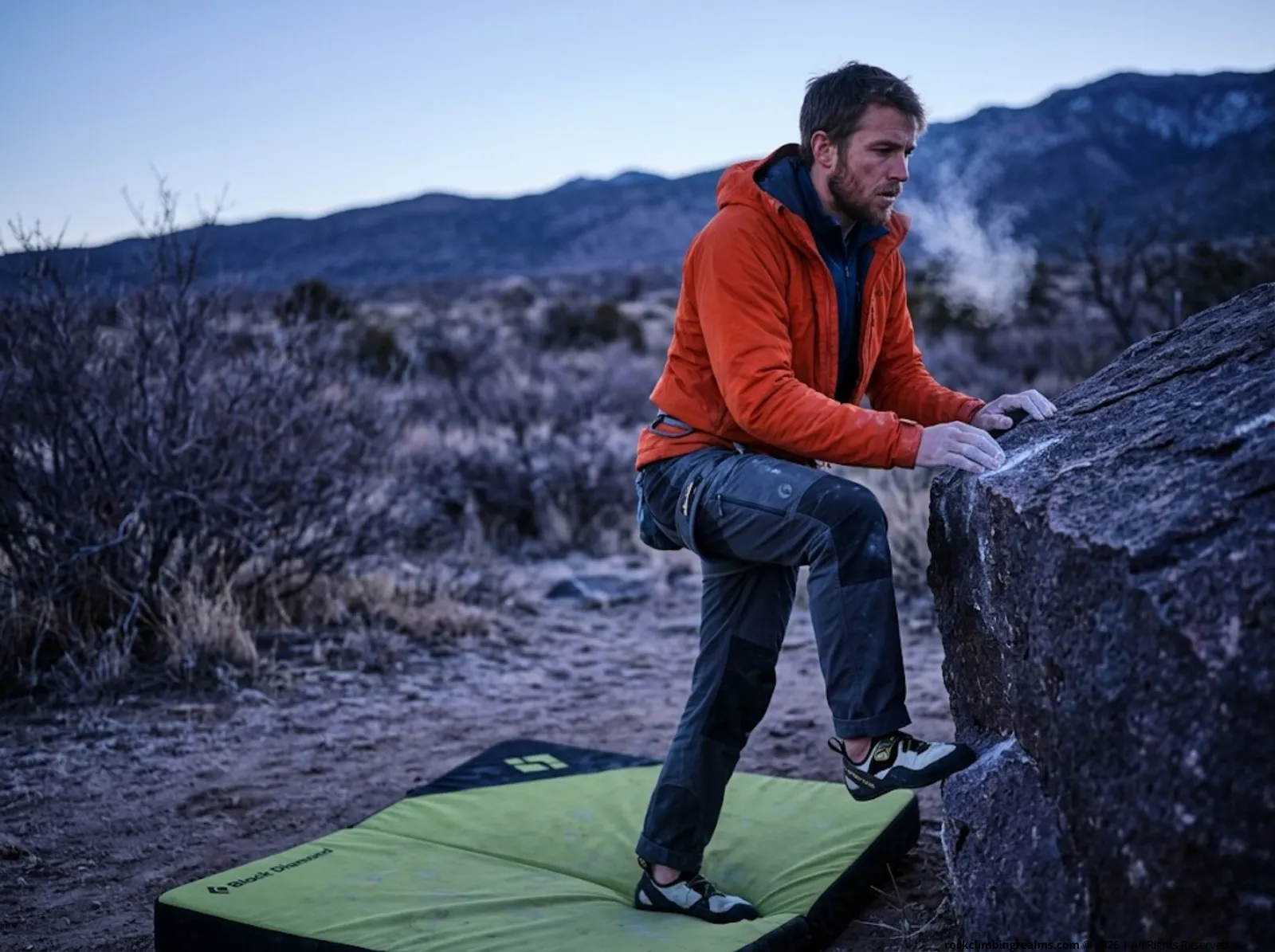
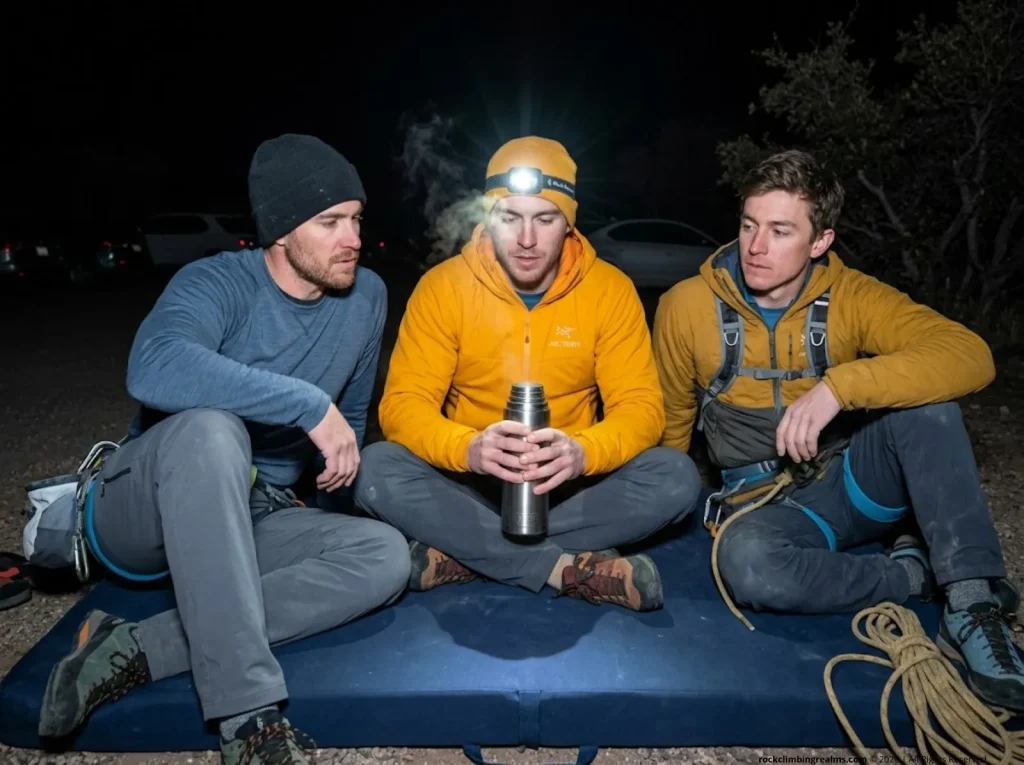
It starts at 4:00 AM in the high Texas desert. The thermometer reads 28°F. You’re in a line of cars at the Hueco Tanks State Park gate, engine off to save gas, gulping coffee from a thermos, hoping ten people don’t show up so you can claim a walk-in pass. This isn’t just a climbing trip. It’s a logistical operation.
After watching so many climbers get frustrated on their trips here, I’m going to tell you what nobody wants to hear: Hueco does not forgive improvisation. The rugged syenite porphyry demands extreme cold to get that unreal friction, but park policies force you to predict your life ninety days in advance. I’ve spent enough mornings freezing in that line to know that finger strength means nothing if the park locks you out.
Most of what you hear about this place is just rumors. Here is the beta that actually works, based on how the rock reacts to temperature and the practical realities of access. This is how you play the winter game in El Paso.
⚡ Quick Answer: To send hard at Hueco Tanks in winter, you need to plan your North Mountain reservations exactly 90 days in advance or join the daily gate line at 4:00 AM. Dry desert cold (under 40°F) is mandatory for your shoes and skin to stick to the porous syenite. If it rains more than 0.10 inches, the park closes completely, so always have New Mexico alternatives ready in your bouldering plan.
The Geology & Physics of Syenite Friction in Winter
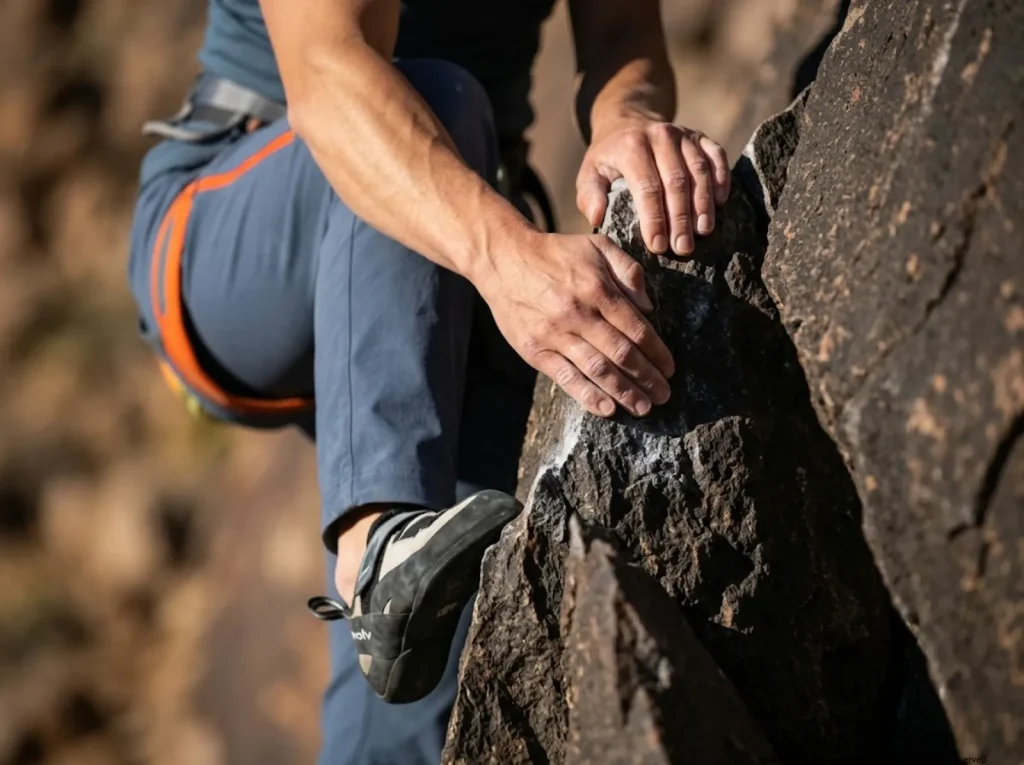
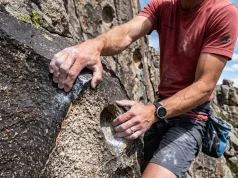
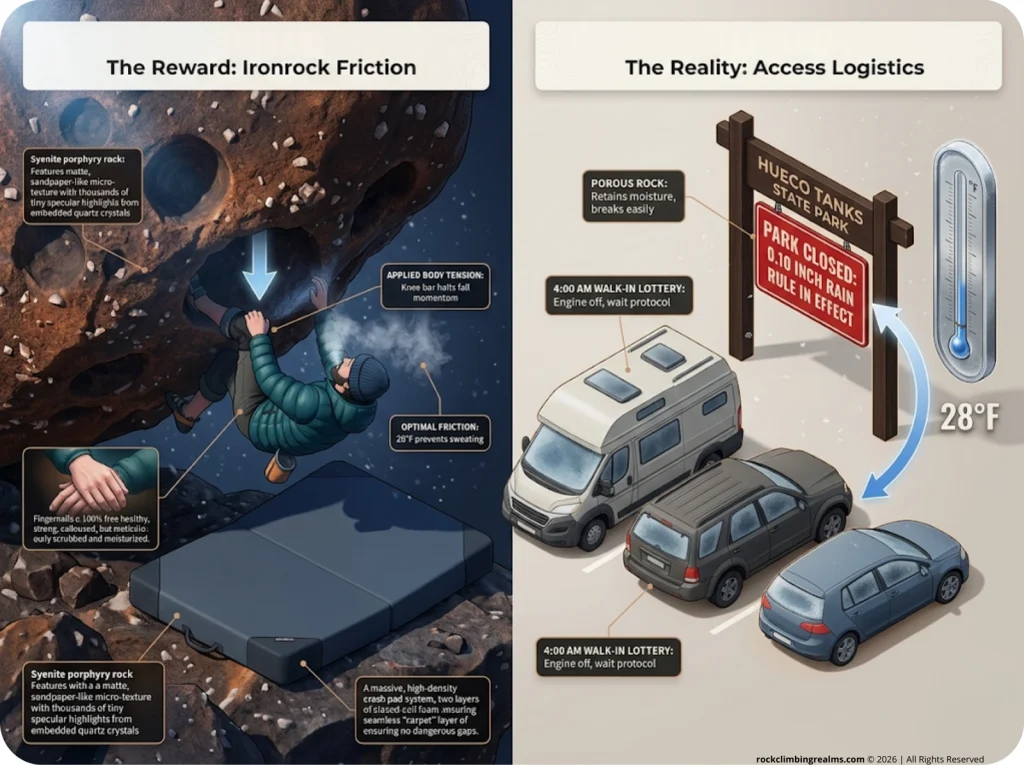
Winter is the only window where you can seriously project the big V-scale classics here. Hueco rock, also known as ironrock, is full of crystals and massive round holes (the famous huecos). How well you stick to this wall depends directly on how the temperatures react.
Understanding the basics of different climbing rock types is what separates a novice from someone who truly knows how to maximize a sector. Your shoes’ high-friction rubber is designed to harden and bite better when the rock is cold. If the temperature rises too much, the rubber turns into “chewing gum” and you grease off the holds.
That is exactly why chasing sending temps is an obsession. But the true advantage of the November–March season isn’t just the cold; it’s the intense diurnal temperature swings. When the sun goes down, the temperature plummets, deep-chilling the rock to offer optimal friction through the morning. Additionally, the dryness keeps your hands from sweating freely.
Why Cold Air Maximizes Adhesion
Nighttime temperature drops in El Paso keep the rock cold even after the sun comes up. You have a window of only a few morning hours before direct sun exposure softens your rubber. You have to move fast and try hard early.
The Porosity Problem: The 0.10″ Rain Rule
Unlike solid granite, the rock in this desert is porous. It retains moisture inside even if the surface looks dry. If you hang your full weight on a damp crimp, you can permanently break the rock.
This is why agencies like Texas Parks and Wildlife (officially TPWD) strictly enforce the 0.10″ rain closure rule. The policy dictates a 24-hour closure following any precipitation of that magnitude. Breaking holds changes the original difficulty and irreversibly ruins classic problems.
Wind Chill vs. Sun Exposure: Chasing Shade
During cold fronts, knowing the wind chill beta and micro-climate beta is the only thing that will keep you from freezing on the pads. You have to learn to find shelter in East-facing canyons to escape the freezing gusts of the West wind.
The 90-Day Reservation Trap & Access Logistics
Showing up without a plan is the fastest way to head back to your hotel frustrated. Access rules are there to limit human impact, and you won’t get around them just by being in a good mood. This is the reality of your destination exploration.
If you’re putting together a logistics checklist for this area, the Hueco Tanks access guide should be your bible. You need to set a literal 90-day alarm clock to snag passes. Using a reservation calendar tool is the only way to survive the inflexible 90-day reservation window.
Pro tip: Keep the park’s direct numbers in your favorites and make sure to redial continuously the second the reservation line opens on that 90th day.
North Mountain (Self-Guided) vs. Backcountry
The North Mountain area is the only self-guided sector. A few reservations can be made three months in advance; the rest are walk-in passes given out the same day. Those with reservations gain the freedom to roam without a guide.
If you don’t get in there, your only options are East Mountain, West Mountain, and the famous East Spur. These areas operate under strict guide requirements. You’ll need to coordinate access logistics to pay and schedule with services like Hueco Mountain Hut or Blue Lizard Climbing, or use specialized apps like Vcrux to look for last-minute openings.
The 4:00 AM Walk-In Lottery & 10:00 AM Release
Joining the infamous 4:00 AM gate lineup is a ritual that requires stomach. You must endure hours of waiting while following the wait at the gate protocol. After freezing in your car, you can only gamble on the hope that someone with a reservation doesn’t show up by 10:00 AM—the moment the park releases “no-show” spots to the rest of the line.
Rained-Out Alternatives
If the rain catches you, you’ll need to read old trip reports of nearby dry zones to adjust your winter travel. Driving a couple of hours toward smaller crags in New Mexico will allow you to stick to your winter bouldering plan instead of sitting in your rental crying.
Surviving the “Ironrock”: A 4-Week Skin Protocol
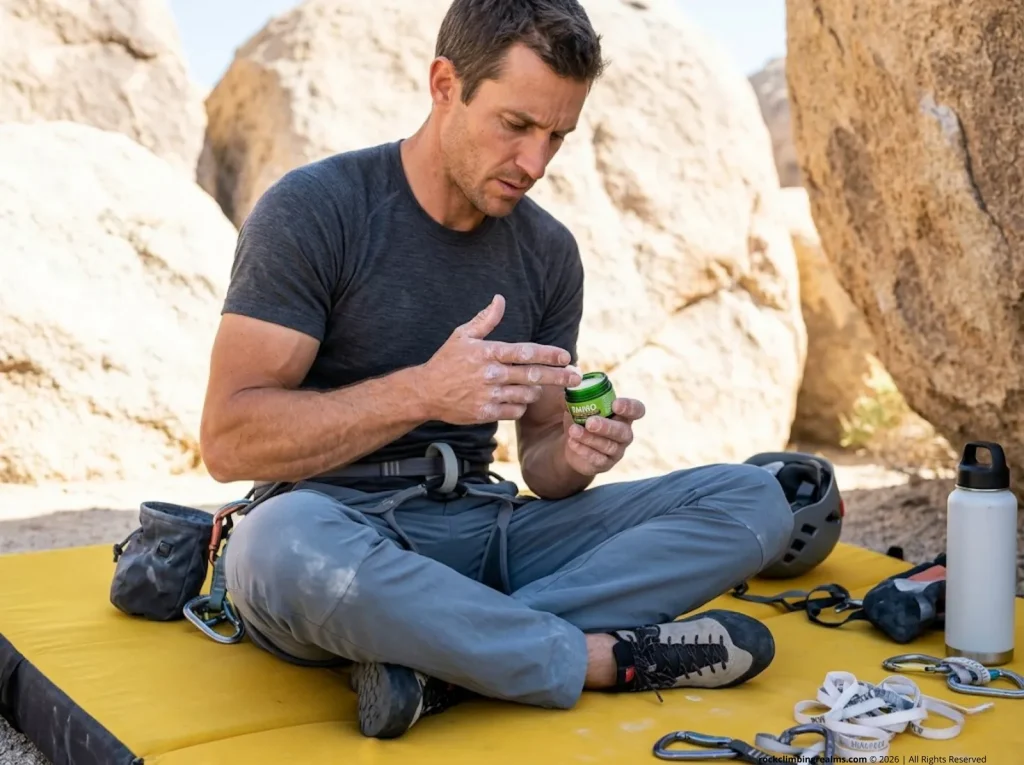
The sharp edges of Hueco will shred the thin skin you bring from the commercial gym. You have to implement a relentless skin management regimen every single day.
I recommend applying specialized skin balms and following a structured skin periodization—similar to the protocols for climbing skin tear care—in the weeks of training leading up to your trip. This will truly prepare your hands for the biting contact of the quartz.
Hardening the Stratum Corneum Pre-Trip
Start using creams that dry out your tips a month before you arrive. Use a fine sandpaper daily to remove soft, dead skin; a thick, level layer handles the sharp pulls much better than a ragged callus.
Moisture Management During the Session
Wash the chalk off as soon as you finish pushing your limits each day. The drying agents in chalk destroy the little remaining flexibility in your hardened fingers, leading to deep splits if you don’t restore moisture to your skin immediately.
Nightly Repair Strategies
At night, apply thick salves to repair the fatigue your fingers and thumbs endured. Maintain good hydrating protection to block out the dry air of your New Mexico lodging, ensuring that by the next morning, any cracks haven’t worsened.
Pro tip: Cut the fingertips off old hygienic gloves, slather repair balm on your cracked tips, and sleep with these “caps” on. You won’t mess up your clothes, and your skin won’t dry out overnight.
Biomechanical Mastery of Horizontal Roofs
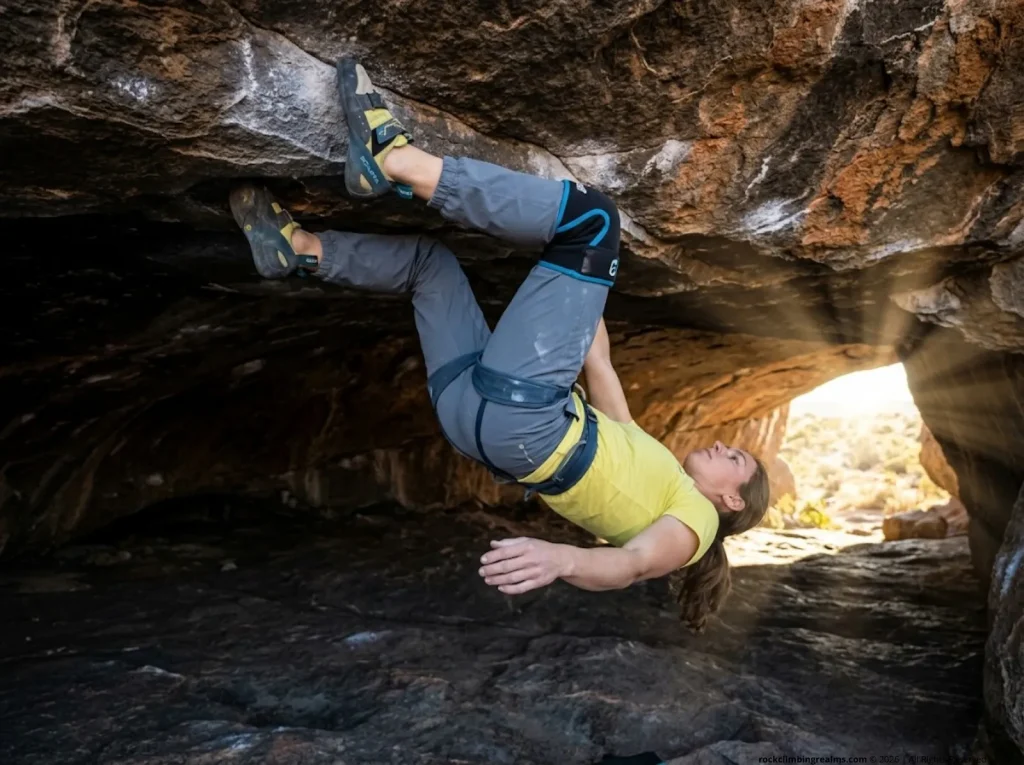
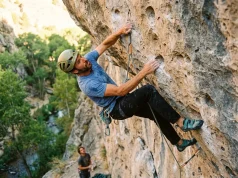
The routes under crushing roofs defined the aggressive spirit of this area. Figures like John “Vermin” Sherman, pioneers like Jason Kehl, or the technical slab work of Matt Wilder documented on the Kaya app (or in Power Company Climbing content) cemented their legacy on these demanding horizontal roofs. Climbing inverted requires a radical logic.
The main trick, according to methodologies on how to use asymmetrical holds and technical body tension, is to avoid swinging out. To survive these angles, you must generate applied tension by driving everything from your core down to your toes.
Applied Body Tension on “Surf Boards”
On protruding edges that cut into your hands and zero-degree inclines, using your core muscles stops wild oscillations. Keeping your hips close to the syenite will prevent unnecessary damage to your upper back when you suddenly pop off an overhang.
The Anatomy of a Perfect Knee Bar
Never underestimate the power of a good pair of knee pads. In huecos and steep roofs, locking your thigh hard against the rock completely halts the momentum of a fall, giving your hands critical rest in desperate moments.
Heel-Toe Cams and Core Engagement
Cam your entire arch and press through your base. This lateral contraction takes nearly a fifth of the raw work away from your arms, moving the load from your battered fingertips to the strong, intact parts of your legs.
Crash Pad Configurations for Rocky Landings
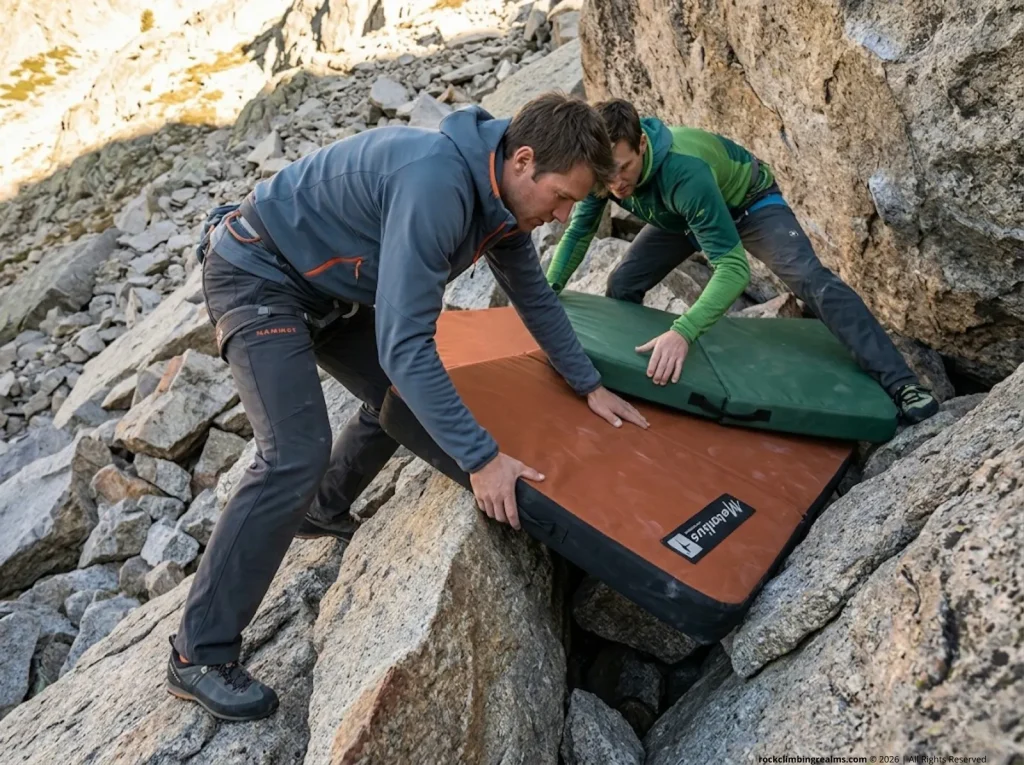
The severity of the terrain creates significant technical requirements for falling safely. You must know fundamental tricks for strategically arranging pads on treacherous ground to avoid snapping an ankle in the middle of nowhere.
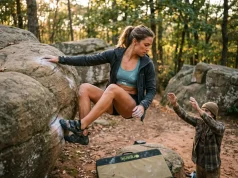
Managing desert bouldering logistics involves creating literal crash pad mountains. These structures are planned by overlapping thick pads on the bottom and covering gaps with a protective “carpet” layer on top to eliminate dangerous soft spots.
The “Pad Mountain” Strategy
Cover every point where you might fall, anticipating empty zones. Properly overlap the bases of your thickest pads; falling into a “seam” means your leg could hit a sharp edge hidden beneath the canvas.
Foam Density Requirements for Highballs
On exposed roofs, always use hyper-dense closed-cell foam for the bottom layer. If you use pads that are too soft, gravity will punch your weight right through the foam and into the rock, destroying heel bones and meniscuses.
Archaeological Stewardship: Protecting the Pictographs
Dozens of tribes left behind ancient, sacred, and highly sensitive representations hidden throughout these rocks.
You must strictly follow the vital and unchanging directives of desert climbing ethics—not just for fear of government penalties from institutions like the National Park Service, but to avoid damaging thousands of years of sacred history.
Pro tip: If your chalk dust blows and settles on boulders near indigenous art in low caves, dry-brush it very gently to remove it. Ignoring this will get the park permanently closed to all of us within months.
The Mask Pictographs & Chemical Fragility
Native American pigments hang precariously without protection. If you bring the natural oils and acidity of your sweaty hands too close, you can trigger a chain reaction that blurs the ink of an irreplaceable legacy.
Chalk Management and Fire Prohibitions
Fine chalk dust destroys the air quality of enclosed caves and alters the rock surface. Meanwhile, building fires spreads abrasive, toxic soot directly onto the pictographs. Respect the total prohibition on fires.
Biological Soil Crusts (Cryptobiotic Soil)
The thin, dark crust known as biological soil crust holds the desert ecosystem together by preventing wind erosion. Stepping on it pulverizes vital communities, leading to disastrous, irreparable loss that takes hundreds of years to recover.
Conclusion
Climbing in this exposed area will immensely reward only those who tolerate the rigid logistics of securing reservations months in advance and braving the freezing fronts. Meticulous skin care will keep you pulling on blocks every day without a premature, frustrating injury.
Master the physical mechanics first, and stay conscious of the environmental warnings. We all protect these millenary, indomitable rocks out of respect for their spiritual and historical value.
Set your schedule, toughen those hands, and pack your chalk. That is how you send solid amidst the heavy winter demands of South Texas—with strength, intelligence, and zero regrets.
FAQ
How thick should a crash pad be for Hueco Tanks?
Choose thick, high-quality pads of at least five inches for the top layer, adding supplements for landings with hostile, sharp relief. Irregular landings require robust bridges built across treacherous holes.
What type of rubber is best for syenite porphyry in winter?
Firm rubbers perform better when the rock is cold because they hold their shape on tiny, awkward edges better than the soft, smeary, asymmetrical shoes typically used in indoor gyms.
Can I climb at Hueco Tanks if it rained less than 0.10 inches?
Any hint of moisture instantly saturates the deceptive deep pores, softening the rock’s cohesion. I strongly advise against climbing on damp rock, as the hydraulic force will inevitably break historic and irreplaceable holds—classic lines that were left to us to overcome through talent and respect for this magical, legendary place.
Safety Notice: Rock climbing and mountaineering are inherently high-risk
activities that can involve physical trauma or fatal incidents. The information on Rock Climbing Realms is for
educational and informational purposes only. Techniques and advice presented here are not a substitute
for professional, hands-on instruction. Conditions and risks vary by location. Always seek guidance
from a qualified instructor before attempting new techniques. By using this website, you agree that you
are solely responsible for your own safety. Any reliance you place on this information is strictly
at your own risk, and you assume all liability for your actions. Rock Climbing Realms and its authors
will not be held liable for any harm, damage, or loss sustained in connection with the use of this information.
Affiliate Disclosure: We are a participant in the Amazon Services LLC Associates Program, an
affiliate advertising program designed to provide a means for us to earn advertising fees by advertising and linking
to Amazon.com. As an Amazon Associate, we earn from qualifying purchases. We are also an official affiliate partner
of Black Diamond Equipment via the AvantLink network. If you click on a Black Diamond affiliate link and make a
purchase, we may earn a commission at no additional cost to you. We also participate in other affiliate programs.
Additional terms are found in the terms of service.