
In this article
Aconcagua takes no rope, no rock skill, and no ice-climbing résumé. It is a walk-up, by the standard the climbing world uses. And it still sends roughly two of every three climbers home without a summit. That gap, between how simple the route sounds and how often strong people fail on it, is the whole story of this mountain. The honest version of an Aconcagua climbing guide is less about how to climb and more about why so many don’t, and what you can do about it before you ever book the flight to Mendoza.
What Aconcagua Really Is Before You Commit
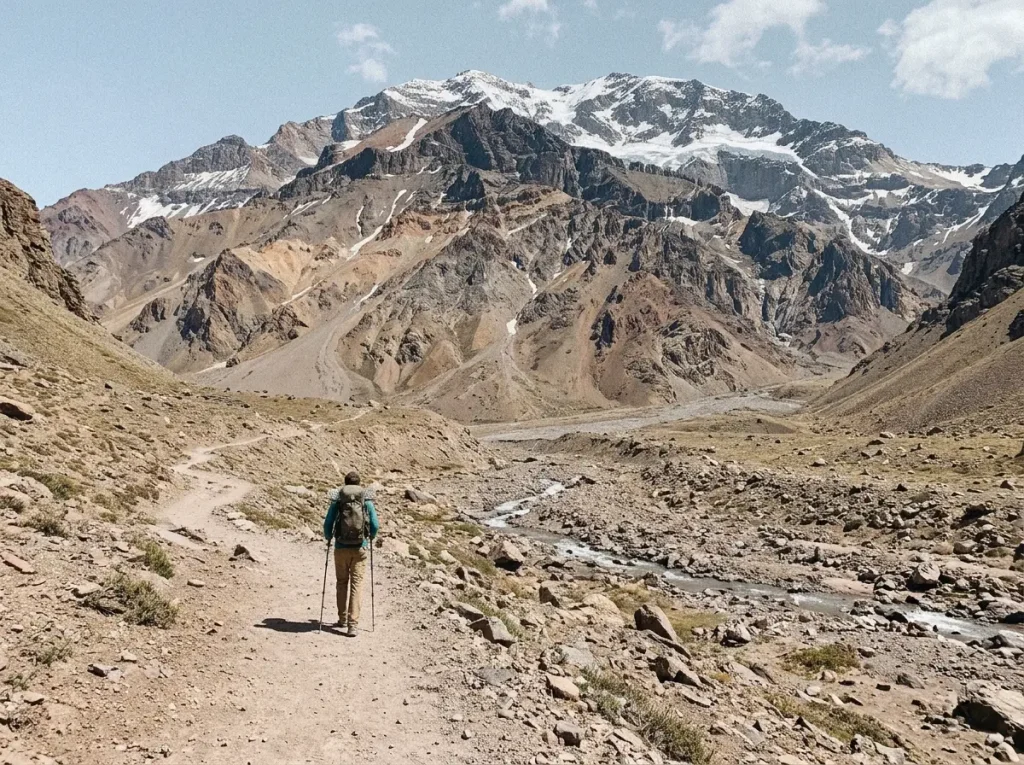
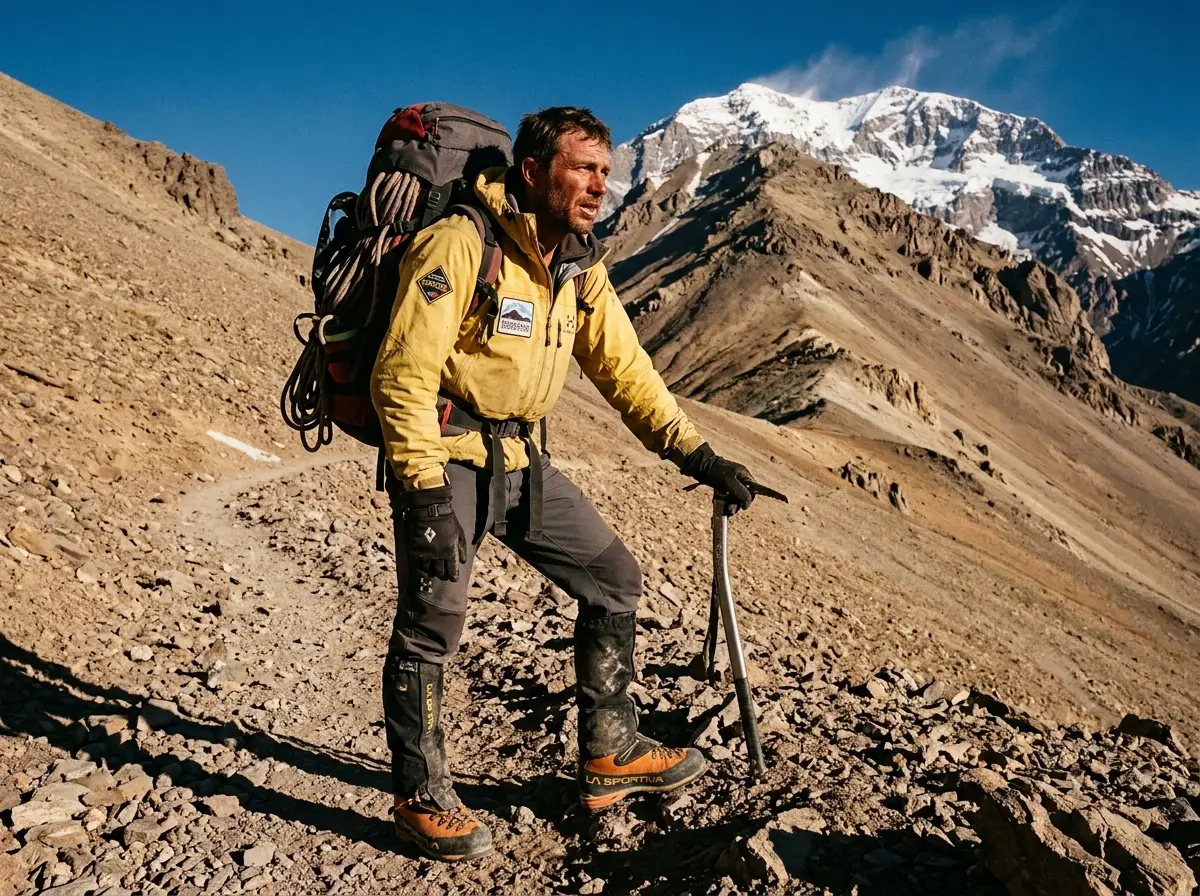
Aconcagua is 6,961 meters, or 22,837 feet, which makes it the highest peak outside Asia and the highest summit in both the Western and Southern Hemispheres. Stand on top and you’re breathing air with about 40 percent of the oxygen you get at sea level. It belongs on the short list of the world’s most-attempted big-mountain objectives, the kind of peak that draws people who have read a roundup of the famous mountain routes and peaks and decided this is the one they can actually do. It earns a spot among the most coveted summits in the Americas for a simple reason: it’s the highest summit in the Americas, and it doesn’t require you to be a climber.
That last part is where the trouble starts. The Normal Route involves no roped climbing, no rock moves, no vertical ice. You walk. You walk on trails, then on scree, then on more scree, at an altitude where walking is the hardest thing you’ve ever done. “Non-technical” does not mean easy. It means the hazard isn’t falling off a wall. The hazard is the altitude and the endurance, and those two end summit bids far more reliably than any cliff. It’s the same non-technical-but-altitude reality you find on Elbrus or Kilimanjaro, where the hazard hides inside the simplicity.
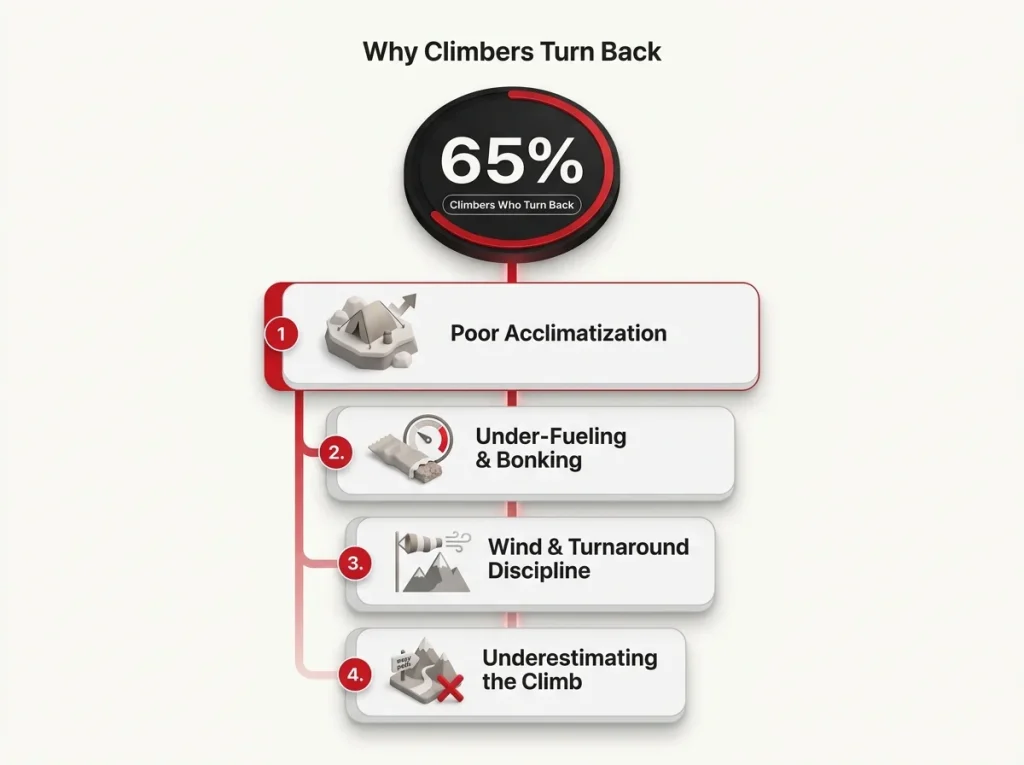
Every year somewhere between 3,000 and 3,500 people attempt the mountain, and park estimates put the summit success rate around 30 to 35 percent. Read that again. Roughly two of every three people who buy the permit, fly to Argentina, and walk into the park do not stand on top. They aren’t turned back by avalanche or storm alone. Most of them simply run out of acclimatization, calories, or weather window before the summit comes.
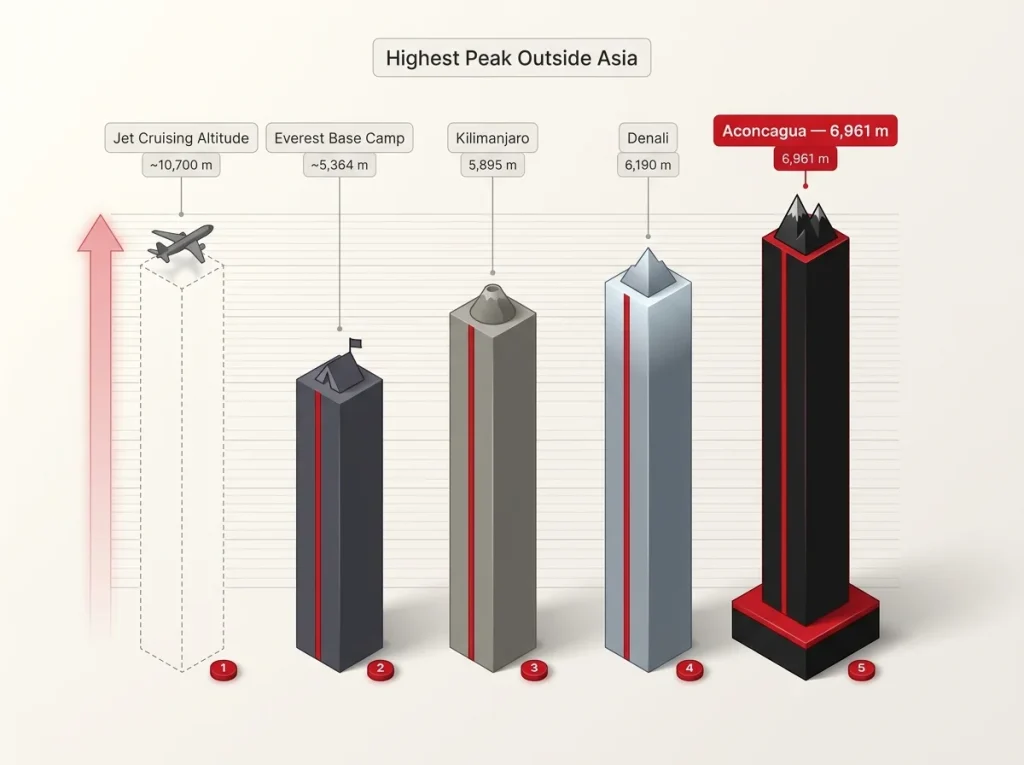
So no, despite the friendly “non-technical” label, this is not a first mountain. It’s a serious high-altitude objective that happens to skip the rock-climbing part. Treat it as the former and you join the majority who turn back.
The Routes — Normal, Polish Glacier, and the Vacas Approach
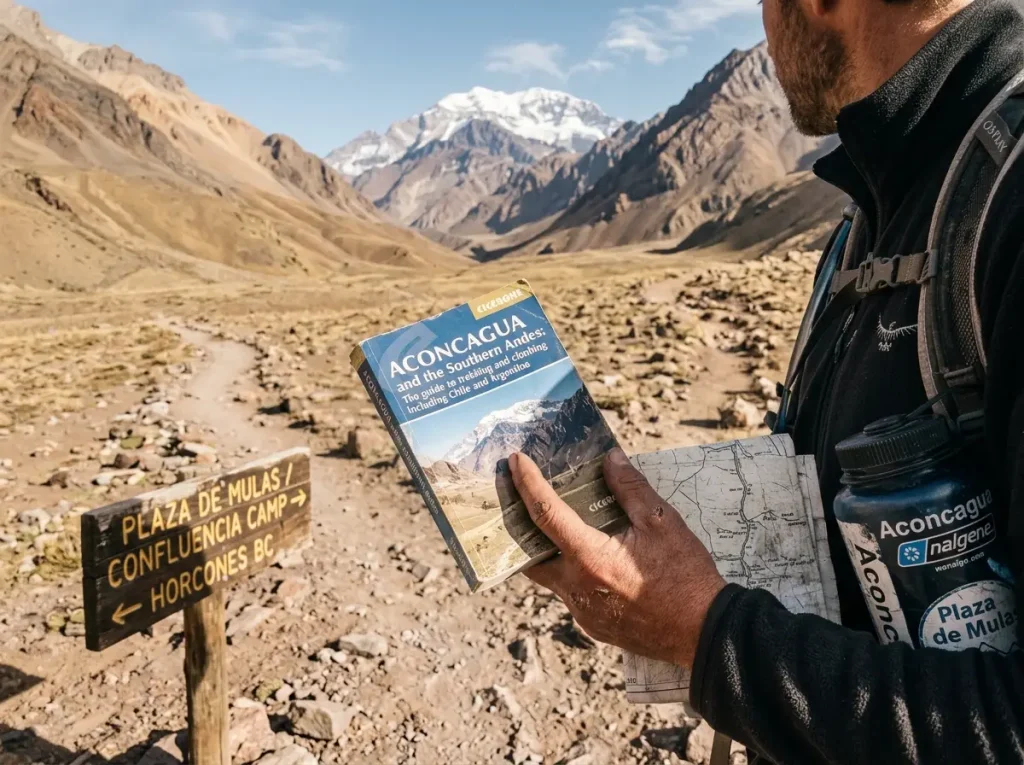
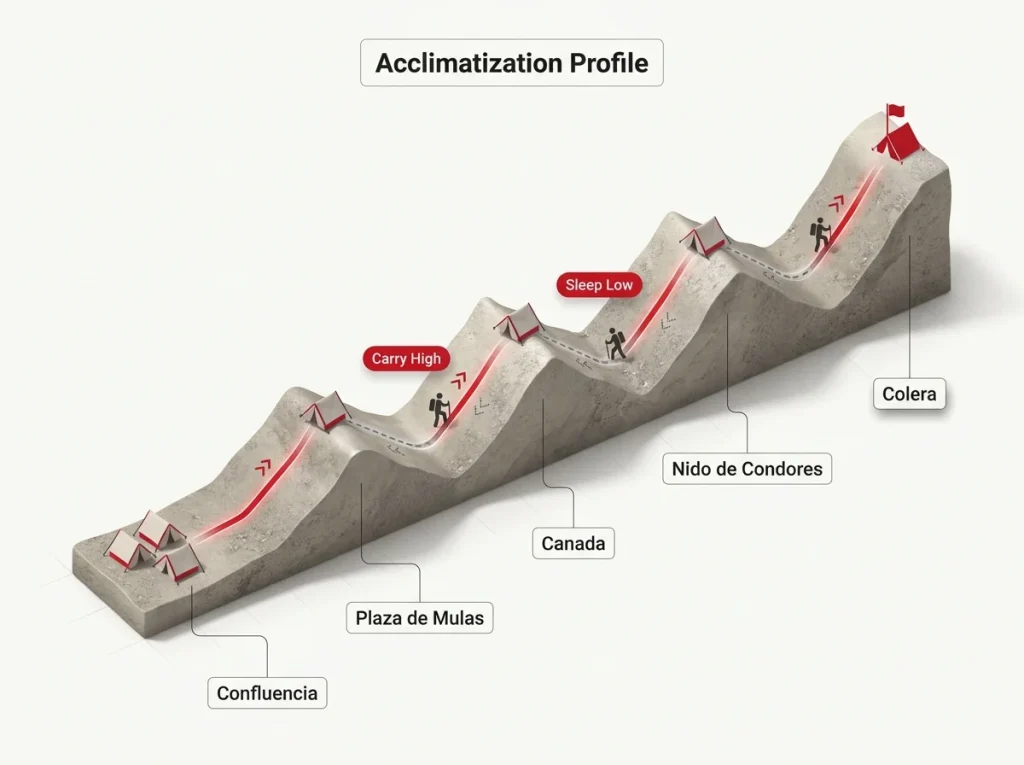
There are three ways most people think about getting up Aconcagua, and they sort out fast once you understand the trade-offs. The Normal Route runs up the Horcones valley to Plaza de Mulas base camp, then through high camps usually called Canadá, Nido de Cóndores, and Cólera. It’s the busiest line by a wide margin, and it’s the one in your head when you picture the climb.
The Polish Glacier Traverse, sometimes called the Vacas route or the Falso de los Polacos, comes in through the quieter Vacas valley, crosses high on the mountain, and joins the upper Normal Route. It’s longer and more remote, and that extra time on the approach often builds a better acclimatization profile, which matters more than most beginners realize. The full Polish Glacier proper is the only genuinely technical option, real ice, and most operators have quietly stopped running it as conditions have changed. The same Andean acclimatization math that humbles climbers on Huascarán in Peru is exactly what makes the longer Vacas approach a smart play rather than a slower one.
Whichever line you pick, plan on 16 to 20 days. The calendar is the strategy. A typical itinerary spends days moving between camps, carrying loads up and sleeping low, and waiting out weather. If you want the route descriptions and the planning detail in one place, the Cicerone Aconcagua and the Southern Andes guidebook by Jim Ryan covers both the Horcones and Vacas options in the kind of depth a single web page can’t, and it’s worth the few dollars to have it on the trip.
Nido de Cóndores has pond water in season. Camping there instead of higher up means you melt less snow, which saves fuel and the weight of carrying it. Climbers who consolidate a camp here often arrive at the summit push less worn down.
Why Two of Three Climbers Turn Back
Here’s where everyone gets it wrong: they assume the mountain beats them. Mostly, climbers beat themselves, and they do it in four predictable ways.
The first and biggest is a compressed itinerary. People shave days off the schedule to save money, then arrive at high camp under-acclimatized and wonder why their head is pounding and their legs are gone. Too few acclimatization days is the number one cause of failure on this peak, full stop. It’s not close.
The second is fueling. On summit day you burn somewhere between 5,000 and 10,000 calories, and almost nobody eats enough to cover it, so the calorie deficit compounds fast. The result has a name in the field: bonking. Your glucose craters, coordination goes, and judgment follows. The cruel part is that it often hits on the descent, after the summit, when you’ve stopped thinking about food. There are accounts of fit, prepared climbers slipping in and out of consciousness on the way down, not because they were weak, but because they didn’t eat going up.
The third is wind. Not cold alone, wind. Up high, sustained winds over about 50 km/h end summit bids, and the climbers who succeed are the ones with the discipline to wait or to turn around when the forecast says no. The fourth reason underwrites the other three: treating “non-technical” as “easy.” That single mindset error is why people cut the acclimatization days, skip the calorie planning, and push into bad wind. On summit day it shows up as a specific kind of misery in La Canaleta, the final scree gully, where it feels like two steps back for every step forward and your GPS barely moves while your effort maxes out.
If you’re weighing whether this is your first big mountain, it probably shouldn’t be. There are better mountains for a first big-altitude objective, and arriving on Aconcagua with one or two of them already behind you changes your odds more than any gear purchase will.
Why Gym Fitness Doesn’t Buy Altitude
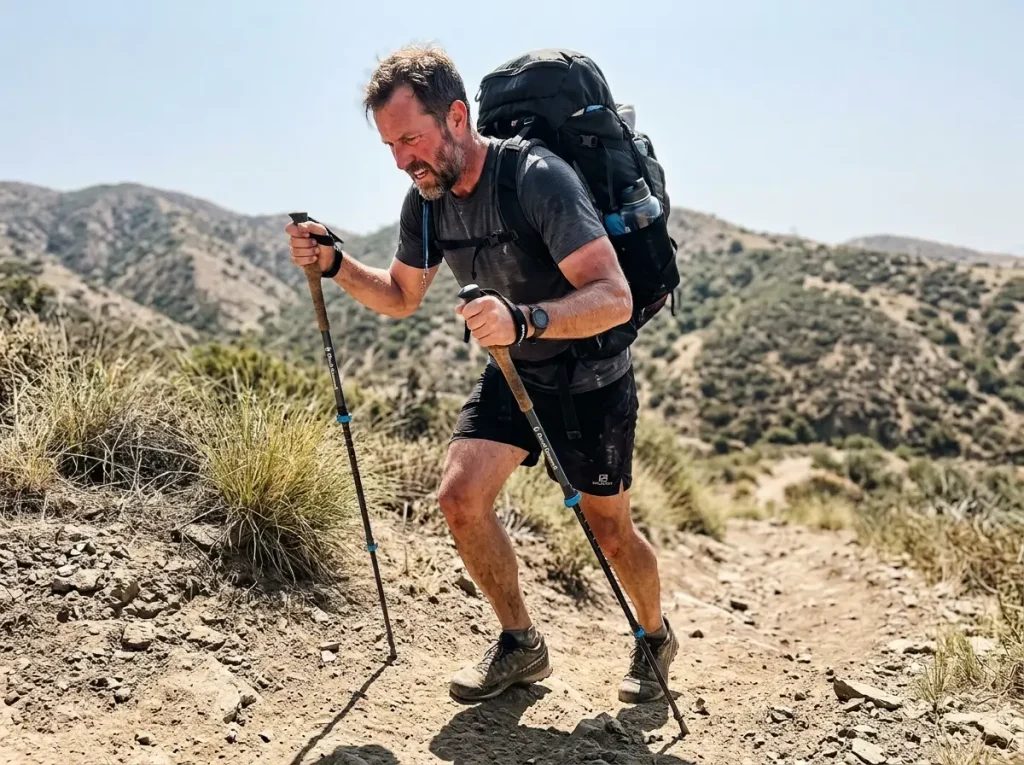
This one stings, especially for strong climbers and gym rats: your fitness does not buy you altitude performance. Ask anyone who has worked these high camps and they’ll tell you the same thing, that how well you do up there has almost nothing to do with how much you can deadlift or how fast you run a 10K. Genuinely strong sea-level athletes turn around on this mountain all the time, while less impressive-looking climbers with the right acclimatization and pacing walk to the top.
That doesn’t mean training is pointless. It means you’re training the wrong thing if you’re chasing gym numbers. What actually transfers is load tolerance and time on your feet: weighted-pack hikes, back-to-back big days, and a deep aerobic base built over months. Some climbers add hypoxic training in the weeks before the flight to get a head start on acclimatization. And train the descent, because the long scree downhills wreck more knees than the climb wrecks lungs. Downhill conditioning and a tolerance for monotonous, weighted, low-intensity hours are worth more than any single hard workout.
The physiology behind this is real, and it’s worth understanding rather than guessing at. The UIAA’s mountain-medicine briefing on Aconcagua lays out how altitude actually affects you, and pairing that with structured high-altitude training protocols will do far more for your summit odds than another month of leg day. The work that matters is boring. That’s exactly why so few people do it.
Acclimatization and Altitude Illness — The Real Success Factor
If there’s one variable you control that decides your climb, it’s acclimatization. The rhythm is simple to say and hard to be patient with: carry high, sleep low. You haul a load up to the next camp, then descend to sleep lower, letting yourself adapt to the thinner air in steps instead of all at once. Spend the nights at base camp, take a rest day around Camp 2, and resist the urge to rush. The climbers who summit are almost always the ones who spent the days, not the ones with the biggest engines.
The park backs this up with mandatory medical checks, and the rangers can and do pull people off the mountain whose vitals look wrong. That’s not bureaucracy for its own sake. Altitude illness escalates fast: acute mountain sickness, or AMS, can tip into HAPE or HACE, fluid in the lungs or the brain, and at that point the only real treatment is to go down immediately. Diamox can help you acclimatize, but it’s an aid, not a shortcut that lets you skip the days. The rule that saves lives is boring and absolute: when the serious symptoms show, you descend, you don’t debate. Our full climber’s acclimatization and altitude-sickness protocol walks through the warning signs and the response in plain language.
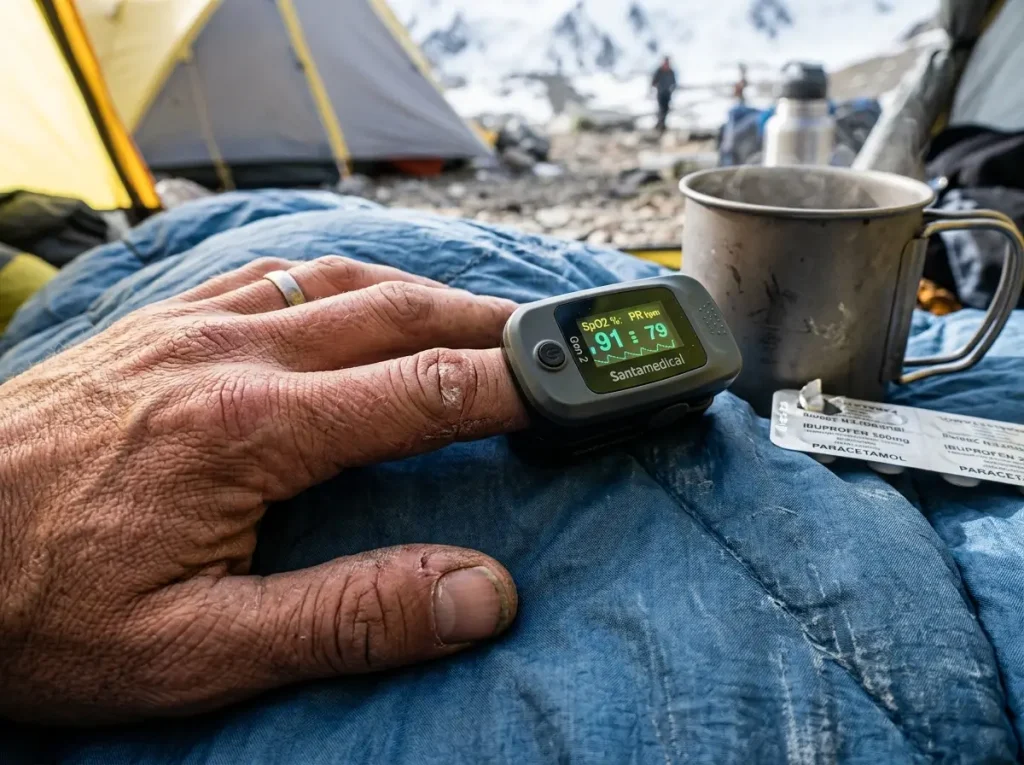
Between the official medical checks, you can keep tabs on yourself. A cheap fingertip pulse oximeter like the Santamedical Gen 2 OLED gives you a quick oxygen-saturation reading each morning, and watching your numbers trend over the days tells you whether you’re adapting or sliding. It’s not a diagnostic tool, but a low SpO2 that keeps dropping is a flag worth taking seriously, and it costs less than a single restaurant dinner in town.
Treat hydration and calories as part of acclimatizing, not as comfort. Drinking enough at altitude is genuinely hard because you don’t feel thirsty, so put water and electrolytes on a schedule. The climbers who adapt well are almost always the ones eating and drinking on a timer, not on appetite.
Guided or Solo — The Honest Cost Breakdown
Money on Aconcagua splits along one decision: do you hire an operator, or go self-supported? The numbers are wide apart, and the cheap end hides a real cost.
Guided expeditions run roughly $5,500 to $9,500. The budget operators sit at the low end for a reason: they compress the schedule, run guide ratios as thin as eight clients to one, and their success rates often fall below 30 percent because their clients arrive under-acclimatized. The quality outfits charge $7,500 to $9,500 for a 19-to-21-day trip with the acclimatization days built in. All-in for a climber flying from North America, once you add the permit, flights at $1,200 to $2,000, gear, and incidentals, budget realistically for $9,500 to $13,000. Go fully self-supported and rent your gear, and the whole thing can come in around $3,320. That’s not a typo. Independent logistics roughly triple your odds of a low-cost trip. This is the same budget-tier trap that quietly raises the risk on bigger peaks, the one we break down for what an Everest expedition really costs: the savings should come from logistics, never from fewer acclimatization days.
The permit itself has a quirk worth knowing. For the 2025/26 high season it runs about $1,170 for an assisted permit versus about $1,640 for unassisted. Read that twice, because it’s backward from what you’d expect. The “unassisted” permit costs more. The park deliberately prices solo-style climbing higher to push you toward hiring local mules and muleteers, so the assisted tier is often the smart-money choice, not the lazy one. Always confirm the current rates through the Aconcagua Provincial Park’s official permit system rather than a year-old blog figure.
One cost you never trim is insurance. The park requires a rescue policy that explicitly names helicopter evacuation coverage above $5,000 USD and rescue up to 7,000 meters, and approval can take several working days, so buy it 90 days out, not at the trailhead. Know what to check before you buy high-altitude rescue insurance, because the wrong policy can read as covered while leaving an altitude gap that voids the whole thing. For the rest of the spend, a step-by-step framework for budgeting a major alpine climb will keep you from the two classic mistakes: cheaping out where it gets you hurt, and overspending where it doesn’t matter. One easy win on the spending side: pay in cash to use Argentina’s blue-dollar (MEP) exchange rate, which stretches your dollars well past the official rate, and many Mendoza shops give a 10 to 15 percent discount for cash on gear rental.
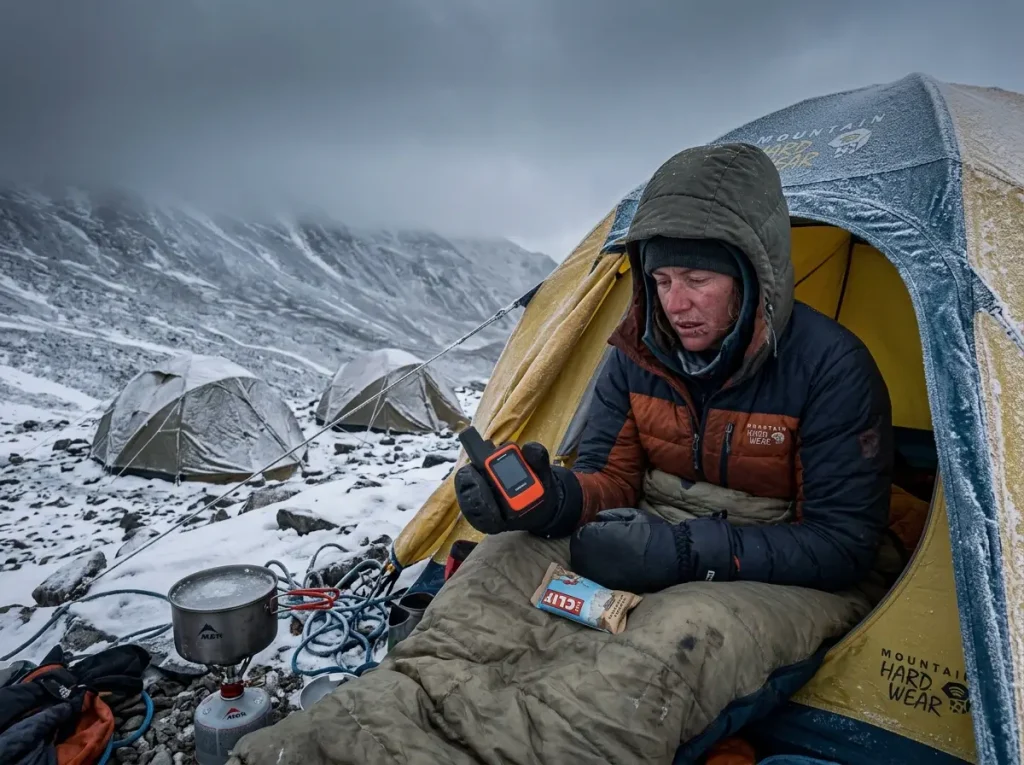
If you go independent, or even if you’re guided but value your own safety margin, a satellite communicator stops being optional above base camp.
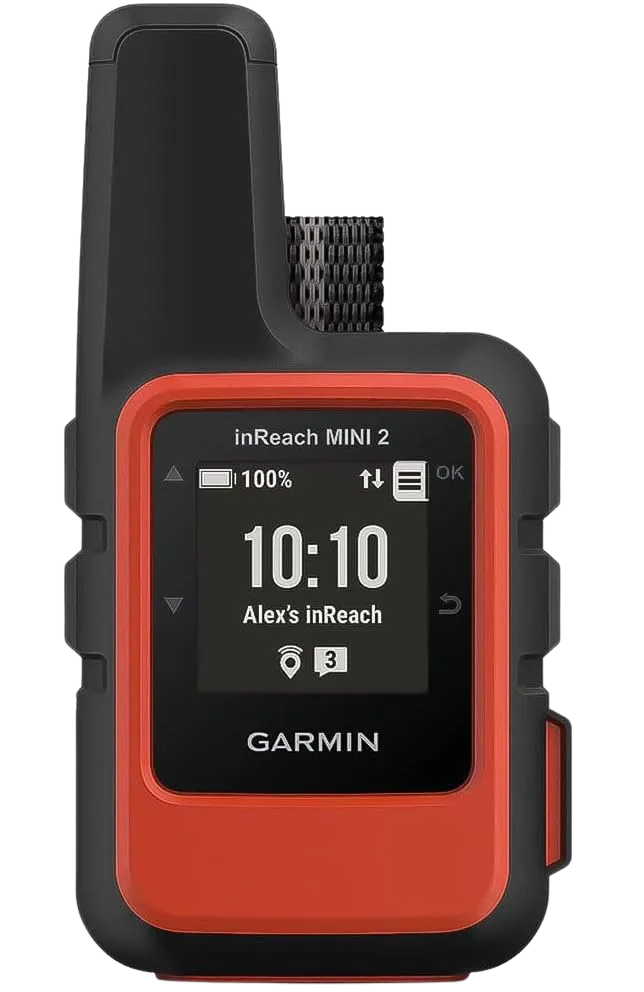
The forecast feature alone earns its place. Most failed summit bids trace back to a wind call, and being able to pull a fresh forecast at high camp, instead of guessing or trusting a three-day-old report from town, is exactly the kind of edge that keeps you climbing on the right day and resting on the wrong one.
Gear — Own It or Rent It in Mendoza
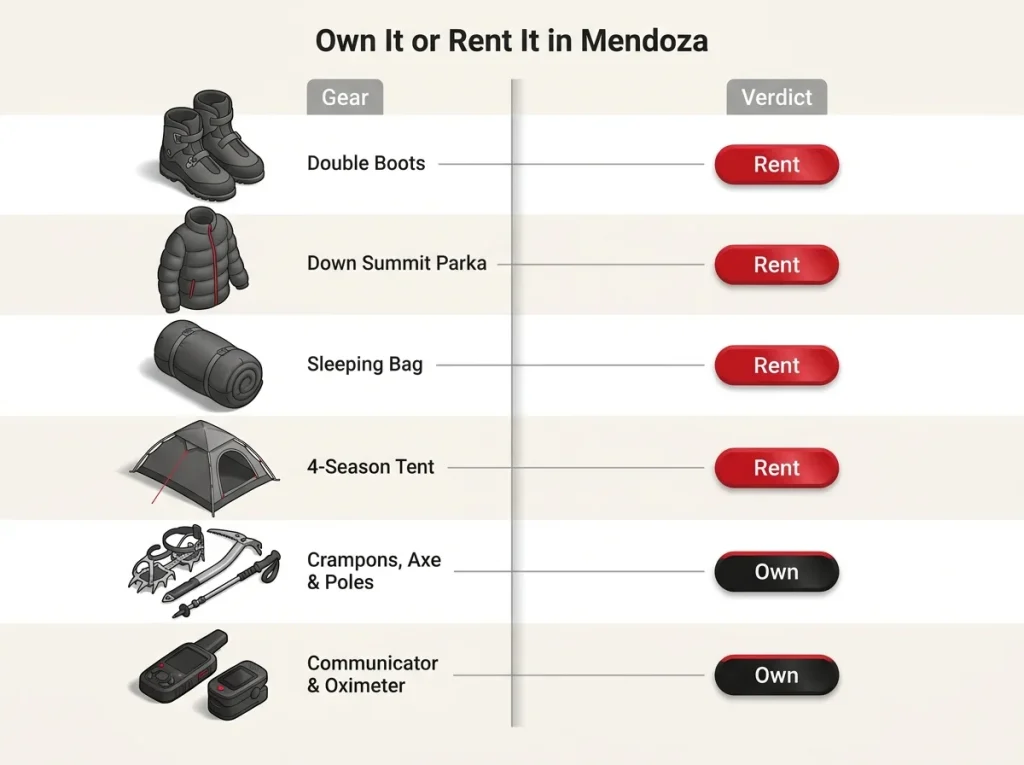
The smartest money move on Aconcagua is deciding what to own and what to rent. For a one-time climb, renting the big-ticket items in Mendoza saves over a thousand dollars, and the rental shops are stocked for exactly this. The rule of thumb: rent the expensive single-use stuff, own the things that fit you and that you’ll actually reuse.
| Item | Rent or Own | Why |
|---|---|---|
| Double mountaineering boots | Rent in Mendoza | About $210 to rent versus $1,100 to buy for a single climb |
| Down summit parka | Rent in Mendoza | Bulky, single-use for most people, cheap to rent |
| -20°F sleeping bag | Rent in Mendoza | Big-ticket, rarely reused at this rating |
| 4-season tent | Rent or operator-supplied | Most climbers don’t own one worth carrying here |
| Crampons, ice axe, poles | Own (if you mountaineer) | Reusable, fit-dependent, worth knowing your own |
| Satellite communicator, oximeter | Own | Cheap relative to the trip, used long after |
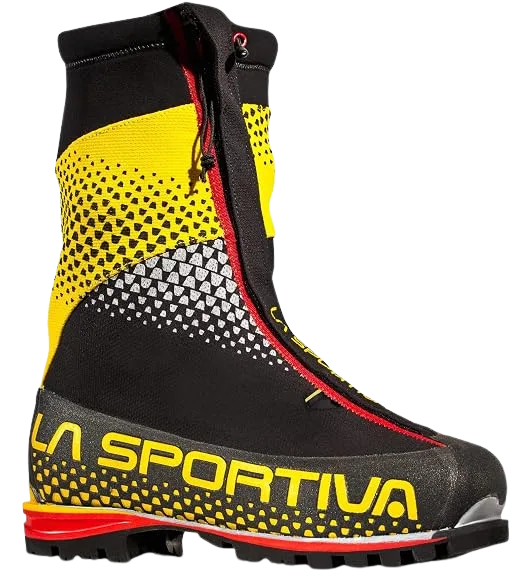
The boots are the one piece most worth getting right, because cold injury ends summit bids quietly and permanently. The standard for this peak is a double mountaineering boot, and the La Sportiva G2 SM is the one you’ll see on the mountain and in the rental shops. If you climb high peaks regularly, owning a pair makes sense. If this is a one-off, rent the equivalent G2 Evo in Mendoza and put the savings toward an extra acclimatization day.
For the hardware, the Normal Route needs a basic mountaineering setup, not a technical kit. A pair of 12-point crampons like the Grivel G12 New Matic pairs cleanly with double boots and handles the firm snow up high, with the anti-balling plates earning their keep when wet snow tries to cake under your foot. If you want a less expensive option that still does the job, the Black Diamond Sabretooth Clip is a solid call. For the axe, a classic mountaineering tool like the Grivel Air Tech Evo is all the Normal Route asks for, mostly for the snow sections and as a self-arrest backstop, and the Black Diamond Raven is the budget equivalent. If you’re not sure how to choose between models, our guide to choosing a mountaineering ice axe breaks down length and head type.
Don’t skip the poles. The long scree descents are where knees go to die, and a folding pair like the Black Diamond Distance Z takes a real bite out of the pounding on the way down. For layering, the move is to bring your own merino base layers, a fleece mid-layer, and a Gore-Tex hardshell, then rent the big-ticket insulation, a heavier down parka and a down sleeping bag, in Mendoza for the cold up high rather than buying pieces you’ll use once. Round out the kit with gaiters and a roomy internal-frame expedition backpack for carry days, both easy gear-rental items if you don’t already own them. The Vibram-soled double boots and your trekking poles aside, most of what you haul up here can come straight from a Mendoza rental shop.
Summit Day — Hour by Hour
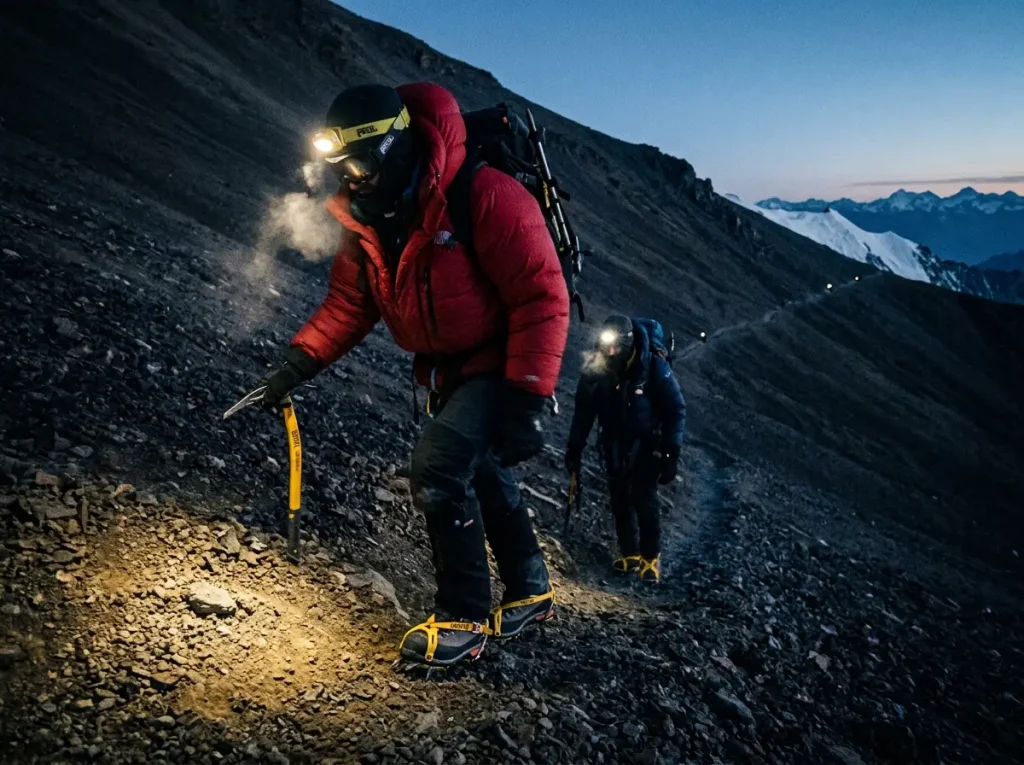
Summit day starts in the cold and the dark, and it’s longer than almost anyone expects. You wake around 3:00 or 3:30 in the morning in a frost-rimed tent, force down food you don’t want, and leave Cólera or your high camp around 5 a.m. with a headlamp. That first stretch in the dark is harder than it sounds, because the path is easy to lose, and what takes an hour in daylight can take nearly two by headlamp.
From there the day unfolds through named features: past the Independencia hut, across the wind-blasted Portezuelo del Viento, along the exposed traverse known as La Travesía, and finally into La Canaleta. That last gully is the one people remember, a loose scree slog of 35 to 40 degrees near 22,000 feet where it genuinely feels like two steps back for every step forward, and it eats two hours or more of maximum effort for what looks like no progress at all. Most climbers reach the summit 8 to 10 or more hours after leaving high camp, in summit temperatures from -20 to -30°C, with wind chill as the deciding variable on whether the day goes at all.
Then comes the part that catches people: the summit is the halfway point, not the finish. The descent is where the bonking risk peaks, because you’ve spent your fuel and stopped thinking about eating. Climbers who were fine going up have folded coming down. Eat on a timer, keep moving, and hold your turnaround time like it’s a law. A hard cutoff beats summit fever every single time, and the people who get this wrong are the ones who make the news for the wrong reasons.
Load a GPS track for the Cólera-to-summit segment before you leave home and follow it on the dark start. Even climbers who rehearsed the route in daylight lose the path under a headlamp, and the time you save not wandering is time you keep in your weather window.
Conclusion
Aconcagua rewards the patient and punishes the rushed. Remember three things and you climb on the right side of that success rate. First, it’s non-technical, but the altitude, the weather, and your pacing are the real test, so respect them like the serious objective they are. Second, acclimatization days and steady fueling beat gym fitness, every time, so train your time-on-feet and your patience, not your one-rep max. Third, rent the big gear in Mendoza and put the savings where they matter, but never cheap out on your insurance, your permit tier, or your acclimatization schedule.
Before you book anything, build a real 16-to-20-day plan with a weather-window buffer baked in. The climbers standing on top in the photos almost never got there on the fast, cheap itinerary. They got there on the boring one.
Frequently Asked Questions
01How much does it cost to climb Aconcagua?
A guided climb runs roughly $5,500 to $9,500, and all-in for a North American climber lands near $9,500 to $13,000 once you add the permit, flights, and gear. A fully self-supported climber renting gear in Mendoza can do it for around $3,320.
02Is Aconcagua a technical climb?
No. The Normal Route is non-technical, with no roped climbing, rock moves, or vertical ice. It’s a high-altitude walk-up. The real difficulty is the extreme altitude, the weather, and the endurance required, not any climbing skill.
03What is the success rate on Aconcagua?
Park estimates put summit success around 30 to 35 percent, so roughly two of every three climbers turn back. Most failures come from rushed acclimatization, under-fueling, and high winds rather than the route itself.
04Can you climb Aconcagua without a guide?
Yes, experienced climbers can go self-supported, and it’s far cheaper. Note the quirk that the unassisted permit actually costs more than the assisted one, since the park prices solo-style climbing higher to encourage hiring local services.
05What is the best time to climb Aconcagua?
The season runs November through March, the Southern Hemisphere summer. High season is mid-December to the end of January, when the weather is most stable and the permit costs the most. Shoulder-season climbs are cheaper but colder and windier.
Safety Notice: Rock climbing and mountaineering are inherently high-risk
activities that can involve physical trauma or fatal incidents. The information on Rock Climbing Realms is for
educational and informational purposes only. Techniques and advice presented here are not a substitute
for professional, hands-on instruction. Conditions and risks vary by location. Always seek guidance
from a qualified instructor before attempting new techniques. By using this website, you agree that you
are solely responsible for your own safety. Any reliance you place on this information is strictly
at your own risk, and you assume all liability for your actions. Rock Climbing Realms and its authors
will not be held liable for any harm, damage, or loss sustained in connection with the use of this information.
Affiliate Disclosure: We are a participant in the Amazon Services LLC Associates Program, an
affiliate advertising program designed to provide a means for us to earn advertising fees by advertising and linking
to Amazon.com. As an Amazon Associate, we earn from qualifying purchases. We are also an official affiliate partner
of Black Diamond Equipment via the AvantLink network. If you click on a Black Diamond affiliate link and make a
purchase, we may earn a commission at no additional cost to you. We also participate in other affiliate programs.
Additional terms are found in the terms of service.