
In this article
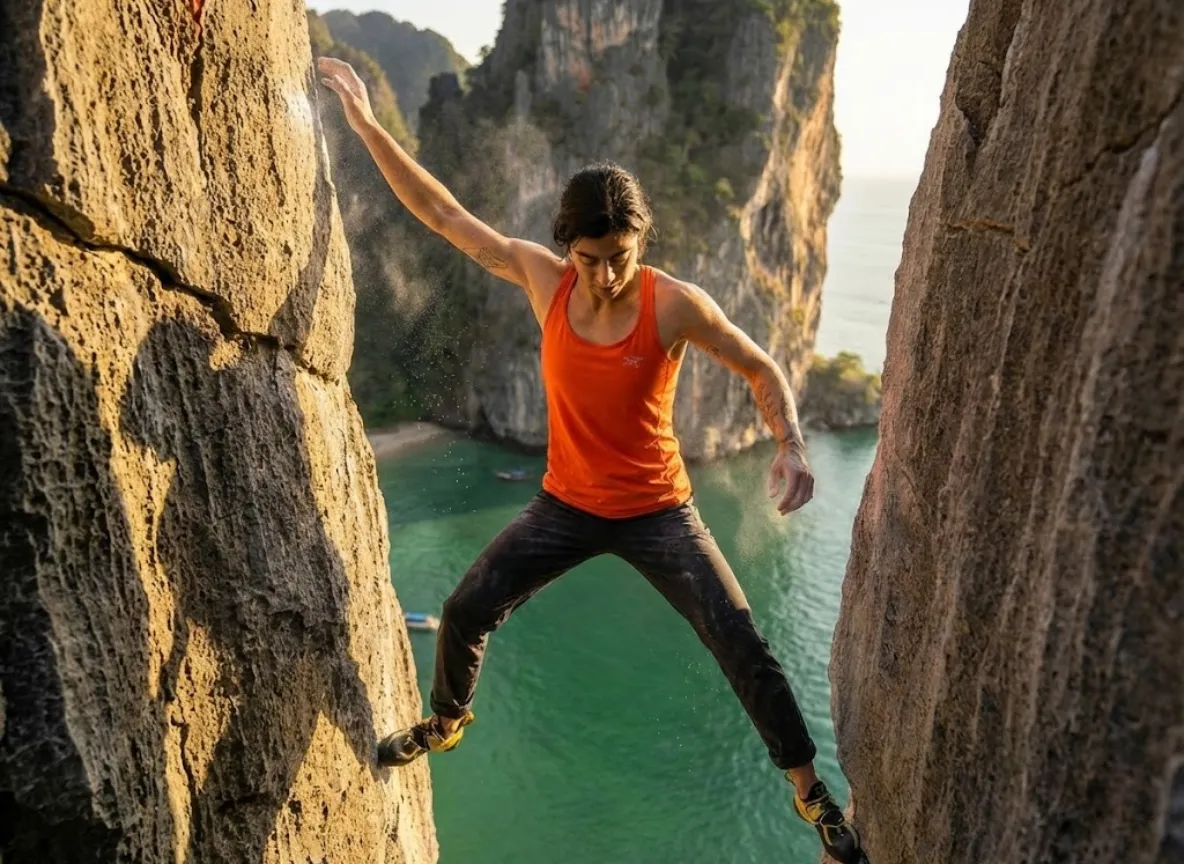
The humidity in Krabi hits you before your feet touch the sand—a heavy, salt-laden blanket that promises friction for your shoes and corrosion for standard steel. Thailand is not just a holiday destination; it is a proving ground where limestone karsts rise like ancient sentinels from the Andaman Sea.
For many, this is the ultimate tropical climbing paradise, a place where the “Land of Smiles” meets the serious business of scaling vertical limestone walls. However, the Thailand of 2026 presents a new reality defined by shifting climate patterns and critical safety evolutions.
Navigating this vertical terrain requires more than a standard destination guide; it demands an understanding of metallurgy, meteorology, and the delicate balance of a post-pandemic ecosystem.
As a climbing guide who has watched these climbing routes evolve from the adventure trad days of Sam Lightner Jr. to modern sport climbing meccas, I can tell you that the difference between a successful trip and a rescue situation often comes down to preparation.
This guide moves beyond the brochure to give you the technical beta on the Thaitanium Project, the La Niña climate shift, and the logistical realities of the modern vertical pilgrim.
Why is Thailand the Global Epicenter for Vertical Pilgrims? (The Context)
To climb safely here, you must first understand the ground beneath your feet—or rather, the towers looming above your head. The geology of the Andaman Coast dictates everything from your movement style to the gear you trust.
What Makes the Geology of the Andaman Coast Unique?
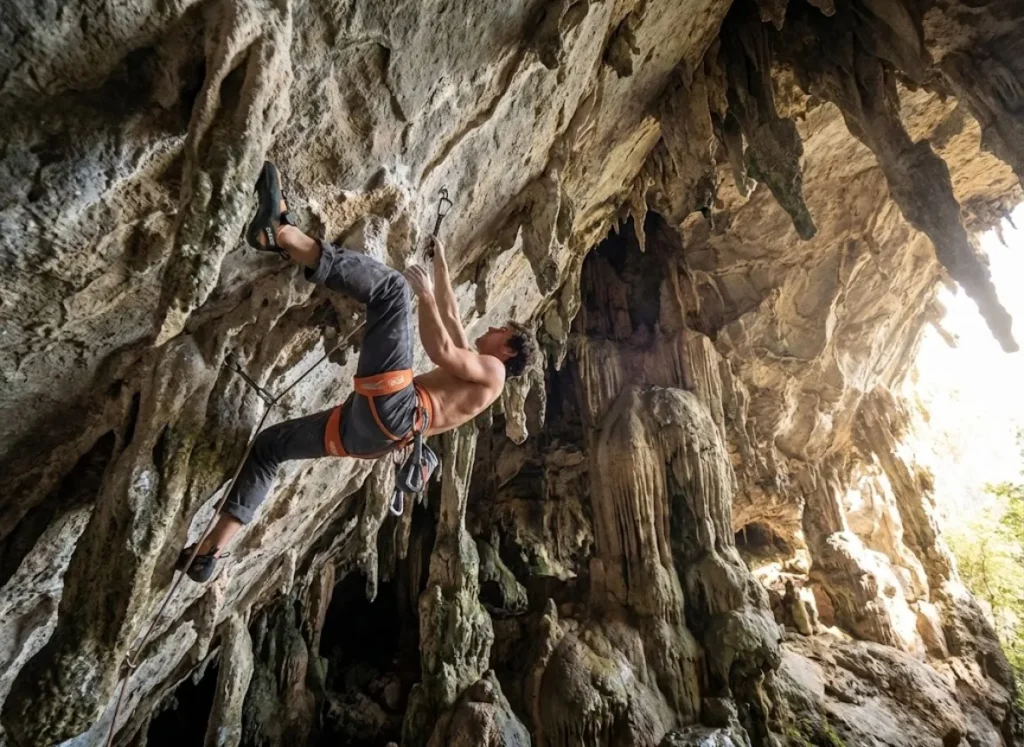
Thailand’s climbing is defined by Karst topography. This terrain is formed by the dissolution of soluble rocks like limestone, creating massive towers, overhangs, and stalactites. The climbing style is distinctly three-dimensional.
Unlike the granite faces of Yosemite, routes here often require navigating between massive tufas (ribs of limestone) and sharp, pocketed limestone features. This dictates a specific athletic style. You will find yourself prioritizing body tension, knee-bars, and 3D climbing techniques over pure finger strength.
Most routes follow the French grading system, ranging from friendly 5a warm-ups to test-piece 8b projects. Understanding how different climbing rock types influence beta is essential before you even chalk up. The rock demands that you think in volume, not just verticality.
However, the interaction between this geology and the marine environment creates a unique hazard: Stress Corrosion Cracking (SCC). The high humidity and saltwater corrosion accelerate the degradation of standard climbing hardware.
This chemical process rots bolts from the inside out while they may appear shiny on the surface. Understanding this helps you realize why the local Thaitanium Project is a necessity. It aligns with the strict UIAA warnings regarding Stress Corrosion Cracking, which highlight the catastrophic failure rates of stainless steel in tropical marine zones.
Pro-Tip: When climbing tufas, avoid “tight gripping” the pinch. Use the heel of your hand and rely on skeletal friction rather than muscular forearm strength to conserve energy for the crux.
Where Should You Climb? Deciding Between the South and North (The Destinations)
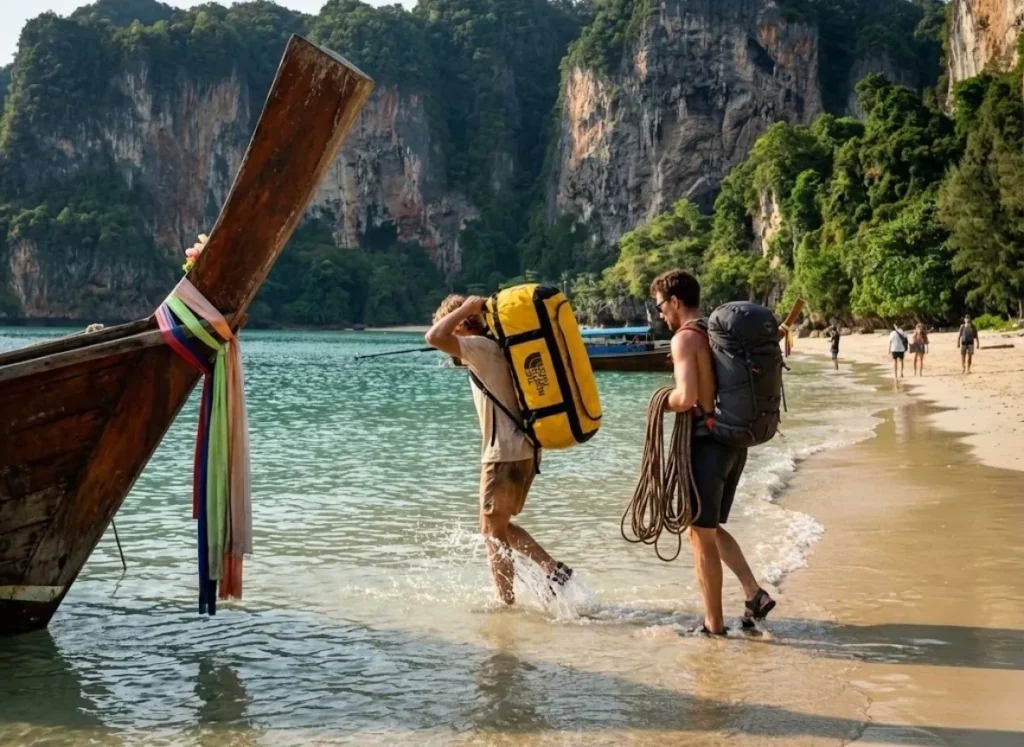
Choosing your base camp in Thailand is about more than finding a cheap bungalow. It defines the rhythm of your day, the grade of your climbs, and the community you will interact with.
How Do Railay and Tonsai Differ in Vibe and Difficulty?
Railay (specifically Railay Beach West and the mangroved Railay Beach East) serves as the polished, accessible hub. It is ideal for beginners, families, and those seeking resort-style amenities like air conditioning and swimming pools. Access is typically via longtail boats from Ao Nang.
In contrast, Tonsai Beach remains the “dirtbag” capital. Accessible via a low-tide rock scramble or a jungle trail over the hill, it hosts a higher concentration of hard grades and a rustic, bohemian culture. Here, you are more likely to find bamboo treehouses and fellow climbers focused on the iconic Tonsai Tower.
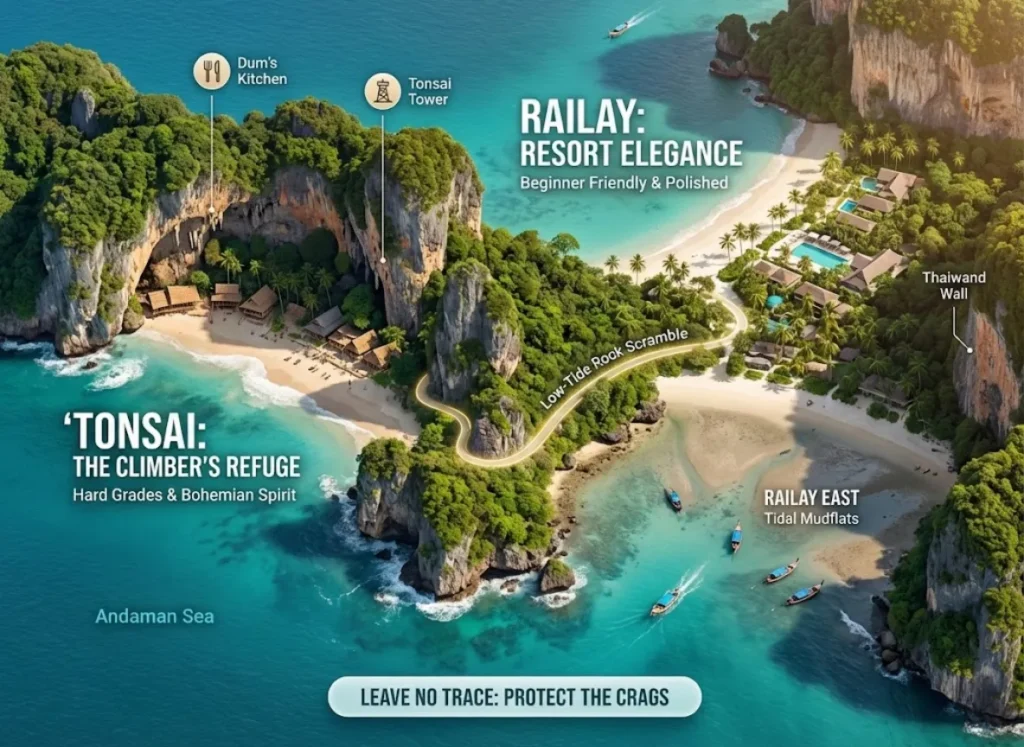
The choice between them dictates your logistics. Railay offers convenience and crowds; Tonsai offers solitude and better access to steep, rain-protected crags like Dum’s Kitchen.
However, tidal influence is a critical factor on the Phra Nang Peninsula. Railay East becomes a mudflat at low tide, complicating boat access, while Tonsai requires boat access at high tide or a hike.
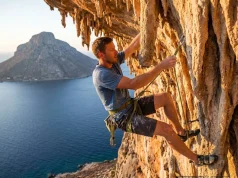
For those looking beyond the main hub, nearby islands like Koh Yao Noi, Koh Lao Liang, and Koh Phi Phi offer spectacular Deep Water Soloing (DWS) and sport routes, though access can be more complex.
Waste management remains an unspoken reality in these isolated bays. Tonsai struggles with infrastructure. The “Trash Hero” ethos—refilling water bottles and packing out trash—is mandatory for ethical visitors. We strongly advocate for adopting Leave No Trace ethics for waste management to ensure these crags remain open. Always check current Thailand’s Department of National Parks regulations regarding access to specific marine park zones.
Is Crazy Horse Buttress Open and Worth the Trip North?
Located near Chiang Mai, Crazy Horse Buttress offers a distinct geological shift. You will find sharper, pocketed limestone surrounded by bamboo jungle. The climate is significantly cooler and less humid than the south, making it a viable option when Krabi is sweltering.
Access in 2026 is generally permitted but strictly managed. After years of volatile access issues, the local community, spearheaded by Chiang Mai Rock Climbing Adventures (CMRCA), has stabilized the situation, though registration via local apps is often required.
The “Golden Nugget” here is the Anxiety State Crisis cave. It offers massive exposure without the corrosion risks prevalent on the coast. For a rest day, the famous “Sticky Waterfall” is a short scooter ride away.
Logistics differ here. You are not beach-bound but rather commuting from Chiang Mai city (45 mins) via scooter rental or organized shuttle. This region also serves as a gateway to Northern Thailand crags like Lampang.
For those exploring Central Thailand, areas like Saraburi (home to Nam Pha Pa Yai Camp) and the Khao Chin Lae tower in Lopburi offer excellent climbing walls for those willing to venture off the tourist track. These areas provide a “frontier” feel backed by extensive geological survey of Northern Thailand data.
How Does the 2026 Climate Forecast Impact Trip Planning? (Logistics)
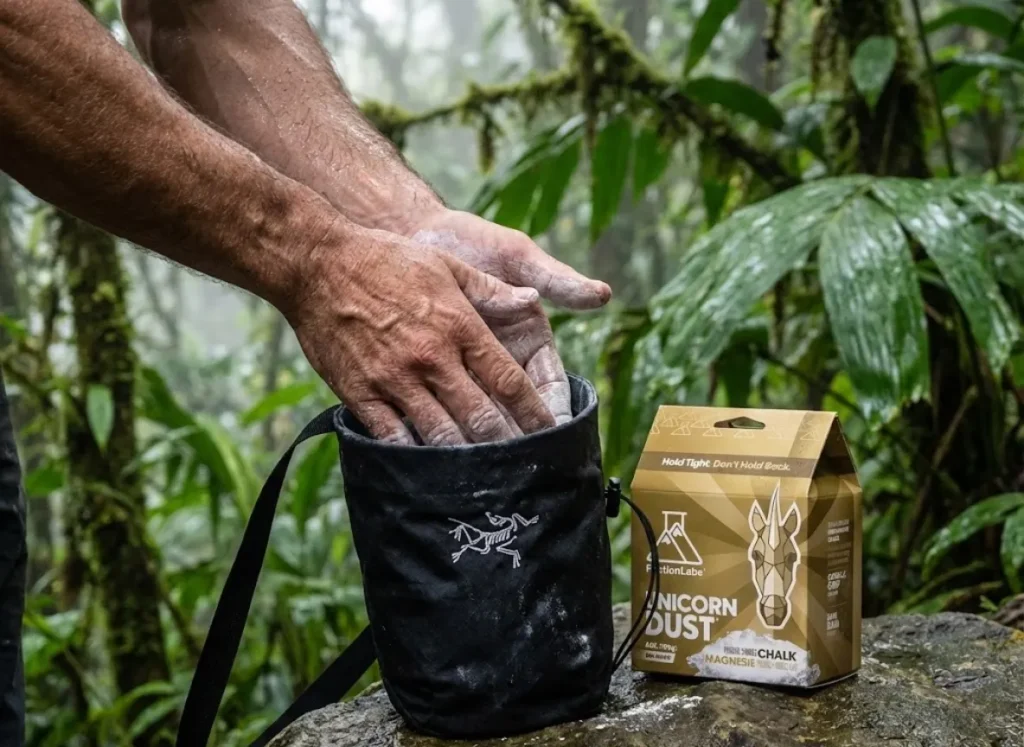
The weather is the one variable you cannot control, but in 2026, you must plan around it more aggressively than in previous years.
What Does the La Niña Outlook Mean for the “Dry Season”?
The standard climbing window is November to March. However, 2026 forecasts indicate a La Niña pattern. This historically correlates with increased rainfall across Southeast Asia, disrupting the usual dry season.
The monsoon impact typically runs from June to October, but according to NOAA’s La Niña forecast and impacts, climbers should expect the “guaranteed sun” of January to be punctuated by tropical storms.
Strategic planning involves targeting crags with steep overhangs. Walls like The Keep in Railay or Dum’s Kitchen in Tonsai remain climbable during heavy rain due to their angle. If you book a trip in 2026, ensure your itinerary remains flexible enough to chase the dry rock.
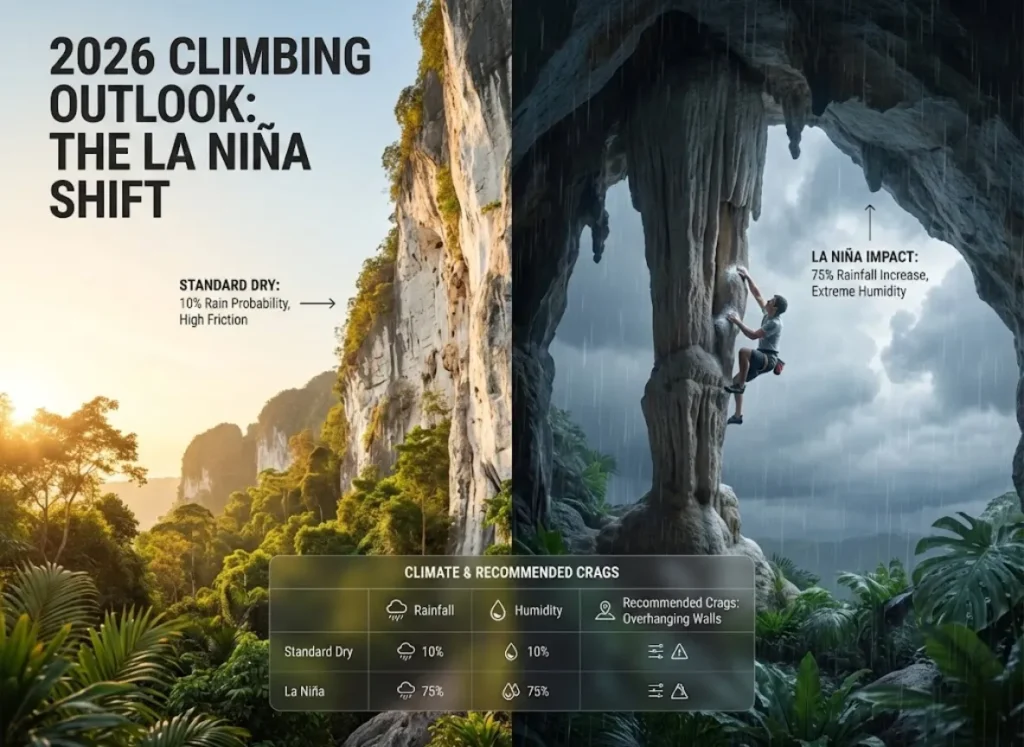
Humidity management becomes your primary technical skill. Standard chalk turns to sludge in these conditions. We recommend choosing the right climbing chalk for humidity, specifically utilizing a “double-chalk” method: a liquid chalk base layer to seal the pores, followed by high-grade powder.
Pro-Tip: Bring a small pack of “drying towels” to the crag. In La Niña conditions, condensation can seep out of tufa streaks even when it isn’t raining. Drying a kneebar placement before you commit can be the difference between sending and slipping.
What Are the Critical Safety Protocols for 2026? (The Technical Deep Dive)
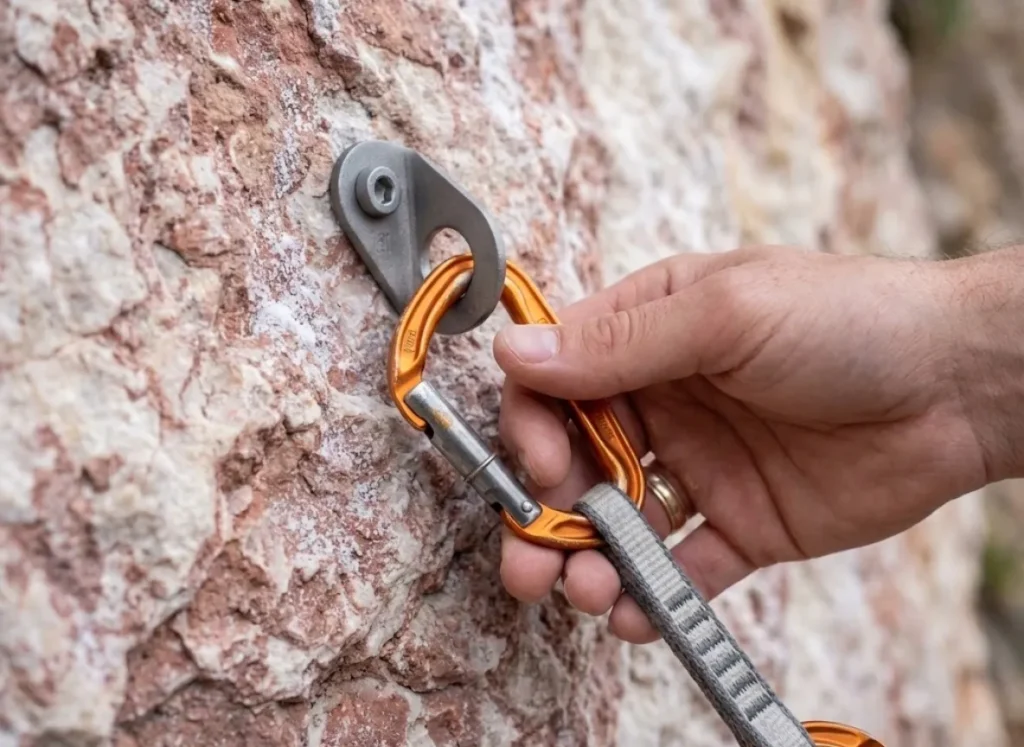
This is the most important section of this guide. In Thailand, your gear checklist must include the ability to inspect fixed hardware.
How Can You Visually Identify Safe vs. Unsafe Hardware?
The Thaitanium Project has standardized the use of Titanium glue-in bolts. These are chemically immune to the chloride-induced corrosion of the Andaman coast.
Users must be able to identify Titanium glue-in bolts: look for a dull, matte grey finish and a single-piece construction (usually a “P” or “U” shape). They will not have nuts or washers.
The “Red Flag” is stainless steel. Any bolt that is shiny (if new) or has rust streaks (if old) should be treated as suspect. This is particularly true for expansion bolts with hexagonal nuts found on older routes.
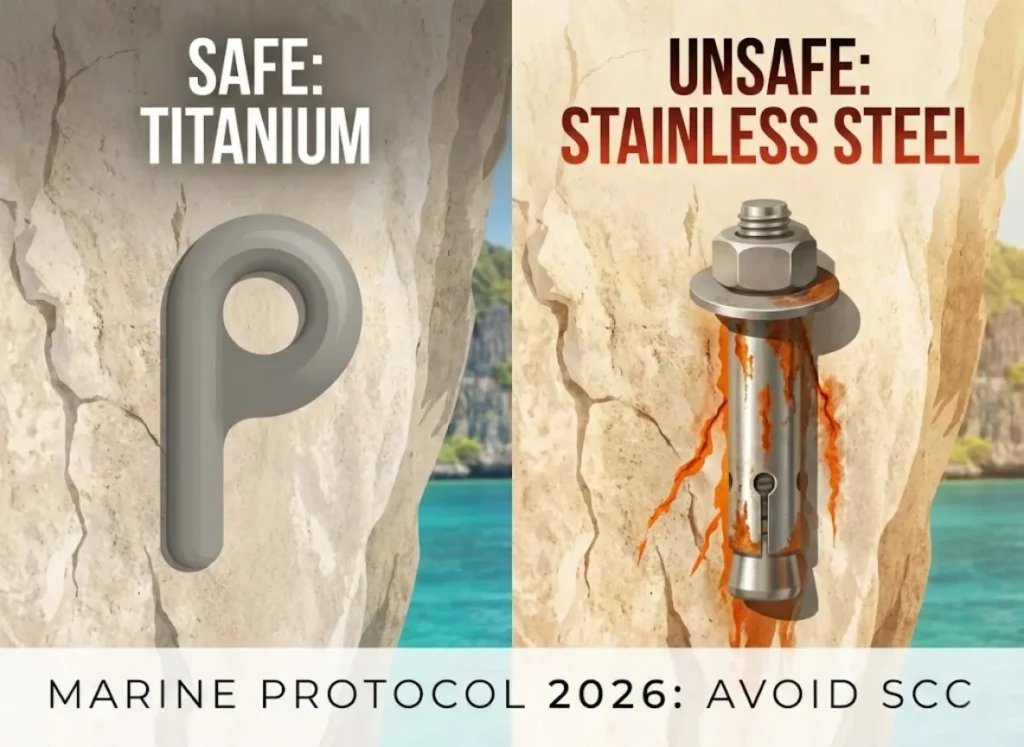
The protocol for 2026 is absolute: avoid routes in marine zones that have not been re-bolted with Titanium. The science of Stress Corrosion Cracking in Stainless Steel proves that these bolts can snap under body weight without warning.
Before heading to remote walls, consult updated guidebooks, check apps like Mountain Project or The Crag, or ask at local shops like The Rock Shop or King Climbers in Ao Nang. Additionally, because you are climbing in a marine environment, understanding dry vs non-dry rope performance is vital. A dry-treated rope picks up less humidity and sand, extending the life of your gear.
Final Assessment
Thailand remains a top-notch destination for climbers, but the 2026 reality demands a smarter approach. The rules of engagement have shifted.
- The Titanium Mandate: In the marine environments of Railay and Tonsai, trust only dull-grey Titanium glue-ins. Stainless steel carries a hidden, catastrophic risk.
- Climatic Flexibility: The La Niña forecast requires you to manage humidity and target overhanging, rain-proof crags.
- Destination Dynamics: Choose Railay for comfort or Tonsai for community, but respect the waste management struggles of both.
- Ethical Responsibility: Support the re-bolting funds and practice strict Leave No Trace principles.
Before you pack your bags, download the latest local topo updates. Consider donating to the Thaitanium Project to ensure the routes you dream of are safe when you arrive.
FAQ – Frequently Asked Questions about Rock Climbing in Thailand
Is rock climbing in Thailand safe regarding bolts?
Safety is high if you stick to Titanium-equipped routes. The Thaitanium Project has re-bolted most classics, but climbers must visually verify hardware (matte grey glue-ins) and avoid stainless steel in marine zones.
When is the best time to rock climb in Thailand given the weather?
November to March is the traditional season, but the 2026 La Niña forecast suggests higher rainfall probability. January and February remain the safest bets, though climbers should be prepared for occasional tropical storms.
Do I need to bring my own rope and quickdraws?
Yes, if you plan to sport climb independently; a 60m-70m rope and 12-14 quickdraws are standard. However, all gear can be rented from local climbing schools if you prefer to travel light or are just taking a course.
Which is better for climbing, Railay or Tonsai?
Tonsai is better for dedicated climbers seeking hard grades (7a+), a social dirtbag scene, and budget bungalows. Railay is superior for beginners, families, and those prioritizing air conditioning or easier access to moderate routes.
Safety Notice: Rock climbing and mountaineering are inherently high-risk
activities that can involve physical trauma or fatal incidents. The information on Rock Climbing Realms is for
educational and informational purposes only. Techniques and advice presented here are not a substitute
for professional, hands-on instruction. Conditions and risks vary by location. Always seek guidance
from a qualified instructor before attempting new techniques. By using this website, you agree that you
are solely responsible for your own safety. Any reliance you place on this information is strictly
at your own risk, and you assume all liability for your actions. Rock Climbing Realms and its authors
will not be held liable for any harm, damage, or loss sustained in connection with the use of this information.
Affiliate Disclosure: We are a participant in the Amazon Services LLC Associates Program, an
affiliate advertising program designed to provide a means for us to earn advertising fees by advertising and linking
to Amazon.com. As an Amazon Associate, we earn from qualifying purchases. We are also an official affiliate partner
of Black Diamond Equipment via the AvantLink network. If you click on a Black Diamond affiliate link and make a
purchase, we may earn a commission at no additional cost to you. We also participate in other affiliate programs.
Additional terms are found in the terms of service.