
In this article
I spent $200 on a pair of “eco-friendly” climbing shoes that blew their toe-rands in exactly three months. After years of trashing equipment on sharp granite, I learned a brutal truth: if your gear doesn’t survive real-world use, it’s not sustainable—it’s just expensive garbage. This sustainable climbing gear brands guide cuts through the corporate greenwashing to show you the companies actually prioritizing durability, smart repairs, and safe materials.
⚡ Quick Answer: The most sustainable climbing gear is the stuff that outlasts the rest, keeping petroleum plastics attached to the wall instead of the landfill. True stewardship means choosing workhorse durability, resoling shoes, and retiring toxic materials—but most people skip the easiest step and throw money away instead.
The Sustainability Paradox: Why Durability is the New Green
The Carbon Anatomy of Your Rope
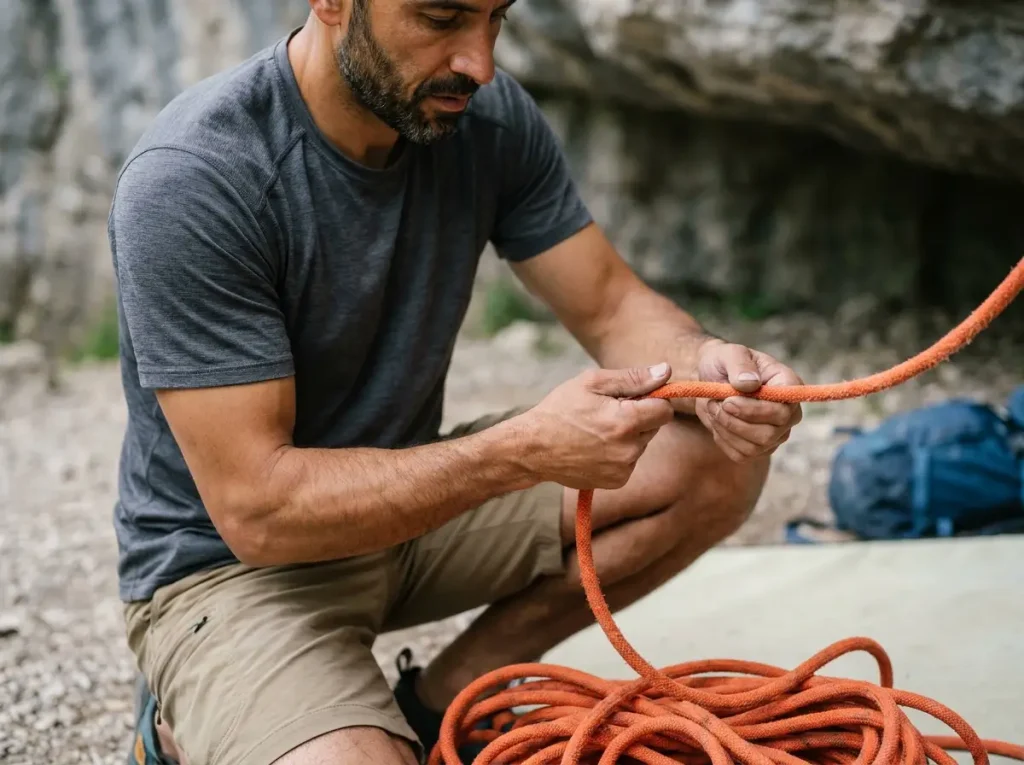
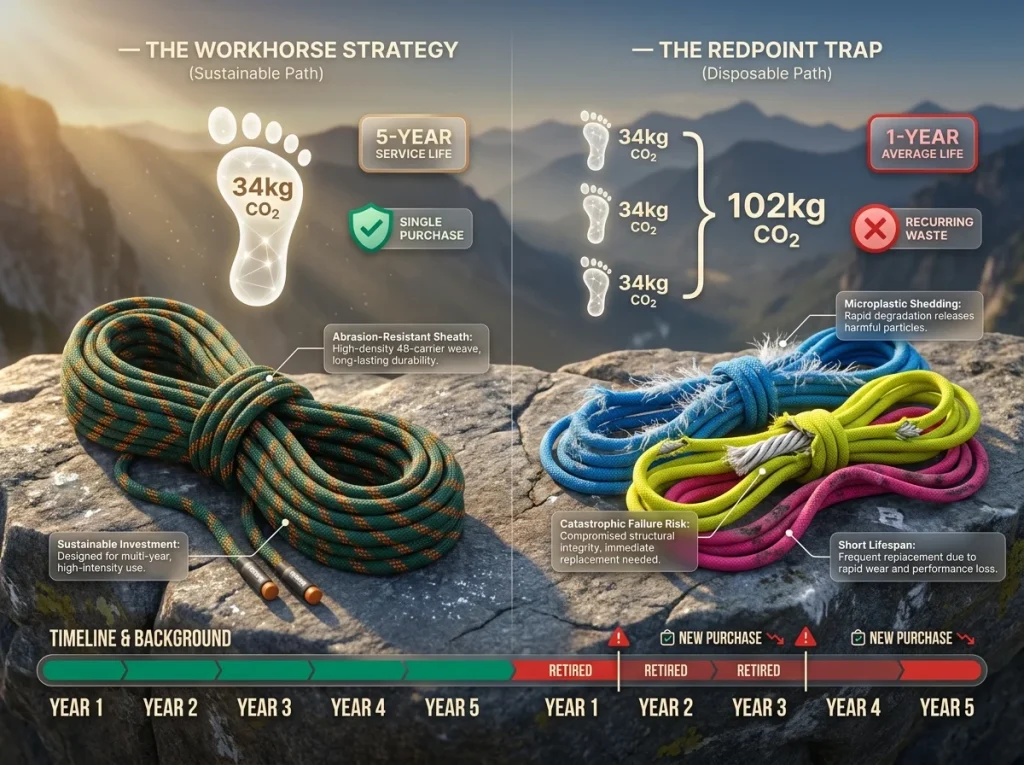
Most safety cords are made of Polyamide 6—just the technical name for specialized nylon. Manufacturing a single seventy-meter rope pumps out about 34 kilograms of carbon emissions. That’s the same environmental footprint as driving a gas car over a hundred miles. Every time you buy a cheap cord and retire it after one season of projecting, you hit that carbon reset button. That’s why longevity is the only green metric that matters. A burly workhorse rope—like a 9.8mm or thicker—feels heavier on the approach. But if it survives five years instead of one, it beats a skinny redpoint cord that fries in three months. The absolute greenest piece of gear is the one you never throw away.
Shipping vs. Sourcing: The Hidden Footprint
There is a massive blind spot when trying to buy an environmentally-friendly kit. We look at the tags on a new harness for an eco-certification and assume we made the right choice. But nobody talks about the carbon cost of shipping. A heavy box of gear made by eco-responsible brands in Europe might come from a solar-powered factory. That sounds great, until you realize shipping a heavy cargo container across the Atlantic wrecks that clean record. For climbers in the US, buying local gear usually leaves a lighter footprint than importing a top-tier European product. To really grasp the life cycle assessment of climbing ropes, you have to measure how many miles that rope traveled before it landed in your trunk. Paying attention to carbon neutral shipping—or just buying closer to home—makes a tangible difference.
If the shipping footprint doesn’t catch your attention, what happens to your rope once it hits the rock definitely will. The environmental tax of climbing gear doesn’t stop once you carry it to the crag.
Why Microplastic Fuzz Matters at the Crag
That fuzzy mess on your sheath isn’t just an annoyance when feeding a GriGri. Those broken hairs are microscopic shards of plastic you’re shredding across the rock. A new rope sheds a few hundred invisible fragments per meter hauled. But once that skin gets abraded, it spikes to forty thousand fragments per meter. You are using the cliff as giant sandpaper. The hard truth about understanding the realistic service life of your gear is that keeping the rope’s skin tight naturally prevents massive amounts of invisible pollution.
Pro-Tip: Run your bare hands over every foot of your rope while flaking it. If it feels like a fuzzy sweater, you’re leaving a trail of plastic behind on every pitch.
And if the plastic fuzz isn’t enough to make you rethink your cord, the chemicals keeping it dry should be.
Ropes & Harnesses: The PFC-Free Reality Check

Ditching the ‘Forever Chemicals’
For decades, ropes were soaked in toxic PFAS chemicals to stay dry—creating a coating that kept your cord from turning into a soggy noodle halfway up a multi-pitch. Here’s what the data shows: those chemicals don’t degrade. They rub off on the rock, and the first heavy rainstorm washes them into the local watershed. The current EPA understanding of PFAS health risks confirms these chemicals build up inside our systems and never leave. The industry has finally pivoted to pfc-free ropes. Ditching those toxic coatings is a massive win for the crags we love. If you want to know how standard dry treatments compare to non-dry options, the short version is that you finally have safe alternatives that perform just as well.
The Soapy Feel of PFC-Free Ropes
Telling a friend to buy a non-toxic rope is easy, but you have to warn them about how these new cords handle right out of the package. Ropes like the Eco Dry lines from Edelrid are undeniably safer for the environment. But climbers are often caught off guard because the sheath feels slick or “soapy” during the first few sessions. The chemical bonding process is just different. You have to grip the brake strand a bit tighter on those initial rappels until the rope breaks in. These eco-friendly treatments also attract crag dirt significantly faster. You’ll need to wash your rope twice a season to stop the grime from acting like a file on your carabiners, but that’s a small price to pay to keep forever chemicals out of the river.
While the new coatings change how a rope feels, some brands are completely reinventing how the rope itself is woven together to maximize its lifespan.
Kevlar and Scrap Yarns: Edelrid’s Innovation
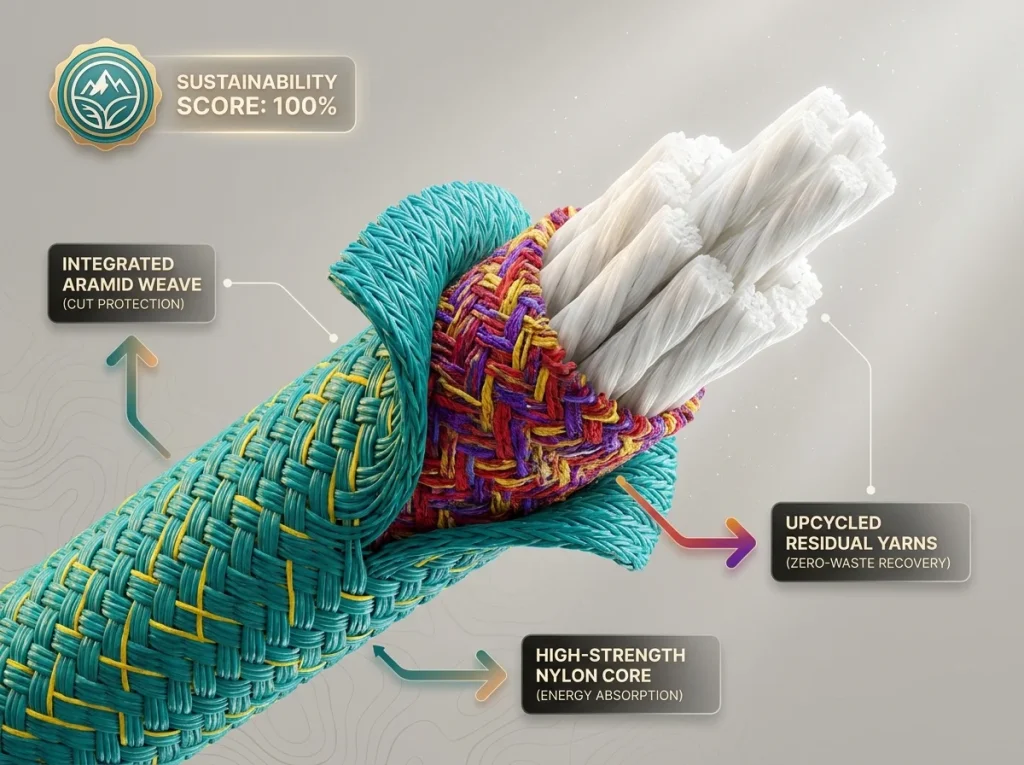
The smartest push in gear design involves factory trash. When a standard rope factory switches colors, hundreds of meters of perfectly good nylon get tossed in the bin. Brands like Edelrid stopped throwing that away. They weave those leftover multi-colored threads directly into the sheaths of brand-new ropes. It keeps virgin plastic waste at zero for that production run. But they went further to increase real-world durability. They now weave Aramid Fibers (the Kevlar-like stuff used in body armor) directly into the nylon sheath. Adding this armor makes the rope incredibly cut-resistant when dragged over sharp granite. That proves pushing for eco-friendly tech actually improves your physical safety when you’re fifty feet above your last piece of gear.
But even the toughest rope eventually retires. Shoes, on the other hand, can live multiple lives if you have a good cobbler.
Climbing Shoes: The Resole Revolution
The “No Hole” Resoling Strategy
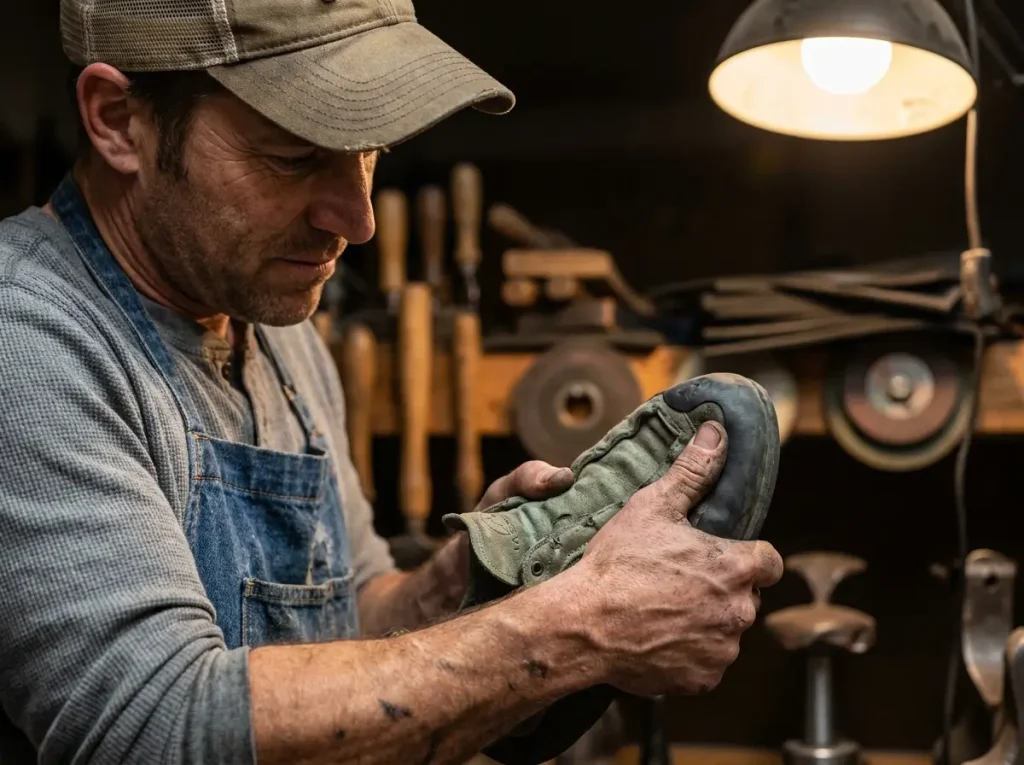
The most effective eco-action you can take has nothing to do with buying new gear. It’s paying to fix your old pair. Resoling services are the absolute backbone of a dirtbag lifestyle. Putting fresh sticky rubber on a shoe is drastically cheaper and greener than trashing it when ninety percent of the materials are still flawless. You can usually squeeze three to four lifespans out of a single pair. Check out knowing exactly when to send your shoes in for new rubber. You have to follow the “No Hole” rule: mail them to the cobbler the second you see the rand wearing thin. If you wait for an actual hole in the leather toe, you just ruined the shoe’s shape and doubled the repair cost. Send them in early. A good cobbler uses a factory last to keep your aggressive downturn completely locked in.
Eco-Materials in High-Performance Kicks
Shoe companies finally realized climbers want high performance without the guilt trip. Heavyweights like La Sportiva and Scarpa are actively rebuilding their iconic models using recycled scraps. Look at the La Sportiva Mythos Eco: they took one of the most beloved trad shoes on the wall and rebuilt the padding, laces, and webbing using ninety-five percent recycled components. You get the same legendary comfort, but you’re wearing repurposed factory trash. It proves the recycled content percentage in a shoe can swallow up the non-load-bearing parts entirely. The rubber still sticks to the micro-crystals, and your conscience stays clean.
The debate gets much more complicated when you look at the upper materials. Choosing between sustainable leather and modern synthetics completely changes how long the shoe will actually survive.
Vegan vs. Leather: The Resole Lifespan
The push to abandon leather for vegan climbing shoes makes sense. Skipping the toxic leather industry is an incredibly green choice. Brands like Vaude are putting out high-end synthetic uppers that crush right out of the box. But here is the truth the gear shop won’t tell you: synthetics just hold their shape differently. A thick leather shoe stretches to conform exactly to your foot, and it holds that custom shape through multiple trips to the cobbler. Synthetic shoes tend to stretch out strangely—or completely bag out—after the heat and pressure of the first hot resole. That often ruins the resoling availability for a vegan shoe. The math gets brutal: buying one leather shoe that survives four resoles beats buying three vegan shoes that fail after one.
Pro-Tip: Size your vegan climbing shoes a half-size tighter than leather. You want them incredibly snug out of the box so that when the synthetic fabric eventually bags out from the resole process, your heel still locks in securely.
Your soft goods will always wear out eventually, but the heavy metal you tie into is a totally different story.
Apparel & Hardware: Building a Forever Rack
Technical Apparel’s Second Life (Patagonia Worn Wear)
The apparel industry is notoriously horrific for the environment, pumping out jackets meant to last a single season. Patagonia draws a heavy line in the sand here. Their Worn Wear program is arguably the most aggressive repair program in the outdoor world. Instead of pushing you to buy a new Gore-Tex shell when you shred an arm on an offwidth crack, they tell you to mail it to them. They stitch the tears using recycled TPU materials pulled directly from their old duffel bags. High-end technical apparel doesn’t have to be disposable. A taped zipper or a patched knee proves you actually use your gear hard. Backing their products with a fair trade sewing standard and a refusal to let gear retire early builds the circular economy climbers need.
Cams, Nuts, and the Infinite Lifespan
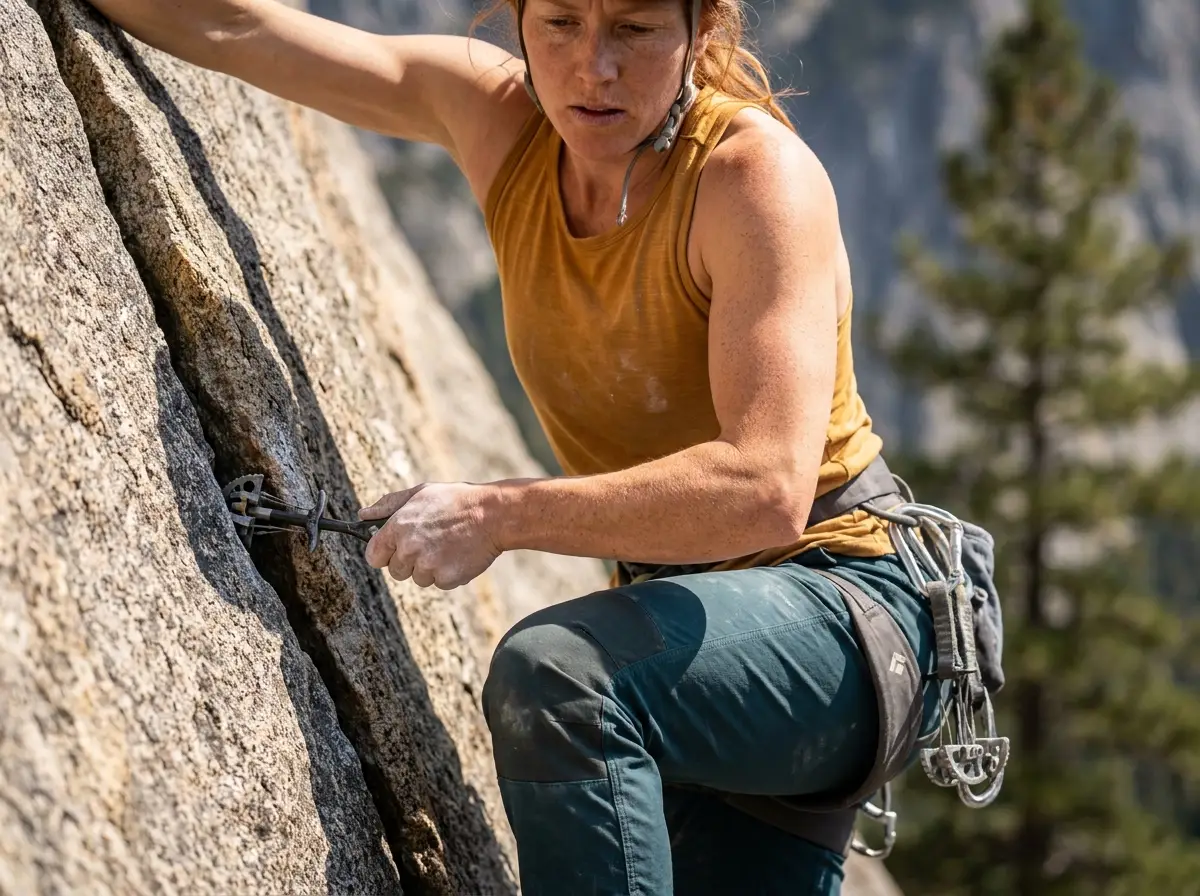
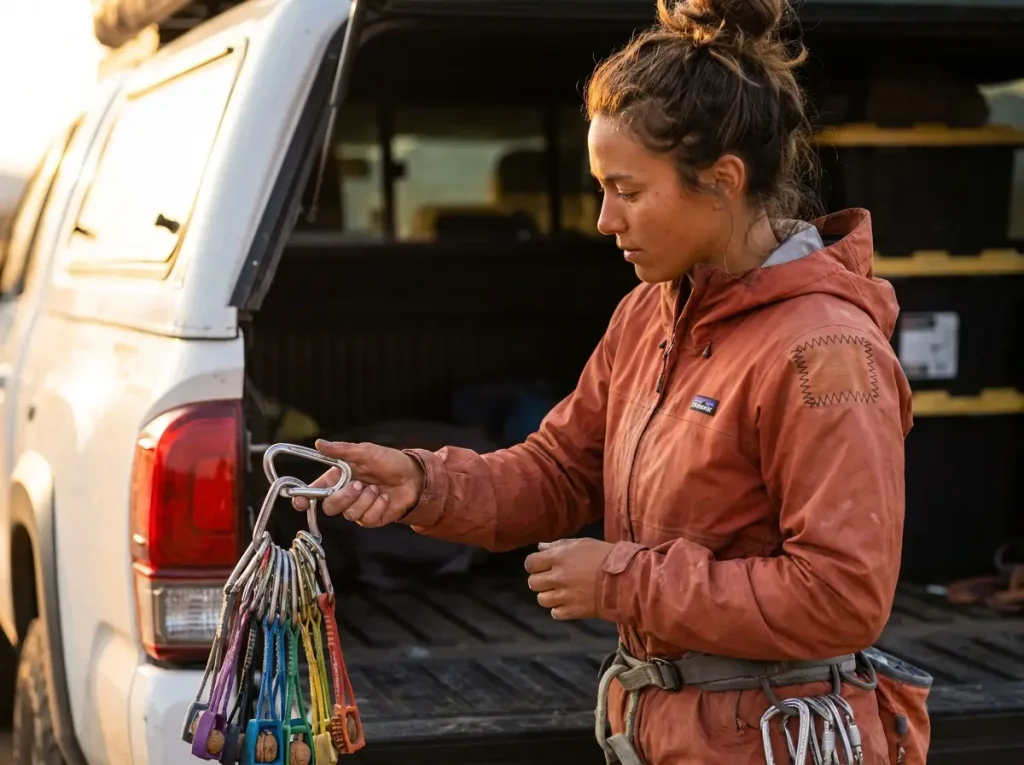
Soft goods are just a fraction of your carbon footprint. The big environmental debt sits right on your harness loops. Metal carabiners, spring-loaded cams, and aluminum nuts account for a massive chunk of greenhouse gas emissions. You have to melt aluminum, forge it, machine it, and test it. Buying a quality rack of protection that lasts twenty years is the ultimate green flex. Cams and nuts last a lifetime if you treat them right. You can pass a rack of Mammut carabiners or Black Diamond cams down to your kids. Just keep your cam triggers clean and hit them with specialized dry lube to keep the springs from locking up. Every time you clean a cam basket, you prove you don’t need a factory to strip-mine another chunk of aluminum.
But while your metal gear can easily last a lifetime, letting confidence bleed over into your old nylon straps can be a fatal mistake.
Beware the Zombie Harness
There is a massive difference between buying a used set of stoppers off a forum and buying a used harness. Metal outlives us all, but nylon has a hidden expiration date. We call them “zombie harnesses”—they are twelve years old, they look totally fine to the naked eye, but the nylon fibers have silently rotted. You need to understand the hidden signs of harness degradation because trusting your life to dead gear is insane. Even if a used harness looks pristine, you have zero idea if the guy stored it in a hot trunk next to a leaky car battery for two years. Exposure to acid fumes or intense UV light eats nylon without a trace. You cannot put a safety rating on a stranger’s closet storage habits. Buy your metal used; buy your soft goods brand new.
We focus heavily on our gear choices, but the single most destructive thing climbers bring to the crag comes in a simple white bag.
Climbing Chalk: The Silent Ecosystem Destructor
How White Powder Smothers Cliff Plants
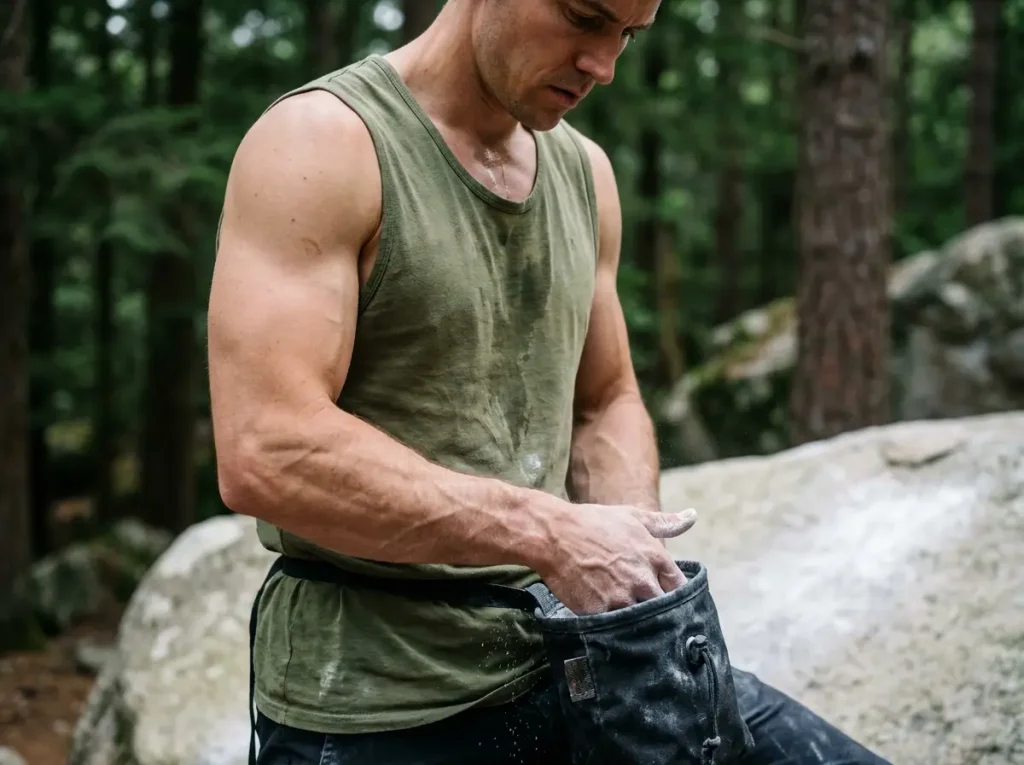
Most climbers treat chalk like harmless dust. We slap it on, blow off the excess, and leave thick white streaks across every boulder in the forest. But climbing chalk is basically magnesium carbonate. When you pack that powder into porous rock, it wrecks the local environment. Rock faces are usually neutral or slightly acidic, which is perfect for native plants. Slapping chalk on the wall raises the pH to the level of highly alkaline soapy water. This sudden chemical shock actively smothers the mosses, lichens, and rare ferns clinging to the cliff. Studies on the chemical impact of climbing chalk on rock-dwelling organisms show our habits are literally choking out microscopic life. Take a hard look at the rock surrounding popular holds—it’s completely barren.
Sun-Dried Seawater Chalk vs. Strip Mining
Most people assume chalk comes from a clean little factory somewhere. The reality is that the vast majority of cheap chalk is aggressively mined out of the earth in massive open-pit operations. Giant machines strip the earth bare, destroying habitats and throwing alkaline dust plumes into the air. It’s a hugely destructive process just to keep our hands from sweating. That is why the demand for alternative sourcing and the biodegradability of chalk is exploding. Brands like Midnight Lightning skip the heavy machinery entirely. They evaporate seawater to source their magnesium carbonate, using the sun’s natural energy to dry the salt industry byproducts. This zero-mining approach proves you don’t need to destroy a mountain in China just to climb one in Colorado.
If you want to immediately drop your ecological impact to zero on your next session, changing the physical format of your chalk is the easiest move.
The Eco-Advantage of Liquid Chalk
Ditch the giant loose chalk bucket and switch to liquid chalk. Liquid chalk suspends magnesium carbonate in an alcohol base. When you rub it on your hands, the alcohol evaporates in seconds, leaving a perfectly thin, bonded layer directly on your skin. Because the chalk is literally painted onto your hands, it creates almost zero airborne dust. When you slap a sloper, you aren’t releasing a massive white cloud to settle on the surrounding plants. It keeps the rock cleaner, protects the air quality in crowded gyms, and means you use drastically less product over the course of a day. Less product used means less product manufactured and shipped. It’s a win across the board.
You don’t need to spend heavily on niche boutique gear to be green. In fact, true sustainability is built on spending as little money as possible.
The “Dirtbag” Guide to Budget Sustainability
Building a Two-Shoe Shoe Rotation
The biggest myth at the cliff is that you need a huge paycheck to be environmentally friendly. Being budget sustainable is actually the cheapest way to live the climbing dirtbag lifestyle. The smartest financial move you can make is the two-shoe rotation. Buy two pairs of shoes. You climb in one pair at the crag, and the other pair sits at the cobbler waiting for its fresh rubber. When your active pair inevitably wears down to the rand, you drop them in the mail and pull your backup pair onto the wall. This rotation keeps you off the new-shoe treadmill forever. Spending forty bucks a season on repairs beats dropping two hundred bucks replacing trashed shoes. The price you pay for repairing gear is a fraction of buying new.
Sourcing Safe Used Hardware
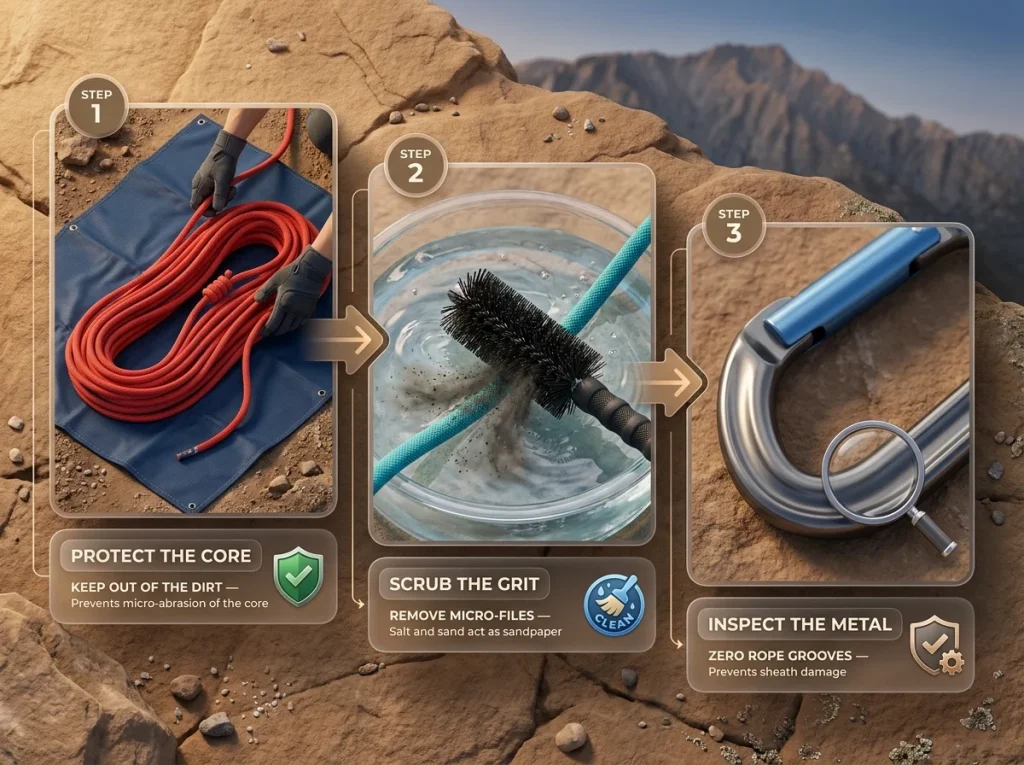
You should never buy a used nylon rope or a zombie harness. But the used metal market is an absolute goldmine for budget climbers. Second-hand compatibility is massive when you are dealing with nuts, hexes, and carabiners. You can scour Facebook marketplace and climbing forums to buy up half a traditional rack for pennies on the dollar. The secret to safely navigating these forums is demanding detailed, brightly lit macro photos. Look closely at the trigger wires on cams. If the wires are kinked permanently, walk away. Inspect the basket of the carabiner—the spot where the rope rides—to ensure there are no sharp grooves worn into the metal. If the metal is smooth and the springs snap back hard, that used piece of hardware will protect your life just as well as a shiny new one.
Pro-Tip: Ask the seller for a video of them pulling the trigger on a used cam before you pay. A photo hides a sticky spring, but a video proves the action is smooth.
Once you’ve spent the time and effort to build a solid rack, the only thing left to do is keep it from destroying itself.
Keeping Gear Clean to Prevent Early Retirement
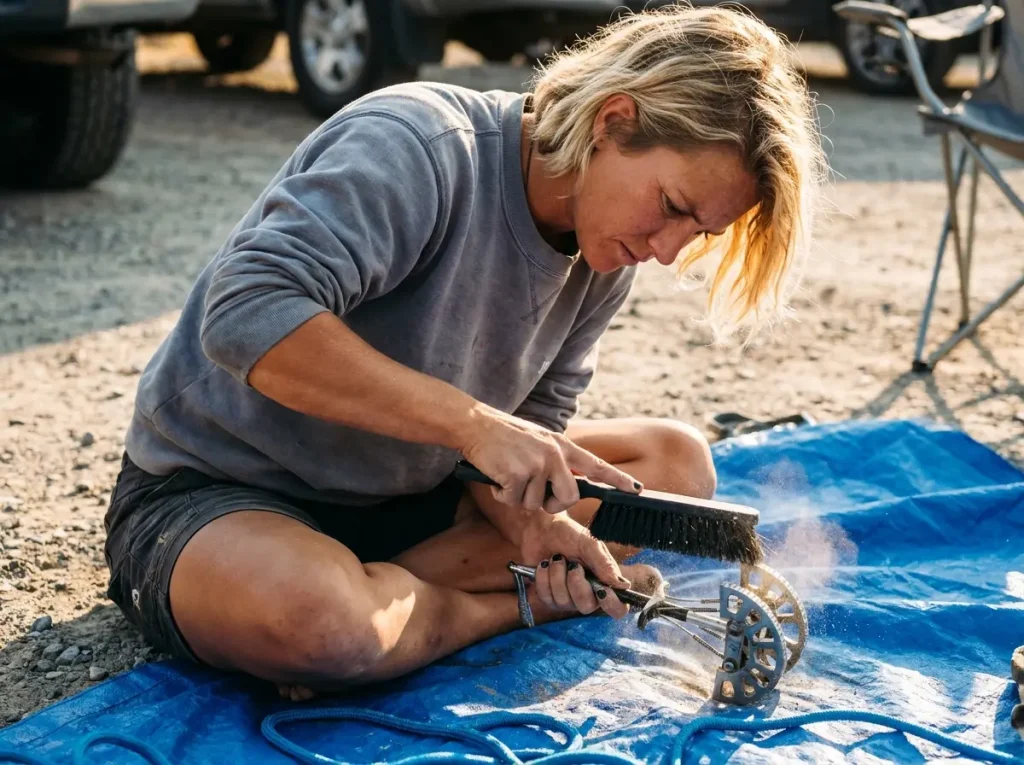
The number one destroyer of expensive climbing gear is simple dirt. Grit, sand, and chalk dust are enemies of longevity. A dirty rope is basically a sixty-meter file. When you pull a sandy rope through an aluminum carabiner under load, it grinds deep grooves directly into the metal. Washing your gear gently in lukewarm water isn’t about making it look pretty; it’s mandatory maintenance. Taking an old toothbrush to the hinges of your carabiners clears out the microscopic grit that wears down the springs. To keep your cams firing smoothly, keep them out of the mud. Never, under any circumstances, flake your rope directly into the dirt at the base of the climb. Flaking your rope onto a cheap tarp doubles its lifespan instantly. It stops abrasive sand from grinding into the core, meaning your rope stays safer, handles better, and stops buzzing microplastics across the cliff face.
Conclusion
The most sustainable piece of climbing gear you will ever handle is the stuff already sitting in your bag. The outdoor industry wants to sell you on the latest bluesign certified tag and Oeko-Tex fabrics. While those Reach standards are important for global health, the dirtbag truth is simple. By choosing workhorse durability over flimsy trends, embracing the resole rotation, and retiring toxic materials, you protect your wallet and the crags you love. Stop waiting for the perfect green product to save the planet. Run the two-shoe rotation on your next trip and watch how much longer your gear survives the abuse.
FAQ
Is climbing gear bad for the environment?
Yes, manufacturing nylon ropes and heavy metal hardware carries a massive carbon footprint. But buying highly durable gear, keeping it completely out of the dirt, and resoling your climbing shoes significantly drops your personal impact. You offset the manufacturing cost simply by refusing to throw the gear away.
What is a bluesign certified climbing rope?
A bluesign certified rope means it is manufactured under strict environmental standards that eliminate toxic chemicals and aggressively regulate factory water usage. It ensures the manufacturer is not dumping harmful dyes or runoff into local community ecosystems.
Can you recycle old climbing ropes?
True recycling that melts nylon back down for new safety gear is incredibly rare due to strict safety limits. The best way to recycle old climbing ropes is repurposing them into dog leashes, heavy duty rugs, or non-load-bearing camp lines to keep them out of the landfill.
Are vegan climbing shoes sustainable?
Vegan shoes avoid the immense ecological footprint of the toxic leather industry, making them a fantastic eco-conscious choice. But take note: synthetic uppers often stretch out strangely after multiple uses, severely limiting how many times a cobbler can successfully resole them before the fit is ruined.
Safety Notice: Rock climbing and mountaineering are inherently high-risk
activities that can involve physical trauma or fatal incidents. The information on Rock Climbing Realms is for
educational and informational purposes only. Techniques and advice presented here are not a substitute
for professional, hands-on instruction. Conditions and risks vary by location. Always seek guidance
from a qualified instructor before attempting new techniques. By using this website, you agree that you
are solely responsible for your own safety. Any reliance you place on this information is strictly
at your own risk, and you assume all liability for your actions. Rock Climbing Realms and its authors
will not be held liable for any harm, damage, or loss sustained in connection with the use of this information.
Affiliate Disclosure: We are a participant in the Amazon Services LLC Associates Program, an
affiliate advertising program designed to provide a means for us to earn advertising fees by advertising and linking
to Amazon.com. As an Amazon Associate, we earn from qualifying purchases. We are also an official affiliate partner
of Black Diamond Equipment via the AvantLink network. If you click on a Black Diamond affiliate link and make a
purchase, we may earn a commission at no additional cost to you. We also participate in other affiliate programs.
Additional terms are found in the terms of service.