
In this article
Ever watch a World Cup climber stick a wild, upside-down parkour bat-hang and wonder how to steal even ten percent of that magic for your local gym project? I’ve obsessed over these competition documentaries, scrubbing the footage frame-by-frame to figure out what the pros do differently than the rest of us on a Tuesday night.
For years, the climbing world focused squarely on the dirtbag history of features like Free Solo or The Dawn Wall. We watched Alex Honnold scale Yosemite granite without a rope. While the sheer adrenaline is awesome, that doesn’t actually help you climb any better on plastic.
If you want the top climbing competition documentaries that deliver actionable beta, these seven films deliver straight from the isolation zone. They expose the harsh reality of the competitive circuit, grueling injury recovery timelines, and the tactical mindset needed for elite performance.
⚡ Quick Answer: The top competition documentaries are The Wall: Climb for Gold, Age of Ondra, Rotpunkt, Light, Stumped, The High Road, and The Speed Project. These films break down elite performance, route setter logic, and tactical habits you can take right to the gym. Stripping the mystery behind the podium shows that climbing relies entirely on methodical preparation, not just natural talent—but most people skip the basic prep and make it worse.
| Climbing Films & Disciplines | ||
|---|---|---|
| Film | Discipline | Streaming |
| The Wall: Climb for Gold | Combined | Netflix, Amazon, Apple TV |
| Age of Ondra | Lead/Comp | Reel Rock, Red Bull TV |
| Rotpunkt | Sport/Lead | Amazon |
| Light | Bouldering/Lead | Amazon |
| Stumped | Adaptive/Lead | Amazon |
| The High Road | Highball | Amazon |
| The Speed Project | Speed/Endurance | YouTube |
The Olympic Spotlight and the Cost of Gold

We all get anxious when stronger climbers watch us try to string together a tough sequence on a plastic route at the gym. Imagine doing an unnatural sequence on live television, streaming to millions, while managing a secret tendon injury. The sports documentaries covering the recent Olympic transition show that even the world’s best climbers have bad days.
The Tokyo 2020 format rearranged how athletes train, forcing specialists way out of their comfort zones. By bundling how the Olympic bouldering format forces climbers into unfamiliar disciplines, pure boulderers had to randomly learn speed climbing. Lead specialists adapted to explosive dynamic plastic problems.
This created a massive psychological squeeze. The pressure cooker of the competitive circuit sits primarily in the isolation zone—the holding pen behind the main wall. Following USA Climbing official rulebook protocols, competitors surrender phones and get cut off from any outside beta. You just sit there in a cold chair, staring at a blank wall, listening to the crowd scream outside without knowing exactly why.
Where these films drop the inspirational tone and provide actual educational value is exposing the dangerous myth that “lighter is stronger.” For years, magazine advice pushed the false idea that an optimal power-to-weight ratio was everything. That lie led directly to an epidemic of Relative Energy Deficiency in Sport (RED-S) and chronic finger injuries. Driven by this media exposure, the IFSC finally instituted eating disorder screenings to protect athletes.
The Wall: Climb for Gold (The Psychological Toll)
Ranked as a top-tier visual release by Windfall Films, this documentary follows Janja Garnbret, Brooke Raboutou, Shauna Coxsey, and Miho Nonaka grinding toward the fraught Tokyo qualifying rounds. It focuses heavily on the emotional weight of the sport. There’s a massive difference between projecting a boulder outdoors—where you can nap on a crash pad and wait hours for perfect cold temperatures—verses stepping onto a brightly lit stage with exactly four minutes on the comp clock.
You spend a solid chunk of the runtime watching Shauna Coxsey deal with a wrecked knee, fighting a rehabilitation timeline that feels impossible. Released right as the world emerged from lockdowns, it captures the sprawling impact of covid on training which destroyed carefully planned Olympic peaking cycles.
If there’s one thing you take to your own gym sessions from this female-led film, it’s studying the workouts in the background. We see Brooke Raboutou throwing down heavy weighted pull-ups on a hangboard. This normalizes grueling hard work over the tired myth of natural talent. The coach’s perspective presented in the film shows exactly how athletes lean on their support networks when everything goes wrong.
Pro tip: Next time you fail on your gym project, force a reframe. Elite athletes don’t view failure on a boulder as a lack of climbing talent. They view it as a missing physical component they need to add to their next training cycle. You aren’t weak; you just need stronger hamstrings.
Light (Why Lighter Isn’t Always Stronger)
Directed by Caroline Treadway, Light confronts the ugliest secret in our sport. It targets the myth of the “lightest climber” that dominates major bouldering championships and local gym leagues alike. Featuring athletes like Emily Harrington and Kai Lightner, the film discusses the crushing internal pressure to drop weight for a short-term bump in sending ability.
The technical breakdown here feels brutal but necessary for every progression-minded climber. Dropping your daily calories might make a tiny crimp hold feel better for about a month, but your body needs heavy fuel to repair torn pulleys and strained tendons. Sticking to a restrictive diet to climb a harder grade doesn’t win you a medal in the long term. It guarantees chronic finger tears, lasting stress fractures, and hormonal burnout. Fasting before a heavy gym session is a direct recipe for an injury, not a send.
It reminds every weekend warrior that building base strength through solid nutrition leads to a climbing career that lasts fifty years. That heavily beats a single peaked season where your body breaks down for a plastic trophy.
The Mad Scientists of Climbing Biomechanics

We’ve all tried to muscle our way up a route when our forearms are pumped out and burning. We pull harder on terrible edges while our feet sketch out. The pros approach this differently using physics, anatomy, and tactical memory. The best climbers actively hijack their own skeletal leverage to stay attached to the wall when the clock hits ten seconds.
Using biomechanics in practical action looks bizarre until you figure out the math. Elite climbers regularly use their heads, hips, and dropping shoulders as offset weights to change their center of gravity, effectively leveraging your kinetic chain. By shifting a few inches backward off the wall, they push more weight through their rubber and improve shoe friction on slick footholds.
This mechanical mastery gets entirely obvious when athletes sit strapped under the heavy pressure of the on-sight. An on-sight requires reading a full route sequence from the ground and executing it flawlessly on the very first try, legally without getting a single word of beta. The cognitive exhaustion feels worse than the physical pump. Data backs this up: studies comparing the physiological demands of an on-sight versus a redpoint show how fast a climber’s heart rate spikes into the red zone when they don’t know exactly where the next jug hold is located.
Contrast that intense quick-thinking with the stubborn history of the redpoint. The historic term comes from the 1970s when climbers painted a red dot at the base of climbs in Germany to signify climbing it cleanly without pulling on gear. That old dirtbag ethic still aggressively governs modern plastic competitions.
Age of Ondra (Leveraging Your Unique Anatomy)
Usually featured as the crown jewel in Reel Rock collections or streaming on Red Bull TV, this film explores Adam Ondra’s distinct climbing style. Ondra possesses an immense wingspan and manipulates his tall frame for subtle micro-rests that seem physically impossible.
This serves as a masterclass in understanding the strict difference between an on-sight attempt and a flash. Ondra explains exactly what goes through his mind while attached to the wall. A flash involves knowing the moves ahead of time because a partner yelled the beta. An on-sight means stepping completely into the unknown. Ondra’s ability to recalculate his hip positioning mid-air while on-sighting 5.15 routes is staggering.
Don’t just obsess over what tiny crimps he grabs when you watch this. Watch specifically how he drops a knee inside to create upward momentum out of thin air. Real technical accuracy comes from the core, not the fingers.
Rotpunkt (Redpoint Pressure vs. The Comp Clock)
This gritty documentary follows Alex Megos’s frustrating journey through the elite European sport climbing circuits. It digs deeply into the rebellious origins of the free climbing movement, showing how the dirty history of the sport clashes practically with shiny modern gym culture.
The documentary highlights a painful contrast in competition climbing. On one side sits the wild luxury of projecting a beautiful outdoor route for three years, spending weeks figuring out one left-hand bump. On the other side sits the brutal reality of the four-minute competition timer. You get exactly one chance to read the setter’s mind before a buzzer sounds. The patience required for a long-term outdoor project naturally builds the mental callus you need for when an indoor comp gets loud, bright, and chaotic.
Pro tip: Stop treating your gym sessions like a frantic race. If you blow off a boulder problem, don’t immediately pull right back onto the wall while you’re frustrated. Sit on the mat for ninety solid seconds. Think about exactly why your foot slipped, adjust your mental plan, and then try again. Let the nervous system properly reset.
Mental Warfare and Unconventional Rules

Sometimes the biggest competition isn’t the strong climber standing in the isolation zone right next to you. It’s the loud voice in your head screaming that a sloper feels greasy to hold. The next wave of sports documentaries pushes the boundaries of what competing actually means by highlighting adaptive climbing spaces and the intense mentality needed for surviving extreme physical hazards.
These documentaries dive directly into the deep “high scores” mentality, where athletes treat a terrifying route like a complex video game. Detaching emotionally from the fear allows them to perform complex physical equations without freezing mid-crux. We see roped rehearsal—the agonizingly painstaking reality of climbing a move one hundred separate times on a top-rope before ever trying it without the cord. This intense preparation is how athletes effectively manage the climbing fear response long before stepping anywhere near the real danger zone.
According to National Park Service guidelines on climbing safety, managing objective hazards is just as essential as checking your figure-eight knot. You’re completely responsible for assessing the danger before your shoes leave the dirt. Underneath the solo bravado, these films cement an undeniable truth about rock climbing: it is a dependent, trusting team sport.
Stumped (Adaptive Beta and Grit)
If you want to witness absolute determination, grab a beer and watch Maureen Beck. Born with only one hand, she competes fiercely on the paraclimbing circuit, consistently wins gold medals, and casually crushes hard 5.12 routes outdoors on lead. Beck possesses a dark, sarcastic humor that cuts right through the fluffy patronizing garbage people usually slap onto adaptive athletes.
The mainstream climbing community gets weirdly obsessed with doing a route the supposed “right” way. This film actively destroys that concept. Standard climbing instruction manuals certainly don’t apply to Beck’s body, so she invents totally unique sequences to move upward. She treats her body like a machine solving a spatial puzzle.
If you are a shorter climber, or you wildly lack explosive jumping power, stop forcing the intended setter beta. Look closely at Beck’s approach. Get creative with the actual body you brought to the wall. Just because the tall guy skipped three holds by dynamic lunging doesn’t mean you can’t figure out a weird four-move static sequence to reach the exact same spot securely.
The High Road (Top-Rope Prep for High Stakes)
Nina Williams tackles massive 50-foot tall boulders that completely blur the thin line separating difficult bouldering from free soloing, landing somewhere in the terrifying middle. When you climb a highball problem, falling near the top is simply not an option. You are well outside the protective range of crash pads.
This film explores the concept of a “no-fall zone” and the immense preparation required to survive stepping into it. Williams doesn’t just walk up confidently and pull onto the rock face. She safely sets up static ropes. She scrubs dusty holds with stiff brushes. She works the micro-sequences until they are permanently wired into her muscle memory. By dialing in the movement while securely tied to a rope, she removes all physical uncertainty. When it’s time to pull the heavy pads out and climb it ground-up, her brain is free to focus purely on the execution.
While managing the head game of highball bouldering requires intense solo preparation, endurance suffers badly without a rock-solid support system pulling weight in the background. When the physical miles stack up and the weather turns nasty, even the strongest athlete eventually cracks under the strain. You quickly realize that carrying the psychological load totally alone is a fast track to failing the mission.
The Speed Project (The Power of the Crew)
Though technically an endurance running documentary rather than a pure climbing film, The Speed Project embodies the raw, unsanctioned competition vibe currently driving modern outdoor adventure films. It covers a brutal relay race stretching endlessly across the desert.
The secret beta hidden in this film lies entirely in the support team. Even in outdoor sports that look intensely solo, managing the complex logistics, hoarding the water, and safely absorbing the heavy emotional crashes is outsourced completely to the crew driving the van. You are only as good as the belayer catching your nasty falls or the spotter keeping your head off a sharp rock. Climbing demands a high, unspoken level of collective trust. Without the crew doing the dirty work, the athlete stops moving entirely.
The Hidden Competitor: Route Setters

You know that terrible pink sloper problem sitting in the corner of your gym that frustrates everyone on a busy Friday night? Elite climbers face that exact situation too, but their specific route setter is actively trying to make them peel off the wall to entertain a live television audience and generate highlight clips.
The route setter is the quiet, invisible puppet master of competition climbing. They are physical engineers tasked with designing stylized problems specifically to test an athlete’s hidden physiological weaknesses. They know exactly how a traditional competitor wants to climb, so they force them into uncomfortable, awkward positions that burn energy rapidly.
If a setter wants to stop a strong climber from statically locking off and moving slowly upward, they bolt massive, slippery fiberglass volumes to the wall. Having no positive edges left to comfortably crimp basically mandates dynamic, leaping sequences. This specific setter intent is exactly what you need to understand to physically read modern competition boulders like a route setter. The crazy 360-spin paddle dynos you see pulling massive views on a World Cup stream eventually filter down to the local level. Within a single year, your local head setter will replicate that exact comp-style route setting for the gym’s V4 circuit.
Engineering the Parkour Move
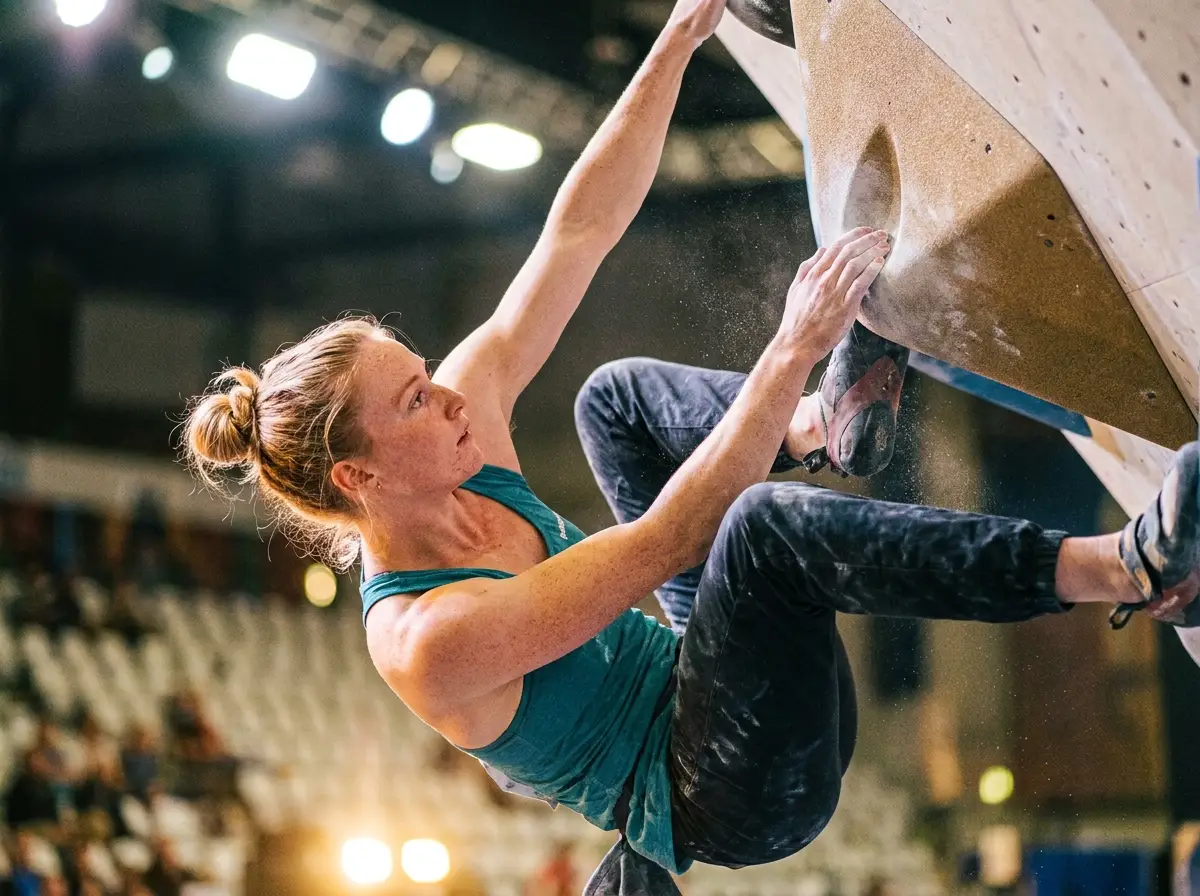
When bouldering moved heavily toward massive TV broadcasting deals and the Olympic stage, the holds fundamentally changed. You can’t comfortably film an athlete pulling hard on a razor-blade edge the size of a dime. The transition quickly shifted toward parkour-style moves, huge blank fiberglass volumes, and spectacular visual jumps that look incredible under stadium lights.
The complex scoring system adapted to this visual mandate. Climbers aim furiously for tops, but they secure valuable half-credit by establishing control on specifically marked zones located halfway up the wall. Setters meticulously design these indoor routes with a singular, strict intended solution. If you find yourself in the gym attempting a move and your body feels contorted in entirely the wrong direction, step off the mat. You are likely missing the setter’s intended sequence entirely. Re-evaluate the geometric puzzle before you blow out a shoulder pulling harder on terrible beta.

The Forerunner’s Test
There’s an unsung hero operating in the shadows of all this: the forerunner. This is the strong, often anonymous local climber hired simply to test-fly every single crazy jump. They ensure it is actually physiologically possible before the World Cup weekend begins. They throw themselves fiercely at the hardest physical moves generated by the head setter, taking massive, bruising falls onto the stiff mats to prove exactly how the sequence functions safely.
Setters carefully observe the bruised forerunner and adjust a critical hold by precise millimeters. They rotate a fiberglass volume slightly to account for the dramatically varying heights of the incoming professional competitors, battling constantly to keep the playing field as objectively fair as possible. It is a grueling, invisible, and physically punishing job.
Pro tip: Next time you get frustrated by a new sequence at your local bouldering gym that feels absurdly reachy, just take a breath and remember that a real person had to test it and grade it. The setter bleeds on the wall just like the rest of us. They don’t just bolt holds up randomly.
Conclusion
These competition documentaries destroy the pervasive, lazy myth that raw natural talent is enough. Pulling an Olympic gold medal down from the wall requires brutal, methodical rehearsal and a stubborn willingness to accept public failure as useful training data. Sharp mental fortitude, trusting your spotters implicitly, and dropping your massive ego to adapt to strange beta will honestly always generate better long-term results than raw finger strength alone. And while climbing genuinely puts one solitary person in the spotlight, it functions completely on the exhausted backs of route setters, diligent belayers, and battered route testers operating quietly in the shadows.
Do yourself a favor and watch one of these films tonight. Stop blindly looking at just the exciting dynos or the heavy screams of victory. Pay specific, close attention to exactly how the pros settle their hips, meticulously chalk their hands, and steady their erratic breath right before attempting a known crux. Take that exact same focused intention to your basic warm-up routine tomorrow.
FAQ
Where can I watch The Wall: Climb for Gold?
You can easily stream it right now on Netflix, Apple TV, and Amazon Prime Video. It serves as the perfect primer for understanding the immense psychological pressure behind modern Olympic climbing athletes.
What is the difference between bouldering and lead competition?
Bouldering limits climbers to solving short, brutally difficult, unroped plastic problems over a padded crash pad. Lead climbing directly tests deep endurance, requiring roped athletes to clip into carabiners as they climb a 50-foot wall without falling once.
Who is the best female competition climber?
Janja Garnbret sits universally recognized as the greatest competition climber in history. Her terrifying dominance in bouldering and lead climbing across the last decade, particularly highlighted by her dual Olympic gold medals, remains functionally unmatched.
Why don’t competition routes look like real outdoor rock?
Bright modern competitions exist mainly for spectator entertainment, utilizing huge, colorful volumes to force dramatic, sweeping jumps. Setters care way less about recreating a natural grey cliff face and focus almost entirely on testing dynamic physical coordination.
Safety Notice: Rock climbing and mountaineering are inherently high-risk
activities that can involve physical trauma or fatal incidents. The information on Rock Climbing Realms is for
educational and informational purposes only. Techniques and advice presented here are not a substitute
for professional, hands-on instruction. Conditions and risks vary by location. Always seek guidance
from a qualified instructor before attempting new techniques. By using this website, you agree that you
are solely responsible for your own safety. Any reliance you place on this information is strictly
at your own risk, and you assume all liability for your actions. Rock Climbing Realms and its authors
will not be held liable for any harm, damage, or loss sustained in connection with the use of this information.
Affiliate Disclosure: We are a participant in the Amazon Services LLC Associates Program, an
affiliate advertising program designed to provide a means for us to earn advertising fees by advertising and linking
to Amazon.com. As an Amazon Associate, we earn from qualifying purchases. We are also an official affiliate partner
of Black Diamond Equipment via the AvantLink network. If you click on a Black Diamond affiliate link and make a
purchase, we may earn a commission at no additional cost to you. We also participate in other affiliate programs.
Additional terms are found in the terms of service.