
In this article
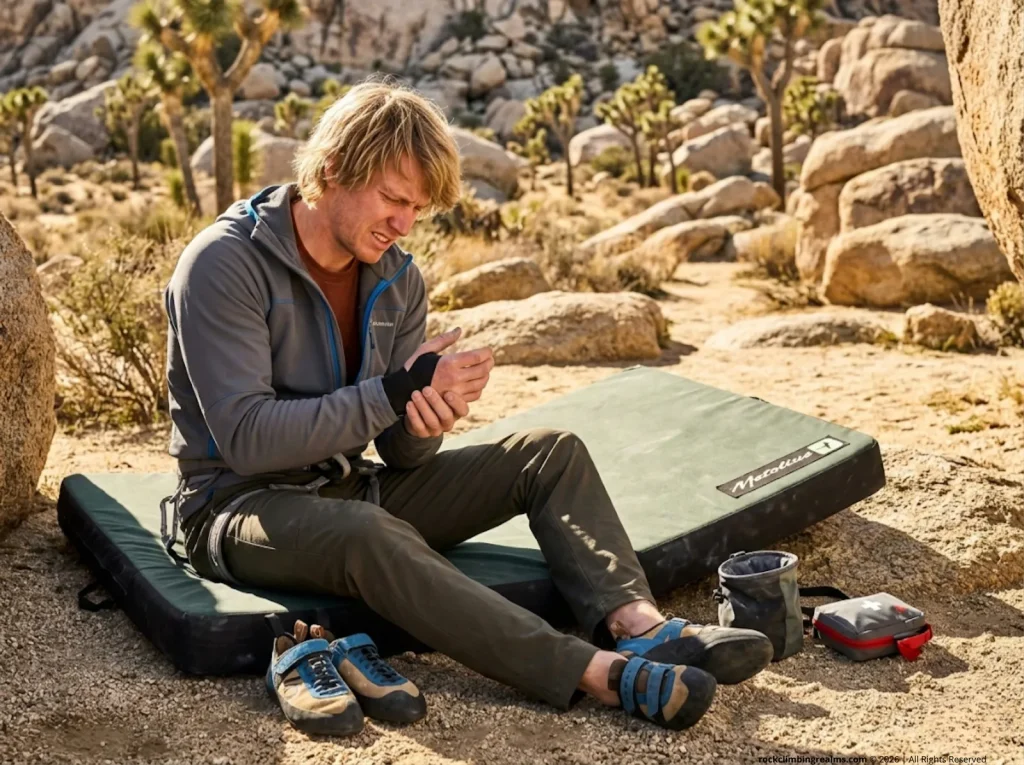
My first month of bouldering ended with an X-ray. I peeled off a V2 slab, threw my hands out on instinct, and heard the snap before I felt it. A distal radius fracture from a four-foot fall. The ER doctor shrugged while wrapping my cast. “We see this every week.”
That fall changed how I approach every single boulder problem. After hundreds of intentional falls, coaching sessions, and more research than I care to admit, I can tell you this with certainty: falling is a skill, and most climbers never learn it.
This article breaks down the three most common bouldering fall mistakes that land people in the emergency room, and gives you the exact techniques, drills, and field-tested fixes to make falling the safest part of your climbing.
⚡ Quick Answer: The three mistakes that send boulderers to the ER are bracing with outstretched arms (causing wrist fractures), landing with straight locked knees (causing ankle and spinal trauma), and failing to roll after landing (concentrating impact on the tailbone). Fix all three by training T-Rex arms, bending your knees to roughly 90 degrees on impact, and completing a full back roll every time you come off the wall.
Why Bouldering Falls Send More Climbers to the ER Than You Think
The Numbers Behind Bouldering Injuries
Here’s the reality check most gym orientations skip. A 10-year US emergency department analysis of rock climbing injuries found an estimated 47,251 climbing injuries treated in American ERs between 2014 and 2023. Falls caused 58.8% of those cases. Fractures topped the list at 26.8%, followed by sprains and strains at 20.4%.
Bouldering-specific data is even more telling. A 2022 study by Müller and colleagues tracked 430 bouldering patients who showed up to the emergency department. Ankle injuries accounted for 36.7% of cases. Knee injuries hit 16.8%. Over half were sprains. Nearly a quarter were fractures.
The kicker? 85% of bouldering accidents are involuntary. Foot slips, missed holds, and dynos account for 72% of falls combined. You don’t get to choose when you fall. But you absolutely get to choose how you land.
Why Falling Is a Skill, Not Just Bad Luck
Most injuries happen from the middle or top sections of walls, not from the tippy-top where you’d expect them. And 74% of bouldering falls do result in a feet-first landing. So why are ankles still getting destroyed?
Rotation during the fall. Bad pad placement. And most commonly, the wrong instincts kicking in at the worst possible moment. Your body wants to brace on impact. Your arms want to reach out. Your legs want to lock. Every single one of those reflexes will hurt you.
The good news? Falling with control is a trainable skill. It’s not luck, it’s not talent, and it’s not something you’re born with. 84.6% of climbing ER patients were treated and released, meaning most of those injuries were preventable with the right technique. That’s according to a University of Utah Health report on rock climbing injury prevention that lines up with the national numbers.
Mistake 1 — Bracing With Outstretched Arms
The Physics of Why Your Arms Break
This is the big one. The mistake I made on that V2 slab, and the mistake that fills orthopedic waiting rooms across the country.
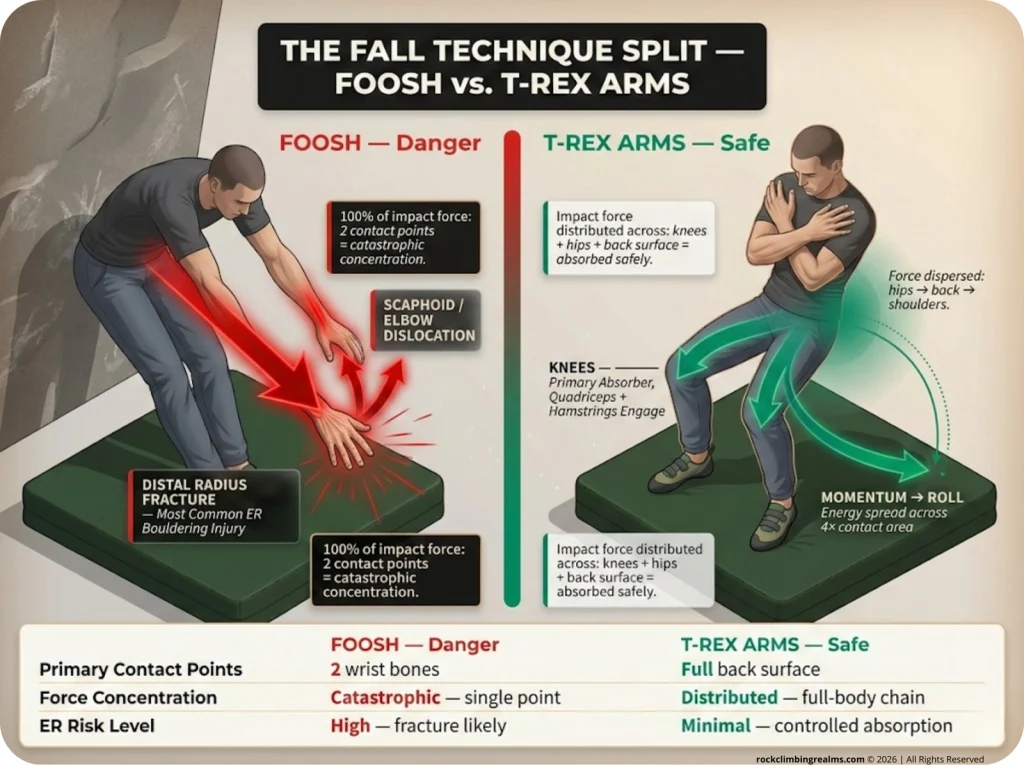
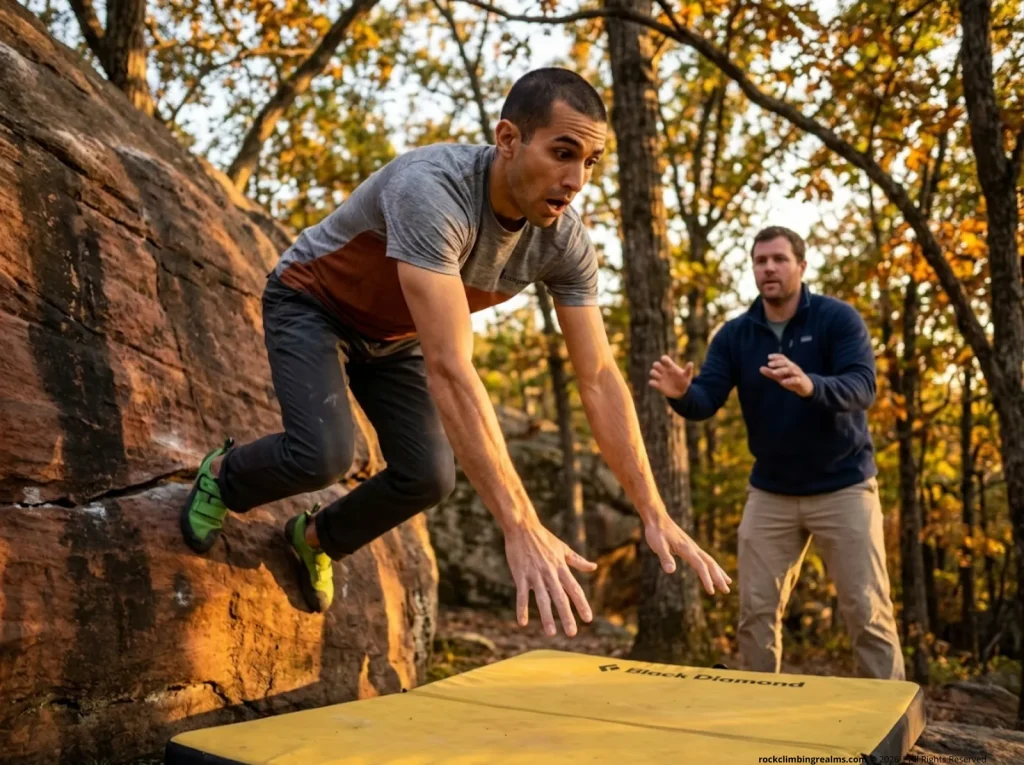
When you fall and throw your hands out to catch yourself, the full impact force channels straight through your wrist, forearm, and elbow. Doctors call it a FOOSH injury, short for Fall On OutStretched Hand. It’s behind most distal radius fractures, scaphoid fractures, and elbow dislocations in bouldering.
Your arms aren’t built to take that kind of hit. Your legs are. When your arms are fully extended and rigid, the force concentrates at the weakest points — your wrist bones and your elbow. That same energy, run through bent knees and a roll, barely registers.
One thing almost nobody talks about: research from Madsen and colleagues (2025) found that female climbers are more likely to sustain sprains and strains than males in climbing ER visits. According to Johns Hopkins Medicine’s guide to common rock climbing injuries, upper-extremity injuries from bracing falls are among the most frequently seen patterns. Gender-specific awareness matters for inclusive safety coaching.
The T-Rex Arms Fix
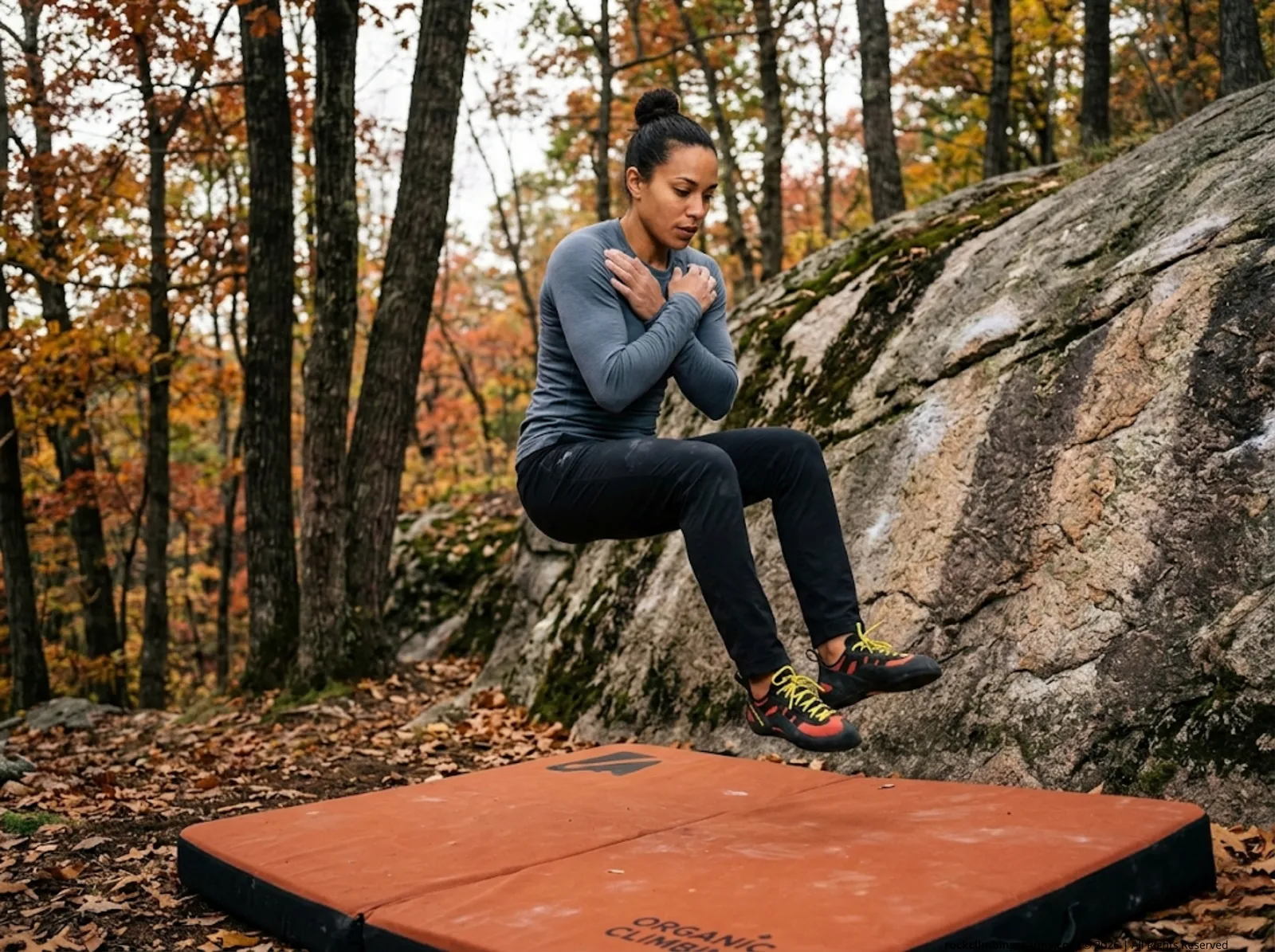
The fix is simple to describe and brutally hard to execute in the moment. Bend your elbows. Tuck your arms tightly across your chest, hands near your collarbones, elbows pressed against your ribs. That’s the T-Rex arms position.
Engage your core and tuck your chin. Your abs protect your spine. Your chin tuck protects your neck. Together with the arm position, you’ve shut down the three most common upper-body injury patterns in a single posture.
The hard part is overriding the hardwired “catch yourself” reflex. Your brain screams at you to reach out. The only way to beat it is repetition. Practice T-Rex arms standing still on a crash pad before you ever try it during a fall. Twenty times. Fifty times. Until it’s automatic.
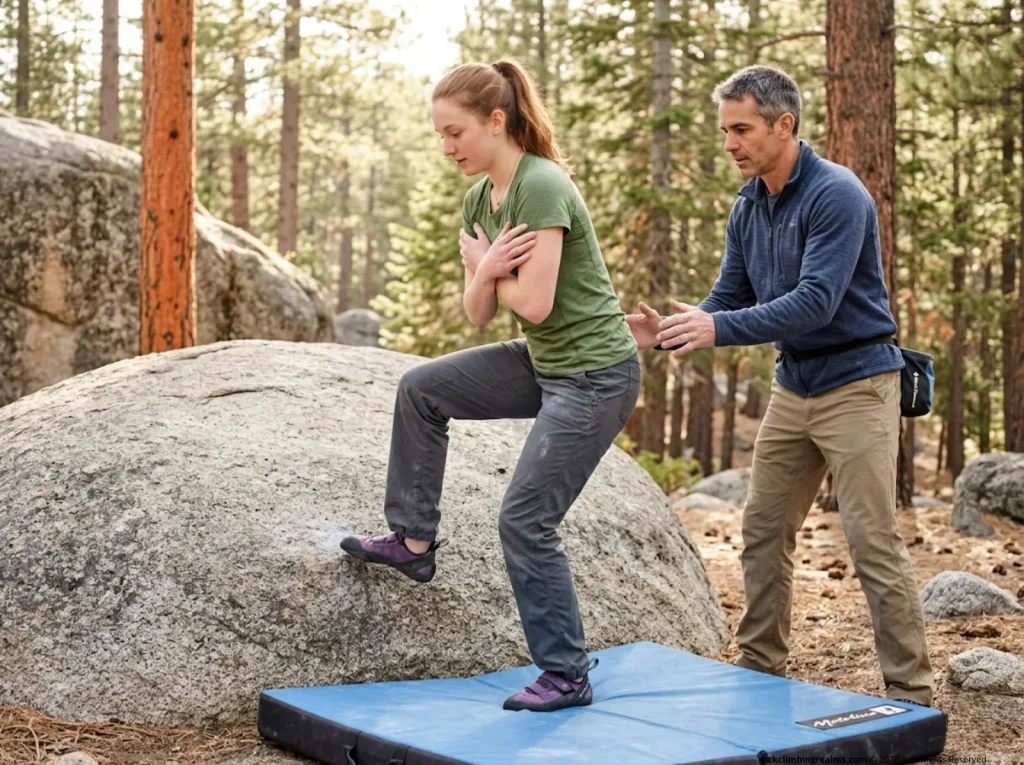
Pro tip: Ask your spotter to watch your arms during practice falls. The reach-out instinct sneaks back under stress, and someone watching catches it faster than self-awareness.
If prevention fails and you do land wrong, having a field-tested first aid protocol for climbing ankle injuries locked in your memory pays for itself immediately.
Mistake 2 — Landing With Straight, Locked Knees
Force Transmission Through a Stiff Chain
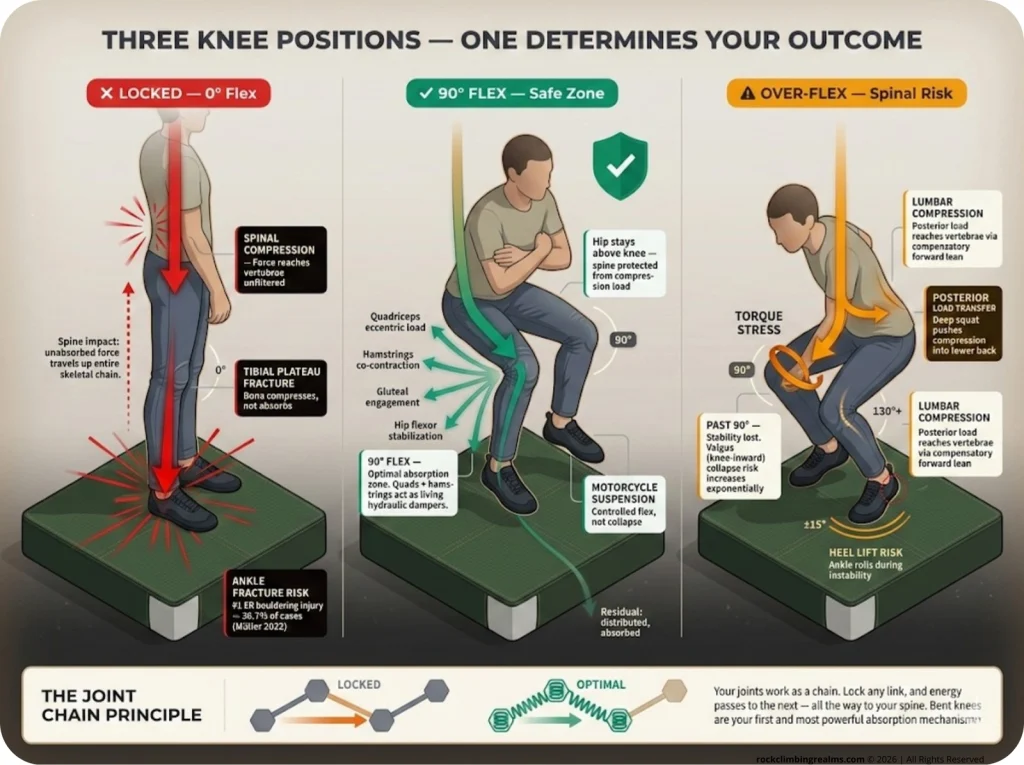
Your legs work like a chain of links — ankle, knee, hip, spine. When any link locks rigid on impact, energy doesn’t get absorbed. It shoots straight through bone and cartilage to the next joint up.
Ankles are the most frequently fractured body part in bouldering ER data, and stiff, locked knees on landing are the primary cause. Even a four-foot fall with locked legs can snap an ankle or crack a tibial plateau. Falls from above twenty feet carry a 52% higher fracture risk, but height isn’t the only factor. Stiffness kills.
Would you rather land on a pogo stick or a steel beam? Your legs need to work like suspension, not scaffolding.
Pro tip: “Landed stiff-legged and felt it all the way up my spine — never again.” That’s the voice of experience from climbing forums worldwide. Hear it before you feel it.
The 90-Degree Rule for Safe Absorption
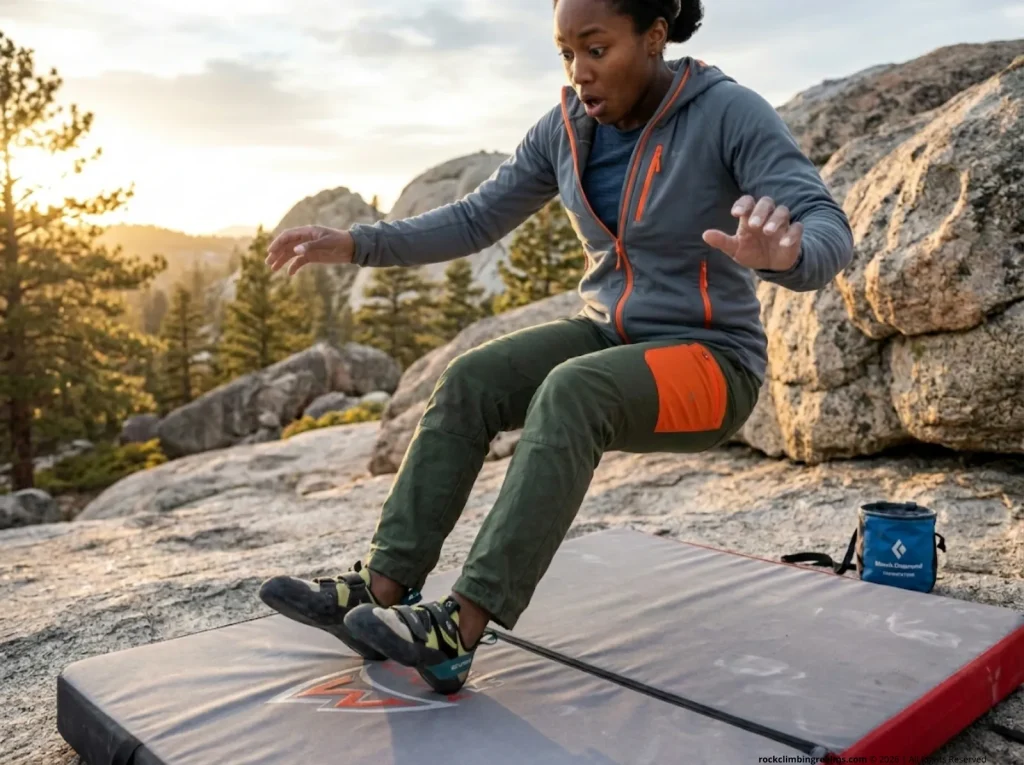
Land with your feet shoulder-width apart and your knees bent. Absorb through controlled leg flexion, like sitting down fast into an invisible chair.
Here’s the detail most guides skip. Cap your knee bend at roughly 90 degrees. Go deeper and you lose stability while loading your lower back. Think “motorcycle suspension, not deep squat.” Your legs need to be firm enough to control the landing but soft enough to soak up the impact over a longer window.
Muscle tension balance matters more than people realize. Too loose and your ankles roll. Too rigid and your joints shatter. Stay loose but in control. That sweet spot between a sack of potatoes and a steel bar is where every safe landing lives.
You’ve also got to think about what’s under your feet. Even a textbook controlled landing fails if your crash pads have gaps or aren’t covering the fall zone. Understanding how crash pad placement changes your fall vectors is just as important as the technique itself.
Mistake 3 — Failing to Roll After Landing
Why Stopping on Your Feet Isn’t Enough
You’ve got your T-Rex arms locked. Your knees are bent. Your feet hit the pad cleanly. Job done, right?
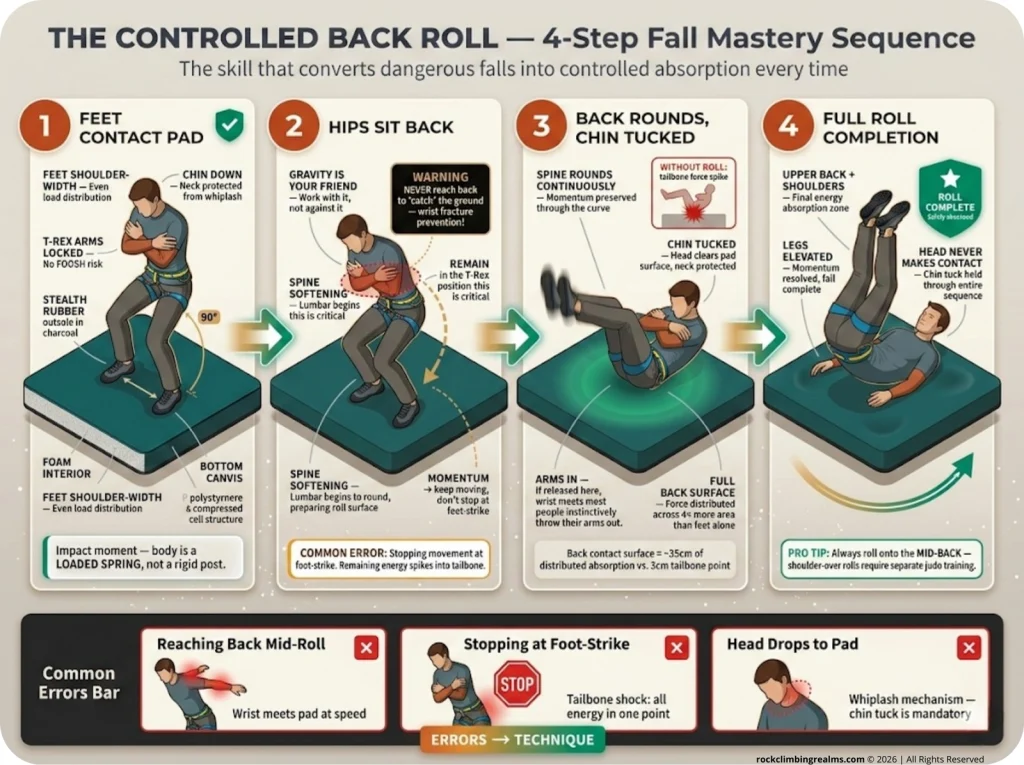
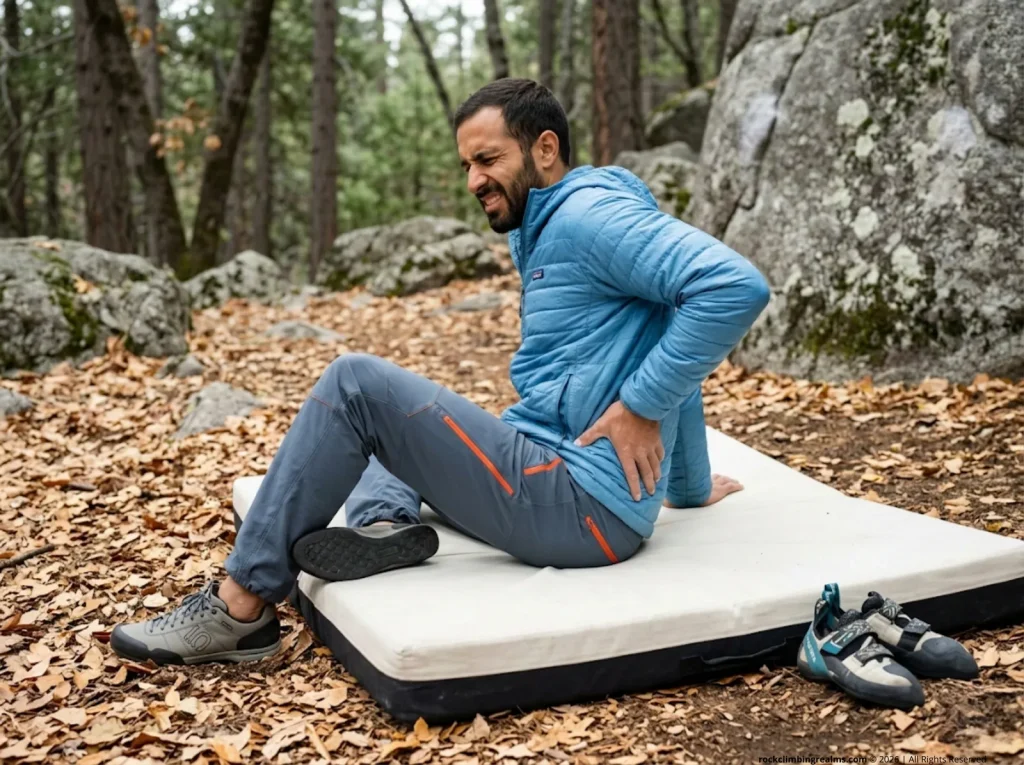
Not even close. If you stop moving the instant your feet touch down, all that remaining energy channels straight into your tailbone and lumbar spine. A feet-first landing without a follow-through roll is like slamming the brakes at highway speed. The car stops. You don’t.
The back roll spreads that remaining impact across a much larger area — your butt, your mid-back, your shoulders. Instead of one sharp spike on your tailbone, you get a long, gentle wave across your whole back. That’s the difference between walking away and not walking for six weeks.
Core tension throughout the roll keeps your neck and head safe. Chin tuck is non-negotiable. Prevent whiplash by rounding your back and keeping your head off the mat.
The Controlled Roll Sequence
Here’s the sequence. After your feet contact the crash pad with bent knees, immediately sit your hips back. Let gravity pull you into a backward roll onto your rounded back. One fluid motion. Don’t fight it.
Keep your arms in T-Rex position through the entire roll. Never reach behind you to “catch” the ground. That’s how you break a wrist after doing everything else right.
Roll onto your back or slightly to one side. Skip the shoulder-over judo roll unless you’ve specifically trained that pattern. For most climbers, the straight back roll is safest and simplest.
On overhangs and roofs, the game changes. Pull your knees to your chest mid-air, round your back, and curl into the roof turtle position. This lets you rotate safely and land on the pad without slamming flat.
Pro tip: Always communicate your expected fall direction with your spotter before you start climbing. “Crux is move four. If I come off, I’ll fall right and back.” Two seconds of planning prevents catastrophic surprises.
Once you’ve nailed the roll, the next question is what you’re rolling onto. Building safe landing zones by stacking crash pads covers the hardware side of the equation.
How to Practice Deliberate Falls (From V0 to V6)
Phase 1 — Static Drills on the Ground
Don’t start by falling off anything. Start by rolling on the ground.
Stand on a crash pad. Assume T-Rex arms. Sit back and roll. Repeat twenty times until it feels automatic. Then stand on a low step — maybe twelve to eighteen inches — and step off into the same sequence. This is proprioception awareness training at its simplest. Your body needs to learn the motion before adrenaline gets involved.
Mental rehearsal before each drill matters more than you’d expect. Close your eyes and visualize the exact arm, knee, and roll sequence. See it, then do it. It’s how your nervous system builds the response so it fires without thinking.
Phase 2 — Falling from Easy Climbs (V0-V2)
Climb easy boulder problems to knee or waist height. Let go deliberately with T-Rex arms and roll. That’s it. No trying hard. No sending. Just falling on purpose from a height that doesn’t scare you.
Gradually increase height as the fall response becomes reflexive. Have a partner watch your arm position. Under stress, your instinct to reach out comes roaring back. External feedback catches it faster than self-awareness ever will.
Downclimbing whenever possible also reduces fall height. If you can reverse the last two moves instead of jumping, your joints will thank you. It’s the simplest injury avoidance habit that most climbers skip.
Phase 3 — Dynamic Falls on Steeper Terrain (V3-V6)
Now it gets real. Practice falling from overhung and roof problems where rotation during the fall is likely. This is where the turtle position matters.
Train falling sideways and backwards, not just straight down. Real crux falls at the bouldering wall rarely happen in the textbook orientation. You peel off twisted, inverted, or sideways. You need to have practiced all of those.
Read the boulder before you climb. Scope out your landing zone. Where’s the crux? Which direction will you fall if you miss it? Stage your pads and spotter accordingly. Visualization of crux falls bridges the gap between knowing the technique and actually executing it when fear overrides everything.
If you want to take the mental side deeper, a structured 4-week mental training protocol for climbing fear builds the pathways that make fear management automatic.
Spotting and Pad Setup That Actually Prevents Injuries
How to Spot a Boulderer (Without Catching Them)
A spotter’s job is not to catch you. Read that again.
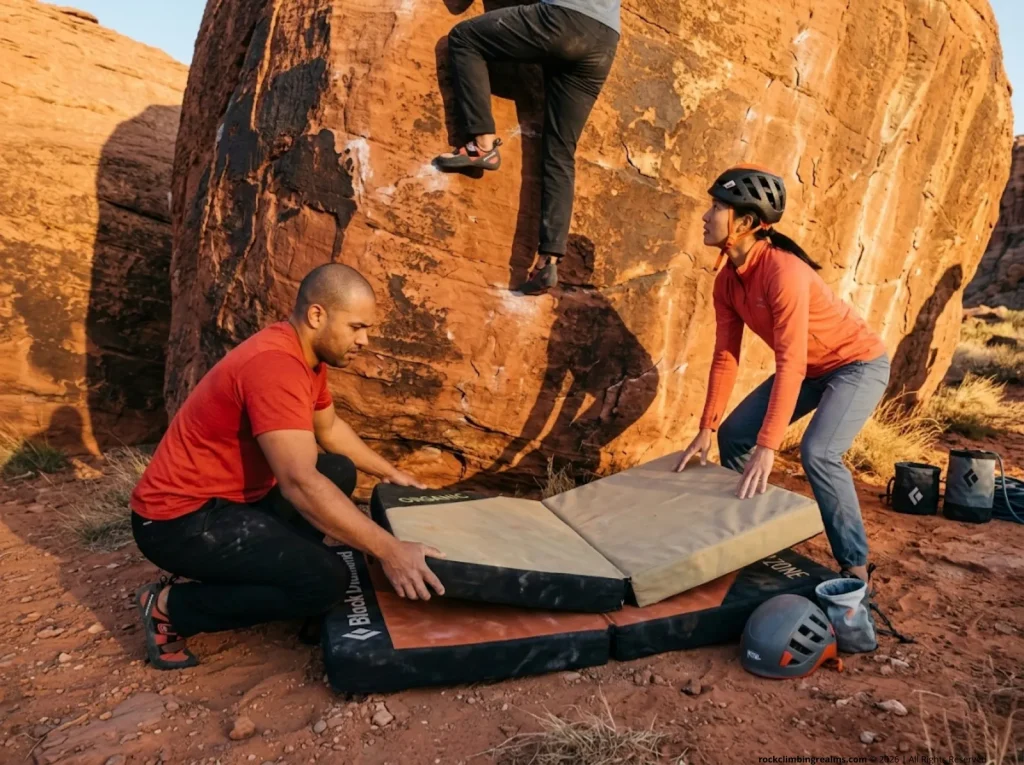
A spotter guides the falling climber’s hips and center of mass toward the crash pads. Hands up. Elbows soft. Focus on redirecting, not bearing weight. If you try to catch a 160-pound person falling from ten feet, you’ll both end up hurt.
Before every climb, communicate. Where’s the crux? What direction is the likely fall? Where are the pads staged? The spotter should track the climber’s center of mass as they move across the problem, repositioning if the climber traverses. Good spotting rules are the difference between a close call and a bad day.
Pad Setup Rules That Eliminate Gaps
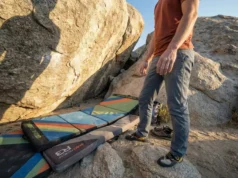
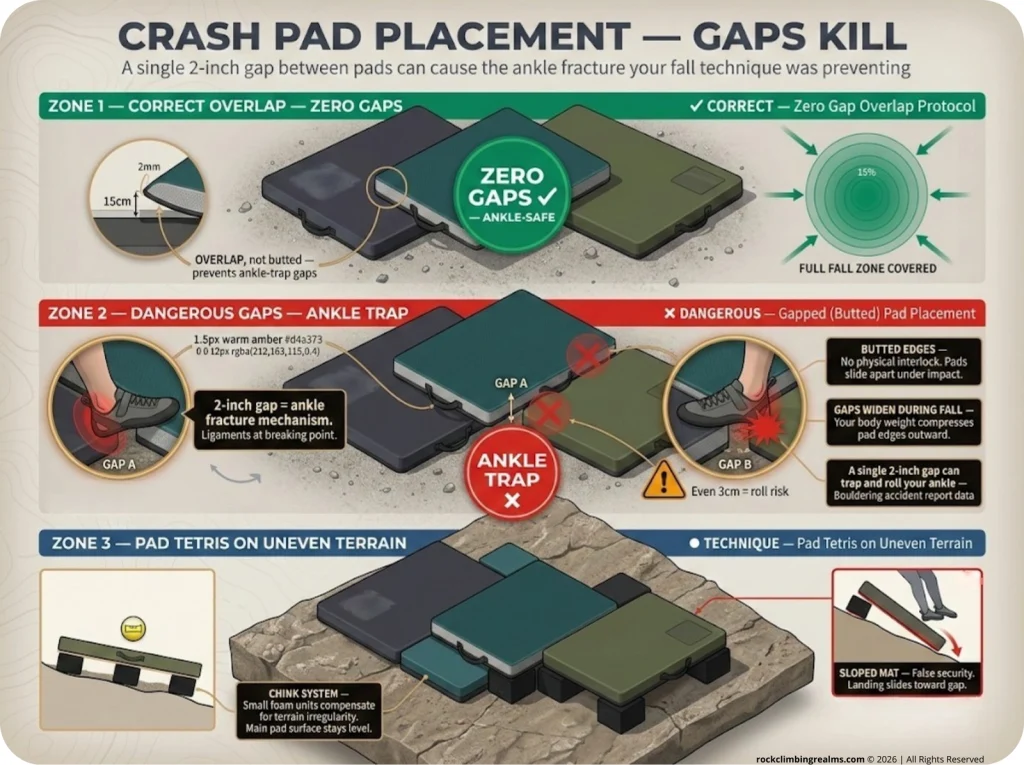
Pads must overlap with zero gaps. A single two-inch gap between crash pads can trap and roll your ankle. No pad gaps, ever.
Cover the entire fall zone — the area directly below the climber’s most likely landing point, especially at the crux and any topout moves. Follow the hard-on-soft stacking rule: stiffer pads on the bottom, softer topper pads on top, for the best impact absorption.
On uneven or talus terrain, use the Pad Tetris method to build a level platform that won’t slide or fold on impact. Bouldering mats on sloped or rocky ground need extra attention. A sloped mat under your landing zone is worse than no mat at all because it creates a false sense of security.
Outdoor Pad Ethics and Leave-No-Trace Protocols
This doesn’t get said enough. Never place pads on vegetation. Crushed plants and disturbed soil create erosion and micro-habitat damage that takes years to heal. Never drag pads between boulders. Pick them up and carry them.
“Pad-dragging is a sin” in the outdoor bouldering community, and they’re not joking. Pad-dragging erosion around popular boulders destroys approach trails and damages fragile groundcover that prevents runoff.
In sensitive areas like Bishop, Fontainebleau, or Indian Creek, check for specific crash pad placement regulations before you climb. Why where you drop your pad matters more than you think covers the leave no trace pad protocols in depth. The National Park Service climbing safety guidelines also outline general fall-safety principles worth reviewing.
From Fear to Confidence — The Mental Side of Falling
Why Your Brain Fights the Correct Technique
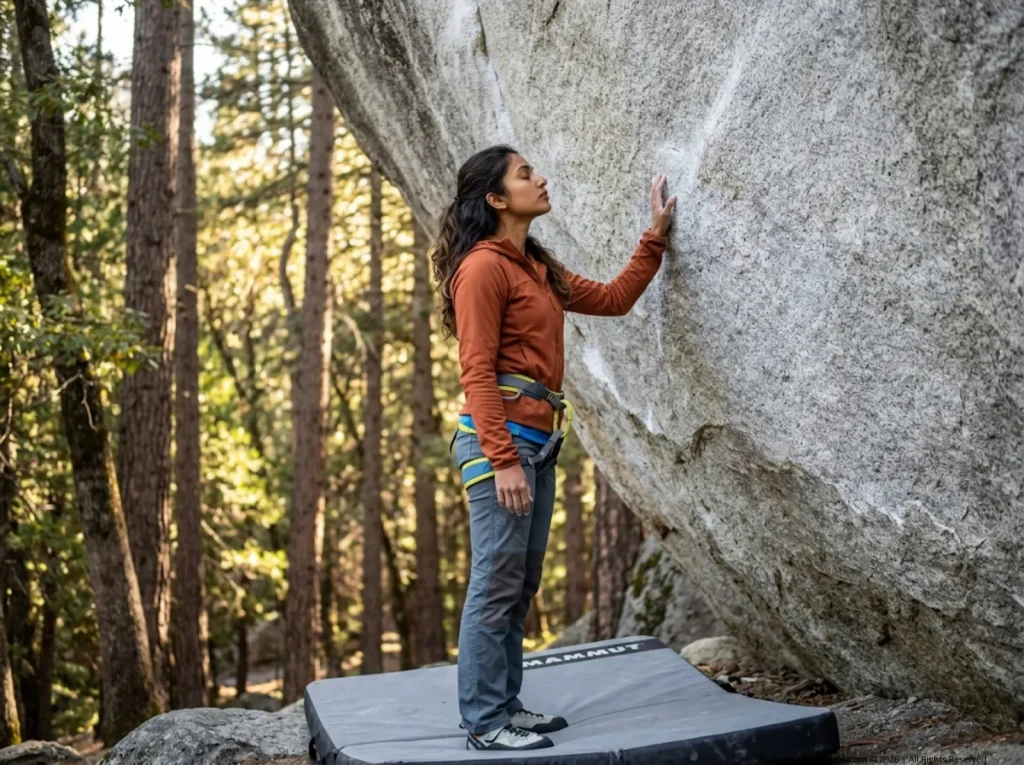
Your amygdala triggers the “catch yourself” reflex before your conscious brain can override it. This isn’t weakness. It’s old survival hardware that made sense when falling out of trees meant death, but makes zero sense on a climbing wall above bouldering mats.
Fear of falling is the number one barrier to progression in bouldering, and it peaks between V3 and V5 when problems get tall enough to feel genuinely scary. Your body knows the technique. Your brain doesn’t trust it yet.
The fix isn’t willpower. It’s graduated exposure combined with deliberate fall practice. That’s how fear extinction actually works. Start low. Increase height slowly. Give your brain enough successful reps to stop slamming the panic button.
Mental Rehearsal Techniques
Before each attempt, close your eyes. Visualize the exact fall sequence from the crux. Peel off. T-Rex arms. Feet first. Knees bent. Roll. Run through the whole movie in your head before you touch the rock.
Use if-then planning. “If I fall from move four, then I will tuck my arms and aim for the center of the pad.” This pre-loads the motor response so your body doesn’t have to make decisions under pressure.
Debrief every fall. What went right? What reflexes fired wrong? What do you fix next time? Treat it as training drills, not failure. One weekend warrior I know sprained both ankles in a single season from repeated stiff-legged landings. He came back six weeks later and spent every session doing nothing but deliberate fall practice from low heights. He hasn’t had an ankle issue since.
The full protocol to build this systematically lives in the neuroscience behind climbing fear and how to rewire it.
Conclusion
Three mistakes. Three fixes. Here’s what stays with you.
Stop bracing. Train T-Rex arms until the tuck overrides your instinct to catch yourself. Your wrists will thank you for decades.
Bend, don’t lock. Land with knees flexed to around 90 degrees and roll. Your legs are suspension systems, not steel beams. Use them that way.
Practice falling before you practice climbing. Deliberate fall drills from low heights build the proprioception patterns that protect you when a real fall happens at the crux. You need hundreds of clean reps before that motor pattern overrides fear at the moment it matters.
Next session, before you start projecting, spend ten minutes on fall drills from V0 height. Start low. Stay committed. Make falling the safest part of your bouldering.
Now go send something.
FAQ
How do you fall properly when bouldering?
Land feet first with knees bent and shoulder-width apart, arms tucked across your chest in the T-Rex position, then immediately roll backward onto your back in one fluid motion. This spreads impact across your entire back instead of concentrating it on your ankles or wrists.
What is the safest way to land from a bouldering fall?
The safest landing combines three elements: feet-first contact on overlapping crash pads, knees bent to approximately 90 degrees for absorption, and a controlled back roll with your chin tucked. Skipping any one of these three steps significantly increases fracture and sprain risk.
How do I overcome fear of falling while bouldering?
Start with deliberate fall drills from knee-height problems and gradually increase height over weeks. Use mental rehearsal before each attempt and visualize the exact fall sequence from the crux. Fear extinction requires graduated exposure, not willpower.
Do you need a spotter for bouldering?
Outdoors, always. A spotter guides your hips toward the crash pads during a fall — they do not catch you. In the gym, spotters are valuable when building confidence on taller problems. Communication before the climb is essential: identify the crux, likely fall direction, and pad position.
How should crash pads be placed for bouldering?
Pads must overlap with zero gaps. A two-inch gap can trap and roll your ankle. Cover the entire fall zone beneath the crux and topout. Stack with the hard-on-soft rule. On uneven ground, use the Pad Tetris method. Never place pads on vegetation.
Safety Notice: Rock climbing and mountaineering are inherently high-risk
activities that can involve physical trauma or fatal incidents. The information on Rock Climbing Realms is for
educational and informational purposes only. Techniques and advice presented here are not a substitute
for professional, hands-on instruction. Conditions and risks vary by location. Always seek guidance
from a qualified instructor before attempting new techniques. By using this website, you agree that you
are solely responsible for your own safety. Any reliance you place on this information is strictly
at your own risk, and you assume all liability for your actions. Rock Climbing Realms and its authors
will not be held liable for any harm, damage, or loss sustained in connection with the use of this information.
Affiliate Disclosure: We are a participant in the Amazon Services LLC Associates Program, an
affiliate advertising program designed to provide a means for us to earn advertising fees by advertising and linking
to Amazon.com. As an Amazon Associate, we earn from qualifying purchases. We are also an official affiliate partner
of Black Diamond Equipment via the AvantLink network. If you click on a Black Diamond affiliate link and make a
purchase, we may earn a commission at no additional cost to you. We also participate in other affiliate programs.
Additional terms are found in the terms of service.