

In this article
Three pitches up on Indian Creek sandstone, the gate on my lead biner barely clicked shut. I pressed it open, released, and nothing happened. The spring wheezed. Red desert dust had packed the hinge solid over a week of splitter cracks. I racked it, grabbed a clean one from my harness, and made a mental note: this whole rack was overdue for a real cleaning.
After fifteen years of climbing everything from gym plastic to sea cliff limestone, I’ve lost count of how many sticky gates I’ve fixed at the kitchen table with nothing more than warm water and a brush. Here’s the complete protocol for getting your carabiners back to buttery smooth, and knowing exactly when a biner belongs in the bin instead of on your harness.
⚡ Quick Answer: Wash a sticky carabiner gate in warm soapy water (max 30°C), work the gate open and closed to flush the spring chamber, rinse thoroughly, dry with the gate opening uppermost to drain trapped water, then apply 1-2 drops of acid-free lubricant to the hinge and wipe off all excess. If the gate still won’t snap shut after cleaning, retire the carabiner immediately.
Max cleaning water temp: 30°C (86°F)
Lube amount: 1-2 drops only
Burr sandpaper grit: 220-400
Retirement threshold: ≥25% material abrasion
Drying orientation: Gate opening uppermost
Why a Sticky Gate Is a Safety Problem, Not Just an Annoyance
How Gate Failure Puts You at Risk
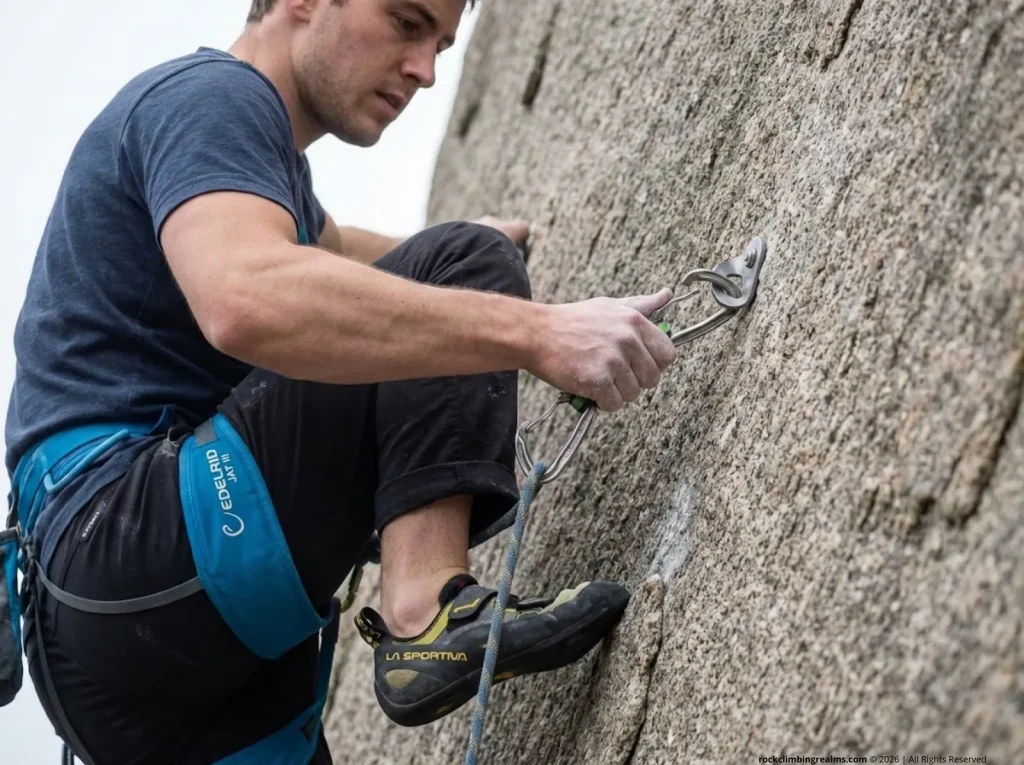
A carabiner that won’t snap shut isn’t just annoying. It’s a strength problem. A closed gate gives you the full rated strength of that biner, typically 20 kN under UIAA connector inspection and retirement recommendations. An open gate? You’re down to about 7 kN. That’s roughly a third of the strength you’re trusting your life to.
In a lead fall, an open gate can snag rope, catch a sling, or hook on a rock feature. The odds go up every time you clip and move without confirming the gate closed. Most of us have watched partners clip draws on autopilot for years. The one time it actually matters is the one time nobody checks. If you aren’t already running a pre-climb safety check every climber should run, a sticky gate is the wake-up call.
The Hidden Damage You Can’t See
Grit, chalk, and sand pack the spring chamber over dozens of climbs. You won’t see it from the outside. Saltwater exposure after a day on coastal crags accelerates corrosion inside the gate mechanism, often invisible until the biner seizes completely.
DMM puts it bluntly: “Your life may depend on it.” They mean this literally. A single session at a sea cliff without a post-trip rinse can reduce gate closure noticeably by the next morning.
When Dirty Gear Becomes Unsafe Gear
A 2025 study found that a rope wear groove deeper than 3 mm can cut a carabiner’s strength by nearly two-thirds. That’s the difference between a biner that holds and one that doesn’t. Flash rust can develop within 24 hours on wet biners stored gate-down. And if you’ve been climbing in desert dust or indoor gym chalk for weeks without cleaning, the paste building up inside your gate springs is silently turning your protection into a liability.
The Complete Step-by-Step Cleaning Protocol
Blow Out, Brush Off, and Soak
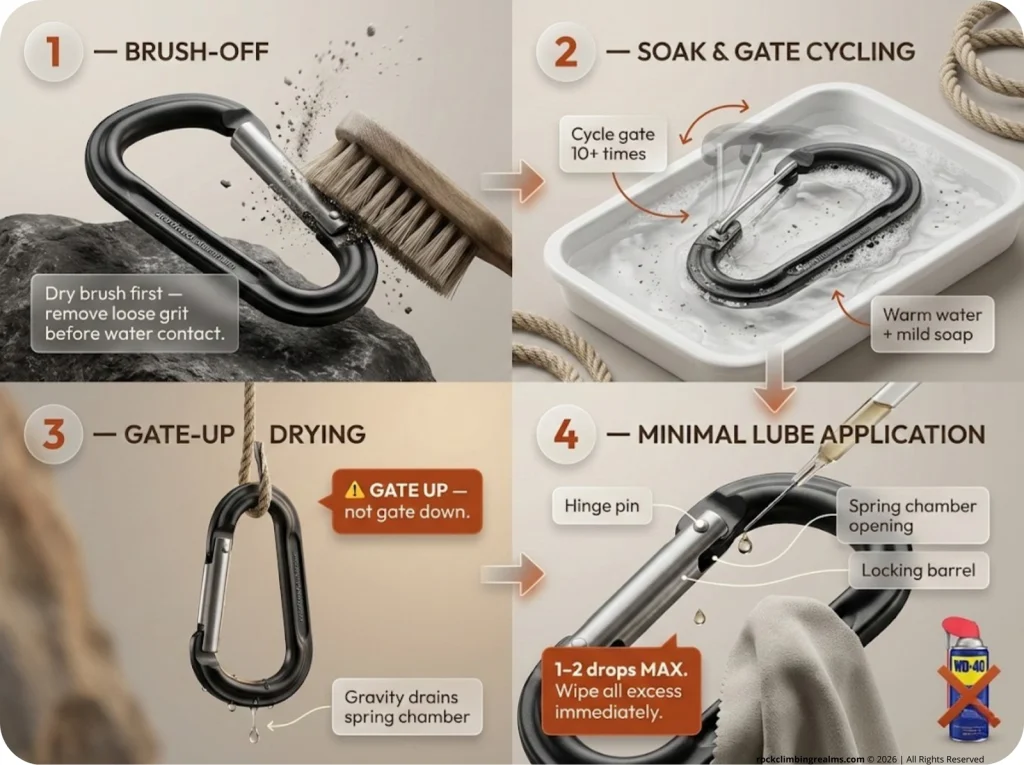
Start by tapping the carabiner against your palm or blowing compressed air through the gate to dislodge loose debris. Sand, chalk, and fine grit pack into the hinge and spring chamber faster than you’d expect.
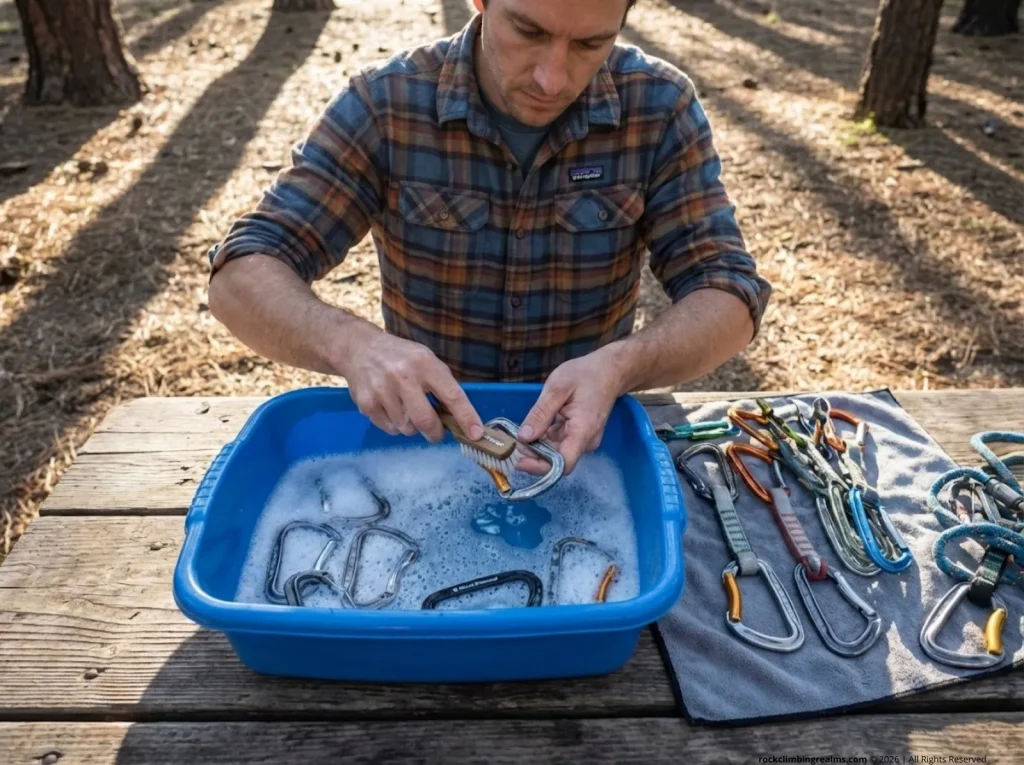
Fill a basin with warm water and add a few drops of mild detergent or a citrus-based bike cleaner. The cleaning water temperature matters more than most people realize. Never exceed 30°C. Hot water can damage the spring and speed up wear on aluminum. Submerge the biner and work the gate open and closed repeatedly underwater. This flushes the spring chamber far better than any surface scrub.
Use a soft brush like a Metolius M16 brush or an old toothbrush. Work the bristles into the hinge area, barrel threads, and gate tracks. Get into the habit of feeling the gate action improve as you clean.
Pro tip: Open and close the gate 20+ times while submerged. You’ll feel grit purge after the first 10 cycles. That’s the spring chamber clearing out.
Rinse and the Gate-Up Drying Rule
Rinse thoroughly with clean water to strip all detergent residue. This step matters because soap film left behind attracts new dirt within days.
Now here’s the detail that separates a proper clean from a half-job: hang to air dry with the gate opening uppermost. This lets water trapped in the spring chamber drain completely. DMM specifically recommends this hanging orientation because water pooling around the return spring is the single fastest path to internal corrosion.
Never use a hair dryer, oven, or direct heat. Never boil. And avoid blasting high-pressure compressed air directly into the spring chamber. It sounds like a good idea, but it can damage the return spring.
If flash rust appears after cleaning coastal gear, use a soft copper brush gently on the affected spots. Catch it early and it’s cosmetic, not structural.
Lubricating Without Overdoing It
Once your carabiners are fully dry, apply exactly 1-2 drops of acid-free lubricant to the hinge pin, spring chamber opening, and locking barrel. Work the gate open and closed ten or more times to distribute the lube evenly.
Then comes the step most people skip: wipe off all excess lubricant. This is not optional. Excess lube attracts dirt and creates a paste that makes things worse than before you started. Duck Oil, Super Lube, Tri-Flow, and White Lightning Clean Ride all work well. Wax-based lubricant options are especially good for dusty environments.
Never use WD-40 on a carabiner. It’s a solvent, not a lubricant. It strips existing protection and then attracts more dirt into the mechanism. The same applies to most household cleaning sprays. If the label doesn’t say “acid-free,” keep it away from your climbing gear.
The same lubrication principles apply when cleaning your cams, so if you’re doing a full rack cleaning day, batch them together.
Pro tip: One drop per hinge point, max. Wipe like you stole it. If you can see lube shining on the surface after wiping, you used too much.
Choosing the Right Lube for Your Climbing Environment
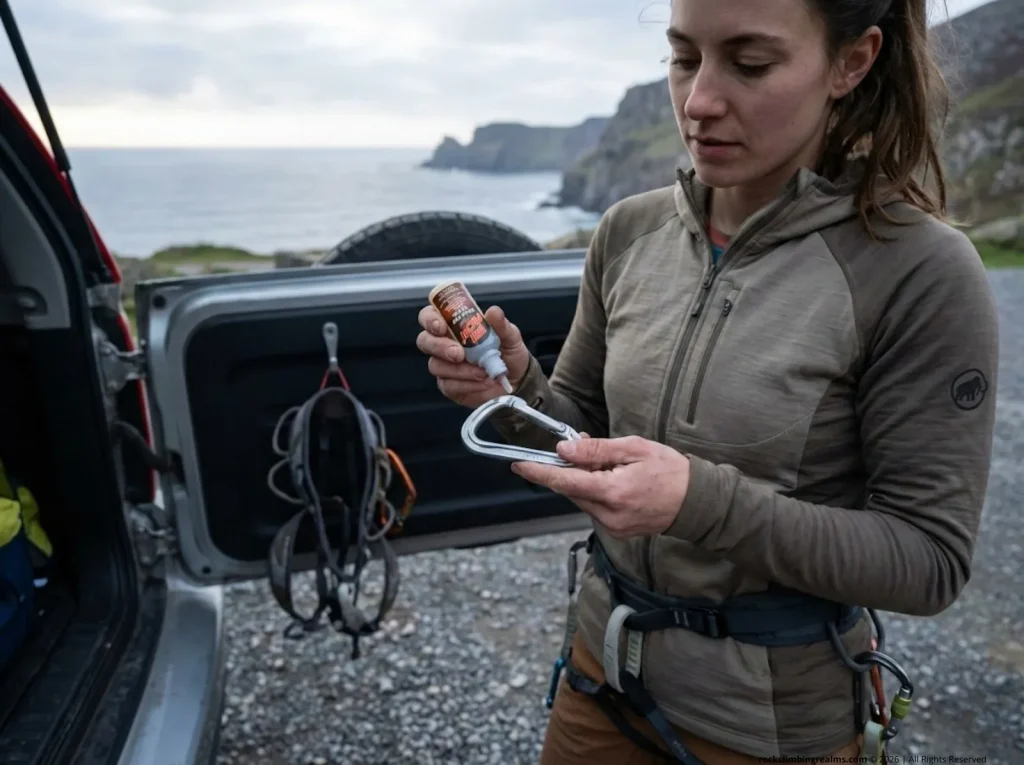
This is where every competitor article falls short. They treat carabiner lubrication as one-size-fits-all. It isn’t. The climbing environment you spend time in determines which lube works and how long it lasts.
Desert and Sandstone Crags
Wax-based lubricants like White Lightning Clean Ride are your best option for Indian Creek, Joshua Tree, or Red River Gorge. Wax sheds dirt as it dries, creating a self-cleaning film that handles desert dust without gumming up. Oil-based lubes in sandy environments create a paste that’s worse than no lube at all. Reapply after every 3-4 sessions or whenever gate action slows.
Sea Cliffs and Marine Environments
Salt accelerates corrosion on an aluminum carabiner. A post-crag cleaning protocol with a freshwater rinse is non-negotiable after any saltwater exposure. Teflon lubricant options like Tri-Flow create a moisture barrier that protects against marine exposure, but the carrier solvent can be corrosive to nylon slings if you over-apply. Apply after every single session at sea cliffs, and keep the application minimal.
Indoor Gym and Chalk-Heavy Sessions
Chalk dust alone rarely causes sticky gates, but chalk mixed with sweat creates a paste that gums up spring chambers over months. A light wax lube works well indoors. Gym carabiners don’t face the corrosion risk of outdoor gear, so a quick clean every 20-30 sessions is typically sufficient.
For climbers who are choosing the right quickdraws for your climbing style, remember that wire gate carabiners tend to resist gumming better than solid gates because there’s no internal spring chamber to pack with grit.

Burr Removal Without Weakening Your Biner
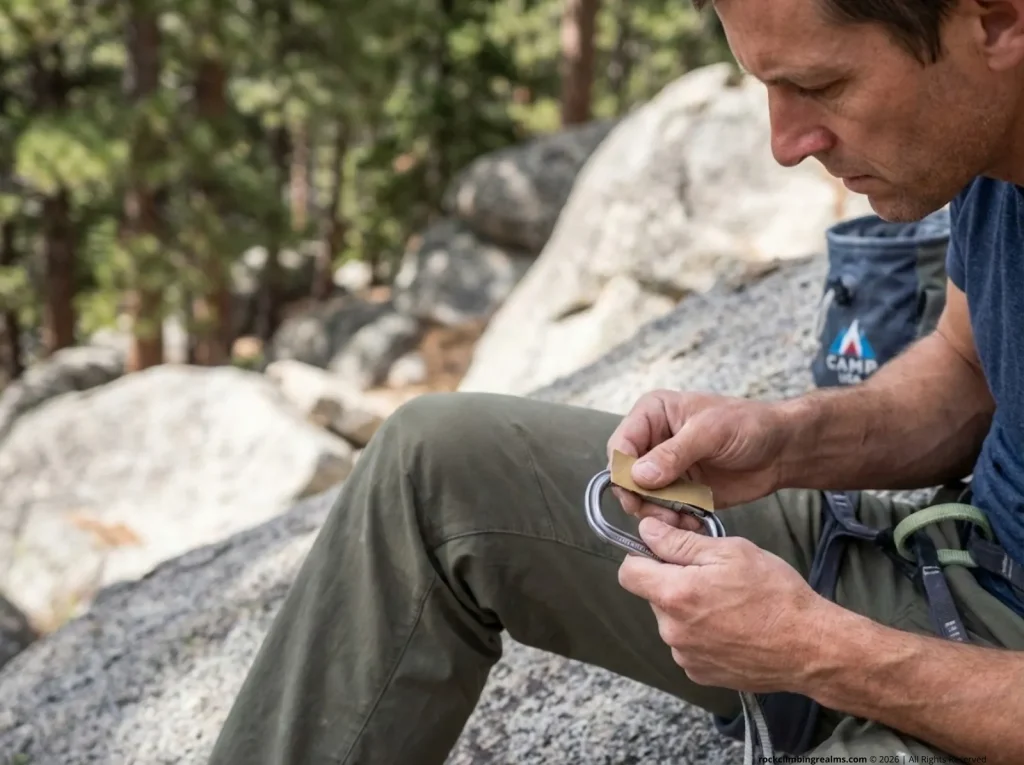
Spotting Burrs Before They Eat Your Rope
Run your fingertip along the basket, gate nose, and hinge area of every carabiner in your rack. Burrs form from repetitive contact between the bolt-side carabiner of a quickdraw and the metal bolt hanger. A single sharp edge can slice through a rope sheath with just body-weight friction during a lower.
The fix is simple: always orient the same carabiner to the bolt side of your draws. This way, bolt-side burrs are predictable and concentrated on one biner instead of randomly distributed across your whole rack. That’s the quickdraw orientation consistency approach that experienced route climbers use, and it makes inspection much faster.
The Sandpaper Fix and When to Stop
Use 220-400 grit sandpaper only. Nothing coarser. Sand in one direction with light pressure. You’re smoothing, not grinding.
If the burr doesn’t come smooth with gentle sanding, the carabiner has lost too much material. Retire it. REI recommends checking by running your fingernail across the sanded area afterward. If you can still feel a catch, the biner is done. Never use a metal file. You’ll gouge the surface and weaken the whole biner. A file turns a fixable problem into a retirement.
Pro tip: After sanding, run a scrap piece of sling or accessory cord across the spot. If it catches or frays, the biner still has a rope-eating edge. Sand again or retire it.
The Retirement Decision: Fix It or Bin It
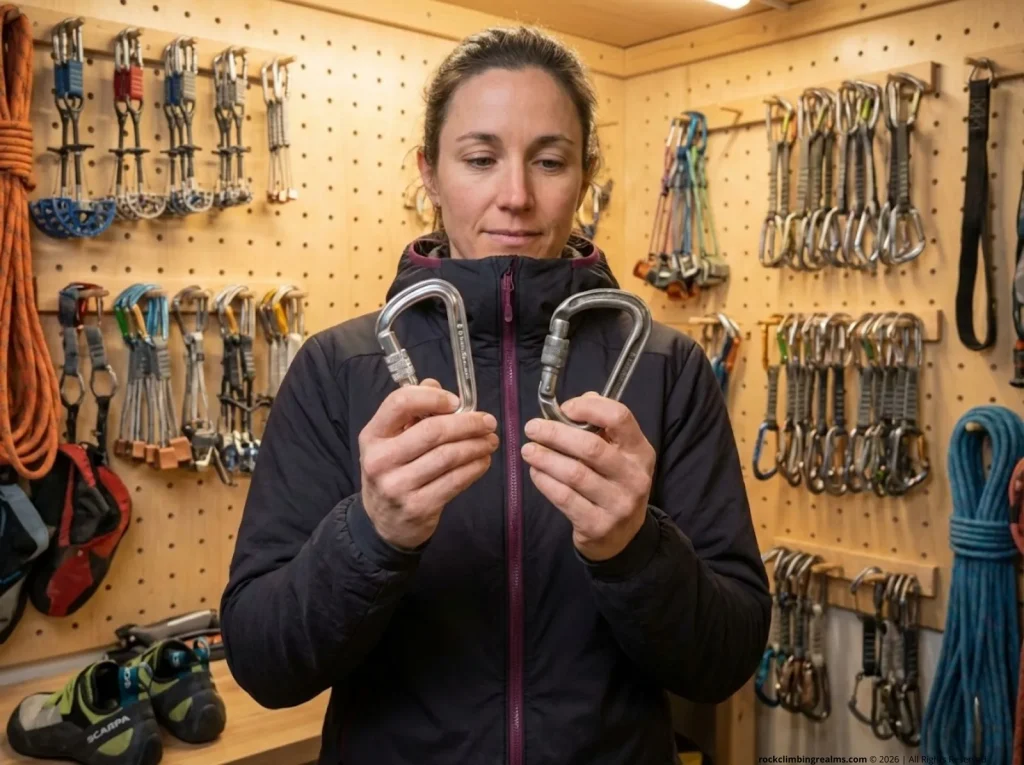
Hard Retirement Rules (No Exceptions)
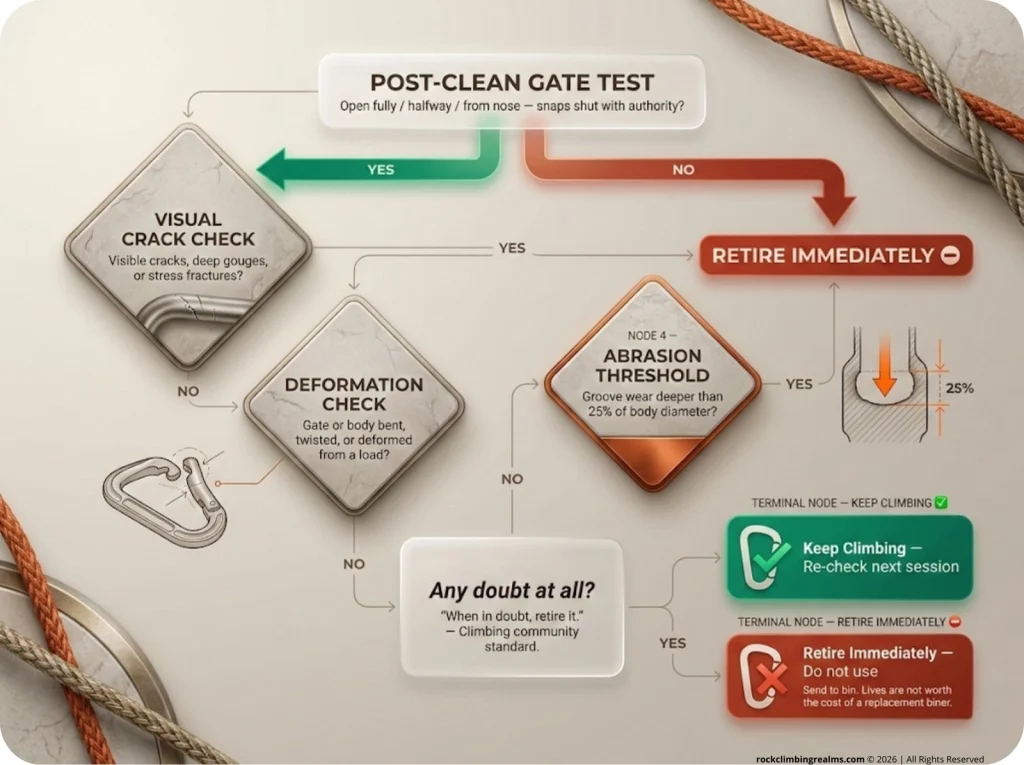
Some damage can’t be cleaned, sanded, or lubed away. Here’s when a carabiner goes straight to the bin:
- Visible cracks, dents, or deformation in the spine, gate, or hinge
- Material abrasion at 25% or more of any cross-section, per OSHA personal fall protection connector requirements
- Dropped from significant height onto hard ground, even if it looks fine
- Gate still sticky or sluggish after a full clean-and-lube cycle
- Any exposure to chemicals, acids, or prolonged high heat
A new carabiner costs less than a hospital visit. When your current carabiner has any of these, the math is simple.
The 30-Second Functions Test
Run this every time you clean your rack. Open the gate fully, then halfway, then from the nose. It should snap shut with authority every time. Spin the locking barrel. It should thread smoothly without grit or resistance. Check the keylock nose for deformation that could cause snagging.
The climbing community has a saying that’s worth repeating: “In doubt, retire it.” If you have to ask whether a biner is safe, it isn’t. Send it to the bin. Understanding the full lifespan of your climbing gear helps you make these calls with confidence instead of anxiety.
Storage and Long-Term Care That Actually Extends Gear Life
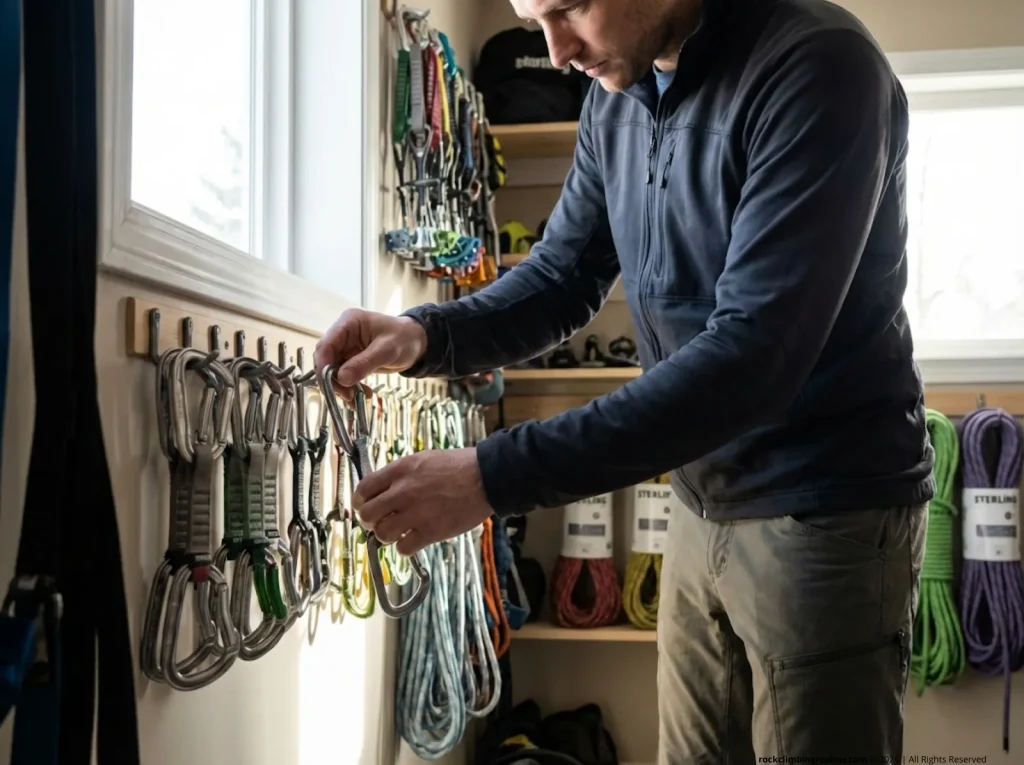
Storage Rules That Prevent Repeat Problems
Store your carabiners in a dry, well-ventilated space away from chemicals, solvents, and UV exposure. Never store wet. Always complete the full clean-dry-lubricate cycle before putting gear away for more than a few days.
Separate your carabiners from textile components like slings and harness webbing. Lubricant carrier solvents can transfer to nylon over long storage periods, and you don’t want mystery chemicals weakening your soft goods. Hang or rack loosely. Carabiners stored in compressed gear bags for months can develop pressure points where metal contacts metal. Good gear storage best practices make the difference between a rack that lasts and one that corrodes in a closet.
Guide-Level Rack Rotation and Seasonal Deep Cleans
Here’s something you won’t find in any other cleaning guide: professional guides rotate their daily-use rack every 2-3 years. Without rotation, heavy-use biners might need retirement in under five years. With deliberate rotation, the same set of carabiners can serve 15 or more years. That’s a three-to-one gear life difference just from spreading the wear.
At minimum, run through the full post-crag cleaning protocol at the start and end of each climbing season. Keep a simple gear maintenance checklist noting date of purchase, rough number of falls caught, and environments used in. This isn’t obsessive. It’s how you make informed equipment retirement criteria decisions instead of guessing.
There’s also a sustainable gear care angle worth mentioning. Proper maintenance reduces the manufacturing footprint of your climbing. One well-maintained carabiner replaces three neglected ones over a climbing career. That matters if you care about the places you climb. If you want the full picture on condition-based vs age-based retirement, UIAA retirement and inspection standards break it down for every piece of hardware in your rack.
Pro tip: A guide buddy of mine rotated his daily rack religiously for over a decade. His “old” biners outlasted three of my casually maintained sets. Rotation works.
Conclusion
A sticky gate is a safety deficiency, not a minor inconvenience. Clean it or retire it, full stop.
The protocol is straightforward: blow, brush, soak at 30°C max, dry gate opening uppermost, lubricate sparingly with the right lube for your climbing environment, and wipe off all excess lubricant. Match wax for desert, Teflon for salt, and light wax for gym chalk.
When in doubt, retire the biner. Your life may depend on it. A well-maintained rack can serve you for well over fifteen years. A neglected one becomes a liability within a few seasons.
Next time you get back from the crag, dump your rack on the kitchen counter and run the functions test on every single carabiner. The ones that don’t snap shut? They just earned themselves a bath. The ones that still won’t snap after a bath? They earned the bin. Now go send something.
FAQ
Can you use WD-40 on carabiners?
No. WD-40 is a solvent and water displacer, not a lubricant. It strips existing protection and attracts dirt into the mechanism. Use an acid-free lubricant like Duck Oil, Tri-Flow, or a wax-based option instead.
How often should you clean climbing carabiners?
After every session involving saltwater, sand, or heavy chalk. For general use, a full clean-and-lube cycle every 10-15 sessions or whenever you notice the gate slowing down. A seasonal deep clean at minimum keeps things running smoothly.
What is the best lubricant for carabiners?
It depends on your climbing environment. Wax-based lube works best in dusty desert crags because it self-cleans. Teflon-based lubes like Tri-Flow suit marine environments. For general use, Duck Oil or Super Lube are solid all-rounders. Apply 1-2 drops only and wipe all excess.
How do you remove burrs from carabiners?
Use 220-400 grit sandpaper with light, single-direction strokes. If the burr doesn’t smooth out with gentle sanding, the carabiner has lost too much material and should be retired. Never use a metal file.
When should you retire a climbing carabiner?
Retire immediately if you see cracks, deformation, or 25% or more material abrasion at any cross-section. Also retire if the gate remains sticky after a full clean-and-lube cycle, or if the carabiner was dropped from significant height. With proper care, carabiners can last well over a decade. Retirement is condition-based, not age-based.
Safety Notice: Rock climbing and mountaineering are inherently high-risk
activities that can involve physical trauma or fatal incidents. The information on Rock Climbing Realms is for
educational and informational purposes only. Techniques and advice presented here are not a substitute
for professional, hands-on instruction. Conditions and risks vary by location. Always seek guidance
from a qualified instructor before attempting new techniques. By using this website, you agree that you
are solely responsible for your own safety. Any reliance you place on this information is strictly
at your own risk, and you assume all liability for your actions. Rock Climbing Realms and its authors
will not be held liable for any harm, damage, or loss sustained in connection with the use of this information.
Affiliate Disclosure: We are a participant in the Amazon Services LLC Associates Program, an
affiliate advertising program designed to provide a means for us to earn advertising fees by advertising and linking
to Amazon.com. As an Amazon Associate, we earn from qualifying purchases. We are also an official affiliate partner
of Black Diamond Equipment via the AvantLink network. If you click on a Black Diamond affiliate link and make a
purchase, we may earn a commission at no additional cost to you. We also participate in other affiliate programs.
Additional terms are found in the terms of service.