
In this article
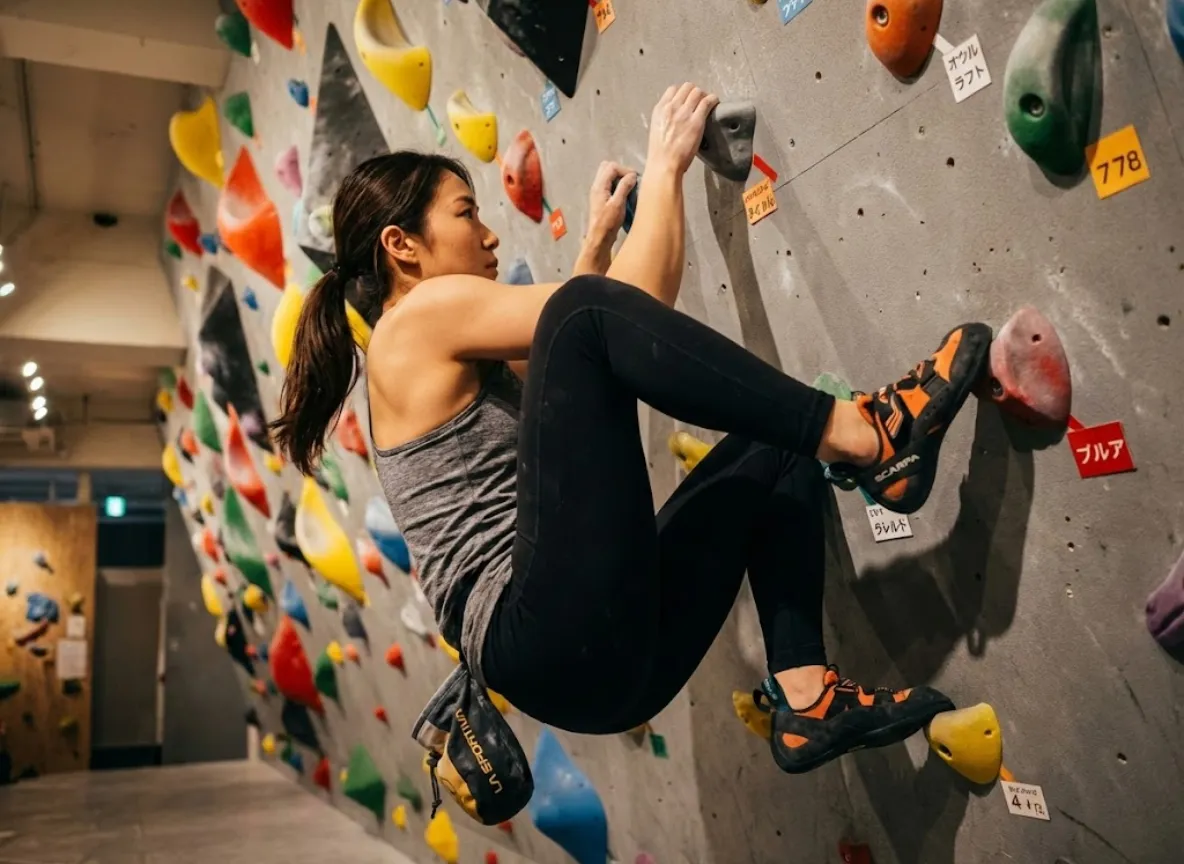
The 3-Kyu problem looked like a V3 from the ground. Three moves in, my hips couldn’t fold tight enough, and I peeled off the wall like I’d never touched plastic. Across the gym, a twelve-year-old girl flashed it with a subtle hip twist I hadn’t even considered. Welcome to B-Pump Ogikubo—where your V8 ego goes to die, and something far more valuable takes its place.
After years of watching Western climbers shuffle through Tokyo gyms with crumpled conversion charts and bruised pride, one thing becomes clear: these gyms aren’t just harder. They’re teaching a different language of movement. The Katsu Method, the small box moves, the beta-intensive puzzles—they’re not obstacles. They’re an education.
This guide decodes the unique Tokyo climbing gyms setting style so you can understand why these facilities humble strong climbers and how to thrive in their systems.
⚡ Quick Answer: Tokyo climbing gyms use the Kyu/Dan grading system (1-Dan ≈ V7-V8) and emphasize compression, hip mobility, and precise beta over power and reach. The “Katsu Method” at B-Pump Ogikubo uses physics to coach better movement. Expect to climb 2-3 grades lower than at your home gym—and learn more in a week than you have in months.
The Kyu/Dan Grading System: Your New Baseline
From 10-Kyu to Shodan: The Martial Arts of Climbing
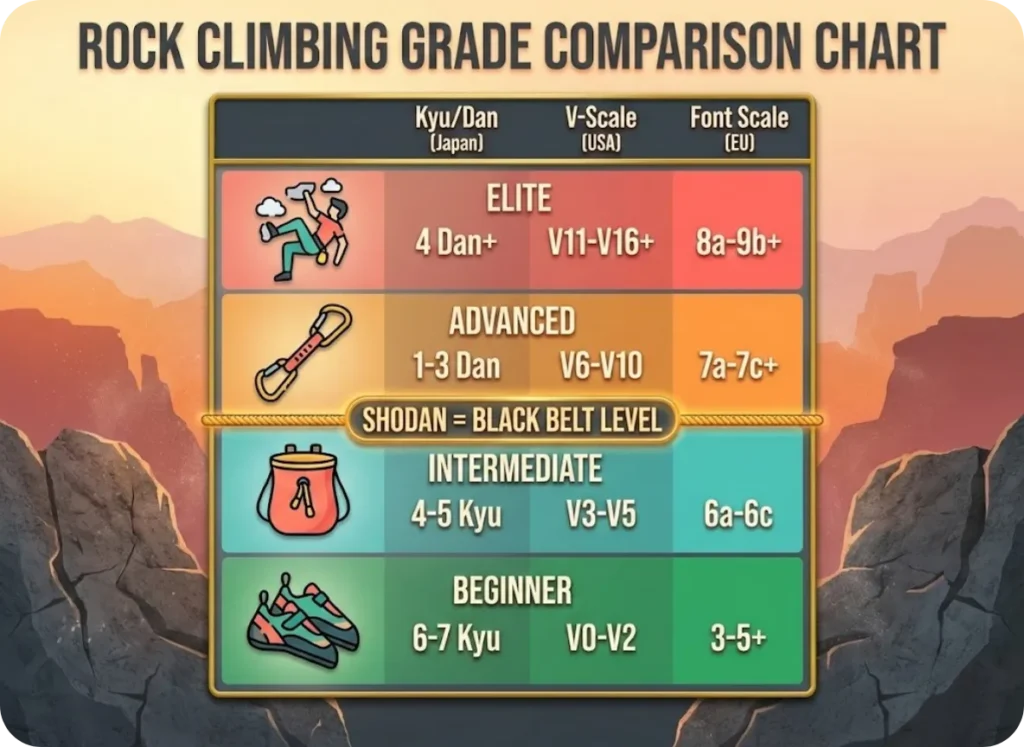
The Kyu/Dan system didn’t start in climbing. It comes from martial arts—Judo, Karate—and counts down from 10-Kyu (beginner) to 1-Kyu (advanced intermediate). Once you surpass 1-Kyu, the scale flips: you’re now in Dan territory, starting at 1-Dan (Shodan) and climbing upward.
Think of Shodan as the “Black Belt” of climbing. In practical terms, it roughly equals V7-V8 Hueco or 7a+-7b Fontainebleau. The 1-Kyu milestone—your last stop before Shodan—lands somewhere in the V5-V6 range, though this shifts depending on which gym you’re in.
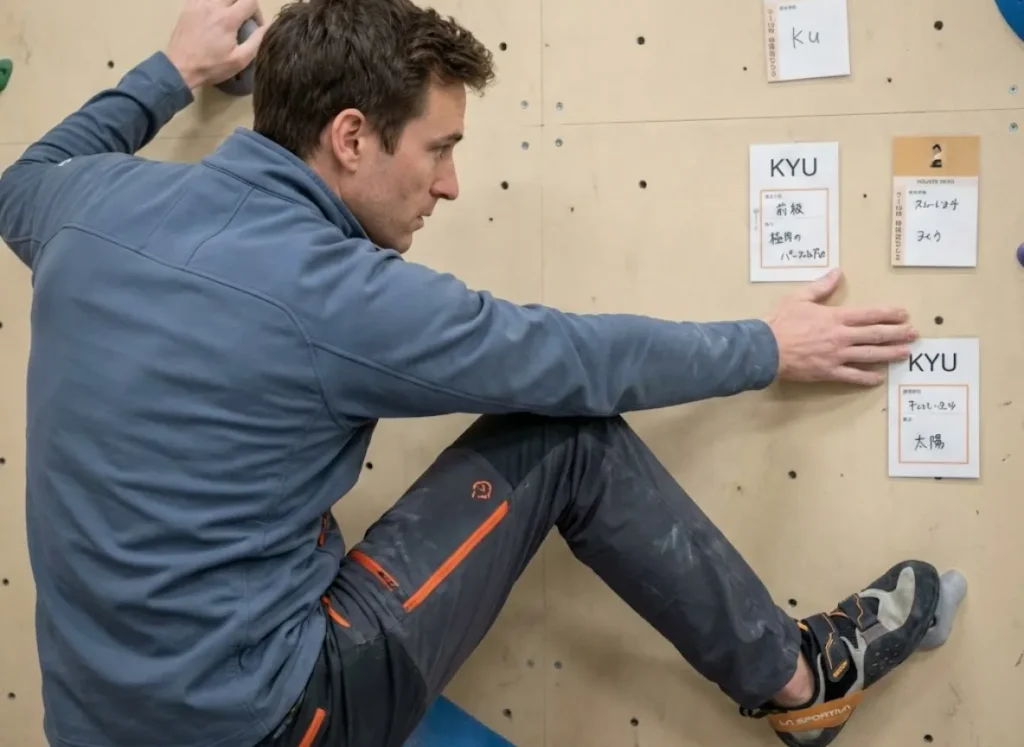
Here’s the catch: most Tokyo gyms don’t display V-grades at all. You’ll find numbered tags with Kyu markings, and that’s it. Conversion charts become your lifeline, but even those only tell half the story.
Pro tip: Don’t memorize a single conversion table. Each gym grades differently. Use your first session to calibrate: try a 5-Kyu, assess the style, then adjust expectations.
Grade Stiffness: Why Your V6 Feels Like V3
B-Pump Ogikubo is consistently rated the “stiffest” gym in Tokyo. Pro climber Emil Abrahamsson put it bluntly: “V2s here were harder than V6s in Europe.”
This isn’t sandbagging for the sake of ego—it reflects a fundamentally different movement paradigm. A 3-Kyu at B-Pump may demand heel hooks, toe hooks, and compression techniques that only appear at V5 or V6 in Western commercial gyms.
If you need a softer entry point, Rocky Shinagawa and Base Camp Tokyo offer more accessible grading. Start there, rebuild your confidence, then tackle Ogikubo when you’re ready to be humbled properly.
Understanding sport climbing grades comparison helps contextualize why grade translation is never straightforward—even within the same country.
The Katsu Method: Coaching Through Physics
Vectors, Gravity, and the 3-Degree Rotation
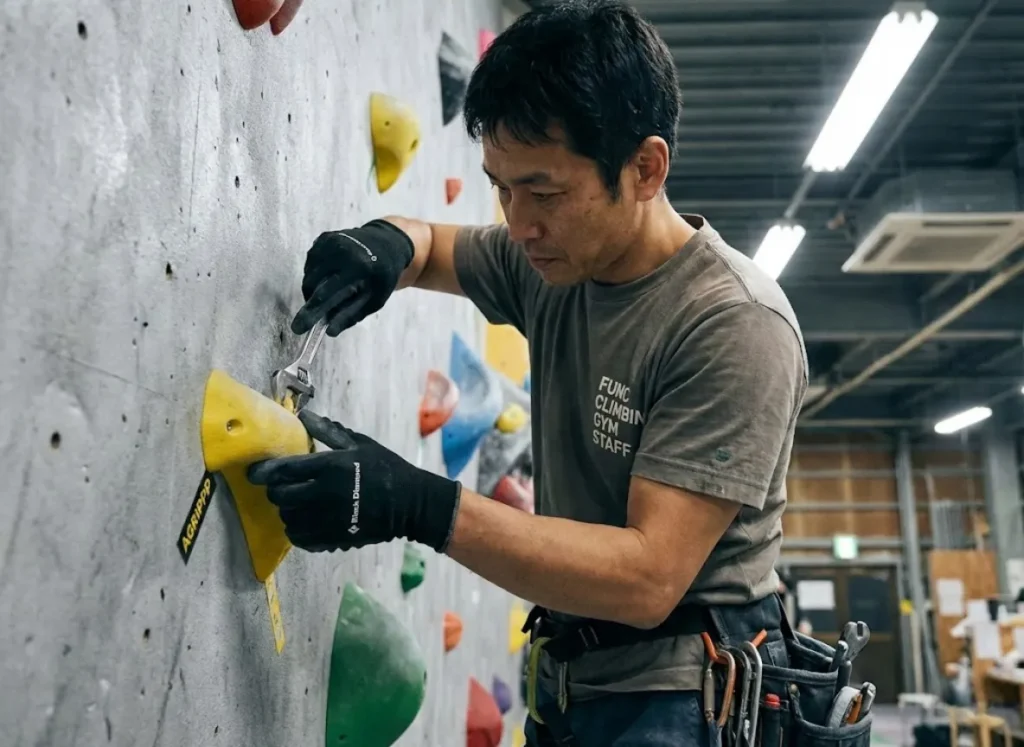
Katsuaki “Katsu” Miyazawa, owner and head setter of B-Pump Ogikubo, doesn’t hide his philosophy: “My route set is very science… I coach through setting.”
The Katsu Method treats routesetting as applied physics. Katsu uses Newtonian vectors—the directional force lines you need to generate to stay on the wall—as his primary tool. By rotating a single hold by as little as three degrees, he can render a power-based solution completely impossible.
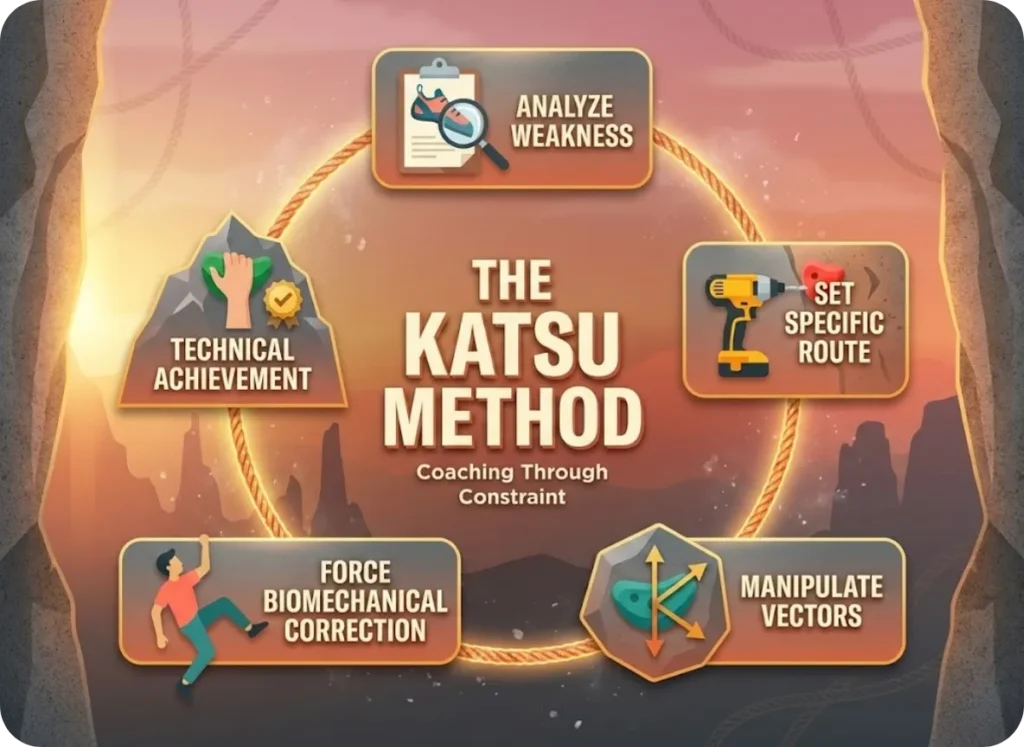
What does that mean for you? It means the problem won’t let you muscle through. The only solution is the biomechanically efficient one—often a subtle hip shift or weight transfer you’d never discover if brute strength worked.
This is coaching through constraint. No verbal instruction needed. The wall itself teaches you.
Temporal Coaching: Training Your Internal Clock
Most climbers focus on where to put their hands and feet. Katsu trains something else entirely: when.
He calls it the “temporal aspect” of climbing. Some problems are set so that timing is the crux—a deadpoint that only works if you catch the hold at the exact millisecond of apex. Rush it, and you blow through. Hesitate, and gravity wins.
Elite athletes like Tomoa Narasaki train under this method. Their coordination and “ninja” style? It’s not just talent. It’s systematically trained timing and proprioception.
Isolation vs. Integration: Breaking Down the Kinetic Chain
Sometimes elite climbers are too smooth. Their flow masks weaknesses in individual links of the kinetic chain.
Katsu addresses this with isolation problems—routes that force you to engage only the hip, or only the back. You can’t cheat with momentum or compensate with other muscle groups. The weak link gets exposed, then strengthened.
This “deconstructionist” approach explains how Tokyo produces world-class competitors. It’s not magic. It’s systematic breakdown and rebuild, one isolated movement at a time.
For similar methodology applied to fingers, explore systematic finger training protocols that target specific weaknesses.
Small Box Moves: The Compression Paradigm
What Is a “Small Box”?
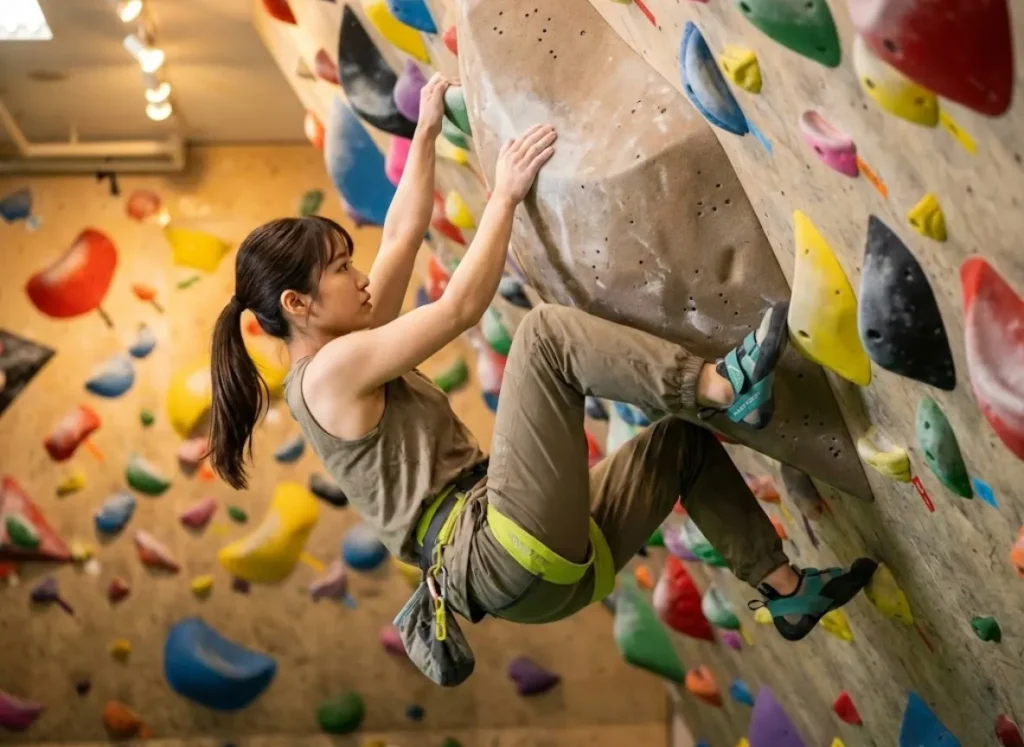
Imagine being forced into a confined surface area where the distance between handholds and footholds is minimal—but the leverage is terrible. That’s a small box.
This style demands generating tension and movement within cramped space. Your reach becomes a liability. If you can’t fold your limbs effectively, you peel off.
Pro tip: If a 12-year-old girl is flashing your project, don’t get frustrated—study her hips. She’s using technique and vectors, not power. Copy her beta.
The Biomechanical Demand
Three things matter in small box moves:
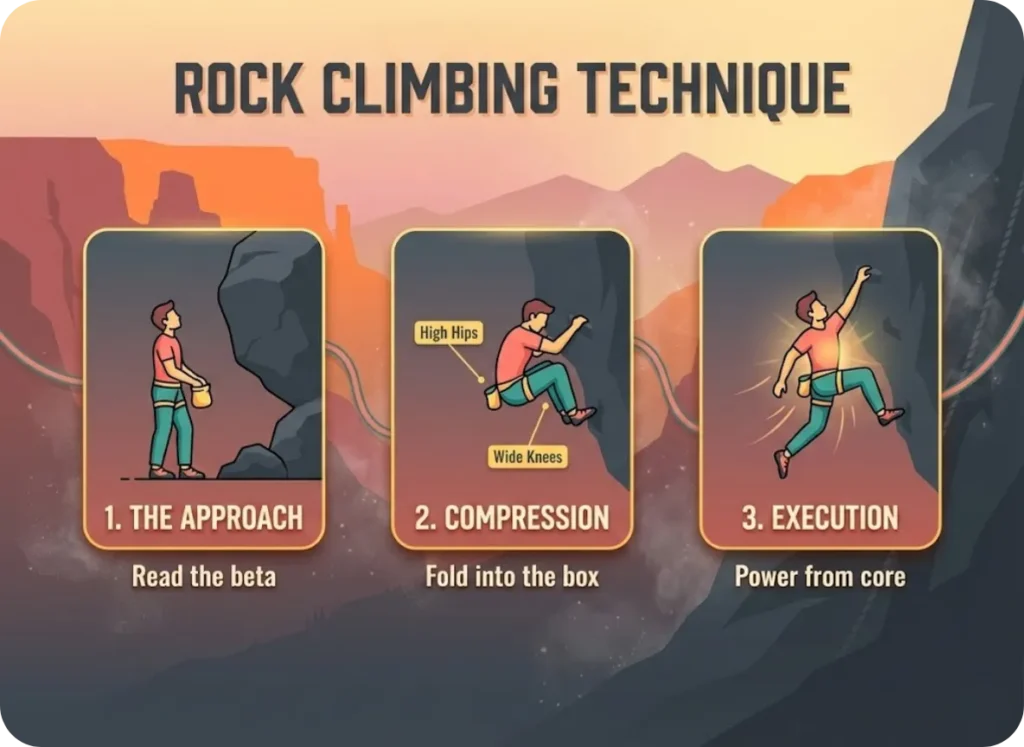
High hip mobility lets you open your hips and bring your center of gravity extremely close to the wall. Lock-off strength lets you hold a static position under high tension while repositioning a limb. Compression—generating inward squeezing force rather than downward pulling—is what actually keeps you on.
This explains the “sandbagged” sensation. You’re not weak. You’re facing a deficit in mobility and tension, not finger strength. Research published in the National Institutes of Health database confirms that elite climbers exhibit significantly better hip flexion and abduction compared to intermediate climbers—validating exactly what Tokyo gyms demand.
⚠️ Safety Warning: The small box style places extreme torque on knees and shoulders. According to research published in Frontiers in Sports and Active Living, bouldering accounts for 69% of acute knee injuries in climbing, often from compression moves and falls. Warm up hips and rotator cuffs thoroughly before attempting compression problems. Tall climbers should skip these on day one to protect joints.
Why Western Climbers Struggle
Western commercial setting often rewards “jumpy” or “reachy” moves—power and momentum compensating for poor positioning.
In a small box, momentum is useless. If you cannot fold, you cannot stay on the wall.
The style creates a reverse height bias: smaller, more flexible climbers have the advantage. If you’re over 6 feet tall, focus on the steep walls at Rocky or B-Pump where reach still matters. Save the small box problems for when your hip mobility catches up.
Building a proper mobility routine for climbers becomes non-negotiable if you want to compete in this paradigm.
Beta-Intensive Setting: The Puzzle Paradigm
When Strength Isn’t Enough
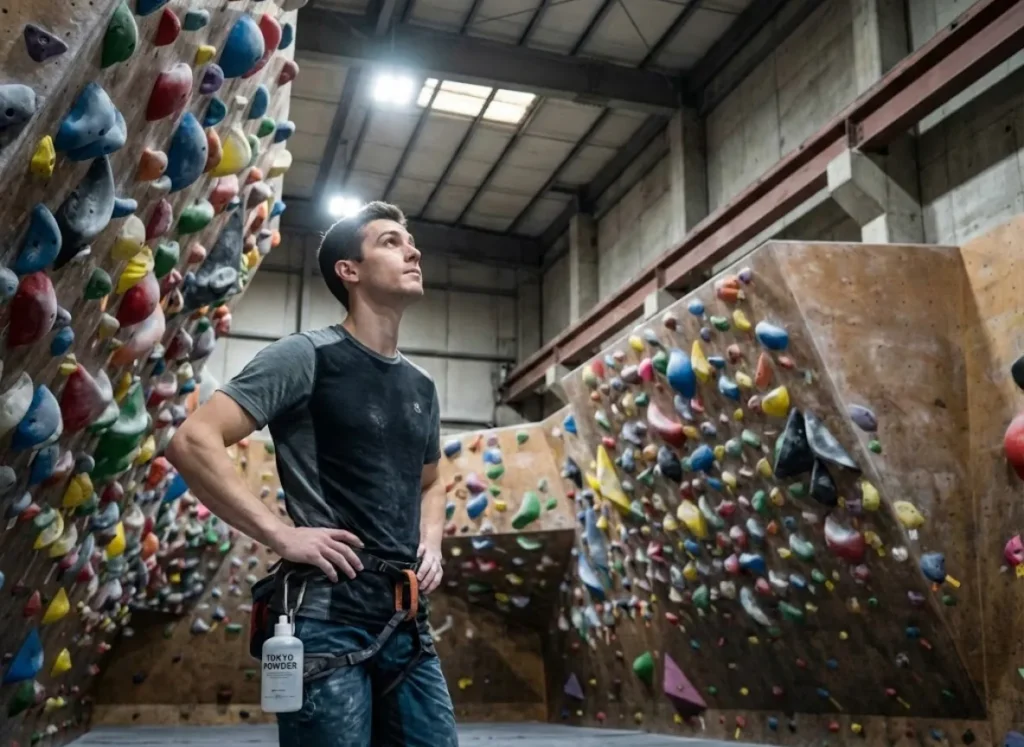
At Maboo Climbing Gym, you might have the strength to do every move on a problem—and still fail ten times in a row.
This is beta-intensive setting. Success requires unlocking the precise, often counter-intuitive sequence. As climbing blogger Shaun Ngoh put it: “One slip and you are spat off the wall… they feel easier once the correct beta is applied.”
This reframes failure entirely. You’re not too weak. You lack knowledge. And knowledge can be acquired.
Pro tip: At Maboo, buy an espresso from their surprisingly high-quality La Marzocco machine. It helps with the “beta-intensive brain fog” and is part of the ritual.
Hold Density and the Spray Wall Aesthetic
Gyms like Underground take a different approach: pack walls with as many holds as possible.
This creates a spray wall aesthetic where climbers can define their own problems by selecting any combination. High hold density forces visual precision—you must pick the correct hold from a sea of options.
It simulates the visual noise of outdoor climbing, where “holds” aren’t color-coded for convenience.
For those designing home setups, understanding choosing climbing holds for home walls helps replicate this training environment.
The Tokyo Gym Ecosystem: Where to Climb
B-Pump Ogikubo: The Cathedral
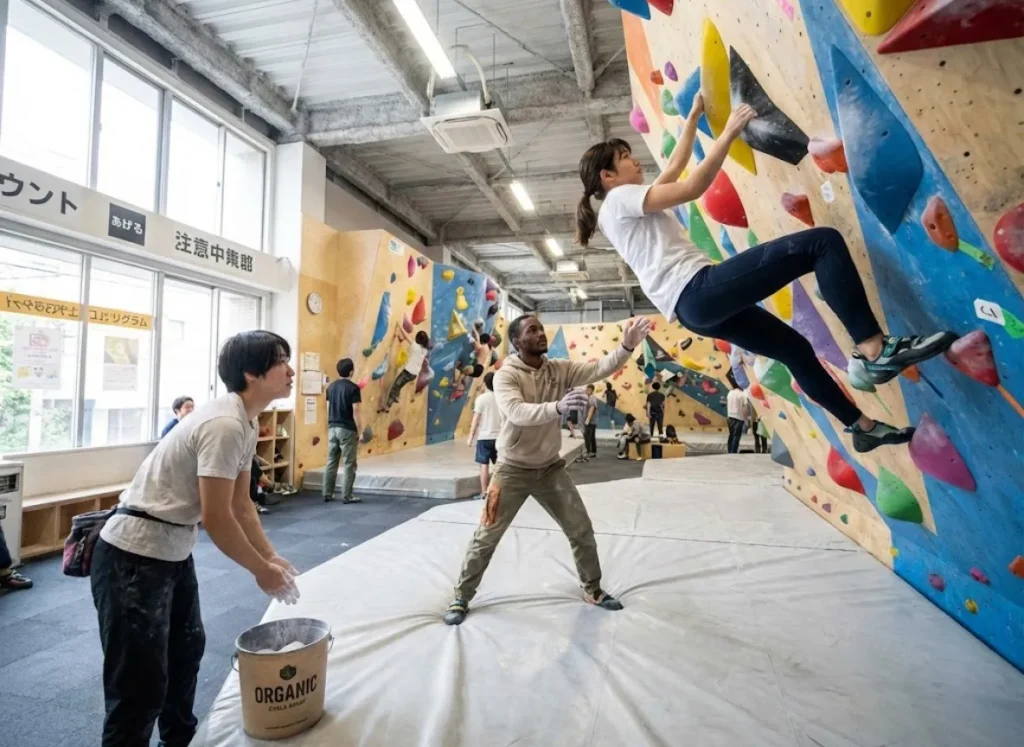
This is the training ground for the Japanese National Team. The Katsu Method lives here.
You’ll find competition walls with 4-minute IFSC-style timers for realistic pressure training—the same format used by the International Federation of Sport Climbing in World Cup events. Specific walls like the “Bleau Wall” and “Rocklands Wall” are textured to mimic outdoor friction—reduced grip for smearing practice.
The vibe is serious. Focused. High-performance. Budget for ego adjustment; the grading is the stiffest in Tokyo. But if you want to understand what makes Tokyo special, this is ground zero.
Maboo Climbing Gym: The Industrial Beta Lab
Located in an industrial warehouse, Maboo is famous for “meticulously crafted” problems that feel impossible until the exact sequence clicks.
Head setter Mitsuo creates moves that punish guessing. Power alone gets you nowhere. But once the beta unlocks, problems feel suddenly possible.
The espresso machine in the pro shop isn’t an afterthought—it’s acknowledgment that this climbing is as mental as it is physical.
Underground: The Spray Wall Sanctum
Famous for extreme hold density, Underground lets climbers define their own problems on walls packed with options.
The reception area converts to a DJ booth for competition events—Tokyo gym culture blends sport and community seamlessly.
Rocky Shinagawa: The Architectural Innovator
The unique Spherical Wall breaks conventional flat-plane design, creating a 3D surface that forces constant vector adjustment.
Grading is slightly softer than Ogikubo. Good entry point for visitors needing to rebuild confidence before tackling the steep stuff.
Base Camp Tokyo: The Community Hub
Founded by legend Yuji Hirayama, Base Camp prioritizes community. Holds can get “slimy” due to high traffic and less frequent resets, but the grading is more forgiving.
Best for volume climbing, socializing, and integrating into the local scene. Don’t expect B-Pump difficulty—expect connection.
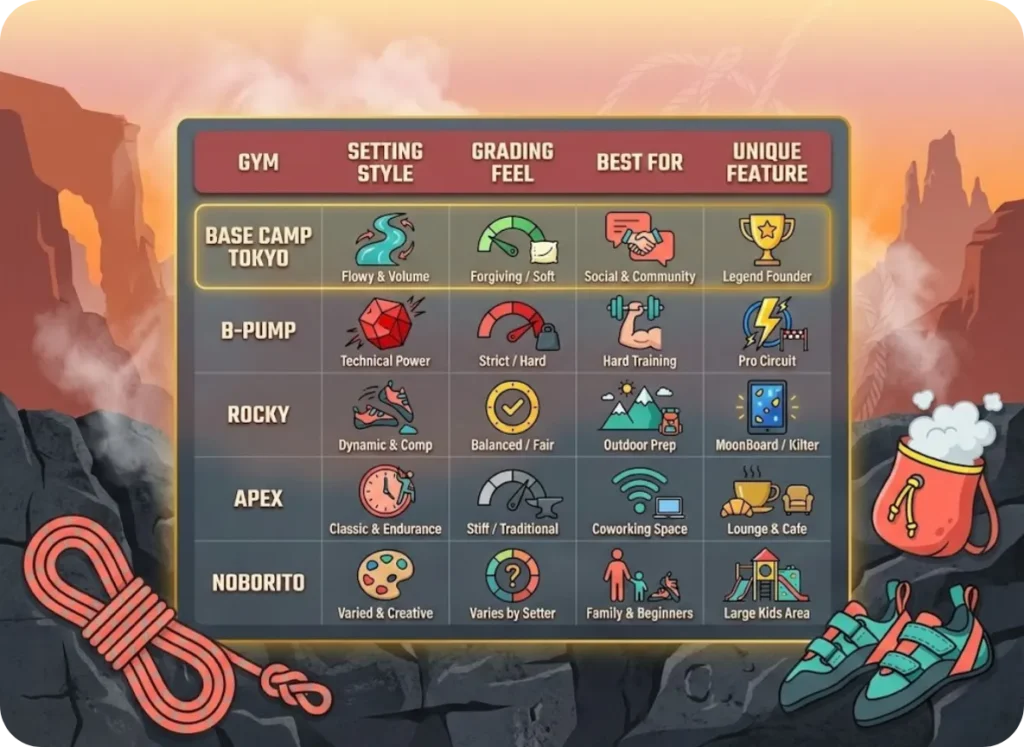
Comparing gym styles and atmospheres across global cities reveals similar ecosystem dynamics wherever climbing culture thrives.
Visitor Survival Toolkit: Logistics and Etiquette
Registration Fees: Budget for the Entry Tax
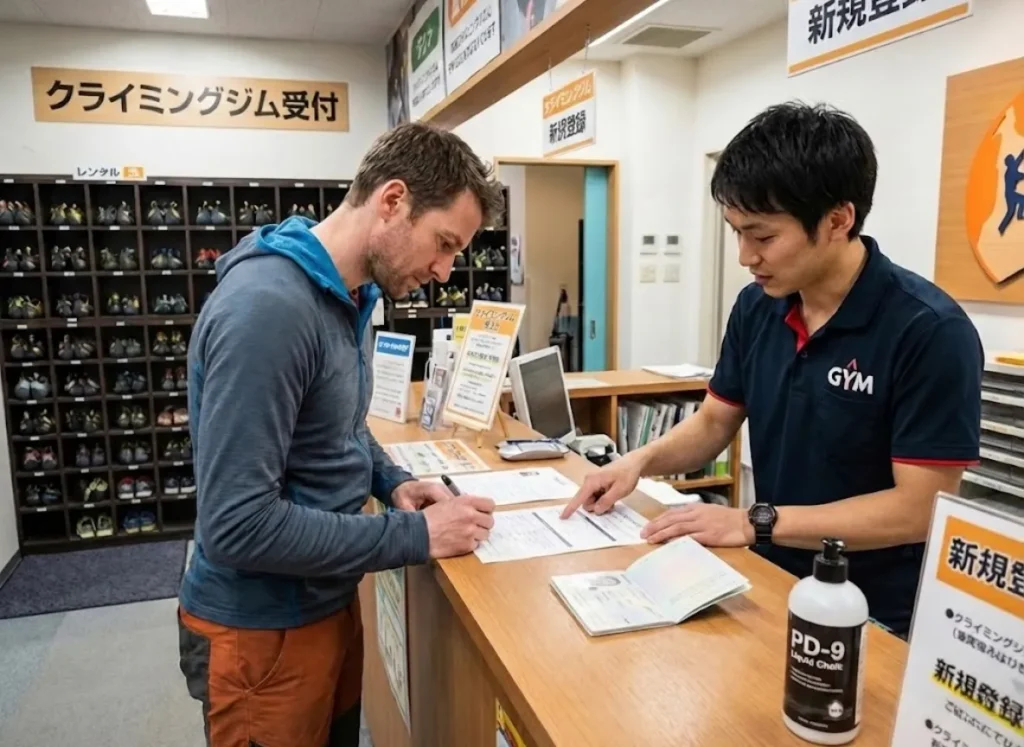
Almost every Tokyo gym charges an initial registration fee between 1,500 and 2,000 JPY on top of the day pass. This isn’t a tourist scam—it’s standard Japanese business model for membership clubs.
Bring your passport for ID verification. Day passes run 1,500-2,200 JPY depending on facility. Budget 3,500-4,000 JPY for your first visit to any new gym.
Liquid Chalk Only: Don’t Get Turned Away
Many gyms—including B-Pump Akihabara—strictly prohibit loose powder chalk. Powder creates dust clouds that degrade air quality in dense urban spaces.
Bring liquid chalk before you arrive. Local favorites include PD-9 and Tokyo Powder. Show up with a block of loose chalk, and you may be denied entry or forced to buy their product at markup.
⚠️ Warning: Liquid chalk requirements and registration fees catch unprepared visitors off-guard. Non-compliance leads to awkward interactions and denied access.
Cultural Etiquette: The Sounds of Support
The gym isn’t silent, but it speaks a specific language:
“Gamba!” (ガンバ!) means “Do your best!” You’ll hear it constantly, from strangers and friends alike. It’s the universal currency of support.
“Naisuu!” (ナイス!) means “Nice!” Shouted after a good move or successful send.
“Oshi!” (惜しい!) means “Close!” or “Regrettable!” Reserved for near-misses and heartbreaking falls at the top.
Pachi-pachi—quiet clapping from strangers—acknowledges a hard send. The atmosphere is respectful, communal, and remarkably ego-free. Leave the loud spray at home.
Pro tip: Learn to say “Gamba!” back. The mutual encouragement builds quick rapport with Japanese climbers who appreciate foreign visitors embracing their culture.
Conclusion
Three things will reshape your climbing if you engage with Tokyo’s gyms honestly:
The Katsu Method transforms routesetting into physics-based coaching. Hold rotation forces better technique—not harder pulling.
Small box moves demand hip mobility and compression, not reach and power. Train flexibility as seriously as you train finger strength.
Beta-intensive setting means failure is knowledge deficit, not strength deficit. Study sequences before committing.
The next time you step into a Tokyo gym and a 3-Kyu spits you off, remember: you’re not weak. You’re learning a different language of movement. Study the kids, watch the hips, and earn that first Kyu one beta sequence at a time.
Now go send something.
FAQ
How do Japanese Kyu grades compare to V-grades?
1-Dan (Shodan) equals approximately V7-V8 Hueco or 7a+ Fontainebleau. 1-Kyu lands around V5-V6. However, the beta-intensive, compression-heavy style makes grades feel stiff—expect to climb 2-3 grades lower than your home gym.
Why are Tokyo climbing gyms graded so hard?
It is not sandbagging—it is a different movement paradigm. Tokyo setting emphasizes small box compression, flexibility, and precise beta over power and reach. The strength you rely on at home does not transfer directly to these demands.
What is the Katsu Method of routesetting?
Developed by Katsuaki Miyazawa at B-Pump Ogikubo, the Katsu Method uses Newtonian physics and vectors to coach climbers through physical constraint. Rotating holds by as little as 3 degrees makes power-only solutions impossible, forcing efficient body positioning.
Do I need liquid chalk for Tokyo climbing gyms?
Yes. Many gyms enforce strict liquid chalk only policies to maintain air quality. Bring PD-9 or Tokyo Powder, or be prepared to rent or buy on-site. Loose powder chalk may result in denied entry.
Which Tokyo climbing gym is best for beginners?
Rocky Shinagawa and Base Camp Tokyo offer softer grading and more accessible atmospheres than B-Pump Ogikubo. Start there to calibrate, then tackle the stiffest gyms once you have adjusted expectations.
Safety Notice: Rock climbing and mountaineering are inherently high-risk
activities that can involve physical trauma or fatal incidents. The information on Rock Climbing Realms is for
educational and informational purposes only. Techniques and advice presented here are not a substitute
for professional, hands-on instruction. Conditions and risks vary by location. Always seek guidance
from a qualified instructor before attempting new techniques. By using this website, you agree that you
are solely responsible for your own safety. Any reliance you place on this information is strictly
at your own risk, and you assume all liability for your actions. Rock Climbing Realms and its authors
will not be held liable for any harm, damage, or loss sustained in connection with the use of this information.
Affiliate Disclosure: We are a participant in the Amazon Services LLC Associates Program, an
affiliate advertising program designed to provide a means for us to earn advertising fees by advertising and linking
to Amazon.com. As an Amazon Associate, we earn from qualifying purchases. We are also an official affiliate partner
of Black Diamond Equipment via the AvantLink network. If you click on a Black Diamond affiliate link and make a
purchase, we may earn a commission at no additional cost to you. We also participate in other affiliate programs.
Additional terms are found in the terms of service.