In this article
The wind cuts through your fleece as you fumble for a Black Diamond Camalot 80 feet off the deck. You pull the trigger, but the lobes are sluggish. Instead of snapping back instantly, they stick with a gritty crunch.
In this moment, mechanical reliability is not a luxury; it is the only thing standing between a clean fall and a hospital visit. A cam with sticky trigger action is a passive piece of metal that will likely track or pull out when shock-loaded.
Stewardship of your trad rack is not about keeping it shiny. It is about ensuring the coefficient of friction required to hold your body weight is available the millisecond you need it. This maintenance guide moves beyond aesthetics, teaching you to diagnose, restore, and maintain the mechanical reliability of your spring loaded camming devices (SLCDs) and climbing protection.
Why Does Trad Gear Fail and How Do We Prevent It?

To properly maintain your rack, you must first understand the physics of why it fails. We aren’t just cleaning off dirt; we are fighting a specific mechanical phenomenon that destroys the internal tolerances of your technical equipment maintenance.
What is the “Grinding Paste” Phenomenon?
The primary enemy of a cam isn’t just dust; it is the combination of dust and improper lubrication. Standard climbing environments, particularly when climbing desert sand routes in Moab, Red Rocks, or Indian Creek, are filled with fine silica. This material rates a hardness of 7 on the Mohs scale—harder than the aluminum of your cam lobes.
When this dust enters a cam axle that has been treated with a high viscosity, wet, oil-based lubricant, the fluid captures the particulate matter. This mixture forms a “tribological paste” or grinding slurry that acts like liquid sandpaper inside the device’s most critical lubrication points.
Every time you work the trigger, this paste laps against the softer aluminum lobes and the steel axle. Over time, this physically widens the bore and ruins the tolerance. The result is a “sticky” cam where the internal friction exceeds the expansion force of the springs. This prevents the lobes from engaging the rock instantly during a fall.
Stewardship requires removing this paste entirely, not just adding more lube on top of it. You must restore the “snap” required for safety mitigation. This involves understanding the mechanics of spring-loaded camming devices to know exactly where this friction occurs.
Severe wear can also compromise structural integrity. When inspecting your gear, refer to industry baselines, such as the OSHA standards for inspecting wire rope and cable integrity. These provide a rigorous framework for identifying broken wires and corrosion that necessitate retirement.
Which Cleaning Agents and Lubricants Are Safe?
Once you understand how the physical environment attacks the mechanical function of your gear, you must consider how the chemicals you use to clean it can attack the materials themselves.
The Solvent Trap
Users must strictly avoid standard WD-40 or heavy industrial degreasers. These are solvents, not lubricants. The risk of WD-40 is that it leaves a wet, sticky residue that attracts fresh dust accumulation immediately, restarting the grinding cycle.
The Wax Solution
The gold standard for climbing cams is a wax-based lubricant, such as Metolius Cam Lube. In a pinch, wax-based bike lubricants like White Lightning can work. These products use a volatile carrier to penetrate the axle. The carrier then evaporates, leaving a dry, dirt-shedding wax film that lubricates without attracting grit.
Climbing Cam Lubricant Comparison
A performance analysis based on Dirt Attraction (DA), Water Resistance (WR), Penetration (PEN), and Mechanical Safety (MS).
Performance Scores
DA Score: Excellent | WR Score: Good | PEN Score: Excellent
Verdict
Specifically formulated to shed dirt. Safe for all mechanical components.
Cost Effectiveness
Identical chemistry to Metolius but significantly cheaper in bulk quantities. Safe for use.
Metrics
DA: Excellent | WR: Good | PEN: Excellent
Mechanical Traits
Great penetration into axle components. Slightly stickier than wax alternatives.
Ratings
DA: Good | WR: Excellent | PEN: Excellent | Safety: Safe
WARNING: DO NOT USE
Attracts dirt (DA Failure). It is a solvent, not a lubricant. Risks jamming cam lobes.
Best For
Excellent for desert environments. Very difficult to apply effectively to axles.
Limitations
WR: Poor | PEN: Poor | DA: Excellent
Comparison
Better than original WD-40, but remains “wetter” than wax, attracting more debris.
Technical Info
DA: Moderate | WR: Excellent | PEN: Good | Safety: Safe
Detergent pH
Washing cams must be done with mild, anionic surfactants like Dawn dish soap (or Fairy), or specialized “Tech Wash.” These are biodegradable soaps that are pH-neutral and prevent etching the aluminum or damaging the anodized finish. This aligns with the UIAA recommendations for disinfecting and cleaning climbing equipment, which serve as the global authority on chemical compatibility.
The Nylon Risk
Soft goods, including nylon slings and alpine draw management, are highly susceptible to “acid hydrolysis.” Strong acids (like vinegar) or oxidation from bleach can reduce sling strength to zero without visible signs of damage. Never let these chemicals touch your textiles.
Saltwater Chemistry
For climbers frequenting sea cliffs, simple rinsing is insufficient. Salt is hygroscopic, meaning it attracts water from the air. Gear must be soaked in fresh water to dissolve the crystal lattice that causes saltwater corrosion between the steel axle and aluminum lobes.
Pro-Tip: Never use boiling water to clean slings or cams. High heat (above 50°C) can alter the crystalline structure of UHMWPE (Dyneema), permanently weakening the slings.
This chemical knowledge is a vital part of the broader routine of hardware inspection, ensuring your maintenance doesn’t inadvertently become destruction.
What is the Step-by-Step Protocol for Stewardship?
We now turn to the procedural technique of restoration. This process demands precision to ensure the gear is not just clean, but functional.
How Do You Perform Triage and Inspection?
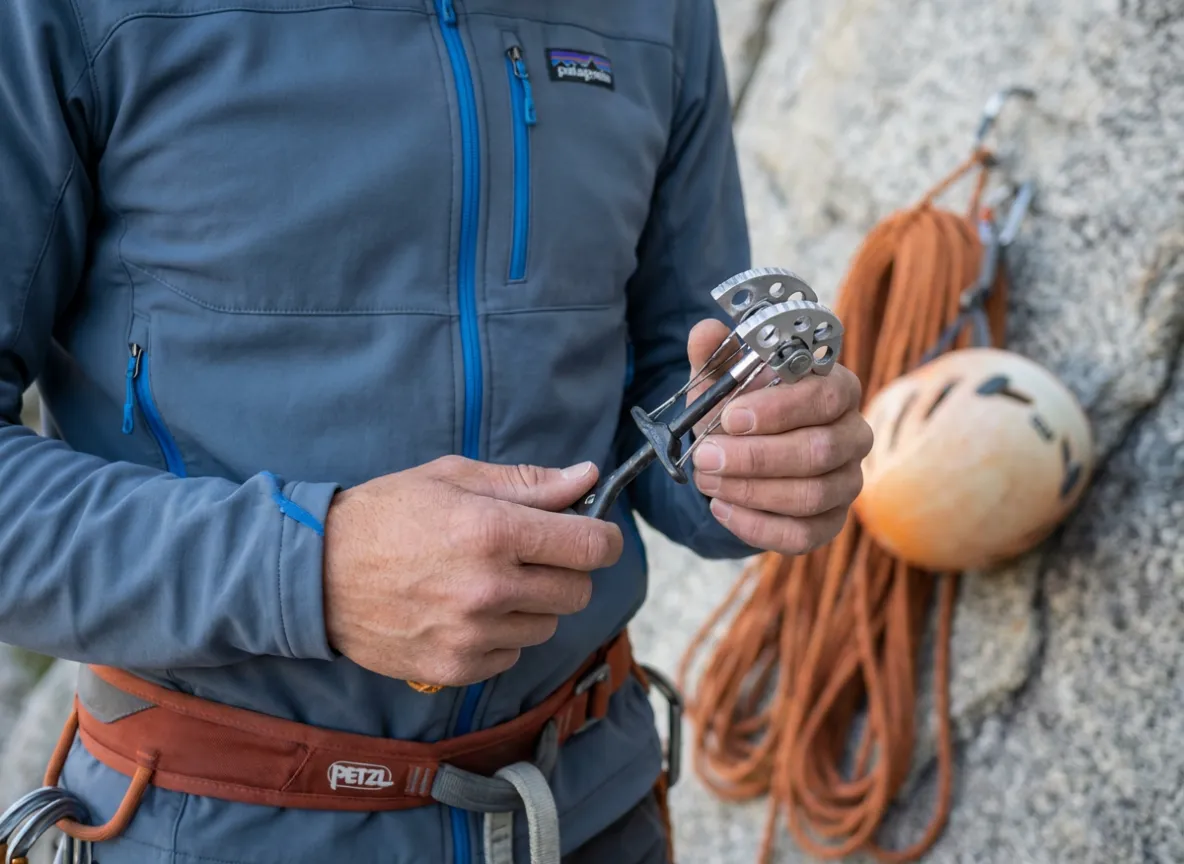
Before a drop of water touches your gear, you must separate the living from the dead. This applies to everything from DMM cams to your nut tool.
The 10-Year Rule
Check the date code on all slings. Any textile older than 10 years must be retired immediately due to polymer degradation, regardless of how new it looks or manufacturer specs.
Structural Integrity
Roll the axle on a flat surface to check for straightness. Inspect the stem cable for any broken wire strands. Even a single broken strand in a structural cable mandates immediate retirement. Also, check if the trigger wire is bent, which is repairable, versus a structural failure.
Lobe Action
Pull the trigger to assess the action. “Grittiness” usually indicates dirt. However, a “crunchy” metal-on-metal sensation often indicates permanent pitting of the axle.
The “Trust Battery”
View inspection as charging your “trust battery.” If a piece of gear raises doubts during inspection that cleaning cannot resolve, it belongs on the wall as art, not on your harness. Segregate gear that needs simple cleaning from gear that requires repair or retirement.
This same logic applies when assessing passive protection like nuts, including stoppers, chocks, hexes, and fixed stoppers, where cable integrity is equally critical.
What is the “Swish, Pump, and Dry” Technique?
The Bath
First, remove any larger, loose particles visible within your cams. Then, submerge the cam heads in warm water (max 50°C / 120°F) mixed with mild dish soap. While underwater, vigorously pump the trigger. This action hydraulically flushes the old lube and grit out of the axle assembly.
The Scrub
Use a stiff nylon brush (like a Metolius M-16 or a robust bouldering brush) to clean the cam teeth and springs. This removes organic matter like pine sap or moss.
Pro-Tip: If you have stubborn pine sap on your lobes, rub a small amount of butter on the spot before washing. The fats in the butter dissolve the sap, which can then be washed away with soap.
The Rinse
Repeat the pumping action in a bucket of clean, fresh water. Continue until no soap suds appear from the axle. Surfactant residue attracts dirt, so a thorough rinse is essential to clean dirty climbing cams effectively.
The Purge
The most critical step is dry time. Use compressed air (canned air or a compressor) to blast moisture out of the axle while working the trigger. This prevents trapped water from causing rust.
The Anointment
Apply a single drop of wax-based lubricants to the axle/lobe interface. Work it in by pumping the trigger. Finally—and this is crucial—wipe off all visible excess from the surface. You want lube inside the axle, not on the outside where it catches dirt.
The Result
The cam should snap back instantly with a distinct audible “clack.” This signifies that the friction has been reduced to safe tolerances, ready for organizing your entire trad rack back onto your harness.
How Does Gear Stewardship Extend to the Crag?
Your stewardship duties extend beyond the gear room. We must also consider how we treat the environment where we use these tools.
What is the River-Safe Protocol for Washing Gear?
The Myth
Washing cams directly in a stream is harmful. Even “biodegradable” soaps act as surfactants that lower water surface tension. This can damage the gills of fish and aquatic insects.
The 200-Foot Rule
Always carry water at least 200 feet (60 meters) away from the water source before starting the cleaning process to protect the crag environment.
Grey Water Disposal
Dispose of the dirty, soapy water in a “cat hole” (6-8 inches deep) in the soil. This allows soil bacteria to biodegrade the soap before it reaches the water table. This practice is a cornerstone of adhering to Leave No Trace ethics, ensuring that our pursuit of safety does not compromise the ecosystem we climb in.
Conclusion
True competence in rock climbing is built on attention to detail and proper storage techniques.
- Physics dictates safety: Cleaning is about removing the “grinding paste” that turns active protection into passive metal.
- Chemistry matters: Wax-based lubricants and mild soaps preserve the integrity of nylon and aluminum; oil and bleach destroy it.
- The 10-Year Rule: Dyneema slings and soft goods have an expiration date regardless of use. Respecting this is a non-negotiable aspect of stewardship.
- Process is protection: The “Swish, Pump, Dry, and Wipe” ritual is the only way to ensure your gear charges your “trust battery” for the next climb.
Check the date codes on your rack today. If you have a story about a “sticky cam” incident or a tip for retrieving stuck gear, share your experience in the comments to help the community learn.
FAQ – Frequently Asked Questions
Can I use WD-40 to clean my climbing cams?
No, standard WD-40 should never be used as a lubricant for climbing cams. It leaves a wet, sticky residue that attracts dust and dirt. This residue mixes with grit to create an abrasive paste that accelerates wear on the axle. Always use a wax-based lubricant like Metolius Cam Lube.
Is it safe to wash Dyneema slings in boiling water to clean them?
No. You should never expose Dyneema (UHMWPE) or nylon slings to water hotter than 50°C (122°F). High temperatures can alter the crystalline structure of the fibers or damage the treatments, significantly reducing the sling’s strength.
How do I remove rust from my cam springs?
Use a stiff nylon brush (like a toothbrush) and mild dish soap to mechanically scrub away surface rust. Avoid using vinegar or strong acids to dissolve rust, as they can inadvertently damage the nylon sling or etch the aluminum lobes if not perfectly neutralized.
What should I do if my cam trigger is still sticky after washing?
If a cam remains gritty or sticky after a thorough wash and lube, the axle may be pitted or bent. In this case, the device is no longer mechanically reliable and should be retired from use as life-support equipment.
Risk Disclaimer: Rock climbing, mountaineering, and all related activities are inherently dangerous sports that can result in serious injury or death. The information provided on Rock Climbing Realms is for educational and informational purposes only. While we strive for accuracy, the information, techniques, and advice presented on this website are not a substitute for professional, hands-on instruction or your own best judgment. Conditions and risks can vary. Never attempt a new technique based solely on information read here. Always seek guidance from a qualified instructor. By using this website, you agree that you are solely responsible for your own safety. Any reliance you place on this information is therefore strictly at your own risk, and you assume all liability for your actions. Rock Climbing Realms and its authors will not be held liable for any injury, damage, or loss sustained in connection with the use of the information contained herein.
Affiliate Disclosure: We are a participant in the Amazon Services LLC Associates Program, an affiliate advertising program designed to provide a means for us to earn advertising fees by advertising and linking to Amazon.com. As an Amazon Associate, we earn from qualifying purchases. We also participate in other affiliate programs. Additional terms are found in the terms of service.