In this article
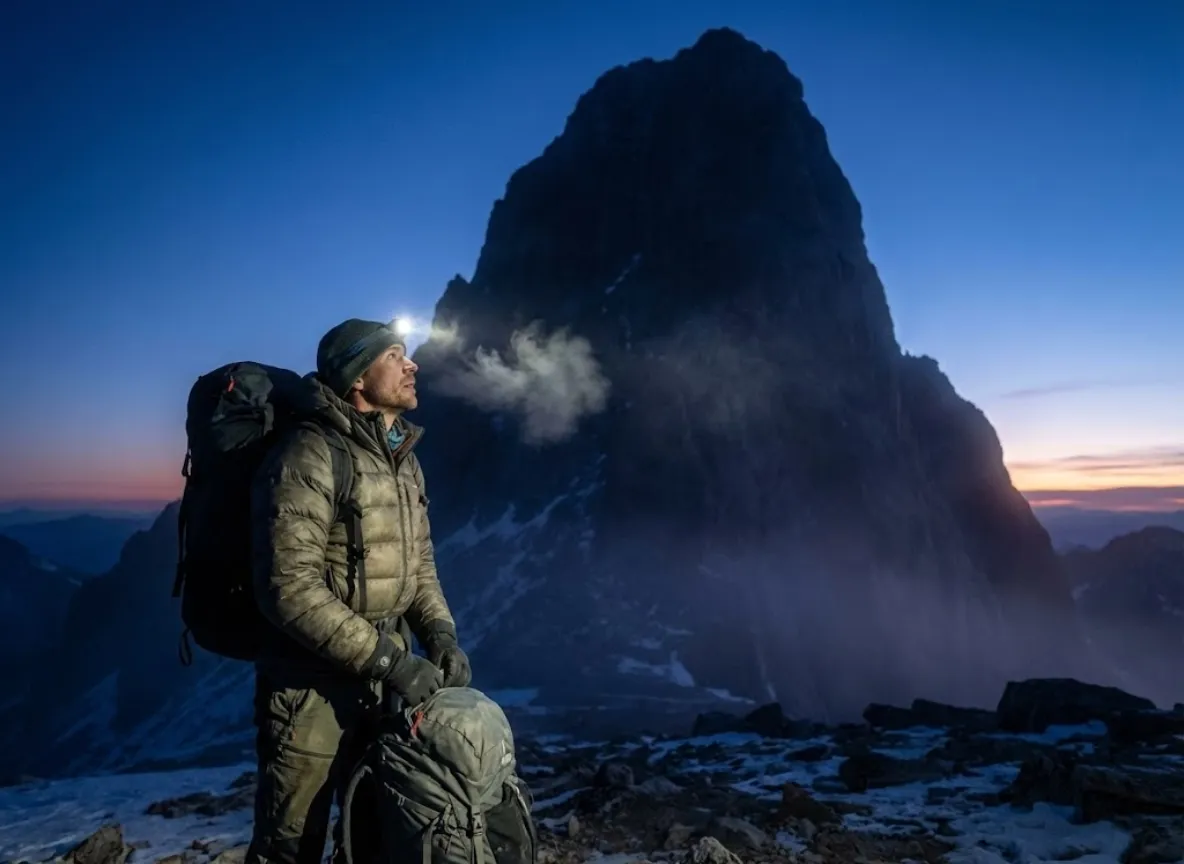
The wind at the Lower Saddle hits with a physical weight, stripping heat from your layers before the sun even breaches the horizon. Standing at 11,600 feet in Wyoming, staring up at the black silhouette of the Grand Teton, the Class 5.4 rating on the topographic map feels like a dangerous understatement.
This route does not test your ability to pull hard on plastic holds; it tests your ability to manage fear, weather windows, and complex systems while two thousand feet of air sits beneath your boots. The Grand Teton Owen Spalding Route is the standard, least technical option for summitting Grand Teton, but do not mistake “standard” for “safe.”
The Owen-Spalding route is the definitive gateway into American mountaineering and alpine climbing. It demands a respect that goes beyond physical fitness. Whether you are chasing an FKT culture benchmark or simply trying to survive your first big peak, the mountain treats everyone the same.
In my years guiding in the Teton Range, I’ve seen strong gym climbers freeze at the Belly Roll and experienced alpinists get shut down by paperwork errors. This comprehensive route guide cuts through the noise. We are going to cover the bureaucratic crux of the permit system, the specific biomechanics of the exposure, and the critical rope math that keeps you safe on the descent.
What are the primary logistical barriers to climbing the Grand Teton?

The hardest move on the Grand often happens months before you tie into a rope. The “Paperwork Crux” is real. Securing the legal permission and the physical position to attempt the summit requires a strategy as precise as your climbing movement.
How does the permit system work for the Grand Teton?
Access to the Grand Teton backcountry is controlled by a rigid quota system. This is managed via the official recreation portal, with the primary release occurring on January 7th at 8:00 AM MST. If you want a specific date, you must be logged in and ready to click the second the clock strikes eight.
The Lower Saddle and “Upper Garnet Canyon” zones typically vanish within minutes. A non-refundable administration fee is charged per application. Remember, successful applicants must still physically pick up their permit at the Jenny Lake Ranger Station before their trip.
For those who miss the January window, do not panic. The “Walk-in” lottery accounts for roughly one-third of available sites and operates on a “day prior” basis. This is a strategy game. You must arrive at the Jenny Lake Ranger Station well before opening hours—often 4:00 AM or 5:00 AM—to secure a place in line.
Flexibility is your greatest asset here. If the Lower Saddle is full, be prepared to accept a permit for The Meadows or The Caves. You will need to adjust your summit day itinerary accordingly. For a broader look at how this fits into the region, consult our comprehensive Grand Teton climbing guide to plan your trip.
Where is the best place to camp: The Meadows or the Lower Saddle?
Most climbers begin the slog from the Lupine Meadows Trailhead, pushing past Spalding Falls into the alpine. The choice of where to stop is critical.
The Lower Saddle (11,600 ft) is the “Penthouse” of the route. It positions you just 2,000 feet below the summit, allowing for a later wake-up call. However, this convenience comes at a cost. This zone is notoriously exposed to high winds, lightning strikes, and overcrowding. Sleep quality is often poor due to flapping tents and anxious climbers.
Camping here also requires hauling full packs up the arduous “headwall” and fixed lines. That physical tax depletes energy reserves you might need for the summit push.
The Meadows (9,000 ft) in Garnet Canyon offers a sheltered, water-rich alternative. You get softer ground and protection from the relentless ridge winds. The trade-off is a significantly longer summit day. You will need to ascend an extra 2,500 feet of elevation gain in the dark just to reach the technical start.
For first-time alpinists, The Meadows is often the superior strategic choice. It prioritizes recovery and hydration over initial proximity to the peak. Regardless of where you sleep, check the NPS maps for specific zone boundaries.
Pro-Tip: The Lower Saddle requires the use of WAG bags for human waste. There are no toilets. Review our guide on vertical waste protocols so you don’t fumble this critical process in the freezing cold.
How do you navigate the technical cruxes of the ascent?
Once you leave the saddle, passing the Black Dike and The Needle, the route changes character. The “easy” YDS grade masks the “hard” psychological exposure. You must distinguish between the difficulty of the move and the consequence of the fall.
How do you mentally and physically manage the Belly Roll and The Crawl?
After scrambling up from the Upper Saddle (near The Enclosure), you face the first technical barrier. The Belly Roll is a horizontal friction mantle. You must hug a detached flake while shuffling your feet on a wide ledge that suddenly feels very narrow. Despite the name, do not try to “roll” onto it. It is a balance traverse.
The primary error novices make is leaning too far into the rock. This pushes your feet outward, reducing rubber-to-rock contact. The correct technique is to keep your center of gravity low and vertical.
The Crawl follows immediately. This feature forces you to straddle a fin of rock with a 2,000-foot drop into Valhalla Canyon directly beneath your boots. Mountain Project consensus data confirms that while the grade is Class 5.4, the high exposure is severe.
Bulky backpacks are a liability here. They can catch on the rock wall and shove you toward the edge. Consider removing your pack and pushing it ahead of you, or slinging it on the precipice side—with extreme caution.
Pro-Tip: There is a critical placement—often a piton or a crack for a cam—halfway through the Crawl. Clipping this is essential. It calms the nerves of the following climber and protects the traverse.
This section is the “Psychological Crux.” If you struggle with fear management, review our mental training framework before you leave the ground.
Which chimney system offers the safest passage: Owen or Double?
The route offers two primary variations for the vertical ascent. The Owen Chimney, named after William Owen (part of the first ascent history team), is historically significant but tight. It can be difficult with a pack and is prone to bottlenecks.
The Double Chimneys are the modern standard. They offer more options for movement and gear placement. You can stem (bridge legs) across the feature rather than squeezing inside, which is far more efficient.
However, ice potential is a major hazard in both. Shaded rock here holds ice long after the face is dry. The American Alpine Club frequently documents accidents related to icy conditions in these chimneys.
If the chimneys are icy, the difficulty spikes significantly above 5.4. You will need precise footwork. In early season conditions (pre-July), crampons may be required.
The Catwalk connects these chimneys to the summit. Climbers must remain roped and vigilant here. A slip on the loose gravel is still fatal. Ensure you have the right active protection by consulting our ultimate cam guide to safely lead these sections.
What is the safest descent and rappel strategy for the Owen-Spalding?
Reaching the summit is optional, but getting down is mandatory. The standard descent route is where the mathematics of your equipment choices become life-or-death.
Why is the 60m vs. 70m rope choice critical for the main rappel?
The primary rappel from the main rappel station (near the top of the Owen Chimney) down to the Upper Saddle is approximately 120 feet (36.5 meters). This distance creates a dangerous “Math Gap” for climbers using standard gym ropes.
A single 60m rope creates a total length of 197 feet. When folded in half for a rappel, it offers only 98.5 feet of reach. This leaves you roughly 20 feet short of the safe landing zone. You will be left dangling in free space or on steep Class 5 terrain with no easy way to disconnect. Teton County Search and Rescue reports frequently highlight incidents caused by this specific miscalculation.
A 70m rope (folded to 115 feet) combined with dynamic rope stretch is the “Gold Standard.” It allows climbers to reach the walkable ledge system in a single smooth descent. This efficiency reduces time spent at the anchor and clears the bottleneck for other parties.
If you are unsure about rope categories, review our complete climbing rope guide to understand why a 70m single is the superior tool here.
How do you locate and use the intermediate anchor in Sargent’s Chimney?
For parties committed to a 60m rope, the descent requires a two-stage rappel. You must utilize the intermediate anchor at the top of Sargent’s Chimney.
This anchor is located approximately 80 feet down the main rappel line on the climber’s left (skier’s right). It consists of webbing and chains. You must spot this anchor during the ascent or visually confirm its location before committing to the rappel. Swinging over to it while on a tensioned rope can be difficult.
Missing this station while on a 60m rope results in a “stranded” scenario. This requires ascending (Prusiking) back up the rope—an advanced skill many beginners lack. Check with Jenny Lake Rangers for the latest anchor conditions.
The intermediate station is often crowded. You must be efficient with your tethering and rope management to avoid tangles. If you need to brush up on your descent protocols, read our guide on how to rappel safely.
What gear and timing strategies guarantee success?
The right gear is useless if you are stuck in a bottleneck or caught in a storm. Timing is your invisible protection against Grand Teton traffic.
What is the ideal “Teton Rack” for the Owen-Spalding route?
The “Standard Alpine Rack” is too generic for the Grand. You need a rack that specifically targets the wide cracks of the chimneys and the flaring constrictions of the granite. Consult resources like Renny Jackson’s Guide for deep historical beta, but for the modern climber, here is the reality:
Black Diamond Camalots #2 (Gold) and #3 (Blue) are non-negotiable for the Double Chimneys. The #3 provides a critical “psychological safety net” for the leader on the runout sections.
A set of offset nuts (e.g., DMM Wallnuts) is superior to standard stoppers. They bite more securely into the irregular, flaring scars common in Teton gneiss. Petzl’s technical guides also emphasize the importance of certified helmets in these rockfall zones.
Alpine Draws (extendable slings) are mandatory. The route wanders significantly between the Crawl and the Chimneys. Drag will paralyze a leader using short sport draws. Leave the #4 Camalot at home; the weight penalty outweighs its limited utility.
Footwear choice should favor sticky rubber approach shoes. The friction on the Belly Roll is key to security. If you are building your first kit, our trad rack building guide offers a foundational checklist.
How do you time your start to avoid crowds and weather?
The “Conga Line” is a major hazard. Getting stuck behind slow parties at the Belly Roll exposes you to hypothermia and delays your descent.
The “3:00 AM Rule”: Independent parties should aim to leave the Lower Saddle by 3:00 AM. This keeps you ahead of the Exum Guides and JHMG (Jackson Hole Mountain Guides), who typically depart between 3:30 AM and 4:30 AM. Leaving at 4:00 AM is the “Death Zone” for scheduling; you will arrive at the crux just as the guides are setting up, forcing a long, freezing wait.
The “Noon Thunderstorm” Rule: Teton weather is convection-driven. NOAA weather data illustrates the predictability of these storms. If you are not standing on the summit by 11:00 AM, you are in the danger zone for lightning strikes on the descent.
Turning around is a sign of competence, not failure. The Upper Saddle is a lightning magnet. Being caught there during a storm is a life-threatening scenario. To understand these patterns, study our guide on mountain meteorology.
Final Thoughts
Climbing the Grand Teton via the Owen-Spalding route is a masterclass in alpine fundamentals. Success begins months in advance on January 7th or in the pre-dawn cold at the Ranger Station. It relies on the physics of a 70m rope to clear the descent safely.
Do not let the Class 5.4 grade fool you. Treat the exposure of the Belly Roll and the ice of the Chimneys with the seriousness of a Grade V route. You are a guest in a fragile alpine environment. Pack out all waste, respect the fixed lines, and yield to faster parties.
Before you pack your bags, visualize the crux. Share your training plan or questions about the route in the comments below to join a community of climbers dedicated to safe, ethical alpinism.
FAQ – Frequently Asked Questions about the Grand Teton Owen-Spalding Route
How hard is the Owen-Spalding route for a beginner?
While rated 5.4 (easy technical climbing), the route is physically grueling and psychologically intense due to extreme exposure (2,000ft drops). It is suitable for fit beginners only if they have experience with rappelling, exposure, and basic rock climbing movement.
Do I really need a 70m rope for the Grand Teton?
A 70m rope is strongly recommended because it allows you to rappel from the main station to the Upper Saddle in one go. A 60m rope is too short for a single rappel and requires stopping at an intermediate anchor in Sargent’s Chimney, which increases risk.
Can I climb the Grand Teton without a guide?
Yes, but only if you possess the skills to navigate unmarked terrain, build trad gear anchors, and perform self-rescue. If you lack experience in route-finding or rope management, hiring a guide is the safest option.
What is the best time of year to climb the Owen-Spalding route?
The best season July–Sept is the prime window when the route is mostly free of snow and ice. Climbing before mid-July often requires ice axes and crampons, significantly increasing the technical difficulty.
Risk Disclaimer: Rock climbing, mountaineering, and all related activities are inherently dangerous sports that can result in serious injury or death. The information provided on Rock Climbing Realms is for educational and informational purposes only. While we strive for accuracy, the information, techniques, and advice presented on this website are not a substitute for professional, hands-on instruction or your own best judgment. Conditions and risks can vary. Never attempt a new technique based solely on information read here. Always seek guidance from a qualified instructor. By using this website, you agree that you are solely responsible for your own safety. Any reliance you place on this information is therefore strictly at your own risk, and you assume all liability for your actions. Rock Climbing Realms and its authors will not be held liable for any injury, damage, or loss sustained in connection with the use of the information contained herein.
Affiliate Disclosure: We are a participant in the Amazon Services LLC Associates Program, an affiliate advertising program designed to provide a means for us to earn advertising fees by advertising and linking to Amazon.com. As an Amazon Associate, we earn from qualifying purchases. We also participate in other affiliate programs. Additional terms are found in the terms of service.