
In this article
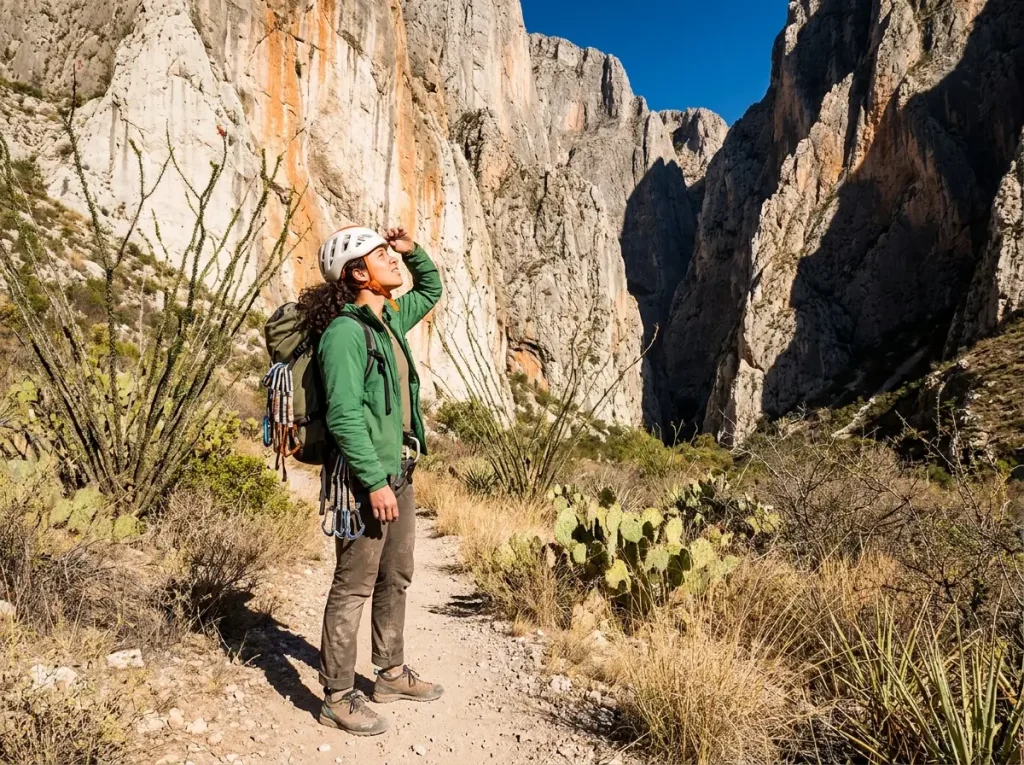
The first thing you notice at El Potrero Chico is the size. You’ve seen photos, maybe watched a few videos, but nothing quite prepares you for standing inside the canyon and tilting your head back — way back — to find the top of the wall. It’s limestone the color of old bone, streaked orange and gray, rising seven hundred feet above a desert floor where cactus grows at the base of the climbs. I’d been warned it was impressive. Warnings don’t cover it.
After multiple trips through Hidalgo, Nuevo León, I’ve learned that a good El Potrero Chico trip and a frustrating one come down to the same handful of things. Knowing the right season, understanding how the grades actually work here, bringing the right rope, and knowing which wall to start on. This guide covers all of it.
Quick Answer: El Potrero Chico is a big wall sport climbing destination in Hidalgo, Mexico, roughly 25 miles northwest of Monterrey.
- Over 800 bolted limestone routes from 5.7 to 5.14, with routes up to 23 pitches
- Best climbing season runs November through March; peak is December through February
- A 60-meter rope is mandatory — 55-meter ropes are too short for many descents
- Grades run stiff compared to US gym or manicured sport crags — expect a half-grade bump
- No gear stores on-site; bring everything before you leave the US or Monterrey
- Fly into Monterrey International Airport (MTY), then shuttle or taxi to Hidalgo (~1 hour)
What Is El Potrero Chico?
The Rock and the Routes
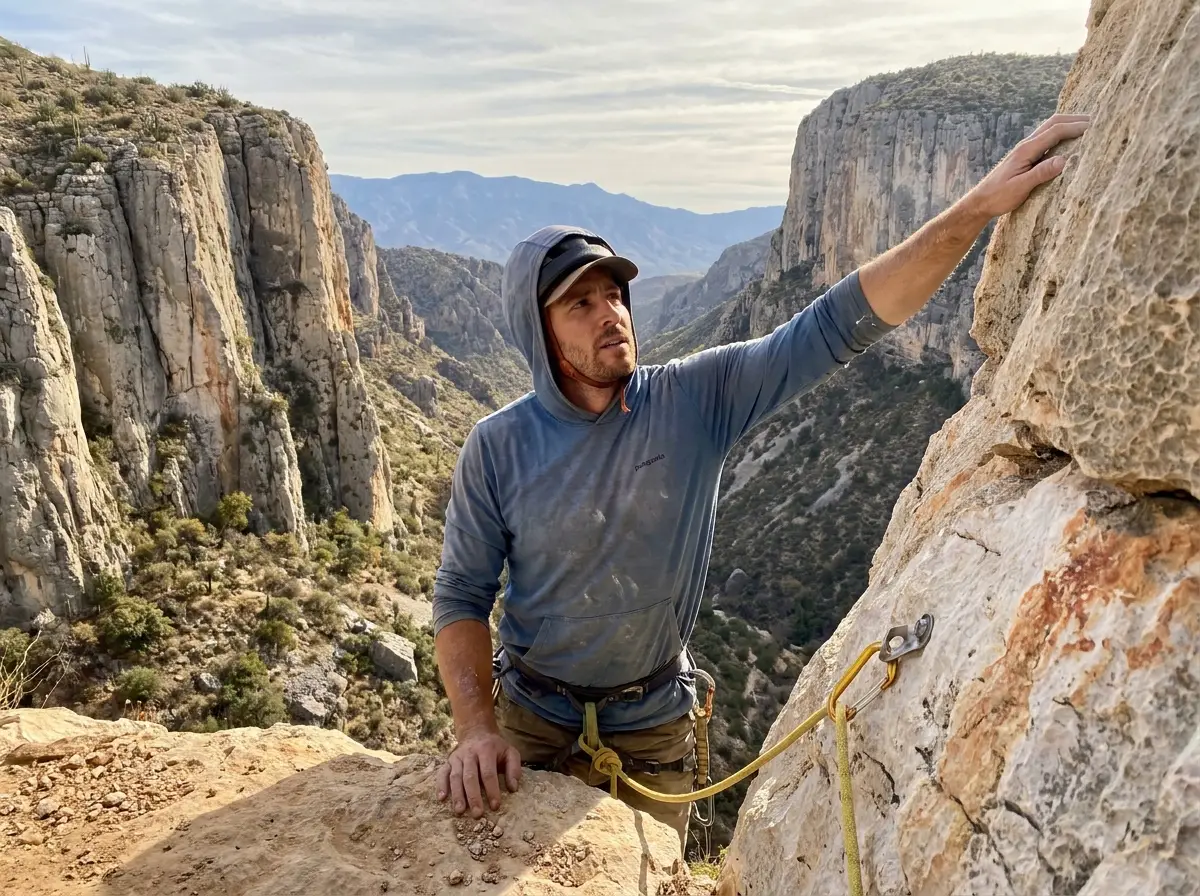
El Potrero Chico translates roughly to “little corral,” and once you’re inside the canyon you understand the name. Two walls of pale limestone form a narrowing V that rises dramatically above the town of Hidalgo, Nuevo León, Mexico. The canyon sits at roughly 500 meters elevation in the Sierra Madre Oriental — desert conditions, hot sun, zero humidity most of the winter, and enough vertical rock to keep you busy for years.
Development started in the late 1980s when climbers including Jeff Jackson and Alex Catlin began bolting routes. But it was Kurt “The General” Smith and Elaina Arenz who put the place on the global map in the late 1990s, establishing hard testpieces that drew the international climbing community. Today the canyon holds over 800 routes — the new 4th edition of the El Potrero Chico guidebook, released in October 2025, covers them all. If you want to understand the topo system before arriving, run through how to read a climbing guidebook’s symbols, grades, and topos so you’re not standing at the base of a wall squinting at a diagram you’ve never seen before.
The rock is limestone — mostly solid, occasionally chossy toward the tops of the taller walls, with pockets ranging from shallow two-finger edges to full-hand jugs. The style is face climbing with pocket pulling, not crack systems. If you come from a heavy trad background, bring an open mind and let the stone teach you something new.
Getting There from the US
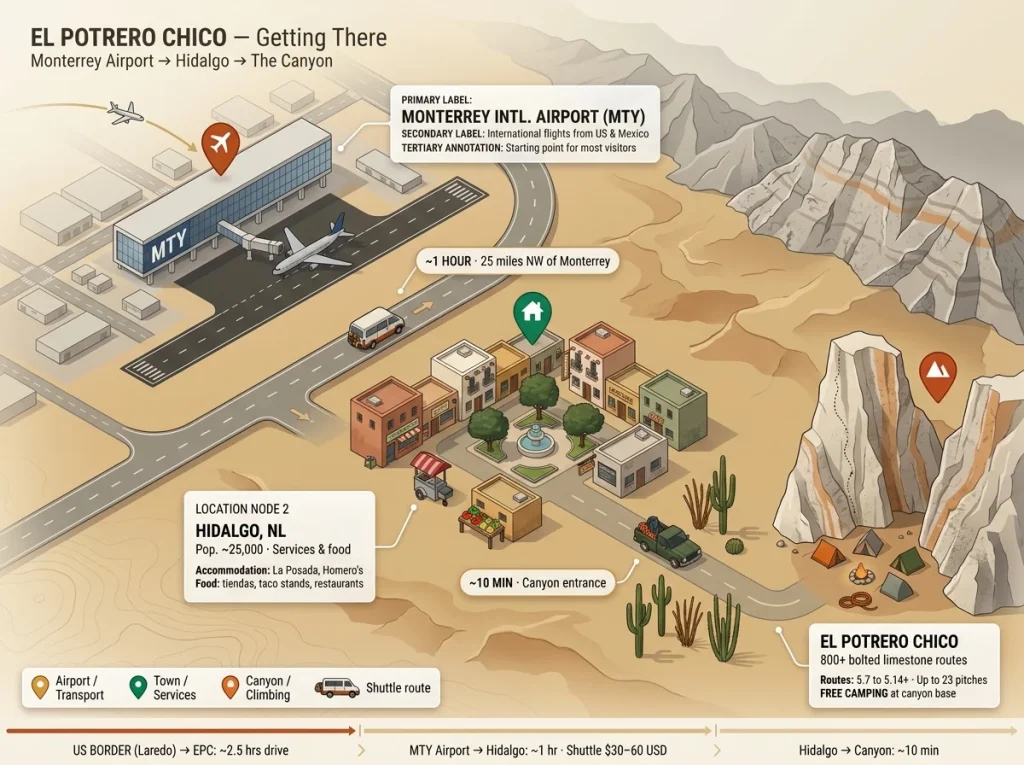
Fly into Monterrey International Airport (code: MTY). It’s about an hour north of Hidalgo. Most accommodations offer airport shuttle pickup — arrange it before you land, because the Monterrey airport is not a place where you want to start figuring out logistics on the fly. Budget roughly $30–60 USD for a shuttle, depending on the provider.
Driving from the US border at Laredo is around 2.5 hours. It’s a popular option for repeat visitors, especially those hauling large gear kits, trad racks, or extra rope systems. The roads are paved and well-maintained on the main route, and crossing the border with climbing gear triggers no issues.
Where It Fits in the World of Climbing Destinations
This is not Red Rocks. This is not Yosemite. What El Potrero Chico offers that almost nowhere else does is bolted big wall sport climbing — multi-pitch routes on vertical to near-vertical stone, completely equipped with stainless bolt anchors, accessible to any climber who can handle multi-pitch systems. It’s the same logistical format as Kalymnos, Greece’s limestone sport climbing but bigger, more remote-feeling, and far cheaper to visit.
Pro tip: The walking approach from most campsites to the base of Jungle Wall or Wonder Wall is five minutes. No trail running shoes required, no wilderness permit system to navigate. Pack light for the approach.
When to Go and What the Weather Actually Does
The Main Climbing Window
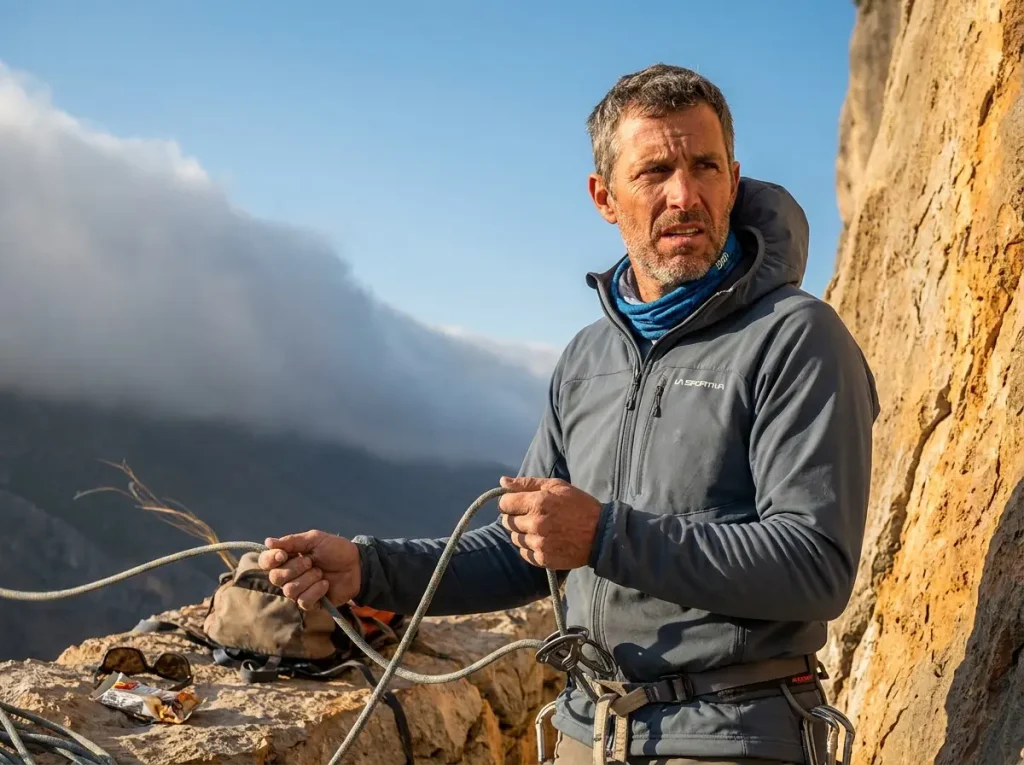
The main season runs November through March, with December through February being the sweet spot. Daytime temperatures during peak season hover in the low 70s Fahrenheit — warm enough to climb in a single layer but cool enough that you’re not cooking on south-facing walls. Nights drop into the 40s, sometimes lower. Bring a real sleeping bag if you’re camping; none of the rental houses have heating, and that 40-degree morning will find you.
March and April extend the climbing if you’re flexible. October and early November can work but are warmer and occasionally humid. Summer is off-limits: temperatures hit 95°F or higher, and the rock absorbs every degree.
The Norte Problem
Here’s the thing guides and booking sites don’t emphasize enough: cold fronts from the north — called nortes locally — can blow through with almost no warning. Temperature drops of 40°F in 40 minutes have been documented. I’ve watched a perfectly clear morning turn into a 35-degree windstorm by lunch, with rain hitting the upper walls before anyone at the base had noticed the sky change.
The field protocol: if you see a defined cloud bank building on the northern horizon while you’re on a multi-pitch, you start descending. Not finishing the pitch, not sending the crux — descending. Routes that take three hours to ascend take 30 minutes to rappel, and being two-thirds up a 1,000-foot wall when a norte hits is not a comfortable place to be.
High Season Crowds vs. Shoulder Season Tradeoffs
December and January see the most climbers. Popular routes like Space Boyz (5.10d, 11 pitches) and Time Wave Zero (5.12+) develop queues on weekends. Two-party rappel traffic can turn a 2-hour descent into a 4-hour exercise in patience. If crowds bother you, arrive during the first two weeks of November or the last two weeks of February — the rock is just as dry, the weather only slightly less reliable, and the canyon feels like yours again.
El Potrero Chico Route Guide by Grade
Beginner to Intermediate (5.7–5.10c): Start at Jungle Wall
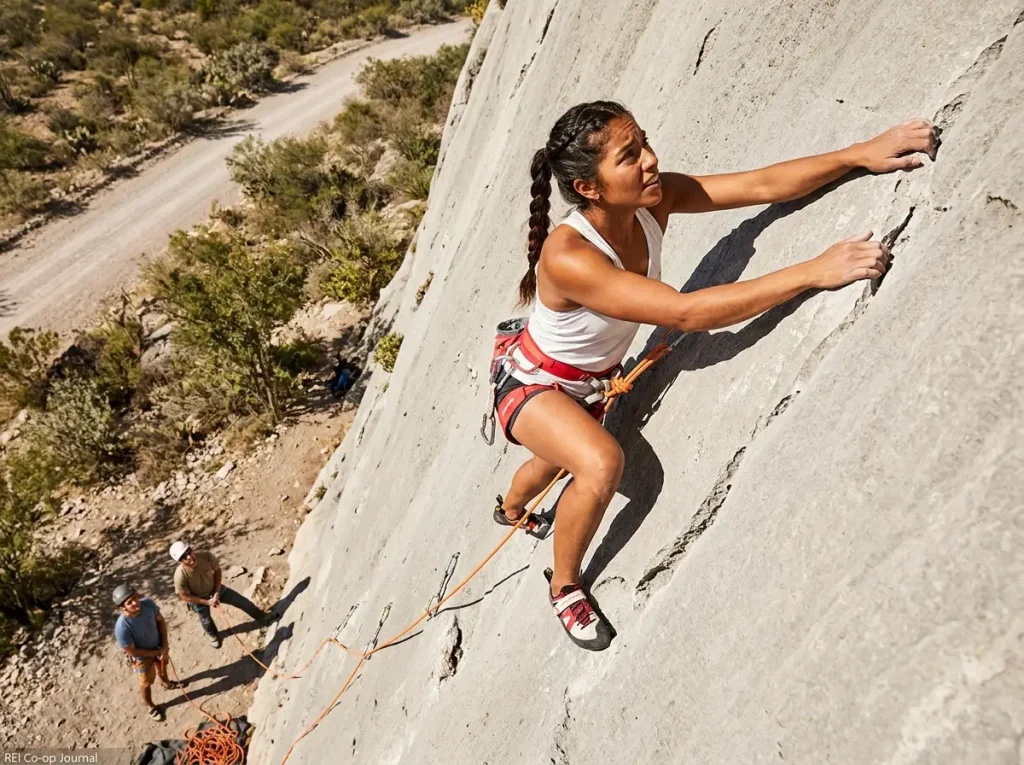
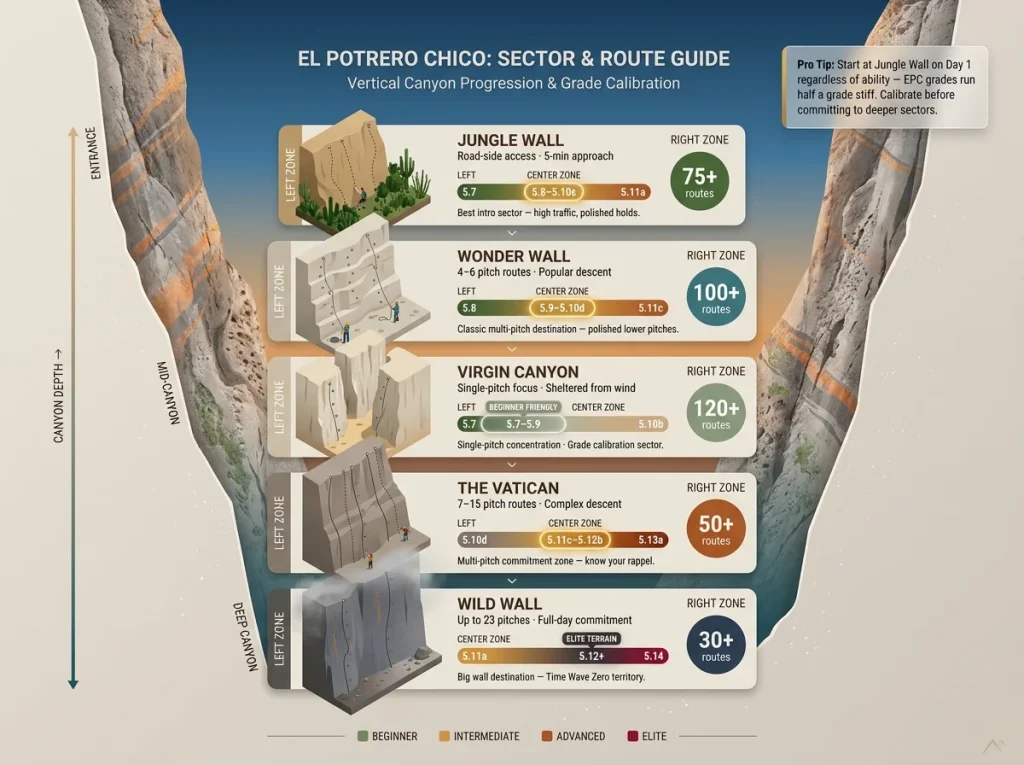
Jungle Wall is where you earn your EPC legs. It sits right next to the road, has no approach to speak of, and is loaded with moderate routes on well-featured rock. Wonder Wall (5.8, 4 pitches) is the classic warmup — it’s become so popular the lower holds are polished to glass, but the route stays reasonable throughout. Off the Couch (5.10d, 6 pitches) pushes into the upper tier of moderate climbing here and offers a real view from the top without a scary commitment.
Virgin Canyon sector hosts more 5.7–5.8 single-pitch routes if you want to dial in movement before going vertical on multi-pitch. Take a day here first if it’s your first time on this style of stone.
Moderate to Stout (5.10d–5.11+): The Middle Kingdom
This grade range is where EPC’s reputation for stiff grading becomes physically obvious. A route listed as 5.10d here frequently climbs like a US 5.11b — shorter bolting distances, less rest between hard moves, and holds polished by thousands of ascents. Pangea (5.11b) is a beautiful, demanding multi-pitch. Space Boyz (5.10d, 11 pitches) is considered the moderate classic of the canyon, and it will earn every one of those 11 pitches.
Coming from gym climbing or a polished sport crag at home? Add half a grade to every route you’re considering. I’ve watched solid 5.11 climbers get shut down on routes listed as 5.10 here on day two of their trip, before their fingers found the limestone rhythm.
The Proud Lines (5.12 and Above)
Time Wave Zero (5.12+, 23 pitches, 2,000 feet) is the route that made El Potrero Chico famous. It’s a full day — experienced parties budget 8–12 hours — on steep technical limestone with an exposed ridgeline finish. If you’re projecting it, you need to be solid at 5.12 in street shoes, comfortable with long runouts, and experienced at managing a team on a long day out.
Hombre de Rifle (5.13a) and other upper-grade testpieces attract elite sport climbers from around the world each winter. For most visitors, watching someone send these from the ground is entertainment enough.
Gear List for El Potrero Chico
The Rope Situation (60m vs. 70m)
The 60-meter rope is the minimum — not a suggestion, not an average. 55-meter ropes are too short for several routes and rappels at EPC. There have been fatalities at the canyon from climbers rappelling off the end of their rope, and some of those accidents involved parties who believed a 60-meter rope gave them a margin they didn’t actually have.
Bring a 70-meter rope if you can. On longer multi-pitch routes and on some of the descents, 70 meters gives you genuine margin. If you’re going with 60 meters, tie stopper knots at both rope ends before every single rappel — every one, without exception, even on routes you’ve done before, even on routes that look straightforward. This is not optional procedure at EPC. It is the difference between a close call and a fatality.
For more on harness fit during long multi-pitch hanging belays, adjusting your harness leg loops for hanging comfort will save you a lot of misery on the longer routes. Your legs will be hanging in a belay stance for extended periods — harness fit matters here more than at a single-pitch crag.
Quickdraws and Anchor Gear
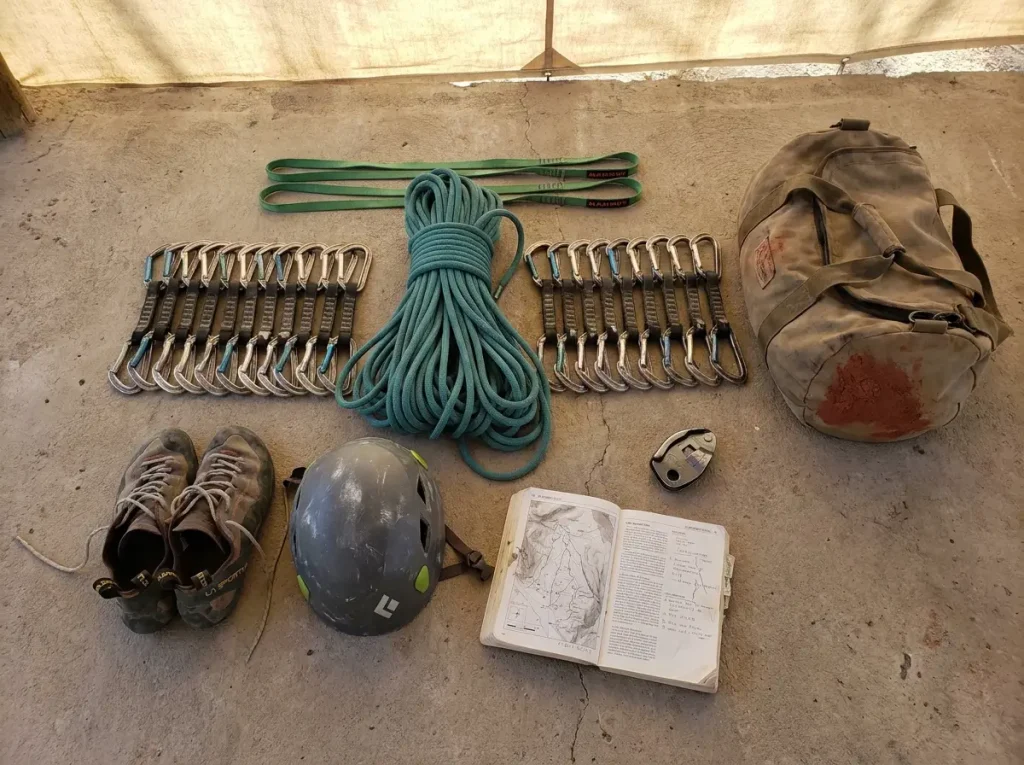
Bring 20 quickdraws minimum. If you’re planning to link pitches to move faster, carry 25 and add a few 24-inch slings for extended placements. A standard sport rack is fine for most routes. The local ethic is bolts-only even in crack systems, though some climbers supplement with a few cams to reduce runout anxiety on specific routes.
Bring a cordelette or two pre-rigged anchor slings. You’ll use them constantly at hanging belays on multi-pitch routes, and they let you build stations quickly rather than fumbling with gear on a ledge.
Pro tip: Clip your quickdraws to your harness gear loops sorted by length before you leave camp. On a 20-bolt multi-pitch route, fumbling for draws wastes time and mental energy. Have them ready to grab left-to-right in sequence.
Shoes, Chalk, and the No-Gear-Stores Reality
There are no gear stores at El Potrero Chico or in Hidalgo. The nearest climbing gear shop is in Monterrey, and it carries a limited selection. Bring everything you need before you leave the US, and pack your helmet, harness, and shoes in your carry-on, not your checked luggage.
Most experienced EPC visitors recommend bringing two pairs of shoes: a precise performance shoe for single-pitch sport climbing and a comfortable, slightly stiffer shoe — La Sportiva TC Pro is the perennial recommendation — for all-day multi-pitch where your feet will be inside tight shoes for 8+ hours. If you only bring one pair, err comfort over performance.
Taping fingers before long days is worth doing. The limestone eats skin. Bring everything you need for the climbing trip because replacing something forgotten here is not easy.
Where to Stay and Eat
Camping Options
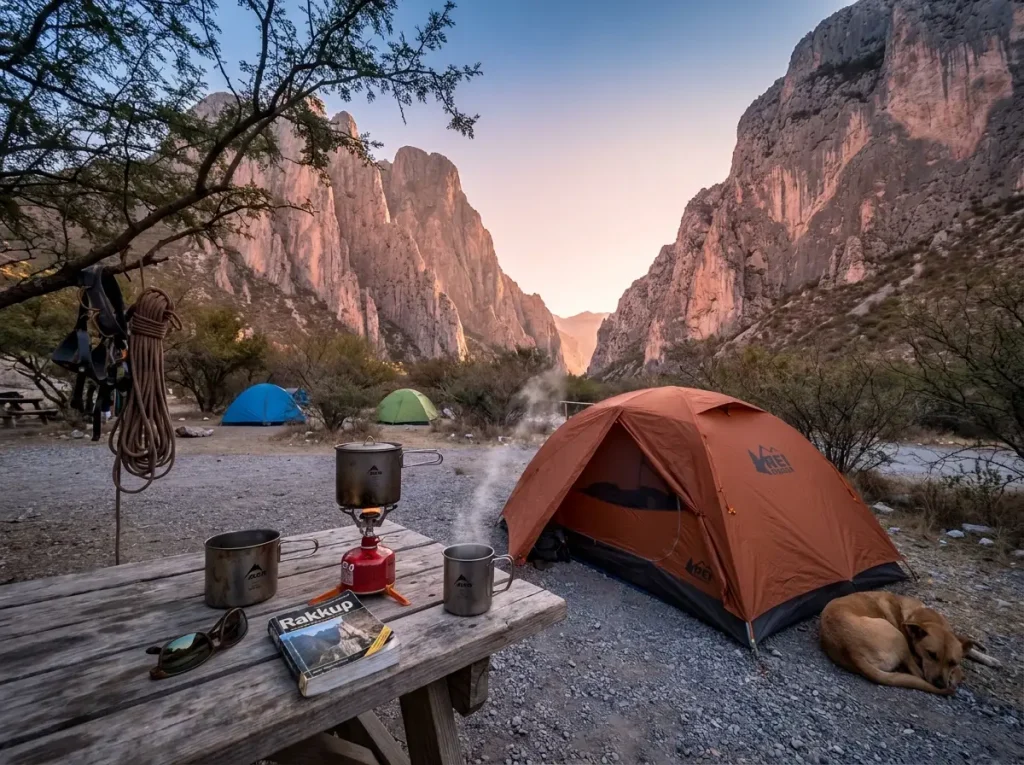
Free camping is available near the base of the canyon — basic, no amenities, but it puts you within a 5-minute walk of Jungle Wall. Several dedicated campgrounds inside and around the canyon offer more structure: fire pits, basic bathroom facilities, and sometimes electricity. Costs run $10–20 USD per night.
The camping community at EPC is one of the best parts of visiting. Climbers from a dozen countries share fire ring space at night, swap beta on routes they’ve done, and generally create the kind of crag culture that makes the whole trip feel different from a hotel-booked sport climbing holiday.
La Posada vs. Homero’s
The two main accommodation landmarks at EPC have distinct personalities, and regulars develop strong opinions about each.
La Posada is the more polished option — private rooms, glamping sites, a pool, a restaurant that serves food you can recognize, and organized shuttles. It fills up fast during peak season. Book early if this is your base.
Homero’s is the original. It’s less comfortable, more character-driven, and the stories you hear at the communal dinner table are worth the modest inconvenience of simpler rooms. Homero himself has been hosting climbers for decades and knows every route in the canyon. If this is your first time and you want someone to help you understand where to go, Homero’s conversation at breakfast is worth more than a guidebook.
Food, Water, and the Town of Hidalgo
Hidalgo is a traditional Mexican town of about 25,000 people. It has tiendas (small grocery stores) stocked with basics, taco stands, and a handful of restaurants catering to the climbing crowd. Budget food costs are genuinely low — $5–10 USD covers a full meal at most places. Drink bottled water; the tap water is not safe for visitors unaccustomed to the local bacteria.
Spend money in town. The climbing community’s relationship with Hidalgo’s local economy directly affects long-term access to the canyon. Buy your groceries locally, eat at the taco stands, tip well. The town has put up with decades of climbers parking gear in its streets and this relationship works because climbers invest back into it.
The Grade Reality Nobody Warns You About
Why EPC Grades Run Stiff
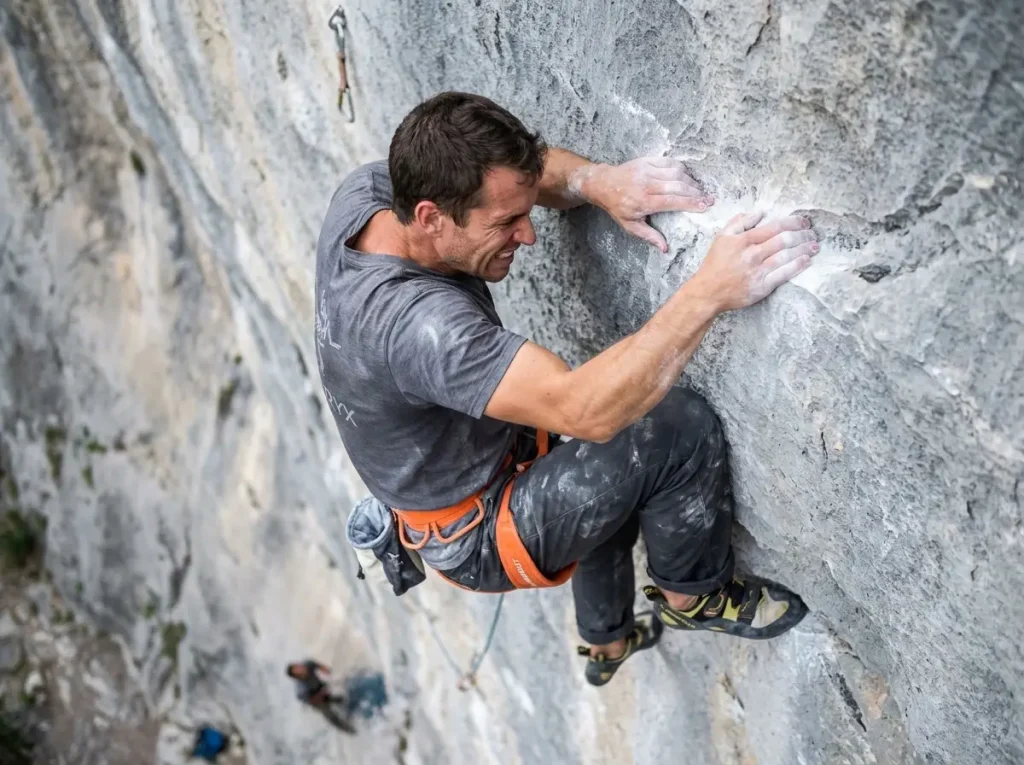
This is the thing the booking sites and guided tour pages won’t tell you because it’s not great marketing: El Potrero Chico grades are harder than equivalent grades at most US sport crags. Routes are described as “stiff, slippery, worn, sometimes loose, and very often runout” by climbers who know both areas well. A route listed as 5.10a here might be the hardest 5.10a you’ve ever done.
There are several reasons. The holds are polished from decades of use — the limestone texture that creates such satisfying friction when it’s fresh develops a glassy patina when thousands of feet and hands have touched the same sequence. The bolt spacing on older routes reflects a more committing style, so falls are longer. And the overall movement style — pulling pockets on steep limestone — is genuinely harder than crimping on vertical granite if that’s your home rock.
Pro tip: Your first day at EPC, climb two grades below what you’d normally warm up on at home. If you lead 5.11a confidently at your local crag, start your EPC career on 5.9s. It sounds silly until you see the climber who skipped this advice getting shut down in front of a crowd.
What Your Warm-Up Grade Tells You
The warm-up grade functions as a calibration tool. If your 5.8 warm-up felt like moderate climbing, your expectations for the day are probably reasonable. If it felt burly, back off the plan. The canyon doesn’t care about what you can do at your home crag.
This calibration process matters more on multi-pitch because there is no bailing gracefully once you’re committed. Understanding your real grade at EPC — not your gym grade, not your home-crag grade, but your El Potrero Chico grade — prevents situations where you’re pumped and stuck seven pitches up a route you shouldn’t have started.
For more on why falls feel different on steep limestone, practicing falling in sport climbing before your trip will also help your head stay in the right place on runout sections.
How to Recalibrate Expectations Before Day One
The productive approach: add half a grade to every route you’re considering before you look at the day’s plan. If you think you want to do a 5.11b multi-pitch, find a 5.10c and do that instead. You’ll probably discover it climbs at exactly the difficulty level you expected from the 5.11b. After two or three days, your internal calculator will be calibrated to EPC’s scale and you can trust your own read again.
Multi-Pitch Safety at El Potrero Chico
The Rappelling Hazard That’s Caused Fatalities at EPC
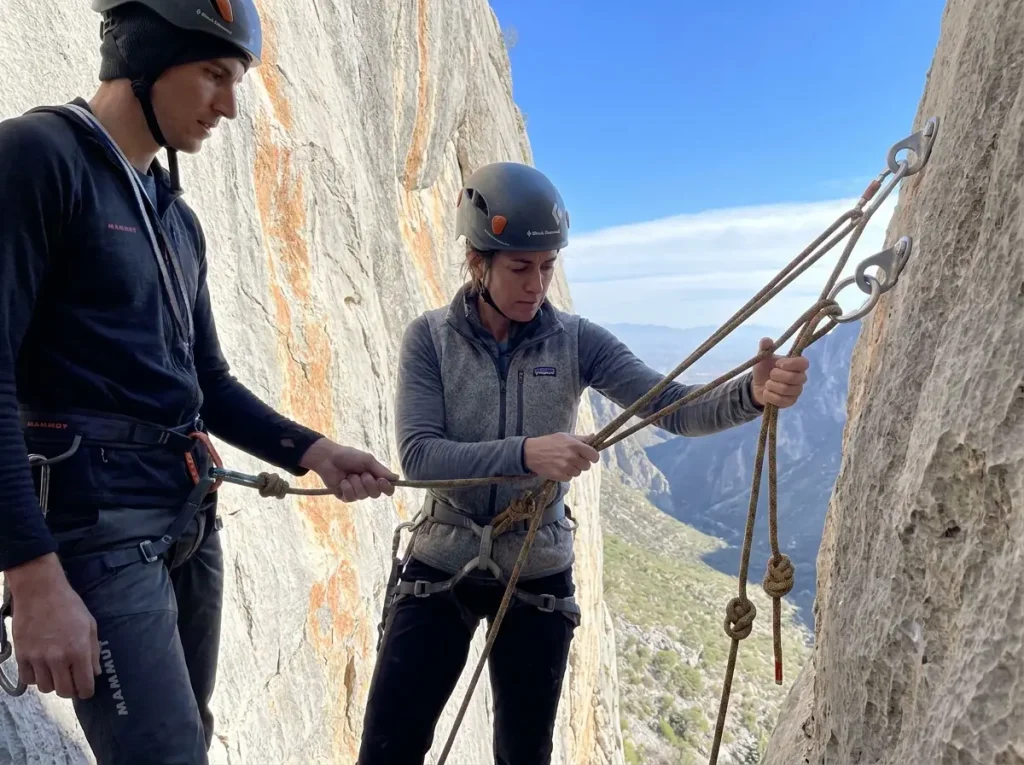
The most documented hazard at EPC is climbers rappelling off the end of their rope. Multiple fatalities have occurred here for this specific reason, and the cause isn’t always what people assume — it’s not just forgetting to tie stopper knots. It’s also about route-specific rope length requirements.
Some descent routes at EPC involve ledge systems that shorten the effective rappel distance but create an illusion that the rope is handling a clean, full rappel. On other routes, the descent path doesn’t follow the ascent path, and the new descent line is actually longer. A 60-meter rope that covered every ascent pitch may be 5 meters short on the descent rappel line. This is documented, it’s not rare, and it has resulted in fatalities.
The field rule at EPC is simple: tie stopper knots at both rope ends before every rappel. Not sometimes. Not on routes you haven’t done before. Every. Rappel. This is the single most important safety habit you can build before arriving.
For climbers new to multi-pitch or operating with a guide service, the American Alpine Club’s climbing safety resources provide foundational multi-pitch rappel systems used by the guiding community here.
If you’re considering hiring a guide, especially for your first big-wall multi-pitch attempt, the local guide services at EPC employ AMGA-certified guides who know these descent routes cold. The cost is worth it on routes where the descent complexity adds real risk.
Pro tip: On any multi-pitch descent, have one climber stay clipped to the anchor while the other descends. Don’t both unclip simultaneously. The anchor is your safety net if anything goes wrong with the rappel setup, and at EPC’s height, you want every margin you can get.
Rockfall and Helmet Use
Wear a helmet. This is non-negotiable at EPC, not just best practice. The upper sections of taller multi-pitch routes get loose — the alpine character that develops above 600 feet means blocks that feel bomber can have small amounts of movement underneath them. Routes that see a lot of traffic can dislodge small rocks at any time.
The approach trail in high season also passes under active climbing walls. Helmet on when you’re walking in. This sounds excessive until you hear the warning shout from sixty feet up.
Rockfall is not uncommon on El Potrero Chico’s multi-pitch routes, especially on lesser-traveled lines toward the summits. Staying in a tight party, keeping ropes managed, and minimizing loose rock disturbance are all important habits here.
Managing Weather on Multi-Pitch
Combine the norte awareness from the season section with a conservative turnaround policy. The rule that experienced EPC parties use: if you haven’t started down by early afternoon, ask why. Routes that take all day to climb in good weather become multi-day ordeals when weather moves in — and at EPC there are no bivouac ledges rigged for unplanned overnight stays.
A good layering system matters. Temperature at the base of the canyon and temperature on a wall at 800 feet can differ by 15°F — the wind exposure changes everything. The alpine layering system that works for mountain climbing translates directly to a long day at EPC: packable insulation layer clipped to the pack, wind layer accessible at the top of the pack, base layer breathable.
Wrapping Up: What You Actually Need
Three things will make your El Potrero Chico trip: the right rope (70 meters, stopper knots every rappel), the right grade expectations (subtract half a grade from your home-crag ability until you’re calibrated), and the right relationship with the canyon’s pace (start early, turn around before you need to). Get those three right and everything else — the accommodation, the food, the logistics — sorts itself out.
The climbing here is genuinely unlike anything in North America. The walls are bigger, the routes more committing, and the experience of linking pitches through Mexican limestone in the shadow of the Sierra Madre is one of those things that converts climbers into repeat visitors. Pack your rope, bring your helmet, and tie those stopper knots.
Q1 Is El Potrero Chico safe for climbers to visit?
El Potrero Chico is safe for climbing with proper preparation and conservative safety habits. The town of Hidalgo has a long, positive relationship with the climbing community. The main hazards are climbing-specific: rappelling without stopper knots, underestimating grade stiffness, and getting caught on a wall by a norte cold front. Follow standard multi-pitch safety protocols and you’ll be fine.
Q2 What is the best time of year to climb at El Potrero Chico?
The best time is December through February, which is peak season. November and March are solid shoulder season options with fewer crowds. October can work but is warmer. Summer months — June through August — are too hot for comfortable climbing, with temperatures regularly above 90°F.
Q3 Do I need a guide at El Potrero Chico?
You don’t need a guide for single-pitch sport climbing at sectors like Jungle Wall. For multi-pitch routes with complex descents — especially routes above 10 pitches — hiring an AMGA-trained guide from one of the local services adds meaningful safety margin, particularly on your first visit. The descent routes can be confusing and the rappel hazards are real.
Q4 How many quickdraws do I need at El Potrero Chico?
Bring 20 quickdraws as a baseline. For linking pitches or tackling longer multi-pitch lines without stopping to break down the anchor, carry 25 plus two or three 24-inch slings. Leave the short sport draws at home — slightly extended draws reduce rope drag on the wandering lines you’ll encounter on multi-pitch routes.
Q5 Can beginners climb at El Potrero Chico?
Yes, with the right expectations. El Potrero Chico has more moderate routes in the 5.7–5.9 range than almost any destination of its type. Virgin Canyon and the lower sections of Jungle Wall are excellent for beginners. The important thing is to start well below your ability level on day one — the grade stiffness will humble you, and that’s better discovered on a route you can comfortably down-climb than on something committing.
Safety Notice: Rock climbing and mountaineering are inherently high-risk
activities that can involve physical trauma or fatal incidents. The information on Rock Climbing Realms is for
educational and informational purposes only. Techniques and advice presented here are not a substitute
for professional, hands-on instruction. Conditions and risks vary by location. Always seek guidance
from a qualified instructor before attempting new techniques. By using this website, you agree that you
are solely responsible for your own safety. Any reliance you place on this information is strictly
at your own risk, and you assume all liability for your actions. Rock Climbing Realms and its authors
will not be held liable for any harm, damage, or loss sustained in connection with the use of this information.
Affiliate Disclosure: We are a participant in the Amazon Services LLC Associates Program, an
affiliate advertising program designed to provide a means for us to earn advertising fees by advertising and linking
to Amazon.com. As an Amazon Associate, we earn from qualifying purchases. We are also an official affiliate partner
of Black Diamond Equipment via the AvantLink network. If you click on a Black Diamond affiliate link and make a
purchase, we may earn a commission at no additional cost to you. We also participate in other affiliate programs.
Additional terms are found in the terms of service.