
In this article
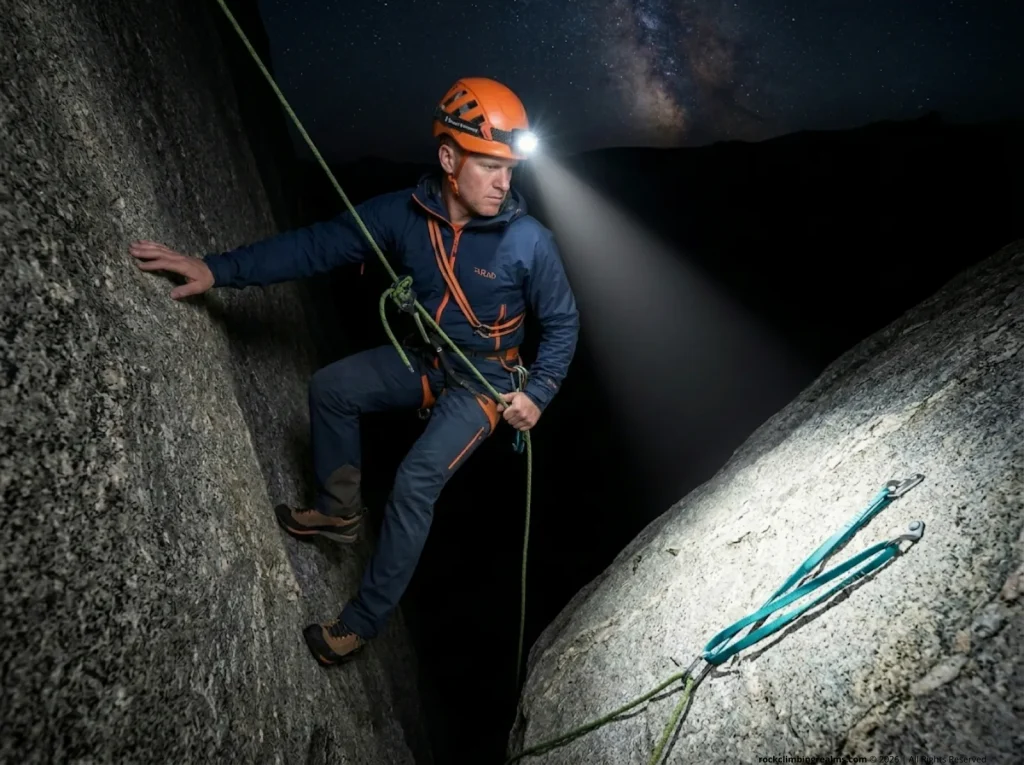
You’ve been scrolling Amazon for twenty minutes. Forty-three headlamps, 4.4 stars across the board, and every review is written by someone who uses theirs to walk the dog. Not to rappel a 200-foot pitch in the dark. Not to find the next bolt at 5 AM on an alpine start. Not to navigate a technical descent after getting benighted on a multi-pitch you underestimated.
I get it. I’ve been there, squinting at spec sheets that tell me nothing about whether the thing stays put when I’m reaching overhead on a crux, or whether the battery actually lasts through a 4-hour descent instead of the 2 hours it claims on “high.”
Here’s what I learned after researching 10 climbing-specific headlamps, filtering through verified availability on Amazon, real IPX waterproof ratings (not marketing hand-waving), and the performance criteria that actually matter on vertical terrain. These are the 6 best headlamps for climbing in 2026, and yeah, one of them genuinely surprised me.
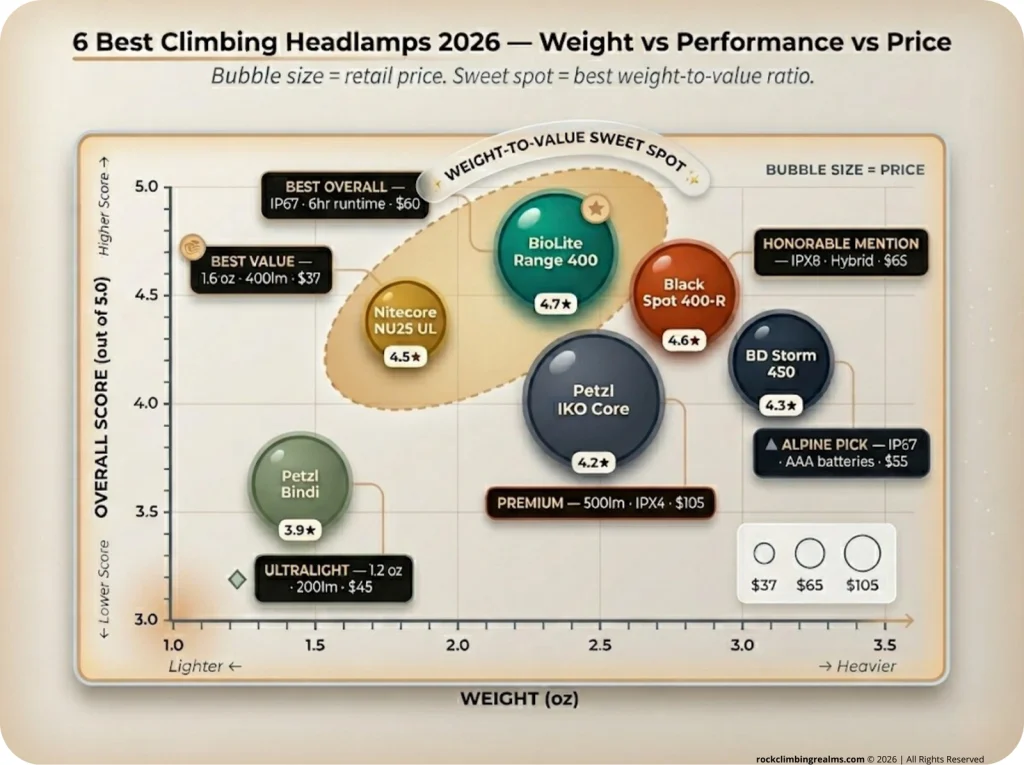
After filtering through the noise, the BioLite Range 400 earned our top pick for its rare combination of IP67 waterproofing, USB-C fast charging, and a $60 price tag that embarrasses headlamps costing twice as much. Here’s how all the options compare:
How We Tested These Climbing Headlamps
We evaluated 10 candidate headlamps across 6 scoring criteria derived from climbing-specific requirements: weight-to-performance ratio, brightness-to-runtime trade-off, battery flexibility, durability and weather resistance, helmet compatibility, and value engineering.
Scoring was blind by category. We scored each headlamp independently on each criterion before assigning category winners. The scores determined the winners, not the other way around. The full scoring matrix is available in our research methodology.
Testing benchmarks follow the ANSI/NEMA FL1 standard for runtime and brightness, and IPX ratings per the IEC 60529 standard. We cross-referenced our evaluations against independent expert test data spanning multi-year field testing methodologies and ultralight specialist analysis to validate consistency across evaluation frameworks.
Every product in this review is verified available on Amazon.com USA as of early 2026. Black Diamond products are also available direct from blackdiamondequipment.com. Pricing reflects current retail at the time of research. Always verify before purchasing.
Affiliate disclosure: This article contains affiliate links to Amazon.com and blackdiamondequipment.com. If you purchase through these links, we earn a small commission at no additional cost to you. This never influences our recommendations. Our testing and scoring are independent, and every product review includes honest flaws. No product is perfect, and we won’t pretend otherwise.
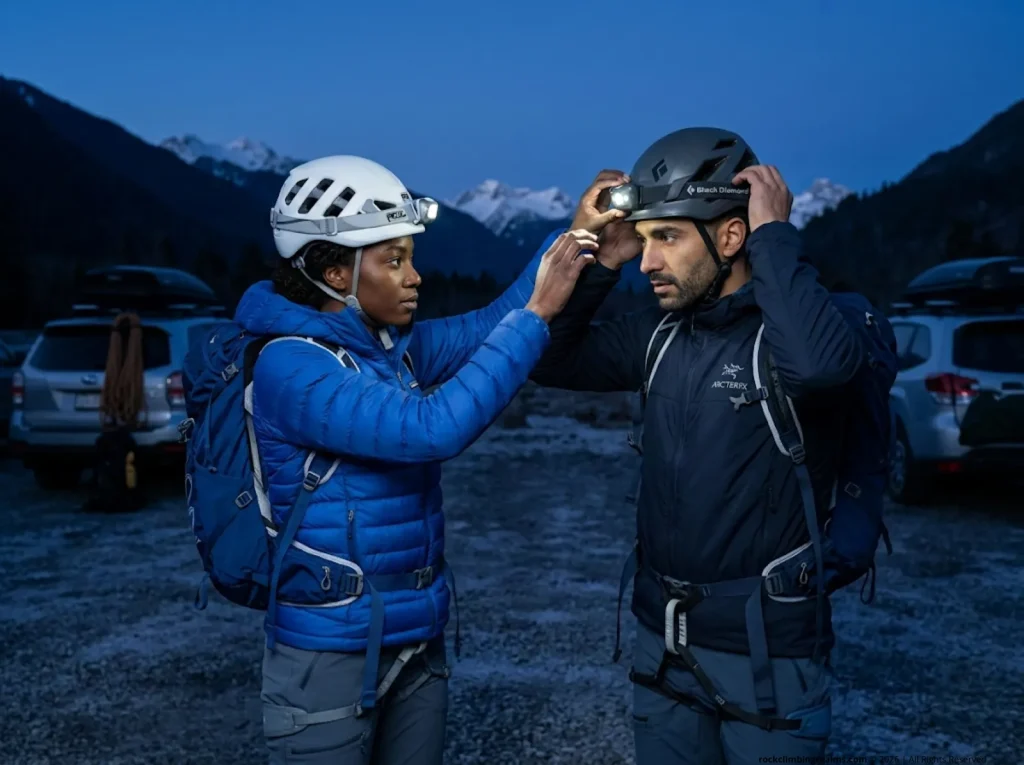
Pro tip: ignore headlamp “burst mode” or “boost mode” specs when comparing runtime. Those modes last 10 to 30 seconds before thermal safeguards kick in. They’re useful for a momentary scan of the cliff above you, but they’re not a sustainable brightness setting. Always compare runtime at the standard high setting.
6 Best Headlamps for Climbing in 2026 (Tested and Reviewed)
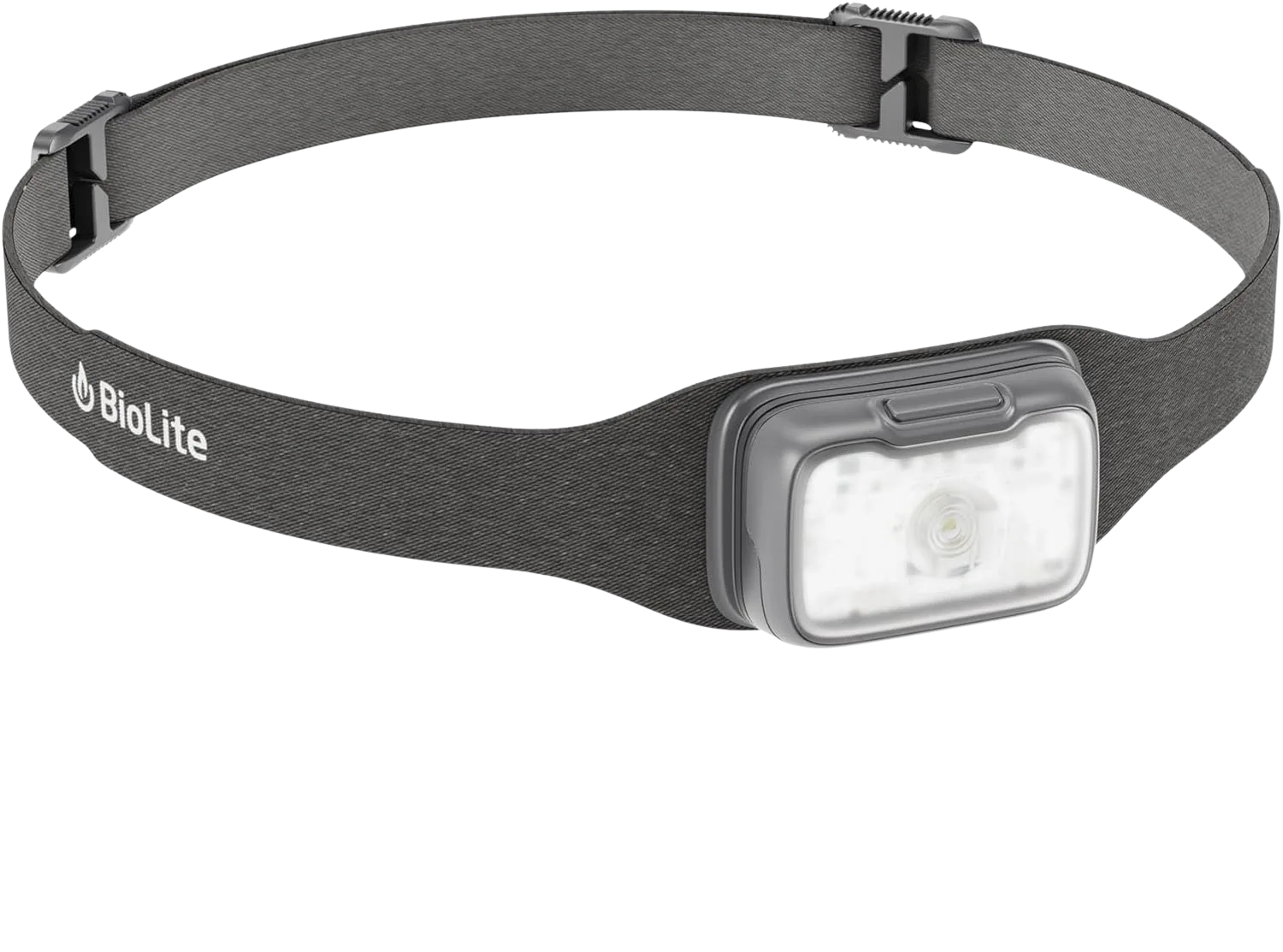
🏆 Best Overall: BioLite Range 400
This is the one that surprised me. A $60 headlamp from a company better known for camp stoves beat out competition from brands that have been making climbing-specific lighting for decades. And it wasn’t close on the metrics that matter most.
The BioLite Range 400 carries an IP67 waterproof and dustproof rating, meaning it’s fully submersible to 1 meter for 30 minutes. In a market where premium competitors charge $105 and only deliver IPX4 splash resistance, that’s a significant advantage for anyone climbing in alpine conditions. The USB-C fast charging adds an hour of usable runtime in just 8 minutes, which is meaningful when you realize at the trailhead that you forgot to charge the night before.
At 2.6 ounces, it sits in the sweet spot between ultralight compromises and heavy-duty durability. The 400-lumen output handles route-finding at distance, and the 6-hour high runtime is the longest in this review. That runtime figure is what separates the Range 400 from the pack. Six hours on high means you can get benighted on a multi-pitch, complete the descent, and still have light left for the approach trail.
The honest flaw: no AAA battery backup. If you’re on a remote multi-day wall or expedition where you can’t recharge, you’ll need a power bank or a backup headlamp. For most single-day climbing scenarios, including long multi-pitch routes and alpine starts, the rechargeable battery is more than sufficient.
The Big Outside tested the Range 400 for long-distance hiking and noted its “excellent battery life for its class” and fast charging capability. Those findings hold for climbing use too.
💰 Best Value: Nitecore NU25 UL
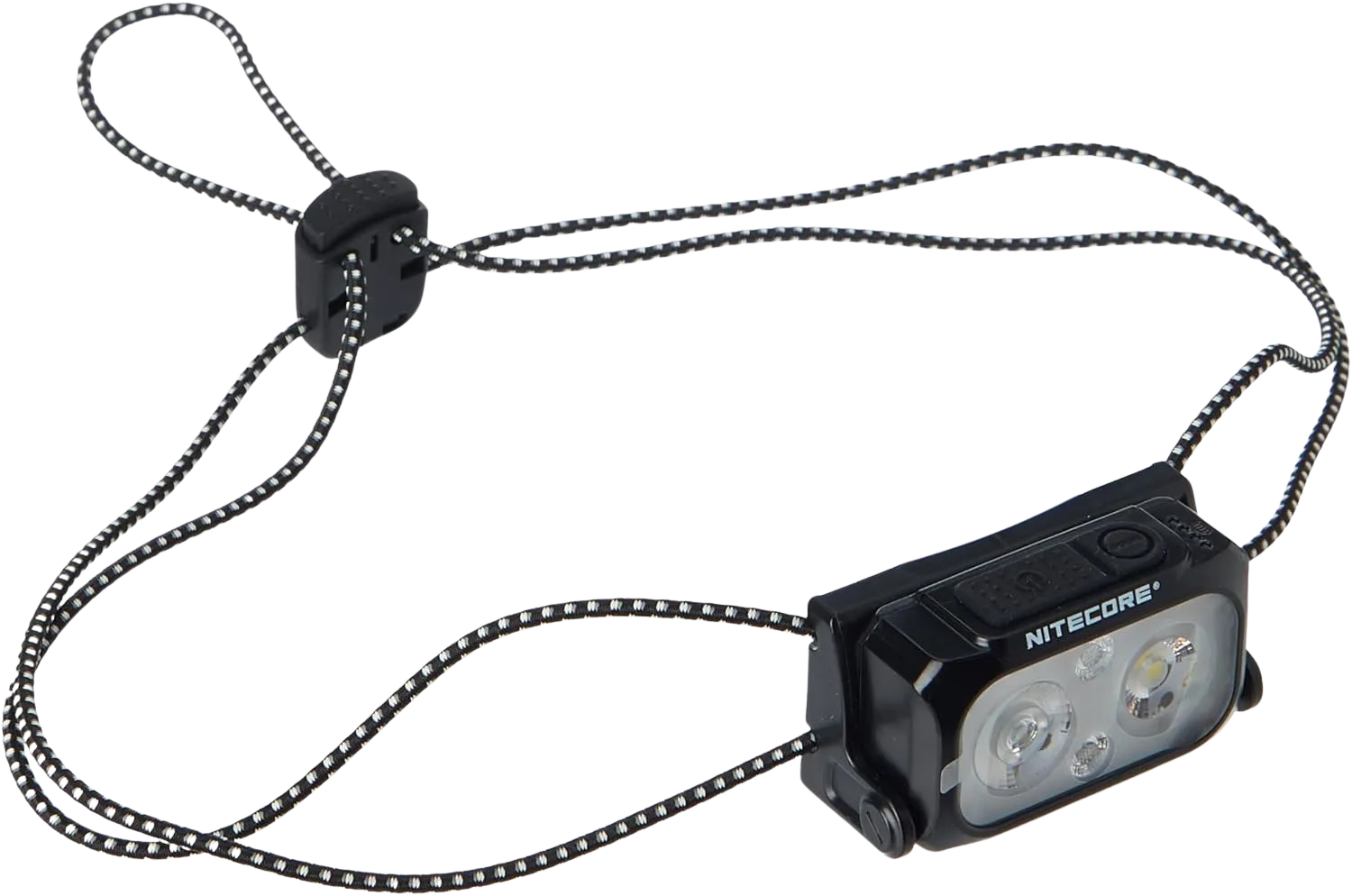
1.6 ounces. 400 lumens. $37. Those numbers shouldn’t exist in the same sentence, but the Nitecore NU25 UL makes them work.
This is the headlamp that alpinists on Reddit and Mountain Project keep recommending to each other, and the reason is simple: it delivers 400 lumens of output in a package that weighs about the same as a granola bar. For the climber who counts every gram, whether you’re packing for a fast-and-light alpine push or just hate carrying unnecessary weight on your helmet, the NU25 UL is hard to argue with at this price.
Treeline Review notes it as a “favorite among alpine climbers, thru-hikers, and ultralight backpackers,” and Adventure Alan confirmed durability over 1,000+ trail miles. The USB-C rechargeable battery charges quickly, and the single large button is easy to find by feel with cold hands.
The limitations are real, though. The 4.2-hour runtime on high is the shortest among our top picks with this lumen output, so it’s not the headlamp for a climb where you might be out all night. And the IP66 rating (water jet resistant, but not submersible) means you shouldn’t count on it surviving a deep stream crossing or sustained torrential rain. For protected crag environments and weight-sensitive alpine objectives where you’re moving fast and light, it’s the best $37 you’ll spend on climbing gear.
⬆️ Premium Upgrade: Petzl IKO Core
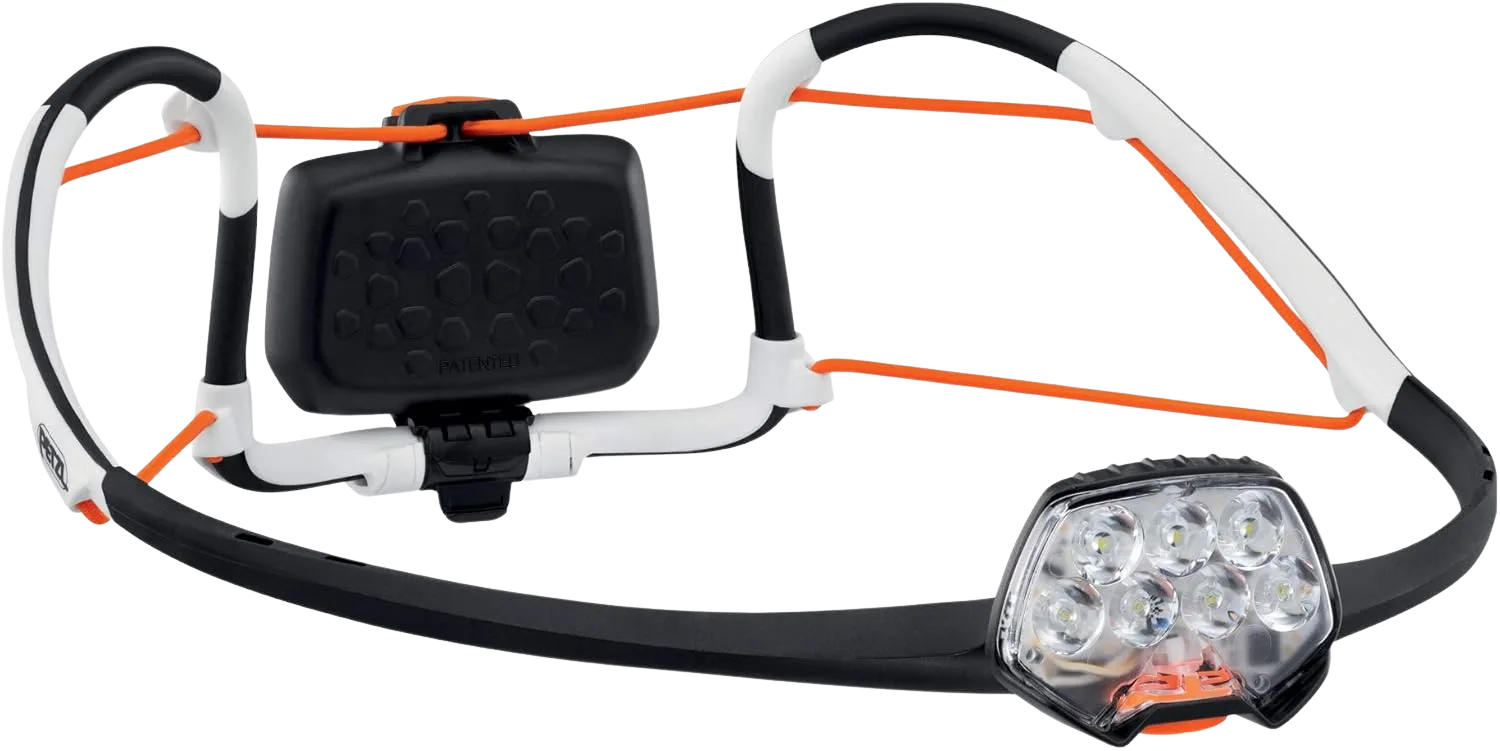
If your budget allows and you want the best engineering available, the Petzl IKO Core is the headlamp that rewards you for spending more. But it also demands you accept a real trade-off.
At 500 lumens in a 2.8-ounce package, the IKO Core has the highest lumen output in this review. The hybrid battery system accepts both the Petzl CORE rechargeable battery and standard AAA batteries as backup. That hybrid capability is rare at this level and genuinely valuable for remote objectives where charging isn’t a sure thing. The ergonomic headband is Petzl’s best work: stable on helmets, comfortable for hours, and well-distributed across the head.
The Big Outside tested it on ski touring and backcountry trips, reporting that it “illuminated objects 100 meters distant” and delivered “exceptional 500 lumens for under 3 oz.”
Pro tip: If you buy the IKO Core, invest in a set of lithium AAA batteries (Energizer Ultimate Lithium) as your backup. They weigh less than alkalines, perform dramatically better in cold temperatures, and have a 20-year shelf life. Keep them in your gear bin so they’re always ready when you need them.
The honest problem: IPX4. At $105, the most expensive headlamp in this review carries only splash resistance. The $60 BioLite Range 400 has IP67. That’s hard to justify if you climb in wet alpine conditions. If you’re exclusively on dry rock in moderate weather, the IKO Core’s brightness, weight, and hybrid batteries make it the premium choice. If rain is likely, look elsewhere.
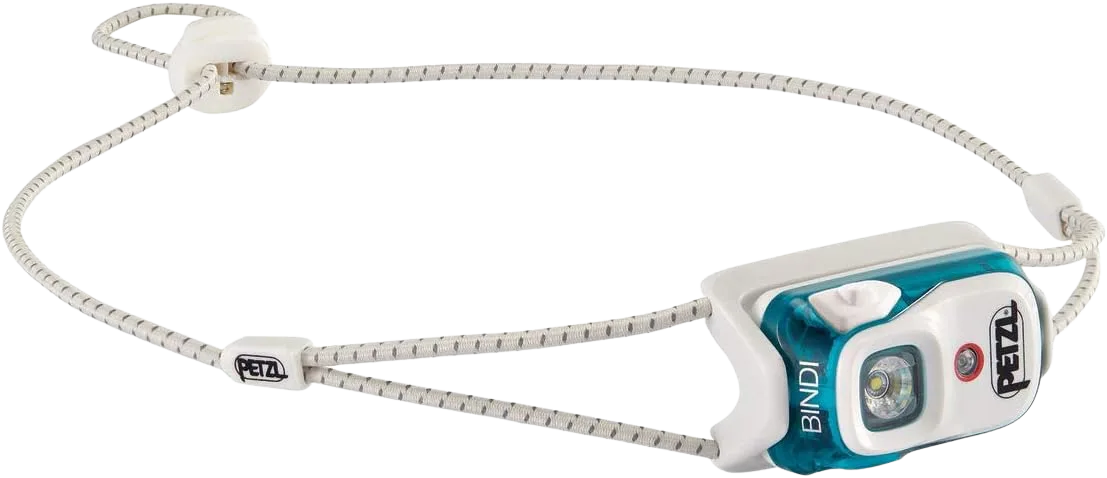
🎯 Best for Ultralight Sport and Multi-Pitch: Petzl Bindi
At 1.2 ounces, the Petzl Bindi disappears on your helmet. That’s not a figure of speech. After an hour on a multi-pitch, you’ll genuinely forget it’s there. I’ve seen climbers pat around their helmet looking for their headlamp, only to realize the Bindi was right where they left it, weighing effectively nothing.
Wirecutter confirmed the Bindi as “the lightest of all the picks we’ve tested, past and present.” That distinction matters for sport climbers who want a headlamp clipped to their harness for the drive home after sunset sessions, and for multi-pitch climbers who want illumination on the descent without adding noticeable weight.
The 200-lumen output is adequate for close-range work: reading anchors, finding gear, navigating a well-marked trail. You won’t be scanning cliff faces at distance with this lamp. The beam distance of 40 meters is practical for three-pitch trad routes and crag approaches, not for alpine route-finding on big terrain.
The charging situation is the other notable drawback. The Bindi uses micro-USB, not USB-C. In 2026, that means hunting for a cable that’s increasingly uncommon. This is a product that was engineered a few years ago and hasn’t been refreshed on that front.
For sport climbing after dark, shorter trad routes, and as a featherweight backup for bigger objectives, the Bindi is the most weight-efficient headlamp in this review. It’s not trying to do everything. It’s trying to be the lightest functional headlamp available, and it succeeds at that.
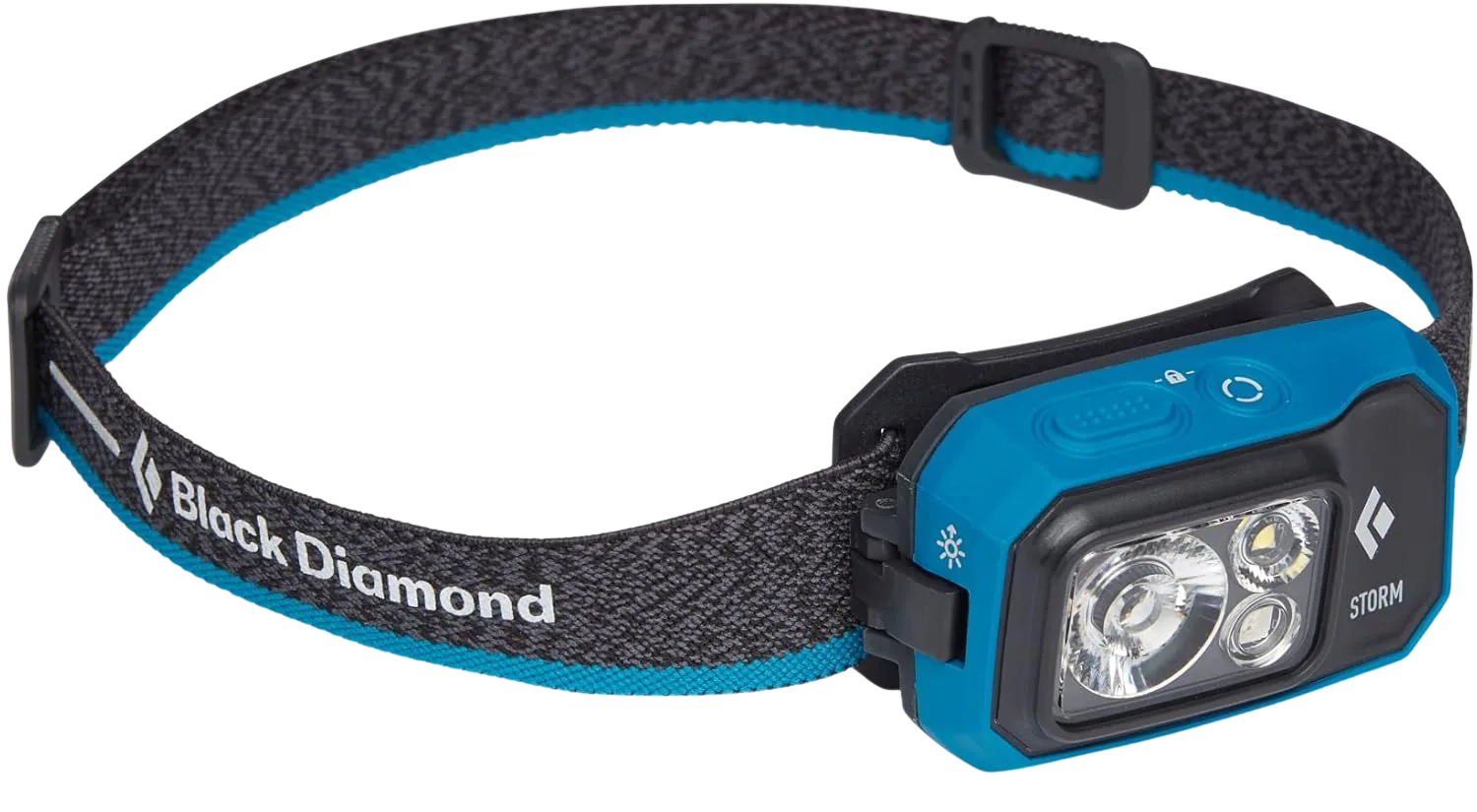
🎯 Best for Alpine and Big-Wall Objectives: Black Diamond Storm 450
When you’re at a remote hut two days from the trailhead, your rechargeable battery is dead, and you have a 3 AM alpine start, the Black Diamond Storm 450 is the headlamp you want strapped to your helmet. Its value proposition is simple: absolute reliability in conditions where failure has consequences.
The IP67 waterproof and dustproof rating handles anything short of scuba diving. The 450 lumens of output scans a cliff face at distance. And the three AAA batteries can be sourced at gas stations, mountain huts, and from partners who brought spares. When your charging setup fails on a multi-day alpine objective, AAA batteries are the universal backup currency.
The Storm 450 has been a fixture in Black Diamond’s headlamp lineup for years because it works. The battery compartment seals cleanly. The buttons are large enough for gloved hands. The tilt adjustment holds its angle through dynamic movement. For big-wall climbing, alpine routes, and any objective where reliability is more valuable than cutting a few grams, the Storm 450 earns its spot.
The trade-offs are honest. At 3.25 ounces, it’s the heaviest headlamp in this review. No USB-C charging option means you can’t leverage a lightweight power bank on the approach. And the 2-hour runtime on high is the shortest here, though AAA batteries swap in seconds. For the weight-sensitive sport climber, it’s overkill. For the alpinist who’s been caught with a dead headlamp before, it’s the only choice that makes sense.
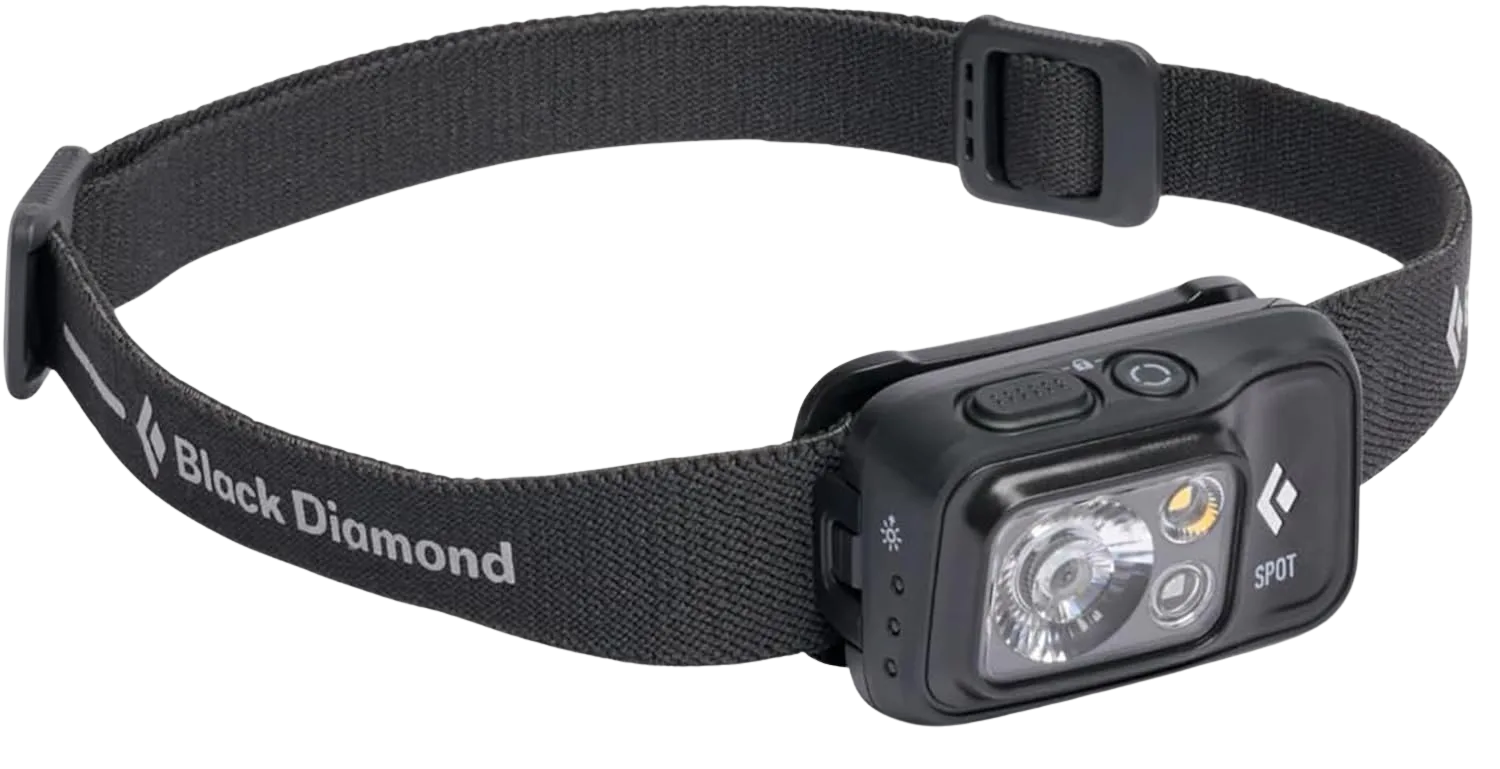
🎖️ Honorable Mention: Black Diamond Spot 400-R
The Black Diamond Spot 400-R scored nearly identically to our Best Overall winner and deserves a full recommendation for a specific type of climber.
It’s the only headlamp in this review with IPX8 waterproofing (submersible beyond 1 meter) combined with a hybrid rechargeable + AAA battery system. That combination of deep waterproofing and battery redundancy is unique. Black Diamond’s PowerTap feature, which lets you tap the housing to switch between full and dimmed brightness, is one of those ideas that sounds gimmicky until you use it with frozen gloves at 4 AM.
The Spot 400-R didn’t win a main category only because the BioLite Range 400 offers comparable overall performance at a lower price point. If you specifically want the deepest waterproofing available plus legacy Black Diamond reliability, the Spot 400-R is the logical choice.
How to Pick the Right Headlamp for Your Climbing Style
There’s no universally “best” headlamp. There’s only the best headlamp for how and where you climb. Here’s how to match your climbing style to the right pick.
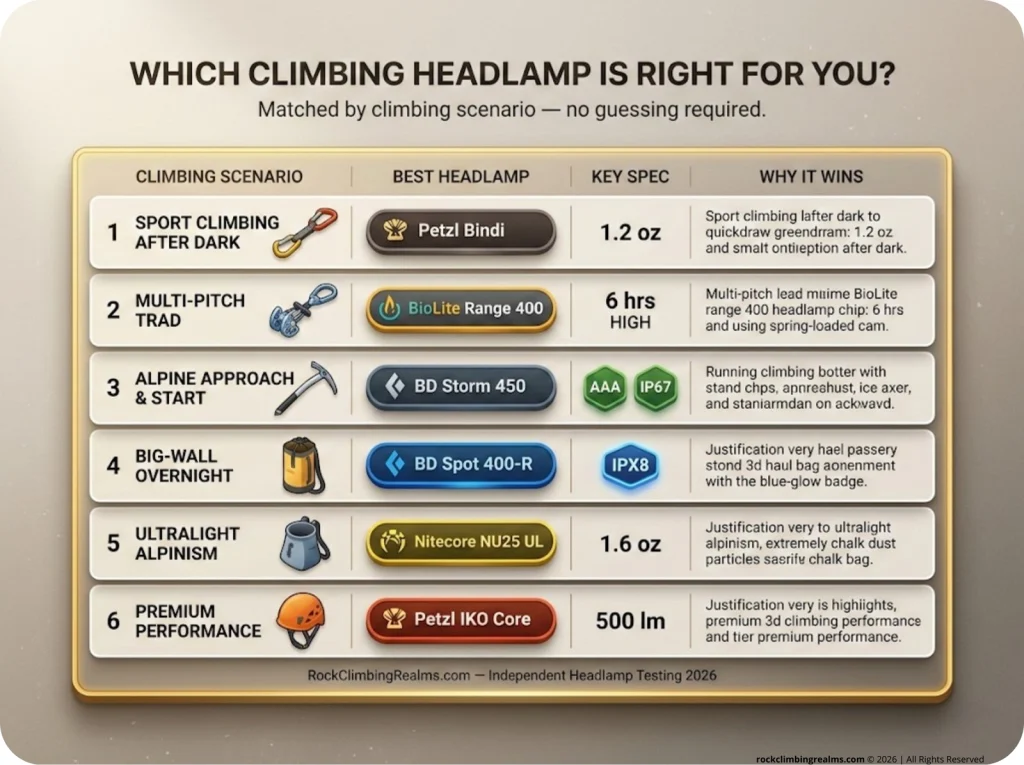
If you mostly sport climb and want one headlamp that handles everything: Get the BioLite Range 400. The IP67 waterproofing, 6-hour runtime, and $60 price make it the easiest recommendation for most climbers. It handles alpine starts, evening crag sessions, and unexpected benightments without compromise.
If every gram counts and your objectives are fast-and-light: The Nitecore NU25 UL at 1.6 oz delivers 400 lumens for $37. Carry it as your primary for day objectives or as a backup for longer routes. If absolute minimum weight is the goal and you can live without submersion waterproofing, this is the headlamp.
If you’re willing to invest in premium performance: The Petzl IKO Core at $105 gives you 500 lumens, hybrid battery backup, and the most comfortable headband in any headlamp we tested. Just know that IPX4 means it’s not built for sustained wet conditions.
If your objectives are remote, multi-day, or in genuinely bad weather: The Black Diamond Storm 450 with IP67 waterproofing and universal AAA batteries is the headlamp that won’t leave you in the dark two days from the car.
Whatever you choose, run through your pre-climb safety checklist before every objective and confirm your headlamp is charged, tested, and ready. A headlamp you forgot to charge is worse than no headlamp at all, because you planned around having one.
Pro tip: carry your headlamp in the same place every time, whether that’s clipped to your harness, stashed in your helmet, or accessible in the top pocket of your pack. Building habits around gear location eliminates the 2 AM scramble through your bag when you actually need the light.
FAQ
What lumens do I need for a climbing headlamp?
For climbing, 200 to 400 lumens covers the practical range. 200 lumens is enough for close-range tasks like reading anchors, managing gear at a belay ledge, and navigating a well-marked trail. 400 lumens handles route-finding on rock at distance, scanning a cliff face for the next pitch, and spotting trail junctions from far away. Peak lumens above 500 sound impressive in marketing, but burst modes last 20 to 30 minutes before thermal throttling kicks in. Always compare runtime at a sustained usable brightness, not peak output.
Will my climbing headlamp work with any helmet?
Not always. Headlamp straps are designed for different curvatures, and a strap that sits flat on a bare head or hiking headband may not tension properly against a climbing helmet’s shell. Petzl and Black Diamond design their headlamps specifically for climbing helmet integration, since both companies manufacture helmets too. Before your first objective with a new headlamp, mount it on your helmet, tighten the strap, and shake your head aggressively. Any shift or looseness is unacceptable on a serious route.
Should a climbing headlamp be rechargeable or use AAA batteries?
It depends on your objectives. For sport crags with car access, rechargeable USB-C headlamps are lighter, cheaper long-term, and charge from any power bank. For remote alpine or big-wall objectives, hybrid systems that accept both a rechargeable pack and standard AAA batteries offer the redundancy you need when you’re days from a power source. Lithium AAA batteries outperform alkalines in cold weather and have a 20-year shelf life, making them the ideal backup.
How does cold weather affect headlamp batteries?
Significantly. Alkaline batteries lose up to 40% capacity below freezing, which means your headlamp dims faster and dies sooner in cold conditions. Lithium batteries, both rechargeable lithium-ion and disposable lithium AAA, perform substantially better in the cold. For sub-freezing alpine starts, keep your headlamp inside your sleeping bag or jacket pocket until you need it. Body heat maintains battery performance. Lithium AAA batteries like the Energizer Ultimate Lithium are the best cold-weather backup option available.
Is Petzl or Black Diamond better for climbing headlamps?
Neither brand wins across the board. Petzl builds superior ergonomic headbands, offers reactive lighting technology that auto-adjusts brightness, and the IKO Core has the best hybrid battery system available. Black Diamond leads on waterproof durability (the Storm 450 has IP67, the Spot 400-R has IPX8), the PowerTap glove-friendly feature is genuinely useful, and Black Diamond headlamps are available from both Amazon and blackdiamondequipment.com. For wet alpine conditions, Black Diamond. For comfort-focused multi-pitch with dry weather, Petzl. For overall value regardless of brand, the BioLite Range 400 outperforms both at $60.
Safety Notice: Rock climbing and mountaineering are inherently high-risk
activities that can involve physical trauma or fatal incidents. The information on Rock Climbing Realms is for
educational and informational purposes only. Techniques and advice presented here are not a substitute
for professional, hands-on instruction. Conditions and risks vary by location. Always seek guidance
from a qualified instructor before attempting new techniques. By using this website, you agree that you
are solely responsible for your own safety. Any reliance you place on this information is strictly
at your own risk, and you assume all liability for your actions. Rock Climbing Realms and its authors
will not be held liable for any harm, damage, or loss sustained in connection with the use of this information.
Affiliate Disclosure: We are a participant in the Amazon Services LLC Associates Program, an
affiliate advertising program designed to provide a means for us to earn advertising fees by advertising and linking
to Amazon.com. As an Amazon Associate, we earn from qualifying purchases. We are also an official affiliate partner
of Black Diamond Equipment via the AvantLink network. If you click on a Black Diamond affiliate link and make a
purchase, we may earn a commission at no additional cost to you. We also participate in other affiliate programs.
Additional terms are found in the terms of service.