
In this article
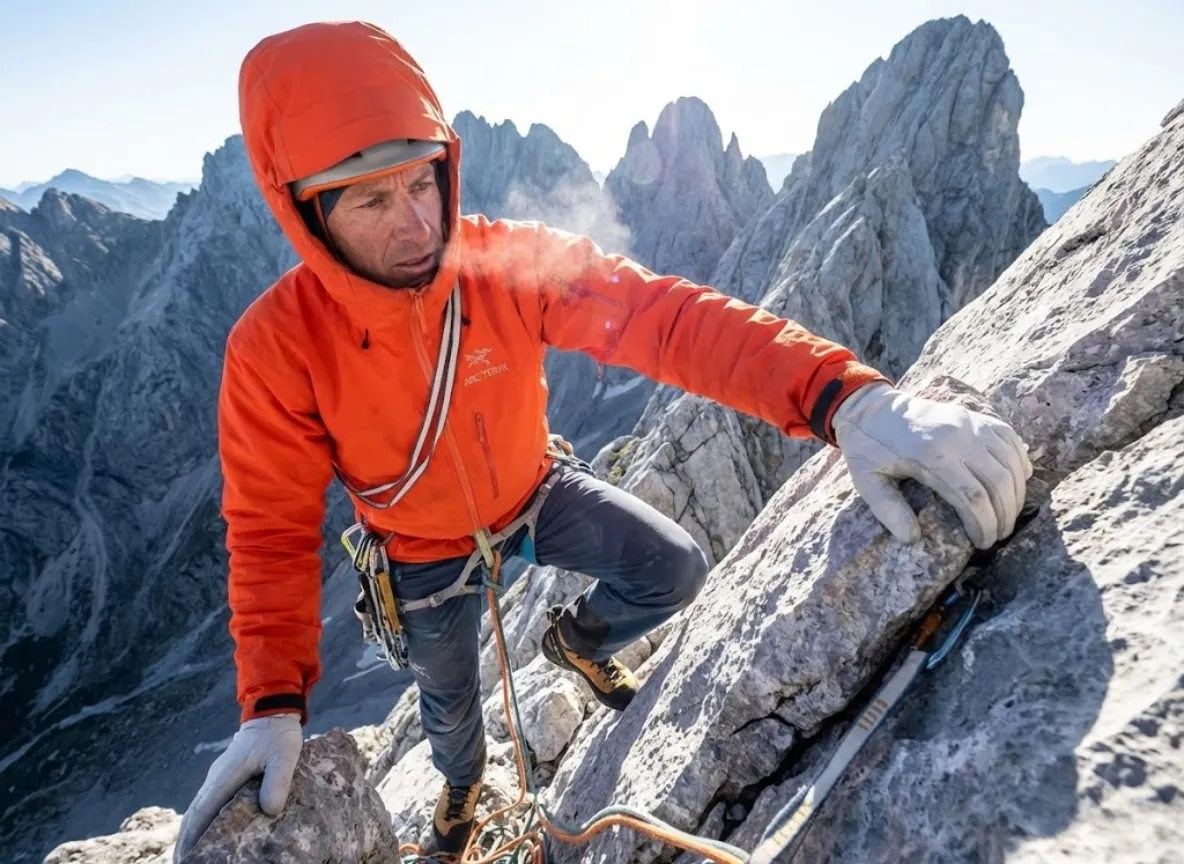
The air at 3,000 meters above sea level does not care about your training plan. On the vertical wall, the deficit manifests not just as heavy breathing, but as a sudden, mechanical failure of the forearm flexors. The fingers open, not because the muscle lacks strength, but because the localized ischemia of the grip has collided with the systemic hypobaric hypoxia of the environment.
For the high-performance climber, altitude is a biological puzzle that cannot be solved by grit alone. It requires “Redpoint Engineering”—a calculated manipulation of blood chemistry and recovery protocols known in sports science as the “Live High, Train Low” paradigm.
As a guide, I often see climbers arrive in the alpine with strong fingers but weak blood. They assume general fitness will carry them through the thin air. This article maps out exactly how to align your physiology with your ambition, moving from theoretical science to actionable protocols for athletic performance enhancement.
The Physiological Paradox: Why Climbing at Altitude is Different?
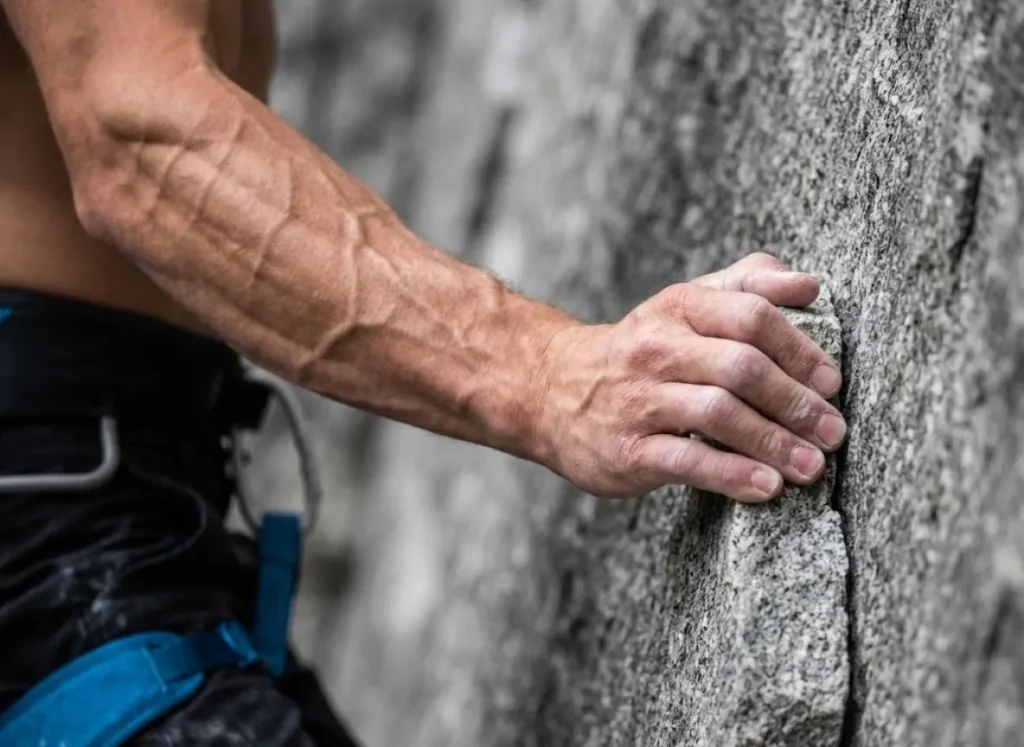
To understand why your performance drops off a cliff above 2,500 meters, we have to look inside the forearm. Rock climbing is distinct from running or cycling because of the “pump”—a phenomenon rooted in occlusion.
How does altitude affect the “Pump” and forearm recovery?
When you grip a hold at an intensity greater than 40% of your maximal voluntary contraction (MVC), intramuscular pressure spikes. This pressure collapses the capillaries, effectively stopping blood flow. During that grip, you are in a localized hypoxic state, regardless of whether you are in Rifle, Colorado, or sea-level Spain.
The problem arises when you release the hold. At sea level, oxygen-rich air rushes back into the muscle to flush lactate and recharge energy stores. This process is called reperfusion.
At high altitude environments, the partial pressure of oxygen ($PaO_2$) is significantly lower. The blood that rushes back into your forearm during that brief shake-out carries less oxygen. The “driving pressure” required to push oxygen from the blood into the hungry muscle tissue is weak.
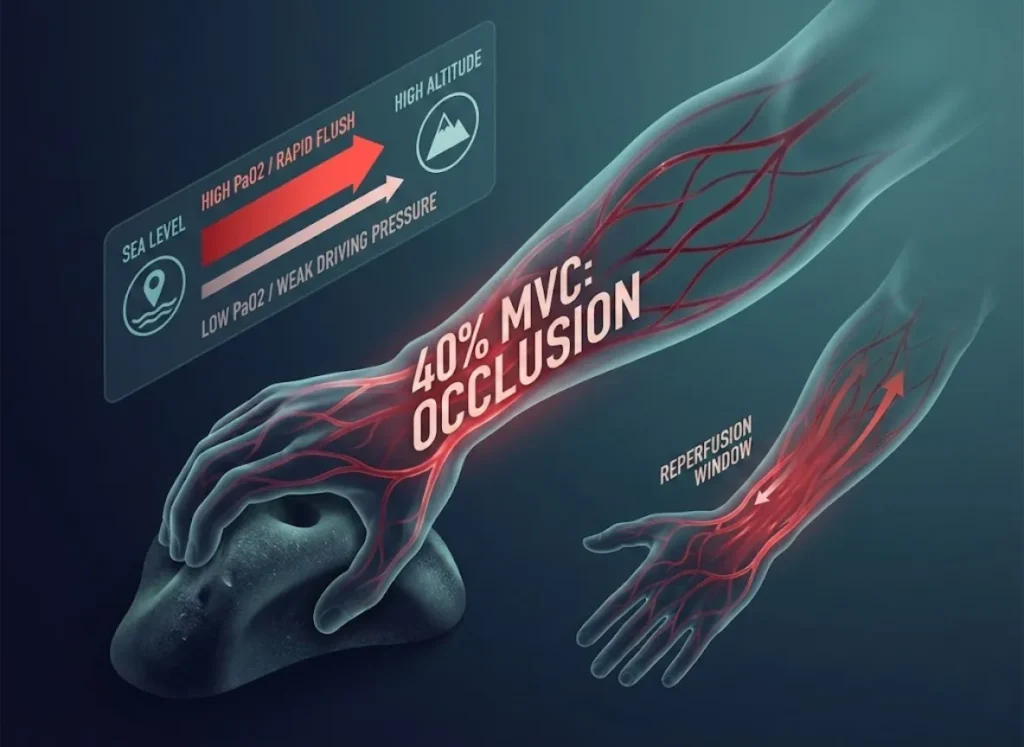
This creates a compound effect. You are fighting a war on two fronts: the mechanical occlusion of the grip and the systemic lack of oxygen in the environment.
Research on the mechanics of forearm ischemia suggests that the issue isn’t raw strength; it’s the efficiency of the “drainage system.”
For the climber, this means adaptation isn’t about pulling harder. It is about increasing the capillary density to maximize that split-second reperfusion window. You must master the science of the pump to understand that at high elevations, a 3-second rest might only clear 20% of the waste products it would clear at sea level.
Pro-Tip: When climbing at altitude, double your chalk-up time. Deliberately extending your shake-out by 2–3 seconds per hand can compensate for the reduced oxygen driving pressure, allowing just enough reperfusion to prevent early failure.
The “Live High, Train Low” (LHTL) Paradigm
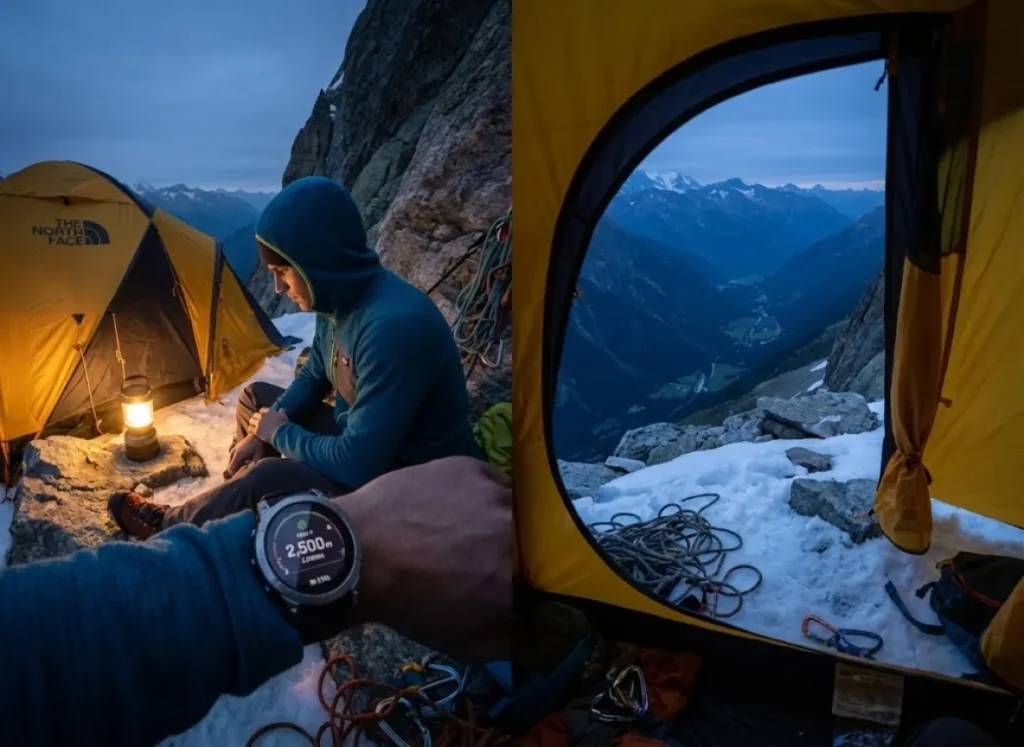
For decades, the assumption was that to perform at altitude, you had to suffer at altitude. We now know that “Live High, Train High” (LHTH) is often counterproductive for power athletes.
Why is LHTL superior to “Live High, Train High”?
The “Live High, Train Low” (LHTL) model is the gold standard in endurance training for a reason. The goal is to stimulate the kidneys to produce Erythropoietin (EPO), which signals the bone marrow to create more red blood cells (RBC).
To do this, the body requires a “hypoxic dose” via exposure duration of roughly 12 to 14 hours a day at moderate elevation (2,000–2,500m). This boosts red blood cell mass and oxygen carrying capacity, ultimately improving VO2 max.
However, training in that thin air comes with a cost. If you try to project hard boulders or technical routes at 3,000m, your body cannot recover between burns. You are forced to reduce the training intensity.
Over a 4-week cycle, this inability to recruit maximum muscle fibers leads to neuromuscular detraining. Your blood gets stronger, but your fingers get weaker.
The landmark study by Levine and Stray-Gundersen (1997) proved that athletes who lived high but drove down to sea level to train maintained their top-end power while gaining the hematological benefits of altitude.
For climbers, this means preserving the chassis (tendons and pulleys) by training at full capacity in oxygen-rich air, while upgrading the engine (blood) while you sleep.
Hypoxic Training Protocols for Climbers
Comparison of Systemic vs. Local Hypoxia for Performance Optimization
Blood Response
Significant increase in Hbmass and systemic buffering capacity due to prolonged EPO stimulation during sleep.
Muscle Power
High quality maintained. Training at lower elevations preserves neural recruitment and fast-twitch fiber intensity.
Net Result
Winner for Climbers. Provides the aerobic engine for sport routes without sacrificing peak power.
Blood Response
Lowered systemic SpO2 and local tissue hypoxia during training; specifically targets mitochondrial biogenesis.
Muscle Power
Moderate. High metabolic stress and occlusion increase endurance but may limit maximum muscle recruitment.
Net Result
Effective for local power-endurance and mitochondrial density, though providing less systemic benefit than LHTL.
Consider the “Flagstaff Model.” Professional climbers often live in Flagstaff, Arizona (7,000 ft), to trigger hormone production. But when it’s time to try hard, they drive down to Sedona or The Pit (lower elevation) or train indoors.
This balance is critical for physical training for mountaineering objectives, such as Denali or Mt. Rainier, where both endurance and technical strength are required. Other hubs like Boulder, Park City, or international locations like St. Moritz and Iten offer similar geography for altitude camps.
Myths vs. Reality: Do Altitude Masks Work?
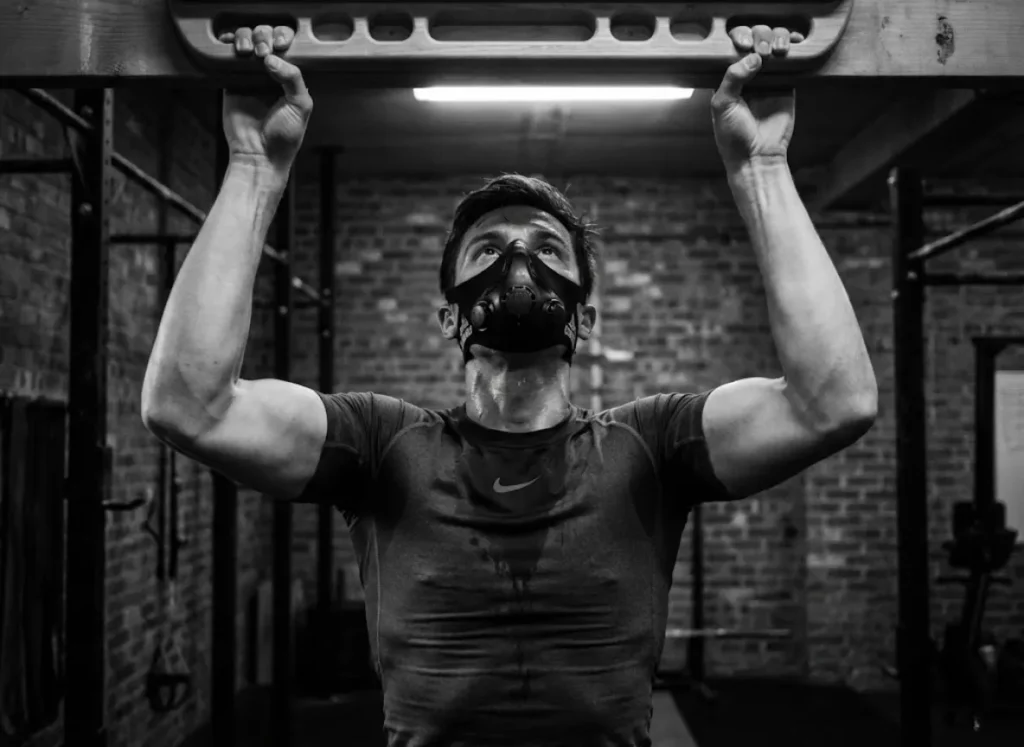
Walk into any commercial gym, and you might see someone wearing restrictive altitude training masks, believing they are simulating a Himalayan expedition. This is one of the most pervasive myths in fitness marketing.
Why do elevation training masks fail to produce hematological changes?
Elevation training masks work by Restrictive Inspiratory Muscle Training (RIMT). They restrict airflow, making it harder to breathe. However, the air you do breathe inside the mask has the exact same atmospheric pressure and oxygen content as the air outside the mask.
You are simply breathing less air, not thinner air.
For the body to produce EPO, arterial blood oxygen saturation (SpO2) generally needs to drop below 90-92% for sustained periods. Masks rarely cause desaturation to this level. The kidneys never receive the hypoxic signal, so no new red blood cells are produced.
A comprehensive evaluation of elevation training masks confirmed that after six weeks of training, there was no difference in hemoglobin mass between mask users and a control group.
The masks do have a function: they strengthen the diaphragm and intercostal muscles, improving respiratory strength. This can make the act of breathing feel easier during exertion. But this is a respiratory benefit, not a physiological adaptation to hypoxia. If you are choosing effective climbing training tools, do not confuse respiratory resistance with environmental hypoxia.
The Iron Gatekeeper: Nutritional Requirements for Altitude
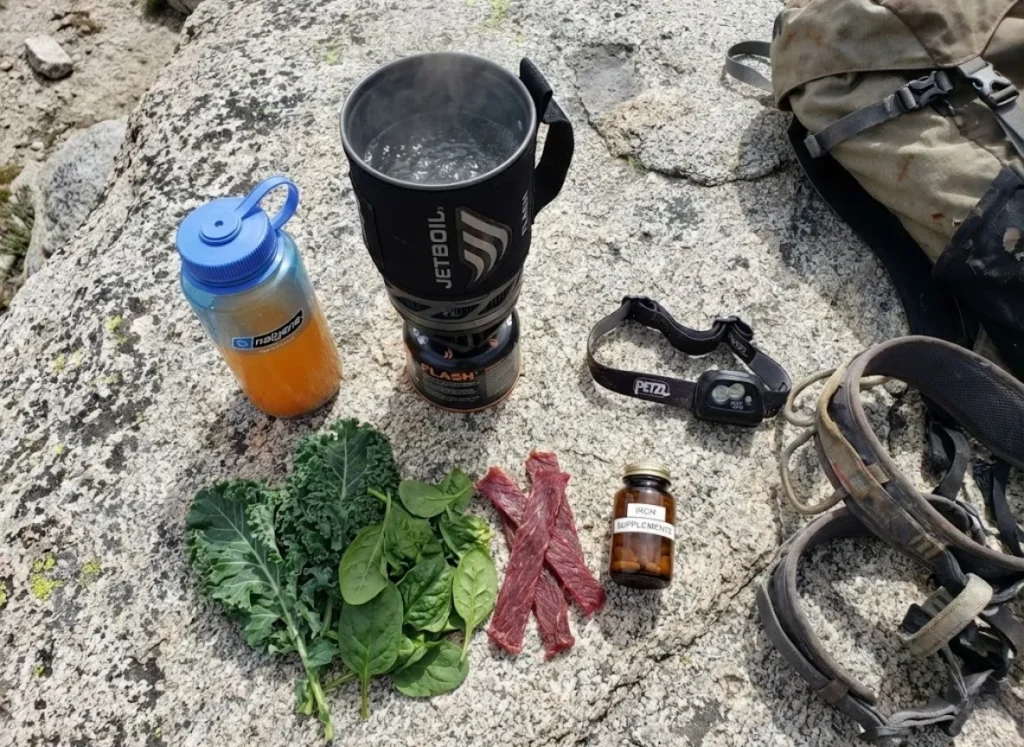
You can sleep in an altitude tent for a month, but if your blood chemistry isn’t primed, you are wasting your time. Iron is the raw material for red blood cells.
Why is Ferritin the limiting factor in hypoxic adaptation?
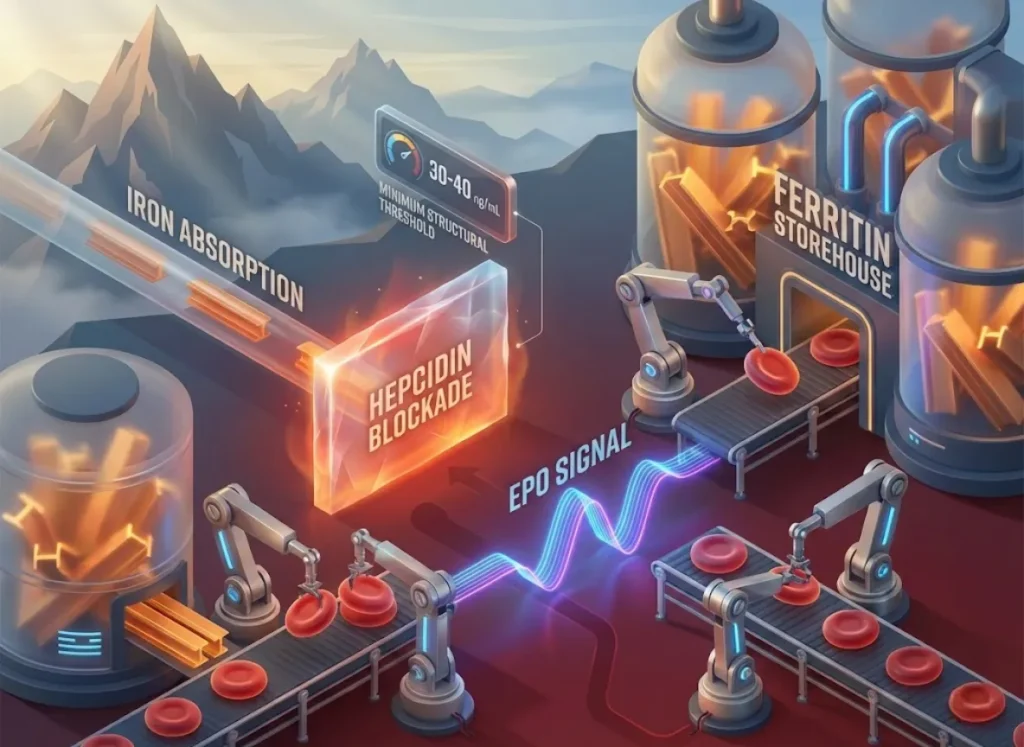
Erythropoiesis (making new blood cells) is iron-dependent. If your iron stores (measured as Ferritin) are low, the EPO signal triggered by altitude exposure is just noise. The body wants to build new infrastructure but lacks the steel beams to do so.
For high-performance adaptation, ferritin levels generally need to be above 30 ng/mL for women and 40 ng/mL for men before you start high altitude training.
The challenge is a hormone called Hepcidin. When you exercise intensely or are exposed to hypoxia, Hepcidin levels rise. Hepcidin blocks iron absorption in the gut. This creates a double bind: altitude increases your need for iron intake, but the stress of altitude makes it harder to absorb.
To manage this, timing is everything. We follow a strict protocol: take iron supplements with Vitamin C to aid absorption, but do it away from workouts (to avoid the Hepcidin spike) and away from coffee or tea (tannins block absorption).
If you are planning a trip, get blood work done at least six weeks out. Consult the iron needs for endurance athletes to understand the baseline nutritional requirements, but remember that climbers often need to be at the upper end of these ranges.
While managing iron, do not neglect the science of hydration for climbers. Thick blood moves slowly, and hydration prevents clotting and maintains performance.
Protocols for the Vertical Athlete: Beyond Running
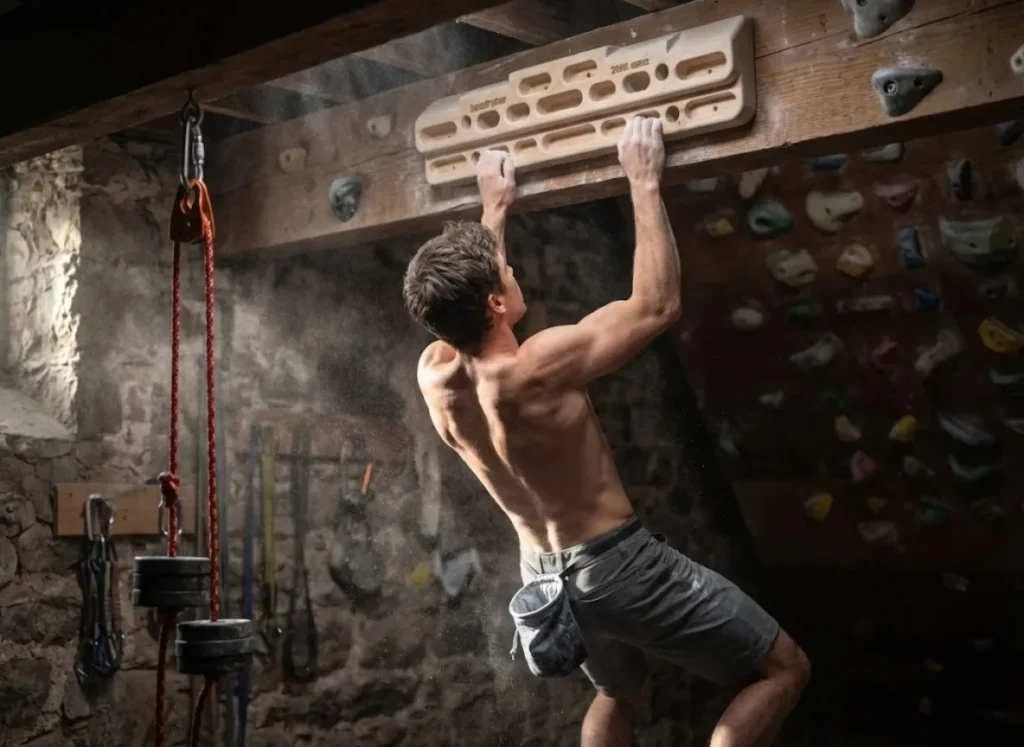
If you have access to a hypoxic generator (a machine that scrubs oxygen from the air) or are on a training trip, you can use Intermittent Hypoxic Training (IHT) to target the forearms specifically.
How do I implement the “IHT Fingerboard Circuit”?
The goal here is not systemic blood boosting—that happens while you sleep. The goal of IHT is to increase mitochondria density and buffering capacity locally in the flexor digitorum.
The Protocol:
- Setup: Use a hypoxic mask or altitude tent set to simulate 3,500m–4,500m (11,500–14,700 ft).
- The Work: 7:3 Repeaters. Hang for 7 seconds at 60-70% intensity. Rest for 3 seconds.
- Volume: Complete 6 reps (one minute total). Rest 3 minutes. Repeat for 3-5 sets.
This creates a “Double Hypoxia.” The generator lowers the oxygen in your blood, and the isometric contraction stops the flow to the muscle. This sends a massive distress signal to the tissue, triggering rapid angiogenesis.
Warning: This is high intensity training. Do not perform high-volume endurance work in this state. Focus on quality to avoid sloppy technique. Rock climbing finger training techniques must remain precise; if your form breaks, end the session.
A study on the effects of intermittent hypoxic training indicates that these short, high-intensity bursts improve local buffering capacity without the fatigue cost of long endurance sessions.
Pro-Tip: Allow 48 hours of recovery after an IHT session. The central nervous system takes a heavy hit when training in oxygen-depleted states, even if your muscles feel fine.
Safety & Risk Mitigation
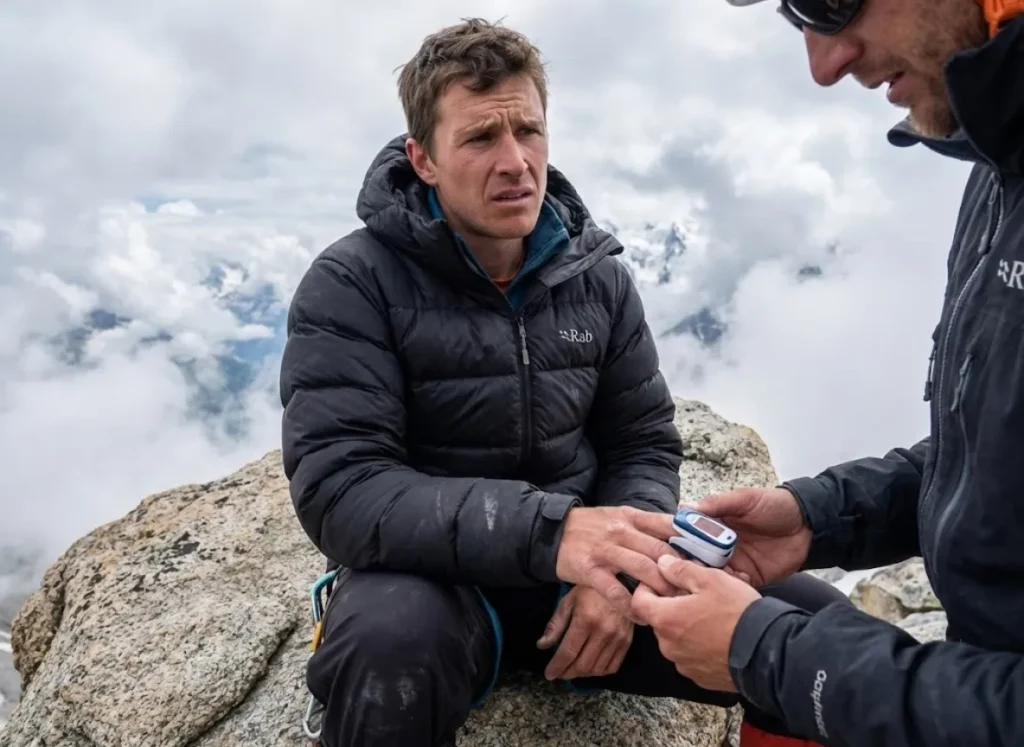
Physiology is useful, but safety is critical. The mountains are an unforgiving laboratory.
How do I prevent AMS and cognitive decline while training?
Acute Mountain Sickness (AMS) is the primary derailer of climbing trips. The “Golden Rule” for acclimatization is “Climb High, Sleep Low.” Do not confuse this with the training protocol “Live High, Train Low.” When acclimatizing, you expose yourself to altitude during the day and retreat to sleep; when training for performance, you sleep high to adapt.
Hydration is your first line of defense. Many climbers also use Acetazolamide (Diamox) to aid the acclimatization period. However, be aware of the side effect: paresthesia, or tingling in the fingertips and toes. For a climber relying on tactile sensation to feel small crimps, this can be disconcerting. Test your reaction to the medication before you are on the sharp end of a rope.
Cognitive fog is a subtle threat. Above 4,000m (13,000 ft), complex tasks become difficult. Checking your knot, building an anchor, or assessing rock quality requires deliberate, verbal confirmation.
Self-monitor using the Lake Louise Score system. If you have a headache combined with nausea or dizziness, you have altitude sickness. The CDC Yellow Book on Altitude Illness is clear: the only cure for worsening symptoms—such as High Altitude Pulmonary Edema (HAPE) or High Altitude Cerebral Edema (HACE)—is immediate descent. Oxygen is a stopgap, not a solution.
For a comprehensive strategy on staying safe, review how to prevent altitude sickness before your expedition.
Conclusion
High-altitude performance is not about suffering more; it is about preparing smarter.
- LHTL is King: Sleep at 2,000–2,500m, train at sea level to keep your fingers strong and your blood thick.
- Masks are Placebos: They train your lungs, not your blood.
- Iron is Mandatory: Check your ferritin. Without iron, altitude is just stress without adaptation.
- Specific Adaptation: Focus on reperfusion and capillary density, not just raw power.
If you are preparing for a high altitude expedition or looking to break a sport climbing plateau, start by getting your blood work done today. Share your training experiences or questions about altitude protocols in the comments below.
FAQ – Frequently Asked Questions
Does altitude training actually work for rock climbing?
Yes, specifically by improving the reperfusion rate of the forearm muscles during rests. It increases capillary density and hemoglobin mass, allowing you to recover faster from the pump on long technical routes, rather than just increasing raw strength.
How long do I need to stay at altitude to see results?
The physiological sweet spot requires a residency of 3 to 4 weeks. You must spend a minimum of 12 to 14 hours per day at the target elevation (2,000–2,500m) to effectively trigger the EPO response and generate new red blood cells.
Can I use an elevation training mask instead of traveling?
No, training masks do not simulate the atmospheric pressure changes required to increase red blood cells. They strengthen breathing muscles (diaphragm) by restricting airflow, but they do not provide the systemic hematological benefits of true altitude exposure.
What is the best elevation for sleeping and training?
The ideal protocol is Live High, Train Low (LHTL). Sleep at 2,000m–2,500m (e.g., Flagstaff, AZ) to build blood, but commute to train below 1,200m to maintain maximal intensity and finger strength without the fatigue of hypoxia.
Safety Notice: Rock climbing and mountaineering are inherently high-risk
activities that can involve physical trauma or fatal incidents. The information on Rock Climbing Realms is for
educational and informational purposes only. Techniques and advice presented here are not a substitute
for professional, hands-on instruction. Conditions and risks vary by location. Always seek guidance
from a qualified instructor before attempting new techniques. By using this website, you agree that you
are solely responsible for your own safety. Any reliance you place on this information is strictly
at your own risk, and you assume all liability for your actions. Rock Climbing Realms and its authors
will not be held liable for any harm, damage, or loss sustained in connection with the use of this information.
Affiliate Disclosure: We are a participant in the Amazon Services LLC Associates Program, an
affiliate advertising program designed to provide a means for us to earn advertising fees by advertising and linking
to Amazon.com. As an Amazon Associate, we earn from qualifying purchases. We are also an official affiliate partner
of Black Diamond Equipment via the AvantLink network. If you click on a Black Diamond affiliate link and make a
purchase, we may earn a commission at no additional cost to you. We also participate in other affiliate programs.
Additional terms are found in the terms of service.