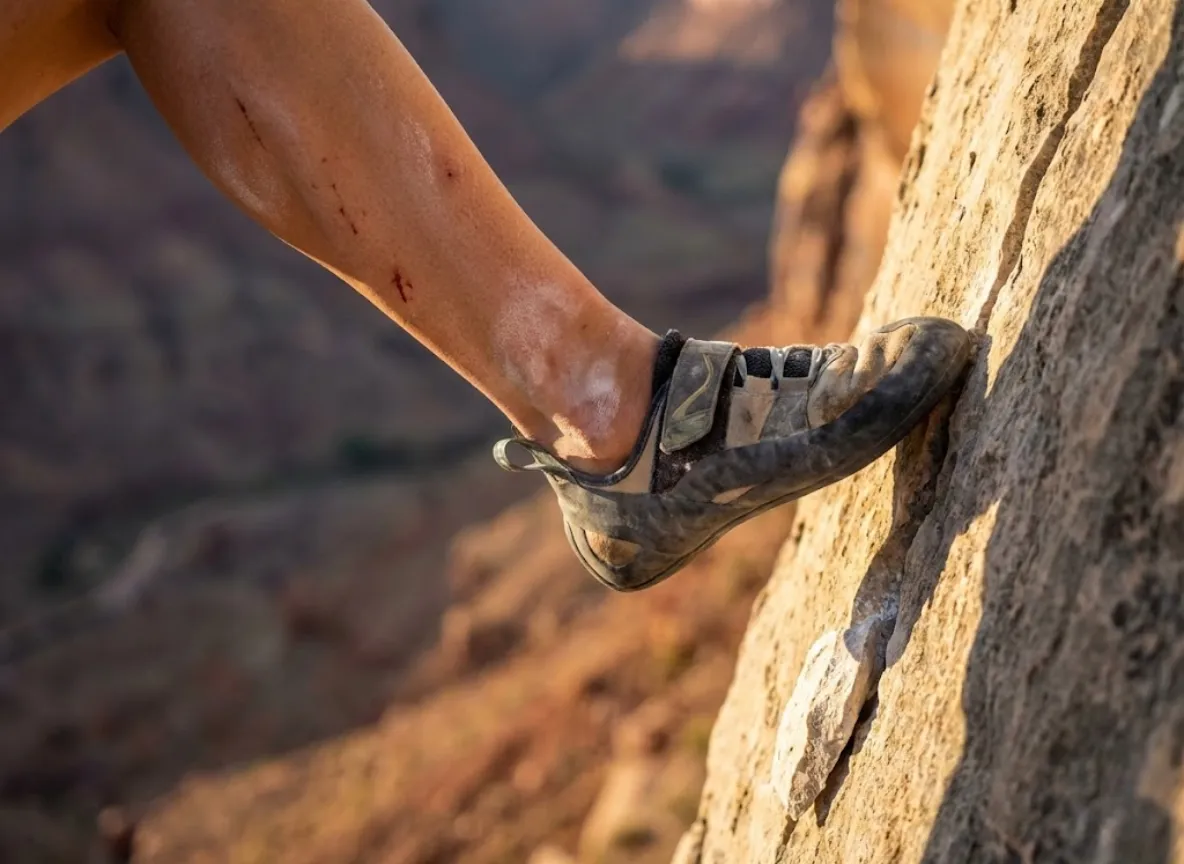
You are fifty feet up a limestone face, and your left foot traverses to a polished, credit-card-sized edge. In this moment, the marketing copy on the shoebox is irrelevant. The only physics that matter are the lack of dead space in your heel cup and the ability of your rubber to deform under your specific body weight.
For decades, the industry offered women merely smaller, softer versions of men’s shoes. That era is over. In 2026, technical climbing footwear is defined by “anatomy-first” engineering—specifically targeting the narrower calcaneus, hallux rigidity, and the unique mass-to-friction requirements of the female climber.
I have spent twenty years on the sharp end of the rope, guiding from the granite of Squamish to the limestone of Kalymnos. I’ve seen countless climbing shoes fail not because of weakness, but because the gear fought against the climber’s biomechanics. This anatomy-first guide cuts through the noise of product reviews to help you find a tool that acts as a true prosthetic extension of your kinetic chain.
How to Choose the Right Women’s Climbing Shoe: An Expert’s Framework
This section aims to arm you with the objective knowledge needed to make a smart, confident choice based on biomechanics rather than aesthetics. Whether you are looking for a high-performance shoe for steep sport routes or a comfortable shoe for gym climbing, understanding the anatomy of the shoe is paramount.
The Calcaneal-Achilles Complex (Why Heel Volume Matters)
Most climbers obsess over the toe box, but the heel is where power transfer often fails. If there is a gap between your skin and the shoe’s heel cup, that “dead space” acts as an energy absorber rather than a transmitter. When you crank on a technical heel hook, the shoe deforms into that gap instead of pulling your hips to the wall.
Statistical evidence supports what bootfitters have known for years: women typically possess a significantly narrower calcaneus (heel bone) relative to forefoot width compared to men. Research on foot morphology highlights these dimorphic differences, underscoring why “unisex” shoes often result in heel slippage for female climbers. This is why brands like La Sportiva and Scarpa distinguish between “Men’s” and “Women’s” largely based on this volume metric—creating the Low Volume (LV) designation.
Once you understand that a heel hook is a lever, the necessity of a vacuum-tight fit becomes non-negotiable. “Slop” is not just uncomfortable; it is a mechanical failure of your lever system, lowering your effective heel security rating.
The Mass-Friction Relationship (Why Rubber Choice is Weight-Dependent)
It isn’t just about how sticky the rubber is chemically, but whether you have the mass to make it work physically. This is Tribology 101. For a rubber compound to generate friction, it must deform (hysteresis) to interlock with the rock’s micro-texture. Harder rubbers, like Vibram XS Edge or Unparallel hard compounds, have a higher activation threshold.
If a lighter climber stands on XS Edge, they often lack the gravitational force to compress the rubber into the rock, resulting in a “glassy” or slippery sensation. This is why rubber testing studies and female-specific climbing shoes prioritize softer compounds like Vibram XS Grip2, Trax SAS (found on Evolv models like the Shaman), or Stealth C4 (found on Five Ten models like the Hiangle).
These softer compounds allow lighter climbers to activate the friction properties without needing a weighted pack. To fully grasp the Shore A hardness scale and how it applies to your weight class, consult our climbing shoe rubber guide.
Pro-Tip: If you weigh under 135 lbs and climb mostly vertical faces, do not automatically buy the stiffest shoe available. You may get better edging performance from a “softer” rubber that actually deforms to the rock under your weight.
Toe Box Geometry and Foot Shapes
Forcing a square foot into a pointed last doesn’t make you a better climber; it simply creates a biomechanical disadvantage. The shape of your toes—Egyptian toes (tapered), Greek toes (Morton’s toe), or Roman toes (square)—dictates the leverage you can apply.
If your second toe is longer than your big toe (Greek), a highly asymmetrical shoe centered on the big toe—like the La Sportiva Miura VS—will cause the knuckle of your second toe to curl painfully. This shuts down muscle recruitment due to nerve impingement. Pain is a signal to the brain to stop applying force. Effective compression enhances performance; acute pain destroys it. Before buying, learning how to avoid common fit mistakes regarding toe box width and shape is critical for long-term progression.
Our Selection Process: How We Built This Guide
We analyze shoes as biomechanical tools, not fashion statements. To build this guide, we synthesized data from 197 research nodes, including tribology reports and fit data, to curate models that solve specific anatomical problems. We looked beyond the marketing of major shoe brands to evaluate performance on real rock.
Our evaluation framework assesses every shoe against three pillars: Heel Depth Security, Mass-to-Stiffness Compliance, and Last Geometry suitability. We strip away the marketing fluff to tell you if a heel cup will actually lock onto a narrow Achilles or if the rubber is too stiff for a lightweight frame. Please note, we may earn a commission if you purchase through our links, but our recommendations are driven by anatomy, not payouts.
The Best Women’s Climbing Shoes of 2026: Our Top Recommendations for Every Need
Our Top Picks for The Steep & Dynamic Specialist (Bouldering/Comp)
This category focuses on aggressive profiles and sensitivity. These shoes typically feature a significant aggressive downturn, softer stiffness for smearing ability, and extensive toe rubber for toe hooking. They are the weapons of choice for indoor climbing, boulder problems, and steep sport routes. We compared these against heavy hitters like the Scarpa Drago, La Sportiva Theory, Unparallel Flagship LV, and Evolv Zenist.
La Sportiva Solution Comp Women’s
$$$$
The Solution Comp refines the legendary pulling power of the original Solution by introducing a lower-volume, more sensitive heel cup specifically engineered for the female calcaneus. With 3.5mm Vibram XS Grip2 rubber and the P3 rand system, it offers a softer, more malleable forefoot that excels on competition volumes without sacrificing the “talon-like” downturn needed for steep roofs. While the sensitivity is a massive upgrade for gym volumes, be warned: the softer construction offers significantly less support for vertical granite edging than the original Solution, demanding stronger toes on technical faces.
Overall
Heel Security
Sensitivity
Edging Power
Comfort (Break-in)
Durability
RubberVibram XS Grip2 (3.5mm)
LastPD75 (High Asymmetry)
ClosureFast Lacing System (Harness)
UpperMicrofiber / Leather mix
You Should Buy This If…
You have a narrow heel and found the original Solution too baggy.
You primarily climb steep overhangs or indoor bouldering competitions.
You have an Egyptian or Greek foot shape.
You Should Reconsider If…
You need a stiff platform for vertical granite edging.
Designed for the complex demands of modern competition setting, the Ondra Comp features revolutionary “SenseGrip” technology that allows the sole to remain malleable for smearing (smedging) while retaining structural rigidity for toe power. It bridges the gap between the ultra-soft Theory and the edging-focused Solution, offering a unique low-volume heel and high-friction toe patch for coordination moves. The downside is the cost-to-durability ratio; the specialized high-performance materials and thin rubber are designed for peak sending, not for longevity as a daily training driver.
Overall
Smearing/Smedging
Toe Hooking
Edging (Micro)
Heel Fit
Versatility
RubberVibram XS Grip2 / SenseGrip
LastPD85 (Aggressive)
ClosureSingle Strap
ConstructionSplit Sole
You Should Buy This If…
You compete on modern, volume-heavy indoor sets.
You found the Theory too baggy in the heel but loved the softness.
You need a shoe that adapts to torsional twisting on weird holds.
You Should Reconsider If…
You are a beginner looking for an all-around gym shoe.
You primarily climb vertical outdoor sport routes.
Tenaya continues its legacy of “pain-free performance” with the Indalo, a hybrid that balances the stiffness of the Iati with the softness of the Mastia. Featuring the Draxtor adjustable closure system, it allows for a highly customized fit over the arch, making it an excellent choice for climbers with narrow feet who dread the break-in period of Italian shoes. However, be aware of the sizing inconsistency; Tenaya models run significantly larger than other brands, often requiring a downsize of 1.5 to 2 sizes, which can make ordering online a gamble.
Overall
Comfort
Precision
Heel Fit
Toe Hooking
Durability
RubberVibram XS Grip (3.5mm)
LastModerate Aggressive
ClosureDraxtor System
UpperMicrofiber
You Should Buy This If…
You have a low tolerance for foot pain but demand high performance.
You have a narrow foot and need intricate volume adjustment.
You climb a mix of indoor and outdoor styles.
You Should Reconsider If…
You have an extremely low-volume heel (Tenaya heels can run slightly baggy).
You need maximum durability on sharp rock (toe patch issues reported).
Our Top Picks for The Technical Face Master (Sport/Edging)
When technical edging on vertical faces is the priority, you need edging power and stiff stiffness (or supported stiffness). These shoes often feature a lace closure for precision or a powerful velcro system. We evaluated these against classics like the La Sportiva Otaki, Scarpa Vapor V, Five Ten Niad VCS, and the Evolv Geshido.
La Sportiva Katana Lace Women’s
$$$$
Arguably the most versatile edging shoe on the market, the women’s Katana Lace differs significantly from the men’s by utilizing a split-sole construction and Vibram XS Grip2 rubber. This biomechanical adjustment allows lighter climbers to flex the shoe for smearing while the P3 platform retains enough rigidity for standing on vertical micro-edges, effectively acting as a “quiver-killer.” The main drawback is the lacing system; while it offers a precise fit, it makes taking the shoes on and off between burns tedious, which can be frustrating during long gym sessions.
Overall
Edging
Versatility
Crack Climbing
Sensitivity
Comfort
RubberVibram XS Grip2
LastPD55 (Slight Asymmetry)
ClosureLaces
ConstructionSplit Sole / P3 System
You Should Buy This If…
You want one shoe to handle 90% of outdoor sport and trad routes.
You need edging support but lack the weight to bend a stiff men’s shoe.
Built on the FV last, the Instinct VS is a powerhouse for climbers with wider forefeet or Greek (Morton’s) toes. By swapping the men’s XS Edge for XS Grip2, this model offers a “medium-soft” platform that utilizes the Bi-Tension rand to drive power from the toe to the heel, creating a secure edging platform that still hooks aggressively on overhangs. Just prepare for a fight during the break-in period; the large rubber toe patch does not stretch, and climbers with bunions or high knuckles often find the first dozen sessions excruciating.
Overall
Edging Power
Heel Hooking
Toe Hooking
Comfort (Initial)
Width Accommodation
RubberVibram XS Grip2 (3.5mm)
LastFV (Medium/Wide, Asymmetric)
ClosureSingle Strap
TechBi-Tension Rand
You Should Buy This If…
You have a wide forefoot or Roman/Greek toe shape.
You need a shoe that edges hard but still claws into overhangs.
You want a deeply secure, tensioned heel cup.
You Should Reconsider If…
You have significant bunions (the toe rubber patch is unforgiving).
Redesigned for 2025, the Voltage X occupies the “stiff-soft” sweet spot, offering substantial support for edging via its RC-Tension midsole while maintaining flex for smears. It features a broader toe box than many Italian counterparts, making it a comfortable yet precise weapon for steep bouldering and sport routes. However, pure friction fanatics may be disappointed; the standard Vibram XS Grip (not XS Grip2 or XS Edge) used here can feel less predictable on glassy, polished limestone compared to the stickier compounds used by top-tier competitors.
Overall
Support
Toe Rubber Coverage
Comfort
Sensitivity
Durability
RubberVibram XS Grip
LastBroad / Asymmetric
ClosureVelcro
TechRC-Tension
You Should Buy This If…
You have a broad forefoot and find La Sportiva shoes too narrow.
You want a shoe that balances support with bouldering capability.
You experienced rand cracking on older models (this issue is addressed).
You Should Reconsider If…
You prefer an ultra-soft, sensitive “sock-like” fit.
You need the absolute stickiest rubber on the market.
Our Top Picks for The Granite Traditionalist (Trad/Multi-Pitch)
For crack climbing and multi-pitch comfort, the priorities shift to ankle protection, a flat shoe profile for jamming, and a leather upper that molds to the foot. These are the shoes you wear for 8-hour days. We considered these alongside the Butora Altura, Five Ten Grandstone, and Black Diamond Aspect.
Scarpa Generator Mid Women’s
$$$$
Scarpa’s answer to the TC Pro, the Generator Mid is a high-top edging machine featuring the Tri-Tension system, which supports the foot during jamming without the painful toe compression of other flat shoes. Constructed with Eco-Suede and Vibram XS Edge, it offers a wider, more padded fit that requires significantly less break-in time than its competitors, making it the superior biomechanical choice for wide-footed trad climbers. The trade-off is breathability; the generous padding and mid-height cuff make this shoe run incredibly hot, leading to sweaty, slippery feet on sunny multi-pitch days.
Overall
Crack Performance
Ankle Protection
Edging Support
Comfort
Sensitivity
RubberVibram XS Edge (4mm)
LastFlat / Medium-Wide
UpperEco-Suede
ClosureLaces
You Should Buy This If…
You climb wide cracks and need ankle protection.
You have a wide forefoot and find the TC Pro too narrow.
You want a high-performance trad shoe with minimal break-in pain.
You Should Reconsider If…
You need high sensitivity for smearing on slabs.
You have an extremely low-volume foot (heel may be too wide).
The shoe that conquered the Dawn Wall, the TC Pro remains the gold standard for vertical granite and technical face climbing. Unlike other models, it retains the stiff Vibram XS Edge rubber across all sizes to provide maximum structural rigidity for standing on dime-edges for 3,000 feet. Its flat toe profile allows for superior crack wiggling, though the fit is narrower and less padded than the Generator. Climbers who rely on feel will struggle here; the 4mm sole and stiff midsole kill sensitivity, making it feel like you are climbing in wooden blocks on rounded, friction-dependent holds.
Overall
Edging Stability
Thin Cracks
Ankle Protection
Durability
Smearing
RubberVibram XS Edge (4mm)
LastPD55 (Flat, Low Asymmetry)
UpperUnlined Leather
ClosureLaces
You Should Buy This If…
You are climbing long, vertical granite routes (e.g., Yosemite).
You have a narrow to medium width foot.
You need absolute stability on micro-edges.
You Should Reconsider If…
You have a wide forefoot or bunions.
You primarily climb steep, overhanging sport routes.
Our Top Picks for The Progression Climber (Comfort/Volume)
Bridging the gap from beginner shoes like the La Sportiva Tarantulace, Black Diamond Momentum, or Five Ten Kirigami, these models offer higher performance without the acute pain of competition shoes. They act as excellent all-around shoes for gym climbing and outdoor cragging.
La Sportiva Mandala
$$$$
While technically a high-performance shoe, the Mandala utilizes No-Edge technology which wraps the sole around the toe, eliminating the defined edge. For the progressing climber, this offers a unique advantage: it places the foot closer to the rock for maximum sensitivity and promotes fluid movement. It balances support with softness, acting as a “Drago-Slayer” with a slightly more supportive midsole. The hurdle here is the learning curve; if you have only ever climbed on fresh, sharp edges, the rounded toe will initially feel insecure on small chips until you learn to trust the surface area contact.
Overall
Sensitivity
Comfort
Intuitive Footwork
Edging
Durability
RubberVibram XS Grip2 (No-Edge)
LastPD85 (Medium-Wide)
ClosureSingle Strap
TechP3 System
You Should Buy This If…
You want to develop precise, sensitive footwork.
You have a medium-wide forefoot.
You climb mostly indoor bouldering or polished limestone.
You Should Reconsider If…
You rely on a hard edge for stability.
You have very low-volume ankles (strap fit issues reported).
The Arpia V LV is specifically engineered to bridge the gap between flat beginner shoes and aggressive performance models. It introduces a slight downturn and asymmetry to teach the climber how to generate power from the big toe, but uses a forgiving fit that avoids the cramping associated with elite models. Featuring Vibram XS Grip2, it gives intermediate climbers access to pro-level friction. The heel construction, however, is not as aggressive as the Instinct line; on truly strenuous heel hooks, you may experience some slippage or instability compared to a higher-tensioned shoe.
Overall
Comfort
Progression Value
Versatility
Aggressiveness
Fit Adjustability
RubberVibram XS Grip2
LastModerate / LV
ClosureDual Velcro
Use CaseGym to Crag Transition
You Should Buy This If…
You are ready to move on from rental or flat beginner shoes.
You want high-end rubber without high-end pain.
You have a variety of foot volumes (highly adjustable).
You Should Reconsider If…
You are already climbing V6/5.12 (limitations in overhangs).
Specifically engineered for the modern indoor climber, the Veloce utilizes ultra-soft S-72 rubber and a wider toe box to provide exceptional comfort and smearability on large plastic volumes. It is incredibly forgiving, avoiding the “crimp position” pain, making it a favorite for gym sessions where comfort allows for longer training volume. But do not take these outside on sharp limestone; the S-72 rubber is so soft that it shreds rapidly on real rock, and the lack of midsole stiffness makes standing on micro-crystals exhausting and unstable.
Overall
Indoor Smearing
Comfort
Outdoor Edging
Softness
Width
RubberScarpa S-72 (Very Soft)
LastSquare / Broad
ClosureSingle Strap
Use CaseIndoor Bouldering
You Should Buy This If…
You climb almost exclusively indoors.
You have a square/Roman foot shape.
You value comfort and sensitivity over support.
You Should Reconsider If…
You plan to climb on small outdoor edges (too soft).
Fit is not about size; it’s about volume distribution. A $200 high-performance shoe with a heel gap is functionally worse than a $100 entry-level shoe that fits. We must also respect the mass-friction ratio. Unless you are heavy or climbing in hot weather, women generally benefit from softer rubbers like XS Grip2 to maximize adhesion.
Finally, put anatomy first. Match the last shape (Egyptian, Greek, Roman) to your foot to maximize leverage and minimize nerve pain. Stop guessing. Identify your foot shape, measure your heel volume, and choose the tool that physics dictates.
FAQ – Frequently Asked Questions
What is the difference between men’s and women’s climbing shoes?
Women’s models (often labeled Low Volume or LV) typically feature a lower-volume heel cup, a narrower midfoot, and softer rubber (like XS Grip2). This accommodates lighter climbers who need more deformation for friction. Check out the La Sportiva Solution Comp for a prime example of LV specific engineering.
How much should I downsize my climbing shoes?
Sizing varies wildly by brand: La Sportiva often requires downsizing 1.5-2.5 sizes to account for stretch and fit, while Evolv and Unparallel run closer to your street shoe size. For a detailed breakdown, see our Climbing Shoes Fit Secrets guide.
Do synthetic climbing shoes stretch?
Synthetic shoes (like the Scarpa Instinct VS or Evolv Shaman) stretch very little (approx. 0.5 size) after the initial break-in period, whereas unlined leather shoes (like the La Sportiva Mythos Eco) can stretch up to a full size or more. Consider the Tenaya Indalo for a synthetic upper with predictable, consistent fit over time.
Should climbing shoes hurt?
Performance shoes should be snug with zero dead space, but acute pain (sharp pressure on knuckles or Achilles) actually reduces performance by causing you to disengage the foot muscles. For a balance of comfort and performance, look at the Scarpa Veloce or La Sportiva Finale.
Risk Disclaimer: Rock climbing, mountaineering, and all related activities are inherently dangerous sports that can result in serious injury or death. The information provided on Rock Climbing Realms is for educational and informational purposes only. While we strive for accuracy, the information, techniques, and advice presented on this website are not a substitute for professional, hands-on instruction or your own best judgment. Conditions and risks can vary. Never attempt a new technique based solely on information read here. Always seek guidance from a qualified instructor. By using this website, you agree that you are solely responsible for your own safety. Any reliance you place on this information is therefore strictly at your own risk, and you assume all liability for your actions. Rock Climbing Realms and its authors will not be held liable for any injury, damage, or loss sustained in connection with the use of the information contained herein.
Affiliate Disclosure: We are a participant in the Amazon Services LLC Associates Program, an affiliate advertising program designed to provide a means for us to earn advertising fees by advertising and linking to Amazon.com. As an Amazon Associate, we earn from qualifying purchases. We also participate in other affiliate programs. Additional terms are found in the terms of service.