In this article
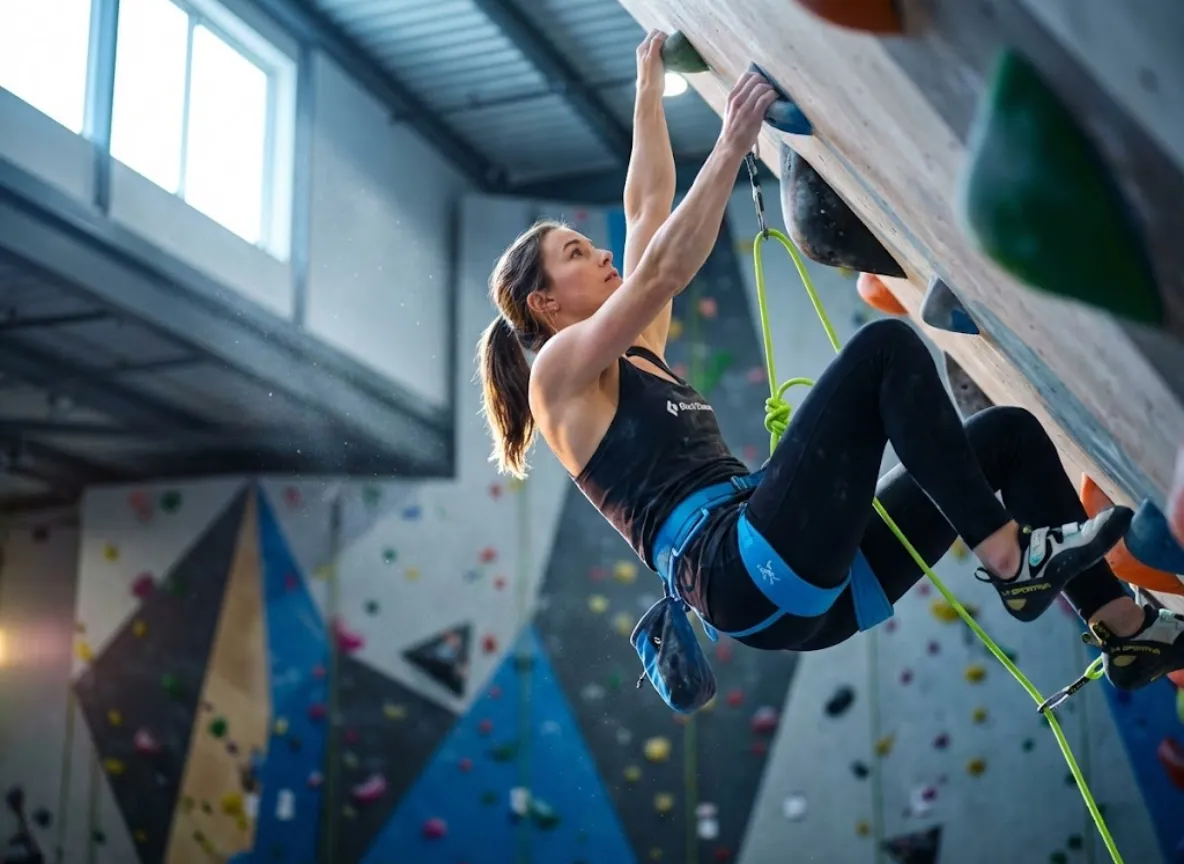
In rock climbing, the rope at your feet is no longer just a backup plan. It is a live wire connecting your movement to your survival. When you clip that first bolt, the safety net of top-roping disappears. You are now dealing with gravity and slack in real-time.
The indoor gym lead climbing certification is the gatekeeper to this new reality. It isn’t there to stroke your ego or prove how strong you are. It exists to verify lead test mastery and ensure you can handle technical safety risks without hesitating.
Passing the lead test takes more than muscle. It requires you to change your instincts. Here is how to show the examiners you are a competent lead climber and keep your climbing partner safe when it counts.
What Are the “Table Stakes” for the Assessment?

Before you even handle a climbing rope, you need to meet a few requirements. These are the basic barriers to entry involving your proficiency check eligibility, your gear, and gym rules.
Is the 5.10b Grade Standard Mandatory?
Most high-end climbing gyms, especially big chains like Touchstone Climbing, require you to climb a 5.10b grade (YDS) route to pass. This is harder than the 5.9 grade standard you might see in textbooks, but there is a reason for it. It acts as a stress test for your endurance and benchmarking skill.
You need to show you can manage clipping mechanics, talk to your belayer, and pay attention to safety even when your muscles are tired. Routes easier than 5.10b often have big jugs or ledges where you can stand and rest forever. That hides bad habits and fatigued choices.
Examiners need to see you handle the lead rope when your arms are pumping. They want to know that exhaustion won’t make you sloppy.
| Common Climbing Errors and Safety Corrections | |||
|---|---|---|---|
| Error | Visual Cue | Consequence | Immediate Correction |
| Z-Clipping | A “Z” shape forms in the rope pattern; the climber clips into a higher bolt using rope pulled from below the previous clipped bolt. | Creates extreme drag that traps the climber; in a fall, the pulley effect drops the climber below the previous bolt and can shock-load the system. | Do not pull more slack. Downclimb to the lower bolt, unclip the lower quickdraw first, and fix the system to remove the “Z”. |
| Back-Clipping | The rope runs “Back to Front” through the quickdraw (the strand attached to the harness goes through the back of the carabiner and out the gate). | The rope can twist across the carabiner gate during a fall, forcing the gate open and causing the rope to self-unclip (total loss of protection). | Stop immediately. Unclip the draw and re-clip correctly so the harness strand comes OUT of the carabiner away from the wall. |
| Leg Behind Rope | The rope runs behind the climber’s leg or calf, effectively trapped between the climber’s heel and the wall. | Upon falling, the rope catches the leg and acts as a fulcrum, flipping the climber upside down (inversion) and swinging their head into the wall. | Perform the “Toe Tuck”: Use the toe or knee to push the rope to the outside of the leg, or actively step over the rope. |
| Short-Roping | The rope becomes taut on the climber’s harness during upward movement or clipping attempts; no “smile” or slack in the system. | Impedes the climber’s movement, potentially pulling them off the wall; causes a hard, jarring impact into the wall if they fall. | The belayer must step in slightly toward the wall, quickly pay out an arm-length of slack, and better anticipate the climber’s next move. |
| Decking Potential | Excessive slack causes the rope to dip below the belayer’s knees (the “smile” becomes a deep “frown”). | If the climber falls, there is too much slack in the system to arrest them before they hit the ground (decking), especially on lower parts of the route. | The belayer must take in slack immediately and/or step back from the wall to remove the dangerous excess rope. |
To pass easily, you should be able to “onsight” (climb cleanly on the first try) at a 5.10d level during your practice sessions. This gives you a buffer against test-taking nerves. Examiners are looking for “quiet feet” and steady clips. If you are wobbling or shaking your way through a 5.10b, they might fail you just because you look unsafe.
While every gym is different, the American Mountain Guides Association (AMGA) instructor standards set the baseline for what instructors look for. Understanding the nuances of sport climbing grades will help you figure out if you are physically ready for the lead test route.
Why Are Tube-Style Devices Being Phased Out?
Modern gym policies, including those at Sender One and Movement, are banning simple “tube-style” devices (like the ATC) for lead tests. They now require Assisted Braking Devices (ABDs) like the Petzl Grigri.
An ATC is great for learning belay mechanics, but if you let go of the brake hand, the climber falls. Gyms want the extra safety layer that an ABD provides to limit liability.
You must show you know how to feed slack quickly with an ABD. The mechanics are different from an ATC. The biggest mistake people make is the “Cam Override.” This happens when you hold the device open with your thumb to feed slack fast. If the lead climber falls at that exact second, the device won’t lock.
Pro-Tip: Practice the “Thumb Press” technique until you can do it with your eyes closed. Your brake hand must never leave the rope, even when feeding slack fast. If you take your hand off the brake strand to fix your glasses or point at a hold, you will fail immediately.
You can look at a standard lead assessment rubric criteria to see exactly how they score your gear handling. For a closer look at the different tools, read our guide on belay devices decoded: ATC, GriGri & passive systems.
Which Technical Errors Guarantee Failure?
Some mistakes will end your exam instantly. These are “Zero Tolerance” errors because they create dangerous shapes in the rope system that can lead to accidents.
How Do You Identify and Prevent the “Death Z”?
Z-Clipping happens when you grab the rope from below the last bolt you clipped, and then pull it up to clip the next one. This creates a “Z” shape in the rope.
This creates massive drag. Worse, if you fall, that “Z” shape effectively unclips the highest bolt, meaning you fall twice as far.
The only way to prevent this is to create a habit: always trace the rope from your knot. Don’t just grab blindly at your thigh. Follow the rope from your harness with your hand. This ensures you are pulling the strand attached to you, not the one going down to your belayer.
Back-clipping is different. This is when you clip the rope so it runs “back-to-front” through the quickdraw. The rope coming from your harness should always come out the front of the carabiner, away from the wall. If it’s back-clipped, a fall can twist the rope and actually unclip itself.
If you make a mistake, you must fix it. Examiners want to see you notice it immediately and correct it before you climb past it. If you climb past a back-clip without noticing, it is an instant fail.
Research on clipping hazards and geometry shows these errors are major causes of ground falls. For pictures on how to do this right, check our ultimate quickdraw guide: how to choose & clip.
Why Is the “Toe Tuck” Essential for Safety?
The “Leg Behind Rope” rule is critical. If the rope runs behind your calf or heel, it creates a pivot point. If you fall, the rope catches your leg and flips you upside down.
Inverted falls are the top cause of head injuries in indoor lead climbing. You swing back into the wall, and the back of your head takes the impact.
The “Toe Tuck” is a habit where you use your toe or knee to nudge the rope to the outside of your leg before you make a move. Examiners aren’t just looking for mistakes; they are looking for awareness. Do you know where the rope is without looking?
This is tested heavily on overhangs. You need to show “active management” by stepping over the rope or re-clipping to fix the angle. NPS climbing safety guidelines highlight this awareness as a key part of staying safe. It connects to better climbing movement 101: flagging & drop-knee skills, where your body position keeps you safe.
How Do You Master Belay Dynamics?
While the climber manages the clips, the belayer has a different job. The soft catch is what separates a beginner from an expert.
What Is the Physics of a “Soft Catch”?
A “Soft Catch” is when the belayer moves with the fall to slow it down gently.
If you give a static catching (by sitting back or resisting the pull), the rope goes tight instantly. This slams the climber into the wall hard. It puts a lot of stress on the protection and the climber’s body.
Dynamic catching involves a small hop or step forward. This acts like a shock absorber. It turns a hard slam into a gentle stop.
The timing has to be perfect. You must jump exactly as the rope goes tight on your harness. If you jump too early, you create dangerous slack. If you jump too late, it doesn’t help.
For the certification, you need to do this even on small falls. Standing like a statue is often marked as a “Hard Catch.” The American Alpine Club accidents analysis shows that static belaying often leads to broken ankles. To understand this better, read how to perfect your belay in climbing: safety & skills.
How Does the 40lb Weight Rule Change Strategy?
If the climber is more than 40 lbs (18 kg) heavier than you, a soft catch happens automatically because they will pull you up into the air.
The danger here is that you might get pulled violently into the first bolt. To stay safe, stand close to the wall. You might also need a friction device like the Edelrid Ohm to add resistance.
Examiners will watch to see if you check this. Did you ask your climbing partner their weight before you started?
If the belayer is much heavier (more than 40 lbs), they act like a heavy anchor. They must jump aggressively to give a soft catch. If a heavy belayer doesn’t jump, the lighter climber stops instantly against the wall, which can cause injury.
Pro-Tip: Tell the examiner, “We have a 50lb difference, so I will be using the Ohm.” This shows you are paying attention before the climbing even begins.
Global UIAA safety standards outline the rules for gear used in these situations. Picking the right gear is part of the test; learn more about how to belay with confidence: choosing your first equipment.
Conclusion
Passing your lead climbing certification is about showing that safety habits are automatic for you.
- Zero Tolerance: Back-clipping, Z-clipping, and having the rope behind your leg are instant fails.
- Dynamic Necessity: You must give a “soft catch” to keep your climber from slamming into the wall.
- The 5.10b Buffer: Train to climb harder than the test route so you aren’t too tired to think.
- Proactive Management: Spot risks like weight differences or rope entanglement before they turn into emergencies.
Before you book your lead test appointment, run a full mock test with a partner using these rules. Find your weak spots on the ground so you don’t find them on the wall.
FAQ – Frequently Asked Questions
What happens if you back-clip during a lead test?
If you climb past a back-clip without fixing it, you usually fail immediately. It is dangerous because the rope can unclip itself during a fall. If you notice it and fix it before you climb higher, some examiners might let it slide, but it counts against you.
Can I use an ATC for my lead climbing test?
Many modern gyms have banned ATCs for lead tests. They usually require an Assisted Braking Device (ABD) like a Grigri. Always check the gym’s rules first. Showing up with the wrong device is a common way to get disqualified.
Is lead climbing harder than top-roping?
Physically, yes. You have to hold yourself up with one arm while you clip the rope, instead of just pulling up. Mentally, it takes a lot more focus on risk, slack management, and falling anxiety compared to the passive safety of top-roping.
What is the Leg Behind Rope rule?
The rope must never run behind your leg or calf while you are climbing. If you fall like that, you can flip upside down and hit your head. You must step over the rope or use your toe to keep it clearly between your legs or over your thigh.
Risk Disclaimer: Rock climbing, mountaineering, and all related activities are inherently dangerous sports that can result in serious injury or death. The information provided on Rock Climbing Realms is for educational and informational purposes only. While we strive for accuracy, the information, techniques, and advice presented on this website are not a substitute for professional, hands-on instruction or your own best judgment. Conditions and risks can vary. Never attempt a new technique based solely on information read here. Always seek guidance from a qualified instructor. By using this website, you agree that you are solely responsible for your own safety. Any reliance you place on this information is therefore strictly at your own risk, and you assume all liability for your actions. Rock Climbing Realms and its authors will not be held liable for any injury, damage, or loss sustained in connection with the use of the information contained herein.
Affiliate Disclosure: We are a participant in the Amazon Services LLC Associates Program, an affiliate advertising program designed to provide a means for us to earn advertising fees by advertising and linking to Amazon.com. As an Amazon Associate, we earn from qualifying purchases. We also participate in other affiliate programs. Additional terms are found in the terms of service.