In this article
You usually feel the problem before you see it. That razor-sharp precision you loved when you first bought your aggressive climbing shoes starts to fade. Standing on a tiny edge used to feel effortless, but now it feels mushy and vague. You find yourself gripping harder with your hands to compensate for feet that just won’t stick.
This isn’t just normal wear-and-tear. It’s the physics of tension. A high-end rock shoe is basically a tensioned spring. It wants to snap back to a flat shape. If you don’t fight back, the shoe wins, and you lose that aggressive profile the moment you walk out of the shop.
As a guide, I’ve seen countless pairs of expensive rock shoes turn into comfortable gym slippers in a matter of weeks. The difference between sending your project and slipping off usually comes down to technical footwear preservation, not just how much you climb.
We need to treat your shoes like a piece of precision engineering. This guide looks at the anatomy of a downturn, why heat and sweat are destroying them, and the simple habits—like stuffing them with newspaper—that can stop the damage.
The Engineering: Why Do Climbing Shoes Have a “Beak”?

How does the tension system create power?
The aggressive downturn (or camber) of a climbing shoe does one main thing: it shortens your foot. This focuses all your power directly through the tip of your big toe.
Your foot is naturally designed to walk flat. You have a band of tissue called the plantar fascia that supports your arch for walking heel-to-toe. But climbing vertical terrain requires your foot to act like a rigid hook. Your relaxed bare feet can’t do that on their own. The shoe forces your foot into that curled position, which engages the muscles in your arch. This allows you to pull your hips into the wall instead of just standing there.
To keep this unnatural shape, manufacturers use a tension rand. This is a rubber belt that wraps around the heel and pushes your toes forward.
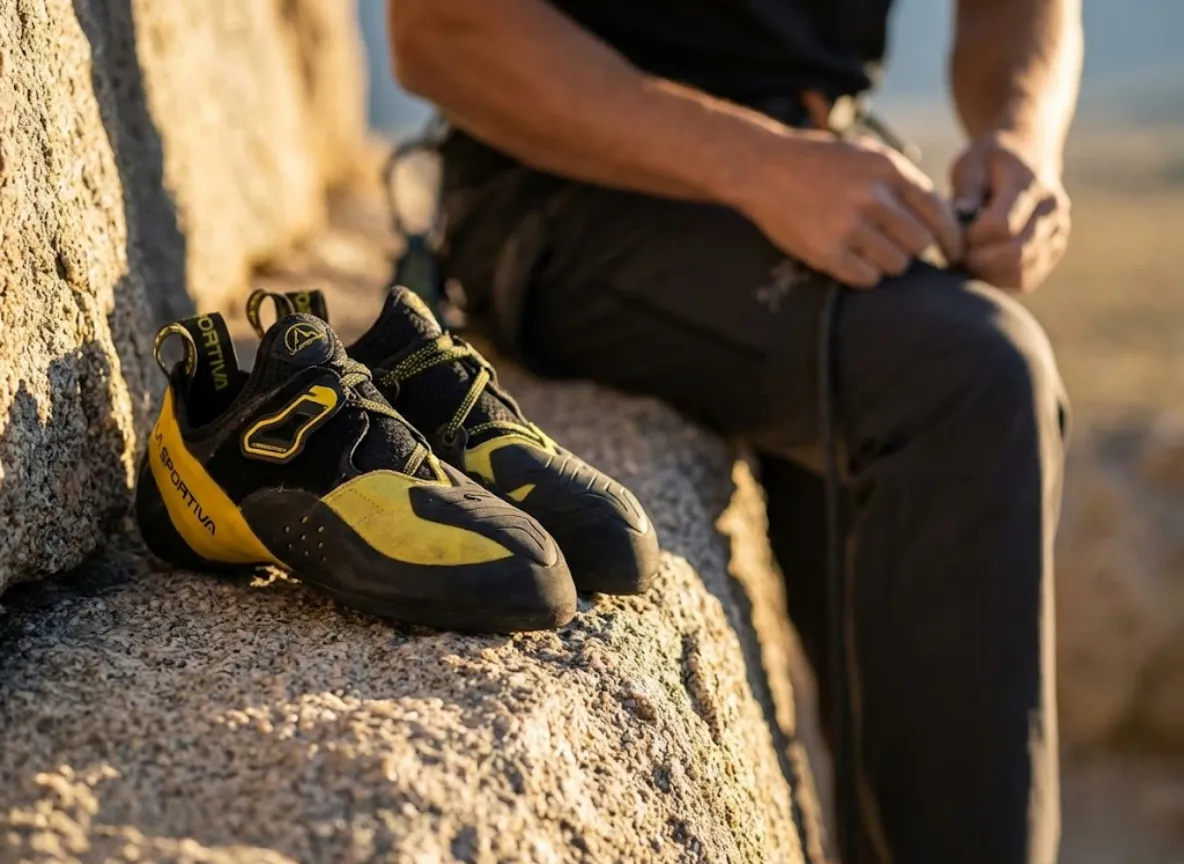
Advanced shoes, like the La Sportiva Solution with its P3 (Permanent Power Platform), use a stiff plastic insert. This acts like a spring, snapping the shoe back to its curved shape even after you bend it. Other brands use different methods, like the Bi-Tension systems found in the Scarpa Vapor V, which pull power from the toe to the heel.
Cheaper or older styles might just use a rubber sling-shot rand. Rubber stretches out over time, while the plastic spine does not. Knowing whether your shoe relies on midsole stiffness or pure rubber tension tells you how careful you need to be.
Pro-Tip: If you climb in soft shoes like the Scarpa Drago, the tension comes from a rubber band, not a stiff plastic spine. Every minute you spend standing on the flat ground stretches that band out. Take them off immediately after you finish your climb.
For a closer look at how your foot moves, you can check out this biomechanical analysis of the foot’s windlass mechanism. It explains why we need that artificial tension to climb hard. Also, getting the right size matters. Many seasoned climbers think extreme downsizing is the only way, but a proper performance fit translates body movement into upward progress much better than pain does.
The Enemies of Shape: What Kills the Downturn?
Why is heat the silent killer of aggressive shoes?
Heat sensitivity is the fastest way to ruin a specialized overhang shoe. It softens the glue and makes the rubber forget its shape.
Climbing shoes are held together by special glues that can start to soften at temperatures as low as 140°F (60°C). If you leave your shoes in hot cars, a truck bed, or in direct sun exposure at the crag, that glue gets soft. The tensioned rubber is pulling hard against the sole, and if the glue weakens, the rubber will peel away. This is called delamination. Once the adhesive bonds slip, the shoe’s structure is broken. You can’t fix it by cooling it down.
It’s not just the glue, though. The rubber itself is at risk. High-friction compounds like Vibram XS Grip 2 or the ultra-soft M50 rubber react to heat. If the rubber gets hot while it is squished flat—like at the bottom of a heavy backpack—the molecules inside re-align.
When the warm rubber cools down, it “sets” in that new, flat shape. The manufacturer’s original curve is gone. This is why a shoe can feel dead even if the rubber is still thick. You essentially cooked the spring out of it. The NIST has great data on the viscoelastic properties of rubber polymers if you want to geek out on the physics. Otherwise, just check a definitive guide to climbing shoe rubber to learn the difference between soft and stiff compounds like Vibram XS Edge.
How does moisture destroy the upper’s stability?
Sweat is saltwater. It creates a damp environment that stretches the leather and rots the insides of your shoe.
Leather loves water. When the collagen fibers in leather soak up sweat, they swell and get slippery. This allows them to stretch. In a climbing shoe, that stretch releases the tension. The rubber band goes slack, and the downturn collapses. Synthetic materials don’t stretch as much, but they often lack breathability, trapping sweat inside.
If the inside stays damp, a chemical process called hydrolysis begins. This breaks down the midsole and the adhesives. The internal structure starts to crumble or turn sticky. The “spine” of the shoe literally rots away.
A dark, sweaty shoe bag is the perfect place for this to happen. You need to dry your shoes out fast. Using products like Boot Bananas or silica packets right after climbing is mandatory, not optional. Research on collagen fiber structure and hydration shows exactly how moisture absorption weakens leather. This is a key part of mastering climbing shoe care if you want to ensure structural longevity.
Operational Protocols: How Should You Handle Your Shoes?
What is the “Stuffing Technique” for shape retention?
Shoes tend to lose their shape while they are drying. Materials harden in whatever position they are left in. If you throw aggressive sport shoes loosely into a bag, the upper collapses and flattens out the tension band.
The storage tension technique is simple. Pack the toe box tightly with newspaper for drying or a specialized “shape keeper” immediately after you take the shoe off. This pushes from the inside out, supporting the arch and toe zone. It forces the shoe to dry in its original curved shape rather than flattening out.
For Velcro models (or straps), fasten them tight over the stuffing. For lace ups, tighten the laces. This keeps the material under tension and stops the eyelets from curling in.
Pro-Tip: Never crush the heel cup. The heel acts as the anchor for the whole tension system. If you walk on the heels or crush them in your pack, you create a crease. Once the heel cup is weak, the forward tension is gone.
This is extremely important for soft shoes that don’t have a stiff midsole to hold them up. It also helps prevent rot. Microbial degradation of footwear materials is real, and stuffing helps by wicking away moisture. How you do this might change slightly depending on the impact of lace versus velcro closures, but the goal is always the same: shape retention.
The Restoration Phase: When Should You Resole?
Why is the “Original Last” critical for resoling aggressive shoes?
A climbing shoe is built around a plastic mold of a foot, called a “last.” This mold determines the shoe’s size and, most importantly, its downturn curve. When a repair shop takes the old sole off, the tension releases. If they glue a new sole on without using that original mold, the shoe will go flat.
You must use Authorized Resolers (like Rock and Resole or similar certified shops). These are shops certified by brands like La Sportiva or Scarpa. They have the actual factory lasts. They can put your shoe back on the mold and re-last it, restoring the curve. Generic cobblers usually don’t have these molds. If you send a high-end shoe to a generic shop, it will probably come back flat and clunky.
| Climbing Shoe Resole Comparison: Generic vs. Authorized | ||
|---|---|---|
| Feature | Generic / Local Cobbler | Authorized Resoler (La Sportiva/Scarpa) |
| Shape Retention | Critical Failure. Generic cobblers lack specific lasts, often gluing new rubber onto a generic shape that returns a “flat, shapeless shoe”. | Optimal. Uses the “Original Last” (factory 3D mold) to re-glue the sole, ensuring the aggressive downturn and tension are calibrated to the specific model. |
| Rubber Quality | Variable. Often relies on bulk rubber sheets cut to fit, guessing at the shape and thickness. | Factory-Spec. Access to official “rubber kits”—soles pre-molded with the correct thickness and P3/Bi-Tension interfaces. |
| Cost | ~$50. Standard market rate for a half-sole replacement. | ~$50. Pricing is often comparable to generic shops, though shipping costs and wait times (6-8 weeks) may be higher. |
| Longevity | Compromised. Without the original last, the tension system is released and not re-engaged, effectively neutralizing the shoe’s biomechanical advantage. | Restored. Actively resets the “spring” mechanism of the downturn, allowing the shoe to retain its aggressive profile for multiple lifecycles. |
Timing is everything. You need to resole when the sole gets thin and forms a “smile” shape near the toe, but you must resole before the rand (the structural rubber) is damaged. Resoling saves the shoe and keeps trash out of landfills.
There is also a health reason. Rubber dust contains a compound called 6PPD-quinone, which is toxic to the environment. Keeping your shoes longer means less manufacturing and less waste. Making this part of your ultimate climbing gear lifespan and tracking system is a smart move for any serious climber.
Conclusion
The aggressive hook of your climbing shoes isn’t permanent. It’s a temporary state of tension that is always trying to escape. To preserve the downturn, you have to actively protect it.
Remember the rules:
- Structure is King: The camber is a spring. Keep it away from heat to save the glue.
- Manage Moisture: Dry and “stuff” your shoes right after climbing to stop the leather from stretching.
- Be Gentle: Don’t walk in your aggressive shoes, and never crush the heel cup.
- Repair Smart: Resole early, and only use pros who have the original molds.
Check the bottom of your rock shoes today. If you see that “smile” wear pattern starting, book a resole now. It’s the only way to keep that laser precision ready for your next project.
FAQ – Frequently Asked Questions about Maintaining Climbing Shoe Downturn
Do climbing shoes naturally lose their downturn over time?
Yes. The rubber naturally relaxes, and your body weight stretches the materials. However, shoes with a plastic spine (like the P3 Platform) keep their shape much longer than shoes that rely only on rubber friction and tension.
How do you keep aggressive climbing shoes aggressive?
Store them in a cool, dry place. Stuff the toe box with paper between sessions to support the arch. Avoid walking in them or standing around, as your weight flattens them out.
Can you resole aggressive climbing shoes without losing the shape?
Yes, but only if you use an Authorized Resoler. They have the specific factory mold (last) for your shoe. A generic cobbler will likely glue the new rubber on flat, which ruins the downturn forever.
Why are my climbing shoes flattening out so fast?
The most common reasons are heat (like leaving them in a hot car) or buying them too big (avoiding a true performance fit), which lets the structure collapse. Leaving them damp in a gym bag also rots the insides, making them go soft.
Risk Disclaimer: Rock climbing, mountaineering, and all related activities are inherently dangerous sports that can result in serious injury or death. The information provided on Rock Climbing Realms is for educational and informational purposes only. While we strive for accuracy, the information, techniques, and advice presented on this website are not a substitute for professional, hands-on instruction or your own best judgment. Conditions and risks can vary. Never attempt a new technique based solely on information read here. Always seek guidance from a qualified instructor. By using this website, you agree that you are solely responsible for your own safety. Any reliance you place on this information is therefore strictly at your own risk, and you assume all liability for your actions. Rock Climbing Realms and its authors will not be held liable for any injury, damage, or loss sustained in connection with the use of the information contained herein.
Affiliate Disclosure: We are a participant in the Amazon Services LLC Associates Program, an affiliate advertising program designed to provide a means for us to earn advertising fees by advertising and linking to Amazon.com. As an Amazon Associate, we earn from qualifying purchases. We also participate in other affiliate programs. Additional terms are found in the terms of service.