In this article
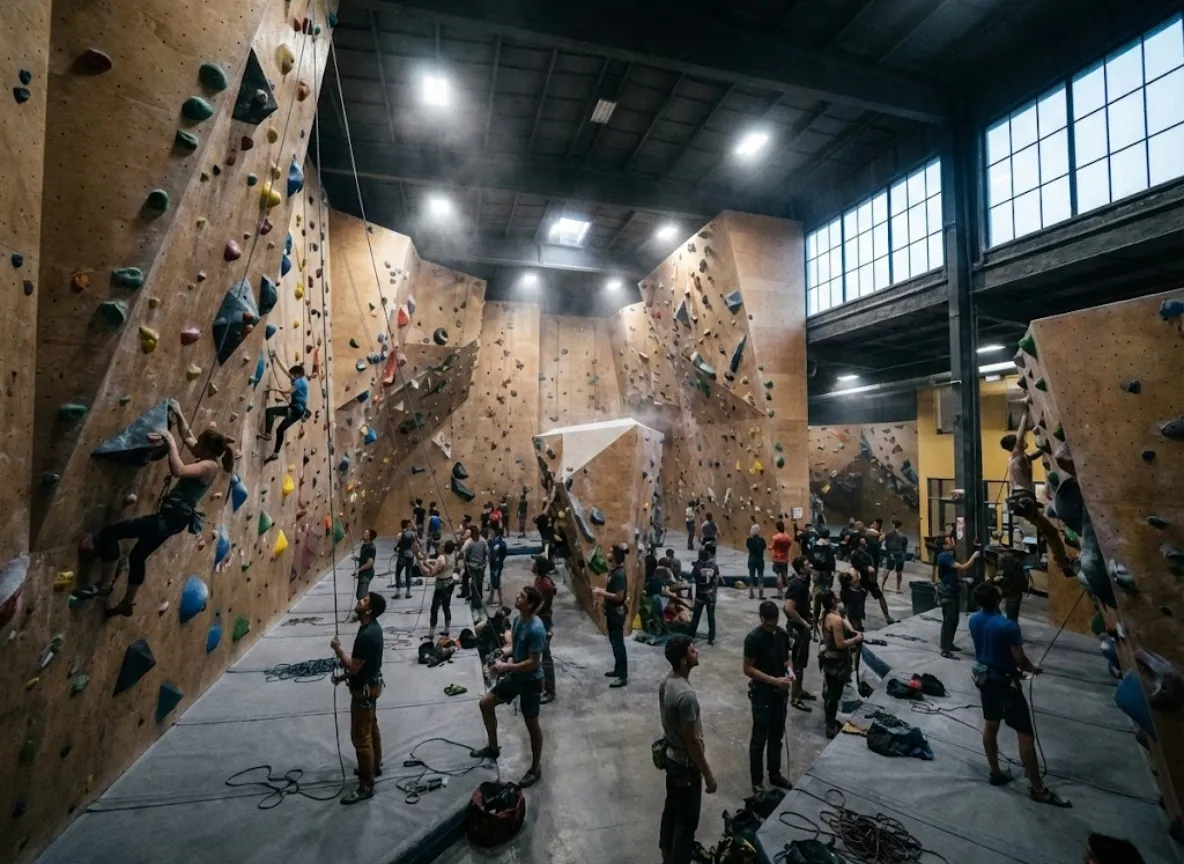
You scan your card at the front desk, grab a rental harness, and smell the chalk dust suspended in the air before you even see the wall. That $100 monthly deduction from your bank account feels steep, but the cavernous facility around you is burning capital every second the lights are on.
A modern indoor climbing gym is not just a playground; it is a complex industrial operation that balances the physics of massive steel structures with the psychology of community belonging. As someone who has spent years guiding clients and analyzing the indoor climbing business, I see the gym differently than the average member.
I see a carefully engineered ecosystem where indoor climbing industry economics and physics collide. Understanding this economic anatomy transforms the gym from a simple service provider into a system designed to sustain your climbing life. Here is exactly how do climbing gyms make money, from the “chalk tax” to the sociology of profit.
What Constitutes the Revenue Architecture of a Climbing Gym?

This section deconstructs the income streams that keep a gym solvent, distinguishing between stable recurring revenue and variable ancillary income streams.
Why Are Recurring Memberships the Financial Lifeblood?
The financial stability of a climbing gym relies heavily on the Electronic Funds Transfer (EFT) model, which typically accounts for 45% to 60% of total revenue. Operators target a specific “cover ratio” where these automatic monthly dues—ranging from $80 to $120 in major hubs—pay for 100% of fixed operating costs like rent and payroll.
This subscription model shifts the business from a transactional nature, like a bowling alley, to a predictable recurring revenue model. This predictability allows for long-term planning and secures bank financing for expansion.
Unlike traditional fitness training centers that rely on “breakage”—members paying but not showing up—climbing gyms thrive on active engagement. Data shows that members visiting fewer than three times a month have a high customer churn rate. Therefore, the goal is to facilitate consistent indoor rock climbing for adults to keep retention and Average Revenue Per Member (ARPM) high.
High pricing strategies are often inelastic because the membership is tied to the user’s identity (“I am a climber”) rather than just access to hardware. Additionally, initiation fees serve a strategic psychological purpose. They create a “sunk cost” barrier that discourages impulsive cancellations during busy or low-motivation periods.
While the monthly draft keeps the lights on, the daily flow of new faces provides the high-margin injections that fund growth and gear. This aligns with broader consumer spending trends in active recreation, where experience-based spending is outpacing traditional goods.
Pro-Tip: If you climb more than four times a month, the EFT membership almost always beats the punch-card math. However, if you travel often, ask about “freeze” policies; good gyms allow you to pause billing for $5-$10/month rather than canceling and re-paying the initiation fee.
How Do Day Passes and Ancillary Streams Drive Profit?
Day passes, birthday parties, and punch cards function as the primary sales funnel. They generate 20-25% of revenue and are essential for lowering the Customer Acquisition Cost (CAC) for new members. The “Three Visit Rule” suggests that conversion from casual visitor to member statistically occurs after the third exposure to the sport, regardless of athletic ability.
Rental fleets of climbing shoes, harnesses, and other climbing equipment offer the highest Return on Asset (ROA) in the facility. A single pair of shoes often pays for its wholesale cost within 6-8 uses. Once hooked, customers begin transitioning from renter to owner, moving into retail purchases.
Retail merchandise in the pro-shop provides high-margin “convenience” revenue that capitalizes on the captive audience. You might buy your climbing gear online, but you will trigger high-margin chalk sales and high-margin tape sales at the desk because you need it now.
Youth programs, summer camps, and competitive teams are critical stabilizers. They create “sticky” revenue from families who organize their weekly schedules around team practices. This mirrors national youth sports participation data indicating that organized sports are a priority expenditure for modern families.
Education revenue, such as lead climbing courses or intro to belay classes, acts as a double-edged sword. It is an income stream, but it is also a mandatory safety gate, monetizing the necessary onboarding process for new climbers.
Where Does the Money Go? The Hidden Costs of Verticality
Revenue is only half the equation; once the money comes in, it immediately flows out to support the specialized industrial environment required for vertical movement.
Why Is Routesetting Considered Manufacturing, Not Maintenance?
Routesetting is the gym’s primary manufacturing process; the plastic holds are the raw material, and the finished “problems” are the product sold to the customer. A commercial gym must rotate its inventory frequently, usually every 4-8 weeks, to prevent “product staleness.” This staleness is a leading indicator of member churn.
Routesetting labor costs are significant. Professional setters earn wages commensurate with skilled trades to strip, wash, and expertly arrange heavy holds on steep overhangs. Occupational outlook for recreation workers validates that specialized skills in this sector command premiums over general floor staff.
The “Consensus” grading model—a standard often discussed by the Climbing Wall Association (CWA)—requires teams of setters to forerun, or test climb, every route. This adds non-productive climbing time to the payroll but is essential to ensure grade consistency. This collaborative process is how gym climb grades emerge ensuring a V4 feels like a V4 across the entire gym.
Hold depreciation is a perpetual capital expense. Texture wears down and “polishes” over time, necessitating annual budgets of $30k-$100k for fresh polyurethane volumes from manufacturers like Walltopia or Kilter. Setters function as “Experience Architects,” balancing the need for ego-stroking soft grades to retain novices against the demand for strict sandbagged grades from the core community.
What Are the “Invisible Taxes” of Air, Steel, and Liability?
The “Chalk Tax” refers to the imperative need for HVAC systems and industrial air filtration to scrub Particulate Matter generated by magnesium carbonate. The EPA standards for indoor air quality and particulate matter dictate that high levels of suspended dust (PM2.5/PM10) are a health hazard.
Utility management in climbing gyms is accelerated compared to other buildings. Staff must change filters monthly to prevent equipment failure and protect respiratory health.
Liability insurance premiums operate as a volatile variable, often costing 2-3% of gross revenue. Limited market carriers control the pricing for “active entertainment” liability, meaning one bad accident in the industry can raise rates for everyone.
Auto-belays create a specific auto-belay paradox: while they reduce staffing costs for top-rope climbing, they incur strict annual recertification fees ($279-$379 per unit) and frequent webbing replacements. This creates a complex Total Cost of Ownership calculation that gym owners must monitor closely.
Real estate zoning creates a high barrier to entry. Roped gyms require 40-60ft clear heights, forcing them into industrial districts. The cost of all parts of a climbing wall, including the steel superstructure and custom panels, represents a massive upfront CAPEX.
Finally, the “Waiver Defense” necessitates significant spending on liability waivers. The entire business model hinges on the enforceability of the assumption of risk and compliance with state tort laws.
How Does the “Third Place” Theory Secure Profitability?
This section explains the sociological strategy that allows climbing gyms to retain members far longer than traditional fitness centers.
Why Is Community the Ultimate Economic Moat?
Ray Oldenburg’s “Third Place” theory posits that humans need a social anchor distinct from home (First Place) and work (Second Place). Climbing gyms have successfully monetized this role. This community-based retention creates price inelasticity; members absorb price hikes because canceling implies social isolation from their primary peer group.
The shared adversity of “Type 2 Fun”—struggle and failure on a project—fosters Identity Fusion. It binds the individual’s self-concept to the group and the facility. This aligns with findings on social capital and community well-being, where shared activities create stronger societal bonds.
Gyms navigate a hierarchy of “Subcultural Capital.” High-income novices and fitness enthusiasts often subsidize the facility, while low-income “dirtbag” sport climbers provide the authentic atmosphere that attracts the novices. Successful operators curate this vibe through yoga classes, strength training, and layout design that encourages social dynamics in climbing.
The threat of Private Equity consolidation risks sterilizing this culture. If a gym loses its “cool factor” or community soul, it loses its primary retention tool.
Pro-Tip: To get the most out of your “Third Place” investment, join the gym’s league nights or volunteer for clean-up days. It cements your place in the community, often leading to better belay partners and beta on the wall.
Conclusion
Indoor climbing gyms are not standard fitness centers; they are “Experience Manufacturers” that rely on high-velocity routesetting frequency to prevent product decay. Sustainable growth requires a delicate balance of massive climbing gym investment (steel/walls) and strict OPEX control, underpinned by recurring EFT revenue.
The “Third Place” dynamic creates a defensive moat, turning customers into community members who are less sensitive to price but highly sensitive to “vibe.”
Next time you chalk up, take a moment to appreciate the ecosystem supporting your send. If you want to learn more about the gear that powers this industry, explore our comprehensive gear guides.
FAQ – Frequently Asked Questions about Climbing Gym Economics
Why are climbing gym memberships so expensive compared to regular gyms?
Climbing gyms often operate with moderate profit margins compared to big-box fitness centers. Memberships and drop-in fees usually form the core income for climbing gyms, but they must cover expensive skilled labor (routesetters) and safety infrastructure that traditional gyms do not.
Do climbing gym owners make a lot of money?
While successful gyms often operate with moderate profit margins aiming for 15-25% EBITDA, the startup costs are massive ($500k-$2M+). Fitness entrepreneurs often face years of debt service and high risk from liability insurance fluctuations before seeing significant net profit margin.
How much does it cost to build a climbing wall?
The wall structure alone typically costs between $100 and $210 per square foot of climbing surface. This includes the steel superstructure, panels, and engineering, but excludes the expensive climbing holds and flooring.
Why do gyms change the routes so often?
The routes are the primary product a gym sells. Frequent rotation (every 4-8 weeks) prevents the experience from becoming stale, which is the single biggest driver of member cancellation and churn.
Risk Disclaimer: Rock climbing, mountaineering, and all related activities are inherently dangerous sports that can result in serious injury or death. The information provided on Rock Climbing Realms is for educational and informational purposes only. While we strive for accuracy, the information, techniques, and advice presented on this website are not a substitute for professional, hands-on instruction or your own best judgment. Conditions and risks can vary. Never attempt a new technique based solely on information read here. Always seek guidance from a qualified instructor. By using this website, you agree that you are solely responsible for your own safety. Any reliance you place on this information is therefore strictly at your own risk, and you assume all liability for your actions. Rock Climbing Realms and its authors will not be held liable for any injury, damage, or loss sustained in connection with the use of the information contained herein.
Affiliate Disclosure: We are a participant in the Amazon Services LLC Associates Program, an affiliate advertising program designed to provide a means for us to earn advertising fees by advertising and linking to Amazon.com. As an Amazon Associate, we earn from qualifying purchases. We also participate in other affiliate programs. Additional terms are found in the terms of service.