
In this article
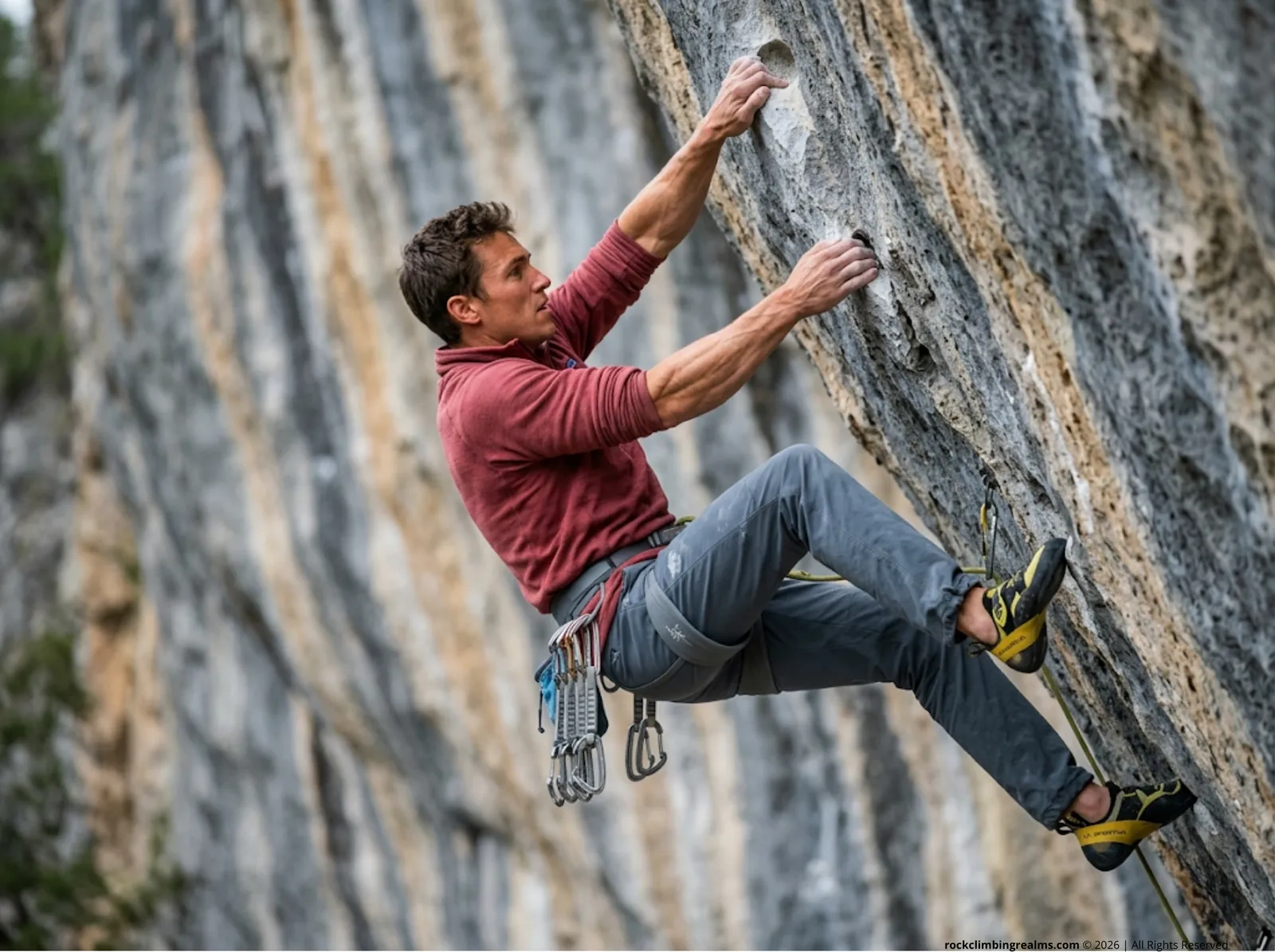
You are 45 feet up a sustained 5.12a at the Red River Gorge. Your forearms feel like they are stuffed with wet concrete, your fingers are barely flexing, and you are four bolts from the anchor. That rest position at the hueco looked obvious from the ground. Up here, hanging off a slick edge, nothing works. The clock is running out. This is a textbook pump, and you are about to learn the hard way that it has absolutely nothing to do with how strong you are.
After twenty years of projecting sport routes and watching strong climbers fail at the exact same crux moves, I can tell you this: the pump is a plumbing problem. It is not weakness. It is bad mechanics bottlenecking your circulation.
This guide breaks down why your forearms shut down. We will examine localized occlusion, fuel failure, and energy depletion. More importantly, we are going to build a functional blueprint to delay the pump, recover from it mid-route, and push your threshold so high that endurance stops holding you back.
⚡ Quick Answer: The pump happens when your climbing intensity clamps down on your veins, cutting off circulation to your forearms. This traps metabolic waste and blocks oxygen from refueling your muscles. To beat it, you have to build your aerobic base with low-intensity training to grow new vascular pathways, and fix your movement to keep the load on your feet. When you get pumped, use the gravity-assisted G-Tox method to force waste fluid out and pull fresh supply in.
| Climbing Training & Grip Metrics | |
|---|---|
| Training Parameter | Specification / Threshold |
| Occlusion begins | 20–45% of max grip tension |
| Total occlusion threshold | 50–70% of max grip tension |
| ARC training intensity | 20–30% of max grip tension |
| G-Tox recovery gain | ~18% grip strength |
| 4×4 set/rest structure | 4 problems, 15s rest, repeat 4x |
The Anatomy of the Pump — What’s Actually Happening in Your Forearm
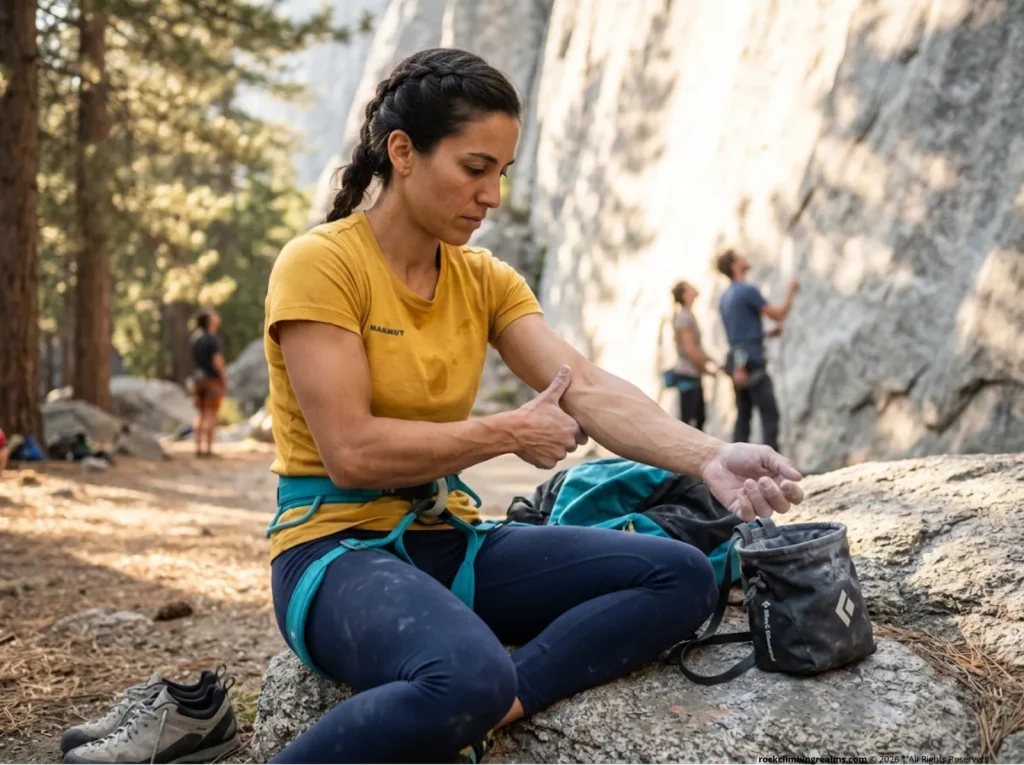
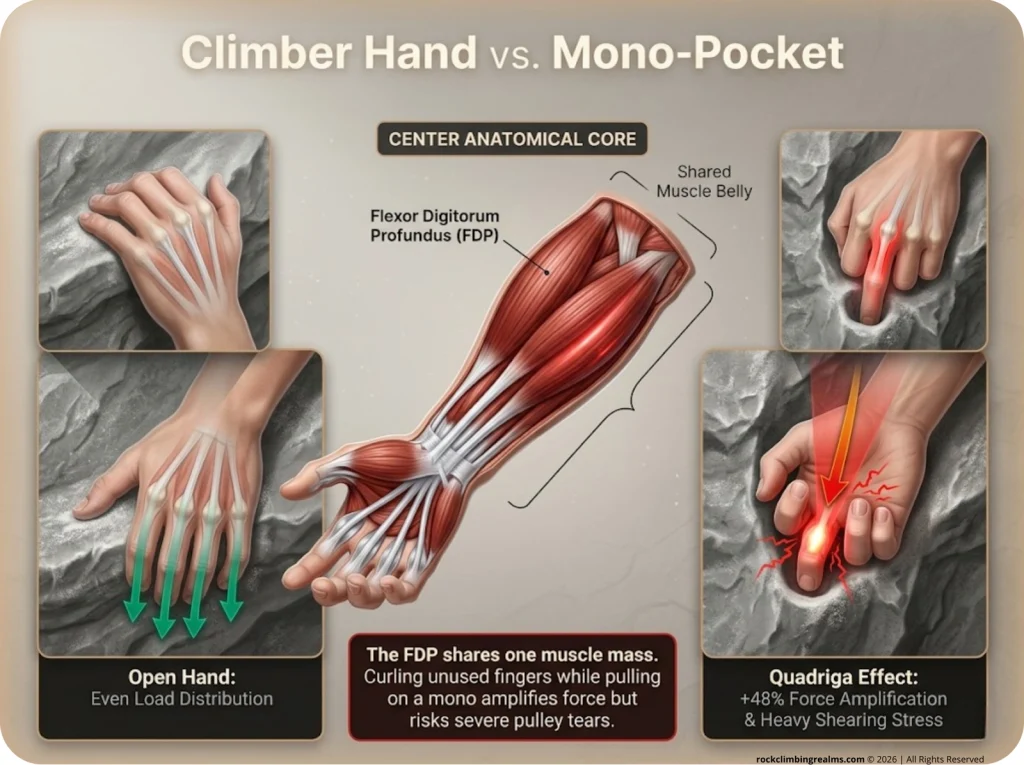
The engine driving your grip isn’t in your hand. The massive motors running the show are the Flexor Digitorum Superficialis (FDS) and the Flexor Digitorum Profundus (FDP). These two thick muscle groups sit deep in your forearm and share a single muscle mass before splitting into independent tendons that snake down to your fingertips.
Because those FDP tendons share one connected muscle mass, pulling on a single finger in a mono-pocket while curling the others triggers the Quadriga Effect. This mechanical quirk actually amps up the force on an active finger by almost 48%, while tearing at your palm with heavy shearing stress. If you want to understand how this wrecks your pulleys, read up on Climber’s Anatomy 101: Your Guide to Injury-Free Hands.
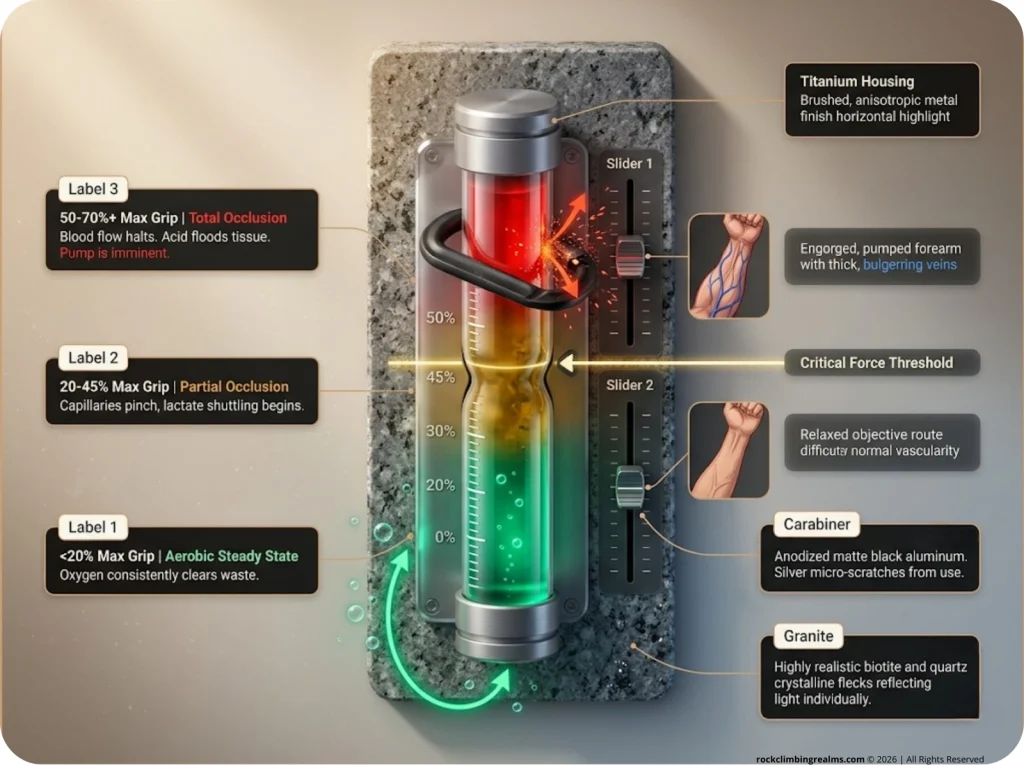
The real issue starts when you bear down on a crimp. Those flexing muscles literally clamp down on their own vascular supply. The exact point where partial flow gets pinched off hits at a shockingly low 20 to 45% of your max grip strength. By the time you grip at 50 to 70% of your max on anything past 5.11, you trigger total capillary occlusion. The circulation stops moving.
Cut off from oxygen, the muscle turns to anaerobic fuel. That system burns hot and dies fast. This defines your critical force—the absolute maximum load you can pull where oxygen in still matches energy out. Elite climbers maintain a high critical force. Beginners don’t. Once you cross that line, your brain panics. Your heart rate violently spikes out of proportion to what your muscles actually need, a reflex documented in a physiology of rock climbing and the cardiovascular response review.
When a climber at the crag complains their forearms feel like balloons, they aren’t using a metaphor. The fluid trapped in those occluded capillaries forces liquid out into the surrounding tissue. You are physically swelling from the inside out.
The Chemistry of Failure — It’s Not Lactic Acid
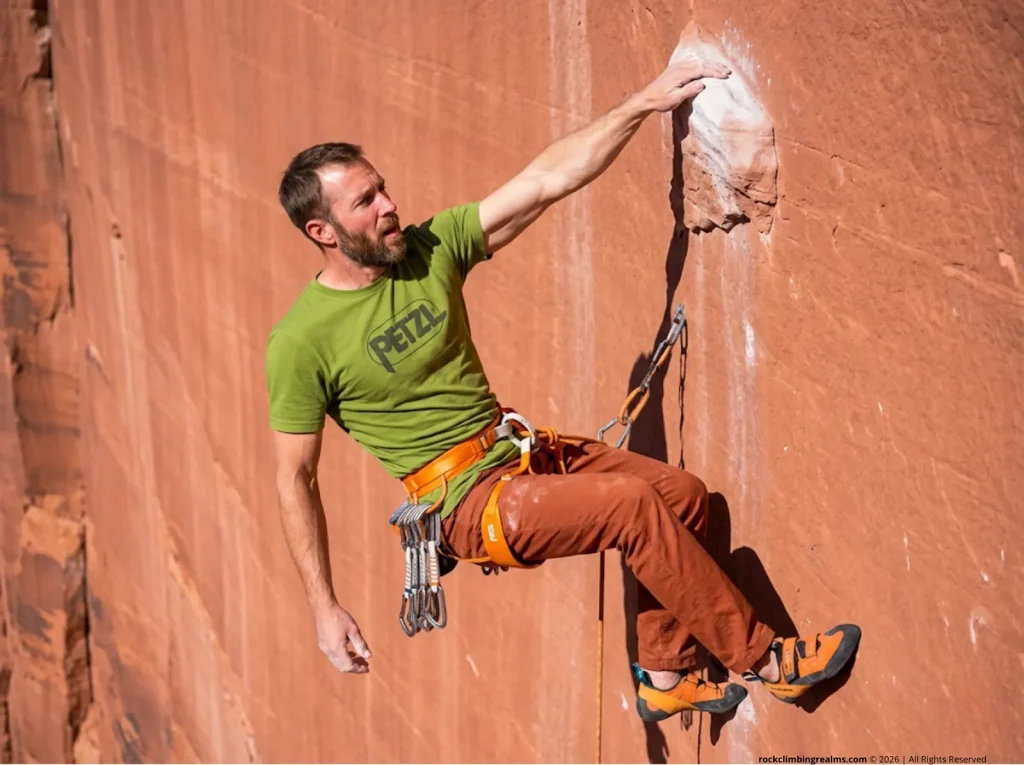
For thirty years, climbers blamed lactic acid for the burning sensation that forces you to let go. We were wrong. Lactate doesn’t make you fail; it operates as an emergency fuel source. Your system relies on lactate shuttling to pass that fuel to neighboring muscle fibers and your heart.
The real fire in your forearms comes from hydrogen ions. As your muscles burn energy for raw power, hydrogen ions flood the cells, dropping the pH. You literally cook your own enzymes.
Simultaneously, you accumulate inorganic phosphate. Pulling hard on a hold breaks down energy, which spits out phosphate. That phosphate physically blocks your muscle fibers from contracting. This mechanical shutdown violently opens your hand. Getting pumped on a 5.9 is not weakness—it is the direct chemical result of over-gripping on jugs. To learn how to exploit this fuel cycle, study The Science of the Pump: A Climber’s Complete Training Blueprint.
To get your strength back, you need your muscle’s emergency backup battery to recharge. But it only recharges when oxygen is present. If you are locked in total occlusion, zero oxygen is getting in. A frantic five-second shake while clenching a terrible sloper does absolutely nothing. You have to drop the tension long enough to restore circulation and flush the acid out.
Efficiency Hacks — How Elite Climbers Slow the Clock

Pulling harder gets you nowhere if your movement is garbage. Every upward pull on flexed biceps burns pure waste. Elite climbers don’t just survive the pump; they use mechanics to prevent it.
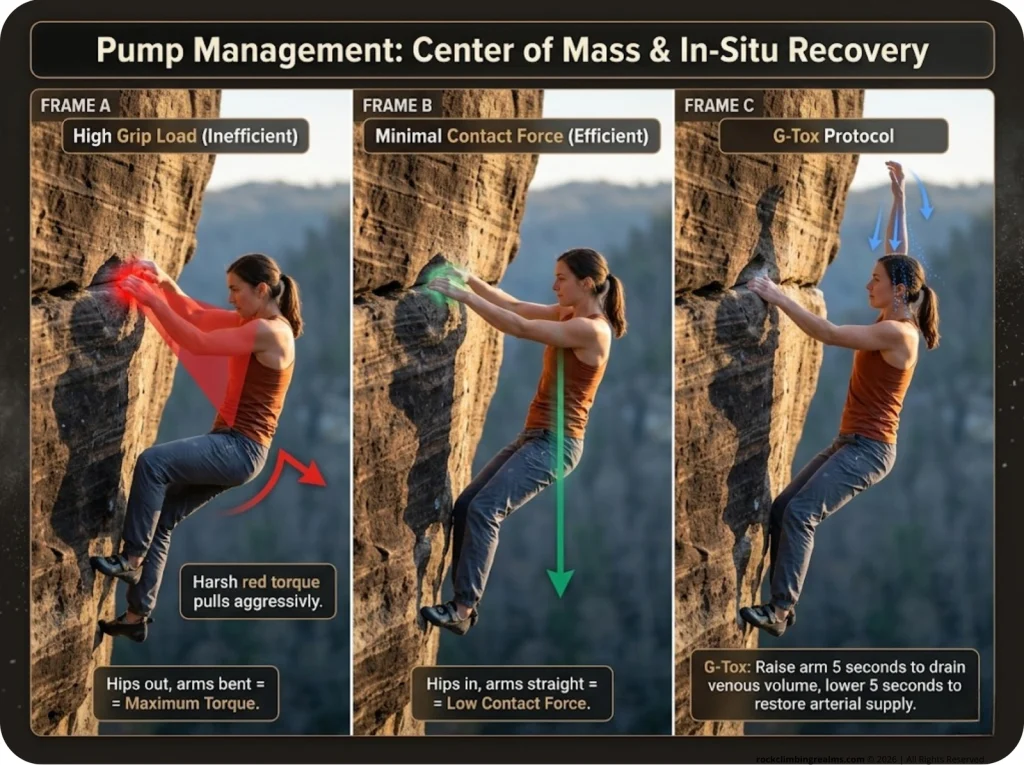
It all starts with center of mass efficiency. The farther your hips hang away from the wall, the harder your fingers have to pull just to stay attached. Sucking your hips into the rock creates a lever, cutting the torque on your hands. Dialing in your center of gravity alignment drops the contact required to the absolute minimum friction required to stick to the rock.
Pro tip: Keep your arms perfectly straight on easy terrain. Hang on your skeleton and your connective tissue, not your biceps. This drops the pressure in your forearms below the occlusion threshold and saves those muscle fibers for the crux.
You also must execute vertical pacing. Move relentlessly fast through the hard sections where your time under tension is high, then deliberately crawl on the easy terrain. Adam Ondra climbs long pitches with this exact stutter-step rhythm, minimizing the total seconds his forearms spend locked in an occluded state.
Your feet must take the weight so your arms don’t have to. Quiet, precise foot placements shift the heavy lifting directly to your legs, utilizing massive, aerobically efficient muscles. Figure out The Science of Footwork: An Edging & Smearing Masterclass and you will instantly climb lighter.
Then there is the secret tactic guides rarely teach: the micro-shake. Every time you let go of a hold, flick your wrist for half a second before catching the next edge. That tiny flick forces a tiny pulse of oxygen-rich fluid through the forearm. Elite climbers do this instinctively.
Building the Engine — ARC Training and the Aerobic Base
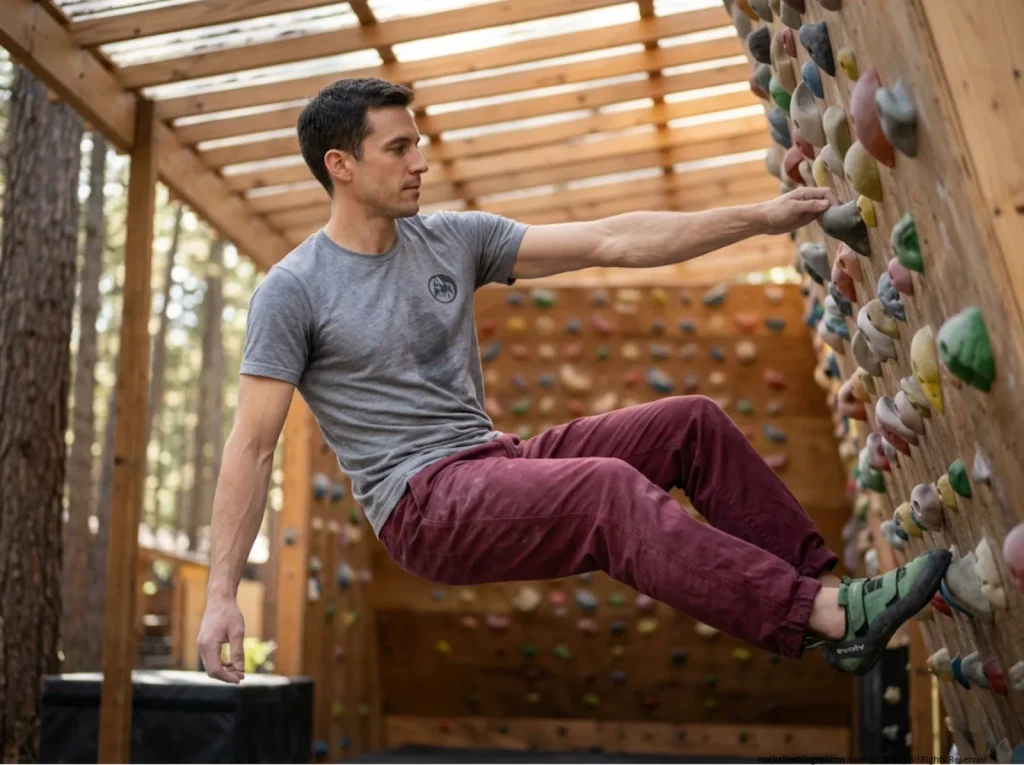
You cannot stack a massive turbo onto a nonexistent engine block. To raise your critical force, you need to literally grow the plumbing inside your arms. This requires arc training.
The protocol is brutal mostly because of the boredom: you climb continuously for 20 to 45 minutes at 20 to 30% of your maximum grip strength. This means running laps on circuit walls, traversing endlessly on spray walls, or doing easy route laps on auto-belay. You are searching for a pace where you can comfortably talk without losing your breath.
This sustained, low-intensity work triggers capillarization. Your system adapts by forcing tiny new vascular pathways deep into your forearm muscles, permanently increasing your capillary density. More capillaries equal a wider highway to drive oxygen in and sweep hydrogen ions out.
Pro tip: If you catch a pump while ARC training, you are pulling too hard. The entire point is to stay completely below the occlusion threshold to build your aerobic base. If your forearms gorge with fluid, you just turned a productive aerobic session into a useless lactic one.
For climbers pushing into 5.11d and beyond, you can replicate this stimulus on wood. A 7/3 repeater session on hangboards—hanging for 7 seconds, resting for 3, repeated for multiple sets at a very low weight—perfectly mimics the grip-and-release pattern of climbing. The tiny rest window lets circulation flow back in. I lay out exactly how to run these sessions in Hangboard Workouts for Beginners: A Safe Strength Blueprint.
Building an engine takes time. Your aerobic capacity adaptations start showing up in four to six weeks. Give it patience, and the way you handle aerobic restoration mid-route will fundamentally change.
Building the Turbo — Power Endurance and High-Intensity Protocols
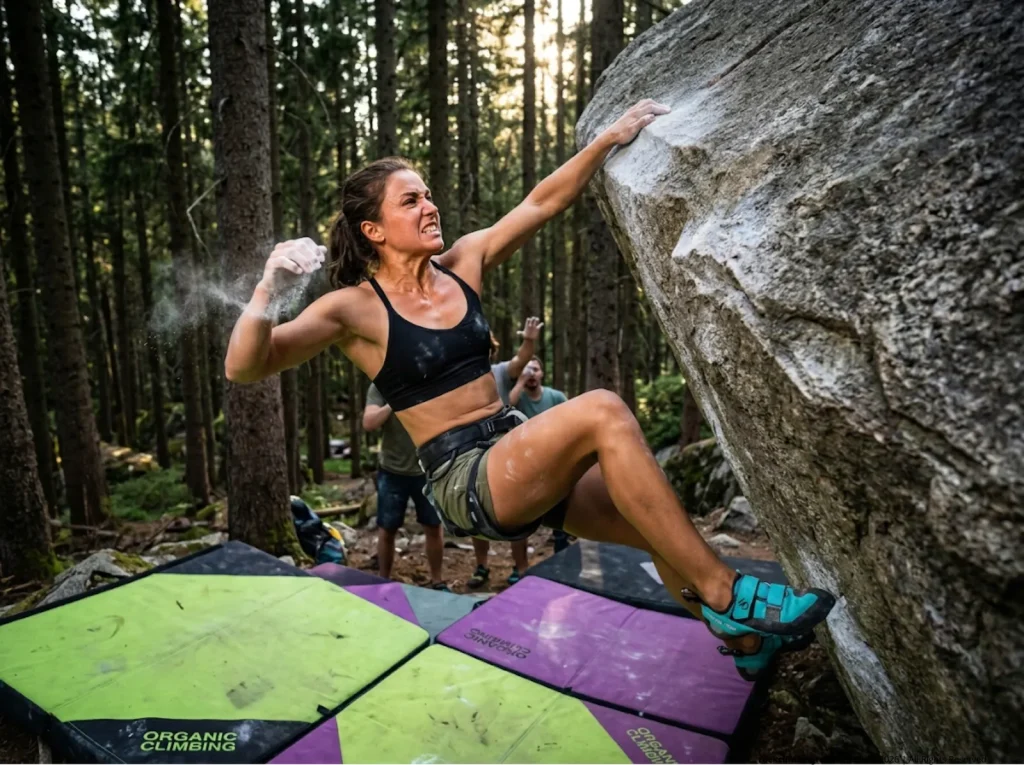
Once the plumbing is fully built, you have to train the anaerobic lactic system to tolerate the burn. This is where we force the system to deal with acid fast, building raw power endurance.
4x4s — The Classic Power Endurance Protocol
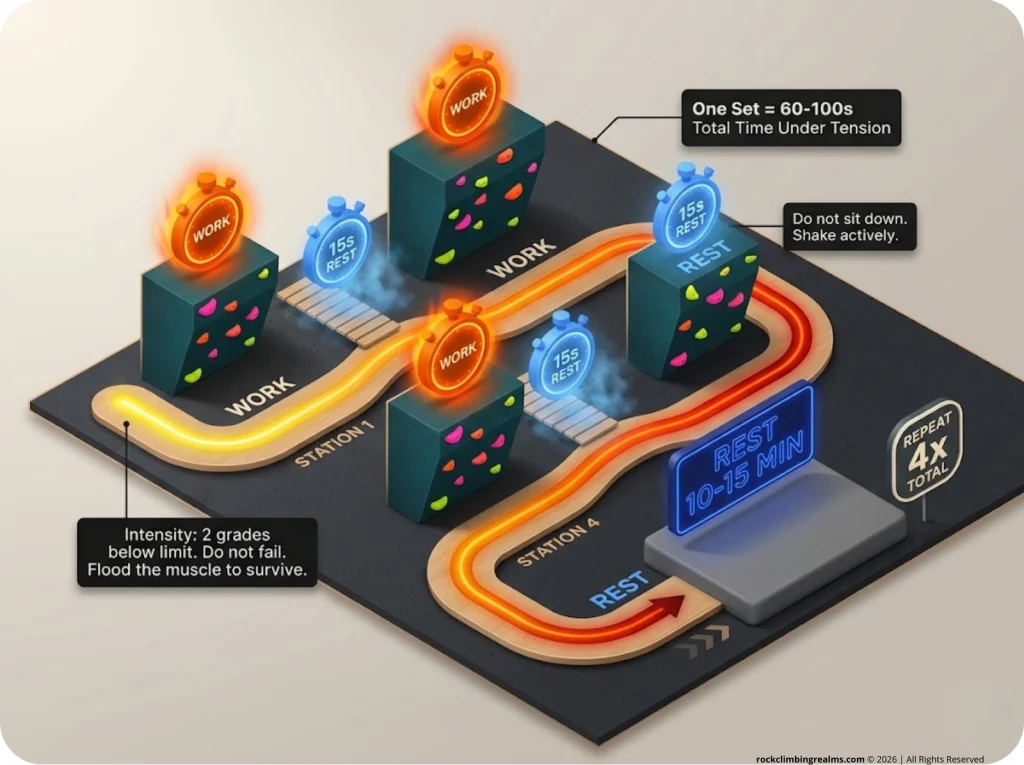
The strict 4×4 workouts are the absolute standard for glycolytic power endurance. Pick four moderate boulder problems—about two grades below your redpoint limit. Climb the first, drop off, rest 15 seconds, and jump on the next. Once you finish all four, pull off the wall and rest heavily for 10 to 15 minutes. Repeat that whole brutal sequence three more times.
Pro tip: Mark your four boulder problems before the session starts. Wasted time walking around trying to choose between burns breaks the strict timing of the protocol.
The Anderson Brothers heavily documented this approach, but modern metrics from groups like Lattice Training and TrainingBeta prove that tracking your time under tension is vastly superior to just blindly counting laps. A proper set should keep your forearms engaged under heavy load for 60 to 100 seconds. Choose problems that make you fight but do not cause you to peel off. You want to flood the muscle with acid and force it to keep firing.
EMOM Circuits — Aerobic Power Under Fatigue
An EMOM (Every Minute On the Minute) workout forces you to pull hard and recover suspiciously fast. Start a timer. Climb a 30-second boulder problem. Use the remaining 30 seconds of that minute to catch your breath and find the start holds for the next block. Repeat this for 10 to 20 straight minutes.
Coaches at Power Company Climbing love these route-simulation circuits because they instantly expose terrible route-reading habits. If you find yourself frantically scrambling by minute 15, your forearms probably aren’t failing—your sequencing is just slow. Keep the difficulty dialed back so the protocol remains sustainable until the buzzer.
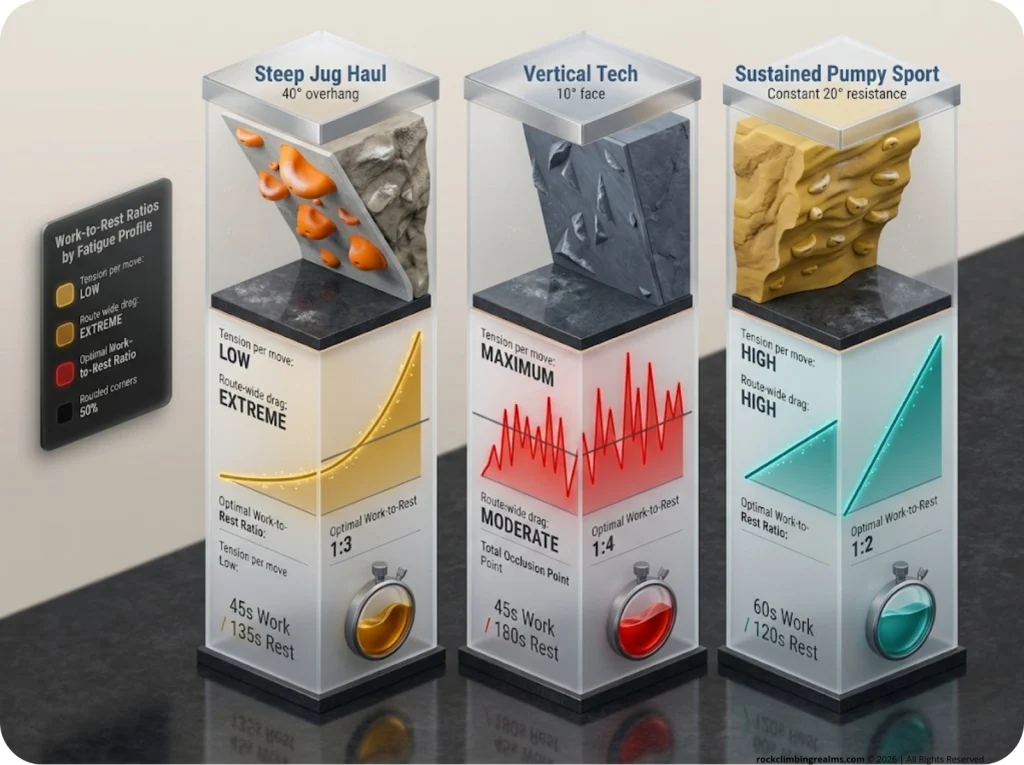
Work-to-Rest Ratios by Climbing Style
Not all routes create the exact same fatigue profile. You must match your work-to-rest ratios to the angle of the rock you want to climb.
Comparing steep jugs vs vertical tech shows why a generic protocol fails. On a 40-degree overhang grabbing massive holds, the tension for each isolated move is low, but the route-wide drag crushes you. You need long recovery windows here, training with a 1:3 ratio—like 45 seconds of work to 135 seconds of rest.
On a vertical 10-degree face with nasty crimps, the tension per move is massive. Occlusion sets in slowly but aggressively. Train this style with a 1:4 ratio to clear out the deeper acid load. To wrap your head around pacing, read Build Your Climbing Plan: A Periodization Framework.
In-Situ Recovery — The Science of the Shake-Out
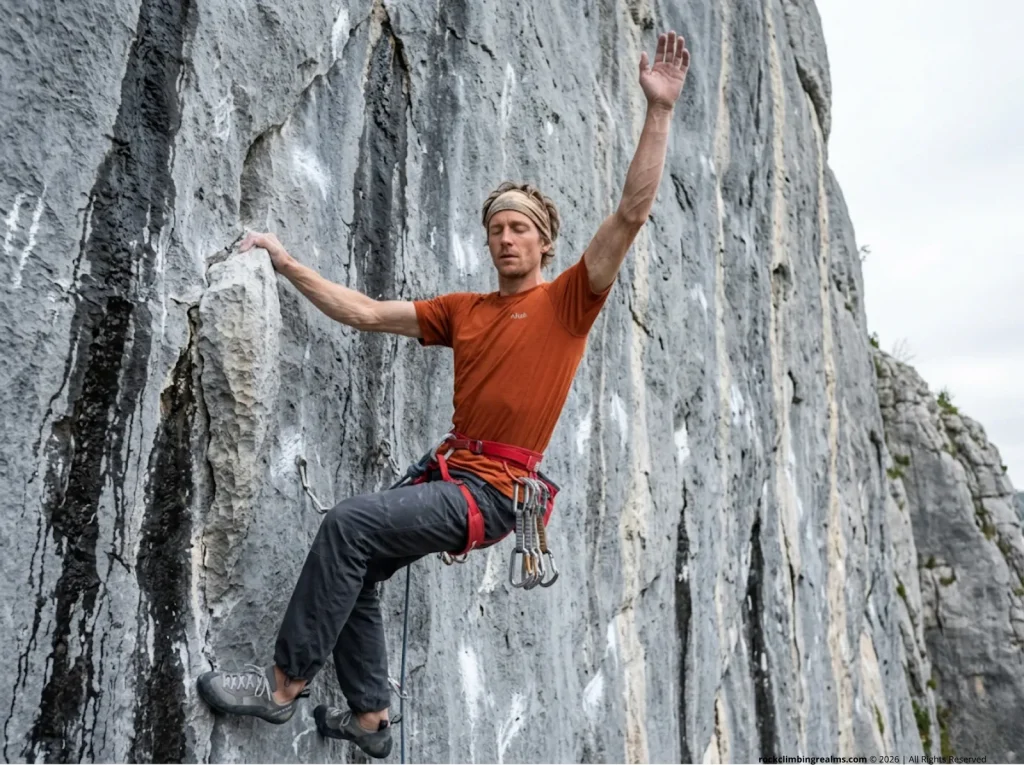
When the pump finally catches you 60 feet off the deck, how you manage your resting positions dictates whether you clip the chains or take the whip. Proper pump management decides the outcome.
The G-Tox Protocol — Gravity-Assisted Venous Drain
Just dangling your arm below your waist is a rookie mistake. The old fluid pools down in your hand, accomplishing nothing. Shake your arm overhead for 5 seconds to let gravity drain the thick venous volume out of your forearm. Then drop it below your heart for 5 seconds to let fresh arterial supply rush back in.
If you understand the physics of the shake, you know this alternating gravity assist increases grip strength recovery by roughly 18% compared to just letting your arm hang dead. Take the time to master it to get rid of the pump mid-crux.
Active vs. Passive Recovery Between Burns
When you lower off your project, do not sit down. Just like the debates over active vs passive stretching, the science here is loud: active recovery beats pulling out your phone every single time. It is how you recover faster on lead.
Walking around the base of the crag forces a light contraction through your entire system. This light contraction pushes circulation through your systems, violently accelerating lactate clearance and flushing out phosphate. The BMC (British Mountaineering Council) and multiple sports science groups advise that staring at your phone effectively traps the junk in your arms. To see the hard data on why you must stay moving, read the research on active recovery and repeated performance in rock climbers.
The Warm-Up as Pump Prevention
The dreaded “flash pump” is what happens when you jump onto a hard route before your capillaries have dilated to their working diameter. Your forearms engorge with fluid, you lock up, and your redpoint burn is wasted.
A flash pump is a failure of preparation. You need to spend 15 to 20 minutes pulling on easy terrain to manually open your vascular pathways before you ask them for maximum output. A structured routine of tendon glides, recruitment pulls, and pyramid link-ups will completely eliminate flash pumping.
The Anti-Sell — Supplements, Gear, and the Psychology of the Send
We need to address the loud marketing noise in the climbing industry. You cannot buy your way out of poor conditioning. If you want to build climbing endurance, you have to do the work.
The Truth About Supplements
Powders promising an endless, pump-free session usually rely on heavy doses of Citrulline Malate or Beta-Alanine. But in the real world of vascular flow vs supplements, your 5.11 plateau is caused by a severe lack of capillaries and terrible footwork, not a missing scoop of pre-workout powder.
Unless you are projecting 5.13 and searching for a one-percent optimization, supplements are an expensive distraction from the unglamorous work of building a bombproof aerobic base.
Gear That Actually Affects the Pump
Gear matters when it fundamentally changes how hard you grip. A stiff, insensitive climbing shoe forces you to over-grip the rock because you genuinely cannot feel what your feet are doing. You clamp down aggressively with your hands to compensate for the insecurity.
High-friction rubber like Vibram XS Grip 2 allows you to actually trust smears and small edges, transferring the load straight into the lower limbs and radically dropping the contact force required from your fingers.
Mental Composure Under Redline Conditions
Fear destroys endurance faster than steep rock. Staying composed while redlining requires controlling the amygdala’s fight-or-flight response. When the raw fear of falling takes over, you instinctively grip everything harder, lock off across easy moves, and incinerate your energy stores.
You must practice the Redline Protocol. Breathe out heavily onto the handhold. Give yourself two seconds to read the next sequence, commit to the beta, and move. Hesitation is catastrophic to your forearms. Drill this aggressive pacing into your head with Mental Training for Climbing: A 4-Week Protocol.
Takeaways
We have spent decades pretending the pump is a mystical curse of genetic weakness. It is just plumbing.
First, the pump begins the split second your muscle tension chokes off your arterial pressure. Every movement you make, every hold you grab, and every breath you take operates as a mechanical lever to delay the pump and keep that threshold at bay.
Second, the aerobic base is king. Stop grinding out desperate power laps before you build the vascular infrastructure to handle the waste. Spend two solid months doing ARC training. Let your capillaries grow thick so your power actually has a stable foundation to stand on.
Finally, movement efficiency is physiology. An over-gripped hold or a flexed bicep burns the exact fuel you are going to desperately need at the anchor. Sloppy footwork acts as a direct, heavy tax on your forearms.
Next time you hit the climbing gym, pick the absolute easiest route that still gives you a mild pump. Climb it twice at a strictly aerobic pace—soft hands, straight arms. If you fly up it without breathing hard, drop a grade and do it again. Stay in that zone for a month, and watch how it changes your project. Now go send something.
FAQ
How long does it take to build sport climbing endurance?
Capillary growth from ARC training kicks in after roughly four to six weeks of consistent, dedicated sessions. You will notice significant staying power on longer routes by week eight. Just remember: if you pull too hard and chase a burn, you switch over to lactic energy and completely ruin the desired aerobic adaptation.
How do you get rid of the pump while climbing?
Rely heavily on the G-Tox protocol by alternating your resting arm from straight overhead for five seconds to dangling down for five seconds to force venous drainage. Get your hips glued tight to the wall to drop the tension off your grip. Even a focused 15-second rest in rest positions on a mediocre hold recovers more energy than hanging tense and scared on a massive jug.
Is bouldering good for sport climbing endurance?
Bouldering aggressively develops maximum strength, but does basically nothing to grow new capillaries because the efforts are far too short. You can use 4×4 intervals on boulders for power endurance, but surviving 80-foot sport routes requires long, sustained laps on a rope or a circuit wall.
How many times a week should I train endurance?
Two low-intensity ARC sessions a week is standard since the aerobic system recovers incredibly fast and doesn’t stress pulleys aggressively. Cap your power endurance workouts at once a week for most intermediate climbers, as flooding your system with acid requires much longer recovery times. Never train lactic systems two days in a row.
What is the difference between aerobic capacity and power endurance for climbing?
Aerobic capacity is the deep plumbing that decides how long you can sustain easy moves and how fast you pull yourself together on a rest. Power endurance is your engine’s turbo, dictating how long you can fight through a grueling, high-intesity crux before violently falling off. You absolutely need both to send hard, but climbers almost always ignore the plumbing to focus entirely on the turbo.
Safety Notice: Rock climbing and mountaineering are inherently high-risk
activities that can involve physical trauma or fatal incidents. The information on Rock Climbing Realms is for
educational and informational purposes only. Techniques and advice presented here are not a substitute
for professional, hands-on instruction. Conditions and risks vary by location. Always seek guidance
from a qualified instructor before attempting new techniques. By using this website, you agree that you
are solely responsible for your own safety. Any reliance you place on this information is strictly
at your own risk, and you assume all liability for your actions. Rock Climbing Realms and its authors
will not be held liable for any harm, damage, or loss sustained in connection with the use of this information.
Affiliate Disclosure: We are a participant in the Amazon Services LLC Associates Program, an
affiliate advertising program designed to provide a means for us to earn advertising fees by advertising and linking
to Amazon.com. As an Amazon Associate, we earn from qualifying purchases. We are also an official affiliate partner
of Black Diamond Equipment via the AvantLink network. If you click on a Black Diamond affiliate link and make a
purchase, we may earn a commission at no additional cost to you. We also participate in other affiliate programs.
Additional terms are found in the terms of service.