
In this article
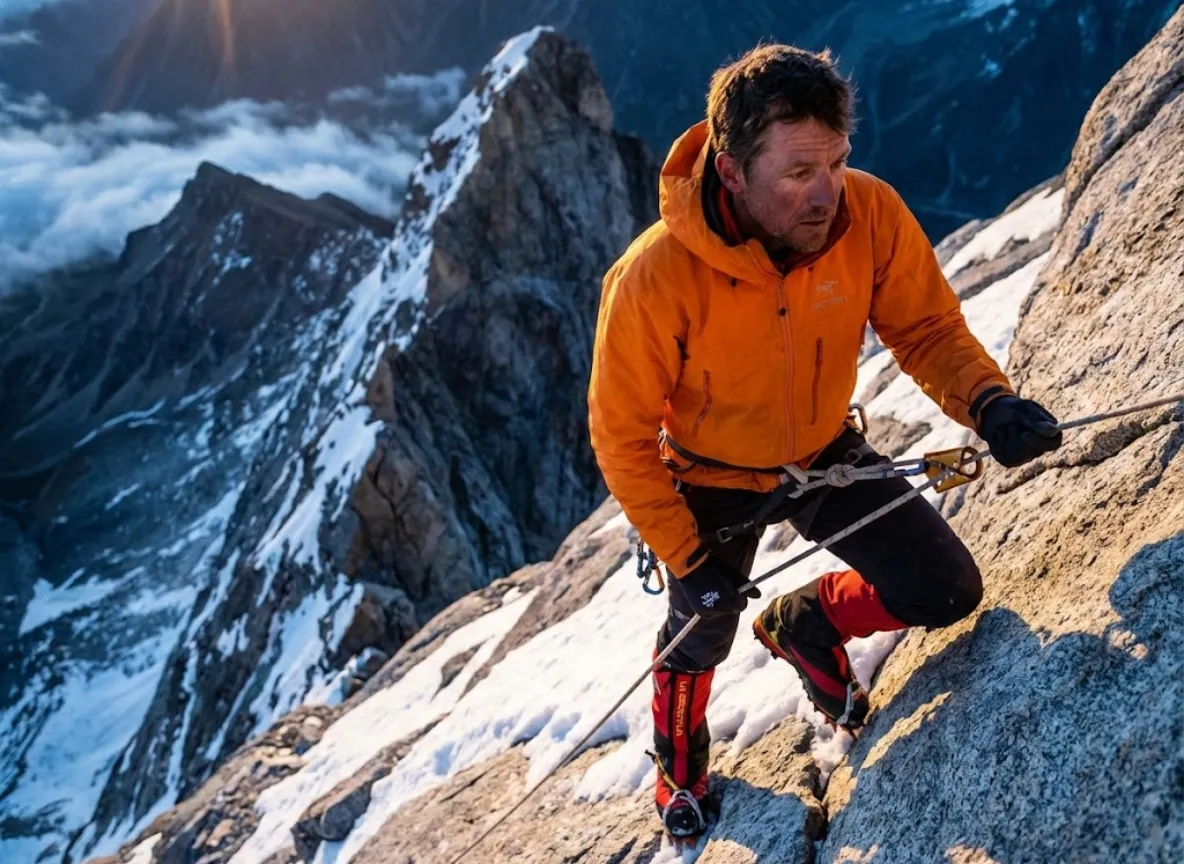
You’re clipped to a fixed rope at 6,000 meters, double boots numbing your feet, mittens making your fingers feel like sausages—and the Jumar in your hand suddenly jams at an anchor. The climber behind you is waiting. The wind is picking up. And the Yellow Tower’s vertical granite stretches above you like a frozen wall of consequence.
This is where the gap between “expedition-ready” and “liability” becomes terrifyingly clear. After guiding and observing dozens of Ama Dablam expedition attempts, I’ve seen fit, motivated climbers crumble—not because they lacked endurance, but because they lacked the specific technical skills that this mountain ruthlessly demands.
This guide strips away the marketing brochures and delivers the unfiltered technical, physical, and mental requirements that mountain guides actually evaluate before letting you rope up for a successful ascent of the Southwest Ridge. By the end, you’ll have a ruthlessly honest self-assessment framework—and know exactly what to train before your $15K+ investment.
⚡ Quick Answer: Ama Dablam (6,812m) requires verified technical climbing skills including lead rock at 5.9 YDS, WI3/4 ice proficiency, and fluent fixed-line operation (jumaring and abseiling). Physical benchmarks include ascending 1,500 vertical feet per hour with a 15lb pack. Prior 6,000m+ altitude experience is mandatory. Budget expedition costs range from $3,600 to $23,000 depending on guide ratio and support level.
The Southwest Ridge: Why This Route Filters Unqualified Climbers
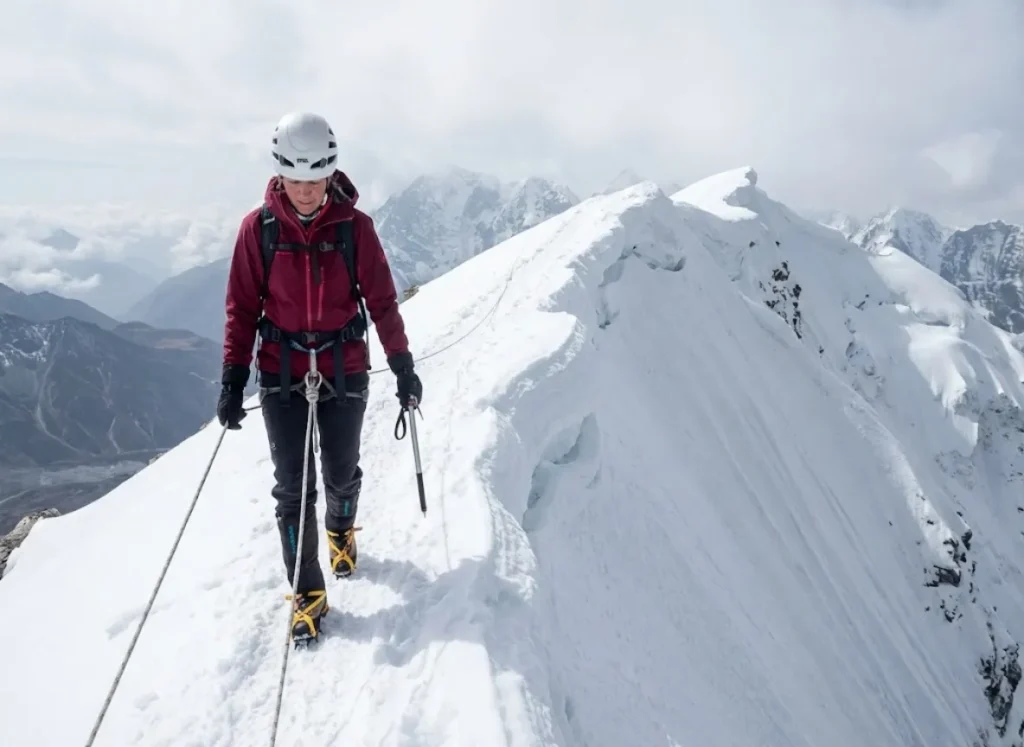
Unlike Kilimanjaro or Island Peak where difficulty increases gradually, Ama Dablam presents what experienced guides call a “step function” in difficulty. The Southwest Ridge isn’t a continuous slog—it’s a series of discrete vertical obstacles separated by exposed camps that filter unprepared climbers with brutal efficiency.
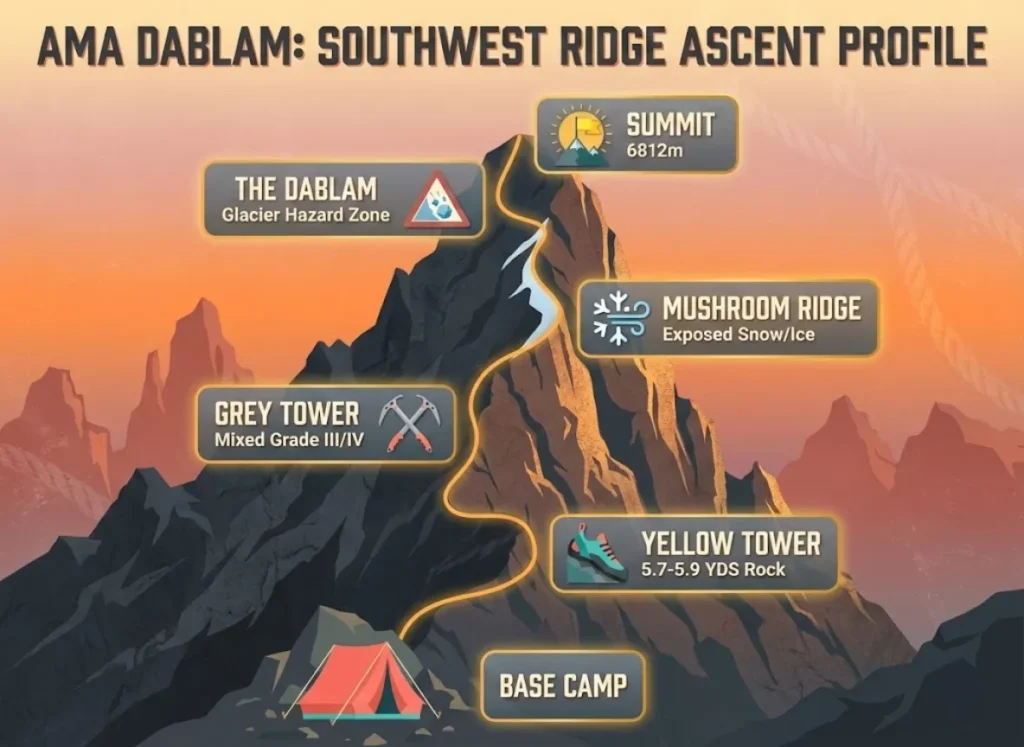
The route passes through three infamous features: the Yellow Tower (5.7-5.9 YDS rock), the Grey Tower (mixed Scottish winter conditions Grade III/IV terrain), and the Mushroom Ridge (an exposed snow-ice arête). Each acts as a gatekeeper. Fail one, and you’re going home.
The “Step Function” Problem: What Trekking Peaks Don’t Prepare You For
Camp 2 at 5,900m is one of the world’s most exposed campsites. Tents perch on built-up rock platforms where a stumble outside the vestibule could be fatal. The 2006 avalanche at Camp 3 claimed the lives of six climbers beneath The Dablam glacier, fundamentally changing expedition strategy—many operators now push directly from Camp 2 to summit to minimize exposure to this objective hazard.
Pro tip: If you’ve only climbed “gradual incline” peaks like Aconcagua or Kilimanjaro, don’t underestimate how psychologically draining these discrete vertical steps become when compounded by hypoxia and exposure. Tim Mosedale notes this is where most fit-but-unprepared climbers crack.
The Yellow Tower: Your First Technical Exam
The Yellow Tower sits just below Camp 2 at roughly 6,000m. On paper, rock climbing 5.7-5.10 sounds easy—most gym climbers crush harder grades before breakfast. But the “real feel” is something else entirely.
You’ll encounter this pitch wearing double boots that feel like ski boots, crampons depending on snow conditions, and a loaded expedition pack. You’ll be hypoxic. The primary ascent method—jumaring fixed lines—requires efficient legwork to step up the rope, not hauling your body weight with your arms like many beginners attempt. That arm-hauling technique works for short sections but is metabolically unsustainable over a 12-hour summit day.
Guides report that climbers who “gym crush 5.10” but have never climbed in double boots outdoors often stall here, becoming bottlenecks for the entire rope team. Your ice climbing training fundamentals should include movement drills in expedition footwear.
The Grey Tower and Mushroom Ridge: Mixed Terrain Reality Check
The Grey Tower between Camp 2 and Camp 3 earns its nickname “the Bowling Alley” for the loose rock that tumbles down it. The climbing here involves dry-tooling—placing crampon points on rock—and navigating mixed snow/ice runnels. Conditions approach Scottish winter climbing standards, comparable to WI-3 ice climbing or harder.
The Mushroom Ridge leading to Camp 3 offers absolute exposure. A sharp, corniced snow-ice arête where a slip without a safety tether is fatal. These features demand precise crampon placement and confident movement on exposed alpine terrain—skills rarely developed on trekking peaks or the average trek.
Technical Competency Audit: The Skills That Actually Get Tested
Forget the glossy brochure photos of smiling clients on the summit. Behind every successful expedition is a ruthless skillset assessment that happens at Ama Dablam Base Camp—and continues throughout the climb.
The Fixed Rope Fallacy: Active Versus Passive Climbing
Here’s the most dangerous misconception: many aspirants believe fixed ropes negate the need for climbing skill. Research and guide interviews indicate this “passive hauling” approach is a primary failure mode on Ama Dablam.
Guides require clients to be active climbers. This means using the fixed line for protection while climbing the rock with hands and feet—not hauling yourself up like a sack of potatoes. The difference matters because passive technique is metabolically unsustainable over a 12-hour summit day at 6,500m.
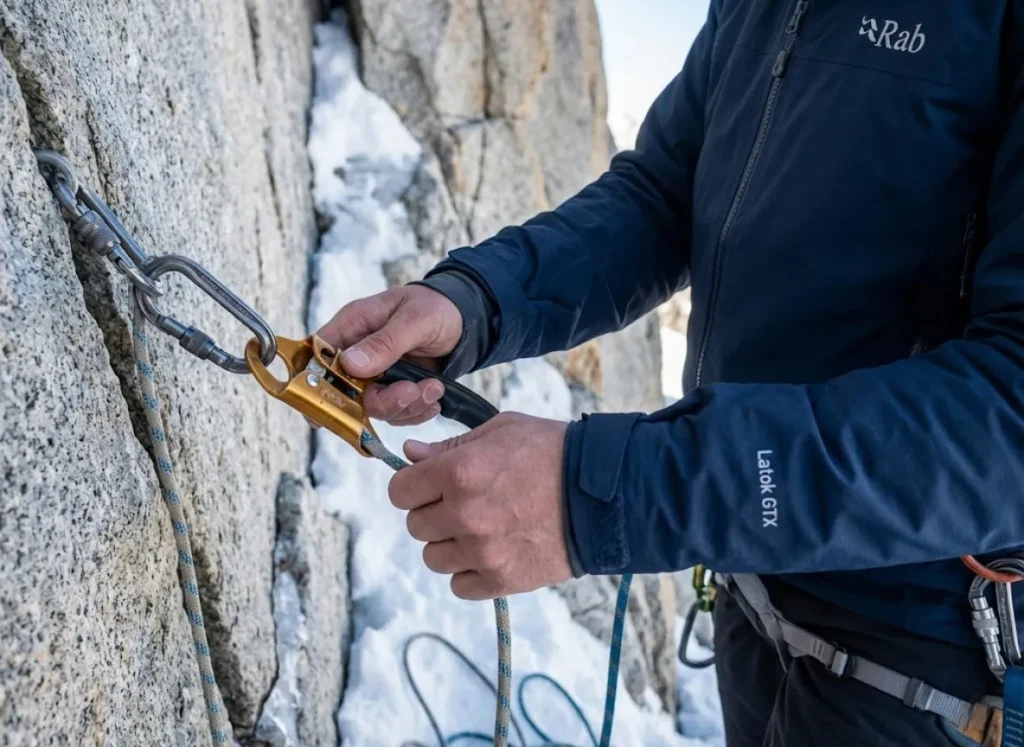
Fluent mechanical ascender operation includes one-handed clipping in thick mittens, clearing ice from the device when frozen, and efficiently transferring weight between safety tethers at anchors. For a deeper dive, reference our guide to mastering rope ascension techniques.
Anchor Transitions: Where Seconds Matter
Summit day involves passing 40+ intermediate anchors. Fumbling for 2 minutes instead of 30 seconds at each anchor—repeated over the full route—adds an hour or more of stagnation. That’s an hour of frostbite risk, an hour of holding up teammates, an hour closer to darkness.
Clients who cannot demonstrate fluid anchor transitions may be asked to practice at Yak Camp before continuing. Some never progress beyond that point. This is where certain skills become non-negotiable.
The Descent Skill Gap: Where Most Accidents Happen
Most expedition accidents occur on the descent. Technical requirements for descending Ama Dablam are arguably higher than for ascending.
You’ll need to execute dozens of rappels from Camp 3 back to Dablam Base Camp—setting up an ATC descender or Figure-8 knot device on tensioned or frozen ropes, using a prusik backup independently, and transitioning safely at crowded anchors while exhausted and hypoxic. Abseiling techniques on lower-angle terrain require balance and confidence; hesitation slows the entire team.
Pro tip: Ask yourself honestly—can you rappel safely in the dark, wearing mittens, while exhausted? If the answer is anything but “absolutely,” you’re not ready. See our guide on essential belay and rappel safety.
The Grading Prerequisites: What “Comfortable” Actually Means
Expedition brochures love vague language: “prior experience required.” Here’s what American Mountain Guides Association standards and experienced operators actually expect.
Rock Climbing: Lead 5.9 Outdoors, Not Gym 5.10
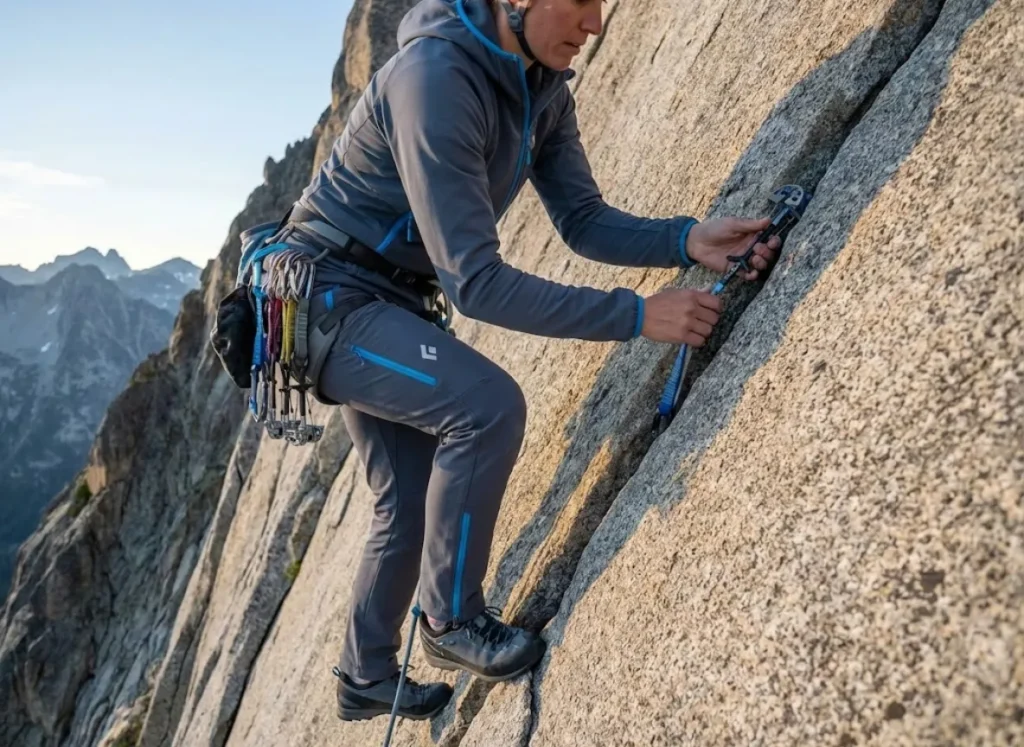
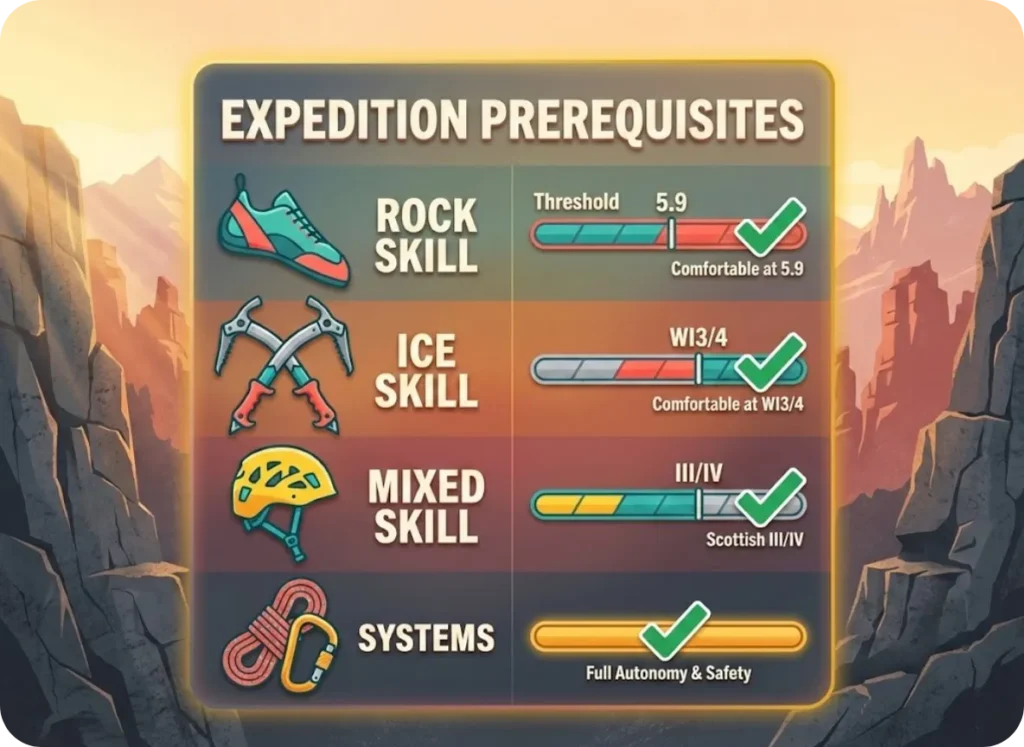
Minimum verified level: comfortable leading 5.9 (5c YDS) outdoors on natural rock. Not following—leading. Not in a gym—outside.
“Gym grades” don’t translate. Outdoor 5.9 in cold conditions, wearing approach shoes or boots, with a loaded pack, is substantively harder than gym 5.10. Multi-pitch climbing experience is essential for understanding rope management and efficient anchor transitions.
Ice and Mixed: WI3/4 and Scottish Winter Equivalence
Ice requirement: comfortable on WI-3 or WI-4 ice climbing vertical ice, including lead placements when applicable. Mixed requirement: experience with Scottish winter conditions Grade III/IV or Alpine AD+ terrain.
Glenmore Lodge’s Winter Mountaineering Skills courses are cited by guides as the closest UK training analog to Ama Dablam’s mixed terrain on the Grey Tower.
Systems Autonomy: Knots, Harness, Self-Rescue
Full autonomy in essential techniques: Figure-8 knot tie-in, Clove Hitch, Prusik knots, harness management, and backup systems. Guides do not babysit knots at 6,000m. Every climber must be able to self-check and execute a self-rescue.
Minimum standard: can you execute a prusik ascent and belay escape in mittens, in the dark, without prompting? Master these self-rescue rope skills before departure.
Physical Conditioning: The Benchmarks That Predict Success
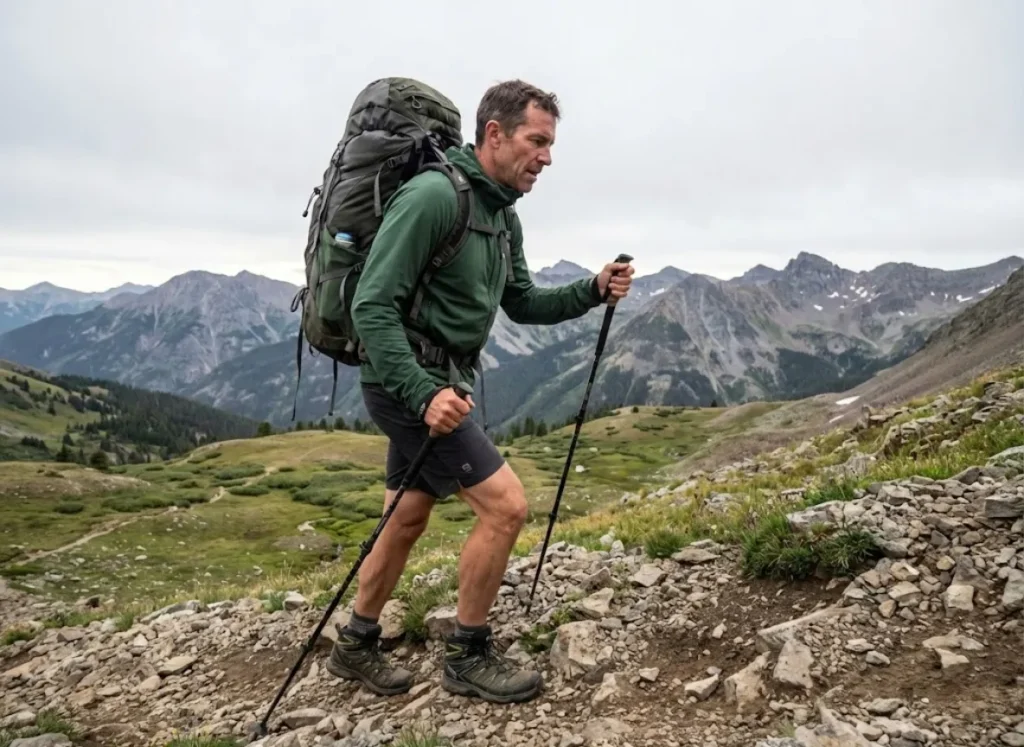
Physical fitness for high-altitude mountaineering isn’t about looking fit—it’s about specific power-to-weight ratios and sustainable output at altitude.
The 1,500 Feet Per Hour Rule
Quantitative benchmark from proven endurance training programs: aspirants should ascend 1,500 vertical feet (450m) per hour with a 15-20lb pack at sea level—sustainably for multiple hours. This represents the physical fitness benchmarks that predict success.
This “reserve capacity” is critical because performance drops roughly 3% for every 1,000ft of elevation gain. A climber maxed out at sea level will be immobile at Camp 2. The “Vertical Mile” test—5,280ft (1,600m) in a single push with pack—simulates the Camp 2-Summit-Camp 2 day and reveals true endurance durability.
Training Periodization: The 12-Month Blueprint
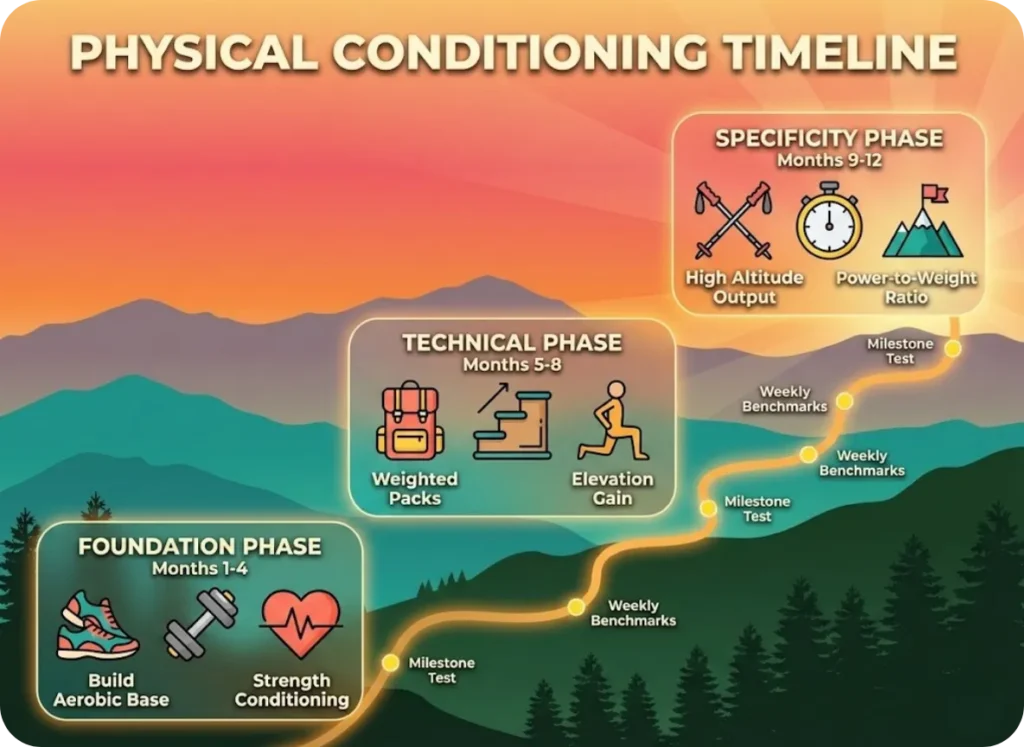
Foundation Phase (Months 12-6): Aerobic base (Zone 2). Hiking with 15kg pack carrying; 1,000m elevation gain per week minimum. This builds the marathon-distance endurance required.
Technical Phase (Months 6-3): Rope systems and rock. Lead 5.9 outdoors; learn multi-pitch transitions and scrambling skills.
Specificity Phase (Months 3-1): Mixed climbing and cold exposure. Scottish winter course or Cascade alpine ice. Break in double-boot system on actual terrain.
The skill acquisition timelines matter. For a complete approach, reference our structured mountaineering training guide.
Acclimatization: Traditional Versus Rapid Ascent
The strategy for handling altitude has bifurcated. The traditional 30-day model rotation takes 25-30 days: climb to Camp 1, sleep, return to Base Camp. Repeat for Camp 2. Thorough adaptation but high physical toll and repeated hazard exposure. The CDC’s high altitude illness guidelines recommend limiting sleeping altitude gains to 500m per day above 3,000m—a protocol that informs traditional rotation strategies.
Alpenglow Expeditions pioneered the 14-day rapid ascent model: pre-acclimatize at home using hypoxic pre-acclimatization tents, proceed directly to climb. Costs around $23,000 but minimizes time and hazard exposure. This represents the cutting edge of rapid-acclimatization strategy—requires strict discipline and offers little margin for error.
The Gear That Guards Your Life: Critical Equipment Decisions
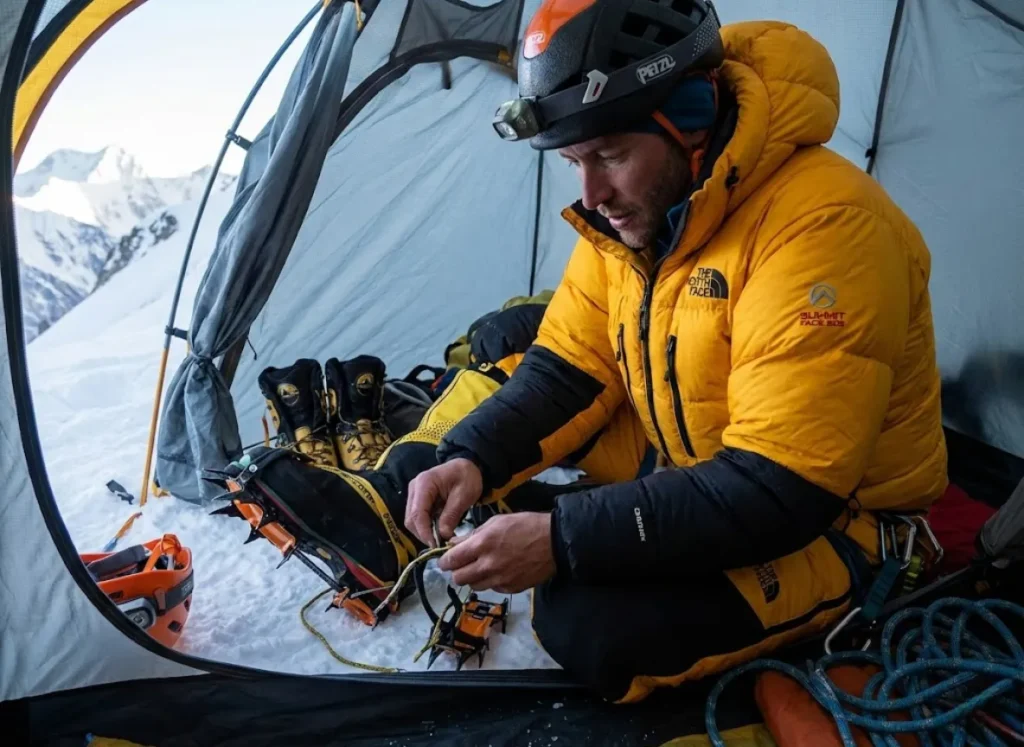
Some gear choices have critical consequences. Budget decisions in these categories become safety risks. This is where expedition prerequisites become non-negotiable.
The Boot Debate: Dexterity Versus Warmth
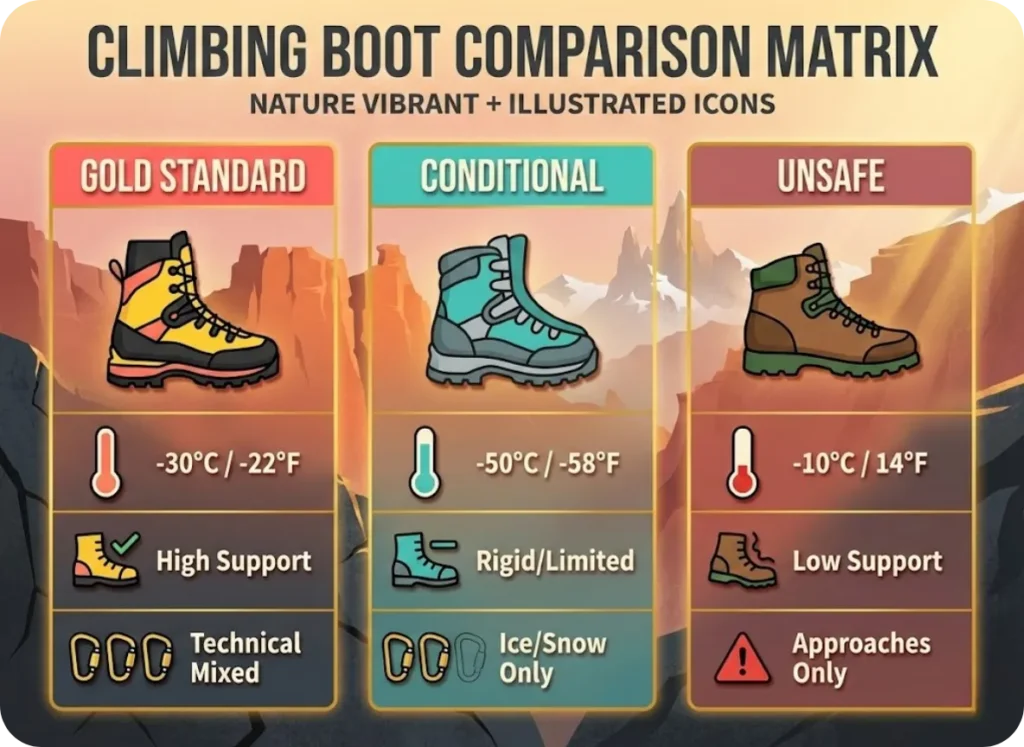
Your boots must be agile enough to climb 5.9 rock but warm enough for 6,800m static belays at -30°C. This is the central tension in equipment selection.
Gold Standard: La Sportiva G2 SM / Evo or Scarpa Phantom 6000. These feature removable inner liners (essential for drying at camps), integrated gaiters, -30°C rating, and ankle articulation for rock climbing. The G2 SM’s Boa closure system adjusts with mittens—crucial when feet swell.
Conditional: 8000m triple boots are generally too clumsy for technical rock but valid for climbers with cold injury history.
Unsafe: Single leather boots (Nepal Cube). No removable liner, insufficient insulation. Using these significantly increases frostbite risk. For broader context, see essential mountaineering gear selection.
Glove Systems: The Single Point of Failure
Tiered system required. Liner glove worn 100% of the time for dexterity. Work glove (insulated leather)—critically, synthetic gloves melt from friction when abseiling fixed lines; leather palms are mandatory. Summit mitt (heavy down) for final push and static belays on exposed slopes.
Losing a glove at 6,500m is a medical emergency. Carry backup systems.
Hardware Essentials: Jumar, Cows-Tail, Rappel Device
Mechanical ascenders (Jumar/Ascension) are your primary movement device. Must be operable one-handed in mittens. Personal anchor system (cows-tail) is critical for anchor transitions. Rappel device (ATC descender or Figure-8) capable of operating on frozen ropes. Prusik backup cord mandatory. All critical equipment should carry the UIAA Safety Label confirming it meets international mountaineering standards.
Budget skimping on hardware is false economy. These are life-support systems connecting you to the fixed-line ascension system.
Failure Mode Analysis: Why Climbers Turn Around
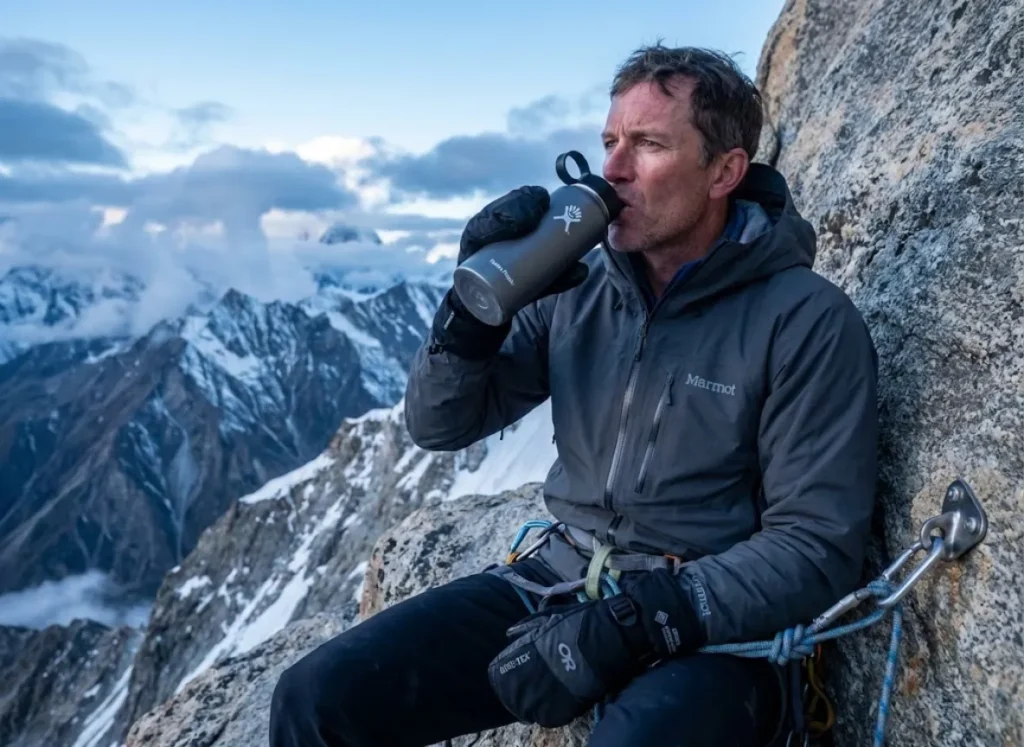
Physical exhaustion is rarely the sole cause of failure. Guide interviews reveal more nuanced patterns that inform expedition provider vetting. The American Alpine Club’s Accidents in North American Climbing reports document recurring failure modes—many directly applicable to Himalayan objectives.
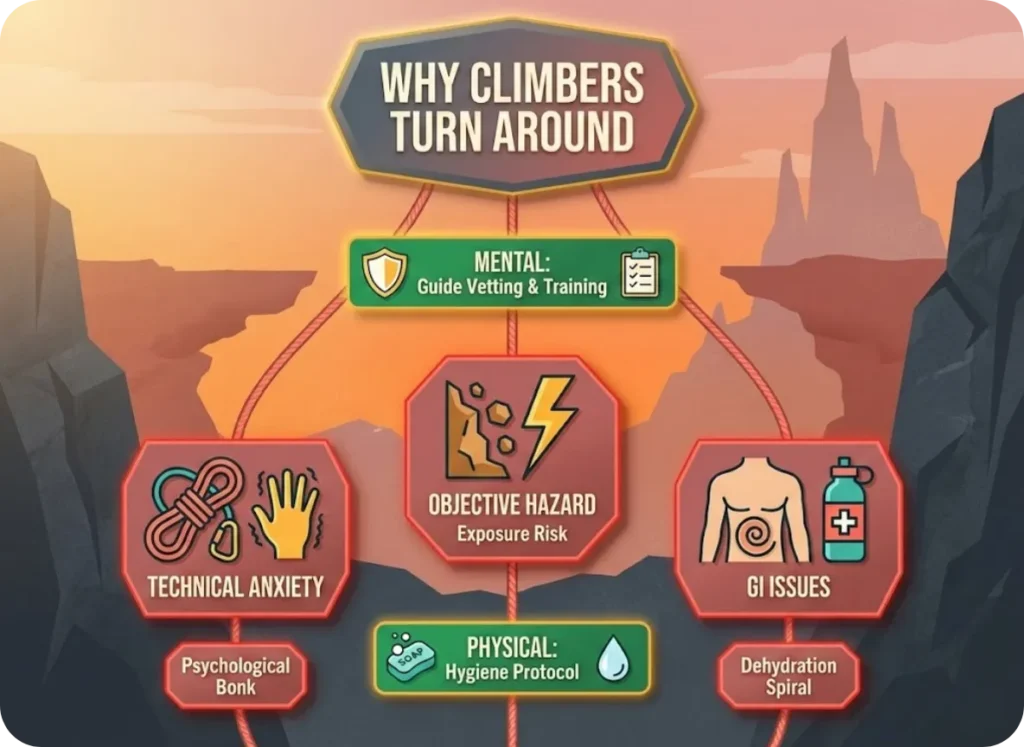
Technical Anxiety: The Psychological Bonk
Fit-but-unskilled climbers often “freeze” on the Yellow Tower or Grey Tower. The mental resilience required to figure out gear while hanging over exposure drains physical energy. Guides call this a “psychological bonk”—and it ends expeditions.
Prevention: flood training. Practice technical skills until they’re automatic, not cognitive. Don’t learn on the mountain. This is the essence of the aforementioned skills becoming second nature.
Health and Hygiene: The Invisible Hazard
Gastrointestinal issues are a leading cause of attrition. Budget expedition companies with poor kitchen hygiene at Ama Dablam Base Camp can end your climb before it begins. Inability to maintain hydration and caloric intake at Camp 2 leads to rapid deterioration.
Vet operator hygiene standards. Carry personal water purification. Prioritize eating even when appetite is suppressed. This kind of effort makes the difference.
Objective Hazards: The Dablam Glacier
The Dablam—the hanging glacier that gives the Ama Dablam mountain its name—is the primary objective hazard. Modern strategy involves placing Camp 3 as far right as possible, or bypassing it entirely in a “Camp 2 to Summit” push.
Speed matters: slow climbers are exposed to falling ice for longer durations. Rockfall in the Grey Tower makes helmets mandatory from Camp 1 upwards. For broader safety context, see understanding climbing danger prevention.
Expedition Economics: Cost Tiers and What You’re Actually Buying
The gap between $4,000 and $20,000 reflects guide ratios, hygiene standards, and infrastructure that directly impact survival margin. Understanding expedition cost breakdown is part of responsible planning.
Budget Tier ($3,600-$6,000): Hidden Tradeoffs
Includes permit and Base Camp logistics. Often Sherpa support only (no Western guides). Relies on existing fixed lines. Risk factors: lower climber:guide ratio (1:4+), potentially lower quality food, less oversight during technical sections. Suitable only for highly experienced, self-sufficient climbers undertaking independent expeditions.
Standard Guided ($7,500-$10,000): The Industry Sweet Spot
Includes Lead Guides (Western or Lead Sherpa), 1:2 climbing ratio, established high camps. Good balance of safety oversight and cost. Appropriate for prepared summiteers who meet prerequisites but want professional backup. This represents the guided standard.
Premium and Rapid ($15,000-$23,000): Maximum Safety Margin
Alpenglow Expeditions trip packages and similar operators offer IFMGA American Mountain Guides, 1:1 ratio, helicopter flight transport, oxygen availability, luxury Base Camp. Maximizes summit success and safety; minimizes time. The success rate metrics for premium operators significantly exceed budget alternatives.
Pro tip: Ask operators specifically about kitchen hygiene protocols, guide certification credentials, and their policy if weather forces extended delays. These questions reveal more about true service quality than any brochure.
Hidden Costs
Add 30-40% to advertised prices. Helicopter insurance for rescue runs $500-$1,000. Summit bonus to Sherpa is expected ($500-$1,000 USD). Permit fees are trending upward with stricter requirements. For context on expedition economics, see understanding high-altitude expedition costs.
Conclusion
Ama Dablam is not merely a “high” mountain—it’s a “serious” mountain. The technical steps strip away the buffer that commercial support provides on easier peak expeditions. On Everest, a Sherpa can often short-rope a client through difficulties. On the vertical features of Ama Dablam, you must pull your own weight.
Three truths to take forward: First, the skills that matter are specific—jumaring, abseiling, lead climbing in double boots, and systems autonomy. Train these until they’re reflexive. Second, physical endurance is table stakes, but technical competency assessment determines whether you summit or turn around. Third, budget decisions cascade into safety decisions—the right expedition choice buys you guidance and expertise, not just logistics.
Use these benchmarks as your training checklist. If any answer is “not yet,” prioritize that skill ruthlessly before booking your trip. The Southwest Ridge rewards preparation; it punishes optimism.
Now go train something.
FAQ
How hard is it to climb Ama Dablam compared to Everest?
Ama Dablam is technically harder but lower in altitude. The Yellow Tower’s 5.9 rock and Grey Tower’s mixed terrain demand active climbing skills, whereas Everest’s standard routes can often be managed with more Sherpa assistance. On Ama Dablam, you must climb—not just walk while being supported.
Can a beginner climb Ama Dablam?
No. Guides require verified previous expedition experience including a 6,000m+ summit and outdoor lead climbing at 5.9 or WI-3. Trekking peak experience alone is insufficient. Expect 2-3 years of dedicated alpine mountaineering development before attempting.
What is the success rate for Ama Dablam guided expeditions?
Premium operators report 60-80% summit success rates in good weather windows. Budget operators have significantly lower rates due to less personalized guidance and higher client-to-guide ratios. Weather and individual preparation heavily influence outcomes.
How much does an Ama Dablam expedition cost in total?
Budget options start at $3,600-$6,000, standard guided runs $7,500-$10,000, and premium or rapid options reach $15,000-$23,000. Add 30-40% for hidden costs including helicopter insurance, summit bonus, gear, and tips. Realistic all-in budget: $8,000-$30,000.
What boots do I need for Ama Dablam?
High-altitude double boots like the La Sportiva G2 SM or Scarpa Phantom 6000 are required—capable of climbing 5.9 rock while providing -30°C warmth. Single boots are dangerously inadequate; 8000m triple boots are too clumsy for the technical terrain.
Safety Notice: Rock climbing and mountaineering are inherently high-risk
activities that can involve physical trauma or fatal incidents. The information on Rock Climbing Realms is for
educational and informational purposes only. Techniques and advice presented here are not a substitute
for professional, hands-on instruction. Conditions and risks vary by location. Always seek guidance
from a qualified instructor before attempting new techniques. By using this website, you agree that you
are solely responsible for your own safety. Any reliance you place on this information is strictly
at your own risk, and you assume all liability for your actions. Rock Climbing Realms and its authors
will not be held liable for any harm, damage, or loss sustained in connection with the use of this information.
Affiliate Disclosure: We are a participant in the Amazon Services LLC Associates Program, an
affiliate advertising program designed to provide a means for us to earn advertising fees by advertising and linking
to Amazon.com. As an Amazon Associate, we earn from qualifying purchases. We are also an official affiliate partner
of Black Diamond Equipment via the AvantLink network. If you click on a Black Diamond affiliate link and make a
purchase, we may earn a commission at no additional cost to you. We also participate in other affiliate programs.
Additional terms are found in the terms of service.