
In this article
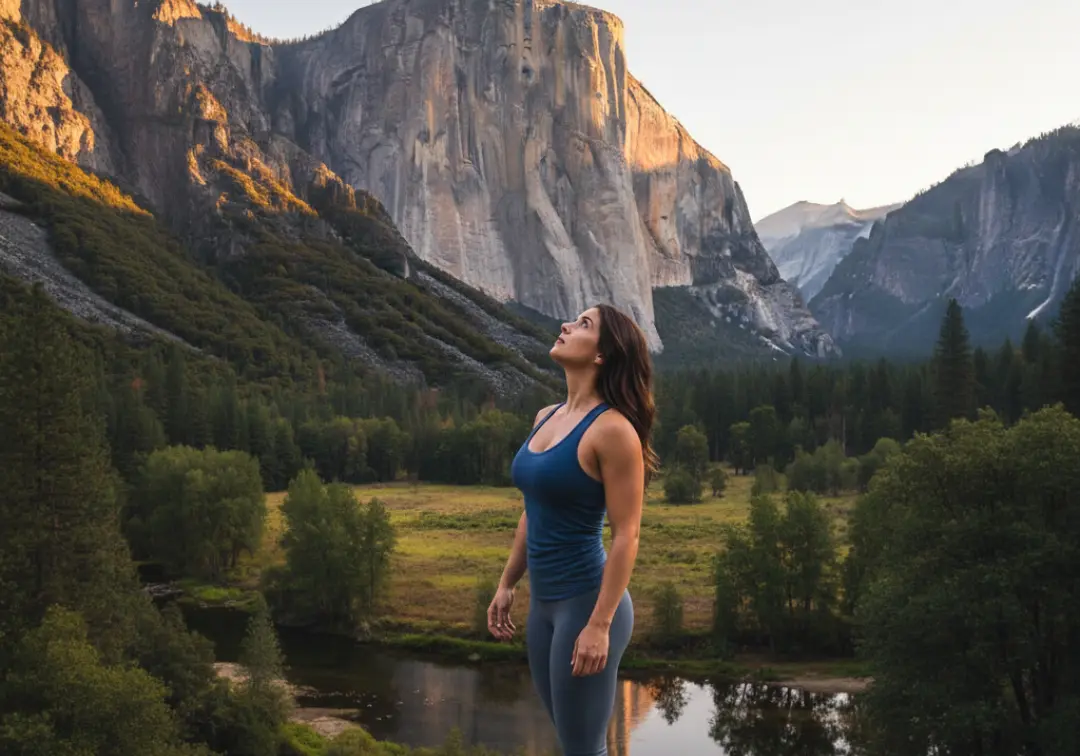
Standing in the quiet of El Capitan Meadow in Yosemite Valley, your neck craned, the sense of scale and awe is overwhelming. Two lines, above all others, command your attention: the audacious, sun-struck prow of The Nose and the intricate, shadowed journey of The Salathé Wall. These are not merely routes; they are a 3,000-foot conversation about ambition, style, and the evolution of big wall climbing itself. This analysis moves beyond myth, using data and history to decode their true characters, helping you understand not just what these big walls are, but who they are for.
This is a story of rivalries written in granite. It’s a tale of two foundational philosophies—the brute-force “siege” versus the elegant “alpine” ascent—that created the central debate of style versus summit in American climbing. Through a data-backed lens, we’ll explore a fascinating inversion of difficulty: why the Salathe is the greater challenge for aid climbers, while The Nose presents the harder technical puzzle for elite free climbers. We’ll see how these distinct characters forged them into two different modern arenas, making The Nose the world’s premier speed climbing objective and the Salathe the ultimate testpiece for purist free ascents. This is your ascent blueprint, a practical breakdown of the strategies, logistics, and gear needed to help you choose the line that matches your ambition, skill, and soul.
The First Ascents: What Ideological Battle Was Fought on El Capitan’s Granite?
The character of these two routes was defined before the first bolts were ever drilled. They were born from a philosophical clash between two of climbing’s most influential figures, representing two completely different answers to the question of how a great wall should be climbed. Their very inception in Yosemite Valley set them on divergent paths that they follow to this day.
The Siege of The Nose (1958): How Did Warren Harding Conquer the “Unclimbable”?
In the 1950s, after the successful first ascent of the Northwest Face of Half Dome, El Capitan became the “ultimate prize” for the burgeoning climbing community in Yosemite. Warren Harding, a charismatic and determined climber, felt the pull. Driven in part by a friendly rivalry with the methodical Royal Robbins, Harding chose the most direct and intimidating line imaginable: the soaring prow that splits the face. To tackle it, he and his team pioneered a “siege” style born of sheer necessity. It was an 18-month campaign—with a first ascent year of 1958—of fixing thousands of feet of rope, establishing camps on the wall, and employing expeditionary tactics of slowly pushing a high point before retreating to the valley floor to rest and resupply, then ascending the fixed lines they had jumared countless times.
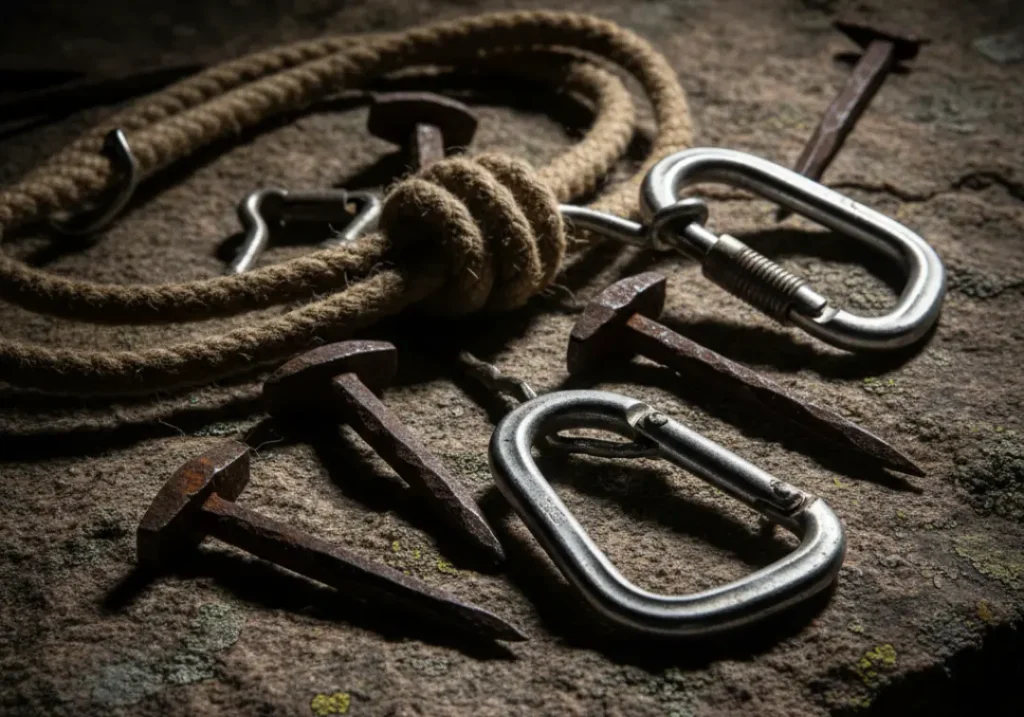
The scale of the effort was immense, totaling 47 days on the wall and relying heavily on aid climbing. The team faced the unknown with ingenuity and grit, famously crafting pitons from the legs of an old wood-burning stove to protect the “Stoveleg Cracks.” Their effort was not without controversy; the 125 expansion bolts they drilled would become a focal point for stylistic debate for decades to come. But after a final, incredible 15-hour overnight push to the summit, Harding cemented the ascent as a monumental victory of perseverance and will over the impossible.
The Salathe’s “Alpine” Response (1961): Why Was Royal Robbins’s Ascent a Philosophical Statement?
Harding’s victory proved El Cap could be climbed, but for Royal Robbins, the crucial question was how it should be climbed. Along with the legendary Chuck Pratt and Tom Frost, Robbins viewed the siege of The Nose with a critical eye, believing its protracted nature diminished the adventure and commitment inherent in climbing. They made a crucial first decision: to reject the direct prow and instead seek a more subtle, natural line of weakness on the Southwest Face. Their stated goal was to “avoid such methods” as the prolonged siege, aiming instead to preserve a “moderate amount of uncertainty.” They championed the core tenets of trad climbing, emphasizing partnership with the rock over conquest.
After an initial three-and-a-half-day push to fix ropes to the 900-foot Lung Ledge, the team returned, ascended their ropes, and then made a profound act of commitment: they pulled their ropes up, severing their connection to the ground. What followed was a six-day, self-contained “alpine style” push that became a revolutionary landmark. Using only 13 bolts compared to Harding’s 125, they relied on natural protection and teamwork. Their success proved that great walls could be climbed with elegance, speed, and partnership, not just conquered through attrition. This ideological split was now physically manifested in the very rock they chose; their philosophies had dictated their paths, leading to two routes with vastly different characters.
A Tale of Two Topographies: How Do the Routes’ Characters Differ?
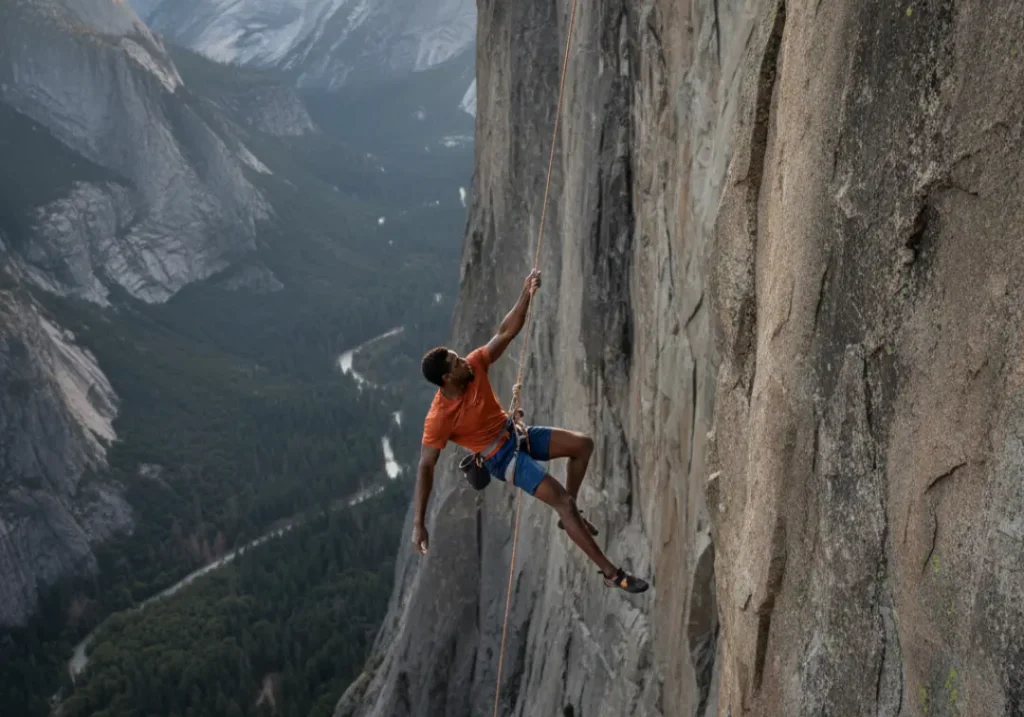
To truly understand these climbs is to trace their lines across the granite canvas, appreciating the distinct sense of movement, exposure, and challenge each one offers. They are not just lines on a map; they are journeys with unique personalities defined by their iconic features and crux pitches.
The Prow: What Makes The Nose a Direct, Iconic Journey?
The Nose is defined by its unrelenting directness and immense exposure. It charges straight up the most prominent feature on the face of El Capitan in a “connect-the-dots” journey of legendary features. The route begins with several aid pitches leading to Sickle Ledge before launching into the four pitches of enjoyable 5.10c hand and fist cracks known as the Stoveleg Cracks. The first major milestone and popular bivy ledge is the spacious Dolt Tower, marking the end of the first third of the climb.
The middle section presents some of the wall’s most intimidating features. Climbers must navigate the claustrophobic chimney past the Texas Flake to reach the spectacular Boot Flake and the nearby Pancake Flake. From there comes the famous King Swing, a committing pendulum 2,000 feet off the ground that serves as a major psychological crux, testing the heads of many climbers. The upper headwall holds the two pitches that guarded the free ascent for decades: the magnificent Great Roof, a stunning 5.13c overhanging arch, and the ultimate technical free crux, the Changing Corners. This 5.14a sequence is a short, bizarre, and powerful test on nearly featureless rock that remains one of the most difficult pitches of climbing in the world. Much of its line shares terrain with the famous Freerider route, another of the wall’s great free lines.
The Wanderer: Why Is the Salathe a More Intricate, Cerebral Odyssey?
In stark contrast to the direct assault of The Nose, the Salathe offers a journey of discovery. It wanders across the Southwest Face, linking disparate features in a line of improbable logic that demands a different kind of vision and skill set. The atmosphere is more serious and shaded, and the climbing styles are incredibly varied, from delicate slabs to brutal off-width cracks.
The journey begins with the ten “Freeblast pitches,” a classic 5.11c slab and crack section that is a worthy objective in its own right, ascending the first 1,000 feet to Mammoth Terraces. The mid-wall cruxes above Heart Ledges are infamous: the unprotected wide crack of The Hollow Flake and the bizarre, squirming passage of The Ear. The reward for passing these challenges is a bivy on El Cap Spire, one of the most spectacular bivouac sites in the world. From there, the route’s crowning glory and true test awaits: the magnificent, overhanging Headwall. Free climbers face either the original Teflon Corner (5.12d) or the more common Monster Offwidth (5.11a) variation before launching into the sustained 5.13b climbing that breaches the Salathe Roof. This final push leads to the airy Long Ledge just below the summit, making for a glorious and difficult finale. The complex, multi-day nature of the Salathe demands mastery of multi-pitch systems.
The Free Climbing Revolutions: How Did These Routes Redefine “Impossible”?
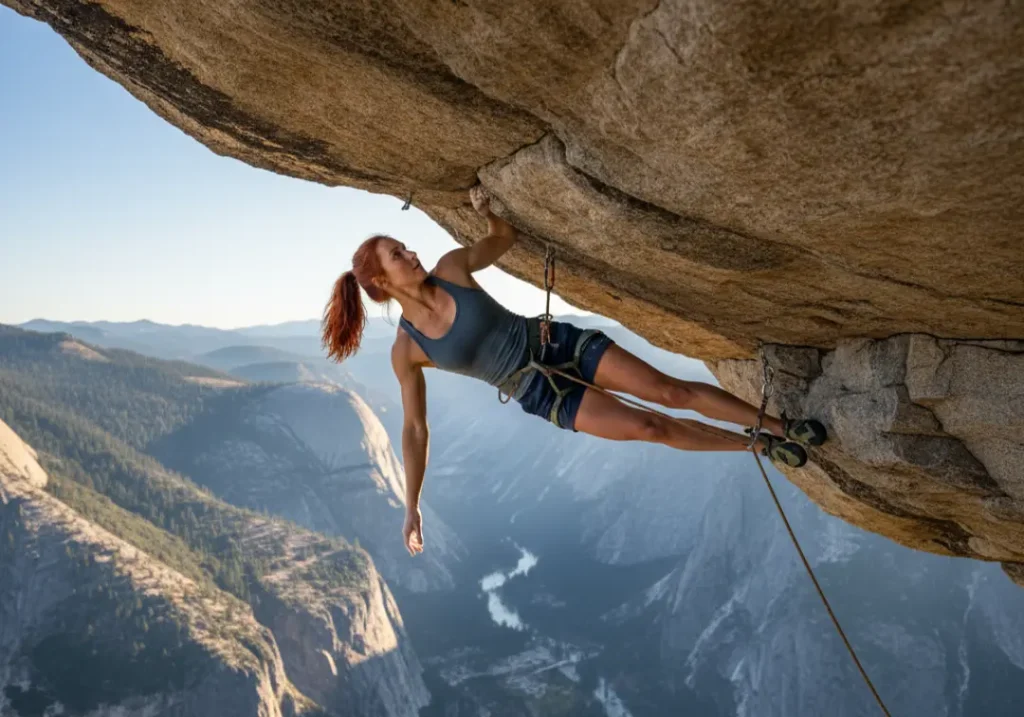
The physical differences in these routes directly foreshadowed their roles in the next great chapter of El Cap history: the free climbing revolution. The philosophical battle of the first ascent era gave way to a physical battle against gravity, with each route presenting a unique vision of what was possible.
1988 – The Salathe Wall: How Did Skinner and Piana Usher in a New Era?
With its continuous crack systems, the Salathe became the primary focus for free climbing ambition on El Capitan in the 1980s. In 1988, Todd Skinner and Paul Piana achieved what many thought impossible. After more than 30 days of effort working out the complex sequences, they completed the first free ascent in a continuous nine-day push. It was a monumental effort of endurance and skill, a massive psychological breakthrough for the sport. Their ascent was a monumental task of redpointing on the world’s biggest stage, proving that the highest standards of difficulty could be applied in the big wall environment.
The style of their ascent—swinging leads, meaning neither individual led every pitch free—drew later critique from purists like Alexander Huber, who argued a true free ascent required one person to lead every pitch. In 1995, Alex Huber made the first individual free ascent, solidifying the 5.13b standard. To avoid a wet crux pitch, Huber established the “Monster Offwidth” variation, which has since become a famous and classic pitch on the popular free route Freerider.
1993 – The Nose: Why Was Lynn Hill’s Ascent a Transcendent Cultural Moment?
While the Salathe’s free ascent opened a new chapter for elite performance, the effort to free The Nose five years later would transcend the sport entirely. By 1993, The Nose was the “last great problem,” its two major obstacles—the Great Roof and Changing Corners—having repelled all previous free attempts. In September of that year, Lynn Hill accomplished a groundbreaking four-day ascent, becoming the first person to achieve the first free ascent of the entire route. She solved the two great puzzles with a masterclass in technique, flexibility, and ingenuity over brute strength, unlocking the subtle sequence on the Great Roof and deciphering the cryptic moves of the Changing Corners.
The cultural impact of the ascent in a sport heavily dominated by men was immediate and profound. Her famous, understated declaration from the summit, “It goes, boys!”, became an iconic phrase that captured both the magnitude of the feat and its challenge to the gender hierarchy. Underscoring the visionary nature of her climb, it would take more than a decade for anyone to repeat it. She cemented her legacy by returning in 1994 to free climb the route again, this time in a single, continuous 23-hour push, an achievement that remains legendary. When Lynn Hill achieved the first free ascent, she didn’t just climb a route; she redefined what was possible for everyone, inspiring modern climbers like Jordan Cannon and even Adam Ondra, whose famous attempt to onsight the Salathe years later showed just how hard these historical ascents were.
A Data-Backed Difficulty Analysis: Which Route Is Actually Harder for YOU?
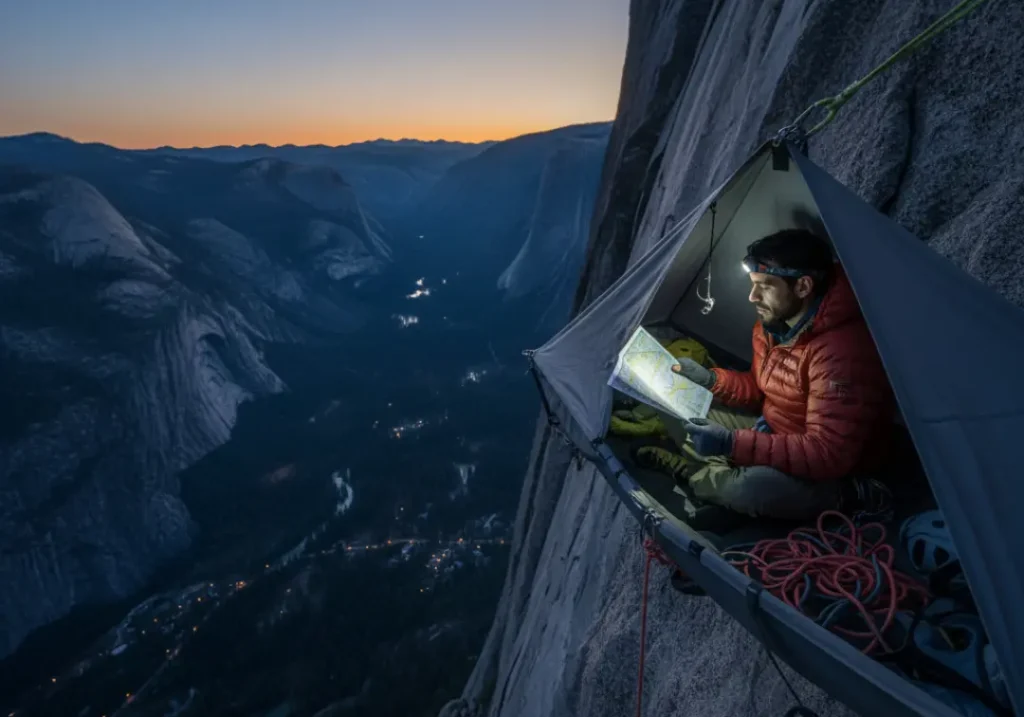
These revolutionary ascents set the stage for the modern era, where the difficulty of each route is now understood in two very different, data-backed paradigms. For the aspiring big wall aid climber and the elite free climber, the answer to “which is harder?” is completely different.
The Aid Climber’s Conundrum (5.9 C2): Why Is the Salathe a More Demanding Undertaking?
While both routes share a 5.9 C2 aid grade, the Salathe is widely considered the more challenging and committing route for the average big wall party. The first reason is its abundance of sustained and mandatory wide crack climbing, specifically the physically taxing and technical off-width of the Hollow Flake. Secondly, the route-finding is significantly more complex, requiring navigation of non-obvious traverses and pendulums that demand greater judgment. Finally, the anchor quality can be more variable, often consisting of older fixed gear and natural placements, which requires more skill to manage safely. A successful ascent requires a deep understanding of aid climbing and serious aid practice before leaving the ground.
By contrast, The Nose is more straightforward to follow and is often described as the easiest full-length route on El Capitan. A significant portion of it can be climbed “French-free” (A0), where one pulls on gear without aiders, making it much faster for competent teams. The primary challenge on The Nose is often logistical, not technical: managing the immense crowdedness and potential for traffic jams. For an aid party, The Nose is a psychological and logistical test, while the Salathe is a technical and physical one.
The Free Climber’s Crucible (5.14a vs. 5.13b): How Are Their Difficulty Profiles Inverted?
For the elite free climber, this difficulty profile is completely inverted. The Nose is technically harder on paper (5.14a), but its pitch difficulty is highly concentrated in two distinct, world-class pitches. The first barrier is the Great Roof (5.13c), a long, spectacular test of endurance using a specialized undercling technique. The ultimate crux is the Changing Corners (5.14a), a vertical crux boulder problem requiring a short, intense, and incredibly technical sequence. A climber who can solve these two specific hard pitches will find the vast majority of the route’s other 29 pitches to be of a significantly more moderate difficulty.
The Salathe Wall (5.13b) presents a different kind of test, where the difficulty is far more sustained over the entire length of the route. The challenge is not solving one or two specific problems, but maintaining a high level of performance after thousands of feet of strenuous climbing. The true test is the glorious, overhanging Headwall, which involves multiple, consecutive pitches of 5.13 climbing when fatigue is at its peak. This makes The Nose a high-stakes puzzle of specialized technique, while the Salathe is the ultimate marathon of all-around crack climbing ability and power-endurance. Success on either at this level requires a specialized rock climbing training program.
Strategy & Logistics: How Do You Plan for an Ascent?
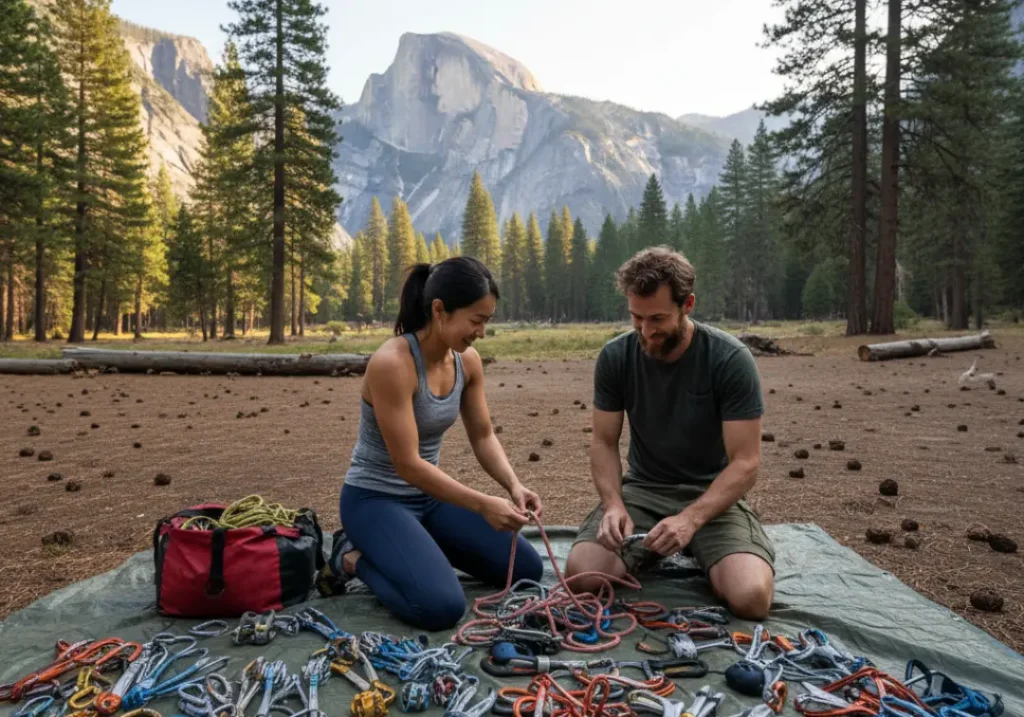
This fundamental difference in character extends directly into how you must prepare, both in terms of your overall strategy and the specific gear you carry. Planning for an ascent of these titans requires careful consideration of time, energy, and resources, especially during the peak spring and fall climbing season.
What Does a Typical Multi-Day Ascent Strategy Look Like for Each Route?
A typical ascent of The Nose generally takes three to four days for an average party. A common day-by-day strategy is: Day 1 to Sickle Ledge or Dolt Tower, Day 2 push to Camp IV (El Cap Tower), and Day 3 aim for Camp V or VI before a final push to the top. The direct line and good ledges make for relatively straightforward planning, with the main variable being managing other parties. Many teams will fix the first few pitches on a preceding day to speed up the initial push off the ground.
A typical ascent of the Salathe is a longer, four- to five-day affair demanding more self-sufficiency and long days. The popular “fix and blast” strategy involves climbing the first ten pitches (the Freeblast) to Heart Ledges, fixing ropes to the ground, and returning the next day to haul gear and commit to the upper wall. The common bivouac sites on the upper wall are legendary: the Hollow Flake Ledge, the magnificent El Cap Spire, and the airy Long Ledge high on the Headwall. The Salathe’s strategy requires more upfront work but allows for a more committed and less crowded experience on the upper two-thirds of the wall. To attempt either of these first walls, your training needs must be dialed, and it’s wise to warm up on shorter Yosemite trad classics first.
Pro-Tip: For a “fix and blast” strategy on the Salathe, use a static rope for your fixed line and lead on a dynamic rope. When you return, you can haul your bags on the static line while one person ascends it and the other leads the first pitch of the day on the dynamic rope, greatly improving efficiency.
Regardless of your strategy, all ascents must adhere to Yosemite’s official big wall climbing regulations. This includes understanding the logistics of life in the Valley, from accommodation at Camp4 to being aware of potential theft concerns. For a deeper dive into Yosemite rock climbing logistics, including permits and camping, be sure to plan well in advance.
How Do the Recommended Gear Racks Compare?
Your strategy on the wall is only as good as the equipment on your harness. Before you go, you need to get your systems dialed with dedicated aid practice. Both routes require a substantial big wall rack and a standard rope setup (e.g., a 60m lead rope and a 60m static haul line). The core of the rack is similar: multiple sets of standard cams (e.g., #0.5 to #4), and especially multiple sets of offset nuts and micro cams to navigate the extensive pin scars. Both routes have sections of thin, tricky aid climbing that rely on specialized small and offset protection, supplemented by hooks and a few emergency pitons. All equipment should meet UIAA safety standards for climbing gear.
The single most critical distinction, however, is the Salathe’s demand for more large-sized, wide-crack protection. Pitches like the Hollow Flake and the Monster Offwidth often require a #6 Camalot and extra #4 and #5 cams. By contrast, The Nose’s widest sections (the Stovelegs) are typically well-protected with #4 and #5 cams, but rarely require a #6. Failing to bring adequate large gear on the Salathe can be a route-ending mistake, making it the key difference in rack planning. Understanding the principles of building a trad rack is fundamental before attempting either route.
Recommended Rack: The Nose vs. Salathe Wall
A detailed comparison of the required climbing gear for two of El Capitan’s most iconic big wall routes.
The Nose Recommended Rack
3 sets
Salathe Wall Recommended Rack
3 sets
The Nose Recommended Rack
3 sets
Salathe Wall Recommended Rack
3 sets
The Nose Recommended Rack
2 sets
Salathe Wall Recommended Rack
2 sets
The Nose Recommended Rack
1x #5 (part of the 2x #0.5-5 set)
Salathe Wall Recommended Rack
1 set (#5 & #6)
The Nose Recommended Rack
1 Cam Hook
Salathe Wall Recommended Rack
1 Cam Hook, 1 regular Hook
The Nose Recommended Rack
1 Lead (60m, ~10.5mm), 1 Haul (60m, ~8mm Static)
Salathe Wall Recommended Rack
1 Lead (60m, ~10.5mm), 1 Haul (60m, ~8mm Static)
Pro-Tip: Organize your big wall rack for efficiency. Keep the next pitch in mind. If you’re heading into a thin crack, move your small gear to your front gear loops. If a wide pitch looms, shift the big cams forward. Use a gear sling for bulky items to keep your harness free for active work at belays.
Conclusion: Two Legacies on One Wall
The Nose and the Salathe Wall represent a foundational duality in climbing philosophy: the direct, siege-style conquest versus the subtle, alpine-style partnership with the rock. This philosophical divide, born in the 1950s, created two physically distinct challenges that endure today. For aid climbers, the Salathe presents a greater technical and physical test due to its wide cracks and complex navigation, despite a shared grade with the logistically challenging Nose. For free climbers, the difficulty is inverted: The Nose contains the single hardest moves (5.14a), while the Salathe demands more sustained endurance at a high level (5.13b). These differences have shaped their modern identities, making The Nose the ultimate arena for speed and the Salathe the connoisseur’s choice for pure, difficult free climbing.
The conversation that began on El Capitan in 1958 continues today with every climber who ropes up at its base. To continue your own journey, explore our complete library of [Big Wall Climbing Guides] and turn this knowledge into your next great adventure.
Frequently Asked Questions about The Nose and the Salathe Wall
Which is harder, The Nose or Salathe Wall?
It depends entirely on your style: the Salathe Wall is technically harder and more physically demanding for most aid climbers, while The Nose is harder for elite free climbers due to its 5.14a crux pitch. For aid parties, the Salathe’s complex route-finding and mandatory wide cracks are more difficult than the logistical challenge of The Nose’s crowds.
Who was the first to free climb the Salathe Wall?
Todd Skinner and Paul Piana made the first free ascent as a team in 1988 over a nine-day push. German climber Alexander Huber completed the first individual free ascent (leading every pitch) in 1995.
How long does it take to climb the Salathe Wall?
The time to climb a route like the Salathe Wall is typically four to five days for an average party doing a multi-day big wall style ascent. This often involves fixing ropes on the first ten pitches on day one, then spending another three to four days on the upper wall.
What gear is most different between The Nose and the Salathe?
The most critical gear needed for the Salathe Wall that differs from The Nose is more large cams. Due to pitches like the Hollow Flake, climbers on the Salathe often carry a #6 Camalot and extra #4 and #5s, which are generally not required for The Nose.
Safety Notice: Rock climbing and mountaineering are inherently high-risk
activities that can involve physical trauma or fatal incidents. The information on Rock Climbing Realms is for
educational and informational purposes only. Techniques and advice presented here are not a substitute
for professional, hands-on instruction. Conditions and risks vary by location. Always seek guidance
from a qualified instructor before attempting new techniques. By using this website, you agree that you
are solely responsible for your own safety. Any reliance you place on this information is strictly
at your own risk, and you assume all liability for your actions. Rock Climbing Realms and its authors
will not be held liable for any harm, damage, or loss sustained in connection with the use of this information.
Affiliate Disclosure: We are a participant in the Amazon Services LLC Associates Program, an
affiliate advertising program designed to provide a means for us to earn advertising fees by advertising and linking
to Amazon.com. As an Amazon Associate, we earn from qualifying purchases. We are also an official affiliate partner
of Black Diamond Equipment via the AvantLink network. If you click on a Black Diamond affiliate link and make a
purchase, we may earn a commission at no additional cost to you. We also participate in other affiliate programs.
Additional terms are found in the terms of service.