In this article
You are three meters above your last bolt. Your forearms feel like they are turning into wood, your breath is heavy, and the next bolt is just a few inches out of reach. During a high-stakes on-sight or a difficult redpoint burn, your brain’s panic center tells you to lunge, grab the lead rope, and pull it as high as possible to feel safe.
This instinct is wrong. Reaching for a head-level clip doesn’t make you safer. It actually creates a “slack trap” that can double your fall distance and drain your stamina. After years of teaching technical sport climbing on the granite walls of the Sierra Nevada, I have learned that the real secret to staying safe and climbing longer is the waist-level clip.
This guide breaks down why high-clipping is risky, how to use energy preservation by hanging on your skeleton instead of your muscles, and the hand techniques you need to clip like a pro.
Why is the “High Clip” a Dangerous Myth?

High-clipping is a natural reaction to fear, but it actually makes your climb more dangerous by putting too much extra slack into the system.
How does clipping high increase fall distance?
High-clipping increases how far you fall because you have to pull up a long loop of rope to reach that high bolt hanger.
When you reach way up to an ideal clipping zone three or four feet above your head, you have to pull up enough rope to go from your figure-8 tie-in knot, up to the quickdraw, and back down again. This creates a “Slack Trap.” If you slip while the lead rope is in your hand, you don’t just fall to the last bolt. You fall that distance plus the huge loop of extra rope you just pulled up.
The physics of the high clip show that a one-meter reach creates about two meters of extra slack. This can turn a small fall into a scary one where you hit a ledge or even the ground. It also creates a higher fall factor, making the catch much more violent for your belayer.
Understanding this analysis of fall factor theory and impact force helps you see why keeping your clips low is so important. Clipping at your waist-level only requires a small amount of rope movement, which keeps you much closer to your last piece of gear. This is why high clipping is often listed as one of the top 10 climbing dangers to avoid.
What are the risks of ground falls on early bolts?
The biggest danger at the start of single pitch climbs is that the extra rope you pull for a high clip might be longer than the distance between you and the ground.
The “Ground Fall Zone” includes the first three bolt placements of any route. If you are only twelve feet up and you pull a giant loop of rope to clip the second or third bolt, you could easily hit the dirt before the rope tightens. You should always clip at your waist or chest-level during these first few moves.
Many people now use a stick-clip (or clipstick) for the first bolt to stay safe before they even leave the ground. This is a smart way to master sport climb safety and avoid a trip to the hospital. Even on the third bolt, high-clipping can cause you to swing into your belayer or hit a ledge below.
Thinking about your safety is the most important skill you can have. To understand the math behind these forces, you can check out this guide on the physics of climbing and fall forces. It shows exactly why those first few meters and proper bolts are so critical.
How does Body Position Help You Stay Fresh?
Climbing hard like Adam Ondra or Robbie Phillips isn’t just about being strong. It’s about tactical performance optimization—using your body in a way that saves energy.
Why does “locking off” to clip make you tired?
Tensing your non-clipping hand in a bent arm position to clip increases arm fatigue because it squeezes your muscles so hard that blood can’t get inside to give them oxygen.
When you reach high, your other arm usually has to stay bent at a 90-degree angle to hold you up. This is a “lock-off.” It requires massive effort from your biceps and forearms. This pressure literally shuts down your blood flow, causing a buildup of lactic acid.
Without fresh blood, your muscles fill up with waste and you get pumped—that burning feeling that makes your hands open up against your will. Holding this position for just five seconds can be as tiring as doing a heavy pull-up.
This is a waste of lactic energy that you should be saving for the crux. Research on the energy cost of sport climbing shows that these tense holds are why most people fall. Learning about climbing injuries and prevention also highlights how this extra stress can hurt your tendons over time.
What is the ideal stance for clipping?
The efficient bolt clipping positions rely on the straight arm hang, which lets your skeleton hold your weight instead of your muscles.
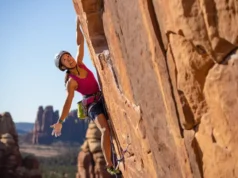
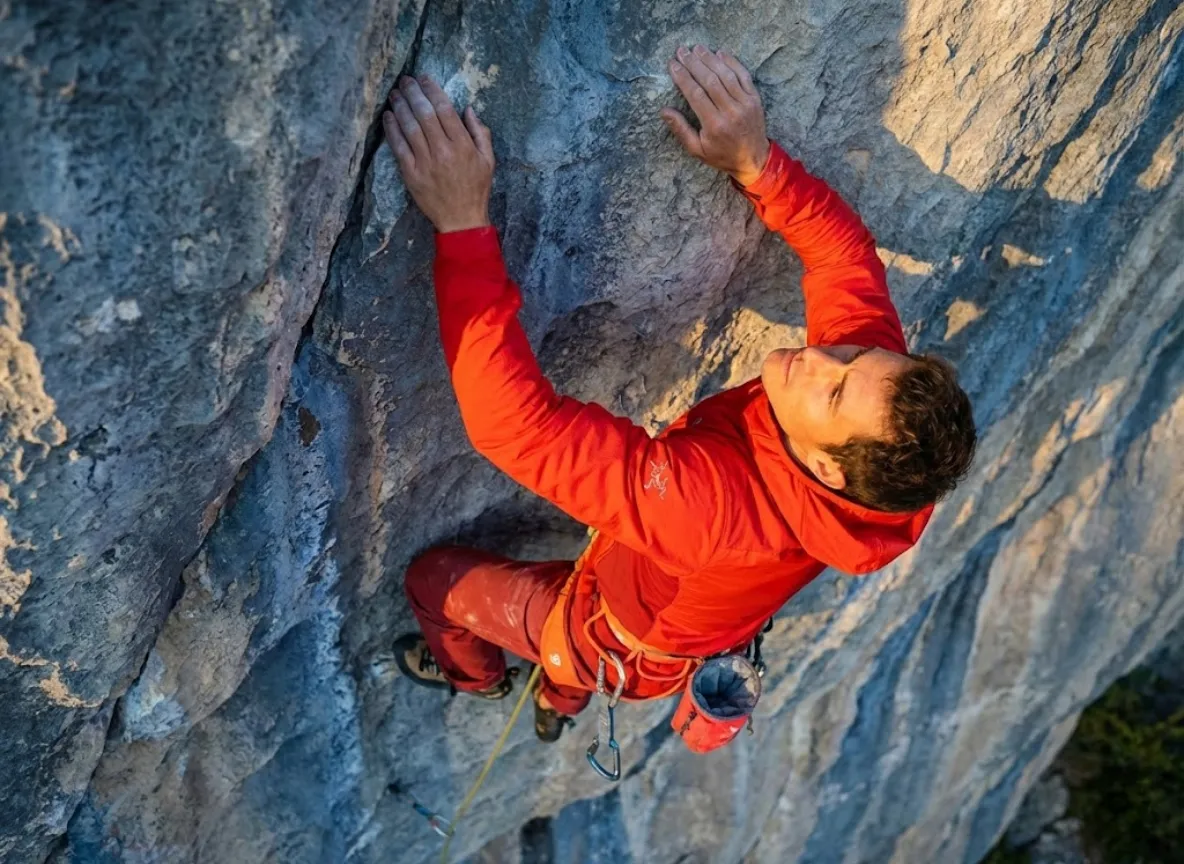
Instead of pulling yourself up, try to hang with your arm fully extended. This is the straight arm clipping rule. You stay stable by using three points of contact—two feet and one hand. You want your center of gravity and hips-to-wall position to be directly under the hand that is holding the rock so you don’t swing like a barn door.
Clipping at your waist makes this stable stance easy. It lets you sit back into your harness and relax your core. High-clipping ruins this biomechanics because it pulls your body up and away from the wall, making your feet more likely to slip.
When you have a good clipping position, you can relax. Your hand can find the rope at your figure-8 knot by feel while your eyes look for the next hold. You can use climbing movement mastery tricks like “flagging” to stay balanced. For more on the stance stability matrix, Cornell University has a great clipping techniques and hazards overview.
Pro-Tip: If the bolt is at your waist but the footholds are bad, look for a “high foot” so you can stand up and keep your leg straight. It is much easier to balance on a straight leg and a straight arm than to stay in a deep crouch.
What are the Best Techniques for Handling the Rope?
Clip speed at the bolt is the difference between a seamless ascent and fumbling until you fall.
When should you use the Pinch vs. the Snap method?
Use the pinch technique when the carabiner gate faces the same way as your hand. Use the snap technique when the gate faces away from your hand.
The pinch clip involves holding the rope between your thumb and pointer finger while using your middle finger to steady the quickdraw carabiner. The snap method (or thumb flick) uses your thumb to hook the spine of the rope-end carabiner while your fingers flick the rope through the nose.
For clips at the waist, the pinch is usually the most stable. You should practice these hand techniques at home until you don’t have to think about them. This lets you clip by “feel” while you focus on the wall above.
Never use a “Palm” method where you reach behind the rope, because it makes it very easy to back-clip. Our ultimate quickdraw guide shows you more about bent-gate vs straight-gate carabiner options. Remember that all your gear should follow safety standards for climbing equipment to keep you safe.
What Safety Rules Must Every Climber Know?
Knowing how to clip quickly is useless if you make a mistake that could cause the rope to fail.
How do you identify and prevent Back-Clipping?
You can tell if you have back-clipping if the rope leading to you comes out of the rope-side carabiner from the side closest to the wall.
Back-clipping is a dangerous mistake where the rope goes through the carabiner in the wrong direction. If you fall, the rope can actually twist the gate and force it open. This is known as “roll-out,” and it could let the rope pop right out. You can spot this error if the rope looks like it is going “in” toward the cliff instead of “out” toward you.
Another common mistake is z-clipping, where you grab the rope from below your last quickdraw and pull it up to the next one. This creates massive rope drag and can stop you from moving. To prevent these, always grab the rope from your tie-in knot and pull it straight out from the wall to the draw.
Using a stiff dogbone can help keep the bottom carabiner facing the right way. Spotting these mistakes is a huge part of being ready to pass a lead climbing certification test. The UIAA has more warnings on quickdraw misuse that every climber should read.
Pro-Tip: Always yell “Clip!” to your belayer. This lets them know exactly when to give you the extra rope you need.
Key Takeaways
- Physics of Risk: High-clipping creates a “Slack Trap” that makes falls much longer. Clipping at your waist is always safer.
- Stamina Management: Hanging on a straight arm keeps your blood flowing and stops arm fatigue.
- Master Your Hands: Mastering the pinch and snap methods lets you clip without looking, so you can stay focused.
- Tactical Position: Don’t let fear make you reach high. Stay calm and wait until the bolt is in the ideal clipping zone.
Next time you are at the gym or the crag, practice “ghost clipping” on your warm-up. Move through the motion of a waist-level clip without actually pulling the rope to train your brain to stay in that relaxed, straight arm clipping position.
FAQ – Frequently Asked Questions about Efficient Bolt Clipping
Does pulling up slack to clip high actually increase my fall distance?
Yes. Because of the clipping arc, you have to pull up twice as much rope as you think. If you fall before the rope is in the carabiner, all that extra slack makes your fall much deeper—sometimes by two or three meters.
What is the difference between Z-clipping and back-clipping?
Back-clipping is when the rope goes through the rope-end carabiner in the wrong direction. Z-clipping is when you grab the rope from below your last bolt and pull it up to the next one, which creates a Z shape that causes extreme drag.
Why do I get so tired when I try to clip?
You are likely locking off with a bent arm. This squeezes your muscles shut and causes lactic acid build-up. If you hang on a straight arm, your bones take the weight and your muscles can rest.
Is it ever okay to skip a bolt?
Sometimes. In technical sport climbing, if a clip is in a very hard crux and a fall there would be safe, experienced climbers might skip it to save energy for the finish. This is a tactical position choice you should only make when you know the fall is clean.
Risk Disclaimer: Rock climbing, mountaineering, and all related activities are inherently dangerous sports that can result in serious injury or death. The information provided on Rock Climbing Realms is for educational and informational purposes only. While we strive for accuracy, the information, techniques, and advice presented on this website are not a substitute for professional, hands-on instruction or your own best judgment. Conditions and risks can vary. Never attempt a new technique based solely on information read here. Always seek guidance from a qualified instructor. By using this website, you agree that you are solely responsible for your own safety. Any reliance you place on this information is therefore strictly at your own risk, and you assume all liability for your actions. Rock Climbing Realms and its authors will not be held liable for any injury, damage, or loss sustained in connection with the use of the information contained herein.
Affiliate Disclosure: We are a participant in the Amazon Services LLC Associates Program, an affiliate advertising program designed to provide a means for us to earn advertising fees by advertising and linking to Amazon.com. As an Amazon Associate, we earn from qualifying purchases. We also participate in other affiliate programs. Additional terms are found in the terms of service.